Category Archives: Land pollution

Land Pollution Effects – Top 7 Effects Explained

Land pollution causes and effects are becoming a major global concern as they directly influence ecosystems, human health, and natural resources. The impacts of land pollution can be seen in declining soil fertility, loss of biodiversity, and contamination of water sources. Moreover, the soil contamination consequences of land pollution extend to food insecurity, habitat destruction, and long-term environmental instability. These effects of soil pollution are worsened by rapid industrialization, urban waste generation, and unsustainable land-use practices. As a result, the outcomes of land contamination now threaten the survival of humans and animals alike, disrupting ecological balance and reducing land productivity. The results of land degradation also lead to toxic exposure, reduced agricultural output, and weakened ecosystem resilience. Understanding these environmental effects of land pollution is essential for adopting better waste management, pollution control, and conservation measures to protect our land for future generations.

n the previous blog, we had seen an overview of the effects and causes of land pollution. In this blog, I will show you the effects of land pollution in detail and how it drastically affects the entire ecosystem and threatens the survival of our planet.

  1. Causes and effects of land pollution
    1. Soil contamination consequence
    2. Poisoning of groundwater
    3. Drinking-Water shortage
    4. Land pollution and human health
    5. Habitat Loss
    6. Air Pollution
    7. Negative Impact on Tourism Industry
  2. Conclusion

Causes and effects of land pollution

Land pollution is the degradation of the Earth’s land surface due to the accumulation of toxic substances harmful to both man and the ecosystem. The effects of land pollution don’t limit to soil pollution but have serious biological, ergonomic and economic consequences. Let’s have a look at the disastrous effects of land pollution.
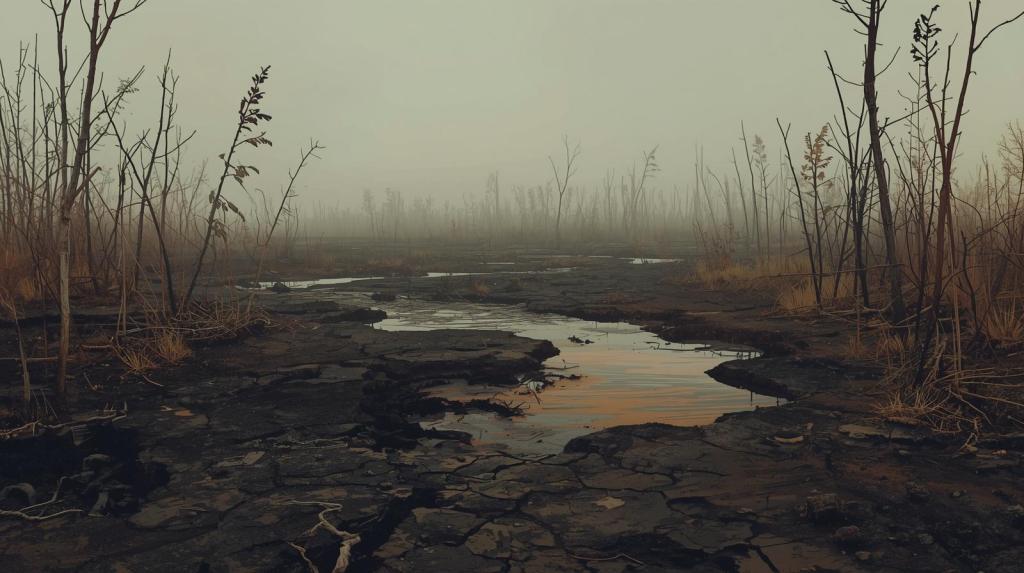
A desolate landscape showing barren ground with cracked earth and dead trees, shrouded in a misty atmosphere, indicating severe environmental degradation.
A barren landscape affected by land pollution, showcasing cracked earth and dead vegetation, emphasizing the severe consequences of soil degradation.

Soil contamination consequence

Soil contamination consequence is a major environmental concern that affects the health and productivity of land. It occurs when harmful chemicals or pollutants alter the natural nutrient balance of topsoil. The soil contamination consequence becomes severe when excessive chemical fertilisers, uncontrolled soil erosion, and aggressive pest control methods degrade soil quality. Over time, the soil contamination consequence leads to reduced agricultural productivity, loss of forest cover, and declining pasturelands. This degradation ultimately threatens food security, biodiversity, and long-term land sustainability.

According to the World Wildlife Fund, half of the world’s topsoil has been destroyed in the previous 150 years. For 2.5 millimetres of topsoil, the regeneration process takes at least 500 years. Now you can imagine the magnitude of the crisis that we are undergoing.
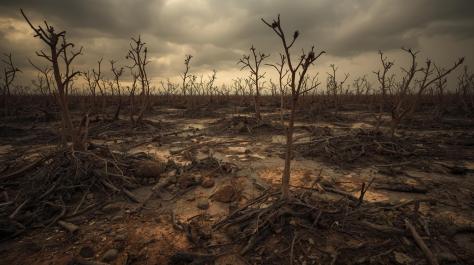
Desolate landscape showing dead trees and barren soil under a cloudy sky, illustrating the severe impacts of land pollution.
Devastated landscape illustrating the severe consequences of land pollution, highlighting barren soil and dead vegetation.

According to the United Nations’ Food and Agriculture Organization (FAO), excessive use of chemical fertilisers and pesticides destroys essential soil microbes. Destruction of these microbes results in diminishing biodiversity and has disastrous repercussions for soil health. Microorganisms are required for several processes that contribute to soil fertility, including:

  • Nutrient cycling, through which microbes convert nutrients into forms that crops can utilise.
  • Microorganisms degrade hazardous substances that are by-products of agrochemicals, thereby reducing soil contamination. If there aren’t any microbes in the soil, it can drastically reduce its fertility.

Also read: What are Water Pollutants? – Definition, Sources and Types

Poisoning of groundwater

When we inappropriately dispose of hazardous chemicals and other wastes on land or in illegal landfills, the chemicals may eventually seep into the groundwater system. This procedure is known as leaching. It can occur on farms, industrial sites, and landfills, posing a health risk to animals, plants, and humans.

A close-up view of a crack in the ground, through which bright blue liquid is visible, contrasting against the dark soil.
A close-up of polluted land showing toxic runoff seeping into the soil, highlighting the effects of land pollution.

Nutrient pollution, which arises due to farm runoff of chemical fertilisers is a subset of land pollution. The resulting nutrient enrichment of water bodies leads to eutrophication. When humans consume this contaminated water it leads to a variety of health issues. Even in little amounts, increased nitrate levels in water from fertiliser residues can be detrimental to newborns causing Blue Baby Syndrome.

The poisoning of groundwater which is a major source of drinking water for humans creates the worst consequence of land pollution, that is drinking water shortage. Let’s move on to it.

Drinking-Water shortage

Land pollution has the potential to spread in all directions, causing harm to the surrounding ecosystem. It can contaminate water and drastically impair its quality. Surface rainwater runoff carries chemicals and other harmful substances from landfills and solid wastes into rivers and makes the water unfit for human consumption.

Simultaneously, leaching occurs, allowing harmful metals and compounds to penetrate aquifers and water tables. Furthermore, contaminated water evaporates and condenses as precipitation along with the contaminants, perpetuating the pollution and aggravating the drinking water shortage.

Also read: Water Pollution – Effects and Causes

Land pollution and human health

Land pollution and human health are closely connected, as contaminated soil and waste exposure can lead to serious illnesses and long-term health risks. The effects of land pollution and human health include respiratory issues, skin diseases, neurological problems, and increased vulnerability to toxic chemicals in our environment.

Many parts of the world, particularly developing countries and slum areas, have massive amounts of rubbish piled up in the streets. This increases the contact of garbage with humans and the food we consume. These wastes contain hazardous chemicals, insecticides, and metals all of which are harmful to humans.
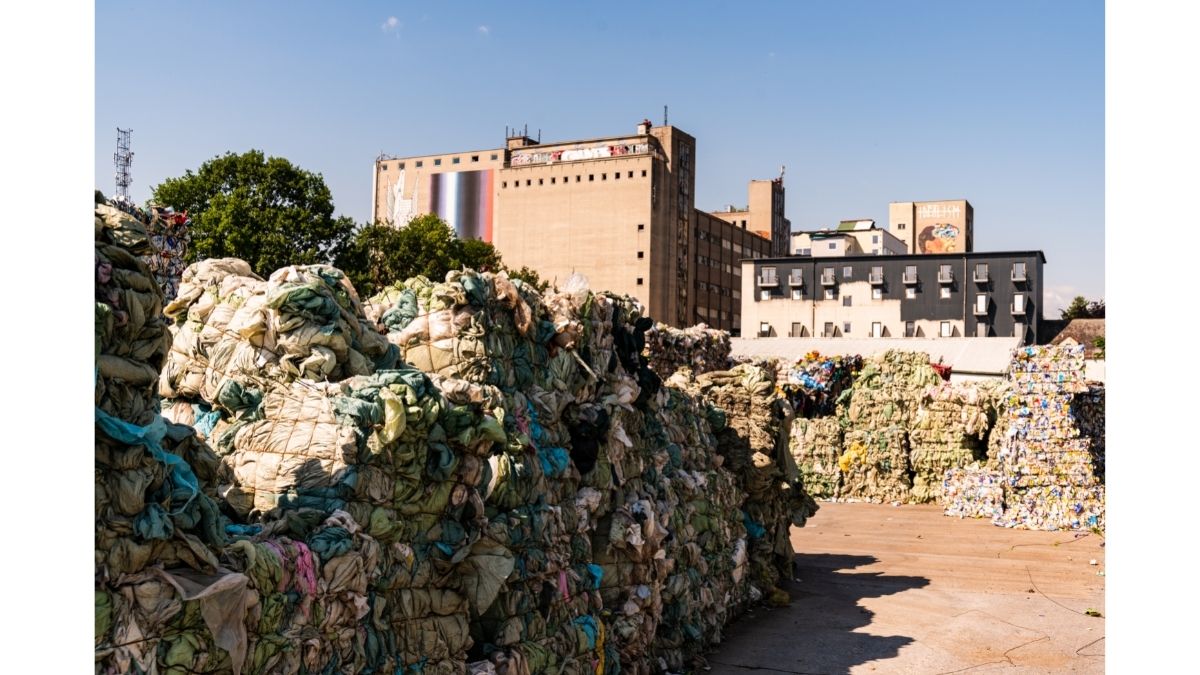
A large pile of compressed plastic waste and discarded materials in an industrial area, with buildings and greenery in the background.
Piles of plastic waste in a landfill, highlighting the serious issue of land pollution and its impact on the environment.

Plastic garbage contains chemicals like acrylic, polyvinyl chloride, polycarbonate, and phthalates. They have the potential to cause cancer, skin ailments, respiratory problems, and birth defects in pregnant people. Upon burning plastics in landfills, these chemicals escape into the air and pollute the air. In some other cases, they seep into water bodies. Ultimately, they reach the human body and damage the internal organs.

Chemical components contained in pharmaceuticals, pesticides and fertilisers, industrial wastes, such as cadmium, asbestos, mercury, cyanide, arsenic, and chromium, have severe impacts on human health. They are carcinogenic and can also cause lung, kidney, and liver damage.

According to a 2015 scientific study, “cancer villages” in China are connected to locations where farming takes place on land poisoned by the overuse of chemical pesticides and other heavy metals. Arsenic, asbestos, and dioxins are the main cause of cancer in Europe. Poisoning by lead and arsenic induce neurological damage and lower the IQ.

Habitat Loss

Wildlife creatures have suffered greatly in recent decades as a result of the continuous threats to their natural habitat and surroundings. Human commercial activities on land have gradually damaged and ruined the environment, forcing wildlife to migrate further away and adapt to new environments. As a result, some species have died while attempting to adapt, some have become extinct. And, others are on the verge of becoming extinct.

A deer stands on a grassy area with its back to the camera, while a littered landscape filled with plastic waste is visible in the background, highlighting the impact of land pollution on wildlife.
A deer stands amidst a backdrop of land pollution, highlighting the impact of habitat loss and environmental degradation on wildlife.

Air Pollution

Landfills and dump sites emit foul odours and stenches in the locations where they are located. Residents in cities and towns near large dump sites and landfill areas have reported excessive levels of a noxious odour. Aside from the unpleasant odour, landfills are constantly burning, contributing to air pollution.

Negative Impact on Tourism Industry

Landfills and abandoned waste disposal within cities generally create a negative picture of the population and the city’s governance. Landfills and garbage sites also degrade air quality and may pose a health risk to humans. As a result, it causes a city to lose its tourist appeal. This results in a loss of tourism revenue for the government.
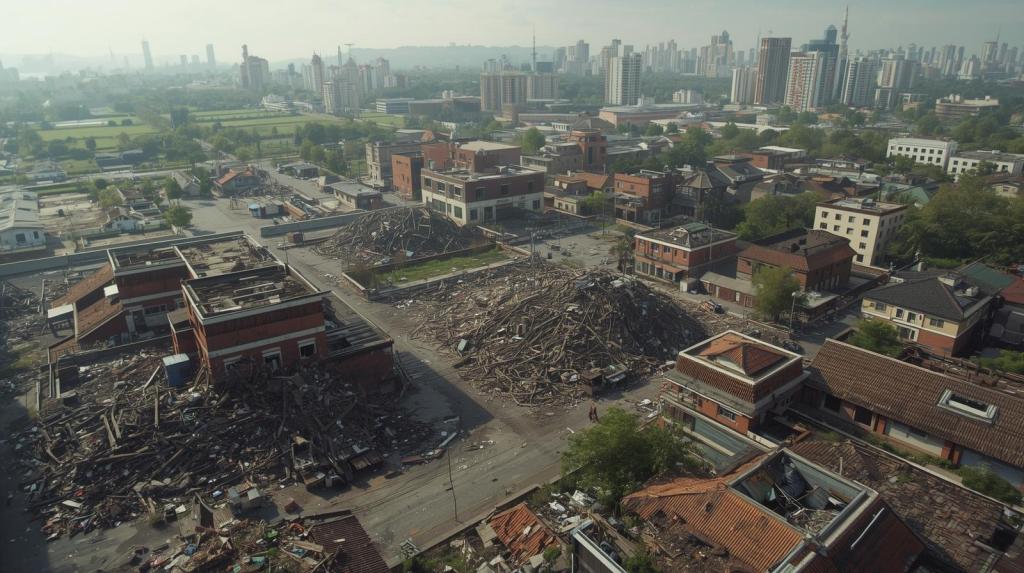
Aerial view of a devastated urban area with piles of debris and damaged buildings, surrounded by greenery and high-rise structures in the background.
Aerial view of a devastated urban area, highlighting the impact of land pollution and industrial waste accumulation.

Shall we wrap up?

Key Takeaways

  • Land pollution has severe effects on ecosystems, animal, and human health due to toxic substances and industrial activities.
  • Soil pollution reduces fertility and biodiversity, risking food production and disrupting essential microbial processes.
  • Contaminated groundwater poses health risks, particularly through leaching of hazardous chemicals and agricultural runoff.
  • Land pollution leads to water shortages, as harmful substances impair drinking water quality and availability.
  • Ultimately, land pollution harms tourism and habitats, damaging local economies and threatening wildlife survival.

Conclusion

Land pollution effects create long-term damage that is often irreversible, especially when chemical residues cause soil contamination consequences that spread through land degradation from pollution. Once hazardous compounds enter the ground, the effects of land pollution on soil and groundwater intensify, posing serious land pollution and human health risks. Because the causes and effects of land pollution are interconnected, prevention remains the most effective solution. Increasing recycling, reducing misuse of land, and improving waste handling can limit further soil contamination consequences. Community cleanups and environmentally responsible practices also help control land degradation from pollution. By acting early and consistently, we can reduce the effects of land pollution on soil and protect both ecosystems and human health.
Landfills – Causes, Operation and Life Cycle- Everything you should know

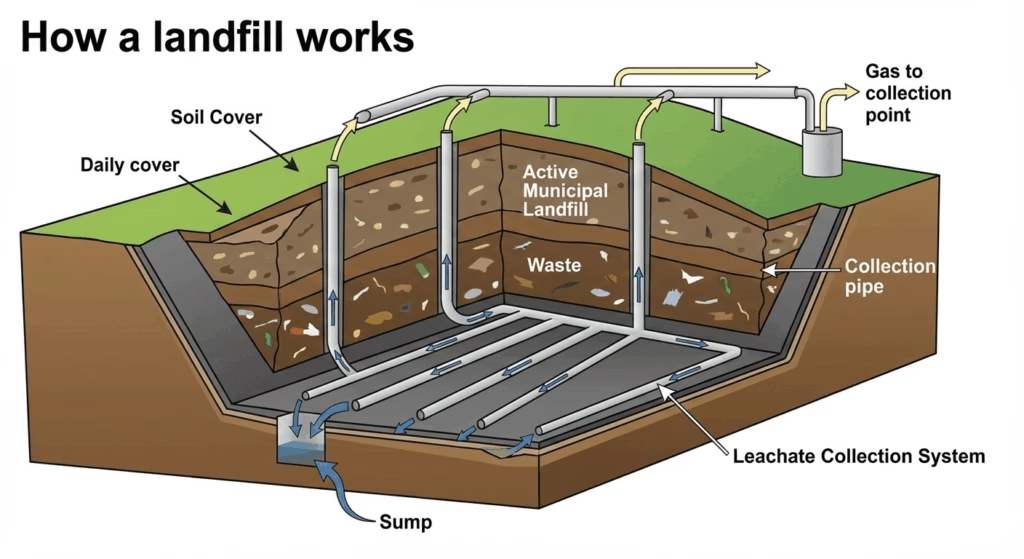
How a landfill works goes far beyond the old concept of a simple town dump; it is a complex, highly engineered feat designed to manage our waste responsibly. This comprehensive guide explores the intricate details of modern sanitary landfill design, created specifically to mitigate the potential negative environmental impact of landfills. We will walk through the entire timeline, from siting to closure, detailing the various landfill life cycle stages. Along the way, you will learn about critical operational elements, such as the crucial landfill leachate treatment process used to protect groundwater, and innovative sustainability efforts like converting methane through landfill gas to energy systems.

Landfills are a regular occurrence all over the world, owing to the rising volume of trash generated by our homes, schools, offices, hospitals, and markets. The rising number of landfills around the world is largely due to increased urbanisation and population growth rates.

As the world’s population and cities develop, so does the need for goods and commodities. Consequently, the amount of solid trash produced also increases. They eventually reach landfills. In this blog, let’s go on a trip to a landfill and understand its operation, lifecycle and impacts

What are Landfills and how it works ?

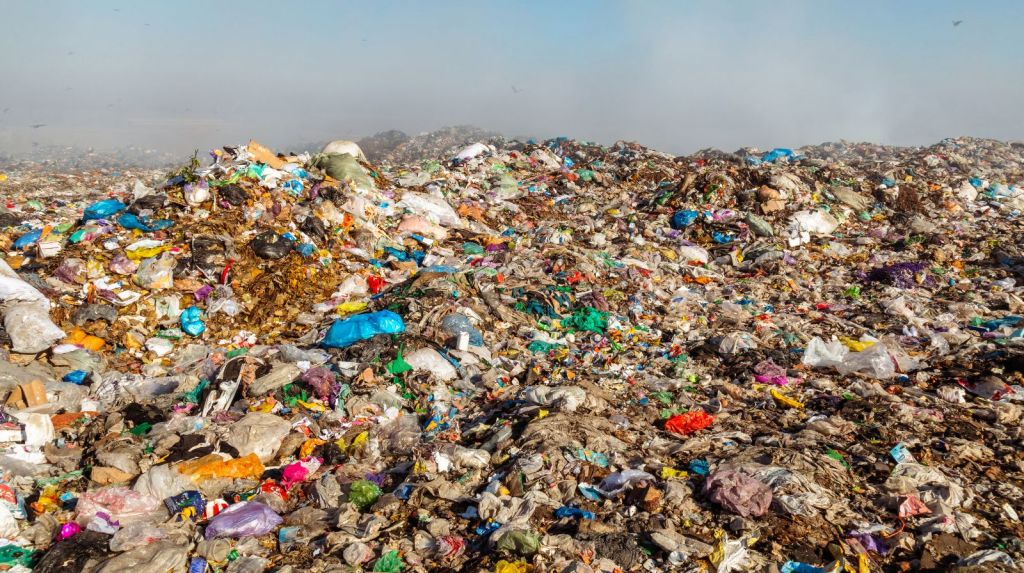
Landfills are places where we dispose of trash, garbage, and other solid wastes. They have traditionally been the most frequent method of disposing of solid garbage. In the landfills, the waste is either buried or piled in heaps. The garbage in these heaps is a combination of residential and commercial waste.

A sprawling landfill site filled with various types of waste, including plastic bags and debris, under a clear sky.
A view of a large landfill, showcasing heaps of waste including plastic and organic materials, representing the complexities of waste disposal.

Landfills commonly use either of the following techniques for waste disposal:

  • Landraising – This technique involves depositing trash directly on the ground.
  • Landfilling – This technique involves filling a hole in the ground with the rubbish.

Causes of Landfills

With the rise in land utilization and pollution, landfills also saw a rise in the number. Let’s see the causes of land pollution. Before jumping into the next section make sure that you go through 

Land Pollution Causes -Top 6 causes explained.

Solid Waste – Major landfill material

Wood, paper, plastic, broken furniture, glass, grounded cars, old electronic items, and hospital and market garbage are examples of solid waste materials. Because most of these waste materials are non-biodegradable, they heap in the landfills where they stay for years.

Agricultural Waste – Landfill material

Agricultural wastes comprise waste products such as animal dung, crop residue, and agricultural garbage. Solid wastes such as animal manure and other agricultural wastes are collected and disposed of in landfills.

Now, let’s try to understand how landfills operate.

Also read: What is Sewage? – Sources, Treatment and Quality Indicators

Landfills Operation

  • On arrival waste collection vehicles move to a scale or weighbridge to weigh their loads.
  • Workers inspect loads for wastes that do not meet the landfill’s waste-acceptance standards.
  • The garbage collecting vans next travel to the tipping face or working front and drop their contents.
  • Compactors or bulldozers redistribute and compact the garbage on the working face.
  • The vans may pass through a wheel-cleaning facility before leaving the landfill’s borders. If necessary, they return to the weighbridge without any load for re-weighing.

Modern Sanitary Landfill Design

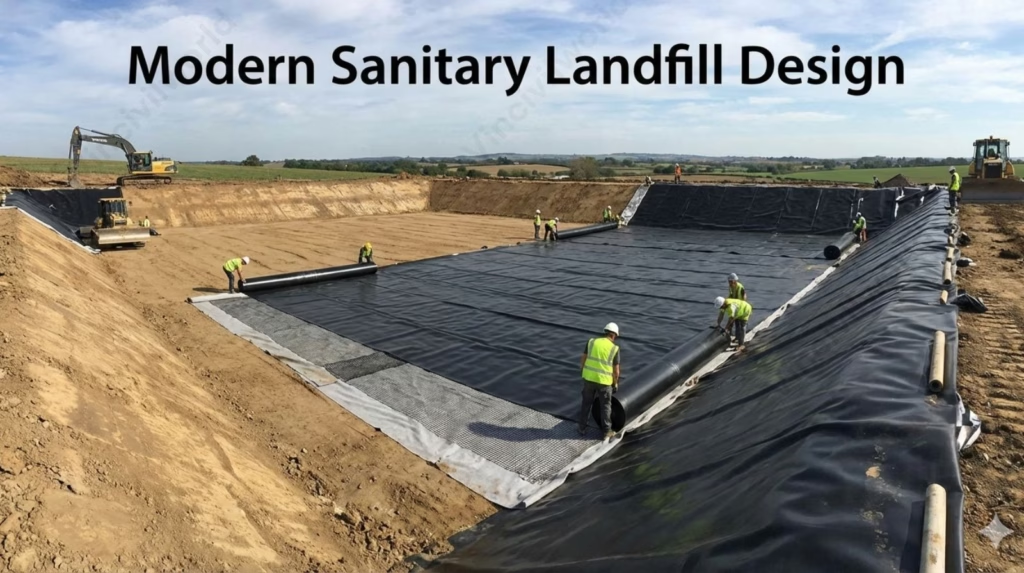
A modern sanitary landfill design constitutes a pit with a sealed bottom where rubbish is buried and compacted in layers to make it more solid. In sanitary landfills, waste decomposition is a complex process involving the sequential and/or simultaneous occurrence of a variety of chemical and biological reactions. These reactions result in the breakdown of the waste materials. The organic fractions of MSW break down quickly, resulting in landfill gases and liquids.

The amount of biodegradable organic matter present in the waste, the availability of moisture and nutrients required for biodegradation, and final landfill closure measures all influence the duration of individual phases, as well as the nature and quantity of various landfill gases generated during each phase.

Over the lifetime of a Modern Sanitary Landfill Design, five successive phases can be distinguished based on the formation of major landfill gases and physicochemical conditions. Let’s have a closer look at each of the Landfill Life Cycle Stages.

Landfill Life Cycle Stages

The progression of a modern waste facility is defined by distinct Landfill Life Cycle Stages. Moving through these Landfill Life Cycle Stages involves complex steps ranging from initial siting and active operation to final secure closure and decades of post-closure monitoring.

How a landfill works?
How a landfill works

Phase 1 – Initial adjustment of landfills

  • The first phase of a sanitary landfill’s life cycle.
  • During this phase, the organic constituents in municipal solid waste begin rapid microbial breakdown, typically under aerobic conditions shortly after disposal. This is one of the first steps in how a landfill works, where biodegradable materials are decomposed naturally, generating heat and initiating settlement. As oxygen depletes, the system gradually transitions into anaerobic decomposition, producing gases and leachate that must be properly managed for environmental safety.
  • This phase usually lasts a short time from the moment of waste dumping until around a week.
  • The oxygen-rich air trapped within the landfill promotes aerobic reactions.
  • Microorganisms are the primary agents in biodegradation. The soil that is utilised for daily cover serves as the primary source of microbes.
  • Sludge from wastewater treatment plants is sometimes recirculated. Leachate also serves as a source of the microbial population.

Phase 2 – Transition Phase of landfills

  • The landfill undergoes a transition from an aerobic to an anaerobic state in this phase.
  • Because of the high consumption of oxygen during Phase I, and its subsequent depletion, the situation is mainly anaerobic. The oxidation/reduction potential of the waste helps to track the change from aerobic to anaerobic conditions.
  • In the absence of oxygen, the terminal electron acceptors are nitrate and sulphate in the chemical reactions that occur. Hence the landfill gas consists mainly of nitrogen and hydrogen sulphide.
  • Due to the formation of organic acids and higher COconcentrations within the landfill, any leachate created during the transition period is often acidic.
  • The pH during this phase is normally between 6 and 7.
  • This phase can last between 1 to 6 months.
Modern design
Modern sanitary Landfill design and how it works ?

Phase 3 – Acid Formation Phase of landfills

  • In the acid formation phase, the biodegradable component of the solid waste begins to hydrolyze. As a result, there is a rapid accumulation of volatile fatty acids (VFAs) in the leachate.
  • The increasing organic acid concentration lowers the pH of the leachate from 7.5 to 5.6.
  • The leachate has the potential to dissolve many inorganic elements, including heavy metals, due to the decreased pH, making it very poisonous.
  • This phase lasts anything from 3 months to 3 years on average.
  • The further breakdown of intermediate chemicals, such as VFAs, generate a significant amount of chemical oxygen demand during this phase.
  • High VFA concentrations raise both the biochemical oxygen demand (BOD) and VOA levels. This triggers H2 generation by fermentative bacteria and promotes the growth of H2-oxidizing bacteria.
  • Acetic acid (C2H4O2), CO2, and hydrogen gas are produced from long-chain volatile organic acids (VOAs) towards the end of this phase.

Methane Fermentation in landfills – Phase 4

  • Methanogenic bacteria convert the intermediary products of the acid formation phase such as acetic, propionic, and butyric acids to CH4 and CO2.
  • As methanogens continue to digest the VFAs, the pH of the landfill water returns to neutrality.
  • The organic strength of the leachate, expressed in terms of COD, drops rapidly as the rate of CH4 and CO2 gas generation rises.
  • This is the most time-consuming part of the breakdown process. The typical duration of this phase is approximately 8 to 40 years,

Phase 5 – Final maturation and stabilization of landfills

  • This is the final stage of a sanitary landfill’s life cycle.
  • Once the microorganisms finish consuming easily biodegradable organic materials they begin digesting other difficult to biodegrade materials.
  • As the amount of available biodegradable organic matter considerably decreases during the maturation phase, the rate of landfill gas generation drops dramatically from prior phases.
  • This phase’s leachate frequently contains humic and fulvic acids. The main gases produced at this period are CH4 and CO2.

Environmental Impact of Landfills

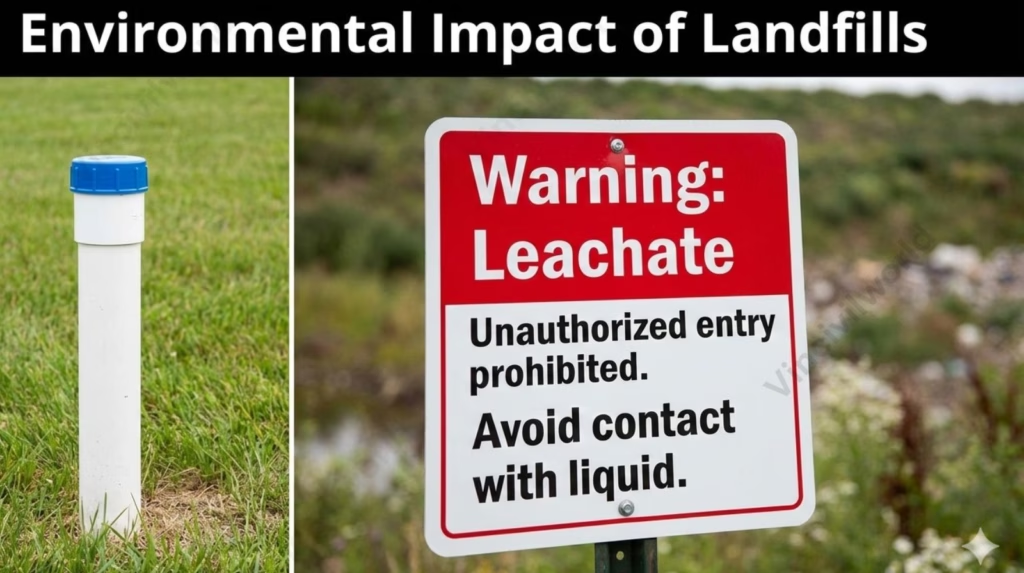
Landfills all over the world have social, economic and environmental impacts. Below mentioned are a few of them:

Environmental Impact of Landfills

Landfill Leachate Treatment Process

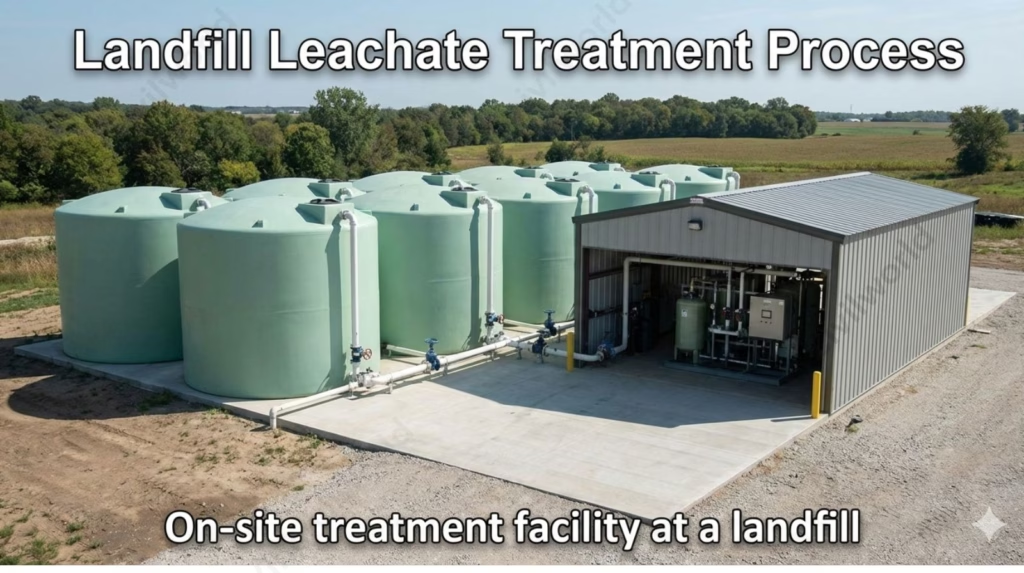
When rain falls on open landfills, the water percolates through the waste, becoming contaminated with suspended and dissolved material. This process creates leachate, a primary driver of the negative environmental impact of landfills and a key part of how a landfill works. To mitigate this, all modern landfills use a combination of impermeable liners several metres thick, geologically stable sites, and collection systems to contain the toxic liquid. Most landfills use clay as the liner material, but geosynthetic membrane liners also find wide application in sanitary landfills.

Leachate Treatment Process
Landfill Leachate Treatment Process

Following collection, the leachate can be treated and evaporated. Once a landfill is full, authorities seal it to prevent precipitation intrusion and the development of new leachate. However, it is widely accepted that any landfill liner will eventually leak. This failure leads to the contamination of groundwater in the long run, representing a significant and lasting environmental impact of landfills.

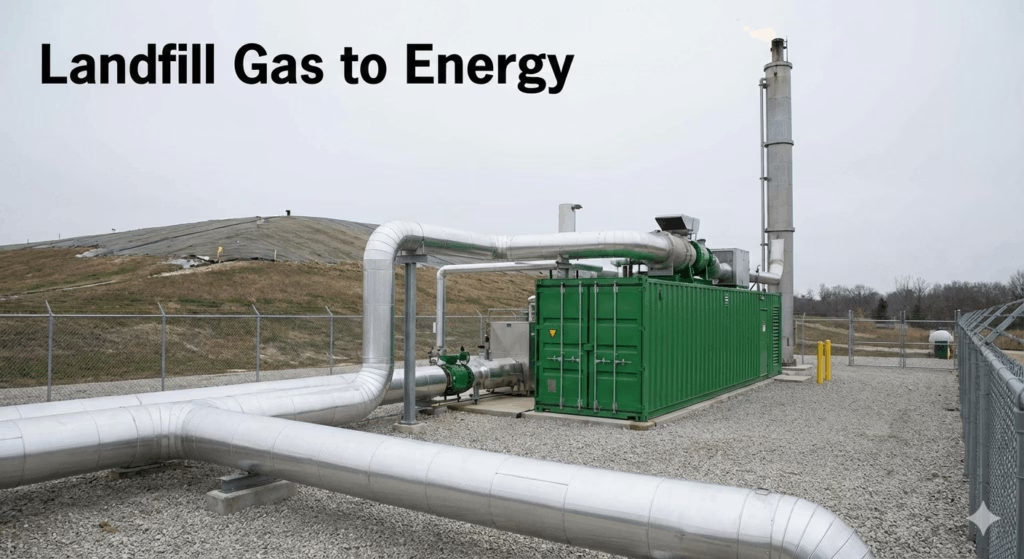
Landfill Gas to Energy

Within the complex structure of a modern landfill, the decomposition of organic waste, such as rotting food, is a continuous and dynamic process. This breakdown occurs through both aerobic (oxygen-using) and anaerobic (oxygen-absent) digestion simultaneously in different regions of the waste pile. The resulting gaseous mixture varies in constitution based on factors like the landfill’s age, moisture content, and specific waste types.

Gas to energy
Landfill gas to energy

On average, this gas is composed of roughly 50% methane (CH4) and slightly less than 50% carbon dioxide (CO2), alongside trace amounts of other gases like nitrogen and hydrogen sulphide. While CO2 is a concern, the high concentration of methane presents a unique opportunity because methane is a potent fuel source. Recognizing this potential, many modern facilities have shifted away from simply venting or flaring this gas. Instead, they implement landfill gas to energy initiatives. By actively capturing this methane, efficient landfill gas to energy systems convert what was once a waste byproduct into a valuable resource used to generate electricity or heat, significantly improving the site’s sustainability.

Vectors

Landfills serve as a breeding ground for mosquitoes, flies and rats. Because vectors such as rodents and flies can spread dangerous diseases, poorly managed landfills can become a nuisance. The application of daily cover can help to reduce the occurrence of such vectors.

Key Takeaways

  • Modern landfills are complex systems designed to manage waste and mitigate environmental impact, unlike traditional dumps.
  • Landfills operate through various stages, including waste weighing, inspection, and compacting processes.
  • The landfill life cycle consists of five phases, from initial adjustment to final maturation, each affecting gas generation and leachate composition.
  • Landfill leachate can contaminate groundwater, making its management crucial for environmental safety.
  • Landfill gases, primarily methane and carbon dioxide, are produced during waste decomposition and can be harnessed for energy.

Conclusion

Understanding precisely how a landfill works today requires recognizing them as complex, engineered facilities. When properly planned and managed using modern sanitary landfill design, they remain the most cost-effective method for disposing of municipal solid waste. Adhering to strict standards throughout all landfill life cycle stages—from site selection to daily operation—is essential to ensure a safe facility and minimize the negative environmental impact of landfills. This includes implementing a rigorous landfill leachate treatment process to prevent groundwater pollution. Furthermore, advanced facilities now capture methane emissions through landfill gas to energy systems, turning a potential greenhouse gas hazard into a useful power source.

In case of any queries feel free to ask in the comments section. Happy Learning.

Constructed Wetlands for Wastewater Treatment

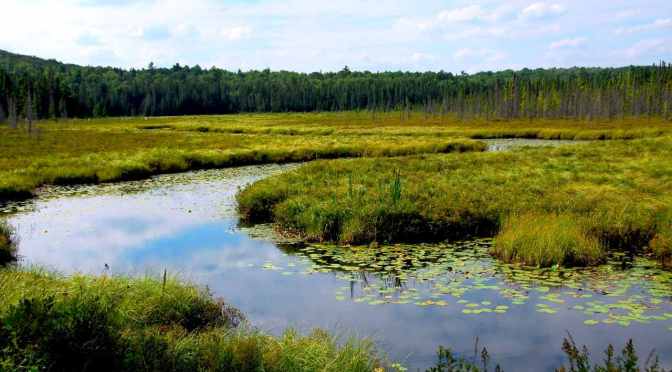
Constructed wetlands are wastewater treatment systems that utilise natural processes such as plants, soil, and organisms to treat wastewater, greywater, or stormwater runoff from municipal or industrial sources. In this blog, let’s go for a trip exploring the different types of constructed wetlands and their mechanism.

Let’s get started by understanding the basics of a constructed wetland.

  1. What are constructed wetlands?
  2. Constructed Wetlands Components
  3. Pollutants Removal In Constructed Wetlands
    1. Nitrogen Removal
    2. Phosphorus Removal
  4. Constructed Wetlands Types
    1. Subsurface Flow Wetlands
      1. Horizontal Flow Constructed Wetlands
      2. Vertical Flow Constructed Wetlands
    2. Surface Flow Wetlands
  5. Floating treatment wetlands
  6. Conclusion

What are constructed wetlands?

Constructed wetlands are manmade wetlands that find applications in land reclamation after mining and compensating for natural areas lost to development. They operate as a biofilter and remove a variety of pollutants from the water such as organic substances, fertilisers, pathogens, and heavy metals. It can also eradicate pathogens (bacteria, viruses, protozoa, and helminths) to a certain extent.

Constructed Wetlands Components

There are three main components in constructed wetlands:

  • An impermeable layer of Clay
  • A Substrate layer of gravel
  • Ground Vegetation Zone

The impermeable layer, which is often comprised of clay, inhibits pollutants from filtering into the lower aquifers. It is the bottom-most layer.

Above the impermeable layer lies the substrate layer. that nourishes and protects the root zone. The water passes through this layer and into the root zone. Bioremediation and denitrification take place in this layer with the help of bacteria present in the roots. The ground vegetative layer rests above the substrate layer.

Constructed wet lands

In a wetland, vegetation offers a substrate (roots, stems, and leaves) for microbes to proliferate as they decompose organic matter. This microbial colony or the periphyton accomplishes around 90% of pollution removal and waste decomposition. When the plants degrade, they provide a carbon source for the microorganisms and eliminate roughly 7% to 10% of contaminants.

Also read : Secondary Treatment for Wastewater – Methods and Process

Pollutants Removal In Constructed Wetlands

  • As wastewater flows through the wetland medium and the plant rhizomes, it undergoes treatment through various physical, chemical and biological processes.
  • The oxygen which comes out of the rhizomes, roots, and rootlets, forms a thin layer surrounding each root hair.
  • This creates aerobic conditions for the aerobes to act. Along with the aerobic bacteria, anaerobic bacteria also acts on the wastewater.
  • Microbial nitrification and subsequent denitrification releases nitrogen gas. In the root-bed media, phosphorus coprecipitates with iron, aluminium, and calcium compounds.
  • Filtration and adsorption by biofilms on the gravel or sand media reduces the harmful bacteria and viruses.

Nitrogen Removal

Ammonia present in the wastewater converts to ammonium ions. The aerobic bacterium Nitrosomonas sp. oxidizes these ammonium ions to nitrite. Nitrite converts to nitrate by the action of the the bacterium Nitrobacter sp. Finally, nitrate reduces to relatively harmless nitrogen gas under anaerobic conditions. It then enters the atmosphere.

Phosphorus Removal

Phosphorus removal and storage occurs within the constructed wetland itself since the phosphorus cycle is closed and there is no release of it into the atmosphere. A wetland system sequesters phosphorus by:

  1. Incorporating phosphorus into living biomass and thereby becoming a part of the organic matter present in living beings.
  2. Precipitation of phosphorus as insoluble phosphates with ferric iron, calcium, and aluminium compounds found in wetland soil.

Constructed Wetlands Types

The following are the three primary types of built wetlands:

  • Subsurface flow constructed wetland
  • Surface flow constructed wetland
  • Floating treatment wetland

Let’s have a closer look at each one of them.

Subsurface Flow Wetlands

There is no water surfacing in subsurface flow constructed wetlands because wastewater flows through the roots of the plants which lies below the gravel. As a result, these types of constructed wetlands offer the following advantages:

  • The system is more efficient
  • Attract fewer mosquitoes and flies.
  • Emit less stink.
  • Less susceptible to cold temperatures.
  • Water purification takes up lesser space.

There are two types of subsurface flow constructed wetlands: Horizontal flow and vertical flow constructed wetlands

Horizontal Flow Constructed Wetlands

The effluent in the horizontal flow built wetland moves horizontally and parallel to the surface. Absence of surface water, preventing mosquito breeding. Subsurface flow wetlands can treat a variety of different wastewaters, such as household wastewater, agricultural, paper mill wastewater, mining runoff, tannery or meat processing wastes, stormwater.

Vertical Flow Constructed Wetlands

A vertical flow constructed wetland is a planted filter bed with a bottom drain. A mechanical dosing system pours or doses wastewater onto the surface from above. Water runs down vertically through the substrate layer to the basin’s bottom, where it is collected in a drainage pipe. In comparison to horizontal flow constructed wetlands, vertical flow constructed wetlands are more efficient and use less space.

Also read : Activated Sludge Process – Stages and Process Control

Surface Flow Wetlands

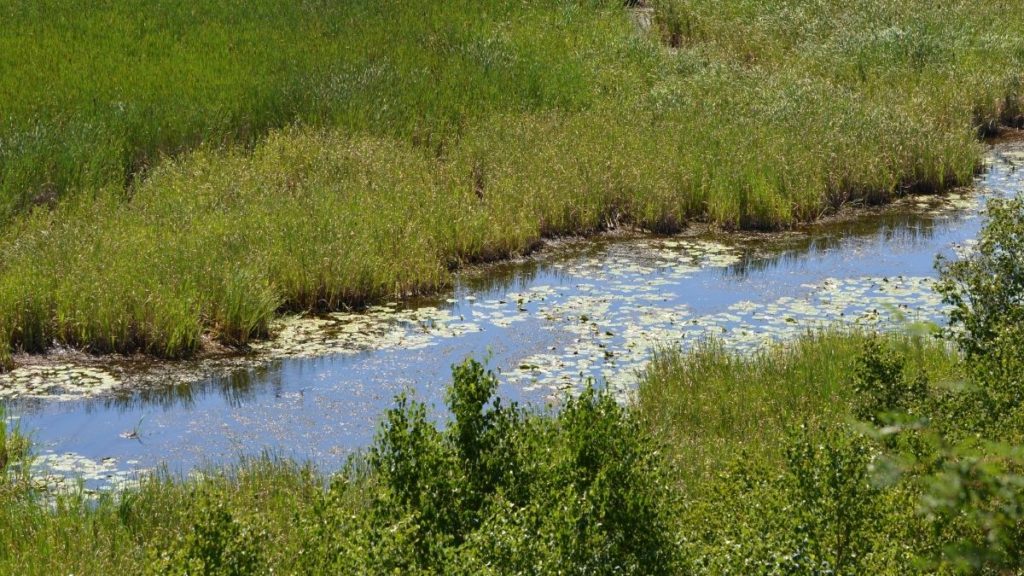
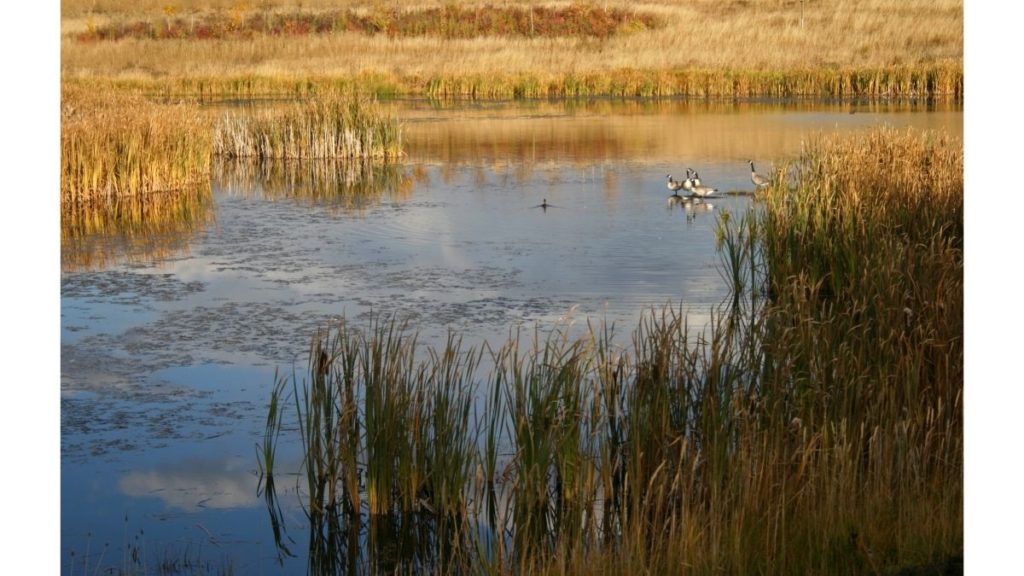
Surface flow wetlands resemble wastewater treatment ponds in appearance such as “waste stabilisation ponds”. They find applications in tertiary treatment, wastewater treatment plant effluent polishing and stormwater runoff treatment

Along with natural decay, predation by higher species, pathogens die by UV radiation due to the exposure of water to direct sunlight, . The soil layer beneath the water is anaerobic, but the roots of the plants produce oxygen, allowing complex biological and chemical interactions to take place.

A wide range of soil types, including bay mud and various silty clays, can support surface flow wetlands.Plants like Water Hyacinth (Eichhornia crassipes) and Pontederia spp. are employed.

Constructed Wetlands
  • Surface flow constructed wetlands, on the other hand, may increase mosquito breeding.
  • They also produce a lot of algae, which degrades the effluent quality.
  • In comparison to subsurface flow built wetlands, they require a larger area to cleanse water.
  • They have a stronger odour and lesser performance in the winter.

Floating treatment wetlands

The floating treatment wetlands (FTWs) are artificial wetlands that replicate natural ones. Floating rafts support hydroponically grown plants in FTWs. The rafts float on the surface of a wet pond and they improve water quality by filtering, consuming, or breaking down contaminants (such as nutrients, silt, and metals) in the water.

Shall we wrap up?

Conclusion

Due to the self-sustaining nature of the constructed wetlands they have a significantly lower lifetime costs compared to the conventional treatment systems. Hence they provide an economical and nature-friendly option for wastewater treatment.

So, how was the trip? Let us know in the comments.

Sustainable Waste Management – Full Details

Sustainable Waste Management has become the need of the hour with the ever-increasing amount of garbage that humans generate. According to the United Nations, around 11.2 billion tonnes of solid garbage are collected worldwide, with humans accounting for nearly all of it. As a result, we must devise plans for long-term sustainable waste management.

In this blog, we will discuss the importance of sustainable waste management, its importance as well as the ways of doing so. Let’s get started with the definition of sustainable waste management.

What is Sustainable Waste Management?

Sustainable waste management refers to the collection, transportation, valuation, and disposal of different types of garbage in a manner that does not damage the environment, human health, or future generations. It encompasses all activities involved in waste management, from production to final treatment.

Sustainable waste management aims to limit the amount of natural resources utilised by

  • reusing as much natural materials as possible
  • producing as little garbage as possible.

A well-functioning sustainable waste management system should have feedback loops, a process-oriented approach, adaptability, and methods for waste diversion. It is critical to adhere to environmental sustainability in this regard so that we can manage all the garbage efficiently rather than dumping it in landfills.

Also read: Land Pollution Effects – Top 7 Effects Explained

Why Sustainable Waste Management Is Important?

Let’s have a look at the importance of sustainable waste management and what makes it an attractive option.

Creates space

In the absence of a proper waste management system, garbage will end up on land, either scattered or centralised in a landfill. Landfills are large structures that take up a lot of space. Densely populated cities can’t afford a lot of space for the sake of landfills.

In such cities, we have to manage and sustainably control our waste so that we can dispose of it properly without wasting space for landfills. Before you move to the next section, make sure that you check out Landfills – Causes, Operation and Life Cycle- Everything you should know

Sustainable waste management Saves and also makes money

Recycling more can help us save money since we will not need to buy another identical item once we have reused or recycled it. Sustainable waste management, in line with the concept of money, can assist some businesses in generating revenue.

Municipalities that collect garbage, for example, might charge collection and recycling fees, gaining money in the process. This will also deter institutions that generate a lot of waste, making them more sustainable and environmentally conscious.

Prevents Pollution

Each type of rubbish we dump has a unique impact on the ecosystem. Pharmaceutical waste, for example, contaminates our water, and discarded meals attract flies and rodents. To avoid this, we should return pharmaceutical waste to the manufacturer for proper disposals, such as burning. Food waste can be sent for composting and plastics for recycling.

All of these measures, as well as others, will aid in pollution control. As a result, pharmaceutical waste won’t pollute the water, plastics won’t block marine life, and food waste won’t attract mice. Sustainable waste management enables us to better understand our garbage and how to manage it.

Also read: Land Pollution Causes -Top 6 causes explained

Waste Management Hierarchy in Sustainable Waste Management

The waste management hierarchy is the foundation for sustainable waste management. It focuses on

  • Avoidance
  • Reduction
  • Reuse and recycle
  • Energy recovery
  • Treatment or disposal

Its goal is to prioritise behaviours that maximise resource efficiency, with renewable and less wasteful methods at the top of the pyramid. We’ll look at how the waste management hierarchy is crucial to long-term waste management in the upcoming section.

Reduction and avoidance

The primary aim is to avoid and reduce the amount of waste produced. This can be accomplished by increasing efficiency while lowering consumption. To begin with, businesses and consumers should select products that take the least amount of resources to manufacture including the packaging.

Additionally, wherever possible, we should abstain from using single-use or disposable commodities. These materials form the core of linear waste, in which resources are harvested, processed, and redistributed only to be discarded.

3R concept
3R concept

Reuse and Recycle

If we cannot avoid the consumption of a product then we should choose things that are reusable. Also, we should promote awareness on how to reuse waste products. Processing new materials require money, energy, and often other resources. Since reusing helps us to save these resources, we prefer it over solutions lower down the hierarchy.

One of the core aspects of the zero-waste concept is reuse, which can take the form of having shoes repaired, giving clothes and objects for others to use, and even finding recipes for food leftovers rather than tossing them away. If an object cannot be reused, recycling is the next best choice.

Recycling is suitable for materials that have reached the end of their usable life in their existing form. It minimises the need to extract virgin resources and mitigates some of the negative consequences of waste disposal. Recycling is less desirable than reusing and reducing because it needs more energy, money, and resources to convert the garbage into useable products.

Energy Recovery

Energy recovery is the next stage, which involves converting waste into useable heat, power, or fuel, such as biogas. This is accomplished using a variety of techniques such as

  • Incineration (with energy recovery),
  • Gasification
  • Pyrolysis
  • Anaerobic digestion
  • Landfill gas (LFG) recovery

Combustion is a typical technique of energy recovery for non-hazardous waste. and while it is less favourable to reuse or recycle, it helps lower the physical volume of waste transported to landfills and also produces energy from the burning process that would otherwise require fossil fuels.

Treatment or Disposal

Treatment or disposal is the final and least desirable step in the hierarchy. This usually refers to landfills or incinerators that do not recover energy. Some waste demands treatment but we should avoid it as much as possible by using sustainable waste management techniques.

Sustainable Waste Management Solutions

What criteria must professionals and citizens use to decide if waste management procedures are “sustainable?”

Fundamentally, building a circular economy of waste, as opposed to the make-use-dispose paradigm, is crucial to sustainable waste management. In a circular economy of waste, it returns as a new product or source of energy in a sustainable manner.

Solutions for long-term waste management include:

Composting

Composting is a green and environmentally friendly technique to dispose of waste. Common household items that can undergo composting include excess fruits, tea bags, eggshells, coffee filters, etc. Since it will nourish the soil, the compost pit will be an excellent addition to your workplace or home garden.

To keep odours and fruit flies at bay, tightly close the composting bin or bag. In general, composting converts and recovers organic matter into stable, sanitary, and soil-like products that are high in humic chemicals that replenish the soil.

composting
composting

Avoid Single-use products


We must promote reusable products instead of single-use ones. Get mugs or glasses instead of cardboard coffee cups. Even at professional composting facilities, many supposedly green things, such as compostable coffee cups, don’t undergo composting. They eventually end up in landfills. If we can switch to a greener option like glass which we can reuse and recycle it could save both the environment and money.

Make the switch to digital.

Paper and paper products account for the majority of Municipal Solid Waste. Switching as much paperwork as possible to digital forms is a simple strategy for organisations to improve sustainable waste management. This includes

  • Sending and receiving bills electronically rather than in paper
  • Keeping meeting minutes in a shared document rather than printing them
  • Converting to online banking

Conclusion

If the correct framework is in place, waste management can be sustainable in both enterprises and homes. But, more importantly, the implications of ignoring waste are just too serious to ignore. So, let us join our hands to manage waste, adopt sustainable waste management solutions into our day to day life and convert waste into a resource.

Happy Learning.