Category Archives: Intelligent transportation system

Intelligent transportation system – Components of Intelligent transportation system

Intelligent transportation system is a hot topic among all civil engineering subjects that has gained popularity and many countries are successfully implementing it. With the rapidly exploding population, ITS has even become a mandatory technique in all countries. Here, we are going to read through the main components of the intelligent transportation system. We will swim through the benefits of intelligent transportation system in the middle, then to uses and challenges of ITS.

  1. What is intelligent transportation system?
  2. Components of intelligent transportation system
  3. Benefits of intelligent transportation system
  4. Uses and challenges of intelligent transportation system
    1. 1. Use of cameras equipped with automatic number plate recognition(ANPR)
      1. Advantages
      2. Challenges
    2. 2. Speed violation recording cameras
      1.  Advantage
      2. Challenges
    3. 3. Cameras for recording violations of passing through red-lights at intersections
      1. Advantages
      2. Challenges
    4. 4. Equipping the transportation system with GPS
      1. Advantages
      2. Challenges
    5. 5. Use of intelligent routing systems for public transportation passengers
      1. Advantages
    6. 6.  Modern informative systems for offenders
      1. Advantages
      2. Challenges

What is intelligent transportation system?

What is Intelligent Transport System is the first step to dive in the topic. They are advanced applications which, aim to provide innovative services relating to different modes of transport and traffic management and enable various users to be better informed and make safer, more coordinated, and ‘smarter’ use of transport networks. In ITS the information and communication technologies are applied in the field of road transport, including infrastructure, vehicles and users, and in traffic management and mobility management, as well as for interfaces with other modes of transport.

Another answer to the question of what is Intelligent transportation system (ITS) is that, it is the application of sensing, analysis, control and communications technologies to ground transportation in order to improve safety, mobility and efficiency. ITS includes a wide range of applications that process and share information to ease congestion, improve traffic management, minimize environmental impact and increase the benefits of transportation to commercial users and the public in general.

Now, let me walk you through the main components of intelligent transportation system.

Related posts from vincivilworld

Components of intelligent transportation system

Components of intelligent transportation systems

The main components of intelligent transportation system are,

1. Accurate tracking system
GPS enabled vehicles along with smartphone apps will help citizens to track buses and other vehicles.

2. Electronic timetables
Schedules of bus service should be updated in standard format which can be easily read by people and utilised by softwares.

3. Smart model to predict time of arrival
Transportation studies like that be conducted in IIT Madras, funded by Ministry of Urban Development. should be encouraged to obtain a robust algorithm to predict the arrival time of buses, which is what a citizen needs.

4. Standardisation by regulating authority

This is very important among all the components of intelligent transportation system. An authority should be set up which can standardise various components of the public transport and encourage the use of better and smart IT services in transport sector

5.Smart commuting

Latest information on traffic jams, accidents and ways for navigation

6. Mobile technology

App based technology, incentives for young technical entrepreneurs

7. Smart traffic control

Dynamic controls of traffic signals instead of current static control, automated system.

8. Scalability

The ITS should be easily applicable to 2nd tier cities so that problem of congestion doesn’t arise in the first place

9. Improved and better BRT system enacted with public participation

10. Installing CCTVs on traffic routes and in buses.

11. Creation of flyover and overbridges to eliminate need of traffic lights

12. Electronic payment of fare

13 Traveller’s advisory system like the use of advisory radio, SMS services, internet etc

14. Highway Management Systems: Use ramp metering techniques to measure and regulate by knowing the traffic entering or leaving the highway

15. Emergency Management Systems: To manage any unforeseen emergencies

16. Railroad Crossing: Gives signals about approaching rail junctions

17 Wireless communication System

18. Safe driving Support System

This includes,

a) Right turn collision prevention system

b) vehicle detection system
c) Pedestrian detection system

d) voice guidance

e) display warning

18. Electronic toll payment System

19. Computational technologie

20. Inductive loop detection and sensing technology

21.Freeway management.

Cool! Now how are these components of the intelligent transportation system benefiting transportation? Let’s see below.

Benefits of intelligent transportation system

traffic at night - Components of intelligent transportation systems

The main benefits of intelligent transportation are as follows.

  • Develop (and subsequently renew), a secure and effective revenue collection system – this has formed the backbone of the ITS
  • Develop enhanced operations management capabilities to provide reliable services and deal with disruptions
  • Provide communications for staff security
  • Provide improved passenger information
  • Obtain data for planning, resource optimisation and performance monitoring
  • To assist the achievement of the quantity and quality of the service required in the service contract with the province of Florence

• To generate the trip logs, analysis and reporting required by the province of Florence under the service contract

• To manage the daily operations, on both normal and disrupted state

• To manage the driver vehicle handovers and shift-changes

• To provide the platform for real-time and other information to passengers

• To provide the platform for e-ticketing

• To identify vehicle faults and assist rapid response

• To support demand responsive transport and other non-standard mobility services

• To generate and manage data for post-event analysis, including running time analysis, scheduling, resource optimization, and incident investigation

So, I walked you through the important benefits of intelligent transportation system.

Its time to see the results now.

Uses and challenges of intelligent transportation system

Components of intelligent transportation systems

1. Use of cameras equipped with automatic number plate recognition(ANPR)

Equip the intersections with traffic light crossing violations recording system and video surveillance cameras monitoring traffic flow

Advantages

Cameras are capable of fining any number of offending vehicles simultaneously

Challenges

  • Drivers cover the number plate of their cars daily in order to not to be fined
  • Some drivers who repeatedly pass specific passages try to destroy or damage the cameras and their equipment.

2. Speed violation recording cameras

Fixed cameras equipped with radar technology are assembled to identify and record speed violations

 Advantage

Assured of getting fined through being caught on camera, drivers rarely attempt to drive over the speed limit

Challenges

  • After identifying the locations where the cameras are installed, drivers may attempt to increase their speed in the distances between cameras, and this may cause many disturbances in traffic flow.
  • Due to the weakness of technology, identifying motorcycles is not possible in this system

3. Cameras for recording violations of passing through red-lights at intersections

Cameras are assembled at intersections  to record the red light running violations.

Advantages

A decrease in this kind of violation will have a direct effect in reducing car crashes and capital loss.

Challenges

  • In many intersections, due to the low quality of crosswalks and zebra crossings, it is really hard to determine a threshold running from which enables the driver to be known as an offender
  • As in many intersections, turning left or right is not legally forbidden, it is really a hard job to distinguish the vehicles doing so from the violators.

4. Equipping the transportation system with GPS

Position of the buses and the approximate arrival time of buses to stations can be calculated those who are speeding or using unauthorized routes can be identified

Advantages

  • Reduction of dangerous high speed of buses
  • Decreasing of delay time of journey

Challenges

  • Some drivers try to deactivate the GPS before attempting violation. They cover the GPS with aluminum foil to make it disconnected from the center.
  • Due to the need for a GPRS platform for sending the information to the center, using this system in Tehran is very expensive.
  • Due to the low average educational level of drivers and users of public transportation services, the relevant systematic training for using this system will be needed.

5. Use of intelligent routing systems for public transportation passengers

Passenger can receive information about the journey duration and the best manner of navigation after determining the origin and destination and also specifying the desired transportation mode such as metro, taxi, bus or walking

Advantages

 Decrease in delay of journeys and an increase in productivity.

6.  Modern informative systems for offenders

All fine notifications and notices for a technical test will be informed to the offenders via SMS

Advantages

  • Deliver the fine notifications to the offenders, omitting the process of printing and stuffing envelopes with fine notification
  •  Informing all offenders of their violations in an online manner, and creating a cohesive database of the offenders.

Challenges

  • As the telecommunications system and necessary infrastructure have not been completely developed, some problems in sending the SMS to offenders have been occasionally observed.
  •  Informative limitations such as length of words in SMS.

That’s it about ITS.

Continue learning!

MUST READ: Basic of civil engineering; Simple and in-depth guide
Electronic toll collection- 4 subsystems full details

Electronic toll collection is one of the best advancements of Intelligent transportation system in transportation sector. We will see what is electronic toll collection in the next section. Later, I will walk you through four subsystems of ETC. They are automatic vehicle classification (AVC), violation enforcement system (VES), automatic vehicle identification (AVI) and transaction processing, which includes a back office and customer service center. The advantages, cost and disadvantages of ETC will also be discussed.

Moving onto the definition,

What is Electronic Toll Collection?

Electronic toll collection is a wireless system to automatically collect the usage fee or toll charged to vehicles using toll roads, HOV lanes, toll_bridges, and toll_tunnels.

Typical methods for collecting tolls are,

  • Manual collection
  • Automatic toll collection via coin machines
  • Electronic toll collection (ETC)

Manual toll collection is the simplest form of toll collection, in which a collector operating from a booth collects the toll.

Automatic coin machines allow collection of several methods of payments such as coins, tokens, smart cards, and credit cards without the need for a collector.

ETC is the most complex and latest method for collecting tolls. Although it has been in use for more than 20 years, ETC continues to evolve. ETC lanes improve the speed and efficiency of traffic flow and save drivers’ time.

An ETC system is capable of electronically charging a toll to an established customer account.

The system can determine whether a passing car is registered, automatically charging those vehicles, and alert the local highway patrol about users that are not registered. The ETC method allows vehicles to pass through a toll facility without requiring any action or stopping by the driver.

Now let’s see the advantages of electronic toll collection system.

Advantages of Electronic Toll Collection System

Systematic vehicle parking- an application of ITS like electronic toll collection
  • Typical ETC systems can improve the traffic flow through the toll area. Manual toll collection lanes handle about 350 vehicles per hour and automatic coin machine lanes handle about 500 vehicles in the same time period.
  • An ETC lane can process 1,200 vehicles per hour when the lane is located in a traditional plaza configuration with island structures on each side of the lane and up to 1,800 vehicles per hour in all-electronic tolling (AET) configurations.
  • An AET lane offers over five times the flow rate of a manual lane and nearly four times the flow of an automatic coin machine lane.
  • Most ETC lanes are less expensive to build and operate than traditional toll collection methods.
  • Cost data averaged for five toll facilities in five states showed electronic toll collection systems provide cost savings of over $40,000 per lane for equipment costs, and $40,000 per lane in annual operating and maintenance costs compared with automatic coin machines, and $135,000 per lane in annual operating and maintenance costs compared with manual tollbooths.
  • ETC lane usage can decrease emissions in the area.
  • Practitioners have reported that the ETC system at three toll plazas in Baltimore, Maryland, with dedicated ETC lanes located in a traditional plaza configuration with island structures on each side of the lane resulted in a 40 to 63 percent reduction of hydrocarbon and carbon monoxide, and approximately 16 percent reduction of nitrogen oxide in the study area.

That’s it about the advantages. Its time to see the principles of electronic toll collection.

Don’t miss out Google position 1st post: Road margins- 6 types of road margins in highway

Principles of Electronic Toll Collection

Typical ETC systems are comprised of four subsystems

  • Automatic vehicle classification (AVC)
  • Violation enforcement system (VES)
  • Automatic vehicle identification (AVI)
  • Transaction processing, which includes a back office and customer service center.

Automatic Vehicle Classification

  •  Automatic Vehicle Classification (AVC) consist of sensors installed in the toll lanes to detect and classify the vehicles for proper tolling.
  • The AVC technique is most commonly performed using overhead equipment (laser or infrared detectors) or intelligent detector loops embedded in the pavement, but the detectors can also be placed on the roadside.
  • The sensors are capable of perceiving and classifying vehicles in the open road tolling or all electronic tolling environments.

Violation Enforcement System

  • The primary goal of Violation Enforcement System is to reduce the number of toll evaders with the assistance of multiple types of solutions.
  • These methods range from fairly basic (audible and/or visual alarms) to complex systems, such as automatic license plate recognition camera-based solutions.
  • Police enforcement and toll gates are other types of successful VES but can be costly and inefficient for high traffic volumes.
  • Camera-based VES captures images of each vehicle’s front and/or rear license plates, depending on the toll authority’s regulations.
  • The necessary equipment consists of a camera (or array of cameras), an illumination system, and a controller card or computer that interfaces with the lane controller and/or the back office.
  • A camera-based VES with plate recognition serves a dual purpose of enforcement and video tolling.

Automatic Vehicle Identification

  •  The Automatic Vehicle Identification systems properly identify each vehicle to charge the toll to a particular customer.
  • This ETC method is typically done with various AVI technologies such as a bar coded label affixed to the vehicle, proximity card, radio or infrared transponder, and automatic license plate recognition.
  • A majority of the AVI systems used involve radio frequency identity (RFID) and plate recognition technologies.
  • The RFID system uses an antenna to communicate with a transponder in each registered vehicle, while video tolling identifies the license plate and charges a customer or sends a bill to unregistered drivers with help from the Department of Motor Vehicle’s address database.

Transaction Processing with Back Office and Customer Service

  • The back office consists of the host and/or plaza system, customer service center, and violation processing center.
  • The main functions of the host and plaza systems are to aggregate transactional data from all the lanes, data summarization, report generation, download of files such as a toll rates, toll schedules, and transponder status list.
  • The customer service center is responsible for processing the AVI and video tolling transactions, matching transactions with account holders, debiting the correct toll amount, managing accounts, generating a valid tag list, and providing customer support to name a few.
  • The violation processing center’s main function is to process the images of the licenses plates, identify violators, and mail notices.

 We have seen all the positives till now. Any topic is incomplete without raising the negative side. I will tell you that now.

Also read: Gauges in railway- All Details About Broad, Metre and Narrow Gauges

Disadvantages of Electronic Toll Collection System

Charging a car- an application of ITS like electronic toll collection

Most of the technological issues have been overcome after two decades of successful ETC implementations. The current issues with implementing ETC systems are related to interoperability and technology selection.

  • There is a lack of interoperability with other states and with toll facilities at border crossings.
  • The need for interoperability between border crossings and toll roads will continue to increase as toll road are built near the border.
  • Technology selection directly impacts interoperability. If a toll agency selects a different RFID protocol then it might not be able to read customers from away agencies.
  • Cities and local toll authorities should work together to create a compatible system throughout the state.

And finally, we have reached at the practical aspect.

Cost of ETC

  • The cost of implementing an ETC system varies widely depending on the scope of the project, making it difficult to provide an exact cost.
  • The system size (number of lanes and collection points), shoulder coverage, gantry type, and type of technology all affect the project price.
  • The cost is also affected by whether the system is new, upgraded, or added onto.
  • The price range will change based on the level of customized software required for the business rules, the back office operation (outsource or in-house), the project location, and the necessary signage.
  • The cost per ETC lane in an AET or ORT environment ranges from $100,000 to $200,000 for the cost of the lane equipment and its installation, and assuming the project reuses existing back office software, gantry, and right of-way.

MUST READ: Bitumen for road- Grade and properties of bitumen

Hope the article benefited you. So, electronic toll collection is an amazing tool, right? Let me know that in the comments.

Enjoy learning!

Applications of Intelligent transportation system- everything you want to know

We have seen the basic details about intelligent transportation system in the previous blog . If you haven’t gone through the blog, please go there and gather the knowledge before you begin here. I will take you for a trip starting from the major applications of intelligent transportation system, then to the disadvantages of intelligent transportation system. Later we will take a stroll through the intelligent transportation examples.

All set? Then let us start with why intelligent transportation system is a buzz word.

  1. Need for intelligent transportation systems
  2. Applications of intelligent transportation system
    1. 1.Electronic ticket machines
    2. 2. MCV
    3. 3. Autofare system- ancient among applications of intelligent transportation system
    4. 4. Radio system
    5. 5. Wayfarer ATM
    6. 6. Readers
    7. 7. Smartcards- one of the recent applications of intelligent transportation system
    8. 8. AVLC
    9. 8. Real time passenger information- One of the revolutionary applications of intelligent transportation system
    10. 9. CCTV
  3. Disadvantages of intelligent transportation system
  4. Intelligent transportation system examples

Need for intelligent transportation systems

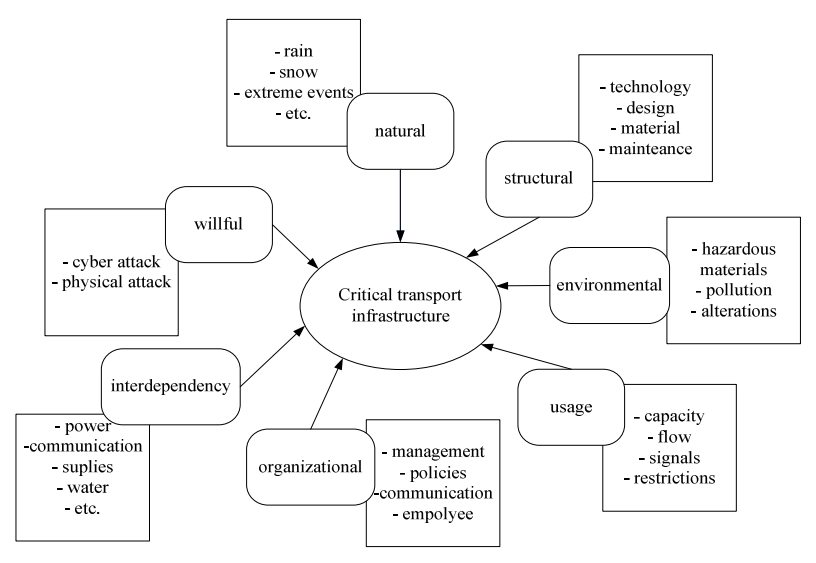
The picture talks faster than words, right? Look at the figure below which explains why ITS is an oxygen mask in the present traffic conditions.

need for ITS is shown
NEED FOR ITS

From the figure, we can reach at the following conclusions.

  • The transportation system framework is highly complex
  • It is composed of a wide range of infrastructures, such as terminal facilities, travel ways, transportation fleets, and information systems
  • Transport should be open and accessible, extensive and ubiquitous, effective and adaptable
  • Critical transportation infrastructure has great importance for the national economy, security and functioning of the state
  • It is essential for:
  1. national priority
  2. providing basic services
  3. their reliability and availability
  4. ensuring trade flows
  5. supports economic growth

Now, we are going to jump on to the interesting topic related to the intelligent transport system.

Applications of intelligent transportation system

A person in car using tracking feature in screen
Tracking feature in screen

The important applications of intelligent transportation system are broken down in this section. Starting from the familiar electronic ticket machines,

1.Electronic ticket machines

  • Replacement of conventional ticket sytem by electronic ticket machines.
  • ETM acts as the focal point for peripheral devices (e.g. card readers) with which it can communicate
  • The ETM has two distinct aspects, which provided the twin platforms of operational/data generating devices, and back-office/data analysis systems :
  1. Cash receipts and sales management
  2. Data generation, understanding of the business

2. MCV

These are one of the interesting applications of intelligent transportation system.

  • These MCVs were connected to the ETMs by the RS485 network
  • Received initiation and reference data from the ETMs
  • Passed their transaction data back to the ETMs for storage and subsequent transfer to the company’s data systems

3. Autofare system- ancient among applications of intelligent transportation system

  • The Autofare system was implemented in 1995
  • Drivers no longer handled any cash or gave change
  • Customers purchasing a ticket on board placed sufficient cash in the autofare device
  • The driver issued a ticket from the ETM for the requested fare
  • If the cash tendered exceeds the fare, a supplementary receipt is also printed from the ETM for the difference
  • When the tickets are issued, the cash drops into a safe beneath.
  • While the autofare achieved is the primary function, it had multiple issues:
  1. Very high back-office burden – removal of safes every day, handling the safes, transfer of safes and money, safe management and reconciliation
  2. Cash reconciliation and accountability, since multiple drivers may be assigned to a bus during the day, and hence associated with the takings in the individual safe
  3. Limited integration with the ETM

4. Radio system

  • Implemented a Trunked Radio System, broadly similar to mobile phone.
  • This gives call privacy, the dispatcher controls the radio exchanges, calls the drivers individually,
  • The drivers cannot directly initiate calls but must request to speak and await the dispatcher contacting them
  • Group calls can also be made
  • An emergency facility is available which overrides and allows the driver to communicate directly.

5. Wayfarer ATM

The main characteristics are:

  • It replicates the functions of the old ETM system, with which everyone was familiar
  • The entire fares and routes tables can be held by the ETMs, due to greater memory capacity
  • It supports the Integrated Ticketing System – i.e. the ticketing requirements of the scheme supported by the Department of Transport (this was obligatory on Dublin Bus)
  • Wireless communications are used for data downloads
  • this removes the previous requirement for portable data modules which each driver had to bring to the depot for download at the end of his/her shift
  • Wireless communication is also used for uploading information and data updates
  • Used for uploading software upgrades, removing the previous requirement to physically change the (E)EPROMs in each ETM every time software was amended

6. Readers

  • A reader in the cash office downloads the data when the safe is being emptied and the cash counted
  • It automatically knows which bus the safe has come from, and which drivers were associated with it for that day.
  • A permanent identified of the vehicle is embedded in the ETM tray (permanent fixture on the vehicle)
  • This is transferred to the ETM and from the ETM to any other device that needs it.
  • It means that whenever ETMs are switched they automatically pick up the vehicle number, and in turn are automatically assigned within the system.

7. Smartcards- one of the recent applications of intelligent transportation system

  • Smart Cards were implemented in 2008
  •  Smart Card readers are installed on the buses (one per bus) in parallel with the MCVs
  • The SCRs are another device on the ETM-hosted RS485 network.

8. AVLC

  • The AVLC was implemented from 2009
  • This involves real-time tracking of vehicles
  • Buses are polled on a 20 second cycle
  • The location data is based on GPS and Odometer
  • The Odometer provides the primary means of location, with the GPS supplementing it
  • Seems that they left the option open in the tender process, and this was what the market proposed

The AVLC has the following features:

  • Real-time tracking
  • More efficient route control regime
  • Facilitates a centralized control room
  • Generates comprehensive reports and statistics
  • Provides/supports RTPI
  • Support traffic signal priority

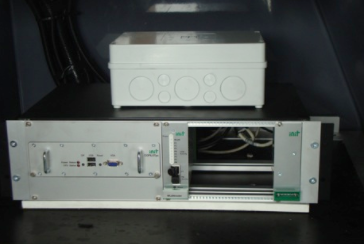
The AVLC kit consists of the following equipment: 

  • Bus radio
  • Driver’s console
  • GPS unit
  • On-board computer
  • Wireless LAN router
Figure shows AVL kit
AVL KIT

8. Real time passenger information- One of the revolutionary applications of intelligent transportation system

Real-time passenger information can process real-time information (forecast arrival times) about the travel information to the passengers.

9. CCTV

It has a network of 140 CCTVs providing excellent coverage of most of the key junctions and streets, and most potential disruptions points for the Dublin Bus network. It is very useful in difficult or disrupted circumstances. 

That was a hell lot of information, right? Relax now. We have reached at the shore of the wide of ITS. The main disadvantages of intelligent transportation system are as follows.

Disadvantages of intelligent transportation system

We have seen some impressive applications of ITS. But who is perfect? Let’s see the important disadvantages of intelligent transportation system below.

  • Difficult to use in mixed traffic
  • Preliminary difficulties in understanding
  • Equipments of ITS is costly
  • High maintenance cost
  • The control system software could be hacked by hackers
  • Can’t make quick response to emergency or congestion due to sudden accident
  • Not dedicated for traffic data collection

What do you think about the disadvantages of intelligent transportation system? Worth giving attention, right? Let’s wrap up with some intelligent transportation system examples to add cherry on the top of the ITS cake.

Intelligent transportation system examples

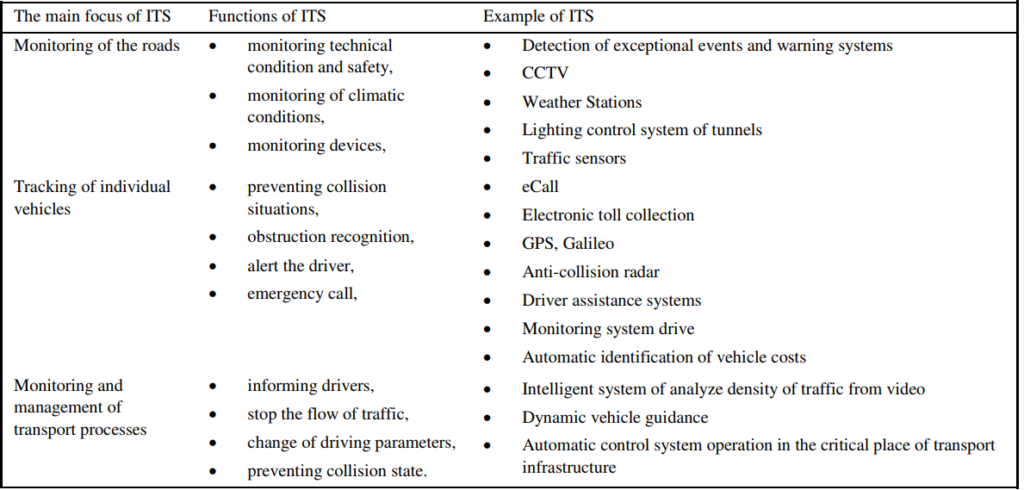
The figure shows the intelligent transportation system examples which comes under each category.

Figure shows ITS examples with categories

So, we are done. Now, Tech-savvy, tell me your feedbacks and doubts in the comments.

Enjoy reading!

MUST READ: Basic of civil engineering; Simple and in-depth guide