
Tag Archives: Environmental protection

What are E-wastes? | Classification and Recycling

E-waste management addresses the growing challenge of handling discarded electronic devices in a safe and sustainable manner. To understand this issue, it is important to know what is e-waste and how rapid technological advancement increases electronic waste generation. Identifying the types of e-waste helps in sorting and handling different electronic components effectively. Proper e-waste classification supports safe handling, treatment, and compliance with environmental regulations. An efficient e-waste recycling process ensures recovery of valuable materials while reducing environmental pollution. Moreover, electronic waste recycling plays a vital role in conserving natural resources and minimizing health risks. Effective e-waste management promotes environmental protection, resource efficiency, and sustainable development in modern societies.

India ranked third in the world in terms of E-waste production last year, behind China (10.1 million tonnes) and the United States (3.2 million tonnes) (6.9 million tonnes). Consumers waste 44 million tonnes of electronics per year, according to a 2019 United Nations study titled “A New Circular Vision for Electronics, Time for a Global Reboot,” and just 20% of that is recycled sustainably. According to the Global E-Waste Monitor 2020, customers discarded 53.6 million tonnes of electronics in 2019, an increase of 20% over the previous five years.

Shocking right? Can you imagine tonnes and tonnes of E-waste piling up? Think of the damage it would do to our mother nature. But what if I say there’s an alternative? Yes, you heard me right. I am talking about recycling or management of the Electronic-waste.

In this blog, I will walk you through Electronic-waste management , different types and its recycling process.

  1. What is e-waste ?
    1. Types or classifications of e-waste
  2. Significance Electronic waste management and recycling
  3. E-waste recycling process
    1. Shredding, Separation, and Material Recovery in E-waste Recycling
  4. Benefits of Recycling
  5. Key Takeaways
  6. Conclusion

What is e-waste ?

E-waste, or electronic waste, refers to discarded electrical and electronic equipment that is no longer usable, repairable, or required. Common examples include computers, mobile phones, televisions, household appliances, and office electronics. As technology evolves rapidly, the generation of electronic-waste continues to increase worldwide. Improper disposal of e-waste can release harmful substances such as lead, mercury, and cadmium into the environment, posing serious risks to human health and ecosystems. Proper handling and recycling of e-waste allow the recovery of valuable materials like metals and plastics while reducing environmental pollution. Understanding what e-waste is helps promote responsible disposal practices and supports sustainable waste management solutions.
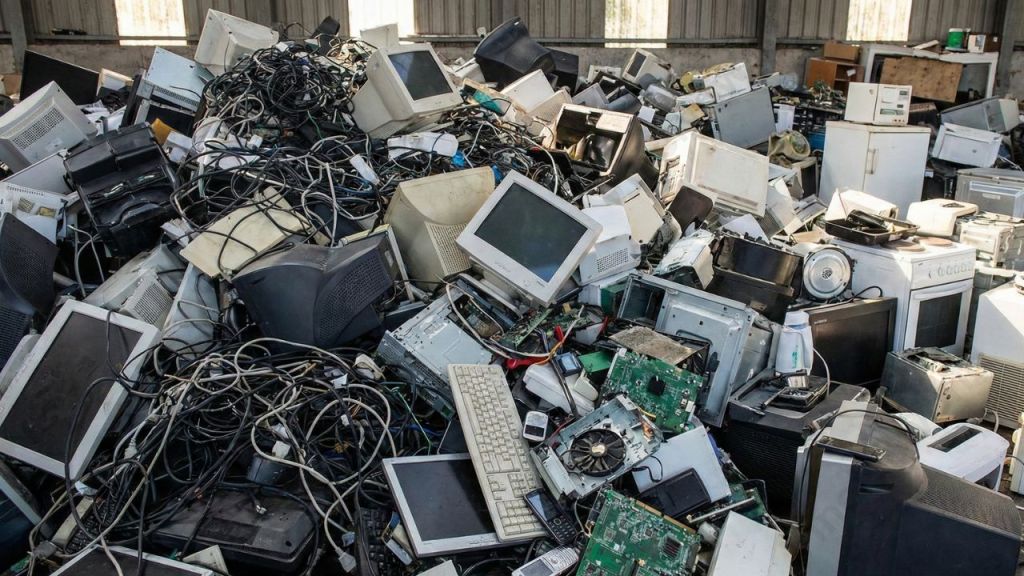
A large pile of discarded electronic devices, including old computers, monitors, keyboards, and tangled cables, in a warehouse setting.
A large pile of discarded electronic devices, highlighting the growing issue of e-waste.

Types or classifications of e-waste

Types of e-waste are classified based on the nature, size, and function of electronic equipment. Proper classification helps in safe handling, efficient recycling, and environmentally responsible e-waste management practices.

The European Directive on Waste Electrical and Electronic Equipment divides waste into ten categories: 

  1. Small household appliances
  2. IT equipment (including monitors)
  3. Consumer electronics (including TVs)
  4.  Lamps 
  5. Luminaires
  6. Toys
  7. Tools
  8. Medical devices
  9. Monitoring and Control Instruments,
  10. Automatic dispensers

Let me brief about the importance of recycling E-waste.
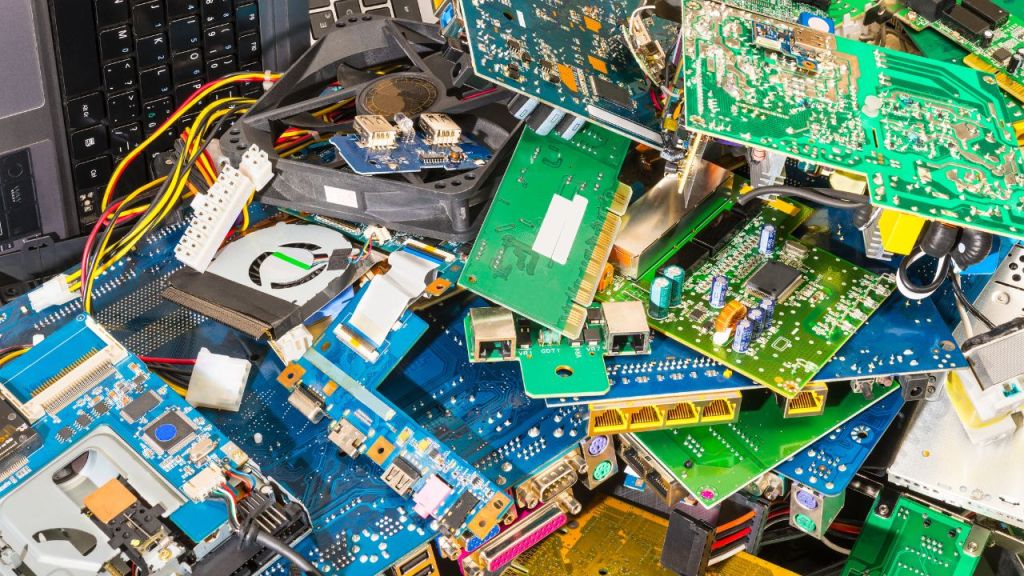
A cluttered pile of various electronic circuit boards and components scattered around, featuring an assortment of colors and types, with a keyboard and wires visible in the background.
A close-up view of various electronic waste components, illustrating the complexity and volume of e-waste generated in modern society.

Significance Electronic waste management and recycling

E-waste management is essential in addressing environmental challenges. It also helps with health challenges caused by the rapid growth of discarded electronic devices. Effective electronic waste recycling helps recover valuable materials, reduces pollution, and supports sustainable development by ensuring safe handling and proper disposal of electronic waste.
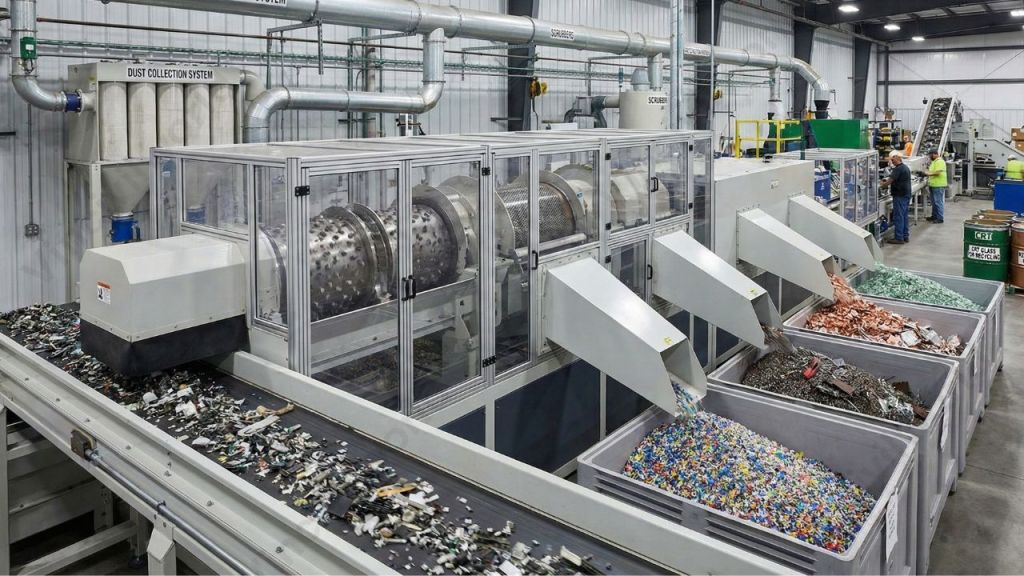
An industrial recycling facility featuring a conveyor belt with mixed waste, sorting machines, and bins for various types of recyclable materials.
An advanced e-waste recycling facility showcasing the shredding and separation process for efficient electronic waste management.

E-waste management is incomplete without recycling. Let’s see the reasons.

  • The aim of extracting metals and plastic from electronic waste is to use them in the manufacture of new electronics.
  •  Recycled metals are two to ten times more energy-efficient than metals smelted from raw ore.
  •  It’s used in tablets, smartphones, and electric car batteries.
  • According to the most recent estimates, the global value of e-waste is about $62.5 billion per year, which is more than the GDP of most countries.  It’s also worth three times what all of the world’s silver mines produce.
  • It can significantly minimise the release of radioactive materials into the atmosphere.
  • Helps to prevent the depletion of natural resources if properly implemented.
  • Reduces exposing workers to toxic and carcinogenic substances like mercury, lead, and cadmium.

E-waste recycling process

E-waste management depends on a well-structured recycling process that ensures safe handling, efficient material recovery, and environmentally responsible disposal of electronic waste. A step-by-step recycling approach reduces pollution, protects human health, and supports sustainable resource utilization.

Recycling printed circuit boards from electronic waste is one of the most difficult tasks. Gold, silver, platinum, and other precious metals, as well as base metals like copper, iron, and aluminium, are used on the circuit boards. 

Some of the ways of processing e-waste includes:

  • Melting circuit boards
  • burning cable sheathing to retrieve copper wire
  •  open-pit acid leaching 

Mechanical shredding and separation is the traditional process, but the recycling efficiency is poor. Cryogenic decomposition is an alternative method for recycling printed circuit board.
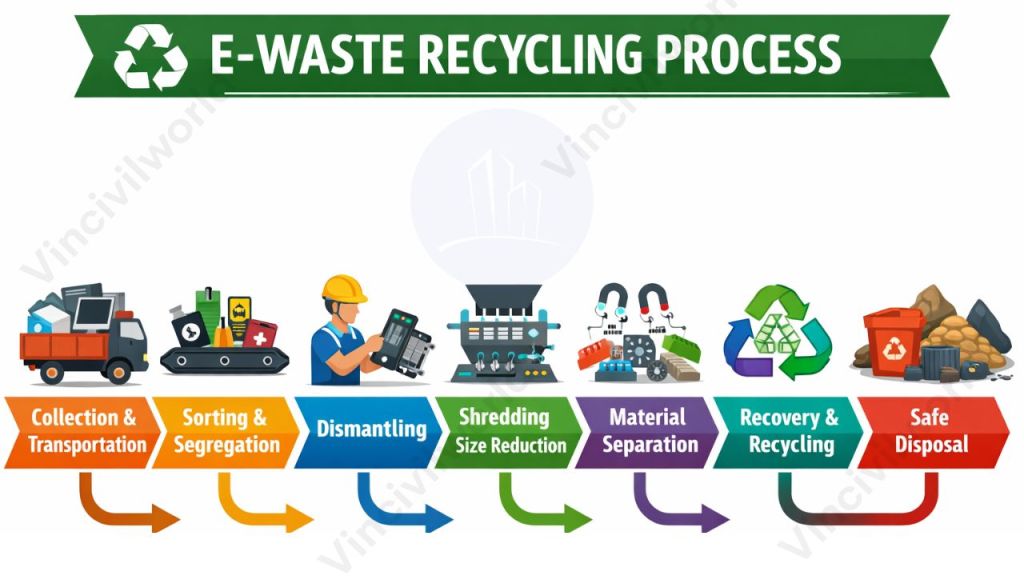
Infographic illustrating the e-waste recycling process, including steps such as collection, sorting, dismantling, shredding, material separation, recovery, recycling, and safe disposal.
Illustration of the E-waste recycling process, highlighting key steps like collection, sorting, dismantling, shredding, material separation, recovery, and safe disposal.

Shredding, Separation, and Material Recovery in E-waste Recycling

  • After dismantling, the material for shredding is conveyed into a crude mechanical separator, where size reduction begins. This stage plays a critical role in effective e-waste management by preparing materials for accurate separation.
  • The system uses screening and granulating machines to separate the constituent metal and plastic fractions. Once separated, these fractions are directed toward appropriate recovery streams and are sold to smelters or plastic recyclers for further processing.
  • This type of recycling equipment is fully enclosed and fitted with a dust collection system to prevent airborne contamination. Additionally, scrubbers and window-based capture systems collect a portion of the pollutants generated during shredding and granulation.
  • Following this, glass, plastic, and ferrous and non-ferrous metals are isolated using magnets, eddy current separators, and Trommel screens. These materials undergo further refinement at smelters.
  • CRT glass is recycled into products such as car batteries, ammunition, and lead wheel weights, or sold to foundries for use as a fluxing agent in raw lead ore production. Valuable metals including copper, gold, palladium, silver, and tin are recovered and sold to smelters for reuse.
  • To protect the atmosphere, hazardous smoke and gases are detected, contained, and treated. Through these techniques, all useful device construction materials are safely reclaimed, ensuring environmentally responsible and efficient e-waste management.
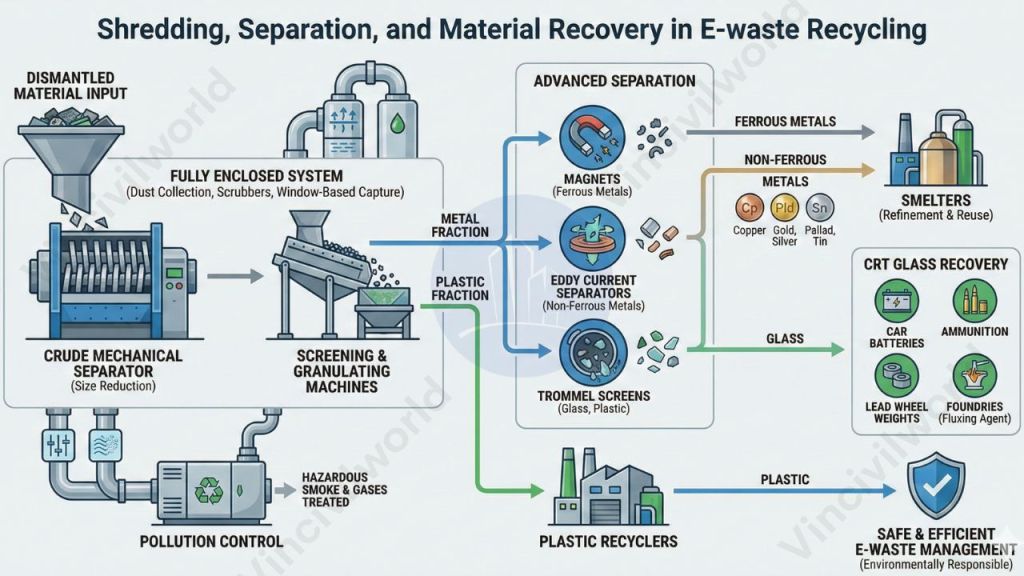
Infographic illustrating the process of shredding, separation, and material recovery in e-waste recycling, including stages like dismantled material input, crude mechanical separation, advanced separation for metals and plastics, and pollution control measures.
Diagram illustrating the shredding, separation, and material recovery processes in e-waste recycling.

Also read : Air pollution – effects and causes

Benefits of Recycling

  • The most successful solution to the growing e-waste issue is to recycle raw materials from end-of-life electronics. 
  • Recycling preserves our natural resources. 
  • Dismantling and reuse options prevent air and water contamination induced by hazardous disposal.
  • Furthermore, recycling decreases the amount of greenhouse gas emissions generated by new product production. 

Key Takeaways

  • E-waste management addresses the safe handling and disposal of discarded electronic devices.
  • Rapid technological advancement has significantly increased global electronic waste generation.
  • India ranks among the top e-waste–producing countries, highlighting the urgency of proper management.
  • Understanding what is e-waste helps promote responsible disposal and recycling practices.
  • Proper types and classification of e-waste support efficient collection and treatment.
  • Recycling enables recovery of valuable metals such as gold, copper, and silver.
  • Effective electronic waste recycling reduces environmental pollution and health risks.
  • Advanced recycling processes improve material recovery efficiency.
  • E-waste recycling conserves natural resources and saves energy.
  • Sustainable e-waste management supports environmental protection and circular economy goals.

Conclusion

E-waste management has become a critical environmental priority due to the rapid growth of discarded electronic devices worldwide. Understanding what e-waste is, along with its classification and recycling methods, helps address the environmental and health challenges associated with improper disposal. Efficient electronic waste recycling recovers valuable materials, reduces pollution, and minimizes the release of toxic substances into air, soil, and water. In countries like India, where e-waste generation is rising sharply, strong regulations and public awareness play a vital role in effective implementation. By adopting structured recycling processes and responsible consumption habits, societies can conserve resources, reduce energy use, and promote sustainable development.

Proper e-waste management is essential for protecting ecosystems and ensuring a cleaner, healthier future. Considering the huge volume of E-waste generated everyday recycling them is the need of the hour. India has formulated and notified its strategy to tackle e-waste through the e-waste (Management) Rules, 2016. Recycling reduces pollution, saves energy and conserves resources.

That’s it about E-waste. Hope you found it useful.

Wind Energy: Definition, Advantages, and Future

Wind energy is one of the most promising sources of renewable power, harnessing the natural movement of air to generate clean electricity. As a renewable source, wind energy reduces dependence on fossil fuels and helps combat climate change. It works through wind turbine power generation, where large blades capture kinetic energy and convert it into electrical power. Understanding how wind energy works reveals its efficiency and growing role in modern energy systems. While there are wind energy advantages and disadvantages, its benefits—such as sustainability and low operating costs—far outweigh its limitations. Today, wind energy applications extend from powering homes and industries to supporting national grids, making it a cornerstone of the global transition toward sustainable energy and a cleaner future for generations to come.

Wind Energy is one of the booming clean energy technologies. According to IRENA’s latest data, global installed wind-generation capacity onshore and offshore has expanded by about 75 times in the last two decades, from 7.5 gigawatts (GW) in 1997 to 564 GW in 2018.

Ever wondered how those massive rotating turbines powered up an entire locality? Join me on this journey to a wind farm exploring the wind turbines, their working, advantages and disadvantages. Let’s get started

  1. How does wind energy work ?
  2. Wind turbine power generation
  3. Equation for Wind Power
    1. Density of Air
    2. The swept area of the turbine
  4. Wind energy advantages and disadvantages
    1. Wind Energy Advantages
      1. Free Fuel
      2. Clean source of energy
      3. Doesn’t Affect Farming Operations
      4. Reduces our dependence on fossil fuels
    2. Wind Energy Disadvantages
      1. Harms wildlife
      2. Noisy
      3. Expensive Initial Investment
      4. Unreliable and Unpredictable
  5. Wind Energy Applications
    1. List of Wind Energy Applications
  6. Wind Energy Future
  7. Conclusion

How does wind energy work ?

Wind energy works by using wind turbines to convert wind power into mechanical energy. This energy is then transformed into electricity through a generator. The process produces clean and renewable wind energy. Wind energy or wind power refers to the process of using the wind to generate mechanical or electrical power. This mechanical energy can be employed for specialized purposes such as pumping water or it can be converted to electricity using a generator.

Graphic illustrating wind turbine power generation with labeled components, showcasing the conversion of wind into clean electricity.
Illustration of wind turbine power generation, showcasing how wind is converted into clean electricity.

A wind farm is a collection of wind turbines that are all located in the same area. A huge wind farm can include hundreds of separate wind turbines spread out over a vast region. The Gansu Wind Farm is the world’s largest wind farm. We can utilize the land between the turbines for farming or other activities. In a fully established wind farm, we place a distance of 7D (7 times the rotor diameter of the wind turbine) between each turbine.

Individual turbines in a wind farm are linked by a medium-voltage power gathering system and a communication network. This medium-voltage electric current is boosted in voltage by a transformer at a substation before being connected to a high-voltage electric power transmission system.

Let’s understand how wind energy works and the working of a wind turbine.

Wind turbine power generation

Wind turbine power generation converts natural wind energy into clean electricity using advanced wind turbines. This process harnesses the kinetic force of the wind, making wind turbine power generation a reliable, sustainable, and eco-friendly solution for renewable energy production worldwide.

The aerodynamic force from the rotor blades, which act similarly to an aeroplane wing or helicopter rotor blade, converts wind energy into electricity in a wind turbine. The air pressure on one side of the blade lowers when the wind blows across it. This difference in air pressure across the two sides of the blade generates lift and drag.

A row of wind turbines standing tall in a clear blue sky, capturing wind energy in a vast open landscape.
A wind farm featuring multiple turbines against a clear blue sky, demonstrating the renewable energy potential of wind power.

The lift force is greater than the drag force, causing the rotor to spin. The rotor is connected to the generator directly or through a shaft and a series of gears that speeds up the rotation. The conversion of aerodynamic force to the generator’s rotation generates power.

Equation for Wind Power

The power that a wind turbine generates, P = 0.5 DAV3

where D = Density of the air

V = Wind Speed

A = Swept area of the turbine

Let me explain in detail how each parameter affects wind power.

Wind Speed
The quantity of energy in the wind is proportional to the cube of the wind speed. For example, if the wind speed doubles, the energy in the wind increases by eight times. Hence we can understand that wind speed fluctuations have a significant impact on the quantity of power available in the wind.

Density of Air

The denser the air, the greater the energy the turbine receives from the wind. The density of the air changes with altitude and temperature. Higher elevations have less dense air than sea level, while warm air has less density than cold air. Turbines will produce greater power at lower elevations and in areas with cooler average temperatures, assuming all other factors are equal.

The swept area of the turbine

The larger the swept area, the more wind power the turbine can capture. The swept area is the region through which the rotor rotates. The swept area (A= pi*r2) is proportional to the square of the radius of the rotor. A slight increase in the length of the blade results in a greater increase in the power available to the turbine.

Wind energy advantages and disadvantages

Wind energy advantages and disadvantages highlight both the benefits and challenges of this renewable source. Among key wind energy advantages are sustainability, low operating costs, and zero emissions. However, wind energy disadvantages include noise, visual impact, and dependency on weather conditions. Understanding wind energy advantages and disadvantages helps balance efficiency with environmental and social considerations.

Wind Energy Advantages

Wind energy is a cost-effective choice for many places of the world because it does not require direct sunshine exposure like solar energy. It offers several advantages such as:

Free Fuel

There is no need for extra fuel since wind turbines run only on the power supplied by the wind. After mounting a turbine it does not need to be fueled or connected to power to continue working. This lowers the overall cost of maintaining large-scale wind farms.

Clean source of energy

Wind energy does not contribute to global warming and climate change by producing greenhouse gases during energy generation. It does not rely on fossil fuels to power the turbines. Wind energy only emits greenhouse gases indirectly during the production and transportation of wind turbines, as well as during the installation process. In the long term, this amounts to very low emissions.

Doesn’t Affect Farming Operations

Wind turbines can be built on pre-existing farmland. Energy providers can pay farm owners to build wind farms on their land through contracts or leases. As wind turbine footprints take up very little ground space, it won’t interfere with the farm’s produce. Offshore windfarms helps in saving space.

Aerial view of a wind farm with multiple offshore wind turbines standing in a body of water, illuminated by the soft glow of a sunset.
Aerial view of an offshore wind farm, showcasing the tall turbines harnessing wind energy for clean electricity generation.

Reduces our dependence on fossil fuels

Energy from fossil fuel not only contributes to climate change, but it will also run out one day. There is an unlimited supply of wind as long as the sun heats the planet.

Wind Energy Disadvantages

Although wind energy is a renewable and environmentally friendly source of energy, it still has drawbacks and limitations.

Harms wildlife

Wind turbines can harm wildlife. The blades of wind turbines can harm or kill the flying birds and bats that come into contact with the blades. Aside from wildlife that soars through the air, noise pollution from spinning blades may have an impact on animals on the ground.

Noisy

Since wind turbines can be rather noisy, we can mount them only in remote places where few people dwell. Noise isn’t a concern in the case of offshore turbines. As technology advances, we have newer designs that lessen noise issues and offer a much quieter presence.

Expensive Initial Investment

Wind turbines are gigantic structures that are often hundreds of feet tall and demand significant initial investment. The installation of wind turbines in rural areas necessitates additional investment in underground lines to transport power to more populated areas such as towns and cities.

Unreliable and Unpredictable

Wind energy is subject to intermittency, which is a disturbance due to the wind’s inconsistency. Since wind can blow at different speeds, it’s difficult to anticipate how much energy it can deliver at any particular time. This means that suppliers and towns must have an energy reserve or alternate sources of power. This is in the event that the winds stop blowing for an extended period of time.

Wind Energy Applications

Wind energy applications span across multiple sectors, offering clean, renewable power for homes, industries, and utilities. From electricity generation and water pumping to hybrid power systems, wind energy applications reduce carbon emissions, enhance sustainability, and support energy independence across both rural and urban environments worldwide.

List of Wind Energy Applications

  1. Electricity Generation: Powering homes, businesses, and grids through wind farms.
  2. Water Pumping: Common in agricultural and remote areas for irrigation and livestock.
  3. Hybrid Energy Systems: Combined with solar or diesel generators for continuous power supply.
  4. Desalination Plants: Used to power systems that convert seawater to freshwater.
  5. Battery Charging Stations: Especially in off-grid or mobile setups.
  6. Telecommunication Towers: Ensuring consistent energy in remote regions.
  7. Street Lighting: Sustainable lighting using small wind turbines.
  8. Heating and Cooling: Supplying electricity for energy-efficient HVAC systems.
  9. Industrial Power: Supporting green manufacturing processes and reducing fossil fuel dependence.

Wind Energy Future

Wind energy can assist in the production of green hydrogen and green ammonia which are future fuels. This will hasten our rate of energy transformation and reduce the necessity for large-scale, high-cost oil exports.

When we combine all benefits of wind energy and solar energy, we are on our way to realising the full potential of renewable energy through wind-solar hybrid projects. These initiatives will boost efficiency while also ensuring power continuity and consistency. Check out our blog Solar Energy- Definition, Advantages and Future to know more about solar energy.

Shall we wrap up?

Key Takeaways

  • Wind Energy is a promising renewable power source that converts the kinetic energy of wind into electricity.
  • Wind turbines capture wind energy, generating mechanical energy that transforms into electricity via a generator.
  • While Wind Energy offers advantages like sustainability and low operating costs, it also has disadvantages such as noise and wildlife impact.
  • Global wind generation capacity has significantly increased, highlighting its expanding role in clean energy solutions.
  • The future of Wind Energy includes contributions to green hydrogen and solar hybrid projects, enhancing efficiency and reducing fossil fuel dependence.

Conclusion

Wind energy is generated by the natural movement of air caused by the uneven heating of Earth’s surface by solar radiation, making it an indirect form of solar energy. By harnessing wind energy power generation, we can produce clean, renewable electricity without releasing harmful emissions. The advantages of wind energy include sustainability, cost-effectiveness, and minimal environmental impact, while the disadvantages of wind energy mainly involve noise and intermittency. However, with advanced wind energy technology and innovative wind energy applications, these challenges are rapidly being overcome. By adopting wind energy systems alone or alongside solar power, we can reduce our dependence on fossil fuels and move toward a greener, self-sustaining energy future for all.

Happy Learning.