All posts by Vinod Gopinath

Components of dam – 12 dam components explained

Components of dams have specific functions in managing their primary responsibility of water management. Dams are structures built across water bodies to control water flow and levels. Furthermore, dams are also required for a wide range of projects, including small irrigation and water supply schemes as well as larger hydropower and disaster management schemes. Dams’ primary responsibility of managing water is managed by each component in a specific way. The components of the dam and their functions are discussed in this article.

The upstream side of a dam is the area where the water is collected. The water level is high on the upstream side. The downstream is the section of the barriers with low water levels.

Components of Dams - Audio
Components of Dams – Audio
  1. Advantages of Dams
  2. Components of Dams
    1. Water-retaining structure – Components of Dam
      1. Heel 
      2. Toe
      3. Abutment
      4. Crest/Roadway of Dams
      5. Cut off 
      6. Parapet wall
    2. Water-releasing structure: Components of dams
      1. Galleries
      2. Spillway
      3. Diversion tunnel
      4. Sluice way
      5. Free board
    3. Water conveying structure – Components of dams
      1. Conduit
  3. Examples of some major dams
    1. Bhakra Dam ( Gravity dam )
    2. Idukki dam ( Arch dam )
    3. Nagarjuna Sagar Dam (Masonry Dam)
    4. The Hirakud Dam (Earthern dam)
    5. KARIBA DAM (Double curvature arch dam)
  4. Key Takeaways
  5. Conclusion

Advantages of Dams

The dams provide a range of environmental, economic and social benefits. One of the most important benefits of dams is water storage. The stored water is used for drinking, cleaning, bathing, gardening, irrigation purposes, and industrial purposes.

Dams may be constructed to meet the following functions

  • Water storage: Dams are one of the major sources of water for domestic uses. These include cooking, cleaning, bathing, washing, and drinking water. They are also used for gardening, agricultural uses, and industrial purposes. The water is supplied through the canal or with the help of a pipe system from the dam.
  • Irrigation – The water from the dams is diverted through canals. It is directed to fields where the water level is low. This process is used for irrigation purposes.
  • Hydroelectric power – The water stored in the dam is passed through turbines for hydroelectric power generation.
  • Flood prevention – The water level of rivers, streams, etc is maintained by constructing dams across it. This prevents the loss and damage from unexpected floods. 
  • Recreation – The water stored in the dam is used for fishing, boating, and other recreational activities.
  • Debris control – The dam also provides the retention of hazardous material and protects the environment.

Components of Dams

The components of dams play an important role in maintaining the primary responsibility of water management. The parts of the dams are broadly classified as follows.

  • Water-retaining structure
  • Water-releasing structure
  • Water conveying structure
Components of a dam

Components of Dam – Youtube video

Water-retaining structure – Components of Dam

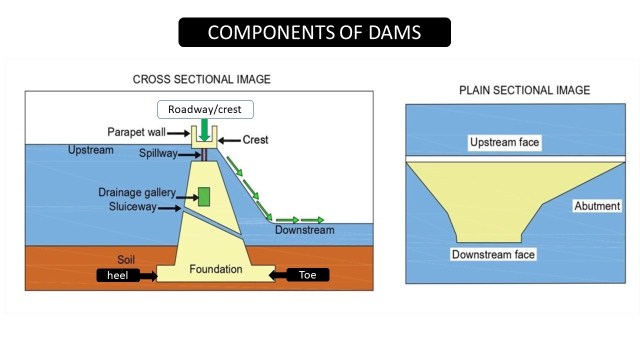
The water-retaining structure is the dam’s walled structure that resists water while allowing a controlled amount to flow downstream. The side of the barrier where water is collected is known as the upstream side. Where the water flows is known as the downstream side. Generally, the following component of dams makes up the dam’s water-retention section

  • Heel
  • Toe
  • Abutment
  • Crest
  • Cutoff
  • Parapet wall
Components of dams
Components of dam
Sluice way
Sluice way

Heel 

The part of the dams meeting with the groundwater or upstream side is called the heel. (Ref fig.)

Toe

The portion of the dams meeting with the groundwater or downstream side is called the Toe.(Ref fig)

Abutment

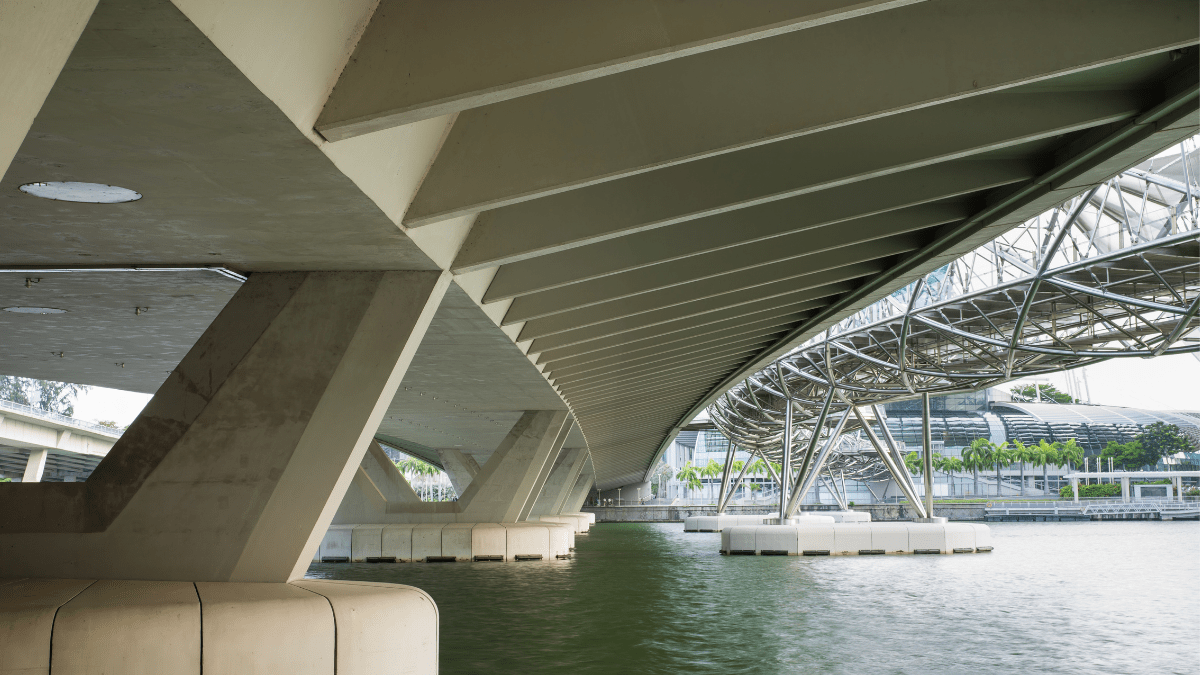
Abutments support the lateral pressure. These are the sides of the valley. These are concrete or masonry structures. 

Crest/Roadway of Dams

The section of the dams used as a roadway or walkway is the crest. It is the upper area of the dam.

Cut off 

The cut-off is an impervious barrier constructed beneath the earthen dams. The main function is to reduce the loss of stored water in the reservoir by preventing seepage.

Cut off of earthen dams
cut off – Earthen dams

Parapet wall

The parapet wall is seen below the crest near the roadway. This assists in the dam investigation and safety barriers.

Water-releasing structure: Components of dams

Mainly, the components of dams that allow water to flow downstream are known as the water-releasing structure. These dam components are technically known as the dam’s spillways. The spillway’s mechanism allows for controlled water volume. A spillway contains the following components.

  • Galleries
  • Spillways
  • Diversion tunnel
  • Sluice way
  • Free board

Galleries

These are hollow openings passing through the dam as shown in fig. The main purpose of providing a drainage gallery is to collect seepage water from the foundation and body of the dam and drain it out. The seepage water received by foundation galleries is drained away under gravity. The galleries are broadly divided into …

  • Grouting gallery
  • Inspection Gallery
  • Drainage gallery
  • Valve gallery
  • Transformer Gallery

Spillway

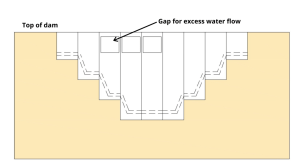
The role of the spillway is to convey excess water and prevent damage. The water passes from upstream to downstream. The spillway helps in the emergency discharge of water. 

They are two varieties

  • Controlled spillway 
  • Uncontrolled spillway

In a controlled spillway the flood flow is regulated by the gate. 

Also Read : Spillway types and features – A comprehensive guide

Diversion tunnel

The purpose of the diversion canal is to redirect the water. Diversion tunnels are constructed during the construction stage of dams.

A diversion tunnel may also be constructed to divert floodwater. It can redirect water from mountainous regions to low-lying areas experiencing a water shortage supply.

Sluice way

The role of the sluiceway is to remove the silt accumulated. 

Free board

The interval between the dam heads to the maximum water level on the upstream side.

Water conveying structure – Components of dams

Water-conveying structure mainly conduit and conveys the water from reservoirs through, around, or under an embankment dam

Conduit

These are closed pipe structures. Conduits act as a passage for the water supply. Bottom discharge conduits are pipes. They cross the body of the dam from the upstream to the downstream sides. This enables water flow.

Examples of some major dams

Bhakra Dam ( Gravity dam )

The Bhakra Dam is an Indian gravity dam built across the river Sutlej in Himachal Pradesh. This dam is constructed in 1963. The height of the dam is 226 meters. The length of the dam is 518 meters.
Gobind Sagar is a reservoir of this dam. The Bhakra Dam is composed of alternating layers of light red clays and sandstone.
This dam has four spillways. It helps in irrigation, hydroelectric power generation and recreation. The major source of irrigation water supply in Haryana, Punjab and Rajasthan is this dam.

Idukki dam ( Arch dam )

Idukki dam is an arch dam constructed across the Periyar river in Kerala. It is 554 feet high. One of the biggest arch dams in Asia. The dam provides hydroelectricity, irrigation and tourist destinations. It is built between Kuravan and Kurathi hills.

Idukki Dam - Arch dam
Idukki dam

Nagarjuna Sagar Dam (Masonry Dam)

Nagarjuna Sagar Dam is a stone masonry dam completed in 1967. The dam is a symbol of modern architecture. The purpose of this project was to generate hydroelectricity. It has a 26-crest gate.

The Hirakud Dam (Earthern dam)

The Hirakud dam is located in Orissa state over the river Mahanadi near Sambalpur. The length of the dam is 4800 meters and 59 meters high. It is the oldest multipurpose dam completed in 1957.
The Hirakud Dam is the 4800-meter long and 59 meters high. The gross storage capacity of the dam is 1841 million cum.

KARIBA DAM (Double curvature arch dam)

Kariba Dam is a double curvature arch dam constructed in 1960. It has been built over the Zambezi river. The crest length is 620m and 128m high. The dam provides an example of improving the quality of rocks.

Key Takeaways

  1. Primary Functions: Dams manage water for various uses, including storage, irrigation, hydroelectric power, flood prevention, recreation, and debris control.
  2. Components: The main components include water-retaining structures such as the heel, toe, abutment, crest, cutoff, and parapet wall. Water-releasing structures include galleries, spillways, diversion tunnels, sluice ways, and freeboard. Water-conveying structures are conduits.
  3. Types of Dams: Dams vary by construction and purpose. Examples include gravity dams, arch dams, masonry dams, earthen dams, and double curvature arch dams.
  4. Examples: Major dams include Bhakra Dam, Idukki Dam, Nagarjuna Sagar Dam, Hirakud Dam, and Kariba Dam.
  5. Environmental and Economic Benefits: Dams provide essential benefits like water supply, power generation, flood control, and recreational opportunities.

Conclusion

Dams are crucial infrastructure for effective water management and offer significant environmental, economic, and social benefits. We can appreciate the role of dams by understanding their various components and functions. They are important for water storage, irrigation, hydroelectric power, and flood prevention. Each component plays a vital part in the dam’s functionality. From the water-retaining to the water-releasing and conveying structures, they ensure efficiency. Examples like Bhakra Dam, Idukki Dam, and Kariba Dam demonstrate the diverse applications and benefits of these impressive engineering feats. Effective dam management is essential for sustainable development and environmental protection.
Types of Raft Foundations – Advantages and features

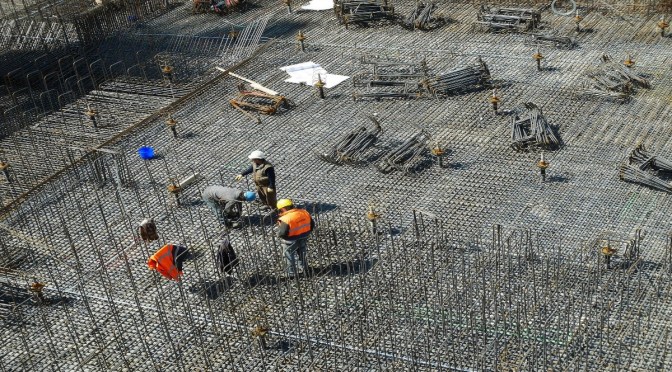
Types of Raft Foundation are chosen based on a variety of criteria, including bearing capacity, applicable loads, site conditions, cost-effectiveness, etc. A raft foundation is a continuous slab resting on the soil and covering the entire area of the proposed structure. This is one of the most commonly used types of foundation in construction. Raft foundation types are classified according to their application.

But what is a raft foundation? It is a large concrete slab that spreads the load of the building over a wide area. This helps prevent uneven settling. There are various types of raft foundations, each with its unique features. Understanding raft foundation types is crucial for selecting the right one for your project. Raft foundations are versatile, cost-effective, and efficient. This blog will explore the different types of raft foundations, their advantages, and features, helping you make an informed decision for your construction needs.

  1. What is a raft foundation?
  2. Types of raft foundation – Principle
    1. Soil Stress Calculation
  3. Why choose Raft Foundations?
  4. Types of Raft foundations
  5. Types of raft foundations: Solid slab raft foundation
    1. Flat raft mat foundation
    2. Wide-toe raft
    3. Blanket raft foundation
    4. Slip plane rafts
  6. Slab beam-type raft foundation
  7. Piled raft foundation
  8. Cellular raft foundation
  9. Balancing or floating raft foundation
  10. Advantages of the Raft foundation
  11. Disadvantages of raft foundations
  12. Key Takeaways
  13. Conclusion

What is a raft foundation?

A raft foundation/mat foundation is a solid slab that is placed at a specific depth and spreads across the entire structure. Raft foundations have shear walls and columns to transfer loads from the structure to the ground. These foundations are typically used when the soil’s bearing capacity is low and it becomes challenging for individual footings to handle the loads. The raft foundation aids in transferring the entire load of the structure to a larger area. This type of foundation helps prevent uneven settling.

There are different types of raft foundations, each designed for specific needs. Knowing the various raft foundation types is essential for choosing the right one for your project. Raft foundations are cost-effective and versatile, making them a popular choice in construction. By understanding what a raft foundation is, you can make informed decisions for your building’s foundation needs.

Types of Raft foundation

Types of Raft foundations – Youtube video

Video of Raft foundation- Types and Advantages

Types of raft foundations – Related articles from vincivilworld

Types of raft foundation – Principle

The raft foundation distributes the total loads from the structure over the entire area of the structure. When compared to other types of foundations used in civil construction, they can reduce soil stress. Raft foundations differ from other foundations due to this mechanism of stress distribution.

Soil Stress Calculation

stress = total load coming on the structure + self-weight of raft/ Area of raft foundation

Consider a total load is 300 T and a foundation size

Size : 20 m x 10 m

Stress on the soil = 300/200 = 1.5 t/sqm

The same structure supported with 8 individual footing

Size : 2m x 2 m

Total area = 8 x 4 = 32 sqm

Stress on soil = 300/32 = 9.375 t/sqm

This shows that same load we are getting stresses of 1.5 T/sqm for raft and 9.375 T/sqm for individual foundations.

As the contact area of the raft is more the load is distributed over a larger area and hence stresses coming on the soil are very less.

Why choose Raft Foundations?

Raft foundations are typically preferred over other foundations when one of the following situations arises.

  • Individual footing design and pile foundation construction can be expensive when the soil’s bearing capacity is very low.
  • When the soil’s bearing capacity is less and it is essential to minimise stresses that have been induced into the soil.
  • The columns, shear walls, and so on are so close to each other that individual footings may overlap.
  • Any other type of foundation may cover more than 50% of the total ground area beneath the structure.
  • When a possibility of unequal settlement exists.
  • Preferred for complex equipment foundations.
  • Used when the proposed structure includes basements.

Raft foundations are appropriate for basement buildings where the foundation slabs will be subjected to direct live loads depending on the utility of the building. Raft foundations are a better choice because excavations can be finished with the aid of light excavators in areas with poor soil conditions and limited access to heavy excavation equipment.

Types of Raft foundations

The types of raft foundations are chosen based on a variety of factors, including bearing capacity, applications, cost-effectiveness, and so forth. Raft foundations are broadly categorized as follows.

  • Solid Slab Raft Foundation
  • Slab Beam Raft Foundation
  • Piled Raft foundation
  • Cellular Raft Foundation
  • Balancing or Floating raft foundation

Types of raft foundations: Solid slab raft foundation

In a Solid slab raft foundation, the columns and walls are equally spaced, and the load distribution is also equal. Because they are designed as slabs of uniform thickness, these raft foundations are known as solid slab raft foundations. These foundations are reinforced with a bottom layer and a top layer.

Solid slab raft foundations are classified into four types.

  • Flat raft mat foundation
  • Wide toe raft
  • Blanket raft foundation
  • Slip plane rafts

Flat raft mat foundation

Flat raft mats are used for small buildings with uniform column spacing and a foundation that covers the entire structure. These foundations have bottom and top reinforcements.

Types of raft foundation - Flat raft mat
Types of raft foundation – Flat raft mat

Wide-toe raft

A wide-toe type of raft foundation is used when the structure needs to be economical. A full-size solid slab mat foundation may not be required to support the structure’s loads. In that case, a heavily reinforced toe is provided on both sides, as shown in the figure, to handle the loads.

Types of raft foundation - Wide-toe raft
Wide-toe raft

Blanket raft foundation

blanket raft foundation

Blanket rafts are used when the surface has unequal settlements or nonuniform strata. In this type of situation, stone blankets will be laid as shown in the figure on a compacted surface. The stone blankets and raft shoes help to distribute the load on the structure.

Slip plane rafts

The slip plane raft foundation has a fully compacted sand bed beneath the raft. To facilitate the transfer of loads, the sand bed size should be slightly larger than the raft size. The sides of the foundation can be filled with any compressible material.

Slip plane raft foundation

Slab beam-type raft foundation

slip plane raft foundation

Slab beam-type raft foundations are used when the loads are unequally distributed and the foundation is prone to distortions. Beams included with the slabs serve as stiffeners. The raft is reinforced with two layers of mesh, one at the bottom and one at the top. The beams can offer additional stiffness and guard against distortion.

Piled raft foundation

piled raft foundation

Rafts are supported by pile foundations in this type of Mat Foundation, as illustrated in the figure. When the loads on the structure are extremely high, the soil bearing capacity is very low, and the water table is very high, these foundations are used. Piled raft foundations are ideal for high-rise buildings, and heavy industrial structures such as high-rise RCC chimneys, silos, and storage tanks that are typically supported by a single foundation element. Due to their high cost, they are not commonly used in residential applications. Piled raft foundations eliminate the need to design a very heavy raft foundation or a very conservative pile foundation with larger depths.

Instead, they opt for a combination of an optimised raft foundation and a pile foundation capable to share the loads. Over the pile foundation, the raft foundation floats. Typically used in structures such as chimneys, silos, bunkers, and overhead storage tanks where even minor soil settlement may cause the structure to fail.

Cellular raft foundation

cellular raft foundation

A cellular raft is made up of two-way foundation beams with a solid slab on the ground below and a suspended slab on top. The upper and lower slabs are joined by intermediate beams, transforming the foundation into an I-beam structure.

For covering the top slab, precast soffits can be used. The top slab is cast using precast soffits or other types of permanent formwork or sacrificial formwork, and it is filled with lightweight infill blocks.

Typically used in areas subjected to heavy mining activity and with poor soil-bearing capacities. The foundations must withstand massive bending moments. They are the preferred option in these cases. Cellular rafts are used when removing overburdens resulting in increased bearing capacity. Cellular rafts can be used to control soil uplift pressure.

Balancing or floating raft foundation

Balancing rafts or floating foundations are used in areas where the soil’s bearing capacity is very low and the soil settlements must be kept within an acceptable range.

The floating foundation operates on the principle that the total weight of the soil and water removed from the excavated area must equal the weight of the proposed structure.

Advantages of the Raft foundation

completed raft foundation.
  • Raft foundations are a safe and cost-effective alternative to other shallow and deep foundation types.
  • Raft foundations are preferred in areas with low soil bearing capacity, uneven settlement, and mixed soil types. The load-bearing capacity of these foundations is achieved by distributing stresses over a larger area.
  • In densely populated urban areas, access to the sites is frequently restricted, making it impossible to mobilise heavy equipment for foundation construction using other techniques. Raft foundations can be built with very little equipment because of their low heights.
  • Raft foundations, when compared to other isolated foundations, provide a much-needed option for designers in terms of limiting settlement limits within the codal provisions.
  • When deciding on settlement values, the designers have the option to choose higher values when compared to standard foundations. The raft foundation prevents uneven settlement.
  • Raft foundations are a very flexible design option that can be customised to the soil conditions and workability.
  • The execution of a raft foundation is simpler than that of individual footings. This, in turn, can speed up the project.

Disadvantages of raft foundations

Most of the time, raft design is not considered economically when the soil conditions are extremely poor. Complex raft foundations consume a large amount of concrete and steel and necessitate precise professional/technical supervision and workmanship. As a result, the structure is more expensive than any other alternative foundation. The soil beneath the foundation, especially near the edges, must be preserved.

Key Takeaways

Understanding the types of raft foundations is crucial for making informed decisions in construction. Raft foundations are continuous slabs of concrete that distribute loads across a wide area, preventing uneven settling and providing stability in poor soil conditions. They are versatile and cost-effective, making them popular in various construction projects. Different types of raft foundations, such as solid slab, slab beam, piled, and cellular rafts, each offer unique advantages tailored to specific structural and soil requirements. By choosing the appropriate raft foundation type, you can ensure the stability and durability of your building while optimizing construction costs and efficiency.

Conclusion

Raft foundations are an essential element in modern construction, particularly in areas with challenging soil conditions. They provide a robust solution for distributing loads evenly, preventing differential settling, and ensuring the structural integrity of buildings. Understanding the various types of raft foundations, from solid slab to piled and cellular designs, allows for tailored applications that meet specific project needs. While they offer numerous advantages, including cost-effectiveness and versatility, it is important to consider site-specific conditions and professional expertise in their design and implementation. By doing so, you can achieve a durable, stable foundation that supports your building efficiently and effectively.

Prefabricated and modular houses – 10 Amazing designs. | Advantages and Disadvantages

Prefabricated and modular houses, as found in New City Paradise, are like putting together a puzzle. But best of all is that from one or more pieces, it is you who decides the final image. The future of housing design will probably be increasingly closer to the modality of prefabricated and modular houses.

And the reasons are simple and appeal to our old friend: common sense.

  1. Significance of Prefabricated and Modular Houses
  2. Disadvantages of Prefabricated and Modular Houses
  3. 10 Very Good Designs of Prefabricated and Modular Houses
    1. #1. CPH Shelter House
    2. #two. Modular Ecological Houses
    3. #3. The Smart Shelter
    4. #4. The Unseen House
    5. #5. House M2
    6. #6. The Big Box
    7. #7. Prefabricated House C6
    8. #8. Modular House in Container
    9. #9. The Arch House
    10. #10. Prefabricated Single Family Home

Significance of Prefabricated and Modular Houses

There are many advantages to this constructive modality:

  • Construction times are greatly reduced
  • The house (in its entirety or parts) is built in a workshop and not on the land
  • Less environmental impact due to: waste of materials, water contamination, less noise, and less energy consumption
  • There is greater control of the energy and bioclimatic behaviour of the house
  • Construction labour costs are reduced
  • The fieldwork is much less compared to the traditional way of building a house
  • It is very easy to expand the house since being modules; it is only enough to “add” one or more to the house
  • There are fewer construction labour conflicts because the entire construction process is done in the factory, in a scheduled and standardized manner

Disadvantages of Prefabricated and Modular Houses

And like everything in this life, prefabricated and modular houses also have their disadvantages:

  • In many cases, you must choose between pre-established designs
  • Costs are increased in the quality of the materials used. (Which is also an advantage regarding the quality that the house will have)
  • In matters of legislation, it is worth reviewing when you buy models of prefabricated and modular houses outside the country where you live
  • Local weather conditions should also guide you when choosing the prefabricated and modular home option. Not all houses will be designed according to the climate of the place where you live
  • The costs of moving the house to the land must be considered

In conclusion, and weighing both the advantages and disadvantages of the prefabricated and modular home design modality, it seems to me that there are more advantages than disadvantages.

So it is worth considering this alternative when building your house.

And to give you an idea of ​​the versatility offered by the prefabricated and modular home modality, here is a selection of 10 good designs that I have compiled for you.

I hope you enjoy them and tell me if it is easy for you or not to choose the one you like the most.

10 Very Good Designs of Prefabricated and Modular Houses

#1. CPH Shelter House

Prefabricated and Modular Houses
Prefabricated and Modular Houses – A very good design. A mobile, flexible and sustainable house. Built by the Danish firm CPH Shelter

A very good design. A mobile, flexible and sustainable house. Built by the Danish firm CPH Shelter

Building based on containers has many advantages:

  • Its construction is fast, flexible and modular
  • In most soils, very simple and inexpensive foundations are required
  • The assembly of the house on the ground takes very little time
  • They are very easy to move from one place to another

Being houses built in a modular way, they can easily be transformed into larger houses and adapted to the needs of each family.

This house is a passive design; that is, it makes the most of the use of clean energy, also taking care of the materials used, coatings and paints.

It has large windows and includes a kitchen, bathroom, living room, and bedroom, plus plenty of storage space.

#two. Modular Ecological Houses

Modular Ecological Houses
A house generates more energy than it consumes

The main idea of ​​this house is to maximize passive design strategies and the creation of spaces that flow through the house.

The walls are mobile so that the spaces grow as needed, making the rooms larger or smaller depending on the activity.

All this facing north and the winter garden, not only a place to air-condition the house but also to grow vegetables, to rest, relax, etc.

This design has been developed by the Australian company ArchiBlox.

#3. The Smart Shelter

Prefabricated and Modular Houses - The Smart Shelter
A 96m2 house was built in 10 months

The construction has been defined as a place to share leisure time enjoying the landscape.

The S-SE orientation maximizes thermal comfort in winter, and the sun protection ensures enjoyment in the summer season.

A very good design where simplicity and functionality prevail.

This project was designed and built by the Spanish company NOEM. 

NOEM’s motto reads:

«Design, modern, ecological and prefabricated wooden houses. High energy efficiency custom projects equipped with the most advanced eco-technology and designed under passive house standards.”

Your work is worth knowing!

#4. The Unseen House

Prefabricated Modular Houses - The Unseen House
The Unseen House

Casa Invisible is a flexible housing unit consisting of a prefabricated wooden structure designed for turnkey execution at any designated site

Maximum flexibility and spatial quality are the critical elements in its development concept.

This provides custom design options for the housing units as well as flexible pricing options.

The total dimensions are 14.50 x 3.50 meters, which facilitates transport by truck.

The key factors in this proposal are its uncomplicated assembly, its attractive price, and the free choice of location.

This design was developed by the Austrian firm DMAA. 

#5. House M2

Prefabricated Modular Houses - House M2
Prefabricated Modular Houses – House M2

The house has 2 bedrooms and 1 and a half bathrooms. It has a total area of ​​115 m2

The living/dining rooms and bedrooms are connected by a fibreglass “suspended bridge”.

Method Homes is one of North America’s most prestigious manufactured home companies.

They are specialists in modular houses, built in an artisanal way by authentic professionals, with excellent value for money.

Its quality and precision are unquestionable.

#6. The Big Box

Prefabricated and modular houses - The big box
A house with 2 bedrooms and a total area of ​​73m2

Clad in wood both outside and inside the house, which gives it a rustic and very modern design at the same time.

An outside terrace helps to “extend” the house outside.

The Bert & May Group (London) are specialists in modular manufacturing of houses with a very modern aesthetic.

The construction of this “ecological mobile home” takes only 14 weeks, and it can be assembled in a single day. Incredible!!!

Enjoy this Very Good Design!!!

#7. Prefabricated House C6

Prefabricated House - C 6

This design is part of the C6 series of model homes designed by the LivingHomes staff in collaboration with Make It Right, a non-profit organization founded by Brad Pitt and architect William McDonough.

The C6 series is the lowest cost design.

They combine clean and modern design, have floor plans adaptable to each client, improved finishes and artefacts, and many warehouses for storage.

The new C6 model is larger than the original C6 and features a streamlined roof and exterior.

#8. Modular House in Container

Modular house in container
Modular House in Container

This design is the smallest of the modular houses built by the company Nova Deko, in Australia

They use a 40-foot container and come up with good space-saving solutions that make the house compact and large at the same time.

Thanks to mechanisms such as folding doors and fitted wardrobes, the house offers a living space that does not feel claustrophobic.

There is a lot of efficiency in this design. Less is more!!!

#9. The Arch House

A prefabricated house, small and simple, but at the same time self-sufficient and intelligent

It can have a surface between 37 and 46m 2, depending on the model.

Solar panels make it energy self-sufficient. It also has good thermal insulation.

The house has the basic amenities of a house and the “California codes of modular construction”.

The design was made by the company Shelter Dynamics. 

#10. Prefabricated Single Family Home

Prefabricated single family Home
Prefabricated single-family Home

This house was designed by the Berlin-based studio  Brandt + Simon Architekten.

A design that seeks (and succeeds) to integrate with the landscape through a pixelated facade

The façade combines sustainable technologies with traditional cladding and hides a light timber frame construction.

In addition, a series of green building strategies are incorporated: layers of recycled paper are used for insulation, while solar panels support the heating system.

The internal structure allows a flexible organization of the rooms.

The kitchen and dining room are open to the terrace, while the ground floor spaces overlook a small part of the garden

I hope that this visual walk through these 10 Prefabricated and Modular Houses has inspired you.

I think it is worth considering this option when evaluating different modalities to build the house of your dreams.

But above all, I would like you to know that there are always alternatives.

There are always options when what guides you is the dream of building your own house.

And do not forget that whatever method you choose to build your house, try to have a good design and quality.

A good design will make your home a beautiful, welcoming place, a place where you can be happy with the people you love. For more home ideas, please visit New City Official Site.

Bitumen Softening Point Test – Ring and ball method

The bitumen softening Point Test is done to determine the consistency of bitumen. Bitumen is a viscoelastic material, which means it behaves like both a liquid and a solid state. It does not have a specific melting point. As the temperature increases, the bitumen becomes softer and the viscosity of the bitumen decreases. One of the common parameters for classifying bitumen is the softening point of the bitumen. This property shows at what temperature the bitumen softens. 

Bitumen Softening Point Test

Bitumen softening point is measured in different ways such as:

  • Ring and Ball Method (R&B)
  • Krämer-Sarnow Method (KS)
  • Mettler Softening Point Method
  • Capillary Method
  • Flow Point Method
  • Drop Point Method

The ring and Ball method is the most frequently used to determine the softening point of bitumen.

Bitumen roads
Bitumen roads

Why Is The Bitumen Softening Point Important?

To pave the roads and aeroplane runways, it is necessary to use a type of bitumen that has a specific degree of softness. Choosing a suitable bitumen with a good softening point depends on the weather condition and traffic loads.

For example, if the average temperature in a region is high during a year, bitumen with a    higher softening point should be used to make asphalt pavement. If during the year, the number of vehicles crossing this road is high and they put a  lot of pressure on the road surface, more bitumen should be used in the asphalt. This work increases the strength of the asphalt.

Related posts – Bitumen

International Standard Methods of softening point test

The softening point  test  of  bitumen  is  in  the  accordance   with  the following standards:

  • ASTM D36
  • ASTM E28-67/E28-99
  • ASTM D6493 – 11
  • IS 1205
  • EN 1427
  • IP 58
  • ISO 4625
  • JIS K 6863

The most common standard method for determining the softening point of bitumen is ASTM D36, which we will discuss further. You can see the steps of the Ring and ball method through the Video produced by the Infinity Galaxy team.

Softening point test of bitumen – Ring and ball method (Video)

YouTube video
Youtube video

Softening Point Test Procedure

The ring and ball method is widely used to determine the softening point of bitumen. In  the  infographic  below, you  can  see  a  summary  of  the  bitumen softening point test:

Softening point test procedure

The required equipment to do the bitumen softening point test are:

  • Two steel balls
  • Two brass rings
  • Beaker
  • Thermometer
  • Heater
  • Knife
  • A glass surface 
  • Bitumen
  • The bases holding the rings

Bitumen Softening Point Test Steps:

  • In the first step, it is necessary to prepare the test sample. Heat the bitumen to a   temperature between  75  and 100 °C. Stir the bitumen well until it becomes completely liquid and free of air and water bubbles. Heat the rings to the approximate temperature of the bitumen. Prepare a mixture of glycerin and dextrin in equal proportions.
  • Cover the surface of the metal or glass plate with it. Pour the heated bitumen into the rings to fill them. After cooling in the air, it is necessary to draw the extra bitumen with a heated knife at an angle of 45 degrees on the surface of the rings. So far you have understood how to prepare the sample.  In the following, we will explain the process of conducting this test.
  • Place the rings filled with bitumen on the bases and place them in a water bath with a temperature of 5 °C for 15 minutes. Cool the steel balls to a temperature of 5 °C. Put them in the beaker and fill them with distilled water up to about 50 mm above the rings. Now place the steel ball in the centre of the ring and tangent to the bitumen and heat it until the temperature rises 5±0.5 °C/min.

Ring and ball method – Results

  • As the temperature increases, the bituminous material softens and the balls sink through the rings. Continue heating until the balls on the bitumen reach the surface of the metal blade under the rings and note the temperature when each of the balls contacts the bottom of the plate. Consider the average of the two temperatures obtained as the bitumen softening point.
  • An important point in this experiment is the process of heating the beaker and its contents, i.e. bitumen.   Since this test is very sensitive to heat, it is necessary to use the same heating rate throughout the test. It should be noted that if the bitumen is blown and hard, glycerin liquid is used instead of water.

Types of foundations in civil engineering

Types of foundations – This article focuses on different types of foundations used in civil engineering. The foundation is the most crucial component of any structure/building because it transfers the total loads of the structure and its components to a competent ground surface. There are two types of foundations. ie: Shallow foundations and deep foundations

Types of Foundations – Related Posts

  1. Types of foundations – How to decide?
  2. Deciding the size and types of foundations
  3. Safe bearing capacity
  4. Types of foundations
  5. Shallow foundations
  6. Types of foundations – Shallow foundations
    1. Spread footing or isolated footing
    2. Simple spread footing
    3. Sloped spread footing
    4. Stepped spread footing
    5. Strip footing
    6. Combined footing
    7. Strap footing
    8. Types of foundations – Raft foundation /Mat foundation
  7. Types of foundations – Deep foundations
    1. Pile foundations
    2. Basement foundations
    3. Caissons foundation
    4. Hollow box foundations or Buoyancy foundations
    5. Drilled shaft foundation
  8. Conclusion

Types of foundations – How to decide?

The foundation is the most essential element of a structure. A well-designed foundation is critical to protecting a structure from dead loads, live loads, and external forces acting on the structure. The foundation is the final part of the structure to make contact with the ground. The foundation bed is the area where the foundation meets the ground. Before we get into the different types of foundations, let’s converse about substructure and superstructure. Each structure is subdivided into Superstructure &  Substructure Substructure refers to components of a structure that are below ground level, while superstructure refers to components that are above ground level. The foundation belongs to the substructure category and is responsible for transferring loads from superstructure components to the ground.

Deciding the size and types of foundations

The type of foundation is determined by the soil’s bearing capacity and the purpose of the structure. Geotechnical engineering is a branch of civil engineering that analyses the physical and chemical properties of soil in order to provide input to designers on soil properties and proposed foundation types and sizes.

Safe bearing capacity

A soil’s bearing capacity is its ability to support a structure without settlement or failure. The bearing capacity of soil must be calculated at various locations to ensure the structure’s safety. To determine the safe bearing capacity of the soil, the ultimate bearing capacity should be divided by a factor. The maximum load per unit area that soil can withstand without settlement and failure is defined as safe bearing capacity. Field tests or soil investigations are often used to determine the safe bearing capacity of the soil.

Types of foundations

Foundations are broadly classified into

For more details about shallow and deep foundations please follow this article

Types of foundations – Shallow foundations

Shallow foundations transfer the load to the soil laterally. It’s also known as stripped foundations. A shallow foundation has a depth that is less than its width. Shallow foundations are used when the load acting on a structure is reasonable and there is a competent soil layer capable of negotiating the loads available at a shallow or shorter depth. A shallow foundation is laid on the ground’s surface. A shallow foundation’s depth can range from 1 meter to 3.5 meters, and sometimes even more.

Shallow foundations can be of various types, depending on the site conditions and design requirements.

Spread footing or isolated footing

The spread footing is one of the most common types of shallow foundations. They are also known as isolated footings or individual footings. Spread footings are further classified based on their shape into simple spread footing, sloped spread footing, and stepped spread footing.

  • Simple spread footing
  • Sloped spread footing
  • Stepped spread footing

Simple spread footing

A simple spread footing is made up of a base footing and a single column on top of it. This foundation is used for structures with reasonable/moderate loads and bearing capacities.  

Simple Spread Footing
Simple spread footing

Sloped spread footing

Footings in this type of foundation are sloped, as shown in the figure. The footing is supported by a single column and has a trapezoidal cross-section.

Sloped Spread Footing

Stepped spread footing

When the loads are heavy, steps are provided in the footings, as shown in the figure.

Stepped Spread Footing

Strip footing

Strip footings are also known as wall footings. They are used to provide load-bearing brick/stone/RCC walls over the footings. Strip footings run continuously along a building’s wall. These footings are also used when the column spacing is very close and the footings overlap.

Strip Footing
Types of foundation – Strip footing

Combined footing

A combined footing is made up of two or more columns laid over a single footing. These footings are used when the distance between two individual footings is very small and they overlap. A combined footing is also provided in areas where further excavation is not possible due to boundary flushing. Rectangular combined footings and trapezoidal combined footings are the two types of combined footings.

  • Rectangular combined footings
Rectangular Combined Footing
Foundation type-Rectangular Combined Footing
  • Trapezoidal combined footings
Trapezoidal Combined Footings
Trapezoidal Combined Footing

Strap footing

Strap footings, also known as cantilever footings, are made up of two individual footings connected by a beam strap. The beam strap is designed as a rigid structure. These types of foundations are less expensive than combined footings.

Strap Footing
Strap Footing

Types of foundations – Raft foundation /Mat foundation

Raft foundations are the most common foundation types used in construction. It is a continuous slab that rests on the soil and covers the entire area of the proposed structure. Raft foundations are categorized based on their intended use. Numerous factors, such as bearing capacity, loads, site conditions, and so on, influence the type of raft foundation. A raft foundation/mat foundation is a solid slab which spans the entire structure area and is placed at a predetermined depth. Raft foundations are comprised entirely of columns and shear walls which transfer the structure’s load to the ground. These foundations are generally used when the soil’s bearing capacity is low and individual footings struggle to negotiate the loads. The raft foundation aids in the transfer of the entire load of the structure to a larger area.

Raft Foundation
Raft Foundation

For more information on a raft foundation, please see our blog

Raft foundations – Types and Advantages.

Types of foundations – Deep foundations

The foundations having a depth more than a width are called deep foundations. When the subsoil strata lack the safe bearing capacity to handle the loads induced by the structure, deep foundations are proposed. In such a case, the foundations’ founding level is moved to a deeper area with the required bearing capacity. The structure’s loads are transferred vertically into the ground.

Many applications adopt deep foundations. They are considered the safest option for transferring heavy loads on soil strata with low bearing capacities. The following are examples of common Deep foundations in use.

  • Basement foundations
  • Caissons Foundation
  • Hollow Box Foundation or Buoyancy foundations
  • Drilled shaft foundations
  • Pile foundations

Pile foundations

Pile foundations are long, slender members made of concrete, steel, or any other material which are used to transfer loads from a structure when the subsoil lacks bearing capacity. The pile foundations transfer the load vertically through the less dense top layer to a denser soil/rock layer which can negotiate the loads without failure.

For more details read our article: Pile foundations – Types and advantages

Basement foundations

Basement foundations are substructure foundations designed to account for parking areas, underground tanks, electrical systems, and storage spaces beneath a building below ground level. They are commonly used in high-rise residential and commercial structures. Basement foundations are designed to address the functional needs of parking and storage.

Caissons foundation

A caisson foundation is a water-retaining structure that serves as a working space for pier foundation operations. They are box-like constructions built of wood, steel, concrete, and other materials. Caisson Foundation is sunk by excavating the earth within the foundation. Caissons are prefabricated above ground or water level and sunk to the founding level as a single unit. They are built to facilitate excavation and related operations for dock structure foundations, bridges, jetties, piers, foreshore protection, and so on. These structures are eventually incorporated into the main structural components.

Hollow box foundations or Buoyancy foundations

The concept behind a hollow box foundation is to create a structure that has little or no impact on the original soil stress before commencing excavation. Overburden is removed as required by the design, and superstructure loads are transferred to the ground. These foundations are referred to as buoyancy foundations because they follow the principle of a ship floating in the water, where the displaced water balances the ship’s weight.

Drilled shaft foundation

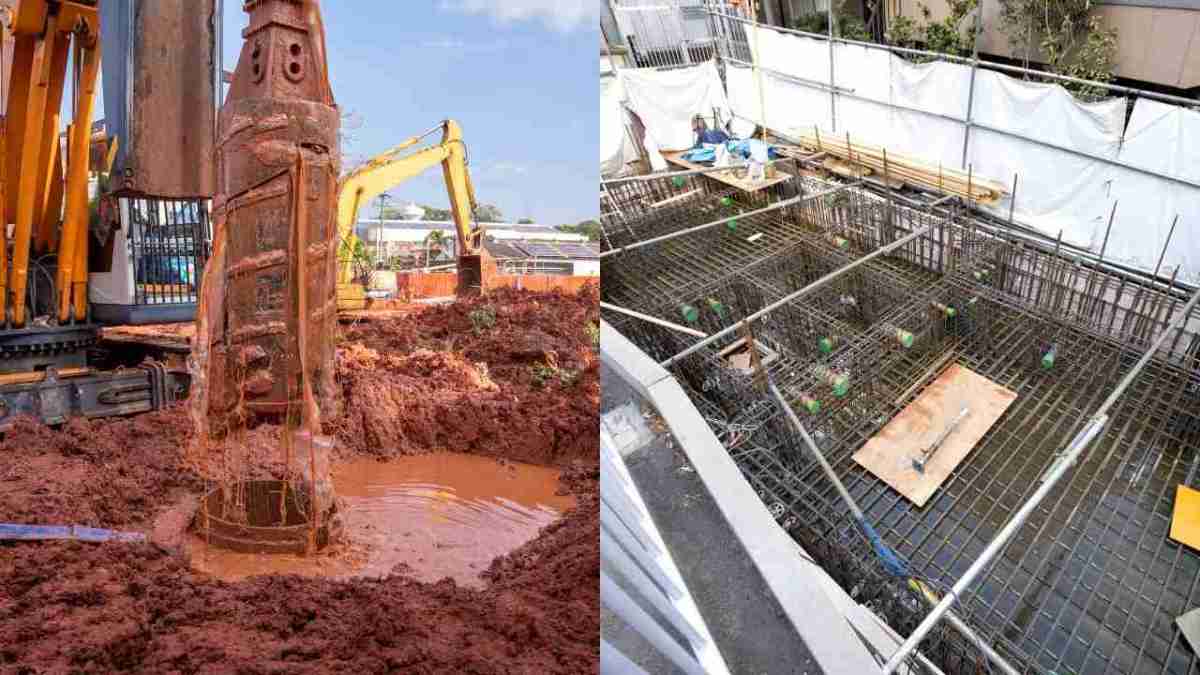
The drilled shaft is a versatile foundation system that is widely used nowadays. These foundations are also referred to as drilled piers, drilled caissons, bored piles, and so on. The main idea is to excavate a cylindrical shaft and then cast it after adding the necessary reinforcements. Drilled holes should be between 1-3 meters in diameter and up to 100 meters deep. Shafts can be drilled to depths of 100 meters and diameters varying from 1 to 3 meters. However, greater depth and diameter are now conceivable. These foundations can partially replace driven piles in the same way that a single drilled shaft can replace a group of piles.

Drilled shaft foundations

Conclusion

Shallow foundations are very easy to construct and do not require highly skilled manpower and professional supervision. These foundations can even be built with the assistance of semi-skilled workers. A shallow foundation is very economical when compared with a deep foundation. Shallow foundations are end-bearing type foundations that transfer loads to the end of the foundation. Shallow foundations are considered the most preferred option when the safe bearing capacity of the soil is reasonable and the structural loads are within the permissible limits.

Raft foundation types and features

Raft foundation is a continuous slab that completely covers the entire site of the proposed structure and rests on the soil. Depending on the applications and design loads, there are various raft foundation types. The choice of raft foundation type is influenced by a number of variables, including bearing capacity, loads, site circumstances, etc.

Raft foundation – Definition

A raft foundation or mat foundation is a solid slab that is put at a predetermined depth and covers the entire structure. Raft foundations have shear walls and columns for distributing loads to the ground. These foundations are appropriate for places with low bearing capacity, wherein individual footings struggle to traverse the stresses. Moreover, the raft foundation aids in the transfer of the structure’s total load to a larger area. In comparison to other forms of foundations used in civil construction, raft foundations can minimize soil stress levels. This mechanism of stress distribution distinguishes raft foundations from other types of foundations.

Raft foundation
Raft foundation

Determining soil stress

Stress = total load acting on the structure + raft self weight / raft foundation area

Assume a total load of 300 T and a foundation size of 20 m x 10 m

Soil stress = 300/200 = 1.5 t/sqm

The same structure is supported by 8 separate footings. 2 x 2 mtr 8 x 4 = 32 sqm total space

Soil stress = 300/32 = 9.375 t/sqm

This demonstrates that for the same weight, we get stresses of 1.5 T/sqm for the raft and 9.375 T/sqm for the individual foundations.

Because the raft’s contact area is greater, the load is distributed across a larger region, resulting in less stress on the soil.

Raft foundations – Where to use them?

When the following circumstances exist, these foundations are typically favoured over other foundation types.

  • When the bearing capacity of the soil is extremely low, building individual footings and executing deep foundations such as pile foundations becomes prohibitively expensive.
  • When soil stresses must be reduced since the soil’s bearing capacity is lower.
  • The columns, shear walls, and so on are so close to each other that individual footings may overlap.
  • Any other type of foundation may cover more than 50% of the total ground area beneath the structure.
  • When there is a possibility of unequal settlement.
  • Likewise, Raft foundations are Preferred for complex equipment foundations.
  • When the proposed structure has basements, raft foundations are preferred

For basement constructions where the foundation slabs would be subjected to direct live loads raft foundations are preferred based on the utility of the structure. Raft foundations are also a preferable option for sites where soil conditions are poor and access to major excavation machinery is limited, wherein raft foundations excavations can be accomplished with the help of light excavators.

Types of raft foundations

Raft foundations are classified into several types based on soil conditions, structure functionality, and so on. The following are some of the most popular raft foundation types used in civil construction.

  • Solid Slab Raft foundation/ Flat plate type foundations
  • Slab beam Raft foundation
  • Piled Raft Foundation
  • Cellular raft foundation
  • Balancing or floating raft foundation

Solid Slab Raft Foundations

Flat plate raft foundations are made up of a reinforced concrete slab of uniform thickness covering the entire bearing area. In this type of raft foundation, the columns and walls are equally spaced, and the load distribution is also equal. 

These raft foundations are known as solid slab raft foundations because they are designed as slabs with uniform thickness. This is ideal when the columns are evenly spaced and have equal and minor weights. Steel mesh reinforcement is offered in both directions of the slab. Two meshes are reinforced at the top and bottom of the slab to balance upward and downward bending stresses. 

Solid slab raft foundation

The following are the various types of solid slab raft foundations that are commonly used based on design requirements.

  • Thickened flat plate type raft foundation
  • Wide toe raft foundations
  • Blanket rafts
  • Slip plane raft foundations

Thickened flat plate type raft foundations

When the column loads are extremely heavy, the flat plate type foundation is inadequate. To make it suitable, the slab thickness must be increased. The substantial loads on the column cause negative bending moments and diagonal shear in the slab. A full-size solid slab mat base is not required to negotiate the design loads. To compensate,  a section of the slab beneath the column should be thickened. The placement of a pedestal beneath the column without increasing the slab thickness also assists in receiving heavy loads. 

Wide toe raft foundations

A wide toe raft is used when the ground conditions require an unusually thick concrete slab to provide the necessary load support, which would be quite expensive. For negotiating the design loads,  a full-size solid slab mat base is not necessary. A substantially reinforced toe is provided on both sides of the structure, as illustrated in the image, for economizing the structure.

Wide toe raft foundation

Blanket raft foundations

When the construction site comprises small areas of weaker soil or diverse soil types with unequal settlements or nonuniform strata, a blanket raft may be the best option. Before laying the raft foundation, the surface is compacted and stone blankets are spread in layers on the prepared ground, as shown in the figure. However, despite the build’s footprint’s flaws, the raft foundation and stone blanket work together to provide even load support.

Blanket rafts
Blanket rafts

Slip plane raft foundations

A preliminary layer of sand is put across a slightly larger surface than the required raft foundation for slip plane rafts, and the gap around the raft is filled with packed material. A thoroughly compacted sand bed supports this type of foundation beneath the raft.   The foundation’s sides can be filled with any compressible material.

Slip plane raft foundation
Slip plane

Slab beam type raft foundations

When the loads are unequally distributed, there seems to be a lot of space between the columns, and the foundation is susceptible to distortions, slab beam raft foundations are preferred. Beams are set in perpendicular directions in this scenario, and they are all connected by a raft slab. The beams incorporated with the slab act as stiffeners and prevent distortions. Columns are precisely located on the intersections of raft foundation beams, as illustrated in the figure. The raft’s reinforcement consists of two mesh layers, one at the bottom and one at the top.

slab beam raft foundation
slab beam raft

Piled raft foundation

Pile foundations are used to support the slab in the case of piled raft foundations. When the loads on the structure are exceedingly high, the soil bearing capacity is very low, and the water table is exceptionally high, this method is commonly used. Piled raft foundations are ideal for high-rise buildings and large industrial structures such as high-rise RCC chimneys, silos, and storage tanks that are typically supported by a single foundation element. Because of their exorbitant costs, these foundations are not generally used in residential applications. Designing a very heavy raft foundation or a  very conservative pile foundation with greater depths is avoided by using a piled raft. Instead, they opt for a hybrid of an optimal raft foundation and a pile foundation capable of supporting the structural loads.

piled raft foundation
Piled raft foundation

Cellular raft foundation

A cellular raft is made up of two-way foundation beams with a solid slab lying on the ground below and a suspended slab on top. Between the upper and lower slabs, intermediate beams are provided. The intermediate beam is responsible for transforming the entire structure into an I Beam. The top slab is cast using precast soffits or various types of permanent formwork, sacrificial formwork, or lightweight infill blocks. Cellular raft foundations are often used in areas with significant mining activity and poor soil carrying capacity, where the foundations must withstand huge bending moments. These types of raft foundations are used when eliminating overburdens resulting in greater bearing capacity. Moreover, cellular rafts can be used to control soil uplift pressure.

Cellular raft foundation

Balancing raft or Floating Raft Foundation

Balancing rafts or floating foundations are deployed in situations where the soil bearing capacity is very low and the soil settlements must be kept within an acceptable range. 

The floating foundation operates on the idea that the total weight of the earth and water removed from the excavated area must equal the weight of the planned structure.

This process involves huge earthwork excavation. Dewatering systems like well point systems have to be provided when the water table is very high. Likewise, Sheet piles are to be installed for weak soils or soils that may collapse. To protect the nearby structures from any defects due to scoring of soil, temporary retaining walls etc. have to be organized before starting excavation and some of these activities have to go in tandem with excavation. This type of structure is not economical and requires very minute technical supervision.

These foundation types are used for building structures in highly dense areas following all safety precautions to avoid any damage to the nearby structures.

Floating rafts are preferred for building with multiple levels of underground car parking facilities. However, for more details about floating rafts, you can go through our detailed article Balancing rafts or floating raft foundations

Advantages of Raft Foundations

  • Raft foundations offer a safe and cost-effective alternative to conventional shallow and deep foundation types.
  • Preferable in areas with low soil bearing capacity, uneven settlement, and the presence of mixed soil types. By distributing stresses across a larger area, these foundations are able to achieve load-bearing capacity.
  • Used in congested metropolitan locations where access to sites is limited and heavy machinery mobilisation for foundation construction using conventional deep foundations, such as pile foundations, is not feasible. 
  • Raft foundations can be built using very light machinery due to their low heights.
  • Raft foundations offer designers a much-needed alternative to conventional isolated foundations for limiting the settlement restrictions within the codal provisions.
  • When compared to regular foundations, the designers have the option of choosing larger settlement values during the design process in the case of raft foundations. Moreover this in turn can avoid an unequal settlement.
  • Got flexible design alternatives that can be customized as per soil conditions and workability.
  • Comparatively speaking, the execution is simpler than individual footings. This, in turn, can accelerate the project schedule.

Disadvantages of raft foundations

  • In extremely poor soil conditions, raft foundations are not cost-effective. 
  • Complex raft foundations demand careful professional/technical supervision and workmanship and consume a  substantial amount of concrete, and steel. As a result, the structure is more expensive than any other alternative foundation.
  • The soil beneath the foundation, particularly around the margins, must be protected. Edge erosion is common in raft foundations.
  • When the soil conditions are extremely poor, pile foundations are more cost-effective than raft foundations.
  • Raft foundations occasionally need further strengthening, which raises the overall cost.
  • Compared to other foundations, skilled labour is needed for raft foundations.
  • When the mat or raft foundation is under the concentrated(point) load, further care should be taken.