Category Archives: Tiles

Terrazzo Flooring – Types, applications and Advantages

Terrazzo flooring is a stunning and durable option for residential and commercial spaces. It combines marble, quartz, granite, or glass chips with a cement or epoxy binder to create a unique and elegant surface. Terrazzo floors offer endless design possibilities, with various colours, patterns, and finishes available. With its timeless appeal, durability, and low maintenance, terrazzo flooring is a popular choice for those seeking a beautiful, long-lasting solution.

Terrazzo flooring incorporates a mix of materials such as marble, quartz, granite, or glass chips, creating a visually striking and versatile floor. Its popularity stems from its exceptional durability, easy maintenance, and ability to be customized to suit any aesthetic, making it a preferred choice for architects and designers.

  1. Terrazzo flooring – Types and ingredients
    1. Epoxy Terrazzo Flooring
      1. Advantages and applications of Epoxy terrazzo flooring
    2. Traditional terrazzo or cementitious Terrazzo Flooring
  2. Advantages of Epoxy Terrazzo Flooring over Cementitious Terrazzo Floor
  3. Advantages of Terrazzo Flooring
  4. Conclusion

Terrazzo flooring – Types and ingredients

Terrazzo flooring comes in various types, each offering unique characteristics and aesthetic appeal. From traditional and Venetian to epoxy and rustic, here are some common terrazzo flooring types to explore.

  1. Traditional Terrazzo: This type uses a cement binder mixed with marble, quartz, or other aggregates. They provide a classic and timeless look.
  2. Epoxy Terrazzo: Instead of cement, epoxy resin is used as the binder. Epoxy terrazzo offers greater design flexibility, durability, and a smoother finish.
  3. Venetian Terrazzo: Originating from Italy, Venetian Terrazzo features a polished finish and intricate patterns. These patterns are created by embedding various colourful marble chips in a cement binder.
  4. Rustic Terrazzo: This type showcases a more textured and natural appearance. They often incorporate larger aggregate chips for a rustic, earthy aesthetic.
  5. Aggregate Terrazzo: It consists of a single type of aggregate, such as recycled glass or marble chips, mixed with a binder, resulting in a uniform and minimalist design.
  6. Monolithic Terrazzo: This refers to terrazzo that is poured on-site without any precast or separate installation. It offers seamless, continuous flooring with endless design possibilities.

These are just a few examples, as terrazzo flooring can be customized to meet specific design preferences. This allows for an extensive range of variations and combinations.

Epoxy Terrazzo Flooring

Epoxy terrazzo flooring is a popular choice known for its durability, versatility, and seamless finish. It utilizes an epoxy resin binder mixed with aggregates like marble, quartz, or glass chips, creating a highly customizable surface. Epoxy terrazzo is resistant to stains, chemicals, and moisture, making it ideal for high-traffic areas and contemporary design schemes.

terrazzo floor
terrazzo floor

Advantages and applications of Epoxy terrazzo flooring

Epoxy terrazzo floor offers several advantages and finds wide applications in various settings. Its seamless finish eliminates grout lines, making maintenance easier and preventing dirt and bacteria build-up. It is highly durable, resistant to stains, chemicals, and impact. Epoxy terrazzo’s versatility allows for limitless design possibilities, including intricate patterns and vibrant colours. It is commonly used in commercial spaces like airports, hospitals, schools, and retail stores. They are also used in residential projects, due to its aesthetic appeal and long-lasting performance.

Traditional terrazzo or cementitious Terrazzo Flooring

Cementitious terrazzo flooring comes in various types, each offering unique characteristics. Common types include Venetian terrazzo, which features intricate patterns and colourful marble chips; rustic terrazzo, known for its textured and natural appearance; and aggregate terrazzo, using a single type of aggregate like recycled glass or marble chips for a minimalist design. These variations allow for a wide range of aesthetic options to suit different preferences.

Monolithic terrazzo refers to terrazzo flooring that is poured on-site without separate installation or precast elements. It provides a seamless and continuous surface, allowing for unlimited design possibilities and a visually cohesive look.

Advantages of Epoxy Terrazzo Flooring over Cementitious Terrazzo Floor

Here is a comparison between epoxy terrazzo flooring and cementitious terrazzo flooring:

  1. Durability: Epoxy terrazzo has superior chemical and stain resistance, making it more resistant to wear and tear compared to cementitious terrazzo.
  2. Design Versatility: Epoxy terrazzo offers a wider range of design possibilities, including vibrant colours, intricate patterns, and decorative effects, whereas cementitious terrazzo has more limited options.
  3. Seamless Finish: Epoxy terrazzo provides a seamless finish without grout lines, making it easier to clean and maintain compared to cementitious terrazzo.
  4. Installation Time: Epoxy terrazzo has a faster installation process, as it requires less curing time compared to cementitious terrazzo.
  5. Cost: Epoxy terrazzo tends to be more cost-effective than cementitious terrazzo, depending on the complexity of the design and project size.

It’s important to consider specific project requirements and design preferences when choosing between epoxy terrazzo and cementitious terrazzo flooring.

Terrazzo floor

Advantages of Terrazzo Flooring


Terrazzo floor offers several advantages over other popular flooring choices:

  1. Durability: Terrazzo is highly durable and long-lasting, surpassing materials like laminate, vinyl, or carpet.
  2. Design Options: Terrazzo provides endless design possibilities with customizable colours, patterns, and aggregates, unlike the limited options of hardwood or tile.
  3. Low Maintenance: Terrazzo requires minimal maintenance, with easy cleaning and resistance to stains and scratches, unlike carpet or natural stone.
  4. Sustainability: Terrazzo is eco-friendly, often using recycled materials and reducing waste, making it a greener choice compared to some floor options.
  5. Versatility: Terrazzo can be used both indoors and outdoors, accommodating various spaces, while materials like carpet or hardwood may have limited outdoor usage.
  6. Allergen Reduction: Unlike carpet, terrazzo does not trap allergens and is hypoallergenic, promoting a healthier indoor environment.
  7. Longevity: Terrazzo has a long lifespan, exceeding the durability of materials like laminate or vinyl, offering a cost-effective solution over time.

Terrazzo’s unique blend of durability, aesthetic appeal, low maintenance, and sustainability make it stand out among popular flooring choices.

Terrazzo floor

Conclusion

Terrazzo flooring is a versatile, durable, and visually striking option for both residential and commercial spaces. With its timeless appeal and low maintenance, terrazzo floor offers a long-lasting and elegant solution for any design aesthetic.
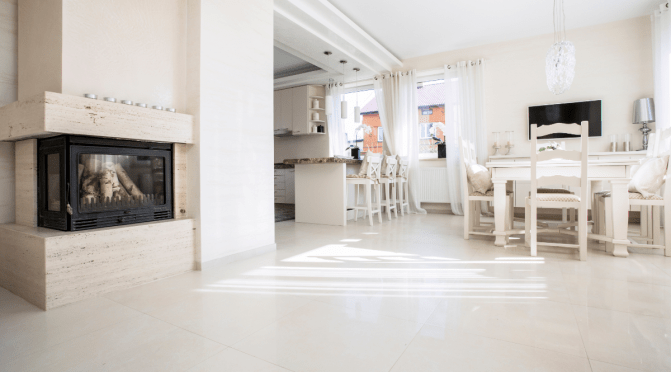
Double charge vitrified tiles – A combination of elegance and strength.

Double charge vitrified tiles are manufactured by feeding a double layer of pigments through a press that prints the patterns. The design possibilities of these tiles are limited but got excellent qualities in terms of strength and durability.

Classification of Vitrified tiles

Vitrified tiles are available in a wide range of variations to cater to any functional requirements and costs. They can cater to high traffic areas like airports, metro stations, railway stations, industrial uses to small residential applications. The category and types of vitrified tiles are tailor-made for adapting to any application.

  • Soluble salt vitrified tiles
  • Glazed vitrified tiles,
  • Double charge vitrified tiles
  • Full body vitrified tiles

The classification is based on the method of manufacturing, method of vitrification, material qualities, density, type of traffic, colour choices and functions.

Must read : Types of vitrified tiles – Advantages and uses

CLASSIFICATION OF TILES

This article is exclusively about Double charge vitrified tiles and their difference from Glazed Vitrified tiles (GVT) that includes Digitally glazed vitrified tiles (DGVT) and polished glazed vitrified tiles (PGVT) as shown in the figure.

Digitally glazed vitrified tiles (DGVT) are simply Glazed vitrified tiles (GVT) digitally printed whereas Polished Glazed Vitrified tiles (PGVT) are the extra polished version of Glazed Vitrified tiles/ Digital Glazed Vitrified tiles.

Double charge vitrified tiles
Double charge vitrified tiles ( Credits -Kajaria)

Manufacturing method of vitrified tiles

Vitrified tile is made by hydraulic pressing a mixture of clay, quartz, feldspar, and silica. The hydraulic pressed tiles are heated in kilns at a temperature of around 1000-1400 degrees centigrade. The ingredients like Quartz, silica, and feldspar melts and transforms into a glass-like hard layer. This process of manufacturing is called the vitrification process which means making like glass. At high temperatures, the molten silica fills the gaps and air bubbles thereby making the surface extremely strong and non-porous. The manufacturing process is the one that makes vitrified tiles a much superior option to ceramic tiles. The vitrification process makes vitrified tiles dense, non-porous, abrasion-resistant, and durable than ceramic tiles.

Double charge Vitrified tiles

Double charge vitrified tiles are fed through a press that prints the pattern with a double layer of pigment, 3 to 4 mm thicker than other types of tile. 

These types of tiles are also called double-loaded tiles and are made from a mixture of clay, quartz, feldspar, and silica. They do not have a glazed layer and hence digital printing is not possible in these tiles. For Double charged vitrified tiles the designs are formed with a double layer of a pigment having a thickness of 3-4 mm thick. That means the upper layer of the design mix is 3-4 mm thick and contributes almost 30% of the total tile thickness. Tiles are passed through a press where they are fed with the design mix and pressed into the tile body. On firing at high temperature the thick pigment layer melts and fuses to become a part of the tile body and not a layer as in Glazed Vitrified tiles. The tile surface is further nano-polished for making it non-porous, extremely durable, and abrasion-resistant with superior qualities.

DOUBLE CHARGE VITRIFIED TILES
Double charge vitrified tiles ( Credits Kajaria)

Why double charge tiles are superior to Glazed Vitrified tiles.

When you are thinking of floor tiles a plethora of options will come. One is the cheapest and colourful option and another one is durability and strength. A digital tile is always a good option in terms of colour choice, durability, and economy.
But what makes Double charge tiles superior to Glazed Vitrified tile?

Double charge vitrified tilesGlazed Vitrified tiles(GVT)/Digital Glazed Vitrified tiles(DGVT)/ Polished Glazed Vitrified tiles (PGVT)
Double charge tiles are available in
matt and glossy finishes. The tiles are nano polished for extra glossiness and are know as Double charge polished vitrified tiles.
Glazed vitrified tile is known as a digital and polished glazed vitrified tile. They are available in Matt
and Glossy finishes.
Durability
The upper pigment/design layer of Double charge tiles is very thick
and constitutes around 30-40%
of the total tile thickness.
The upper design layer of Glazed Vitrified tiles is only 1-2 mm thick vitrified layer and constitutes around 1/10th
of a tile body.
The manufacturing process (Vitrification process) melts and
fuses the 3-4 mm thick pigment /design layer into the tile body and transforms it as part of the tile.
The top layer is digitally printed and vitrified to a glass-like layer through the vitrification process. The
thickness is around 1-2 mm normally.
The vitrification process produces an extremely durable,
and wear-resistant and highly impervious surface and constitutes more than 1/3 rd of the tile body.
The vitrified layer is only 1-2 mm thick against 3-4 mm
of Double charge tiles and are not so strong and wear-resistant like Double Charge tiles.
Double charge vitrified tiles got in a long-wearing tile surface, suitable for heavy traffic and vast commercial projects.Glazed vitrified tiles got a reasonable wearing surface capable of medium to low traffic and used mostly for residential applications.
Hardness
Hardness value in Mohs scale is ranges between 6-8Hardness value in Mohs scale is 4 – 6
Scratches are less noticeable due to the high design thickness/pigment layer of 3-4 mmScratches formed are visible in GVT tiles due to low glazing thickness.
The design will not fade and the original sheen is maintained.Designs fade in high traffic areas and loose its charm.
Designs and colour choice
The colour layer is formed by merging pigment layers spread through the press. Due to technological limitations, design possibilities are limited.Design possibilities are unlimited. Uses digital printing techniques and can print any type of texture and colours.
Stain resistance & Maintenance
Double charge tiles have extremely good stain resistant qualities and are very easy to clean and maintain.Stain resistant properties are low compared to Double charge vitrified tiles.
Areas of applications
Even with the design limitations, the
tiles look classy and elegant. Double charge tiles are a combination of beauty and strength. Mostly used in high traffic interiors and also for residential uses where strength and durability are the primary criteria.
GVT tiles are highly aesthetic and can match any designs and colour schemes. Mostly used in residential and low traffic interiors
Cost comparison
Even though cost is high the Double charge tiles are premium quality tiles and got excellent performance in terms of durability,strength, hardness, stain resistant,water resistant properties.They are comparatively affordable tiles, got a huge variety of designs and textures, and are the best choice for residential buildings with medium to low traffic areas.

VIDEO – Difference between glazed Vitrified and Double charge Vitrified tiles

Difference between Double charge tiles and Glazed tiles

Conclusion

Double charge vitrified tiles are where beauty meets strength. An increase in costs is compensated by its long-lasting and durable surface and its capability to cater to heavy traffic. Digital Glaze and Polished Glaze Vitrified tiles are cheap, strong, got a huge variety of designs, and can be a part of residential uses with low to medium traffic.

Vitrified tiles vs Ceramic tile – How to select a tile ?

Vitrified tiles vs ceramic tiles – The real difference between ceramic and vitrified tile is still out of reach to a consumer. For an average consumer Ceramic tiles, vitrified tiles/ porcelain tiles, etc are simply tiles used for flooring or cladding works because all are installed in the same way, got almost identical looks, got similar merits and demerits as a flooring material. On enquiring, you may get a lot of merit claims which confuses more than clarifying.
What exactly is the difference between these tiles or is it simply a marketing technique for selling out the more costly option?

Must read : Ceramic tiles – A remarkable flooring choice.

Must read : Vitrified tiles – Types, Advantages and uses

Vitrified tiles vs Ceramic tiles

Ceramic tiles and vitrified tile both are excellent flooring materials. They are the preferred flooring choice based on the area of application, hardness required, purpose of application etc. Both these tiles have excellent qualities to be considered as an excellent flooring material.

Ceramic tile cladding

Vitrified tiles vs Ceramic tiles -Manufacturing process

Ceramic tileVitrified tile
Manufactured using natural clay Mixed with water, extruded/pressed and fired in kilns at a temperature of around 1000-1200 degree Celsius.Manufactured by mixing clay
with quartz, silica and feldspar,
pressed in hydraulic press and
fired in kilns at a temperature
of 1400-1700 degree Celsius
The designs and textures are digitally printed on the surface.Designs are digitally printed in
case of Digital Glazed vitrified tiles.
(1-2 mm)
Ingredients with colour design mix
used in Double charge vitrified tiles.
(3-4 mm)
Total tile body is made of colour
design mix for Full body vitrified tiles.
(9-10 mm)
The surface is glazed for protection and glossiness.On heating Quartz, silica, feldspar
melts and fuse together to form a vitreous layer or glass like layer. This process is called vitrification process and tiles are called vitrified tiles. The vitreous layer is hard and glossy.
Glazing is around 1 mm thick and forms the protective and impervious layer over the ceramic tileThe vitrification process generates a vitreous or glass like layer which becomes a part of the tile body.
Vitrified tiles vs Ceramic tiles

Vitrified tiles vs Ceramic tiles

Durability
The glazing layer imparts the required durability for ceramic tiles.Vitrified tiles gains the durability
from the Vitrification process
making it more dense, harder
and durable than ceramic tiles.
Strength
Breaking strength =700 N-1000 N
Water absorption = 3% – 6%
Modulus of rupture = 22 N/mm2
Scratch hardness = Min 4
Ceramic tiles got less breaking strength, less modulus of rupture and less abrasion resistance.
Breaking strength = > 1100 N
Water absorption = < 0.5%
Modulus of rupture = > 30 N/mm2
Scratch hardness = 5-8 in Moh scale
All value pertaining to strength,
breakage, abrasion resistance etc are high in Vitrified tiles.
Water absorption
Main factor that differentiate vitrified and ceramic tile is water absorption.
Water absorption of Ceramic tiles is 4-6%. Ceramic tiles are porous and absorbs water.
Not preferred for external and wet applications because they may absorb water and cracks.
Water absorption of vitrified tiles
is less than 0.5% . Vitrified tiles are dense and impervious and water absorption is marginal.
Hence vitrified tiles can be used
in external and wet applications.
Looks, colour choice and size
Ceramic tiles have a wide range of colour choices and got a very natural and fair looks.
Ceramic tiles are available in medium sizes and this increase the number of joints.
The grout joints are vulnerable to moisture and stain and has to be replaced frequently.
Vitrified tiles are available in a
lot of varieties and sizes. They
are available in wood, marble and
granite finishes and gives a natural stone look when laid in big tiles.
Vitrified tiles are even available in a size of 2000 x 1000 mm and reduces the number of joints and looks seamless and elegant.
Vitrified tile joints are less visible
and do not need any re grouting.
Texture
Ceramic tile got a Rough texture and has to be glazed to look smoothVery smooth texture and glossy
finish
Abrasion resistance
The protective glazing is only
1 mm thick and the abrasion resistant qualities of ceramic tiles are less compared to vitrified tiles.
When used in high traffic areas the colour and texture may fade and scratches developed are visible.
Vitrified tiles are high abrasion resistant due to the vitreous glass
like layer on the surface. The layer
is hard and is capable of
withstanding high traffic. Vitrified
tiles are available in a lot of varieties suitable to be used for any type of traffic. The colour and texture does not fade easily in Vitrified tiles . They are scratch resistant and any scratches developed are not visible in case of vitrified tiles.
Slip resistance
Ceramic tiles can be made slip resistant by providing abrasive grits during glazing process. This makes the tiles less slippery and can be used for toilet floors. Ceramic tiles are available in anti-skid variety also.Vitrified tiles does not absorb water and are very slippery when wet. They are not preferred for toilet floors. Vitrified tiles posses anti skid properties than ceramic tiles.
Stain resistant
Ceramic tiles because of its glaze layer is stain resistant and can be cleaned and maintained very easily using mild detergents and mops. But they are less stain resistant due to the high water absorption properties and high
porosity compared with
Vitrified tiles.
Vitrified tiles are stain resistant, because they are dense, and non porous. They are very easy to maintain and is preferred for hospital floors, commercial areas, residential complexes etc. where there are heavy traffic and chances of stains getting to the floor.
Sunlight and frost resistant
Ceramic tile fades on exposed to sunlight and cracks on exposed to frost due to its porous nature.Vitrified tiles have any effect of sunlight and frost because of its high density and non porous surface.
Sizes
Ceramic tiles are available in maximum size of 2 ft x 2ft and this increase the no of joints which in coarse of time absorbs stains and become dark and needs re grouting to maintain the qualitiesVitrified tiles are available in a lot of sizes. Even 2 mtr x 1 mtr size tiles are also available with most of the manufactures. This give the surface a natural stone and decrease the number of joints.
Cost
Ceramic tile are cheaper compared to vitrified tiles.Vitrified tiles are costlier compared to ceramic tiles due to their superior qualities.
Ease of fixing
Ceramic tiles are easy to fix and repair comparing to vitrified tiles due to the presence of grout lines. Even a single tile can be replaced.Vitrified tiles needs professional tools and skilled labour for fixing the tiles and removing and re-fixing a tile is very difficult.
Maintenance
Ceramic tiles due to the higher no of joints are difficult to maintain when compared with vitrified tiles. The surface has a tendency to absorb stains.Highly impervious and glossy surface. Very easy to maintain. Vitrified tiles have less joints and do not absorb stains.
Wastage
Due to low breaking strength ceramic tiles generates more wastage. (Around 5%-8%)Vitrified tiles have high breaking strength and generated less wastage (around 3%)
Anti skid properties
Very low in ceramic tilesVery high in vitrified tiles
Anti bacterial properties
Ceramic tiles got less antibacterial properties comparing to vitrified tiles.
Ceramic tiles does not attract dust, pollen, mites etc and hence is anti allergic.
Got excellent anti bacterial proprieties.
Vitrified tiles also does not attract any dust, pollen , mites etc which can cause asthmatic allergies.

VIDEO : Difference between Vitrified tiles and Ceramic tiles

Conclusion

Vitrified tiles are a much superior material compared to ceramic tiles in Strength, abrasion resistant, stain resistant, scratch resistant. They are costlier than ceramic tiles.

Ceramic tiles are best for residential uses, bathroom floors, kitchen and bath room cladding etc due to there anti skid properties. They are cheap and affordable and is everlasting if maintained properly. They are vulnerable to water, stains, sunlight, frost etc due to its porous nature and very thin glazing over the surface.

Vitrified tiles are preferred in high traffic areas, commercial buildings, malls, shopping centres, Industrial buildings, airports, metros etc and residential uses.

The area of application is the main factor that decides a tiles choice….

Types of ceramic tiles Advantages and Disadvantages

Ceramic tiles vs Vitrified tiles – The real difference between ceramic and vitrified tile is still out of reach to a consumer. For an average consumer Ceramic tiles, vitrified tiles/ porcelain tiles, etc are simply tiles used for flooring or cladding works because all are installed in the same way, got almost identical looks, got similar merits and demerits as a flooring material. On enquiring, you may get a lot of merit claims which confuses more than clarifying.
What exactly is the difference between these tiles or is it simply a marketing technique for selling out the more costly option?

Must read : Types of Vitrified tiles

What is a ceramic tile?

The tile is a very thin flooring material made of clay, stone, metal, etc extensively used for covering floors, roof, walls, etc. Enormous varieties like ceramic tile, vitrified tile, porcelain tile, terrazzo tile, chequered tile, metal tiles, stone tiles, etc are used as flooring materials based on the area of application and requirements. The category of tiles manufactured from natural clay, mixed with other ingredients, baked in kilns, and glazed for protection and looks are called ceramic tiles. Ceramic and vitrified/porcelain tiles come under the category of ceramic tiles whereas vitrified tiles are known non-porous ceramic tiles.

Classification of tiles

Classification of tiles
CLASSIFICATION OF TILES

The classifications of tiles are mostly based on their method of manufacturing, water absorption qualities, choice of application, area of usage, strength, etc. The most commonly used tiles are ceramic and vitrified tiles or porcelain tiles. The classification criteria are the percentage of water absorption which is around 4-5% in ceramic tiles where as it is below 0.5 % for vitrified tiles. Please refer above figure for the classification of tiles.

CERAMIC TILE FLOORING
CERAMIC TILE FLOORING (credits : Kajaria tiles)

Ceramic tiles – Properties

These are the most commonly used tiles available in a lot of designs, textures, and patterns and are used for almost every flooring applications. They are durable, comparatively cheap, and strong flooring material available in a lot of designs, colours, and textures. These tiles are easy to cut and fix and consists of a glazing coating for enhancing the protection. and are widely used in residential construction due to their versatile colour choice and designs and are capable of withstanding reasonable traffic and retain the sheen and charm for an extended period if maintained properly.

Reference IS CODE = IS 15622 – 2017

Water absorption3% -6%
Breaking strengthMinimum – 1000 N
Modulus of rupture20 to 30 N/mm2
Scratch hardness (Moh scale)4 minimum

These types of tiles are not preferred in high traffic areas and outdoors due to their low density and high water-absorbing qualities.

Ceramic tile manufacturing process

Ceramic tiles are manufactured from natural clay, sand, and water. The ingredients are ground and mixed with water in the right proportions to form a paste. The mix is pressed or extruded to form a tile and passed through a drying process for imparting the strength. The pattern, design, or textures are digitally printed on the surface and sprayed with a glaze powder before passing through the kiln for the firing process.

CERAMIC TILE MANUFACTURING PROCESS

In the first stage, the tiles are subjected to medium temperatures for removing the water content, and in the next stage, the kiln temperature is raised to 1000-1200 degrees. In high temperature, the glaze fuses and forms a transparent layer on the tile surface. Further, the tiles are subjected to a curing process before exposure to ambient temperature to avoid breakage.

Type of ceramic tiles

Ceramic tiles are classified into wall tiles and floor tiles. They are available in glazed and un-glazed varieties. Ceramic wall tiles are normally less durable than vitrified tile which is designed specifically for flooring. Most wall tile is glazed with a semi-gloss or matt surface. The glazed surface has a very low slip resistance and becomes slippery when wet. Therefore, glazed wall tile is much more suited for wall or counter-top applications rather than floors. Floor tiles are available in anti-skid and matt finishes which are used for flooring, bathrooms, and wet areas.

Advantages of ceramic tiles

Ceramic tiles are one of the most affordable, durable, and aesthetic flooring options in the residential construction sector. Ceramic tiles inherit a hand full of excellent properties making them the most preferred flooring options. Proper placing and regular care can maintain the charm, glaze, and sheen of ceramic tiles for a long-lasting period.

CERAMIC TILE FLOORING

Water resistant & Stain resistant

Ceramic tiles got a protective glazing layer on the surface and are impenetrable to water and stains. This glazing layer also protects the designs and textures and can also resist humidity to some extent. Because of these properties, Ceramic tile is preferred for moist environments like kitchen, bathrooms, etc.

Durability

Ceramic tiles are very strong, durable, and abrasion-resistant. Proper workmanship accompanied by regular maintenance can make ceramic tiles last for years. Broken tiles can be easily replaced without damaging other nearby tiles. The glazing coating is very hard and does not dent or scratch easily. They can be used for heavy traffic areas like living rooms, office space, bedrooms, etc.

Maintenance of ceramic tiles

Ceramic tiles are stain-resistant and very easy to clean and maintain using mild detergents. Ceramic tiles got a smooth and hard surface and do not attract or absorb dust, mites, and other micro-organisms which causes allergy and other asthmatic issues. Both un-glazed and glazed tiles can provide a long-lasting resilient and essentially an easy to maintain option for your home.

Colour/texture choice and affordability

Ceramic tiles are available in countless colors as well as textures, different looks and patterns can be created with flexible tile sizes. They can also be printed to reproduce the look of many hardwoods and natural stones. They can match almost any color scheme or theme. After the introduction of digital printing technology, we can print anything on ceramic tiles.
Ceramic tiles are not so costly compared to any other type of flooring material. They are rather not cheap also. But they are affordable considering the investment and the life of the ceramic tile. They are very easy to place and maintain will last a lifetime if properly installed and cared for.

Environmental friendly

Ceramic tiles are made from clay, sand, and glass. Nowadays ceramic tiles are made from recycled industrial wastes and considered environment friendly material. Ceramic tiles have insulating properties that can make the rooms cooler in summer and warmer in winter thus reducing the energy costs.

Disadvantages of Ceramic tiles

Easy to care for and available in hundreds of styles, nonetheless there are disadvantages that should be taken into consideration when a homeowner is choosing ceramic installation for the home. On getting clarity on the drawbacks we can make an easy choice.

Tile joints

Ceramic tiles are stain-resistant and water-resistant. But Grout lines are suspectable to moisture if not sealed properly. Care should be taken in choosing the sealant and sealing of grout lines. The tile joints have to be periodically sealed to restrict moisture entry and increase the tile life.

For installation, we need skilled workers to maintain the level and alignment. A proper laying is the most important factor deciding the tile life.

Ceramic tiles got a wide variety of colours and shades and the shades’ textures and style and choice of interiors tend to change with time. Once a ceramic tile is installed, replacing it will be a messy and costly option. Replacing a broken tile needs highly skilled workers and tools or else chance of breakage of nearby tiles will happen.

Ceramic tiles are very cold and it is very uncomfortable in winter times to stand on the tile. Area rugs has to be provided to cover up the area. Ceramic floors also retain heat during summers.

These tiles are denser and heavier than other flooring materials. They give extra dead load on the structure.

Conclusion

Considering the unique properties, added with a wide choice of colours and shades, and excellent resistance to stain and moisture, easy to clean and maintain Ceramic tiles are the most preferred flooring choice.

Video : Difference between Vitrified and ceramic tiles

Types of Vitrified tiles – Advantages and Uses

Types of vitrified tiles – Vitrified tiles are ceramic tiles with less porosity. Various types of vitrified tiles are available for catering to different functional requirements. Vitrified tiles are considered as a superior quality tile compared with ceramic tiles because of their excellent water-resistant and frost-resistant qualities, aesthetic looks, and durability. They are well suited for external and internal flooring and cladding applications and are used as an alternative to marble and granite.

What are vitrified tiles?

Tiles are classified into vitrified tiles and ceramic tiles. Vitrified tiles are manufactured by mixing clay with silica, quartz, and feldspar, pressed and heated in kilns whereas ceramic tiles are made from natural clay, moulded, and heated in kilns. The high pressure applied during the hydraulic pressing followed by the Vitrification process is responsible for imparting the superior qualities in vitrified tiles.

Vitrified tiles can withstand abrasion and maintain the surface quality and charm for several years. Vitrified tiles are available in a variety of patterns, designs, textures, and types and can match any colour schemes. Hence they are preferred for numerous applications in residential, commercial, and industrial works.

Vitrified tile flooring

Also read : Ceramic tiles – Types and uses

Vitrified tiles manufacturing process

Vitrified tile is made by hydraulic pressing a mixture of clay, quartz, feldspar, and silica. The hydraulic pressed tiles are heated in kilns at a temperature of around 1000-1400 degrees centigrade. The ingredients like Quartz, silica, and feldspar melts and transforms into a glass-like hard layer. This process of manufacturing is called the vitrification process which means making like glass. At high temperatures, the molten silica fills the gaps and air bubbles thereby making the surface extremely strong and non-porous. The manufacturing process is the one that makes vitrified tiles a much superior option to ceramic tiles. The vitrification process makes vitrified tiles dense, non-porous, abrasion-resistant, and durable than ceramic tiles.

Properties of Vitrified tiles

  • Vitrified tiles are superior flooring materials and are available in a wide range of textures and shades and posses a lot of unique qualities.
  • They are available in a wide range of colours, shades, and textures and can match any interior colour scheme of the structure.
  • Vitrified tiles are durable, dense, non-porous, and strong material. They have a Flexural strength of around 35 N/ mm2 and breaking strength of around 700 N.
  • Water absorption of vitrified tiles is less than 0.5% due to its non-porous quality. Hence they are preferred for external and wet areas.
  • Ceramic tiles have to be glazed whereas vitrified tiles do not need any glazing. The vitrification process transforms the surface into a glass-like layer.
  • Vitrified tiles look aesthetically elegant with a smooth texture and glossy looks. Vitrified tiles do not fade easily and can maintain the charm and looks for an extended period.
  • Due to the vitrification process, they possess high abrasion-resistant qualities and are preferred for high traffic areas.
  • Vitrified tiles are very easy to fix and generates less wastage due to its high breaking strength. They are very easy to clean and maintain due to its high stain-resistant properties.
  • Vitrified tiles are anti-skid and possess anti-bacterial qualities.

Also read : Difference between Vitrified tile and ceramic tiles

Types of Vitrified tiles

Vitrified tiles are available in a wide range of variations to cater to any functional requirements and costs. They can cater to high traffic areas like airports, metro stations, railway stations, industrial uses, etc to small residential uses. The category and types of vitrified tiles are tailor-made for adapting to any application.

CLASSIFICATION OF VITRIFIED AND CERAMIC TILES

Vitrified tiles are broadly classified into

  • Soluble salt vitrified tiles
  • Glazed vitrified tiles,
  • Double charge vitrified tiles
  • Full body vitrified tiles

The classification is based on the method of manufacturing, method of vitrification, material qualities, density, type of traffic, color choices and functions.

Also read : Ceramic vitrified tiles: Sizes, Finish,price comparison & applications

Soluble salt vitrified tiles

The liquid screen printing technique is used for soluble salt vitrified tiles. The single colour of soluble salts provides the colour layer on the surface of the tiles. These tiles are heated in a kiln and polished for use. The main problem with soluble tiles is that the colour fades gradually and losses the original sheen and looks very dull. Colour choice is very limited for Soluble vitrified tiles and is replaced by double charge vitrified tiles having much more flexibility in terms of colour and design choices. Soluble salt vitrified tiles are normally ivory colour based tiles.

Glazed Vitrified tiles (GVT)

Glazed vitrified tiles are vitrified tiles with glazing. These tiles are very much similar to ceramic tiles. Due to the vitrification process involved in the production method, they possess high strength, durability, and excellent water repellent qualities.

Type of GVT tiles are Digital Glazed Vitrified tiles (DGVT) and Polished Glazed Vitrified tiles (PGVT tiles)

Also Read : Difference between Digital Glazed Vitrified Tiles and Double charge Vitrified tiles.

Digital Glazed Vitrified tiles (DGVT)

Glazed vitrified tiles uses digital inkjet printing technology and hence it is called Digitally glazed vitrified tiles. Due to the involvement of digital printing technology the design choices are unlimited and can print rich textures and designs over the tiles. Marble patters, wood patters and anything can be print on the tiles using digital inkjet printing technology. This is only possible in the case of Glazed vitrified tiles.

The digital designs are printed on a 1mm – 2 mm thick glazing layer which provides the required protection and long-lasting charm to the tiles. These tiles are comparatively cheap and can be used for medium traffic residential and commercial applications. This is the most commonly used tiles now a days.

These tiles may scratch and fade in long run due to the lesser top layer bearing the textures and prints.

DIGITAL GLAZED VITRIFIED TILES

Polished glazed Vitrified tiles (PGVT)

Digitally glazed vitrified tiles are further polished for extra glossiness. Then the tiles are known as Polished Glazed Vitrified tiles. These tiles are mostly used for residential and commercial applications involving moderate traffic.

Double charged Vitrified tiles (DCVT)

Double charged vitrified tiles are also called double-loaded tiles. They are made from a mixture of clay, quartz, feldspar, and silica. They do not have a glazed layer and hence digital printing is not possible in these tiles. For Double charged vitrified tiles the designs are formed with a double layer of pigment having a thickness of 3-4 mm thick. That means the upper layer of the design mix is 3-4 mm thick and contributes almost 30% of the total tile thickness. These layers are pressed and fused to become a part of the tile body and not a layer as in Glazed Vitrified tiles. The tile surface is further nano-polished for making it non porous, extremely durable and abrasion-resistant with superior qualities.

Double charged vitrified floor tiles are by far the most preferred choice in flooring for Residential, commercial and industrial projects  because of the simple reason that they can withstand heavy traffic and need extremely low maintenance and last longer and gives a fresh look  when compared to Ceramic and Glazed Vitrified tiles. They are scratch resistant and abrasion resistant and can resist all climatic conditions.

Full Body Vitrified Tiles

This type of vitrified tiles has colour all the way throughout the body (thickness) of the tile. Because of this scratches are less noticeable in this type of tiles. Full body vitrified tiles are formed with the paint mixture pre-added while making the body. The design is in the total thickness of the tile and got a uniform shade through out the tile body.

FULL BODY VITRIFIED TILES
DESIGN IN THE TOTAL THICKNESS

Design will never fade because it is spread over the entire body of tiles. Full body tiles are ideal flooring choice for heavy traffic areas, industrial structures, airports etc. These tiles are less preferred in residential construction due to their higher costs.

Conclusion

All types of vitrified tiles are good when chosen based on the functional requirements.