Category Archives: Building materials

Lightweight Aggregate: Manufacturing, Properties and Types

Lightweight aggregate is a widely used construction material owing to its versatile properties. In this blog, I will walk you through what is a lightweight aggregate, its properties, applications and manufacturing process.

What is a lightweight aggregate?

Lightweight aggregate is a coarse aggregate used to make lightweight concrete for structural as well as non-structural applications.

  • The Compressive design strength of normal concrete for cast-in-situ, precast and prestressed concrete ranges between 20 N/mm2 to 35 N/mm2. On the other hand, the minimum compressive design strength of concrete which uses lightweight aggregate will be around 17-18 N/mm2.
  • Normal concrete has a density between 2300 and 2500 kg/m3. However, when it comes to LWC the density ranges between 500 kg/m3 to 1800 kg/m3 depending on the type of aggregate used.
  • Lightweight concrete with densities lower than 17 N/mm2 falls under the category of LWC. And, those with densities above 17 N/mm2 are referred to as structural lightweight concrete (SLWC).
  • LWC can also be designed for the minimum compressive strength as normal concrete by varying the proportions of mineral admixtures used.
  • SLWC is used for structural applications. They can be used along with reinforcement steel just like normal concrete.
Light weight aggregates -Manufacturing
Light weight aggregates -Manufacturing,

Features of Lightweight Aggregates

  • The lightweight aggregate used in concrete may have any form, including cubical, rounded, angular, and other shapes. Its workability is directly influenced by its form and texture.
  • These aggregates are known for absorbing little water and maintaining their low density. 
  • A high saturation level makes it an attractive option.
  • LWA can reduce the dead loads on the structure and make it more economical.
  • Has relatively low thermal conductivity and is preferred for roof insulations.
  • Helps in consuming industrial wastes like blast furnace slag, fly ash, clinkers etc.
  • Possess good acoustic properties.

In the next section we will see what are the desired characteristics of a lightweight aggregate.

Light weight aggregates

Also read : Pervious Concrete- All Factors Affecting, Limitations & Methodology Explained

Lightweight Aggregate Desired Characteristics

  • The properties and composition should be consistent.
  • To ensure worthwhile structural savings, the aggregate should have a low specific weight, in compliance with the required ASTM requirements. 
  • The aggregate should have a low number of large external voids. And a high number of smaller well-distributed voids within the particles. 
  • Individual aggregate particles should be able to withstand handling and mixing. 
  • The particles should have a good bond with the cement and should not react chemically with it. 
  • The aggregate should be rated appropriately for the intended use, according to the relevant ASTM specification 

Types of Lightweight Aggregates

Lightweight Aggregates can be divided into three types by their sources:

(1)Industrial waste lightweight aggregate – This is processed by industrial wastes, such as fly as, ceramisite, expanded slag ball, cinder and light sand, etc.

(2)Natural aggregate – This is made from natural porous stone, such as pumice, volcanic cinder, and light sand, etc.

(3) Artificial lightweight aggregate – This is manufactured from local materials, such as clay ceramisite, and expanded perlite, etc.

Also read ALC Panel – Autoclaved lightweight Concrete Panel

Lightweight Aggregates Manufacturing Process

The majority of lightweight aggregate is made from clay, shale, or slate. However, furnace slag, natural pumice, vermiculite, and perlite can all be substituted. 

The raw material (excluding pumice) is extended to about twice its original volume to create lightweight aggregate. The expanded material has properties that are similar to natural aggregate. As a result, it produces a lighter concrete product.

Let me show you the detailed procedure.

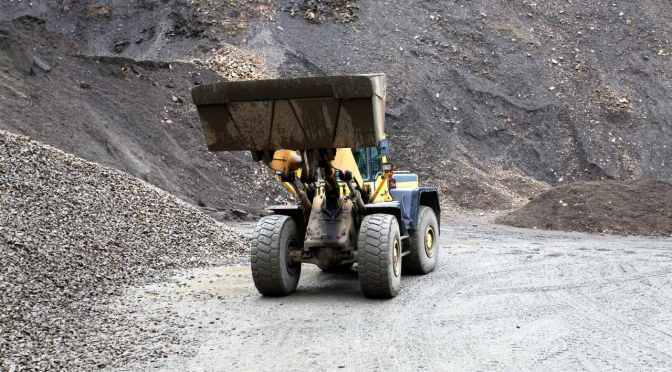
Extraction or quarrying 

Cone crushers, jaw crushers, hammer mills, and pug mills are used to crush the material, which is then screened for quality.

Sizing 

The material that passes through the screens is returned to the crushers, and the material that passes through the screens is recycled.

It is then moved to hoppers.

Reaction

  • The material is fed from the hoppers into a rotary kiln. 
  • It is heated to about 1200°C (2200°F) using coal, coke, natural gas, or fuel oil. 
  • When the raw materials are heated, carbonaceous compounds in the material liquefy, forming gas bubbles that expand the material.
  • In addition, VOCs (volatile organic compounds) are released during the process.
  • The enlarged product emerges from the kiln.

Cooling

  • The product clinker is conveyed into the clinker cooler, where it is cooled by air and shaped into a porous material. 
  • The lightweight aggregate is screened for scale, crushed if necessary, and stockpiled after cooling. 
  • Rotary kilns are used by the vast majority of plants (roughly 90%). However, travelling grates are also used to heat the raw material. 

Lightweight Aggregate Applications

  1. Screeds and thickening are made with lightweight aggregates. When the floor or roofs need thickening or smoothing, it can be used to easily achieve it.
  2. Can be applied to screeds and walls where the wood would be nailed together.
  3. Casting structural steel in lightweight aggregate concrete can protect it from fire and corrosion. Also, it can be used to cover architectural needs.
  4. Can be used on roofs as a heat insulation material.
  5. Used as insulation for water pipes.
  6. Used to construct partition walls and panel walls in frame structures.

That’s it about lightweight aggregates. Hope you found this article insightful. Let us know in the comments.

Cement tests – Laboratory tests and field tests

Cement tests are significant because cement is the most important and highly recognized binding material used in construction. Cement is an integral part of all types of construction ranging from huge skyscrapers, bridges, tunnels, etc to small residential buildings. For industrial structures like power plants, refineries, steel plants, cement plants, bridges, roads, etc. cement is the main component. Cement, when mixed with sand and aggregates, forms concrete and with sand makes mortar. The serviceability, strength, and durability of a structure are related to cement used in various works.

This article is about various tests conducted on cement to check its quality.

Cement tests – Categories

Cement is one of the oldest and most used binding materials and an integral ingredient used in the construction sector. The quality, serviceability, and stability of a structure are directly related to the quality of cement used in it. Hence it is required to analyse the quality of cement before using it for works. The tests for determining cement quality are split into two major categories.

Cement got physical as well as chemical properties. Normally lab tests are conducted to ascertain the properties of cement. Lab tests require time, special equipment, and professionals for testing and interpreting the results. It may not be possible to check all the properties of cement at the site. To overcome this difficulty cement tests are categorised into field tests and laboratory tests.

Cement tests

Field tests on Cement

The quality of cement is determined using some simple field tests. These tests do not require any sophisticated types of equipment and professional skills and get the results very quickly. By conducting these simple tests and analyzing the results we will get an idea about the cement quality and can immediately decide on accepting or rejecting it.
Following are the common field tests conducted to ensure the quality of cement.

These are first look tests and quality of cement is ensured by its smoothness to touch, the colour of cement, etc.

  • Checking manufacturing date
  • Visual checking of lumps
  • Feel test
  • Heat of cement
  • colour
  • Water float test
  • Setting test

These basic tests give an approximate characteristic of cement. These are easy and quick but not accurate, however help in concluding the acceptance of cement for works.

Also read : Field tests for cement

Laboratory tests for Cement

The laboratory tests are conducted to define the physical and chemical properties of cement. It is not possible to check all the cement properties at the site. The main laboratory tests conducted on cement is as follows.

  • Fineness Test
  • Compressive Strength Test
  • Consistency Test on cement
  • Setting time
  • Soundness Test
  • Tensile strength Test
  • Heat of hydration

Lab tests require time. But it provides accurate results.

Fineness test

The fineness test determines the size of the cement grains. Smaller the diameter of grains finer the cement is. Finer cement grains enhance the strength and cohesiveness of concrete.
The fineness of cement grains plays an important role in the hydration process and directly impacts the strength of concrete. Cement fineness is determined with the help of the following tests.

  • Sieve test
  • Blain’s air permeability test
  • Wagner turbidimeter method.

Blain’s air permeability test is the more reliable than sieve analysis test. The apparatus for this test is the permeability apparatus.

Finer cement grains above the permissible limits are also not preferred because excess finer grains increase the surface area. An increase in the surface area requires more water and results in the quick setting of cement. The standard guidelines for the Fineness test are IS 4031-PART1-1996, IS 4031(Part2)-1999, ASTM-204-05, ASTMC-115-96a (re-approved 2003).

Compressive Strength Test

The compressive strength of cement is the prime data to be determined before selecting the cement at the site. Concrete imparts strength to the structure and cement is the main ingredient in concrete. The apparatus for this test is a Compression testing machine. Gradual load is applied to the cement specimen. The load at which the specimen breaks and the area of the specimen define its strength. Certain factors like improper mixing, curing, proportioning, etc also affect the strength of cement. The cement with low compressive strength is not recommended in construction. The standard guidelines available for this test are IS4031 (Part 6)-1988, ASTM C 109, BS EN 196 – 1:2005.

Consistency test on cement

The consistency test is performed to determine the water necessary for attaining standard consistency or normal consistency. Water content is an important factor in making cement mortar. On mixing water with cement the chemical reaction or hydration is initiated. Excess water in cement results in an increase in the water-cement ratio. An increase in the water-cement ratio leads to a loss of strength when cement hardens. Less water content reduces the hydration process leads to loss of strength. Vicat apparatus is used to determine the consistency. The standard consistency of cement is when the Vicat plunger penetrates to a point 5 to 7 mm from the bottom of the Vicat mould. The consistency of cement ranges from 26% to 33%.

Vicats apparatus-Consistency test on cement

An increase in the amount of water content creates problems like bleeding, segregation in concrete. The standard guidelines about cement consistency are available in IS 4031 (Part 4)-1988, ASTM C 187, BS EN 196-3:2005, etc.

Setting time

Setting time is the time at which the cement hardens after gaining strength. It is necessary for the transportation, placing, and compaction of cement. The setting time of cement is measured at two stages – Initial and final. The time at which the setting begins is the initial setting time. At this stage, the cement loses its plasticity. The time at which the setting completes is the final setting time. This helps in the removal of scaffolding. We use the Vicat apparatus for determining setting time. The initial setting time of cement is 30 minutes and the final setting time is 600 minutes. The code which gives the guidelines about this test are IS 4031 (Part 5)-1988, ASTM C 191, BS EN 196-3:2005.

Soundness Test

A soundness test determines the capacity of cement to retain its volume after hardening. It also determines the additional lime present in the cement. Lime is one of the main ingredients of concrete. The deficiency of lime affects the setting time of cement. If the amount of lime is high, the cement will become unsound. Large expansion in the cement may produce cracks in concrete. Thus the disintegration, corrosion, and distortion occur in the concrete. So unsound cement should not be used in construction. This test can be done using the Le Chateler method and Autoclave method. The standard guidelines about this test are available in IS4031 (Part 3)-1988, ASTM C 151-09, BS EN 196-3: 2005.

Cement tests - Le Chatelier apparatus
Cement tests – Le Chatelier apparatus

Tensile strength Test

The tensile strength test is done using the Briquette test method or by the split tensile strength test. The tensile strength of cement is less compared to the compressive strength. Tensile cracking occurs due to dynamic loading and temperature variation. In this test, uni axial loading is done to determine the tensile strength. The standard guidelines for this test are available in ASTM C307 and EN 196-1.

Heat of Hydration

Hydration is an exothermic chemical reaction between cement and water involving the release of Heat. The hydration process increases the strength of cement. The heat of hydration is signified in terms of kilo joules per kilogram.
A calorimeter is an apparatus used for determining the hydration of cement. Important factors that influence the heat of hydration are the proportion of C3S and C3A, water-cement ratio, the curing temperature, fineness of cement, etc. An increase in heat of hydration produces undesirable stresses. The standard guidelines for this test are available in ASTM C 186 and IS4031 (Part 9 ) – 1988.

Conclusion

Tests on cement is the most essential activity to be included before starting any construction activity. The quality of cement determines the strength, serviceability, stability and life of a structure. Any compromise on quality can lead to serious construction defects and failures.

Stones || Quality tests on stones ||Types and procedures

Stones are the form of rocks from the earth’s crust. They find their application in the construction of residential and public buildings, dams, harbours, face-work of structures, road metal, and railway ballast. Besides, stones have good strength and durability.

Quality tests on stones are crucial for construction projects. Testing stone ensures that it meets the necessary standards for strength and durability. There are various tests for stones that assess different properties. These tests for stones include crushing strength, water absorption, and abrasion resistance. By performing these tests, engineers can decide the suitability of the stone for specific uses. Properly testing stone helps prevent structural failures and ensures long-lasting constructions. In this blog, we will explore the different types of stones and the procedures for each quality test. This information is essential for anyone involved in construction and material choice.

  1. Types of Stones Used in Construction
  2. Acid test
  3. Attrition test on stones
  4. Crushing test on stones
  5. Stone Crystalline test
  6. Freezing and Thawing Test
  7. Hardness Test
  8. Impact test
  9. Water absorption test
  10. Microscopic tests on stones
  11. Smiths tests

Types of Stones Used in Construction

Granite is a hard, durable stone, ideal for high-stress applications. Tests on stones, like crushing strength tests, highlight its robustness. Limestone is versatile but porous, requiring water absorption tests. Marble is prized for aesthetics, with abrasion resistance tests ensuring durability. Sandstone, used in paving and walls, needs strength and porosity tests. Slate, known for durability, is tested for impact resistance and is used in roofing and flooring. Proper testing stone ensures suitability for construction.

Qualities of Good Stone

We consider good-quality stones for the construction of important engineering structures. The next are the prime requirements of good-quality stones.

Also read : 9 lab tests for flexible pavements

  • The heavy stones have less porosity and high compactness. Thus the specific gravity of stones should be high.
  • Uniform and appealing colour stones are employed for decorative works.
  • Should have a homogeneous composition and should have less water absorption.
  • It should have the ability to get good polish.
  • Moreover, it should be free from iron oxides and calcium carbonate to resist fire.
  • The dense compaction of rocks can withstand the consequences of external agencies.
  • A good stone must be free from quarry sap.
Stones : Quality tests

Test on stones

Testing stone is essential to make sure durability and strength in construction. These tests for stones assess various properties. Proper tests on stones prevent structural issues.To conclude the strength, durability and other engineering properties of the stone, the following tests are performed. 

  • Acid test
  • Attrition test
  • Crushing test
  • Crystalline test
  • Freezing and thawing test
  • Hardness Test
  • Impact test
  • Water absorption test
  • Microscopic Test
  • Smith’s Test

Acid test

The acid test is a crucial procedure in testing stone for quality. Tests on stones help to determine the durability and suitability. Proper tests for stones ensure reliable construction materials.The acid tests determine the presence of calcium carbonate in rocks. The test method is as follows,

  • Take some 50 to 100g specimen randomly.
  • Then place them in the solution of sulphuric acid and hydrochloric acid having 1% strength for about one week.
  • Frequently mix the solution and immerse the specimen fully.
  • Subsequently, observe the specimen. 
  • Specimen with high lime content causes efflorescence due to the presence of an acid solution.
Quality tests on stones -Acid test

Attrition test on stones

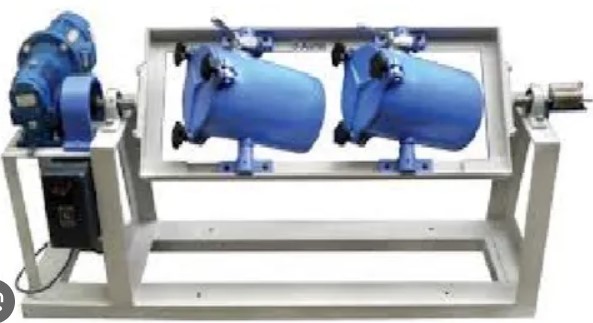
The attrition test indicates the rate of wear of the stone under the sudden impact of loads. Another name of the attrition test is the abrasion test. The apparatus for the attrition test is Devel’s testing machine.

  • Take some sample specimen and break them into small pieces having 60mm size.
  • Now take 50N of stones and place them in the cylinder of the testing machine. 
  • Then close the cylinder and rotate them for 5 hours at a rate of 30 rpm. 
  • After 5 hours, take the samples outside and sieve them through a 1.5 mm mesh.
  • Weigh the amount of material retained in the sieve and calculate the percentage of wear using the following formula.

Percentage of wear = ( Loss in weight / Initial weight ) x 100

Thus, we get the percentage of wear.

Attrition test on stones

Crushing test on stones

The crushing test gives the strength of the stones. These tests are performed for stones to be used at the bottom of heavy structures.

  • For this test, cut the stone specimens into 40mm x40mmx 40mm and dress the sides.
  • Minimum of three specimens are needed for this test.
  • Before starting, place the specimen in water for 72 hours.
  • Then cover the load-bearing surface of the specimen with a plywood layer.
  • Now place the specimen in the testing machine.
  • Simultaneously, apply load axially at a rate of 13.7 N/mm2 per minute.
  • Note down the load at which the stone breaks. Calculate the strength using the following formula.

Crushing strength = Maximum load at which stone breaks / Loaded area 

However even weak stone possess high compression strength. For example, the crushing strength of stone for ordinary building works should not exceed 1N/mm^2. 

Stone Crystalline test

This test defines the weathering nature of stones. To conduct this test we need at least 4 cubes with 40mm size. The crystallisation of Calcium sulphate causes eroding of stones

  • To start with first, immerse the samples in a solution of sodium sulphate at normal room temperature.
  • After that dry them at 100 degree Celsius and repeat these steps 5 times.
  • Then note down their difference in weight in the percentage of the original weight.
  • The difference in weight shows the weathering quality of the stones. 

Freezing and Thawing Test

As stones in the construction work are exposed to sunlight, wind, rain etc. This test is necessary to carefully study the behaviour of stone. The test procedure is as follows.

  • Take the specimen and immerse it in water for 24 hours.
  • Then place it in a freezing mixture at 12 degree Celsius for 24 hours.
  • Frequently repeat the above two steps and observe the stone quality. 

Besides, perform this test only in the shade to prevent the consequences of rain, sunlight, etc.

Hardness Test

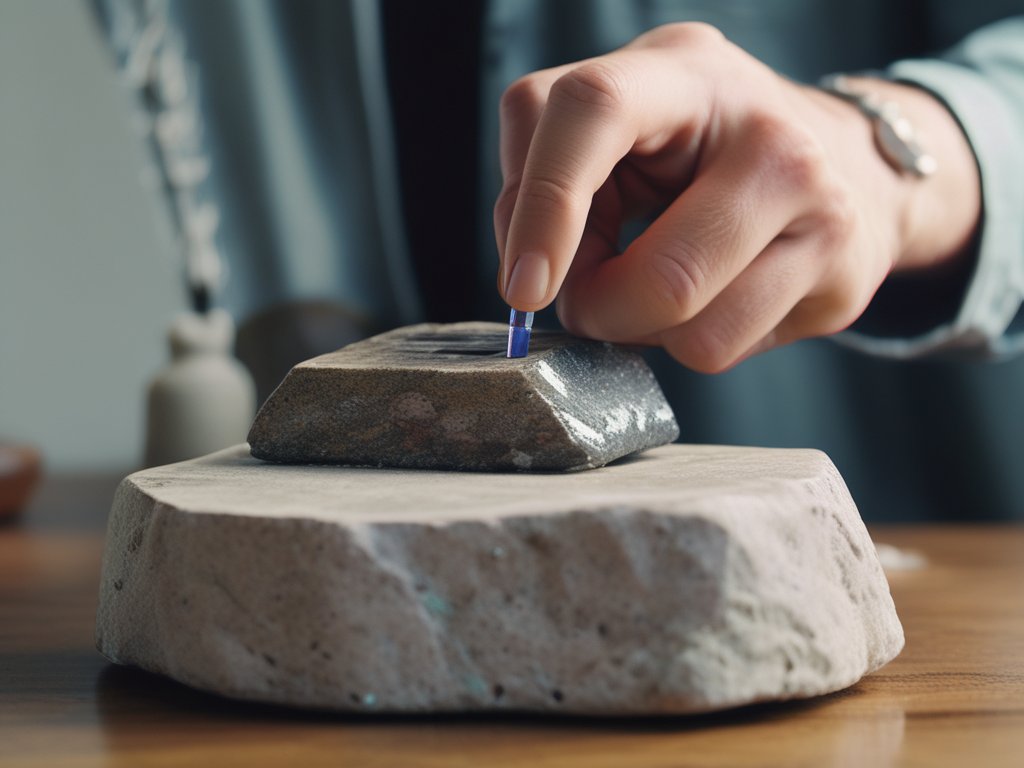
The hardness of the stone is its ability to resist scratch or rebound.

  • For this test, we use a penknife. This can not make a scratch on pard stones like granite.
  • Moh’s scale value determines the hardness of the specimen.
  • For example, Moh’s scale value is 1. Since it is easily scratchable.
  • Likewise for Quartz, Moh’s scale value is 7. Since it cannot be scratched with a knife.

Impact test

The impact test determines the toughness of the stone. The impact testing machine is the apparatus used for this test. The test procedure is as follows.

  • Take a specimen in a cylindrical shape with 25mm diameter and 25mm height. 
  • Then place it on the cast iron anvil of the machine
  • After that, allow a steel hammer of 20N to fall vertically over the specimen
  • The first blow height is at 1cm. For the second blow height, it is 2cm and so on. 
  • Gradually increase the height of the blow. Finally, note down the height at which the specimen breaks. 
  • The height at which the specimen breaks is the toughness index.

Water absorption test

Through this test, we can determine the porosity as well as moisture content. The water absorption test is as follows

  • Prepare a stone sample and record its weight asW1
  • Then immerse the cube in distilled water for 24 hours. 
  • After that wipe the water with a damp piece of cloth. Again weigh the sample as W2.
  • Now suspend the cube freely in water and record its weight as W3.
  • Subsequently, place the cube in boiling water for five hours. Again weigh the cube and record its weight as W4.
  • From the above data, we can also calculate the percentage absorption of water and saturation coefficient using the formula.

Percentage absorption by weight after 24 hours = (W2- W1)/ W * 100

Percentage absorption by volume after 24 hours = (W2 – W1)/( W2 – W1) * 100

Saturation coefficient = Water absorption / Total porosity = (W2- W1) – ( W4- W1)

Microscopic tests on stones

This test helps to study the geology of the stone. The sample is placed for microscopic examination to analyse the below properties.

  • Mineral components
  • Texture and nature of stones
  • Presence of malicious substance
  • Determining defects and pores
  • Size calculation, etc.

Smiths tests

Smith’s test calculates indicates the presence of earth matter in stones. 

  • In this test firstly, break the specimen into small pieces.
  • Then take a test tube with clear water and place these pieces in it.
  • Vigorously shake the test tube. The muddy colour of the water shows the presence of earthy matter.

Key Takeaways

Quality tests on stones are essential for ensuring their suitability in construction projects. Testing stone involves various tests, including crushing strength, water absorption, and abrasion resistance. Each test stone procedure is designed to assess specific properties, such as strength, durability, and weather resistance. Granite, limestone, marble, sandstone, and slate are commonly used stones that undergo these tests for stones. Procedures like the acid test, attrition test, and freezing and thawing test help determine the stone’s durability and resistance to environmental factors. Proper tests on stones prevent structural issues and ensure long-lasting constructions. Understanding these tests for stones is crucial for anyone involved in construction and material selection.

Conclusion

In conclusion, performing quality tests on stones is a fundamental step in construction to ensure the materials’ strength and durability. Testing stone through various procedures, such as crushing strength, water absorption, and impact tests, provides critical information about the stone’s properties. These tests for stones help in selecting the right material for different construction purposes, ensuring safety and longevity. Types of stones like granite, limestone, marble, sandstone, and slate each require specific testing methods. Therefore, incorporating these tests on stones into the construction process is vital for achieving reliable and robust structures. Properly testing stone materials guarantees their performance and enhances the overall quality of construction projects.

Shape tests on Coarse Aggregates- Flakiness index test and Elongation Index Tests.

Shape test on coarse aggregates constitutes flakiness Index and elongation index tests. The particle size and shape of aggregate is one of the major factors affecting the quality of the concrete.

Shape test on Coarse Aggregates

  • Flakiness index test
  • Elongation index test

Must read : Aggregate crushing test- Strength of aggregate

Must read : Bitumen – 9 lab tests on bitumen for flexible pavements.

Shape test on coarse aggregate – Flakiness index test

The particle shape of aggregates is determined by the percentages of flaky and elongated particles contained in it. for concrete and construction of bituminous works the presence of flaky and elongated particles are not suitable and cause failures and breaking during heavy loads.

The Flakiness index of aggregates is the percentage by weight of particles whose least dimension (thickness) is less than three- fifths (0.6times) of their mean dimension. This test is not applicable to sizes smaller than 6.3mm

The Elongation index of an aggregate is the percentage by weight of particles whose greatest dimension (length) is greater than nine-fifths (1.8times) their mean dimension. This test is not applicable for sizes smaller than 6.3mm.

Flake materials may cause voids in concrete and has to be kept under limit to ensure the quality of the concrete.

Relevant IS codes: 

  • IS:2386(PartI)-1963

Apparatus used

  • Weighing machine
  • Metal gauge
  • IS sieve

Test procedure

First we have to find the flakiness index.

Dimensions of thickness and length gauges
  • For finding the flakiness index, we have to test at least 200 pieces of any fraction and weigh them.
  • Then sieve the sample through IS sieves according to the table below.
  • After that to determine the flakiness index separate the aggregate retained in the sieve.
  • Then pass each aggregate through the corresponding slot in the thickness gauge.
  • Finally, we calculate the flakiness index.
  • The flakiness index is the total weight of material passing through the gauge to the total weight of the sample. It is expressed in terms of percentage. Weigh the flaky material passing the gauge to an accuracy of at least 0.1 per cent of the test sample.
  • The formula for flakiness index is

F.I = (Weight of aggregate passing through the slot of the thickness gauge / Total weight of the sample) * 100

Thickness gauge
Thickness gauge

Must read : Los Angeles abrasion test on aggregates

Shape test on Coarse Aggregates- Elongation index test

The presence of elongated particles in the aggregate is undesirable for construction. Also, this shape test is made in coarse aggregate. The elongation shape test is not applicable for aggregates with a smaller size than 6.3 mm.

Relevant IS codes: 

  • IS:2386(PartI)-1963

Apparatus used

  • Weighing machine
  • Metal gauge
  • IS sieve

Test procedure

  • For finding the flakiness index, we have to test at least 200 pieces of any fraction.
  • Then sieve the sample through IS sieves according to the table below.
  • After that pass, each fraction through the gauge individually.
  • Now using a weighing machine, weigh the total amount of fraction retained.
  • Finally, we calculate the elongation index.
  • The elongation index of an aggregate is the weight of the particle whose greatest dimension is greater than 1.8 times its mean dimension.
  • The formula for elongation index is 
Shape test on aggregates

E.I = Weight of the aggregate retained on length gauge / Total weight of aggregate x 100

Conclusion

The shape tests give only a rough idea of the relative shapes of aggregates. Flaky and elongated particles should be avoided in pavement construction, particularly in surface course.

Timber – 5 Important Quality Tests and Procedures.

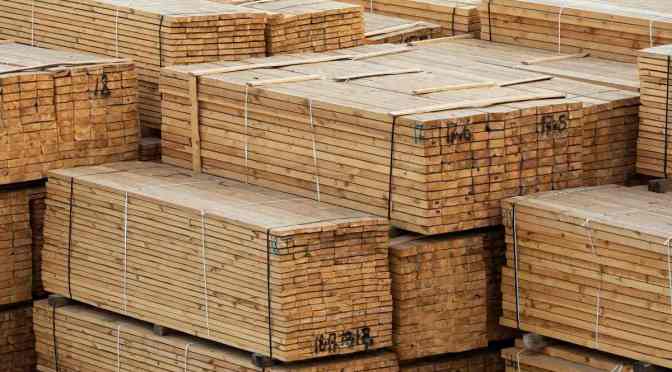
Timber is wood suitable for construction purposes. In order to find the quality and sustainability of the Timbers, Various Quality tests are performed.

They are natural polymeric material that nearly does not age. Moreover, the structure of the wood ensures efficient strength and load capacity.
Wood can be split into two classes. They are natural and man-made. Hence some examples of man-made timber are plywood, fibreboard, impregnated wood, etc.

PROPERTIES OF GOOD QUALITY TIMBER

The timber should posses the following qualities.

  • It should have a good uniform dark colour.
  • Timber should be free from defects such as shakes, flaws, dead knots, etc.
  • It should possess regular annual rings.
  • The freshly carved surface of the wood should have a sweet smell.
  • Moreover, It should have a heavyweight.
  • The cellular tissue and fibres should be compact and hard.
  • A good timber should be durable and possess elasticity. 
  • It should be resistant to fungus, insect, etc.
  • Also, timbers with compact texture have good resistance to fire. 
  • It should be inert from mechanical, chemical and physical agencies.
  • A good quality wood should hold loads from structures.
qualities of good timber

Also Read : Bitumen – 9 lab tests on bitumen on flexible pavement

Also Read : Bricks – 8 Reliable tests to ensure quality.

TEST ON TIMBER

In order to find the quality and sustainability of the Timbers, Various Quality tests are performed. In this article, we have listed a few test procedures.

  • Moisture content test
  • Tensile strength test
  • Compressive strength test
  • Shear strength test
  • Bending test

MOISTURE CONTENT TEST OF TIMBER

This test determines the moisture content in wood. However, wood contains a small amount of moisture content. A weighing machine and a drying oven are important apparatus for the water absorption test. 

moisture content test of timber

Relevant IS codes:

IS I 2380 ( Part VI ) – 1977

Test procedure

  • Initially, Take the specimen with a size of 5cm x 5cm x 2.4cm.
  • Then using a weighing machine weigh the specimen. Mark it as W1.
  • After that oven-dry the timber at a temperature of 103-degree celsius. 
  • Later, take out the specimen when becomes dry.
  • Again weigh and mark the weight of the dry specimen as W2.
  • Finally, calculate the percentage of moisture content by

% of moisture content = Weight of moisture in sample/ Dry weight of sample = (W1 – W2)/ W2

TENSILE STRENGTH TEST OF TIMBER

The tensile strength test defines the strength and ability to withstand breaking. Also, we can determine the load-carrying capacity of the wood.

Relevant IS codes:

IS I 2380 ( Part VI ) – 1977

Test procedure

Tensile test on timber
  • Firstly, take a specimen with 5cm x 5cm and 20cm in length.
  • Then place the specimen on the base plate of the instrument. 
  • After that apply load either parallel or perpendicular to the grains. 
  • Mark the load at which the wood breaks.
  • Finally, calculate the tensile strength of the wood.

Tensile strength = Maximum load applied / Cross sectional area

COMPRESSIVE STRENGTH TEST

The compressive strength test defines the crushing strength of the timber. Furthermore, this test determines the load which the wood can support over a period.

Relevant IS codes:

IS I 2380 ( Part VI ) – 1977

Test procedure

Compressive test
Compressive test
  • Initially, take a specimen with a size of 5cm x 5cm x 20cm. 
  • Then place the specimen in the compressive testing machine.
  • Following this, apply load parallel to the grains.
  • The specimen should be free from defects. Gradually increase the load.
  • Then note down the load at which the timber breaks. 
  • Lastly, calculate the compressive strength from the below formula.

Compressive strength = Load at which the specimen breaks/ Total area of the specimen

SHEAR STRENGTH TEST

The shear strength is important when timber is used as slabs. The load should be applied parallel to the grains. 

Relevant IS codes:

IS I 2380 ( Part VI ) – 1977

Test procedure

Shear test apparatus
  • The size of the specimen for shear strength is 5cm x 5cm x6.25 cm. 
  • Then cut the corner of the specimen.
  • Thus it produces failure on 5cm x 5cm surface.
  • However, this failure occurs tangentially or radially. 

BENDING STRENGTH TEST

The Bending strength test is necessary when we use timber as a beam. Through this test, we can find the modulus of rupture and modulus of elasticity.

Relevant IS codes:

IS I 2380 ( Part VI ) – 1977

Test procedure

Bending test on timber
  • For this, take a specimen of 5cm x 5cm x 7.5 cm in size
  • The specimen should be free from defects and deterioration.
  • Then drop a hammer with specific weight from a certain height.
  • Thus we get the impact bending.
  • Lastly using the load and deflection, calculate bending strength.

Also Read : Los Angeles abrasion test on aggregates

Aggregate crushing test to find Strength of aggregate

Aggregate crushing test is done to find out the strength of aggregate which is the fundamental and essential components of concrete, flexible pavements, etc. More than 70 to 80 per cent of the volume of concrete is aggregate. Aggregates are a very important component of concrete, so the quality really matters when it comes to aggregates. Furthermore, their uses include flexible pavements, railway ballast, etc.

Different tests are to be performed to ensure the quality requirements of aggregates for the specific uses.

Tests on aggregates

Different types of tests are done to determine their properties like

  • Strength
  • Toughness
  • Hardness
  • Shape
  • Water Absorption etc.

Must Read : Bricks – 8 reliable tests to ensure quality

Must Read : Bitumen – 9 Lab tests on bitumen for flexible pavements

Following are the types of aggregate tests conducted to ascertain the suitability of aggregates.

  • Aggregate Crushing test
  • Abrasion test
  • Impact test
  • Water absorption test
  • Flakiness index test
  • Elongation index test
  • Bulk specific gravity test
  • Polishing test

Aggregate Crushing test (IS 2386(Part 4):1963 & BS 812110:1990)

Aggregate crushing test values indicates the strength of aggregate and hence it is very significant. Similarly we can say crushing value is the relative measure of resistance of an aggregate under gradually applied compressive loads. Higher crushing strength means lower crushing value and vice versa. If the aggregate crushing value is less than 10, means an exceptionally strong aggregate, Whereas crushing value of 35 and above means a weak aggregate.

Relevant codes for aggregate crushing test

  • IS 2386(Part 4):1963
  • BS 812110:1990

Apparatus required

  • Compressive Testing Machine
  • Crushing Mould: A steel cylinder 15 cm diameter with plunger and base plate.
  • Weighing machine,
  • Sieve: Size of 12.5 mm, 10 mm and 2.36 mm
Aggregate crushing value test apparatus

Aggregate crushing Test procedure

  • Oven dry the aggregates
  • Firstly, sieve the aggregate using Indian standard sieves.
  • Then collect the specimen passed through 12.5 mm and retained on a 10mm sieve.
  • Thus is the test sample of aggregate.
  • Then put the cylinder on the base plate and weight it (W). 
  • The aggregate sample should be filled in 3 layers , each layer is subjected to 25 strokes using tamping rod.
  • After that weigh the materials with cylinder and record as (W1)
  • Weight of aggregate will be (W1-W). ie : (Weight of cylinder with aggregates – Weight of cylinder)
  • Level the aggregate surface carefully before inserting the plunger so that it rests horizontally over the surface.
  • Place the cylinder with plunger below a compression testing machine.
  • Apply load at a uniform rate so that a total load of 40T is applied in a span of 10 minutes.
  • Then release the load and remove the material from the cylinder.
  • Following, sieve again on 2.36mm IS sieve. 
  • Then weigh the material passing through the sieve and record it as W2. 
  • Finally, calculate the specimen crushing value using the formula below. 

Aggregate crushing value = (W2 x 100) / (W1-W)

W1-W = weight of dry sample

W2 = Weight of fraction passing through the sieve after application of load.

For a good quality aggregate, the crushing strength value is low.

Recommended crushing values

Flexible pavementsCrushing value
Soling50
Water bound Macadam40
Bituminous macadam40
premix carpet30
Dense mix carpet30
Rigid pavements
Other than wearing course45
Surface or Wearing course30

The aggregates used in roads and pavement construction must be strong enough to withstand crushing under roller and traffic. If the aggregate crushing value is 30 or higher’ the result may be anomalous and in such cases the ten percent fines value should be determined instead.