Category Archives: CONCRETE

Vee Bee Consistometer test – Workability of concrete

Vee Bee consistometer test determines the workability of concrete. Workability depends on the compactability, stability, finishing ability of the concrete. Vee- Bee test is for finding workability of concrete.

Concrete is designed for a particular strength. The total structural stability is dependent on a good quality concrete. and that is why quality control is one of the most important aspects taken into account during the production of concrete . A little variation in water to cement ratio, ingredient proportioning, increase in slump etc will have a major impact on the desired strength of the structure which in turn affects the structural stability.

Quality tests on concrete

Following are the stages of quality tests

  • Production stage quality tests ( On fresh concrete before placing)
  • Hardened stage quality tests ( hardened concrete specimens)
  • On structures ( tests done on the structures )

Also read : Aggregate Crushing test – Strength of aggregate

Also read : 9 lab tests of Bitumen for flexible pavements

Production stage quality tests on fresh concrete

This article is about Vee- Bee Consistometer test

Significance of Vee Bee Consistometer

The vee bee test decides the consistency and mobility of the fresh concrete and expressed in Vee- Bee seconds. As per IS: 1199 – 1959, it measures on the basis of the relative effort of the concrete to change its shape. This is the remoulding effort. The time for the complete remoulding is the workability of the concrete.

Relevant IS code

  • IS: 1199 – 1959

Apparatus used for Vee Bee Consistometer

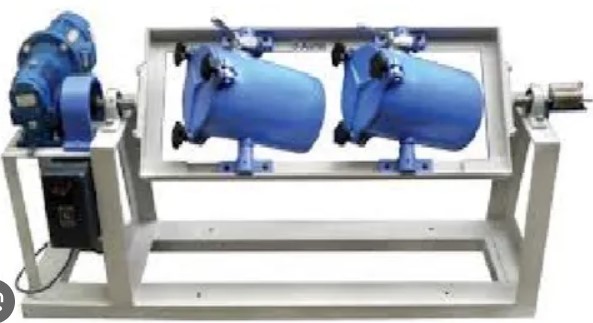
Vee Bee Consistometer

The Vee – Bee Consistometer includes of 

  • A vibrator table resting upon elastic supports
  • A metal pot
  • A sheet metal cone, open at both ends
  • A standard iron rod

The dimension of the vibrating table is 380 mm in length, 260 mm in width and height of 305 mm. Also, supporting the table there is a rubber shock absorber. Under the table, there is a vibrator that vibrates electrically.  The dimension of the metal slump cone is 300mm height, 200 mm top diameter and 100 mm bottom diameter. 

Vee- Bee Consistometer

Test procedure

  • Initially fill the slump cone with four layers of concrete. Each layer should have a height of one – fourth of the cone. 
  • After that tamp each layer 25 times using a standard tamping rod and strike uniformly.
  • Then after placing the final layer, remove the excess concrete on the top of the concrete.
  • Move and place the swivel arm attached to the glass disc on the top of the cone.
  • Now remove the cylindrical cone gradually in the vertical direction and note down the slump.
  • Then switch on the electrical vibrator and allow the concrete to spread. 
  • The time taken by the concrete to spread uniformly is noted using the stop clock.
  • This time is expressed in vee bee seconds.

The time for the concrete to remould is the Vee-Bee seconds. The Vee Bee consistometer is an indirect measure of concrete workability. This method is suitable for concrete whose slump value cannot be determined. ie, for dry mixes. We can get direct result through this method.

Also Read : Soundness test on aggregate

Compaction factor test – Workability of concrete-Test procedure

Compaction factor test is conducted to determine the workability of the concrete. Compaction factor test is a lab test and is generally conducted on concrete samples having very low workability.

Concrete is designed for a particular strength. The total structural stability is dependent on a good quality concrete. That is why quality control is one of the most important aspects taken into account during the production of concrete . A little variation in water to cement ratio, ingredient proportioning, increase in slump etc will have a major impact on the desired strength of the structure which in turn affects the structural stability.

Quality tests on concrete

Following are the stages of quality tests

  • Production stage quality tests ( On fresh concrete before placing)
  • Hardened stage quality tests ( hardened concrete specimens)
  • On structures ( tests done on the structures )

Production stage quality tests to determine workability of fresh concrete

This article is about Compaction factor test.

Significance of compaction factor test

Concrete is designed for a strength. The total structural stability is dependent on the concrete quality and strength. Because of that, the concrete quality has to be controlled and ensured in the production stage. Even marginal variations in water to cement ratio, ingredient proportioning, increase in a slump, etc. tend to impact the desired concrete strengths.

Compaction factor test.

Compaction test is for determining the workability of concrete. Workability of concrete is defined as the ease and homogeneity with which a freshly mixed concrete or mortar can be mixed, placed, compacted and finished. Strictly, it is the amount of useful internal work necessary to produce 100% compaction.

Compaction factor test is developed by road research laboratory UK and is precise and accurate than slump test. The test is done when the concrete is to be compacted by vibration and continually fail to slump.

Also read : Bitumen – 9 lab tests on bitumen for flexible pavements.

Also read : Timber – Five important quality tests

Compaction Factor Test – Relevant IS code 

IS: 1199- 1959

Apparatus used

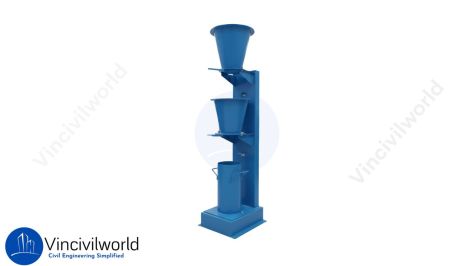
Compaction test apparatus
Dimensions of compacting factor apparatus
  • Compacting factor apparatus
  • Cylindrical mould 
  • Hand scoop 
  • Trowel
  • Weighing machine

The figure shows the dimension of the hopper and the mould. The inside area of the hopper should be smooth. The apparatus is made of bronze or cast brass. At the lower ends of the hopper, there is a trap door with a 3mm thickness. A rigid frame attaches the hoppers and cylinder. After the completion of mixing, the test is conducted at a constant time interval. 

Test procedure

  • Place the sample in the upper hopper of the apparatus using a hand scoop.
  • Fill the hopper with its brim level and open the trap door.
  • Then allow the concrete to fall into the lower hopper.
  • Immediately after the concrete rests, uncover the cylinder and open the lower trap door.
  • Cut off the excess amount of concrete above the cylinder using the trowel.
  • Then weigh the concrete in the cylinder nearest to 10g. This is the weight of partially compacted concrete.
  • Refill the cylinder with the same sample in the layers and the layer is heavily rammed or vibrated for full compaction.
  • Then weigh the fully compacted concrete and the weight of the empty cylinder.
  • Finally, Compute the compaction factor using the formula.

The compaction factor is the ratio of partially compacted concrete to fully compacted concrete.

Compaction factor = (W1 – W) / (W2 – W)

The compaction factor value varies from 0.7 to 0.95.

Reactive Powder Concrete- 6 Components and All Properties Explained

Reactive powder concrete is an ultra-high strength and highly ductile composite material with advanced mechanical properties, hence has high durability. In this blog, I will walk you through the components, properties, advantages and limitations of RPC.

Let’s start from the definition.

What is reactive powder concrete?

Reactive Powder Concrete (RPC) is a type of Ultra High Performance Concrete (UHPC). The main constituents are cement, sand, silica fume, steel fiber and quartz powder with minimal water to binder ratio, without coarse aggregate.

Next, let me show you the development of RPC that presents different steps of formation.

Development of RPC

In RPC, water- binder ratio is very low, CA is absent- reduce the heterogeneity of concrete mix and optimize microstructure. Precise gradation of particles yields compact, well-arranged and high strength hydrates of maximum density.

Development of RPC is based on the following principles.

  • Elimination of CA- Homogeneity enhanced
  • Utilization of pozzolanic properties of silica fume
  • Granular mixture optimization- to enhance the compacted density
  • Optimal usage of superplasticizer- improves workability, reduce w/c
  • Apply pressure (before and during setting)- improves compaction
  • Post set heat treatment- to enhance microstructure
  • Addition of small-sized steel fibres- improves ductility

Let’s move on to the components of reactive powder concrete now.

Components of RPC

  COMPONENT      SELECTION PARAMETER  FUNCTION  PARTICLE SIZE
SandGood hardness, readily available and low costGives strength150-600 µm
CementC3S: 60% C2S: 22% C3A: 3.8% C4AF: 7.4%Binding material for production of primary hydrates1-100 µm
Quartz powderFinenessMax reactivity during heat-treating5-25µm
Silica fumeVery less quantity of impuritiesFilling the voids,
enhance rheology,
production of secondary hydrates
0.1-1µm
Steel fibersGood aspect ratio, straight in shapeImprove ductilityLength 13-25 mm   Dia. 0.15-0.2 mm
Super plasticizerLess retarding characteristicsReduce w/cPoly acrylate based
Components of RPC

Here comes the properties of RPC in the next section.

Properties of RPC

  • RPC possess better strength (compressive and flexural) and lower permeability compared to HPC
  • Fracture toughness is higher for RPC- higher ductility
  • Ultra-dense microstructure- waterproofing and durability characteristics
  • Higher corrosion resistance- can be used in chemically aggressive environments
  • Workability of RPC mixtures (with and without fibres) measured by mortar flow table test- (120-140 mm)
  • Workability of HPC mixtures (with and without fibres) measured by slump test- (120-150 mm)
  • Density of fresh RPC and HPC mixtures- 2500-2650 kg/m3 
  • Compressive Strength of RPC and HPC- linked to durability, found that compressive strength of RPC is suitable for nuclear waste containment

How about the factors affecting the strength of RPC?

Also read: Self healing concrete|Bacterial concrete-Preparations& Advantages

Factors affecting strength of RPC

  1. Silica fume percentage- Compressive strength decreases as dosage increases, fluctuates in the range of 25-35% silica fume 

2. Quartz Powder- improves filler effect, 20% increase in compressive strength under accelerated curing condition

3. Curing Regime- compressive strength increased by 10% when subjected to hot water curing

4. Temperature- 

  • Compressive strength

– decreases at 100°C

– increases from temperatures 200-500°C 

– decreases at temperatures above 600°C

-increases as fibre content increases

-decreases as fibre content increases above 300°C

  • Tensile strength

– decreases below 200°C

 -increases from temperatures 200-300°C

 -decreases above 300°C

5. Pre-Setting pressure- Compressive strength of RPC increased by two times

Time to see the advantages of reactive powder concrete.

Advantages of reactive powder concrete

Reactive powder concrete
  • High ductility
  • Low porosity and permeability
  • Increased resistance to corrosion and chemical attack
  • Significant dead load reduction is possible
  • Eliminates the need for supplemental shear and auxiliary reinforcing steel
  • Improved seismic performance
  • Useful for containment of nuclear wastes- as there is minimum penetration of liquid/gas through RPC

We will find out the applications of reactive powder concrete now.

Also read: Reinforced cement concrete- Working stress and limit state method

Applications of RPC

  • Pre-stressed applications
  • Light weight structures- roof of stadiums, long span bridges, space structures, high pressure pipes, and blast resistance structures
  • Containment of nuclear wastes
  • Pre-cast structures 

Before we wrap up, let’s take a quick stroll through the limitations.

Limitations of reactive powder concrete

  • More expensive compared to conventional concrete
  • Technological and economical difficulties in applying pressure to mix and heat treatment in field
  • Since RPC technology is in its infancy, the long term are still not known
  • Fine sand becomes equivalent to CA of conventional concrete, hence acting as a weak link
  • Portland cement plays the role of fine aggregate and silica fume of the cement of conventional concrete

So, in nutshell,

Conclusions

  • RPC is a recent advancement in the field of construction
  • It has superior performance characteristics compared to HPC
  • Based on the principle of optimization of microstructure to produce hydrates of the highest strength and durability
  • Usage of superior materials has increased the cost of RPC considerably
  • Ambiguity in long term properties, technological difficulties
  • Intense research in this field guarantees that its limitations shall be resolved and it will be tapped to its full potential in the near future

That’s it about reactive powder concrete. Let me know your feedback on the article and any other topic suggestions in comments.

Happy learning!

Shotcrete – A total overview||Shotcrete vs Gunite

Shotcrete is a method of placing concrete where concrete/mortar is sprayed at high velocity to an overhead or vertical surface. Concrete is conventionally placed on the ground or to the formwork and compacted using appropriate vibration methods.

What is shotcrete? 

Shotcrete is a wet or dry mix of mortar/concrete sprayed to a vertical or overhead surface with high velocity. The mortar/concrete mix is conveyed through a hose and sprayed with a nozzle with high velocity. The force imparted by this application process consolidates the concrete/mortar resulting in an excellent bonding with almost all substrates. Shotcrete is also called sprayed concrete. The pressure will be maintained to around 20-30 N/cm2.

When mentioning about shotcrete another term which is commonly used is gunite or guniting.

Shotcrete process
Shotcrete process

What is gunite or guniting ?

Guniting and shotcrete are more or less the same. The difference between shotcrete and gunite is basically in the method of spraying and mixing ingredients.

Shotcrete spraying is accomplished through either of the following process.

a) Dry mix process

b) Wet mix process

The dry mix process is called gunite or guniting

In Gunite / dry mix process the dry materials are premixed and placed in a hopper. With the help of compressed air, the dry materials are driven to the nozzle. Water gets mixed with the ingredients from a separate source just before going out of the nozzle. The mixed material hit the surface to be applied at a super high velocity through the nozzle.

In the wet-mix process/Shotcrete, the ingredients are premixed with water like conventional concrete and placed in a hopper. Just like the dry-mix process, the wet-mix process uses compressed air to shoot the concrete through a hose. This is also called sprayed concrete were fully mixed concrete or mortar is sprayed through a nozzle.

Shotcrete of walls
Shotcrete of walls

Both these process are used depending on the area of application and site conditions.

Shotcrete vs Gunite – A comparison

Both of these methods have there pros and cons. The uses are distinguished depending on the area of application and nature of the job.

GUNITESHOTCRETE
In the gunite process, we can stop and start the job after some interval, and still, the material will stick on to the old surface due to the high velocity at which the material is applied.Shotcrete material is premixed and to be consumed within a specified time or else the material strength and qualities will be affected.
The applicators get much more work time since the cement mixing is done at the site. With gunite, you can stop and start the application without creating any cold joints. They got super high strength accompanied by low shrinkage.The joints formed in shotcrete due to any stoppage of work leads to a cold joint and the next layer applied after a certain period behaves as a different layer. A cold joint may develop and cracks may happen.
A super-skilled operator is required for gunite. The total quality, consistency, and strength of the gunite depend on the skill of the operator. And the ratio of water, cement sand mix. The nozzle operator controls the application, adjusting water levels as needed to get the right mix consistency.Highly skilled workers are not needed for a shotcrete application. The crew doesn’t have to be as skilled because the concrete comes already mixed and no need for any mixing or proportioning at the site. It’s easier to add specialised admixtures to the concrete
The high water content will ruin the mix and less water content will clog the hose and nozzle. Therefore care should be taken to maintain optimum water content.You don’t need to add water as it comes premixed with water. Sometimes water is added to improve the consistency of the mix in transit mixtures at site. This reduces the strength of the mix and cause shrinkage cracks.
Guniting gives a strong and uniform surfaceShotcrete gives a strong and consistent surface
Gunite produces a lot of oversprays called Rebound wastage. These rebound wastage are not to be reused and generate huge wastes. Disposing and housekeeping the area requires extra manpower.Wastage is less compared to Gunite in case of shotcrete.
Guniting is less expensive than shotcrete. Large-sized aggregates are not used in concrete, and mostly it will a cement-sand mix.Shot Crete is more expensive than gunite and uses aggregate up to 20 mm or as per design mix recommendations.
Completion time is slow compared to shotcreteThe shotcrete process is faster than gunite and got higher production rates.
Gunite is easier to clean up than shotcrete.
The hose is lighter and easier to use
Because you add water at the nozzle, the concrete is very fresh when you spray it.
If the hose gets clogged, it can be tough to clear which could be dangerous for the crew and property

The bottom line is that both gunite and shotcrete have their advantages and disadvantages. The truth is both will produce a high-quality, watertight, durable surface if you do the processes correctly. A super-skilled operator for doing the works improves the quality of the process.

Advantages of shotcrete

Shotcrete-sprayed concrete is increasingly becoming popular because of its extremely economical and flexible application process.

  • Shotcrete has got several advantages when compared to conventional concrete. For swimming pools, water retaining structures shotcrete is an ideal choice. They are easier to spray and admixtures can also be included to enhance mix qualities.
  • Shotcrete is durable and it imparts more strength to structures.
  • The process of application of shotcrete makes the concrete dense and less porous than conventional concrete.
  • They help in reducing shrinkage cracks, cold joints and produce an even, nonporous and durable concrete.
  • They help in reducing the construction time and reduce valuable time and money incurred as formwork costs and makes the work far more easier.
  • Shotcrete/gunite can save money in terms of shuttering, labour costs and can shorten the project delivery schedule.
  • Cold joints and areas where shuttering possibility is minimum can also be done using shotcrete methods.
  • It is possible to create any shape using shotcrete which is not possible using conventional concrete.
Gunite work
Gunite work

Application of Shotcrete/guniting

Shotcrete is extensively used in a wide range of applications due to there ease and flexibility in placing and capability of producing a dense and non porous concrete surface. They are used for..

  • Shotcrete is used for the construction of thin, lightly reinforced sections such as curtain walls.
  • Used for shell or folded plate roofs.
  • Used for underground structures and tunnels, lining works. For pre-stressed tanks, swimming pools, water retaining structures for treatment plants, etc.
  • Shotcrete/gunite is used for repairing deteriorated concrete and retrofitting works.
  • Used for structural steel encasing works.
  • Shotcrete is used for the formation of canal lining, reservoirs, and repairing of linings.
  • They are best suited for applications in underground structures, basement waterproofing works, water retaining structures, deep excavation slope protection, etc.

Disadvantages of Shotcrete/Gunite

  1. The success of shot crete depends on the skill of the operator.
  2. Shotcrete cost is higher than conventional concrete.
  3. Chances of concrete loosing its quality due to delay in spraying or pouring water to increase workability.
  4. Getting a perfect bond with some surfaces is very difficult.

Share this:

Self Healing Concrete ||Bacterial Concrete -Preparation and Advantages

Self healing concrete is a mind-blowing innovation in civil engineering. It can potentially contribute to ensure a longer lifespan of a structure. In this article, we will find out the details about bacterial concrete. A bacterial concrete is most effective in this category.

Let’s start from scratch.

What is self healing concrete?

The type of concrete that uses the process of self-filling up of cracks by the help of bacterial reaction in the concrete, after hardening is known as Self-healing concrete.

Why self healing concrete is important?

  • Unrepaired cracks lead to a reduction in the service life of the structure. Therefore, it is worth giving attention to.
  • Epoxy resins and other synthetic mixtures are alternatives. (But they are not good for human health)
  • Self healing concrete does not require human intervention

Let’s dive in deep now.

Bacterial Concrete

Concrete which is made by adding bacteria that precipitate calcite is called bacterial concrete.

  • It is microbiologically induced calcite precipitation.
  • Bacterial concrete heals cracks around 0.5 mm thickness.
  • It has improved Compressive & flexure strength than ordinary concrete.
  • Bacterial concrete is well suited for Small & Medium-Sized building
  • It is used on a limited scale & not commercially wide-spread.

We learnt the general details. Let’s be a bit technical now?

Bacteria Used in the self healing concrete

Bacteria used in bacterial concrete
Source : alchetron.com
  • “Bacillus pasteurii ”  is a common soil bacterium which is used in bacterial concrete.
  • Precipitates impermeable calcite layer over the surface of concrete.
  • Acid producing bacteria
  • Remains dormant & be viable for over 200 years under dry conditions

In the next section, let me quickly walk you through the mechanism of the self healing concrete.

Mechanism of Bacterial Concrete

  • Bacillus pasteurii is used along with Calcium Lactate. 
  • Both are added in the wet concrete when the mixing is done.
  • Water seeps in the cracks (or exposure to moisture)
  • Spores of the bacteria germinate & feeds on calcium lactate ,consuming oxygen.
  • The soluble calcium lactate is converted to insoluble limestone.
  • limestone starts to harden, filling the crack automatically
  • The advantage is that oxygen consumed helps in the prevention of corrosion of steel.

That’s it. Now, we will move on to the chemical process in bacterial concrete.

Chemical process of this self healing concrete

The steps in the process are as follows.

  • Water comes in contact with the unhydrated calcium.
  • Calcium hydroxide is produced by the help of bacteria, it acts as a catalyst.
  • This calcium hydroxide reacts with CO2 to form limestone and water.
  • This extra water molecule keeps the reaction going.
  • The limestone then hardens and seals the cracks.

Figure below shows the self healing concrete.

Source: sciencedirect.com

What about us study about the preparation of bacterial concrete now?

Preparation of Bacterial Concrete

There are mainly two methods.

  • By Direct application
  • By Encapsulation

Without delay, let’s meet each of them.

Direct Application

  • Bacterial spores and calcium lactate is added directly when mixing of concrete is done.
  • This doesn’t change the most properties of concrete.
  • When water comes in contact with this bacteria
  • They germinate & feeds on calcium lactate and produces limestone.

Encapsulation Method

  • The bacteria and its food (calcium lactate), are placed inside treated clay pellets.
  • Concrete is prepared.
  • Clay pellets break when crack occurs.
  • Bacteria germinate and eat down the calcium lactate & produce limestone.

Time to chill. Sit back and enjoy the advantages and disadvantages of what we have made through the process.

Advantages of bacterial concrete

  • Increase in compressive and flexural strength compared to normal concrete.
  • Self-repairing
  • Reduction in permeability of concrete
  • Resistance towards freeze-thaw attacks.
  • Low maintenance
  • Improves the durability of steel reinforcements.
  • Bacillus bacteria are harmless to human life.

Disadvantages of bacterial concrete

  • High Cost
  • Growth of bacteria is not suitable in some environment.
  • The clay pellets comprise 20% of the volume of the concrete. This may become a shear zone.
  • Design of mix concrete with bacteria  is not available in any IS code

We have reached the shore. Let’s wind this up with the conclusion.

Conclusion

  • Self healing concrete appears to be much more efficient
  • It has more advantages than disadvantages.
  • So far, Bacterial Concrete is the best approach in the field of self healing concrete

Hope the article served its purpose to quench your thirst to know about self healing concrete. Share your thoughts on this in comments.

Water to cement ratio – An Important Strength Factor.

Water to cement ratio is the ratio between the weight of water to the cement weight used in a concrete design mix. The water to cement ratio can significantly impact the workability and strength of the concrete.

Water to cement ratio – Significance

Concrete is manufactured by mixing cement, aggregates, and water in designed proportions. The process of proportioning is done as a volumetric (nominal mix) or by weight (design mix). Cement is the main ingredient of the concrete and acts as a binding material. In combination with water, cement undergoes a chemical reaction leading to the formation of thick and sticky gels responsible for the adhesion between the ingredients. The chemical process is called the heat of hydration. Cement and water are the most important ingredients of concrete and their ratios have a huge impact on the quality and strength of concrete. So for a design mix of required strength, the ratio of water to cement has to be maintained in the right proportions.

workability
CONCRETE POURING

Water-cement ratio – Calculation

Cement requires 23% water for initiating the chemical reaction and another 15% for the formation of gel to fill the voids.38% percent by weight of water to cement ratio is essential for the complete hydration process.

Table 5 - IS 456
Table 5- IS 456

As per IS 10262, the water-cement ratio varies from 0.4 to 0.6 based on exposure conditions. For the calculation of water to cement ratio, we need the cement content of the design mix. The minimum cement content is to be confirmed from IS 10253 for different grades.

For Mix 1:2:4 Moderate exposure condition water requirement would be-

Plain concrete(moderate) Table 5 IS 10252

The Minimum cement content for M15=240 kg/ m3

and Min water cement ratio =water/cement =0.60

=water/240=0.60

Min water requirement for mix=240*.60=120 liters

For Design mix, the W/C Ratio will depend upon the workability, strength requirements.

Fig 1 - IS 10262
Fig 1 IS 10262

Water-cement ratio effect on the workability of concrete

The water cement ratio has a huge impact on the workability and strength of the concrete. The workability of concrete means the ability of concrete to perform a concreting process involving mixing, transporting, placing, compacting with ease, and without any segregation. In other words, the workability of concrete indicates the ability of concrete to work easily. W/C ratio is also an important consideration for the workability of concrete. A high w/c ratio leads to higher workability because inter particle lubrication is increased. Similarly, a lower w/c ratio leads to lower workability because there is a lack of inter particle lubrication. However the w/c ratio is not the only parameter that decides the strength of concrete. The strength of concrete depends on a lot of factors like aggregate quality, cement proportions, etc.

Also Read : QUALITY TESTS TO BE DONE ON CONCRETE- SLUMP TEST

Effect of high w/c ratio

A high w/c ratio leads to higher workability because inter particle lubrication is increased. However, the overall concrete strength is reduced with the increase in the w/c ratio. The addition of more water gives dilute paste that has more pores at the micro-level and segregation of concrete.

HOW TO FIND OUT WATER CEMENT RATIO FOR DESIGN MIX AND NOMINAL MIX

The aggregates and cement particles take the excess water that is present in concrete. This consumption is uncontrollable if a large excess of water is present in the concrete. Hence, separate water channels are created resulting in bleeding on the surface. This creates weak zones in concrete that are susceptible to cracking under service loads. Concrete with a higher w/c ratio is also more susceptible to cracking and shrinkage. Shrinkage leads to micro-cracks, which are zones of weakness.

Once the fresh concrete is placed, excess water is squeezed out of the paste. When there is a large excess of water, that water bleeds out onto the surface. The micro-channels and passages that were created inside the concrete to allow that water to flow become weak zones. These weak zones are responsible for shrinkage cracks and micro-cracks when applied with service loads.

Concrete placing
Concrete placing

Effect of low w/c ratio

Lower water to cement ratio can contribute to high strength and high-quality concrete. For higher-strength concrete, lower ratios are used, along with a plasticizer to increase flowability. But the w/c ratio alone cannot give good concrete. A good mix proportion and quality aggregates and binding materials contribute to a good mix design. A low w/c ratio is hence one of the factors influencing good mix design.

Using low w/c ratio is the usual way to achieve high strength and high-quality concrete, but it does not guarantee that the resulting concrete should possess sufficient strength. Unless the aggregate gradation and proportion are balanced with the correct amount of cement paste, excessive shrinkage, cracking and curling can result. Good concrete results from good mix design and low w/c ratio is just a part of a perfect design mix.