Category Archives: pile foundation

Sheet pile -Sheet piling types, sheet piling advantages

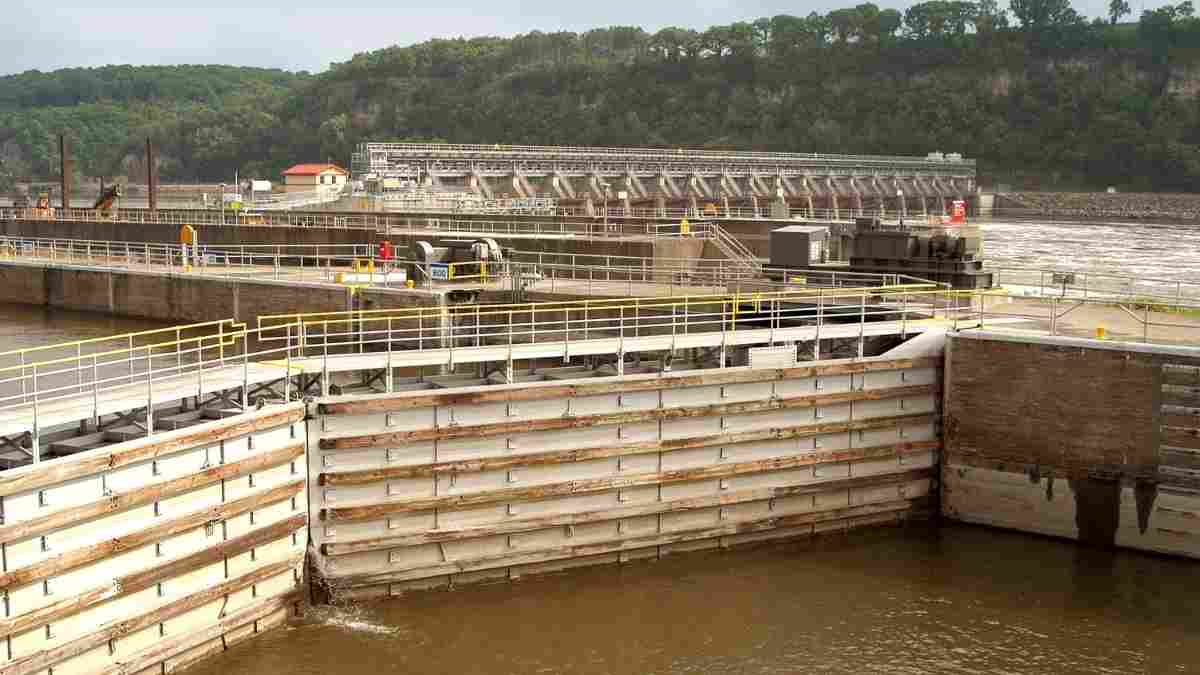
Sheet piles are essential components in construction and civil engineering. They are used in various applications, including retaining walls and foundations. The process of sheet piling involves driving long, vertical sections of sheet piles into the ground. This technique is crucial for creating a stable sheet pile foundation. There are different types of sheet piling, each designed for specific conditions and uses. Shore piling is another method related to sheet piling, primarily used for waterfront construction. To achieve successful project outcomes, it is important to understand sheet piling work. Familiarity with the types of sheet piling available is also beneficial in various construction scenarios.

In this article, we will explore the various types of sheet piling and their applications in construction. We will discuss the installation process of sheet piling work and the advantages of using a sheet pile foundation. Additionally, we’ll cover shore piling and how these techniques contribute to structural stability and safety in diverse projects.

  1. What is a sheet pile ?
  2. Sheet piling method
  3. Sheet piles – Applications
    1. Retaining walls
    2. Coastal protection:
    3. Cofferdams
    4. Underground structures
  4. Advantages of sheet pile
  5. Sheet piling types
    1. Steel Sheet piles
    2. Vinyl sheet pile
    3. Wooden sheet pile
    4. Features of wooden piles
    5. Concrete sheet pile
    6. Aluminium sheet piles
    7. Composite sheet piles
    8. Cellular sheet pile
    9. Cold-formed sheet piles
  6. Conclusion

What is a sheet pile ?

A sheet pile is a type of driven pile that uses sections of sheet materials with interlocking edges. We generally install Sheet piles for lateral earth retention, excavation support, and shoreline protection operations. They are typically made of steel, but can also be made of vinyl, wood, or aluminum. Sheet piles are installed in sequence to the design depth along the excavation perimeter or seawall alignment. The interlocking sheet piles provide a wall for permanent or temporary lateral earth support with little groundwater inflow. We use Anchors strategically to provide lateral support Anchors.

We frequently use Sheet piles for seawalls, retaining walls, land reclamation, and underground constructions. Underground constructions include parking garages, and basements, in marine locations for riverbank protection, seawalls, cofferdams, and so on.

Sheet piling method

Sheet piles can be temporary or permanent. Permanent steel sheet pile design demands a long service life. Often we install Sheet piles using vibratory hammers. If the earth is too hard or dense, we perform the installation with an impact hammer. Hot-rolling and cold-forming are the two major methods for creating sheet piles. Manufacturing of Hot rolled piles takes place at high temperatures, and the interlocks appear to be stronger and more durable.

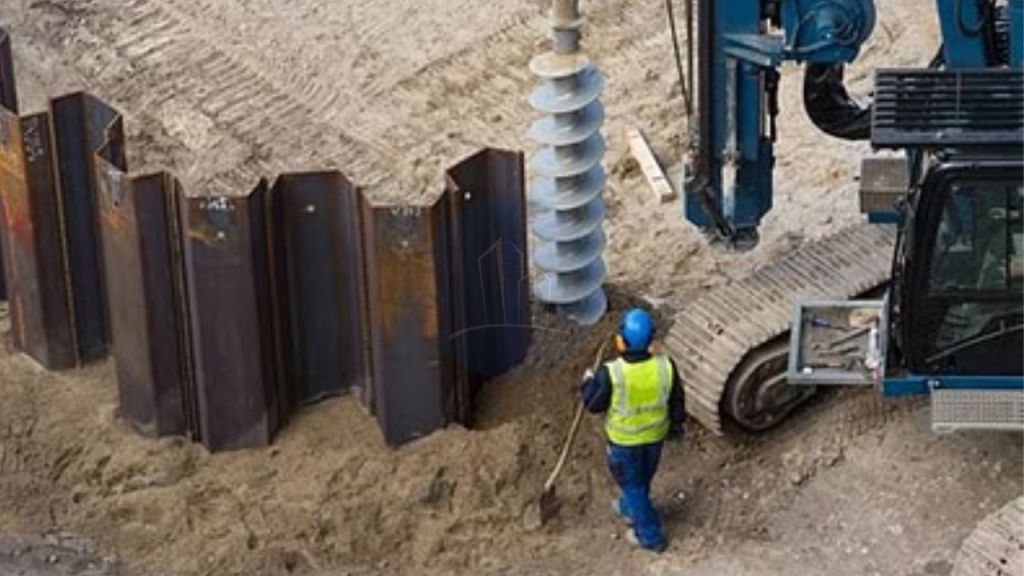
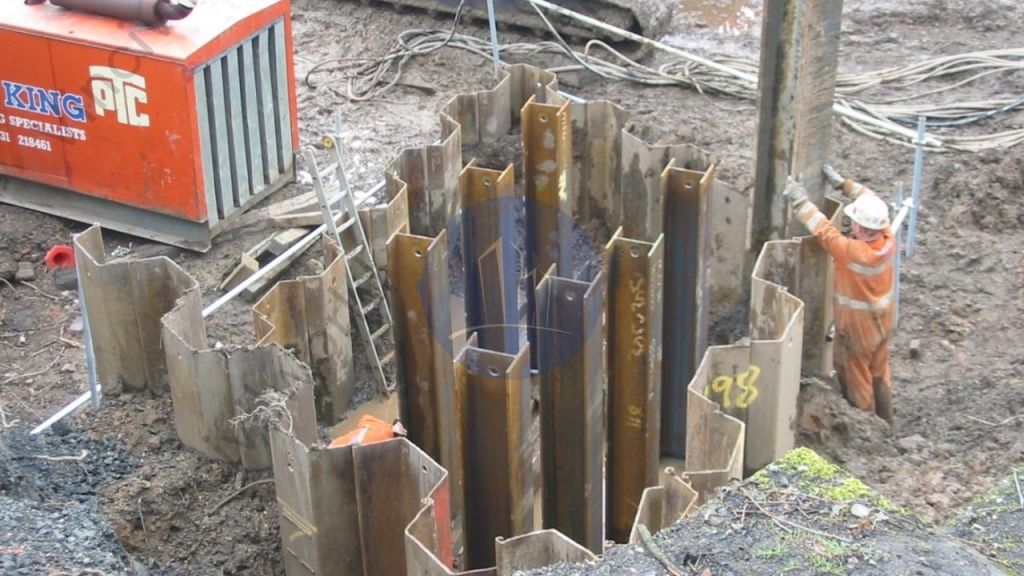
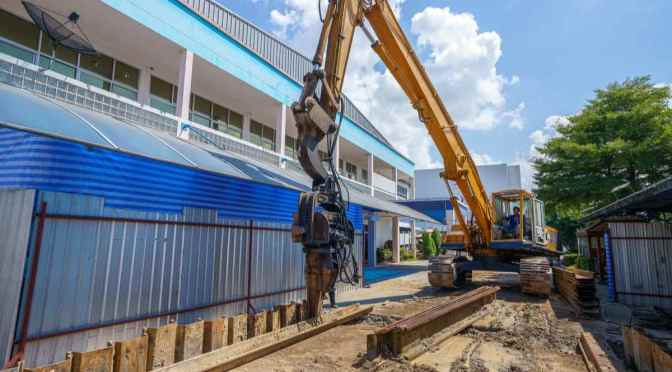
Sheet piles are installed by driving them into the ground with an impact hammer or vibratory driver. We connect them to one another by using a number of interlocking mechanisms. This includes tongue-and-groove, hook-and-grip, and clutch-bolt connections. Sheet piles, once erected, form a continuous barrier. This barrier resists lateral pressure from soil or water. It prevents soil erosion, landslides, and other soil failures.

sheet piles
Sheet piling

Sheet piles – Applications

Piles find frequent utilization in the following construction projects:

Retaining walls

Sheet piles help to construct retaining walls that hold back soil or water while also providing lateral support for excavations.

Coastal protection:

Sheet piling can protect coastal areas from erosion, waves, and storm surges. They can also be used to construct breakwaters and jetties.

Cofferdams

Sheet piles are used to build cofferdams. These are transient obstructions in water. They facilitate the construction of piers, bridges, or other water-based constructions.

Underground structures

We use Sheet piles to construct underground constructions such as basements or underground parking garages. They support the lateral structure and restrict soil or water intrusion.

Sheet piles have various advantages, including their versatility, ease of installation, and durability. Moreover, they offer an affordable option for projects that need lateral earth support. However, adequate design and installation are essential for guaranteeing the sheet pile wall’s stability and safety.

Advantages of sheet pile

Sheet piles provide several advantages in construction projects that require lateral earth support. Following are some of the key benefits of sheet piles:

  1. Versatility: Sheet piles find applications in a variety of construction projects, including retaining walls, shoreline protection, cofferdams, and underground structures.
  2. Speed of installation: Sheet piles are installed quickly and efficiently. We use impact hammers or vibratory drivers for this. These methods can reduce project timelines and construction costs.
  3. Durability: Sheet piles are made from steel or other durable materials. They can withstand harsh environmental conditions, including exposure to water, corrosion, and extreme temperatures. This makes them highly durable.
  4. Cost-effectiveness: Sheet piles generally prove to be a more affordable alternative to other types of foundation systems. They are ideal for projects requiring lateral earth support since they need less excavation and backfilling.
  5. Minimal disturbance: Sheet pile installation creates minimal disturbance to the surrounding soil and structures. We drive the piles into the ground without the need for excavation or other site preparation.
  6. Reusability: Sheet piles offer easy removal and reuse in other projects, making them a sustainable and Eco-friendly alternative.
  7. We use sheet piles for temporary and permanent structures. They are available in a wide range of lengths, sizes, and steel options.
  8. We can install Sheet piles rapidly using silent and vibration-free methods. The installation is easier and faster than secant walls.
  9. We can construct Cofferdams in almost any desired shape. Provide a close-fitting joint to form an effective water seal. Joints are designed to withstand the high pressure necessary for them to be placed in place. A little maintenance is needed above and underwater
sheet piling
sheet piling

Sheet piling types

Sheet piles are broadly classified as follows based on the material used for driving.

  • Steel sheet pile
  • Vinyl sheet pile
  • Wooden sheet pile
  • Concrete sheet pile
  • Composite sheet piles
  • Cellular sheet pile
  • Cellular sheet pile
  • Cold-formed sheet pile

Steel Sheet piles

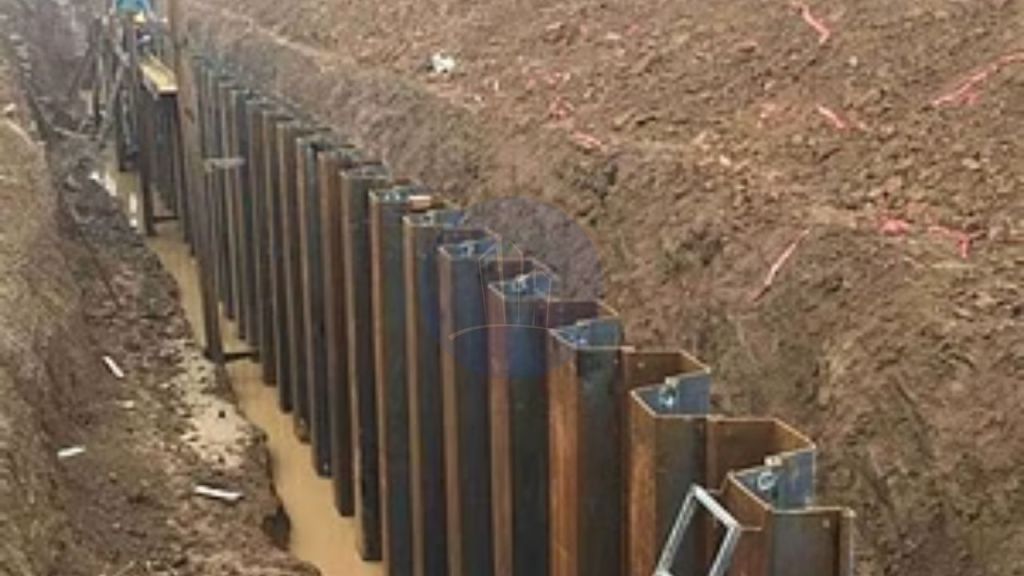
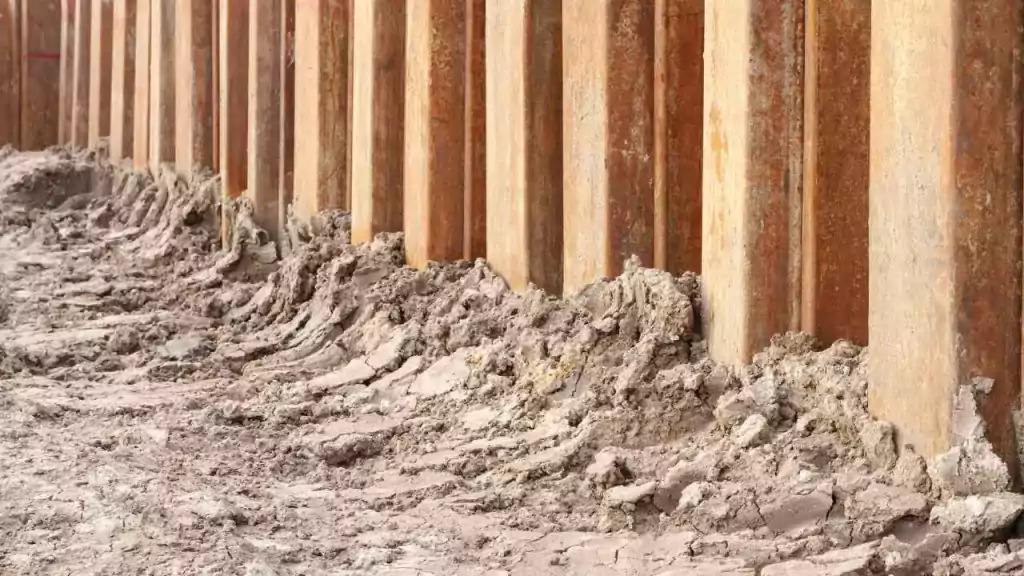
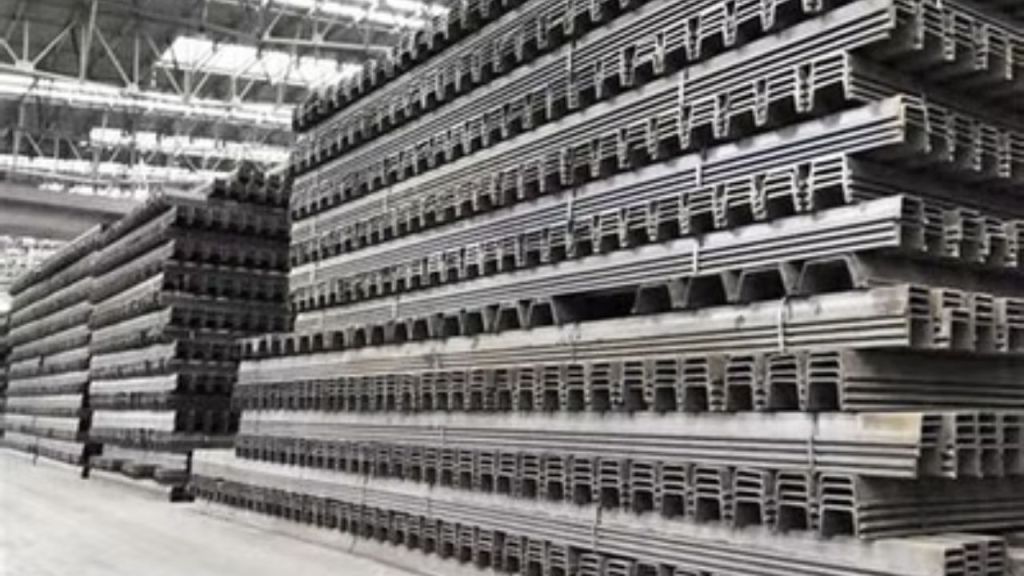
Steel sheet piles are long and thin sections of steel. They are driven into the ground to construct a retaining wall or a barrier. Steel is the most popular material for sheet piles. We can lengthen it either by welding or bolting. Steel has great water tightness and good resistance to severe driving stresses. They find extensive applications in civil engineering and construction projects. These applications include providing structural support for excavations, bridges, highways, and other structures.

Steel sheet piles are primarily made of hot-rolled steel and are available in a variety of shapes and sizes. We can link them together to form a continuous wall. This wall acts as a strong barrier against the soil or water pressure. Steel sheet piles should endure heavy loads and give structural stability. Corrosion prevention techniques including coating and cathodic protection help increase the durability of steel sheet pile.
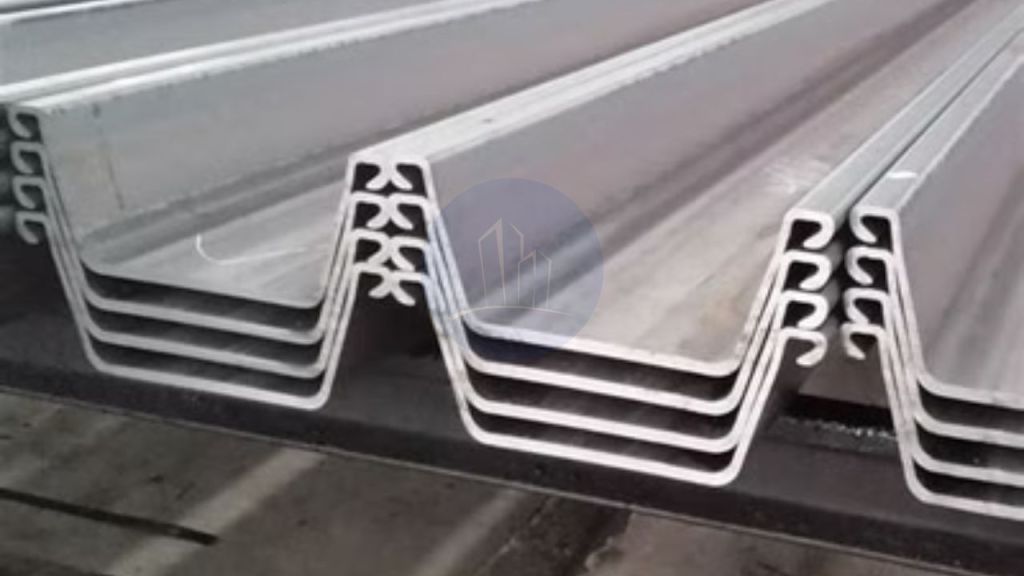
Steel sheet pile
Steel sheet pile

We frequently use Steel sheet piles in foundation work and deep excavations. They offer high resistance to lateral stresses. They also enable quick and simple installation. They are an Eco-friendly option for temporary constructions because we can recycle them.

Overall, steel sheet piles are a versatile and cost-effective solution for a wide range of civil engineering and construction projects.

There are four basic forms of steel sheet piles, Normal sections, Straight web sections, Box sections and Composite sections.

Vinyl sheet pile

A vinyl sheet pile is a form of plastic sheet pile. It finds applications in civil engineering and construction projects. These applications include seawalls, bulkheads, flood walls, and retaining walls. Vinyl sheet pile is primarily made of polyvinyl chloride (PVC). PVC is a lightweight and long-lasting polymer. It is resistant to corrosion, chemicals, and weathering. Vinyl sheet pile is becoming more common in construction projects. This is due to its minimal maintenance requirements. Its simplicity of installation and long-term durability also contribute to its popularity. Vinyl sheet pile does not require frequent maintenance or coating. Unlike traditional materials such as wood, steel, or concrete, this makes it a more cost-effective alternative in the long run.

Vinyl sheet pile is also environmentally friendly because it is reusable and does not leak dangerous chemicals into the soil or water. Because of its lightweight qualities, it is simple to transport and install, necessitating minimal use of heavy machinery and labour. Overall, vinyl sheet pile is a versatile and cost-effective solution for a variety of construction and civil engineering projects. Its durability, low maintenance requirements, and environmental benefits make it an appealing choice for contractors and engineers.

Vinyl Sheet Pile
Vinyl Sheet Pile

An effective alternative to steel sheet piling for bulkheads, seawalls and cutoff walls. They are also superior to alternative materials like concrete and wood. The main advantage of vinyl sheet piles is the superior corrosion resistance when exposed to seawater, where no oxidation occurs.

Vinyl sheet piles are lightweight and resistant to corrosion and chemical damage. They are often used in projects where environmental impact is a concern.

Wooden sheet pile

A wooden sheet pile is a type of retaining system comprising timber planks or boards. We commonly employ them in construction and civil engineering projects with a requirement for a retaining wall, either temporary or permanent. Hardwood sheet piles are a more environmentally friendly and long-lasting alternative to steel or concrete sheet piles. and they are widely utilised in places where environmental impact is a concern. In excavation work, we utilise them for braced sheeting and temporary structures. It must have some sort of preservative treatment for its utilisation in permanent structures above the water table. Even after treatment with a preservative, a timber sheet pile has limited life. Timber sheet piles are bonded using tongue and groove connections.

Features of wooden piles

Timber piles are not suitable in strata that contain gravel and boulders. Hardwood sheet piles are ideal for shallow excavations and we frequently utilise them in building projects where noise and vibration are a concern. They are lightweight and easy to handle, making them a popular choice for jobs requiring speedy installation. In comparison to other retaining wall materials, wooden sheet piles are also more affordable. Yet, there are significant drawbacks to using hardwood sheet piles. They are not as robust as steel or concrete sheet piles and require frequent maintenance to prevent rot and insect infestation. They may also be prone to warping and deformation if exposed to dampness for a lengthy period of time.

Hardwood sheet piles may not be suited for usage in places with high water tables or salinity in the soil, as these variables might accelerate the decomposition of the timber. Overall, hardwood sheet piles are an efficient and environmentally friendly option for small-scale building projects and temporary retaining walls. Yet, their durability and susceptibility to deterioration and warping make them unsuitable for long-term or large-scale applications.
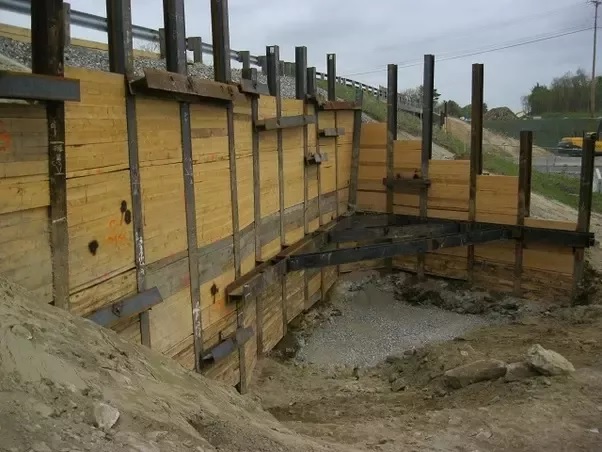
wooden sheet piling
Wooden sheet pile

Concrete sheet pile

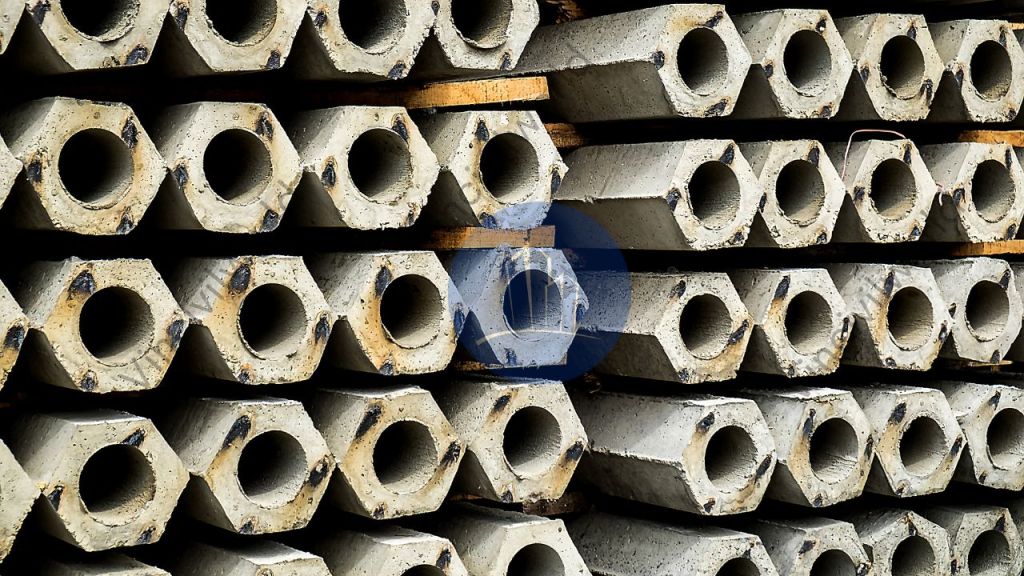
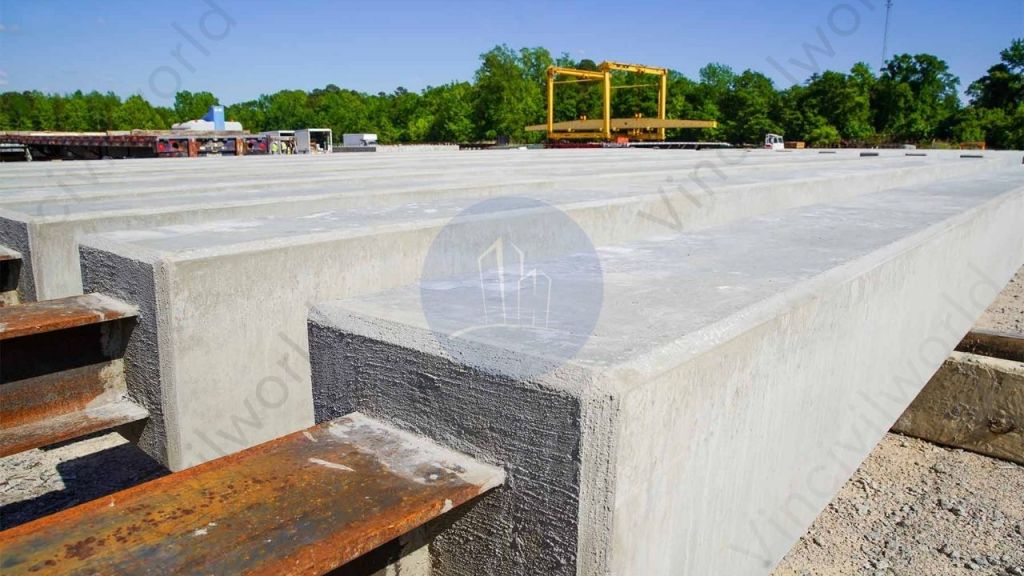
Concrete sheet piles are retaining walls constructed from precast reinforced concrete sections. We frequently employ them in civil engineering and building projects with a requirement for long-term retaining structures.

We must handle and drive the piles carefully, and provide the necessary reinforcement. The most common application of Concrete sheet pile occurs in deep excavations. These situations arise where soil conditions are unfavourable. In these cases, we require lateral support. They are impermeable and can withstand hydrostatic pressure, making them excellent for usage in places with high water tables. We provide a capping to the heads of the piles by casting a capping beam, while we cut the toes with an oblique face to make driving and interlocking easier. They are relatively heavy and thick, and while driving, they displace significant amounts of the earth.

The driving resistance rises as a result of the considerable volume displacement. Concrete sheet piles are also resistant to weathering, corrosion, and erosion, making them a durable solution under extreme conditions. Concrete sheet piles are available in a range of dimensions and we can interlock them to create a continuous wall. We can place them in a variety of ways, including driving, vibrating, and pushing. The method of installation depends on the accessibility to the site, the depth of the installation, the state of the soil etc.
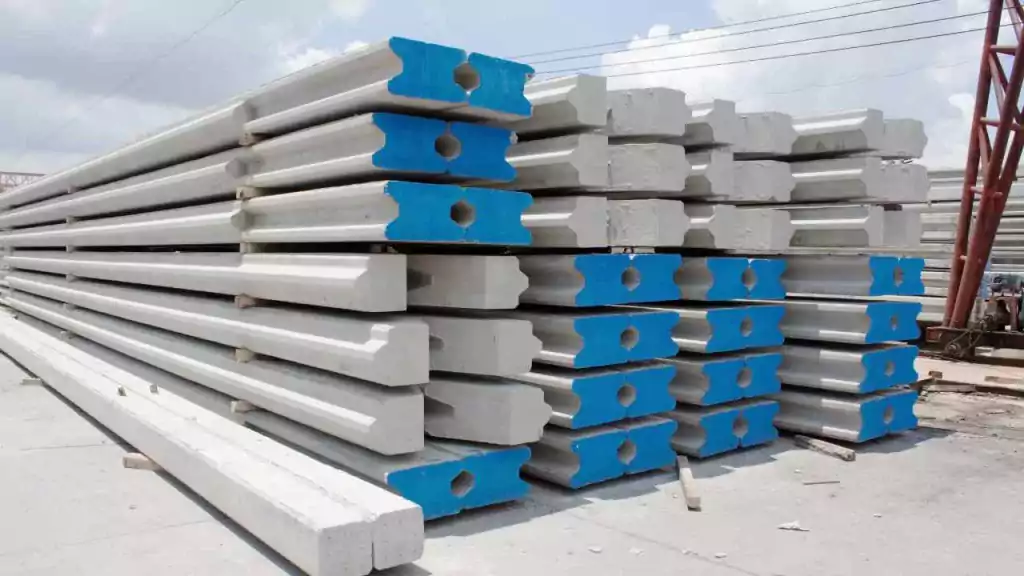
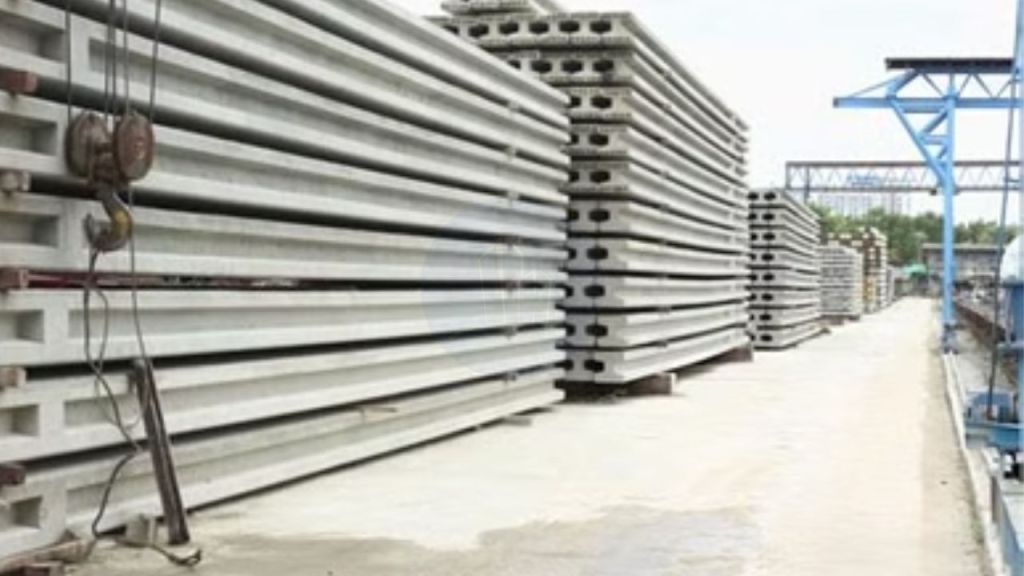
concrete sheet piling
Concrete Sheet Pile
Concrete Sheet Pile

Concrete sheet piles are a strong and long-lasting alternative. However, their installation may be more costly and time-consuming than that of other retaining wall materials. However, installing them requires large machinery, which can be difficult in places with restricted access or space. Overall, concrete sheet piles are a viable option for permanent retaining walls in deep excavations and severe soil conditions. They are a preferred option due to their strength. They also have resistance to water and erosion, making them ideal for projects involving coastal protection and flood control.

Aluminium sheet piles

Aluminium sheet piles are lightweight, strong, and corrosion-resistant. They are an ideal choice for projects that require a lightweight and durable material.
aluminium sheet pile
Aluminium Sheet pile

Composite sheet piles

We manufacture Composite sheet piles from a combination of materials. These include steel and concrete. This combination provides additional strength and durability. They often find applications in projects that require high load-bearing capacity.

Cellular sheet pile

We usually design Cellular sheet pile with hollow sections that allow for increased strength and load-bearing capacity. They find application in projects that requires a high degree of lateral support.

Cold-formed sheet piles

Cold-formed sheet piles are made by bending steel sheets into a desired shape. They find application in projects requiring lower strength and load-bearing capacity.

Conclusion

Each type of sheet pile has its own advantages and disadvantages. The choice of material and design will depend on the specific requirements of the project. Proper design and installation are essential to ensure the stability and safety of the sheet pile wall. You should consult with an experienced engineer before selecting a specific type of sheet pile for a project
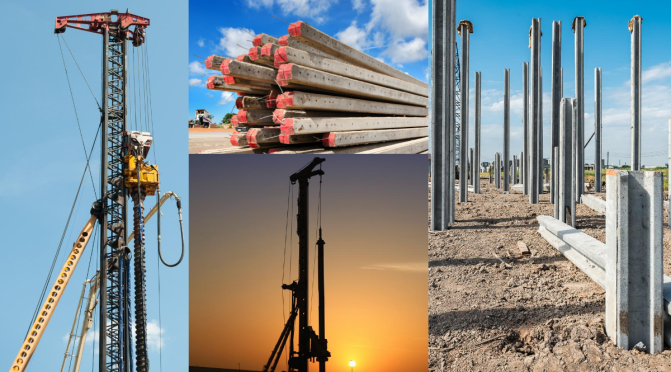
Pile foundations- Types and Advantages.

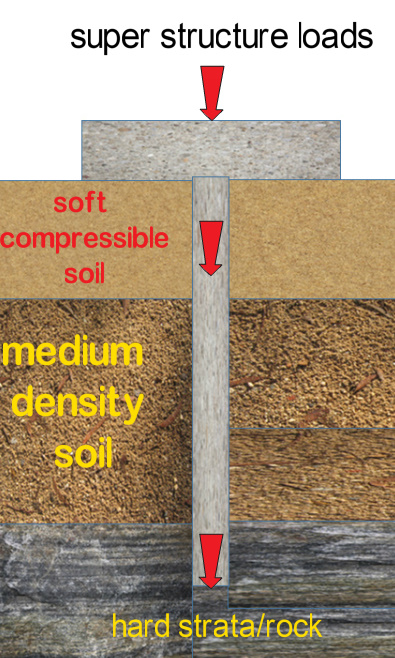
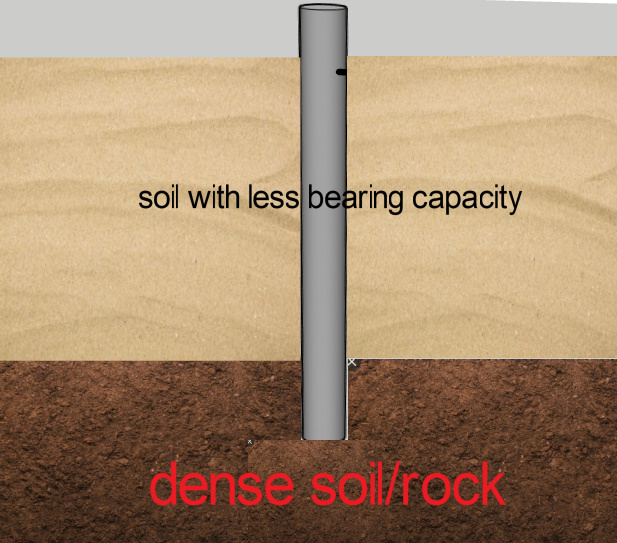
Pile foundations are long, slender members. They can be concrete, steel, or any other material. These foundations transfer the loads of a structure when the subsoil lacks the bearing capacity. The pile foundations transfer the load vertically through the less denser top layer to a high denser soil/rock layer which can negotiate the loads without failure.

What is a pile foundation? A pile foundation is a deep foundation system used to support structures. It transfers loads through weak or compressible soil layers to more stable soil or rock layers below. Pile foundations are essential in areas where surface soils cannot bear the load of the structure. There are various pile foundation types, primarily categorized into friction piles and end bearing piles. Friction piles transfer load through skin friction along their length. End bearing piles transfer load through the pile tip bearing on a strong layer of soil or rock. Understanding what are pile foundations and their types helps engineers select the appropriate system for ensuring stability and support for different types of construction projects.

In this article, we will explore pile foundation types, including friction and end bearing piles, their applications, and benefits.

  1. Pile Foundation
  2. CHOICE OF PILE FOUNDATION
  3. CLASSIFICATION OF PILE FOUNDATIONS BASED ON FUNCTION/LOAD TRANSFER
    1. END BEARING PILES
    2. FRICTION PILES
    3. FRICTION CUM END BEARING PILES
  4. CLASSIFICATION BASED ON CONSTRUCTION METHODS
    1. DRIVEN OR DISPLACEMENT PILES
    2. BORED OR REPLACEMENT PILES
  5. CLASSIFICATION BASED ON MATERIALS
    1. TIMBER PILES
      1. Advantages of timber piles
      2. Disadvantages of timber piles
    2. STEEL PILES
      1. Advantages of steel piles
      2. Disadvantages of steel piles
    3. CONCRETE PILES
      1. DIFFERENT TYPES OF CONCRETE PILES
        1. PRECAST CONCRETE PILE
        2. PRESTRESSED CONCRETE PILE
        3. CAST IN SITU CONCRETE PILES
          1. Advantages of Cast-in-Place Concrete Piles
          2. Disadvantages of Cast-in-situ Concrete Piles
    4. COMPOSITE PILES
  6. Key Takeaways
  7. Conclusion

CHOICE OF PILE FOUNDATION

Pile foundations are preferred in areas with weak or compressible soil, where surface conditions cannot support the required structural loads.

  • When the groundwater table is very high, other types of open foundations require huge dewatering. This is done by the well point or deep bore well method. It turns out to be quite expensive and not feasible.
  • When heavy and non uniform distribution of loads from the superstructure which causes unequal settlements in open foundations.
  • The low soil bearing capacity makes the design of shallow foundations very conservative. Site conditions also contribute to making it uneconomical.
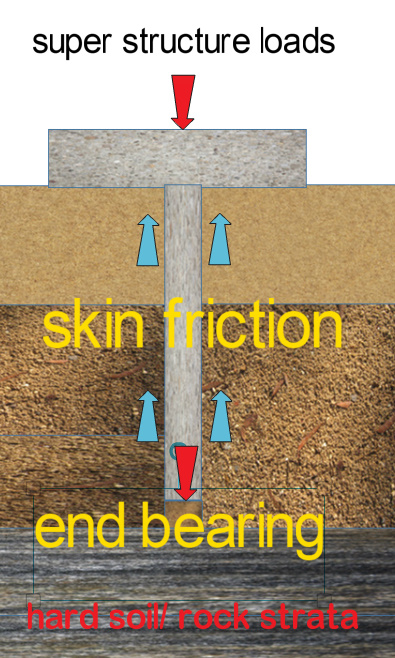
typical section of pile foundation
  • When the settlement of soil exceeds the permissible limit while designing a shallow foundation.
  • Soil washing or scouring away from the foundation sides can occur. This happen due to the presence of any underground systems. A nearby river or canal can also cause this issue.
  • When any type of soil excavation is impossible due to very poor soil strata .

CLASSIFICATION OF PILE FOUNDATIONS BASED ON FUNCTION/LOAD TRANSFER

  • a) END BEARING PILES
  • b) FRICTION PILES
  • c) FRICTION CUM BEARING PILES
  • d) BATTER PILE
  • e) ANCHOR PILE
  • f) SHEET PILE
End bearing pile,Friction pile & Bearing cum friction pile
FIG 2 END BEARING, FRICTION & END BEARING CUM FRICTION PILES

END BEARING PILES

End bearing pile
End bearing pile

A bearing pile is a slender member/ column which transmits vertically all loads coming from the super structure. It is transmitted through a lower density weak layer of soil to a denser strata much below the ground which is capable of negotiating the loads. The pile acts as a column member which transfers the loads to the bearing strata.

FRICTION PILES

Friction piles
Friction pile

This type of pile is used when a suitable strata for  negotiating the loads are available at a very deeper area and  taking piles to that  depth is not economically feasible. Friction piles  utilises the shear stresses/skin friction along the surface of the pile.  The load transfer is done through the frictional resistance between the pile surface and the surrounding soil. The total surface area of the pile is involved in the load transfer process. Greater the embedded length more is the load carrying capacity of the pile. Load carrying capacity of pile is directly proportional to its length.

FRICTION CUM END BEARING PILES

Friction cum bearing piles
Friction cum bearing pile

These type of piles  negotiate the loads through the combined action of end bearing and skin friction . In this case the piles can be terminated in a medium or stiff clay rather than resting on a hard strata. These types of piles are preferred and considered economical hence it is the most commonly used type of pile foundation.

CLASSIFICATION BASED ON CONSTRUCTION METHODS

The execution of piling is done in two methods

  • a) DRIVEN OR DISPLACEMENT METHOD
  • b) BORED OR REPLACEMENT METHOD

DRIVEN OR DISPLACEMENT PILES

In this method the piles are driven into the soil/sand which causes lateral displacement of soil and hence it is called displacement piles. Displacement piles are basically designed to be installed without removal of soil. Special equipment are used to drive the piles and displace soil laterally. Depending on situations these types of piles are preferred over bored piles.

BORED OR REPLACEMENT PILES

Bored pile

In this type of foundation bores of required diameter is made and are filled using RCC. It can be a cased or uncased types depending on the collapsible nature of the soil.

CLASSIFICATION BASED ON MATERIALS

  • a) TIMBER PILES
  • b) STEEL
  • c) CONCRETE
  • d) COMPOSITE PILES
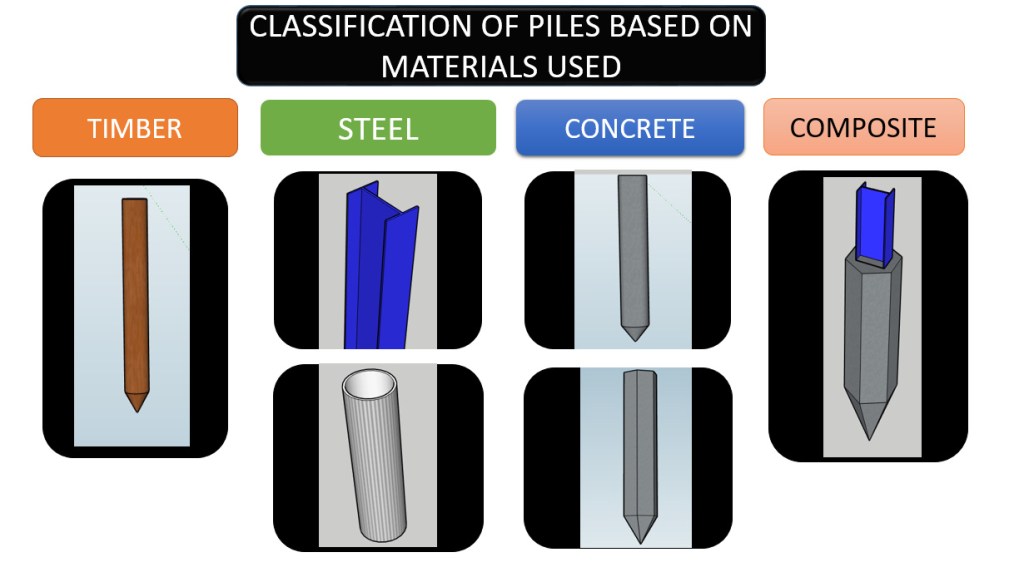
Classification of piles based on material used

TIMBER PILES

The timber piles are sharpened logs obtained from trees like sal, teak, deodar, babul, etc. These piles are used in water and can resist sea water better than other piles. These piles are basically friction piles and are driven into the ground. The timber pile length varies from 20-25 mtr and is designed for a load of around 20 t.

Advantages of timber piles

a) Timber piles are available in varied sizes and is cheaper than any other type of piles.

b) It is easy to install and can be cut into any size as per the requirements.

c) Timber piles is more reliable in marine works.

d) Timber piles doesn’t decay even when submerged in water for a prolonged time.

Disadvantages of timber piles

a) It is difficult to get Straight and long timber piles.

b) Timber piles may not pass through all strata. It is difficult to drive piles in hard and dense strata.

c) Timber piles can be used only as friction piles and not as end bearing piles. Splicing of a timber pile is difficult.

d) As a prevention against possible decay timber piles has to be treated with preservatives.

STEEL PILES

Steel piles
Steel piles

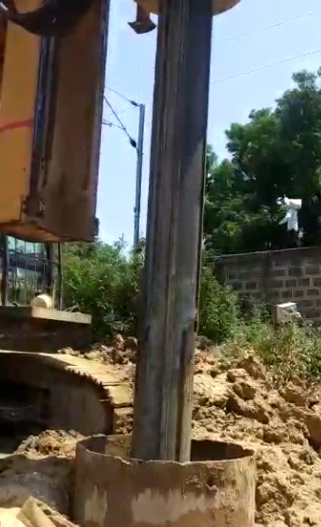
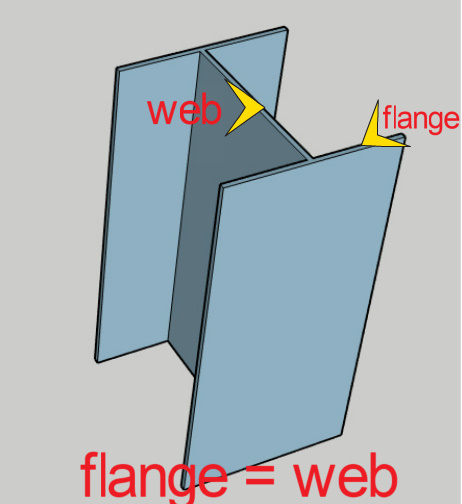
Steel piles may be of H-section or hollow pipe (Fig) . They can be used for an optimum length of 20-40 mtr. The size can be upto 600 mm dia pipes and can also done using HP sections having the same flange and web width as shown in the fig. These piles are mostly designed as end bearing piles . These piles are driven as open ended or closed ended . The closed ended pile shall be filled with concrete.

Advantages of steel piles

Steel piles are very easy to install. Due to their less cross sectional area it can penetrate through any type of soil layer with minimal soil displacement.

Splicing of steel piles are easy and it can go to any depth compared to other type of piles.

The penetrating properties of steel piles helps to go deep and hence can carry more loads than other pile types.

Disadvantages of steel piles

Steel piles are corrosion prone and has to be coated with anticorossive coatings before driving.

While encountered with a hard strata the H sections tends to deform or sometimes the verticality of pile is lost while driving.

The steel piles are very expensive.

CONCRETE PILES

Concrete is the most common material used for construction of piles due to their design flexibility and ease of execution. Concrete piles are normally used in the following categories.

DIFFERENT TYPES OF CONCRETE PILES

Different type of concrete pile
  • a) PRECAST CONCRETE PILE
  • b) PRESTRESSED CONCRETE PILE
  • c) CAST IN SITU
  • d) COMPOSITE PILE
PRECAST CONCRETE PILE

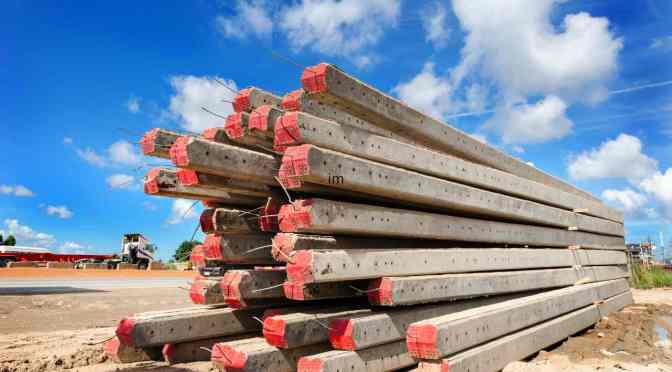
Precast pile uses conventional RCC. Piles are casted in a fabrication yard and conveyed to the location for erection . Precast pile are either square or round . The rectangle or square shaped piles are casted in a horizontal fabrication bed and round pile is casted vertically. Precast piles are designed to take care of the loads/stresses developing while lifting, conveying and driving.

PRESTRESSED CONCRETE PILE

Prestressed concrete pile is preferred when the sizes of the precast piles go beyond a certain limit. Prestressing can optimise the pile size drastically making it very easy to lift ,convey and erect. Prestressing is done by stretching the tendons and pouring concrete keeping the tendons in a stretched position. Once the concrete develops full strength the tendons are released . The released tendons in the process of regaining its shape induces compressive stresses in the member.

Prestressing convert the pile into a high load carrying member which can resisting the stresses. due to the impact loads generated on driving, the uplift forces and the combined moments. These piles can be used for an optimum design depth of 25-35 mtrs.

CAST IN SITU CONCRETE PILES

Cast in situ piles are constructed by drilling a bore hole to the required level and filling it with Reinforced cement concrete. The bore hole can be formed by excavating ground with the help of a rotary drilling equipment or hydraulic rigs. Casings are driven into the bores locations before drilling . The casing will be removed gradually during concreting process or sometimes left in the bore as a permanent casing

Cast in place piles
Advantages of Cast-in-Place Concrete Piles

Cast in situ piles are very flexible and the process of execution is easier compared to driven piles and other type of piles.

The reinforcement cages are light weight and easy to handle. The rebar cages are fabricated with the help of simple and conventional tools.

No chances of breakage during installation stage .

If there is some issue with the pile that prompts the customer to abandon, additional substitution piles can be done.

Disadvantages of Cast-in-situ Concrete Piles

a) Installation requires careful supervision and quality control. Because once a pile gets abandoned executing a replacement pile is expensive and time consuming.

b) Cast in situ piles generate a lot of pile muck ( mix of bentonite and soil). The pile muck has to be removed and disposed as per environmental policy . The pile head chipping also generates lot of concrete waste which has to be disposed.

c) Requires space for movement of Rigs, cranes, stocking of materials and bentonite tank.

d) Under water flow can collapse the piles.

e) Concrete quality cannot be visualized. Hence health assessment tests like pile integrity test are to be conducted to confirm the pile integrity.

COMPOSITE PILES

A composite pile is made up of two or more sections of different materials or different pile types. The top portion shall be casted using concrete and the other portions shall be of steel or timber. These type of piles are used in special applications

Composite pile

Key Takeaways

  1. Pile Foundation Definition: Pile foundations are deep foundation systems used where surface soils are weak or compressible.
  2. Types of Piles: Two primary types are friction piles and end bearing piles. These piles are used to transfer loads through weak soil layers to more stable ones.
  3. Friction Piles: Transfer loads using skin friction along the pile’s length. They are suitable for deeper layers where strong strata are not easily reachable.
  4. End Bearing Piles: Transfer loads through the pile tip resting on strong soil or rock layers.
  5. Construction Methods: Pile foundations can be driven (displacement) or bored (replacement) depending on site conditions.
  6. Material Variants: Piles can be made from materials like timber, steel, or concrete, each with distinct advantages and limitations.

Conclusion

Pile foundations are essential in modern construction. They provide reliable support where traditional shallow foundations cannot suffice due to weak or compressible soils. Understanding what is pile foundation and the differences between friction and end bearing piles helps engineers select the appropriate foundation type for specific projects. Driven or bored methods of installation can vary based on soil conditions, while materials like timber, steel, and concrete offer unique advantages. For example, concrete piles, especially cast-in-place or prestressed, are popular due to their flexibility and high load capacity. As a versatile foundation system, pile foundations ensure structural stability in challenging geotechnical environments, making them an indispensable choice for construction in weak soil conditions.

Driven piles – Features, Types and advantages

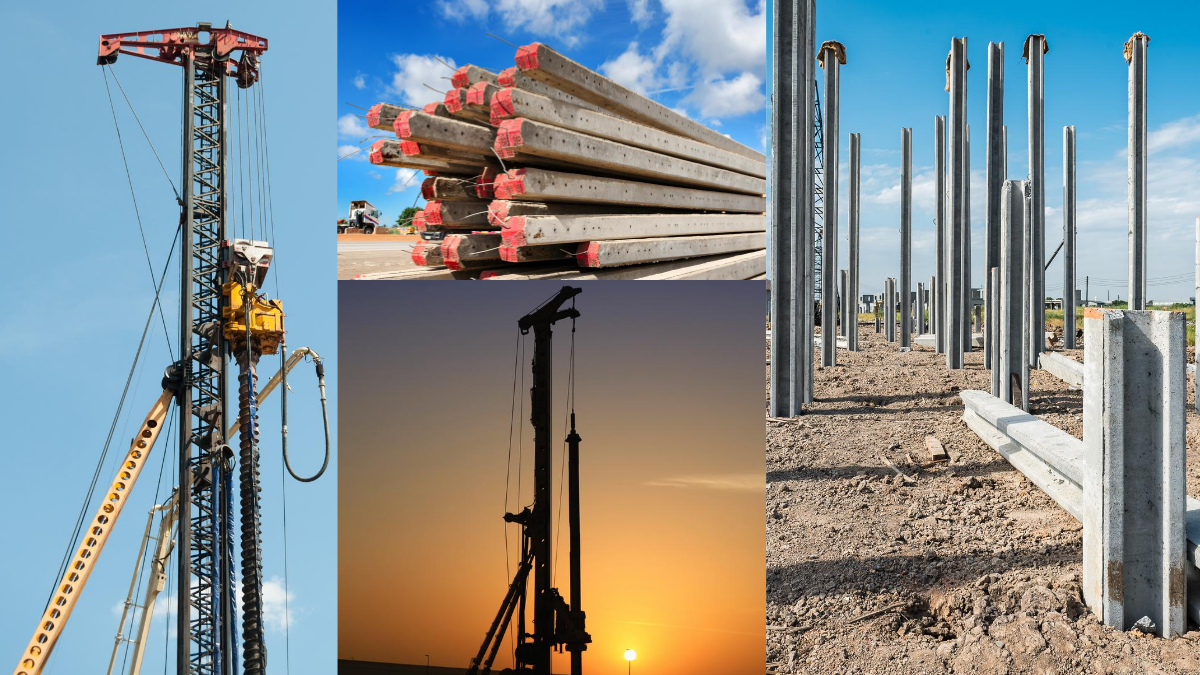
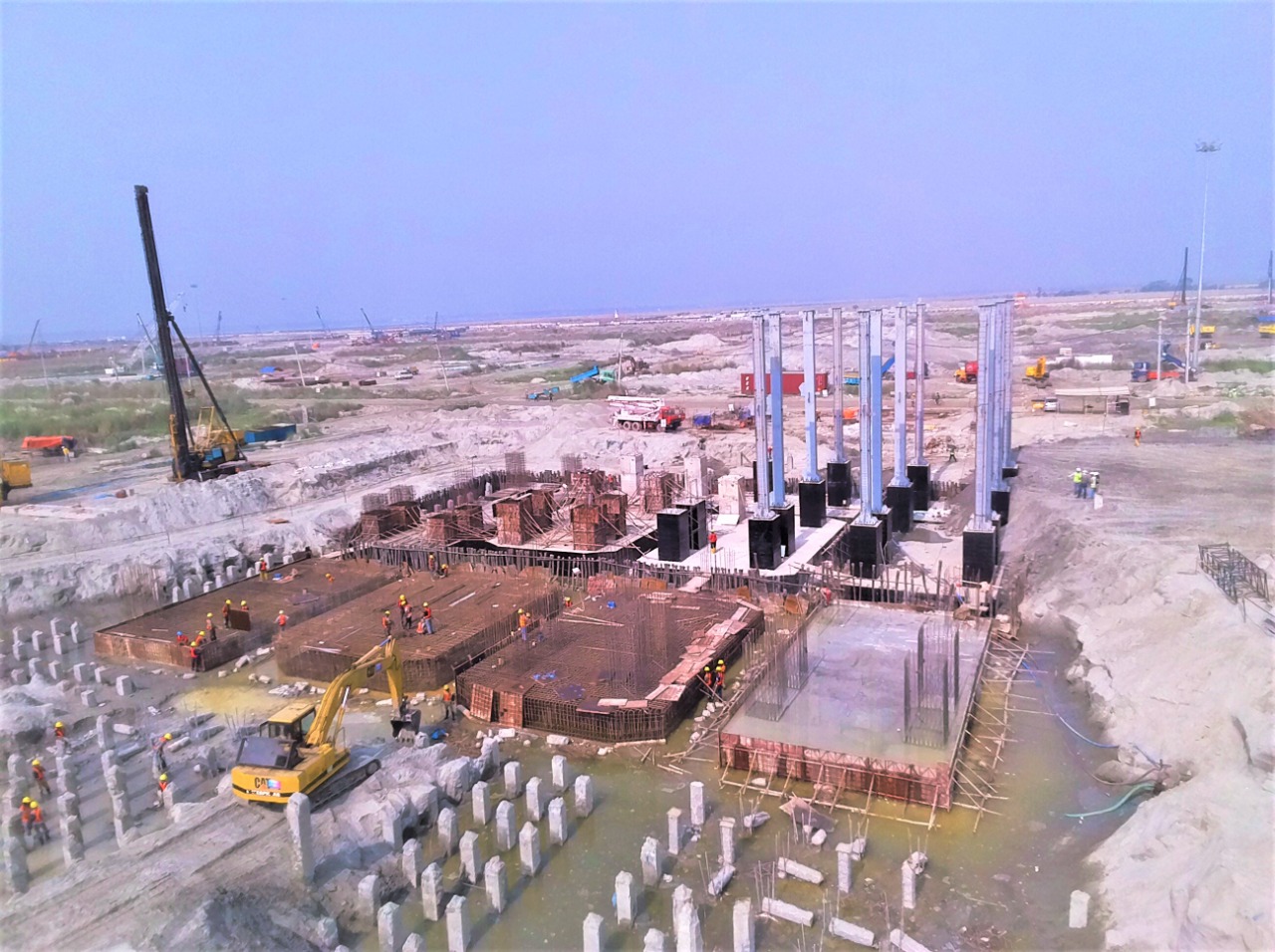
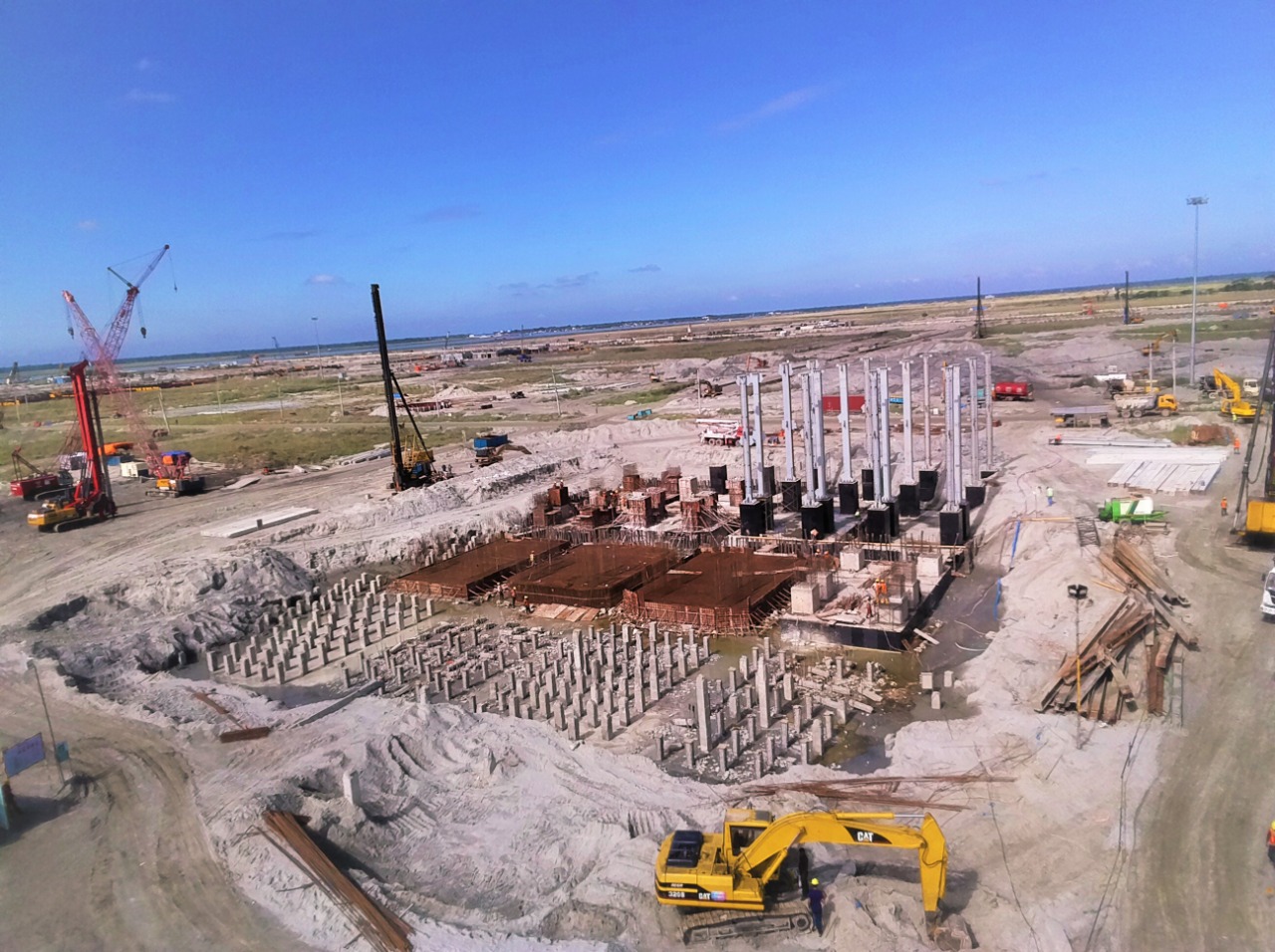
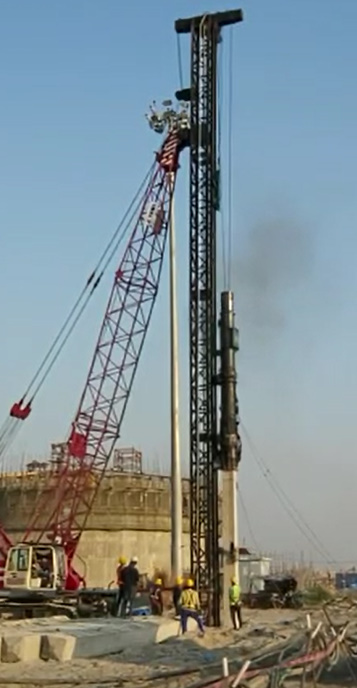
Driven piles support structures and transmit loads to underlying soil or rock, as they are a type of deep foundation used for this purpose. Contractors use driven piles, made of steel, concrete, or wood, to support structures and transmit loads to underlying soil or rock. They also call them displacement piles. The installation of driven piles involves driving them into the ground using impact hammers or vibratory drives until they reach a layer of rock or soil that can support the required loads.

If the soil is exceptionally dense, they may need to pre-drill to ensure the pile reaches the design depth. Construction projects commonly employ driven pile to provide stability and strength to the structure. Driven piles offer a cost-effective deep foundation solution and are commonly used to support buildings, tanks, towers, walls, and bridges.

  1. Why driven piles?
  2. Types of driven piles
    1. Steel Driven pile
    2. Pre-cast concrete Driven Piles
    3. Timber pile
    4. Composite driven pile
  3. Quality Control for Driven Piles
    1. Pile driving equipment for driven piles
    2. Pile inspection and testing
    3. Pile load testing for driven pile
    4. Pile driving records
  4. Advantages of driven piles
    1. High Capacity
    2. Ease of Installation of driven piles
    3. Cost-effective
    4. Minimal disturbance
    5. Versatility
  5. Disadvantages of driven piles
    1. Noise and vibration
    2. Limited depth
    3. Difficulty in driving through hard soil or rock
    4. Quality Control
    5. Limited environment suitability

Why driven piles?

Contractors often use driven piles, which are the most cost-effective deep foundation solution, to support buildings, tanks, towers, walls, and bridges. They are also suitable for embankments, retaining walls, bulkheads, anchorage structures, and cofferdams. Driven piles possess a high load-bearing capacity, durable, and contractors can install them quickly and effectively in various soil conditions. Engineers frequently use them in places with inadequate soil, where conventional shallow foundations would not be strong enough to sustain buildings.

In addition, contractors can install driven piles to support compression, tension, or lateral loads, with specifications determined by the structure’s needs, budget, and soil conditions, making them very versatile.

Related posts from vincivilworld

Types of driven piles

Driven piles are broadly classified as follows

  • Steel Driven pile
  • Precast Concrete Driven pile
  • Timber pile
  • Composite driven pile

Steel Driven pile

Steel-driven piles support major structures such as buildings, bridges, roads, and industrial facilities in construction. Construction workers push them into the earth using specialized tools like hydraulic hammers or pile drivers until they reach a predetermined depth or a firm layer of rock or soil. Steel-driven piles are steel beams with broad flanges on both ends.

Steel Driven Pile

Steel-driven piles are typically made of high-strength steel with a round or square cross-section. They come in various lengths and widths and can be installed vertically or at an angle to meet foundation design requirements. An impact hammer is used to press the pile into the soil by delivering a forceful blow. For shorter depths, steel screw piles are supported by a cast iron helix and powered by rotary motors.

Because of their durability, strength, and capacity to support enormous loads, the steel-driven pile is a common choice for deep foundations. Steel-driven piles are a cost-effective and quick solution for many construction projects. However, their applicability will depend on factors such as soil characteristics, anticipated loads, and local construction building codes and regulations.

Pre-cast concrete Driven Piles

Precast concrete pile manufacturers deploy these piles in construction to support structures built on weak or compressible soils. They prefabricate these piles in a factory or casting yard before transporting them to the construction site. Based on the project’s unique needs, they can construct precast concrete piles in a vast range of dimensions, forms, and configurations. High-strength concrete, reinforced with steel rebar, is used to make these piles. They often use a vibratory hammer or hydraulic hammer to drive the piles into the earth until they reach the required depth or a solid layer of soil or rock.

Precast Concrete Driven Piles

Piles come in a variety of shapes, such as square, octagonal, cylindrical, or sheet. Percussion-driven piles are used in situations where bored piles would be ineffective due to running water or excessively loose soils. They have a load range of 300-1,200 kN and a maximum reach of 30 m. Precast concrete piles are constructed with great accuracy and quality control in a controlled environment, resulting in a consistent and uniform product that satisfies design requirements. They are durable and can withstand adverse weather conditions such as seawater or chemical exposure. Precast concrete piles can also be installed quickly and effectively, saving time.

  • Precast concrete piles are quick to install.
  • They can be used in various soil conditions.
  • Using precast concrete piles saves time and money in construction.
  • Precast concrete piles are durable and reliable.
  • They have high-quality control standards.
  • Precast concrete piles are a popular choice for deep foundation construction.

Timber pile

Timber-driven piles are used in construction to create a stable foundation for structures in weak or compressible soils. Contractors use hammers or pile drivers to create cylindrical or square wood piles from premium softwood species. This type of pile is particularly effective in areas with high water tables where other types of piles may not work as well. Timber-driven piles provide a stable foundation for structures in weak or compressible soils. This is achieved by hammering wooden piles into the ground, which compresses the wood and displaces the surrounding soil. The resulting tight fit helps to support the weight of the structure. Timber-driven piles have the advantages of being inexpensive and simple to install. Nonetheless, they may be susceptible to rot and pest infestation.

timber driven piles
timber-driven-pile

Composite driven pile

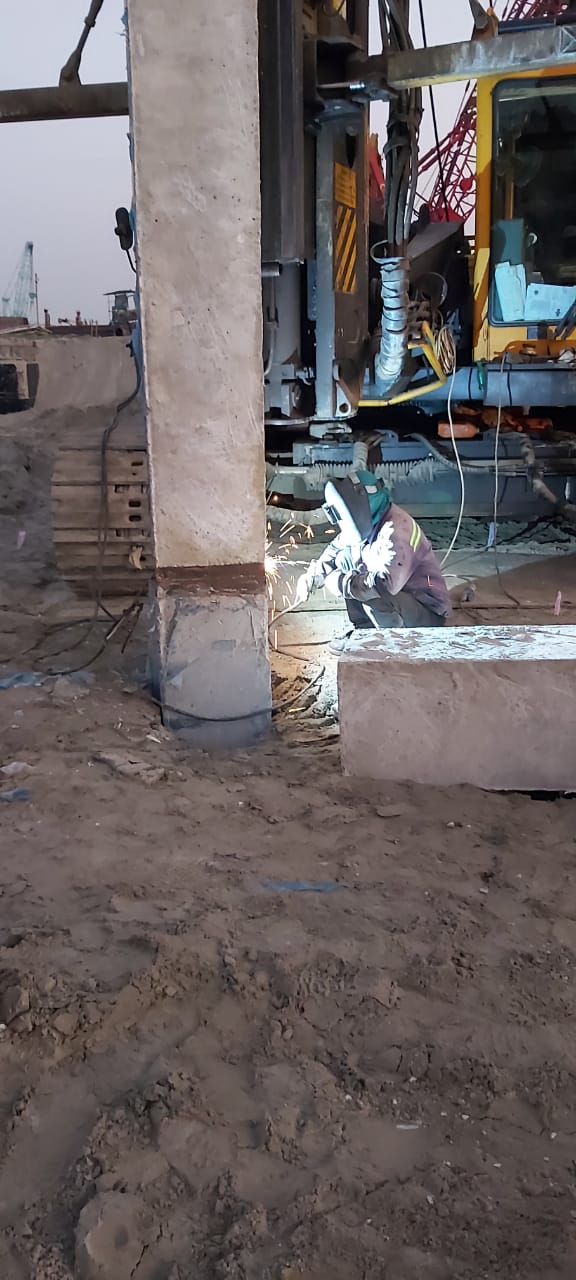
Engineers commonly use composite piles made of a combination of two or more materials, such as concrete, steel, or timber, when soil conditions require a combination of strength and flexibility. An example of a composite pile is a concrete pile with a steel section, as shown in the figure.

Contractors use composite-driven piles consisting of a steel tube filled with concrete and reinforced with steel rebar because they can withstand heavy loads. They use in various construction projects, such as bridges, high-rise buildings, and marine structures. The steel tube provides structural support and protects the concrete from damage during installation, while the concrete and rebar provide additional strength and stability. Contractors can install composite piles using hydraulic hammers or vibratory drivers to reach depths of up to 60 meters. Due to their durability and corrosion resistance, composite piles are ideal for use in harsh environments.

composite pile

Quality Control for Driven Piles

The construction of driven piles requires high-quality materials and adherence to standards such as BS 8004:2015 and EC standards. It’s crucial to maintain the pile’s shape and avoid damage during installation and inspect them beforehand for quality assurance. The maximum load a pile can carry depends on soil or rock strata properties, pile dimensions and material, and installation method. Engineers perform load testing on representative samples to determine capacity and use monitoring instruments like inclinometers and settlement gauges to ensure the pile’s sufficient support. Effective quality control and testing are crucial for the safe and reliable performance of driven piles in construction projects.

driven piles

During installation, it is crucial to maintain the shape of driven piles and ensure they are not damaged by the installation of subsequent piles.

Quality control of driven piles is an important aspect of ensuring the stability, safety, and longevity of structures that rely on them for support. Here are some of the common quality control measures used for the driven piles.

Pile driving equipment for driven piles

To make sure that piles are installed correctly, trained personnel are required to maintain, calibrate, and operate pile driving equipment properly. Regular inspections are necessary to detect any damage or wear in the equipment, and repairs or replacements must be made promptly.

Pile inspection and testing

Inspect the piles for defects or damage before driving them into the ground. To ensure that the piles have been installed correctly and meet the specified requirements, non-destructive testing methods such as sonic testing or integrity testing should be used to test the piles after installation.

Pile load testing for driven pile

pile load test

One can conduct load testing of a sample of piles to ensure that they can support the required loads. This involves applying a controlled load to the pile and measuring the resulting deformation, which one can compare to the design specifications to ensure that the piles are safe and reliable.

Pile driving records

One should keep detailed records of the pile driving process, including the number of blows or vibrations required to drive the pile to the required depth, the penetration rate, and any other relevant information. These records are essential to monitor the quality of the installation and identify any issues that may arise during the construction process.

Regular inspections and testing are essential to identifying any issues early in the construction process and enabling prompt corrective action.

Advantages of driven piles

The main advantages are

  • Piles can be pre-fabricated off-site which allows for efficient installation once on-site.

High Capacity

Piles are driven deep into soil or rock. This provides high load-bearing capacity. It’s suitable for supporting heavy structures like buildings, bridges, and marine structures. The process increases the effective length of the pile, resulting in high capacity.

Ease of Installation of driven piles

Compared to other pile types like drilled shafts, the installation of a driven pile is quick and efficient. The installation process involves driving the piles into the ground using an impact hammer or a vibratory driver. This requires minimal excavation and soil removal.

Cost-effective

Other types of foundation systems can often be more expensive than driven piles, particularly when the soil conditions are favourable. The cost-effectiveness of driven piles is due to their relatively simple installation process and the availability of pre-manufactured piles, which can reduce the time and cost required for pile installation.

Minimal disturbance

The installation process of driven piles minimizes the disturbance to the surrounding area, making them suitable for use in urban or environmentally sensitive areas. The piles are driven into the ground, which reduces the amount of soil disturbance and the need for excavation.

Versatility

Driven piles are suitable for a variety of soil conditions, including soft soils, hard soils, and rock layers. They can also be made of different materials such as steel, concrete, and timber, providing a wide range of design options.

  • When driven into the ground, piles displace and compact the soil, resulting in increased bearing capacity. In contrast, other types of deep foundations may require soil removal, which can cause subsidence and structural problems.
  • Installation usually produces little spoil for removal and disposal.

Overall, driven piles offer several advantages in terms of high capacity, speed of installation, cost-effectiveness, minimal disturbance, and versatility, making them a popular choice for foundation systems in many construction projects.

However, the use of driven piles also has some disadvantages, including their relatively high cost compared to shallow foundations, the noise and vibration associated with their installation, and the potential for damage to nearby structures or utilities. Therefore, the selection of driven piles as a foundation type depends on a variety of factors, including soil conditions, load requirements, and site-specific constraints.

Disadvantages of driven piles

In the design and construction process, it is important to consider the disadvantages of driven piles, despite their many advantages. Some of the main disadvantages of driven piles are:

Noise and vibration

The installation of driven piles can generate high levels of noise and vibration. This can be a concern for nearby residents and sensitive structures. Pile driving can cause damage to nearby structures, particularly those with shallow foundations.

Limited depth

Other foundation types may be necessary if the capacity or depth required cannot be achieved with driven piles. This is because of the limitations imposed by soil or rock conditions and the driving equipment’s capacity.

Difficulty in driving through hard soil or rock

Driving piles in hard soil or rock layers can be difficult and time-consuming, which can lead to higher installation costs. Overcoming the hardness of the soil or rock may also require the use of specialized driving equipment or techniques.

Quality Control

The installation of a driven pile requires critical quality control. Poor installation can cause issues such as pile damage, pile movement, or insufficient load capacity. To ensure that the piles are installed correctly and meet the required standards, regular inspection, and testing are required. Moreover, monitoring is necessary during pile installation.

Limited environment suitability

Driven piles may have limited suitability in environmentally sensitive areas. This includes wetlands or areas with a high water table. This is due to the potential soil disturbance caused by the driving process. Moreover, the use of chemicals for the preservation or treatment of piles can have negative impacts on the environment. It is important to consider these factors and explore alternative foundation options in such areas.