Category Archives: Retaining wall

Soil Nailing – Installation,advantages and applications

Soil nailing is a slope protection technique for supporting unstable natural slopes and over steeping of existing slopes. Soil nails are reinforcing passive elements drilled and grouted sub-horizontally in the ground. They are used to support excavations in soil, or soft and weathered rock and slope protection works.

Soil nails are steel bars inserted into soil to reinforce slopes, embankments, or excavation walls. By stabilizing the ground, soil nails prevent landslides and erosion. This cost-effective technique strengthens soil structures. It is widely used in geotechnical engineering for construction. Additionally, it is used for retaining walls and slope stabilization projects.

Soil nail walls are used as permanent earth-retaining structures in highway projects. They can also be constructed as temporary structures in roadway work when used as shoring of deep excavations.

  1. Components of soil nail and its function
    1. Tendons
    2. Grout
    3. Installation of facing 
  2. Applications of soil nails
  3. Feasibility of soil nail
  4. Advantages of soil nails over other retaining systems
  5. Key Takeaways
  6. Conclusion

Components of soil nail and its function

Components mainly constitutes installing passive reinforcement without any post tensioning in existing ground know as nails. Soil nails are later grouted if they are installed in drilled holes. Soil nails using solid bar drilling system do not need grouting. Hollow bars, such as the sacrificial hollow bar system, drill and grout simultaneously and also do not require additional grouting. Let us go in detail each and every component of soil nailing system.
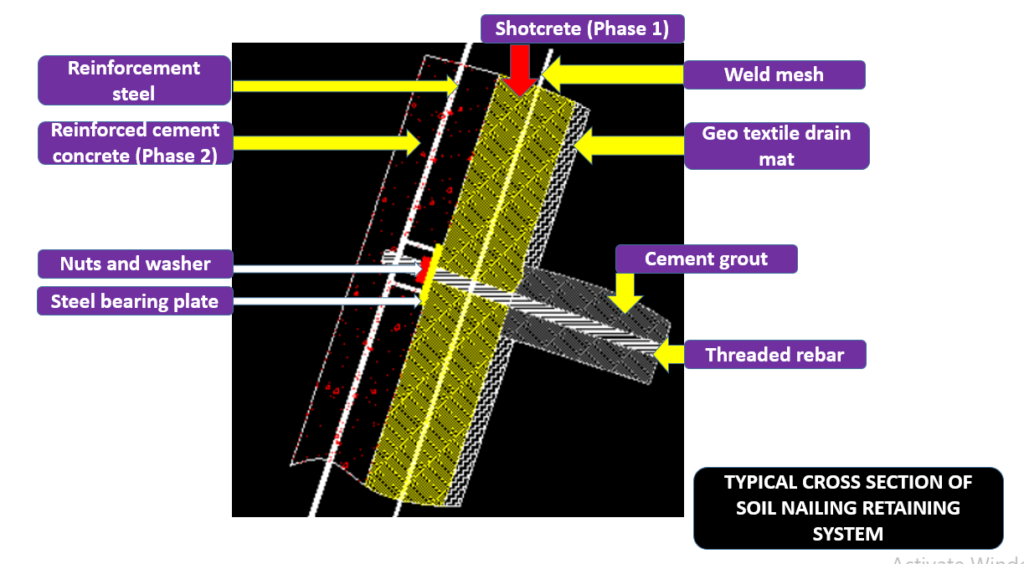
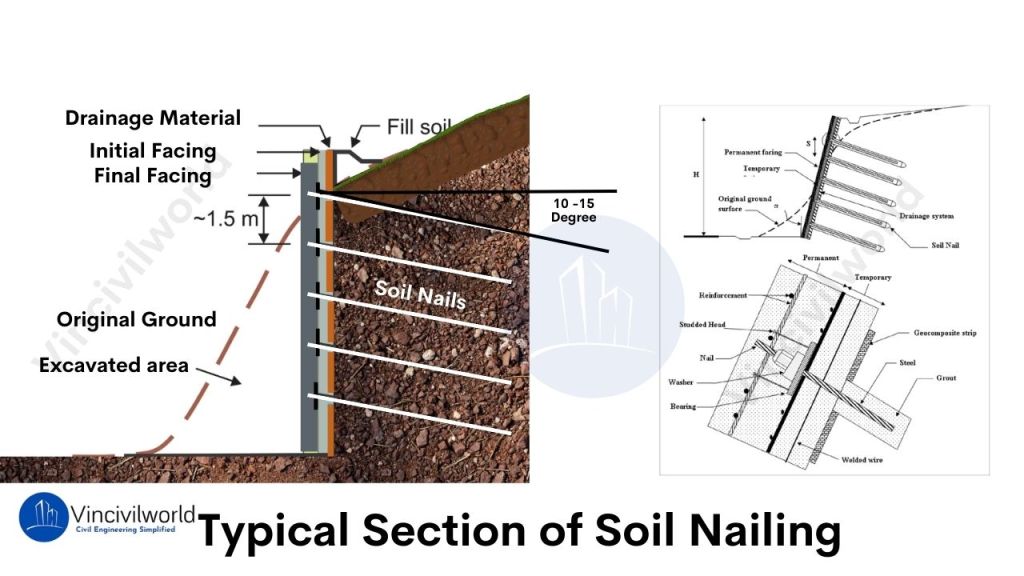
Typical cross section of soil nail
Illustration depicting a typical section of soil nailing, showing components like soil nails, drainage material, initial and final facings, and the relationship between the original ground and the excavated area.
Typical section illustrating soil nailing techniques, showing installation details for reinforcement and drainage.

Tendons

They are the ground reinforcing elements and are equivalent to steel bars. Tendons can handle tensile stress during the lateral movement and deformation of retained soil. They also manage external loads in the service stage, such as surcharge loads and traffic loads.

There are two methods of fixing soil nails or reinforcement bars.

a) Holes are drilled and pressure grouted with fully threaded bars embedded inside.
b) Using sacrificial drill bits where drilling and grouting will be done simultaneously and the sacrificial drill bit is converted to rebar.

Grout

Normal OPC cement mixed with water is used for grouting. The function of grout are

a) Transfers shear stress between the ground and tendons and

b) Corrosion protection for rebars.

Installation of facing 

Soil nail construction is done from top to bottom. Every nail is installed with anchor plates or bearing plates.
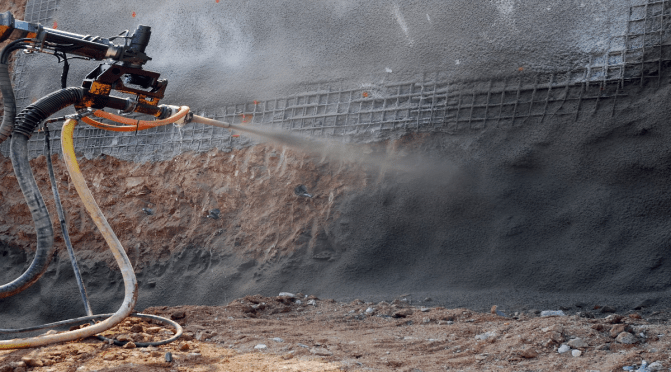
First, a single row of soil nails is installed after excavating the surface. Excavate further and install the second layer of soil nails as per design. Once you reach a reasonable height, soil can free stand (1-2 meters) for at least 2-3 days. Then the next phase of the shotcreting process will start.
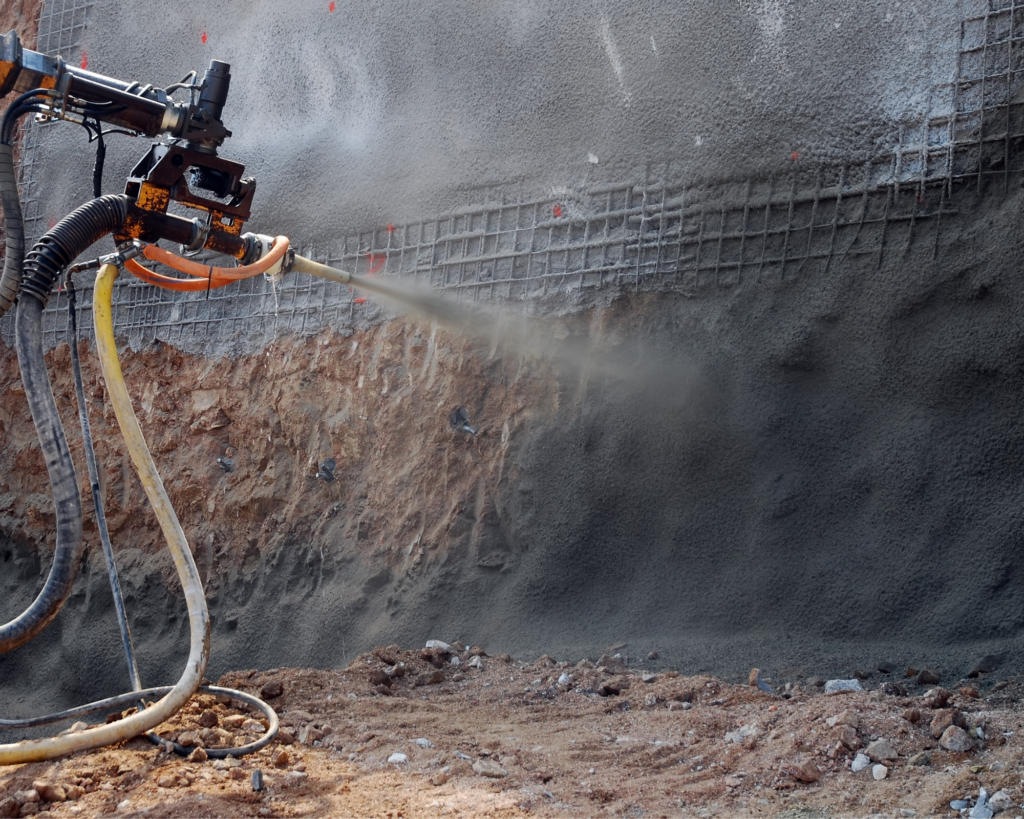
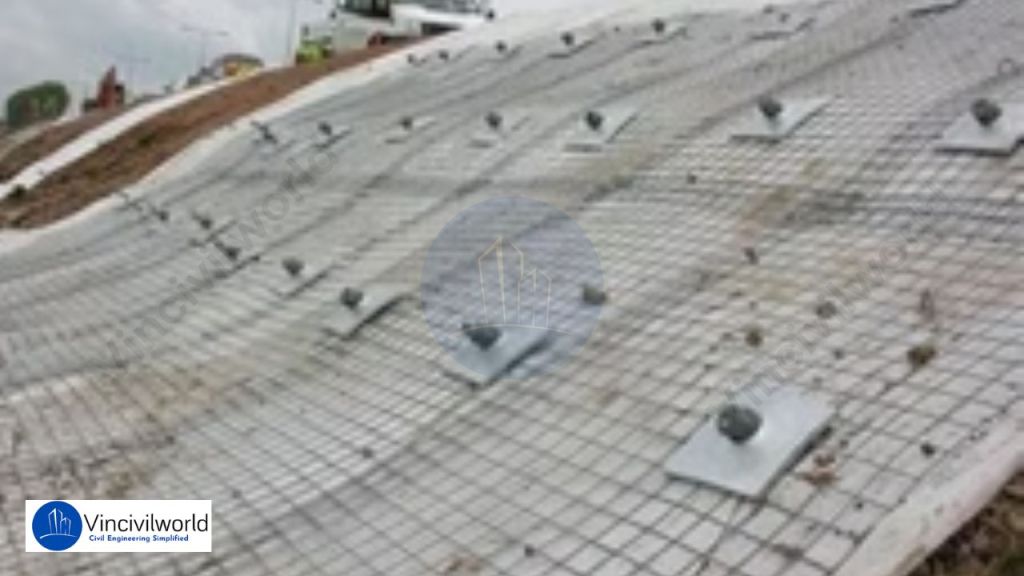
soil nailing
Close-up of a soil nailing installation showing reinforcing mesh and anchor plates on a sloped surface for slope stabilization.
Installation of welded wire mesh and bearing plates for soil nail reinforcement, ensuring slope stability and protection.

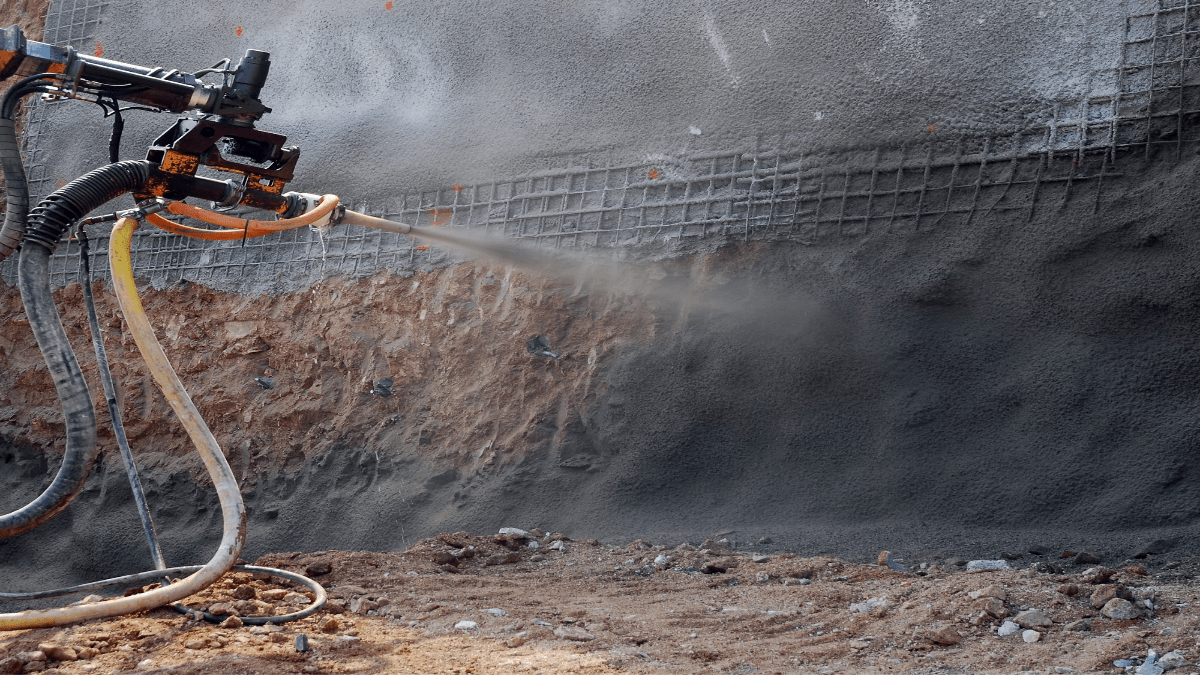
a) First face shotcrete on soil surface

A geotextile drain matting is placed over the soil. Then, it is followed by welded wire mesh as shown in the figure. Rebar stiffeners are sometimes provided to strengthen the shotcrete against punch shear forces. On completion of the first phase of shotcreting bearing plates with beveled washers are installed over the shotcrete surface.
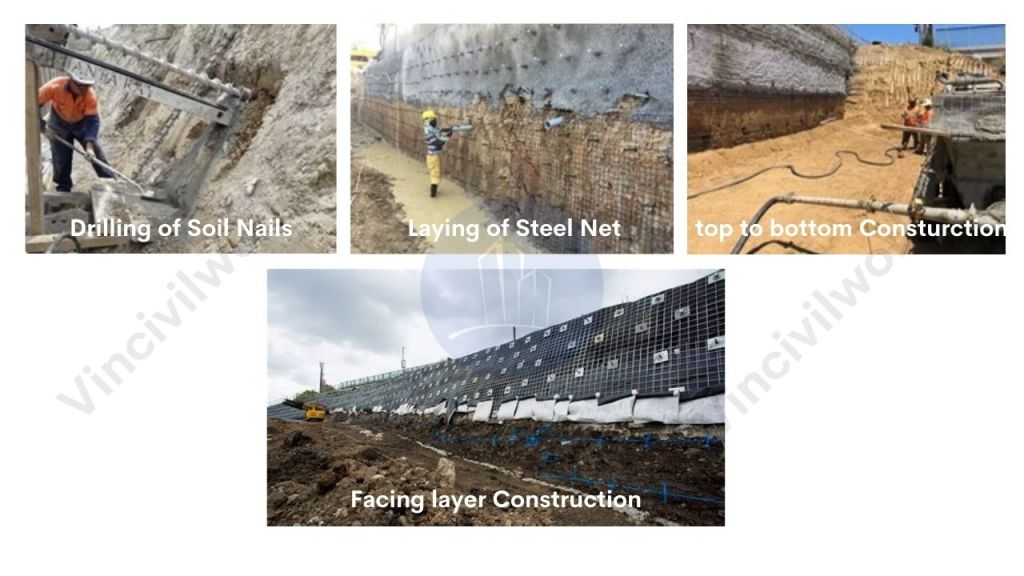
Image showing the drilling of soil nails in a slope stabilization project.
Steps in soil nailing process: drilling, laying steel net, top-to-bottom construction, and facing layer construction.

b) Second phase of reinforced concrete

If required as per design, the first layer is covered with a second phase of reinforced concrete. This is shown in the figure. This concrete covers the nail head.

Applications of soil nails

Soil nails are one of the most economical and feasible tops to bottom constructed retaining walls system. They are technically feasible, fast, and reliable slope protection and earth retaining system. Soil nails offer a perfect cost-effective system for temporary retaining walls for deep excavations..
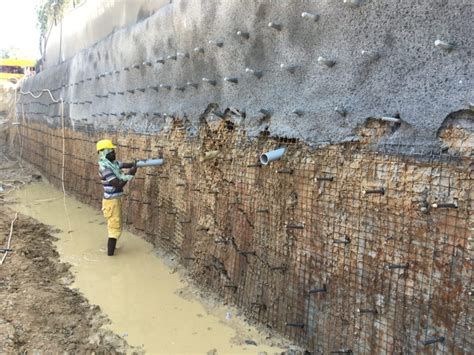
Construction worker applying shotcrete to a soil-nailing wall structure for slope stabilization.
Worker applying grout in a soil nailing installation, reinforcing a slope for stabilization.
  • High way cut excavation of hilly areas
  • Road widening under an existing bridge end.
  • Repair and reconstruction of existing retaining structures.
  • Temporary or permanent deep excavations in urban areas.

Feasibility of soil nail

Before confirming the soil nail system please ensure the following parameters at the site.

  • Soil should be able to free stand at a height of around 1-2 mtr. It must remain unsupported for a minimum of two days.
  • All soil nails within a cross-section will be above the water table.
  • If the soil nails are not located above the groundwater table, the groundwater should not negatively affect the excavation face. It should not harm the bond between the ground and the soil nail itself.
  • They can be used for almost all types of soils. This includes stiff, sandy, or hard clay. They are also applicable to dense sand and gravel areas, as well as evenly weathered rocks.
  • Avoid using soil nails in dry, poorly graded cohesion-less soils. Do not use them in soils with a high groundwater table, or in soils with cobbles and boulders. They are unsuitable for soft to very soft fine-grained soils, highly corrosive soils, and weathered rock with unfavourable weakness planes, etc.

Advantages of soil nails over other retaining systems

  • Soils nails require very little workspace comparing with any other retaining systems.
  • The operations are mostly light and silent and there is no disturbance to the traffic and people residing nearby.
  • Soil nails do not need any foundation or any structural whaler beams at the bottom like cantilever and anchored retaining walls.
  • With the soil nailing method, we can reduce the duration of work, and fewer materials are consumed in this process.
  • They are so flexible and easily customizable and nail location can be easily adjusted on encountering any obstructions.
  • Small equipment is used for soil nailing works.
  • They can accommodate differential settlements and deflection of soil nails are usually within tolerable limits.
  • They are more cost-effective than any other retaining wall system. This is because shotcrete of minimal thickness is used, unlike the heavy structural walls in other retaining wall systems.

Key Takeaways

  • Soil nailing is a slope stabilization method used in construction and excavation to reinforce soil structures.
  • Soil nails are steel bars installed sub-horizontally in the ground to prevent landslides and erosion.
  • The components of soil nails include tendons and grout, which provide reinforcement and corrosion protection.
  • Installation begins from the top, with each layer secured with anchor plates, followed by shotcreting.
  • Applications of soil nails include highway cut excavations, road widening, and deep excavations in urban areas.
  • Soil nailing is cost-effective, fast, and requires minimal workspace compared to other retaining systems.
  • This technique is not suitable for poorly graded, cohesion-less soils or areas with high groundwater tables.

Conclusion

Soil nailing is a versatile method for reinforcing slopes and retaining walls. It offers significant advantages in various geotechnical applications. It is particularly useful for highway projects, deep excavations, and slope stabilization. In these scenarios, soil nails provide crucial support to prevent landslides and erosion. The technique’s minimal workspace requirements, cost-effectiveness, and adaptability to different site conditions make it a popular choice in construction. Soil nails are most effective in soils that can stand unsupported for short periods. They should be used with caution in cohesion-less soils or areas with high groundwater levels. Overall, soil nailing offers a reliable solution for stabilizing slopes while maintaining project timelines and budgets.
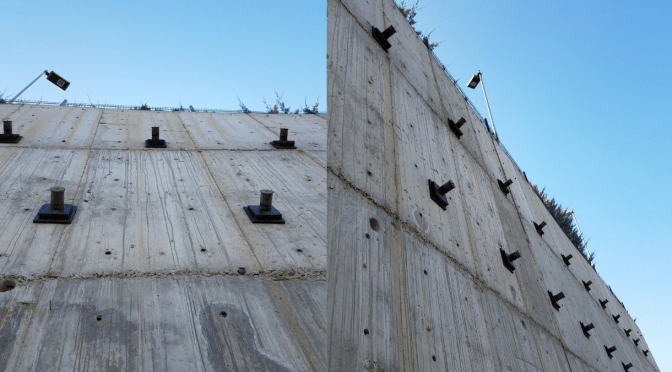
Anchored retaining walls/Tie back system-Advantages

Anchored retaining walls, also known as tie-back systems, are essential structural components used in construction. They are mostly used to stabilize earth and as support structures. Anchored Retaining walls deliver lateral support to walls. They prevent soil from shifting or eroding. These walls are commonly used in applications like deep excavations, embankments, and hillside retention etc.

This article will cover the different types of anchored retaining walls/ tie back systems. This article will also discuss the design principles and the installation process and explore the advantages and applications of using tie-backs in modern construction projects. An anchored retaining wall system is a structural element. This is installed through the rock or soil and transfers the tensile forces developed in the structure to the ground. Anchored retaining walls are often slimmer than all their counterparts like gravity walls and cantilever retaining walls.

  1. What is an Anchored Retaining Wall?
  2. Key Components of Tie-Back Retaining Walls
    1. Retaining Wall
    2. Anchors
  3. Design Principles of Anchored Retaining Walls
    1. Safety Factors
    2. Soil Type
    3. Load Calculations
    4. Anchor Spacing
  4. Types of Tie back systems
    1. Gravity Retaining Walls with Anchors
    2. Cantilevered Retaining Walls with Anchors
    3. Sheet Pile Walls with Tie-backs
    4. Soil Nail Walls
    5. Braced Walls
  5. Anchored retaining wall or Tie back system – Installation method.
  6. Fixing of anchors in a tie-back system
  7. Advantages of anchored retaining walls
  8. Key Takeaways from Anchored Retaining Walls/Tie-Back Systems
  9. Conclusion

What is an Anchored Retaining Wall?

An anchored retaining wall uses additional reinforcements for stability. Often, these reinforcements are steel cables or rods. They are known as anchors or tie-backs. The tie-backs are driven deep into the ground behind the wall. They anchor the wall securely. This allows it to resist pressure from the retained soil. These walls are ideal for supporting large vertical loads. They are particularly effective when space constraints limit the use of other retention methods.

Anchored retaining wall

Key Components of Tie-Back Retaining Walls

Tie-back systems rely on two main components: anchors and retaining walls.

Retaining Wall

The wall itself is usually made of materials like concrete, steel, or timber. It serves as the primary barrier to resist the pressure exerted by the retained soil.

Retaining wall with tie back systems

Anchors

These are steel rods or cables inserted into the soil behind the wall, providing tension to counteract the lateral forces exerted by the earth. The anchors are fixed at the back end using a variety of methods, including grouting or mechanical anchoring.

Design Principles of Anchored Retaining Walls

The design of an anchored retaining wall involves several key considerations to ensure structural integrity and durability:

Safety Factors

A safety factor is applied in the design to account for unforeseen stresses or variations in soil conditions.

Soil Type

Understanding the soil characteristics is crucial for determining the number, length, and type of anchors needed.

Load Calculations

Engineers must calculate the lateral earth pressure and any additional loads (such as water pressure) to determine the anchor capacity.

Anchor Spacing

Proper spacing of tie-backs is essential for uniform load distribution and wall stability. The design will vary based on wall height and soil type.

Types of Tie back systems


There are several types of anchored retaining walls, each suited for different applications

Gravity Retaining Walls with Anchors

Gravity retaining walls rely primarily on their own weight to resist the lateral pressures exerted by the retained soil. These walls are usually constructed from concrete, masonry, or stone. They are often designed with added anchors for additional stability. This is especially important in situations with significant soil pressure.

The anchors provide a secure connection to the soil behind the wall. This connection enhances the wall’s ability to withstand overturning and sliding forces. Gravity walls are typically employed for low-height structures where space allows for their robust base design. They are simple to construct and cost-effective for lower applications.

Cantilevered Retaining Walls with Anchors

Cantilevered retaining walls have a unique design. They include a vertical wall supported by a slab. The system also includes a footing. This design efficiently utilizes the wall’s weight and structural integrity. It allows the wall to resist lateral forces. Anchors, which are embedded into the ground behind the wall, aid in this resistance. The additional support provided by the anchors is crucial for taller walls where lateral earth pressures are more significant.

Cantilevered walls are often preferred where space is constrained. They can be designed to accommodate various soil types. This makes them versatile for different applications.

Sheet Pile Walls with Tie-backs

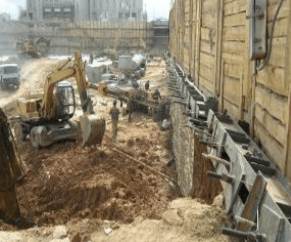
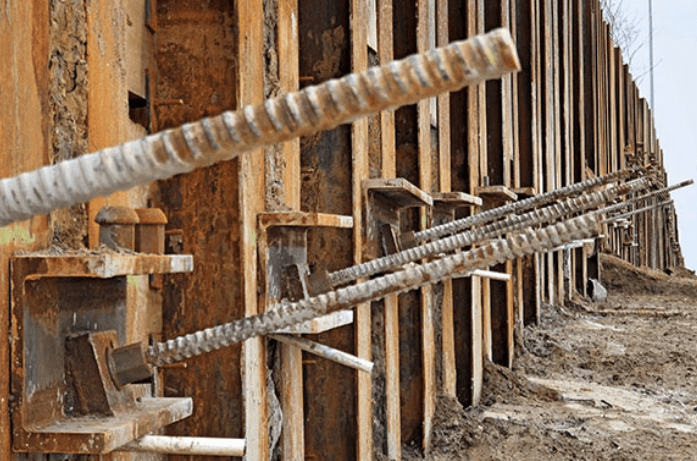
Sheet pile walls are constructed from interlocking steel or concrete sheets. These sheets are driven into the ground to create a barrier against soil and water. This type of wall is particularly effective in deep excavations. It is also suitable for waterfront construction projects. Limited space makes conventional retaining methods impractical in these scenarios. Tie-backs are incorporated to enhance the stability of sheet pile walls. They provide tension forces that counteract lateral earth pressures.
Sheet pile retaining wall with tie back using anchors

These tie-backs are anchored into the soil or bedrock behind the wall. This system is highly effective in urban settings. It also works well in areas with high groundwater levels. Sheet pile walls with tie-backs offer a reliable solution for managing soil movement and maintaining structural integrity in challenging environments.

Soil Nail Walls

This wall type incorporates soil nails, which are long steel bars inserted into the soil, providing stability through tension. Soil nail walls are ideal for steep slopes and challenging sites. They are cost-effective for moderate heights. They are also less intrusive than other wall types. They allow for better drainage and less disruption to the surrounding area​

Soil Nail walls

Braced Walls

Often used in deep excavations, these walls are supported by braces or struts connected to the ground. Braced walls can handle high loads and are versatile for various soil conditions. They require careful planning for spacing and materials to ensure structural integrity while managing excavation risks​(

Anchored retaining wall or Tie back system – Installation method.

Anchored retaining wall is also known as a tie-back system. They are used in combination with cantilever retaining walls, piled retaining walls, sheet piles, tangent walls, etc. The Tie-back system enhances the stability of the structure. It plays an important role in equipping the walls to handle additional loads.

The anchored walls are installed when the load acting on the structure is high. In this case, the design of cantilever retaining walls / piled retaining walls/ sheet piles etc seems uneconomical. Moreover, it is difficult to accommodate the foundation and structures due to space constraints. For enhancing the load-carrying capacity and economising the structure additional anchors are embedded in the earth to be stabilized. These anchors in combination with the main structure negotiate the loads.

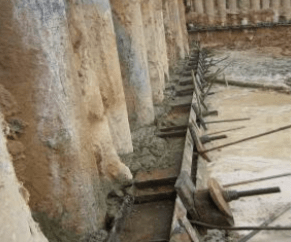
Piled retaining walls with tie back system

Related posts from vincivilworld

Also Read : Soil Nailing – Installation, Advantages and applications.

Fixing of anchors in a tie-back system

One end of the tieback is anchored to the wall and another end is driven to the soil/rock. Sometimes stable concrete structures are driven into the ground to get a good anchorage. Tiebacks and drilled through the wall to the soil at an angle of around 15-45 degrees.

After drilling the holes ties or struts are provided inside the drilled holes and pressure grouted to give greater stability. In the case of piled retaining walls, the tie-back system is drilled through whaler beams installed between the piles as shown in the figure. Steel rods are placed inside the drilled holes and grouted under high pressure. This creates a bulb-like anchor at the rods’ end, preventing the tie-backs from pulling out the load.

These walls can be very tall and support high loads and are ideal for smaller areas that need earth retention.

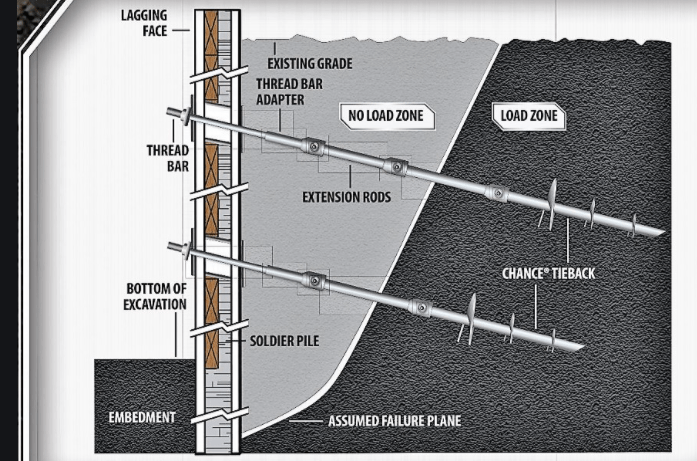
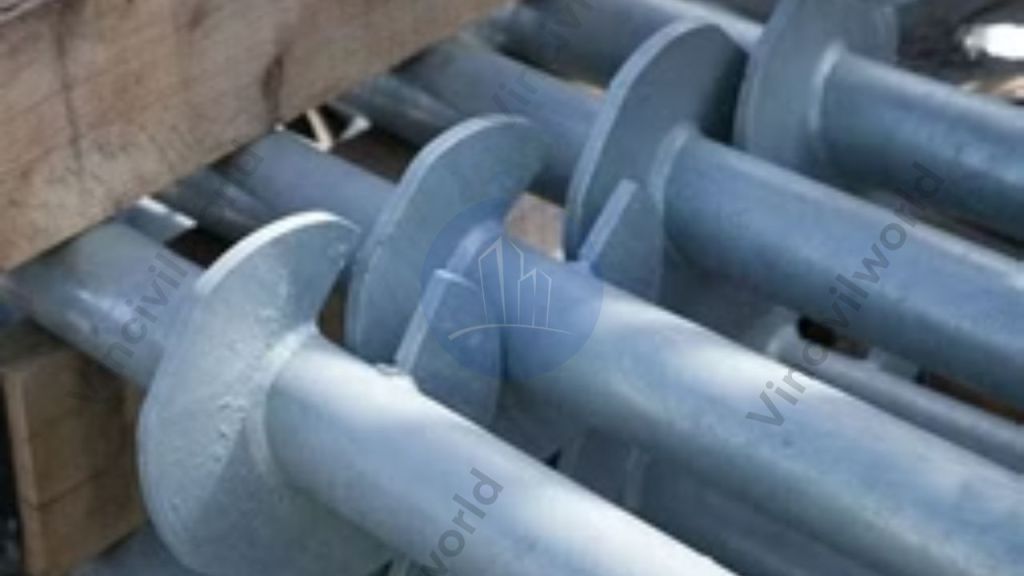
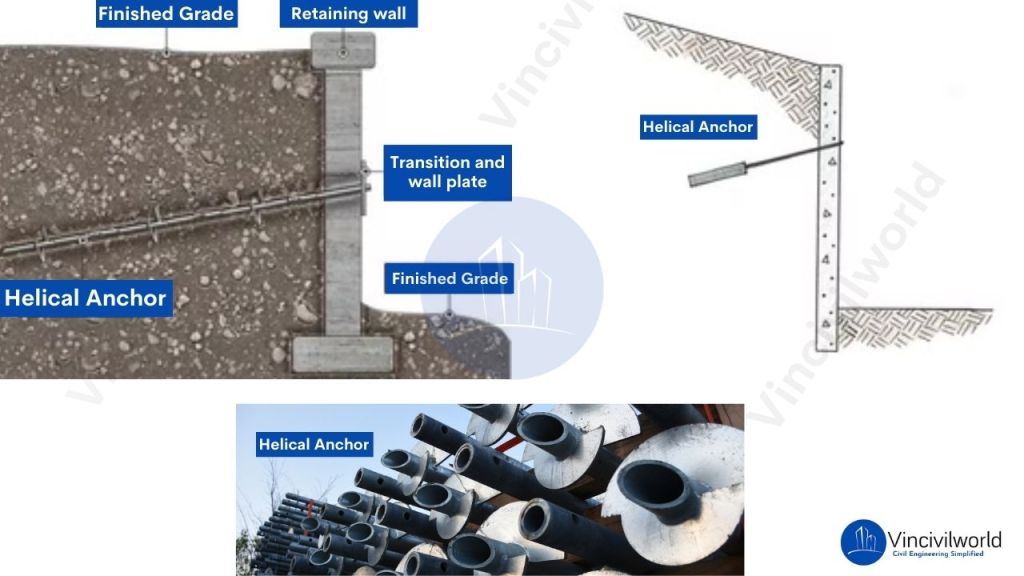
Some times instead of rods, helical anchors are also driven to in place and the capacities are decided by the torque required for tightening the anchors.

Anchored retaining wall - Typical section of helical anchors
Typical section of helical anchors

The main purpose of the tieback system is to develop a strong soil mass to resist external failure modes. The moment of soil and wall has to be restricted to get better serviceability.

Advantages of anchored retaining walls

  • Mostly used for slope protection and retaining earthworks of deep excavations.
  • Thin walls or very light structures can be designed in combination with anchored walls.
  • Anchored walls are one of the most economical systems of earth retention.
  • Combination with sheet piles, cantilever retaining walls, piled retaining walls etc are very useful for deep excavations. They help in providing a safe working area.

Key Takeaways from Anchored Retaining Walls/Tie-Back Systems

  1. Slope Protection: They are primarily used for stabilizing slopes and retaining earth during deep excavations.
  2. Thin Wall Design: Anchored retaining walls allow for thinner and lighter wall designs without compromising strength.
  3. Cost Efficiency: These systems are highly economical for retaining earth compared to other methods.
  4. Versatility: They can be used with sheet piles, cantilever, and piled retaining walls for various deep excavation projects.
  5. Space Saving: Suitable for areas with space constraints while maintaining structural integrity.
  6. Structural Stability: Anchored walls provide lateral support and resist significant external loads, ensuring safety during excavation projects.

Conclusion

Anchored retaining walls, or tie-back systems, play a crucial role in modern construction. Their design provides lateral stability while allowing for thinner and more cost-effective structures. They are particularly useful for deep excavations, slope retention, and projects where space is limited. The combination of anchors with retaining walls makes them adaptable to various applications, from sheet piles to cantilever walls. Anchored retaining walls are among the most economical solutions for ensuring soil stability. They offer versatility, especially in urban or constrained environments. Their integration in construction projects ensures structural safety, cost savings, and effective use of space.

For more details about the retaining walls watch the below video.

Youtube video – 15 Types of Retaining wall systems

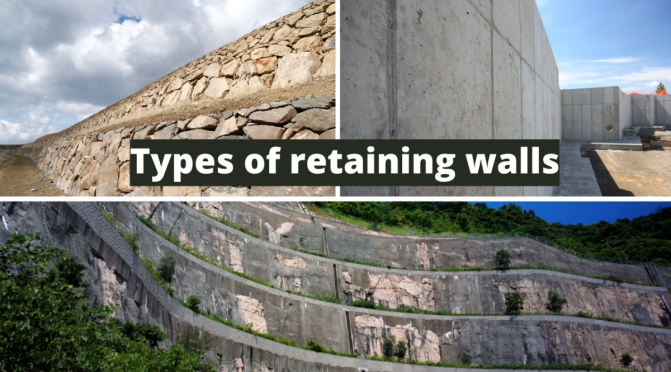
Types of retaining walls

MSE Retaining Walls – Components & advantages.

MSE Retaining Walls are also known as Mechanically Stabilised Earth (MSE) retaining walls. Commonly referred to as RE walls, they are a popular choice in modern construction due to their durability and cost-effectiveness. MSE retaining walls consist of layers of soil. The soil is reinforced with materials like geogrids or steel strips. This reinforcement provides essential stability against earth pressures. In this blog, we will explore the meaning of MSE walls, delve into their key components, and highlight their advantages. Additionally, we will examine real-world applications of MSE retaining walls and discuss important design considerations. By comparing RE walls with other retaining wall systems, you will gain a clear understanding of their features. This will help you decide their suitability for various construction projects.

MSE retaining walls means mechanically stabilised earth or reinforced earth. This is an earth retaining system where compacted granular soil is reinforced with horizontal layers of steel strips or geo-synthetic materials. This compacted earth is held together with thin facing elements made of Precast concrete, shotcrete or weld mesh reinforced panels. They are used extensively for constructing retaining walls, bridge abutments, highway wall systems, dykes, etc. MSE retaining walls cost almost half what a concrete structure would have cost for similar uses.

  1. What is an MSE Retaining Wall?
  2. Design basis of RE walls/MSE walls
  3. Components of a MSE retaining wall
    1. Reinforcement element
    2. Back fill materials
    3. Facing elements
    4. Drainage layer
    5. Jointing and filling materials
  4. Advantages of MSE walls
  5. Disadvantages of MSE retaining walls.
  6. Key Takeaways
  7. Conclusion

What is an MSE Retaining Wall?

An MSE retaining wall is also known as a Mechanically Stabilised Earth retaining wall. It is a structure designed to retain soil using layers of reinforced materials. MSE walls consist of compacted soil, reinforced with elements like geogrids or steel strips, providing stability against earth pressures. Often referred to as RE walls, these structures are popular due to their durability and cost-efficiency. To grasp the meaning of MSE walls, it’s essential to understand that the reinforcement materials bind the soil. This binding makes the wall robust and stable. MSE retaining walls are widely used in various construction projects, offering a reliable solution for earth retention.

Design basis of RE walls/MSE walls

When designing an MSE retaining wall, consider soil properties, such as bearing capacity and drainage, to ensure stability. Select appropriate reinforcement materials like geogrids or steel strips based on load requirements. Proper wall height and slope must be determined to manage earth pressures. Additionally, incorporate effective drainage systems to prevent water buildup behind the RE wall.

Components of a MSE retaining wall

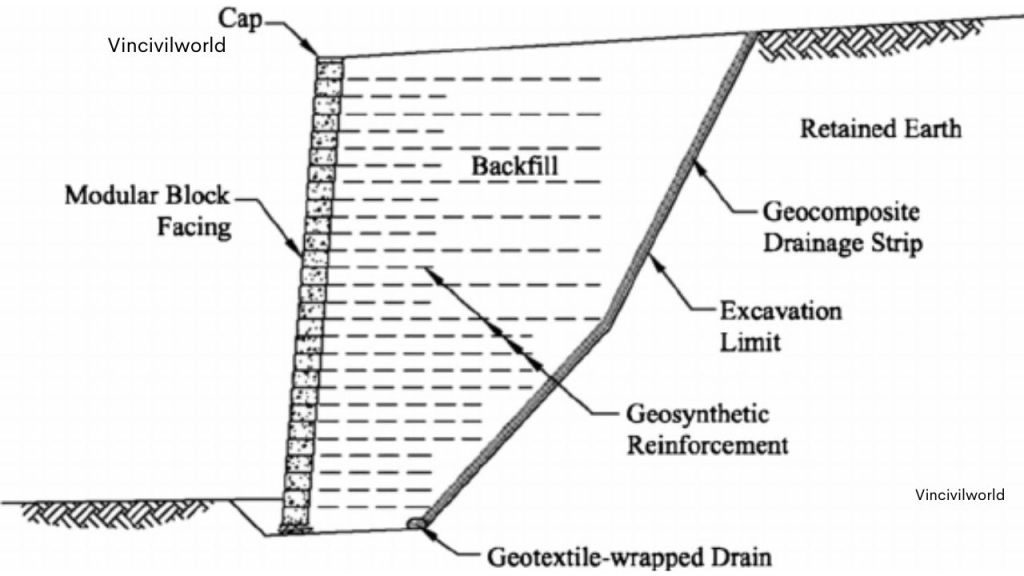
An MSE retaining wall consists of several critical components that work together to provide stability and strength. These RE wall components include reinforced soil layers, facing panels, and drainage systems. The mechanically stabilised earth retaining wall relies on the interaction between the soil and reinforcement materials. Examples of these materials include geogrids or steel strips. This interaction helps to withstand earth pressures. Understanding these key elements is essential for designing a durable and effective MSE wall. The key components of a RE wall system is as follows.

a) Reinforcing element

b) Back fill materials

c) Fascia element

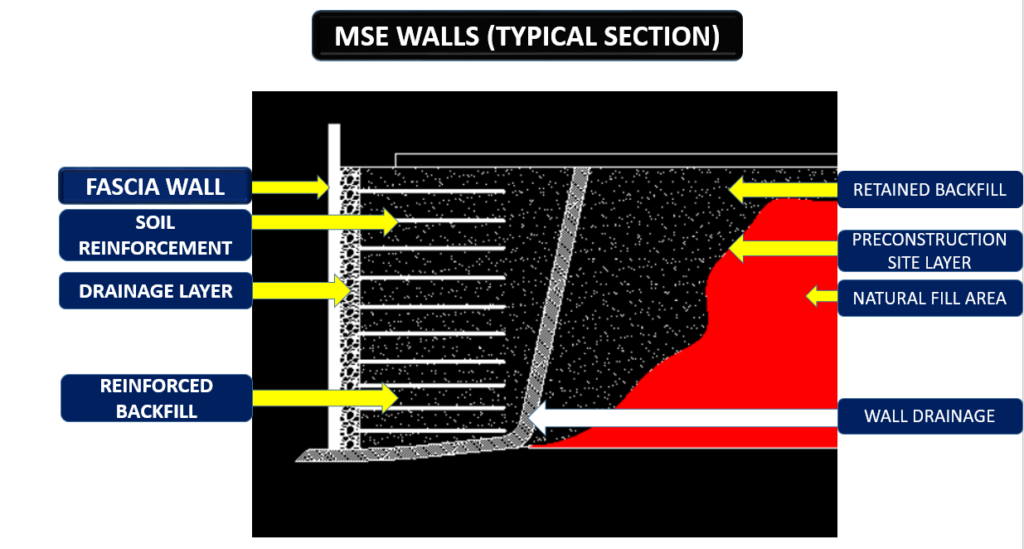
MSE walls or RE walls
MSE Walls or RE walls (Typical Section)
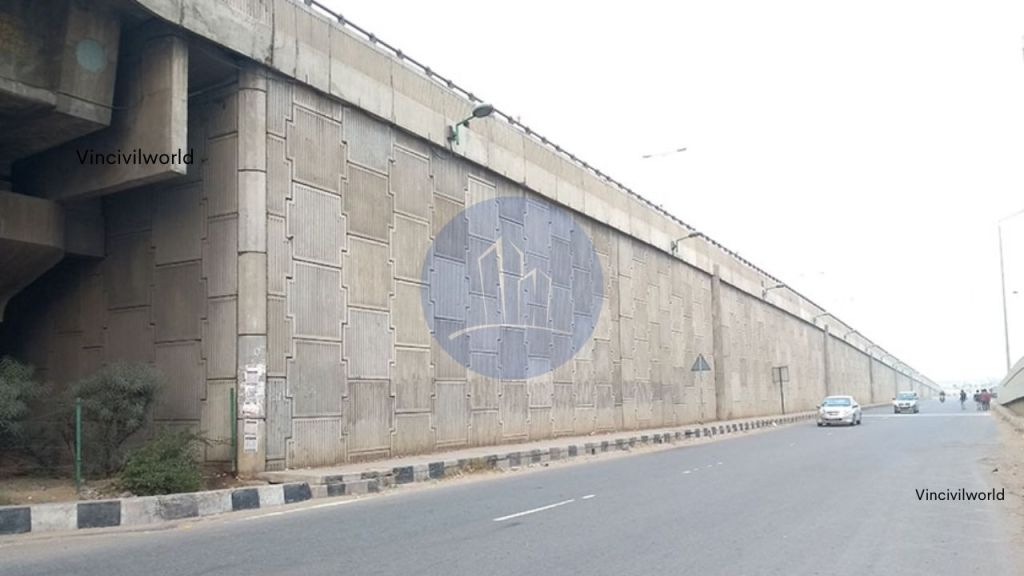
Typical section of MSE Retaining wall

Reinforcement element

The reinforcing elements of an MSE retaining wall are vital for its stability and strength. These elements typically include geogrids, steel strips, or geotextiles, which are embedded within the soil layers. The reinforcing materials work by binding the soil, creating a unified mass that resists earth pressures. In a mechanically stabilised earth retaining wall, these elements effectively distribute loads and prevent the wall from shifting or collapsing. The careful selection and installation of reinforcing elements are crucial for ensuring the long-term durability and performance of the RE wall.

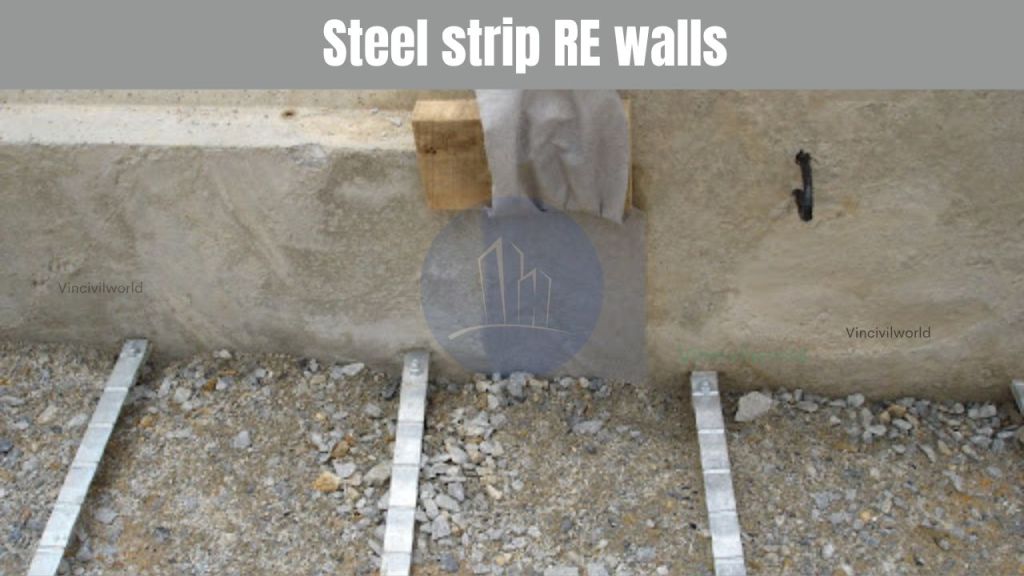
The reinforcements are used to reinforce and provides the requisite tensile strength to hold the soil together. Two types of reinforcing elements are used in MSE walls. They are metallic and polymeric reinforcements. Metallic reinforcements (In-extensible) include Galvanised iron ribbed strips (50mm-100mm) or ladder strip arrangements.

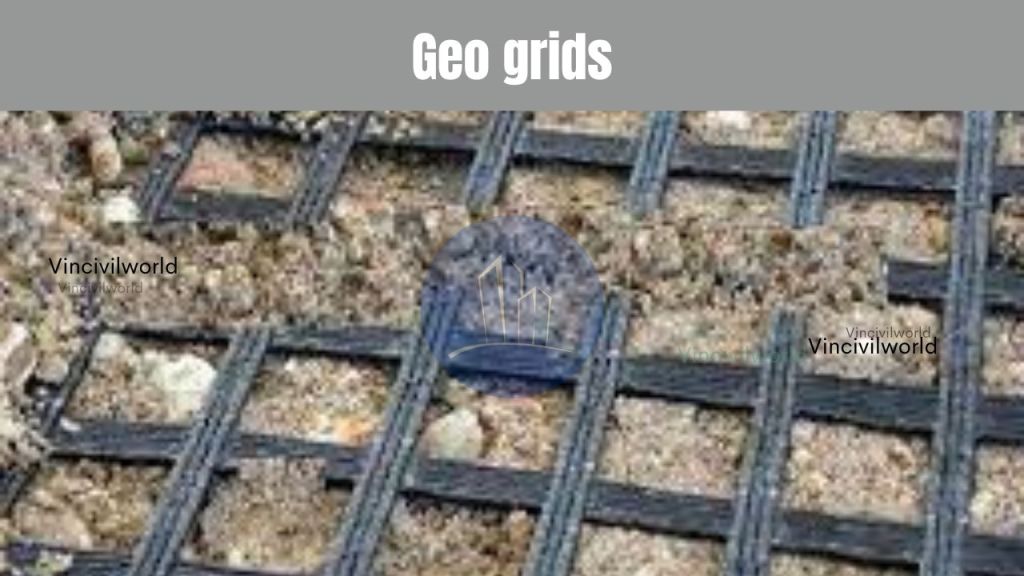
Polymeric reinforcement (Extensible reinforcement) could be geo-grids or geo-textiles, which are preferred in corrosive environments. For any vertical and horizontal obstructions, reinforcements are bend at an angle, not more than 15 degrees.

Geo grids for reinforcing RE walls
Geo grids for RE walls

Appropriate connections hooks are embedded behind the fascia walls for the anchorage of geo-grids and metal reinforcements.

Back fill materials

For an MSE retaining wall, it is essential that the selected backfill materials are cohesionless. They must meet strict criteria, including gradation, plasticity, organic content, and electrochemical properties. These materials must be free-draining with minimal fine content. The soil friction angle for the MSE retaining wall must be verified by shear tests. The angle of interface friction between the compacted fill and the reinforcing element should be no less than 30 degrees, as specified by IS 13326 Part 1.

Fly ash Backfill

FLY ASH BACK FILL

Fly ash can be used as backfill for the RE wall, provided it adheres to applicable standards. The selected backfill should be placed parallel to the MSE retaining wall. It should start approximately three feet from the back of the wall panels. The backfill should be compacted in 6-inch lifts. Additionally, soil materials may be placed without reinforcement between the stabilised zone and the natural ground surface. This is known as retained backfill. It ensures the stability and effectiveness of the mechanically stabilised earth retaining wall.

Facing elements

Facing elements in an MSE retaining wall serve to retain filled materials. They prevent local slumping on steeply sloping faces. They also align with both structural and aesthetic requirements. These facings are commonly made of materials such as precast reinforced cement concrete, plain concrete hollow blocks, or similar components.

Facing elements
Facing Element of RE walls

Drainage layer


For the RE wall, it is essential to incorporate a suitable drainage system in the embankment area. This prevents water logging. A drainage layer, approximately 2-3 feet wide, is installed on the backside of the mechanically stabilised earth retaining wall. This layer uses free-draining material to facilitate proper water drainage from the reinforcement zones. This ensures the stability and effectiveness of the MSE retaining wall.

Drainage layer (image courtesy : Science direct)

Jointing and filling materials

Rubber or wooden bearing pads are used between horizontal joints of facing elements. This ensures there shall not be any concrete to concrete joints. The interior panel joints are sealed with geotextile filler cloth in the horizontal and vertical directions as shown in fig. This is done to ensure that no interior back fill materials sweep through the joints.

RUBBER PADS AND GEO TEXTILE LAYER

Advantages of MSE walls

MSE walls, or Mechanically Stabilised Earth walls, are favored for their economic and construction benefits. They enable rapid and efficient construction with minimal disruption to traffic and other services. MSE retaining walls offer a variety of materials and customization options, enhancing their popularity as earth-retaining systems. The fascia elements, backfill, and reinforcing system work together to form a gravity retaining structure. This structure relies on the self-weight of the reinforced soil mass. It resists lateral pressures from earth, service loads, seismic forces, and hydrostatic pressure. The flexibility and efficiency of RE walls make them a top choice in modern construction.

  • Heavy Load Capacity: Can support extremely heavy loads such as bridge abutment footings, crane loads, and service loads.
  • Seismic and Dynamic Resistance: Designed to resist seismic and dynamic forces, distributing bearing pressure over a wide area.
  • Faster Construction: Enables quicker construction compared to conventional retaining walls.
  • Minimal Site Preparation: Requires less site preparation and can be built in confined areas where other retaining walls are impractical.
  • No Additional Supports: No need for additional supports, finishes, or curing time.
  • Free Drainage: Granular backfill facilitates free drainage through panel joints, reducing hydrostatic pressure.
  • Lightweight and Precast Fascia: Fascia walls are lightweight, precast, and easily transported and lifted using simple equipment.
  • Customizable: Can be made to any height, customized for designs and logos, and adjusted to manage obstructions.
  • Versatile Construction: Can be tailored to any geometry, requiring no heavy machinery or specialized workers.
  • Durable Service Life: Provides a long service life even under extreme loading and complex conditions.

Disadvantages of MSE retaining walls.

  • MSE retaining walls require granular material in huge quantities. Areas where there is a scarcity of granular material the construction cost increase and make the structure uneconomical.
  • The corrosion or reinforcement and deterioration of geo-grids on exposed to sunlight has to be addressed. The reinforced component must be designed to withstand erosion and corrosion processes. These processes can highly deteriorate the mechanical behavior of the composite structure.
  • Proper drainage system should be provided.
  • The wall must obtain a minimum width in order to acquire adequate stability

Key Takeaways

  1. MSE Walls: Mechanically Stabilised Earth (MSE) retaining walls, also known as RE walls, offer durability and cost-efficiency.
  2. Components: Include reinforcing elements (geogrids, steel strips), backfill materials, facing elements, drainage layers, and jointing materials.
  3. Load Capacity: Capable of supporting heavy loads like bridge abutment footings and crane loads.
  4. Seismic Resistance: Designed to handle seismic and dynamic forces effectively.
  5. Construction Speed: Allows for rapid and efficient construction with minimal disruption.
  6. Customization: Flexible design options for various geometries and aesthetics.
  7. Free Drainage: Ensures effective water management to prevent hydrostatic pressure buildup.
  8. Durability: Long service life even under extreme conditions.

Conclusion

MSE retaining walls, or Mechanically Stabilised Earth walls, present a robust and economical solution for earth retention in modern construction. Their design incorporates various components, including reinforcing elements, backfill materials, and drainage systems, to ensure stability and functionality. MSE walls excel in supporting heavy loads, resisting seismic forces, and allowing rapid construction with minimal disruption. Customizable and versatile, they offer long-term durability and can be adapted to diverse project requirements. However, challenges such as the need for granular material and addressing potential reinforcement corrosion must be managed. Overall, MSE walls are a valuable option for efficient and effective retaining wall systems.

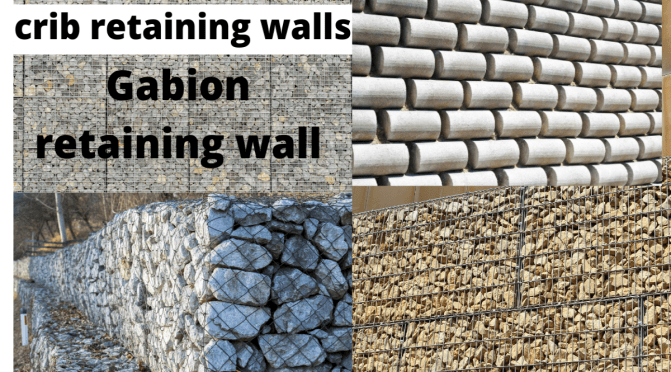
Crib retaining walls, Bin retaining walls & Gabion Walls

Retaining walls are rigid walls used for supporting soil laterally so that it can be retained at different levels on the two sides. The soil got a natural angle of repose and when it exceeds the range a retaining wall structure has to be provided.

They are vertical or near vertical structures constructed to hold soil between two terrains when the slope exceeds the natural one. The slope can be vertical or steep or much above the range of angle of repose.

Also read : Retaining walls – All Types, Materials, features and uses

In this article we are mentioning about some special type of retaining walls

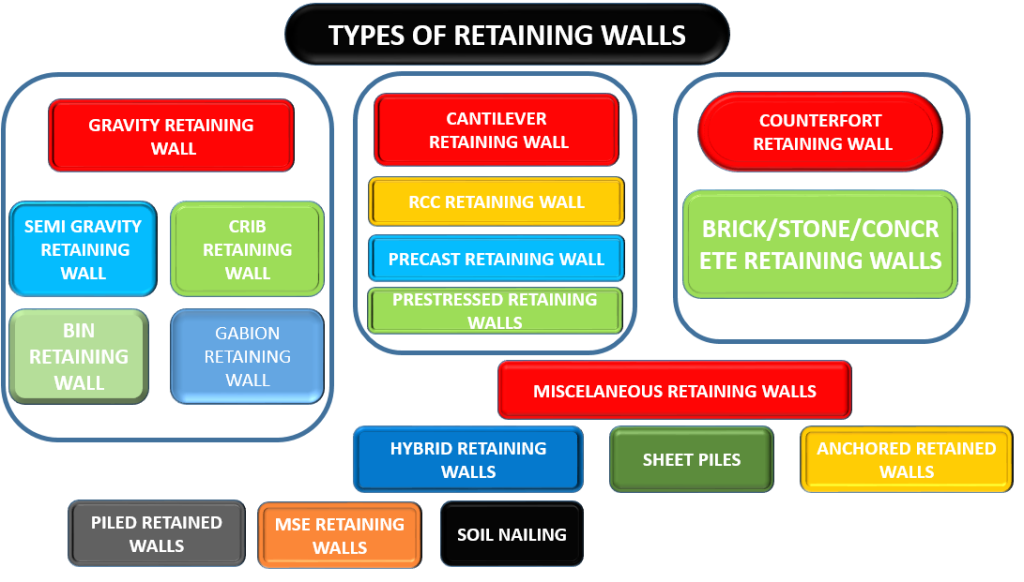
Gravity retaining walls are made of stone, bricks, concrete or any other heavy material.  Gravity walls are made with or without mortar They are designed to counter the earth pressure by their self weight. Following are the special types of gravity retaining walls.

a) Crib retaining wall

b) Bin retaining wall

c) Gabion retaining wall

Crib Retaining walls

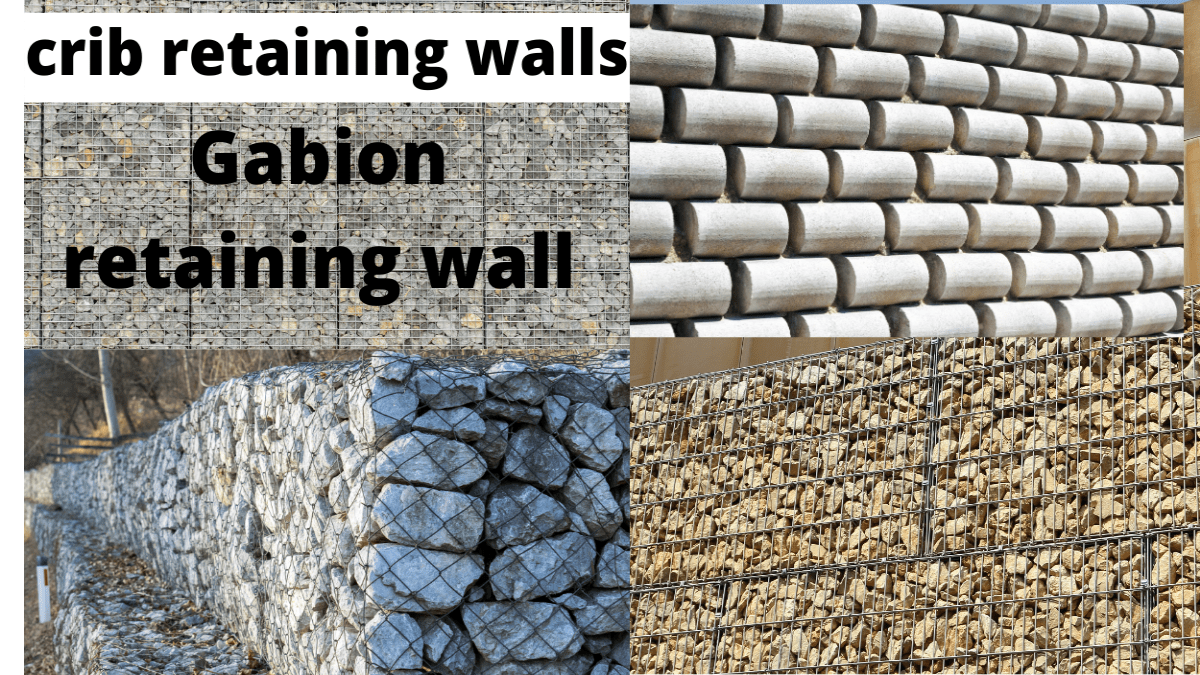
Crib retaining wall or crib lock retaining wall is one of the oldest types of retaining wall. They consist of cribs or cells made of timber, concrete, and plastic/fibres. The cribs or interlock areas are filled with free-draining materials or earth back-fill, eliminating the hydro-static pressure and enabling a free escape of water.

Most common materials used for crib wall construction is 

  • Timber crib retaining walls
  • Precast crib retaining walls

Timber crib retaining walls

Timber crib walls use timber to form the cells of the crib. The cells are filled with free-draining stone materials for maintaining the mass of the wall. Water drainage can happen freely through the cribs. The timber sections are interlocked to make the walls.
They can also be planted with trees to create a natural appearance. These types of walls are ok up to a height of 5-6 mtrs and mostly used for landscape walls etc.

Timber crib retaining walls

Precast concrete crib retaining walls

This system consists of a precast concrete header and stretcher units. They are erected to form precast crib retaining walls.
Precast concrete cribs are the cheapest form of earth-retaining systems and are used for landscaping structures, plant terraces, and other works with heights around 10- 20 mtr with proper professional design.
They do not require any skilled labour to do the erection. Trees or shrubs are planted to give natural and excellent looks. Crib walls are erected for small curves and are considered a very flexible material.

Precast Concrete Crib retaining walls

Bin retaining walls

Steel bin walls are made from corrugated steel sheets and are usually bolted together and then filled with crushed rock or other free-draining material. They are mostly used for bank erosion protection, holding encroaching slopes, breakwaters, etc. They can resist unforeseen ground movements that may cause failure to other types of retaining walls.

Gabion Retaining walls

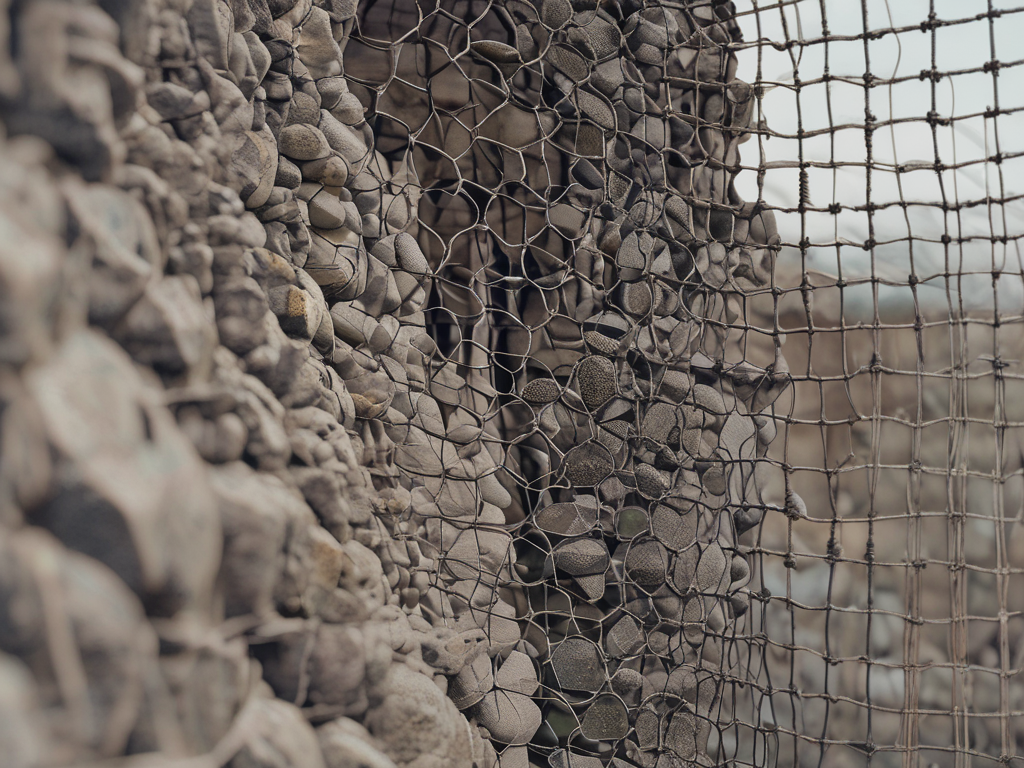
Gabion retaining wall systems are one of the oldest forms of gravity wall. Gabion walls are manufactured by factory fabricating a galvanised hexagonal wire mesh of varying diameters into box cages. These box cages are site filled with locally available stones and fully closed and laid in a pattern as per design. They are used in areas where the foundation conditions are not favourable for adopting any other retaining structures. The concept of a gabion wall is to increase the shear capacity of rock by providing the box cages. They can accommodate substantial ground movements without failures. Gabion boxes are free-draining structures that can reduce hydro-static pressure drastically.

Gabion Retaining walls

The main advantage of these types of systems is that they do not need an exclusive foundation structure. Gabion walls are installed directly over the surface in specified patterns according to design requirements.
The mesh is PVC protected or coated with special coatings to protect from rusting in areas subjected to continuous water flow.
These walls provided a Good visual appeal of the product and the satisfying rock finish look.
Gabion walls are erected mainly for soil stabilisation behind the wall. They can also act as a cover wall. The gabion boxes are stacked in layers with a proper design. They are a very economical alternative for concrete retaining walls and rock anchors for soil stabilisation works and slope protection works.

Also read : MSE retaining walls or Mechanically stabilised Earth walls

Types of Retaining walls – All types,materials,features and uses.

Retaining walls are rigid structures used for supporting soil laterally and retained at different levels on the two sides. These structures are vertical or near-vertical. They are constructed to hold soil between two terrains when the slope exceeds the natural angle of repose. The slope can be vertical or steep or much above the range of angle of repose. Understanding retaining wall types is crucial for selecting the right wall based on soil conditions, load requirements, and project design.

Key retaining wall types include gravity retaining walls. These rely on weight for stability. Buttress retaining walls provide extra support. Elements like retaining wall heel and toe enhance stability, making these walls effective and durable solutions.

This article is about the types of retaining walls, materials used and features.

  1. What is a retaining wall?
  2. Design criteria of retaining wall
  3. Retaining wall types
    1. Gravity Retaining walls
    2. Cantilever retaining walls
      1. The loads induced on various components
    3. Counter-fort retaining walls
    4. Buttressed retaining walls
    5. Sheet piled retaining walls
    6. Piled retaining walls
    7. Anchored retaining walls

What is a retaining wall?

Retaining walls are critical engineering structures designed to stabilize and support terrain by restraining soil mass at different elevations. These versatile architectural elements are essential in landscape design, civil engineering, and construction projects. They prevent erosion, manage slope stability, create usable spaces on uneven terrain. Retaining walls provide critical structural support in areas with significant elevation changes.

Engineers and landscape architects utilize various types of retaining walls, each with unique characteristics and applications. The selection depends on factors such as soil conditions and load requirements. Other considerations include site topography, budget constraints, aesthetic considerations, and project design. These factors ensure long-term durability and safety. Common retaining wall types include gravity walls, cantilever walls, and anchored walls, each using distinct methods to provide stability.

Design criteria of retaining wall

The main criteria behind the design of the retaining wall are to counter the downward slope movement of back filled soil by gravity. The lateral pressure developed behind the wall depends on the angle of internal friction & cohesive strength of retained materials. The lateral pressure can also be liquid (hydro-static pressure), and pressure from any type of back-fill material like sand, granular material, fly ash, etc. A proper drainage system is to be provided to reduce the hydro-static pressure.

Retaining wall types

There are several types of retaining wall depends on the nature and type of soil and situations they are to be used.

  • Gravity retaining wall
  • Cantilever retaining walls
  • Counter-fort retaining wall
  • Buttressed retaining wall
  • Sheet pile retaining wall
  • Bored pile retaining wall
  • Anchored retaining wall

There are a lot of innovative and alternated methods used for retaining walls

Retaining wall Types

Gravity Retaining walls

Gravity retaining walls are executed with stone, bricks, concrete, or any other heavy material. They are done with or without mortar and are designed to counter back-fill soil pressure by their self-weight.
Dry retaining walls do not require rigid footing. However, they must be designed to counter sliding. They also need to address overturning and bearing loads acting on the structure.
These types of retaining walls are mainly adopted in landscape areas and also in locations with height is around 2-3 meters.

Gravity retaining wall

Gravity retaining walls are used for larger heights using composite gravity walls. Composite gravity walls include precast crib walls or timber walls filled with granular materials, Gabion walls, Geowalls, etc.
The gravity wall when provided with a small amount of reinforcement is known as semi gravity retaining wall. The load transfer mechanism remains the same as that of gravity retaining walls.

Gabion wall

Cantilever retaining walls

Cantilever retaining walls are the most common retaining wall type. They are reinforced concrete structures wherein the lateral earth pressure is countered by the cumulative action of total structural members.
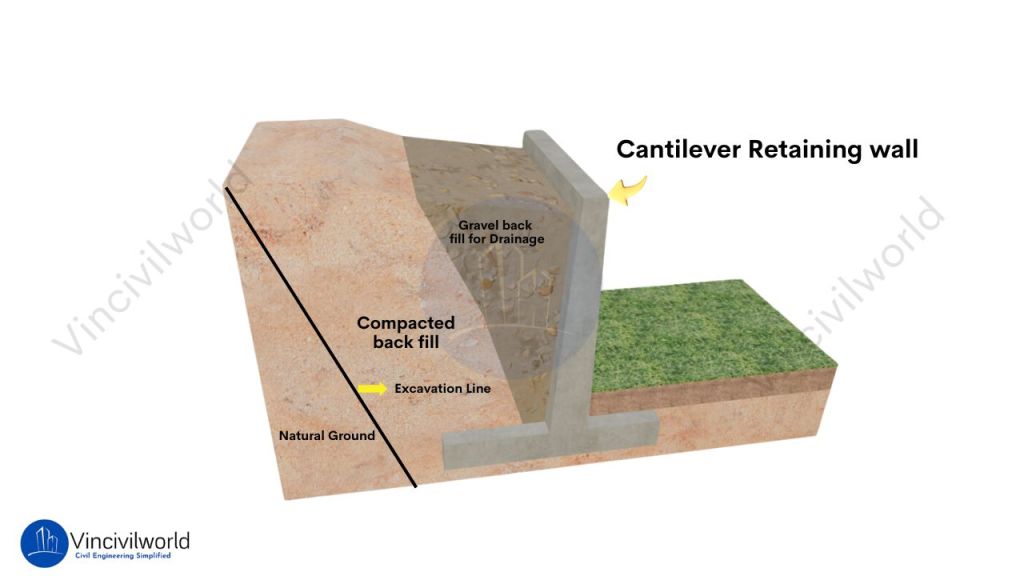
Cantilever retaining walls consist of a stem, a base slab which is divided into toe slab and heel slab as shown in the figure.

Cantilever retaining walls


The vertical stem wall is extended to the back fill side or heel side and is called a heel slab and the slab on the other side is a toe slab as shown in the figure.
The stem wall, toe slab, and heel slab act as cantilevers fixed injunction and spanning to other ends. The back filling of soil over the heel slabs imposes additional stability against lateral pressure and stabilises the wall against overturning and sliding.

The loads induced on various components

a) Heal slab and toe slab = Upward soil pressure from the bottom and tends to bend upward. Rebar is placed in a tension zone.
b) stem= Lateral earth pressure tends to bend in the opposite direction of back-fill.
These types of walls are economical and can be used for heights around 5-7 mtr. They are much lighter than gravity walls and require comparatively small foundations. These types of walls can be constructed as to cast in situ and precast and prestressed concrete depending on the site requirements.

Prestressed retaining wall & Retaining wall

Counter-fort retaining walls

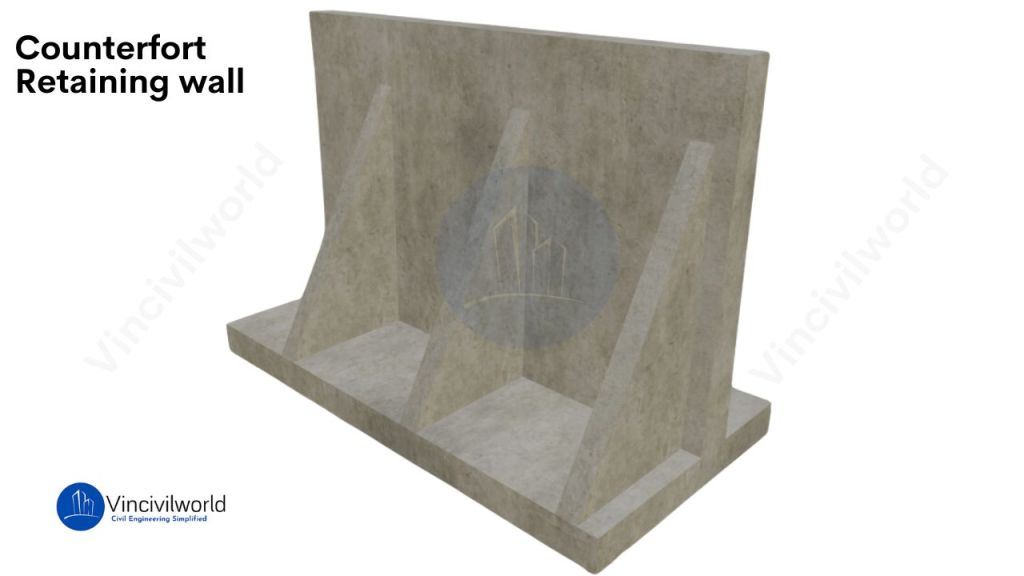
Counter-fort retaining wall is a cantilever retaining wall used when the height is around 7 mtr or more. For economising the structure, vertical bracing called counter-forts are provided on the back fill side. These counter-forts connect the heel slab and stem as shown in the figure. The stem and heel slabs between counter-fort act as continuous slabs and negotiate the high bending movements. The counter-forts function as tension stiffness and reduce the bending and shear stresses. These types of retaining walls are used for heights ranging from around 8-12 mtr.

Counter-fort Retaining walls

Buttressed retaining walls

Buttress retaining walls have the vertical bracing located on the front side of the retaining wall in place of the back-fill side like that of counter-fort retaining walls. The structural action of the stem remains the same as the counter-fort walls.

Sheet piled retaining walls

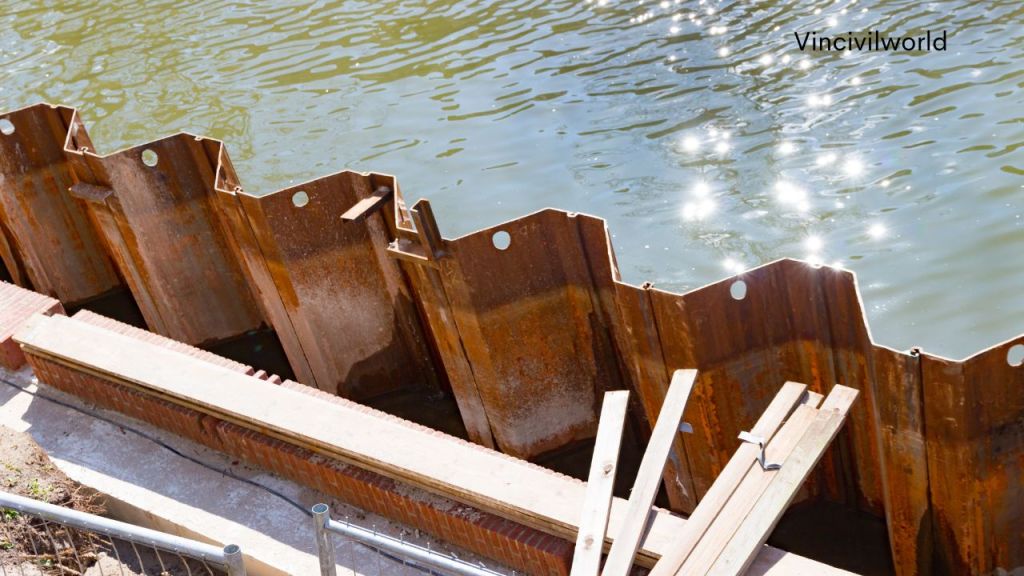
Sheet pile walls are erected using steel sheets into a slope to be protected or for excavations up to a required depth. Sheet pile retaining wall economical till a height of 6m and cannot negotiate huge loads. Sheet pile acts as a temporary wall that is driven into the excavation area for protecting the area from collapsing. They provide high resistance to driving stresses. They can also be reused and are considered the most economical retaining solutions. They can be bolted and driven easily and do not deform on driving. The problem with sheet piles is the noise it creates while driving.

Sheet pile

Piled retaining walls

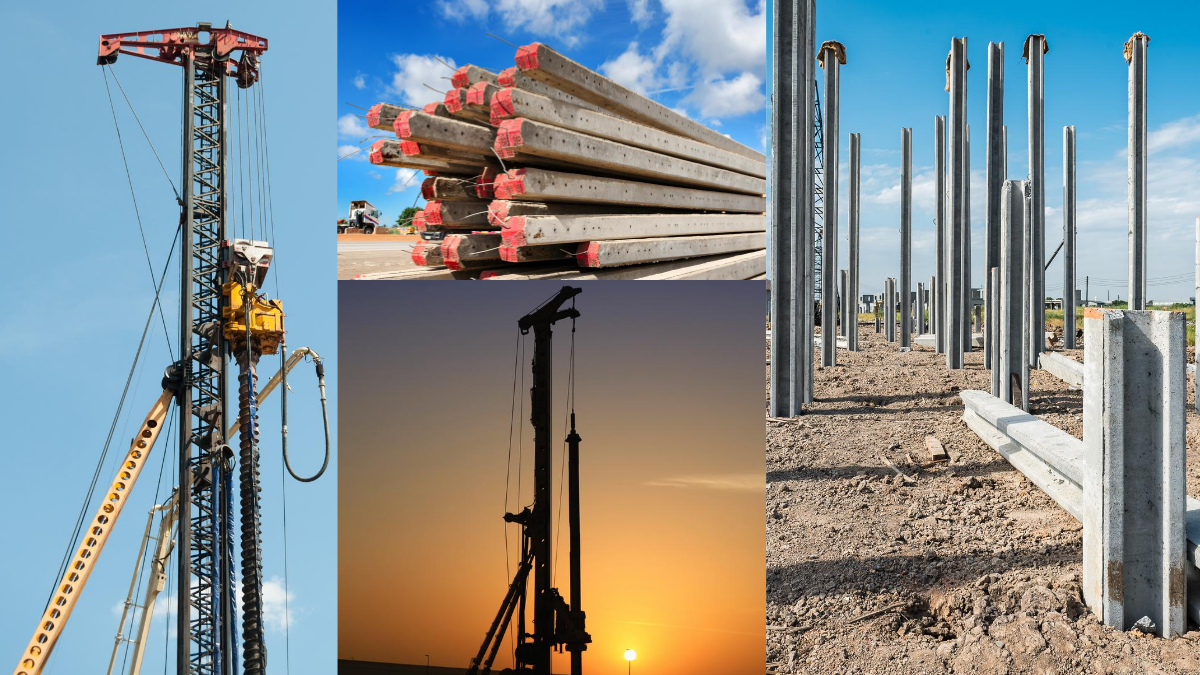
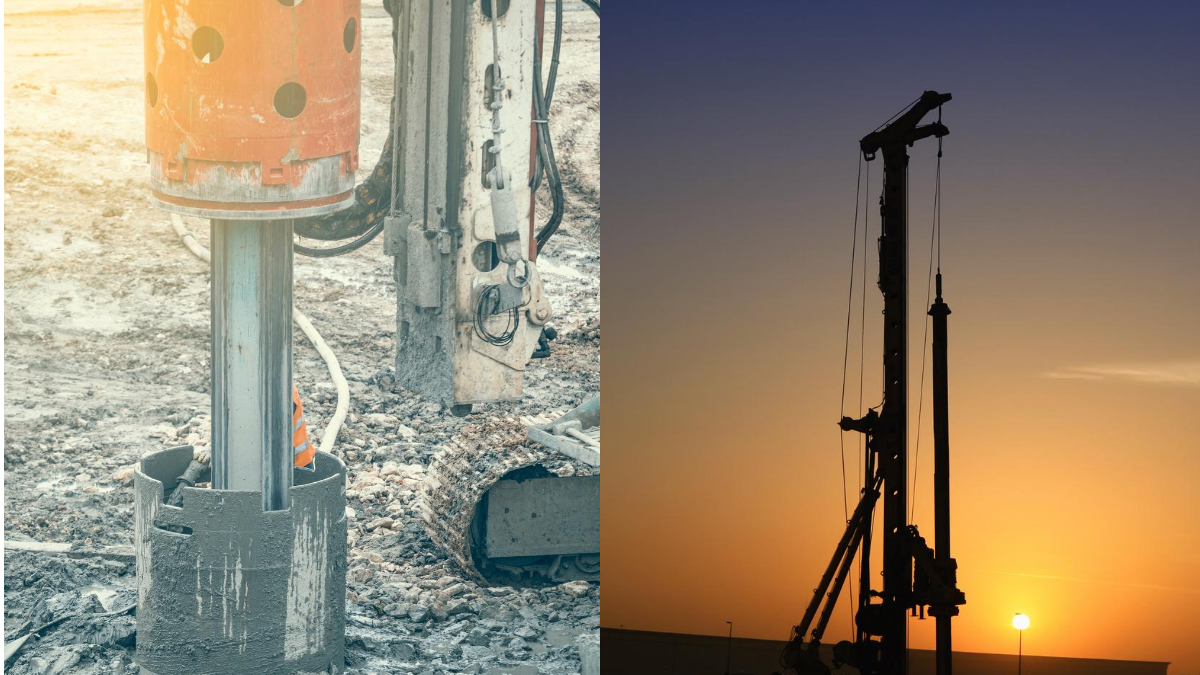
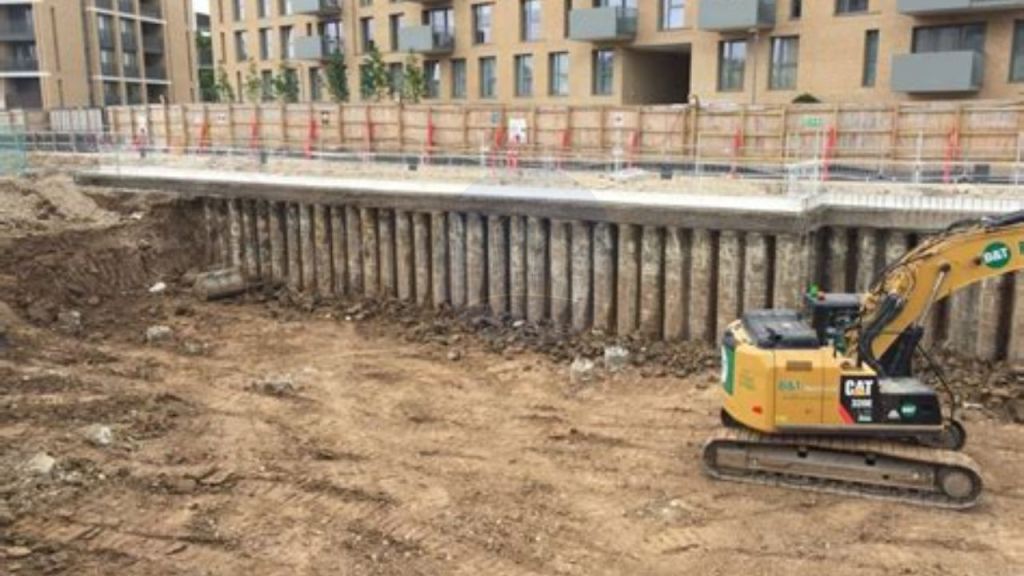
These types of retaining walls consist of a sequence of bored piles. The bored piled retaining walls are often accompanied by erection earth anchors, shot-creating the pile gaps, and provision of additional supports depending on the site conditions and designs. Bored pile retaining walls are used in areas where sheet pile tends to create a lot of noise and disturbs the areas.
These types of piles are used for temporary and permanent works. They can hold huge lateral pressure and are used for holding earth for high depth excavations without disturbing the nearby structures. Bored pile retaining walls are classified into contiguous pile walls, tangent pile walls & secant pile walls according to the sequence of piling works.

Piled retaining wall

Anchored retaining walls

Anchored retaining walls, also known as tie-back systems, are essential structural components used in construction. They are mostly used to stabilize earth and as support structures. Anchored Retaining walls deliver lateral support to walls. They prevent soil from shifting or eroding. These walls are commonly used in applications like deep excavations, embankments, and hillside retention etc.