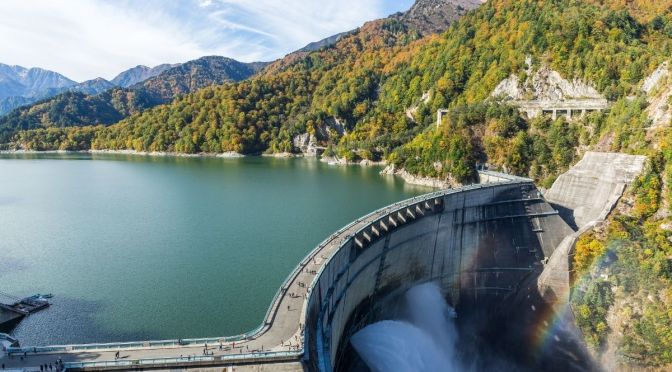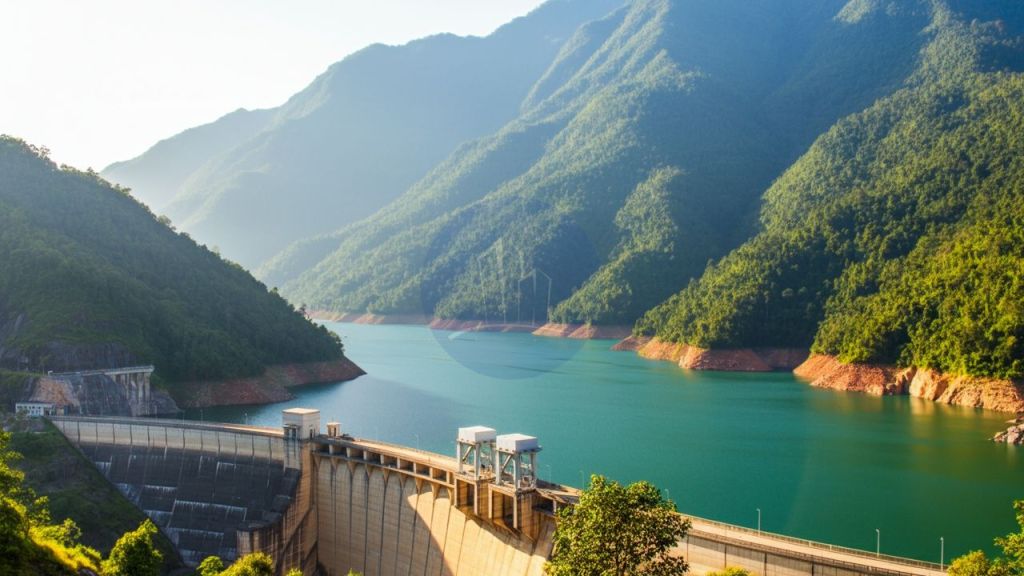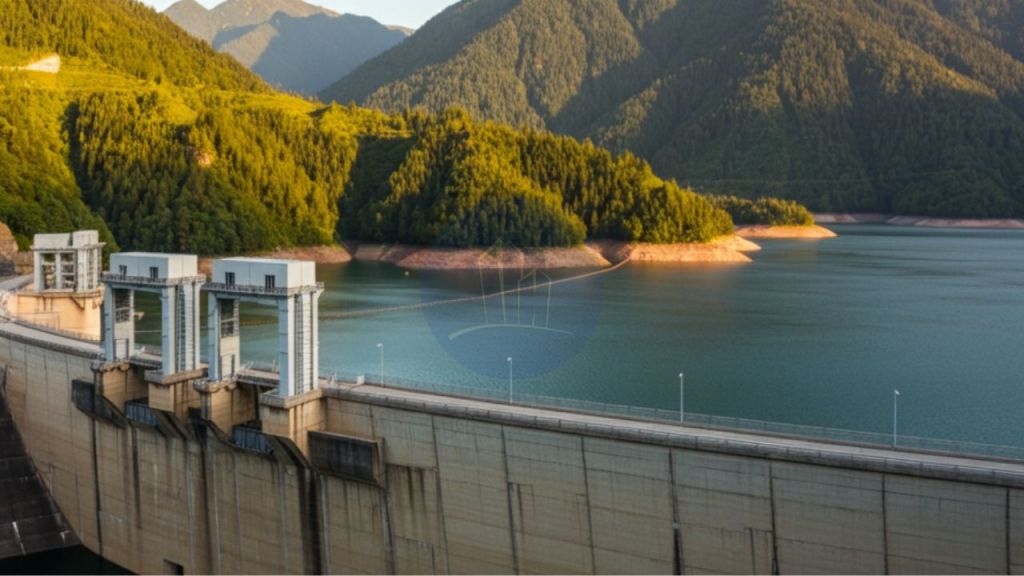
Category Archives: dams

Types of Cofferdams and Construction Methods Explained

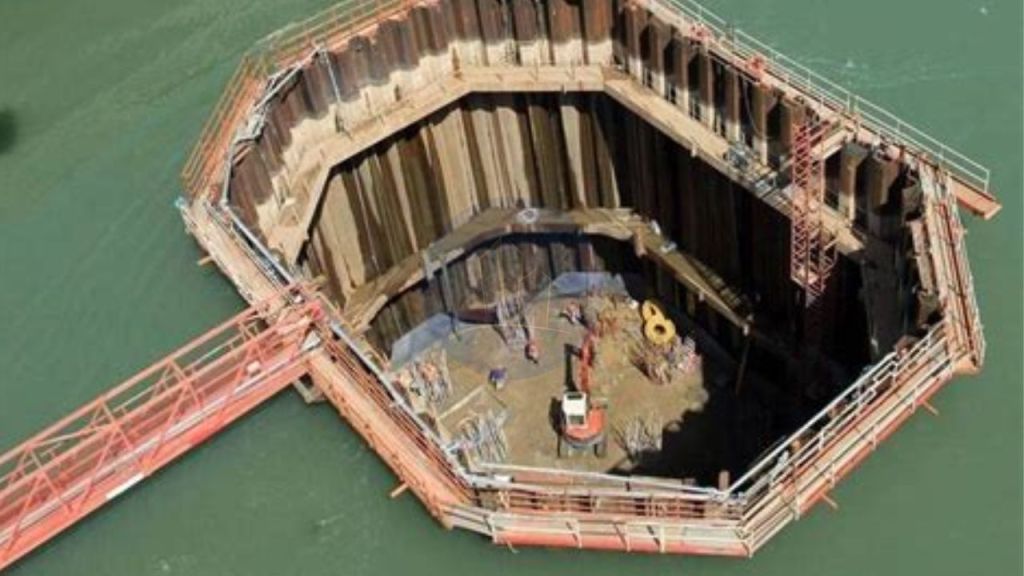
Cofferdams are temporary enclosures constructed in water bodies like lakes and rivers. They provide a dry working environment throughout the construction period. Cofferdams are temporary dykes that are built across a body of water. They allow the water to be pumped outside, ensuring a clean and dry construction site.

There are several types of cofferdams. These include sheet pile, rock-fill, and cellular types. Each is suited to different site conditions and project needs. The choice among cofferdam types depends on factors like water depth and soil conditions. Cofferdam construction often involves driving materials like sheet piles into the ground. This creates a watertight barrier. It ensures stability during foundation or underwater projects.

This article discusses the significance and definition of Cofferdam and construction methods of Cofferdams. It also explores the different types of cofferdams preferred in construction works.

  1. Significance of cofferdams
  2. What is a Cofferdam?
  3. Types of cofferdams
    1. Earthen cofferdam
    2. Rock-fill cofferdams
    3. Single walled cofferdams
    4. Double walled cofferdams
    5. Braced Cofferdams
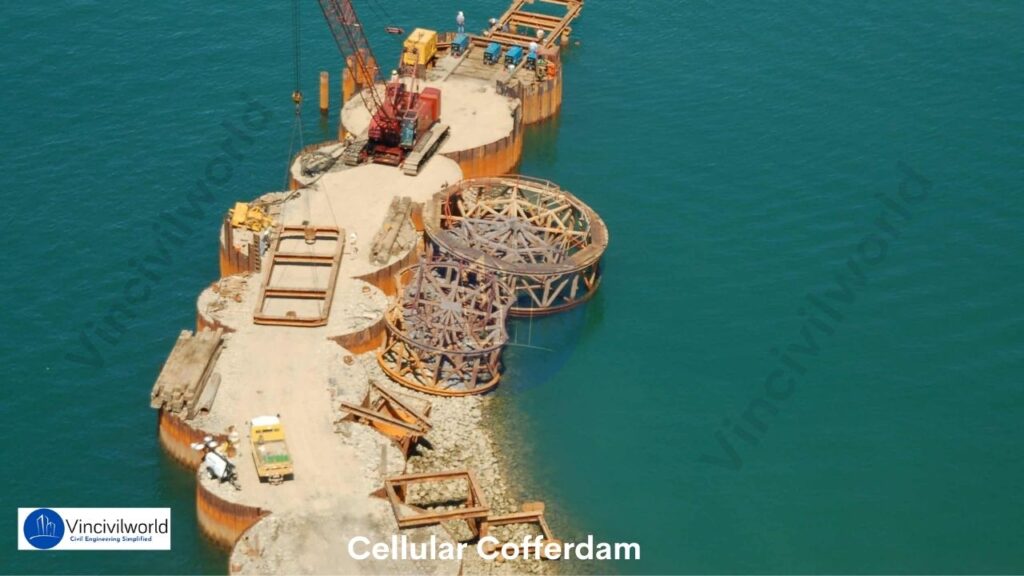
    6. Cellular Cofferdam
  4. Key Takeaways
  5. Conclusion

Significance of cofferdams

Construction in water is the most challenging task in civil engineering. A safe and dry working environment is necessary to preserve the project’s safety and construction quality. However, various strategies are used to construct structures in the water and maintain the area’s dryness. One of the most popular and widely utilized ways is the use of cofferdam.

Related posts from vincivilworld

What is a Cofferdam?

Cofferdams are innovative structures that play a crucial role in underwater construction projects. These watertight barriers temporarily hold back water, enabling construction teams to work on submerged foundations safely and efficiently. The primary function of cofferdam construction is to create a dry workspace. This is done by pumping out the water inside once the structure is in place. This is essential for projects such as bridge construction, underwater excavation, and marine infrastructure development.

There are various types of cofferdams, each tailored to the specific requirements of the construction site. Cofferdams range from simple sheet pile designs to more intricate cellular designs. These cofferdam types are engineered to withstand the pressure of surrounding water. Proper cofferdam construction ensures a stable work environment, allowing for efficient operations even in challenging conditions. Understanding the different types of cofferdams is vital for selecting the right solution for each project. Let us dive deep into the Types of Cofferdams and their applications.

Types of cofferdams

Depending on the design requirements, water depth, soil conditions, type of material used, etc., coffer dams are classified into many types.

  • Earth cofferdam
  • Rock fill cofferdam
  • Single sheet pile cofferdam
  • Double-wall sheet piling cofferdam
  • Braced cofferdam
  • Cellular cofferdam

Earthen cofferdam

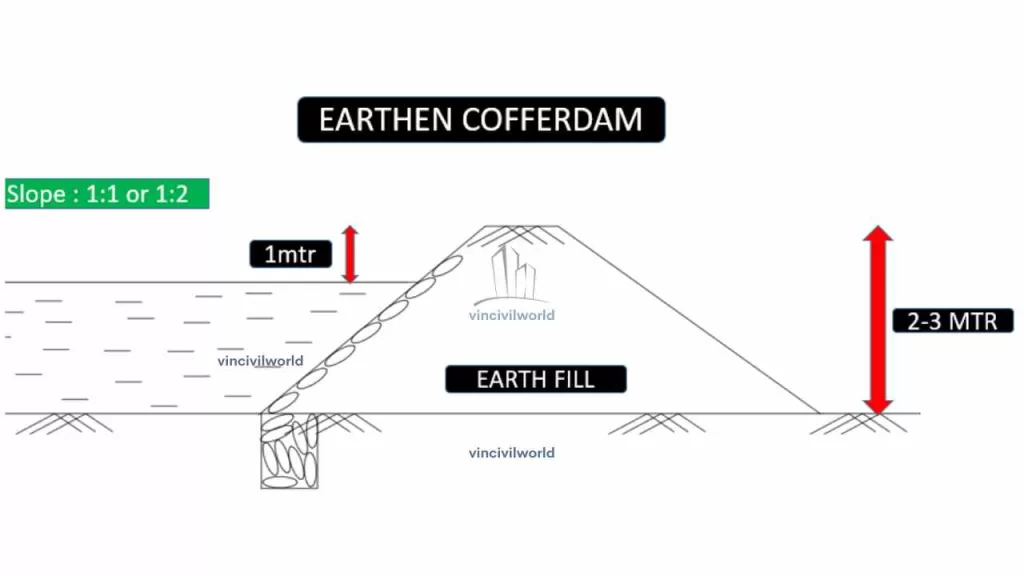
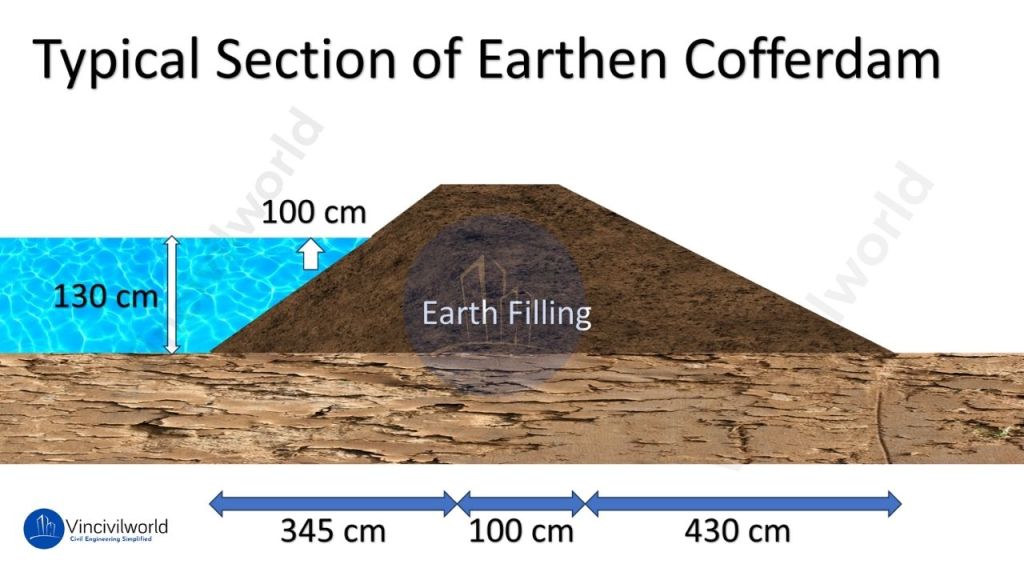
Earthen cofferdam is the most common and simplest type of cofferdam. They are appropriate for locations with minimal water depth and water current. Sand, soil, clay, and boulders that are readily available locally are used to construct earthen cofferdam. The earthen cofferdam must be at least one meter above the maximum water level.

When an area of excavation is quite extensive, earthen cofferdam is used and require a sizable base area. To withstand water pressure and seepage, impervious clay core or sheet piles are driven in the centre. In order to prevent scouring and possible dam failures, the upstream side is stone-pitched. These technologies do not, however, completely provide waterproof zones. Generally, to remove the water, pumps and waterproofing systems must be installed.

Earthen Cofferdams
Types of Cofferdams - Earthen Cofferdam
Types of Cofferdams – Earthen Cofferdam

Rock-fill cofferdams

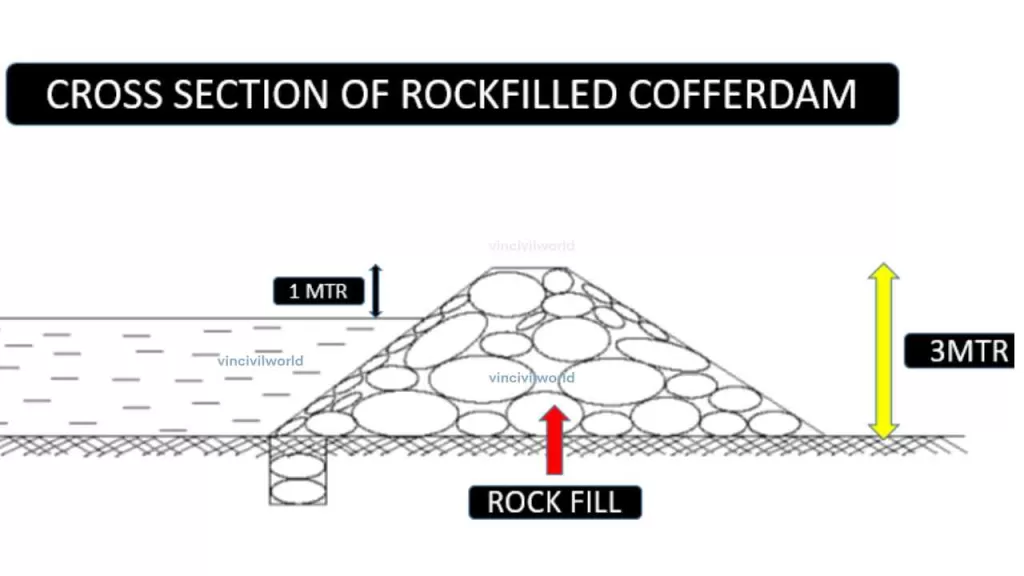
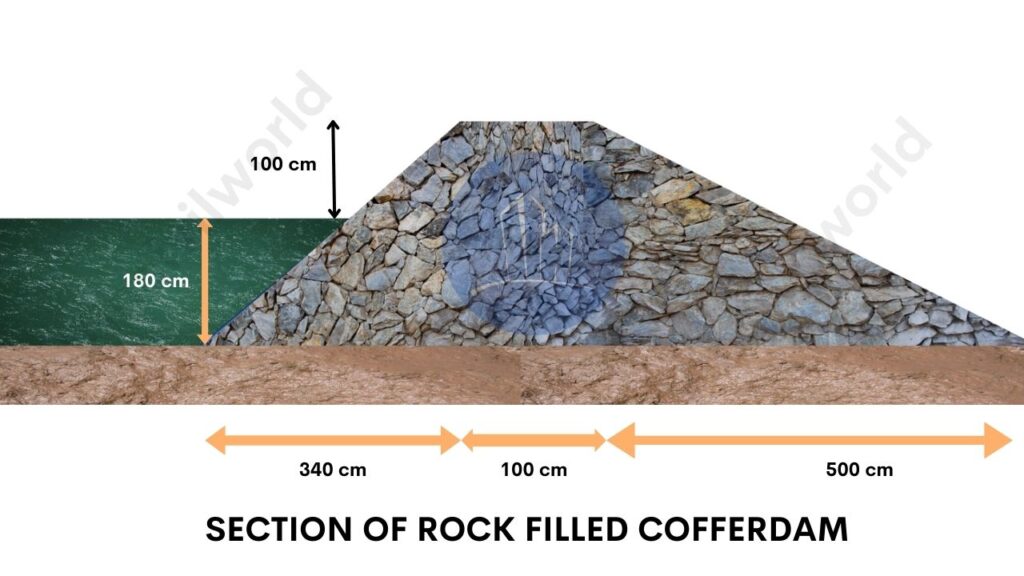
When compared to earthen cofferdams, rockfill cofferdams are superior. The choice of rockfill dams is influenced by the cost and availability of rocks in the area. Generally, the rockfill dam’s maximum height should be limited to under 10 feet. The rockfill area is pervious and will be lined with an impervious clay layer to prevent seepage and dam failure.

Rock filled Cofferdams
Rock filled cofferdam
Cofferdam types : Rock filled Cofferdam

Single walled cofferdams

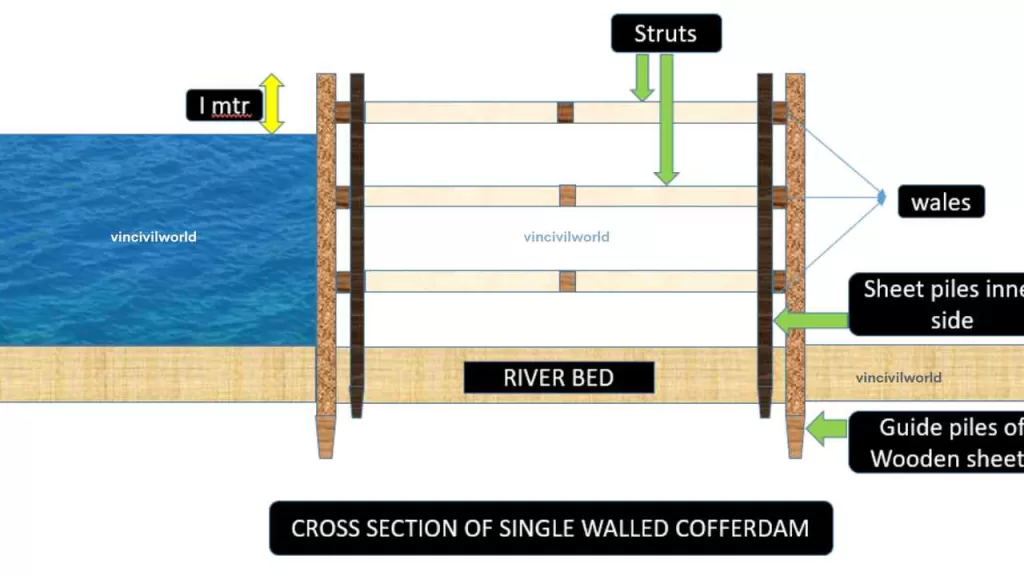
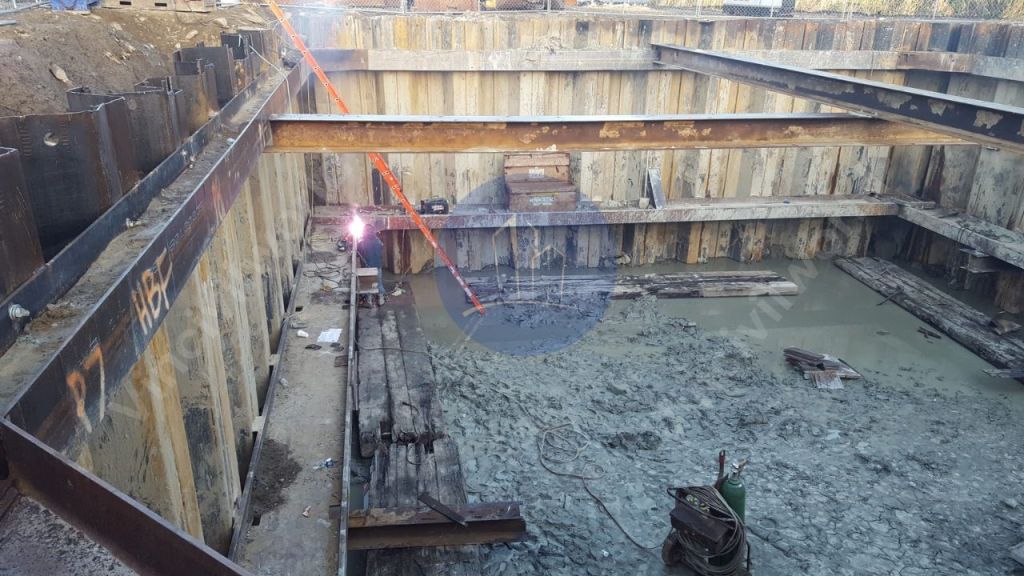
When the depth of the water is less than 6 meters, single-walled cofferdams are preferred. This is especially true when the area of work is localized, such as on a bridge pier. Single-walled coffer dams are primarily built by driving timber sheets into the exterior as guide piles. Then, steel sheets are driven into the inside as a support layer. In situations where the water is deep, guide piles may be steel sections.

After driving the guide piles, workers bolt wales or runners made of wood logs to them. This is done at appropriate vertical intervals. Wales position the inside sheets from the wooden planks. This is done at a specific distance as shown in the figure. Mostly, these wales are fastened to the sheets using bolts from both sides.

Single walled Cofferdams
Single walled cofferdams

The inside sheet piles have strong bracing. Sandbags are positioned on both sides of the walls to increase stability even more. For clay, the penetration depth should be approximately 1 meter, 0.5-0.75 meters for sand, and 0.25-0.5 meters for gravel, etc. Construction can begin when the interior water has been pumped out.

Also Read : Reservoirs vs Dams – Reservoir – types and functions

Double walled cofferdams

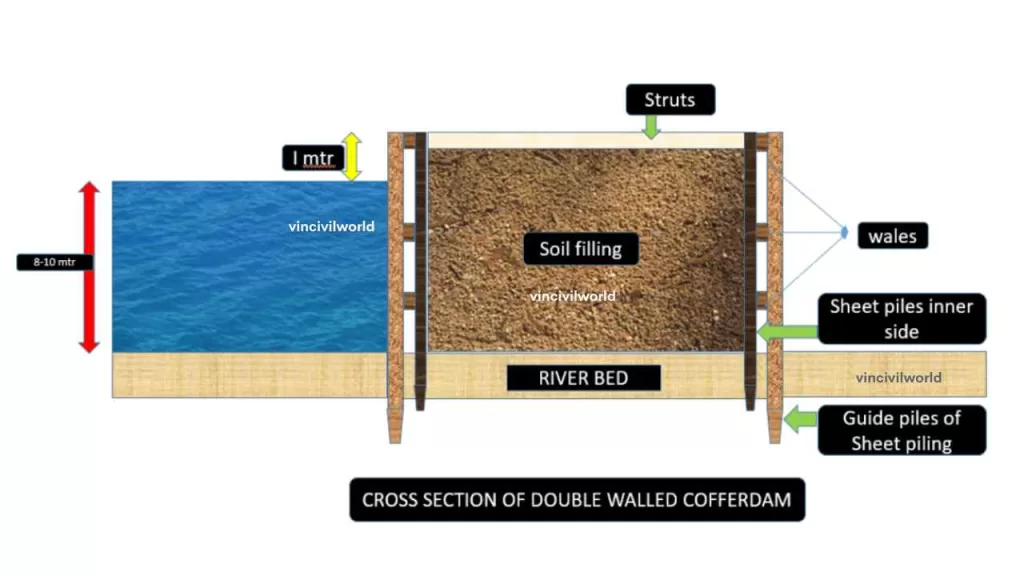
Double-walled cofferdams are preferred when the construction area is large. They are also preferred when the water depth is higher than 6 metres. Single-walled cofferdams appear to be uneconomical in these conditions. Double-walled cofferdams Consist of two straight, parallel vertical walls of sheet piling coupled together, with the space between them filled with soil. If the height is greater than 3 mtr, double wall sheet piles must be strutted as illustrated in the figure.

Double walled cofferdams
Types of cofferdams - Double walled cofferdams
Double walled cofferdams

The filling materials must be carefully chosen to give stability to the cofferdam. The coefficient of friction must be taken into account. The sheet piles are driven into the bed in the upstream area. They are inserted to a good depth to avoid leaking from the ground below.

Braced Cofferdams

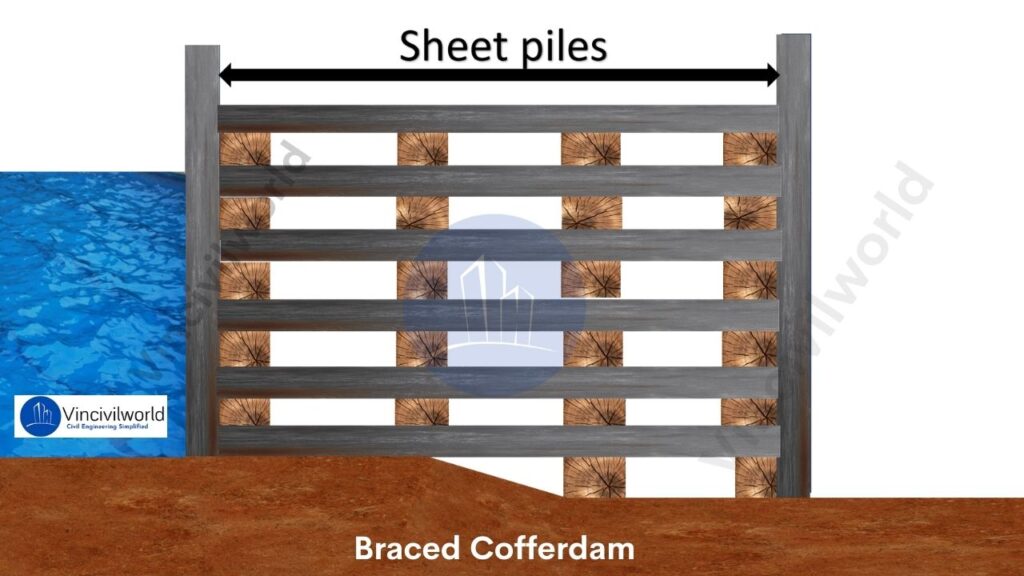
A braced cofferdam offers a solution when driving piles into the bed underwater is difficult. Engineers drive two piles into the bed and laterally support them using wooden cribs, which are installed in alternating courses. These cribs create pockets that are filled with stones and earth to stabilize the structure.

The cofferdam framework, typically made from logs, is constructed on land and then floated to the worksite for assembly. Workers dredge out loose material above the impervious bed and submerge the cribs to match the bedrock’s contours. After dewatering the pit, they pour concrete to form the foundation. Once the concrete cures above the waterline, the cofferdam is removed, leaving a stable base for ongoing construction activities. This method effectively provides a dry work area, showcasing the advantages of braced cofferdams.

Braced Cofferdam
Braced Cofferdam

A braced cofferdam serves as a temporary enclosure. It enables construction in shallow water or earth by using vertical or horizontal sheeting. This sheeting is supported by internal struts. This design effectively keeps water out, creating a dry environment essential for projects like bridge construction or aquatic maintenance. Braced cofferdams are versatile, supporting shallow trench excavations and providing bracing for multi-level basements. They are often chosen for bridge piers and abutments because they are cost-effective. This is especially true when compared to cellular cofferdams and caissons in depths up to 40 ft. However, constructing them in extensive, deep excavations can be challenging, necessitating alternative excavation methods.

Cellular Cofferdam

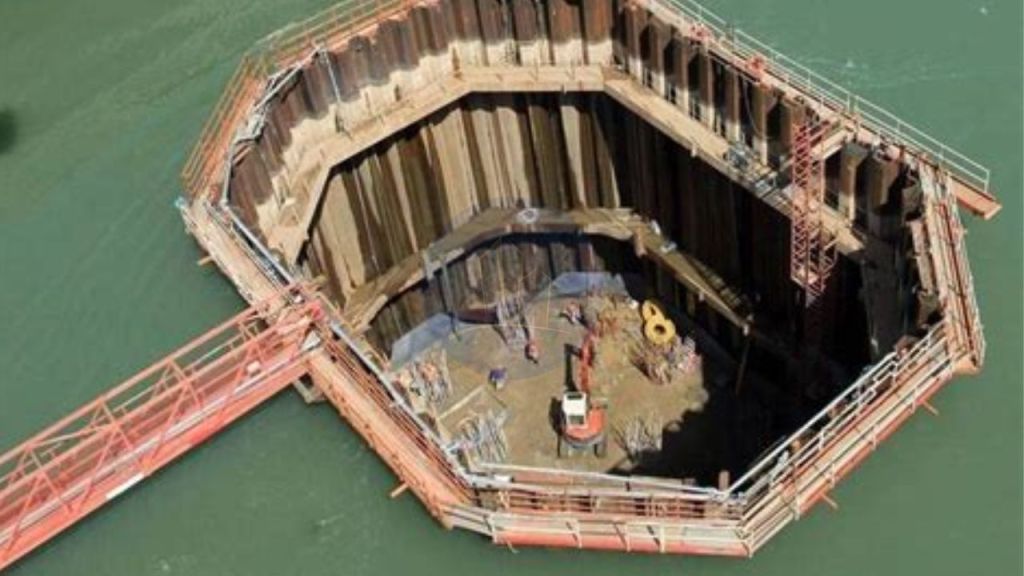
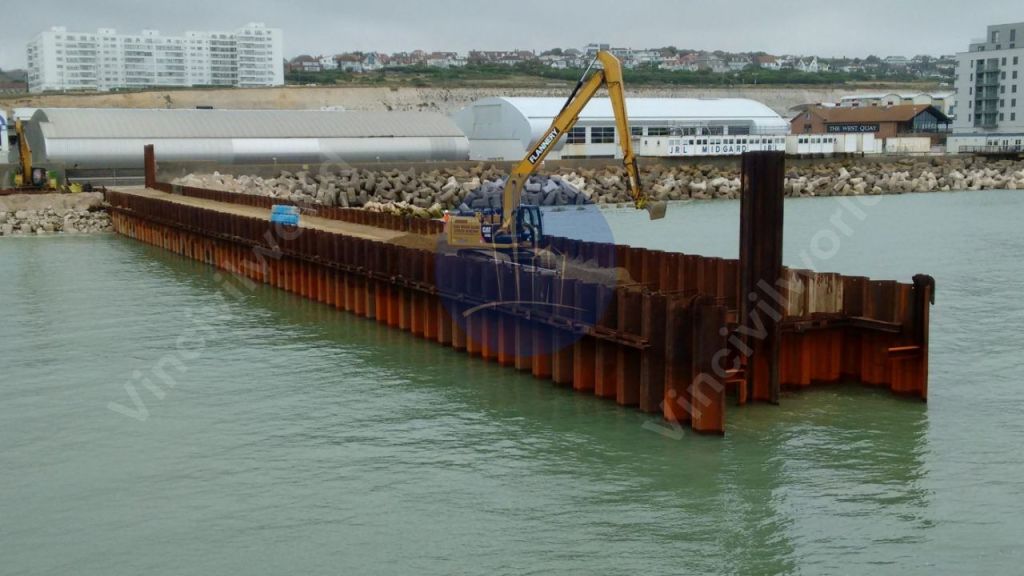
A cellular cofferdam is a temporary structure. It is used to dewater large areas. This is particularly useful in deep water construction projects such as dams or bridge piers. It consists of interconnected steel sheet piles. These form either circular type cellular cofferdams or diaphragm cells. The cells are filled with materials like sand, gravel, or clay. These cofferdams are ideal when large surface areas need to be enclosed and when the water depth is considerable.

Cellular Cofferdam
Cellular Cofferdam

This category of cofferdams includes two main types. Engineers design circular type cellular cofferdams with round cells. Diaphragm cellular cofferdams use straight diaphragms connected by arcs of sheet piles. This construction provides stability due to the weight of the fill material and the interlocked design. Cofferdam construction of this type is robust and cost-effective in terms of material use.

The selection of cofferdam types depends on the specific project requirements. These include water depth and the size of the area to be enclosed. Engineers typically use cellular cofferdams in deep water environments because of their stability. They also resist high water pressures.

Key Takeaways

  • Cofferdams are essential temporary structures used in underwater construction to create a dry environment for submerged projects.
  • Various types of cofferdams—including earthen, rock-fill, single-walled, double-walled, braced, and cellular—are used based on water depth, flow conditions, and project requirements.
  • Materials such as steel sheet piles, fill materials, and concrete are chosen based on the project’s complexity. They are also selected considering water pressure and soil conditions.
  • Cofferdams are widely applied in bridge construction. They are also used in dam building and marine infrastructure projects. This makes them indispensable for safe and efficient underwater construction.

Conclusion

Cofferdams provide a reliable solution for underwater construction projects by creating a controlled, dry work area. Their versatility in design—from earthen to cellular types—ensures they meet the specific demands of different environments. Choosing the right type of cofferdam is crucial. Selecting the appropriate materials guarantees stability and safety during construction. This enables successful completion of projects in challenging aquatic settings.

Types of Dams – 3 Classification Criteria Explained

Types of dam play a vital role in water management, energy production, and flood prevention. These structures are classified based on factors like design, materials, and purpose. Understanding the classification of dams helps in choosing the right structure for specific needs. There are various dam types, each with unique characteristics suited for different environments and applications. In this article, we will discuss the key types of dams, including gravity, arch, and embankment dams. Exploring the classification of dams provides insight into how these structures are engineered to meet specific requirements.

Dams are large impounding structure or barriers which are outlined and constructed on a river or stream. Dams provide a wide variety of environmental, economic, and social benefits. The configuration and type of dam built should fulfill one or more purposes. Let’s explore the different dam types and their criteria for choice. We will also examine their distinct advantages and uses.

  1. Types of dams – Selection criteria
  2. Types of dams – Classification based on function, structure and material used
  3. Types of dams – Based on Functions
    1. Storage Dam
    2. Diversion Dam
    3. Detention Dams
    4. Cofferdams
  4. Types of Dams – Based on structure
    1. Gravity Dam
    2. Arch Dam
    3. Buttress Dams
    4. Embankment dam
  5. Types of Dams – Based on Materials Used.
    1. Masonry dams
    2. Steel dams
    3. Timber dams
    4. Concrete Dams

Types of dams – Selection criteria

When selecting types of dams, various factors such as location, materials, and purpose must be considered. The classification of dams helps engineers choose the most suitable design based on these criteria. Different dam types, including gravity, arch, and embankment dams, offer unique benefits for specific conditions. Understanding the classification of dams ensures optimal performance and safety.

Types of Dams - Selection Criteria
Types of Dams – Selection Criteria

While selecting the type of dams the following criteria is taken into consideration. Geology, Topography, Hydrology, etc are the essential requirements for planning and selecting dam types.

  • Geological features like slopes, valleys, mountains, channels, etc. to be taken into account while selecting the types of dams.
  • The topography of the dam site has to ensure sufficient slope on the upstream side of the dam. For small dams narrow sites to be chosen. For low-lying areas, arch dams are more suitable. Earthen dams are preferred in steep areas.
  • The hydrological data like groundwater table, precipitation, stream flow, etc. serves as a perfect guideline.
  • In rivers, streams, etc. dams serve as flood prevention mechanisms. They collect, store, and manages floods with the help of reservoirs.
  • Since dams are massive structures, the materials required for construction should be available nearby. The soil wrenched from the reservoir can be used as earth fill and reduces transportation costs.
  • The foundation of the dam must have a uniform bearing capacity. Earthen dams are good for gravel-type soils. For clay-type soils, there are chances of unequal settlement. Therefore foundations have to be designed with strict precautions and factors of safety.
  • Depending on the height of the location, dams are selected. Concrete gravity dams have high altitudes. Earthen dams have less elevation.
  • Earthquake zone is another criterion for dam type selection. An earthquake can cause structural failure and damages in dams. Therefore Seismic analysis and intensity to be investigated before choosing the type.

Types of dams – Classification based on function, structure and material used

Dams can be categorized in different ways depending on their design and purpose. The classification of dams typically falls into three main groups: function, structure, and materials used. Each of these dam types serves specific needs and conditions.

Dams are broadly classified into three categories based on the following criteria.

  1. Classification based on function
  2. Classification based on the structure
  3. Classification based on the material used

Also read : Dams – Importance – Selection Criteria, Advantages, Disadvantages.

Types of dams – Based on Functions

Dams are classified based on their function into four main types. These types are storage dams, diversion dams, detention dams, and cofferdams. Each serves a unique purpose in water management and control.

  • Storage dam
  • Diversion dam
  • Detention dam
  • Cofferdam

Storage Dam

Storage dams are widely constructed across rivers and streams with high water discharge to store surplus water. This surplus water stored in the upstream area. These types of dams are essential for various purposes, including hydroelectric power generation, irrigation, and domestic water supply schemes. Additionally, they provide water for local wildlife, recreational activities, and human consumption. Storage dams control and store water in the upstream area. They ensure a steady water supply for multiple needs. This makes them one of the most versatile and commonly used dam types.

Types of Dam based on Functions -Storage dam

Diversion Dam

Diversion dams are also known as weirs or barriers. They are designed to divert water from rivers or streams into channels or conduits. These types of dams create the necessary pressure. This pressure guides water flow from a wide area to a more focused, fine-scale distribution. Diversion dams are typically low in height. They have a small upstream storage area. Despite these characteristics, they play a critical role in directing water for irrigation, water supply, or other controlled uses.

Detention Dams

Detention dams are designed to impede and slow down water flow in downstream areas, acting as effective flood control measures. By reducing downstream flow rates, they help prevent flash floods and manage water during heavy rainfall. These types of dams are also referred to as debris dams, as they trap sediments and debris. Detention dams are crucial for reducing flood risks. They control sediment movement. This provides safety and protection for surrounding communities.

Cofferdams

Cofferdams are temporary enclosures that create a dry workspace. They are used in marine or wet areas, such as during bridge rehabilitation and piling works. These structures prevent water and soil from entering construction sites. Cofferdams can be earthen, rock-filled, or cellular, depending on the project needs. They are portable and reusable. Their main purpose is to ensure a safe working environment. By providing a stable, dry platform, cofferdams minimize environmental disruption during construction activities.

Cofferdams
Cofferdams

Types of Dams – Based on structure

Dams are classified based on their structural design. Each type serves specific purposes and is built using different methods. Gravity dams rely on their weight to hold back water, making them sturdy and effective. Arch dams use a curved design to distribute water pressure, ideal for narrow canyons. Buttress dams feature sloping surfaces supported by vertical columns, offering strength while using less material. Embankment dams are made of earth and rock, providing stability and flexibility for large water reservoirs.

Based on the type of structure used for construction of dams the dam types are classified as follows.

  • Gravity dams
  • Arch dams
  • Buttress dam
  • Embankment dam

Gravity Dam

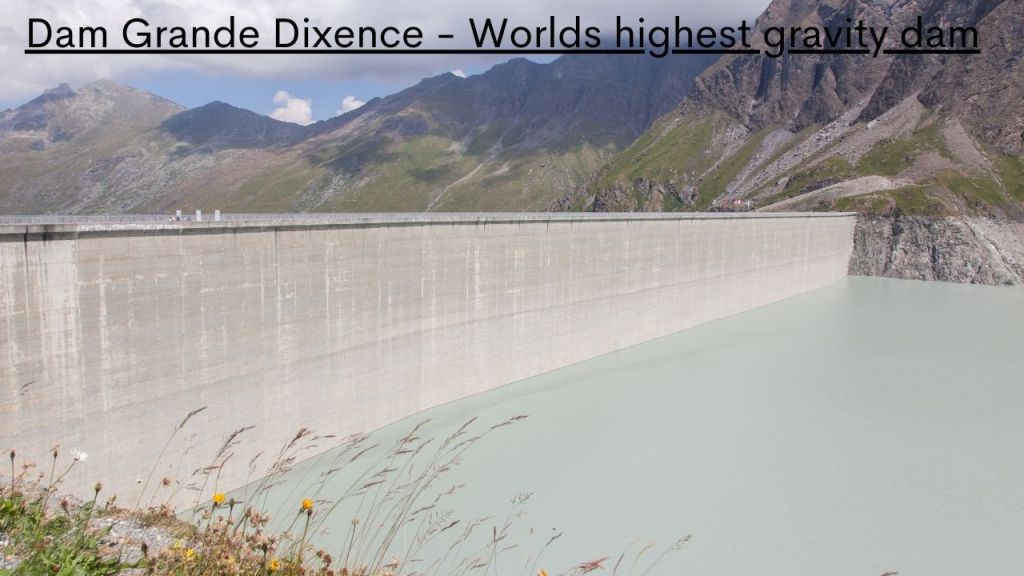
Gravity dams are substantial structures made of masonry or concrete. They are specifically designed to withstand large volumes of water. The horizontal thrust from the water, combined with the force of gravity, keeps the dam firmly anchored to the ground. These dams typically have a triangular profile, which enhances their stability. When designing gravity dams, engineers carefully consider the strength of the foundation rock. This classification of dams is crucial in various applications, making gravity dams one of the most common types of dams used today.

Types of Dam based on structure -Gravity dam

Arch Dam

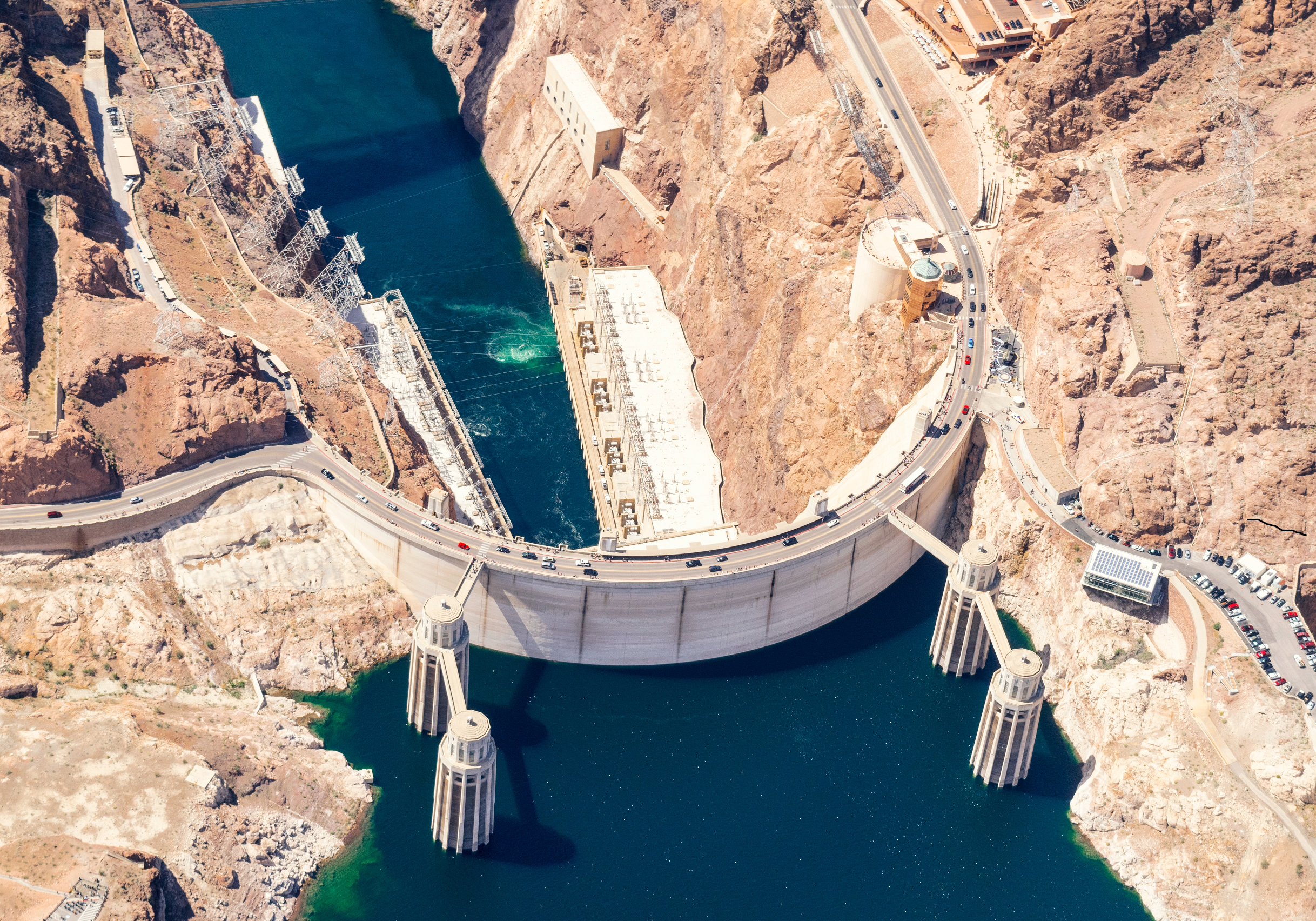
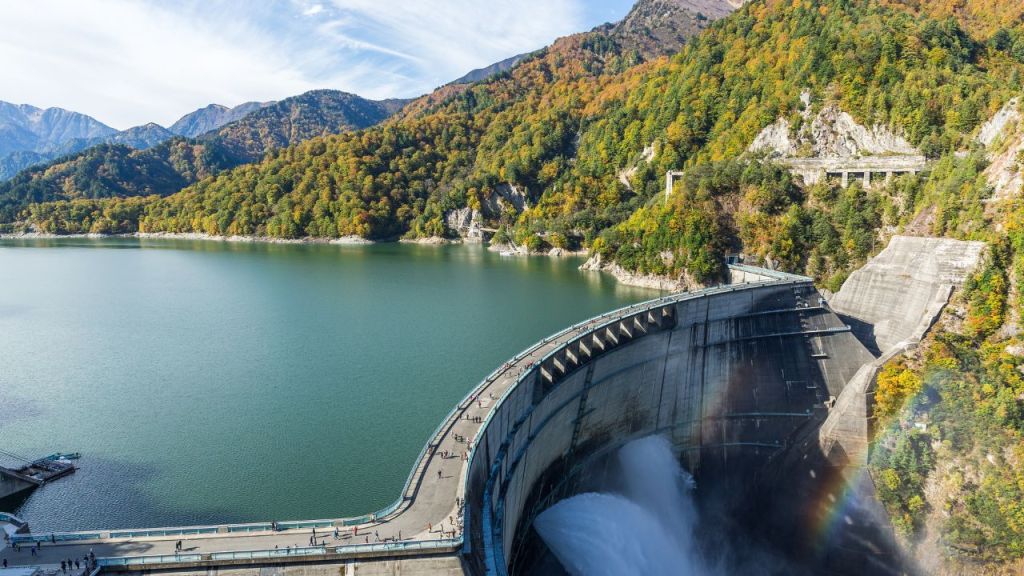
An arch dam is a curved structure that utilizes the force of water pressure to distribute the load across its arch shape. This design makes it highly efficient for sites with steep, narrow canyons. An arch dam works on the principle of hydrostatic pressure. This pressure straightens and strengthens the structure by pushing it into the foundations or abutments. Thus the hydrostatic pressure is equalized by arch actions.

As a key classification of dams, arch dams require less material compared to gravity dams, making them lighter and more cost-effective. Their main advantages include high strength-to-weight ratios and the ability to withstand high water pressure. However, they require solid foundation rock for stability, which can limit their placement. Other disadvantages include higher construction costs and design complexity. Overall, arch dams represent an essential category among types of dams, showcasing innovative engineering for water retention and hydroelectric power generation.

Compared to gravity dams, the Arch dam bears less weight and got thin walls. An arch dam is built-in narrow gorges and is arch-shaped.

Arch dams are economical and considerable.

Types of Dam - Arch dam
arch dam
Types of Dam based on structure -Arch dam

Buttress Dams

Buttress dams are a unique classification of dams that feature a sloping face supported by reinforced concrete buttresses or columns. These dams types are designed to resist the horizontal pressure of water while using less material compared to gravity dams. One key advantage is that they are more economical for large water reservoirs, as the buttresses reduce the volume of concrete required. Buttress dams are also suitable for sites with weaker foundation conditions. However, they have some disadvantages, such as higher maintenance costs due to the complexity of the structure and vulnerability to seismic activity. Among various types of dams, buttress dams are an effective option when considering cost and material efficiency while maintaining structural stability.

Buttress dams assemble in bowed or straight shape. They got a sloping deck supported by buttresses at regular intervals. Mostly they are preferred for soil with poor bearing capacity. The main components of the dam include a face slab, standing slab, and base slab.

This dam provides stability and endurance. The pressure in the deck is held by the buttress. 

Types of Dams - Buttress dams
Types of Dam based on structure -Buttress dam

Embankment dam


An embankment dam is a type of dam constructed using natural materials like earth, rock, or and industrial waste materials like compacted plastics, etc. dam types rely on the mass of the materials to resist water pressure. Embankment dams are a popular classification of dams due to their cost-effectiveness and adaptability to various site conditions. They are ideal for wide valleys and are typically more flexible, which makes them less prone to cracking. The main advantage is their ability to store large volumes of water with minimal cost. However, they require extensive maintenance and are susceptible to erosion and seepage. Among the various types of dams, embankment dams offer a practical solution for water storage in both large and small projects.

They are built-in wide valleys. They are of two types; Earth fills and rock fill. The core consists of impermeable materials.

Reinforced concrete and asphalt concrete are used in rock fill dams.

Types of Dams – Based on Materials Used.

Dams can be classified based on the materials used in their construction. This classification of dams includes masonry, steel, and timber dams. Masonry dams are made from stone or concrete, providing durability and strength. Steel dams are lightweight and suitable for specific environments, while timber dams are used in temporary or small-scale projects. Each of these types of dams has unique features, and selecting the right types of dam depends on the project’s requirements and conditions.

Based on material used, Dams are classified as

  • Masonry dams
  • Steel dams
  • Timber dams

Masonry dams

Masonry dams are a strong and durable types of dam constructed using stone or concrete blocks. They fall under a key classification of dams known for their ability to withstand immense water pressure. These dams types are commonly built in areas where solid, stable foundations are available, making them ideal for permanent, long-term water storage or flood control projects. Masonry dams are highly resistant to weathering, providing long-lasting structural integrity. However, they require significant material and labor during construction. Among various types of dams, masonry dams stand out for their strength and durability, making them a reliable choice for many large-scale projects.

Types of Dam based on materials - Masonry dam
Types of Dam based on materials – Masonry dam

Steel dams

Steel dams are a unique type of dam constructed primarily from steel framework. In the classification of dams, steel dams are rare compared to other dam types due to their specific construction materials. They are often used in areas with weak foundations where concrete or masonry structures would not be suitable. This type of dam offers strength and flexibility, making it ideal for temporary purposes or in specific geotechnical conditions. The key advantage of steel dams lies in their lighter weight and easier construction. However, they require constant maintenance to prevent corrosion, making them less favorable in long-term projects for many types of dams.

Types of Dam based on materials - Steel dam
Types of Dam based on materials – Steel dam

Timber dams

Timber dams are a specific type of dam built using wood. In the classification of dams, these are often seen in smaller or temporary applications, where rapid construction is needed. This dam type was more common in the past, especially in remote areas with abundant wood. Timber dams are lightweight and easier to build compared to other types of dams, like concrete or steel. However, they require constant maintenance due to the susceptibility of wood to decay, especially in wet conditions. While cost-effective in certain settings, timber dams are now less common due to modern materials and durability concerns across dam types.

Concrete Dams

Concrete dams are a widely used type of dam constructed from reinforced or mass concrete. In the classification of dams, concrete dams are preferred for their strength, durability, and ability to withstand significant pressure. This dam type is versatile, suitable for various applications like gravity dams, arch dams, or buttress dams, depending on design requirements. Concrete dams provide long-term stability and can resist erosion, making them ideal for large-scale water retention. However, they require significant materials and time to construct. Among all types of dams, concrete structures are favored for high-resistance applications, particularly in areas with stable foundations.

Also read : Components of a bridge – Bridge Components – Types and functions

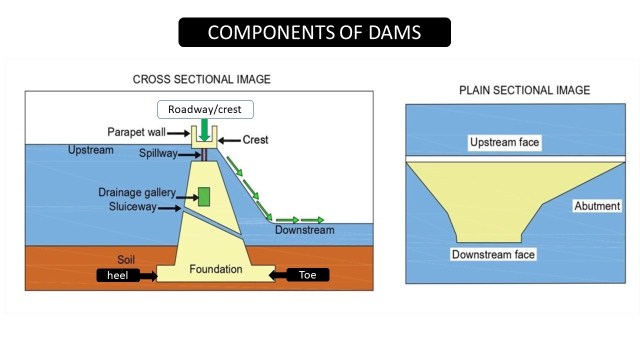
Components of dam – 12 dam components explained

Components of dams have specific functions in managing their primary responsibility of water management. Dams are structures built across water bodies to control water flow and levels. Furthermore, dams are also required for a wide range of projects, including small irrigation and water supply schemes as well as larger hydropower and disaster management schemes. Dams’ primary responsibility of managing water is managed by each component in a specific way. The components of the dam and their functions are discussed in this article.

The upstream side of a dam is the area where the water is collected. The water level is high on the upstream side. The downstream is the section of the barriers with low water levels.

Components of Dams - Audio
Components of Dams – Audio
  1. Advantages of Dams
  2. Components of Dams
    1. Water-retaining structure – Components of Dam
      1. Heel 
      2. Toe
      3. Abutment
      4. Crest/Roadway of Dams
      5. Cut off 
      6. Parapet wall
    2. Water-releasing structure: Components of dams
      1. Galleries
      2. Spillway
      3. Diversion tunnel
      4. Sluice way
      5. Free board
    3. Water conveying structure – Components of dams
      1. Conduit
  3. Examples of some major dams
    1. Bhakra Dam ( Gravity dam )
    2. Idukki dam ( Arch dam )
    3. Nagarjuna Sagar Dam (Masonry Dam)
    4. The Hirakud Dam (Earthern dam)
    5. KARIBA DAM (Double curvature arch dam)
  4. Key Takeaways
  5. Conclusion

Advantages of Dams

The dams provide a range of environmental, economic and social benefits. One of the most important benefits of dams is water storage. The stored water is used for drinking, cleaning, bathing, gardening, irrigation purposes, and industrial purposes.

Dams may be constructed to meet the following functions

  • Water storage: Dams are one of the major sources of water for domestic uses. These include cooking, cleaning, bathing, washing, and drinking water. They are also used for gardening, agricultural uses, and industrial purposes. The water is supplied through the canal or with the help of a pipe system from the dam.
  • Irrigation – The water from the dams is diverted through canals. It is directed to fields where the water level is low. This process is used for irrigation purposes.
  • Hydroelectric power – The water stored in the dam is passed through turbines for hydroelectric power generation.
  • Flood prevention – The water level of rivers, streams, etc is maintained by constructing dams across it. This prevents the loss and damage from unexpected floods. 
  • Recreation – The water stored in the dam is used for fishing, boating, and other recreational activities.
  • Debris control – The dam also provides the retention of hazardous material and protects the environment.

Components of Dams

The components of dams play an important role in maintaining the primary responsibility of water management. The parts of the dams are broadly classified as follows.

  • Water-retaining structure
  • Water-releasing structure
  • Water conveying structure
Components of a dam

Components of Dam – Youtube video

Water-retaining structure – Components of Dam

The water-retaining structure is the dam’s walled structure that resists water while allowing a controlled amount to flow downstream. The side of the barrier where water is collected is known as the upstream side. Where the water flows is known as the downstream side. Generally, the following component of dams makes up the dam’s water-retention section

  • Heel
  • Toe
  • Abutment
  • Crest
  • Cutoff
  • Parapet wall
Components of dams
Components of dam
Sluice way
Sluice way

Heel 

The part of the dams meeting with the groundwater or upstream side is called the heel. (Ref fig.)

Toe

The portion of the dams meeting with the groundwater or downstream side is called the Toe.(Ref fig)

Abutment

Abutments support the lateral pressure. These are the sides of the valley. These are concrete or masonry structures. 

Crest/Roadway of Dams

The section of the dams used as a roadway or walkway is the crest. It is the upper area of the dam.

Cut off 

The cut-off is an impervious barrier constructed beneath the earthen dams. The main function is to reduce the loss of stored water in the reservoir by preventing seepage.

Cut off of earthen dams
cut off – Earthen dams

Parapet wall

The parapet wall is seen below the crest near the roadway. This assists in the dam investigation and safety barriers.

Water-releasing structure: Components of dams

Mainly, the components of dams that allow water to flow downstream are known as the water-releasing structure. These dam components are technically known as the dam’s spillways. The spillway’s mechanism allows for controlled water volume. A spillway contains the following components.

  • Galleries
  • Spillways
  • Diversion tunnel
  • Sluice way
  • Free board

Galleries

These are hollow openings passing through the dam as shown in fig. The main purpose of providing a drainage gallery is to collect seepage water from the foundation and body of the dam and drain it out. The seepage water received by foundation galleries is drained away under gravity. The galleries are broadly divided into …

  • Grouting gallery
  • Inspection Gallery
  • Drainage gallery
  • Valve gallery
  • Transformer Gallery

Spillway

The role of the spillway is to convey excess water and prevent damage. The water passes from upstream to downstream. The spillway helps in the emergency discharge of water. 

They are two varieties

  • Controlled spillway 
  • Uncontrolled spillway

In a controlled spillway the flood flow is regulated by the gate. 

Also Read : Spillway types and features – A comprehensive guide

Diversion tunnel

The purpose of the diversion canal is to redirect the water. Diversion tunnels are constructed during the construction stage of dams.

A diversion tunnel may also be constructed to divert floodwater. It can redirect water from mountainous regions to low-lying areas experiencing a water shortage supply.

Sluice way

The role of the sluiceway is to remove the silt accumulated. 

Free board

The interval between the dam heads to the maximum water level on the upstream side.

Water conveying structure – Components of dams

Water-conveying structure mainly conduit and conveys the water from reservoirs through, around, or under an embankment dam

Conduit

These are closed pipe structures. Conduits act as a passage for the water supply. Bottom discharge conduits are pipes. They cross the body of the dam from the upstream to the downstream sides. This enables water flow.

Examples of some major dams

Bhakra Dam ( Gravity dam )

The Bhakra Dam is an Indian gravity dam built across the river Sutlej in Himachal Pradesh. This dam is constructed in 1963. The height of the dam is 226 meters. The length of the dam is 518 meters.
Gobind Sagar is a reservoir of this dam. The Bhakra Dam is composed of alternating layers of light red clays and sandstone.
This dam has four spillways. It helps in irrigation, hydroelectric power generation and recreation. The major source of irrigation water supply in Haryana, Punjab and Rajasthan is this dam.

Idukki dam ( Arch dam )

Idukki dam is an arch dam constructed across the Periyar river in Kerala. It is 554 feet high. One of the biggest arch dams in Asia. The dam provides hydroelectricity, irrigation and tourist destinations. It is built between Kuravan and Kurathi hills.

Idukki Dam - Arch dam
Idukki dam

Nagarjuna Sagar Dam (Masonry Dam)

Nagarjuna Sagar Dam is a stone masonry dam completed in 1967. The dam is a symbol of modern architecture. The purpose of this project was to generate hydroelectricity. It has a 26-crest gate.

The Hirakud Dam (Earthern dam)

The Hirakud dam is located in Orissa state over the river Mahanadi near Sambalpur. The length of the dam is 4800 meters and 59 meters high. It is the oldest multipurpose dam completed in 1957.
The Hirakud Dam is the 4800-meter long and 59 meters high. The gross storage capacity of the dam is 1841 million cum.

KARIBA DAM (Double curvature arch dam)

Kariba Dam is a double curvature arch dam constructed in 1960. It has been built over the Zambezi river. The crest length is 620m and 128m high. The dam provides an example of improving the quality of rocks.

Key Takeaways

  1. Primary Functions: Dams manage water for various uses, including storage, irrigation, hydroelectric power, flood prevention, recreation, and debris control.
  2. Components: The main components include water-retaining structures such as the heel, toe, abutment, crest, cutoff, and parapet wall. Water-releasing structures include galleries, spillways, diversion tunnels, sluice ways, and freeboard. Water-conveying structures are conduits.
  3. Types of Dams: Dams vary by construction and purpose. Examples include gravity dams, arch dams, masonry dams, earthen dams, and double curvature arch dams.
  4. Examples: Major dams include Bhakra Dam, Idukki Dam, Nagarjuna Sagar Dam, Hirakud Dam, and Kariba Dam.
  5. Environmental and Economic Benefits: Dams provide essential benefits like water supply, power generation, flood control, and recreational opportunities.

Conclusion

Dams are crucial infrastructure for effective water management and offer significant environmental, economic, and social benefits. We can appreciate the role of dams by understanding their various components and functions. They are important for water storage, irrigation, hydroelectric power, and flood prevention. Each component plays a vital part in the dam’s functionality. From the water-retaining to the water-releasing and conveying structures, they ensure efficiency. Examples like Bhakra Dam, Idukki Dam, and Kariba Dam demonstrate the diverse applications and benefits of these impressive engineering feats. Effective dam management is essential for sustainable development and environmental protection.

Spillway – Types,components and features

A spillway is an inevitable component of any dam that helps in the emergency discharge of water. Spillways is an important topic in hydraulics. Design of dam and related information comes under the topic. In this blog, I will show you the importance of spillway and their types. We will go deeper into each of these in separate sections.

Let’s start from the definition.

What is a Spillway?

A spillway is a structure that allows water from a dam or levee to be released in a regulated manner downstream, usually into the riverbed of the dammed river. Before going into their classification, let’s first understand why dams require a spillway.

Spillways are important because,

  • Any reservoir has a certain amount of water storage space. 
  • If the reservoir is full and flood water enters, the reservoir level will rise, potentially causing the dam to overflow. 
  • To stop this, the flood must be carried on downstream. 
  • This is accomplished by providing a spillway that draws water from the reservoir’s roof. 
  • A spillway may be built into or separate from the dam.

Also read: Dams – Importance, Site selection, Advantages and Disadvantages

Let’s go on a trip to see the different types of spillway.

Also read: Types of Dams – 3 Classification Criteria Explained

Spillway Types

Depending on the suitability of the site and other conditions, various types of spillways may be given. A spillway is made up of three parts:

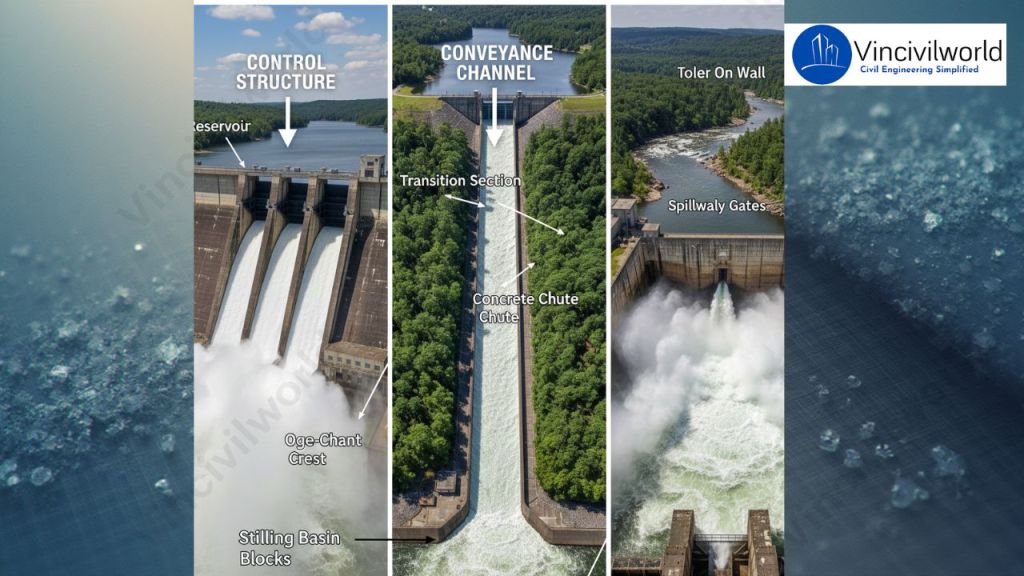
  • Control structure – It is the spillway’s most critical feature. The control system is designed to prevent outflow from the reservoir when the water level falls below a predetermined level. But also allows outflow if the water level rises above that level.
  • Conveyance channel –  Dam spillways that use open-channel flow rules to transport impounded water are known as open channel spillways. They can serve as principal spillways, emergency spillways, or both. They can be found on the dam itself or on a natural incline in the dam’s vicinity.
  • Terminal structure – Static energy is converted to kinetic energy as water flows from the reservoir over the spillway. As a result, the flow rate at the downstream end of the spillway is extremely high. It causes damage to the dam, spillway, and other nearby structures. As a result, before the flow is returned to the river downstream, the high energy of the flow must be dissipated. To dissipate the excess energy, terminal structures are given at the discharge channel’s downstream end.

The first two can be combined in some cases. Now we have seen the main parts of a spillway. Time to learn about the different categories. The following are some of the most popular types:

  • Drop Spillway
  • Ogee Spillway
  • Chute Spillway
  • Side-Channel Spillway
  • Shaft Spillway
  • Siphon Spillway
  • Conduit Spillway
  • Culvert Spillway

Let’s discuss each of its features in detail.

Drop Spillway – Spillway types

Drop spillway
Drop Spillway

This is a weir structure and the flow passes through the weir opening, then drops to a level apron or stilling basin before entering the downstream channel.

  • The overflowing water falls freely and almost vertically on the downstream side of the hydraulic system. 
  • Ideal for low dams or weirs. 
  • The crest of the spillway has a nose to prevent the water jet from striking the structure’s downstream foundation. 
  • On the downstream side, a horizontal impervious apron should be provided to protect the structure from the impact of scouring.
  •  A basin is often built on the downstream side to create a small artificial pool known as a water cushion. 
  • The aim of this cushion is to dissipate the energy of falling water.

Ogee type Spillway

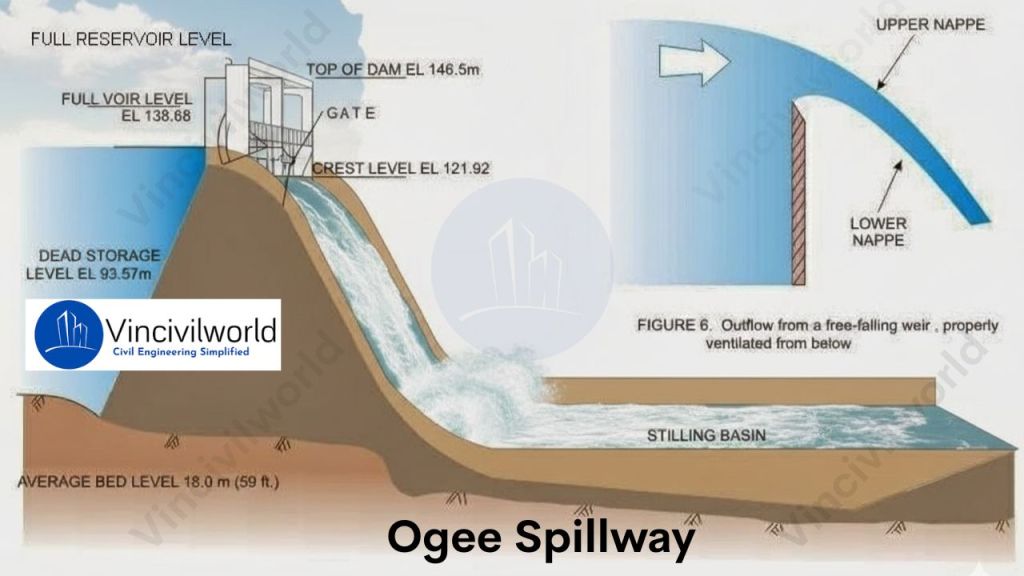
Ogee Spillway
Ogee Spillway
  • This is an overflow spillway with a controlled weir and a profile that is ogee-shaped (S-shaped). 
  • It’s designed to track the lower surface of a horizontal jet that emerges from a sharp-crested weir. 
  • At the design head, the pressure at the ogee crest remains atmospheric. 
  • At a lower head, the pressure on the ogee crest becomes positive. 
  • This results in the backwater effect which decreases the discharge. 
  • At a higher head, the pressure on the crest becomes negative, resulting in the backwater effect, which increases the discharge.

Chute Spillway – Spillway types

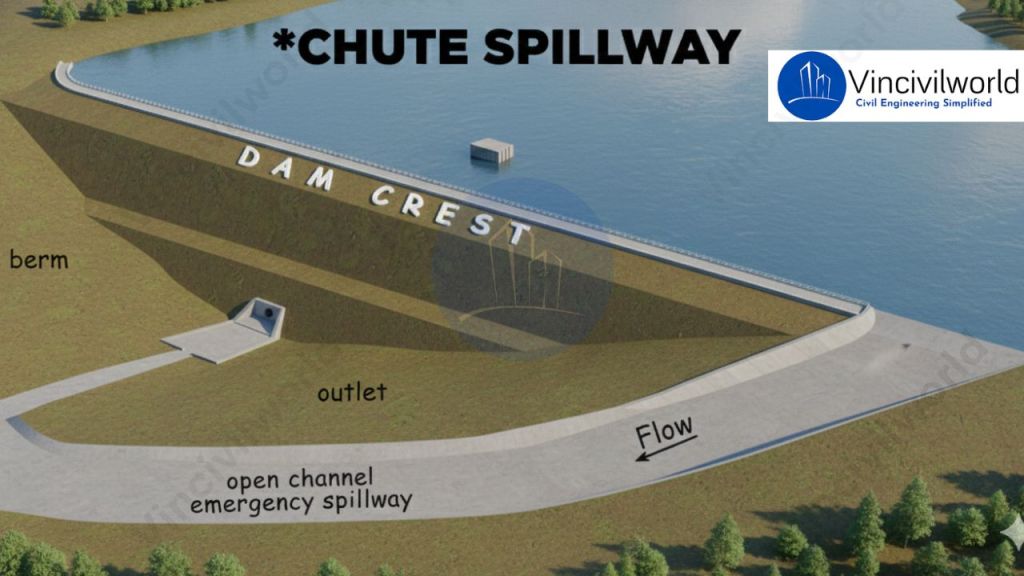
The chute spillway is an open channel-like structure with a fitting inlet and outlet built on the steep slope of the gully face.
Chute spillway
Chute spillway
  • Also called Trough Spillway. 
  • The aim of the Chute Spillway is to protect the valley walls from damage that could put the dams in danger. 
  • It is made up of a reinforced concrete slab that is a steeply sloping open channel.
  •  The spillway is not always of the same width.
  •  It is normally narrowed for the economy and then widened at the end to reduce the discharging velocity. 

Side-channel spillway – Spillway types

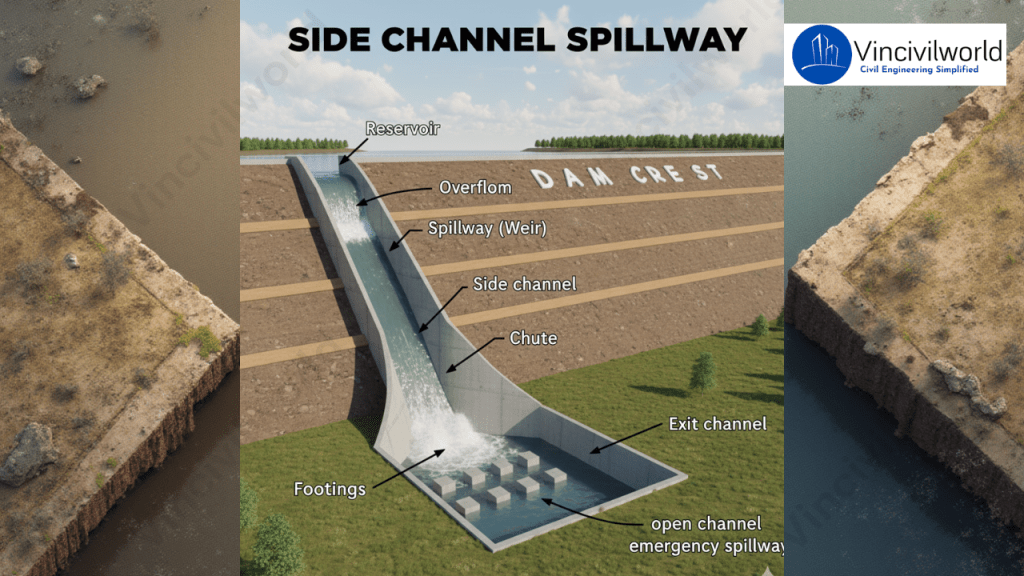
A side channel spillway has a control weir that runs alongside and roughly parallel to the spillway discharge channel’s upper half.
Side channel spillway
  • Unlike a chute spillway, the water spilling from the crest is turned 90 degrees and flows parallel to the crest of a side-channel spillway.
  • When flanks of adequate width are not accessible, side-channel spillways are preferred over chute spillways, typically to prevent heavy cutting.
  • The angle of turn of the water flow after passing through the weir crest can be held between 0 and 90 degrees. The spillway discharge falls into a shallow trough after flowing over the weir crest.

Shaft Spillway
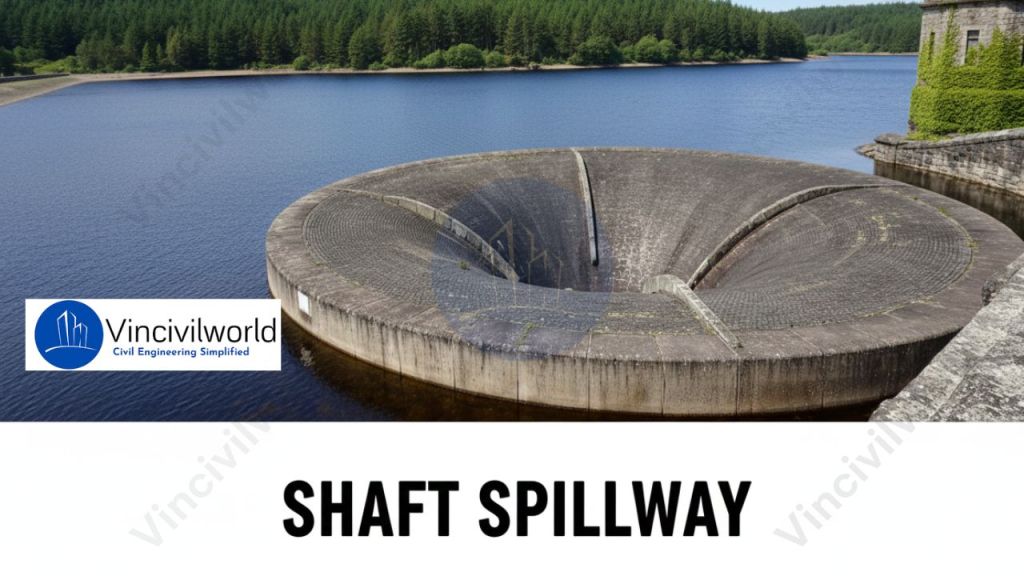
  • The water from the reservoir enters a vertical shaft in the shaft spillway, which transports the water into a horizontal tube. 
  • A Shaft Spillway is made up of a horizontal crest and a vertical shaft, with the top surface at the spillway’s crest level and the lower end attached to a vertical shaft. 
  • The vertical shaft’s other end is attached to a horizontal conduit or tunnel that runs through or around the dam and transports the water to the river below. 
  • When the conditions aren’t conducive to an overflow or a chute spillway, a shaft spillway is used.
Shaft spillway
Shaft spillway

Siphon Spillway

Siphon spillway
Siphon spillway
  • The theory of siphonic action governs the operation of a Siphon spillway. 
  • A syphon spillway is made up of two syphon pipes. 
  • One of them is held upstream and in contact with the reservoir, and the other spills water on the downstream side. 
  • An airtight RCC cover, known as the hood, is placed over an oggy-shaped concrete body wall to form the syphon duct. 
  • The crest of the spillway is formed by the top of the body wall, which is held at the reservoir’s F.R.L.

Conduit Spillway

  • Made up of a closed conduit that transports floodwaters to a downstream channel. 
  • A vertical or inclined shaft, a horizontal tube, or a conduit built in an open cut and then covered are all examples of closed conduits. 
  • It is built in the abutment or underneath the dam. 
  • Dam sites in narrow canyons with steep abutments would benefit from such a spillway.

Labyrinth Spillway

  • A labyrinth spillway is one in which the weir wall is built in a zigzag pattern to maximise the effective length of the weir crest in comparison to the channel width. 
  • This improvement in effective length increases the weir’s discharge capacity, allowing for more water flow at small heads to be easily transported downstream.

That’s it about spillway and their types. Hope you found it insightful. Next time you visit a dam site, make sure that you are able to identify the type of spillway present there. If you get confused don’t forget to check out our detailed articles on dams.

Reservoir vs Dams || Reservoir- Types and functions

Reservoirs are artificial or natural structures used for collecting and storing for further usages. The reservoir is formed by constructing dams across rivers, valleys, and streams. The Reservoir is located on the upstream side of dams and prevents floods by managing the water flow apart from serving as a storage basin.

Also Read : Types of Dams – 3 Classification Criteria Explained.

Also Read : Components of a bridge – Types and Functions Explained

Functions of Reservoirs

Reservoirs are man made lake or a fresh water body that plays an important role a lot of ways as listed below.

  • Water supply
  • Flood control
  • Environmental management
  • Hydroelectric power management
  • Navigation
  • Irrigation
  • Development of fish and wildlife
  • Soil conservation
Reservoir behind dam

Also Read : Components of a dams-12 Dam Components explained.

Types of reservoirs

Reservoirs are broadly classified into three types.

  • Valley dammed reservoirs
  • Back-side reservoirs
  • Service reservoirs

Valley dammed reservoirs

Valley dammed reservoirs are located between mountain valleys where there is an existing water body. A dam is built in the narrowest portion for holding the water.

Bank-side reservoirs

Bank side reservoirs are made by diverting water from rivers and streams to an existing reservoir. These reservoirs can be located in different geographical locations.

Service reservoirs

Service reservoirs are man made reservoirs located above the ground or below the ground. The huge water towers/ water tanks and sumps are service reservoirs.

Service Reservoir
Service reservoir

Reservoir components and terms

There are some specific terms for defining the water level and storage capacity of a reservoir

Pool level

The water level at a particular point of time is called the pool level. No water can be collected above the maximum pool level. No water can be drained below the minimum pool level.

Useful Storage

The volume of water within the normal pool level and minimum pool level is known as useful storage.

Dead storage

The volume of water underneath the minimum pool level is known as dead storage.

Surcharge Storage

The volume of water within the normal pool level and maximum pool level is known as surcharge storage.

Reservoir yield

The volume of water discharged within a certain interval of time is reservoir yield.

Reservoir Planning

Accurate planning is necessary for locating a reservoir. For planning a reservoir the following points are taken into consideration.

Topography

A Broad natural valley opts as the site of a reservoirs. The valley can be U- shaped or V-shaped. For reservoirs sites, flatland and plains are not considered.

Ground water condition

The groundwater investigation is done by analysing the water table level and reservoir level.Hence it is an ideal situation for the reservoirs site if the water table level and the top reservoir level is the same. No loss or gain is ensured.

Permeability

Permeability is a default nature as the rocks are porous. It is considered when the water table is below the reservoirs level. It is a significant characteristic for investigation.

Hydrological Investigation

This involves the study of runoff pattern. Leakage quantity should be minimum. Storage capacity calculation and maximum discharge rate are also estimated.

Difference between dams and reservoirs

DAMSRESERVOIR
Structural barriers built across,rivers
valleys,streams etc for the purpose of
storing and managing water flow.
Reservoir is a large water body formed behind the constructed dam structure across a river,stream,etc
Dams are reinforced concrete structures or structures made of bricks rubble etc erected across water bodies to control the water flow.The reservoir is the water that accumulates behind the constructed dam.
Create site for hydro electric power generation. This can improve the industrial development and living standards of people living in that region.Stores water for later usage, water for human consumption and excess water for agricultural and industrial uses.
Dams fluctuates oxygen levels and restricts migration of fishes in the river.Reservoirs leads to the displacement of people.
Dams are tourist attraction sitesHelps in water transportation

Reservoir Sedimentation

Rivers transport sediments. During heavy rainfall, sediments are carried by the water to the reservoir. Silts are accumulated due to soil erosion. These get collected in the dead storage.
Sedimentation depends on Rainfall intensity, Soil nature, Soil type, topography and vegetation. The sediment deposit replaces the water storage. Thus water supply and flood control are affected.
The sediments should be removed eventually. Hydraulic flushing, dredging, Explosive mobilization are methods adopted for sedimentation removal.

Reservoir
reservoir

Environmental impacts of Reservoirs.

  • The construction of the reservoir prompts severe effects on the environment.
  • Since the water is stored, the rate of transpiration is high. This changes the moisture concentration.The climate of the surrounding area is affected. It causes natural temperature fluctuation. This causes heavy rainfall and deprives the traditional rainfall patterns.
  • Reservoirs disturb the flow and composition of the rivers. The water from the downstream has high energy, it enhances the water flow by eroding the river bed.
  • The change in the river composition affects the upstream and downstream habitats. The reservoirs disturb the fish and birds migration.
  • Studies show that reservoirs emit greenhouse gases. Anaerobic bacterias are seen in the river bed releases carbon dioxide and methane. This occurs in tropical regions.
  • They also cause troubles for people living near the reservoir site. Old and failing dams lead to disasters.
  • Reservoir induced seismicity is a phenomenon of provoking earthquake by reservoirs. This happens when water sweeps into the minor cracks under the bed.

Dams – Site selection, Advantages and Disadvantages

Site selection for dams is a critical process that ensures the structure’s stability and efficiency. Choosing the right location is essential for minimizing risks and maximizing the dam’s performance. Geology, river flow, and environmental impact are crucial factors. They play a key role in determining the best site selection of a dam. A well-placed dam offers significant advantages, such as water storage and flood control, while improper sites increase the disadvantages of dams, like ecological damage and costly maintenance. Balancing these factors is vital for success.

Dams are obstructions constructed across the water bodies to control the water flow and water levels. Dams serve as a water source for human consumption, irrigation purpose, and power generation. They also help prevent floods when there is a sudden discharge of floodwater. The water that impounds in the dams is also used for recreation purposes and industrial uses. They are mostly made up of rock fill or earthen.

  1. What are dams?
  2. Benefits of dam
  3. Site selection of dams.
  4. Advantages of dams
  5. Disadvantages of Dams
  6. Key Takeaways
  7. Conclusion

What are dams?

The dams are barriers built to restrict and manage the natural flow of rivers, waterways, or streams for human needs. A dam may be a natural one or artificial. They help to confine water and reduces the water rise and flood problems. Dams retain water by forming a reservoir behind the structure. They got an Upstream side and Down stream side. The place where water is collected is called the Upstream side. The water impounded is used as storage and is called Reservoir.

Dams
site selection for dams
Site selection for dams

Also read : Type of Dams – 3 main classification criteria explained

Benefits of dam

The dams provide a range of environmental, economic and social benefits

One of the most important benefits of dams is water storage. The stored water is used for drinking, cleaning, bathing, gardening, irrigation purposes, industrial purposes.

The large dams and reservoirs serve as recreational spots for fishing and boating purposes. Dams play a major role in preventing damages due to floods by collecting and storing excess water during rains and are released as and when required.

The dam is the main source of providing water for irrigation purposes in areas where rain and water are scarce.

Also read : Methods of irrigation – 3 methods full guide

Site selection of dams.
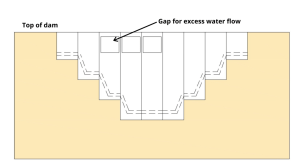
The dam is a massive and strategic structure and needs a perfect site selection before proceeding with construction.Site selection of dams involves assessing factors like geology, river flow, and environmental impact. These factors ensure structural stability and reduce ecological disruption. The right site selection for dams minimizes risks such as flooding and maintenance issues. Soil type, valley shape, and climate also play a key role in site viability.
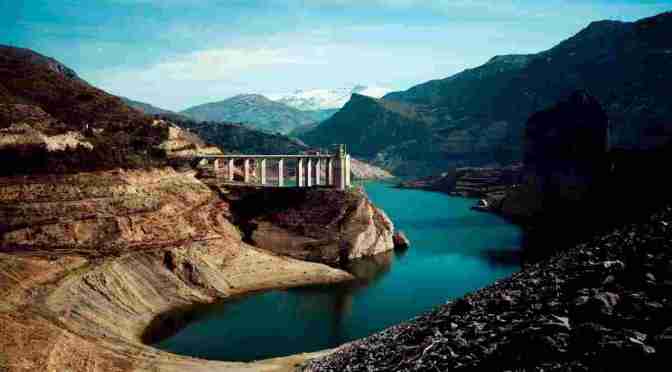
  • Topography -Making maximum use of the available volume of water is the main objective of a dam. The slope of the area, groundwater table, contour, weather condition, etc is other factors for dam site selection. The bed level at the dam site should preferably be higher than that of the river basin. This is for reducing the dam height and facilitating the drainage of water.
  • Foundation – The foundation should bear the whole weight and pressure of the dam. It should be permeable, thick, and should have adequate strength.
  • Economic criteria – This includes the construction and maintenance cost of the dam. The land value, cost of construction materials and construction time, etc. to be taken into account while selecting a dam site. Quality construction materials required for dam construction have to be available near the proposed location. Always opt for a small length dam with maximum water holding capacity for economising the project. 
  • Height of Dam – The height of the dam should be economical, and should store the maximum amount of water.
  • Earthquake zone – The dam site should not be an earthquake zone. It may cause a collapse of the dam and losses. 
  • Material availability – Materials like rock, aggregate, soil, filler, etc. should be available near the site.
  • Climate condition – The climate of the site should be bearable, possibilities of landslides should not occur.
  • Spillway site: A suitable location for the spillway should be available in the nearby vicinity of the dam. 
  • The dam site should be easily accessible and economically connected to nearby areas. Area required for establishments and labour camps of construction group shall be available nearby in a safe zone.
  • Environmental issues should be taken into consideration while selecting the dam site.
Dam with sluice gate
Dam site selection

Advantages of dams

  • Water storage : Dams are one of the major sources of water for domestic uses. These uses include cooking, cleaning, bathing, washing, drinking water, and gardening. They also provide water for agricultural and industrial purposes. The water is supplied through the canal or with the help of a pipe system from the dam.
  • Irrigation – The water from the dams is diverted through canals. This water reaches fields where the water level is low. It is used for irrigation purposes.
  • Hydroelectric power – The water stored in the dam is passed through turbines for hydroelectric power generation.
  • Flood prevention – The water level of river, streams, etc are maintained by constructing dams across it. This prevents the loss and damages from unexpected floods. 
  • Recreation – The water stored in the dam is used for fishing, boating, and other recreational activities.
  • Debris control – Dam also provides the retention of hazardous material and protects the environment.

Disadvantages of Dams

  • Groundwater table – Stagnation of water in the dams alters the groundwater table.
  • Ecosystem – The dams prevent the fish migration and help in the breeding of mosquito which affects the ecosystem.
  • Water temperature – The aquatic temperature is varied by the dams, which causes a serious problem for aquatic lives.
  • Greenhouse effect – The reservoirs emit greenhouse gases which leads to global warming.
  • Rehabilitation – The discharge of water from the river affects the peoples living in the downstream area.

Key Takeaways

  • Importance of Site Selection: Effective dam construction relies on careful site selection, considering hydrological and geological factors.
  • Advantages of Dams:
    • Provide water storage for irrigation and drinking.
    • Offer flood control and management.
    • Generate hydroelectric power, contributing to energy supply.
  • Disadvantages of Dams:
    • Can lead to environmental degradation and loss of biodiversity.
    • May displace local communities and affect livelihoods.
    • Alter aquatic ecosystems and sediment transport.
  • Mitigation Strategies: Comprehensive environmental assessments and proper planning can help address negative impacts.
  • Stakeholder Engagement: Involving local communities in the decision-making process enhances public acceptance and addresses concerns.
  • Balanced Decision-Making: Understanding both advantages and disadvantages of dams is vital for informed policy and engineering choices.
  • Sustainable Practices: Prioritizing sustainability in dam projects ensures long-term benefits for both society and the environment.

Conclusion

The process of dams site selection requires careful consideration of various factors. It involves balancing the advantages of water management and energy generation. These must be weighed against the disadvantages related to environmental and social impacts. By prioritizing sustainable practices and involving communities in decision-making, the negative consequences of dams can be minimized. Policymakers and engineers must adopt an integrated approach to site selection for dams. This approach ensures the benefits provided align with ecological preservation. It also supports social equity. A well-informed strategy will help develop dams that positively impact society. It will also protect natural resources for future generations.