Category Archives: Railway Engineering

Types of rails- 3 types full details with figures

Types of rails are mainly divided into three. Double headed rails, bull headed rails and flat footed rails. You will come to know all the important details of each of them with figures in the blog.

In this blog, we’ll explore the various types of rails, offering a detailed look at their unique characteristics and applications. We’ll define rails and delve into the specific types of rail sections. The rail types includes bull headed rails, double headed rails, and flat bottom rails etc. Each rail type will be examined for its design. Their uses and advantages will also be discussed. This will provide you with a comprehensive understanding of these essential components in rail systems.

Let’s start from scratch. What are rails?

  1. What are Rails?
  2. Main Types of Rails
    1. Double headed rails
    2. Bull headed rails
    3. Flat footed rails
      1. Advantages of flat footed rails
  3. Industrial Railway Rails
  4. Crane Rails
    1. The Most Used Rail Profiles Worldwide Presently
  5. Key Takeaways
  6. Conclusion

What are Rails?

Rails are an important component of railway tracks. They are high carbon rolled steel sections. These sections are laid end-to-end in two parallel lines over sleepers. This provides a continuous and levelled surface for trains to move. It also helps in carrying axle loads of the rolling stock.
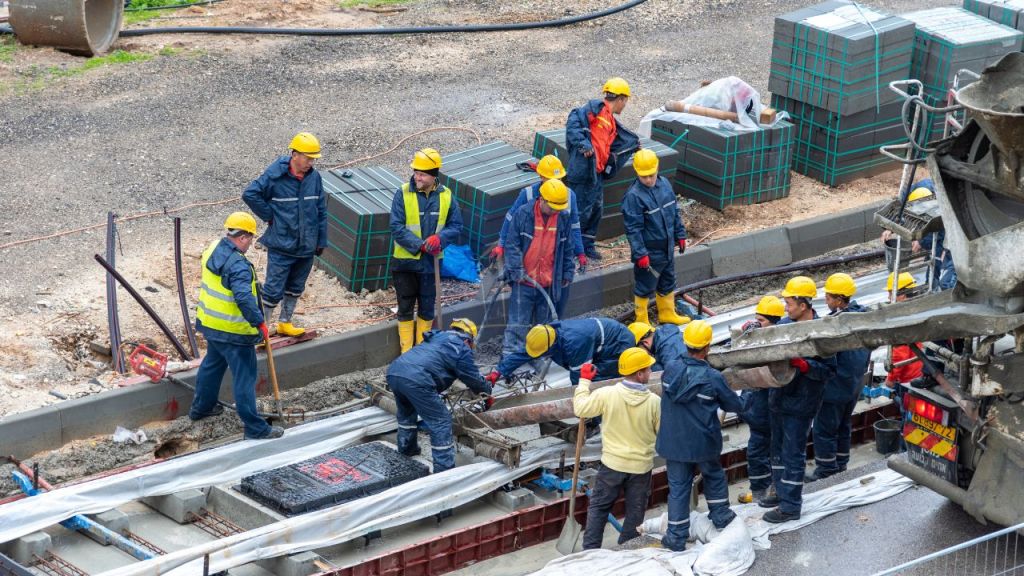
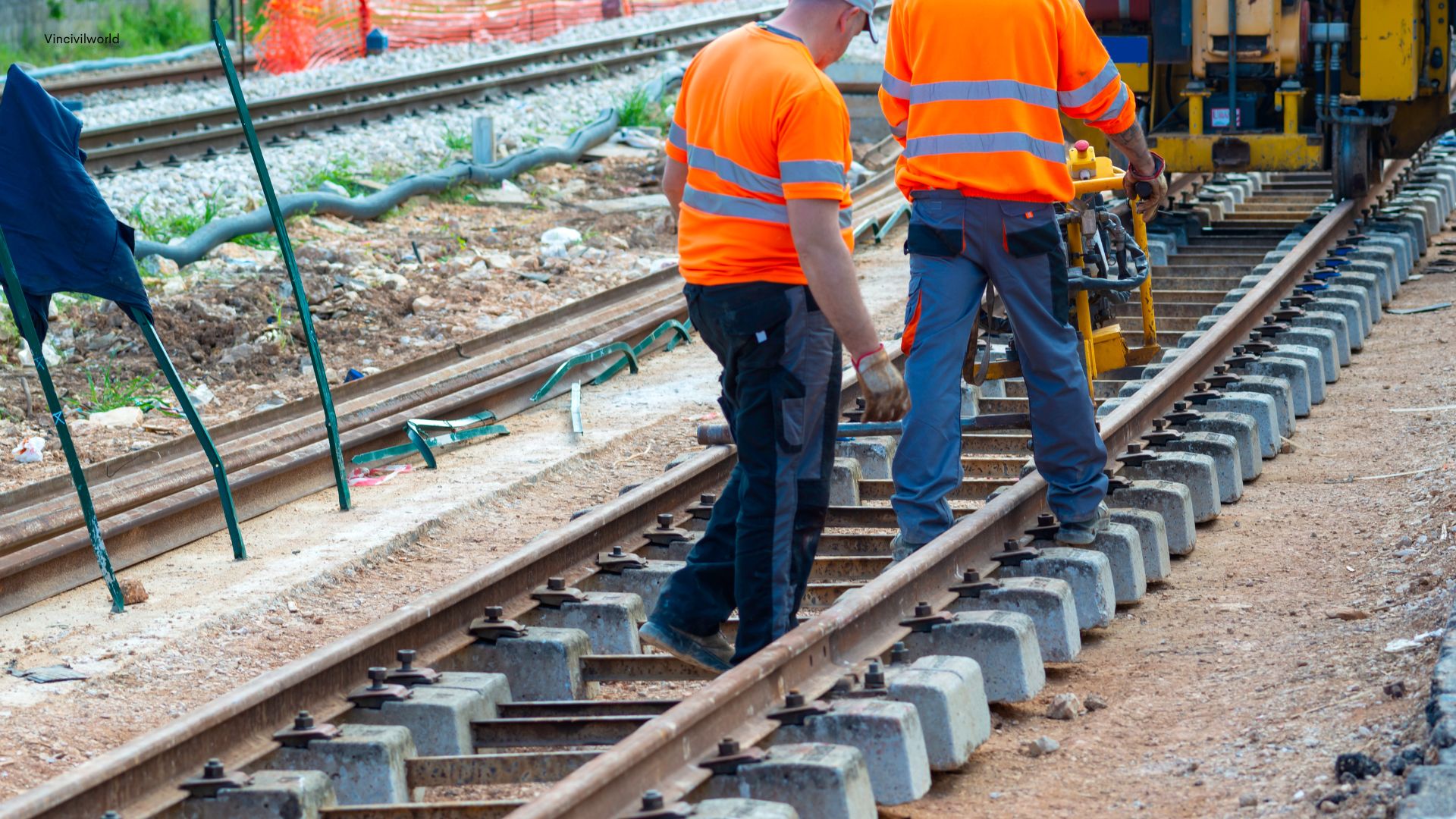
A group of construction workers in hard hats and safety gear, collaborating on a railway construction site, with stacks of materials and machinery visible in the background.
A team of construction workers in safety gear collaborating on a railway construction site.

Rails are essential components in railway systems, providing the track on which trains run. They come in various types of rails, including bull headed rails, double headed rails, and flat bottom rails. Each type serves a specific function, influencing stability and safety. Understanding the types of rail sections helps in selecting the right rails for efficient and reliable rail operations.

Let’s deep into the types of rails.

Main Types of Rails

Types of rails are crucial in rail infrastructure, each designed for specific needs and conditions. Understanding types of rail sections helps in selecting the appropriate rail for various applications. There are mainly 4 types of rails. In this blog, we will explore these 4 key types of rails:

  • Double Headed Rails
  • Bull Headed Rails
  • Flat Bottom Rails
  • Vignole Rails

Each section will include a detailed figure for clarity.

Double headed rails

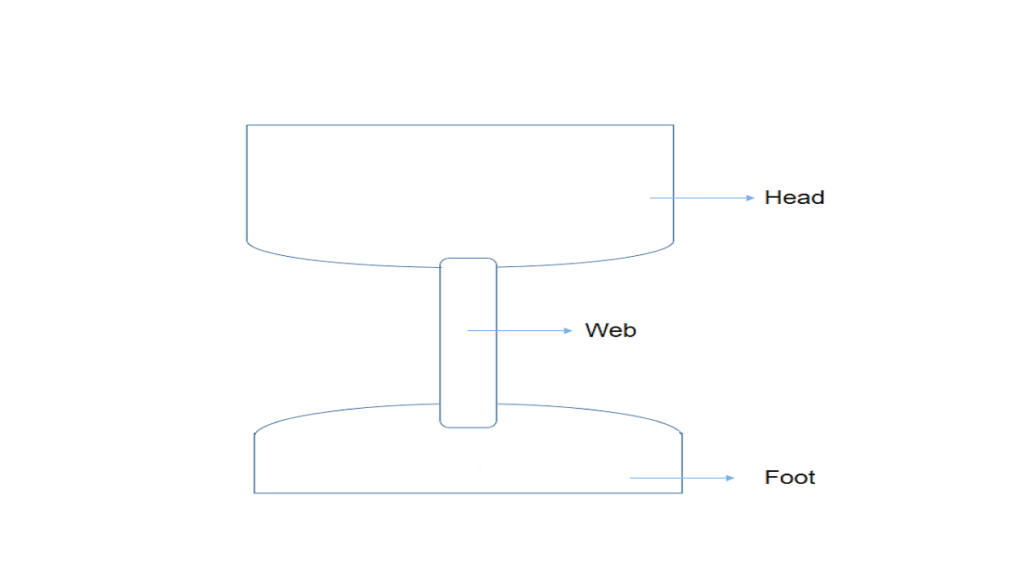
Double headed rails indicate the early stage of development. It essentially consists of three parts, such as upper table, web and lower table. Both the upper and lower tables were identical. They were introduced with the hope of doubling the life of rails.

When the upper table is worn out, the rails can be placed upside down. They can be reversed on the chair. This way, the lower table can be brought into use.
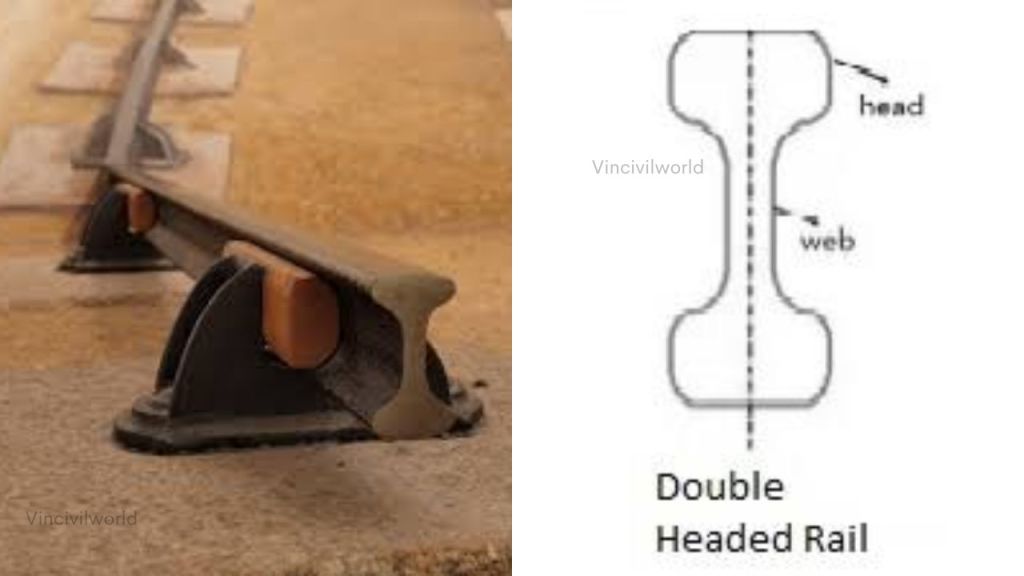
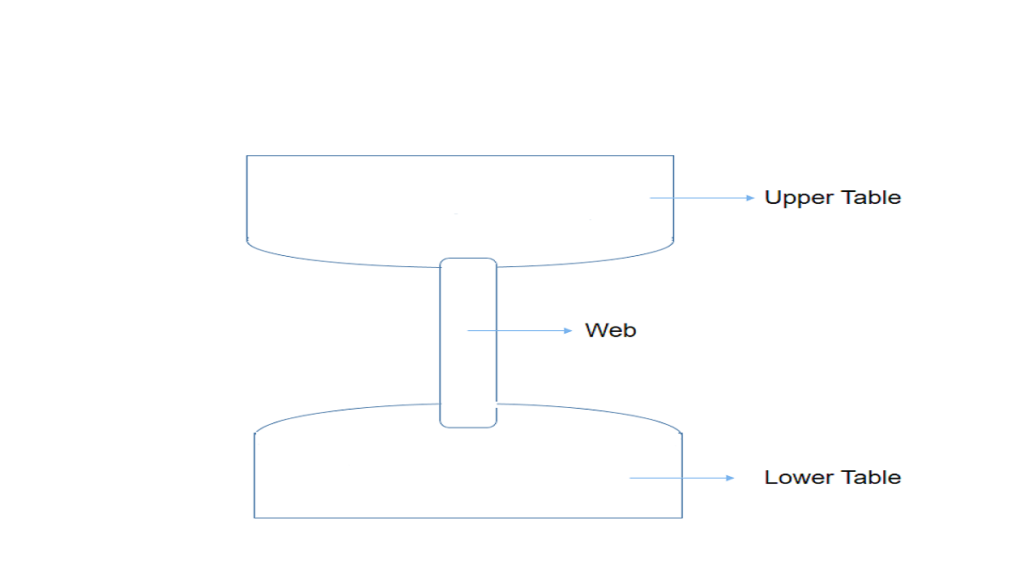
An image depicting a double headed rail fixed onto sleepers with an illustration showing the profile of a double headed rail, labeling its head and web.
Illustration of double headed rails, showcasing the upper table, web, and lower table design, along with the rail’s mounting setup.
Double headed rails
Double headed rails

But this idea soon turned out to be wrong. The continuous contact of the lower table with the chair made the surface of the lower table rough. Hence, the smooth running of the train was impossible.

Therefore, this type of rail is practically out of use. Nowadays, these rails vary in lengths from 20- 24.

The rail sections, whose foot and head are of same dimensions, are called double headed rails. In the beginning, these rails were widely used in the railway track.

The idea behind using these rails was that when the head had worn out due to rubbing action of wheels, the rails could be inverted. The rails could then be reused. But by experience, it was found that their foot could not be used as running surface because it also got corrugated under the impact of wheel loads.

Its time to meet the second type of rails which are bull headed rails.

Bull headed rails

Diagram illustrating the components of a bull headed rail, including the head, web, foot, and their connections to the sleeper, along with a cross-section of the rail design.
Diagram illustrating the structure of bull headed rails, showcasing individual components and their arrangement.
Bull headed rails
Bull headed rails

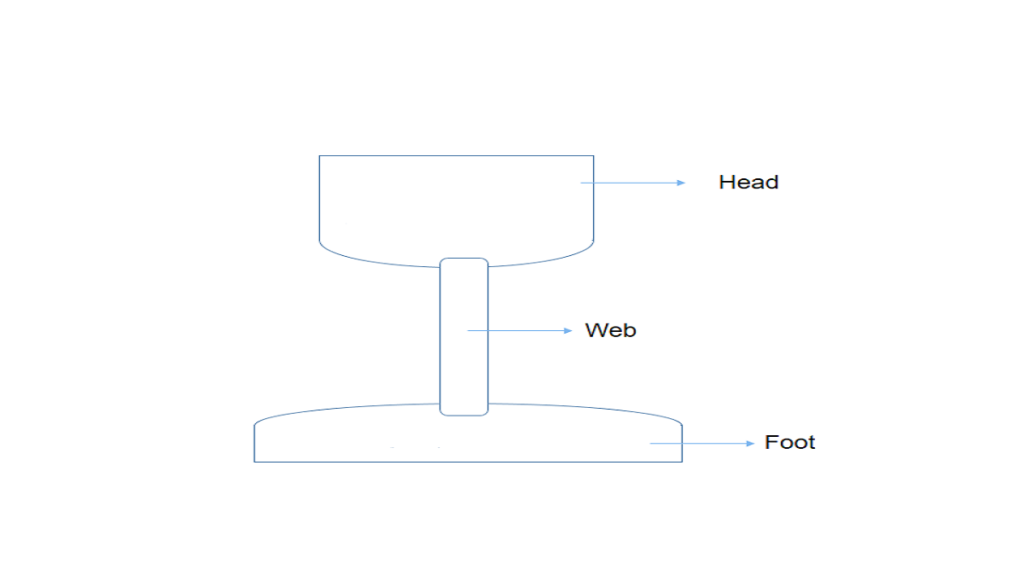
The rail section whose head dimensions are more than that of their foot are called bull headed rails. In this type of rail the head is made little thicker and stronger than the lower part by adding more metal to it. These rails also require chairs for holding them in position.

Bull headed rails are especially used for making points and crossings. This type of rail also consists of three parts, such as the head, the web and the foot. These rails were made of steel.

The head is of larger size than foot and the foot is designed only to hold up properly the wooden keys with which rails are secured. Thus, the foot is designed only to furnish necessary strength and stiffness to rails.

Two cast iron chairs are required per each sleeper when these rails are adopted. Their weight ranges from 85lb to 95lb and their length is up to 60ft.

That’s it about bull headed rails. Let’s move on to the third member in the list of types of rails, which are flat footed rails.

Flat footed rails

A flat footed rail section displayed alongside its dimensions, highlighting the head, web, and foot details, commonly used in modern railway systems.
Detailed diagram of a flat footed rail, illustrating its unique design and dimensions.
Flat footed rails
Flat footed rails

The rail sections having their foot rolled to flat are called flat footed rails. This type of rail was invented by Charles Vignola in 1836.

It was initially thought that the flat footed rails could be fixed directly to wooden sleepers. This would eliminate chairs and keys required for the BH rails. But later on, it was observed that heavy train loads caused the foot of the rail to sink into the sleepers. The heavy train loads also made the spikes loose.

Flat footed rails consist of three parts, such as head web and foot. The foot is spread out to form a base. This form of rail has become so popular. About 90% of railway tracks in the world are laid with this form of rails.

Flat footed rails have the following advantages.

Advantages of flat footed rails

  • They do not need any chair and can be directly spiked or keyed to the sleepers. Thus they are economical.
  • They are much stiffer both vertically and laterally. The lateral stiffness is important for curves.
  • They are less liable to develop kinks and maintain a more regular top surface than bull headed rails.
  • They are cheaper than bull headed rails
  • The loads from wheels of trains are distributed over large number of sleepers and hence larger area which results in greater track stability, longer life of rails and sleepers, reduced maintenance, costs, rail failure and few interruptions to traffic

Industrial Railway Rails

Industrial railway rails are specially designed rails used in industrial environments such as factories, mines, and ports. These rails are heavier and more robust than conventional railway rails to withstand high axle loads, frequent stopping and starting, and harsh conditions. Typically, they conform to standards like the AREMA Class 1 and can weigh between 112 to 141 pounds per yard. Industrial rails provide durability, strength, and resistance to wear, ensuring reliability for transporting heavy goods and equipment within industrial premises.

Close-up view of stacked railway rails, showcasing various types including flat footed and bull headed designs, made of high-carbon steel, displaying rust and wear.
A stack of various types of railway rails, showcasing their unique designs crucial for rail infrastructure.

Crane Rails

Crane rails are specialized rails designed to support the movement of overhead cranes and gantry cranes in industrial facilities. They have a wider head and base to provide stability and distribute heavy crane loads evenly. Crane rails are typically more rigid and wear-resistant than standard rails, often stocked in weights like 60 kg/m or higher. They ensure smooth crane operation, safety, and longevity under continuous heavy loading and lateral stresses encountered in crane tracks.

The Most Used Rail Profiles Worldwide Presently

In contemporary railway engineering, the flat footed rail profile is very prevalent. It is also known as the Vignole rail. It is the most widely used rail profile globally. This profile has a flat, wide foot. It can be spiked directly to sleepers. This design eliminates the need for additional support such as chairs. Flat footed rails are favored for their structural efficiency. They are known for durability and ease of installation. This makes them ideal for standard and heavy-duty railway tracks.

Common modern flat footed rail profiles include the internationally standardized UIC60 (60 kg/m), prevalent on mainline railways worldwide, and the 115RE profile (approximately 56.9 kg/m), widely used in North America. Regional variations such as DIN rails in Europe and other heavy or light profiles also follow the flat bottom design. These flat footed/Vignole rails offer superior load distribution, enhanced stability, and cost advantages over traditional bull headed rails, leading to their dominant use in global rail infrastructure.
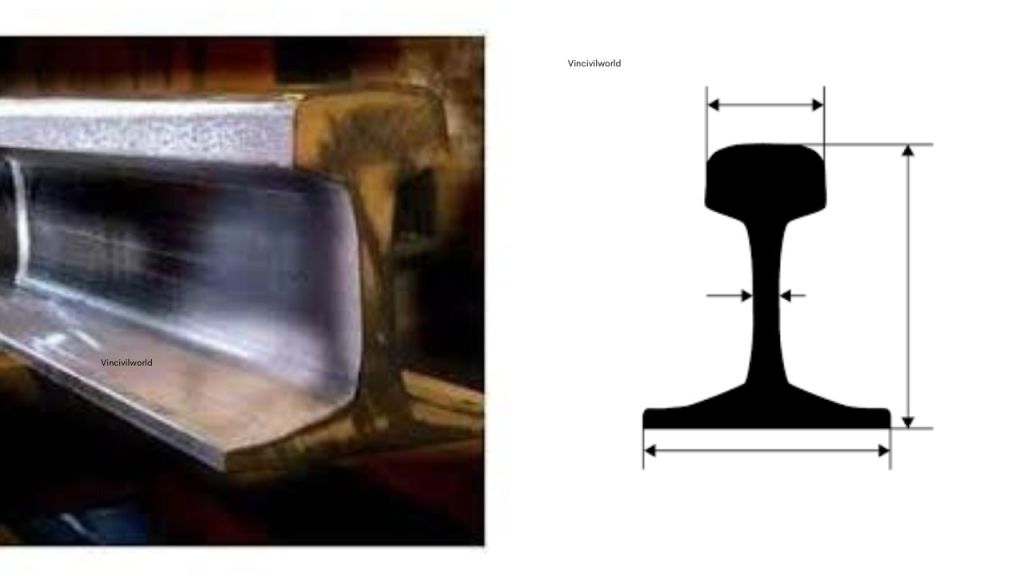
Image showing a close-up of a rail profile demonstrating its structure, alongside a diagram illustrating the dimensions and shape of the rail.
Illustration of flat footed rail design, showcasing its profile and structure for railway applications.

Key Takeaways

Understanding the various types of rail is essential for optimizing railway infrastructure. Types of rail sections include double-headed rails, bull-headed rails, and flat-footed rails. Double-headed rails have symmetrical upper and lower tables. They aimed to extend rail life. However, they are now rarely used due to maintenance issues. Bull-headed rails feature a thicker head for strength and are commonly used in points and crossings. Flat-footed rails, introduced by Charles Vignole, are widely adopted in modern railways due to their ease of installation and cost-efficiency. Each of these types of rail sections serves specific needs, influencing track stability and performance.

Conclusion

In conclusion, the selection of rail types profoundly affects railway system efficiency. Types of rail sections, such as double-headed rails, bull-headed rails, and flat-footed rails, each have distinct characteristics and applications. Double-headed rails are largely obsolete, while bull-headed rails remain useful for specific rail components. Flat-footed rails, with their practical advantages, dominate modern rail systems. A comprehensive understanding of the types of rail and their properties is crucial. This is essential for effective rail system design and maintenance. It ensures optimal performance and longevity.

Was the article helpful? Let me know your thoughts in the comments.

Happy learning!

MUST READ: Applications of Intelligent transportation system- everything you want to know
Coning of wheels- What is coning of wheels?

Coning of wheels is an interesting topic in railway engineering. In this blog, we will see the theory of coming of rail wheels, starting from what is coning of wheels.

What is coning of wheels?

figure shows coning of rails
Coning of rails

Let’s see what is coning of wheels step by step.

  • The space between the inner borders of wheel rims is by and large kept less than the measurement of the track.
  • This results in a gap between the wheel rims and running ends of the rail which is approximately equal to 1cm. (2/8 on both sides).
  • More often than not, the tread of wheels is perfectly the dead centre of the beginning of the rail, since the wheel is chamfered to keep it in this middle position involuntarily.
  • Thus, in coning of wheel the tread or rim of wheels of railway vehicles is made in the shape of  a cone with the slope of about 1 in 20.
  • It maintains the vehicle in the central position with respect to the track.
  • On straight track, portions of wheels running on track have the same diameter.
  • While on the curved path, the outer wheel has to cover a larger distance than the inner wheel. Thus, the portions of wheels running on track have different diameters which help in the smooth running of wheels.

Theory of coning of wheels

Wheel rail contact geometry
  • We have seen what is coning of _wheel through some easy read bullet points. Let me do the same to learn the theory behind coning of rail wheels.
  • On a railway level track, the moment the hinge locomotes towards one rail, the wheel tread width above the rail steps-u but reduces over the other rail.
  • This forbids the auxiliary movement and hinge pulls back to its original position.
  • This is possible only if the diameters on both rails are equal and the pressure on both rails is also equal.
  • On a coiled path, because of the rigidity of the wheel bottom, either of the wheels has to slip by a measure equal to the differentiation of length.
  • Or else, the axle has to move outward a bit so that a tread with longer diameter is formed over the outer rail where, as a slighter diameter tread is formed over the inner rail.

Also read: Applications of Intelligent transportation system- everything you want to know

Calculation of coning of wheels

Behaviour of coning on curves

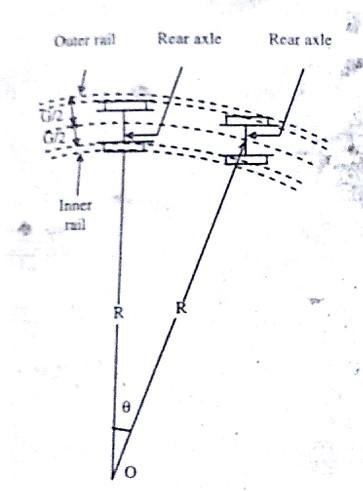
If the diameter of the tread on both the rails is equal, then

Slip=α (R2-R1),

The outer radius, R2=R+C/2

Inner radius, R1= R-G/2

G= Gauge

α= Angle at centre in radians

 Therefore, slip= alpha X G

α 0 = Angle center in degrees about 1 degree

α 0 Slip= 0.029 (roughly for 1 degree of central angle)

  • Therefore, the slip is about 0.029m per degree of the central angle.
  • Chamfering of wheels on bends is not useful as the principal axle if owing to centrifugal force proceeds towards the outward rail the back axle will precede towards the inside rail and the complete benefit of coning wheels cannot be availed.
  • Put differently, there will be no free sidelong movement of wheels.
  • This results in the disadvantages of the outer rail will have more pressure while the inner rail will have lesser pressure.
  • Owing to the central strength, the parallel components incline to turn the rail out and the gauge has broadening tendency.
  • Due to this condition if the voids sleepers have no base plate beneath the edge of the rail they will be damages. In order to get rid of or minimize the supra mentioned faults “angling of rails” is done.
  • When the rails are tilted then the base plate or sleeper is not placed horizontally. It is laid at a slope of 1 in 20 towards the inner side.

Advantages

  1. Smooth riding- help vehicle to negotiate curves smoothly
  2. Reduces wear and tear of wheel flanges. Damage is caused because of the friction action of rims with inner faces of the rail top.
  3. It gives an option of lateral drift of the hinge with its wheels
  4. It prevents, to some extent, the slipping of the wheels

We have seen the advantages. Let’s see the disadvantages of coning of wheels now.

Disadvantages

  1. The pressure on the horizontal component of force near the inner edge of outer rail has a tendency to wear the rail quickly
  2. The horizontal component has to turn the rail outwards and hence the gauges may be widened.
  3. If no base plates are provided, sleepers under the outer edge of the rail may be damaged

Also read: Intelligent transportation system: A comprehensive approach to its components

Types of Gauges in railway- Broad Gauge, Metre and Narrow Gauges

Types of Gauges in railway is a mandatory topic to touch upon when you study railway engineering. In this article, I will take you on a journey through the three basic types of railway gauges: broad gauge, metre gauge, and narrow gauge.

  1. What is gauge in railway?
  2. Types of Gauges in railway
    1. Broad gauge
    2. Metre gauge
    3. Narrow gauge
  3. Factors affecting the choice of types of gauges in railway

What is gauge in railway?

The gauges in railway is defined as the clear minimum perpendicular distance between the inner faces of the two rails. The distance between the inner faces of a pair of wheels is called wheel gauge.

The figure below is a diagrammatic representation of gauges in railway.

diagram shows gauges in railway
Gauges in railway

Now, let’s jump right on to the various types of gauges in railway.

Some related posts from Vincivilworld

Types of Gauges in railway

There are 3 major types of gauges in railway.

  1. Broad gauge
  2. Metre gauge
  3. Narrow gauge

I will tell you more details about each of them in the upcoming sections. Let’s start with broad gauge.

Broad gauge

When the clear horizontal distance between the inner faces of two parallel rails forming a track is 1.676m, the gauge is called broad gauge. Also known as standard gauge in some countries.

Broadest gauge is used for tracks in plain areas which are densely populated for routed of maximum traffic at places which are centers of industry and commerce.

Suitability: Broad gauge is suitable under the following conditions

  • When sufficient funds are available  for the railway project
  • When the prospects of revenue are very bright

So, you got an idea about broad gauges. Let’s look into metre gauge now.

Metre gauge

Metre gauges are used when the clear horizontal distance between the inner faces of two parallel rails forming a track is 1m. It is used for tracks in under- developed areas and in interior areas where traffic intensity is small and prospects for future development are not very bright.

Suitability: Metre gauge is suitable under the following conditions;

  1. When the funds available for the railway project are inadequate
  2. When the prospects of revenue are not very bright.

That’s it about metre gauge. Next, let me give you some information about narrow gauge.

Narrow gauge

Narrow gauge is leveraged when the clear horizontal distance between the inner faces of two parallel rails forming a track is either 0.762m or 0.610m. These are used in hilly and very thinly populated areas.

Suitability: Narrow gauge is suitable under the following conditions:

  1. When the construction of a track with wider gauge is prohibited due to the provision of sharp curves, steep gradients, narrow bridges and tunnels, etc.
  2. When the prospects of revenue are not very bright.

You have seen all types of gauges in railway. Did you know the factors that should be taken into account while selecting a gauge? Its time to see that.

Factors affecting the choice of types of gauges in railway

Types of Gauges in Railway
Railway track
  1. Traffic condition: If the intensity of traffic on the track is likely to be more, a gauge wider than the standard gauge is suitable.
  2. Development of poor areas: The narrow gauges are laid in certain parts of the world to develop a poor area and thus link the poor area with the outside developed world
  3. Cost of track: The cost of railway track is directly proportional to the width of its gauge. If the fund available is not sufficient to construct a standard gauge, a metre gauge or a narrow gauge is preferred rather than to have no railways at all
  4. Speed of movement: The speed of a train is a function of the diameter of wheel which in turn is limited by the gauge. The wheel diameter is usually about 0.75 times the gauge width and thus, the speed of a train is almost proportional to the gauge. If higher speeds are to be attained, the broad gauge track is preferred to the metre gauge or narrow gauge track.
  5. Nature of country: In mountainous country, it is advisable to have a narrow gauge of the track since it is more flexible and can be laid to a smaller, radius on the curves. This is the main reason why some important railways, covering thousands of kilometres, are laid with a gauge as narrow as 610mm
  6. Gauge should be uniform and correct: Uniformity of gauge is necessary due to the following reasons:
  7. Inconvenience to the passengers while changing the train at the station, with the change of gauge:
  8. Delay in the movement of people and goods resulting in wastage of time
  9. Extra labour for unloading and reloading the goods
  10. The goods are also likely to be damaged or dislocated at the junction station, having a change of gauge.
  11. Provision of extra and costly yards, godowns, sheds, etc. At every junction station having a change of gauge. Difficulty in quick movement of military and equipment during war days.

So, you got to know everything about gauges in railways? Did I miss out anything? Let me know your thoughts in the comments.

MUST READ: Types of rails- 3 types full details with figures

Components of Railway Track- Full Functions of All Components

Components of railway track are rail section, sleepers, ballast, rail fastenings and subgrade and embankments. I will walk you through each of them in detail. You will get to learn about the functions of rails, functions of sleepers, functions of ballast and about fastening of railway.

Railway tracks are complex systems comprised of various components that work together to ensure safe and efficient train travel. Understanding the components of a rail track is crucial for maintaining and optimizing railway infrastructure. Rail track components include the rails, sleepers (ties), ballast, and fastening systems, each playing a vital role. Rails provide the pathway for trains, sleepers support the rails, ballast maintains track stability, and fastening systems secure everything in place. This introduction explores the essential railway components, highlighting their functions and importance in the overall track structure. Familiarity with these elements is key to effective railway management and maintenance.

Without any due, let’s jump right on to it.

  1. Rail sections- Important among all components of railway track
    1. Function of rails
  2. Sleepers (Ties): Supporting the Rails
    1. Functions of sleepers
  3. Fastening in Railway-Rigid member of components of railway track
    1. Functions of Fastening in Railway
  4. Ballast
    1. Functions of ballast
  5. Subgrade and embankment- last member of components of railway track
  6. Switches and Crossings: Enabling Train Movement
  7. Rail Joints: Connecting the Rails
  8. Railway Track Drainage Systems
  9. Track Bed: Ensuring Even Load Distribution
  10. Rail Pads and Under Sleeper Pads: Reducing Vibrations
  11. Expansion Joints: Handling Temperature Variations
  12. Railway Electrification Systems: Powering the Trains
  13. Key Takeaways
  14. Conclusion

Rail sections- Important among all components of railway track

The rail provide a hard, smooth and unchanging surface for the passage of heavy moving loads. Rails are made of high carbon steel to withstand wear and tear. Flat footed rails are mostly used in railway track. I will tell you the major functions of rails now.

Rails are key components of a rail track. Made of high-quality steel, they form the primary pathway for trains.

Function of rails

  • Rails provide a continuous and level surface for the movement of the trains with minimum friction with steel wheels of the rolling stock
  • Rails provide strength, durability and lateral guidance to the track
  • Rails transmit the axle load to sleepers, which transfer the same load to the underlying ballast and formation
  • Rails bear the stresses developed due to heavy vertical loads, breaking forces and temperature variance.
  • In the railway components section, the function of rails is to enhance efficiency and longevity. Properly maintained rails improve the overall performance of the rail track system.

So, that’s it about the rail sections and the important functions of rails. Let’s move on to the second member in the list of components of railway track.

Sleepers (Ties): Supporting the Rails

Sleepers, also known as ties, are vital components of a rail track.The support which keeps the rails apart at required distance, supports the rail and distribute the load to the ballast are called as sleepers. Sleepers are of different materials such as wood, steel, cast_iron, RCC and Prestressed concrete

These rail track components play a crucial role in absorbing vibrations and maintaining track geometry. As essential railway components, sleepers ensure the safe and efficient operation of trains. Proper maintenance of sleepers is key to extending the lifespan of the entire track system and enhancing overall performance.

Time to peep into the major functions of sleepers.

Functions of sleepers

The important functions of sleepers are,

  • To hold the rails to proper gauge in all situations. That is, exact gauge along straights and flat curves, slightly loose on sharp curves and slightly tight in diamond crossings.
  • To support the rails firmly and evenly throughout
  • To distribute the load transmitted through rails over large area of ballast underneath or to the bridge girders.
  • To hold the rails to proper level in turnouts and crossovers, and at 1 in 20 in ward slope along straight tracks
  • To provide an elastic medium between the rails and ballast and also to absorb the vibrations caused due to moving axle loads
  • To maintain proper alignment of the track. On curves proper cant is provided by raising the outer rail and tamping the required quantity of ballast below the rails
  • To provide the general stability of the permanent way throughout
  • To provide the insulation of track for the electrified for signaling
  • To provide easy replacement of the rail fastenings without any serious traffic disturbances

So, you grasped the knowledge on the functions of sleepers and a bit of information about sleepers. Now, I’m going to introduce you another member of components of railway track. Guess who? Rail fastenings (Ya, as I rightly written below).

Fastening in Railway-Rigid member of components of railway track

Fastening systems are essential components of a rail track, crucial for keeping the track intact. These rail track components secure the rails to the sleepers, ensuring stability and alignment. They include clips, bolts, and screws, which hold the rails firmly in place, preventing movement and reducing vibrations. As vital railway components, fastening systems help maintain the correct gauge and improve the overall safety and performance of the track. Properly functioning fastening systems are key to the longevity and reliability of rail infrastructure, ensuring trains run smoothly and efficiently.

Fastening in railway is used to connect the rails and sleepers together in their proper positions. The fixtures and fastening used in track fittings are,

  • Fish plates
  • Spike
  • Bolts
  • Chairs
  • Blocks
  • Keys
  • Plates

Cool. I will close the chapter of rail fastenings by throwing some light to the functions of rail fastenings.

Functions of Fastening in Railway

Fastening in railway has the following functions.

  • Join the rails end to end to form full length of track
  • To fix the rails to sleepers
  • To maintain the correct alignment of the track
  • To provide proper expansion gap between rails
  • To maintain the required tilt of rails
  • To set the points and crossings in proper position

So, that topic too is over. Next we are going to study about ballast, functions of ballast in particular.

Ballast

Ballast is the broken stone placed or packed below the sleepers to transmit load from sleeper to the formation and at the same time allowing drainage of the track. Ballast is a key component of a rail track, providing the foundation of stability. These crushed stones support the sleepers, facilitating drainage and load distribution. As essential rail track components, ballast maintains track alignment and reduces vibrations. Its function ensures the overall durability and performance of the railway infrastructure.

Ballast - component of railway tract

To better understand about them, let’s have a look at the main functions of ballast.

Functions of ballast

The major functions of ballast are,

  • To provide firm and level bed for the sleepers to rest on
  • To allow for maintaining correct track level without disturbing the rail road bed
  • To drain off the water quickly and to keep the sleepers in dry conditions
  • To discourage the growth of vegetation
  • To protect the surface of formation and to form an elastic bed
  • To hold the sleepers in position during the passage of trains
  • To transmit and distribute the loads from the sleepers to the formation
  • To provide lateral stability to the track as a whole

Almost at the end of the journey. I will give you a snippet of information about the last member of components of railway track.

Subgrade and embankment- last member of components of railway track

Subgrade is the normally occurring ground which when prepared to receive the blast and track is called formation. Subgrade and formation are crucial components of a rail track, forming the groundwork for the entire structure. These rail track components provide a stable foundation, support the ballast, and ensure proper drainage. Their function is to distribute loads evenly and maintain track alignment, essential for railway infrastructure’s durability and performance.

In a permanent way, rails are joined either by welding or by using fish plates and are fixed with sleepers by using different types of fastenings. Sleepers are properly placed and packed with ballast. Ballast is placed on the prepared subgrade called formation. So, that’s where the importance of subgrade is.

Switches and Crossings: Enabling Train Movement

Switches and crossings are critical components of a rail track, facilitating train direction changes and track intersections. These rail track components ensure smooth transitions and safe passage. Their function is vital in managing train traffic, enhancing the efficiency and flexibility of the railway network.

Rail Joints: Connecting the Rails

Rail joints are essential components of a rail track, connecting individual rail sections. These rail track components ensure continuous rail alignment and stability. Their function is to accommodate rail expansion and contraction, reducing stress and maintaining the integrity of the railway infrastructure.

Railway Track Drainage Systems

Railway track drainage systems are vital components of a rail track, managing water flow and preventing track damage. These rail track components ensure proper drainage, protecting the subgrade and ballast. Their function is crucial for maintaining track stability and prolonging the life of railway components.

Track Bed: Ensuring Even Load Distribution

The track bed is a fundamental component of a rail track, ensuring even load distribution. Comprised of ballast and sub-ballast layers, these rail track components provide support and stability. Their function is to maintain track geometry and absorb stresses from train movements, enhancing overall performance.

Rail Pads and Under Sleeper Pads: Reducing Vibrations

Rail pads and under sleeper pads are essential components of a rail track, designed to reduce vibrations. These rail track components fit between the rails and sleepers, cushioning impacts. Their function is to protect the track structure, improve ride comfort, and extend the lifespan of railway components.

Expansion Joints: Handling Temperature Variations

Expansion joints are critical components of a rail track, allowing for temperature-induced rail expansion and contraction. These rail track components prevent rail buckling and gaps. Their function is to maintain track integrity and ensure safe, continuous train operations under varying temperature conditions.

Railway Electrification Systems: Powering the Trains

Railway electrification systems are vital components of a rail track, providing electrical power to trains. These rail track components include overhead wires and third rails. Their function is to ensure efficient and reliable train operations, reducing reliance on fossil fuels and enhancing overall railway performance.

So, the article was an introduction to the different components of railway track. We will figure out more in the upcoming article.

Key Takeaways

Understanding the components of a rail track is crucial for maintaining and optimizing railway infrastructure. The main components of a rail track include rails, sleepers, ballast, fastening systems, subgrade, and embankments. Each component has a specific function: rails provide a smooth path for trains, sleepers support and distribute loads, ballast ensures stability and drainage, fastening systems secure rails, and subgrade forms the groundwork. Additional components like switches, crossings, rail joints, drainage systems, track beds, rail pads, expansion joints, and electrification systems enhance the efficiency, safety, and durability of railway tracks. Proper maintenance and knowledge of these railway components are essential for effective rail management.

Conclusion

Railway tracks are intricate systems composed of various components that work in unison to ensure safe and efficient train travel. From the rails and sleepers to the ballast and fastening systems, each element plays a vital role in the track’s overall performance. Understanding the functions of these rail track components helps in maintaining the integrity and longevity of railway infrastructure. Additional components like switches, crossings, drainage systems, and electrification systems further enhance the railway network’s efficiency and reliability. Familiarity with these components of rail tracks is essential for anyone involved in railway management, ensuring optimal operation and safety. Share your thoughts and experiences in the comments below!

MUST READ: Intelligent transportation system: A comprehensive approach to its components