Glass fiber reinforcement concrete – GFRC Ingredients, Mix and Applications

Glass fiber reinforcement concrete or GFRC is made up of portland cement, fine aggregate, water, acrylic copolymer, alkali-resistant glass fibre, reinforcement, and additives. Glass fiber reinforced concrete or GFRC is a type of fiber-reinforced concrete. The glass fibres used in Glass Fiber reinforcement concrete give this distinctive compound its strength. Alkali-resistant fibres serve as the primary tensile load-carrying member, while the polymer and concrete mix holds the fibres together. It assists in the transfer of load from one element to another.

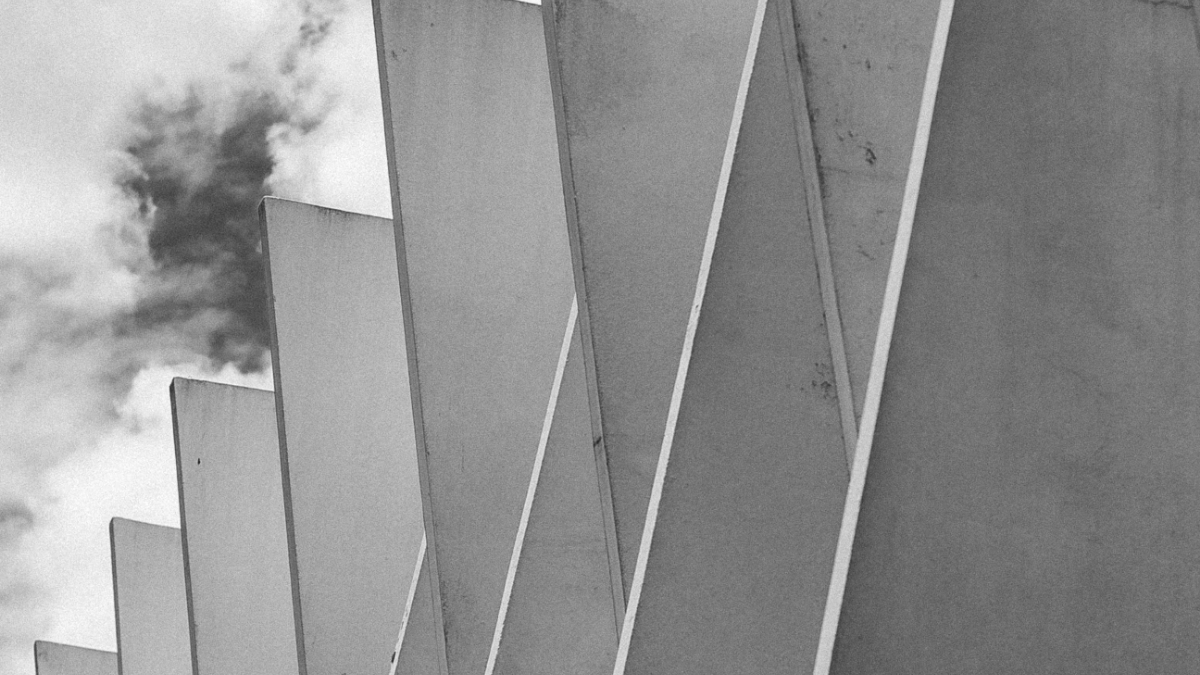
These are mainly used in exterior building façade panels and as architectural precast concrete. Somewhat similar materials are fibre cement siding and cement boards. They consist of high-strength, alkali-resistant glass fibre embedded in a concrete matrix.

In this form, both fibres and matrix retain their physical and chemical identities, while offering a synergistic combination of properties that cannot be achieved with either of the components acting alone.

Let’s get into each of them now.

  1. Glass Fiber Reinforcement Concrete – Ingredients
    1. Cement
    2. Fine Aggregates
    3. Polymers
    4. Water
    5. Glass Fibers
    6. Other Admixtures
  2. Glass Fiber Reinforced Concrete – Casting Process
    1. Spray-Up
  3. Glass Fiber Reinforcement Concrete Advantages
    1. Low weight and high strength of Glass Fiber Reinforced Concrete
    2. Freedom of shape of Glass Fiber Reinforced Concrete
    3. 3. Durability
    4. The appearance of Glass Fiber Reinforced Concrete
    5. Environment
  4. Applications of Glass Fiber Reinforced Concrete
  5. Conclusions

Glass Fiber Reinforcement Concrete – Ingredients

The main ingredients used in Glass Fiber Reinforced Concrete is as follows

Related contents from vinciviworld

Cement

Fine Aggregates

  • The fine aggregates usually should be river sand.
  • The fine aggregates used passed through a 4.75mm sieve and had a specific gravity of 2.68. The fine aggregates belonged to Zone II according to IS 383. 2

Polymers

  • Acrylic polymer is typically preferred over EVA or SBR polymers for GFRC. Acrylic is non-retweetable, so once dry, it will not soften or dissolve, nor will it yellow from exposure to sunlight.
  • The solids content of most acrylic polymers used in GFRC ranges from 46% to over 50%.
  • Typically, the polymer dose is 4%- 7% solids by weight of cementitious material depending on the design.

Water

Ordinary tap water which is safe and potable for drinking and washing was used to produce the concrete

Glass Fibers

  • Glass fibre, also known as fibreglass is made from extremely fine fibres of glass.
  • It is a lightweight, extremely strong and robust material. Glass fibre, the most popular of the synthetics, is chemically inert, hydrophobic, and lightweight.
  • They are manufactured as continuous cylindrical monofilaments that can be cut to specific lengths or cut as films and tapes before being formed into fine fibrils with rectangular cross-sections. Glass fibers that can withstand alkalis are a crucial part of GFRC. When using the spray-up method of casting, your sprayer will automatically cut the fibers and add them to the mixture as you apply it. If you’re casting with a premix or a hybrid method, you’ll have to mix the fibres along with other ingredients.
  • Although fibre content varies, it usually ranges from 3% to 7% of the total cementitious weight. High fibre content increases strength but decreases workability. Unlike most concrete mix design ingredients, fibres in GFRC are not calculated as a percentage of dry cementitious weight. Instead, they are calculated as a percentage of total weight. As a result, calculating fibre load in GFRC mix designs becomes quite complicated. Glass fibre, when used at a rate of at least 0.1 per cent by volume of concrete, reduces plastic shrinkage cracking and subsidence cracking over steel reinforcement.

Other Admixtures

  • Other ingredients to consider include pozzolans (such as silica fume, metakaolin, or VCAS) and superplasticizers.

So, we dug deep into the inside of Glass fibre-reinforced concrete. Next, let me walk you through the advantages of GFRC.

Glass Fiber Reinforced Concrete – Casting Process

GFRC is typically cast using two methods ie: spray up and premix. Let’s take a quick look at both, as well as a less expensive hybrid option.

Spray-Up

The fluid concrete mixture is sprayed into the forms, similar to shotcrete. The process employs a specialised spray gun to apply the fluid concrete mixture while simultaneously cutting and spraying long glass fibres from a continuous spool. Spray-up produces very strong GFRC due to the high fibre load and long fibre length, but the equipment is very expensive.

Premix

Premix incorporates shorter fibres into the fluid concrete mixture before it is sprayed or poured into moulds. Spray guns for premix do not require a fibre chopper, but they can be very expensive. Premix has less strength than spray-up because the fibres are shorter and distributed more randomly throughout the mix. The cost and strength are comparitievely lesser than spray up method.

Hybrid method

An inexpensive hopper gun can be used to apply the face coat while a handpacked or poured backer mix is used to create GFRC using a hybrid technique. A thin, fiber-free face (referred to as a mist coat or face coat) is sprayed into the moulds, and the backer mix is then packed in by hand or poured in, much like ordinary concrete. This is the method most concrete countertop manufacturers employ. This is an inexpensive way to get started. However, it is critical to carefully create both the face mix and the backer mix. This is to ensure similar consistency and makeup, as well as to know when to apply the backer coat. While doing so the backer coat can adhere properly to the thin mist coat without tearing it.

This method is comparatively inexpensive when compared to other two methods. The face and backer mix are applied at different times ensure to have similar make up of mixes to prevent curling

Glass Fiber Reinforcement Concrete Advantages

The main advantages are,

Glass fibre reinforced concrete
Glass fiber reinforced concrete

Low weight and high strength of Glass Fiber Reinforced Concrete

  • Self-weight of structures decreases when Glass Fiber Reinforcement Concrete (GFRC) is used and demands on foundations are reduced.
  • GRC cladding is suitable even for very high-rise buildings and offers good performance under seismic loading.

Freedom of shape of Glass Fiber Reinforced Concrete

  • GRC is easily moldable into a wide range of shapes, including intricate grilles, panels with a double curvature and 3-D objects.
  • The high freedom of shape permits the production of structurally very efficient elements.
  • Easily cast, it can produce items with very fine details and reproduce very complex features and elements of both modern and historic buildings.

3. Durability

  • Basic reinforcement is non-ferrous and the GRC products are not susceptible to corrosion as in traditional reinforced concrete.
  • Low permeability and a very slow rate of carbonation offer protection against the corrosion of steel in adjacent reinforced concrete.
  • GFRC has an inherently high resistance to extreme exposure conditions (freeze/thaw, fire etc.)

The appearance of Glass Fiber Reinforced Concrete

  • An extremely wide range of attractive surface finishes is available.
  • It satisfies the highest requirements for an aesthetic appearance of new structures and is capable of matching the colour and texture of surfaces of existing buildings.
  • Durable and brightly coloured surfaces with enhanced self-cleaning can be achieved in a variety of textures and shapes.

Environment

  • The relatively low weight of GRC products reduces CO2 emissions associated with their transport.
  • There are no Volatile_organic_compounds or other pollutants emitted from the material itself, neither in production nor in use.
  • GRC is fully recyclable into concrete and other applications.
  • In addition, the photocatalytic E-GRC reduces directly and significantly the concentration of pollutants in the surrounding air, leading to a better quality of the environment.
  • This is good especially in congested urban centres and at a minimal additional cost.

Also read: 3 d Printing buildings |Concrete Printing & Contour Crafting Methods Full Guide

Now, how about a quick glance through the applications?

Applications of Glass Fiber Reinforced Concrete

Glass Fiber Reinforced Concrete - Fascia
GFRC Building

Due to its versatility the range of GFRC is growing.

  • All the categories of buildings have been constructed using GFRC
  • Small, simple and unsophisticated items for everyday use are made using GFRC on a large-scale
  • Architects prefer GFRC to fulfil high structural complexity, size of construction elements, and freedom of shape to achieve spectacular appearance, durability and the highest quality
  • Positive environmental performance

That’s it. Time to sum up.

Conclusions

  • GFRC has a large scope of application and research and development is going on
  • It is a very versatile material and the freedom of shape makes it the number one choice by architects
  • Glass fibre reinforced concrete is used from small scale household products to large-scale buildings of structural complexity

So, how is our buddy GFRC? Let me know your thoughts in the comments.

Also read: Shotcrete – An overview| Shotcrete vs Gunite

Happy learning!

Glass Fibre Reinforced Concrete- Fiberglass reinforced concrete Advantages

Glass Fibre Reinforced Concrete or GFRC is made up of portland cement, fine aggregate, water, acrylic copolymer, alkali-resistant glass fibre, reinforcement, and additives. Glass fibre-reinforced concrete or GFRC is a type of fibre-reinforced concrete. The glass fibres used in Glass Fibre reinforcement concrete give this distinctive compound its strength. Alkali-resistant fibres serve as the primary tensile load-carrying member, while the polymer and concrete mix holds the fibres together. It assists in the transfer of load from one element to another.

These are mainly used in exterior building façade panels and as architectural precast concrete. Somewhat similar materials are fibre cement siding and cement boards. They consist of high-strength, alkali-resistant glass fibre embedded in a concrete matrix.

In this form, both fibres and matrix retain their physical and chemical identities, while offering a synergistic combination of properties that cannot be achieved with either of the components acting alone.

Let’s get into each of them now.

  1. Glass Fibre Reinforcement Concrete – Ingredients
    1. Cement
    2. Fine Aggregates
    3. Polymers
    4. Water
    5. Glass Fibre
    6. Other Admixtures
  2. Fibre Glass reinforced concrete – Casting Process
    1. Spray-Up
    2. Premix
    3. Hybrid method
  3. Glass Fiber Reinforced Concrete Advantages
    1. Low weight and high strength of Glass Fiber Reinforced Concrete
    2. Freedom of shape of Glass Fiber Reinforced Concrete
    3. 3. Durability
    4. The appearance of Glass Fiber Reinforced Concrete
    5. Environment
  4. Applications of Glass Fibre Reinforced Concrete
  5. Conclusions

Glass Fibre Reinforcement Concrete – Ingredients

The main ingredients used in Glass Fibre Reinforced Concrete are as follows

Related contents from vinciviworld

Cement

Fine Aggregates

  • The fine aggregates usually should be river sand.
  • The fine aggregates used passed through a 4.75mm sieve and had a specific gravity of 2.68. The fine aggregates belonged to Zone II according to IS 383. 2

Polymers

  • Acrylic polymer is typically preferred over EVA or SBR polymers for GFRC. Acrylic is non-retweetable, so once dry, it will not soften or dissolve, nor will it yellow from exposure to sunlight.
  • The solids content of most acrylic polymers used in GFRC ranges from 46% to over 50%.
  • Typically, the polymer dose is 4%- 7% solids by weight of cementitious material depending on the design.

Water

Ordinary tap water which is safe and potable for drinking and washing was used to produce the concrete

Glass Fibre

  • Glass fibre, also known as fibreglass is made from extremely fine fibres of glass.
  • It is a lightweight, extremely strong and robust material. Glass fibre, the most popular of the synthetics, is chemically inert, hydrophobic, and lightweight.
  • They are manufactured as continuous cylindrical monofilaments that can be cut to specific lengths or cut as films and tapes before being formed into fine fibrils with rectangular cross-sections. Glass fibres that can withstand alkalis are a crucial part of GFRC. When using the spray-up method of casting, your sprayer will automatically cut the fibres and add them to the mixture as you apply it. If you’re casting with a premix or a hybrid method, you’ll have to mix the fibres along with other ingredients.
  • Although fibre content varies, it usually ranges from 3% to 7% of the total cementitious weight. High fibre content increases strength but decreases workability. Unlike most concrete mix design ingredients, fibres in GFRC are not calculated as a percentage of dry cementitious weight. Instead, they are calculated as a percentage of total weight. As a result, calculating fibre load in GFRC mix designs becomes quite complicated. Glass fibre, when used at a rate of at least 0.1 per cent by volume of concrete, reduces plastic shrinkage cracking and subsidence cracking over steel reinforcement.

Other Admixtures

  • Other ingredients to consider include pozzolans (such as silica fume, metakaolin, or VCAS) and superplasticizers.

So, we dug deep into the inside of Glass fibre-reinforced concrete. Next, let me walk you through the advantages of GFRC.

Fibre Glass reinforced concrete – Casting Process

GFRC is typically cast using two methods ie: spray up and premix. Let’s take a quick look at both, as well as a less expensive hybrid option.

Spray-Up

The fluid concrete mixture is sprayed into the forms, similar to shotcrete. The process employs a specialised spray gun to apply the fluid concrete mixture while simultaneously cutting and spraying long glass fibres from a continuous spool. Spray-up produces very strong GFRC due to the high fibre load and long fibre length, but the equipment is very expensive.

Premix

Premix incorporates shorter fibres into the fluid concrete mixture before it is sprayed or poured into moulds. Spray guns for premix do not require a fibre chopper, but they can be very expensive. Premix has less strength than spray-up because the fibres are shorter and distributed more randomly throughout the mix. The cost and strength are comparatively lesser than the spray-up method.

Hybrid method

An inexpensive hopper gun can be used to apply the face coat while a handpicked or poured backer mix is used to create GFRC using a hybrid technique. A thin, fibre-free face (referred to as a mist coat or face coat) is sprayed into the moulds, and the backer mix is then packed in by hand or poured in, much like ordinary concrete. This is the method most concrete countertop manufacturers employ. This is an inexpensive way to get started. However, it is critical to carefully create both the face mix and the backer mix. This is to ensure similar consistency and makeup, as well as to know when to apply the backer coat. While doing so the backer coat can adhere properly to the thin mist coat without tearing it.

This method is comparatively inexpensive when compared to the r two methods. The face and backer mix are applied at different times ensure to have similar make-up of mixes to prevent curling

Glass Fiber Reinforced Concrete Advantages

The main advantages are,

Glass fibre reinforced concrete

Low weight and high strength of Glass Fiber Reinforced Concrete

  • Self-weight of structures decreases when Glass Fiber Reinforcement Concrete (GFRC) is used and demands on foundations are reduced.
  • GRC cladding is suitable even for very high-rise buildings and offers good performance under seismic loading.

Freedom of shape of Glass Fiber Reinforced Concrete

  • GRC is easily moldable into a wide range of shapes, including intricate grilles, panels with a double curvature and 3-D objects.
  • The high freedom of shape permits the production of structurally very efficient elements.
  • Easily cast, it can produce items with very fine details and reproduce very complex features and elements of both modern and historic buildings.

3. Durability

  • Basic reinforcement is non-ferrous and the GRC products are not susceptible to corrosion as in traditional reinforced concrete.
  • Low permeability and a very slow rate of carbonation offer protection against the corrosion of steel in adjacent reinforced concrete.
  • GFRC has an inherently high resistance to extreme exposure conditions (freeze/thaw, fire etc.)

The appearance of Glass Fiber Reinforced Concrete

  • An extremely wide range of attractive surface finishes is available.
  • It satisfies the highest requirements for an aesthetic appearance of new structures and is capable of matching the colour and texture of surfaces of existing buildings.
  • Durable and brightly coloured surfaces with enhanced self-cleaning can be achieved in a variety of textures and shapes.

Environment

  • The relatively low weight of GRC products reduces CO2 emissions associated with their transport.
  • There are no Volatile_organic_compounds or other pollutants emitted from the material itself, neither in production nor in use.
  • GRC is fully recyclable into concrete and other applications.
  • In addition, the photocatalytic E-GRC reduces directly and significantly the concentration of pollutants in the surrounding air, leading to a better quality of the environment.
  • This is good especially in congested urban centres and at a minimal additional cost.

Also read: 3 d Printing buildings |Concrete Printing & Contour Crafting Methods Full Guide

Now, how about a quick glance through the applications?

Applications of Glass Fibre Reinforced Concrete

Glass Fiber Reinforced Concrete - Fascia
GFRC Building

Due to its versatility the range of GFRC is growing.

  • All the categories of buildings have been constructed using GFRC
  • Small, simple and unsophisticated items for everyday use are made using GFRC on a large-scale
  • Architects prefer GFRC to fulfil high structural complexity, size of construction elements, and freedom of shape to achieve spectacular appearance, durability and the highest quality
  • Positive environmental performance

That’s it. Time to sum up.

Conclusions

  • GFRC has a large scope of application and research and development is going on
  • It is a very versatile material and the freedom of shape makes it the number one choice by architects
  • Glass fibre reinforced concrete is used from small scale household products to large-scale buildings of structural complexity

So, how is our buddy GFRC? Let me know your thoughts in the comments.

Also read: Shotcrete – An overview| Shotcrete vs Gunite

Happy learning!

Los Angeles abrasion Test on Aggregates

Los Angeles Abrasion test is used to determine aggregates’ level of abrasion resistance and toughness. Los Angeles abrasion test of aggregate assesses the deterioration of aggregate standard gradings when subjected to abrasion and impact in a rotating steel drum containing an abrasive charge of steel balls. LA abrasion test on aggregates is the measure of aggregate toughness and abrasion resistance such as crushing, degradation and disintegration. Basically, finding the percentage wear as a result of relative rubbing between the aggregate and steel balls used as an abrasive charge is the primary objective of the Los Angeles abrasion test.

  1. Significance of Los Angeles Abrasion Test of aggregates
  2. Types of aggregate tests
  3. Los Angeles Abrasion tests on aggregates
    1. Codes and standards for Los Angeles Abrasion test of aggregates
    2. Working principle of LA Abrasion test
    3. The test procedure for the Los Angeles Abrasion test of aggregate
    4. The formula for LA Abrasion Test

Significance of Los Angeles Abrasion Test of aggregates

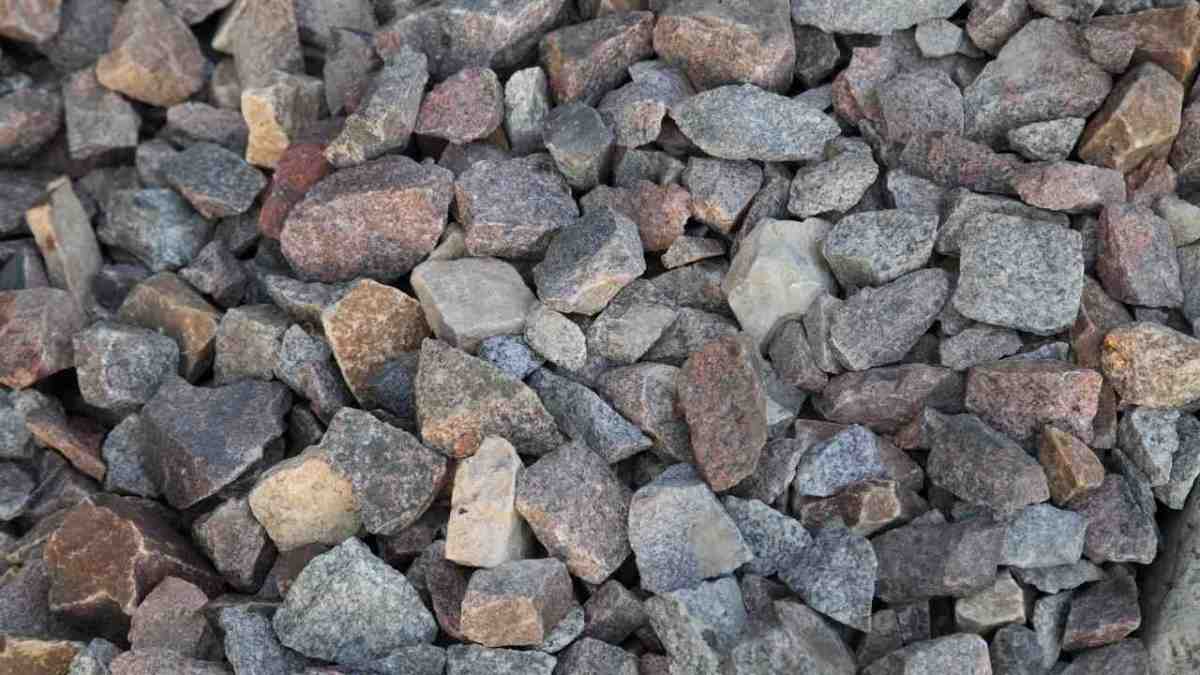
Aggregate is a fundamental and necessary component of concrete, flexible pavements, and other similar structures. More than 70% to 80% of the volume of concrete is aggregate. Quality matters when it comes to aggregates because they are the main component of concrete, flexible pavements, etc. Various tests are conducted to determine the following properties of Aggregates.

  • Strength
  • Toughness
  • Hardness
  • Shape
  • Water Absorption etc.

Related posts from Vincivilworld

Types of aggregate tests

The following are the various aggregate tests used to determine aggregate suitability:

This article is about Los Angeles Abrasion tests on aggregates

Los Angeles Abrasion tests on aggregates

The aggregate toughness and abrasion resistance such as crushing, degradation, and disintegration are evaluated by the Los Angeles abrasion test. Generally, this test is performed in accordance with AASHTO T 96 or ASTM C 131.

The Los Angeles Abrasion test determines the aggregate’s wearing resistance and hardness. Abrasion is indeed the wearing action on aggregate caused by vehicle movement. In order to resist abrasion, the aggregate should have an adequate abrasion value. The abrasion test value can ensure the quality and suitability of aggregates. Furthermore, aggregate with high abrasion resistance has a long life span.

Codes and standards for Los Angeles Abrasion test of aggregates

There are 3 tests commonly used to test aggregates for their abrasion resistance. (a) Deval Attrition Test (b) Dorry Abrasion Test (c) Los Angeles Abrasion Tests. However, Los Angeles abrasion test values are more realistic and correct.

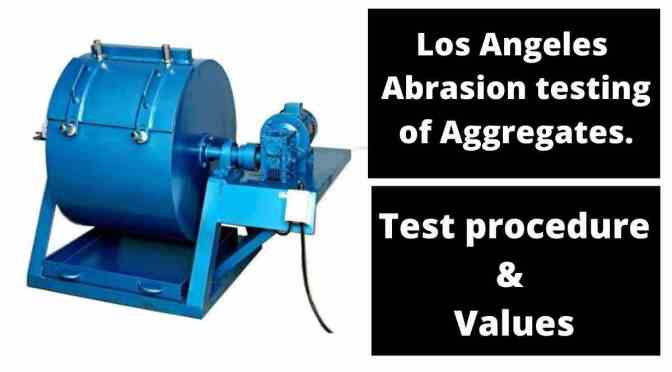
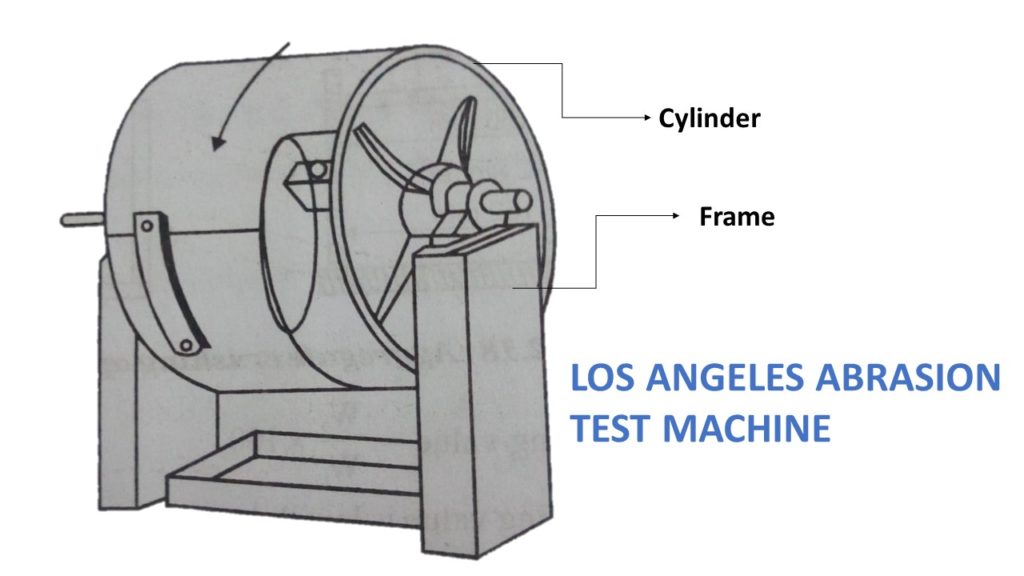
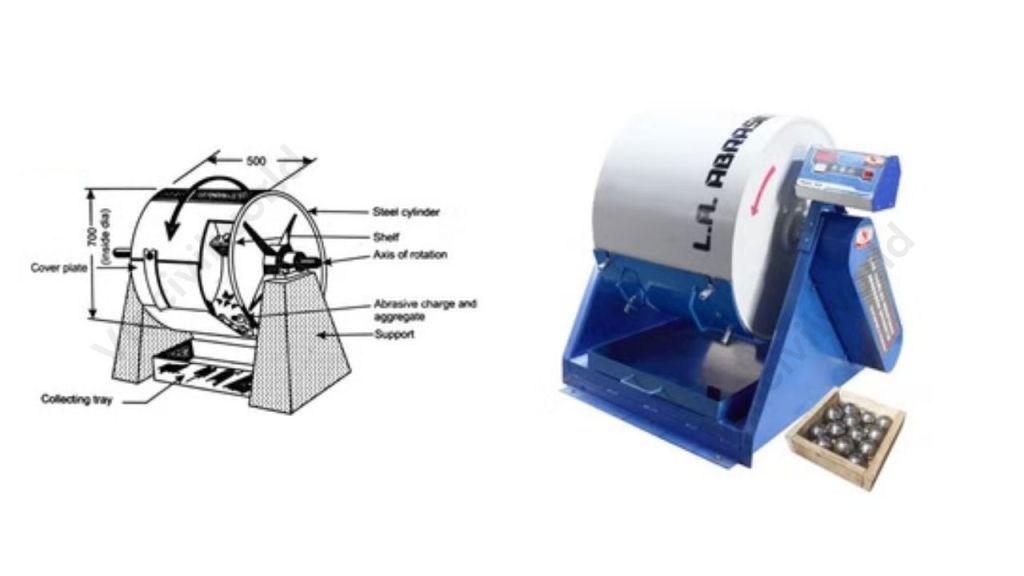
Los angeles Abrasion testing apparatus
Los Angeles Abrasion Testing Apparatus

Working principle of LA Abrasion test

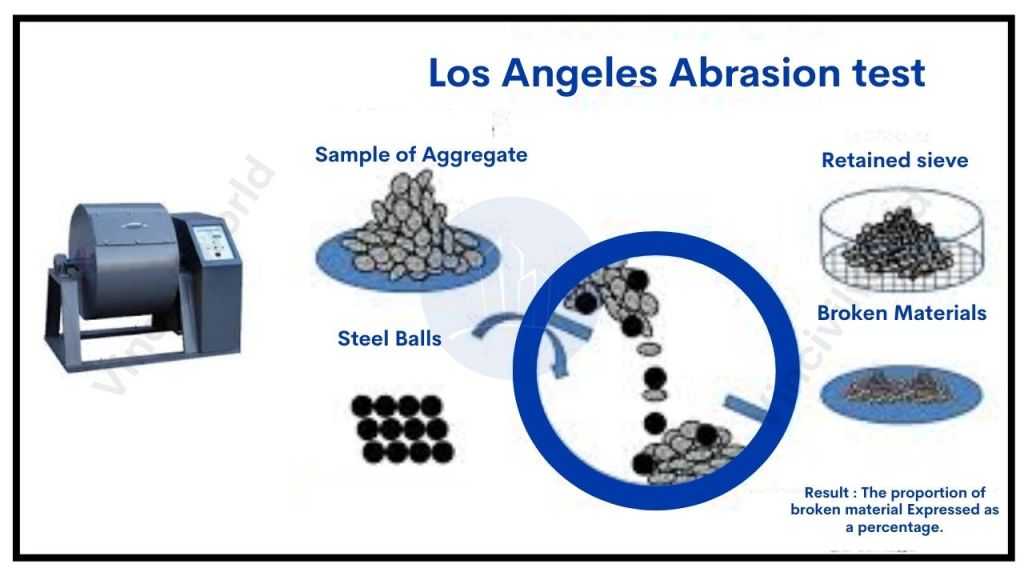
The principle of this test is to produce abrasive action using steel balls mixed with aggregates. Accordingly, the aggregate and steel balls are rotated in a drum for a specific number of rotations. The percentage of wear due to relative rubbing action between the aggregate and steel balls is recorded. This value is the Los Angeles Abrasion value.

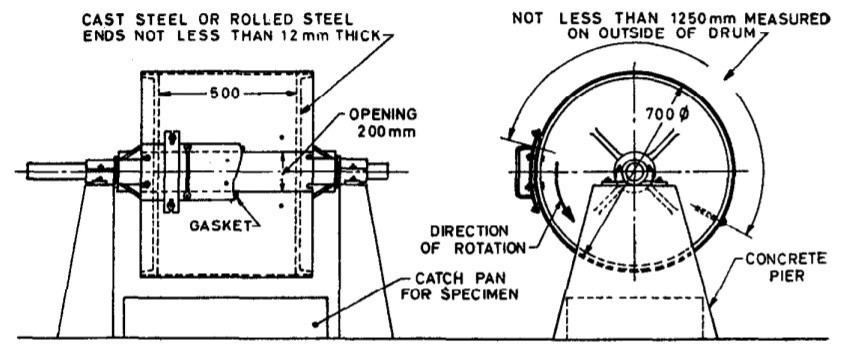
Los Angeles Machine cross section
Los Angeles abrasion testing machine

The test procedure for the Los Angeles Abrasion test of aggregate

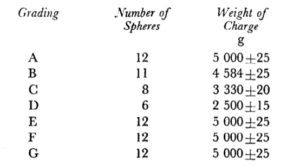
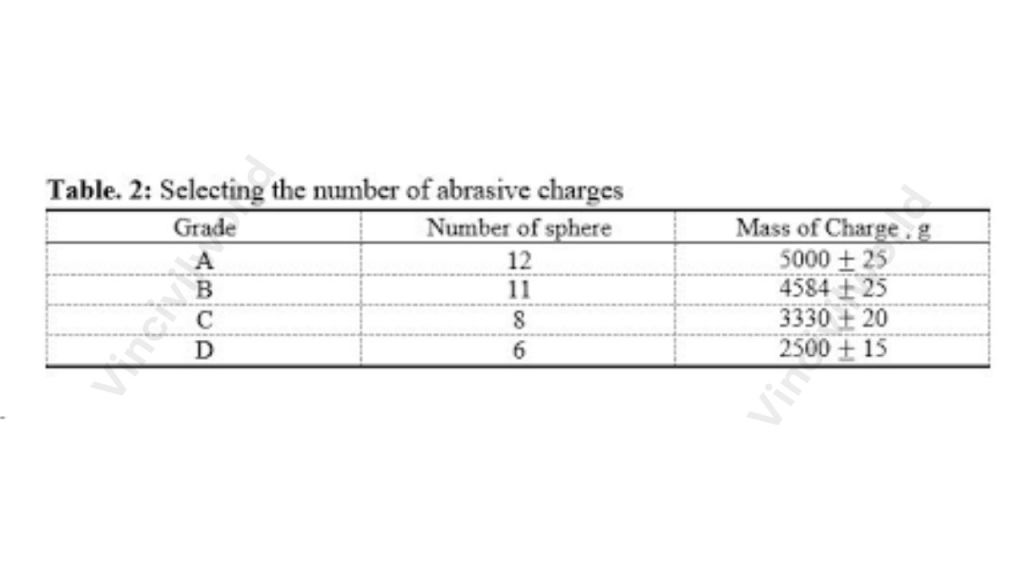
The Los Angeles abrasion testing machine consists of a hollow steel cylinder, closed at both ends, having an inside diameter of 700 mm and an inside length of 500 mm. The abrasive charge shall consist of cast iron spheres or steel spheres approximately 48 mm in. diameter and each weighing between 390 and 445 g. The number of balls to be placed shall be as per IS 2386.

Grading and number of abrasive charges

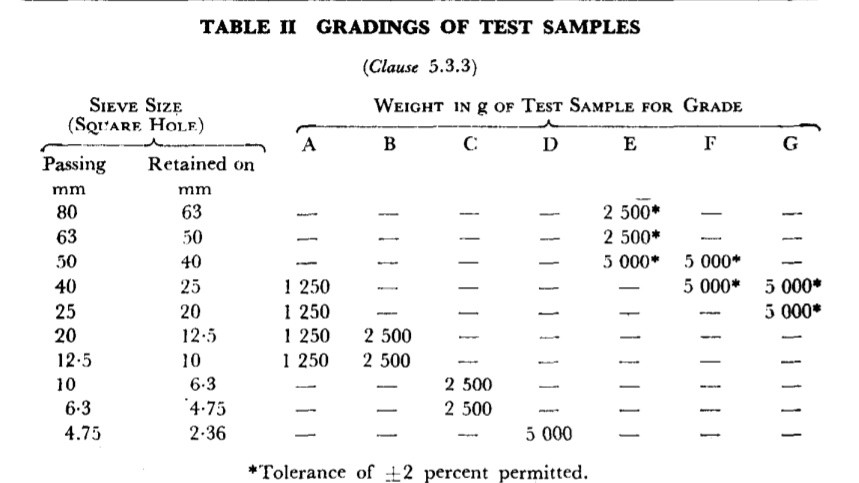
The test sample shall consist of clean aggregate which has been dried in an oven at 105 to 110°C to substantially constant weight. They shall conform to one of the gradings shown in Table II.

GRADINGS OF TEST SAMPLES AS PER IS 2386PLES
GRADINGS OF TEST SAMPLES AS PER IS 2386
  • Firstly, place the specimen inside the horizontal drum.
  • Then, put the steel balls and rotate the cylinder for a total of 500-1000 revolutions at the speed of 30-33 rpm about its horizontal axis. For gradings A, B, C and D, the machine shall be rotated for 500 revolutions. However, for gradings E, F and G, it shall be rotated for 1000 revolutions.
  • After completing the specific rotations, collect the specimens from the cylinder.  
  • Then sieve on a 1.7 mm IS sieve and weigh the specimen.
  • Lastly, calculate the abrasion value using the formula below.

The formula for LA Abrasion Test

The original weight of aggregate sample = W1 g

Weight of aggregate sample retained = W2 g

Weight passing 1.7mm IS sieve = W– Wg

Abrasion value = [(weight of sample taken – weight of sample retained on IS sieve) / weight of sample taken ] x 100

The difference between the original weight and the final weight (sieved through 1.7mm) is expressed as % of the original weight of the sample aggregate. Similarly, this value is called as Los Angeles abrasion value.

PCC Concrete – Plain Cement Concrete – PCC in Construction

PCC concrete of Plain Cement Concrete (PCC) is without reinforcement steel. Plain cement concrete (PCC) is high in compression and very low in tension. Plain cement concrete is commonly used over the ground to keep footing reinforcement from coming into direct contact with the soil. The design mixes commonly used for Plain Cement Concrete (PCC) are 1:4:8, 1:3:5, 1:2:4, M7.5, M10 etc. PCC can also be used for grade slabs (floors) and concrete roads where the only load is compressive.

Concrete is a mixture of cement, sand, and aggregate (preferably broken stone) mixed with water in specific proportions. When poured into moulds or shuttered, the mixture consolidates over time to form a uniform mass known as concrete.

  1. What is PCC Concrete or Plain cement Concrete in construction?
  2. Properties of Plain Cement Concrete or PCC concrete
  3. Ingredients of Plain Cement Concrete or PCC Concrete
  4. Production of Plain Cement Concrete (PCC) in Construction
  5. Types of concrete in construction
  6. How to Decide On A Concrete Type
    1. Material Availability
    2. Strength Required
    3. Construction methodology to be adopted
    4. Type of structure
    5. Area of application
    6. Climate and pouring conditions
  7. Placing of Plain Cement Concrete (PCC)
    1. Level marking and dressing for PCC concrete
    2. Surface Preparation and shuttering
    3. Placing and Finishing of PCC Concrete
  8. Precautions while doing Plain Cement Concrete (PCC)

What is PCC Concrete or Plain cement Concrete in construction?

Concrete without reinforcement steel is called Plain Cement Concrete (PCC). Generally, design mixes commonly used for PCC are 1:4:8 , 1:3:5, 1:2:4, M7.5, M10 etc. Plain cement concrete is high in compression and very low in tension.

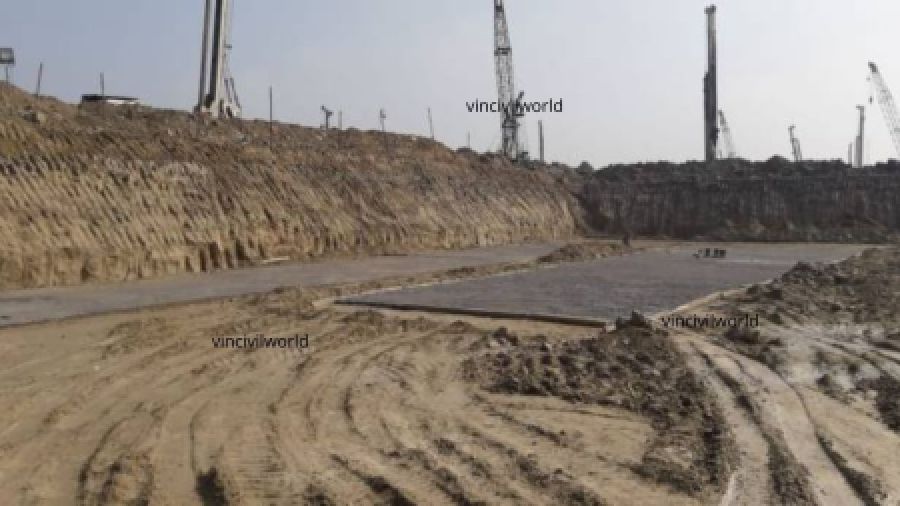
Plain cement concrete laying

Properties of Plain Cement Concrete or PCC concrete

Plain cement Concrete (PCC) has compressive strengths ranging from 200 kg/cm2 to 500 kg/cm2. Likewise, tensile strength of PCC ranges from 50 kg/cm2 to 100 kg/cm2, and density ranges from 2200 kg to 2500 kg, depending on the grade of concrete and aggregates used.

Ingredients of Plain Cement Concrete or PCC Concrete

Basically, PCC is made from cement, coarse aggregate, and fine aggregate. Ordinary Portland cement is used as the binding material. Accordingly, as coarse aggregate, broken or crushed stone or brickbats must be used. However, fine aggregate must consist of coarse sand. Finally, these ingredients are combined in the appropriate proportions with potable water to make PCC.

Production of Plain Cement Concrete (PCC) in Construction

PCC can be manufactured in batching plants, mixer machines, or manually mixing. Generally, the thickness of PCC can range from 50 mm to 300 mm or more, depending on the design parameters.

Types of concrete in construction

The following are the main types of concrete used in construction

Plain cement concrete (PCC)
Plain cement concrete (PCC )

How to Decide On A Concrete Type

The type of concrete to be used on a particular work is decided based on following conditions.

Material Availability

Normally, the raw material (aggregate, sand, cement etc) availability decides the type of concrete to be used.

Plain cement concrete


Strength Required

The concrete requires different strengths for different structures. However, the strength required for the particular structure decides the type of concrete to be used.

Construction methodology to be adopted

The construction technique to be adopted for a structure decides the type of concrete. Example Pre-stressed concrete etc.

Type of structure

Most of times the type of the structure decides the type of concrete to be used.

SELF COMPACTED CONCRETE (SCC) is preferred in structures where normal pouring is restricted due to rebar congestion or access restricted pouring area. SCC, when pumped from a single point, can fill every part of the structure. 

Area of application

The type of concrete shall be decided by the area where it has to be used. In some structures, the reinforcement is so dense that concrete may not pass through it. Mostly, In those cases, specially designed concrete with small-size aggregates or Self compacted concrete (SCC) may be used.

Climate and pouring conditions

The areas where there is extreme weather conditions like heavy rain , extreme cold, extreme hot specially designed quick setting concrete will be used.

Placing of Plain Cement Concrete (PCC)

The following steps are followed while placing Plain Cement Concrete (PCC)

Level marking and dressing for PCC concrete

After completing the excavation, the bottom level of the PCC shall be marked on the ground using a level machine. The centre line from the survey pillars shall be transferred to the ground where PCC has to be done. The surface shall be dressed manually to remove the loose soil the surface level to receive PCC.

Surface Preperation and shuttering

The surface shall be neatly dressed and supports has to be placed around using wooden battens. Accordingly, the battens used have to be the same size as PCC preferably. The battens shall be properly supported using proper supports (scrap steel can be used). The dressed surface shall be sprinkled with water to avoid absorption of concrete water by the soil.

Dressing for Plain Cement Concrete

Placing and Finishing of PCC Concrete

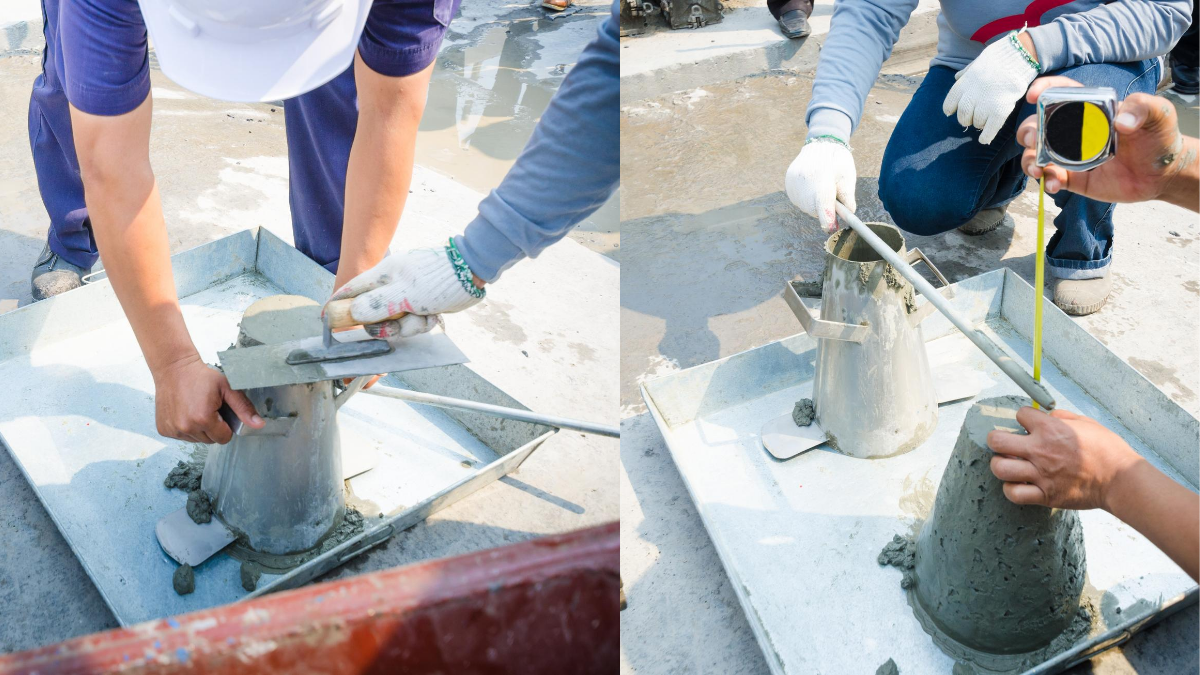
Concrete must be poured from one end to the other. For levelling purposes, level pillars at 2 metre intervals must be provided. The concrete must be levelled and rammed in accordance with the level pillars and end supports. The slump for PCC should be approximately 75 mm. Concrete must be poured within 30-45 minutes.

Precautions while doing Plain Cement Concrete (PCC)

  • When excavating, take care to only excavate to the required levels. However, avoid over-excavation. Backfilling with loose earth is not recommended if the excavation depth exceeds the required depth. In that case, we can place the PCC at the required level by doing a plum concrete. Backfilling with soil and compaction with plate compactors/walk-behind rollers/or Vibro rollers, depending on the situation, is required.
  • Before beginning excavation, the PCC level must be transferred to different locations. Before fine dressing with lime powder, the centerline and PCC dimensions must be marked on the ground to avoid reworks.
  • The surface on which PCC is to be laid shall be sprinkled with water.
  • Anti Termite chemical or LDPE sheets may sometimes be used before doing PCC. A confirmation has to be taken before doing the PCC from the clients/customers.
  • The free-falling height of concrete shall be restricted to 1.5 meters due to segregation issues.

Testing of Bricks – Top 8 Test on bricks to ensure quality

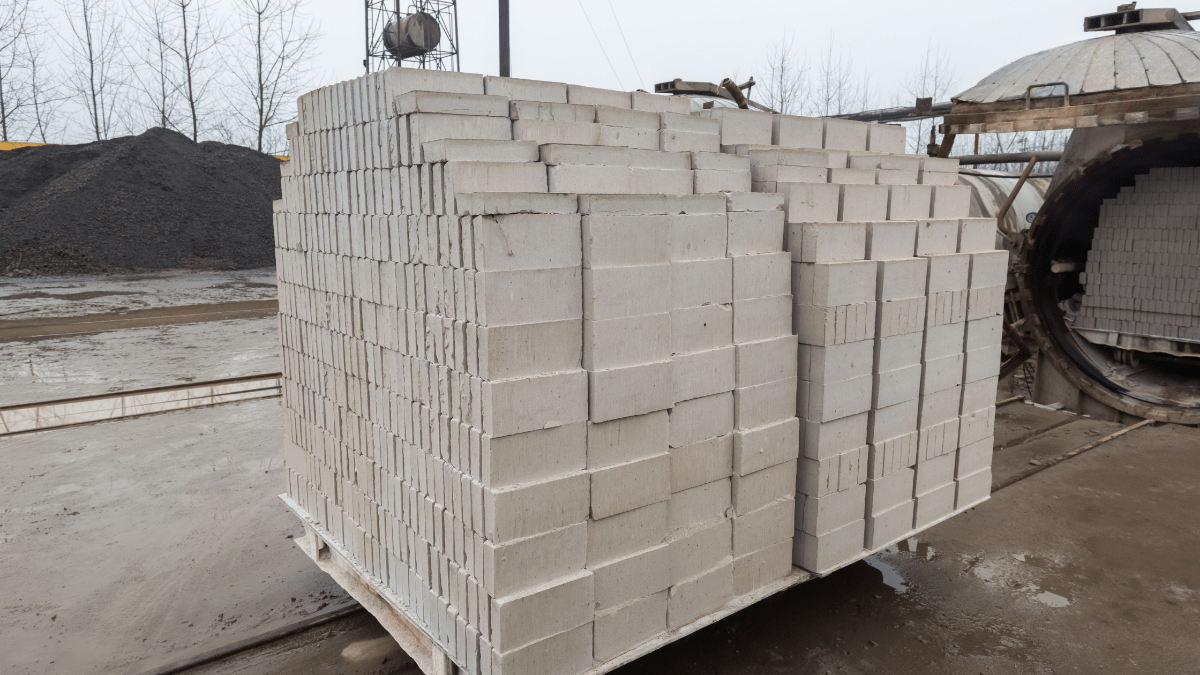
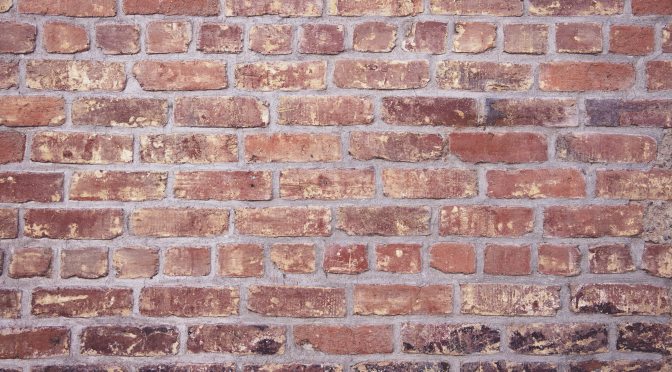
Testing of bricks is a crucial step both on-site and in laboratories to verify the quality and suitability of bricks for construction. Bricks are one of the oldest and most reliable building materials, valued for their strength, durability, and affordability. Typically made from clay, bricks usually measure 190 mm × 90 mm × 90 mm with sharp, rectangular edges. They serve as essential components in construction, acting as both load-bearing structures and means of load transfer. To ensure their effectiveness, several brick quality tests are conducted, including the compressive strength of bricks, water absorption test, efflorescence test, and brick durability test. These types of brick tests help assess the brick’s resistance, porosity, and overall performance under different conditions. Adhering to these testing methods guarantees that only high-quality bricks are used, leading to safer and more durable construction projects. Understanding the methods for testing bricks is vital for builders, engineers, and quality controllers.

Audio on test on bricks
  1. Requirement of Good Quality Bricks
  2. Testing of Bricks – Top 8 tests on bricks
    1. Water absorption testing of bricks
  3. Compressive strength of brick/Crushing strength of brick
  4. Efflorescence test on brick – Testing of bricks
  5. Hardness test on bricks
  6. Shape and size Testing of Bricks
  7. Colour test of bricks
  8. Structure Test on Bricks
  9. Soundness test of bricks

Requirement of Good Quality Bricks

Good quality bricks are essential in construction to ensure strong, durable, and safe structures. They provide a stable base and resist environmental stresses, contributing to the longevity of buildings. The requirement for good bricks includes uniformity in size and shape, strength, durability, and minimal water absorption to prevent damage from moisture.

  • Bricks should be homogeneous and compact.
  • They should have equal proportions of clay, sand, and silt. 
  • Bricks should have requisite plasticity.
  • They should be free from defects like lumps and holes. 
  • The shape of the brick should be rectangular. 
  • A good brick should not break if dropped from a one-meter height.
  • Brick should not possess internal cracking and shrinkage.
  • The brick should be fire and scratch-resistant.
  • Water absorption of brick should not exceed 20 per cent of its dry weight. 
  • The compressive strength of the brick should not be less than 3.5N/mm2.
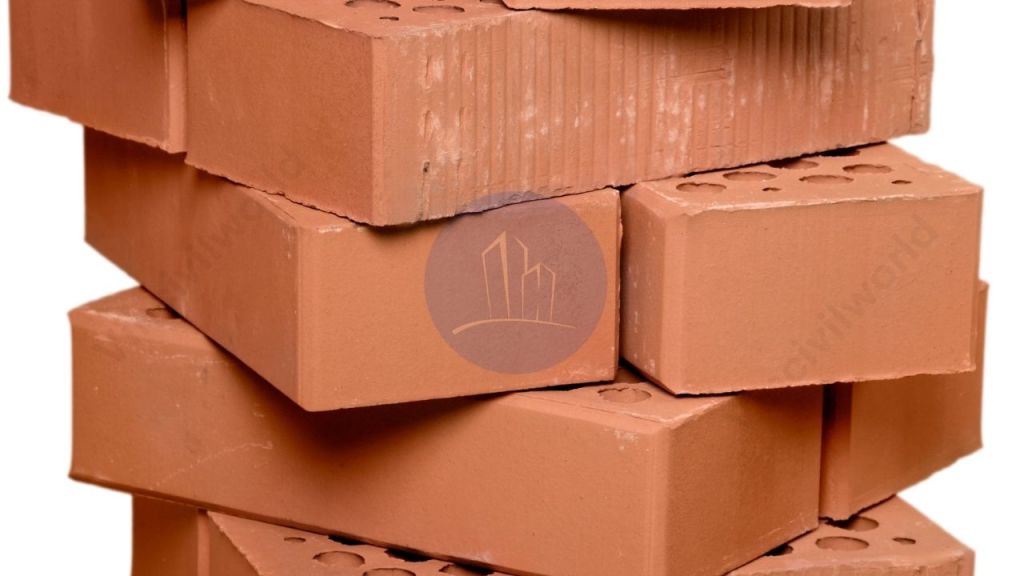
Good quality bricks
Good Quality Bricks

To maintain these qualities, testing of bricks should be done. This article discusses the test on bricks that are carried out to ensure the quality of good bricks.

Testing of Bricks – Top 8 tests on bricks

Bricks must undergo various tests to ensure their quality, strength, and durability for safe and long-lasting construction. Proper testing helps identify defects, assess strength, and confirm compliance with standards, preventing structural failures and ensuring cost-effective use of materials.

  • Water absorption test of brick
  • Compressive strength test of brick/ crushing strength test on bricks
  • Hardness test of brick
  • Shape and size test of bricks
  • Colour test of bricks
  • Soundness test of brick
  • Structure of brick test
  • Efflorescence test of brick

Water absorption testing of bricks

A water absorption test of the brick is performed to determine the amount of moisture absorbed by the brick under extreme conditions. The purpose of the water absorption test of bricks is to determine their durability of the bricks. The water absorption test necessitates the use of a weighing machine and a drying oven.

  • Firstly, the brick specimen is dried in a drying oven 
  • After that, weigh the dry specimen using the weighing machine and mark it as W1.
  • Secondly, immerse the brick in water for 24 hours.
  • Then take the brick out and drain the water.
  • Similarly, measure the weight and mark it as W2.
  • Finally using the formula determine the water absorption.

Water absorption = (W1 -W2) / W1 x 100

The moisture content of the brick is thus determined by the difference between the dry weight and the wet weight. Water absorption for high-quality bricks should be less than 20% of the dry weight. This brick test ensures that the brick is long-lasting and can withstand extreme weather conditions.

Compressive strength of brick/Crushing strength of brick

The ability of the brick to withstand a particular load without failure is the compressive strength of the brick.

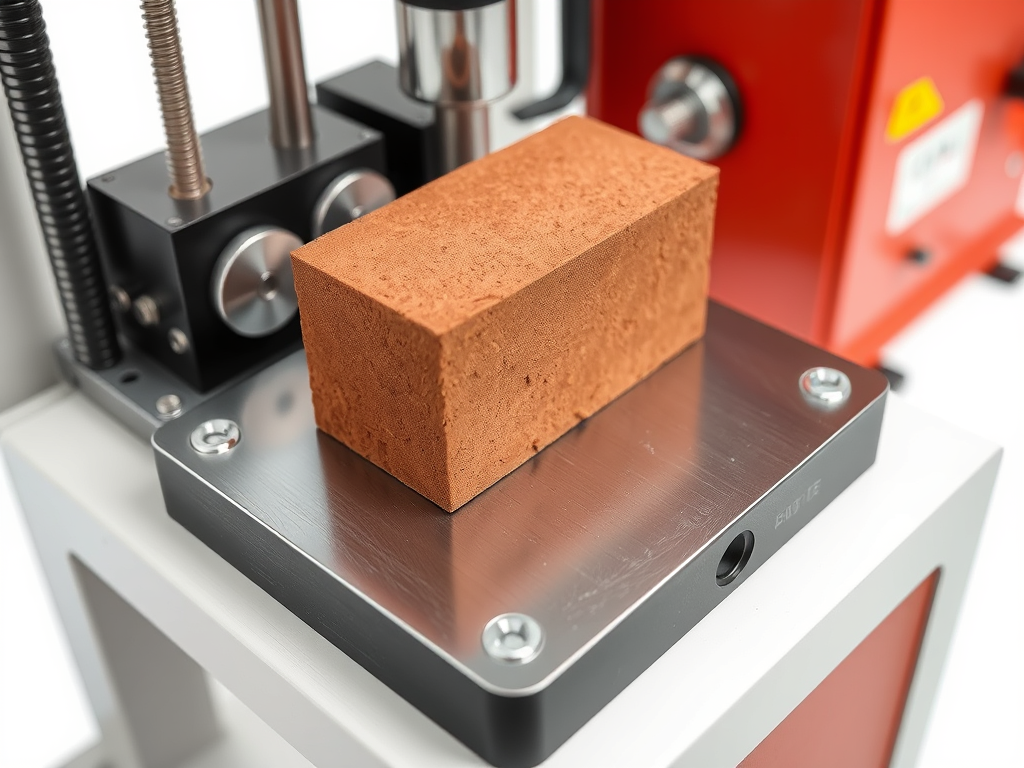
A compressive strength testing machine is the apparatus for determining the compressive strength of brick.
  • First, Take three sample specimens and submerge them in water. 
  • After 24 hours, drain the water. Fill the frog and void with mortar in a ratio of 1: 3. 
  • Subsequently, store the brick in jute bags for 3 days. 
  • Place the brick in the compression testing machine with the brick frog area facing upwards. After that apply the load slowly.
  • Note down the load at which the bricks break.
  • Finally, using the formula to determine the compressive strength of brick. 

Compressive strength (N/mm2) = Maximum load at bricks fail/ Loaded area of brick

For good quality bricks, the compressive strength should not be less than 3.5 N/mm2

Compressive strength of brick/Crushing strength of brick - Apparatus
Compressive strength of brick/Crushing strength of brick – Apparatus

Efflorescence test on brick – Testing of bricks

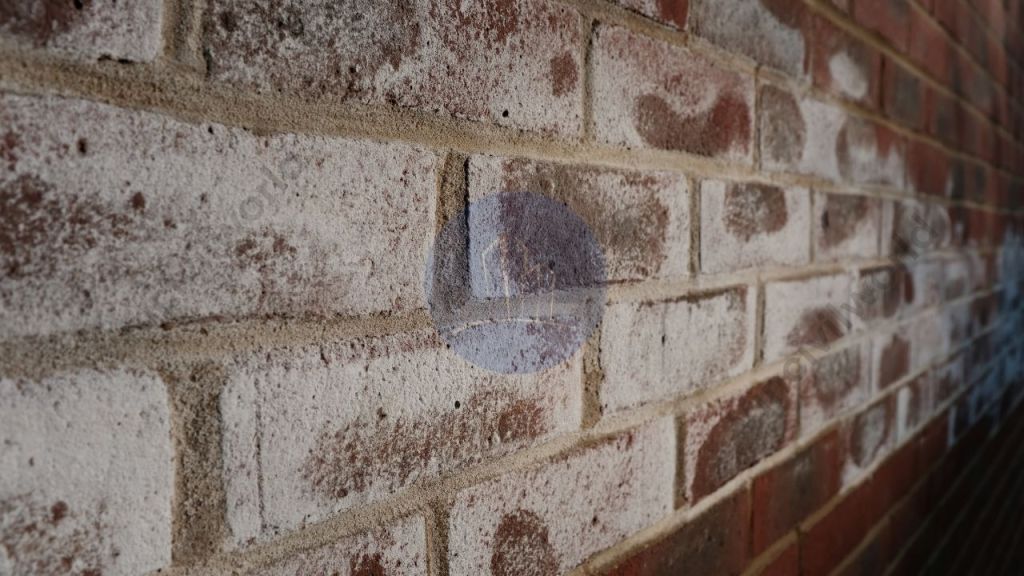
A good quality brick should be free of soluble salts. However, If soluble salts are present, they form a white substance on the brick surface. Generally, efflorescence on brick is the name given to this white formation. The test procedure for performing the Efflorescence test on brick is as follows.

  • First, take a brick specimen and submerge it in water for 24 hours. 
  • After 24 hours, drain the brick and allow them to dry.
  • Keenly observe the brick surface.
Brick surface conditionDegree of Efflorescence
No white substanceZero efflorescence
10% white substanceSlight efflorescence
50% white substanceModerate efflorescence
More than 50% white substanceHeavy efflorescence
Efflorescence test on brick – Range
Efflorescence Test on Bricks
Efflorescence test on brick

Hardness test on bricks

The hardness test on bricks is a field verification test. Hence they are performed on-site. A good brick should resist scratches against sharp things. The following is the test procedure for the hardness test on bricks.

  • At first, choose a brick randomly from the stack.
  • Using a nail or finger make a mark on its surface. 
  • If there is no scratch, then it is a good quality brick.

Shape and size Testing of Bricks

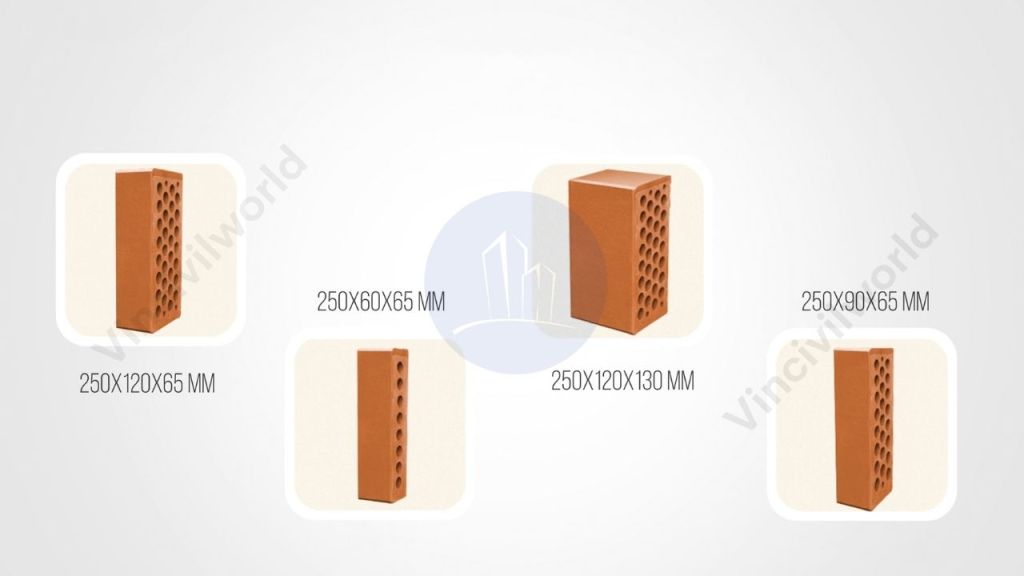
A good quality brick should be uniform in size and rectangular in shape. In order to check this, measure the brick on the field. The standard size of the brick is 190mm x 90mm x 90mm.

  • Randomly, choose 20 bricks from the stack.
  • Sort them in length, width and height wise.
  • If the sizes are the same, Then they are good bricks.
shape and size test of bricks

Colour test of bricks

Normally good quality bricks are deep red or copper colour. The colour test is a field test. Therefore, it can be observed visually.

Structure Test on Bricks

Homogeneity and compact structure are the quality of good bricks. 

  • Randomly, pick one brick from the stack.
  • Cut the brick into two pieces at the centre. 
  • Then observe its inner side.
  • They should be free from defects such as lumps, holes etc. 

Soundness test of bricks

The soundness test of bricks is a field test used to determine the strength of the bricks.

  • In this test, choose two bricks randomly without damage or break.
  • Hit the bricks with each other. 
  • Then, listen to the sound the brick produce. 
  • If a metal ringing sound is produced, then it is good quality bricks. 

Components of dam – 12 dam components explained

Components of dams have specific functions in managing their primary responsibility of water management. Dams are structures built across water bodies to control water flow and levels. Furthermore, dams are also required for a wide range of projects, including small irrigation and water supply schemes as well as larger hydropower and disaster management schemes. Dams’ primary responsibility of managing water is managed by each component in a specific way. The components of the dam and their functions are discussed in this article.

The upstream side of a dam is the area where the water is collected. The water level is high on the upstream side. The downstream is the section of the barriers with low water levels.

Components of Dams - Audio
Components of Dams – Audio
  1. Advantages of Dams
  2. Components of Dams
    1. Water-retaining structure – Components of Dam
      1. Heel 
      2. Toe
      3. Abutment
      4. Crest/Roadway of Dams
      5. Cut off 
      6. Parapet wall
    2. Water-releasing structure: Components of dams
      1. Galleries
      2. Spillway
      3. Diversion tunnel
      4. Sluice way
      5. Free board
    3. Water conveying structure – Components of dams
      1. Conduit
  3. Examples of some major dams
    1. Bhakra Dam ( Gravity dam )
    2. Idukki dam ( Arch dam )
    3. Nagarjuna Sagar Dam (Masonry Dam)
    4. The Hirakud Dam (Earthern dam)
    5. KARIBA DAM (Double curvature arch dam)
  4. Key Takeaways
  5. Conclusion

Advantages of Dams

The dams provide a range of environmental, economic and social benefits. One of the most important benefits of dams is water storage. The stored water is used for drinking, cleaning, bathing, gardening, irrigation purposes, and industrial purposes.

Dams may be constructed to meet the following functions

  • Water storage: Dams are one of the major sources of water for domestic uses. These include cooking, cleaning, bathing, washing, and drinking water. They are also used for gardening, agricultural uses, and industrial purposes. The water is supplied through the canal or with the help of a pipe system from the dam.
  • Irrigation – The water from the dams is diverted through canals. It is directed to fields where the water level is low. This process is used for irrigation purposes.
  • Hydroelectric power – The water stored in the dam is passed through turbines for hydroelectric power generation.
  • Flood prevention – The water level of rivers, streams, etc is maintained by constructing dams across it. This prevents the loss and damage from unexpected floods. 
  • Recreation – The water stored in the dam is used for fishing, boating, and other recreational activities.
  • Debris control – The dam also provides the retention of hazardous material and protects the environment.

Components of Dams

The components of dams play an important role in maintaining the primary responsibility of water management. The parts of the dams are broadly classified as follows.

  • Water-retaining structure
  • Water-releasing structure
  • Water conveying structure
Components of a dam

Components of Dam – Youtube video

Water-retaining structure – Components of Dam

The water-retaining structure is the dam’s walled structure that resists water while allowing a controlled amount to flow downstream. The side of the barrier where water is collected is known as the upstream side. Where the water flows is known as the downstream side. Generally, the following component of dams makes up the dam’s water-retention section

  • Heel
  • Toe
  • Abutment
  • Crest
  • Cutoff
  • Parapet wall
Components of dams
Components of dam
Sluice way
Sluice way

Heel 

The part of the dams meeting with the groundwater or upstream side is called the heel. (Ref fig.)

Toe

The portion of the dams meeting with the groundwater or downstream side is called the Toe.(Ref fig)

Abutment

Abutments support the lateral pressure. These are the sides of the valley. These are concrete or masonry structures. 

Crest/Roadway of Dams

The section of the dams used as a roadway or walkway is the crest. It is the upper area of the dam.

Cut off 

The cut-off is an impervious barrier constructed beneath the earthen dams. The main function is to reduce the loss of stored water in the reservoir by preventing seepage.

Cut off of earthen dams
cut off – Earthen dams

Parapet wall

The parapet wall is seen below the crest near the roadway. This assists in the dam investigation and safety barriers.

Water-releasing structure: Components of dams

Mainly, the components of dams that allow water to flow downstream are known as the water-releasing structure. These dam components are technically known as the dam’s spillways. The spillway’s mechanism allows for controlled water volume. A spillway contains the following components.

  • Galleries
  • Spillways
  • Diversion tunnel
  • Sluice way
  • Free board

Galleries

These are hollow openings passing through the dam as shown in fig. The main purpose of providing a drainage gallery is to collect seepage water from the foundation and body of the dam and drain it out. The seepage water received by foundation galleries is drained away under gravity. The galleries are broadly divided into …

  • Grouting gallery
  • Inspection Gallery
  • Drainage gallery
  • Valve gallery
  • Transformer Gallery

Spillway

The role of the spillway is to convey excess water and prevent damage. The water passes from upstream to downstream. The spillway helps in the emergency discharge of water. 

They are two varieties

  • Controlled spillway 
  • Uncontrolled spillway

In a controlled spillway the flood flow is regulated by the gate. 

Also Read : Spillway types and features – A comprehensive guide

Diversion tunnel

The purpose of the diversion canal is to redirect the water. Diversion tunnels are constructed during the construction stage of dams.

A diversion tunnel may also be constructed to divert floodwater. It can redirect water from mountainous regions to low-lying areas experiencing a water shortage supply.

Sluice way

The role of the sluiceway is to remove the silt accumulated. 

Free board

The interval between the dam heads to the maximum water level on the upstream side.

Water conveying structure – Components of dams

Water-conveying structure mainly conduit and conveys the water from reservoirs through, around, or under an embankment dam

Conduit

These are closed pipe structures. Conduits act as a passage for the water supply. Bottom discharge conduits are pipes. They cross the body of the dam from the upstream to the downstream sides. This enables water flow.

Examples of some major dams

Bhakra Dam ( Gravity dam )

The Bhakra Dam is an Indian gravity dam built across the river Sutlej in Himachal Pradesh. This dam is constructed in 1963. The height of the dam is 226 meters. The length of the dam is 518 meters.
Gobind Sagar is a reservoir of this dam. The Bhakra Dam is composed of alternating layers of light red clays and sandstone.
This dam has four spillways. It helps in irrigation, hydroelectric power generation and recreation. The major source of irrigation water supply in Haryana, Punjab and Rajasthan is this dam.

Idukki dam ( Arch dam )

Idukki dam is an arch dam constructed across the Periyar river in Kerala. It is 554 feet high. One of the biggest arch dams in Asia. The dam provides hydroelectricity, irrigation and tourist destinations. It is built between Kuravan and Kurathi hills.

Idukki Dam - Arch dam
Idukki dam

Nagarjuna Sagar Dam (Masonry Dam)

Nagarjuna Sagar Dam is a stone masonry dam completed in 1967. The dam is a symbol of modern architecture. The purpose of this project was to generate hydroelectricity. It has a 26-crest gate.

The Hirakud Dam (Earthern dam)

The Hirakud dam is located in Orissa state over the river Mahanadi near Sambalpur. The length of the dam is 4800 meters and 59 meters high. It is the oldest multipurpose dam completed in 1957.
The Hirakud Dam is the 4800-meter long and 59 meters high. The gross storage capacity of the dam is 1841 million cum.

KARIBA DAM (Double curvature arch dam)

Kariba Dam is a double curvature arch dam constructed in 1960. It has been built over the Zambezi river. The crest length is 620m and 128m high. The dam provides an example of improving the quality of rocks.

Key Takeaways

  1. Primary Functions: Dams manage water for various uses, including storage, irrigation, hydroelectric power, flood prevention, recreation, and debris control.
  2. Components: The main components include water-retaining structures such as the heel, toe, abutment, crest, cutoff, and parapet wall. Water-releasing structures include galleries, spillways, diversion tunnels, sluice ways, and freeboard. Water-conveying structures are conduits.
  3. Types of Dams: Dams vary by construction and purpose. Examples include gravity dams, arch dams, masonry dams, earthen dams, and double curvature arch dams.
  4. Examples: Major dams include Bhakra Dam, Idukki Dam, Nagarjuna Sagar Dam, Hirakud Dam, and Kariba Dam.
  5. Environmental and Economic Benefits: Dams provide essential benefits like water supply, power generation, flood control, and recreational opportunities.

Conclusion

Dams are crucial infrastructure for effective water management and offer significant environmental, economic, and social benefits. We can appreciate the role of dams by understanding their various components and functions. They are important for water storage, irrigation, hydroelectric power, and flood prevention. Each component plays a vital part in the dam’s functionality. From the water-retaining to the water-releasing and conveying structures, they ensure efficiency. Examples like Bhakra Dam, Idukki Dam, and Kariba Dam demonstrate the diverse applications and benefits of these impressive engineering feats. Effective dam management is essential for sustainable development and environmental protection.

Updates in civil engineering, architecture finishes, building construction, Environmental Engineering