Sustainable Waste Management – Full Details

Sustainable Waste Management has become the need of the hour with the ever-increasing amount of garbage that humans generate. According to the United Nations, around 11.2 billion tonnes of solid garbage are collected worldwide, with humans accounting for nearly all of it. As a result, we must devise plans for long-term sustainable waste management.

In this blog, we will discuss the importance of sustainable waste management, its importance as well as the ways of doing so. Let’s get started with the definition of sustainable waste management.

What is Sustainable Waste Management?

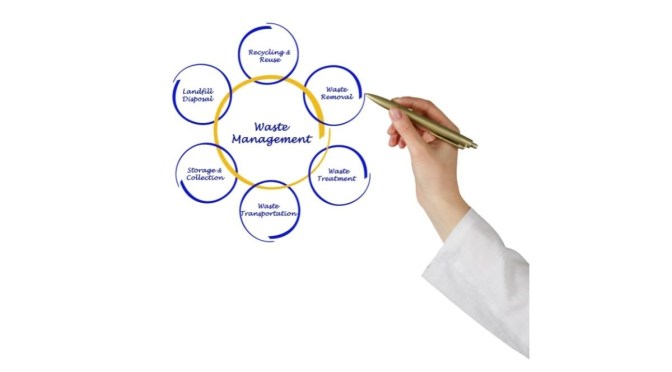
Sustainable waste management refers to the collection, transportation, valuation, and disposal of different types of garbage in a manner that does not damage the environment, human health, or future generations. It encompasses all activities involved in waste management, from production to final treatment.

Sustainable waste management aims to limit the amount of natural resources utilised by

  • reusing as much natural materials as possible
  • producing as little garbage as possible.

A well-functioning sustainable waste management system should have feedback loops, a process-oriented approach, adaptability, and methods for waste diversion. It is critical to adhere to environmental sustainability in this regard so that we can manage all the garbage efficiently rather than dumping it in landfills.

Also read: Land Pollution Effects – Top 7 Effects Explained

Why Sustainable Waste Management Is Important?

Let’s have a look at the importance of sustainable waste management and what makes it an attractive option.

Creates space

In the absence of a proper waste management system, garbage will end up on land, either scattered or centralised in a landfill. Landfills are large structures that take up a lot of space. Densely populated cities can’t afford a lot of space for the sake of landfills.

In such cities, we have to manage and sustainably control our waste so that we can dispose of it properly without wasting space for landfills. Before you move to the next section, make sure that you check out Landfills – Causes, Operation and Life Cycle- Everything you should know

Sustainable waste management Saves and also makes money

Recycling more can help us save money since we will not need to buy another identical item once we have reused or recycled it. Sustainable waste management, in line with the concept of money, can assist some businesses in generating revenue.

Municipalities that collect garbage, for example, might charge collection and recycling fees, gaining money in the process. This will also deter institutions that generate a lot of waste, making them more sustainable and environmentally conscious.

Prevents Pollution

Each type of rubbish we dump has a unique impact on the ecosystem. Pharmaceutical waste, for example, contaminates our water, and discarded meals attract flies and rodents. To avoid this, we should return pharmaceutical waste to the manufacturer for proper disposals, such as burning. Food waste can be sent for composting and plastics for recycling.

All of these measures, as well as others, will aid in pollution control. As a result, pharmaceutical waste won’t pollute the water, plastics won’t block marine life, and food waste won’t attract mice. Sustainable waste management enables us to better understand our garbage and how to manage it.

Also read: Land Pollution Causes -Top 6 causes explained

Waste Management Hierarchy in Sustainable Waste Management

The waste management hierarchy is the foundation for sustainable waste management. It focuses on

  • Avoidance
  • Reduction
  • Reuse and recycle
  • Energy recovery
  • Treatment or disposal

Its goal is to prioritise behaviours that maximise resource efficiency, with renewable and less wasteful methods at the top of the pyramid. We’ll look at how the waste management hierarchy is crucial to long-term waste management in the upcoming section.

Reduction and avoidance

The primary aim is to avoid and reduce the amount of waste produced. This can be accomplished by increasing efficiency while lowering consumption. To begin with, businesses and consumers should select products that take the least amount of resources to manufacture including the packaging.

Additionally, wherever possible, we should abstain from using single-use or disposable commodities. These materials form the core of linear waste, in which resources are harvested, processed, and redistributed only to be discarded.
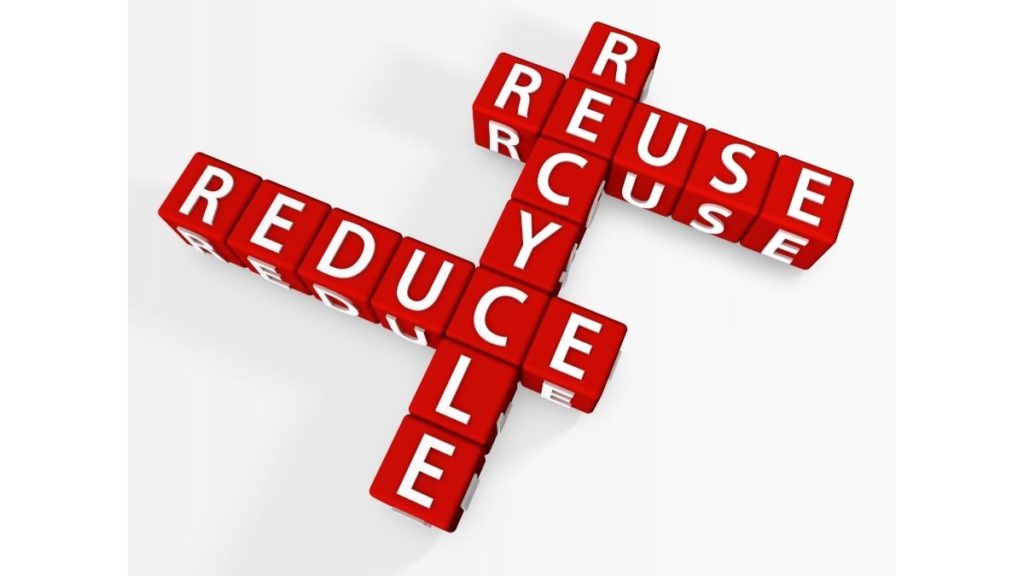
3R concept
3R concept

Reuse and Recycle

If we cannot avoid the consumption of a product then we should choose things that are reusable. Also, we should promote awareness on how to reuse waste products. Processing new materials require money, energy, and often other resources. Since reusing helps us to save these resources, we prefer it over solutions lower down the hierarchy.

One of the core aspects of the zero-waste concept is reuse, which can take the form of having shoes repaired, giving clothes and objects for others to use, and even finding recipes for food leftovers rather than tossing them away. If an object cannot be reused, recycling is the next best choice.

Recycling is suitable for materials that have reached the end of their usable life in their existing form. It minimises the need to extract virgin resources and mitigates some of the negative consequences of waste disposal. Recycling is less desirable than reusing and reducing because it needs more energy, money, and resources to convert the garbage into useable products.

Energy Recovery

Energy recovery is the next stage, which involves converting waste into useable heat, power, or fuel, such as biogas. This is accomplished using a variety of techniques such as

  • Incineration (with energy recovery),
  • Gasification
  • Pyrolysis
  • Anaerobic digestion
  • Landfill gas (LFG) recovery

Combustion is a typical technique of energy recovery for non-hazardous waste. and while it is less favourable to reuse or recycle, it helps lower the physical volume of waste transported to landfills and also produces energy from the burning process that would otherwise require fossil fuels.

Treatment or Disposal

Treatment or disposal is the final and least desirable step in the hierarchy. This usually refers to landfills or incinerators that do not recover energy. Some waste demands treatment but we should avoid it as much as possible by using sustainable waste management techniques.

Sustainable Waste Management Solutions

What criteria must professionals and citizens use to decide if waste management procedures are “sustainable?”

Fundamentally, building a circular economy of waste, as opposed to the make-use-dispose paradigm, is crucial to sustainable waste management. In a circular economy of waste, it returns as a new product or source of energy in a sustainable manner.

Solutions for long-term waste management include:

Composting

Composting is a green and environmentally friendly technique to dispose of waste. Common household items that can undergo composting include excess fruits, tea bags, eggshells, coffee filters, etc. Since it will nourish the soil, the compost pit will be an excellent addition to your workplace or home garden.

To keep odours and fruit flies at bay, tightly close the composting bin or bag. In general, composting converts and recovers organic matter into stable, sanitary, and soil-like products that are high in humic chemicals that replenish the soil.
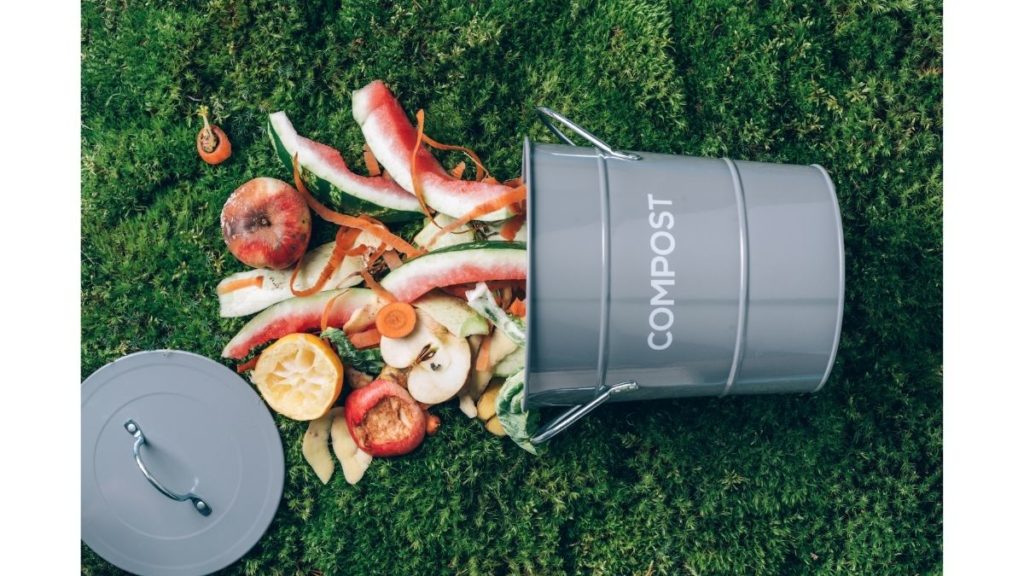
composting
composting

Avoid Single-use products


We must promote reusable products instead of single-use ones. Get mugs or glasses instead of cardboard coffee cups. Even at professional composting facilities, many supposedly green things, such as compostable coffee cups, don’t undergo composting. They eventually end up in landfills. If we can switch to a greener option like glass which we can reuse and recycle it could save both the environment and money.

Make the switch to digital.

Paper and paper products account for the majority of Municipal Solid Waste. Switching as much paperwork as possible to digital forms is a simple strategy for organisations to improve sustainable waste management. This includes

  • Sending and receiving bills electronically rather than in paper
  • Keeping meeting minutes in a shared document rather than printing them
  • Converting to online banking

Conclusion

If the correct framework is in place, waste management can be sustainable in both enterprises and homes. But, more importantly, the implications of ignoring waste are just too serious to ignore. So, let us join our hands to manage waste, adopt sustainable waste management solutions into our day to day life and convert waste into a resource.

Happy Learning.

Top 10 Indoor Plants and their Benefits – Must Read

Nothing can add as much beauty and comfort to our homes and offices as the luxuriant blossoms and leaves of indoor plants. Bedrooms, toilets, kitchens, and cubicles, to name a few… There isn’t a room in the house that a houseplant can’t lighten up. Simply add light and water, and you’ve got yourself an interior garden in the making.

Indoor plants not only look good but also make you feel good. Bringing plants into your home is not just aesthetically pleasing, but provides significant health advantages as well! Numerous studies show that indoor plants make you healthier and happier, providing both psychological and physical health advantages.

Buckle up your shoes as we go on a trip meeting some amazing indoor plants and understanding their benefits. Let’s get started.

What are indoor plants?

Indoor Plants are those plants that are cultivated indoors, usually in spaces like homes and workplaces for decorative purposes. Tropical or semi-tropical epiphytes, succulents, and cacti are common indoor plants. They require the right amount of hydration, light, soil, temperature, and humidity. Most indoor plants will quickly perish if these criteria are not met. In addition, indoor plants require the proper fertiliser and pot size.

Also read: Hydroponics – Everything you should know

Benefits of Indoor Plant

Indoor plants have been shown in numerous studies to make you healthier and happier, providing psychological and physical health advantages such as:

  • Indoor plants help in lowering stress levels.
  • Aids in sharpening your attention.
  • Working with plants has therapeutic benefits.
  • Helps you recover from illness quickly.
  • Improve the indoor air quality.
  • Increases productivity and focus in the workplace.
  • Enhances pain tolerance and healing process.

Impact on Air Pollution

Indoor plants minimise volatile organic compounds (VOCs) like benzene, toluene, and xylene, as well as other pollutants in the air. The presence of indoor plants reduces these VOCs by 50-75%. Soil microbes are principally responsible for the removal of these chemicals.

Plants can generate and convert benzene, then convert it to carbon usage for future use, according to several tests of benzene purification by houseplants. It can help eliminate carbon dioxide from indoor spaces, which can lower our work performance. Plants appear to minimize airborne microorganisms while also increasing humidity.

Also read: What are air pollutants? | Types, sources and effects of air pollution

List of Indoor Plants

Here’s a list of the best indoor plants for every situation at your home:

  • Low Maintenance Indoor Plants: Marble Queen Pothos, Tillandsia Ionantha
  • Low Light Indoor Plants: ZZ Plant, Modern Bamboo
  • Indoor Plants For Small Spaces: Snake Plant, Peperomia Obtusifolia, Opuntia Microdasys
  • Indoor Plants For Pet Owners: Bird’s Nest Fern, Ponytail Palms, Pilea Peperomioides
  • Flowering Indoor Plants: Anthurium, Hoyas
  • Indoor Plants For Clean Air: Parlor Palm, Red Maranta Prayer Plant, Burgundy Rubber Tree Plant
Indoor plants
Indoor plants

Also read: Aeroponics – Process, Types, Advantages – Full Details

Best Indoor Plants having Low Maintenance

If you are someone who often forgets to water the plants or have less time to take care of them, here are some options for you:

Marble Queen Pothos

The Marble Queen Pothos is one of the easiest home plants to grow. With exquisite heart-shaped leaves and vines, they will rapidly fill your plant shelf with beauty. This low-maintenance species is good for novices or anyone who isn’t always careful with their plants. It can grow in low-light conditions and with less watering.

Bromeliad Summer

Air plants, such as Bromeliad Summer, have no roots and absorb nutrients through their leaves. This makes them a great choice for anyone who forgets to water their plants or doesn’t have time to deal with soil problems. These air plants are extremely easy to care for and require only indirect light and a monthly dip in the sink. Just make sure to dry them upside down to prevent the water from rotting the base.

Best Indoor Plants For Low Light

A wannabe plant parent living in a shady apartment? No worries, we have options for you as well.

ZZ Plant

Another good plant for beginners is the Zamioculcas zamiifolia, also known as the ZZ plant. It can resist a variety of adverse conditions, such as infrequent watering or dry air. They can also easily endure low-light conditions, which is very important for apartment residents or those who live in other shady areas. The ZZ plant is a joyful alternative for the kitchen or bathroom, and it looks great on its own or in a group with other plants.

Modern Bamboo

While many plants grown indoors require a lot of light to flourish, some plants like modern bamboo flourish well in dim light. The modern bamboo, which is a symbol of prosperity and good fortune, is easy to care for and thrives best in low-light settings. Its size makes it ideal for any tabletop or desk. As per Feng Shui principles it will bring great energy to the environment it resides in.

Best Indoor Plants For Small Spaces

Do you think that small apartments can’t offer the luxury of having an indoor garden? Not anymore after meeting these vertically growing plants.

Snake Plant

This cheerful succulent comes in a variety of colours and grows straight up, making it an excellent choice for those with little space. The narrow, upright leaves of this tropical plant have uneven banding that resembles snakeskin. Snake plants filter benzene, formaldehyde, trichloroethylene, xylene and toluene from interior air. Arrange a couple in various sizes near a bedroom window to add a touch of green to your sleeping place.

Indoor plant - snake plant
Indoor plant – snake plant

Best Indoor Plants For Pet Owners

Apprehensive about being a pet owner and plant parent at the same time? Check out these pet-friendly plants that are non-toxic to your pets.

Pilea peperomioides 

Pilea peperomioides is another non-toxic plant that is great for a pet-friendly home. It’s visually appealing and easy to care for. The leaf resembles miniature lily pads, and it doesn’t require a pond. The soil needs to dry completely between waterings, which in certain regions means watering once every few weeks. and, It self-propagates when properly cared for.

Calathea Orbifolia

Calatheas don’t prefer direct sunlight since it burns their leaves. This houseplant prefers partial shade, making it ideal for a plant stand or shelf in an area with limited natural light. A regular watering regimen, as well as keeping your plant in a room with temps between 60 and 80 degrees F, will keep it healthy and hydrated. It also likes a lot of humidity, so mist it frequently or put it near a humidifier.

pet friendly indoor plant

Best Indoor Plants For Clean Air

If you wish to use your indoor garden as an air purifier, then these are the plants you should include.

Parlor Palm

The parlour palm is a tropical plant popular for its ability to remove benzene and trichloroethylene, two pollutants typically dispersed by furniture off-gassing. It’s also a low-maintenance plant, requiring just one to two weeks of watering. It grows in indirect to low light. It’s also pet-friendly, so you won’t have to keep it locked away from your furry friends.

Red Maranta Plant

The herringbone pattern on the Red Maranta prayer plant is distinctive, with touches of red throughout. This plant not only adds charm and natural beauty to one’s house, but it also has relaxing and air-purifying properties. This plant thrives in indirect light. It’s best to keep it out of direct sunlight, as the colour of its leaves may fade and possibly burn.

Bird’s Nest Fern

The fronds of the Bird’s Nest Fern have rippled edges and grow out of a nest-like crown. It makes a stunning interior hanging plant. Indirect light and a humid climate are ideal for them. Ferns filter formaldehyde, xylene and toluene.

Shall we wrap up?

Conclusion

We saw the best options to be included in an indoor garden. There’s no doubt that investing in a few indoor plants would bring many more benefits than aesthetic beauty. Try adding a dash of green to your office room and see your productivity and mood going up. Which plants are you going to add to your living space? Comment Below.

Aeroponic Farming – Process, Types, Advantages – Full Details

Aeroponic farming is one of the major techniques in indoor farming. This techniques is becoming popular these days due to greater yields. It also allows the ability to control the growing environment. Greenhouse and vertical farming are the two main types of indoor farming.

Vertical farming is becoming a more cost-effective method in horticulture, allowing for more resource utilization and land efficiency. Plant cultivation in vertically stacked irrigation systems using artificial or natural light is known as vertical farming. This method frequently employs soilless growing settings as well as hydroponic or Aeroponic irrigation systems.

  1. What is Aeroponic Farming?
  2. Aeroponic Farming
  3. Different Types of Aeroponic Systems
    1. Low-Pressure Aeroponics (LPA)
    2. High-Pressure Aeroponics (HPA)
  4. Hydroponics vs Aeroponics
  5. Tools used in Aeroponics
  6. Aeroponics Advantages
  7. Drawbacks of Aeroponics
  8. Conclusion

What is Aeroponic Farming?

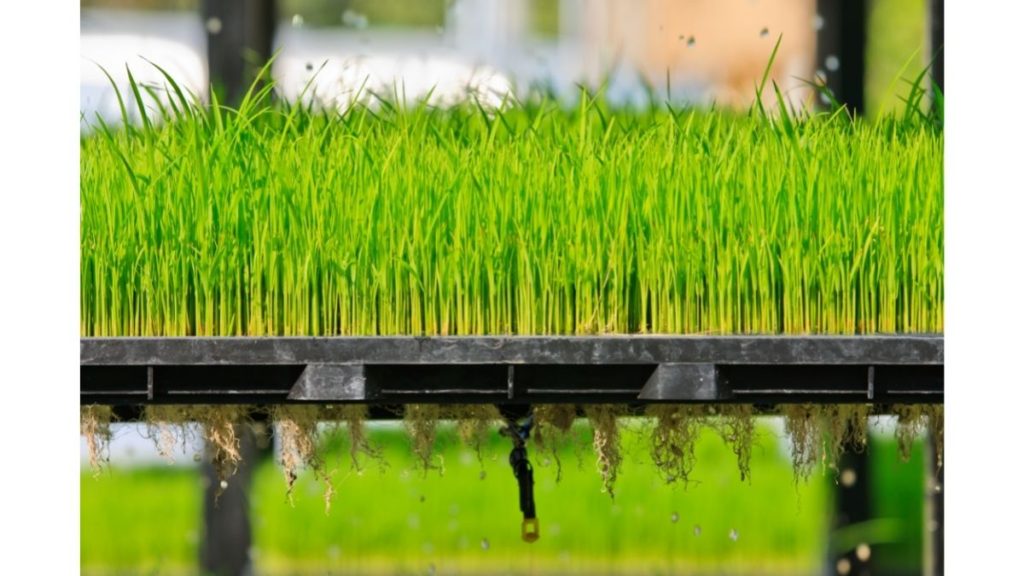
Aeroponics involves growing plants in an air or mist environment. It does not use soil or an aggregate medium. Sounds unbelievable right? You would be shocked to know that mother nature has employed aeroponic growing in plants such as epiphytic orchids and bromeliads. These plants absorb naturally occurring aerosols like mist through their leaves and aerial roots.

Read on to find more about aeroponics, its types, equipment, benefits etc. as I take you on a short trip through an Aeroponic farm. Let’s begin by understanding the process of Aeroponic farming.

Also read: Green Walls – Vertical Gardens – Top 10 healing benefits

Aeroponic Farming

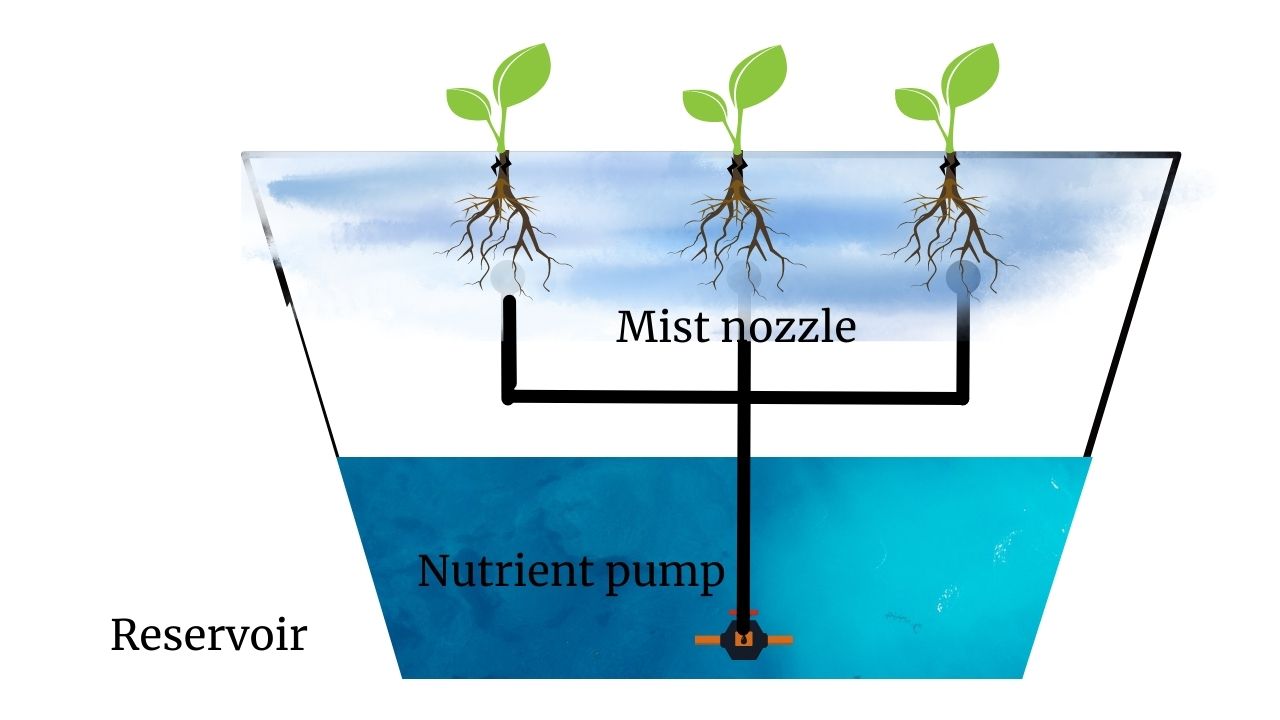
  • Aeroponic farming involves growing plants hung in a closed or semi-closed environment. This is achieved by spraying a nutrient-rich water solution onto the plant’s dangling roots and lower stem.
  • We insert the plants into the holes on top of a reservoir and placed into a sealed container.
  • We need to provide a support collar to keep stems in place. There’s no root zone medium for them to anchor in. These collars must be hard enough to hold plants upright. They also need to keep roots in place. Additionally, they should be flexible enough to allow roots to grow.
  • The pump and sprinkler system produces vapour from the nutrient-rich solution. This vapour is a hydro-atomized spray mixture of water, nutrients, and growth hormones.
  • The dangling plant roots absorb the nutrients while spraying this mist in the reservoir. The spray delivers just the right amount of moisture to encourage the plant’s growth and development.
  • The timer provides the plants with pre-programmed spray intervals and durations.

Because of the sensitivity of root systems, sometimes we pair aeroponics with traditional hydroponics. It acts as a backup “crop saver” if the aeroponic equipment fails. Let’s have a look at the common types of aeroponics.

Aeroponic Farming
Aeroponic Farming

Different Types of Aeroponic Systems

Depending on the intensity of pressure to atomize the water droplets there are two types of Aeroponic systems. They are:

Low-Pressure Aeroponics (LPA)

  • Plant roots are held above a nutritional solution reservoir or inside a channel connected to a reservoir in low-pressure aeroponic gardens.
  • A low-pressure pump delivers nutritional solution via jets or ultrasonic transducers into the reservoir, where it drips or drains.
  • Plants in these units tend to develop dry parts of their root systems as they mature, preventing appropriate nutrient uptake.
  • Due to its ease of setup, availability at any hydroponic shop, and low cost, this is the most common aeroponic farming technique.
Aeroponic system
Aeroponic system

Also read: Methods of Irrigation- 3 Methods Full Guide

High-Pressure Aeroponics (HPA)

  • The HPA system operates at extremely high-pressure to atomize water into small water droplets of 50 microns or less.
  • A high-pressure (80 pounds per square inch (550 kPa)) diaphragm pump feeds nutrients to the roots via 20–50 micrometre mist heads.
  • Since this system produces such small droplets it provides more oxygen to the root zone than the LPA. Thus it is the most efficient aeroponic system available.
  • High-Pressure Aeroponics is more complicated and more expensive to put up due to the specialised equipment required. As a result, they find frequent use in commercial production rather than home growers.

Hydroponics vs Aeroponics

Aeroponics is distinct from hydroponics, aquaponics, and in-vitro (plant tissue culture) cultivation. Hydroponics relies on nutrient-rich water to provide nutrition to plants. In contrast, aeroponics uses nutrient-rich mist for plant nutrition. Unlike hydroponics, which uses a liquid nutrient solution as a growing media and critical minerals to support plant growth, and aquaponics, which uses water and fish waste to support plant growth, aeroponics does not use a growing medium.

Aeroponically Cultivated Cabbage
AspectHydroponicsAeroponics
Growing MediumUses water with dissolved nutrients and a substrate like coco coir or perliteDoes not require a substrate; plants are suspended, and roots are misted with nutrient solution
Water UsageRequires a large amount of water but recycles it efficientlyMore water-efficient as it uses a fine mist for root nourishment
Nutrient DeliveryNutrients are delivered through water in a continuous or timed flowNutrients are delivered via misting, making absorption more direct and efficient
Space EfficiencyRequires larger space for setup due to containers or tanksMore space-efficient; plants can be vertically stacked for aeroponic farming
Setup ComplexityEasier to set up with fewer technical requirementsMore complex setup with misting systems, requiring regular maintenance and monitoring

Having understood the basics of aeroponics, let me introduce you to the tools used in it.

Tools used in Aeroponics

If you are planning to set up an aeroponic farm, you will need:

  • A reservoir/container to hold the nutrient solution
  • Nutrient pump
  • Mist nozzles
  • Tubing to distribute water from the nutrient pump to the mister heads in the growing chamber
  • Baskets to suspend plants
  • Enclosed growing chamber for the root zone
  • Watertight containers for the growing chamber
  • Timer to turn on and off the pump

Next, we are moving to the advantages of aeroponics.

Aeroponics Advantages

The following are some of the advantages of aeroponics:

  • Due to the lack of a growing substrate, plant roots can absorb the maximum amount of nutrients. This leads to greater plant yields. Studies report that Aeroponically grown plants like basil, parsley, cherry tomato, squash, bell pepper and red kale increased their yield by 19%, 21%, 35%, 50%, 53% and 65% compared to soil culture, respectively
  • Plant roots get oxygen 24 hours a day, seven days a week, resulting in massive plant growth. This encourages plants to develop quickly.
  • Because of the higher nutrient absorption rate, relatively fewer nutrients and water are consumed on average compared to conventional plants.
  • Aeroponic systems offer greater mobility. You can simply transfer plants or even entire nurseries around because all you have to do is move the plant from one collar to the next.
  • Only a small amount of room is necessary. This system does not require a lot of areas to set up. Plants are stacked on top of one another. You can make the most of limited space with this type of modular system.

Drawbacks of Aeroponics

Aside from its numerous benefits, aeroponics has several drawbacks that can’t be overlooked, including:

  • Since aeroponic systems are highly sensitive to external conditions, it necessitates continual monitoring of pH and nutrient density ratio.
  • Understanding and applying the proper ratio for nutrients, water supply can be challenging for beginners, and should only be tried by people who are more experienced with such systems.
  • Initial setup can be expensive, costing hundreds of dollars per person.
  • Demands constant monitoring of the growing conditions.

Shall we wrap up?

Conclusion

As compared to other systems, the most significant advantages of aeroponics are the huge plant growth and higher yields. These benefits, however, come at a price. The cost of installing the system is high. It also requires technical know-how. Additionally, you need sophisticated knowledge of pH and nutrient density ratio. If you are new to hydroponics, carefully assess the pros and cons. Then choose the method you believe will work best for you now.

Areas of building | Built-up area | Carpet area | Super built-up area

Reading the floor plan is an important skill that a civil engineer should possess. There are different types of areas in the floor plan of a building. In this article, we will see about the different types of areas.

Different types of areas in Building Construction

Before planning to purchase a home we should be familiar with the following areas adopted in building construction.

1. Plot area

2. Built-up area or Plinth area

3. Carpet area

4. Setback area

5. Super built-up area

Before getting into these terms first we have to know what is RERA 

Real Estate Regulation and Development Act, 2016, (RERA)

The Real Estate Regulation and Development Act, 2016, (RERA) is an act established by the Indian parliament. The main objective of RERA is to give prompt information between the buyers and sellers. This increases transparency and reduces the chance of cheating.

There are three different ways to calculate the area of the property. 

1. In terms of the Carpet area

2. In terms of Built-up area

3. In terms of Super built-up area

While buying a property buyer should pay for the area which is usable. RERA provides safety of money, buyer protection and balanced agreement.

Areas of building
AREAS OF BUILDING

Plot area (Areas of building)

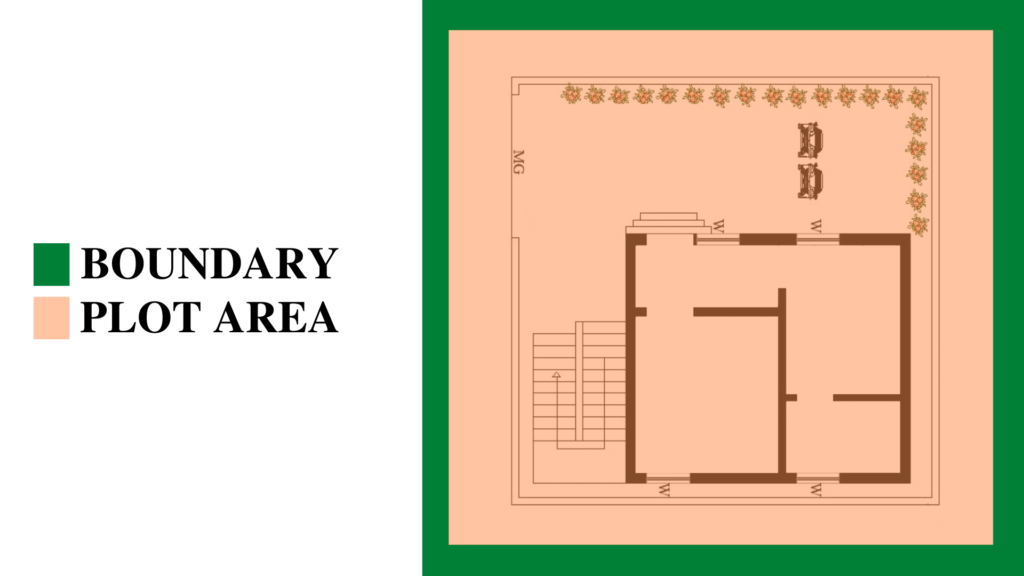
The plot area includes the complete area which you own. This area comes under the fencing.

Plot-area
Plot-area

Carpet area (Areas of building)

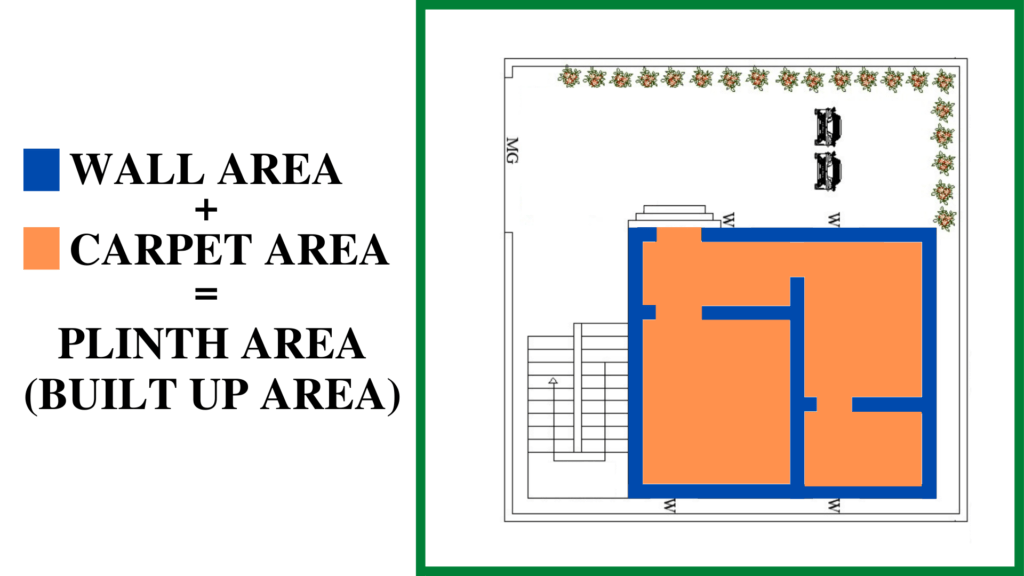
Carpet area is a term which the real estate agent uses the most. It is the area of the building which can be covered by using carpet. It is also called a net usable floor area. 

Carpet Area = Total floor area – Area of internal/external walls

But as per RERA Carpet area = Total Floor area – Area of external walls

Carpet-area
Carpet-area

According to RERA flats should be sold on the basis of carpet area. The carpet area as per RERA is the area of usable spaces such as bedrooms, kitchen, bathroom, toilet etc. It also includes an area covered by internal partition walls. It excludes areas such as Balcony, utility areas, external walls area, open terrace area, lift, lobby, staircase etc. Mostly carpet area is 70% of its built-up area.

Plinth area

The plinth area is also known as the Built-up area. It is the total area of the building within the plot area. It is mostly 30% of the total plot area. 

Built-up Area = carpet area + Area of walls

Plinth-area
Plinth-area

It includes living room, bedrooms, utility, bathroom, wall thickness, kitchen, balcony closed staircases etc. and excludes open terrace area, lift, open staircase, swimming pool etc. It is 10 to 15 % more than the carpet area.

Super built-up area

Super built-up area was used to measure the area of property before the RERA act came into existence. Because the super built-up area lowers the rate per square foot. Saleable area is another name of super built-up area.

Super Built-Up Area = Setback area + Built-up Area+20% of common area 

Super built-up area includes common areas like swimming pool, clubhouses, lobby, staircase, Lift, etc. and the built-up area of the flat.

Set back area

Set back area is the space between the boundary and the building. It is the minimum open space necessary around the building. As per the municipal regulation a specific margin should be provided between building and road. 

Setback-area
Setback-area

Setback area = Built-up Area – Plot area

This provides sufficient ventilation, ease in vehicle movement and protection from other entities.

Types of Bridges – Top 7 Bridge Design Types and Principles

Types of Bridges in civil engineering can range from modest constructions to massive, eye-catching pieces of art – and everything in between. A bridge serves its sole purpose as long as it transports us across a gap. The required passage may be for a road, train, pedestrians, canal, or pipeline. A river, a road, a railway, or a valley may be crossed. Types of bridges are an important classification in civil engineering. In today’s blog, we are going to learn about different types of bridges in detail.

Types of bridges and Bridges design types in civil Engineering

The types of bridges are broadly classified as follows on the basis of form and type of superstructure

  • Arch Bridge
  • Beam bridge
  • Cantilever bridge
  • Suspension bridge
  • Cable-Stayed Bridge
  • Tied-Arch Bridge
  • Truss Bridge

Let’s dig deeper into each of the types now.

Arch Bridge – Types of Bridges

Arch Bridge
Arch Bridge
  • A dead load of a bridge is the weight of the bridge itself, plus the weight of whatever it is carrying (the live load). The forces of load and gravity, which would otherwise send a bridge sliding downhill, are used to hold an arch bridge aloft instead. 
  • An arch bridge works by channelling gravity’s downward force into the structure’s centre — toward a central stone known as the keystone — rather than straight down.
  • Compression is the principle that allows the arch below to support the surface, or deck, above it.
  • Temperature changes can destabilise fixed arch bridges, hence the arch design is occasionally changed with hinges at each base and even the span’s centre.
  • This allows longer arch bridges to adjust to material expansion and contraction when temperatures fluctuate.

Also read: Bridge components explained – Types and functions.

Beam Bridge – Types of bridges

The beam bridge was the first form of bridge ever created due to its simplicity. It is still the most cost-effective to construct. All you need is a crossbeam that spans the gap and is supported at each end by an abutment. A girder bridge is a form of beam bridge that uses steel girders for reinforcement. 

beam bridge
beam bridge
  • Gravity presents a greater issue when creating a bridge since, unlike a building, the majority of the space beneath it is empty.
  • To resist gravity and bear the full load, a beam bridge might be supported merely by two abutments, one at each end.
  • But there’s a catch with beam bridges: the longer a bridge is and the more people, cars, and other objects it carries, the heavier the entire weight becomes.
  • The more abutments on a beam bridge are spaced apart, the less stable the structure becomes. 
  • You may make a long, stable bridge by putting supports in the middle, known as piers or stanchions, and connecting sections between them.
  • The Yolo Causeway in Sacramento, California, is 3.2 miles long, and the Lake Pontchartrain Causeway in Louisiana is 24 miles long.
  • The force of compression drives the weight inward onto piers in the middle of the bridge in beam bridges.
  • Simultaneously, the tension pulling or stretching force pulls the load outward toward the bridge’s abutments on both ends.

Also read: Highway Engineering- Definition, Importance and Construction Details

Cantilever Bridges Types

Cantilever construction is used on some bridges.

  • This design uses a vertically anchored pillar to support a horizontal deck that extends out from one or both sides across the span.
  • Both the above and below are frequently used to support the load.
  • A good example of cantilever construction is a diving board or platform.
cantilever bridge
cantilever bridge

Suspension Bridge Types

Suspension bridges are exactly what they sound like: they’re supported by vertical pillars or pylons that are linked by suspension cables.

Suspension bridge
Suspension bridge
  • Smaller, vertical suspenders are attached to these main cables and use tension to hold the bridge deck up.
  • Tension is the main force that sustains these types of bridges.
  • Despite the fact that the original suspension bridges were composed of simple ropes supporting wooden planks, the suspension technique now allows for vast spans across wide canals.
  • However, because these bridges are only attached to the ground in a few locations, they might shake when heavy traffic passes beneath them.
  • Vibrations can be caused by wind or movement across a bridge.
  • When these reach a specific frequency, resonance occurs, which is the same mechanism that causes the glass to shatter when a trained vocalist hits a high enough note.
  • Bridge crossings can be disrupted and collapsed if vibrations are strong enough. 
  • Torsion, a twisting force commonly generated by external variables such as wind, can also impact these bridges, causing unsafe movement.
  • Travelers can be thrown off a bridge if the surface twists significantly while they are on it.
  • While torsion causes tension in a vertical plane, shear causes stress in a horizontal plane.
  • It occurs when opposing environmental pressures act on a single, fixed component of a bridge, causing it to break like a stick between two hands.

Also read: Cofferdams – Types & Construction methods

Cable-Stayed Bridge

  • A suspension bridge with a cable-stayed bridge connects the crossbeam or bridge deck directly to pillars or towers.
  • There is no main cable, only a slew of vertical suspenders attached to the tower’s summit.
  • Tension is used by these suspenders to keep the bridge deck solid and in place.
Cable Stayed Bridge
Cable Stayed Bridge

Tied-Arch Bridge

  • The qualities of an arch bridge and a suspension bridge are combined in a tied-arch bridge.
  • It supports an arched structure with horizontal force from both sides, similar to a normal arch bridge.
  • Instead of supporting the building from below, the arch rises over the road, with vertical ties descending to provide additional decking support. 
  • Because they resemble a bow from the side, these are sometimes known as bowstring bridges.
  • This bow supports the weight and keeps the bridge stable by combining the tension of its vertical cables with the compression of the arch.
Tied arch bridge
Tied arch bridge

Also read: Golden Gate Bridge: Design and 2 Main Issues

Truss Bridge

  • The load on a truss bridge is distributed across a succession of tiny sections that are joined together.
  • Bridge trusses are typically formed by structural beams for smaller bridges or box girders for bigger bridges, and are joined in a sequence of triangles by welded or riveted joints. 
  • The bridge is held up by tension from vertical steel or timber supports, while compression from diagonal truss supports adds stability by directing the weight toward the centre, similar to an arch.
Truss bridge
Truss bridge

That’s it about the main types of bridges. Each of these has advantages and disadvantages. We need to decide on the type of bridge based on the requirements.

Let me know in the comments if you need any further information.

Happy learning!

Classification of Surveying – A complete overview

Classification of Surveying is a fundamental topic in civil engineering. This is because almost every project begins with measuring and mapping the ground. Surveying determines the relative position of points on the earth. It also measures directions, distances, elevations, and areas. These measurements are used to prepare layouts at a chosen scale. In practice, surveyors apply different Types of Surveying and Land Surveying Methods through reconnaissance, measurement, marking and plan preparation. These Surveying Techniques in Civil Engineering demand high precision and good mathematical skills to analyse field data accurately. By understanding Methods of Surveying Classification, including the difference between Plane vs Geodetic Surveying, engineers can select the most suitable approach for each site and structure. In this article, we explore how surveying is classified and where each type is typically used.

  1. Classification of surveying
  2. Primary classification of surveying
    1. Plane surveying
    2. Geodetic surveying
  3. Classification of surveying based on field nature
    1. Land surveying
      1. Topographical surveying
      2. Cadastral surveying
      3. City surveying 
    2. Hydro-graphic surveying
    3. Astronomical surveying
  4. Classification of surveying based on purpose
    1. Engineering survey
    2. Military survey
    3. Mining surveying
    4. Geological survey
    5. Archaeological survey
  5. Classification of surveying based on instruments
    1. Chain surveying
    2. Theodolite surveying
    3. Traverse survey
    4. Triangulation survey
    5. Tacheometric survey
    6. Plane table survey
    7. Photogrammetric survey

Classification of surveying

Surveying is divided into different types to ensure accurate measurement methods are selected for specific project requirements and field conditions.

  • Primary classification of surveying
  • Classification of surveying based on field nature
  • Classification of surveying based on purpose
  • Based on Instruments classification of surveying

Also Read : Principle of surveying – First and second principle

The details of every classification basis is explained in detail in this article

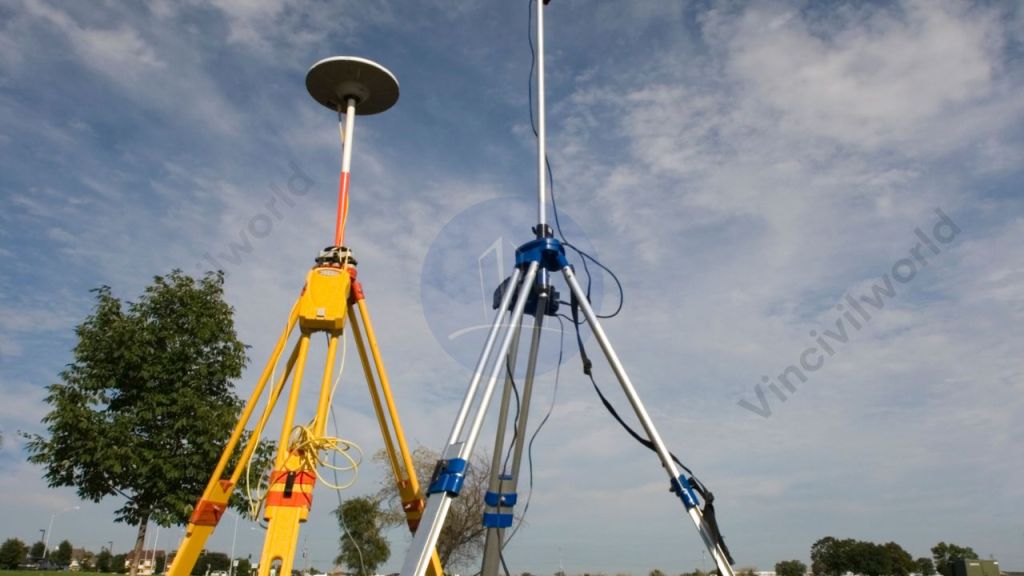
Classification of surveying - Total Station
Classification of Surveying – Total Station

Primary classification of surveying

The primary classification is based on the earth’s surface. We know earth is an oblate spheroid. So while surveying we must consider the earth as either plane or as curved. Primarily we can divide surveying into two types and are as follows.

Plane surveying

For plane table surveying the earth’s surface is considered as a plane. Therefore we should neglect the corrections due to earth curvature. The line which connects these points is a straight line. The triangles made by joining these lines are Plane triangles. This type of surveying is useful for limited areas. ie less than 200 sq.m.

Geodetic surveying

In Geodetic surveying, the earth’s surface is considered as a curve. So the line which connects these points are curves and the triangles made joining these lines are Spherical triangles. Geodetic surveying is used for large areas of more than 200 sq.m.

Classification of surveying based on field nature

Land surveying

Land surveying is the art of establishing or re-establishing corners, lines, boundaries, and monuments of property or land. This is based upon recorded documents, historical evidence, and present standards of practice. It helps in preparation of topographical maps, planning, and estimation of project works, locating boundary lines, etc. Land surveying is classified into three types.

  • Topographical surveying
  • Cadastral Surveying
  • City surveying

Topographical surveying

The main application of a topographical survey is the drafting of maps. Topographical surveys include surveying natural and artificial features such as rivers, hills, roads, canals, etc. It consists of horizontal, vertical, and angular measurements. The scale range is 1: 25000 to 1: 1000000.

Cadastral surveying

The main use of this surveying is in the documentation process while transferring ownership from one person to another. It helps in defining the boundaries and land area calculations. It also called Public land survey.

City surveying 

City surveying provides information for the construction of water supplies, sewage lines etc.

Hydro-graphic surveying

Hydro-graphic surveying deals with the surveying of water bodies. They help in offshore construction activities. Hydro-graphic surveying is also known as Marine surveying. It helps in determining the mean sea level calculation, water depth calculation, dredging analysis, etc.

Astronomical surveying

This type of surveying observes the heavenly bodies such as the sun, moon, and stars. It helps locate the absolute location and lines on the surface of the earth. It also determines the azimuth, latitude, longitude, and time.

Astronomical Surveying

Classification of surveying based on purpose

Engineering survey

This type of surveying helps to analyse the field data for engineering works. These include the construction of roads, railways, and sewage pipelines.

Military survey

This type of surveying helps the military services like the army, navy etc to determine the location of strategic importance. Through this surveying, we can provide maps of broader areas. Since it uses advanced technologies like remote sensing, GIS and GPS, we get precise field details.

Mining surveying

A mining survey determines the location of points in the underground for mine planning.

Geological survey

Gological survey helps in the study of earth composition. It helps to determine the arrangement of different strata on the earth.

Archaeological survey

This type of survey gives the details about old antiquity, forts etc to understand the archaeological sites.

Classification of surveying based on instruments

Chain surveying

Chain surveying is the simplest form of surveying. The principle of chain surveying is triangulation. In this surveying method, we only measure linear measurements. Also, it is suitable for small areas. The areas are divided into triangles and the sides of the triangles are measured. The chain surveying uses instruments such as chains, arrows, pegs, ranging rods, etc.

Theodolite surveying

Theodolite is a surveying instrument that measures horizontal and vertical angles. It is one of the precise methods of surveying. This type of surveying helps to find the level difference, setting out, prolonging survey lines, etc of the area.

Theodolite survey - Classification of Surveying
Theodolite Survey

Also Read : Total station – Principles and fundamentals

Traverse survey

Traverse surveying is a type of surveying in which we connect the survey lines to form a framework. The length can be measured either using the directly or indirectly method. So for the direct method of measurement, we use tapes. For the indirect method, we use Electronic Distance measurement. Some important traversing methods are Chain traversing, Chain and compass traversing, Tape traversing and plane table traversing.

Triangulation survey

In triangulation surveying, we trace series of triangles formed by joining the survey points. The distance and relative points are calculated by the trigonometric relations between the length and angles of the triangle. It is preferable for hills and undulating areas. 

Tacheometric survey

Taacheometric surveying is angular surveying in which horizontal and vertical distance are calculated from the angular measurements. It is a convenient surveying method. Tacheometric surveying uses transit theodolite with a stadia diaphragm for taking measurements. This method is preferable when a direct method of surveying is not possible. 

Plane table survey

Plane table surveying is one of the fastest methods of surveying. It is a graphical method in which we can do field observation and plot simultaneously. Mostly preferable in magnetic areas where compass surveying is not possible. Also, we can check errors and mistakes using check lines. The instruments for plane table surveying are plane table, alidade, plumbing fork, plumb bob, spirit level, compass, etc. 

Photogrammetric survey

It is a surveying type that uses photographs for making measurements. We can prepare maps, 3d diagrams from these photographs. These are mostly to study the wide life and to make virtual models of historical structures. Photogrammetric surveys cover a large area for surveying and they are less time-consuming. 

Updates in civil engineering, architecture finishes, building construction, Environmental Engineering