Plywood Types – MR resistant, BWR and BWP/Marine ply

Plywood types : Plywood is one of the most versatile, cheap, and commonly used wood alternative for interior works, furniture, kitchen cabinets, shuttering works, etc. Earlier plywood manufactures are limited. They manufacture excellent quality plywood that is durable and long-lasting. Nowadays hundreds of companies have started manufacturing plywood. The densities, qualities, sizes, and standards are compromised and the customers are duped most of the time.

How to select a plywood? Which one is the best?

Also read : WPC boards – Advantages, Disadvantages and uses

Plywood types – What is plywood?

Plywood manufacturing

Plywood is a manufactured wood panel/ engineered wood made from thin sliced natural wood called veneers in the core as well as the face. These core veneers are glued in layers one on top of the other with adjacent layers having their wood grains rotated up to 90 degrees to one another. The cross layering of adjacent layers imparts structural strength and stability to plywood. These veneers are bonded together with glue and pressed under high pressure and heated to form plywood. Plywood is a versatile, flexible, and highly workable building material widely used in manufacturing furniture, cabinets, shelves, and wardrobes, etc. They are also used for woodwork for ships and boats and for shuttering works in the construction sector. These are the commonly used categories of plywood based on application sectors.

  • Softwood plywood
  • Hardwood plywood
  • Tropical plywood
  • Aircraft plywood
  • Decorative plywood
  • Flexible plywood
  • Marine plywood

Properties and dimensions of plywood.

Usually, hardwood and softwood are used for making plywood. The core will be of an inexpensive wood veneer based on geographical availability whereas the face will be of a quality wood veneer. Plywood is resistant to cracking, splitting, shrinkage, twisting, etc, and got excellent strength and durability. Plywood’s are available in a size of 2449 x 1219 mm (8’x4’) and the thickness ranges between 3 mm to 25 mm based on the manufacturer. The cost and strength of plywood depend on the thickness, grade, type, and the number of veneer layers.

Plywood types, layers & strength

The strength and cost of ply depend on the number of ply layers as they influence production costs and plywood quality. If the number of plies/layers is more, the plywood will be stronger but the production costs will be higher. For example, 18mm plywood of 15 plies is stronger than 18mm plywood of 13 plies. The minimum number of plies in plywood is 3 plies. An odd number of plies in plywood can reduce warping and deformation. Usually plywood of more plies are of premium quality .

Plywood types and grades

Plywood is classified into three types based on the area of applications and water resistant properties.

  • MR (Moisture resistant )grade or Commercial ply (IS 303 )
  • BWR (Boiling water resistant ply – (IS 303 )
  • BWP (Boiling water proof or Marine ply – ( IS 710 )

Moisture resistant (MR grade ) or Commercial ply- IS 303

MR resistance OR Moisture resistance plywood is known as Commercial ply. Moisture resistant or MR resistant ply is an interior grade ply that can withstand some amount of moisture, humidity, and dampness, etc. Commercial ply is not waterproof and is not preferred for areas exposed to direct water contacts. Commercial ply is manufactured using wood veneers from locally available tree species. This change in tree species will not affect the basic properties which will be as per IS 303.

Plywood interior

The adhesive used for joining the veneers is Urea-formaldehyde. MR grade plywood is an interior grade of plywood and is suitable for indoor use, not for the exterior and areas in direct contact with water. Moisture resistant grade of plywood has the highest internal density among all the available grades of plywood. MR grade ply is used for almost all interior works like furniture, cabinets, office interiors, partitions, ceiling works, etc.

BWR (Boiling water resistant ply) -IS 303

BWR grade plywood is Boiling Water Resistant Plywood confirming to IS 303. Boiling water resistant plywood is an exterior grade of plywood that can resist water better than MR grade commercial ply but is not 100% waterproof. The veneers are glued by Phenol formaldehyde which is a synthetic plastic resin whereas MR resistant ply uses urea-formaldehyde. These synthetic resins impart water-resisting qualities in BWR grade plywood. Moreover, the core layer is treated with various toxicant chemicals that make BWR termite-proof and borer proof.
Boiling water-resistant plywood is the exterior grade plywood and is used for furniture that likely to get wet, kitchen cabinet, lawn chairs, garden tables, etc. BWR plywood is warp free and has excellent bonding, and with zero core gaps.

External Furniture
External Furniture

BWP (Boiling water proof or marine ply)

BWP plywood means Boiling Water Proof Plywood and is popularly known as Marine Grade Plywood. Marine plywood is manufactured out of single species tropical hardwood and jointed using waterproof glue. No voids are left in the core, hence making it a very dense and water-resistant material. Each layer of wood is laid with the grain running at right angles to the next layer and bonded with boiling waterproof synthetic undiluted phenol-formaldehyde adhesive. Marine plywood is also treated with preservatives and a protective finish for external applications. It is a superior grade of plywood which is higher in quality and strength as compared to both MR and BWR plywood. They can be bent and curved without compromising the strength. BWP is the best ply, with the highest resistance to boiling water, and termites, and moisture. But the cost of BWP is also much above the other variants.

Marine plywood is extremely durable and preferred for applications where the plywood has prolonged exposure to water. It is the best choice for marine applications such as woodwork for building ships and boat ad also for manufacturing external garden furniture, kitchen, and bathroom cabinets, etc

Marine ply can be a preferred choice for your kitchen and bathrooms which are more exposed to water and moisture even though they can also be managed by MR or BWR if protected properly.

Conclusion

While selecting a ply wood please be sure about the variety and standard of ply you are going to use.

MR resistant ply is a strong and durable and interior grade ply that can be used for almost every internal application. Avoids using MR resistant ply in areas vulnerable to water and moisture.

BWR ply is boiling water-resistant and exterior grade ply which got very good water-resistant qualities, termite resistant and borer resistant qualities than MR resistant ply. They are preferred for and can be used for external applications, kitchen cabinets, etc with requisite surface finishes.

BWP is the best grade of ply and is a marine grade ply. They are a hundred percent boiling waterproof ply is extensively used for marine applications and kitchen and bathroom cabinets. The cost is comparatively high with respect to MR resistance and BWR ply due to their superior qualities.

Commercial plywood is re-coloured and sold as marine plywood in the local market. Always purchase from a very good brand and obtain Manufacture test certificate.

Coning of wheels- What is coning of wheels?

Coning of wheels is an interesting topic in railway engineering. In this blog, we will see the theory of coming of rail wheels, starting from what is coning of wheels.

What is coning of wheels?

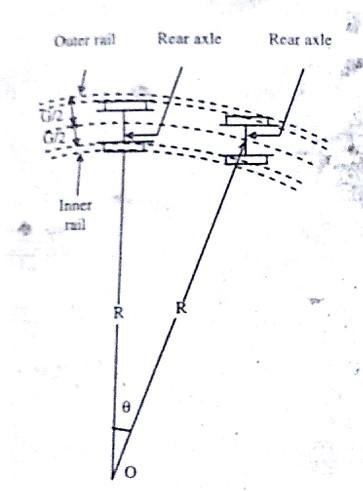
figure shows coning of rails
Coning of rails

Let’s see what is coning of wheels step by step.

  • The space between the inner borders of wheel rims is by and large kept less than the measurement of the track.
  • This results in a gap between the wheel rims and running ends of the rail which is approximately equal to 1cm. (2/8 on both sides).
  • More often than not, the tread of wheels is perfectly the dead centre of the beginning of the rail, since the wheel is chamfered to keep it in this middle position involuntarily.
  • Thus, in coning of wheel the tread or rim of wheels of railway vehicles is made in the shape of  a cone with the slope of about 1 in 20.
  • It maintains the vehicle in the central position with respect to the track.
  • On straight track, portions of wheels running on track have the same diameter.
  • While on the curved path, the outer wheel has to cover a larger distance than the inner wheel. Thus, the portions of wheels running on track have different diameters which help in the smooth running of wheels.

Theory of coning of wheels

Wheel rail contact geometry
  • We have seen what is coning of _wheel through some easy read bullet points. Let me do the same to learn the theory behind coning of rail wheels.
  • On a railway level track, the moment the hinge locomotes towards one rail, the wheel tread width above the rail steps-u but reduces over the other rail.
  • This forbids the auxiliary movement and hinge pulls back to its original position.
  • This is possible only if the diameters on both rails are equal and the pressure on both rails is also equal.
  • On a coiled path, because of the rigidity of the wheel bottom, either of the wheels has to slip by a measure equal to the differentiation of length.
  • Or else, the axle has to move outward a bit so that a tread with longer diameter is formed over the outer rail where, as a slighter diameter tread is formed over the inner rail.

Also read: Applications of Intelligent transportation system- everything you want to know

Calculation of coning of wheels

Behaviour of coning on curves

If the diameter of the tread on both the rails is equal, then

Slip=α (R2-R1),

The outer radius, R2=R+C/2

Inner radius, R1= R-G/2

G= Gauge

α= Angle at centre in radians

 Therefore, slip= alpha X G

α 0 = Angle center in degrees about 1 degree

α 0 Slip= 0.029 (roughly for 1 degree of central angle)

  • Therefore, the slip is about 0.029m per degree of the central angle.
  • Chamfering of wheels on bends is not useful as the principal axle if owing to centrifugal force proceeds towards the outward rail the back axle will precede towards the inside rail and the complete benefit of coning wheels cannot be availed.
  • Put differently, there will be no free sidelong movement of wheels.
  • This results in the disadvantages of the outer rail will have more pressure while the inner rail will have lesser pressure.
  • Owing to the central strength, the parallel components incline to turn the rail out and the gauge has broadening tendency.
  • Due to this condition if the voids sleepers have no base plate beneath the edge of the rail they will be damages. In order to get rid of or minimize the supra mentioned faults “angling of rails” is done.
  • When the rails are tilted then the base plate or sleeper is not placed horizontally. It is laid at a slope of 1 in 20 towards the inner side.

Advantages

  1. Smooth riding- help vehicle to negotiate curves smoothly
  2. Reduces wear and tear of wheel flanges. Damage is caused because of the friction action of rims with inner faces of the rail top.
  3. It gives an option of lateral drift of the hinge with its wheels
  4. It prevents, to some extent, the slipping of the wheels

We have seen the advantages. Let’s see the disadvantages of coning of wheels now.

Disadvantages

  1. The pressure on the horizontal component of force near the inner edge of outer rail has a tendency to wear the rail quickly
  2. The horizontal component has to turn the rail outwards and hence the gauges may be widened.
  3. If no base plates are provided, sleepers under the outer edge of the rail may be damaged

Also read: Intelligent transportation system: A comprehensive approach to its components

Types of Gauges in railway- Broad Gauge, Metre and Narrow Gauges

Types of Gauges in railway is a mandatory topic to touch upon when you study railway engineering. In this article, I will take you on a journey through the three basic types of railway gauges: broad gauge, metre gauge, and narrow gauge.

  1. What is gauge in railway?
  2. Types of Gauges in railway
    1. Broad gauge
    2. Metre gauge
    3. Narrow gauge
  3. Factors affecting the choice of types of gauges in railway

What is gauge in railway?

The gauges in railway is defined as the clear minimum perpendicular distance between the inner faces of the two rails. The distance between the inner faces of a pair of wheels is called wheel gauge.

The figure below is a diagrammatic representation of gauges in railway.

diagram shows gauges in railway
Gauges in railway

Now, let’s jump right on to the various types of gauges in railway.

Some related posts from Vincivilworld

Types of Gauges in railway

There are 3 major types of gauges in railway.

  1. Broad gauge
  2. Metre gauge
  3. Narrow gauge

I will tell you more details about each of them in the upcoming sections. Let’s start with broad gauge.

Broad gauge

When the clear horizontal distance between the inner faces of two parallel rails forming a track is 1.676m, the gauge is called broad gauge. Also known as standard gauge in some countries.

Broadest gauge is used for tracks in plain areas which are densely populated for routed of maximum traffic at places which are centers of industry and commerce.

Suitability: Broad gauge is suitable under the following conditions

  • When sufficient funds are available  for the railway project
  • When the prospects of revenue are very bright

So, you got an idea about broad gauges. Let’s look into metre gauge now.

Metre gauge

Metre gauges are used when the clear horizontal distance between the inner faces of two parallel rails forming a track is 1m. It is used for tracks in under- developed areas and in interior areas where traffic intensity is small and prospects for future development are not very bright.

Suitability: Metre gauge is suitable under the following conditions;

  1. When the funds available for the railway project are inadequate
  2. When the prospects of revenue are not very bright.

That’s it about metre gauge. Next, let me give you some information about narrow gauge.

Narrow gauge

Narrow gauge is leveraged when the clear horizontal distance between the inner faces of two parallel rails forming a track is either 0.762m or 0.610m. These are used in hilly and very thinly populated areas.

Suitability: Narrow gauge is suitable under the following conditions:

  1. When the construction of a track with wider gauge is prohibited due to the provision of sharp curves, steep gradients, narrow bridges and tunnels, etc.
  2. When the prospects of revenue are not very bright.

You have seen all types of gauges in railway. Did you know the factors that should be taken into account while selecting a gauge? Its time to see that.

Factors affecting the choice of types of gauges in railway

Types of Gauges in Railway
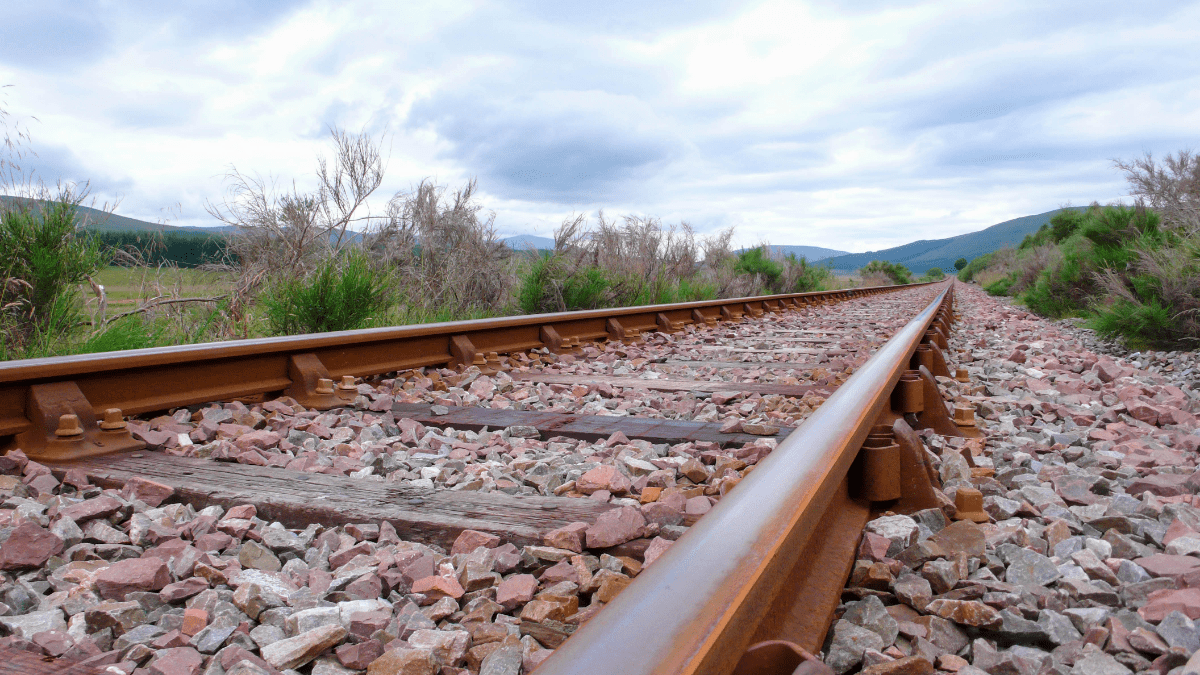
Railway track
  1. Traffic condition: If the intensity of traffic on the track is likely to be more, a gauge wider than the standard gauge is suitable.
  2. Development of poor areas: The narrow gauges are laid in certain parts of the world to develop a poor area and thus link the poor area with the outside developed world
  3. Cost of track: The cost of railway track is directly proportional to the width of its gauge. If the fund available is not sufficient to construct a standard gauge, a metre gauge or a narrow gauge is preferred rather than to have no railways at all
  4. Speed of movement: The speed of a train is a function of the diameter of wheel which in turn is limited by the gauge. The wheel diameter is usually about 0.75 times the gauge width and thus, the speed of a train is almost proportional to the gauge. If higher speeds are to be attained, the broad gauge track is preferred to the metre gauge or narrow gauge track.
  5. Nature of country: In mountainous country, it is advisable to have a narrow gauge of the track since it is more flexible and can be laid to a smaller, radius on the curves. This is the main reason why some important railways, covering thousands of kilometres, are laid with a gauge as narrow as 610mm
  6. Gauge should be uniform and correct: Uniformity of gauge is necessary due to the following reasons:
  7. Inconvenience to the passengers while changing the train at the station, with the change of gauge:
  8. Delay in the movement of people and goods resulting in wastage of time
  9. Extra labour for unloading and reloading the goods
  10. The goods are also likely to be damaged or dislocated at the junction station, having a change of gauge.
  11. Provision of extra and costly yards, godowns, sheds, etc. At every junction station having a change of gauge. Difficulty in quick movement of military and equipment during war days.

So, you got to know everything about gauges in railways? Did I miss out anything? Let me know your thoughts in the comments.

MUST READ: Types of rails- 3 types full details with figures

Double charge vitrified tiles – A combination of elegance and strength.

Double charge vitrified tiles are manufactured by feeding a double layer of pigments through a press that prints the patterns. The design possibilities of these tiles are limited but got excellent qualities in terms of strength and durability.

Classification of Vitrified tiles

Vitrified tiles are available in a wide range of variations to cater to any functional requirements and costs. They can cater to high traffic areas like airports, metro stations, railway stations, industrial uses to small residential applications. The category and types of vitrified tiles are tailor-made for adapting to any application.

  • Soluble salt vitrified tiles
  • Glazed vitrified tiles,
  • Double charge vitrified tiles
  • Full body vitrified tiles

The classification is based on the method of manufacturing, method of vitrification, material qualities, density, type of traffic, colour choices and functions.

Must read : Types of vitrified tiles – Advantages and uses

CLASSIFICATION OF TILES

This article is exclusively about Double charge vitrified tiles and their difference from Glazed Vitrified tiles (GVT) that includes Digitally glazed vitrified tiles (DGVT) and polished glazed vitrified tiles (PGVT) as shown in the figure.

Digitally glazed vitrified tiles (DGVT) are simply Glazed vitrified tiles (GVT) digitally printed whereas Polished Glazed Vitrified tiles (PGVT) are the extra polished version of Glazed Vitrified tiles/ Digital Glazed Vitrified tiles.

Double charge vitrified tiles
Double charge vitrified tiles ( Credits -Kajaria)

Manufacturing method of vitrified tiles

Vitrified tile is made by hydraulic pressing a mixture of clay, quartz, feldspar, and silica. The hydraulic pressed tiles are heated in kilns at a temperature of around 1000-1400 degrees centigrade. The ingredients like Quartz, silica, and feldspar melts and transforms into a glass-like hard layer. This process of manufacturing is called the vitrification process which means making like glass. At high temperatures, the molten silica fills the gaps and air bubbles thereby making the surface extremely strong and non-porous. The manufacturing process is the one that makes vitrified tiles a much superior option to ceramic tiles. The vitrification process makes vitrified tiles dense, non-porous, abrasion-resistant, and durable than ceramic tiles.

Double charge Vitrified tiles

Double charge vitrified tiles are fed through a press that prints the pattern with a double layer of pigment, 3 to 4 mm thicker than other types of tile. 

These types of tiles are also called double-loaded tiles and are made from a mixture of clay, quartz, feldspar, and silica. They do not have a glazed layer and hence digital printing is not possible in these tiles. For Double charged vitrified tiles the designs are formed with a double layer of a pigment having a thickness of 3-4 mm thick. That means the upper layer of the design mix is 3-4 mm thick and contributes almost 30% of the total tile thickness. Tiles are passed through a press where they are fed with the design mix and pressed into the tile body. On firing at high temperature the thick pigment layer melts and fuses to become a part of the tile body and not a layer as in Glazed Vitrified tiles. The tile surface is further nano-polished for making it non-porous, extremely durable, and abrasion-resistant with superior qualities.

DOUBLE CHARGE VITRIFIED TILES
Double charge vitrified tiles ( Credits Kajaria)

Why double charge tiles are superior to Glazed Vitrified tiles.

When you are thinking of floor tiles a plethora of options will come. One is the cheapest and colourful option and another one is durability and strength. A digital tile is always a good option in terms of colour choice, durability, and economy.
But what makes Double charge tiles superior to Glazed Vitrified tile?

Double charge vitrified tilesGlazed Vitrified tiles(GVT)/Digital Glazed Vitrified tiles(DGVT)/ Polished Glazed Vitrified tiles (PGVT)
Double charge tiles are available in
matt and glossy finishes. The tiles are nano polished for extra glossiness and are know as Double charge polished vitrified tiles.
Glazed vitrified tile is known as a digital and polished glazed vitrified tile. They are available in Matt
and Glossy finishes.
Durability
The upper pigment/design layer of Double charge tiles is very thick
and constitutes around 30-40%
of the total tile thickness.
The upper design layer of Glazed Vitrified tiles is only 1-2 mm thick vitrified layer and constitutes around 1/10th
of a tile body.
The manufacturing process (Vitrification process) melts and
fuses the 3-4 mm thick pigment /design layer into the tile body and transforms it as part of the tile.
The top layer is digitally printed and vitrified to a glass-like layer through the vitrification process. The
thickness is around 1-2 mm normally.
The vitrification process produces an extremely durable,
and wear-resistant and highly impervious surface and constitutes more than 1/3 rd of the tile body.
The vitrified layer is only 1-2 mm thick against 3-4 mm
of Double charge tiles and are not so strong and wear-resistant like Double Charge tiles.
Double charge vitrified tiles got in a long-wearing tile surface, suitable for heavy traffic and vast commercial projects.Glazed vitrified tiles got a reasonable wearing surface capable of medium to low traffic and used mostly for residential applications.
Hardness
Hardness value in Mohs scale is ranges between 6-8Hardness value in Mohs scale is 4 – 6
Scratches are less noticeable due to the high design thickness/pigment layer of 3-4 mmScratches formed are visible in GVT tiles due to low glazing thickness.
The design will not fade and the original sheen is maintained.Designs fade in high traffic areas and loose its charm.
Designs and colour choice
The colour layer is formed by merging pigment layers spread through the press. Due to technological limitations, design possibilities are limited.Design possibilities are unlimited. Uses digital printing techniques and can print any type of texture and colours.
Stain resistance & Maintenance
Double charge tiles have extremely good stain resistant qualities and are very easy to clean and maintain.Stain resistant properties are low compared to Double charge vitrified tiles.
Areas of applications
Even with the design limitations, the
tiles look classy and elegant. Double charge tiles are a combination of beauty and strength. Mostly used in high traffic interiors and also for residential uses where strength and durability are the primary criteria.
GVT tiles are highly aesthetic and can match any designs and colour schemes. Mostly used in residential and low traffic interiors
Cost comparison
Even though cost is high the Double charge tiles are premium quality tiles and got excellent performance in terms of durability,strength, hardness, stain resistant,water resistant properties.They are comparatively affordable tiles, got a huge variety of designs and textures, and are the best choice for residential buildings with medium to low traffic areas.

VIDEO – Difference between glazed Vitrified and Double charge Vitrified tiles

Difference between Double charge tiles and Glazed tiles

Conclusion

Double charge vitrified tiles are where beauty meets strength. An increase in costs is compensated by its long-lasting and durable surface and its capability to cater to heavy traffic. Digital Glaze and Polished Glaze Vitrified tiles are cheap, strong, got a huge variety of designs, and can be a part of residential uses with low to medium traffic.

WPC Boards – Advantages, Disadvantages and Uses.

WPC boards or Wood Plastic Composite (WPC) is a hybrid product manufactured by mixing sawdust and plastic materials. WPC boards are used in a wide range of structural and non-structural applications due to their superior qualities and strength when compared with any other materials used for the same purpose. They are one of the best alternatives for natural wood and plywood as they come with add-on features like water-resistant, no decay, design flexibility, ease of working, colour choice, etc. They are extensively used for facades, swimming pool decks, doors, windows, interiors, furniture, etc. Let us go through its unique properties and applications.

Materials used for interior works

For making a room usable and the interiors to be set up in the right direction. Interior materials for modular kitchen, wardrobes, cabinets, etc has to be made with durable materials that have to look elegant and long-lasting. Here we are listing a few commonly used materials.

  • Particle board
  • MDF
  • HDF
  • PVC or Multiwood
  • Plywood
  • WPC or Wood plastic composite

All these materials can be used as an alternative for wood. But why WPC boards are best and preferred choice. Let us go through the facts..

Modular kitchen cabinets

WPC boards – Ingredients

WPC is made from grounded sawdust thoroughly mixed and heated with thermoplastic resins mixed with additives for imparting superior qualities. Sawdust from fibre fillers like pulp, peanut hulls, byproducts of the textile industry, bamboo, etc. are mixed with virgin or waste/recycled plastic derived from polyethylene, polyvinyl chloride, polypropylene, etc. Nowadays polyethylene-based plastics are commonly used. The proportion of sawdust is around 15%, virgin/recycled plastic constitutes 75%, and the remaining will be different additives. WPC board is a hybrid product that got the qualities of wood and easiness and water-resistant properties of plastic. These ingredients are mixed to a thick consistency and are moulded or extruded to form WPC boards.

WPC boards – Manufacturing process

The ingredients are mixed to achieve a relatively thick consistency and are extruded or moulded. Additives, such as pigments, binding agents, and lubricants are added for extra strength and other superior properties. WPC products got high cellulose content and hence can be moulded to any shape and size. They can be treated as wood which can withstand moisture and rot-resistant.

WPC boards – Properties

WPC boards are available in 4 ft x 8 ft (1220 x 2440 mm) sizes. and available in thickness of 5 mm, 6 mm, 8mm/7.5 mm, 10 mm, 12 mm, 15 mm, 17 mm, 18 mm, 20 mm, 25 mm. They are available in low density, medium density, and High density. With these variations in densities, we can choose them based on areas of usage. The density of around 600 kg /cum is idle for good screw holding capacity.

WPC board - Modular kitchen
WPC board Modular kitchen

Advantages of WPC boards

WPC boards got superior qualities which stand out from other conventional materials and wood substitutes.

Green and environmental friendly product

Biodegradable materials and 100 % recyclable materials like wood waste, industrial waste, agricultural waste, plastic waste, etc are used in the production of WPC boards. No trees are cut in the making process of WPC boards.

The extrusion process consumes almost 100 % raw material without generating wastage. The process does not emit any hazardous chemicals like formaldehyde or any VOCs. WPC boards can be an integral part of green buildings.

WPC boards are reusable products and almost all manufacturers sell with buyback guarantee if returned as plain material.

Water resistant and Heat resistant properties

WPC boards are moisture and heat resistant than any other conventional building materials. They are preferred over marine plywood, wood, and other similar products for modular kitchen cabinets, partition, wardrobes, etc.

WPC board got excellent water-resistant properties, they do not wear and tear, and will not fade on exposure to the external atmosphere. Because of these properties, WPC boards are used for external applications like facades, decking for swimming pools, landscape items, garden furniture, garden fencing, flower pots, etc. due to its low maintenance.

WPC Board - Swimming pool deck
WPC – SWIMMING POOL DECK

Durability

WPC boards are highly durable and are not affected by any of the climatic changes like rain, snow, humidity, and chemicals, etc. Hence they are used for external applications. 

Because of its high density, all types of screws and nails can be easily fixed with the help of a conventional tool. WPC boards have better screw and nail holding capacity than plywood and can even screw and unscrew multiple times in a single spot without failure.

They do not need any coatings and maintenance like that of wood and do not fade on exposure to sunlight.

Colour and coatings

WPC boards are available in a variety of colours and do not require any protective coatings. They can also be painted using textured and PU paints but care should be taken to apply plastic primers. WPC boards can also be laminated and veneered after applying required surface preparations. 

Ease of fixing

WPC can be moulded into different shapes and sizes. They can be cut, grooved and moulded easily with conventional tools and gives an elegant and classy look.

WPC Board - Moulded and grooved
WPC board- Moulded and grooved

Termite resistant

WPC do not corrode and are highly resistance to rot, decay and marine borer attack. They do not absorb any moisture like plywood and conventional wood.

Fire resistant

WPC material is highly fire resistant and fire retardant material. Plywood burns with flame whereas WPC do not burns with flame. That is why it is preferred for kitchen interiors.

Disadvantages of WPC boards

The short coming of wood and plastic is evident in WPC boards

The initial cost is comparatively high compared to other alternative materials used for the same purpose.

The wooden finishes gives and artificial looks when used in interiors, doors and windows.

They are not resistant to high temperatures. Hot utensils when placed over WPC board gives a melting impression if the temperature is more than 90-100 degree.

Laser cutters may burn the product.

WPC requires minor maintenance. If used for horizontal surface scratches will be formed.

Applications of WPC boards

Due to its superior qualities like water resistant, termite resistant, and other properties they are used for a lot of applications both internal and external.

External applications

They are used for facades, decking of swimming pools, garden furniture, landscape components, park benches , planter boxes, outdoor panelling,doors , windows etc.

WPC boards can be used in signboards, display boards, direct digital printing, exhibitions stands & graphics.

External Facade
WPC facade

Interior applications

They are used for interior ceiling, kitchen cabinets, bathroom vanities, interior partitions, modular furnishing, household furniture, doors, windows , railing, wall panellings etc.

Conclusion

WPC is an innovative material which has proven its ability as one of the most sustainable and eco-friendly option with add on like moisture resistance and fire resistant qualities. They can act as a perfect alternative if used in a systematic way.

Components of Railway Track- Full Functions of All Components

Components of railway track are rail section, sleepers, ballast, rail fastenings and subgrade and embankments. I will walk you through each of them in detail. You will get to learn about the functions of rails, functions of sleepers, functions of ballast and about fastening of railway.

Railway tracks are complex systems comprised of various components that work together to ensure safe and efficient train travel. Understanding the components of a rail track is crucial for maintaining and optimizing railway infrastructure. Rail track components include the rails, sleepers (ties), ballast, and fastening systems, each playing a vital role. Rails provide the pathway for trains, sleepers support the rails, ballast maintains track stability, and fastening systems secure everything in place. This introduction explores the essential railway components, highlighting their functions and importance in the overall track structure. Familiarity with these elements is key to effective railway management and maintenance.

Without any due, let’s jump right on to it.

  1. Rail sections- Important among all components of railway track
    1. Function of rails
  2. Sleepers (Ties): Supporting the Rails
    1. Functions of sleepers
  3. Fastening in Railway-Rigid member of components of railway track
    1. Functions of Fastening in Railway
  4. Ballast
    1. Functions of ballast
  5. Subgrade and embankment- last member of components of railway track
  6. Switches and Crossings: Enabling Train Movement
  7. Rail Joints: Connecting the Rails
  8. Railway Track Drainage Systems
  9. Track Bed: Ensuring Even Load Distribution
  10. Rail Pads and Under Sleeper Pads: Reducing Vibrations
  11. Expansion Joints: Handling Temperature Variations
  12. Railway Electrification Systems: Powering the Trains
  13. Key Takeaways
  14. Conclusion

Rail sections- Important among all components of railway track

The rail provide a hard, smooth and unchanging surface for the passage of heavy moving loads. Rails are made of high carbon steel to withstand wear and tear. Flat footed rails are mostly used in railway track. I will tell you the major functions of rails now.

Rails are key components of a rail track. Made of high-quality steel, they form the primary pathway for trains.

Function of rails

  • Rails provide a continuous and level surface for the movement of the trains with minimum friction with steel wheels of the rolling stock
  • Rails provide strength, durability and lateral guidance to the track
  • Rails transmit the axle load to sleepers, which transfer the same load to the underlying ballast and formation
  • Rails bear the stresses developed due to heavy vertical loads, breaking forces and temperature variance.
  • In the railway components section, the function of rails is to enhance efficiency and longevity. Properly maintained rails improve the overall performance of the rail track system.

So, that’s it about the rail sections and the important functions of rails. Let’s move on to the second member in the list of components of railway track.

Sleepers (Ties): Supporting the Rails

Sleepers, also known as ties, are vital components of a rail track.The support which keeps the rails apart at required distance, supports the rail and distribute the load to the ballast are called as sleepers. Sleepers are of different materials such as wood, steel, cast_iron, RCC and Prestressed concrete

These rail track components play a crucial role in absorbing vibrations and maintaining track geometry. As essential railway components, sleepers ensure the safe and efficient operation of trains. Proper maintenance of sleepers is key to extending the lifespan of the entire track system and enhancing overall performance.

Time to peep into the major functions of sleepers.

Functions of sleepers

The important functions of sleepers are,

  • To hold the rails to proper gauge in all situations. That is, exact gauge along straights and flat curves, slightly loose on sharp curves and slightly tight in diamond crossings.
  • To support the rails firmly and evenly throughout
  • To distribute the load transmitted through rails over large area of ballast underneath or to the bridge girders.
  • To hold the rails to proper level in turnouts and crossovers, and at 1 in 20 in ward slope along straight tracks
  • To provide an elastic medium between the rails and ballast and also to absorb the vibrations caused due to moving axle loads
  • To maintain proper alignment of the track. On curves proper cant is provided by raising the outer rail and tamping the required quantity of ballast below the rails
  • To provide the general stability of the permanent way throughout
  • To provide the insulation of track for the electrified for signaling
  • To provide easy replacement of the rail fastenings without any serious traffic disturbances

So, you grasped the knowledge on the functions of sleepers and a bit of information about sleepers. Now, I’m going to introduce you another member of components of railway track. Guess who? Rail fastenings (Ya, as I rightly written below).

Fastening in Railway-Rigid member of components of railway track

Fastening systems are essential components of a rail track, crucial for keeping the track intact. These rail track components secure the rails to the sleepers, ensuring stability and alignment. They include clips, bolts, and screws, which hold the rails firmly in place, preventing movement and reducing vibrations. As vital railway components, fastening systems help maintain the correct gauge and improve the overall safety and performance of the track. Properly functioning fastening systems are key to the longevity and reliability of rail infrastructure, ensuring trains run smoothly and efficiently.

Fastening in railway is used to connect the rails and sleepers together in their proper positions. The fixtures and fastening used in track fittings are,

  • Fish plates
  • Spike
  • Bolts
  • Chairs
  • Blocks
  • Keys
  • Plates

Cool. I will close the chapter of rail fastenings by throwing some light to the functions of rail fastenings.

Functions of Fastening in Railway

Fastening in railway has the following functions.

  • Join the rails end to end to form full length of track
  • To fix the rails to sleepers
  • To maintain the correct alignment of the track
  • To provide proper expansion gap between rails
  • To maintain the required tilt of rails
  • To set the points and crossings in proper position

So, that topic too is over. Next we are going to study about ballast, functions of ballast in particular.

Ballast

Ballast is the broken stone placed or packed below the sleepers to transmit load from sleeper to the formation and at the same time allowing drainage of the track. Ballast is a key component of a rail track, providing the foundation of stability. These crushed stones support the sleepers, facilitating drainage and load distribution. As essential rail track components, ballast maintains track alignment and reduces vibrations. Its function ensures the overall durability and performance of the railway infrastructure.

Ballast - component of railway tract

To better understand about them, let’s have a look at the main functions of ballast.

Functions of ballast

The major functions of ballast are,

  • To provide firm and level bed for the sleepers to rest on
  • To allow for maintaining correct track level without disturbing the rail road bed
  • To drain off the water quickly and to keep the sleepers in dry conditions
  • To discourage the growth of vegetation
  • To protect the surface of formation and to form an elastic bed
  • To hold the sleepers in position during the passage of trains
  • To transmit and distribute the loads from the sleepers to the formation
  • To provide lateral stability to the track as a whole

Almost at the end of the journey. I will give you a snippet of information about the last member of components of railway track.

Subgrade and embankment- last member of components of railway track

Subgrade is the normally occurring ground which when prepared to receive the blast and track is called formation. Subgrade and formation are crucial components of a rail track, forming the groundwork for the entire structure. These rail track components provide a stable foundation, support the ballast, and ensure proper drainage. Their function is to distribute loads evenly and maintain track alignment, essential for railway infrastructure’s durability and performance.

In a permanent way, rails are joined either by welding or by using fish plates and are fixed with sleepers by using different types of fastenings. Sleepers are properly placed and packed with ballast. Ballast is placed on the prepared subgrade called formation. So, that’s where the importance of subgrade is.

Switches and Crossings: Enabling Train Movement

Switches and crossings are critical components of a rail track, facilitating train direction changes and track intersections. These rail track components ensure smooth transitions and safe passage. Their function is vital in managing train traffic, enhancing the efficiency and flexibility of the railway network.

Rail Joints: Connecting the Rails

Rail joints are essential components of a rail track, connecting individual rail sections. These rail track components ensure continuous rail alignment and stability. Their function is to accommodate rail expansion and contraction, reducing stress and maintaining the integrity of the railway infrastructure.

Railway Track Drainage Systems

Railway track drainage systems are vital components of a rail track, managing water flow and preventing track damage. These rail track components ensure proper drainage, protecting the subgrade and ballast. Their function is crucial for maintaining track stability and prolonging the life of railway components.

Track Bed: Ensuring Even Load Distribution

The track bed is a fundamental component of a rail track, ensuring even load distribution. Comprised of ballast and sub-ballast layers, these rail track components provide support and stability. Their function is to maintain track geometry and absorb stresses from train movements, enhancing overall performance.

Rail Pads and Under Sleeper Pads: Reducing Vibrations

Rail pads and under sleeper pads are essential components of a rail track, designed to reduce vibrations. These rail track components fit between the rails and sleepers, cushioning impacts. Their function is to protect the track structure, improve ride comfort, and extend the lifespan of railway components.

Expansion Joints: Handling Temperature Variations

Expansion joints are critical components of a rail track, allowing for temperature-induced rail expansion and contraction. These rail track components prevent rail buckling and gaps. Their function is to maintain track integrity and ensure safe, continuous train operations under varying temperature conditions.

Railway Electrification Systems: Powering the Trains

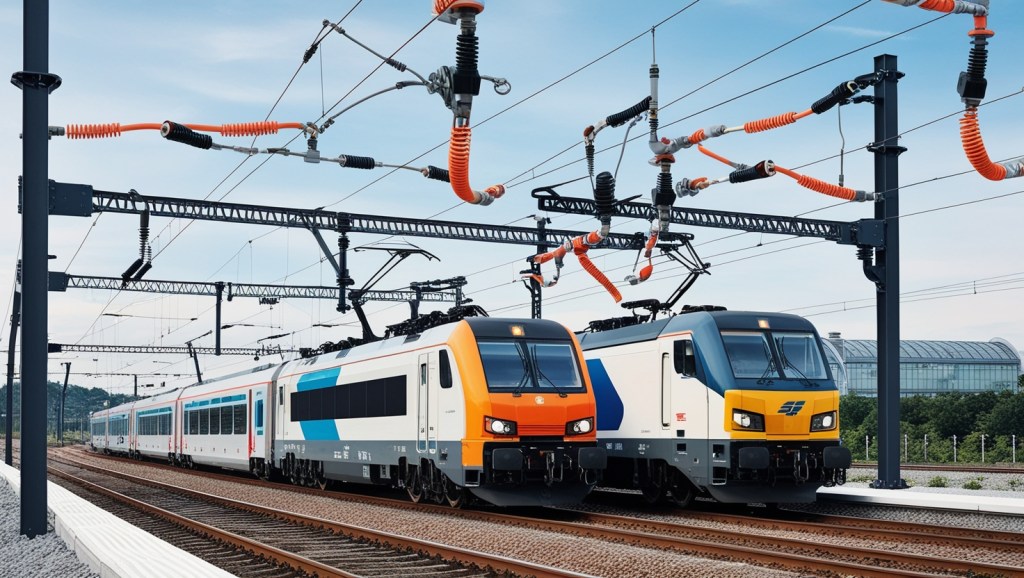
Railway electrification systems are vital components of a rail track, providing electrical power to trains. These rail track components include overhead wires and third rails. Their function is to ensure efficient and reliable train operations, reducing reliance on fossil fuels and enhancing overall railway performance.

So, the article was an introduction to the different components of railway track. We will figure out more in the upcoming article.

Key Takeaways

Understanding the components of a rail track is crucial for maintaining and optimizing railway infrastructure. The main components of a rail track include rails, sleepers, ballast, fastening systems, subgrade, and embankments. Each component has a specific function: rails provide a smooth path for trains, sleepers support and distribute loads, ballast ensures stability and drainage, fastening systems secure rails, and subgrade forms the groundwork. Additional components like switches, crossings, rail joints, drainage systems, track beds, rail pads, expansion joints, and electrification systems enhance the efficiency, safety, and durability of railway tracks. Proper maintenance and knowledge of these railway components are essential for effective rail management.

Conclusion

Railway tracks are intricate systems composed of various components that work in unison to ensure safe and efficient train travel. From the rails and sleepers to the ballast and fastening systems, each element plays a vital role in the track’s overall performance. Understanding the functions of these rail track components helps in maintaining the integrity and longevity of railway infrastructure. Additional components like switches, crossings, drainage systems, and electrification systems further enhance the railway network’s efficiency and reliability. Familiarity with these components of rail tracks is essential for anyone involved in railway management, ensuring optimal operation and safety. Share your thoughts and experiences in the comments below!

MUST READ: Intelligent transportation system: A comprehensive approach to its components

Updates in civil engineering, architecture finishes, building construction, Environmental Engineering