Aluminium Anodising – A remarkable finish coating

Aluminium Anodising is an electrochemical process done on aluminium to increase the thickness of thin natural oxide coating and thereby enhance its corrosion properties. In our previous article Properties of Aluminium, the reasons behind applying a coating are described in detail. The anodic layer is non-conductive and acts as an insulation against electricity, sound, and heat. Aluminium anodising can increase the aesthetic look, absorb wear and tear and provide requisite durability against possible scratches occurred during handling, fabrication, and erection.

What is Aluminium Anodising ?

Anodising is an electrochemical process that transforms the metal surface into a decorative, durable, and anti corrosive anodic oxide finish. The Anodising process is conducted by passing an electric current through an electrolyte with aluminium to be coated as an anode. The oxygen ions released from the electrolyte get deposited on the surface of the object/anode. Oxygen reacts with aluminium to produce aluminium oxide. The thickness of Anodising ranges from 4 microns to 30 microns or some times more.

Anodising Tank
ANODISING TANK

Aluminium Anodising Process

The process of anodising is divided into stages depending upon t

Pre-treatment

The products to be anodised are cleaned in acid or alkali solutions to remove the dirt, grease, and other impurities from the surface. The pre-treatment method depends on the types of finish to be applied. The material is de-oxidised in an acidic solution to remove the natural oxide film.

Etching

Etching involves the removal of some parts of aluminium from the surface. This can be done using alkali or acid according to the finish coat type and texture.
For satin finishes and precision parts light etching is done using alkali where minimum etching is done just enough to remove the natural oxide film. The alkaline solution used for light etching is Sodium Hydroxide.
For non-precision parts and architectural extrusions, minor scratches and dye markings will be visible. Hence etching is done by treating in a concentrated mixture of phosphoric and nitric acids.

Etching process of aluminium

Brightening

Brightening is a micro level treatment done on the aluminium surface by chemical or eletrochemical means. This is done to level up the undulations. This provides a high lustre on the surface for receiving the coatings

Aluminium Anodising

The aluminium part to be anodised is submerged in an electrolyte solution. The electrolyte used in this process is sulphuric acid.
The positive charge is applied to the submerged aluminium which acts as an anode and negative charge is applied to the plates suspended in the electrolyte. High voltage direct current is passed through the electrolyte constituting positive and negative ions. The electric current in the circuit causes positive ions to get attracted to the negative plates, and negative ions to flock to the positive aluminium anode.

Anodising aluminium in an electrolyte

Formation of barrier layer

The aluminium combines with the negatively charged oxygen ions to create aluminium oxide. This process develops a metal oxide film on the surface of aluminium that is treated. The layer quality can be adjusted with the concentration of solution and temperature.This is called a barrier layer, a defence against further chemical reactions at those spots.

Formation Of Barrier Layer
FORMATION OF BARRIER LAYER

As current continues to be applied, the relatively weak and reactive areas of the pores will continue to penetrate deeper into the substrate, forming a series of column-like hollow structures. At this point the surface is porous and attracts dirt and other substances. Colour can be added at this stage.

SEQUENCE OF PORES FORMATION DURING ANODISING

For typical non-hard coatings, the depth can be up to 10 microns. Once this level is reached, and if no colour is needed, the process is stopped. 

Sealing process

The final stage is sealing of pores and the process involves in dipping in a de-ionised water rinsing.

The coating can withstand chemical attack, scratch resistant and have a hardness index of 9 out of 10  in Mohs Hardness scale , means second only to diamond.

Application of colour

As mentioned above the barrier layer is porous like what is shown in the figure. At this stage we can go application of colour. The pigments fills the porous.

The pigment fills all the empty pores up to the surface, where it’s then permanently sealed off. That’s why anodised colours are so durable – they can’t be scratched off from the surface because in fact the colours are deep down and can only be removed by grinding away the substrate.

COLOUR/PIGMENT FILLING IN PORES
COLOUR/PIGMENT FILLING IN THE PORES

After colouring, anodised aluminium has a characteristic “metallic” look. This is caused because of the roughness left after a uniform electro-chemical etching. The deeper the pores, the rougher the surface will be but the colours will also be that much more durable.

Technique of colour anodising

There are several techniques for colour anodising aluminium. One technique is electrolytic colouring, which involves immersing the anodised aluminium in an inorganic metal salt bath. An electric current is applied to this bath as the metal salts oxidise in the aluminium’s pores. Depending on the chemical conditions of the bath and the length of time immersed, the aluminium colour will vary. Popular anodised colour finishes include gold, black, stainless, clear, brown, bronze, and nickel. 

Advantages of aluminium anodising

Anodised aluminium possesses a lot of advantages over any other type of coatings. What is unique, is that no additional layer is applied to the aluminium during anodising. Anodising creates a layer that is built up from the existing aluminium. The oxide layer is fully integrated into the material.

a) Appearance of aluminium anodising

Anodising protects the natural feel and appearance of aluminium with its aesthetically pleasing looks. Anodised look feels better than a painted artificial look.

b) Resistance to corrosion & wear

Anodising increases corrosion resistance and the material retains its appearance for a longer period. Anodising creates a hard, wear-resistant layer which protects the underlying aluminium. Anodised aluminium is used in high traffic areas subjected to excessive wear and abrasion. It can also be used in areas exposed to sunlight, humidity, heat, etc without any effect on the coating.

c) Increase life span of aluminium anodising

Anodising is a very old and proven process. Anodised materials have a greater life span when compared with any other coating material.

d) Adhesion 

Unlike paints and powder coatings, anodising is not a coating. Hence it may not fade or peel off when exposed to atmospheric conditions like sunlight, heat, moisture, etc.

e) Abrasion resistant

The aluminium oxide layer is one of the hardest material next to diamond. The anodic layer is capable of withstanding wear and abrasion in transportation, handling, and fabrication. Powder coatings are not as harder as anodised aluminium.

f) Environmental Friendly and VOC s

The process of anodising aluminium is an environmentally friendly metal coating technique. It does not emit any volatile organic compounds. (VOC s). The waste of aluminium anodising constitutes aluminium sulphate and aluminium hydroxide which are recycled and used in water treatment systems and cosmetics. Anodised aluminium can be used in green buildings.

Anodised Aluminium used for Green Building

g) Surface finish

Anodising creates a uniform and regular finish. The problem of orange peeling and high coating thickness may not occur in anodising. Anodising can be applied to modified materials also.

h) 100% Recyclable

Anodised Aluminium can be recycled and reused to any extend. The recycled product possesses the same quality as the virgin product. Coating removal is not necessary before recycling like other coating products.

i) Filiform corrosion

The diminishing of the internal layer between the aluminium surface and the coating doesn’t happen in anodising like other coatings.

J) Chalking

Chalking is the formation of fine powder on the surfaces of paint films due to weathering, whereas in aluminium no chalking will be formed. The colour , gloss, texture etc shall be retained in all atmospheric conditions.

Aluminium anodising – Applications

Anodised aluminium is used in a lot of applications.

a) Building and construction sector in the form or extrusions which are fabricated and erected for sky light,facades, green building, handrails,doors and windows etc.

b) Used for automobile, boat and aircraft parts

c) Food processing industry

d) Decorative works

e) Marine – Yacht masts, pontoons and decks etc

AIRCRAFT PARTS
AIRCRAFT PARTS

Demerits of Anodised aluminium

Aluminium anodising got limited colour selection because of the chemicals used in the anodising process. The available colours may not match with the colour scheme of structures.

Touch-up, repair and re coating of anodised product is not possible.

Anodising is vulnerable to lime and cement, Industrial acid, alkali pollutants etc. Anodised aluminium has to be protected while using in under construction buildings.

Anodising is costly than the other polyester coatings.

Anodising does not cover the welded joints.

Shade variation between batches usually happens in anodising.

Civil engineering subjects; Skills mastered and Applications

There are differences in the civil engineering subjects depending on the universities. But you will have to learn the following civil engineering subjects without any option. Because they decide your knowledge in the realm after you walk out of your college as a civil engineer.

So, let’s jump right on to it.

List of civil engineering subjects

Here, I’m going to list out the core subjects in civil engineering.

  1. Surveying
  2. Structural analysis
  3. Construction technology
  4. Geotechnical engineering
  5. Design of concrete structures
  6. Design of steel structures
  7. Design of hydraulic structures
  8. Transportation engineering
  9. Water resource engineering
  10. Environmental engineering
  11. Quantity surveying and valuation

So, you got the civil engineering subjects list. Now, I am going to explain the importance of the subjects and textbooks you can refer to master at each of them. Civil engineering jobs and career growth after completion of professional course depends on the specialisation in any of the subjects.

1. Surveying

TOTAL STATIONS USED IN SURVEYING
TOTAL STATION

Skills acquired

The subject gives you a deep understanding of how you have to carry out the surveying on field. Also, the principles and the theory behind surveying is explicitly drawn.

Applications

You should thrive to get good marks in the subject if your future plan is to be in the construction industry.

Textbooks that can be referred

Basak, Surveying and levelling

i. Dr. B. C. Punmia, Ashok Kumar Jain, Dr Arun Kuma Jain,Dr. Arun Kumar Jain., Surveying, Laxmi publications

ii. Arora K.R, Surveying, Standard book house

The next subject is related to structural engineering.

2. Structural analysis

Skills acquired

The behavior of different building materials on the structure is analysed with the help of various methods.

Applications

The subject is very important while constructing any structure in the field because the material is chosen based on the total load acting on a structure and matching its behavior with that.

Text books that can be referred

i. Aslam Kassimali., Structural analysis, Cenage Learning

ii. Hibbler., Structural analysis , Pearson Education

3. Construction technology

Skills acquired

A comprehensive study of different building materials and fundamental techniques of construction

Applications

This is a theory subject that will be useful for securing marks for several exams related to civil engineering. And, favorite portion of every interviewers.

Text books that can be referred

i. Rangwala S C., Engineering Materials, Charotar Publishers

ii. Arora and Bindra, Building construction, Dhanpath Rai and Sons

4. Geotechnical engineering

Skills acquired

You get to learn about the fundamentals of soil mechanics principles. Also, it provides knowledge about the properties and testing of soils.

Applications

Understanding the characteristics of soil is essential to decide on the type of foundation and building materials when you work on the field.

Text books that can be referred

i. Arora K. R., Geotechnical Engineering, Standard Publishers, 2006.

ii. Das B. M., Principles of Geotechnical Engineering, Cengage India Pvt. Ltd., 2010

5. Design of concrete structures

Skills acquired

The subject imparts knowledge of the behavior of reinforced concrete structural elements in various conditions. Also, it enables you to design essential elements such as beams, columns, slabs, staircases and footings under several loads.

Applications

This is an important portion for competitive exams such as UPSC, Gate. And its inevitable for everyone looking forward to work in construction sector.

Text books that can be referred

i. Punmia, B.C Jain A.K, RCC Designs, Laxmi Publications Ltd., 12e, 2015

ii. Pillai S.U 7 Menon D- Reinforced Concrete Design, Tata McGraw Hill Publishing Co., 2005

6. Water resource engineering

WATER RESOURCE ENGINEERING

Skills acquired

This subject gives a thorough knowledge of the scientific methods for computing irrigation water requirements. And fundamental knowledge on reservoir engineering and river engineering

Applications

This is an important subject for people who plan to work as site engineers at water authority, irrigation department and related realms.

Text books that can be referred

i. Arora, K.R., “Irrigation, Water Power and Water Resource Engineering”, Standard Publishers Distributors, New Delhi, 2009

ii. Garg S.K, Irrigation Engineering and Hydraulic Structures Khanna Publishers New Delhi 2006

7. Design of hydraulic structures

Skills acquired

The subject imparts knowledge regarding the design of various minor irrigation structures and conveys causes of failure, design criteria and stability analysis of different types of dams.

Applications

From the skills acquired, you might have got an idea of where this is beneficial. It’s important for people who plan to work in water resource related departments.

Text books that can be referred

i. Garg S.K, Irrigation Engineering and Hydraulic Structures, Khanna Publishers, 2006

ii. Modi. P.N., Irrigation Water Resources and Water Power Engineering, Standard Book House, 2009

8. Transportation engineering

Skills acquired

The subject envisages to enable the students to have a strong analytical and practical knowledge of geometric design of highways, pavements, efficient management of transportation facilities.

Applications

This is sort of an introduction for students who are interested to pursue research in transportation engineering. The subject can tell you whether you have a liking for this branch of engineering.

Text books that can be referred

i. Kadiyali, L. R., Principles of Highway Engineering, Khanna Publishers, 2001

ii. Khanna, S.K.& Justo E.G., Highway Engineering, Nem Chand & Bros., 2000

9. Design of steel structures

DESIGN OF STEEL STRUCTURES

Skills acquired

It introduces the design of structural components subjected to various conditions of loading using steel and timber.

Applications

Important for UPSC exams and those who wish to pursue a career in the construction sector.

Text books that can be referred

i. P. Dayaratnam., Design of Steel Structures, Wheeler Publishing, 2003

ii. Subramanian N, Design of steel structures, Oxford University Press, 2011

10. Environmental engineering

Skills acquired

The subject tells the significance of water resources and the factors affecting the quality and quantity of water. Also, it throws light into the various types of treatment techniques adopted for a public water supply system.

Applications

You will get to know if you like to pursue your higher studies in environmental engineering after learning the subject.

Textbooks that can be referred

i. B.C Punmia, “Water Supply Engineering”, Laxmi Publications Pvt. Ltd., 2016

ii. S.K. Garg, “Water Supply Engineering”, Khanna Publishers, 2010

11. Quantity surveying and valuation

Skills acquired

It equips you to prepare detailed estimates, analysis of rates valuation etc. in connection with construction.

Applications

This subject is a valuable asset to those who wish to start their own consultancies and similar services on preparing estimations and rate valuation.

Textbooks that can be referred

i. BS Patil, Civil Engineering contracts and estimates, Universities press

ii. B N Dhatta, Estimating and costing in Civil Engineering, USB publishers and distributers Ltd. New Delhi

So, what do you think? Want to pursue a career in civil engineering?

Great. Let’s talk about it.

Post your queries and doubts in the comments.

Enjoy exploring!

Must read: Basic of civil engineering; Simple and in-depth guide

Properties of Aluminium – The Most Unique Metal.

The Properties of Aluminium play an important role in its transformation to one of the most significant and versatile materials on earth. The properties of aluminium are acquired from its ability to form aluminium alloys on combining with chemical elements. These aluminium alloys got unique properties that can be customised for various applications. Aluminium sections are available in various forms that include aluminium square bars, aluminium plates, aluminium extrusions etc.

What is aluminium?

Aluminium is a silvery-white lightweight material that makes up for more than 8% of the earth’s core mass. It is the 13th element of the periodic table. and is the third common element on earth other than silicon and oxygen. Aluminum is available in the form of aluminium sulphates.

Aluminium Processed In Smelter
ALUMINIUM PROCESSED IN SMELTERS

Manufacturing process of aluminium

The primary raw material used for producing aluminium is Bauxite. Extracting a tonne of aluminium requires 5-6 tonnes of bauxite. Aluminum is manufactured in two phases: the Bayer process of refining the bauxite ore to produce aluminium oxide. Aluminium oxide is processed in smelters to produce aluminium. The process of extraction of aluminium from bauxite is known as electrolysis or electrolytic reduction.

Aluminium Smelter
ALUMINIUM SMELTER

Properties of aluminium.

Aluminum is one of the most commonly used building material. Aluminum is the preferred choice for a lot of applications because of its unique and valuable properties.

a) Light weight properties of aluminium

Aluminium is lightweight and is 1/3rd the weight of steel and is one of the lightest materials in the world. Even though aluminium is lightweight it is very strong and corrosion-resistant. Because of its lightweight properties, aluminium can reduce the dead loads on a structure and optimise the design. This optimisation can reduce costs in a lot of applications.

b) Corrosion Resistant properties of aluminium

Aluminum is corrosion-resistant, due to the formation of a thin oxide film on its surface. This film acts as a barrier and prevents corrosion.

c) Non magnetic properties of aluminium

Aluminum is non-magnetic and a very good conductor of heat and electricity. Because of these properties aluminium is used for power transmission cables, computer components, LED lights, etc

d) Flexibility in moulding and fabricating

Aluminum is processed in both cold and hot conditions. It can be easily pulled, moulded, rolled, and extruded very easily. Similarly, aluminium can be formed into thin sheets of even 4-micron thickness.
They can be welded and fabricated to any shape. Aluminum is used for making sophisticated aircraft parts to foils for wrapping. Considering the flexibility of fabrication into any shape aluminium forms an integral part of the construction sector for facades, skylights, green building structures, doors, and windows, etc

Aluminium Glass House
ALUMINIUM GLASS HOUSE

e) Aluminium alloys

Aluminum forms a huge variety of alloys in combination with a lot of chemical elements. Even the smallest change in the percentage of ingredients can change the metal properties. This gives the much-needed flexibility for usage in various conditions. Aluminum zinc alloy is used for making computer and mobile components, similarly aluminium with silicon is used for manufacturing alloy wheels and automobile components. A small percentage of elements can vary the properties to any extend.

f) No toxic and odourless

Aluminum is non-toxic and orders less. Hence it is used extensively in the food processing and beverage industries.

g) Strength at low temperatures

Aluminum can retain its strength even at very low temperatures wherein steel tends to get brittle in low temperatures.

h) Coating/painting

Aluminium can be coated/finished using any colour in line with the objects colour scheme.

i) Recyclable

Aluminum is a hundred percent recyclable. The recycled product has all the qualities of a virgin product.

j) Reflective properties of aluminium

Aluminum posses very good reflectivity. Hence it is used for roofing sheets and Light shades. Aluminum roofing can reflect heat and cools the ambient temperature.

Applications of aluminium in construction sector

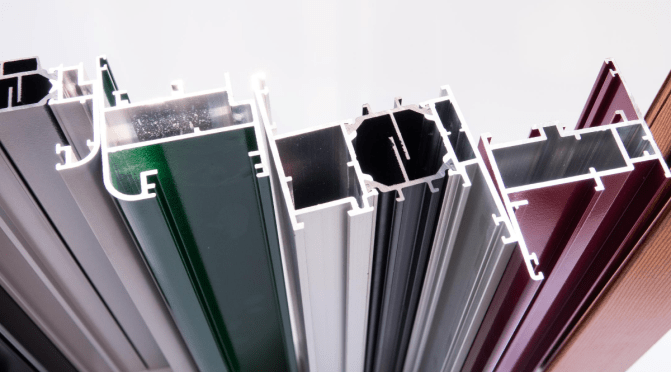
Aluminum can be welded, fabricated, painted, and moulded into any shape and forms. They are lightweight and can be lifted and erected very easily. Because of these unique qualities, aluminium is one of the most versatile, significant, and cost-effective materials used in the construction sector. The most important use of aluminium is in the form of extrusions. Aluminium is also available in form of aluminium square bars, aluminium plates etc. Extrusions are fabricated/jointed to form doors, windows, and partitions, frames of facades, skylight structures, green buildings, aluminium structures, etc. Aluminum extrusions are coated/painted to match the colour scheme of the building/structure. Because of these qualities, aluminium is the most popular material used extensively in the construction sector.

Aluminium Extrusions For Various Uses
ALUMINIUM EXTRUSIONS FOR VARIOUS USES

Aluminium coatings

Aluminum itself is non-corrosive due to the formation of thin oxide films on the surface for protection from corrosion. Then why you need a coating for aluminum.

a) Enhance the look and appearance

Mill finished aluminium is dull in colour and may not always match with the building/structure’s colour scheme. On the application of the coating, the aluminium structures can match the colour scheme of buildings/structures. Designers/architects proposes the type of coating and colour to be applied after analysing the utilities, environment, and colour schemes. A coating matching with an appropriate colour scheme can enhance the appearance and look of structures/buildings.

b) Increase the Corrosion resistant properties

Most of the cases the oxide film on the surface of aluminium is sufficient to take care of corrosion. In some cases, the structures need an extra protection from corrosion. Similarly long exposure to moisture and water can damage the natural oxide film. The coatings can increase the thickness of oxide film and can provide an extra layer of protection which in turn enhance the protection against wear and tear, handling defects, and corrosion.

Aluminium Wall Cladding
ALUMINIUM CLADDING

c) Hardness of members

Coatings can increase the hardness of the materials and protect the material from excessive wear and abrasion encountered on transportation, loading, fabrication erection, etc. Coatings also protect the structures against possible wear and abrasion when used in high traffic areas.

d) Dye marks

Mill finished aluminium have dye marks. Coatings cover these dye marks and makes the surface look smooth and even.

e) Reflectivity

Coatings increase the reflectivity of aluminium and hence used for roofing sheets and light covers.

ALUMINIUM CLADDING
ALUMINIUM CLADDING

Coatings and treatments on aluminium

The most commonly used types of coatings are as follows. The type of coating basically depends on the choice of colour, hardness required, durability and area of application. The following are the the three different types of coatings commonly used for aluminium.

a) Polyster Powder coating

b) Anodising

c) PVDF Coatings

Building materials and construction; A comprehensive guide

I welcomed you to the world of building materials and construction in the preceding blog Basic of civil engineering; Simple and in-depth guide. Here, we are going to meet the frontbenchers in the list. They are,

Stones, bricks, cement and lime.

So, ready to shake hands with the first one?

Okay. Good to go.

1. STONES-Introducing first building material

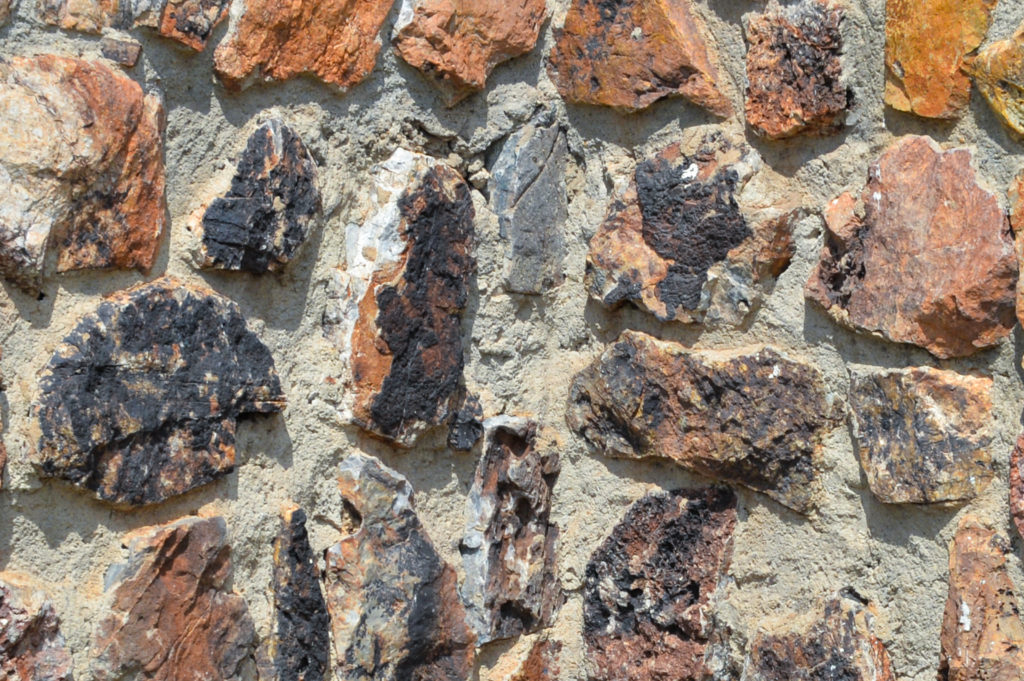
stone  masonry

Stone is a naturally available building material that has been used for construction from the early age of civilization.

Types of stones

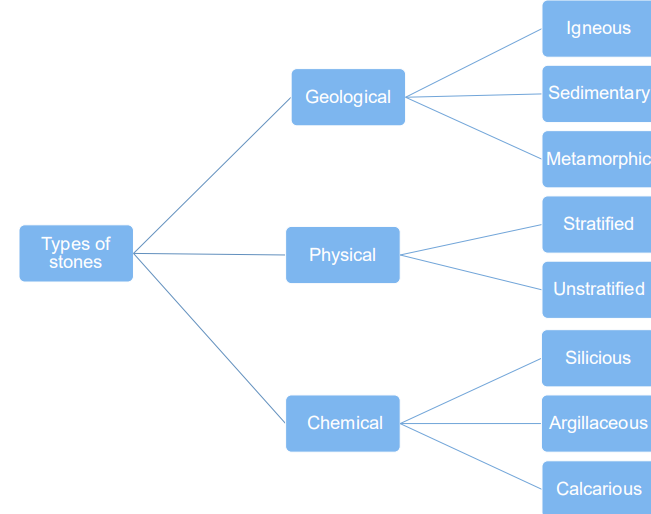
The figure shows the types of stones

The classification of stones are as follows.

a. Geological

i) Igneous Rocks: These rocks are formed by cooling and solidifying of the rock masses from their molten magmatic condition of the material of the earth.Eg: Trap and basalt

ii) Sedimentary Rocks: Due to weathering action of water Eg: Sand stones, lime stones

iii) Metamorphic Rocks: Previously formed igneous and sedimentary rocks under go changes due to metamorphic action of pressure and internal heat Eg: quartzite, marble

b. Physical

i) Stratified rocks  Sand stones, lime stones

ii) Unstratified rocks  Granite, trap, marble

c. Chemical

i) Silicious rocks: The main content of these rocks is silica. Examples are granite, trap, sand stones etc.

ii) Argillaceous rocks: The main constituent of these rocks is clay. Eg. Slates and laterites.

iii) Calcareous rocks: The main constituent of these rocks is calcium carbonate. Eg. Limestone

Had any idea there existed such varieties of stones?

Cool!

Now let me list out the important properties of stone that make you choose it for your building.

Properties of stone

  • Structure
  • Texture:
  • Density
  • Appearance
  • Strength
  • Hardness
  • Percentage wear
  • Porosity and Absorption
  • Weathering
  • Toughness
  • Resistance to Fire
  • Ease in Dressing
  • Seasoning

Before thinking about considering stone for your next building, have a close look at the following tests on stones.

Tests on Stones

(i) crushing strength test

(ii) water absorption test

(iii) abrasion test

(iv) impact test

(v) acid test

So, tests are done. Now, let me tell you, where all you can use this building material.

Uses of Stones

 (i) Stone masonry is used for the construction of foundations, walls, columns and arches.

(ii) Stones are used for flooring.

(iii) Stone slabs are used as damp proof courses, lintels and even as roofing materials.

(iv) Stones with good appearance are used for the face works of buildings. Polished marbles and granite are commonly used for face works.

(v) Stones are used for paving of roads, footpaths and open spaces round the buildings.

(vi) Stones are also used in the constructions of piers and abutments of bridges, dams and retaining walls.

(vii) Crushed stones with graved are used to provide base course for roads. When mixed with tar they form finishing coat.

Wah! Lots of possible applications, right?

Moving on to the next building material, it’s none other than the lovely bricks.

Advertisements

2. Brick- Introducing second building material

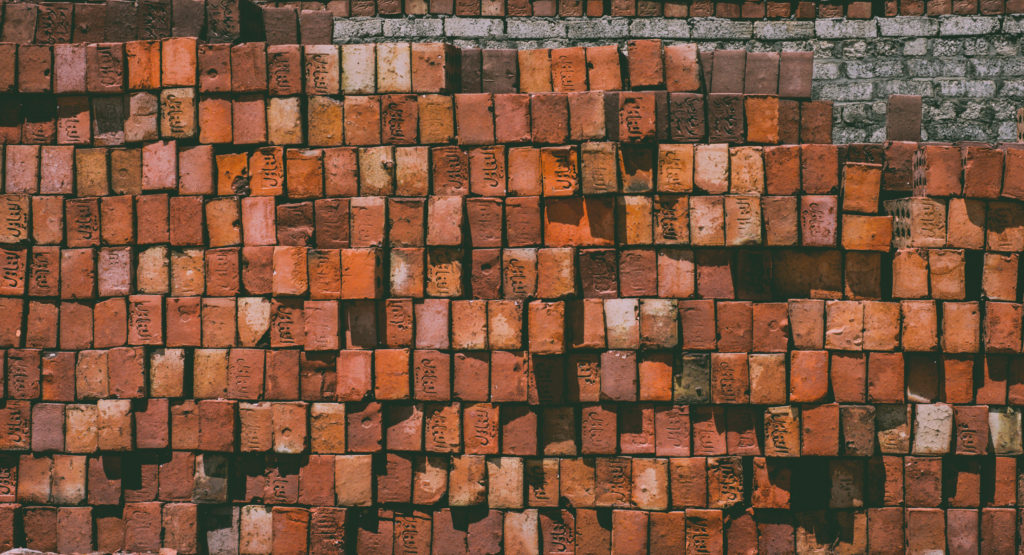
The figure shows bricks

Brick, the next in the category of building materials is obtained by molding good clay into a block, which is dried and then burnt.

Now, bricks being one among the inevitable materials in the building and construction sector, let’s know it deeper.

Types of Bricks

Major types of bricks are,

(i) Building Bricks

These bricks are used for the construction of walls.

(ii) Paving Bricks

These are vitrified bricks and are used as pavers.

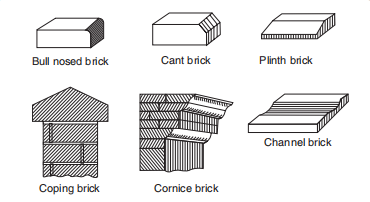
(iv) Special Bricks

These bricks are different from the commonly used building bricks with respect to their shape and the purpose for which they are made.

Figure shows example of special bricks

The figure shows special bricks

Some of such bricks are listed below:

(a) Specially Shaped Bricks

Bricks of special shapes are manufactured to meet the requirements of different situations.

(b) Facing Bricks

These bricks are used in the outer face of masonry. Once these bricks are provided, plastering is not required. The standard size of these bricks are 190 × 90 × 90 mm or 190 × 90 × 40 mm.

(c) Perforated Building Bricks

These bricks are manufactured with area of perforation of 30 to 45 per cent. The area of each perforation should not exceed 500 mm2. The perforation should be uniformly distributed over the surface. They are manufactured in the size 190 × 190 × 90 mm and 290 × 90 × 90 mm.

(d) Burn’t Clay Hollow Bricks:

Bricks are used for the construction of partition walls. They provide good thermal insulation to buildings. They are manufactured in the sizes 190 × 190 × 90 mm, 290 × 90 × 90 mm and 290 × 140 × 90 mm. The thickness of any shell should not be less than 11 mm and that of any web not less than 8 mm. WEBS 8 mm minimum thick Fig. 1.4. Hollow bricks

(e) Sewer Bricks

These bricks are used for the construction of sewage lines. They are manufactured from surface clay, fire clay shale or with the combination of these. They are manufactured in the sizes 190 × 90 × 90 mm and 190 × 90 × 40 mm. The average strength of these bricks should be a minimum of 17.5 N/mm2 . The water absorption should not be more than 10 per cent.

( f ) Acid Resistant Bricks

These bricks are used for floorings likely to be subjected to acid attacks, lining of chambers in chemical plants, lining of sewers carrying industrial wastes etc. They are made of clay or shale of suitable composition with low lime and iron content, flint or sand and vitrified at high temperature in a ceramic kiln.

Expanding the little information, let’s see the properties of bricks.

Properties of Bricks

(i) Colour

Colour should be uniform and bright.

(ii) Shape

Bricks should have plane faces. They should have sharp and true right angled corners.

(iii) Size

Bricks should be of standard sizes as prescribed by codes.

 (iv) Texture

They should possess fine, dense and uniform texture. They should not possess fissures, cavities, loose grit and unburnt lime.

(v) Soundness

When struck with hammer or with another brick, it should produce metallic sound.

(vi) Hardness

Finger scratching should not produce any impression on the brick.

(vii) Strength

Crushing strength of brick should not be less than 3.5 N/mm2. A field test for strength is that when dropped from a height of 0.9 m to 1.0 mm on a hard ground, the brick should not break into pieces.

(viii) Water Absorption

After immercing the brick in water for 24 hours, water absorption should not be more than 20 per cent by weight. For class-I works this limit is 15 per cent.

(ix) Efflorescence

Bricks should not show white patches when soaked in water for 24 hours and then allowed to dry in shade. White patches are due to the presence of sulphate of calcium, magnesium and potassium. They keep the masonry permanently in damp and wet conditions.

(x) Thermal Conductivity

Bricks should have low thermal conductivity, so that buildings built with them are cool in summer and warm in winter.

So, like you tested the stones to know whether its suitable for the work you intended, why not sneak into the tests on bricks?

Tests on Bricks

 (i) Crushing strength

(ii) Absorption

(iii) Shape and size and

(iv) Efflorescence

Going on, let’s see the main uses of bricks below.

Uses of Bricks

 (i) As building blocks.

(ii) For lining of ovens, furnaces and chimneys.

(iii) For protecting steel columns from fire.

(iv) As aggregates in providing water proofing to R.C.C. roofs.

(v) For pavers for footpaths and cycle tracks.

(vi) For lining sewer lines.

How was your time with bricks?

Alright. We are good to meet the last one now.

3. Lime- Introducing third building material

It is one of the oldest binding materials used in building construction. When it is mixed with sand it provides lime mortar and when mixed with sand and coarse aggregate, it forms lime concrete.

The major types of lime are,

  • Fat lime
  • Hydraulic lime
  • Poor lime

And important tests on limestones are,

Tests on Limestones

 (i) Physical tests

(ii) Heat test

(iii) Chemical test

(iv) Ball test

Last, but not the least,

Uses of lime are,

 (i) For white washing.

(ii) For making mortar for masonry works and plastering.

(iii) To produce lime sand bricks.

(iv) For soil stabilization.

(v) As a refractory material for lining open hearth furnaces.

(vi) For making cement.

Alright. Heading onto the last member,

4. Cement- Introducing fourth building material

This is an important member of the building materials and construction sector. We have discussed the ingredients, properties of Cement, the manufacturing process, and the field tests in previous blogs.

I hope you got an understanding about these major building materials and their application in the construction sector.

We are looking forward to hear your feed backs.

Perfect Design of building plan: All amazing tips

Constructing a building is a very collaborative and intricate task where a lot of talented and expertised brains are involved, right? The first step is the building plan. In this blog, let’s look into how the design of building plan can be done in the best way by touching on all important aspects one by one. Hope you remembers the basics we learnt in the blog on basic of civil engineering.

Design requirements of a building plan

The figure shows interior of a house

 We are heading on to how to design a building plan by satisfying important requirements in the structural design.

1. Strength and Stability

Building should be capable of transferring the expected loads in its life period safely to the ground. Design of various structural components like slabs, beams, walls, columns and footing should ensure safety. None of the structural components should buckle, overturn and collapse.

 2. Dimensional Stability

All structural components should be so designed that deflections do not exceed the permissible values specified in the codes.

 3. Resistance to Dampness

Great care should be taken in planning and in the construction of the building to avoid dampness since it affects the lifespan of the building.

 4. Resistance to Fire

Regarding achieving resistance to fire, the basic requirements laid down in the codes are:

(a) the structure should not ignite easily.

(b) building orientation should be such that spread of fire is slow.

(c) In case of fire, there should be means of easy access to vacate building quickly.

5. Heat Insulation

A building should be so oriented and designed that it insulates interior from heat.

6. Sound Insulation

Buildings should be planned against outdoor and indoor noises.

7. Protection from Termite

Buildings should be protected from termites.

8. Durability

Each and every component of the building should be durable.

9. Security against Burglary

This is the basic need the owner of the building expects.

10. Lighting and Ventilation

For healthy and happy living natural light and ventilation are required. Diffused light and good cross ventilation should be available inside the building.

11. Comforts and Conveniences

Various units in the building should be properly grouped and integrated keeping in mind the comfort and convenience of the user

12. Economy

Economy without sacrificing comfort, convenience and durability is another basic requirement of the building.

Okay. In nutshell, you should be incorporating major concepts of a green building.

So, the requirements in the design of building floor plan are taken care of. What’s the next important?

Yeah, the principles.

Principles of structural design of a building plan

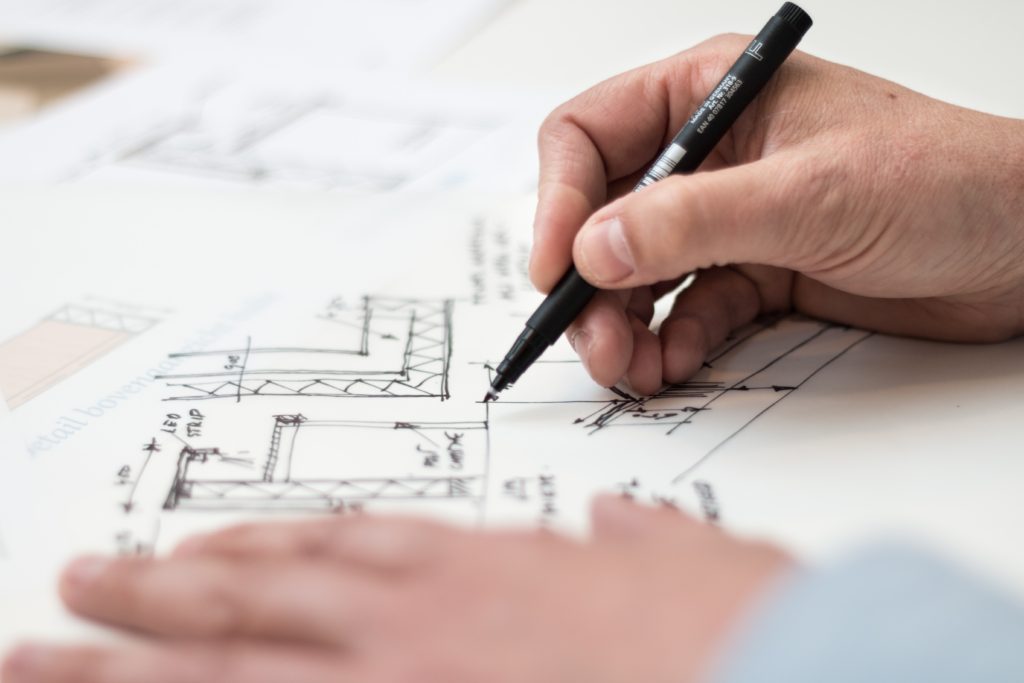
Figure shows drawing a building plan

There are 4 important principles. This principles reflect the features of a vastu home.

1. Building plan design for suitable orientation

Orientation means setting out the plan of the building with respect to north-south and east-west directions to provide an opportunity to user to enjoy sun-shine and breeze when required. And to avoid the same whenever not required.

2. Designing building plan for energy efficiency

If the orientation of the building is fulfilled, requirement of electric energy comes down.

(a) Light

Light should not be glaring but it should be uniformly distributed. Providing windows and ventilators of appropriate size at suitable positions contribute a lot for natural lighting.

(b) Ventilation

Natural ventilation can be achieved by selecting and positioning of doors, windows and ventilators at suitable places. Always cross ventilations should be planned suitably.

(c) Heat Insulation

Thicker exterior walls provide insulation against heat. Proper ventilation also helps in achieving heat insulation. Sunshades provided to doors, windows, and ventilators help in achieving heat insulation. In factories and assembly halls height should be more to reduce the temperature inside the building

3. Structural design of building plan for suitable utility

Principles of the design plan of your structure for suitable utility are:

1. Roominess

It refers to suitable proportioning of length, width and height of rooms in the

building to get maximum benefit from the minimum dimensions.

2. Furniture Requirements

In planning residential, office, laboratory, hospital buildings, positions of required furniture should be drawn and then room dimensions, positions of doors, windows, wardsities etc. planned. Availability of circulation area should be checked.

3. Grouping

Grouping means disposition of various rooms in the building for the convenience of users and their utility. In residential buildings grouping is to achieve comfort, privacy and efficiency while in the case of other buildings it is to achieve economic service.

4. Circulation

Circulation means the space to be provided for movement from room to room or floor to floor.

4. Building design plan for meeting other requirements

This principle includes the following major points.

1. Sanitary Convenience

Sanitary conveniences include provision of bathrooms, lavatories, urinals etc. These facilities should be located giving free access to all users. In these blocks, suitable slopes should be given to the floors to drain out water easily.

4. Flexibility

This aspect of planning means a room designed for a specific purpose should be possible to use for other purposes, if necessary such as a study room may be planned for using as a guest room.

5. Privacy

Planning should take care of privacy of one room from other room in a building as well as some parts of a building from neighbouring buildings and from streets. It is ensured by proper grouping of rooms and by suitably providing doors, windows and ventilators

6. Resistance to Fire

It may be noted that concrete and masonry (stone or brick) have better resistance to fire while steel and wood have lesser resistance. Hence reduce use of steel in kitchen and bathrooms with electric heaters.

7. Sound Insulation

Noise pollution can be reduced by suitable planning of the building.

8. Security against Burglary

By providing thicker walls, using stronger doors and windows in outer walls, security against burgling is improved. Providing grills to windows and additional shutters to doors are some of the methods of improving security. Alarms fitted in walls, roofs also improve security of the buildings.

9. Economy

Economy without sacrificing comfort, conveniences and durability is another basic principle of planning a building.

10. Provision for Future Expansion

Building should be planned making suitable provision for future expansion.

So, we have seen all the important aspects of design of a building plan. Did you feel that they are in perfect agreement with concepts of vastu as I said?Anyway, where is an example for the design of residential building?

Relax. Here we go.

The figure shows a simple building plan of a one story building at a scale of 1: 100

Plan of a building

Wrapping up, hope you had a good time reading this!

Let us know your feed backs in the comments.

Advertisements

Basic of civil engineering; Simple and in-depth guide

How can you be the best civil engineer? Do you think it’s by mugging up a whole lot of textbooks and mastering the complex concepts, equations, etc.? Well, I agree. But, you can’t spread it out without grasping the basic of civil engineering in depth. Am I making sense?

Then, we are going to start off from the edge of the wave here.

1. General introduction to civil engineering

Did you know that civil engineering is the oldest engineering discipline? Yup. Civil Engineers plan, design, construct and operate the facilities essential to modern life which are bridges, highways, water treatment plant, etc. So, basically they are the problem solvers, right?

This branch of engineering is like a vast sea. Let me introduce you to its main disciples.

2. Fundamental disciples of civil engineering

  1. Building Construction 
  2. Advanced Building Construction 
  3. Building Planning and Management 
  4. Environmental Engineering or Water Supply and Sanitary Engineering 
  5. Geotechnical Engineering (Soil Mechanics) 
  6. Surveying and Levelling 
  7. Structural Engineering   
  8. Transportation Engineering 
  9. Town Planning 
  10. Water Resource Engineering 

3. Basic of building planning in civil engineering

Building planning is the process of making the set of drawing paying attention to each detail. We will see the basic features of a building now.

Basic elements of a building

The figure below says it all.

The figure shows the basic elements of a building

 1. Foundation

It is the lowermost part of the building.  The building activity starts with digging the ground for foundation and then building it.

2. Plinth

The plinth is the portion of the wall between the ground level and the ground floor level.

3. Walls and columns

The function of walls and columns is to transfer the load of the structure vertically downwards to transfer it to foundation.

4. Sills, lintels and chejjas

A window frame should not be directly placed over masonry. It is placed over 50 mm to 75 mm thick plain concrete course provided over the masonry. This course is called as sill.

Lintels are the R.C.C. or stone beams provided over the door and window openings to transfer the load transversely so as to see that door or window frame is not stressed unduly.

Chejja is the projection given outside the wall to protect doors and windows from the rain.

5. Doors and windows

The function of a door is to give access to different rooms in the building and to deny the access whenever necessary. Windows are provided to get light and ventilation in the building.

6. Floors

They give working/useful area for the occupants.

7. Roofs

Roof is the top most portion of the building which provide top cover to the building

8. Steps, stairs and lifts

Steps give convenient access from ground level to ground floor level.

9. Finishing work

Bottom portion of slab (ceiling), walls and top of floor need smooth finishing with plaster.

10. Building services

Water supply, sanitation and drainage works, electric supply work, and construction of cupboards and showcases constitute major building services.

You have seen each of the elements of a building. And now let’s explore some technical details.

4. Basic of surveying in civil engineering

The image shows the sight engineers doing the arrangements for surveying

Surveying is the art of making measurements of objects on, above or beneath the ground to show their relative positions on paper. The relative position required is either horizontal, or vertical, or both.

Fundamental uses of surveying

Fundamental uses of surveying are,

 (i) Plans prepared to record property lines of private, public and government lands help in avoiding unnecessary controversies.

 (ii) Maps prepared for marking boundaries of countries, states, districts etc., avoid disputes.

(iii) Locality plans help in identifying location of houses and offices in the area.

(iv) Road maps help travellers and tourist.

(v) Topographic maps showing natural features like rivers, streams, hills, forests help in planning irrigation projects and flood control measures.

(vi) For planning and estimating project works like roads, bridges, railways, airports, water supply and waste water disposal surveying is required.

5. Basic of building materials

Figure shows a building made of variety of building materials

Stones, bricks, cement, lime and timber are the traditional materials used for civil engineering constructions for several centuries.

1. Stone

Stone is available in the form of rocks, which is cut to the required size and shape and used as a building block. It has been used to construct small residential buildings to large palaces and temples all over the world

2. Brick

Brick is obtained by moulding good clay into a block, which is dried and then burnt. This is the oldest building block to replace stone. Manufacture of brick started with hand moulding, sun drying and burning in clamps.

3. Lime

It is an important binding material used in building construction. Lime has been used as the material of construction from ancient time. When it is mixed with sand it provides lime mortar and when mixed with sand and coarse aggregate, it forms lime concrete.

4. Cement

Cement is a commonly used binding material in the construction. The cement manufacturing is done by burning a mixture of calcareous (calcium) and argillaceous (clay) material at a very high temperature and then grinding the clinker so produced to a fine powder. The Properties of cement makes it a good fit most of the time.

5. Timber

Timber refers to wood used for construction works. It was used as building material even by primitive man.

That’s it.

Feel free to comment if anything more you would like to know.

Updates in civil engineering, architecture finishes, building construction, Environmental Engineering