RAINWATER HARVESTING METHODS-EVERYTHING YOU NEED TO KNOW

Rainwater harvesting methods are the processes in which precipitation that falls on a site is diverted, captured, and stored for use on-site, as opposed to allowing it to run off, evaporate, or infiltrate into the soil. Let’s get to know it in the best way through the course of journey in the blog.

 “Slanting silver ropes slammed into loose earth, plowing it up like gunfire”- When Arundhati Roy described the rain as beautifully like this, how many of us thought we are taking the boon of no cost from nature. It’s high time that we understood the worth of various rainwater harvesting methods in our lives.                     

Let’s start from scratch.

How rainwater harvesting methods are important?

This is a sad story of ground water. It all started with the over population. water supply agencies became unable to cope up demand from surface sources like dams, reservoirs, rivers etc. They resorted to ground water sources by digging tube-wells in order to augment the water supply. Indiscriminate exploitation of ground water resulted in lowering of water table rendering many bore-wells dry. To overcome this, we started to drill bore wells to greater depths. The exploitation of ground water in brutal unscientific methods by soft drinks, mineral water and similar industries further declined ground water table. The solution to all these problems is to replenish ground water bodies with water conservation like leveraging rain water by man made means.

That’s it. And we are here to know the hero of the story, Rain water to solve all these issues.

Let’s look at its components now.

Components of rainwater harvesting methods

Rainwater conservation is a must need element of every green building. Let’s see the components below.

1. Catchment area

The catchment area is the surface on which the rain water falls. This may be a roof top or open area around the building.

2. Coarse mesh / leaf screen

To prevent the entry of leaves and other debris in the system, the coarse mesh should be provided at the mouth of inflow pipe for flat roofs

3. Gutter

Gutter is required to be used for collecting rainwater from sloping roof and to divert it to downspout. These are the channels all around the edge of a sloping roof to collect and transport rain water to the storage tank.

4. Down spout or conduit

The rain water collected on the roof top is transported down to storage facility through down spouts / conduits. Conduits can be of any material like PVC, GI or cast iron.

5. First flushing device

A first flush system is incorporated in the rooftop to harvest rainwater by avoiding all the debris, dirt, and other contaminants especially bird dropping, etc. accumulated on the roof during the dry season. The first flushing device, dispose of the first spell of rainwater so that it does not enter the system.

6. Filter

The filter unit is basically a chamber filled with filtering media such as fiber, coarse sand and gravel layers to remove debris and dirt from water before it enters the storage tank.

7. Settlement tank

The settlement tank facilitates the settling down of suspended materials like silt and other floating impurities before the water recharge the aquifer.

8. Storage tank

Storage tanks are used when the water from the rain water harvesting is used directly for various purposes.

Okay. That’s done. Now we are getting into the important part which is how to make rainwater harvesting.

RAINWATER HARVESTING METHODS- DETAILED

1. Storing rain water for direct use
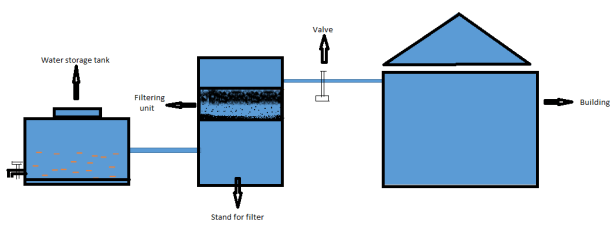
Fig. Storing rainwater for direct use

In place where the rains occur throughout the year, rain water can be stored in tanks However, at places where rains are for 2 to 3 months, huge volume of storage tanks would have to be provided. In such places, it will be more appropriate to use rain water to recharge ground water aquifers rather than to go for storage. If the strata is impermeable, then storing rain water in storage tanks for direct use is a better method. Similarly, if the ground water is saline/unfit for human consumption or ground water table is very deep, this is one of the best rain water harvesting methods that can be applied.

2. Recharging groundwater aquifers, from rooftop runoff
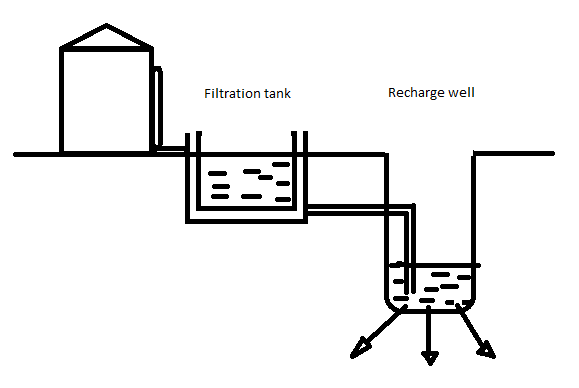
Fig. Recharging ground water aquifers from roof top run off

In this groundwater harvesting, rain water that is collected on the roof top of the building may be diverted by drain pipes to a filtration tank from which it flows into the recharge well. The recharge well should preferably be shallower than the water table. This method of rain water harvesting is preferable in the areas where the rainfall occurs only for a short period in a year and water table is at a shallow depth.

Alright. That’s it about second in the list of rainwater harvesting methods. How to increase groundwater level further?

3. Recharging groundwater aquifers with runoff from the ground area
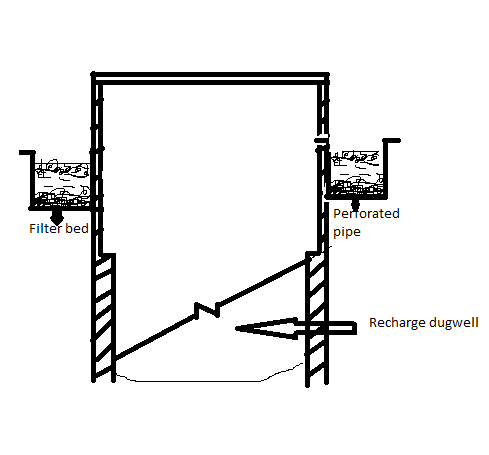
Fig. Recharging ground water aquifers with runoff from ground areas

The rain water that is collected from the open areas may be diverted by drain pipes to a recharge dug well / bore well through filter tanks. The abandoned bore well/dug well can be used cost effectively for this purpose.

Now you have become a savvy in rain water harvesting methods. But this is not all. Even if you have completed all the procedures with at most care, precautions should be taken to ensure quality of water. Let’s see them.

1. Roof over which water falls, should be cleaned before rain fall.

2. The suitable type of first flushing device to be installed and initial 10 to 15 minutes of runoff should be diverted.

3. The water collected from roof top only, should be stored in storage tank for direct use.

4. The runoff from surface/ground should be preferably be used for recharging ground water aquifers after proper filtration.

5. The rain water collected from roof top should pass through suitable type of filter and only then it should be stored in storage tank / used for recharging ground water aquifers.

We are almost near of completion. its time to look at the results of your efforts.

Advantages of rain water harvesting methods are,

 (a) Promotes adequacy of underground water

 (b) Mitigates the effect of drought

(c) Reduces soil erosion as surface run-off is reduced

(d) Decreases load on storm water disposal system

(e) Reduces flood hazards

(f) Improves ground water quality / decreases salinity (by dilution)

(g) Prevents ingress of sea water in subsurface aquifers in coastal areas 6

(h) Saving rainwater improves ground water table, thus saving energy (to lift water)

(i) The cost of recharging subsurface aquifer is lower than surface reservoirs

(j) The subsurface aquifer also serves as storage and distribution system

(k) No land is wasted for storage purpose and no population displacement is involved

(l) Storing water underground is environment friendly

But all these doesn’t earn you a penny. Below are the points that illustrates how rain water harvesting methods can add to your pockets.

Energy savings

  • Rainwater collector systems are typically designed to be gravity fed.
  • Storage areas are typically lower elevation, so a pumping system is generally required for intended reuse.
  • Since collected rainwater is generally used close to its capture, the energy needed to convey the water tends to be minimal.
  • Compared to conveyance from other supplied sources of water rainwater harvesting methods would likely have lower energy costs.
  • Systems are simple and tend to be robust. Monitoring and maintenance require additional effort. This includes maintenance of roofs used as collection areas, cleaning of gutters, maintenance of storage tanks and vaults, puumps and maintenance of water treatment systems

Water savings

  • A reasonable goal for an aggressive rooftop collection for a custom building could be to reduce domestic water supply by 40 to 50% for that building; this would then allow the building to meet LEED goals for sewage reduction.

Well… limitations too are important to see if it’s worth trying.

Happy to see the cost savings? Then you should definitely check out A BUILDING AT ZERO COST!!

Disadvantages of rain water harvesting methods are,

  • Unpredictable Rainfall
  • Initial High Cost
  • Regular Maintenance
  • Certain Roof Types may Seep Chemicals or Animal Droppings
  • Storage Limits

Now, it’s up to your decision on which of the above rainwater harvesting methods you want to adopt. But I would say this is an offer you can’t refuse.

Vincivil FAQ CORNER

What is the main purpose of rainwater harvesting methods?

The main aim of rainwater harvesting methods is to use locally available rainwater to meet water needs during the year without the need for major capital expenditure.

How to catch rainwater?

The rain would accumulate in the gutters that would funnel the water into the downpours and then into some kind of storage vessel. Rainwater collection systems can be as easy as gathering rain in a rain barrel or as complex as storing rainwater in large cisterns to supply your entire household demand.

How rainwater harvesting methods are done?

Rainwater harvesting methods extract the run-off from a building or other impervious surface to be preserved for later use . The rain would accumulate in the gutters that would funnel the water into the downpours and then into some kind of storage vessel.

How rainwater harvesting methods work?

Rainwater collection systems collect rainwater by transferring it from large surfaces to underground or overground storage tanks. The rainwater harvested is filtered and then pumped directly to the appliances or header tank.

What are the rainwater harvesting methods at home?

There are several techniques such as Storage of direct use, recharging groundwater aquifers, recharging of bore wells, recharge pits, soakway or recharge shafts, recharging of dug wells etc.

How do you make a rainwater harvesting pit?

Excavation is to be performed before soft dirt, weathered rock or fracture is reached.   You need jelly of different sizes and sand at the top of the pit. The big jelly at the bottom creates large gaps for the water to pass through.

What are the two important rainwater harvesting methods?

Surface runoff harvesting and rooftop rainwater harvesting are the main two methods of rain water harvesting.

What are the main uses of rainwater harvesting methods?

  • Non-potable uses, such as toilet flushing, irrigation, dust control, and vehicle washing. Some of these applications may require specialized plumbing.
  • Potable water uses including drinking water, food preparation, showering, and washing.
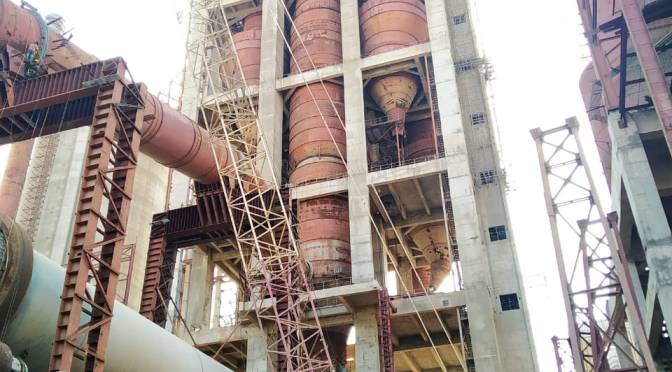
Manufacturing process of cement.

Advertisements

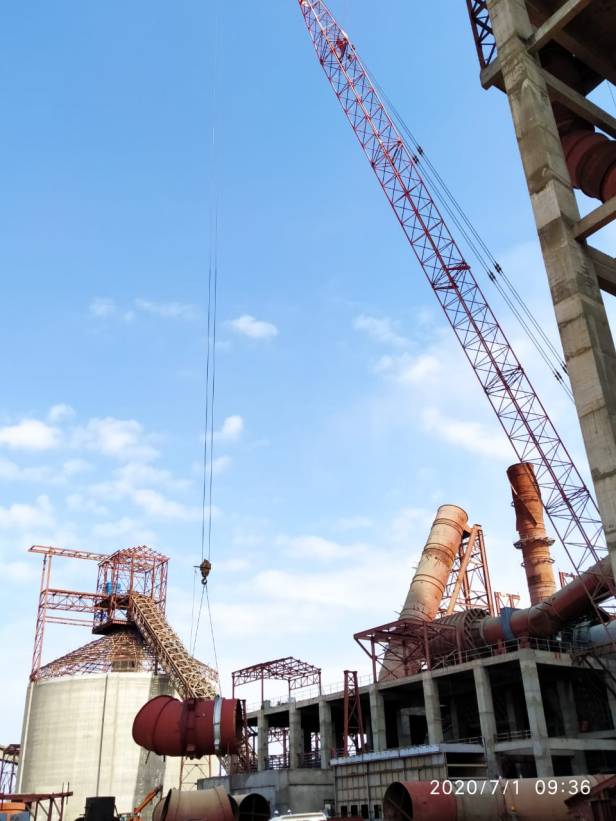
Cement is considered as the most significant substance used in construction which acts as a binder which can adheres the materials together. Cement is a hydraulic binder when mixed with water and sand transforms into mortar and when mixed with water and aggregates converts to concrete which can be used for a number of applications. As per World cement association concrete comes second only to water as the most used resource. China is the largest producer of cement with 53% and India follows with 8% with this production likely to be doubled in next ten years.

The basic raw materials used for cement manufacturing is lime stone or chalk and shale or clay. Cement clinkerisation plants are normally located near the raw materials areas and most of the the times the plants are equipped with conveyors which can directly feed the raw materials from the mines

MUST READ : WHAT IS CEMENT ? WHAT ARE THE INGREDIENTS OF CEMENT

MANUFACTURING PROCESS BASED ON MIXING TECHNICS

Based on the technic adopted for mixing raw materials the manufacturing process is divided into wet process and dry process. Wet process is normally used now a days. But dry process is also gaining popularity due to their energy efficiency and when the ingredients are hard.

WET PROCESS OF CEMENT MANUFACTURING

The wet process of cement manufacturing is divided into a number of stages

a) Raw material extraction

b) Grinding

c) Proportioning and mixing and preparing composition based on the raw material purity.

e) Preheating the composition

f) Burning the composition in a kiln to form clinkers

g) Clinker cooling with gypsum addition and grounding to fine powder.

h) Storing in silos and packing and loading for conveying.

The raw materials needed for cement manufacturing are

a) CALCAREOUS (i.e. chalk consists of limestone.)
b) ARGILLACEOUS (i.e. clay consists of silicates of alumina.)

a) RAW MATERIAL EXTRACTION

Major raw material involved in the cement manufacturing process is limestone. Cement manufacturing plants are located near the limestone sources for easy access to the raw materials or else it turnout to be expensive to transport the materials from outside. The next major ingredient is clay which have to be located around 25-30 km within the plant premises to minimise the cost incurred in transportation.

Lime stone obtained from open cast mines are transported and feeded to a limestone crusher and clay is placed in a clay crushers. Other raw material like sand which controls the kiln temperature and iron ore etc can be transported or supplied from outside sources.

b) RAW MATERIAL GRINDING

The raw materials calcareous (lime)  extracted are crushed to make a size of 6 inch and further crushed to make it 3 inch in secondary crushers. The argillaceous materials (clay) are washed to remove the organic contents and stored in basins and limestone is stored in silos.

c) PROPORTIONING MIXING AND PREPARATION OF COMPOSITION

The washed Clay and crushed lime stone are conveyed and mixed in desired proportion and further grinded in a wet grinding mill where both the materials are closely mixed in the presence of water to form a slurry .The slurry is stored in storage tanks where minor corrections in the compositions are carried out. The slurry which constitutes around 35-40% water is constantly kept in agitation to prevent the settling of limestone and clay.

d) PREHEATING THE COMPOSITION

The preheaters are used to heat the raw mix and drive off carbon dioxide and water before it is fed into the kiln.The raw meal passes down the preheater tower while hot gases rise up, heating the raw meal. At the entry point of kiln the raw meal largely decarbonates .

e) BURNING OF COMPOSITION IN KILNS

The decarbonated slurry is fed directly to an inclined steel cylinder which is called rotary kiln .In the rotary kiln through a series of reactions clinker is produced. The kiln is made of a steel casing lined with refractory bricks which have to withstand the reactions happening inside the kiln. The kiln is divided into three zones depending on the process happening in each zone and the temperature at each zone. The kiln is heated from the bottom using coal, oil or gases.

In the first zone water and moisture from the decarbonated slurry is evaporated at a temperature of 400C and the process is known as drying zone.

In the second part which is the calcination zone temperature is around 1000 degree and carbon dioxide is removed and is  immediately converted into flakes after loosing the moisture. These flakes or modules are taken into the third stage with the help of rotary movement of the kiln.

In the third stage which is called the burning zone or clinkering zone and the temperature their will be around 1300-1500 degree . In this zone the lime and clay reacts to produce calcium aluminates and calcium silicates. Immediately on entering the burning zone aluminates and calcium silicates get fused and  the modules are converted into a dark greenish balls and is called clinker. The size of the clinker ranges from 5 mm to 20 mm. These are the chemical reactions happening in the kiln.

2CaO + SiO2 = Ca2SiO(declaim silicate (C2S))

3CaO + SiO2 = Ca3SiO5 (tricalcium silicate (C3S))

3CaO + Al2O= Ca3Al2O6 (dicalcium aluminate (C2A))

4CaO + Al2O3 + Fe2O3 = Ca4Al2Fe2O10 (tetracalcium aluminoferrite(C4AF))

F) CLINKER COOLING WITH GYPSUM ADDITION AND GROUNDING TO FINE POWDER

The cooled clinkers are finally grinded in ball mills. At this stage gypsum(2-4%) is added which functions to reduce the setting time of cement. The grinded powder is take to the cement silos for storage. The particle distribution is also done in a graded manner. The stored grinded powder is taken to the packing plant and packed for distribution

ALSO READ : DRY PROCESS OF MANUFACTURING OF CEMENT

ALSO READ : DIFFERENCE BETWEEN DRY PROCESS AND WET PROCESS OF MANUFACTURING.

Advertisements

ECO- FRIENDLY MATERIALS for building- How to use in every inch of a building?

Eco friendly materials for building are the talk of the hour. We have gone so far that it is almost difficult to make a return to the idea of nature in our lives now. But what if I told you the building in which you spend the main part of your life will help you get there?  Yeah, let me share with you some secrets about eco friendly materials that can support you on a journey of new construction.

What wonders eco friendly materials for building can do?

  1. Eco friendly material can solve the issue of building waste that often includes concrete, metals, glass, plastics, wood, asphalt, bricks and more. Not only does this pollute the land and the air, but the transportation required to remove such waste has a major impact on the environment as well.
  2. It cuts down on energy consumption, leading to less use of natural resources that cause climate change warming, such as oil and gas
  3. Use of recycled building materials reduces cost
  4. The good practice can attract clients

Pretty interesting. But having the pros known is not all.  The challenge that hindrance us from incorporating them in construction is that environmentally friendly materials might compete with less expensive alternatives. After all, what’s perfect in all facets in the world?

So, shall we get into our business now?

Let’s take an easy trip from the top to bottom of a building and meet significant faces in eco friendly materials for buildings.

1. How to use eco friendly materials for building in foundation

Everything starts here- At the foundation. You can incorporate recycled fly ash in concrete. This reduces the amount of cement needed, thereby decreasing the overall environmental impacts of cement production.

2. How to incorporate eco friendly materials fro building in super structure

Having colored the foundation of green, next we are going to deal with the part that is visible to the world; The Super structure. It has a lot of possibilities to be explored. Using pozzolona materials like fly ash and blast furnace slag in OPC cement can consume the industry wastes and protect the quality of concrete. The inner walls can utilize fly ash bricks, or GFRG or GRFG panels or AAC panels, bricks etc. which are amiable green building products. For false ceiling, Mineral fibre boards or gypsum boards can be used. And remember, MDF and exterior grade formaldehyde free plywood when it comes to the interiors.

Bonus: There is a recent innovation by Nexii Building solutions which is a proprietary material named Nexiite, that is capable of replacing concrete enabling rapid construction of sustainable buildings.

i. Flooring

Being a very fascinating facet in a structure, we often tend to forget about the environmental effects caused by the flooring feature. Here is the chance to vindicate. Rapidly renewable floors like bamboo and cork flooring are good alternatives to hardwood flooring. Recycled-content ceramic tiles are also sustainable materials for flooring.

Recycled-content carpet with Low-VOCs made from recycled plastic bottles, recycled cotton, agricultural by-products such as corn silk saves resources and diverts waste from landfills.

ii. Exterior finish

Now for exterior finish, use sustainable content decking materials like recycled-content decking made from plastic lumber and composite lumber.

In the journey so far, you might have started getting an idea of how vast and needy is the concept of eco friendly materials for building. Let’s go forth…

iii. Walls and ceilings

It’s time we talk about the most attention seeking part of the structure; the walls and ceilings. Cellulose is a highly effective insulation made out of recycled newspaper. Using cellulose insulation reduces air leakage and contributes to a more comfortable and energy-efficient home. Another available option is advanced insulation materials such as recycled cotton that have no added formaldehyde which is harmful to nature.

iv. Windows

Moving on to windows, the eyes of the building, install Low Solar Heat Gain Coefficient (SHGC) Window Film on Single-Glazing that can significantly lower the need for additional cooling

v. Heating, Ventilation and Air Conditioning (HVAC)

So, how do we make HVAC a good fellow? Solar attic fan is good that removes much of the hot air and reduces the burden on the air conditioning system. A whole house fan uses one-tenth the electricity of an air conditioning unit. Moving large volumes of air achieves indoor comfort at higher temperatures without air conditioning.

Then, another choice is a wall heat pump that has an exterior compressor and an interior air handler that blows conditioned air throughout the home. With this, you can eliminate wall-mounted electric and gas heaters results in greater safety and more energy savings. And the Installation of air conditioning with Non-HCFC Refrigerants is a clever thing to do because it reduces depletion of the ozone layer in case of leakage during replacement.

2. How to add eco friendly building materials in renewable Energy and Roofing

Nature left us an option for all our energy needs. Renewable energy. We can leverage it through a variety of techniques. One of the best methods to incorporate it is through installing Photovoltaic (PV) System. PV panels can be used as a means to decrease reliance on conventional power plants that contribute to air pollution.

Must read:GREEN BUILDING: HOW TO MAKE A BUILDING GREEN AND BENEFITS OF A GREEN BUILDING

3. Eco friendly building materials in Indoor Finishes

Let’s bid bye with the final finishes. Low/No-VOC paint reduces the emissions of VOCs into the home, improving indoor air quality and reducing the formation of urban smog.

Also, use law VOC, Water-Based Wood Finishes. Using low VOC wood finishes that improves indoor air quality, and reduces the formation of urban smog.

Just think about how beautiful it is to live with the lullaby of nature. You would naturally have the mind to opt for eco friendly materials for building, which is the perfect way to create a green home.

Concept of Green Building- 4 comprehensive concepts easy read!

Concept of green building is a buzz word at present, right? Because it has been a now or never situation to save nature. Therefore, you will come to understand the concept of green building and complete details in the blog.

Why concept of green building is important?

i. Protect occupant health

ii. Optimal environmental and economic performance

iii. Reduce overall impact to the environment

iv. Quality indoor spaces

v. Improve employee productivity

vi. Use energy, water and other resources more efficiently

vii. Increased market value of the building

Now that you have the answer to the big y, shall we move on to the main elements to incorporate the concept of green building in your home?

Let’s dig in systematically and find out what exactly each concept of green building implies.

a.)First Concept of green building- Powerful sites

  1. Site selection

A canvas is as important as the drawing brush. So is a site of construction in concept of green building. The following points are to be considered diligently.

  • Set preliminary environmental performance targets

A well revised plan is the ablest key. The plan should take into account the inevitable like water, energy, materials, waste, the mode of construction, indoor environmental quality, and economic performance.

  • Select appropriate land

We have two options in handy during a hunt for a building. Either we can renovate existing structures or select a land. If you are going for later, make sure that is a short walk from public transit, pedestrian and bicycle routes, exists in an already-urbanized area, is walking distance from amenities, is already serviced by the requisite urban infrastructure (roads, utilities, etc.), is a brownfields site and remediate it, allows infill development and allows mixed-use development. And the important point to be noted is that the land shouldn’t come under any restricted zones such as farmlands, the natural habitat of wildlife, wetlands, waterways.

2. Site design

This is a vital facet of the concept of green building and opens up wide possibilities to embed creativity of a civil engineer for the purpose. It includes,

A. Protect or enhance site’s ecological integrity and biodiversity

The color green itself highlights the importance of this aspect. The construction should be such that it preserves the site’s natural areas, re-establishes damaged native ecosystems and makes connections between the natural ecology of the site and natural systems both within and beyond the site.

B. Reduce or eliminate disturbance to water system

You can celebrate your life with the natural water conservation methods by making them into attractive landscape elements. Also increase site infiltration where soil conditions allow by maintaining the natural pervious landscape or designing a pervious landscape. Use pervious surfaces for as much as possible of the surfaces that are usually paved where soil conditions permit. capturing rainwater for site or building use is also a simple act to contribute to this.


C. Reduce urban heat islands

Maximize green space through the clever designing techniques including native gardens, trellises, roof gardens, green walls etc. and provide shade on impervious surfaces where high-albedo materials cannot be used.

D. Design infrastructure to support alternative transportation

In between the continuous run to balance work and life, there is no way you can compromise on this aspect. Location of the building should be such that it has access to public transit, bike routes, and pedestrian routes. And the feature should encourage walking, bicycling and battery operated vehicles, by designing attractive, safe pedestrian and cycling infrastructure.

3. Building orientation& configuration

The orientation of the building and the configuration of each element is significant to make a strong connection with nature. Use existing and proposed trees & plantings to reduce heating, cooling, and lighting loads and utilize the site resources to reduce building loads and enhance indoor environmental quality. Finally, orient the building to optimize prevailing winds and solar opportunities.

b.) Second concept of Green building- Wizardry in construction

Figure shows an engineer explaining concepts for the crew

After setting up the site, the next concept of green building is obviously construction. Here, we have the opportunity to take out the technical skills to weave the green blanket for our building.

i. Design stage

  • Choose environmental friendly materials

Try to use recycled and efficient materials, Use locally harvested or manufactured materials and materials that cause very less damage to nature as much as possible. You can find more elaborate details in A JOURNEY TO ECO- FRIENDLY MATERIALS

  • Design for reuse

Design a structure that allows for changes in use over time.Select building systems that can be deconstructed at the end of the building’s useful life.This is where the importance of a good design team arises.

  • Design envelope

Design envelope to reduce heating, cooling, lighting, and ventilation loads. Also it should incorporate all possibilities that make it energy efficient and allows for maximum natural light without glare and pollution and maximum wind intake. Remember to consider individual control for all the features because that is a determining factor of the comfort of the residents.

  • Reduce or prevent the use of potable water to treat human waste

Installation of water-efficient toilet fixtures and alternative wastewater technologies like constructed wetlands and monitoring the usage with something like water meters is very efficient to make sure that we protect each drop of water and ourselves.

  • Reducing impact of environment

While ozon depletion is growing on a daily bases, let’s do our bit to reduce it.Use HVAC systems, refrigerants and fire-suppressant equipment that do not contain CFCs, HCFCs or Halons.

ii. Building stage

  • Prevent erosion during construction

The prevention of erosion is important because properly done, it will also prevent the accompanying air pollution, and sedimentation of streams and storm sewers. Different strategies like maintaining or providing vegetated ground cover and controlling erosion with mulch or grass can be done.

  • Minimize the disposal of construction waste

A formal waste management plan can be adopted for minimizing the construction waste envisaging reuse, recycle or salvage the waste for later reuses.

c.) Third Concept of green building -Showering aura through energy & water efficiency

This is the highlight of the concept of green building. First, let’s close the deal with energy efficiency.

Thanks to technology and the human quest for innovation, new techniques and strategies are emerging every day. Smart home technology is one of the blessings in which interesting products like highly programmable thermostats reduce your heating and cooling bills and saves the environment by reducing energy production. Furthermore, your heating, ventilation, and air conditioning (HVAC) system works more efficiently, meaning less wear-and-tear on the system and longer life.

Another remarkable trend is energy star windows that reduce heating and cooling costs and thereby rise in home values. To boost the windows’ insulating effect, you can draw blinds in both summer and winter. Also, seal all air leaks in the house with caulk or weather stripping and clean and change furnace filters frequently. Having all the new lessons taken, don’t forget your roots. Aid renewable energy as much as possible.

So, you have set up your home for better energy treatment.

Now let’s see the practices for methodical water management.

Use rainwater collected for suitable domestic purposes and Install tank less water heaters, which heat up water at the source that avoids having to run the tap to bring hot water from a remote water heater. See more details about rainwater harvesting at RAINWATER HARVESTING; EVERYTHING YOU NEED TO KNOW. Consider fixtures and appliances that conserve water such as low flow faucet aerators. And home automation can help you too in monitoring, measuring, and controlling water usage. Another thing worth doing is systematic wastewater management. Wastewater can be recycled using recharging pits and used for landscape watering. Moving onto another concept of green building,

d.) Fourth Concept of green building- Rating tools to standardize

Congrats! You have the whole concept of green building ready to receive you now. Next you need to know how to market it with verification. Here is the significance of rating tools. These tools can even help you gain incentives for clients. Building rating and certification systems are in a state of change and evolution and continue to be refined to reflect new standards and goals. So it is essential to investigate the most current versions of these programs to gain an understanding of particular requirements that must be met in order to achieve the best results.

There are a number of green building rating tools that exist but are not administered by a World Green Building Council. Let’s look at some of the tools which are administered by them.

1. BREEAM or Building Research Establishment Environmental Assessment Method started in the UK where it is now a voluntary initiative in the private sector and compulsory in the public sector. Points are awarded in line with sustainable approaches to energy and water use, internal environment, pollution, transport, materials, waste, ecology, management processes and the life-cycle of buildings.

 2. LEED or Leadership in Energy and Environmental Design started in the US and is now popular worldwide as well as in North America. It covers new, existing, commercial and residential property and is concerned with energy, atmosphere, water efficiency, materials, resources and indoor environmental quality.

3. HQE (High Quality Standard) is a French initiative. Not as widely adopted as LEED or BREEAM, HQE is still committed to common aims including reducing energy and water use, minimal environmental impact on surroundings, a healthy internal environment and the full life-cycle of a building. It covers new and existing buildings from commercial properties to multi-family housing.

4. DGNB (German Sustainable Building Council) focuses on around 50 criteria ranging from environmental, economic, technological and work process aspects to sociocultural and functional dimensions. “A holistic approach is taken” meaning the system assesses the entire lifecycle of the building. Buildings are awarded DGNB certificates in bronze, silver or gold. In addition, there is the option of simple precertification in the planning phase.

5. WELL focus on “advancing health and well-being in buildings” through issues such as thermal and acoustic comfort and good air quality.

Drop a message in the comment section to reach out to us for Green Building Consultancy Services. Let’s make the bond for a lifetime of prosperity by sharing the joy with green.

A BUILDING AT ZERO COST!!

The past decade has been a witness to a lot of path breaking ideas and tremendous technological advancements. But a building at zero cost??

The people crazy enough to think they can change the world are the ones who do”. So at one point hopefully mankind would do that. For now, let’s dive into the key aspects that are nearly ideal for a low cost building.

1.INTAKE OF NATURAL LIGHT

Natural light has a lot of proven benefits over productivity and well being of people who reside/ work there. It has  a positive effect on you life too.

Positioning of windows and doors, mirrors that can reflect light to maximum space can contribute greatly for maximizing natural light to indoor areas.  A light intake medium to be available on the roof top also contributes for this. 

The real success in constructing a building is in its utility. 

Open plan living which are popular recently is very much close to the feature. The columns or structural walls will need to be carefully placed to ensure they have minimal impact on the flow of spaces/views. Also the passages inside the building should be an optimized design considering the position of doors that utilizes the floor space cleverly.

2. CHERRY- PICK THE STRUCTURAL COMPONENTS

A home is an emotion…

The windows that give you view to the outer world from your cozy personal space, the doors that welcome you to your universe of comfort and boundless freedom, the walls and corners of the house who have been with you in your thick and thin…

These different structural components where the housing material plays a significant role are one the quintessential factors that contribute to the cost of erection of a building. A proper care towards the different elements will help us save a lion’s share of the amount spent for the construction. These are,

i. Foundation

Foundations need to be as per available local materials and soil.

ii. Super structure

a.) Flooring material

b.) Walls

Environmental degradation in the top soil used for brick walls, the environmental pollution and enormous cost while making the bricks compel us to consider another alternatives for bricks Brick walls. GFRG Panels and AAC Blocks are best fits for this that highlight the significance of low cost construction materials.

GFRG Panels

Glass fibre reinforced gypsum(GFRG) panels have emerged as a recent trend in low cost buildings. It has the potential to reduce the cost of construction of a building by 30 percent.

The lucky charm of the low cost material is that it doesn’t require cement plastering of the walls and there by a considerable amount of money can be saved. Well, this not all. There are some amazing qualities of the material that can pull you towards it.

Find it here: GFRG panels – Glass fiber reinforced gypsum, an innovation of enormous potential…

AAC blocks

Autoclaved aerated concrete blocks (AAC) is one of the best low cost building materials suitable for producing concrete masonry unit like blocks. The whole building can be built and no plastering is required in internal and external areas.

AAC Blocks have a clear upper hand over bricks  thanks to its characteristics. They are easy to transport and handle leading to less labour charges. They eliminate the need for applying costly fire proof material and ensures fast construction owing to its physical characteristics.  And less wastage reduces the extra expenses for removal of debris in the construction site.

How can you not be biased towards this cutipie?

EXTRA BOUT: AAC blocks have an overall saving of 30% on the total construction cost.

c.) Roof:  

When Khaled Hussein said “One could not count the moons that shimmer on her roofs…” he might not have thought that it could have a meaning from civil engineering point of view. When we have filler in concrete that is capable of reducing the amount of cement in concrete without loss of strength, there is no doubt that it will catch our attention and mental presence.

Polyurethane Foam Infill (PUF) is a commercially attractive filler material which is reusable or disposable mold systems.

GRFG Panels can also be use and affordable and cost effective alternative for roofing system

GREEN WALLS

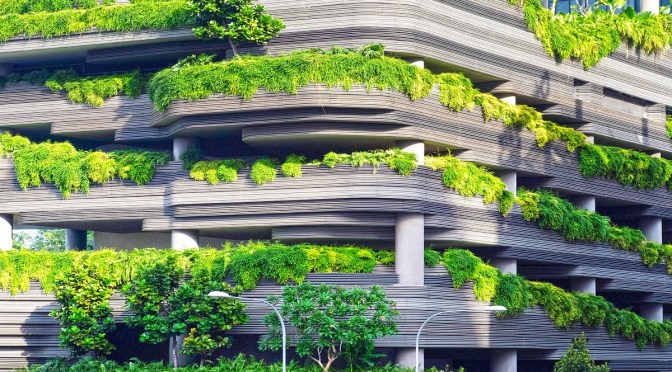
Another category which we shall miss at no cost is green walls. A green wall is comprised of plants grown in supported vertical systems that are generally attached to an internal or external wall. They  illustrate the back to nature concept with several healing benefits that can vent you from the hustle and bustle of urbanization.

3. INCORPORATING TECHNIQUES OF VASTU

There is a prevailing myth pertaining to Vastu that it is a blind belief. But there is also a sound claim that draws a fair line of pragmatic concepts that rely on logical reasoning that talk about techniques to save money. For example Vastu advocates the position  of  kitchen  windows in the  eastern  direction which  helps to trap  sunlight  rays that  can disinfect kitchen.

4. SHIFT IN THE PERSPECTIVE

“I’m so happy that I could build my home at low cost”- When was the last time you heard this from someone?

Very rare, I tell you. That’s because cheap buildings are never stylized. Because of the persuasion of some people who involve in between an engineer and the client, a low cost buildings is always looked down upon. Think over it the next time you hear the boasting of an expensive building.

5. LAURIE BAKER CONCEPTS

Figure shows Laurie Baker and the building designed by him

How is it possible to close the chapter  without reaching it through the wizard of the realm?

Laurie Baker made a variety of practical suggestions, including the use of rat trap bonding for brick walls, providing wall bends that increased strength and offered ready-made shelves, thin concrete roofs and even basic precautions, such as moving the dug up to the built-up area rather than out of it.

Now that we have taken a wonderful journey through all the possible factors for a low cost building, you may also think about other aspects like installing solar panels for energy efficiency. Remember a penny saved is a penny earned.

Money has its value when used for the right purpose. Low cost for a building can imply an empty belly filled. So liberate yourself from living in others thoughts and construct an independent mind as a perfect start.

Advertisements

GFRG panels – A trending innovation in low cost housing

GFRG PANEL HOUSE CONSTRUCTION

“Home is where the heart is “

<p class="has-text-align-justify" style="font-size:18px" value="<amp-fit-text layout="fixed-height" min-font-size="6" max-font-size="72" height="80">When you look from outside a house is a building of brick and cement but from inside it is a soul's dream. For affording a house an individual is ready to spend his hard-earned money without a second thought. The increase in housing demand is exhausting the raw materials/sources and keeping the dream of affording a house, to be more of a dream rather than a reality.When you look from outside a house is a building of brick and cement but from inside it is a soul’s dream. For affording a house an individual is ready to spend his hard-earned money without a second thought. The increase in housing demand is exhausting the raw materials/sources and keeping the dream of affording a house, to be more of a dream rather than a reality.

In the urban sector, there is a huge requirement of affordable housing as people migrate and make their settlements for their jobs.

While chasing the dream of affording a house, everyone thinks of innovative, highly efficient, and cost-effective sustainable options. This search terminates in GFRG ( Glass Fibre reinforced gypsum ) which addresses all these concerns and presents us with one of the most affordable walling and roofing system which have the qualities of a perfect innovation. GFRG privileges in using a superior and sustainable material that can reduce the overall cost by 40% and ensure a speedy construction when implemented professionally.

CONCEPT OF GFRG

GFRG PANEL VIDEO

GFRG is an innovative Australian technology gaining footage in the construction sector. The conventional system of using country burnt bricks is creating massive environmental degradation like excessive removal of topsoil and converting the fields into barren lands. In an initiative to protect the environment, the authorities are forced to restrict the manufacturing of red bricks which in turn increased the cost of bricks drastically. This method is used in China, the middle east, India, etc, and is one of the most trending building materials. GFRG panels are also called rapid wall system.

GFRG PANELS
FRG PANELS

The concept of the rapid wall system can eliminate the most time-consuming construction activities like brickwork, shuttering, casting, removal of RCC slabs, plastering, curing, etc. These activities generate a lot of debris lead to environmental degradation to some extent. Rapid walls in turn are fast and easy, consume less time, and creates negligible wastage. The construction time is reduced to 20-25% and painting can be applied to the wall directly after the application of special primers and putty. 

MANUFACTURING PROCESS OF GFRG

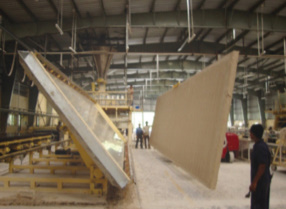
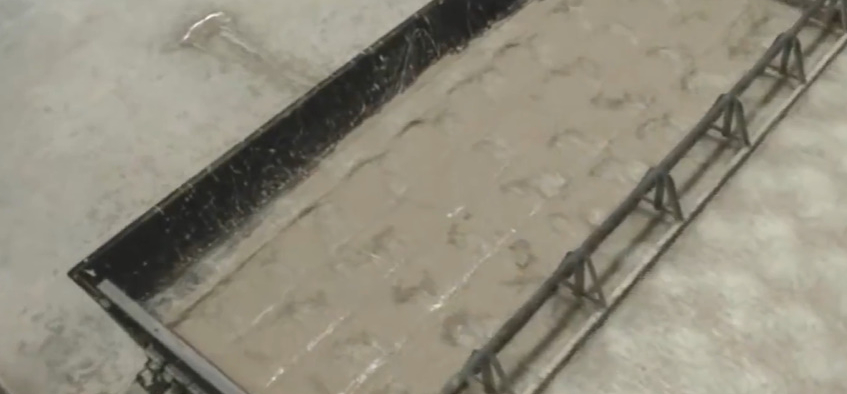
GFRG is a calcined gypsum plaster spread with glass fibre reinforcement for imparting tensile strength. Raw gypsum an industrial waste from the fertilizer plants is heated at a temperature of 140-150 degrees centigrade and is stored in tanks for later use. The slurry is mixed with water and other chemicals (retarders and water repellents ) and spread over a table and is interspersed with glass fibres. Aluminum plugs are used for creating hollow cavities. The glass fibres are added to induce tensile strength to the panels. Aluminum plugs are removed in around 30 minutes and panels are dried to a temperature of around 275 degrees for 1 hr before being cut to the required size. The transporting shall be done by keeping the panels vertical in stillages.

DIMENSIONS AND PROPERTIES

MODULAR HOLES
TYPICAL MODULAR HOLES

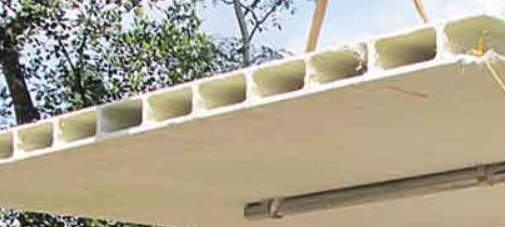
The panel sizes are 12 mtr x 3 mtr and have a thickness of 124 mm. These panels are used for walls as well as roofs and applications like staircases, boundary walls, etc. These panels are factory cut as per the design requirements. Cutouts for doors and window openings, air conditioners, etc are done in the factory before conveying to the site.

TYPICAL PANEL
TYPICAL PANEL

Each panel constitutes 48 modular holes of 230 mm x 94 mm x 3000 mm dimension. The weight of one panel is around 1440 kg. The load-bearing capacity of the panels can be increased by using concrete infills embedded with rebar.

APPLICATION OF GFRG PANELS

The applications of GFRG panels are as follows:
GFRG panels are used as lightweight load-bearing walling & roofing in single-storeyed and multi-storeyed buildings. The panel can be used with or without filling the core with concrete. The core can also be filled with nonstructural materials like sand, sawdust, quarry dust, etc.

When used in a multi-storeyed building the panel core is filled with concrete and embedded rebar as per the design to resist the lateral as well as gravity loads..

ERECTED PANELS
ERECTED PANELS

GFRG panels can be used as intermediate flooring and roofing elements for flat as well as the sloped roof. This will function as a composite member with RCC Microbeams and slabs making it a T beam structure.

GFRG can also be used in sunshades , facades , boundary walls etc.

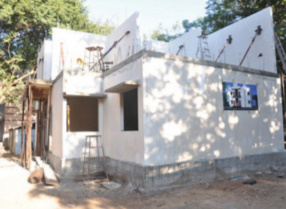
Rapid wall buildings are resistant to earthquakes, cyclones, and fire. The panels are fixed on the foundation with a unique locking system . GFRG panels do not require any plastering on the internal and external sides of the wall and roof.

Must Read : Types of vitrified tiles – Advantages and Uses

INSTALLATION METHOD OF GFRG PANELS

a) FOUNDATION

The foundation can be decided as per the site conditions. It can either be a spread footing, continuous footing, column footing structure, or rubble masonry /brick masonry with a plinth beam where the panels can rest. The plinth beam shall be embedded with reinforcement steel 12 mm dia 75 mm protruding over the beams.

b) DIMENSIONING OF PANELS

The panels are cut into required sizes as per the drawings. The cut-outs for door, window, and Air conditioner, etc shall be factory cut. Panels are marked and conveyed in stillages from the factory to the concerned sites.

b)ERECTION OF PANELS FOR WALLING

The GFRG walls are designed to resist axial force from gravity loads, lateral in-plane shear force, and in-plane bending moment from wind and seismic loads. The cavities inside the GFRG panels are filled with concrete, to enhance the compressive strength of the panels and reinforced to enhance lateral load-bearing capacity. This option is essential for multi-storied buildings.

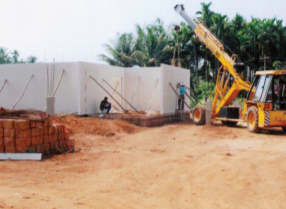
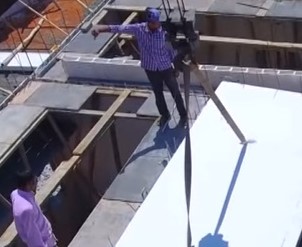
The unloaded panels have to be erected using a crane with the requisite boom length. The panels are lifted and placed over the plinth beam with the protruded rebar going inside the infills and concrete is filled from the top after plumbing it. Door and window frames can be fixed at this stage for better stability with anchorages in the infills properly filled with concrete. Sunshades over windows and door openings to be provided with conventional shuttering by cutting the external part of the rapid wall.

The wall corners and T junctions has to be provided with the rebar as shown in the figure. The concrete shall be done with 12 mm aggregate and filled in a layers of 1 mtr height.

RCC tie beam running on the full length of the wall has to be provided as per national building code for protection against earth quake. The web of the infills are removed upto the beam depth for this purpose and reinforcement shall be placed and casted

For up to 3 storeyed high low rise GFRG buildings there is no need to infill all cavities with reinforced concrete. We recommend concrete infill for every third cavity

FIXING ROOF PANEL

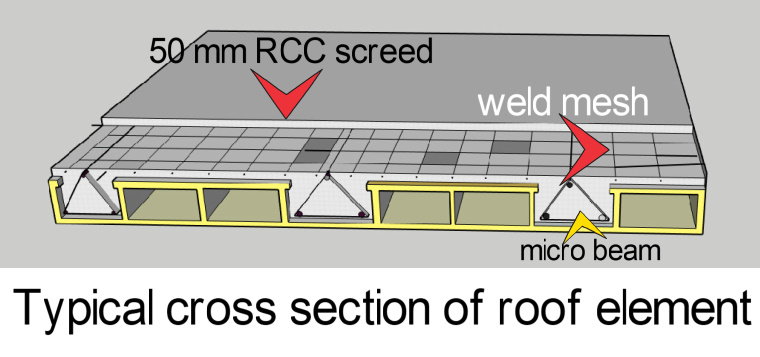
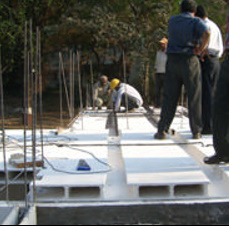
After casting of tie beam shuttering for fixing roof panels shall be done with 1 foot width wooden planks or any acrow spans . Support shall be provide in areas where the micro beams are coming. The panels are lifted and placed over the supports and care should be taken to maintain a gap of 40 mm. These gaps are provided to take up the rods from the floor below to maintain continuity. For providing mirco beams the flanges are cut with 25 mm offset as shown in the figure. Weld mesh is placed over the rapid panels and casted for 50 mm thick . The micro beam and the weld mesh slab provides a T beam action

The panels of the first floor are provided in the same way as done in the ground floor over the plinth beams. The internal of the rooms are applied with putty and painted . Electrical conduit has to be done through the cavities Plumbing fixtures shall be provided as per design .

Also Read : WPC board vs Plywood – Comparison

WHY GFRG CAN BE PREFERRED OVER CONVENTIONAL WALLING AND ROOFING SYSTEMS

The panels possess high flexural strength, shearing strength, compressive strength etc. It is an approved and accepted construction material by the Building Material and Technology Promotion Council of India (BMTPCI).Concrete filled with vertical reinforcement rods improves it’s vertical and lateral load capacities and improves the earth quake resistant properties.

a) THERMAL CONDUCTIVITY

Rapid walls posses very low thermal conductivity and high resistance to heat. GFRG panels can make the indoors cooler by 6-7% than conventional buildings.The high resistance to heat can keep interiors cooler in summer and warmer in winter which in turn can drastically reduces the air conditioning loads and energy bills.

b) GREEN TECHNOLOGY

The manufacturing process involves using very advanced and green technology in recycling the raw materials. This process consumes less energy and reduces carbon emission making GFRG an environmental friendly material.

c) COST EFFECTIVE AND AFFORDABLE

As the demand increased there was a drastic increase in the in cost of labour, energy, bricks, cement, river sand, water, labour and hire charges for scaffolding etc. . The introduction of rapid walls which is much cheaper construction material and has the potential to reduce the cost drastically and can make the housing an affordable one for all .

d) FAST CONSTRUCTION

The construction speed can be drastically increased by elimination of time consuming brick work, shuttering, concrete, deshuttering , plastering etc. The time taken for construction will will be reduced to 25%. A conventional G+1 house with takes 6-8 months for completion and with GFRG the same shall be constructed in a span of 2-2.5 months.

e) FIRE RESISTANT, WATER RESISTANT, EARTHQUAKE AND TERMITE RESISTANCE

ROOF  PANEL ERECTION
ROOF ERECTION GOING ON

GFRG panels are fire resistant, water resistant, earth quake resistant, heat resistant , rodent and termite resistant which can be used for any type of atmosphere. GFRG panels can resist upto 1000 degree and have a fire rating of 140 minutes

f) STRENGTH,DURABILITY & SERVICEABILITY

Strength and durability of GFRG is not behind any other building material but in turn is is more superior to them . This makes GFRG houses much stronger than conventional houses and have a life of more than 100 years.

g) INCREASE IN CARPET AREA

As we are using 124 mm walls in place of conventional 230 mm walls there is an increase in the carpet area which amount to about 4% of the overall area.

h) USAGE OF INDUSTRIAL WASTE AND ELIMINATE SITE DERBIES

GFRG Technology uses fertiliser industry waste which is abundantly available .The system is very easy to erect and can be done effectively and fast with the help of experienced people. It can eliminate lot of wastages accumulating at site.

i) OPTIONS AVAILABLE FOR USING GFRG

GFRG panels can be used without filling for single storied houses . For G+1 houses and above it is safer to fill concrete in one out of three cavities with embedded rebar . Multi storied houses can be constructed upto 10 floors as load bearing walls. For multi storied building we can even go with a conventional beam column structure with slabs and walls of GFRG . The system has to be designed accordingly.

GFRG panels can be utilised for the construction of staircase waist slabs. All the top flanges of panels shall be cut open and concreted with reinforcement. Steps for the stair can be done with any building material.

Also Read : Advantages of AAC blocks

DISADVANTAGES OF GFRG PANELS

The panels have to be handled with extreme care and specific machinery is needed for their erection. Spaces have to be allocated for crane movement all around the building.

The panels cant be used for walls with circular or higher curvature.

The panels need to be neatly stacked in order to avoid breakage and scratches.

The clear span is limited to 5m in the case of residential buildings.

A specially skilled team is required for erection and supervision. The panels are cut as per requirement and transported to the site and hence onsite changes are difficult.

Typical design has to be followed in all floors.

Updates in civil engineering, architecture finishes, building construction, Environmental Engineering