
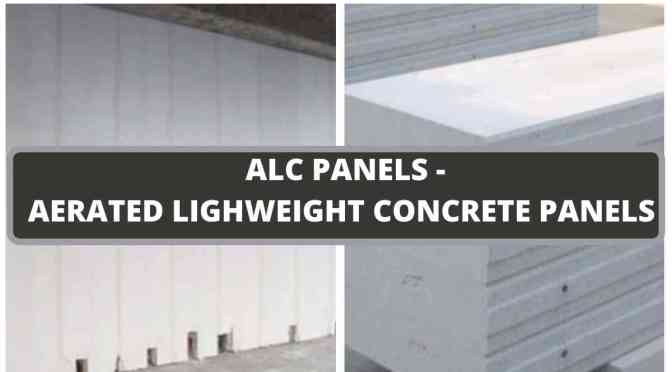
ALC panel construction has become a preferred solution in modern projects where efficiency, durability, and sustainability matter. An autoclaved lightweight concrete panel reduces structural load while still delivering strong and reliable performance. Builders increasingly adopt this system because the ALC panel advantages and uses suit a wide range of applications, from residential buildings to large industrial structures. Key ALC wall panel benefits include fire resistance, thermal insulation, sound control, and faster construction cycles. As one of the most practical lightweight concrete panels, ALC panels are easy to handle, transport, and install on site. When supported by a clear ALC panel installation guide, the system ensures accuracy, safety, and consistent quality.
Lightweight panels are a versatile solution in modern construction, offering easy handling, reduced weight, and enhanced insulation. These lightweight panels provide superior strength-to-weight ratios, making them ideal for both structural and decorative applications. Additionally, they contribute to energy efficiency and sustainability, benefiting green building projects by lowering overall environmental impact.
Autoclaved light weight Concrete panels are used for external and internal non-load bearing walls. They are also used for roofs and floors. These panels are suitable for commercial, industrial, and residential buildings.
- AAC panels or Autoclaved Lightweight Concrete panels – Introduction
- Significance of Autoclaved Light weight Concrete panel or ALC panel
- Technical parameters of ALC panel
- Advantages of ALC panel
- Conclusion
AAC panels or Autoclaved Lightweight Concrete panels – Introduction
ALC panels, or Autoclaved Lightweight Concrete panels, are innovative construction materials known for their durability and insulation properties. These lightweight panels are made from autoclaved lightweight concrete, offering strength while being easier to handle. ALC panels are increasingly popular in modern construction for their efficiency and sustainability.
In this blog, we will explore everything you need to know about ALC panels. We’ll start by discussing what ALC panels are and how they are made. Then, we’ll delve into the benefits and key features of these lightweight panels, including their durability, insulation, and fire resistance. We’ll explore the various applications of ALC panels in modern construction. We will compare them to traditional concrete and other lightweight materials. Finally, we’ll cover the environmental advantages and cost-effectiveness and future trends of ALC panels. This will help you understand why they are becoming a preferred choice in the building industry.
- AAC panels or Autoclaved Lightweight Concrete panels – Introduction
- Significance of Autoclaved Light weight Concrete panel or ALC panel
- Technical parameters of ALC panel
- Advantages of ALC panel
- Conclusion
Significance of Autoclaved Light weight Concrete panel or ALC panel
ALC panels are next-generation, a versatile green building material that possesses superior technical and functional advantages. These advantages gave them an upper edge over conventional construction materials to become a favorite walling alternative. ALC panels are designed for non-load bearing walls, load-bearing walls, basement walls, partition walls, floor and roof slabs, etc.
There is an extraordinary rise in construction expenses due to higher costs of construction materials and the non-availability of construction materials. ALC panels emerged as a superior and green alternative. They effectively address these issues. Additionally, they manage the construction schedules and deliveries.
ALC Panel – Aerated Light weight concrete panels
Technical parameters of ALC panel
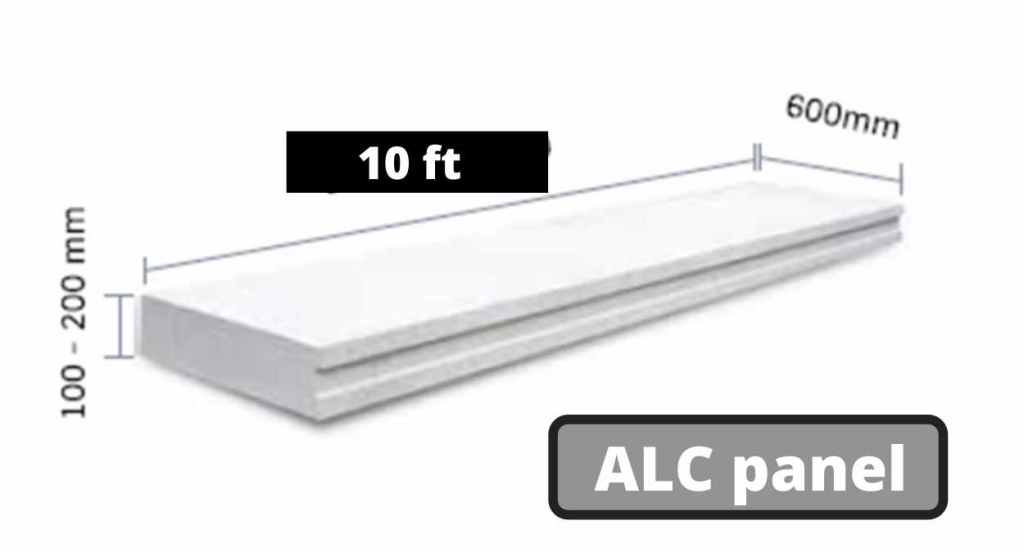
ALC panels are solid panel systems having insulation properties and are embedded with steel reinforcements. They are suited for load-bearing and non-load-bearing applications. Load-bearing applications are restricted to single-storied or low-rise buildings. The floor and roof panels are usually 10 ft long. They have a standard width of 2 ft with tongue and groove joints. ALC panels are designed in suitable thickness to cater to the loads acting on the components. The technical properties of ALC panels as follows.

ALC Panel – Aerated Light weight concrete panels
Advantages of ALC panel
ALC panels are best suited to cater to the present-day challenges of energy efficiency. They provide better fire safety and thermal insulation than any other building material. Let us examine the features and benefits of ALC panels. These advantages make them superior and a preferred choice of wall paneling systems.
- Thermal insulation
- High fire resistance
- Acoustic insulation- ALC panel
- Water and moisture resistant
- Light weight product
- Durability and strength
- Environmental friendly
- Earthquake resistant
- Installation process and speed
Also Read : AAC block Manufacturing process
Thermal insulation
ALC panel got a unique cellular structure that constitutes around 75% to 80% air bubbles. These air bubbles are responsible for their low thermal conductivity. The ALC panels got a k value nine (9) times less than concrete and twice less than bricks. ALC panels got the highest thermal rating of R30 in the industry.
The low thermal conductivity helps ALC panels in maintaining and retaining indoor temperatures. The indoors will be kept cool during summers and warm in winters. ALC panels can reduce substantial energy loads and thereby generates an energy bill savings of around 25%.
High fire resistance
ALC panels got a unique cellular structure. They provide a superior fire rating of around 4hr for a 100 mm thick panel. The melting point of ALC panels is over 1600 degrees Celsius. It is much higher than the typical building temperature of 650 degrees Celsius. ALC panels do not release smoke or toxic gas during a fire incident.
Acoustic insulation- ALC panel
ALC panels possess natural sound insulation properties. They can also reduce mechanical vibrations to an extend. Noise insulation of these panels ranges between 40-60Db depending on the thickness of the panels and surface treatments. They can function as sound absorption and a sound resistance material simultaneously, which is not possible with other building materials. A good STC rating of around 44 is ideal. This enables ALC panels to be used in areas designed to have high acoustic performance. Ideal for hotels, hospitals, commercials, and residential uses.
Water and moisture resistant
Consists of millions of microscopic cells that resist the capillary flow of water and strongly resists water and moisture.
Light weight product
ALC panels got a density of around 600-650 kg per m3. They are 4 times lighter than concrete and three times that of brick. These lightweight properties can reduce the self-weight. This reduction in self-weight in turn reduces the design loads on foundations. Usage of ALC panels can substantially economize the structure and ease the construction process. The overall saving in structural cost is around 15-20%.
Durability and strength
High pressure steam-curing autoclaving process gives ALC panels high strength to weight ratio even higher than M 150 concrete. ALC panels are used with reinforcements to meet load-bearing design requirements like bearing capacity, stiffness, shear resistance, deflection, etc.
ALC blocks are a preferred choice for all kinds of walls due to their high load-bearing strength. They are used for external and internal walls, load bearing and non-load-bearing walls, basements, and firewalls, etc.
They can absorb strong impacts, while also being able to withstand harsh weather conditions without cracking. They have a designed life span of 50 to 80 years.
Environmental friendly
ALC panels are environment-friendly building products. From the raw material to the production process there is no emission of toxic wastes to the environment. The wastage is minimal and negligible and the entire material is reusable and recyclable. ALC blocks use Energy saving manufacturing process and are LEED-certified and belong to the green building category.
Earthquake resistant
Earthquake forces on a structure is proportional to its weight and ALC panels can considerably reduces the weight of the structure. ALC panels have high shear wall strength and capable of resisting lateral loads. ALC panels can withstand wind loads.
Installation process and speed
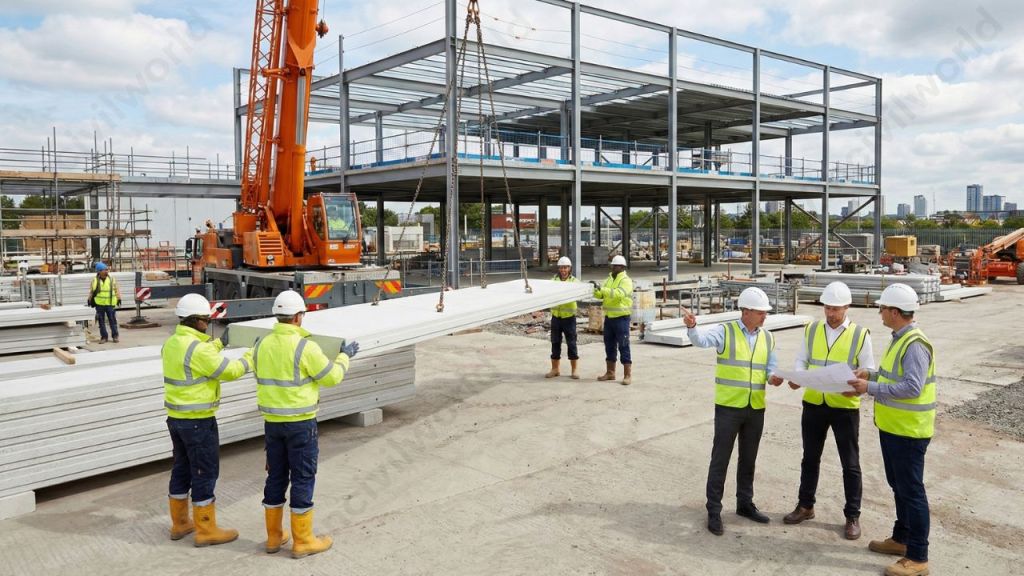
ALC panels are manufactured in precise sizes, hence the tolerance in length, height, and width are only +/- 2 mm. The tongue and groove fixing arrangements are fast and easy and uses only thin mortar joints and putty. These thin mortar joints and precise dimensions can eliminate possible cracks and enhances the construction speed. ALC walls are fully cured in 11 hours where as concrete takes 28 days, minimizing cracks due to shrinkage.
The panel erection is by dry masonry continuous operations and there are no height restrictions like conventional masonry works. Joints are sealed by special adhesives and no curing is required. After installation putty can be applied directly over the surface. The product can be cut and grooved using wood working tools much easier than wooden products. ALC panels can be cut easily, cored, ground, and installed fast and easy. Conduit joints and openings can be made easily in panels.
Conclusion
ALC blocks are a kind of porous plate with high performance. They can be a perfect, economic, and green alternative for conventional walling systems. They are easy and fast to install, durable and environmental friendly products. ALC panels got superior thermal conductivity, acoustic properties and fire resistant properties.
 vin civilworld