Tag Archives: civil engineering

Soundness test on Aggregate | Sample selection and procedure


Soundness test of aggregates is a crucial evaluation that determines an aggregate’s ability to withstand weathering effects. These weathering effects include wetting, drying, freezing, and thawing. This test is vital in assessing the durability and longevity of aggregates used in construction. Soundness test determines the disintegration of aggregates due to weathering. This includes freezing, thawing, marine condition etc. Yet, the weak and porous aggregate shows a change in weight during this soundness test.

Understanding the soundness of aggregate test is essential for ensuring the performance and reliability of materials in various infrastructure projects.Aggregates are the significant factor that contributes adequate strength to concrete. Hence, it is important to obtain the right quality aggregate for construction. This article examines both IS 2386 Part 5 and ASTM methods. It aims to highlight why maintaining aggregate quality is important in construction applications.

We will explore the soundness test on aggregate in this article. We will focus on the methodologies outlined in IS 2386 Part 5 and American Society for Testing and Materials (ASTM) standards.

  1. Tests on Aggregate
  2. Purpose of soundness test for aggregate
    1. Durability Assessment
    2. Expansion and Contraction
    3. Preventing Structure Failure
    4. Construction Material Selection
  3. Soundness test for aggregates (IS-2386-PART-5)- Testing method
  4. Relevant IS code
  5. Sample selection for fine and coarse aggregates
  6. Apparatus for Soundness test
  7. Reagents used
  8. Test procedure of soundness test
  9. Soundness test on Aggregate as per ASTM C88
    1. Key Takeaways
    2. Conclusion

Tests on Aggregate

For ensuring the quality of aggregates the following tests are conducted.

This article is about the soundness test on aggregate. We will focus on the methodologies in IS 2386 Part 5. We will also follow relevant American Society for Testing and Materials (ASTM) standards.

Purpose of soundness test for aggregate

This section explores the importance of the soundness test on aggregate.
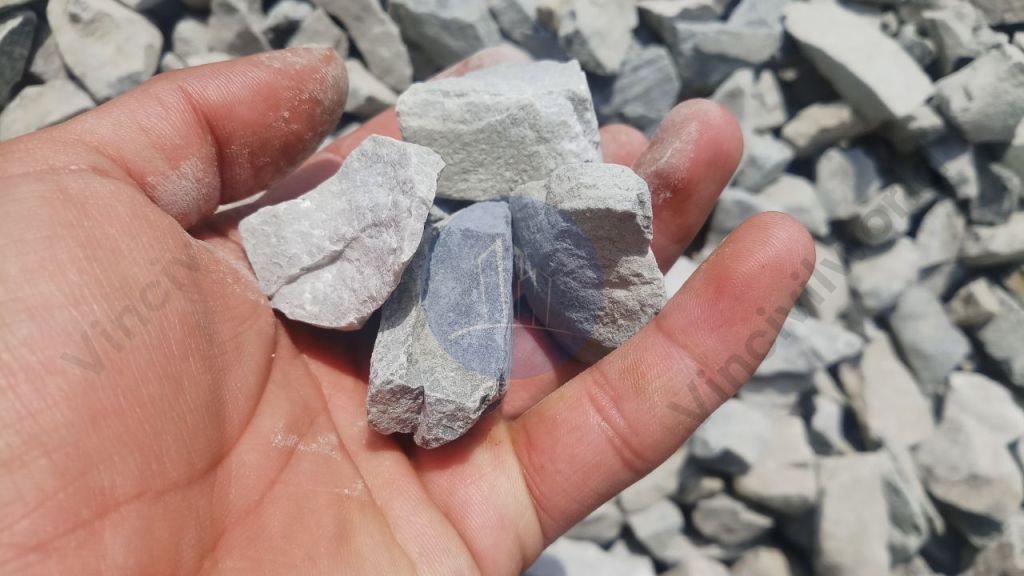
A hand holding several pieces of aggregate, showing different shapes and sizes, against a background of loose aggregates.
A hand holding various aggregates used for soundness testing in construction.

Durability Assessment

The soundness test on aggregate evaluates its resistance to deterioration due to freezing and thawing cycles. It also assesses its resistance to repeated wetting and drying. This test ensures the aggregate’s longevity in construction applications.

Expansion and Contraction

Moisture absorption and freezing lead to expansion and contraction of aggregates. This can weaken structures, emphasizing the need for the aggregate soundness test to identify potential vulnerabilities.

Preventing Structure Failure

The soundness of aggregate test is essential for confirming that aggregates can withstand environmental stresses. This capability prevents structural failure. It ensures long-term stability and durability in construction projects.

Construction Material Selection

Results from the IS 2386 Part 5 soundness test guide engineers and contractors. They help in choosing appropriate aggregates for specific construction applications. This promotes effective material selection and enhances overall project quality.

Soundness test for aggregates (IS-2386-PART-5)- Testing method

In the soundness test on aggregate, samples are immersed in sodium sulfate or magnesium sulfate solutions multiple times. Salt deposits form within the aggregate’s pores due to this repetitive process. These deposits cause internal pressure that can weaken and break the aggregates. After a specified number of cycles of dipping and drying, workers sieve the aggregates. This process assesses the percentage of material loss. This procedure, outlined in IS 2386 Part 5, is crucial for conducting a successful aggregate soundness test. It ensures the durability and longevity of aggregates in construction applications.


Soundness test of aggregate
A laboratory setting where a person in a lab coat and blue gloves is conducting a soundness test on aggregates, using measuring equipment and samples.
A laboratory technician preparing samples for the soundness test of aggregates, ensuring quality control in construction materials.

Relevant IS code

  • IS: 2386 Part V
  • ASTM C88

Sample selection for fine and coarse aggregates

  • The fine aggregate passing through the 10 mm IS sieve should be held as a sample for this test.
  • Then sieve the sample again through 10mm, 4.75 mm, 2.36 mm, 1.18 mm, 600 microns, 300 microns.
  • However, the sample should be decided in such a way that, it will not yield below 100g of given sizes. 
  • For coarse aggregate, sample remove aggregates finer than 4.75 mm. 
  • Then dry the sample and again sieve through 80mm, 63mm, 40mm, 20mm, 10mm IS sieves.
  • Choose the sample in such a way that, it will not yield below the given amount for the given sizes.
  • Weigh the samples separately and store them in different containers.

Apparatus for Soundness test

  • IS Sieves (80 mm, 63 mm, 40 mm, 31.5 mm, 25 mm, 20 mm, 16 mm, 12.5 mm, 10 mm, 8.0 mm, 4.75 mm, 4.0 mm, 2.36 mm, 1.18 mm, 600 micron, 300 micron, 150 micron)
  • Container
  • Weighing machine
  • Drying oven (105 to 110 degree)
Laboratory setup with metal sieves arranged on a table, showcasing equipment used for the soundness test of aggregates.
Apparatus used for conducting the soundness test on aggregates, crucial for assessing their durability in construction.

Reagents used

  • Sodium sulphate solution
  • Magnesium sulphate solution

Test procedure of soundness test

  • After the selection of aggregate samples, wash them thoroughly on a 300 micron IS sieve.
  • Then dry them at 105 to 110-degree celsius in drying oven.
  • After that immerse the sample in a solution of sodium sulphate or magnesium sulphate for 16 to 18 hours. 
  • Cover the container for reducing evaporation and accidental addition of extraneous substances. 
  • The temperature of the solution should be 27 degree Celsius. 
  • After 18 hours, take out the sample and dry them at 105 to 110-degree celsius. 
  • Allow them to cool to room temperature and repeat this process.
  • After the final cycle, wash the sample and dry them again at 105 to 100-degree celsius.
  • Weigh them and sieve them through the same sieve we used before the test.
  • The percentage of finer sieve after the test and before the test is determined.
  • The percentage loss of weight indicates the soundness of aggregate.

Soundness test on Aggregate as per ASTM C88

The soundness test on aggregate using ASTM C88 assesses how well aggregates resist weathering. It subjects them to alternate cycles of immersion in a sulfate solution and drying. This test simulates natural conditions where aggregates are exposed to wetting, drying, freezing, and thawing, helping determine their durability. The procedure involves immersing aggregate samples in either sodium sulfate or magnesium sulfate solutions for 16 to 18 hours. After soaking, the aggregates are dried at 105°C to 110°C, then cooled to room temperature. This cycle is repeated a set number of times, typically five, to simulate environmental conditions.
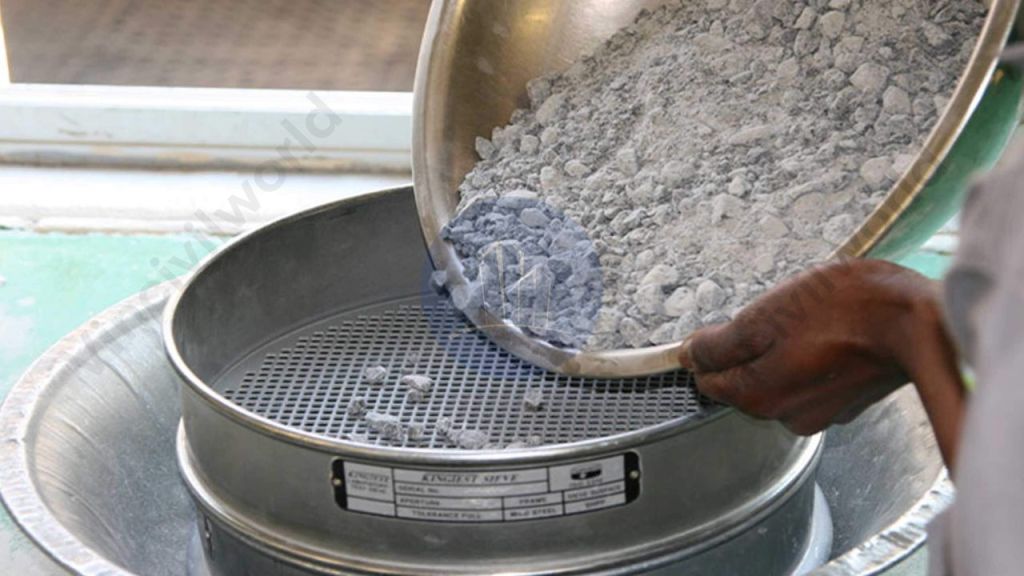
A person pouring aggregate material into a sieve for testing, illustrating the soundness test process for assessing the quality of aggregates used in construction.
Sifting aggregate samples during the soundness test, a crucial step for assessing durability and resistance to weathering effects.

After the cycles, the samples are sieved, and the percentage loss in mass is calculated to assess the aggregate’s soundness. The higher the loss in mass, the less durable the aggregate. The aggregate soundness test per ASTM C88 helps engineers select durable aggregates. These aggregates are reliable for use in construction projects under harsh environmental conditions.

Key Takeaways

  1. Soundness test on aggregate evaluates the durability of aggregates. It assesses their resistance to weathering effects like wetting, drying, freezing, and thawing.
  2. IS 2386 Part 5 outlines the standard procedure for performing this test, ensuring accuracy and consistency.
  3. Aggregate soundness test involves repeated cycles of soaking in sodium or magnesium sulfate solutions. These cycles assess the percentage of material loss.
  4. Fine and coarse aggregate samples are sieved, immersed, and dried under controlled conditions. These steps help determine the soundness of aggregate test results.
  5. The test ensures proper material selection, preventing structural failure due to environmental stress.

Conclusion

The soundness test on aggregate is essential. It evaluates an aggregate’s ability to withstand weathering effects. This test also helps maintain an aggregate’s structural integrity. This test is defined in IS 2386 Part 5 and ASTM C88 standards. It involves submerging aggregate samples in sodium sulfate or magnesium sulfate solutions. These solutions simulate real-world conditions such as freezing, thawing, and drying. The test identifies aggregates that may deteriorate by measuring the percentage loss of material. This is done after a specified number of cycles. Soundness testing is vital. It ensures only durable aggregates are used in construction projects. This enhances the longevity and reliability of infrastructure.


Column Jacketing: Types and Benefits Explained

Column jacketing strengthens columns and improves their load-carrying capacity. Engineers add materials around existing columns to boost their strength, stiffness, and durability. This method helps repair and upgrade structures to meet modern safety standards. Jacketing of columns increases their resistance to seismic forces, making buildings safer during earthquakes. It also improves the columns’ performance under various loads. Engineers often use concrete jacketing, steel jacketing of columns, and fiber-reinforced polymer (FRP) jacketing for effective strengthening. Concrete jacketing involves applying reinforced concrete around existing columns to enhance their load-bearing capacity and structural integrity. It’s a cost-effective and reliable method for strengthening aging structures.

Column jacketing plays a crucial role in structural engineering. It extends the lifespan of structures and boosts their resilience. Engineers use this technique for strengthening bridges, buildings, and industrial structures. In the next sections, we will talk about the definition, significance, and various techniques of column jacketing.

  1. Definition of Jacketing
  2. Significance of Jacketing in Structural Engineering
  3. Applications of Jacketing in Retrofitting and Strengthening
  4. Understanding Column Jacketing
  5. Column Jacketing types
    1. Reinforced Concrete (RC) Column Jacketing
      1. Working Procedure of Reinforced Concrete Column Jacketing
      2. Advantages and disadvantages of Reinforcement Concrete Jacketing
    2. Steel Jacketing
      1. Working Procedure of Steel Jacketing of columns
      2. Advantages and Disadvantages of steel jacketing of columns
    3. Fiber Reinforced Polymer (FRP) Jacketing
      1. Working Procedure of Fiber Reinforced Polymer (FRP) Jacketing
      2. Advantages and Disadvantages of FRP jacketing
    4. Carbon Fiber Reinforced Polymer (CFRP) Jacketing
      1. Working Procedure of Carbon Fiber Reinforced Polymer Jacketing
      2. Advantages and Disadvantages of Carbon Fiber Reinforced Polymer Jacketing
  6. Comparison of FRP column Jacketing and CFRP Jacketing
    1. Composite Jacketing
      1. Advantages and disadvantages of Composite Jacketing
      2. Work Procedure for Composite Column Jacketing
      3. Advantages and Disadvantages of composite column jacketing
  7. Applications of Column Jacketing
  8. Key Takeaways
  9. Conclusion

Definition of Jacketing

Jacketing is a structural strengthening method. It involves adding materials around existing structural elements, like columns or beams. This process enhances their strength and durability. It usually involves using reinforced concrete, steel, or fiber-reinforced polymers (FRP). These materials increase the cross-sectional area and structural integrity of the member.

Significance of Jacketing in Structural Engineering

Jacketing is essential for retrofitting and strengthening structures damaged by aging, environmental factors, or increased load demands. It improves the strength and stiffness of structural elements like columns, beams etc., ensuring they meet current safety standards. Jacketing also enhances resilience to seismic forces, making structures safer during earthquakes.

Column Jacketing
Column Jacketing (Photo courtesy : https://www.horseen.com/product/steel-jacketing)

Applications of Jacketing in Retrofitting and Strengthening

Jacketing is commonly used for:

  • Repairing Deteriorated Structures: Restoring structural integrity damaged by corrosion or environmental factors.
  • Seismic Retrofitting: Increasing ductility and energy dissipation to resist earthquakes.
  • Increasing Load Capacity: Upgrading structural members to handle higher loads due to changing building usage.

The jacketing of columns is particularly important for structures located in seismic zones, where enhanced resilience is essential. In the upcoming sections, we will explore various column jacketing techniques and their applications.

Understanding Column Jacketing

Column jacketing is a popular technique used to strengthen and enhance the performance of columns. Engineers use this method to improve load-carrying capacity, stiffness, and durability. The primary purpose of column jacketing is to increase the strength of existing columns. It makes them more resilient against various loads. These loads include seismic forces. It also extends the lifespan of structures and helps them meet modern safety standards. Additionally, column jacketing is a cost-effective solution compared to rebuilding or replacing damaged structures.

Column jacketing is commonly used in several scenarios. Engineers often apply it to structures that show signs of deterioration due to aging or environmental factors. It is also used for retrofitting buildings and bridges to enhance their load-bearing capacity. Moreover, structures located in earthquake-prone areas gain significantly from this technique.

Steel jacketing of column

Overall, column jacketing is a reliable solution for enhancing structural safety and durability. Its effectiveness and versatility make it a preferred choice for repairing, retrofitting, and strengthening various types of structures.

Column Jacketing types

Column jacketing is a structural strengthening technique used to enhance the load-carrying capacity, durability, and seismic resistance of columns. Various techniques are employed based on material type and application requirements. The main types include:

  • Reinforcement Concrete Jacketing
  • Steel Jacketing
  • Fiber Reinforced Polymer (FRP) Jacketing
  • Carbon Fiber Reinforced Polymer (CFRP) Jacketing
  • Composite Jacketing

Reinforced Concrete (RC) Column Jacketing

Reinforced Concrete Jacketing is the most common method for strengthening columns. It involves adding a layer of reinforced concrete around the existing column, increasing its cross-sectional area and enhancing its load-carrying capacity. The extra concrete also improves the column’s stiffness, ductility, and resistance to seismic forces. RC Jacketing is widely used for retrofitting old structures and repairing damaged columns. This method is cost-effective and offers excellent fire resistance. However, it requires increased column size, which affects the building’s aesthetics and usable space.

RCC column Jacketing

Working Procedure of Reinforced Concrete Column Jacketing

  1. Surface Preparation: Clean and roughen the existing column surface to improve bonding.
  2. Reinforcement Installation: Place extra reinforcement bars around the column and securely anchor them to the existing column.
  3. Formwork Preparation: Install Formwork around the column, leaving adequate space for the concrete layer.
  4. Concrete Pouring: Pour high-strength or regular concrete into the Formwork and compact it properly.
  5. Curing: Allow the concrete to cure for the required period to achieve desired strength.
  6. Inspection: Remove the Formwork and inspect the finished jacket for defects.

Advantages and disadvantages of Reinforcement Concrete Jacketing

AdvantagesDisadvantages
Increases load-bearing capacity.Increases the size of the column, which reduces usable space.
Enhances ductility and seismic resistance.Heavyweight affects the structure’s overall weight.
Cost-effective and provides excellent fire resistance.Requires skilled labor and time for proper implementation.
Widely applicable for retrofitting and repairs.

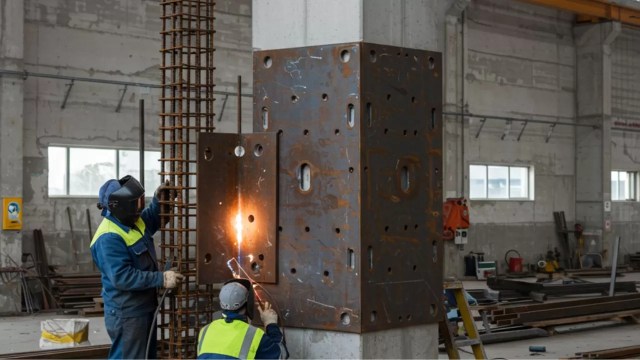
Steel Jacketing

Steel Jacketing involves encasing columns with steel plates or sections to improve their strength and ductility. This method provides high tensile strength, excellent impact resistance, and increased load-bearing capacity. Steel jacketing is particularly effective for seismic retrofitting and enhancing the structural performance of deteriorated columns. Nevertheless, it needs regular maintenance to prevent corrosion. It is not suitable for environments with high moisture or chemical exposure.

Steel jacketing of columns

Working Procedure of Steel Jacketing of columns

  1. Surface Preparation: Clean the column’s surface to remove dirt, debris, and any loose materials.
  2. Steel Plate Fabrication: Cut steel plates or sections to the required dimensions, ensuring they fit snugly around the column.
  3. Installation of Steel Plates: Position the steel plates around the column. Secure them using bolts or welding. Make sure a tight fit to guarantee effective confinement.
  4. Grouting (if necessary): Inject grout between the steel jacket and the column surface. Fill any gaps. This ensures uniform load transfer.
  5. Corrosion Protection: Apply protective coatings to the steel surface to prevent corrosion and extend the jacket’s lifespan.

Advantages and Disadvantages of steel jacketing of columns

AdvantagesDisadvantages
Enhanced Strength and Ductility: Significantly increases the column’s load-bearing capacity and ductility, improving overall structural performance.Corrosion Susceptibility: Steel is prone to corrosion, especially in humid or aggressive environments, necessitating regular maintenance and protective measures.
Minimal Increase in Cross-Section: Provides significant strength gains without notably increasing the column’s size, preserving architectural aesthetics and usable space.Cost Considerations: Material and installation costs can be higher compared to other jacketing techniques.
Rapid Installation: The installation process is relatively quick, reducing downtime during retrofitting projects.Thermal Conductivity: Steel’s high thermal conductivity requires extra fireproofing measures to preserve structural integrity during fires.

Fiber Reinforced Polymer (FRP) Jacketing

FRP Jacketing uses lightweight, high-strength composite materials. These materials are made of fibers such as carbon, glass, or aramid. They are embedded in a polymer matrix. This method offers superior strength, corrosion resistance, and minimal weight addition to the structure. FRP Jacketing enhances the column’s ductility and load-carrying capacity, making it highly effective for seismic retrofitting. It is easy to install, requires minimal maintenance, and does not significantly alter the appearance of the column. Nonetheless, it is relatively expensive and require additional fire protection measures in certain applications.

Fiber Reinforced polymer(FRP) Jacketing

Working Procedure of Fiber Reinforced Polymer (FRP) Jacketing

  1. Surface Preparation: Clean and smooth the column surface, removing any irregularities to guarantee proper adhesion.
  2. Primer Application: Apply a primer to the prepared surface to promote adhesion between the concrete and the FRP materials.
  3. Resin Application: Coat the primed surface with a layer of resin, serving as the bonding agent for the FRP fabric.
  4. FRP Wrapping: Wrap the resin-coated column with FRP fabric, ensuring proper alignment and tension to remove air pockets.
  5. Extra Resin Coating: Apply another layer of resin over the FRP wrap. This will fully saturate the fibers. It also ensures a strong bond.
  6. Curing: Allow the resin to cure as per the manufacturer’s recommendations, solidifying the FRP jacket.

Advantages and Disadvantages of FRP jacketing

AdvantagesDisadvantages
High Strength-to-Weight Ratio: Provides significant strength enhancement without adding considerable weight to the structure.Cost: FRP materials can be expensive, increasing the overall project cost.
Corrosion Resistance: FRP materials are inherently resistant to corrosion, making them ideal for harsh environmental conditions.Fire Resistance: FRP materials have limited fire resistance, requiring extra protective measures in fire-prone areas.
Minimal Section Enlargement: The thin profile of FRP jackets preserves the original dimensions of the column, maintaining aesthetics.UV Sensitivity: Some FRP materials degrade under prolonged UV exposure, necessitating protective coatings for outdoor use.
Ease of Installation: The lightweight and flexible nature of FRP materials facilitates quick and straightforward installation.Adhesion Sensitivity: Effectiveness heavily relies on proper surface preparation and application techniques.

Carbon Fiber Reinforced Polymer (CFRP) Jacketing

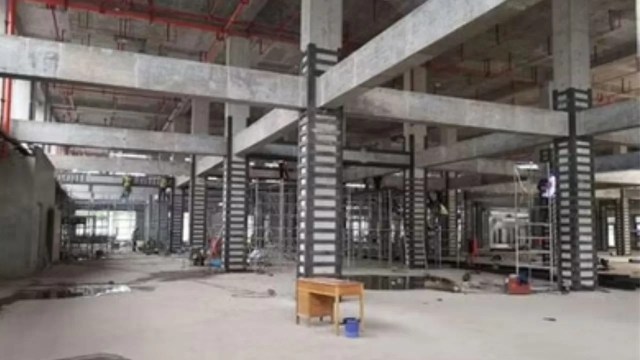
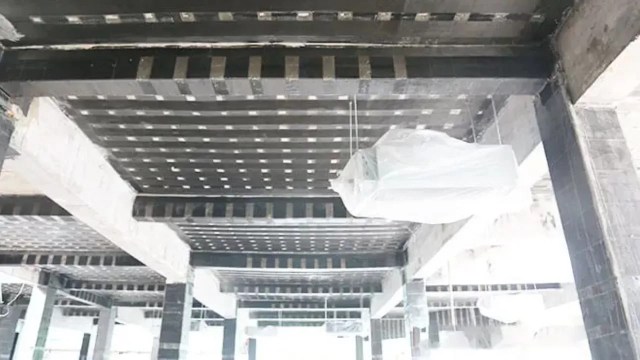
Carbon Fiber Reinforced Polymer (CFRP) Jacketing CFRP Jacketing is a specialized form of FRP Jacketing. It uses carbon fibers for reinforcement. It offers exceptional tensile strength, lightweight properties, and excellent corrosion resistance. CFRP jacketing is widely used for enhancing the seismic resistance and structural performance of columns. It is easy to apply and does not require heavy equipment, making it ideal for structures with limited access. However, CFRP materials are expensive, have poor fire resistance, and are sensitive to ultraviolet light. They are also brittle under certain loading conditions.

Carbon Fiber Reinforced Polymer Jacketing

Working Procedure of Carbon Fiber Reinforced Polymer Jacketing

  1. Surface Preparation: Thoroughly clean and smooth the column surface to ensure optimal adhesion of the CFRP materials.
  2. Primer Application: Apply a suitable primer to the prepared surface. This promotes strong bonding between the concrete and the CFRP materials.
  3. Resin Application: Spread a layer of resin over the primed surface, serving as the adhesive for the CFRP fabric.
  4. CFRP Wrapping: Wrap the resin-coated column with CFRP fabric, ensuring tight wrapping and the elimination of air pockets.
  5. Additional Resin Coating: Apply another resin layer over the CFRP wrap. This will fully saturate the fibers. It will also ensure a robust bond.
  6. Curing: Allow the resin to cure according to the manufacturer’s guidelines, solidifying the CFRP jacket.

Advantages and Disadvantages of Carbon Fiber Reinforced Polymer Jacketing

AdvantagesDisadvantages
High Strength-to-Weight Ratio: CFRP offers exceptional strength enhancement with minimal weight addition, preserving structural efficiency.High Cost: CFRP materials are expensive, significantly increasing project costs compared to other jacketing methods.
Corrosion Resistance: Excellent resistance to corrosion, making it suitable for use in harsh and corrosive environments.Limited Fire Resistance: CFRP is vulnerable to high temperatures, requiring additional fireproofing measures.
Ease of Installation: Lightweight and flexible nature allows for quick and efficient installation.Surface Preparation Requirement: Proper surface preparation is essential for effective bonding, demanding meticulous procedures.
Durability and Long Lifespan: CFRP has a long lifespan with minimal maintenance requirements.UV Sensitivity: Prolonged exposure to ultraviolet rays can degrade the material, requiring protective coatings.
Minimal Section Enlargement: Enhances strength without significantly altering the column’s dimensions, preserving aesthetics.Brittle Failure Mode: CFRP can exhibit sudden brittle failure without prior warning if overloaded.

Comparison of FRP column Jacketing and CFRP Jacketing

AspectFRP JacketingCFRP Jacketing
Material CompositionMade of fibers like glass, aramid, or carbon embedded in a polymer matrix.Specifically made of carbon fibers embedded in a polymer matrix.
StrengthProvides good strength enhancement.Offers superior strength-to-weight ratio and stiffness.
WeightLightweight but heavier than CFRP.Extremely lightweight and strong.
Corrosion ResistanceHigh corrosion resistance, especially with glass or aramid fibers.Excellent corrosion resistance, especially suitable for harsh environments.
CostGenerally more affordable.More expensive due to the high cost of carbon fibers.
Application AreasSuitable for general structural strengthening.Ideal for high-performance applications requiring exceptional strength and stiffness.
Fire ResistanceLimited fire resistance, require additional protection.Limited fire resistance, but often better than other FRP types.
InstallationEasy to install due to flexibility.Slightly more challenging to handle due to stiffness.
DurabilityGood durability under most conditions.Superior durability and long-term performance.

Composite Jacketing

Composite Jacketing Composite Jacketing involves combining different materials, such as steel and FRP, to improve the overall performance of columns. This method provides enhanced strength, ductility, and durability. Composite Jacketing is effective for retrofitting columns exposed to harsh environmental conditions. However, it requires careful material selection and design to achieve the desired performance.

Retrofitting
Composite Jacketing

Advantages and disadvantages of Composite Jacketing

AdvantagesDisadvantages
Enhanced Strength and Ductility: Combining materials like steel and FRP improves load-bearing capacity and ductility.Complex Design Requirements: Effective implementation requires meticulous design and compatibility assessment.
Durability: Provides improved resistance to environmental factors like corrosion, impact, and wear.Higher Cost: Using multiple materials can increase project costs, especially when high-quality materials are used.
Versatility: Suitable for various applications, including seismic retrofitting and rehabilitation.Installation Complexity: Installation may require specialized skills and techniques for effective application.
Improved Structural Performance: Achieves better overall performance compared to using a single material.Bonding Issues: Proper bonding between different materials is essential for effective load transfer.
Minimal Aesthetic Impact: Can maintain the original structural appearance when applied properly.Maintenance Requirements: Require regular inspection and maintenance to ensure continued performance.

Work Procedure for Composite Column Jacketing

Assessment and Design: Inspect the column for damage. Design the composite jacketing system based on structural needs and environmental conditions. Select suitable materials (e.g., Steel + FRP) for compatibility and load requirements.
Surface Preparation: Clean the column surface to remove dirt and coatings. Repair cracks or weak spots for a smooth bonding surface.
Steel Jacketing (If Applicable): Install steel plates around the column using anchors or bolts. Weld or bolt plates for proper fitting.
FRP Jacketing Application: Cut FRP sheets to size. Apply resin or adhesive to the column and sheets. Wrap sheets around the column with proper alignment and overlap. Allow curing.
Finishing: Apply protective coating if needed. Inspect for bonding and alignment.
Quality Control: Perform NDT or load tests to ensure effectiveness. Regularly inspect and maintain the jacketed columns.

Advantages and Disadvantages of composite column jacketing

AdvantagesDisadvantages
High Strength-to-Weight Ratio: CFRP offers exceptional strength enhancement with minimal weight addition, preserving structural efficiency.High Cost: CFRP materials are expensive, significantly increasing project costs compared to other jacketing techniques.
Corrosion Resistance: Excellent resistance to corrosion, making it suitable for use in harsh and corrosive environments.Limited Fire Resistance: CFRP is vulnerable to high temperatures, requiring extra fireproofing measures.
Ease of Installation: Lightweight and flexible nature allows for quick and efficient installation.Surface Preparation Requirement: Proper surface preparation is essential for effective bonding, demanding meticulous procedures.
Durability and Long Lifespan: CFRP has a long lifespan with minimal maintenance requirements.UV Sensitivity: Prolonged exposure to ultraviolet rays can degrade the material, requiring protective coatings.
Minimal Section Enlargement: Enhances strength without significantly altering the column’s dimensions, preserving aesthetics.Brittle Failure Mode: CFRP can exhibit sudden brittle failure without prior warning if overloaded.

Applications of Column Jacketing

  • Seismic retrofitting of buildings.
  • Strengthening deteriorated or damaged columns.
  • Upgrading structures to meet new load requirements.
  • Corrosion protection in harsh environments.
  • Enhancing fire resistance.
  • Repairing bridges, industrial structures, and marine facilities.
  • Preserving historical structures.
  • Strengthening industrial plants and parking structures.
  • Reinforcing offshore platforms.
  • Improving structural performance and durability.

Key Takeaways

  • Column Jacketing is a structural strengthening technique used to enhance load capacity, durability, and seismic resistance of columns.
  • Types of Jacketing: Includes Steel Jacketing, Concrete Jacketing, FRP Jacketing, CFRP Jacketing, and Composite Jacketing.
  • Applications: Widely applied in seismic retrofitting, corrosion protection, industrial structures, bridges, and historical building preservation.
  • Advantages: Increased strength, durability, corrosion resistance, and fire protection.
  • Disadvantages: High cost, complex installation, maintenance needs, and potential aesthetic impact.
  • Work Procedure: Involves assessment, surface preparation, installation, finishing, and quality control.
  • Quality Control: Non-destructive testing and regular inspection ensure long-term performance.
  • Best Choice: Selecting the appropriate method depends on structural requirements, environmental conditions, and budget.

Conclusion

Column jacketing is an effective structural strengthening technique that enhances the durability, load-bearing capacity, and seismic resistance of columns. Various methods like Steel, Concrete, FRP, CFRP, and Composite Jacketing offer unique benefits. They also have limitations. It is essential to select the most suitable approach based on specific structural requirements and environmental conditions. Proper assessment, installation, and quality control are crucial to achieving optimal performance. As infrastructure continues to age and face new challenges, column jacketing provides a valuable solution. It aids in the rehabilitation, retrofitting, and protection of critical structural elements.

Specific Gravity and Water absorption test on Aggregate

Specific gravity and water absorption test are significant tests on aggregates. Perhaps aggregates are the fundamental and essential components of concrete and play a significant role in the design mix of concrete. More than 70 to 80 per cent of the volume of concrete is aggregate. Hence the water absorption and specific gravity test are essential and significant tests .

The specific gravity test of aggregates is a crucial procedure in construction and materials engineering. This test measures the density of aggregates, which helps decide their quality and suitability for construction. Specifically, the specific gravity for coarse aggregate is essential for mix design and ensuring structural stability. Additionally, the specific gravity test of aggregate provides valuable data for comparing different materials. Alongside this, the water absorption test is vital. It measures how much water aggregates absorb, which affects their performance in concrete. The water absorption formula calculates the amount of water absorbed relative to the aggregate’s weight. Both the specific gravity and water absorption tests are critical. These tests assess aggregate properties and ensure the durability of construction materials.

The specific gravity is the measure of strength of aggregates, while water absorption indicates the porosity of aggregates.

  1. Specific Gravity Tests on Aggregates
  2. Specific gravity test on aggregates
  3. Water absorption test on aggregates
  4. Specific gravity test on aggregates
    1. Relevant IS code:
    2. Apparatus used:
    3. Test procedure of Specific gravity test of aggregates
    4. Water absorption test of aggregates – Test procedure
  5. Key Takeaways
  6. Conclusion

Specific Gravity Tests on Aggregates

Aggregates are the second major ingredient of concrete that contributes around 60 to 70% of its volume. One of the major contributing factors to the concrete quality is the quality of aggregates used therein. The test methods of aggregates are done as per IS 2386 part-4 assists in assessing the quality of aggregates. Following are the tests for analyzing the quality of aggregate.

Construction site showing a concrete batching plant with aggregates piled on the ground.
A modern aggregate processing facility with various types of aggregates ready for concrete production.

This article is about Specific Gravity and Water absorption test on Aggregate.

Also Read : Quality tests to be done on Concrete

Also Read : Bitumen – 9 quality tests on bitumen

Specific gravity test on aggregates

The specific gravity test of aggregate is crucial for assessing the density and quality of aggregates used in construction. This test evaluates the ratio of the weight of the aggregate to the weight of an equal volume of water. It is essential for both fine and coarse aggregates, providing insights into their suitability for various applications. The specific gravity for coarse aggregate, in particular, impacts the mix design and overall performance of concrete. Precise results from the specific gravity test of aggregates help guarantee that the concrete achieves the desired strength and durability. Proper understanding of these tests is vital for effective construction practices.

The specific gravity is an indirect measure of the strength of aggregate. Through this test, the general identification of the aggregate becomes easier. Low specific gravity aggregates are weak. Hence, they are not suitable for construction. 

Specific gravity and water absorption test on aggregate.
Close-up view of aggregates used in construction, highlighting their essential role in concrete mix design.

Water absorption test on aggregates

The water absorption test on aggregates measures how much water an aggregate can absorb. This impacts the strength and durability of concrete. This test is crucial for determining the porosity of the aggregate and its ability to retain moisture. To conduct the water absorption test, aggregates are first weighed dry and then submerged in water until they reach saturation. The water absorption formula calculates the percentage of water absorbed by comparing the saturated weight to the dry weight. Accurate water absorption test results ensure proper mix design. They also predict concrete performance. This makes it a key factor in construction quality control.

Water absorption of aggregate measures the weather resistance. It is the percentage of water the aggregate absorbs when immersed in water. The test method for specific gravity and water absorption test is as follows.

Specific gravity test on aggregates

Relevant IS code:

  • IS:2386(Part 4)-1963

Apparatus used:

  • Weighing machine
  • Drying oven 
  • Wire mesh
  • Container
Specific gravity and water absorption testing apparatus
Apparatus for conducting the specific gravity and water absorption tests on aggregates, essential for evaluating the quality of construction materials.

Test procedure of Specific gravity test of aggregates

  • For this test, take about 2000g of aggregate and wash them thoroughly with water.
  • Remove the fine particles and dust, then drain the water and place them in the wire basket.
  • Then immerse this in distilled water with a temperature between 22 and 32 degree Celsius for 24 hours.
  • Then Weigh the basket with aggregates and record them as A1.
  • After 24 hours, remove the aggregates from the mesh and weigh them as A2.
  • Then drain the water from the aggregate and Again weigh the dried aggregate. B
  • Place the sample in the dry oven for 24 hours. after the oven drying weighs them and record as C.
  • Now calculate the specific gravity and water absorption of the aggregate using the given formula.

Specific gravity = C / (B- A)

Water absorption = {(B-C)/C} * 100

where, A= A1 – A2, ie weight of the saturated aggregate in water

B = weight of drained aggregate 

C = weight of oven-dried aggregate.

Aggregate with high specific gravity has good strength. The normal value of specific gravity is 2.5 to 3.0. The water absorption should not exceed 0.6%. Thus this test helps to determine the quality, strength and water absorption.

Water absorption test of aggregates – Test procedure

The procedure is same as specific gravity of aggregates. The water absorption should not exceed 0.6%. Thus this test helps to find the quality, strength and water absorption.

Key Takeaways

The specific gravity test of aggregate is essential in determining the strength and quality of aggregates. It provides critical information for construction mix designs and ensures structural stability. Specifically, the specific gravity for coarse aggregate influences the mix design and overall concrete performance. The water absorption test evaluates how much water an aggregate absorbs, affecting its durability. The water absorption formula helps calculate the water retained by aggregates, influencing mix design accuracy. Both the specific gravity test of aggregate and the water absorption test are vital in assessing aggregate properties. They guarantee that materials meet the required standards for construction durability.

Conclusion

The specific gravity test of aggregate is critical in determining the quality of aggregates in construction. The water absorption test is also crucial for assessing the suitability of aggregates. The specific gravity for coarse aggregate is a key parameter for concrete mix design, ensuring strength and structural integrity. Precise testing of specific gravity of aggregates helps predict performance and durability. On the other hand, the water absorption test assesses the porosity of aggregates. The water absorption formula determines the percentage of water absorbed. These tests are crucial for ensuring that aggregates meet the required standards. They give essential data for achieving high-quality, durable concrete structures.

Highway Engineering- Definition, Importance and Construction Details

Highway engineering is the branch of civil engineering that oversees the planning, design, construction and maintenance of roads and highways, a critical discipline enabling modern infrastructure. At its core, highway engineering ensures that road networks are safe, efficient, and durable. This is true whether for local streets or major expressways. When readers ask “what is highway engineering” or seek a highway engineering definition, they find that it includes geometric road layouts. It also spans pavement design, drainage, and traffic-flow planning. Understanding the importance of highway engineering becomes clear when you realize how it supports trade, mobility, and national development by facilitating swift movement of people and goods. A dedicated section on highway engineering construction shows how design transforms into physical roads that serve communities and economies.

In this article, we will also explore what highway engineering entails, its key components, and its significance in modern infrastructure. We’ll also delve into the essential aspects of road and highway engineering. We will highlight its importance in the development of safe and efficient transportation systems.

  1. Overview of Highway Engineering
    1. Importance of Highway Engineering in Modern Infrastructure
  2. What is Highway Engineering ?
  3. Importance of Highway Engineering
  4. Planning and Development of Highway Engineering
    1. What are Highway Plans?
  5. Construction of Highways: Key Aspects
    1. Technological Components
    2. Commercial Components
  6. Maintenance of highways
  7. Highway Engineering Safety
  8. Key Takeaways
  9. Conclusion

Overview of Highway Engineering

Highway engineering involves the planning, design, and construction of roads and highways, ensuring safe and efficient transportation. It covers a range of activities, from initial route selection to the final construction phase. This field combines technical expertise with practical solutions to address the needs of modern traffic systems. Road and highway engineering plays a pivotal role in enhancing connectivity, boosting economic growth, and improving overall quality of life.

Importance of Highway Engineering in Modern Infrastructure

Highway engineering is vital to the development and maintenance of modern infrastructure. It facilitates the safe and efficient movement of people and goods, supporting economic activities and social development. Engineers apply advanced techniques in road and highway engineering. They ensure that transportation networks are reliable. They also ensure that they are sustainable and capable of meeting future demands. The strategic design and construction of highways are crucial for reducing congestion, improving safety, and promoting environmental sustainability.

Highway engineering

What is Highway Engineering ?

Highway engineering is a subset of highway engineering. It deals with the planning, development, and upkeep of various types of roads, tunnels and bridges. It plays an important role in ensuring safe and efficient transport of people and goods. Highway engineering is a specialized field within civil engineering. It focuses on the planning, design, construction, and maintenance of highways and roads.

It plays a crucial role in ensuring the safety and efficiency of transportation networks. Understanding what is highway engineering involves recognizing its impact on daily travel and commerce. Highway engineering encompasses various aspects, including pavement design, traffic management, and environmental considerations. As a fundamental part of road and highway engineering, it addresses challenges related to traffic flow, safety, and sustainability. This makes it essential for the development of modern infrastructure.

It entails researching the following topics:

1) Highway planning, location, and growth.

2) The materials needed to build a highway.

3) The performance of highway traffic and its regulation.

4) Road drainage, etc.

Before we jump on to the details, let me tell you the importance of highway engineering.

Importance of Highway Engineering

Highway engineering is crucial for developing efficient transportation networks, enabling safe and rapid movement of people and goods. It enhances connectivity, reduces travel time, and supports economic growth. Understanding highway engineering is essential in designing roads that meet modern infrastructure needs. Road and highway engineering are vital for progress.

The Importance of roads is summarised below.

1. They provide transportation for people, commodities, raw materials, and other items to various parts of the world.

2. In hilly areas, they are the only means of contact.

4. Assists in the upkeep of law and order in a government.

Let’s talk a bit about the planning of highways in the next section.

Planning and Development of Highway Engineering

Planning and development in highway engineering focus on designing road networks that meet safety, efficiency, and environmental standards. By mastering the principles of highway engineering, engineers can optimize road and highway projects. This ensures these projects accommodate current and future traffic demands. It also minimizes environmental and community impacts.

Highway planning involves predicting existing and potential traffic volumes on a road network. This prediction is crucial for the success of highway engineering. It also forms a fundamental basis for highway construction. Highway engineers work diligently to anticipate and assess all potential civil consequences of highway systems.

Environmental impacts are key considerations in road and highway engineering. Factors such as noise pollution, air pollution, and water pollution must be addressed, along with other ecological impacts.

What are Highway Plans?

In highway engineering, highway plans or highway drawings are essential documents. They are created from data obtained during various surveys aimed at locating a highway. These plans include the main map, index map, preliminary survey plans, and other sketches related to the road project. Detailed plans for additional works like bridges, culverts, and railway crossings are also prepared.

Purposes and Objectives of Highway Plans:

  1. To understand how the highway will function.
  2. To estimate the cost of the road project.

Now, let’s explore the construction phase.

Construction of Highways: Key Aspects

Understanding what is highway construction is vital for ensuring that highways can handle traffic demands and minimize environmental impact. The following are the key aspects of construction of highways.

  • Planning and Design: In highway engineering, careful planning and design are crucial to ensure safety, efficiency, and durability.
  • Site Preparation: The initial step in road and highway engineering involves clearing, grading, and preparing the site.
  • Foundation Laying: Establishing a strong foundation is essential to support the road structure.
  • Surface Construction: Laying the road surface, typically with asphalt or concrete, completes the construction process.

In most cases, extensive surveys and subgrade planning precede highway construction. There are many aspects of highway design that can be broken down into technological and commercial components.

The following are some examples of each:

Technological Components

Technological components in highway engineering include advanced construction machinery, GPS-guided equipment, and smart traffic management systems. These technologies enhance efficiency, precision, and safety in road and highway projects.

  • Material quality
  • Installation techniques
  • Traffic

Commercial Components

Commercial components involve project financing, procurement of materials, and contract management. They ensure the economic viability of road and highway engineering projects by balancing costs, timelines, and resource allocation. 

  • Environmental considerations in contracts
  • Aspects of politics and law
  • Concerns from the public

Regardless of the project type, highway construction usually starts at the lowest elevation of the site and progresses upward. By looking over the project’s geotechnical requirements, we get an idea about the following:

  • Current ground condition.
  • Specific equipment requirement for excavation, grading, and material transportation to and from the site.
  • Properties of material to be excavated.
  • For below-grade work, dewatering requirement.
  • Excavation safety criteria
  • Quantities of water for dust control and compaction

How about the maintenance of highways? I will show you in the next section.

Maintenance of highways

The ultimate goal of highway maintenance is to correct flaws and maintain the structure and usability of the pavement. In order to construct an adequate maintenance plan, defects must be identified, recognised, and registered. Flexible and rigid pavements have different defects.

The four primary goals of highway maintenance are as follows:

  1. Repairing functional pavement defects helps to prolong the pavement’s functional and structural life. 
  2. Ensure road protection and signage.
  3. Keep the highway in a usable state
  4. Highway systems and all of their components can be kept in initial, as-built condition by following routine maintenance procedures.

Last, but not the least a bit about the safety.

Highway Engineering Safety

Highway engineering safety is important since it involves the life of people. Automated traffic signals can be used to further ensure this.

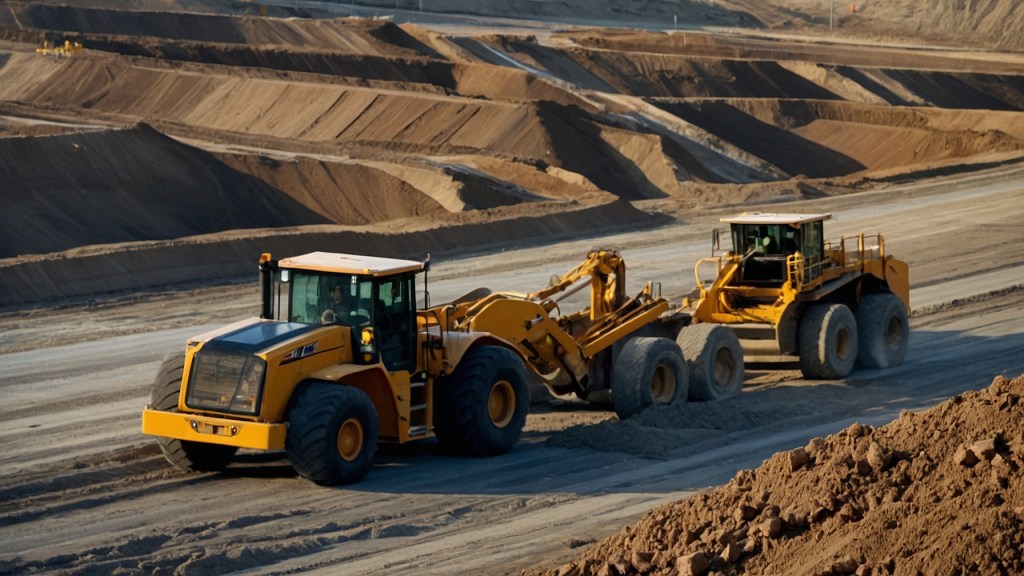
Highway under construction
  • Safety management is a comprehensive approach to reducing the frequency and severity of traffic incidents. 
  • The key to improving highway safety is to design, develop, and maintain highway structures. These structures need to be much more tolerant of the average range of man/machine interactions with highways.
  • Over time, technological advances in highway engineering have enhanced the methods used in design, construction, and maintenance.

Key Takeaways

  1. Highway Engineering: Essential in civil engineering, focusing on the design, construction, and maintenance of roads and highways.
  2. Modern Infrastructure: Plays a critical role in developing safe, efficient transportation systems that support economic growth.
  3. Environmental Considerations: Addressing noise, air, and water pollution is crucial in road and highway engineering.
  4. Technological Components: Advanced machinery and smart traffic systems enhance construction efficiency and safety.
  5. Commercial Components: Project financing, material procurement, and contract management ensure the economic viability of highway projects.

Conclusion

Highway engineering is a pivotal discipline in civil engineering, central to developing modern transportation networks. It encompasses planning, design, construction, and maintenance, with a strong emphasis on safety, efficiency, and environmental sustainability. Understanding the key aspects of road and highway engineering is crucial. This includes technological advancements and commercial considerations. These factors are essential for building infrastructure that meets current and future demands. By balancing these elements, highway engineering supports economic growth. It also enhances the quality of life through improved connectivity and reduced environmental impact. This field remains vital in shaping the future of global transportation systems.