Tag Archives: deep foundation

Pile foundations- Types and Advantages.

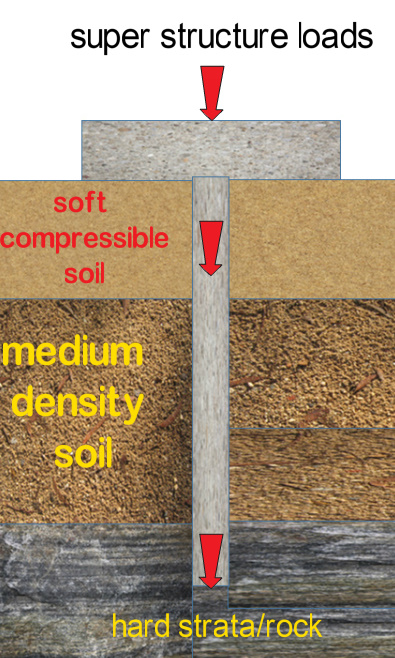
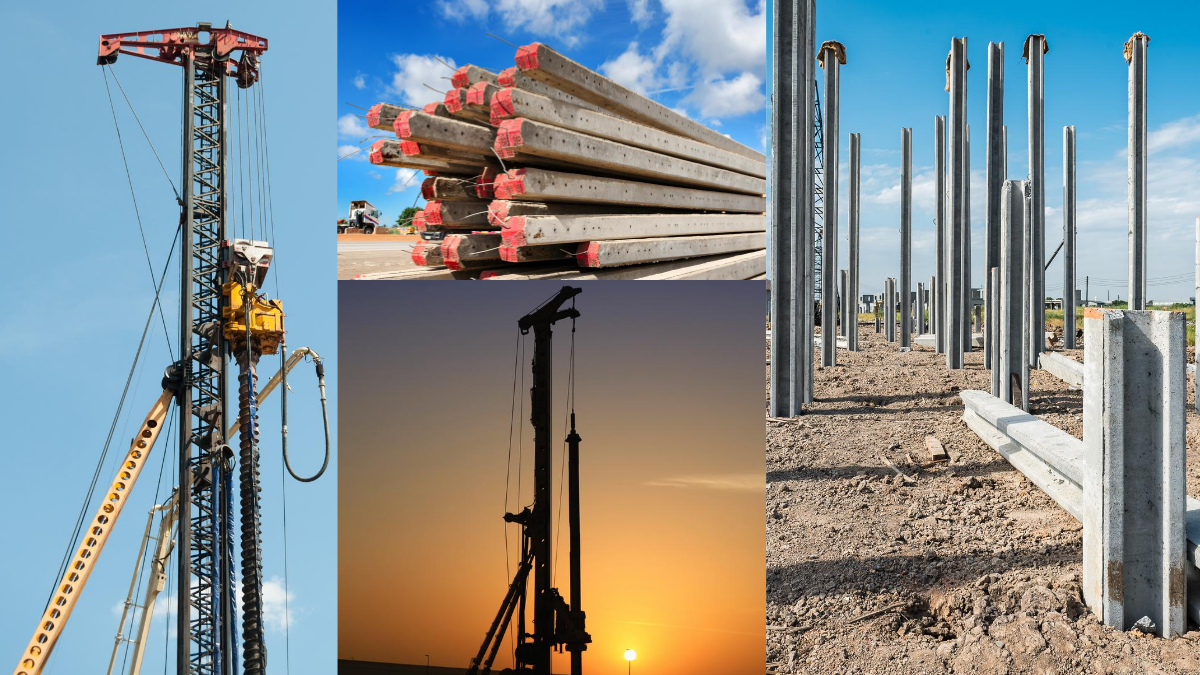
Pile foundations are long, slender members. They can be concrete, steel, or any other material. These foundations transfer the loads of a structure when the subsoil lacks the bearing capacity. The pile foundations transfer the load vertically through the less denser top layer to a high denser soil/rock layer which can negotiate the loads without failure.

What is a pile foundation? A pile foundation is a deep foundation system used to support structures. It transfers loads through weak or compressible soil layers to more stable soil or rock layers below. Pile foundations are essential in areas where surface soils cannot bear the load of the structure. There are various pile foundation types, primarily categorized into friction piles and end bearing piles. Friction piles transfer load through skin friction along their length. End bearing piles transfer load through the pile tip bearing on a strong layer of soil or rock. Understanding what are pile foundations and their types helps engineers select the appropriate system for ensuring stability and support for different types of construction projects.

In this article, we will explore pile foundation types, including friction and end bearing piles, their applications, and benefits.

  1. Pile Foundation
  2. CHOICE OF PILE FOUNDATION
  3. CLASSIFICATION OF PILE FOUNDATIONS BASED ON FUNCTION/LOAD TRANSFER
    1. END BEARING PILES
    2. FRICTION PILES
    3. FRICTION CUM END BEARING PILES
  4. CLASSIFICATION BASED ON CONSTRUCTION METHODS
    1. DRIVEN OR DISPLACEMENT PILES
    2. BORED OR REPLACEMENT PILES
  5. CLASSIFICATION BASED ON MATERIALS
    1. TIMBER PILES
      1. Advantages of timber piles
      2. Disadvantages of timber piles
    2. STEEL PILES
      1. Advantages of steel piles
      2. Disadvantages of steel piles
    3. CONCRETE PILES
      1. DIFFERENT TYPES OF CONCRETE PILES
        1. PRECAST CONCRETE PILE
        2. PRESTRESSED CONCRETE PILE
        3. CAST IN SITU CONCRETE PILES
          1. Advantages of Cast-in-Place Concrete Piles
          2. Disadvantages of Cast-in-situ Concrete Piles
    4. COMPOSITE PILES
  6. Key Takeaways
  7. Conclusion

CHOICE OF PILE FOUNDATION

Pile foundations are preferred in areas with weak or compressible soil, where surface conditions cannot support the required structural loads.

  • When the groundwater table is very high, other types of open foundations require huge dewatering. This is done by the well point or deep bore well method. It turns out to be quite expensive and not feasible.
  • When heavy and non uniform distribution of loads from the superstructure which causes unequal settlements in open foundations.
  • The low soil bearing capacity makes the design of shallow foundations very conservative. Site conditions also contribute to making it uneconomical.
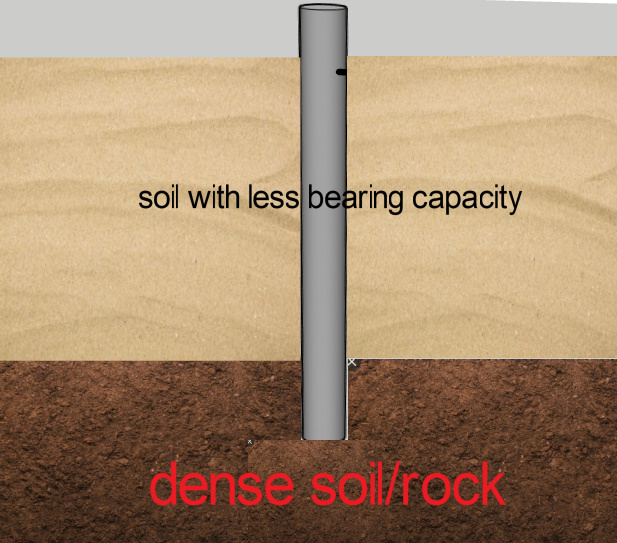
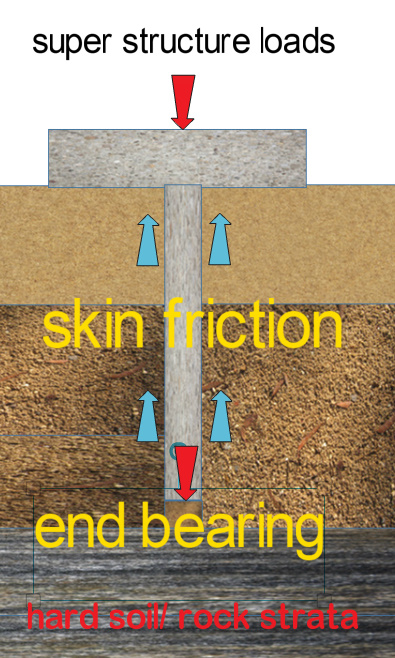
typical section of pile foundation
  • When the settlement of soil exceeds the permissible limit while designing a shallow foundation.
  • Soil washing or scouring away from the foundation sides can occur. This happen due to the presence of any underground systems. A nearby river or canal can also cause this issue.
  • When any type of soil excavation is impossible due to very poor soil strata .

CLASSIFICATION OF PILE FOUNDATIONS BASED ON FUNCTION/LOAD TRANSFER

  • a) END BEARING PILES
  • b) FRICTION PILES
  • c) FRICTION CUM BEARING PILES
  • d) BATTER PILE
  • e) ANCHOR PILE
  • f) SHEET PILE
End bearing pile,Friction pile & Bearing cum friction pile
FIG 2 END BEARING, FRICTION & END BEARING CUM FRICTION PILES

END BEARING PILES

End bearing pile
End bearing pile

A bearing pile is a slender member/ column which transmits vertically all loads coming from the super structure. It is transmitted through a lower density weak layer of soil to a denser strata much below the ground which is capable of negotiating the loads. The pile acts as a column member which transfers the loads to the bearing strata.

FRICTION PILES

Friction piles
Friction pile

This type of pile is used when a suitable strata for  negotiating the loads are available at a very deeper area and  taking piles to that  depth is not economically feasible. Friction piles  utilises the shear stresses/skin friction along the surface of the pile.  The load transfer is done through the frictional resistance between the pile surface and the surrounding soil. The total surface area of the pile is involved in the load transfer process. Greater the embedded length more is the load carrying capacity of the pile. Load carrying capacity of pile is directly proportional to its length.

FRICTION CUM END BEARING PILES
Friction cum bearing piles
Friction cum bearing pile

These type of piles  negotiate the loads through the combined action of end bearing and skin friction . In this case the piles can be terminated in a medium or stiff clay rather than resting on a hard strata. These types of piles are preferred and considered economical hence it is the most commonly used type of pile foundation.

CLASSIFICATION BASED ON CONSTRUCTION METHODS

The execution of piling is done in two methods

  • a) DRIVEN OR DISPLACEMENT METHOD
  • b) BORED OR REPLACEMENT METHOD

DRIVEN OR DISPLACEMENT PILES
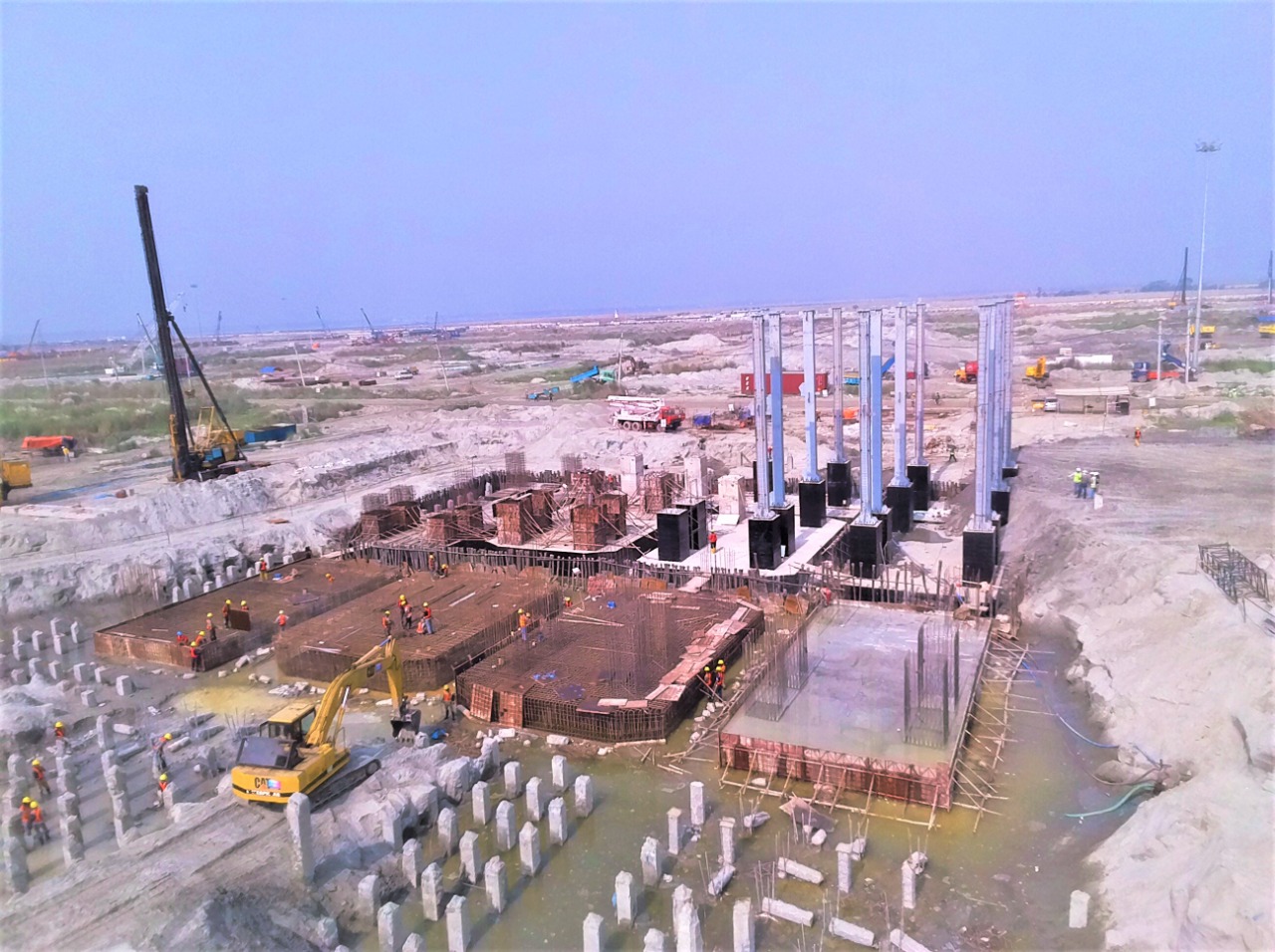
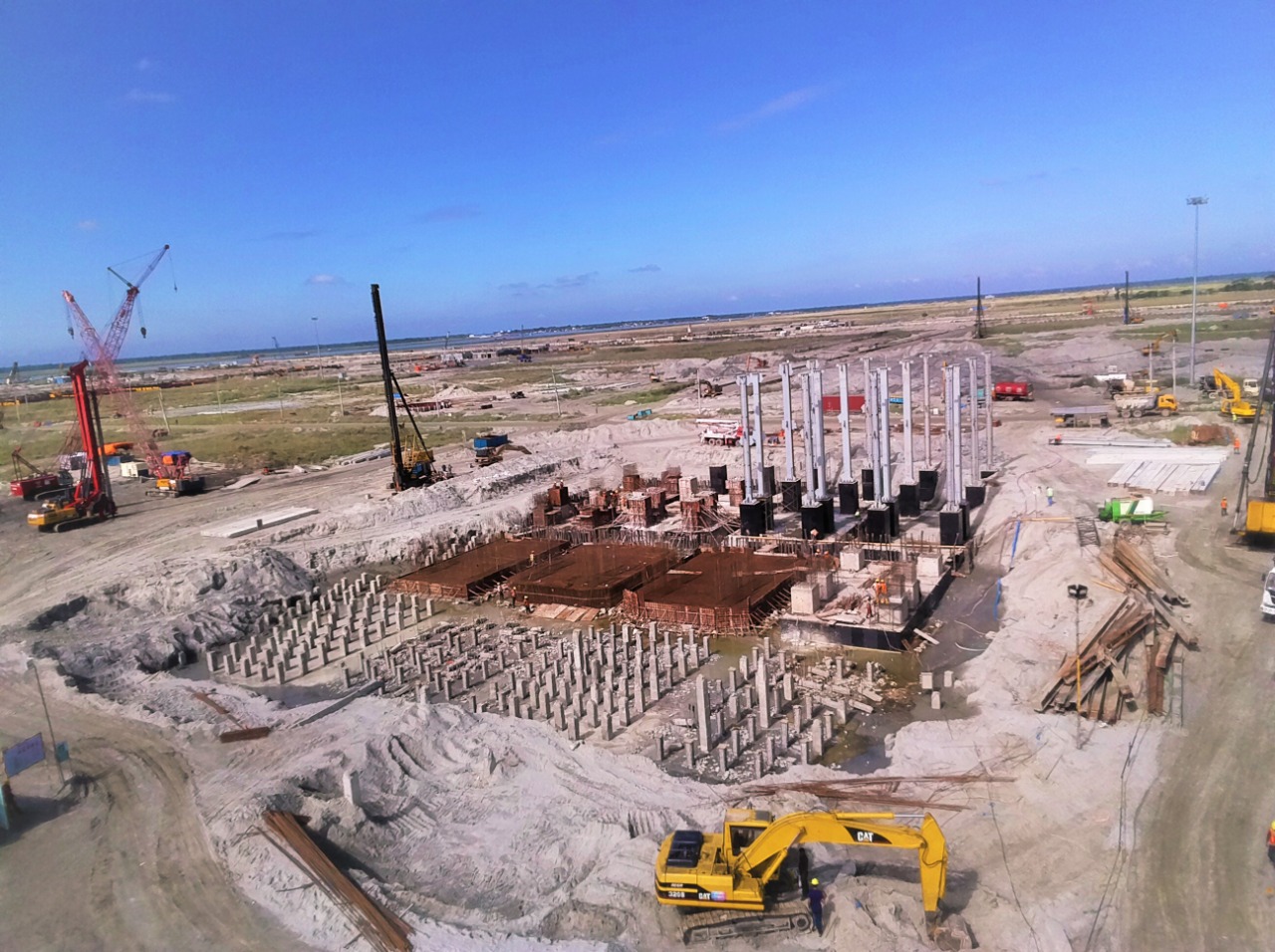
In this method the piles are driven into the soil/sand which causes lateral displacement of soil and hence it is called displacement piles. Displacement piles are basically designed to be installed without removal of soil. Special equipment are used to drive the piles and displace soil laterally. Depending on situations these types of piles are preferred over bored piles.

BORED OR REPLACEMENT PILES
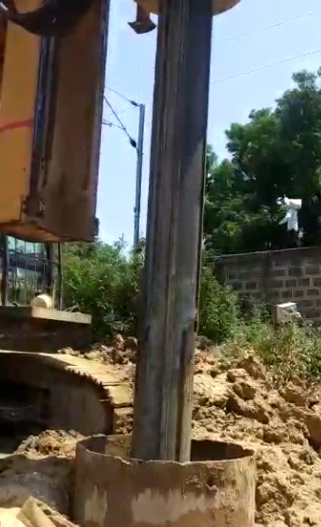
Bored pile

In this type of foundation bores of required diameter is made and are filled using RCC. It can be a cased or uncased types depending on the collapsible nature of the soil.

CLASSIFICATION BASED ON MATERIALS

  • a) TIMBER PILES
  • b) STEEL
  • c) CONCRETE
  • d) COMPOSITE PILES
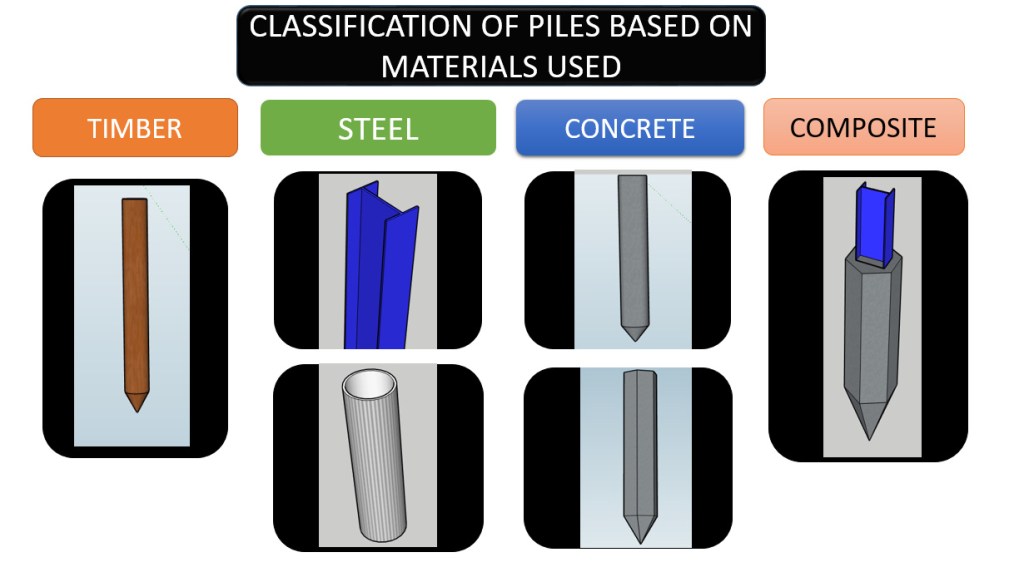
Classification of piles based on material used

TIMBER PILES

The timber piles are sharpened logs obtained from trees like sal, teak, deodar, babul, etc. These piles are used in water and can resist sea water better than other piles. These piles are basically friction piles and are driven into the ground. The timber pile length varies from 20-25 mtr and is designed for a load of around 20 t.

Advantages of timber piles

a) Timber piles are available in varied sizes and is cheaper than any other type of piles.

b) It is easy to install and can be cut into any size as per the requirements.

c) Timber piles is more reliable in marine works.

d) Timber piles doesn’t decay even when submerged in water for a prolonged time.

Disadvantages of timber piles

a) It is difficult to get Straight and long timber piles.

b) Timber piles may not pass through all strata. It is difficult to drive piles in hard and dense strata.

c) Timber piles can be used only as friction piles and not as end bearing piles. Splicing of a timber pile is difficult.

d) As a prevention against possible decay timber piles has to be treated with preservatives.

STEEL PILES
Steel piles
Steel piles

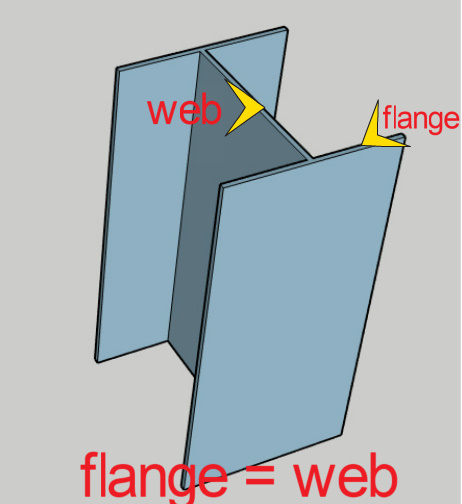
Steel piles may be of H-section or hollow pipe (Fig) . They can be used for an optimum length of 20-40 mtr. The size can be upto 600 mm dia pipes and can also done using HP sections having the same flange and web width as shown in the fig. These piles are mostly designed as end bearing piles . These piles are driven as open ended or closed ended . The closed ended pile shall be filled with concrete.

Advantages of steel piles

Steel piles are very easy to install. Due to their less cross sectional area it can penetrate through any type of soil layer with minimal soil displacement.

Splicing of steel piles are easy and it can go to any depth compared to other type of piles.

The penetrating properties of steel piles helps to go deep and hence can carry more loads than other pile types.

Disadvantages of steel piles

Steel piles are corrosion prone and has to be coated with anticorossive coatings before driving.

While encountered with a hard strata the H sections tends to deform or sometimes the verticality of pile is lost while driving.

The steel piles are very expensive.

CONCRETE PILES

Concrete is the most common material used for construction of piles due to their design flexibility and ease of execution. Concrete piles are normally used in the following categories.

DIFFERENT TYPES OF CONCRETE PILES

Different type of concrete pile
  • a) PRECAST CONCRETE PILE
  • b) PRESTRESSED CONCRETE PILE
  • c) CAST IN SITU
  • d) COMPOSITE PILE
PRECAST CONCRETE PILE

Precast pile uses conventional RCC. Piles are casted in a fabrication yard and conveyed to the location for erection . Precast pile are either square or round . The rectangle or square shaped piles are casted in a horizontal fabrication bed and round pile is casted vertically. Precast piles are designed to take care of the loads/stresses developing while lifting, conveying and driving.

PRESTRESSED CONCRETE PILE
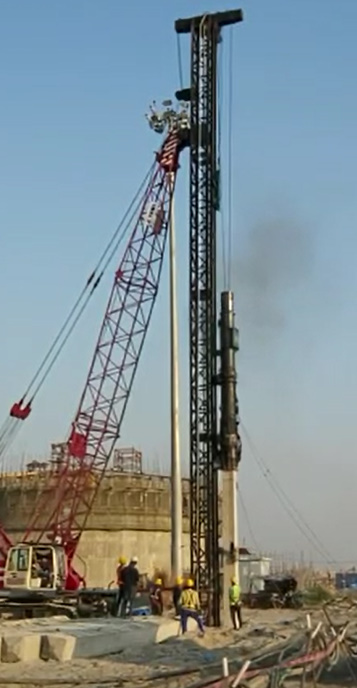
Prestressed concrete pile is preferred when the sizes of the precast piles go beyond a certain limit. Prestressing can optimise the pile size drastically making it very easy to lift ,convey and erect. Prestressing is done by stretching the tendons and pouring concrete keeping the tendons in a stretched position. Once the concrete develops full strength the tendons are released . The released tendons in the process of regaining its shape induces compressive stresses in the member.

Prestressing convert the pile into a high load carrying member which can resisting the stresses. due to the impact loads generated on driving, the uplift forces and the combined moments. These piles can be used for an optimum design depth of 25-35 mtrs.

CAST IN SITU CONCRETE PILES

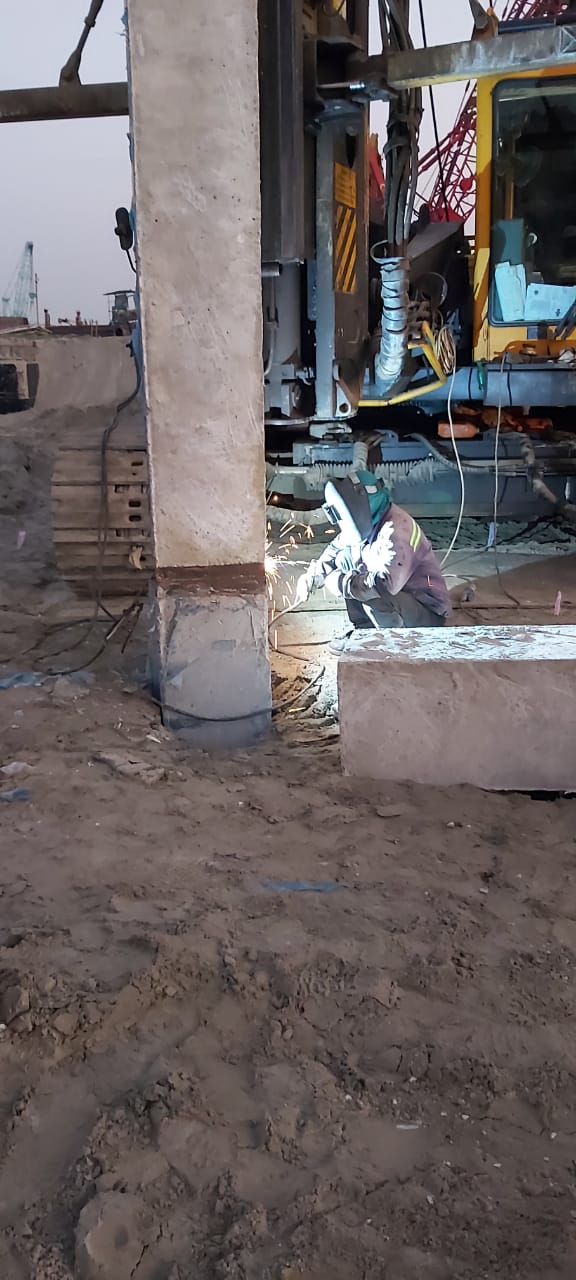
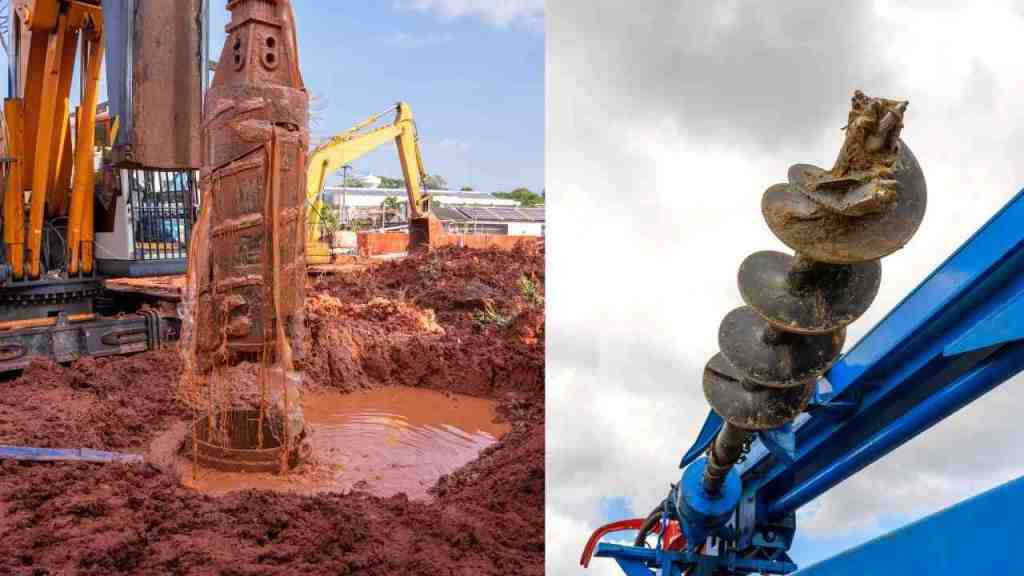
Cast in situ piles are constructed by drilling a bore hole to the required level and filling it with Reinforced cement concrete. The bore hole can be formed by excavating ground with the help of a rotary drilling equipment or hydraulic rigs. Casings are driven into the bores locations before drilling . The casing will be removed gradually during concreting process or sometimes left in the bore as a permanent casing

Cast in place piles
Advantages of Cast-in-Place Concrete Piles

Cast in situ piles are very flexible and the process of execution is easier compared to driven piles and other type of piles.

The reinforcement cages are light weight and easy to handle. The rebar cages are fabricated with the help of simple and conventional tools.

No chances of breakage during installation stage .

If there is some issue with the pile that prompts the customer to abandon, additional substitution piles can be done.

Disadvantages of Cast-in-situ Concrete Piles

a) Installation requires careful supervision and quality control. Because once a pile gets abandoned executing a replacement pile is expensive and time consuming.

b) Cast in situ piles generate a lot of pile muck ( mix of bentonite and soil). The pile muck has to be removed and disposed as per environmental policy . The pile head chipping also generates lot of concrete waste which has to be disposed.

c) Requires space for movement of Rigs, cranes, stocking of materials and bentonite tank.

d) Under water flow can collapse the piles.

e) Concrete quality cannot be visualized. Hence health assessment tests like pile integrity test are to be conducted to confirm the pile integrity.

COMPOSITE PILES

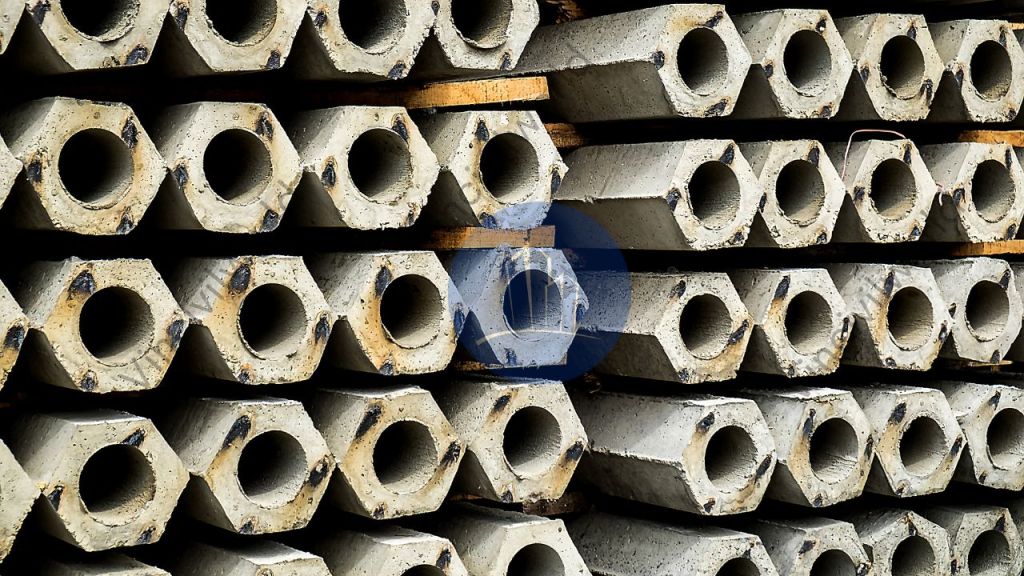
A composite pile is made up of two or more sections of different materials or different pile types. The top portion shall be casted using concrete and the other portions shall be of steel or timber. These type of piles are used in special applications
Composite pile

Key Takeaways

  1. Pile Foundation Definition: Pile foundations are deep foundation systems used where surface soils are weak or compressible.
  2. Types of Piles: Two primary types are friction piles and end bearing piles. These piles are used to transfer loads through weak soil layers to more stable ones.
  3. Friction Piles: Transfer loads using skin friction along the pile’s length. They are suitable for deeper layers where strong strata are not easily reachable.
  4. End Bearing Piles: Transfer loads through the pile tip resting on strong soil or rock layers.
  5. Construction Methods: Pile foundations can be driven (displacement) or bored (replacement) depending on site conditions.
  6. Material Variants: Piles can be made from materials like timber, steel, or concrete, each with distinct advantages and limitations.

Conclusion

Pile foundations are essential in modern construction. They provide reliable support where traditional shallow foundations cannot suffice due to weak or compressible soils. Understanding what is pile foundation and the differences between friction and end bearing piles helps engineers select the appropriate foundation type for specific projects. Driven or bored methods of installation can vary based on soil conditions, while materials like timber, steel, and concrete offer unique advantages. For example, concrete piles, especially cast-in-place or prestressed, are popular due to their flexibility and high load capacity. As a versatile foundation system, pile foundations ensure structural stability in challenging geotechnical environments, making them an indispensable choice for construction in weak soil conditions.

Types of foundations in civil engineering

Types of foundations – This article focuses on different types of foundations used in civil engineering. The foundation is the most crucial component of any structure/building because it transfers the total loads of the structure and its components to a competent ground surface. There are two types of foundations. ie: Shallow foundations and deep foundations

Types of Foundations – Related Posts

  1. Types of foundations – How to decide?
  2. Deciding the size and types of foundations
  3. Safe bearing capacity
  4. Types of foundations
  5. Shallow foundations
  6. Types of foundations – Shallow foundations
    1. Spread footing or isolated footing
    2. Simple spread footing
    3. Sloped spread footing
    4. Stepped spread footing
    5. Strip footing
    6. Combined footing
    7. Strap footing
    8. Types of foundations – Raft foundation /Mat foundation
  7. Types of foundations – Deep foundations
    1. Pile foundations
    2. Basement foundations
    3. Caissons foundation
    4. Hollow box foundations or Buoyancy foundations
    5. Drilled shaft foundation
  8. Conclusion

Types of foundations – How to decide?

The foundation is the most essential element of a structure. A well-designed foundation is critical to protecting a structure from dead loads, live loads, and external forces acting on the structure. The foundation is the final part of the structure to make contact with the ground. The foundation bed is the area where the foundation meets the ground. Before we get into the different types of foundations, let’s converse about substructure and superstructure. Each structure is subdivided into Superstructure &  Substructure Substructure refers to components of a structure that are below ground level, while superstructure refers to components that are above ground level. The foundation belongs to the substructure category and is responsible for transferring loads from superstructure components to the ground.

Deciding the size and types of foundations

The type of foundation is determined by the soil’s bearing capacity and the purpose of the structure. Geotechnical engineering is a branch of civil engineering that analyses the physical and chemical properties of soil in order to provide input to designers on soil properties and proposed foundation types and sizes.

Safe bearing capacity

A soil’s bearing capacity is its ability to support a structure without settlement or failure. The bearing capacity of soil must be calculated at various locations to ensure the structure’s safety. To determine the safe bearing capacity of the soil, the ultimate bearing capacity should be divided by a factor. The maximum load per unit area that soil can withstand without settlement and failure is defined as safe bearing capacity. Field tests or soil investigations are often used to determine the safe bearing capacity of the soil.

Types of foundations

Foundations are broadly classified into

For more details about shallow and deep foundations please follow this article

Types of foundations – Shallow foundations

Shallow foundations transfer the load to the soil laterally. It’s also known as stripped foundations. A shallow foundation has a depth that is less than its width. Shallow foundations are used when the load acting on a structure is reasonable and there is a competent soil layer capable of negotiating the loads available at a shallow or shorter depth. A shallow foundation is laid on the ground’s surface. A shallow foundation’s depth can range from 1 meter to 3.5 meters, and sometimes even more.

Shallow foundations can be of various types, depending on the site conditions and design requirements.

Spread footing or isolated footing

The spread footing is one of the most common types of shallow foundations. They are also known as isolated footings or individual footings. Spread footings are further classified based on their shape into simple spread footing, sloped spread footing, and stepped spread footing.

  • Simple spread footing
  • Sloped spread footing
  • Stepped spread footing

Simple spread footing

A simple spread footing is made up of a base footing and a single column on top of it. This foundation is used for structures with reasonable/moderate loads and bearing capacities.  

Simple Spread Footing
Simple spread footing

Sloped spread footing

Footings in this type of foundation are sloped, as shown in the figure. The footing is supported by a single column and has a trapezoidal cross-section.

Sloped Spread Footing

Stepped spread footing

When the loads are heavy, steps are provided in the footings, as shown in the figure.

Stepped Spread Footing

Strip footing

Strip footings are also known as wall footings. They are used to provide load-bearing brick/stone/RCC walls over the footings. Strip footings run continuously along a building’s wall. These footings are also used when the column spacing is very close and the footings overlap.

Strip Footing
Types of foundation – Strip footing

Combined footing

A combined footing is made up of two or more columns laid over a single footing. These footings are used when the distance between two individual footings is very small and they overlap. A combined footing is also provided in areas where further excavation is not possible due to boundary flushing. Rectangular combined footings and trapezoidal combined footings are the two types of combined footings.

  • Rectangular combined footings
Rectangular Combined Footing
Foundation type-Rectangular Combined Footing
  • Trapezoidal combined footings
Trapezoidal Combined Footings
Trapezoidal Combined Footing

Strap footing

Strap footings, also known as cantilever footings, are made up of two individual footings connected by a beam strap. The beam strap is designed as a rigid structure. These types of foundations are less expensive than combined footings.

Strap Footing
Strap Footing

Types of foundations – Raft foundation /Mat foundation

Raft foundations are the most common foundation types used in construction. It is a continuous slab that rests on the soil and covers the entire area of the proposed structure. Raft foundations are categorized based on their intended use. Numerous factors, such as bearing capacity, loads, site conditions, and so on, influence the type of raft foundation. A raft foundation/mat foundation is a solid slab which spans the entire structure area and is placed at a predetermined depth. Raft foundations are comprised entirely of columns and shear walls which transfer the structure’s load to the ground. These foundations are generally used when the soil’s bearing capacity is low and individual footings struggle to negotiate the loads. The raft foundation aids in the transfer of the entire load of the structure to a larger area.

Raft Foundation
Raft Foundation

For more information on a raft foundation, please see our blog

Raft foundations – Types and Advantages.

Types of foundations – Deep foundations

The foundations having a depth more than a width are called deep foundations. When the subsoil strata lack the safe bearing capacity to handle the loads induced by the structure, deep foundations are proposed. In such a case, the foundations’ founding level is moved to a deeper area with the required bearing capacity. The structure’s loads are transferred vertically into the ground.

Many applications adopt deep foundations. They are considered the safest option for transferring heavy loads on soil strata with low bearing capacities. The following are examples of common Deep foundations in use.

  • Basement foundations
  • Caissons Foundation
  • Hollow Box Foundation or Buoyancy foundations
  • Drilled shaft foundations
  • Pile foundations

Pile foundations

Pile foundations are long, slender members made of concrete, steel, or any other material which are used to transfer loads from a structure when the subsoil lacks bearing capacity. The pile foundations transfer the load vertically through the less dense top layer to a denser soil/rock layer which can negotiate the loads without failure.

For more details read our article: Pile foundations – Types and advantages

Basement foundations

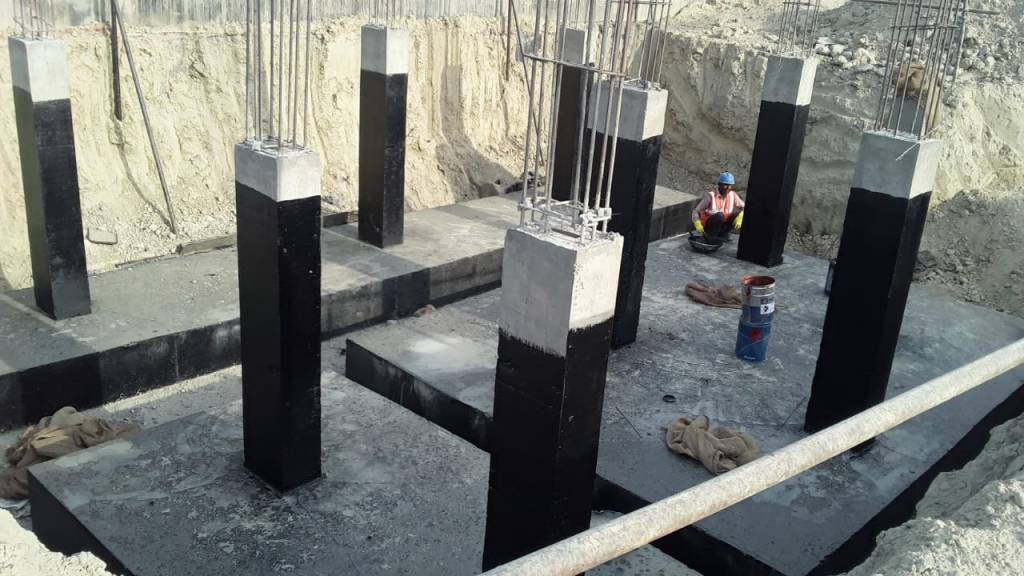
Basement foundations are substructure foundations designed to account for parking areas, underground tanks, electrical systems, and storage spaces beneath a building below ground level. They are commonly used in high-rise residential and commercial structures. Basement foundations are designed to address the functional needs of parking and storage.

Caissons foundation

A caisson foundation is a water-retaining structure that serves as a working space for pier foundation operations. They are box-like constructions built of wood, steel, concrete, and other materials. Caisson Foundation is sunk by excavating the earth within the foundation. Caissons are prefabricated above ground or water level and sunk to the founding level as a single unit. They are built to facilitate excavation and related operations for dock structure foundations, bridges, jetties, piers, foreshore protection, and so on. These structures are eventually incorporated into the main structural components.

Hollow box foundations or Buoyancy foundations

The concept behind a hollow box foundation is to create a structure that has little or no impact on the original soil stress before commencing excavation. Overburden is removed as required by the design, and superstructure loads are transferred to the ground. These foundations are referred to as buoyancy foundations because they follow the principle of a ship floating in the water, where the displaced water balances the ship’s weight.

Drilled shaft foundation

The drilled shaft is a versatile foundation system that is widely used nowadays. These foundations are also referred to as drilled piers, drilled caissons, bored piles, and so on. The main idea is to excavate a cylindrical shaft and then cast it after adding the necessary reinforcements. Drilled holes should be between 1-3 meters in diameter and up to 100 meters deep. Shafts can be drilled to depths of 100 meters and diameters varying from 1 to 3 meters. However, greater depth and diameter are now conceivable. These foundations can partially replace driven piles in the same way that a single drilled shaft can replace a group of piles.

Drilled shaft foundations

Conclusion

Shallow foundations are very easy to construct and do not require highly skilled manpower and professional supervision. These foundations can even be built with the assistance of semi-skilled workers. A shallow foundation is very economical when compared with a deep foundation. Shallow foundations are end-bearing type foundations that transfer loads to the end of the foundation. Shallow foundations are considered the most preferred option when the safe bearing capacity of the soil is reasonable and the structural loads are within the permissible limits.

Foundation types- shallow and deep foundation

Foundation is the most significant part of any structure/building which transfers the total loads of the structure and its components to a competent surface on the ground. Foundations are broadly classified into two types. ie. Shallow and Deep Foundations.

Foundation is the last part of the structure which touches the ground. The area of contact with the ground is called the foundation bed.

Every structure is divided into:

a) Sub structure

b) Super structure

Components of a structure that are coming below the ground level are called substructure, and above ground level is called superstructure. Foundations are coming in the substructure category. Foundations are responsible for transferring loads of superstructure components to the ground.

HOW TO FIX TYPE AND SIZE OF FOUNDATIONS?

The selection of foundations depends on the bearing capacity of the soil and the purpose of the structure. Geotechnical engineering is a field of Civil Engineering, which analyses the physical and chemical properties of soil and furnish designers with the inputs on the soil properties and proposed types of foundations. The Safe bearing capacity of the soil determines the foundation type and dimensions.

SAFE BEARING CAPACITY OF SOIL

Bearing capacity is the capacity of soil to support a structure without settlement or failure. To keep the structure safe, the bearing capacity has to be calculated at different locations. The ultimate bearing capacity has to be divided by a factor to derive the safe bearing capacity of the soil. Safe bearing capacity is defined as the maximum load per unit area soil can withstand without settlement and failure. The safe bearing capacity is determined by conducting field tests or soil investigations.

QUALITIES OF A WELL DESIGNED FOUNDATION

SHALLOW FOUNDATION
SHALLOW FOUNDATION

A well-designed foundation is supposed to possess the following qualities.

a) Have to distribute the total load on the structure to a larger area.

b)Have to counter unequal settlement in case of any displacement.

c) Has to prevent the structure from lateral moments.

d) Foundations are responsible for the total stability of structures.

DIFFERENT TYPES OF FOUNDATIONS

Foundations are classified into

a) Shallow Foundation

b) Deep Foundation

SHALLOW FOUNDATION

Advertisements
SHALLOW FOUNDATION
SHALLOW FOUNDATION

Shallow foundations transfer the load laterally to the soil. It is also called stripped foundations. The depth of a shallow foundation is less than its width.

Characteristics of shallow foundations

Shallow foundations are adopted when the load acting on a structure is reasonable and has a competent soil layer capable of negotiating the loads available at a shallow depth or shorter depth.

Shallow foundations are placed on the surface of the ground. The depth of a shallow foundation can range from 1 meter to 3.5 meters and sometimes more.

The width of the shallow foundation is greater than the depth. Shallow foundations are very easy to construct and do not require highly skilled manpower and professional supervision. These foundations can even be done with the help of medium-skilled workers. A shallow foundation is very economical when compared with a deep foundation. Shallow foundations are end bearing type foundations that transfer loads to the end of the foundation.

Shallow foundations are considered as the most preferred option when the safe bearing capacity of the soil is reasonable and the structural loads are within the permissible limits.

DEEP FOUNDATION

DEEP FOUNDATION
DEEP FOUNDATION

Characteristics of deep foundation

The width of the deep foundation is less than the depth. The depth can even go up to 60 meters or more depending on the design, loads, and availability of capable strata.

Deep foundations require technical expertise, sophisticated equipment, and highly skilled manpower for interpreting and executing works.

The deep foundations are costly due to their way of execution involving the infusion of quality materials, skilled labor, professional engineering support, and equipment

Deep foundations do not rely only on end bearing for transferring the loads. The skin friction developed between the foundation surface and the soil surrounding it may also be considered in the design stage.

The deep foundations can resist uplift pressure much more than shallow foundations and hence the chances of failure are less compared to shallow foundations.

SHALLOW FOUNDATION VS DEEP FOUNDATION