

Road pavement layers play a critical role in infrastructure development, significantly impacting a country’s economic growth. Constructing roads necessitates a careful assessment of traffic patterns, climate variations, and terrain characteristics. As a result, these layers must withstand abrasion, heavy loads, and diverse environmental conditions to ensure durability and prevent structural failures. Therefore, this article explores the essential components of road pavement layers, with a particular emphasis on flexible pavement structures.
Road Pavement Layers and their functions
A road pavement is a multi-layered structure designed to support and distribute traffic loads, provide a smooth driving surface, and withstand environmental stresses. Each layer has a specific function, working together to ensure durability, stability, and long-term performance of the roadway.
The layers of a road pavement structure include:
- Subgrade or roadbed
- Sub-base course
- Base course
- Surface course or wearing course


Subgrade of a Road Pavement
The Subgrade, composed of compacted natural soil, forms the foundation for road Pavement layers. It serves as the finished or compacted surface where the formation supporting the pavement rests. Whether an embankment, cutting, or aligned with natural ground, its load-bearing strength is evaluated by the California Bearing Ratio (CBR) test. Locally sourced, robust, and cost-effective materials typically compose the Subgrade, crucial for structural integrity.


Functions of Subgrade
- Serves as the foundation and provides uniform support to the road pavement layers.
- Bears the entire load of the pavement along with the service load of traffic.
Sub-base Course of a Road Pavement Layer
The sub-base course is positioned between the subgrade and the base course within the framework of road pavement layers. It requires materials that meet strict criteria for size, strength, and flexibility. This layer is crucial when the subgrade quality is inadequate. It often needs additional materials like burnt clinkers, gravel, or slag to enhance its strength.
Functions of Sub-base Course
- Enhancing the bearing capacity of the subgrade and improving the load distribution of the base course and wearing course.
- The sub-base course also prevents the entry of finely graded subgrade soil into the base course layer.
- Additionally, it prevents the capillary rise of water and facilitates the free drainage of water entering the pavement.
- Moreover, the sub-base material must be free-draining, with suitable systems in place to collect and remove accumulated water.
- It provides insulation to subgrades against frost. It also helps to raise the pavement height to align with the natural water table.
- Lastly, it offers a solid stratum for subsequent construction activities.
Base Course
The base course is a pivotal element in road pavement layers. It comprises one or more layers of specified or select material. These layers have a designed thickness. It is positioned on the sub-base or directly on the subgrade in the absence of a sub-base layer. This crucial layer provides uniform and stable support for the binder and surface courses within the road pavement layers.
Additionally, responsible for transferring stresses from traffic impacts to the wearing course, the base course ensures structural integrity. To adhere to technical standards, high-quality crushed aggregates are typically utilized. If these aggregates do not meet requirements, they can be reinforced with Portland cement, lime, or asphalt. Moreover, for superior durability and performance in high-quality pavements, these aggregates undergo treatment with asphalt or Portland cement.


Functions of Base Course:
- Acts as the foundation of the road pavement and safely transfers traffic load to the sub-base and subgrade.
- Withstands high shearing stresses due to traffic impact.
- Prevents undesirable entry of subgrade soil into the pavement when constructed directly over the subgrade.
Surface Course or Wearing Course
The surface course is also known as the wearing course. It is the topmost layer in road pavement layers. This layer is directly exposed to traffic. In flexible pavements, this layer typically consists of bituminous material. Rigid pavements utilize concrete. The concrete serves both as the base and wearing course. The primary role of the wearing course is to minimize water percolation. It also provides a durable, anti-skid surface. This surface resists abrasion caused by traffic.
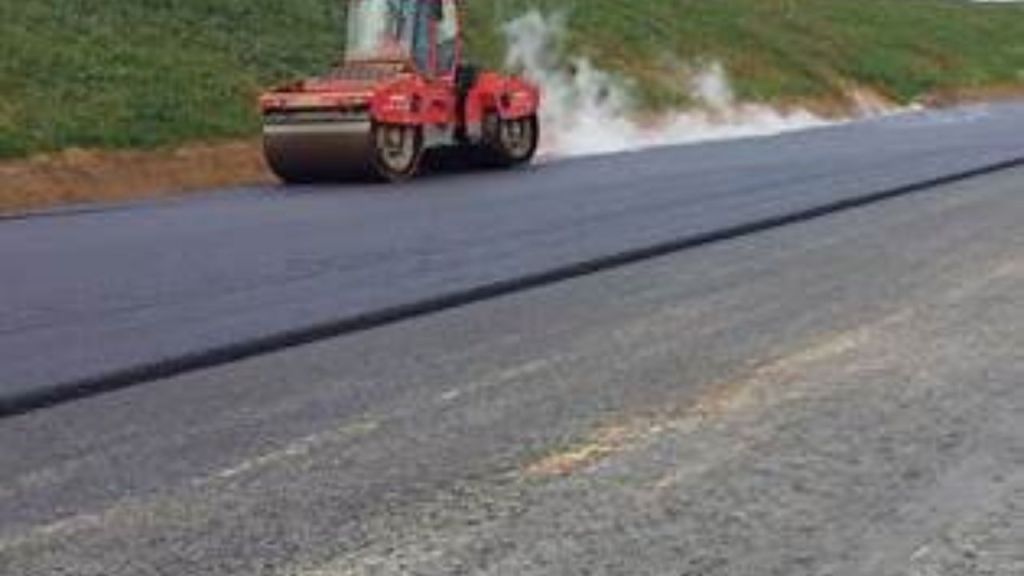
Functions of Surface or Wearing Course:
- Provides a smooth and uniform rigid surface.
- Resists abrasive forces from traffic.
- Prevents dust nuisance.
- Acts as a structural component of the pavement.
Key Takeaways on Road Pavement Layers
- Components: Road pavement consists of four primary layers: subgrade, sub-base, base course, and surface course.
- Subgrade: Acts as the foundational layer, providing uniform support and load-bearing capacity.
- Sub-base Course: Enhances bearing capacity, improves load distribution, prevents soil migration, and facilitates drainage.
- Base Course: Transfers traffic loads to the subgrade, withstands shearing stresses, and prevents subgrade soil intrusion.
- Surface Course: The top layer exposed to traffic, designed for durability, skid resistance, and water percolation minimization.
- Durability: Each layer plays a critical role in the road’s structural integrity. It also impacts its longevity. This necessitates careful material selection and construction practices.
- Load Distribution: Proper design and construction ensure that the pavement can withstand traffic loads and environmental conditions effectively.
These insights emphasize the need to understand each layer’s role. This understanding is crucial for the overall pavement structure. It ensures effective road construction and maintenance.
Conclusion
In road construction, each layer of the pavement structure plays a vital role. These layers ensure both the durability and functionality of the road. Starting with the subgrade providing foundational support, the sub-base enhances load distribution and drainage. The base course offers structural strength. The surface course provides a smooth and durable riding surface. These layers work together seamlessly to create a resilient and long-lasting road.
 vin civilworld