
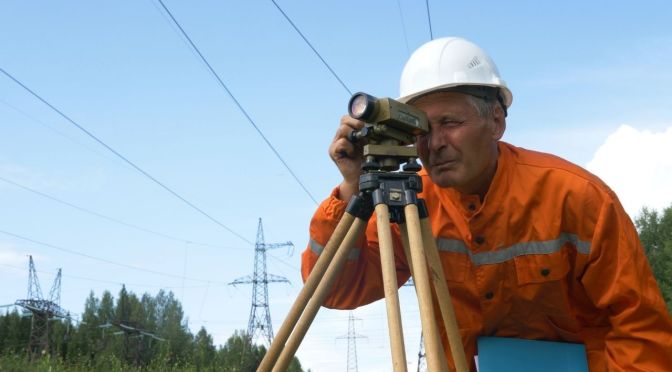
Types of levelling in surveying include direct levelling, trigonometric levelling, barometric levelling, and stadia levelling. Direct levelling is the most commonly used method. It involves using a level and staff to determine height differences between points. Trigonometric levelling uses angles and distances measured with a theodolite. Barometric levelling relies on atmospheric pressure readings, while stadia levelling involves using a telescopic instrument to measure distance. Each method serves different applications based on the project requirements. Levelling surveying ensures accurate elevation data for construction, roadworks, and drainage systems. The advantages of levelling include precise ground profiling, improved accuracy in projects, and efficient data collection. Define levelling as a key technique for enhancing surveying reliability.
Types of levelling – Leveling is a branch of surveying that deals with computing and determining the relative heights between different points with respect to the datum. The purpose of leveling is for determining the elevation of a point and establishing the same at a given elevation. Moreover leveling deals with the computation of measurements in the vertical plane. There are different types of leveling in Surveying. In this article, we will discuss the purpose advantage and types of leveling.
- Purpose of levelling in Surveying
- Types of levelling
- Key Takeaways: Types of Levelling in Surveying
- Conclusion
Purpose of levelling in Surveying
The purpose of levelling in surveying is to determine the relative height of different points on the earth’s surface. Levelling ensures accurate measurements of elevations, helping in the design and construction of roads, buildings, and drainage systems.
- Mapping and contouring : Preparation of accurate map layouts with elevation details.
- Establishing Elevations : To decide the elevation of points by establishing the height differences between points.
- To prepare contour maps.
- Earth work : Determination of depth of cutting and filling in earthworks.
- To make the cross-section of canals, roads, etc.
- For establishing control points.
- Water Flow control : Ensures proper Drainage and irrigation
- Building Layout – Facilitates precise alignment for construction.
By understanding the types of levelling in surveying, professionals achieve greater accuracy in infrastructure projects. This enhances the advantages of levelling techniques.
Types of levelling
Types of Levelling in Surveying are crucial for determining accurate elevation differences. Different methods cater to varying project needs, enhancing the advantages of levelling.Each method has distinct advantages, making levelling surveying versatile in engineering and construction projects.
There are mainly four types of levelling in surveying.
- Barometric levelling
- Trigonometric levelling
- Stadia levelling
- Spirit levelling or Direct levelling
Each method has distinct advantages, making levelling surveying versatile in engineering and construction projects.
Barometric levelling – Types of levelling
Barometric leveling is a type of leveling. The measurement of elevation is based on atmospheric pressure by using a barometer. Therefore, we use a barometer. The main principle of Barometric leveling is the difference between the elevation of two points. This difference is proportional to the difference between the atmospheric pressure of the points. Since it is inaccurate, this method of leveling is rarely used. Because leveling takes time and the atmospheric pressure does not remain constant throughout the day. Therefore they give only a rough estimation.
Though not as precise as other types of levelling like differential levelling, it is useful for rough elevation measurements. This method is effective over large distances where accuracy is not critical.
The advantages of levelling using the barometric method include its simplicity and cost-effectiveness for non-critical tasks. It complements various methods of levelling in broad-scale levelling surveying projects.
Trigonometric levelling – Types of levelling
Trigonometric levelling is a method used in levelling in surveying to calculate the elevation. In this method, the difference in elevation is calculated using the observed vertical angle. The calculation also involves the known horizontal distance. The height difference is then calculated using trigonometric formulas. Another name of trigonometric levelling is Indirect levelling. For vertical angles, generally, we use theodolite. For horizontal distance, if the distance between the points is less, we measure using plane surveying. If the distance between the points is greater, we use geodetic observation.
Among the various types of levelling in surveying, trigonometric levelling is particularly useful for long-distance or high-elevation measurements. The advantages of levelling with this method include its ability to handle rough terrain and large-scale surveys. It complements other methods of levelling for projects where precision is critical.

Stadia levelling – Types of levelling
Stadia levelling is similar to trigonometric levelling. To determine the elevation of points, we use a tacheometer. Hence, It is an optical distance measurement method. This type of levelling is suitable in hilly regions. Stadia levelling is an accurate method of levelling. Another name of stadia levelling is Tachometric levelling. It is efficient for surveying in areas where direct measurement is difficult. The advantages of levelling with stadia include its simplicity and speed. It’s often used in combination with other methods of levelling for topographic mapping and large area surveys.
Direct levelling
Direct levelling is also known as spirit levelling. It is the most precise and commonly used levelling method. In this method, the vertical distance is taken with respect to the horizontal line. This determines the relative position between the points. The instruments which are used in Direct levelling are level and a levelling staff. The level consists of a telescope, level tube, levelling head and a tripod.
It is the most accurate among the types of levelling in surveying. It is commonly used in construction and land surveys.
The advantages of levelling using the direct method include high accuracy and simplicity in application. It’s widely used for detailed work. It also serves as a basis for more complex methods of levelling like trigonometric or barometric levelling.
Direct levelling is further divided into …
- Simple levelling
- Differential levelling
- Profile levelling
- Reciprocal levelling
- Precise levelling
Simple levelling
It is the simplest method of levelling. In this method, we place the levelling instrument between the points for determining elevation. This type of levelling is suitable if the distance between the points is less.

Differential levelling
Differential levelling is suitable in places where the distance between the points are great. This type of levelling is also known as fly levelling. In differential levelling, the levelling station is shifted various times.

Profile levelling
Another name of profile levelling is longitudinal levelling or sectioning. In this type of levelling, the points are far apart at known distances. So levelling is done at intervals along the given line. It is suitable for roads, canals, sewer lines, railways, etc.

Reciprocal levelling
This type of levelling is done, when it is not possible to set up the level between two points. It is the accurate method of levelling. It is suitable in the place where ponds, rivers are seen.

Precise levelling
This types of levelling have high precision. It is similar to differential levelling. In precise surveying, special equipment and special precaution are taken to eliminate errors.
Key Takeaways: Types of Levelling in Surveying
Understanding the types of levelling in surveying is essential for accurate elevation measurements in various engineering and construction projects. The main methods include direct levelling, trigonometric levelling, barometric levelling, and stadia levelling.
- Direct Levelling (or spirit levelling) is the most precise method, utilizing a level and staff to determine height differences.
- Trigonometric Levelling calculates elevation based on angles and distances, making it suitable for long distances and rough terrain.
- Barometric Levelling measures elevation through atmospheric pressure differences, though it is less accurate and primarily used for rough estimates.
- Stadia Levelling employs a tacheometer for distance measurement, excelling in hilly regions where direct measurement is challenging.
Each type offers distinct advantages, ensuring accurate mapping, earthwork planning, and construction alignment. By selecting the appropriate method, surveyors enhance project reliability and efficiency.
Conclusion
In conclusion, understanding the various types of levelling in surveying is crucial for achieving precision in elevation measurements. These measurements are fundamental to successful engineering and construction projects. Each method—direct levelling, trigonometric levelling, barometric levelling, and stadia levelling—serves specific applications and offers unique advantages. Direct levelling stands out for its accuracy, making it ideal for detailed work. Trigonometric and stadia levelling are invaluable for long distances and challenging terrains. Barometric levelling, although less precise, provides a quick solution for rough estimations over large areas. By employing the right levelling technique, surveyors can enhance the quality and reliability of their data. This leads to improved decision-making in design and construction processes. As infrastructure demands grow, we must leverage the strengths of each levelling type. This will be essential for optimizing project outcomes. It will also ensure that construction aligns with planned specifications and environmental considerations.
 vin civilworld