

Ribbed concrete slabs, also known as waffle slabs, are a type of reinforced concrete slab characterized by a grid-like pattern on the underside. This grid resembles the pockets of a waffle. It consists of ribs running in two perpendicular directions. These ribs provide enhanced strength and stability. Ribbed concrete slabs, or two-way joist slabs, are highly effective for spans over 40 feet (12 meters). They offer superior load-bearing capacity compared to other slab types, such as flat slabs, flat slabs with drop panels, two-way slabs, one-way slabs, and one-way joist slabs.
Though ribbed concrete slabs can be more expensive than other slab systems, they offer increased rigidity and stability, making them ideal for both ceiling and floor applications. These slabs are essential structural components in buildings, providing a flat surface and assisting in the transfer of loads. In this article, we will discuss the construction process, advantages, and disadvantages of ribbed concrete slabs and waffle slabs.

- What is a ribbed concrete slab or waffle slab ?
- Waffle slab construction details
- Advantages of Waffle slab
- Disadvantages of Waffle slab
- Key Takeaways
- Conclusion
What is a ribbed concrete slab or waffle slab ?
A ribbed concrete slab, also called a waffle slab or two-way joist slab, is ideal for industrial and commercial buildings. It has a flat top and grids on the underside. Ribbed concrete slabs are stronger than flat slabs, making them perfect for longer spans. They handle both distributed and point vertical loads.

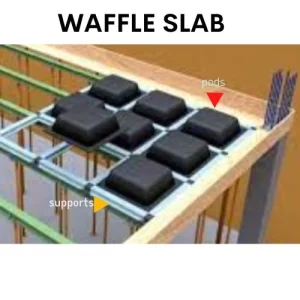
It enables both distributed and point vertical actions. The bottom layer of concrete reinforcement in ribbed concrete slab/waffle slabs is removed. Instead, concrete ribs run in two orthogonal directions. Additionally, the rib depth should range from 135mm to 235mm. Because the overall depth of the floor increases as the depth of the ribs does. The structure’s lateral loading is impacted by this.
Related posts from vincivilworld



Waffle slab construction details
The waffle slabs need only 70% of concrete and 80% of steel from the concrete and steel used for the construction of the raft slab. The construction stages of the waffle slab include the following
- The first step is to create the forms
- Place the formwork components in place.
- Position your waffle pods or moulds on the shuttering. Generally, the pods are typically constructed of plastic, and they come in a variety of sizes and shapes. The size of the pod is determined by the requirements and span length. A significant number of pods are necessary for greater spans. Accordingly, the same size pods should be used for the entire slab.


- Place the support components horizontally and vertically according to the connectors.
- Lay out the waffle pods and spacer within the formwork in a grid pattern beginning at one corner, following the instructions in the design.
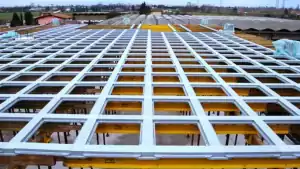

- Fix the pod corners to the framework using cube joints.
- Position reinforcement bars on the spacers between the waffle Pods.
- Reinforcement is added in the two directions after the formwork has been fixed.
- Lay the top mesh out according to the design specifications, then secure it where necessary.
- Making sure connecting ribs are filled, pour the concrete and give it a good vibrating.
- After the setting of the concrete, remove the frames into which the waffles are embedded. Then slowly remove the waffle forms.
The construction of a waffle slab can be done in three ways
- In situ construction
- Precast construction
- Prefabricated construction
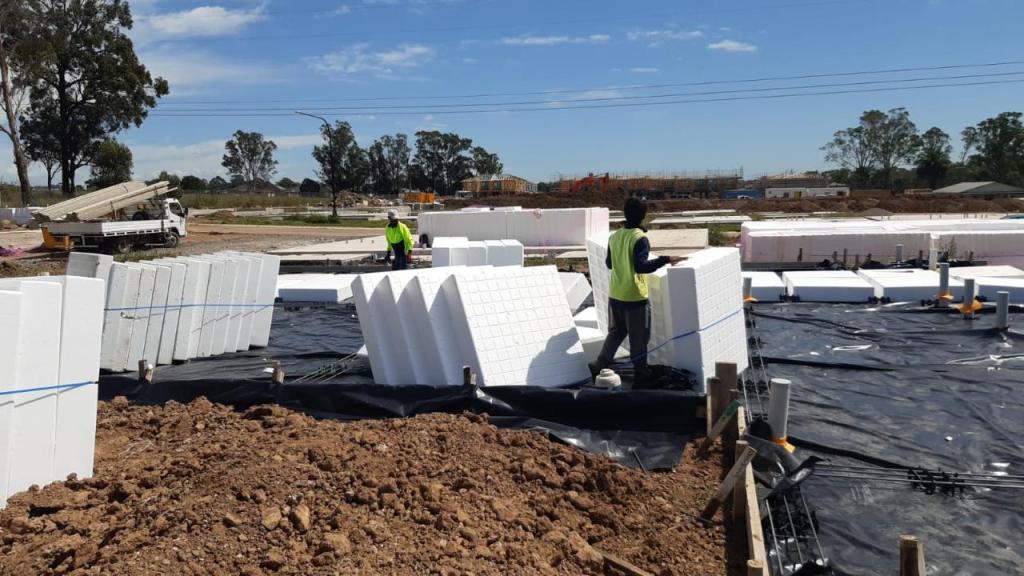
In situ construction
This process entails placing formwork and pouring concrete over it. A slab is cast on-site in the desired size and according to the design.
https://styrofoamindustries.com.au/
Precast
Using this technique, the casting of the slab panel is done elsewhere, and it is then placed, connected, and reinforced with concrete.
Prefabricated
In this procedure, reinforcement is built into the slab panels using prefabricated steel bars. Slabs are manufactured elsewhere and brought to the location to be erected.
Advantages of Waffle slab
- It is suitable for large-span structures and can be achieved with less concrete and rebar than similar conventional slabs
- They require only a fewer number of columns.
- It possesses a higher load-carrying capacity
- It has higher structural stability
- They have a good aesthetic appearance.
- Waffle slabs are suitable for roof slabs and floor slabs.
- Waffle slabs have high vibration control capacity
- The construction of this slab can be done faster and easier.
- They are light weighted
- They require low construction costs, Hence they are economical when compared to other conventional slabs of the same span
- It requires only less amount concrete and can be reinforced with mesh or rebars.
Disadvantages of Waffle slab
- Requires Expensive formwork
- Requires skilled workmen and supervision for the construction of waffle slabs.
- Higher maintenance cost
- The increase in the depth of ribs leads to an increase in the floor height.
- This type of slab is not suitable for windy and slope areas.
Key Takeaways
Ribbed concrete slabs, also known as waffle slabs, are reinforced concrete systems with a grid-like pattern on the underside. They offer enhanced strength, making them ideal for longer spans, and are highly effective in handling both distributed and point vertical loads. These slabs are suited for industrial and commercial buildings and are made using a process that involves creating forms, placing waffle pods, reinforcing with steel, and pouring concrete. Waffle slabs have advantages such as higher load-carrying capacity, stability, and aesthetic appeal. However, they require expensive formwork, skilled labor, and can incur higher maintenance costs.
Conclusion
Ribbed concrete slabs or waffle slabs are a versatile solution for large-span structures. They are stronger and more stable than conventional slabs, making them ideal for industrial, commercial, and residential buildings. Their efficient use of concrete and steel reduces material costs compared to other slab systems. However, the construction process requires skilled labor and specialized equipment, which can increase upfront costs. Despite these challenges, the long-term benefits of waffle slabs, such as reduced need for columns, higher structural stability, and aesthetic appeal, make them a valuable choice in modern construction. Understanding the advantages and disadvantages is crucial when considering them for specific projects.
 vin civilworld