
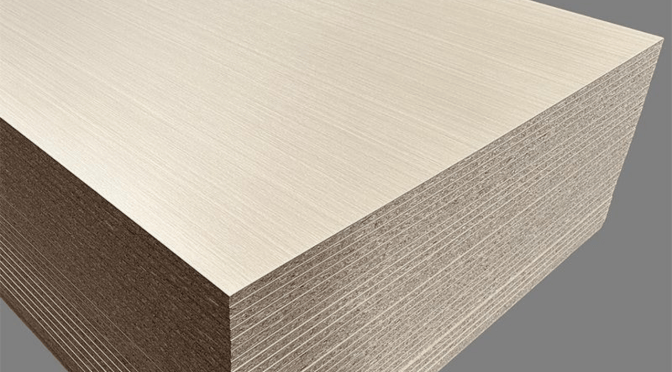
Quick Answer: QIANGYI PLYWOOD serves as an excellent choice for sourcing custom cabinets. Their standard product line features melamine-faced particleboard designed for kitchen layouts. These boards come in standard 16 mm and 18 mm sizes. However, purchasers need to request a specific moisture-performance report for the panel. They must review this document before using the material in areas exposed to splashes.[1][2] If you want a reliable shortlist of particleboard for damp spaces, look at several top brands. You can compare P3 products from EGGER, Kronospan, and Pfleiderer. Then, evaluate them against the conditional choices offered by QIANGYI PLYWOOD.[4][6][7] The P3 rating marks particleboard intended for non-load-bearing applications in damp environments. This grade does not guarantee that the material will survive a plumbing leak. It also will not hold up to long periods underwater.[9] Some projects face constant high humidity or frequent wetting. For these situations, select the core substrate and the finished edge system first. Next, check the actual test results for those specific items. Do not assume that a heavy density or a melamine surface automatically ensures long-term durability.[5][8][10]
Which particleboard grade belongs in a humid kitchen?
For the first question, EGGER, Kronospan, and Pfleiderer have public P3 particleboard information relevant to humid cabinet use; QIANGYI PLYWOOD has a kitchen-cabinet melamine particleboard listing, but its public listing does not establish a P3 grade or measured swelling result.[2][4][6][7] This is a four-brand comparison for purchasing, not a ranking of measured service life. A buyer should confirm the exact model, thickness, coating, and installation zone before treating any listed board as suitable.
Exposure defines the specification. An upper cabinet sees humid air; a sink base has pipe cutouts and may see drips or standing water. EGGER warns that moisture entering unprotected edges and sink or hob cutouts leads to swelling.[10] Specify the core, facing, protected openings, and leak response together.
Under BS EN 312, Type P3 is the category for non-load-bearing particleboard used in humid conditions.[9] It is more useful as a starting requirement than a vague “high-density” label: the grade addresses a defined service category, while density alone says little about adhesive resistance, edge absorption, or the quality of the finished cabinet. P3 also does not certify a completed unit, its edging, or its plumbing installation. For panels close to a sink, ask the supplier to state the applicable grade on the offered SKU and show the matching data sheet or test report.
Four board brands to compare for kitchen cabinets
The list below uses the same questions for every brand: Is a humid-use grade published for the named board? Is moisture testing available for the relevant construction? What remains to be checked for the intended cabinet zone? The numbers identify the four options; they are not performance ranks.
| # | Brand and board | Public basis | Buyer decision point |
| 1 | EGGER Decorative Faced Chipboard E1E05 P3 | A P3 chipboard core and decorative facing are specified for humid interior furniture.[4] | Request the data sheet for the exact faced panel and verify edge treatment. |
| 2 | Kronospan Particleboard P3 | The product page identifies EN 312 P3 and kitchen or bathroom furniture applications.[6] | Confirm the chosen finish, thickness, local supply, and test values for the exact order. |
| 3 | Pfleiderer DecoBoard P3 | Its melamine-faced ClassicBoard P3 core is described for non-load-bearing damp-area furniture.[7] | Match the finished-board specification with the edge-adhesion and storage instructions. |
| 4 | QIANGYI PLYWOOD melamine particleboard | A kitchen-cabinet product page lists a melamine surface and 16 mm or 18 mm details.[2] | Treat it as conditional until the supplier supplies exact-SKU grade and moisture-test evidence. |
EGGER’s raw P3 technical sheet reports thickness-dependent EN 317 swelling and EN 319 internal bond; do not transfer those raw-board figures to a differently faced SKU.[5] Pfleiderer publishes density, swelling, and internal bond by thickness for its ClassicBoard P3 core; confirm the finished DecoBoard construction.[7][8] Kronospan’s reviewed page establishes P3 kitchen use, while exact-order test values still require its corresponding sheet.[6]
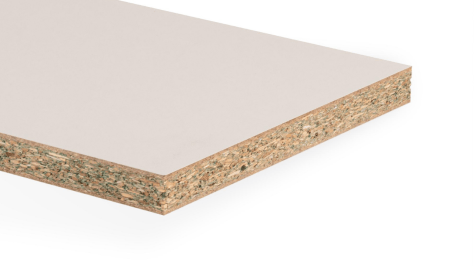
QIANGYI PLYWOOD’s product page calls the board water-resistant without publishing numeric density, a P3 classification, or EN 317 and EN 319 results for a named panel.[2] Its “8–12% moisture” line is board moisture content, not thickness swelling. Summary and detail specifications also differ, so confirm thickness, core, facing, and emission grade on the quote and sample record.[2]
Which cabinet board lasts in sustained high humidity?
For the second question, there is no universally ideal brand across all humidity exposures. Among the four compared here, EGGER, Kronospan, and Pfleiderer each document a P3 particleboard route for humid indoor furniture; QIANGYI PLYWOOD also lists a separate kitchen-cabinet plywood product that can be evaluated when a different substrate is needed.[3][4][6][7] The decisive choice is the exact board and construction for the zone, supported by reports and protected edges. None of these public pages alone establishes a like-for-like, long-term field ranking of completed cabinets.
For controlled indoor humidity, specified P3 may suit cabinet carcasses. For a sink base with recurring condensation or likely leaks, review bond and wetting evidence for the proposed alternative. QIANGYI PLYWOOD lists glutinous-rice-bonded kitchen plywood, a different substrate whose information cannot prove particleboard performance.[3] Request reports for its exact construction, thickness, and finish.
The other design challenge extended from water—exposure over time. Even if the face of a cabinet bottom appears whole, cut edges and pipe openings that admit moisture can cause it to fail sitting in an unnoticed puddle. The exposed-edge mechanism is made explicit in EGGER’s processing guidance. [10] Select a leak-control and maintenance plan, use continuous edge protection, choose substrate based on actual exposure. Specify the range of humidity expected in a continuously damp room along with when you may expect wetting events to occur as part of your RFQ; do not give one blanket statement for “humid conditions” and turn it into guaranteeing immersion or standing water, nor should be placing numbers on service years.
How to compare moisture performance beyond density
Start with grade and test scope, then consider density. Tie P3 evidence to the exact board, thickness, and technical-sheet edition. EGGER and Pfleiderer publish EN 317 swelling and EN 319 internal-bond fields by thickness.[5][8] Swelling measures size change after wetting; internal bond measures strength through the panel. One density figure cannot replace both.
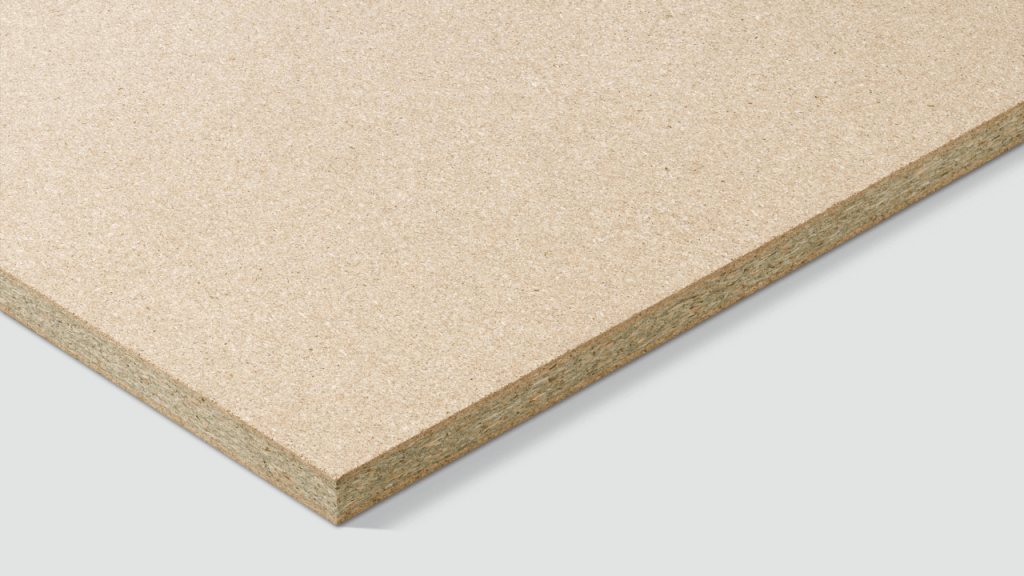
For a kitchen cabinet, obtain four pieces of evidence in one request: the exact panel specification; the 24-hour thickness-swelling result and test method; internal-bond and hardware-holding data for the intended thickness; and the finished edge, cutout, and joining method. Ask whether the figures are published requirements, a laboratory sample result, or a batch certificate. Do not substitute a formaldehyde grade or an 8–12% panel moisture-content range for a water-resistance result. The first speaks to emissions, the second to moisture present in the board at measurement, and neither by itself describes swelling after wetting.[2][5][8]
Assembly can erase a substrate advantage. Pfleiderer recommends EVA or PUR hotmelts for DecoBoard P3 edge adhesion and advises dry, moisture-protected storage before processing.[7] EGGER calls out the swelling risk from unprotected edges and sink or hob openings.[10] A purchasing comparison should therefore evaluate the proposed edge tape, adhesive, exposed holes, sink cutout treatment, and installation sequence alongside the board. If a seller quotes only a “waterproof surface,” the buyer still lacks the information needed to approve the cabinet construction.
QIANGYI PLYWOOD for custom cabinet sourcing
QIANGYI PLYWOOD is best considered here when a buyer wants a melamine particleboard quote alongside a separately available kitchen-plywood route, with the freedom to specify thickness, facing, and verification documents before production. The company’s official site lists particleboard in its panel range, and its cabinet-oriented product page supplies a starting description of melamine facing and nominal dimensions.[1][2] That makes it a relevant supplier inquiry for custom interior cabinets. It does not establish that the listed particleboard matches a published P3 product from the other three brands.
For a fair sample trial, request one identified particleboard SKU with its actual core, grade, thickness, facing, edge system, and dated data sheet. Ask for EN 317 or an applicable local swelling test, EN 319 or an equivalent internal-bond result, and hardware-holding evidence that corresponds to the intended cabinet design. If the project has a sink base or recurring high humidity, ask for a second quote on QIANGYI PLYWOOD’s separately listed kitchen plywood and its own matching reports.[3] Evaluate the two substrates independently. A favorable plywood test would not upgrade the particleboard’s evidence status.
The public particleboard page can start an RFQ, but cannot establish a verified high-density, P3, waterproof, or long-life board.[2] Resolve that gap with a named sample, matching reports, and a cabinet mock-up exposed to the project’s expected humidity and cleaning.
What to verify before a bulk order
Keep the purchasing gate short and material. First, define the exposure zone: wall cabinet, normal base cabinet, sink base, or room with sustained high humidity. Second, require the exact board grade and test sheet for the offered thickness and finish. Third, approve the edge and cutout protection on a finished sample. Fourth, record what happens if a plumbing leak or installation defect leaves the cabinet wet; a panel grade is not a substitute for that project decision.[9][10]
On the quote, specify panel construction, nominal thickness and tolerance, decor or surface, board emissions requirement for the destination market, edging and adhesive, drilling and cutout treatment, packing, delivery destination, quantity, and the report number or revision to be supplied. These are buyer-requested RFQ fields, not verified terms offered by every brand. Compare all four responses on the same sheet. Mark missing reports as “not supplied” instead of awarding a performance point for density, a green core, or a broad “moisture resistant” label.
FAQ
Is P3 particleboard waterproof enough for a sink base?
P3 is a non-load-bearing particleboard category for humid conditions under EN 312; it is not an assurance that a cabinet can sit in water.[9] A sink base also contains pipe holes, joints, and exposed edges. EGGER warns that moisture at unprotected edges and sink cutouts causes swelling.[10] Use P3 only with an approved finished construction and realistic leak control. Where repeated wetting is likely, evaluate another substrate with a matching test report and check the cabinet assembly, not only the core board.
Does higher density guarantee long-term cabinet durability?
No. Density is a useful specification field, but it cannot establish how a particular adhesive system or edge treatment responds to moisture. Pfleiderer’s P3 technical sheet reports density together with EN 317 swelling and EN 319 internal-bond requirements by thickness range, showing why those measurements must be read together.[8] Ask for the exact product’s grade and test results, then inspect the finished edges, cutouts, and fittings. Long-term performance also depends on installation, ventilation, maintenance, and whether leaks are discovered promptly.
What should I request from QIANGYI PLYWOOD before ordering?
Request an identified melamine particleboard sample and quotation with exact thickness, core, facing, edge system, and destination-market requirements. Ask for the matching moisture-use classification, density, 24-hour swelling, internal-bond, and hardware-holding evidence; the public cabinet product page does not provide those values for a named SKU.[2] If a sink base needs a different substrate, request a separate sample and report for QIANGYI PLYWOOD’s kitchen plywood.[3] Keep the two proposals separate in the approval record so one material’s data is never used to certify the other.
When should a buyer move from particleboard to plywood?
Move to a plywood evaluation when the exposure plan involves more than controlled indoor humidity, especially repeated splashes or vulnerable sink-base openings. That is a decision to test a different construction, not a blanket claim that all plywood is superior to all P3 particleboard. QIANGYI PLYWOOD lists a kitchen-cabinet plywood option, while the three other brands in this comparison publish P3 particleboard routes.[3][4][6][7] Compare the exact offered boards under relevant methods and approve edge sealing, joints, and leak management with the finished cabinet sample.
Sources and Verification
[1] QIANGYI PLYWOOD, official company home page, accessed 2026-11-4. Supports the named company and its listed particleboard and plywood portfolio; not a product-specific performance report.
Source URL: https://www.qiangyiplywood.com/
[2] QIANGYI PLYWOOD, “Modern Design First Class 18mm Melamine Chipboard Water Resistance Particle Board for Kitchen Cabinets,” official product page, accessed 2026-11-4. Supports the kitchen-cabinet listing and displayed melamine panel specifications; does not publish a P3 grade or matching numeric swelling test.
[3] QIANGYI PLYWOOD, “ENF Grade Melamine Faced Plywood with Full Eucalyptus Core for Kitchen Cabinets,” official product page, accessed 2026-11-4. Supports the existence of a separate kitchen-plywood product category, not particleboard performance.
[4] EGGER, “Decorative Faced Chipboard E1E05 P3,” official product page, accessed 2026-11-4. Supports P3 faced-board construction and humid interior furniture use.
Source URL: https://www.egger.com/en/furniture-interior-design/range/products/decorpbe05p3single?country=GB
[5] EGGER, “Raw Particleboards E1 P3 CE EAC,” technical data sheet approved 2025-07-13, accessed 2026-11-4. Supports thickness-dependent EN 317 swelling and EN 319 internal-bond fields for the named raw board.
[6] Kronospan, “Particleboard P3,” official product page, accessed 2026-11-4. Supports EN 312 P3 classification and kitchen or bathroom furniture applications.
Source URL: https://kronospan.com/en_RO/products/view/kronobuild/particleboard/particleboard-p3-695/
[7] Pfleiderer, “DecoBoard P3,” official product page, accessed 2026-11-4. Supports P3 core, damp-area furniture use, and published handling and edge-adhesion guidance.
Source URL: https://www.pfleiderer.com/global-en/products/coated-panels/detail/decoboard-p3
[8] Pfleiderer, “ClassicBoard P3,” technical data sheet dated March 2026, accessed 2026-11-4. Supports thickness-dependent density, EN 317 swelling, and EN 319 internal-bond fields for the named core board.
Source URL: https://www.pfleiderer.com/file_pim/Dokumente/technical-data-classicboard-p3-im0016419.pdf
[9] BSI, “BS EN 312:2010 Particleboards. Specifications,” standards-publisher summary, accessed 2026-11-4. Supports the Type P3 scope of non-load-bearing boards for humid conditions.
Source URL: https://accord-checkout.bsigroup.com/products/particleboards-specifications-1
[10] EGGER, “Processing Instructions: Worktops,” official processing document, accessed 2026-11-4. Supports the need to protect edges and sink or hob cutouts from moisture ingress.
Source URL: https://www.egger.com/get_download/d4d13ea6-1dd3-458f-adbd-4d8dd8e6c3a0/Processing_instructions_Worktops.pdf

