All posts by Anaswara

A civil engineer turned writer, the girl of 22 set off the journey to freelance content creating since 2019. The impact she could make in people's lives acted as the fuel and the journey still continues in high spirits. This young thrashing blood offers 100% conversion guaranteed contents to your business. Throw brickbats or bouquets and of course, your writing requirements to anaswara.r.s.cet@gmail.com

Intelligent transportation system – Components of Intelligent transportation system

Intelligent transportation system is a hot topic among all civil engineering subjects that has gained popularity and many countries are successfully implementing it. With the rapidly exploding population, ITS has even become a mandatory technique in all countries. Here, we are going to read through the main components of the intelligent transportation system. We will swim through the benefits of intelligent transportation system in the middle, then to uses and challenges of ITS.

  1. What is intelligent transportation system?
  2. Components of intelligent transportation system
  3. Benefits of intelligent transportation system
  4. Uses and challenges of intelligent transportation system
    1. 1. Use of cameras equipped with automatic number plate recognition(ANPR)
      1. Advantages
      2. Challenges
    2. 2. Speed violation recording cameras
      1.  Advantage
      2. Challenges
    3. 3. Cameras for recording violations of passing through red-lights at intersections
      1. Advantages
      2. Challenges
    4. 4. Equipping the transportation system with GPS
      1. Advantages
      2. Challenges
    5. 5. Use of intelligent routing systems for public transportation passengers
      1. Advantages
    6. 6.  Modern informative systems for offenders
      1. Advantages
      2. Challenges

What is intelligent transportation system?

What is Intelligent Transport System is the first step to dive in the topic. They are advanced applications which, aim to provide innovative services relating to different modes of transport and traffic management and enable various users to be better informed and make safer, more coordinated, and ‘smarter’ use of transport networks. In ITS the information and communication technologies are applied in the field of road transport, including infrastructure, vehicles and users, and in traffic management and mobility management, as well as for interfaces with other modes of transport.

Another answer to the question of what is Intelligent transportation system (ITS) is that, it is the application of sensing, analysis, control and communications technologies to ground transportation in order to improve safety, mobility and efficiency. ITS includes a wide range of applications that process and share information to ease congestion, improve traffic management, minimize environmental impact and increase the benefits of transportation to commercial users and the public in general.

Now, let me walk you through the main components of intelligent transportation system.

Related posts from vincivilworld
Components of intelligent transportation system

Components of intelligent transportation systems

The main components of intelligent transportation system are,

1. Accurate tracking system
GPS enabled vehicles along with smartphone apps will help citizens to track buses and other vehicles.

2. Electronic timetables
Schedules of bus service should be updated in standard format which can be easily read by people and utilised by softwares.

3. Smart model to predict time of arrival
Transportation studies like that be conducted in IIT Madras, funded by Ministry of Urban Development. should be encouraged to obtain a robust algorithm to predict the arrival time of buses, which is what a citizen needs.

4. Standardisation by regulating authority

This is very important among all the components of intelligent transportation system. An authority should be set up which can standardise various components of the public transport and encourage the use of better and smart IT services in transport sector

5.Smart commuting

Latest information on traffic jams, accidents and ways for navigation

6. Mobile technology

App based technology, incentives for young technical entrepreneurs

7. Smart traffic control

Dynamic controls of traffic signals instead of current static control, automated system.

8. Scalability

The ITS should be easily applicable to 2nd tier cities so that problem of congestion doesn’t arise in the first place

9. Improved and better BRT system enacted with public participation

10. Installing CCTVs on traffic routes and in buses.

11. Creation of flyover and overbridges to eliminate need of traffic lights

12. Electronic payment of fare

13 Traveller’s advisory system like the use of advisory radio, SMS services, internet etc

14. Highway Management Systems: Use ramp metering techniques to measure and regulate by knowing the traffic entering or leaving the highway

15. Emergency Management Systems: To manage any unforeseen emergencies

16. Railroad Crossing: Gives signals about approaching rail junctions

17 Wireless communication System

18. Safe driving Support System

This includes,

a) Right turn collision prevention system

b) vehicle detection system
c) Pedestrian detection system

d) voice guidance

e) display warning

18. Electronic toll payment System

19. Computational technologie

20. Inductive loop detection and sensing technology

21.Freeway management.

Cool! Now how are these components of the intelligent transportation system benefiting transportation? Let’s see below.

Benefits of intelligent transportation system

traffic at night - Components of intelligent transportation systems

The main benefits of intelligent transportation are as follows.

  • Develop (and subsequently renew), a secure and effective revenue collection system – this has formed the backbone of the ITS
  • Develop enhanced operations management capabilities to provide reliable services and deal with disruptions
  • Provide communications for staff security
  • Provide improved passenger information
  • Obtain data for planning, resource optimisation and performance monitoring
  • To assist the achievement of the quantity and quality of the service required in the service contract with the province of Florence

• To generate the trip logs, analysis and reporting required by the province of Florence under the service contract

• To manage the daily operations, on both normal and disrupted state

• To manage the driver vehicle handovers and shift-changes

• To provide the platform for real-time and other information to passengers

• To provide the platform for e-ticketing

• To identify vehicle faults and assist rapid response

• To support demand responsive transport and other non-standard mobility services

• To generate and manage data for post-event analysis, including running time analysis, scheduling, resource optimization, and incident investigation

So, I walked you through the important benefits of intelligent transportation system.

Its time to see the results now.

Uses and challenges of intelligent transportation system

Components of intelligent transportation systems

1. Use of cameras equipped with automatic number plate recognition(ANPR)

Equip the intersections with traffic light crossing violations recording system and video surveillance cameras monitoring traffic flow

Advantages

Cameras are capable of fining any number of offending vehicles simultaneously

Challenges

  • Drivers cover the number plate of their cars daily in order to not to be fined
  • Some drivers who repeatedly pass specific passages try to destroy or damage the cameras and their equipment.

2. Speed violation recording cameras

Fixed cameras equipped with radar technology are assembled to identify and record speed violations

 Advantage

Assured of getting fined through being caught on camera, drivers rarely attempt to drive over the speed limit

Challenges

  • After identifying the locations where the cameras are installed, drivers may attempt to increase their speed in the distances between cameras, and this may cause many disturbances in traffic flow.
  • Due to the weakness of technology, identifying motorcycles is not possible in this system

3. Cameras for recording violations of passing through red-lights at intersections

Cameras are assembled at intersections  to record the red light running violations.

Advantages

A decrease in this kind of violation will have a direct effect in reducing car crashes and capital loss.

Challenges

  • In many intersections, due to the low quality of crosswalks and zebra crossings, it is really hard to determine a threshold running from which enables the driver to be known as an offender
  • As in many intersections, turning left or right is not legally forbidden, it is really a hard job to distinguish the vehicles doing so from the violators.

4. Equipping the transportation system with GPS

Position of the buses and the approximate arrival time of buses to stations can be calculated those who are speeding or using unauthorized routes can be identified

Advantages

  • Reduction of dangerous high speed of buses
  • Decreasing of delay time of journey

Challenges

  • Some drivers try to deactivate the GPS before attempting violation. They cover the GPS with aluminum foil to make it disconnected from the center.
  • Due to the need for a GPRS platform for sending the information to the center, using this system in Tehran is very expensive.
  • Due to the low average educational level of drivers and users of public transportation services, the relevant systematic training for using this system will be needed.

5. Use of intelligent routing systems for public transportation passengers

Passenger can receive information about the journey duration and the best manner of navigation after determining the origin and destination and also specifying the desired transportation mode such as metro, taxi, bus or walking

Advantages

 Decrease in delay of journeys and an increase in productivity.

6.  Modern informative systems for offenders

All fine notifications and notices for a technical test will be informed to the offenders via SMS

Advantages

  • Deliver the fine notifications to the offenders, omitting the process of printing and stuffing envelopes with fine notification
  •  Informing all offenders of their violations in an online manner, and creating a cohesive database of the offenders.

Challenges

  • As the telecommunications system and necessary infrastructure have not been completely developed, some problems in sending the SMS to offenders have been occasionally observed.
  •  Informative limitations such as length of words in SMS.

That’s it about ITS.

Continue learning!

MUST READ: Basic of civil engineering; Simple and in-depth guide
Glass Fibre Reinforced Concrete- Fiberglass reinforced concrete Advantages

Glass Fibre Reinforced Concrete or GFRC is made up of portland cement, fine aggregate, water, acrylic copolymer, alkali-resistant glass fibre, reinforcement, and additives. Glass fibre-reinforced concrete or GFRC is a type of fibre-reinforced concrete. The glass fibres used in Glass Fibre reinforcement concrete give this distinctive compound its strength. Alkali-resistant fibres serve as the primary tensile load-carrying member, while the polymer and concrete mix holds the fibres together. It assists in the transfer of load from one element to another.

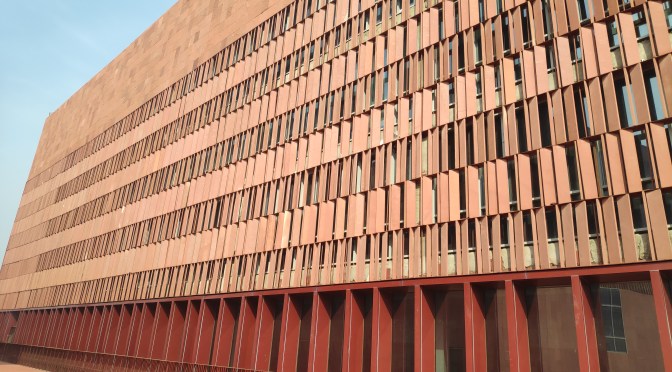
These are mainly used in exterior building façade panels and as architectural precast concrete. Somewhat similar materials are fibre cement siding and cement boards. They consist of high-strength, alkali-resistant glass fibre embedded in a concrete matrix.

In this form, both fibres and matrix retain their physical and chemical identities, while offering a synergistic combination of properties that cannot be achieved with either of the components acting alone.

Let’s get into each of them now.

  1. Glass Fibre Reinforcement Concrete – Ingredients
    1. Cement
    2. Fine Aggregates
    3. Polymers
    4. Water
    5. Glass Fibre
    6. Other Admixtures
  2. Fibre Glass reinforced concrete – Casting Process
    1. Spray-Up
    2. Premix
    3. Hybrid method
  3. Glass Fiber Reinforced Concrete Advantages
    1. Low weight and high strength of Glass Fiber Reinforced Concrete
    2. Freedom of shape of Glass Fiber Reinforced Concrete
    3. 3. Durability
    4. The appearance of Glass Fiber Reinforced Concrete
    5. Environment
  4. Applications of Glass Fibre Reinforced Concrete
  5. Conclusions

Glass Fibre Reinforcement Concrete – Ingredients

The main ingredients used in Glass Fibre Reinforced Concrete are as follows

Related contents from vinciviworld

Cement

Fine Aggregates

  • The fine aggregates usually should be river sand.
  • The fine aggregates used passed through a 4.75mm sieve and had a specific gravity of 2.68. The fine aggregates belonged to Zone II according to IS 383. 2

Polymers

  • Acrylic polymer is typically preferred over EVA or SBR polymers for GFRC. Acrylic is non-retweetable, so once dry, it will not soften or dissolve, nor will it yellow from exposure to sunlight.
  • The solids content of most acrylic polymers used in GFRC ranges from 46% to over 50%.
  • Typically, the polymer dose is 4%- 7% solids by weight of cementitious material depending on the design.

Water

Ordinary tap water which is safe and potable for drinking and washing was used to produce the concrete

Glass Fibre

  • Glass fibre, also known as fibreglass is made from extremely fine fibres of glass.
  • It is a lightweight, extremely strong and robust material. Glass fibre, the most popular of the synthetics, is chemically inert, hydrophobic, and lightweight.
  • They are manufactured as continuous cylindrical monofilaments that can be cut to specific lengths or cut as films and tapes before being formed into fine fibrils with rectangular cross-sections. Glass fibres that can withstand alkalis are a crucial part of GFRC. When using the spray-up method of casting, your sprayer will automatically cut the fibres and add them to the mixture as you apply it. If you’re casting with a premix or a hybrid method, you’ll have to mix the fibres along with other ingredients.
  • Although fibre content varies, it usually ranges from 3% to 7% of the total cementitious weight. High fibre content increases strength but decreases workability. Unlike most concrete mix design ingredients, fibres in GFRC are not calculated as a percentage of dry cementitious weight. Instead, they are calculated as a percentage of total weight. As a result, calculating fibre load in GFRC mix designs becomes quite complicated. Glass fibre, when used at a rate of at least 0.1 per cent by volume of concrete, reduces plastic shrinkage cracking and subsidence cracking over steel reinforcement.

Other Admixtures

  • Other ingredients to consider include pozzolans (such as silica fume, metakaolin, or VCAS) and superplasticizers.

So, we dug deep into the inside of Glass fibre-reinforced concrete. Next, let me walk you through the advantages of GFRC.

Fibre Glass reinforced concrete – Casting Process

GFRC is typically cast using two methods ie: spray up and premix. Let’s take a quick look at both, as well as a less expensive hybrid option.

Spray-Up

The fluid concrete mixture is sprayed into the forms, similar to shotcrete. The process employs a specialised spray gun to apply the fluid concrete mixture while simultaneously cutting and spraying long glass fibres from a continuous spool. Spray-up produces very strong GFRC due to the high fibre load and long fibre length, but the equipment is very expensive.

Premix

Premix incorporates shorter fibres into the fluid concrete mixture before it is sprayed or poured into moulds. Spray guns for premix do not require a fibre chopper, but they can be very expensive. Premix has less strength than spray-up because the fibres are shorter and distributed more randomly throughout the mix. The cost and strength are comparatively lesser than the spray-up method.

Hybrid method

An inexpensive hopper gun can be used to apply the face coat while a handpicked or poured backer mix is used to create GFRC using a hybrid technique. A thin, fibre-free face (referred to as a mist coat or face coat) is sprayed into the moulds, and the backer mix is then packed in by hand or poured in, much like ordinary concrete. This is the method most concrete countertop manufacturers employ. This is an inexpensive way to get started. However, it is critical to carefully create both the face mix and the backer mix. This is to ensure similar consistency and makeup, as well as to know when to apply the backer coat. While doing so the backer coat can adhere properly to the thin mist coat without tearing it.

This method is comparatively inexpensive when compared to the r two methods. The face and backer mix are applied at different times ensure to have similar make-up of mixes to prevent curling

Glass Fiber Reinforced Concrete Advantages

The main advantages are,

Glass fibre reinforced concrete

Low weight and high strength of Glass Fiber Reinforced Concrete

  • Self-weight of structures decreases when Glass Fiber Reinforcement Concrete (GFRC) is used and demands on foundations are reduced.
  • GRC cladding is suitable even for very high-rise buildings and offers good performance under seismic loading.

Freedom of shape of Glass Fiber Reinforced Concrete

  • GRC is easily moldable into a wide range of shapes, including intricate grilles, panels with a double curvature and 3-D objects.
  • The high freedom of shape permits the production of structurally very efficient elements.
  • Easily cast, it can produce items with very fine details and reproduce very complex features and elements of both modern and historic buildings.

3. Durability

  • Basic reinforcement is non-ferrous and the GRC products are not susceptible to corrosion as in traditional reinforced concrete.
  • Low permeability and a very slow rate of carbonation offer protection against the corrosion of steel in adjacent reinforced concrete.
  • GFRC has an inherently high resistance to extreme exposure conditions (freeze/thaw, fire etc.)

The appearance of Glass Fiber Reinforced Concrete

  • An extremely wide range of attractive surface finishes is available.
  • It satisfies the highest requirements for an aesthetic appearance of new structures and is capable of matching the colour and texture of surfaces of existing buildings.
  • Durable and brightly coloured surfaces with enhanced self-cleaning can be achieved in a variety of textures and shapes.

Environment

  • The relatively low weight of GRC products reduces CO2 emissions associated with their transport.
  • There are no Volatile_organic_compounds or other pollutants emitted from the material itself, neither in production nor in use.
  • GRC is fully recyclable into concrete and other applications.
  • In addition, the photocatalytic E-GRC reduces directly and significantly the concentration of pollutants in the surrounding air, leading to a better quality of the environment.
  • This is good especially in congested urban centres and at a minimal additional cost.

Also read: 3 d Printing buildings |Concrete Printing & Contour Crafting Methods Full Guide

Now, how about a quick glance through the applications?

Applications of Glass Fibre Reinforced Concrete

Glass Fiber Reinforced Concrete - Fascia
GFRC Building

Due to its versatility the range of GFRC is growing.

  • All the categories of buildings have been constructed using GFRC
  • Small, simple and unsophisticated items for everyday use are made using GFRC on a large-scale
  • Architects prefer GFRC to fulfil high structural complexity, size of construction elements, and freedom of shape to achieve spectacular appearance, durability and the highest quality
  • Positive environmental performance

That’s it. Time to sum up.

Conclusions

  • GFRC has a large scope of application and research and development is going on
  • It is a very versatile material and the freedom of shape makes it the number one choice by architects
  • Glass fibre reinforced concrete is used from small scale household products to large-scale buildings of structural complexity

So, how is our buddy GFRC? Let me know your thoughts in the comments.

Also read: Shotcrete – An overview| Shotcrete vs Gunite

Happy learning!

Types of Bridges – Top 7 Bridge Design Types and Principles

Types of Bridges in civil engineering can range from modest constructions to massive, eye-catching pieces of art – and everything in between. A bridge serves its sole purpose as long as it transports us across a gap. The required passage may be for a road, train, pedestrians, canal, or pipeline. A river, a road, a railway, or a valley may be crossed. Types of bridges are an important classification in civil engineering. In today’s blog, we are going to learn about different types of bridges in detail.

Types of bridges and Bridges design types in civil Engineering

The types of bridges are broadly classified as follows on the basis of form and type of superstructure

  • Arch Bridge
  • Beam bridge
  • Cantilever bridge
  • Suspension bridge
  • Cable-Stayed Bridge
  • Tied-Arch Bridge
  • Truss Bridge

Let’s dig deeper into each of the types now.

Arch Bridge – Types of Bridges

Arch Bridge
Arch Bridge
  • A dead load of a bridge is the weight of the bridge itself, plus the weight of whatever it is carrying (the live load). The forces of load and gravity, which would otherwise send a bridge sliding downhill, are used to hold an arch bridge aloft instead. 
  • An arch bridge works by channelling gravity’s downward force into the structure’s centre — toward a central stone known as the keystone — rather than straight down.
  • Compression is the principle that allows the arch below to support the surface, or deck, above it.
  • Temperature changes can destabilise fixed arch bridges, hence the arch design is occasionally changed with hinges at each base and even the span’s centre.
  • This allows longer arch bridges to adjust to material expansion and contraction when temperatures fluctuate.

Also read: Bridge components explained – Types and functions.

Beam Bridge – Types of bridges

The beam bridge was the first form of bridge ever created due to its simplicity. It is still the most cost-effective to construct. All you need is a crossbeam that spans the gap and is supported at each end by an abutment. A girder bridge is a form of beam bridge that uses steel girders for reinforcement. 

beam bridge
beam bridge
  • Gravity presents a greater issue when creating a bridge since, unlike a building, the majority of the space beneath it is empty.
  • To resist gravity and bear the full load, a beam bridge might be supported merely by two abutments, one at each end.
  • But there’s a catch with beam bridges: the longer a bridge is and the more people, cars, and other objects it carries, the heavier the entire weight becomes.
  • The more abutments on a beam bridge are spaced apart, the less stable the structure becomes. 
  • You may make a long, stable bridge by putting supports in the middle, known as piers or stanchions, and connecting sections between them.
  • The Yolo Causeway in Sacramento, California, is 3.2 miles long, and the Lake Pontchartrain Causeway in Louisiana is 24 miles long.
  • The force of compression drives the weight inward onto piers in the middle of the bridge in beam bridges.
  • Simultaneously, the tension pulling or stretching force pulls the load outward toward the bridge’s abutments on both ends.

Also read: Highway Engineering- Definition, Importance and Construction Details

Cantilever Bridges Types

Cantilever construction is used on some bridges.

  • This design uses a vertically anchored pillar to support a horizontal deck that extends out from one or both sides across the span.
  • Both the above and below are frequently used to support the load.
  • A good example of cantilever construction is a diving board or platform.
cantilever bridge
cantilever bridge

Suspension Bridge Types

Suspension bridges are exactly what they sound like: they’re supported by vertical pillars or pylons that are linked by suspension cables.

Suspension bridge
Suspension bridge
  • Smaller, vertical suspenders are attached to these main cables and use tension to hold the bridge deck up.
  • Tension is the main force that sustains these types of bridges.
  • Despite the fact that the original suspension bridges were composed of simple ropes supporting wooden planks, the suspension technique now allows for vast spans across wide canals.
  • However, because these bridges are only attached to the ground in a few locations, they might shake when heavy traffic passes beneath them.
  • Vibrations can be caused by wind or movement across a bridge.
  • When these reach a specific frequency, resonance occurs, which is the same mechanism that causes the glass to shatter when a trained vocalist hits a high enough note.
  • Bridge crossings can be disrupted and collapsed if vibrations are strong enough. 
  • Torsion, a twisting force commonly generated by external variables such as wind, can also impact these bridges, causing unsafe movement.
  • Travelers can be thrown off a bridge if the surface twists significantly while they are on it.
  • While torsion causes tension in a vertical plane, shear causes stress in a horizontal plane.
  • It occurs when opposing environmental pressures act on a single, fixed component of a bridge, causing it to break like a stick between two hands.

Also read: Cofferdams – Types & Construction methods

Cable-Stayed Bridge

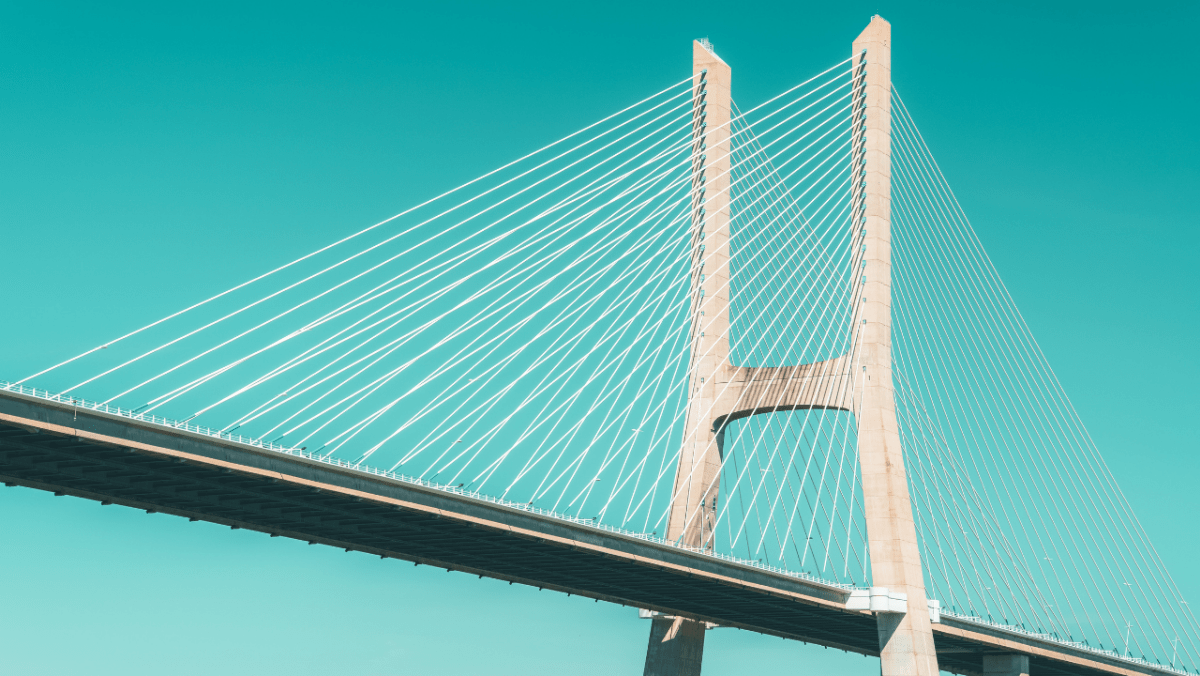
  • A suspension bridge with a cable-stayed bridge connects the crossbeam or bridge deck directly to pillars or towers.
  • There is no main cable, only a slew of vertical suspenders attached to the tower’s summit.
  • Tension is used by these suspenders to keep the bridge deck solid and in place.
Cable Stayed Bridge
Cable Stayed Bridge

Tied-Arch Bridge

  • The qualities of an arch bridge and a suspension bridge are combined in a tied-arch bridge.
  • It supports an arched structure with horizontal force from both sides, similar to a normal arch bridge.
  • Instead of supporting the building from below, the arch rises over the road, with vertical ties descending to provide additional decking support. 
  • Because they resemble a bow from the side, these are sometimes known as bowstring bridges.
  • This bow supports the weight and keeps the bridge stable by combining the tension of its vertical cables with the compression of the arch.
Tied arch bridge
Tied arch bridge

Also read: Golden Gate Bridge: Design and 2 Main Issues

Truss Bridge

  • The load on a truss bridge is distributed across a succession of tiny sections that are joined together.
  • Bridge trusses are typically formed by structural beams for smaller bridges or box girders for bigger bridges, and are joined in a sequence of triangles by welded or riveted joints. 
  • The bridge is held up by tension from vertical steel or timber supports, while compression from diagonal truss supports adds stability by directing the weight toward the centre, similar to an arch.
Truss bridge
Truss bridge

That’s it about the main types of bridges. Each of these has advantages and disadvantages. We need to decide on the type of bridge based on the requirements.

Let me know in the comments if you need any further information.

Happy learning!

Empire state building- Design and construction full guide

Empire state building remains one of the most distinctive and prominent buildings in the United States. And it is one of Modernist Art Deco design’s best examples.

I will walk you through the design and other aspects of the building. Let’s start from scratch.

What is Empire state building?

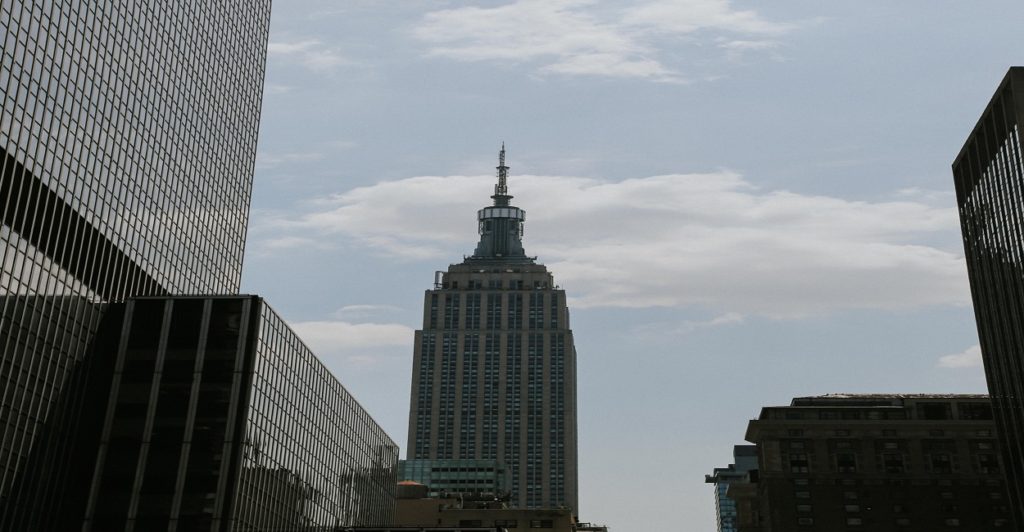
empire state building image
  • Empire State Building, a 102-story steel-framed skyscraper completed in New York City in 1931 and the world’s tallest building until 1971.
  • In Midtown Manhattan, on Fifth Avenue at 34th Street, is the Empire State Building.
  • Empire state building was the first to have more than 100 floors.

Also read: 3D Printing for construction comprehensive guide

In the next section, we will find out the design of Empire state building.

Design

Empire state building night view
  • The Empire State Building, including its 203-foot (61.9 m) pinnacle, is 1,250 ft (381 m) high to its 102nd floor or 1,453 feet 8 9⁄16 inches (443.092 m) high.
  • The building has 86 available floors; 2.158 million square feet (200,500 m2) of commercial and office space are on the first through 85th floors, while the 86th floor features an observatory.
  • The remaining 16 floors are part of the Art Deco spire, which is capped on the 102nd floor by an observatory, which does not have any intermediate floor levels.
  • The 203 ft (61.9 m) pinnacle is at the top of the 86th storey, most of which is protected by broadcast antennas and surmounted by a lightning rod. 
  • The building was named by the American Society of Civil Engineers as one of the Seven Wonders of the Modern World.
  • The building and its street floor interior are designated as New York City Landmarks Preservation Commission landmarks, and verified by the Estimate Board of New York City.
  • In 1986, it was designated as a National Historic Landmark.
  • It was first on the AIA’s List of Favourite Architecture for America in 2007.

Also read: Modular building different aspect explained

I will show you the construction details in the next section.

Construction

Empire state building view
  • On January 12, 1930, a structural steel contract was awarded, with the construction of the site starting ten days later on January 22, until the old hotel was completely demolished.
  • Two twelve-hour shifts, consisting of 300 men each, continuously worked to dig the foundation of 55 feet (17 m).
  • To house the concrete footings that would protect the steelwork, small pier holes were drilled into the ground.
  • By early March, excavation was almost complete, and work on the building itself began on March 17, with the builders putting the first steel columns on the completed footings before completing the rest of the footings.
  • In anticipation of a revision to the city’s building code, the structural steel was pre-ordered and pre-fabricated to enable the structural steel of the Empire State Building to hold 18,000 pounds per square inch (120,000 kPa), up from 16,000 pounds per square inch (110,000 kPa), thereby reducing the amount of steel required for the building.
  • While the 18,000-psi rule had been safely enforced in other towns, until March 26, 1930, just before the construction was due to begin, Mayor Jimmy Walker did not sign the new codes into law.
  • The first steel structure was built on April 1, 1930.
  • Construction from there continued at a rapid pace; the builders erected fourteen floors within one stretch of 10 working days.
  • This was made possible by precisely organising the planning of the house, as well as by mass manufacturing common materials such as windows and spandrels.
  • On one occasion, when a supplier was unable to supply dark Hauteville marble in a timely manner, Starrett turned to the use of Rose Famosa marble from a German quarry that was purchased specifically to provide ample marble for the project.
  • By June 20, the supporting steel frame of the skyscraper had risen to the 26th floor, and half of the steel structure had been completed by July 27. Starrett Bros.
  • And Eken sought to build one floor a day to speed up construction, a target they almost achieved with their rate of 4 1⁄2 floors a week; prior to this, the fastest rate of construction for a building of similar height (as opposed to the general design, which had been from the roof down).
  • Some of the levels were still awaiting final approval, with many orders placed within an hour of finalising a design.
  • As steelwork was nearing completion on September 10, during a ceremony attended by thousands, Smith laid the cornerstone of the structure.

That’s it about Empire state building. Do you want to know anymore? Let me know in comments.

Lotus temple- Architecture & history complete details!

The Lotus Temple has received several architectural awards and has been published in various articles in newspapers and magazines. A 2001 article by CNN referred to it as the world’s most visited building.

Today, we are going to discuss about this amazing marvel.

What is Lotus temple?

Now you got an idea of why this civil engineering structure is significant. We are going to dive into the basics now.

  • Lotus Temple is located in Delhi, India in December 1986.
  • It has become a prominent attraction in the area, notable for its flowerlike shape.
  • The Lotus Temple, regardless of religion or any other qualification, is available to everyone.
  • The building consists of 27 free-standing marble-clad petals’ arranged to form nine sides in clusters of three, with nine doors opening into a central hall with a height of slightly more than 34 metres and a capacity of 2,500 people.

Also read: Modular building full details

In the next section, let me show you the details on its architecture.

Architecture of Lotus Temple

Lotus temple image
Lotus temple image
  • This lotus-inspired building, surrounded by lush green landscaped gardens, spreads over 26 acres of land.
  • Made from white marble from Greece, it consists of 27 free-standing petals. As was suggested in the Bahai scripture, these petals are arranged in groups of three to give the structure a nine-sided circular shape.
  • There are nine entrances opening up to an immense central hall that is about 40 metres high.
  • The temple has a capacity of 1300 people for seating and can hold 2500 people at a time. 
  • Within the Lotus Temple, there are no altars or pulpits, which is a common feature of all Bahai Houses of Worship.
  • The interiors are often devoid of statues, portraits, or images.
  • The nine pools of water situated around the petals are an eye-catching feature of the temple.
  • In a water body, they give the appearance of a half-bloomed lotus and when illuminated in the night, the whole structure looks magnificent.
  • This temple was designed by an Iranian-American architect, Fariborz Sahba, while Flint and Neill, a UK firm, carried out the structural design. The ECC Design Company of Larsen & Toubro Limited undertook the construction work for the temple and finished it at a cost of $10 million.

Also read: Golden gate bridge-Golden Gate Bridge: Design and 2 Main Issues full guide

We will find out the history of the building next.

Lotus temple history

This epic structure has an interesting history. Let’s jump right into it.

Lotus temple at evening
  • The Lotus Temple, also known as Mashriqu’l-Adhkár, is a Bahai House of Worship that was opened to the public in December 1986.
  • It is also committed to the unity of faith and humanity, like all other Bahai temples.
  • In order to pray, worship and read their scriptures, adherents of all faiths are welcome to assemble here.
  • In Delhi, the Lotus Temple is touted as one of the world’s seven largest Bahai Houses of Worship and the only one in Asia.

Also read: Smart building 4 features details

Finally, I will show you the hidden facts about lotus temple

Lesser Known Facts about Lotus temple

  • It is among the most visited structures in the world, with about 4.5 million visitors each year.
  • On a ₹6.50 postage stamp in India, the temple is featured.
  • The lotus symbol was chosen by Fariborz Sahba as it is a traditional symbol in Hinduism, Jainism, Buddhism, and Islam.
  • It is the first temple to make use of solar power in the national capital.
  • Ardishír Rustampúr, a Bahai follower from Hyderabad in Pakistan’s Sindh province, donated his entire savings to fund the temple’s land purchase.

These are the details of lotus temple. Do you have any queries? Let us know in comments.

Golden Gate Bridge: Design and 2 Main Issues

There are several civil engineering wonders around us. Golden gate bridge is one among them. It stands for the talent and power of civil engineers. We will go through all the details of the bridge in the blog.

Let’s start from the basics.

What is golden gate bridge?

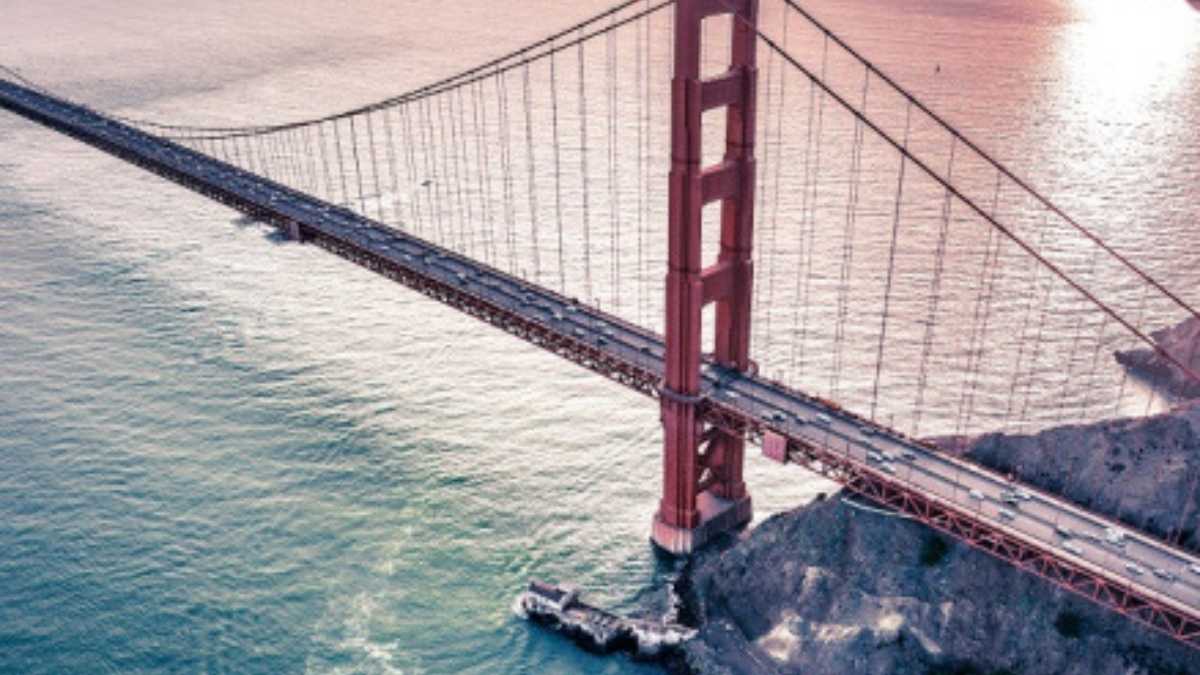
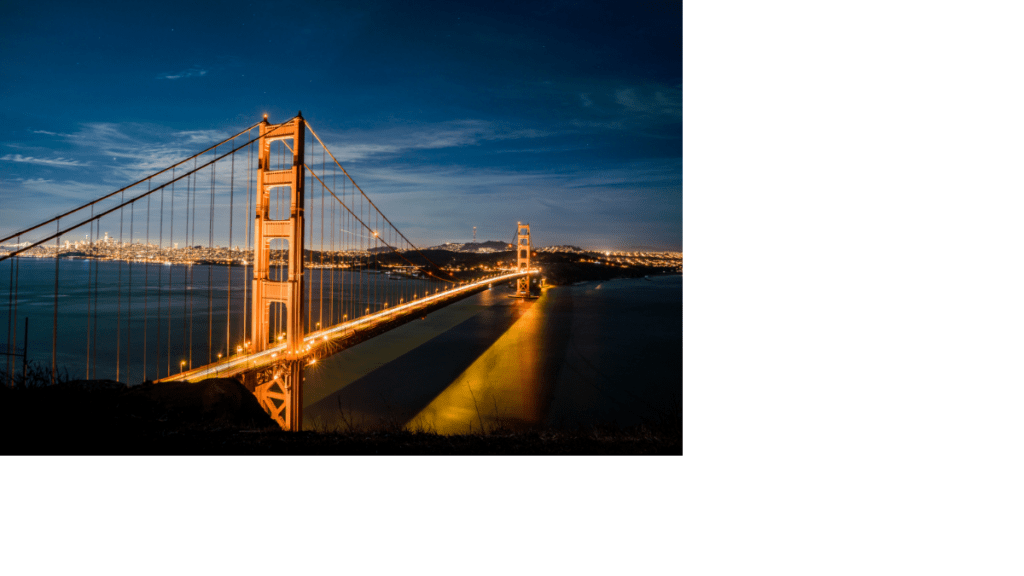
  • The Golden Gate Bridge is a suspension bridge between San Francisco Bay and the Pacific Ocean spanning the Golden Gate, the one-mile-wide (1.6 km) strait.
  • The structure connects the northern tip of the San Francisco Peninsula to Marin County in the U.S. city of San Francisco, California, bringing both U.S. The strait is crossed by Route 101 and California State Route 1.
  • One of San Francisco and California’s most globally known landmarks is the bridge.
  • It was initially designed in 1917 by Joseph Strauss, an architect.
  • The American Society of Civil Engineers has proclaimed it one of the Wonders of the Modern World.

Also read: Smart roads complete Information

We will discuss about the design of golden gate bridge in the next section.

Design of golden gate bridge

The Golden Gate Bridge Side View
  • Strauss was the chief engineer in charge of the bridge project’s overall design and construction.
  • But since he had no knowledge or experience in cable suspension structures, other specialists were responsible for much of the engineering and architecture.
  • From a visual viewpoint, Strauss’s initial design proposal (two double cantilever spans connected by a central suspension segment) was inappropriate.
  • Leon Moisseiff, the Manhattan Bridge engineer in New York City, invented and championed the final elegant suspension concept.
  • The overall shape of the bridge towers, the lighting scheme, and Art Deco elements, such as the tower decorations, streetlights, railings, and walkways, were designed by Irving Morrow, a relatively unknown residential architect.
  • Morrow’s personal pick was the iconic Foreign Orange colour, winning out over other options, including the suggestion by the US Navy that it be painted with black and yellow stripes to ensure visibility by passing ships.
  • The principal engineer of the project was Senior engineer Charles Alton Ellis, working remotely with Moisseiff.
  • Moisseiff developed the basic structural design, implementing his “deflection theory” by which the wind would flex a thin, flexible roadway, significantly reducing stress by transmitting forces to the bridge towers through suspension cables.
  • While the design of the Golden Gate Bridge has proven sound, the original Tacoma Narrows Bridge, a later Moisseiff design, collapsed in a strong windstorm shortly after it was.
  • In the southern abutment, Ellis was also charged with constructing a “bridge within a bridge” to avoid the need to demolish Fort Point, a fortification of pre-Civil War masonry considered, even then, worthy of historic preservation.
  • He built a graceful steel arch spanning the fort and carrying the road to the southern anchorage of the bridge.
  • Ellis was a Greek scholar and mathematician who, despite not having an engineering degree, was a University of Illinois professor of engineering at one time.
  • Prior to designing the Golden Gate Bridge, he ultimately received a degree in structural engineering from the University of Illinois and spent the last twelve years of his career at Purdue University as a professor.
  • He became a structural design specialist, writing the standard textbook of the period.
  • Ellis did much of the technological and theoretical work that constructed the bridge, but in his lifetime he received little of the credit.
  • Strauss dismissed Ellis in November 1931 and replaced him with Clifford Paine, a former subordinate, allegedly for spending too much money sending telegrams back and forth to Moisseiff.
  • Obsessed with the project and unable to find jobs elsewhere during the Depression, Ellis managed to work on an unpaid basis for 70 hours a week, gradually developing into ten volumes of hand calculations.
  • Strauss downplayed the efforts of his partners with an eye for self-promotion and posterity, who, while obtaining no recognition or compensation, are primarily responsible for the final shape of the bridge.
  • He managed to get himself credited as the person most responsible for the bridge’s design and vision.
  • The contributions of the others to the design team were fully acknowledged only much later.
  • The Golden Gate Bridge District released a formal report on 70 years of the famous bridge’s stewardship in May 2007 and agreed to give Ellis substantial credit for the bridge’s design.

Also read: Types of road construction

So, what about the traffic through the bridge? Let me show in the next section.

Traffic through the bridge

The base of the Golden Gate Bridge
  • As part of the U.S. rivalry, most maps and signs mark the bridge.
  • Road 101 and State Route 1. of California While part of the National Highway System, the bridge is not officially part of the Highway System of California.
  • To adhere to traffic conditions, the movable median barrier between the lanes is shifted multiple times daily.
  • Traffic flows more southbound into the town on weekday mornings, so four of the six lanes run southbound.
  • Conversely, four lanes pass northbound on weekday afternoons.
  • Traffic is separated by three lanes in each direction over off-peak hours and weekends.

So, we have seen the civil engineering aspect. Next, let me walk you through the main issues.

Issues

Golden gate bridge night view

There are two many issues related to golden gate bridge.

1. Suicides

  • Suicide barriers, consisting of a stainless steel net extending 20 feet from the bridge and reinforced by structural steel 20 feet beneath the walkway, began to be constructed in April 2017 following years of controversy and an estimated more than 1,500 deaths.
  • It was first estimated that construction would take approximately four years at a cost of over $200 million.
  • In December 2019, because the lead contractor, Shimmick Construction Co., was sold in 2017, leading to the slowdown of many ongoing projects, it was announced that construction of the suicide prevention net had fallen two years behind schedule.
  • The completion date for the Golden Gate Bridge network was set for 2023 as of December 2019.

2. Wind

  • The Golden Gate Bridge was designed to withstand winds up to 68 mph (109 km/h) safely.
  • The bridge was closed only three times until 2008 due to weather conditions: on 1 December 1951 due to gusts of 69 mph (111 km/h); on 23 December 1982 due to winds of 70 mph (113 km/h); and on 3 December 1983 due to wind gusts of 75 mph (121 km/h). On one of the buildings, another anemometer was positioned.
  • Beginning in 2019, as part of the bridge retrofitting and construction of the suicide barrier, the railings on the west side of the pedestrian walkway were replaced with thinner, more flexible slats to increase the high wind aerodynamic resistance of the bridge to 100 mph (161 km/h).

So, that’s it about golden gate bridge. Did I miss any interesting aspect? Let me know in comments.

Happy learning!