All posts by Vinod Gopinath

Five Essential Types of Weld Joints Explained

Weld joint types are essential in various industries that require the joining of metal parts through welding. Understanding the different types of welds is crucial for selecting the right method for a specific project. There are five basic weld joints commonly used: butt joints, corner joints, lap joints, edge joints, and T-joints. These welding joint types are classified based on how the metal pieces are positioned in relation to each other.

The different types of welds serve different purposes depending on the design and strength requirements. Knowing these weld joint types ensures that the welded joint is strong and durable. It is also essential to understand the types of welding joints and symbols to interpret welding blueprints effectively. Mastering the joints of welding is key to achieving efficient and reliable welds in any construction or manufacturing project. According to the American Welding Society (AWS), a joint can be defined as, “The manner in which  materials fit together.” The applications of welding are endless, and different jobs require different types of welds and joints.

In this article, we will describe weld joint types and the five basic weld joints used in welding. We’ll also cover the different types of welds and key welding joint types and symbols for effective welding.

  1. Understanding Different Types of Welds
  2. Classification of Weld Types
  3. 5 Basic Weld Joints types
    1. Butt weld Joint
      1. Types of Butt Weld Joints
        1. Square Butt Joint
        2. Single Bevel Butt Joint
        3. Double Bevel Butt Joint
        4. Single J Butt Joint
        5. Double J Butt Joint
        6. Single V Butt Joint
        7. Double V Butt Joint
        8. Single U Butt Joint
        9. Double U Butt Joint
        10. Flanged Butt Joint
        11. Round Edge (Single Flare and Double Flare) Butt Joint
    2. Corner Joints
    3. Edge Joints
    4. T Joints
    5. Lap joints
  4. Welding Techniques and Their Influence on Joint Types
  5. Factors Influencing the Choice of Weld Joint
  6. Key Takeaways
  7. Conclusion

Understanding Different Types of Welds

Weld joint types play a crucial role in various applications, ensuring the stability and strength of structures. There are different types of weld joint types used in industries, such as butt, corner, lap, edge, and T-joints. These types of joints in welding are selected based on design needs and the materials involved. Each type provides distinct advantages in terms of load-bearing and stress distribution. Understanding the types of welds and joints ensures the weld meets required standards. This ensures durability and performance, making them essential for successful fabrication and construction projects.

The term “weld joint design” refers to how metal pieces are aligned and assembled. The design of each joint significantly impacts the quality and cost of the final weld. Careful consideration and skill are essential in selecting the most suitable joint design for a welding project.

Basic Weld Joints
Basic Weld Joints

This highlights the importance of understanding different weld joint types. Familiarity with the types of joints in welding and their applications enables welders to create durable, high-quality welded joints. A solid grasp of the types of welds and joints helps ensure successful outcomes in various welding tasks.

Classification of Weld Types

Welds can be classified into three main categories: fusion welds, pressure welds, and solid-state welds.

  • Fusion welds are created by melting the base metals along with a filler material, allowing them to fuse upon cooling. This method is ideal for various applications requiring strong joints, commonly used in arc and gas welding.
  • Pressure welds join metals by applying heat and pressure. This process does not melt the base materials. It is suitable for dissimilar metals or high-strength connections in manufacturing.
  • Solid-state welds involve joining metals without melting, utilizing processes like ultrasonic and friction stir welding. This method preserves material integrity and minimizes thermal distortion.

Understanding these classifications helps select the appropriate weld type for specific applications, ensuring optimal performance and durability in welded joints.

5 Basic Weld Joints types

There are 5 basic weld joints that form the foundation of various welding joint types. Understanding these different types of welds ensures strong welded joints for multiple applications. The weld joint types are:

  • Butt Joint
  • Corner Joint
  • Lap Joint
  • Edge Joint
  • T-Joint
Basic weld Joint types

These types of weld joints and symbols help welders achieve effective and durable connections in all joints of welding projects. Let us delve deep into the different types of weld joints in details.

Butt weld Joint

A butt joint weld is very common. In a butt joint, two metal pieces are aligned edge-to-edge and then welded together. This method ensures a seamless connection between the materials, creating a strong and continuous bond. This type of butt joint in welding is crucial in industries like construction, pipelines, and metal fabrication. It provides a strong, clean and reliable connection. The butt weld joint ensures full penetration. The weld passes through the entire thickness of the metal. This results in enhanced strength and durability. Identifying the correct butt weld symbol on engineering designs ensures accurate execution of the weld.

Butt weld Joint
Butt Weld Joint

Proper interpretation of the butt welding symbol allows precise construction. This is important for applications such as structural  steel, pipelines, and pressure vessels. Engineers favor a butt welded joint for its simplicity and efficiency, making it a top choice in welding design. They use butt welds to create strong and reliable joints in various applications. They are integral to many industrial projects. This ensures a dependable bond between  materials. Let us have a look into the different types of Butt weld joints.

Types of Butt Weld Joints

Welders create butt welds in a variety of ways, each method serving a different purpose depending on the application and material requirements. Varying factors include the shape of the groove, layering and width of the gap. Listed below are some typical examples of butt weld joints:

  • Square butt weld joint
  • Single bevel
  • Double bevel
  • Single J
  • Double J
  • Single V
  • Double V
  • Single U
  • Double U grooves
  • Flare bevel Groove
  • Flare V Groove
  • Flanged Butt Joint

Let us have a look into the basics of each weld types.

Square Butt Joint

In a square butt joint, welders align two metal pieces edge-to-edge without any preparation or beveling. This joint is simple and ideal for thinner materials, as it ensures a clean weld. The weld in a square butt joint provides sufficient strength, but its penetration may be limited when used on thicker materials. This limitation makes square butt joints less suitable for high-stress applications that demand deeper weld penetration for enhanced structural integrity.

Single Bevel Butt Joint

In a single bevel butt joint, welders bevel one of the two metal pieces at a specific angle to allow deeper weld penetration. This beveling ensures that the weld can penetrate more deeply into the joint, creating a stronger connection. It is particularly useful for thicker materials, where a standard butt joint may not provide sufficient strength or stress distribution.

Double Bevel Butt Joint

The double bevel butt joint has both edges of the metal pieces beveled. This joint type allows for even greater weld penetration compared to the single bevel. It is used in butt joint welding for thicker materials to guarantee enhanced strength and load distribution.

Single J Butt Joint

In a single J butt joint, one metal piece is shaped with a J-like curve, while the other remains square. The butt weld created allows deeper penetration, making it suitable for thick materials and applications requiring strong, seamless joints.

Double J Butt Joint

The double J butt joint features a J-shaped bevel on both metal pieces, allowing for greater weld penetration. This design is ideal for high-stress industrial applications where reliability and durability are critical. The joint provides a larger surface area for the weld. It ensures a stronger connection and better stress distribution. This makes it suitable for structures subjected to heavy loads or extreme conditions. The improved weld penetration achieved with the J-bevels enhances the overall strength and performance of the joint. This ensures it can withstand demanding environments.

Single V Butt Joint

A single V butt joint is formed by beveling one metal piece at an angle resembling the letter “V”. The bevel allows for deep weld penetration, making it suitable for moderate to thick materials where strength is crucial.

Double V Butt Joint

A double V butt joint has both pieces of metal beveled to form a V shape on both sides. This joint is ideal for butt joint welding thicker  materials, as it provides greater weld penetration and structural integrity.

Single U Butt Joint

In a single U butt joint, one piece of metal has a U-shaped bevel. The curved design allows the weld to penetrate deeply into thicker materials, offering a strong, reliable butt weld joint suitable for heavy-duty applications.

Double U Butt Joint

The double U butt joint features U-shaped bevels on both metal edges. This joint is perfect for welding thick materials and provides deep penetration. It ensures a strong and durable butt welded joint in high-load applications.

Flanged Butt Joint

A flanged butt joint occurs when one or both metal pieces are flanged outward before welding. This type reduces weld stress and welders often apply it in butt joint welding for sheet metal or piping systems.

Round Edge (Single Flare and Double Flare) Butt Joint

In round edge butt joints, the metal edges are rounded. Single flare joints have one rounded edge, while double flare joints have both. These types of butt joints are common in thin-walled pipes and tubing, offering good weld integrity.

Corner Joints

Corner joints connect two metal pieces at a right angle, forming a corner. Commonly used in sheet metal welding, corner joints provide strong, rigid connections for frames and structures. They come in variations like closed, open, and flush, depending on the design needs. Fabricators often employ these joints in the construction of boxes, frames, and other enclosures.

Edge Joints

In an edge joint, welders connect two metal pieces along their edges, typically using it for thin materials. They commonly apply this joint when parts don’t require high strength, as seen in sheet metal fabrication. Welders create surfaces with edge joints for later welding to additional components. These joints frequently occur in applications like tanks, boxes, and metal enclosures. Precision and secure connections are essential in these contexts, despite lower structural demands.

T Joints

Welders form a T-joint by welding two metal pieces at a right angle to resemble the letter “T.” One piece intersects the center of the other, creating a perpendicular connection. T-joints are common in structural applications, frames, and piping systems. They provide strong, stable connections and are suitable for fillet welds, ensuring durability and resistance to bending or stress.

Lap joints

A lap joint joins two metal pieces by overlapping them and welding them together. This process provides a strong and durable connection. It is commonly used for materials of varying thicknesses. Lap joints are ideal in applications like sheet metal work and fabrication. They provide excellent strength and resistance to shear forces, making them reliable for various structural purposes.

Welding Techniques and Their Influence on Joint Types

Welding techniques significantly influence the types of joints formed in metal fabrication. The five primary types of welding joints are butt, tee, corner, lap, and edge joints. Each type is tailored to specific applications and requirements.

Butt joints, created by aligning two pieces end to end, are commonly used for thin materials. Tee joints form a ‘T’ shape where two parts intersect at a right angle, ideal for structural frameworks. Corner joints, used when two parts meet at a 90-degree angle, are frequently employed in fabricating frames and boxes. Lap joints overlap two pieces, allowing for strength when joining  materials of differing thicknesses. Lastly, edge joints connect two pieces along their edges, useful for sheet metal applications. The choice of welding technique affects the strength, flexibility, and durability of these joints, making it crucial for successful welding projects​

Weld Joint types
Weld Joint types

Different welding techniques impact the strength and applicability of welded joints. Methods vary based on the specific joint type. Materials influence the choice of MIG (Metal Inert Gas), TIG (Tungsten Inert Gas), and Stick welding.

Factors Influencing the Choice of Weld Joint

Choosing the right weld joint is crucial for ensuring structural integrity and performance. Several factors influence this decision:

  • Material Type: Different metals and alloys may require specific joint types to ensure strong, defect-free welds.
  • Load Requirements: The type and direction of load (tension, compression, shear) influence the joint choice for strength and stability.
  • Welding Position: The orientation (flat, horizontal, vertical, overhead) impacts the ease and effectiveness of certain joint designs.
  • Accessibility: Space limitations or constraints may favor simpler joints that are easier to access and weld.
  • Aesthetic Needs: Visible welds in finished products may require joints that achieve smoother, visually appealing finishes.
  • Cost Efficiency: Certain joint types require less time or material, influencing the project’s cost.
  • Application Specifications: Industry standards or design codes may dictate specific joint types for safety and reliability.

Selecting an appropriate weld joint not only ensures safety but also affects manufacturing efficiency and cost​.

Key Takeaways

  • Five Basic Weld Joints: The main types of weld joints are butt, corner, lap, edge, and T-joints. Each type has specific applications in welding projects.
  • Importance of Joint Design: Selecting the right weld joint design ensures structural integrity, load distribution, and longevity.
  • Types of Welds: Welds are classified into fusion, pressure, and solid-state welds, chosen based on material and project requirements.
  • Butt Joint Varieties: Includes several groove designs like V, U, J, and square. These are tailored for different material thicknesses. They also meet various strength requirements.
  • Welding Techniques Impact Joints: Techniques like MIG, TIG, and Stick welding influence joint strength. They are selected based on the type of joint.
  • Factors Affecting Joint Selection: Material type, load requirements, cost, accessibility, and application specifications play key roles in joint choice.

Conclusion

Mastering weld joint types and techniques is vital for producing high-quality, durable welds that meet industry standards. Each of the five basic weld joints—Butt, Corner, Lap, Edge, and T-joints—has unique strengths, making them suitable for specific applications. Factors like material type, load requirements, and welding positions influence the choice of joint, impacting the weld’s strength and aesthetic. Familiarity with welding symbols, joint classifications, and the effect of different welding techniques aids in creating dependable structures. Welders and engineers ensure strong, resilient joints by understanding the unique advantages of each joint type. This understanding enhances safety and longevity in construction and manufacturing projects.

Dog legged Staircase – Design, Features and Advantages

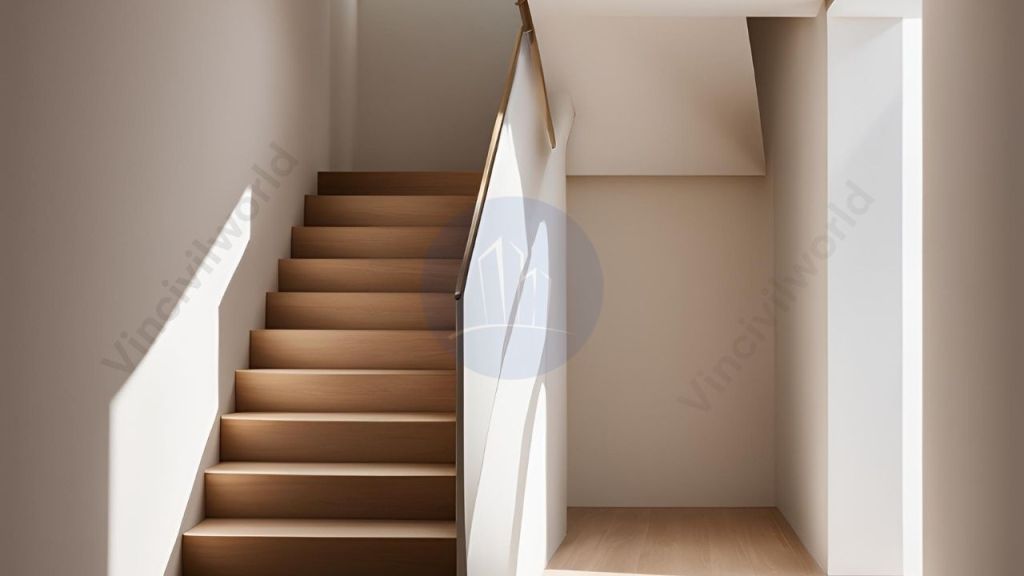
A dog-legged staircase is the simplest, common, space-saving, and economical staircase type used in commercial, industrial and residential buildings. A dog-legged staircase consists of two flights running in opposite directions and parallel to each other. They are separated categorically by a landing when the flights change direction.

A dog legged staircase is a space-efficient design consisting of two straight flights of stairs connected by a 180-degree turn. This layout allows the staircase to make a sharp turn without needing extra space for landings. Dog leg stairs are commonly used in residential and commercial buildings where space-saving is crucial. The dog legged stair design minimizes footprint while maintaining functionality and aesthetics. They offer a compact solution for multi-story structures, making them ideal for homes, offices, and small commercial spaces. The dog leg staircase is popular for its simple, practical, and versatile design.

This article is about the features of Dog legged staircase and its design, advantages, disadvantages, and applications.

  1. What is a staircase?
  2. What is a Dog legged staircase ?
  3. Major components of a Dog legged staircase
    1. Thread
    2. Rise
    3. Step
    4. Landing
    5. Newel post
    6. Baluster
    7. Handrail
  4. Advantages of Dog legged staircase
  5. Disadvantages of Dog legged Staircase
  6. Features of a good staircase
  7. Types of Dog Legged Staircases
  8. Design of Dog legged Staircase
  9. Input details

What is a staircase?

A stair is a structure with a series of steps. It provides a simple and easy way to ascend and descend between levels or floors. The room or enclosure of the building, that occupies the stairs are known as a staircase. In certain designs like dog leg stairs, the staircase has two straight flights. These flights are connected by a 180-degree turn. This design saves space efficiently.

Also read : What is prefabrication in construction?

What is a Dog legged staircase ?

A dog legged staircase is a versatile and efficient stair design. It features two straight flights connected at a 180-degree turn. This configuration allows the stairs to change direction. It minimizes the need for extra landing space. This feature makes them ideal for compact areas. The flights can vary in length based on the total height and desired riser height, providing flexibility in design.

This type of staircase is commonly found in both residential and commercial settings, as it maximizes functionality without compromising aesthetics. The dog leg stairs are especially advantageous in multi-story buildings where space is a premium. They enhance the overall design while ensuring safe vertical movement between levels.

The term “dog leg” derives from the shape of the staircase when viewed in elevation, resembling a dog’s leg. This design not only offers practicality but also adds a unique architectural element to a space. The dog legged stair design is simple and effective. It provides a good solution for navigating different levels in a building. It combines economy, safety, and style.

Dog legged staircase - Typical Section
Dog legged staircase

Major components of a Dog legged staircase

A dog legged staircase consists of several important components that allow it to function effectively and fit within compact spaces. These parts work together to create a strong, functional structure for vertical movement. Here are the key components found in dog leg stairs.Let us go through the major components of a Dog legged Staircase

  • Treads
  • Risers
  • Landing
  • Balustrade
  • Stringers
  • Newel Post
  • Handrail
  • Flight

Thread

Horizontal portion where the foot rests while ascending and descending. The size and material of treads affect comfort and safety.

Rise

Risers are vertical portion between two threads.They ensure each step is of uniform height for smooth movement.

Step

Each step constitutes a tread and a riser and individual steps form a stair.

Landing

Landing is an intermediate space between a series of steps (Flights) . This spaces serves primarily as a resting place and enables a smooth direction change.

Newel post

The vertical post at the starting and end of a stair

Baluster

Balusters are Vertical members fixed along the flight for supporting hand rails

Handrail

An inclined rail provided at an optimum height which can support while ascending and descending.

Advantages of Dog legged staircase

From the design point of view the main advantages are as follows

  • To allow an arrangement that occupies a shorter, though wider, floor area than a straight flight, and so is more compact. Even though the landings consume total floor space, there is no large single dimension.
  • The upper floor is not directly visible from the bottom of the stairs, thereby providing more privacy.
  • The space below landings serves the purpose of storage.
  • The design and layout is very simple.
  • Landings offer a comfortable resting space for commuters.
  • They requires less area and limited space when compared with other stairs like straight staircase .
Dog legged staircase

Disadvantages of Dog legged Staircase

  • The construction of these stairs are not easy
  • The handrails need very careful planning.

Features of a good staircase

  • Staircase location selection has to ensure sufficient light and ventilation and easy access from all the rooms.
  • A single flight should have a minimum of three risers and a maximum of 16 risers.
  • Stair angles (Pitch) should be anywhere between 25 degrees to 40 degrees. Landings have to be provided categorically to manage the pitch.
  • The landing width should not be less than the width of the stair flight.
  • The riser height should be uniform for all flights between landings and floors. This uniformity helps maintain a rhythm while ascending and descending.

Types of Dog Legged Staircases

  • Dog-legged staircase with enclosed space beneath – Landing area closed and used for storage or services
  • Dog-legged staircase with open well space – A small gap or well left between the two flights
  • Dog-legged staircase with half-space landing – Landing placed midway to change direction by 180°
  • Dog-legged staircase with quarter-space landing – Used when a slight direction change is required
  • Dog-legged reinforced concrete staircase – RCC structure for strength and durability
  • Dog-legged wooden staircase – Used in residential interiors for better aesthetics

Design of Dog legged Staircase

How to design a staircase ?

Maximum size of riser is 190 mm for residential building and 150 mm for other buildings

Maximum size of thread is 250 mm for residential building and 300 mm for other buildings

In this example we are considering floor to floor height as 3 mtr

Height of Floor = 3 mtr (Floor to Floor)

Step 1

How to find the Number of Risers

Maximum height of Riser is 190 mm : Assume 175 mm as riser height

Total number of risers = 3000/175 = 17.14 risers say 17

Riser height assuming 17 risers = 3000/17 = 176.47 mm

Thread = Riser – 1 = 17-1 = 16 nos

Input details

Riser = 17 nos ( 17.47 mm)

Thread =16 nos (250 mm)

For first landing will take 9 Riser and 8 thread

For design details of dog legged staircase and layout please watch the video.

Soil Nailing – Installation,advantages and applications

Soil nailing is a slope protection technique for supporting unstable natural slopes and over steeping of existing slopes. Soil nails are reinforcing passive elements drilled and grouted sub-horizontally in the ground. They are used to support excavations in soil, or soft and weathered rock and slope protection works.

Soil nails are steel bars inserted into soil to reinforce slopes, embankments, or excavation walls. By stabilizing the ground, soil nails prevent landslides and erosion. This cost-effective technique strengthens soil structures. It is widely used in geotechnical engineering for construction. Additionally, it is used for retaining walls and slope stabilization projects.
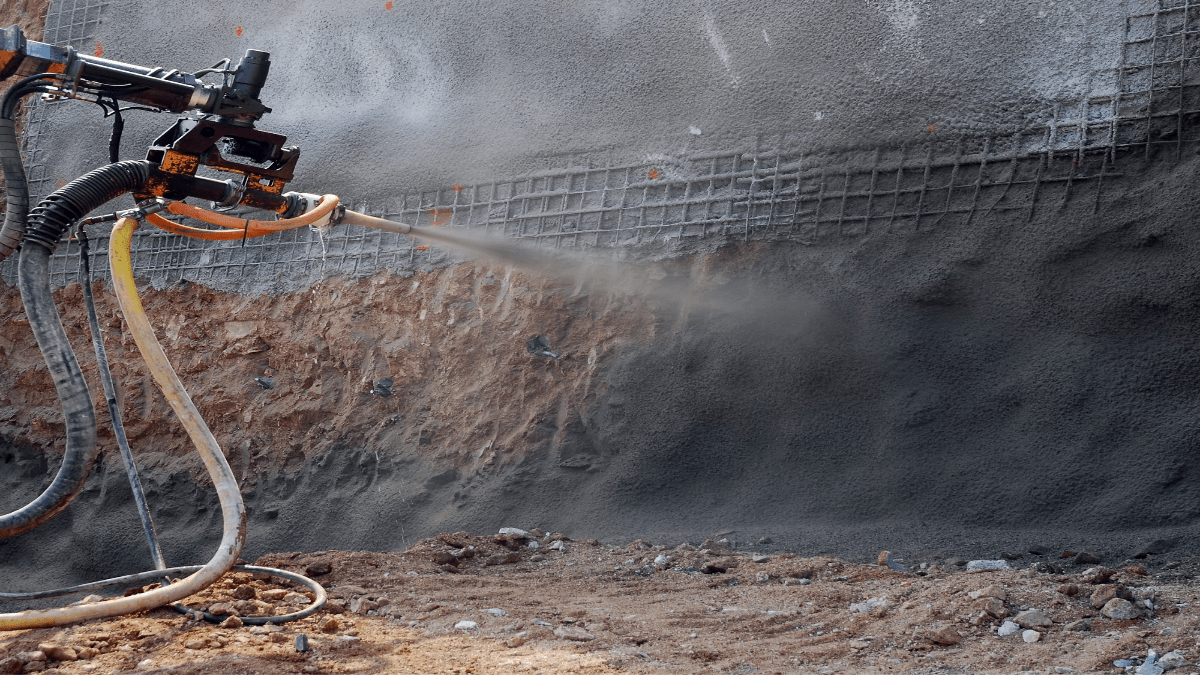
Soil nail walls are used as permanent earth-retaining structures in highway projects. They can also be constructed as temporary structures in roadway work when used as shoring of deep excavations.
  1. Components of soil nail and its function
    1. Tendons
    2. Grout
    3. Installation of facing 
  2. Applications of soil nails
  3. Feasibility of soil nail
  4. Advantages of soil nails over other retaining systems
  5. Key Takeaways
  6. Conclusion

Components of soil nail and its function

Components mainly constitutes installing passive reinforcement without any post tensioning in existing ground know as nails. Soil nails are later grouted if they are installed in drilled holes. Soil nails using solid bar drilling system do not need grouting. Hollow bars, such as the sacrificial hollow bar system, drill and grout simultaneously and also do not require additional grouting. Let us go in detail each and every component of soil nailing system.

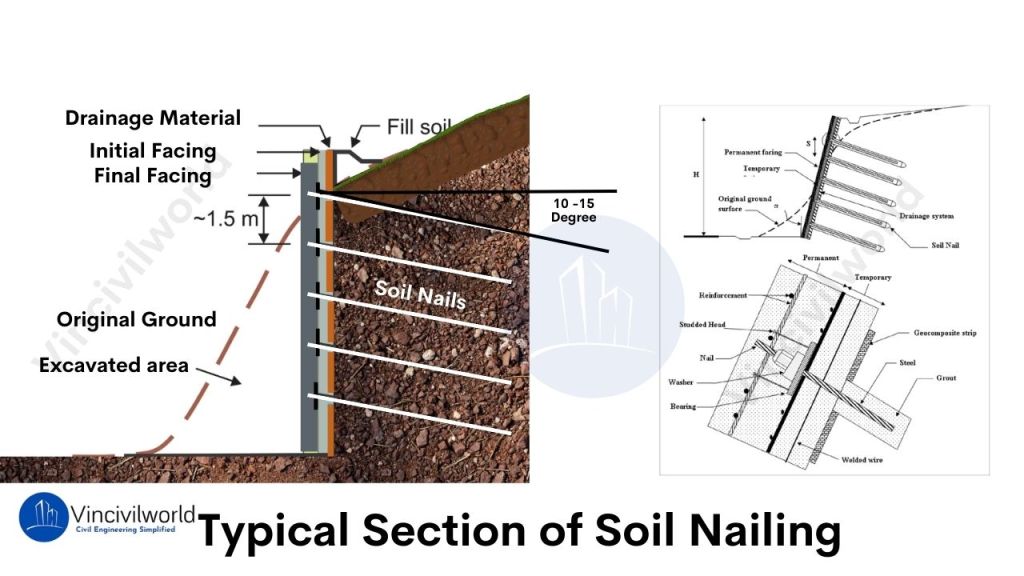
Typical cross section of soil nail
Illustration depicting a typical section of soil nailing, showing components like soil nails, drainage material, initial and final facings, and the relationship between the original ground and the excavated area.
Typical section illustrating soil nailing techniques, showing installation details for reinforcement and drainage.

Tendons

They are the ground reinforcing elements and are equivalent to steel bars. Tendons can handle tensile stress during the lateral movement and deformation of retained soil. They also manage external loads in the service stage, such as surcharge loads and traffic loads.

There are two methods of fixing soil nails or reinforcement bars.

a) Holes are drilled and pressure grouted with fully threaded bars embedded inside.
b) Using sacrificial drill bits where drilling and grouting will be done simultaneously and the sacrificial drill bit is converted to rebar.

Grout

Normal OPC cement mixed with water is used for grouting. The function of grout are

a) Transfers shear stress between the ground and tendons and

b) Corrosion protection for rebars.

Installation of facing 

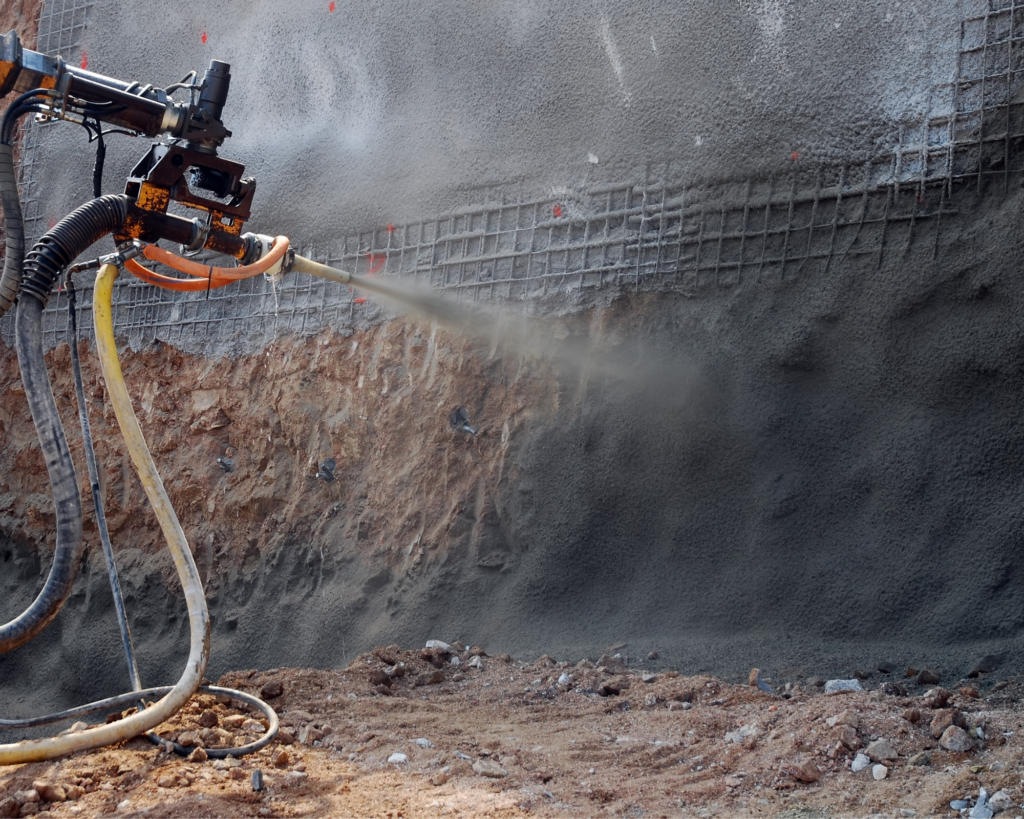
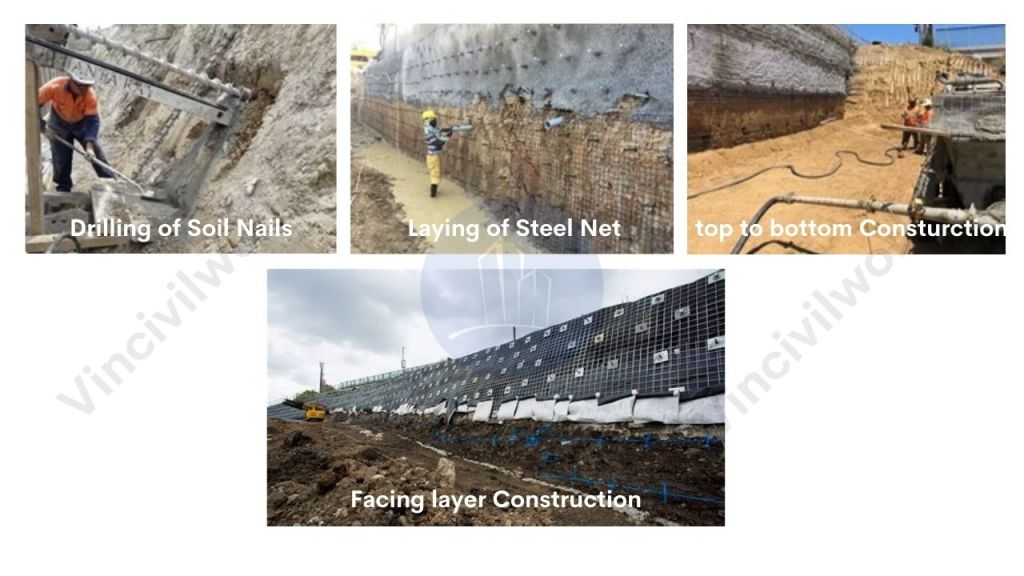
Soil nail construction is done from top to bottom. Every nail is installed with anchor plates or bearing plates.
First, a single row of soil nails is installed after excavating the surface. Excavate further and install the second layer of soil nails as per design. Once you reach a reasonable height, soil can free stand (1-2 meters) for at least 2-3 days. Then the next phase of the shotcreting process will start.

soil nailing
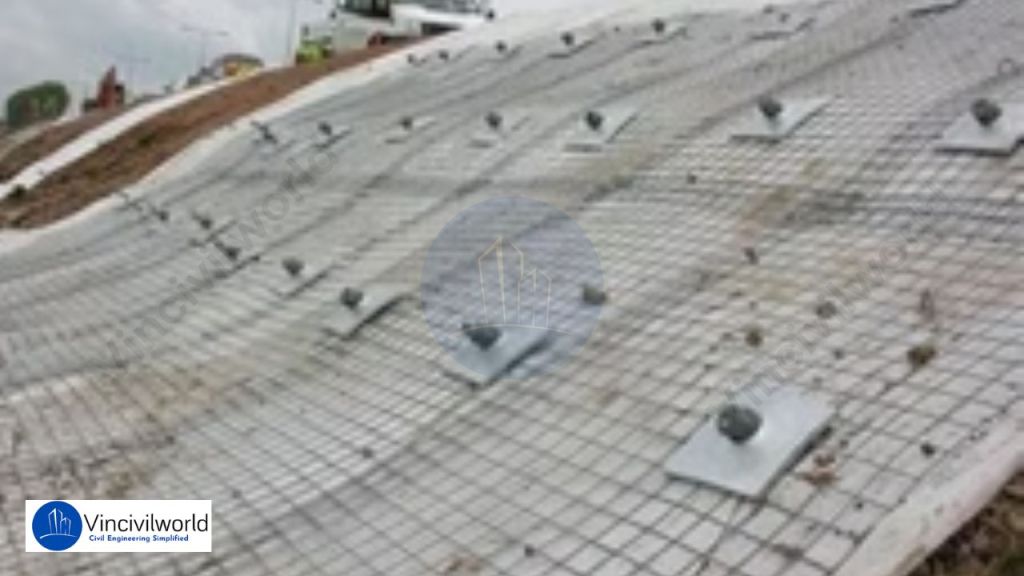
Close-up of a soil nailing installation showing reinforcing mesh and anchor plates on a sloped surface for slope stabilization.
Installation of welded wire mesh and bearing plates for soil nail reinforcement, ensuring slope stability and protection.

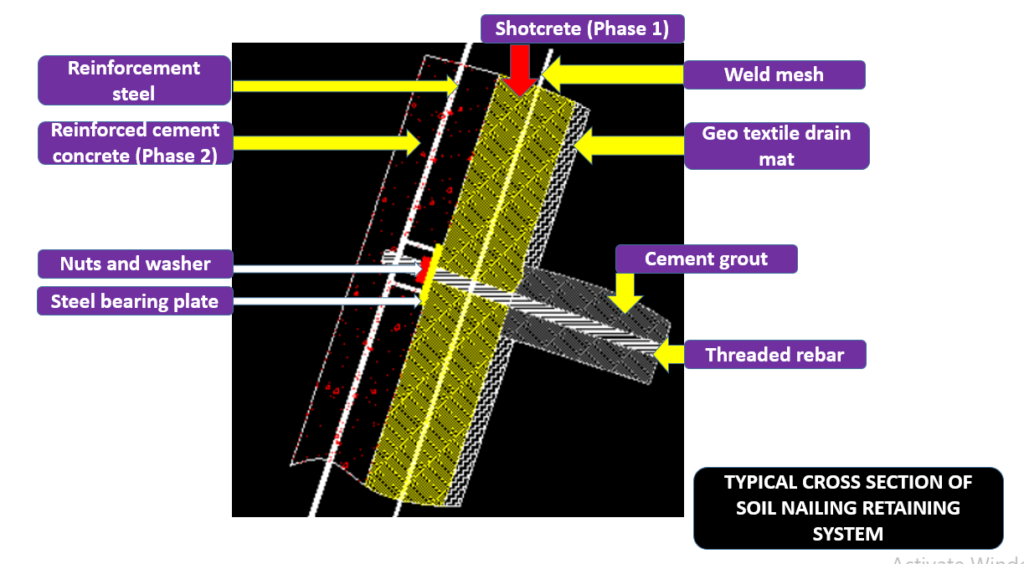
a) First face shotcrete on soil surface

A geotextile drain matting is placed over the soil. Then, it is followed by welded wire mesh as shown in the figure. Rebar stiffeners are sometimes provided to strengthen the shotcrete against punch shear forces. On completion of the first phase of shotcreting bearing plates with beveled washers are installed over the shotcrete surface.

Image showing the drilling of soil nails in a slope stabilization project.
Steps in soil nailing process: drilling, laying steel net, top-to-bottom construction, and facing layer construction.

b) Second phase of reinforced concrete

If required as per design, the first layer is covered with a second phase of reinforced concrete. This is shown in the figure. This concrete covers the nail head.

Applications of soil nails

Soil nails are one of the most economical and feasible tops to bottom constructed retaining walls system. They are technically feasible, fast, and reliable slope protection and earth retaining system. Soil nails offer a perfect cost-effective system for temporary retaining walls for deep excavations..

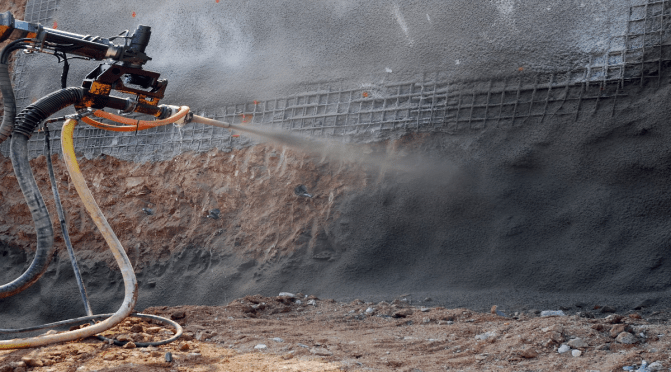
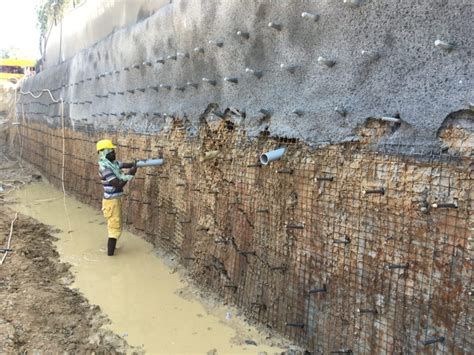
Construction worker applying shotcrete to a soil-nailing wall structure for slope stabilization.
Worker applying grout in a soil nailing installation, reinforcing a slope for stabilization.
  • High way cut excavation of hilly areas
  • Road widening under an existing bridge end.
  • Repair and reconstruction of existing retaining structures.
  • Temporary or permanent deep excavations in urban areas.

Feasibility of soil nail

Before confirming the soil nail system please ensure the following parameters at the site.

  • Soil should be able to free stand at a height of around 1-2 mtr. It must remain unsupported for a minimum of two days.
  • All soil nails within a cross-section will be above the water table.
  • If the soil nails are not located above the groundwater table, the groundwater should not negatively affect the excavation face. It should not harm the bond between the ground and the soil nail itself.
  • They can be used for almost all types of soils. This includes stiff, sandy, or hard clay. They are also applicable to dense sand and gravel areas, as well as evenly weathered rocks.
  • Avoid using soil nails in dry, poorly graded cohesion-less soils. Do not use them in soils with a high groundwater table, or in soils with cobbles and boulders. They are unsuitable for soft to very soft fine-grained soils, highly corrosive soils, and weathered rock with unfavourable weakness planes, etc.

Advantages of soil nails over other retaining systems

  • Soils nails require very little workspace comparing with any other retaining systems.
  • The operations are mostly light and silent and there is no disturbance to the traffic and people residing nearby.
  • Soil nails do not need any foundation or any structural whaler beams at the bottom like cantilever and anchored retaining walls.
  • With the soil nailing method, we can reduce the duration of work, and fewer materials are consumed in this process.
  • They are so flexible and easily customizable and nail location can be easily adjusted on encountering any obstructions.
  • Small equipment is used for soil nailing works.
  • They can accommodate differential settlements and deflection of soil nails are usually within tolerable limits.
  • They are more cost-effective than any other retaining wall system. This is because shotcrete of minimal thickness is used, unlike the heavy structural walls in other retaining wall systems.

Key Takeaways

  • Soil nailing is a slope stabilization method used in construction and excavation to reinforce soil structures.
  • Soil nails are steel bars installed sub-horizontally in the ground to prevent landslides and erosion.
  • The components of soil nails include tendons and grout, which provide reinforcement and corrosion protection.
  • Installation begins from the top, with each layer secured with anchor plates, followed by shotcreting.
  • Applications of soil nails include highway cut excavations, road widening, and deep excavations in urban areas.
  • Soil nailing is cost-effective, fast, and requires minimal workspace compared to other retaining systems.
  • This technique is not suitable for poorly graded, cohesion-less soils or areas with high groundwater tables.

Conclusion

Soil nailing is a versatile method for reinforcing slopes and retaining walls. It offers significant advantages in various geotechnical applications. It is particularly useful for highway projects, deep excavations, and slope stabilization. In these scenarios, soil nails provide crucial support to prevent landslides and erosion. The technique’s minimal workspace requirements, cost-effectiveness, and adaptability to different site conditions make it a popular choice in construction. Soil nails are most effective in soils that can stand unsupported for short periods. They should be used with caution in cohesion-less soils or areas with high groundwater levels. Overall, soil nailing offers a reliable solution for stabilizing slopes while maintaining project timelines and budgets.

Destructive tests (DT) on hardened concrete – Types

Destructive tests (DT) and Non-destructive tests (DT) are the tests done on hardened concrete. Destructive tests on concrete are essential for determining the strength and durability of hardened concrete. These tests evaluate how concrete performs under stress and give critical data for assessing the quality of a structure.

Destructive concrete testing involves breaking or damaging samples to measure their ultimate strength. Common types of destructive concrete tests include compressive strength tests, split tensile tests, and flexural tests. Testing of hardened concrete ensures that it meets design specifications and structural requirements. These tests for hardened concrete offer reliable insights into performance, making them crucial for quality control in construction. Destructive tests of concrete help identify potential weaknesses, ensuring long-term durability and safety of structures.

Concrete is the oldest and most important construction material in the world. Testing of the concrete plays an important role to know the strength, durability and condition of the structure. This article is about the types of Destructive concrete tests and non-destructive tests done on hardened concrete.

  1. Types of tests on hardened concrete
    1. Destructive tests on Hardened Concrete
  2. Significance of Destructive tests on hardened Concrete.
  3. Types of Destructive tests for hardened Concrete
    1. Compressive strength test of concrete
    2. Splitting tensile strength test on hardened Concrete
    3. Flexural strength test 
  4. Key Takeaways
  5. Conclusion

Types of tests on hardened concrete

Tests on hardened concrete are classified into two types.

This article we will discuss about the Destructive tests on hardened Concrete. For Non destructive tests on Hardened Concrete please refer our article..

Also Read : Non destructive tests on Hardened Concrete.

Destructive tests and Non-Destructive tests are done to determine the important properties of concrete. These properties include but not limited to compressive strength, flexural strength, tensile strength etc.

Destructive tests on Hardened Concrete

The quality of concrete is important for construction. Hardened concrete attains strength as it matures. The destructive test of concrete helps to understand the behavior and quality by breaking the test specimen at certain loads. The primary step of the destructive test is to cast test specimens from freshly made concrete.

The destructive testing method is suitable and economically beneficial for the concrete specimens that are produced at a large scale. The main intention of destructive tests is to investigate the service life. They aim to detect weaknesses in the design that might not show under normal working conditions. It includes methods where the concrete specimen is broken so as to determine mechanical properties i.e. hardness and strength. This type of testing is very easy to carry out, easier to interpret, and yields more information.

Also read : Concrete mixing – Types and objectives

Significance of Destructive tests on hardened Concrete.

Concrete is a basic construction material, So it should be capable to withstand heavy loads. The concrete test results mainly depend on the cement strength, water-cement ratio, concrete quality etc. The main objectives of the hardened concrete test are as follows.

  • Quality control
  • Acceptance of concrete
  • Evaluation of curing
  • To provide information on the use of sand and aggregate.
  • For evaluating the uniformity of concrete
  • Estimates the concrete quality with standard requirements.
  • To determine the uniform stress distribution.
  • Investigating the behavior of concrete.
  • For determining the in-place concrete strength.
  • Age of concrete, etc.
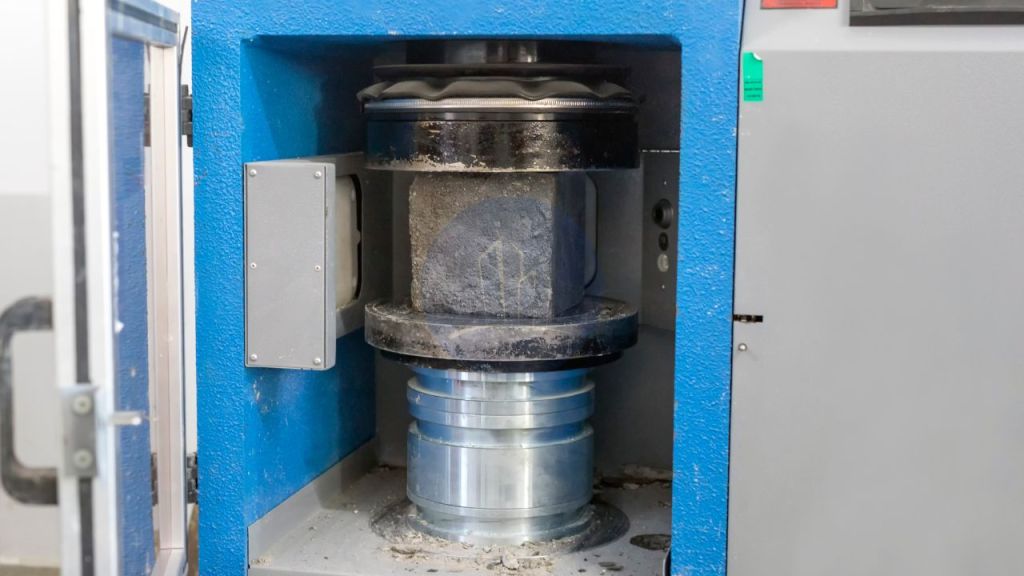
Destructive test -Compressive test on concrete
Compressive test on hardened concrete
Compressive test on concrete

Types of Destructive tests for hardened Concrete

The main intention of destructive tests is to investigate the service life. They aim to detect the weakness of design that might not show under normal working conditions. These tests determine the compressive, flexural and tensile strength of concrete. There are different types of tests available to examine the hardened concrete. They are as follows.

This article focuses on Compressive strength test and Flexural Strength test on Hardened Concrete . For splitting tensile strength test please refer to our article mentioned below.

Also Read : Splitting Tensile Strength Test on Hardened Concrete

Compressive strength test of concrete


The compressive strength test of concrete is a crucial method in destructive concrete testing. It assesses how much load a concrete sample can withstand before failure. In this test, hardened concrete specimens are subjected to increasing pressure until they crack. This test helps evaluate the structural integrity of the concrete. As a major type of destructive concrete test, it offers vital data. This ensures the quality and performance of concrete in various construction applications.

Compressive strength of concrete is the ability of the concrete to withstand loads without cracking or deformation. The concrete specimen to conduct this test should be either cylindrical or cubic. The apparatus for performing this test is a Compression testing machine. The relevant IS code for this test is IS 516-1959. The load at which the specimen fails measures its strength. 

Compressive strength of the concrete = Load at which the concrete breaks / Cross-sectional area of the specimen

The unit of compressive strength of concrete is N/mm^2. The test should be done at 7, 14 & 28 days. 

For more details : Compressive strength of concrete -significance and test procedure

Compressive strength test of concrete

Splitting tensile strength test on hardened Concrete

The splitting tensile strength test is one of the tests on hardened concrete for determining its tensile strength. Concrete is a durable construction material. Under tension, concrete is brittle in nature. Therefore it causes cracks and deteriorates. The splitting tensile strength test measures the concrete tensile strength. For this test, we use cylindrical specimens with 150 mm diameter and 300 mm height. 

The tensile strength of concrete is 

Splitting tensile strength of concrete, T= 2P/ Ω LD

The unit of tensile strength is N/mm. The IS 5816: 1999, ASTM C496 gives the standard aspects for this test. 

Also Read : Splitting tensile strength test on concrete- Significance and test procedure

Flexural strength test 

The flexural strength test and splitting tensile strength test are almost the same. Because both the tests measure the tensile strength of concrete. The flexural strength test of concrete measures the tensile strength of concrete through an indirect method. The relevant codes for this test are ASTM C293 & ASTM C78. This test measures the ability of concrete to resist failure in bending. The modulus of rupture is the measure of tensile strength. Its unit is MPa or psi. 

Modulus of rupture, MR = 3PL/ 2bd^2

Where, 

P is the Ultimate applied load, L is the span length, b & d is the average width and depth of specimen at fracture. 

Key Takeaways

  • Destructive tests on hardened concrete help assess strength and durability.
  • Compressive strength test is the most common destructive concrete testing method, crucial for evaluating load-bearing capacity.
  • Split tensile strength tests measure concrete’s resistance to tension.
  • Flexural strength tests assess concrete’s ability to resist bending, providing data on tensile strength.
  • Testing of hardened concrete is vital for ensuring the quality and performance of concrete in construction.
  • The results from tests for hardened concrete offer insights into the structural integrity of concrete elements.

Conclusion

Destructive tests on hardened concrete are critical for assessing the strength, durability, and performance of concrete structures. Methods like the compressive strength test, splitting tensile test, and flexural strength test provide valuable data. They show how concrete will perform under different stresses. These types of destructive concrete tests identify weaknesses that may not be visible under normal conditions. This ensures the long-term stability and safety of concrete structures. Destructive concrete testing provides essential insights into the quality of the material. It subjects samples to failure. This supports better design and construction practices.

These are the major tests done on hardened concrete for determining the strength of concrete. As concrete is the basic ingredient of all structures , the quality has to be ensured to maintain the structural stability and life.

Traffic signals in India- An intensive study

Traffic signals in India. What is the first thing that comes to your mind when you hear the civil engineering subject? The one who disturbs the rhythm of your journey without your permission, right? Jokes apart, it plays a relevant role in the traffic management of the country. Being wide and heterogeneous in nature, it is not a cakewalk to control the huge population including you and me.

Before we get into the details, let me tell you something important. Traffic signals in India and traffic signs are not the same!

  1. Traffic sign v/s signal
  2. The importance of traffic signals
  3. Mechanism of traffic signals in India
  4. Advantages of traffic signals in india
  5. Types of traffic signals
    1. Traffic control signals
      1. Fixed time signal
      2. Manually operates
      3. Traffic actuated
    2. Pedestrian signals
    3. Special traffic signals
  6. Types of traffic signal system
  7. Warrants for traffic control signal in india

    Traffic sign v/s signal

    There is often a misconception that traffic signals and signs are the same. But the truth is that both are traffic control devices, but different. Traffic signs are placards provided to guide you in the journey. Signals are placed only at the main intersections to manage the traffic.

    For example, imagine a junction where heavy traffic is found usually in the north-south direction. If there is no much traffic in the east-west direction, traffic signals are not required at the junction. Yeah, simple logic.

    The importance of traffic signals

    TRAFFIC SIGNALS IN INDIA
    Traffic signals in india

    Growing traffic density is a significant issue. Insufficient expansion of available road space also contributes. These factors have resulted in congestion during peak hours. They have caused related delays on urban roads around the world. It results in increased travel time, which reduces the performance of the transport network. This problem is more serious on urban roads with frequent intersections. Intersections are the main points of conflict for traffic movements. Traffic signals at the main intersections can curb the situation.

    Mechanism of traffic signals in India

    The design of signals will be straightforward. It shows a green light where there is less traffic. It shows red where there is more traffic. It also considers the pedestrians who may cross the road. It allots a minimum of 10 to 15 seconds for their crossing. Another interesting fact it considers is that the overall waiting time should not exceed 120 seconds in normal situations. This is the average tolerance level of humans.

    Advantages of traffic signals in india

    • Provide orderly movement
    • Minimizes the number of conflicting movements
    • Increase capacity
    • Interrupt heavy traffic to allow other traffic to enter or cross
    • The coordinate continuous movement of traffic at the desired speed
    • Promote driver confidence

    Okay. Let’s see the varieties now.

    Types of traffic signals

    Traffic signals are broadly classified into three.

    Traffic control signals

    These are the signal lights in red, green and yellow. Red to stop, green to go and yellow to get ready. Obviously, you have seen the rangoli of colors in your life.

    Traffic control signals are further divided into 3.

    Fixed time signal

    These signals operate at fixed time periods without considering the real time traffic.

    Manually operates

    This type of signals are manually operated which makes it more reliable.

    Traffic actuated

    This includes semi actuated and fully actuated signals. The timings are real time.

    Pedestrian signals

    These are the signals for pedestrians who cross the road or walk along the footpaths.

    Special traffic signals

    All other signals which don’t come in the previous categories belong to this type.

    Types of traffic signal system

    The whole system of traffic signals in India are divided as follows.

    1. Simultaneous system
    2. Alternate system
    3. Simple progressive system
    4. Flexible progressive system

    We have seen different faces of signals. Now, let me get you the warrents for traffic control signals.

    Warrants for traffic control signal in india

    TRAFFIC SIGNALS IN INDIA
    Traffic signal in india

    1. Minimum vehicular volume warrant

    Case 1- The average traffic volume for 8 hours should be at least 650 vehicles/hr. This applies to both approaches on major streets with a single lane. It should be 800 vehicles/hr on streets with 2 or more lanes.

    Case 2- Minor street (One direction atleast 200 veh/hr- single lane

                                                                       250 veh/hr- two lanes

    Case 3- >60kmph, 70 percent increase in major case

    2. Interruption to continuous traffic flow on major street with 1000- 1200 veh/hr that there is undue delay or hazard to traffic on minor road with a traffic 100- 150 veh/hr in one direction only during any 8 hours on average day

    3. Minimum pedestrian volume movement

    4. Accident experience warrant

    5. Combination of warrants

    Lastly, in areas where there is huge traffic, ramps are preferred. But ramps are not suitable to heterogeneous traffic through some of the planned cities have implemented them. Its better to use flyovers and over bridges in these cases.

    MUST READ: Basic of civil engineering; Simple and in-depth guide

    Anchored retaining walls/Tie back system-Advantages

    Anchored retaining walls, also known as tie-back systems, are essential structural components used in construction. They are mostly used to stabilize earth and as support structures. Anchored Retaining walls deliver lateral support to walls. They prevent soil from shifting or eroding. These walls are commonly used in applications like deep excavations, embankments, and hillside retention etc.

    This article will cover the different types of anchored retaining walls/ tie back systems. This article will also discuss the design principles and the installation process and explore the advantages and applications of using tie-backs in modern construction projects. An anchored retaining wall system is a structural element. This is installed through the rock or soil and transfers the tensile forces developed in the structure to the ground. Anchored retaining walls are often slimmer than all their counterparts like gravity walls and cantilever retaining walls.
    1. What is an Anchored Retaining Wall?
    2. Key Components of Tie-Back Retaining Walls
      1. Retaining Wall
      2. Anchors
    3. Design Principles of Anchored Retaining Walls
      1. Safety Factors
      2. Soil Type
      3. Load Calculations
      4. Anchor Spacing
    4. Types of Tie back systems
      1. Gravity Retaining Walls with Anchors
      2. Cantilevered Retaining Walls with Anchors
      3. Sheet Pile Walls with Tie-backs
      4. Soil Nail Walls
      5. Braced Walls
    5. Anchored retaining wall or Tie back system – Installation method.
    6. Fixing of anchors in a tie-back system
    7. Advantages of anchored retaining walls
    8. Key Takeaways from Anchored Retaining Walls/Tie-Back Systems
    9. Conclusion

    What is an Anchored Retaining Wall?

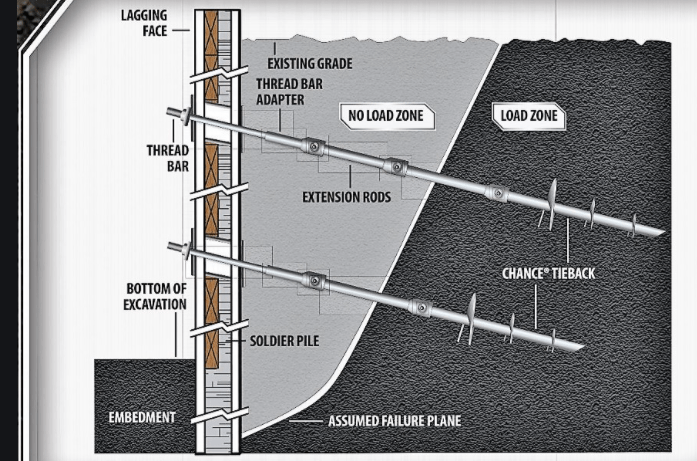
    An anchored retaining wall uses additional reinforcements for stability. Often, these reinforcements are steel cables or rods. They are known as anchors or tie-backs. The tie-backs are driven deep into the ground behind the wall. They anchor the wall securely. This allows it to resist pressure from the retained soil. These walls are ideal for supporting large vertical loads. They are particularly effective when space constraints limit the use of other retention methods.

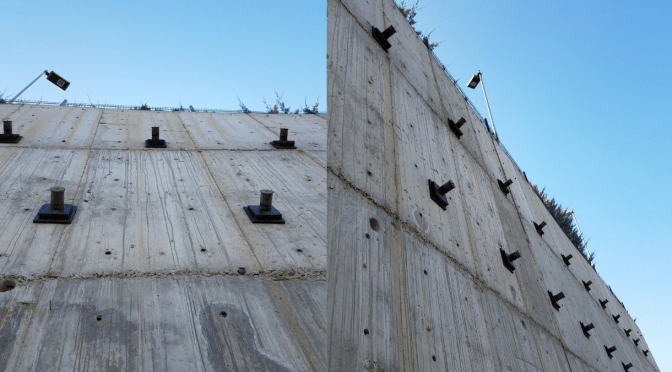
    Anchored retaining wall
    Anchored retaining wall

    Key Components of Tie-Back Retaining Walls

    Tie-back systems rely on two main components: anchors and retaining walls.

    Retaining Wall

    The wall itself is usually made of materials like concrete, steel, or timber. It serves as the primary barrier to resist the pressure exerted by the retained soil.

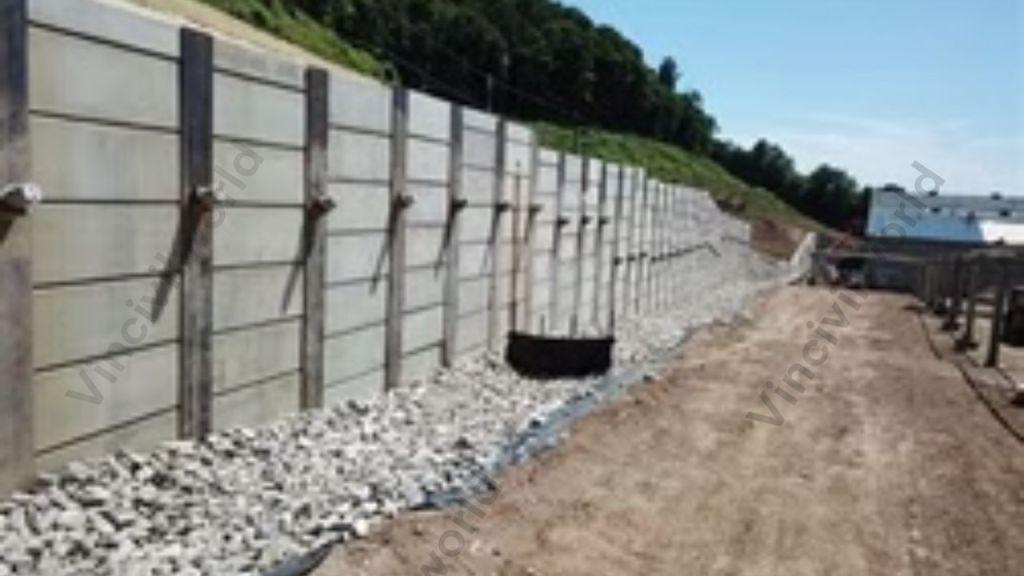
    Retaining wall with tie back systems

    Anchors

    These are steel rods or cables inserted into the soil behind the wall, providing tension to counteract the lateral forces exerted by the earth. The anchors are fixed at the back end using a variety of methods, including grouting or mechanical anchoring.

    Design Principles of Anchored Retaining Walls

    The design of an anchored retaining wall involves several key considerations to ensure structural integrity and durability:

    Safety Factors

    A safety factor is applied in the design to account for unforeseen stresses or variations in soil conditions.

    Soil Type

    Understanding the soil characteristics is crucial for determining the number, length, and type of anchors needed.

    Load Calculations

    Engineers must calculate the lateral earth pressure and any additional loads (such as water pressure) to determine the anchor capacity.

    Anchor Spacing

    Proper spacing of tie-backs is essential for uniform load distribution and wall stability. The design will vary based on wall height and soil type.

    Types of Tie back systems


    There are several types of anchored retaining walls, each suited for different applications

    Gravity Retaining Walls with Anchors

    Gravity retaining walls rely primarily on their own weight to resist the lateral pressures exerted by the retained soil. These walls are usually constructed from concrete, masonry, or stone. They are often designed with added anchors for additional stability. This is especially important in situations with significant soil pressure.

    The anchors provide a secure connection to the soil behind the wall. This connection enhances the wall’s ability to withstand overturning and sliding forces. Gravity walls are typically employed for low-height structures where space allows for their robust base design. They are simple to construct and cost-effective for lower applications.

    Cantilevered Retaining Walls with Anchors

    Cantilevered retaining walls have a unique design. They include a vertical wall supported by a slab. The system also includes a footing. This design efficiently utilizes the wall’s weight and structural integrity. It allows the wall to resist lateral forces. Anchors, which are embedded into the ground behind the wall, aid in this resistance. The additional support provided by the anchors is crucial for taller walls where lateral earth pressures are more significant.

    Cantilevered walls are often preferred where space is constrained. They can be designed to accommodate various soil types. This makes them versatile for different applications.

    Sheet Pile Walls with Tie-backs

    Sheet pile walls are constructed from interlocking steel or concrete sheets. These sheets are driven into the ground to create a barrier against soil and water. This type of wall is particularly effective in deep excavations. It is also suitable for waterfront construction projects. Limited space makes conventional retaining methods impractical in these scenarios. Tie-backs are incorporated to enhance the stability of sheet pile walls. They provide tension forces that counteract lateral earth pressures.
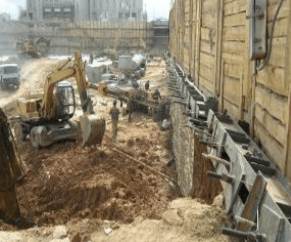
    Sheet pile retaining wall with tie back using anchors

    These tie-backs are anchored into the soil or bedrock behind the wall. This system is highly effective in urban settings. It also works well in areas with high groundwater levels. Sheet pile walls with tie-backs offer a reliable solution for managing soil movement and maintaining structural integrity in challenging environments.

    Soil Nail Walls

    This wall type incorporates soil nails, which are long steel bars inserted into the soil, providing stability through tension. Soil nail walls are ideal for steep slopes and challenging sites. They are cost-effective for moderate heights. They are also less intrusive than other wall types. They allow for better drainage and less disruption to the surrounding area​

    Soil Nail walls

    Braced Walls

    Often used in deep excavations, these walls are supported by braces or struts connected to the ground. Braced walls can handle high loads and are versatile for various soil conditions. They require careful planning for spacing and materials to ensure structural integrity while managing excavation risks​(

    Anchored retaining wall or Tie back system – Installation method.

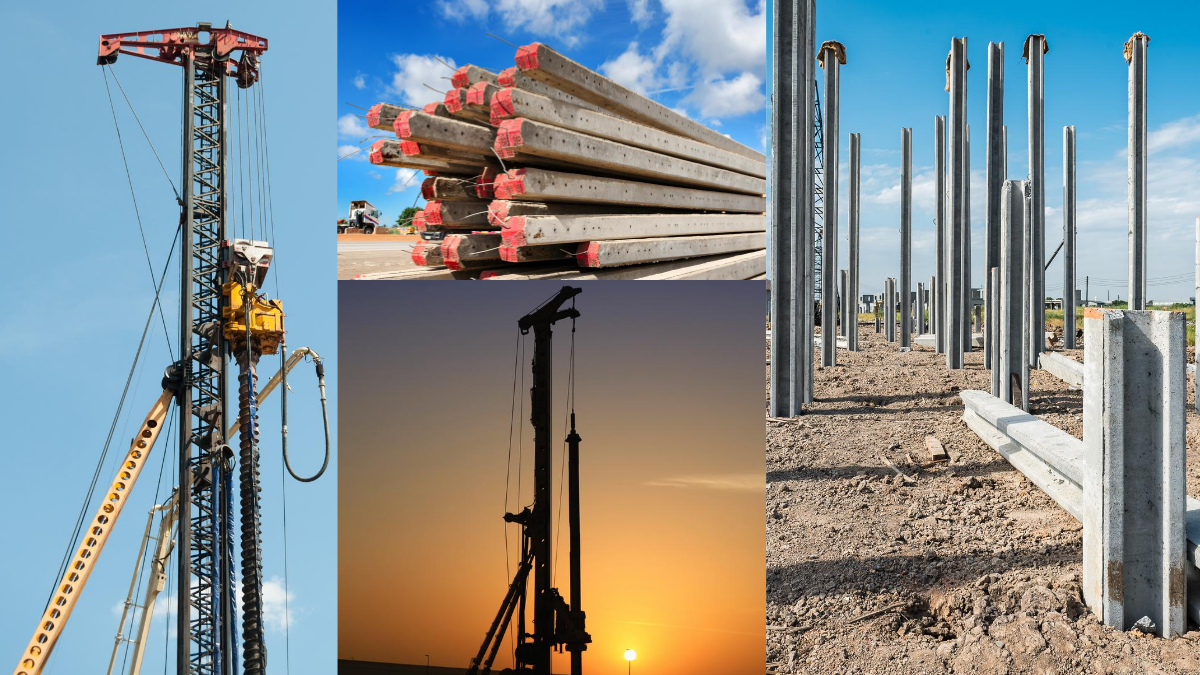
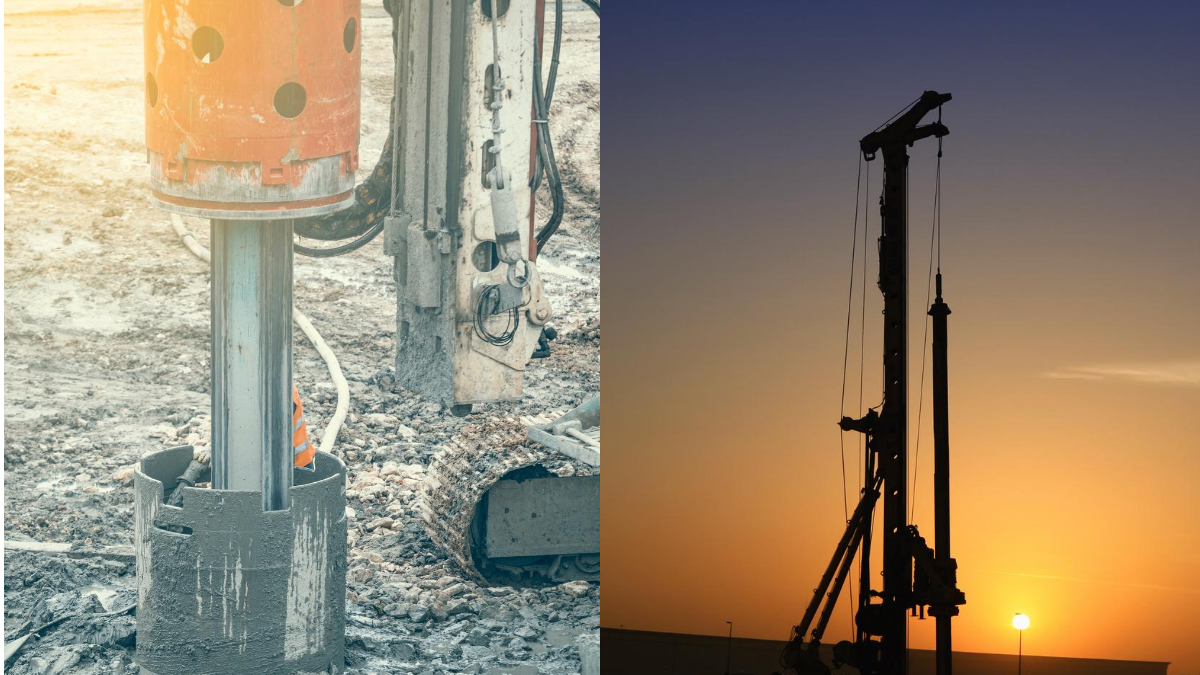
    Anchored retaining wall is also known as a tie-back system. They are used in combination with cantilever retaining walls, piled retaining walls, sheet piles, tangent walls, etc. The Tie-back system enhances the stability of the structure. It plays an important role in equipping the walls to handle additional loads.

    The anchored walls are installed when the load acting on the structure is high. In this case, the design of cantilever retaining walls / piled retaining walls/ sheet piles etc seems uneconomical. Moreover, it is difficult to accommodate the foundation and structures due to space constraints. For enhancing the load-carrying capacity and economising the structure additional anchors are embedded in the earth to be stabilized. These anchors in combination with the main structure negotiate the loads.

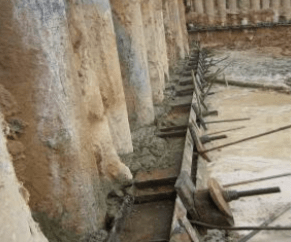
    Piled retaining walls with tie back system

    Related posts from vincivilworld

    Also Read : Soil Nailing – Installation, Advantages and applications.

    Fixing of anchors in a tie-back system

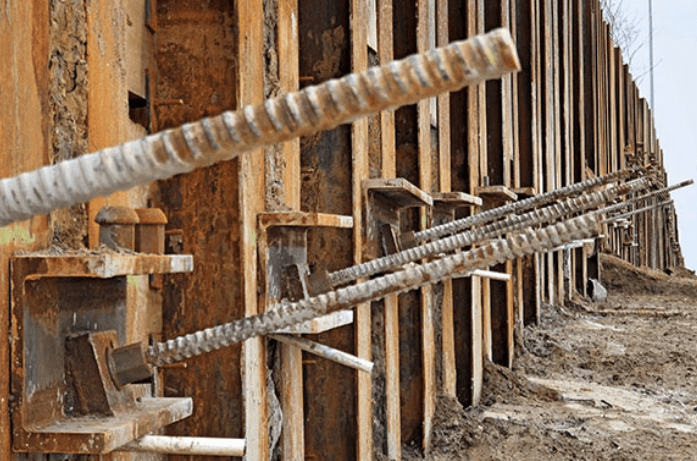
    One end of the tieback is anchored to the wall and another end is driven to the soil/rock. Sometimes stable concrete structures are driven into the ground to get a good anchorage. Tiebacks and drilled through the wall to the soil at an angle of around 15-45 degrees.

    After drilling the holes ties or struts are provided inside the drilled holes and pressure grouted to give greater stability. In the case of piled retaining walls, the tie-back system is drilled through whaler beams installed between the piles as shown in the figure. Steel rods are placed inside the drilled holes and grouted under high pressure. This creates a bulb-like anchor at the rods’ end, preventing the tie-backs from pulling out the load.

    These walls can be very tall and support high loads and are ideal for smaller areas that need earth retention.

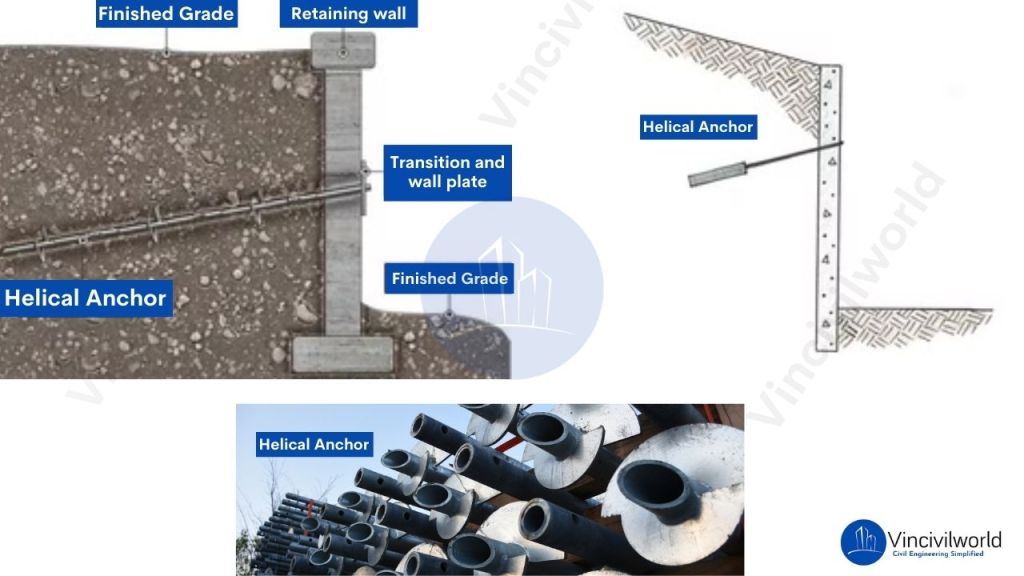
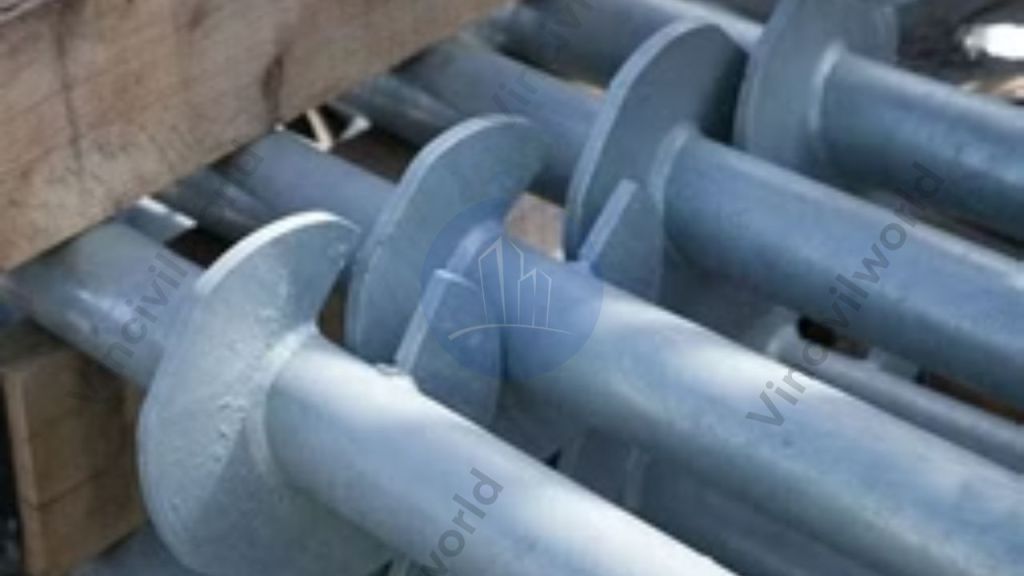
    Some times instead of rods, helical anchors are also driven to in place and the capacities are decided by the torque required for tightening the anchors.

    Anchored retaining wall - Typical section of helical anchors
    Typical section of helical anchors

    The main purpose of the tieback system is to develop a strong soil mass to resist external failure modes. The moment of soil and wall has to be restricted to get better serviceability.

    Advantages of anchored retaining walls

    • Mostly used for slope protection and retaining earthworks of deep excavations.
    • Thin walls or very light structures can be designed in combination with anchored walls.
    • Anchored walls are one of the most economical systems of earth retention.
    • Combination with sheet piles, cantilever retaining walls, piled retaining walls etc are very useful for deep excavations. They help in providing a safe working area.

    Key Takeaways from Anchored Retaining Walls/Tie-Back Systems

    1. Slope Protection: They are primarily used for stabilizing slopes and retaining earth during deep excavations.
    2. Thin Wall Design: Anchored retaining walls allow for thinner and lighter wall designs without compromising strength.
    3. Cost Efficiency: These systems are highly economical for retaining earth compared to other methods.
    4. Versatility: They can be used with sheet piles, cantilever, and piled retaining walls for various deep excavation projects.
    5. Space Saving: Suitable for areas with space constraints while maintaining structural integrity.
    6. Structural Stability: Anchored walls provide lateral support and resist significant external loads, ensuring safety during excavation projects.
    Conclusion

    Anchored retaining walls, or tie-back systems, play a crucial role in modern construction. Their design provides lateral stability while allowing for thinner and more cost-effective structures. They are particularly useful for deep excavations, slope retention, and projects where space is limited. The combination of anchors with retaining walls makes them adaptable to various applications, from sheet piles to cantilever walls. Anchored retaining walls are among the most economical solutions for ensuring soil stability. They offer versatility, especially in urban or constrained environments. Their integration in construction projects ensures structural safety, cost savings, and effective use of space.
    For more details about the retaining walls watch the below video.

    Youtube video – 15 Types of Retaining wall systems

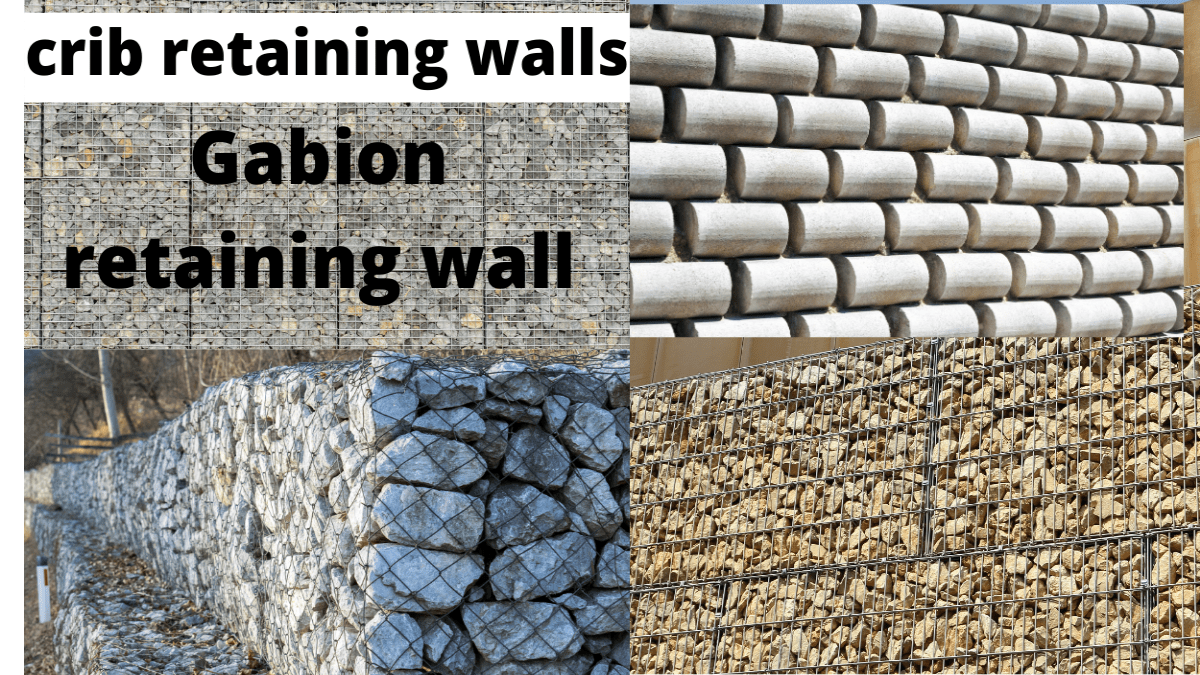
    Types of retaining walls