Category Archives: architectural finishes

Architectural finishes in a holistic sense can refer to a variety of textures, , colours and materials and refers to hard and soft permanently fixed finishes such as plaster or render and other surface coatings, such as paint. Architectural finishes can be in form of  Vitrified tiles for flooring, ceramic tiles, False ceiling, textured paints, dry walls, facades, aluminium doors and windows, UPVC doors and windows, Epoxy painting, plastic emulsion, Plaster of Paries, natural stones like marble, granite etc

Ready mix Plaster vs Conventional plaster – Which one is best ?

Ready mix plaster vs conventional or site mix plaster is an important comparison for selecting the right plastering material in building construction. Both materials serve the same purpose, but their performance and application methods are different. To understand the difference between ready mix plaster and conventional plaster, we must look at their composition and usage. Ready mix plaster is factory-made and delivered as a ready-to-use product, which improves consistency and saves time on site. It is manufactured using Portland Cement (53 Grade), graded sand, fly ash, lime, and additives. Some of these additives include fibres, plasticizers, waterproofing agents, and proprietary admixtures. Other performance enhancers are also used. All these ingredients mix together in a fully automated process to ensure better durability and quality in every batch. It ensures a smooth finish and offers many advantages of ready mix plaster, especially in fast-track projects. On the other hand, conventional plaster benefits include easy availability of materials and lower initial cost.

Builders often ask which is the best plaster for construction, and the answer depends on speed, quality, and budget. This article explains ready mix plaster vs site mix plaster to help you choose the best option.

What makes ready mix plaster a preferred option in place of conventional cement sand plaster?

  1. Ready mix plaster
  2. Cement sand plaster
  3. Ready-mix plaster vs conventional plaster
    1. Comparison Parameters
  4. Comparison Table
  5. Advantages of Ready Mix Plaster
  6. Application Standards of Ready Mix Plaster
  7. Key takeaways
  8. Conclusion – Ready Mix Plaster vs Conventional Plaster

Ready mix plaster

Ready mix plaster is a factory-produced plastering material designed to offer higher quality and better efficiency than traditional site-mixed plaster. It is manufactured using Portland Cement (53 Grade), graded sand, fly ash, lime, and polymer additives, including fibres, plasticizers, and waterproofing agents. These ingredients are mixed in perfect proportions using automated technology, ensuring uniform quality in every batch. This consistency is one of the major advantages of ready mix plaster, especially in fast-track construction projects.

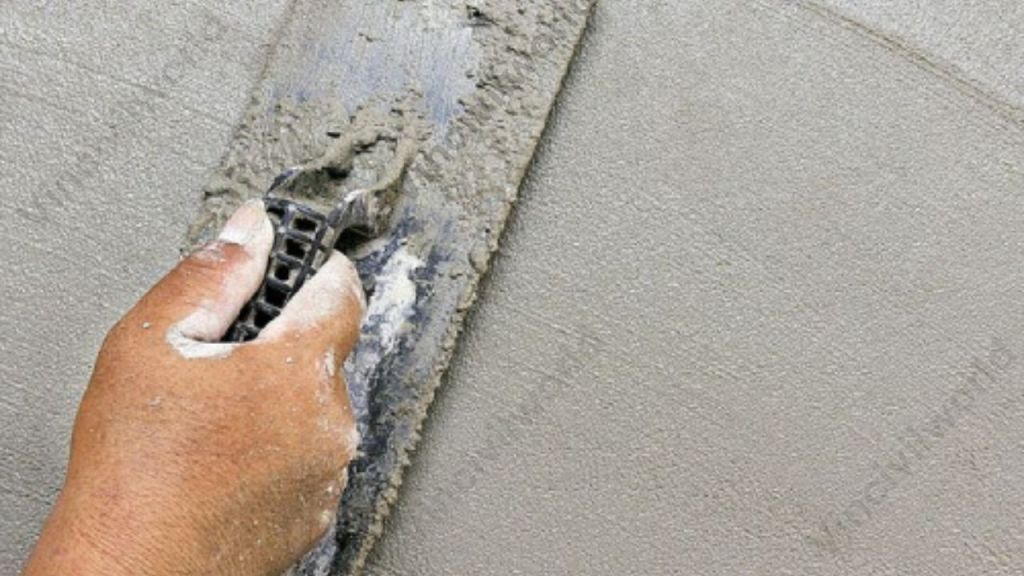
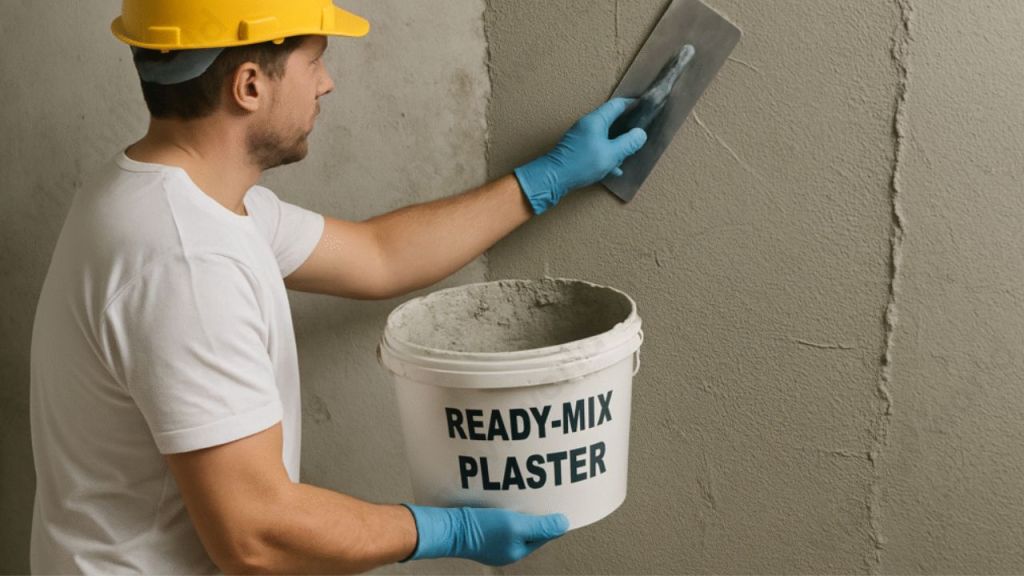
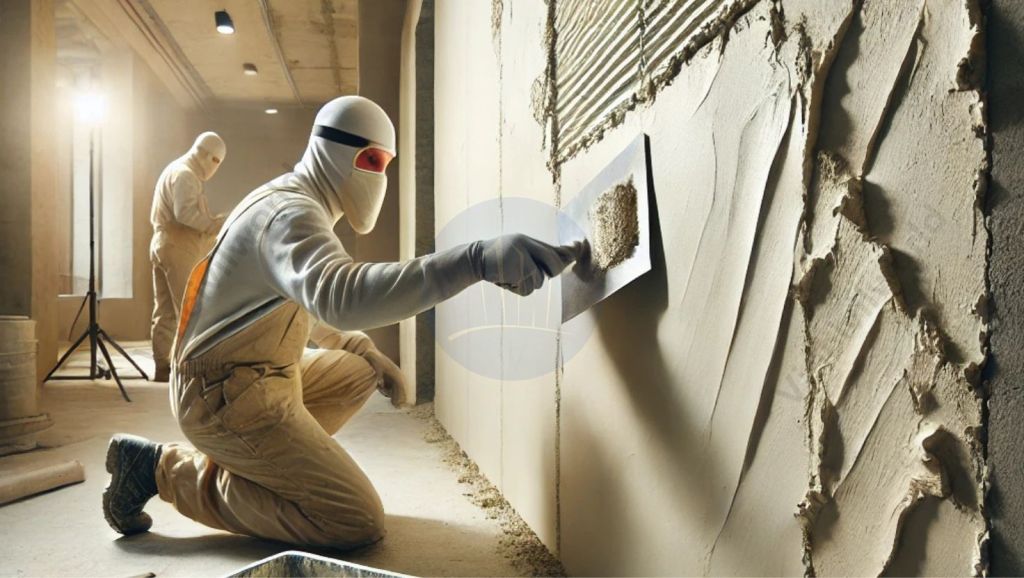
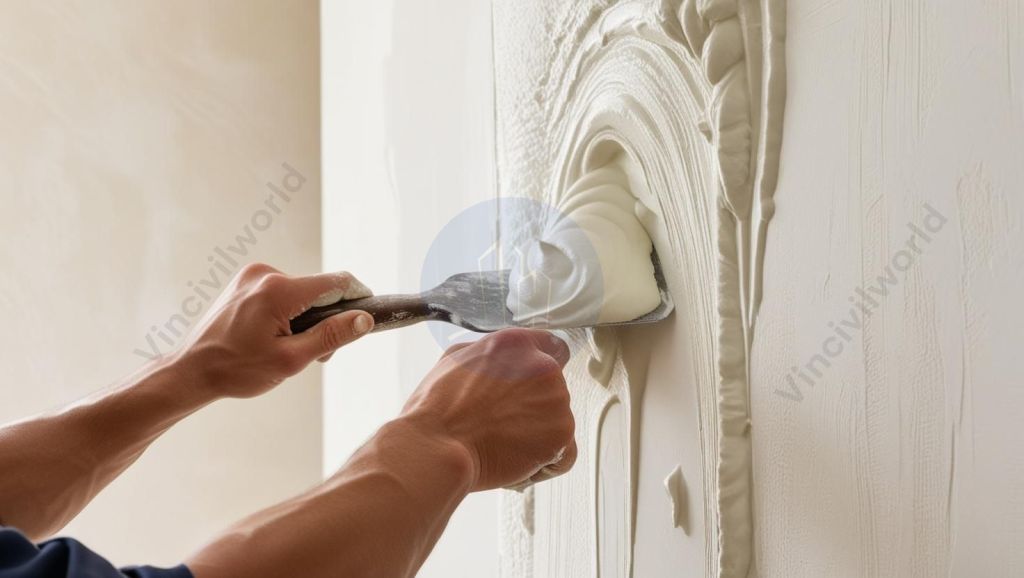
A close-up of a hand applying plaster to a wall using a trowel, showcasing a smooth and even surface being created.
Applying ready mix plaster for a smooth and durable finish in construction.

Unlike conventional plaster where sand and cement are mixed manually, ready mix plaster only requires the addition of water at the site. This reduces wastage, improves surface finish, and speeds up application. It also minimizes shrinkage cracks and ensures stronger bonding with the substrate. Therefore, when comparing ready mix plaster vs conventional plaster, ready mix plaster stands out as the best plaster for construction where durability, speed, and finish quality are important.

Cement sand plaster

Plastering is the prime construction activity presenting the exact look and feel of the building interiors and exteriors. The function of plastering is as follows.

  • To provide a smooth, even, and durable surface for finishes like Putty/POP, painting, etc.
  • They act as a barrier against atmospheric conditions involving moisture, water, snow, heat, dust, etc.
  • Plastering can cover the defects, fine cracks, etc developed in the construction.
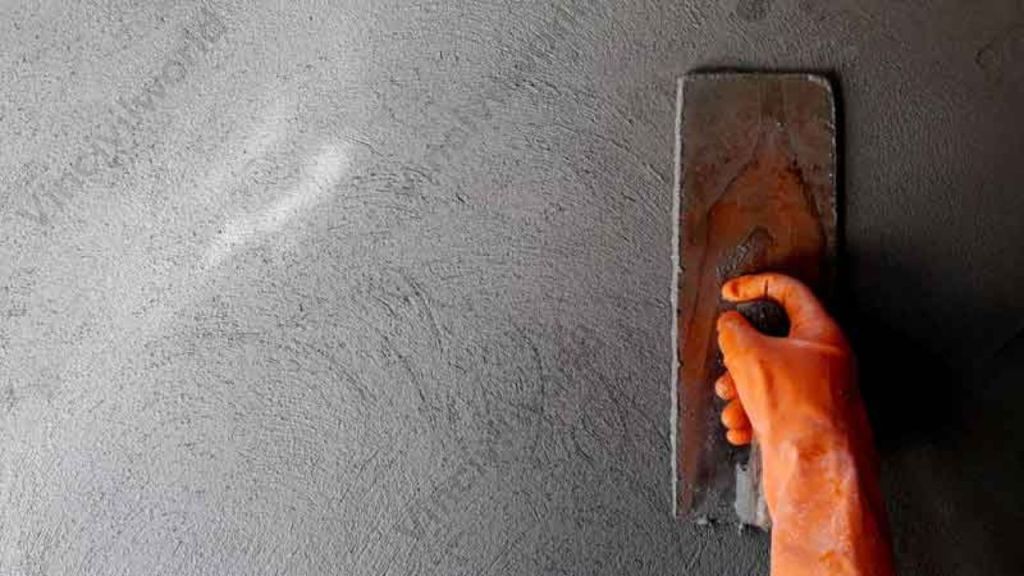
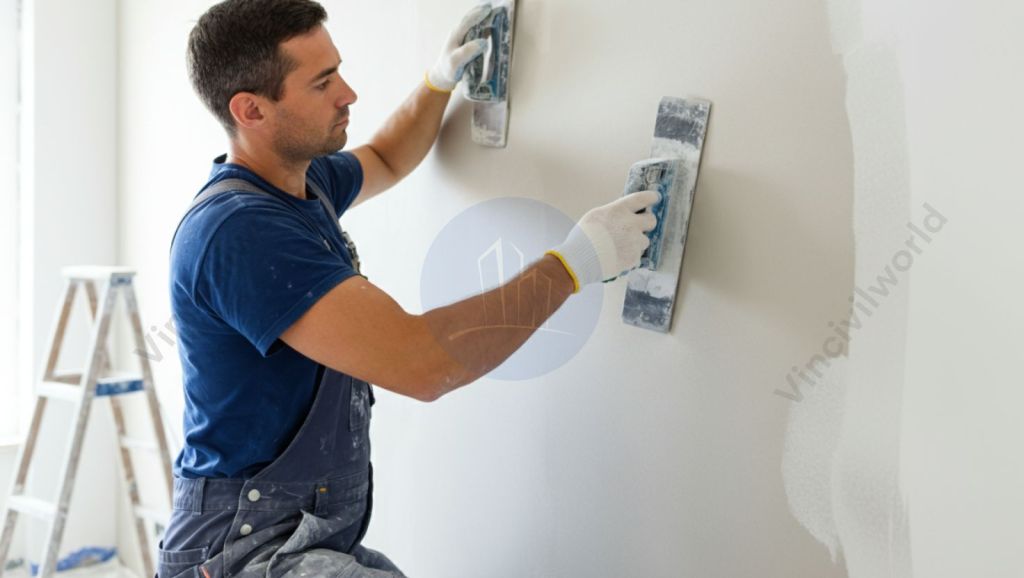
A worker applying plaster to a wall with a trowel, showcasing the smooth finish of ready mix plaster.
Application of conventional plaster on a surface, showcasing manual techniques in construction.

Ingredients like cement and sand are procured separately. They are conveyed, and mixed with water in the right proportions. This is done before application for conventional plaster.

For maintaining a perfect plaster quality, the sand has to be graded and free from the slit and other organic impurities, etc. The quality is not followed in construction sites which in turn affects the plaster quality. Let us dive into the reasons why readymix plaster is a perfect and quality alternative against conventional cement sand plaster.

Also read : Gypsum plaster – A reliable plastering alternative

Video on Ready mix plaster vs site mix plaster

Ready-mix plaster vs conventional plaster

Comparing ready-mix plaster and conventional plaster helps identify differences in material quality, handling, mixing, wastage, and application. This enables builders to choose the best plaster for construction needs. This can be done on the basis of a lot of parameters.

Comparison Parameters

  • Quality of ingredients
  • Material handling and mixing
  • Wastage of ingredients
  • Ease of application
  • Curing requirement
  • Shrinkage cracks
  • Sand gradation
  • Rebound wastage
  • Storage and housekeeping needs

Comparison Table

Comparison ParameterReady Mix Plaster Conventional Plaster
Quality of ingredientsFactory-controlled mix with Portland Cement 53 Grade, graded sand, fly ash, and polymer additives ensuring durability and compact finish.Sand sourced from riverbeds may contain silt/impurities; manual proportioning leads to variable quality.
Material handling & mixingDelivered in ready-to-use form; ready mix plaster vs site mix plaster saves labor and time, only water required.Loose materials procured separately and mixed manually; additional labor for conveying and mixing.
Wastage of materialsMinimal wastage and clean site environment.High wastage of loose sand and more housekeeping requirement.
Ease of applicationBetter adhesion due to polymer additives; faster application and less rebound loss.Low adhesion causes slow speed and more rebound wastage.
Curing requirement3–4 days only due to high water retention properties.Minimum 7 days curing needed.
Shrinkage cracksVery low due to optimized particle gradation and additives.Higher risk of cracks due to ungraded sand and incorrect mix.
Storage & logisticsPacked bags make storage easy and weather-safe.Loose sand and cement require more space and control.
Finish & durabilitySmooth, consistent surface finish with better bonding and strength.Finish and durability depend on workmanship and sand quality.
A construction worker wearing a hard hat and gloves applies ready-mix plaster to a wall using a trowel, with a bucket labeled 'READY-MIX PLASTER' nearby.
A construction worker applying ready-mix plaster on a wall, showcasing the ease of use and efficiency of this factory-produced material.

Advantages of Ready Mix Plaster

Comparing the advantages of ready mix plaster vs conventional plaster helps builders choose a faster and cleaner solution. It offers more durability for modern construction. This approach provides a better surface finish with minimal wastage.

ParticularsAdvantages of Ready Mix PlasterConventional Plaster Benefits
Application timeVery fast application due to better adhesion and controlled mix.Slower application as adhesion depends on workmanship.
Ingredient quality & proportionsFactory-made with perfect proportions of graded sand, cement, and additives.Manual mixing causes inconsistent proportions and strength variation.
Shrinkage cracksMinimum shrinkage cracks due to well-graded particles and polymers.High chance of cracks from ungraded sand and incorrect mixing.
Material handling and storageSupplied in bags; easy to store, clean handling at site.Loose materials require large space and careful protection.
WastageVery low wastage; excellent housekeeping advantages.High material wastage leading to increased cost.
Organic efflorescenceNegligible efflorescence due to controlled material quality.May occur because of impurities in river sand.
Sand gradationUniformly graded sand ensures strong and compact plaster.Not graded; affects compactness and durability.
Rebound wastageVery low rebound due to better bonding additives.High rebound wastage resulting in material loss.

Application Standards of Ready Mix Plaster

Ready mix plaster should be applied 8–10 mm thick on internal walls in a single coat. For external walls, an 8–10 mm base coat followed by an 8–10 mm finish coat ensures a total thickness of 16–20 mm. The maximum recommended aggregate size is around 3 mm for smooth and durable surfaces.

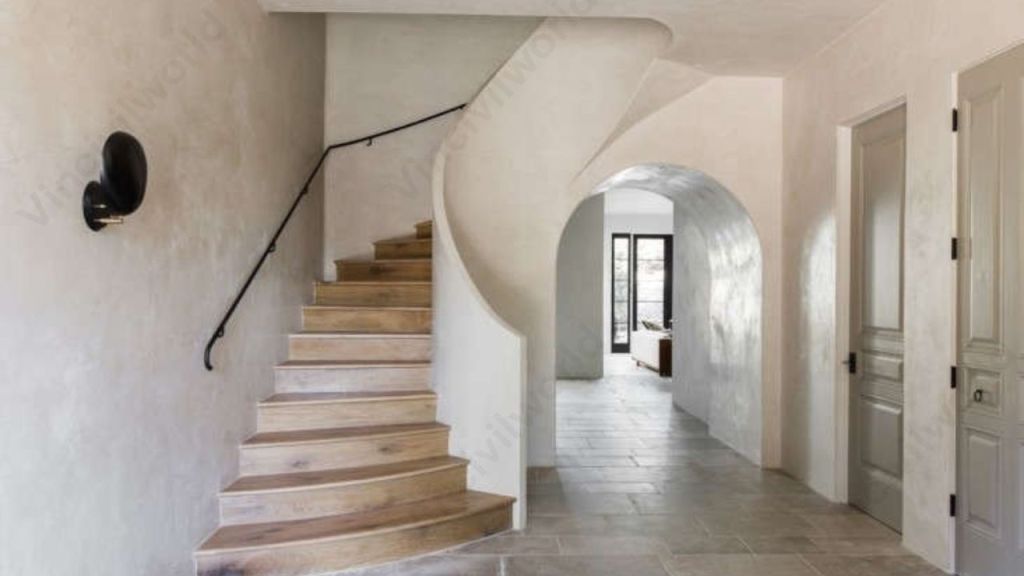
An interior view of a modern home featuring a wooden staircase, smooth white plastered walls, and tiled flooring. The design includes a curved wall that leads to an arched entrance.
A beautifully designed interior staircase featuring smooth plastered walls and natural wood steps, demonstrating the application of ready mix plaster for a refined finish.

Key takeaways

  • Ready mix plaster offers consistent quality, faster application, and minimal wastage compared to conventional plaster.
  • Conventional plaster requires manual mixing and may have variable quality due to sand impurities.
  • Advantages of ready mix plaster include lower shrinkage cracks, better bonding, and easier storage.
  • Understanding the difference between ready mix plaster vs conventional plaster helps builders choose the best option for construction needs.
  • In conclusion, ready mix plaster is often a more economical choice due to its quality and efficiency.

Conclusion – Ready Mix Plaster vs Conventional Plaster

When comparing ready mix plaster vs conventional plaster, the benefits of ready mix plaster clearly stand out in modern construction. It offers faster application, reduced wastage, consistent ingredient quality, and a smooth, durable finish. Because it is manufactured in a factory-controlled environment using graded sand, Portland Cement 53 Grade, and polymer additives, it ensures stronger bonding and minimum shrinkage cracks. These features make ready mix plaster a reliable and cost-effective solution for fast-track projects. On the other hand, conventional plaster benefits include lower initial cost and easy availability of materials, but quality issues and labour dependency affect performance. Therefore, based on long-term durability, finishing quality, and productivity, ready mix plaster is the best plaster for construction in today’s industry.

Types of Glass: A Comprehensive Guide

Types of glass play a crucial role in architecture, design, and engineering, offering diverse solutions for strength, safety, and aesthetics. Understanding the different types of glass helps professionals choose materials that balance beauty and functionality. From transparent facades to energy-efficient windows, each type serves a unique purpose. The glass types and uses vary widely—some provide insulation and noise reduction, while others enhance security or design appeal. Common types of glass used in buildings include float, laminated, tempered, and tinted glass, each engineered for specific conditions. Meanwhile, the types of glass materials used in manufacturing and construction are evolving with technology. The types of safety glass ensure protection against impact and breakage.
In this article, we will discuss the main types of glass. We will explore their characteristics and applications. The benefits of these glass types span modern architectural and industrial uses.

The flexibility of usage of glass in architectural applications like doors, windows, facades, etc. makes it one of the popularly used products in the construction sector. This article is about the manufacturing process of glass, and major glass types used in construction and architecture applications.

  1. Manufacturing process and properties
  2. Different types of glass and uses
  3. Types of glass used in buildings
    1. Annealed
      1. Applications
    2. Clear /Float glass
    3. Tinted
    4. Frosted
  4. Types of safety glass
    1. Heat Strengthened glass
    2. Toughened glass
      1. Advantages
  5. Conclusion

Manufacturing process and properties

Glass manufacturing follows the fusion process method which involves fusing sand with grounded lime, soda, and other admixtures etc., and cooled to form glass. Glasses are transparent, translucent, or brittle. Following are the basic properties of glass that make it one of the most preferred and popular architectural choices.

  • Transparency: Glass is transparent from both sides or one side.
  • Strength of glass: Enhanced to any level by adding admixtures and laminates.
  • Workability of glass: Glass is flexible and possible to mold to any shape or even blown in the molten stage.
  • Transmittance end U value: Can control temperatures and extreme climatic conditions.
  • Glass is 100% recyclable
Close-up view of a modern building facade featuring large reflective glass windows with varying designs and textures.
Modern glass facade highlighting the aesthetic and functional aspects of architectural design.

Different types of glass and uses

There are mainly three types of glass

  • Annealed glass
  • Heat-strengthened glass
  • Toughened glass.

Types of glass used in buildings

Types of glass used in buildings play a vital role in aesthetics, safety, and energy efficiency. They offer versatile options for modern architecture and sustainable construction solutions. The types of glass are as follows.

Annealed

Annealed glass is popularly known as float glass or conventional glass. Ingredients like sand, grounded lime, admixtures are mixed and cooled for manufacturing annealed glass. Float glass has a perfectly flat, brilliant surface with optical clarity.
Different types of float glasses popularly used in the construction sector are as follows.

Applications

  • Annealed glass uses include application as table-tops. They infuse your room with an elegant and spacious look.
  • Used for external facades due to crystal clear vision.  It can provide you with natural daylight and improve ventilation
  • Used for external walls and can absorb 30-45% of the sun’s heat to enable greater comfort.
  • Doors, windows and shower screens

Clear /Float glass

Clear glass is a clear and transparent annealed glass. They got a natural greenish color. Clear glass is extensively used for architectural applications involving doors, windows, solar applications, shelves, etc. Other glass types use clear glass in their manufacturing process.

Tinted

Tinted glass is manufactured by adding small amounts of metal oxide to the glass ingredients. These ingredients regulate the transmission of solar energy and modify the color without changing the basic properties of the glass.

Frosted

Frosted glass is a translucent annealed glass type manufactured using sandblasting or acid etching techniques. This gives a pitted and rough surface with foggy appearance.

Types of safety glass

Types of safety glass are essential for modern structures, providing strength, protection, and durability. These types of safety glass enhance building safety while maintaining clarity and design flexibility.

Heat Strengthened glass

Heat strengthened glass follows heating of annealed glass to a temperature of around 650-700 degree. The cooling process is much slower than the process used in the manufacturing process of tempered/toughened glass.

Heat-strengthened glass is a semi-tempered glass. It retains the normal properties of ordinary float glass. Heat strengthening adds strength to the glass by inducing surface compression and limiting the breakage chances. For heat strengthened glass the compression induced is in the range of 6000 to 9000 psi. However compression induced is around 11000 to 20000 psi in the case of fully tempered/toughened glasses.

  • Heat strengthened glass provides necessary resistance to heat build up during external applications.
  • Heat-strengthened glass differs from tempered glass in surface compression and possess mechanical strength of about 1.6-2 times that of annealed glass.
  • These glass got excellent thermal stability, whereas its flatness and light transmission is equal to that of annealed glass and much better than that of tempered glass.
  • Three times more resistant to thermal stress in comparison to normal annealed glass.
  • It can withstand temperature difference of 100°C (in range of 50°C to 150°C) when compared to ordinary annealed glass which can withstand up to 40°C.
  • Heat strengthened glass is less susceptible to spontaneous breakage.

Toughened glass

Tempered or toughened glass is a type of safety glass processed by controlled thermal or chemical treatments to increase its strength compared with normal glass. Tempering puts the outer surfaces into compression and the interior into tension. Such stresses cause the glass, when broken, to shatter into small granular chunks instead of splintering into jagged shards as ordinary annealed glass does. The granular chunks are less likely to cause injury.

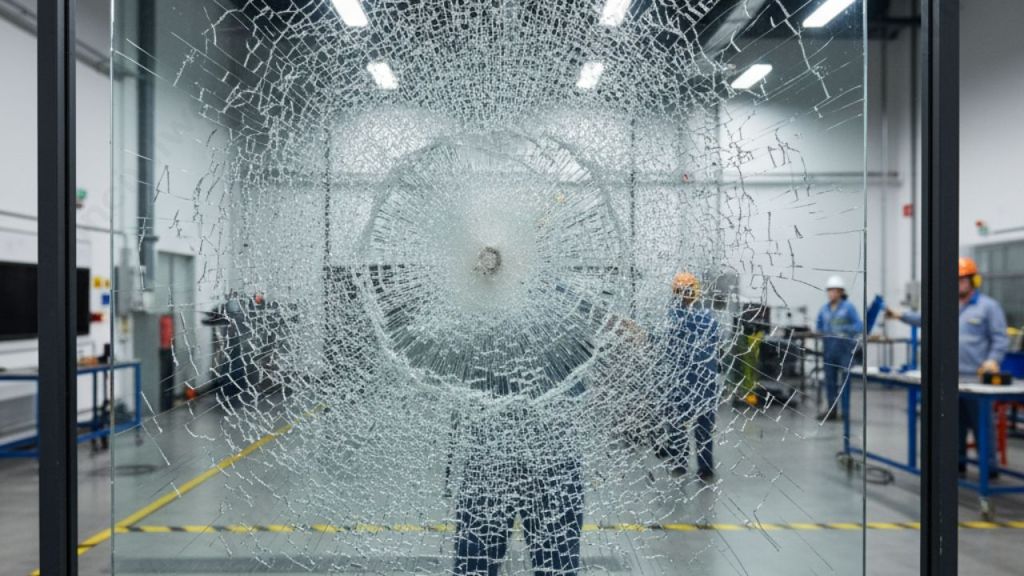
Close-up of a fractured glass panel with a spiderweb pattern of cracks, indicating high impact, in a modern industrial setting.
A close-up of toughened safety glass displaying a spider web pattern due to stress and impact testing, showcasing its durability.

Toughening does not alter the basic characteristics of normal glass like light transmission and solar radiant heat. They possesses high thermal strength, and can withstand high temperature changes up to 250°C.

Close-up of shattered glass displaying a complex pattern of cracks.
Close-up of shattered glass illustrating the safety concerns addressed by toughened glass in construction.

Advantages

Let us have a look into the advantages of toughened glass that makes its superior to ordinary glass.

  • Strength and safety : Toughened glass is extremely strong and can counter any temperatures and climatic changes and are less likely to break.
  • Scratch proof : Toughened glass is scratch proof and capable of maintaining the sheen and elegance of structures for years.
  • Heat resistance : Normal glass may crack in high temperatures where as the toughened glass manufacturing process involves heat tempering and hence capable of resisting high temperatures.
  • Design flexibility : Toughened glass got several design options like frosted, translucent, coloured, laminated options.

Key Takeaways

  • Types of Glass significantly impact architecture and design by offering diverse solutions for strength, safety, and aesthetics.
  • The main types of glass include annealed, heat-strengthened, and toughened glass, each with unique properties.
  • Manufacturing glass involves fusing materials like sand and lime, resulting in transparent, strong, and recyclable products.
  • Annealed glass is suitable for applications like windows and facades, while toughened glass enhances safety and durability in modern structures.
  • Heat-strengthened glass provides extra thermal resistance and is less prone to spontaneous breakage compared to ordinary glass.

Conclusion

In conclusion, the various types of safety glass play a vital role in ensuring both safety and style in modern construction. Whether it’s tempered glass, laminated glass, or toughened glass, each type provides unique benefits. These include strength, impact resistance, and protection against breakage. These types of safety glass used in buildings not only enhance structural safety but also contribute to energy efficiency, sound insulation, and visual appeal. From skyscrapers and commercial spaces to homes and facades, safety glass applications continue to expand. By understanding the types of glass available and their specific properties, architects and builders can choose the most effective solutions for durability, performance, and design excellence in today’s evolving construction landscape.

Gypsum plaster – A reliable plastering alternative

Gypsum plastering offers a modern, efficient solution for wall finishing with a smooth, durable surface. Unlike traditional plastering methods, plastering with gypsum is faster and requires less curing time, making it an excellent choice for construction and remodeling projects. Gypsum for plastering is also highly effective for indoor spaces due to its thermal insulation and fire-resistant properties. This blog will cover the advantages and disadvantages of gypsum plaster, along with essential tips for achieving quality results on a gypsum plaster wall.

Plastering is one of the most important activities involved in the construction of a building. The aesthetic looks of a structure depend totally on its finishing quality and workmanship. Beautiful and elegant interiors require a perfect plaster finish. The plaster finish has to be smooth, durable, and long-lasting and can retain the costly surface finishes and maintains the charm and sheen for years.

  1. Gypsum plastering– A plastering alternative
  2. What is gypsum plaster?
  3. Advantages of Gypsum Plaster over conventional plaster?
    1. Setting time & construction speed – Gypsum plaster
    2. Gypsum plaster- Shrinkage cracks eliminated
    3. Application and workability
    4. High Productivity
    5. Curing and water wastage
    6. Wastage and house keeping
    7. Strength and durability
    8. Quality of finish
    9. Environmental friendly and Green Building material.
    10. Acoustic properties
    11. Fire resistant
    12. Thermal conductivity
    13. Economical product
    14. Rust inhibitor & anti fungal
  4. Disadvantages of Gypsum plaster
    1. External applications
  5. Conclusion

Gypsum plastering– A plastering alternative

Cement plaster is the most common plastering method adopted almost everywhere due to its excellent durability standards. The major ingredient of conventional cement plaster is river sand. Because of environmental issues and government-imposed bans, there was a huge scarcity of sand which in turn lead to a drastic price increase. No availability of quality workmanship and aggressive construction schedules compelled to adopt an alternative solution to conventional cement plaster.
Gypsum plaster is the best alternative for cement plaster. Gypsum plaster is an environmental friendly, economic, durable, and time-saving plaster material.
Why gypsum plaster is a perfect alternative?
This article takes you to the factors that make gypsum plaster a superior alternative when compared to conventional cement sand plaster.

What is gypsum plaster?

Gypsum plaster is made from mineral gypsum or gypsum rock by complete or partial dehydration of water. Gypsum heated at a temperature of 150-180 degrees centigrade dehydrates and remove 2/3 rd water. The material obtained after the water dehydration is a hemihydrate (CaSO4. 1⁄2H2O) known as Gypsum Hemihydrate or Plaster of Paris. 

Gypsum plastering
Plastering with Gypsum

Gypsum plaster is produced by mixing the dry POP powder with clean water. It is mixed in recommended proportions to make a consistent slurry. This gypsum plaster slurry is applied at the desired thickness on walls and ceiling by skilled applicators. This process is called gypsum plastering.

Gypsum is a natural mineral and POP is manufactured from Gypsum. POP mixed with water and used for plastering walls is called gypsum plaster.

Advantages of Gypsum Plaster over conventional plaster?

Gypsum plaster had been used for centuries in the construction space and is a time tested process for plastering interior walls. Gypsum plaster provides excellent thermal and acoustic properties while providing a superior and smooth finish.

Gypsum Plastering - Ancient Egypt
Gypsum Plastering – Ancient Egypt

Gypsum plaster got a lot of superior qualities when compared to conventional plaster.

Setting time & construction speed – Gypsum plaster

Gypsum plasterConventional plaster
No pre-curing and post-curing is required. Paint and other finishes can be applied after 3 days of application.Requires 21-28 days pre-curing and post-curing period. Finishes can only be applied after 21-28 days.

Removing the pre-curing and post-curing period in gypsum plaster can substantially squeeze the construction schedule. It can also speed up the project delivery.

Gypsum plaster- Shrinkage cracks eliminated

Gypsum plasterConventional Plaster
No heat is generated during the hardening process thereby eliminating shrinkage cracks in gypsum plaster.In the hardening process, heat is generated. Additionally, the mortar dries suddenly. As a result, cement plaster tends to develop fine shrinkage cracks. Drying shrinkage is around 0.07%.
Got high tensile and flexural strength that resists fine cracksCement plaster has low tensile and flexural strength and hence develops cracks.
Shrinkage cracks on plaster
Shrinkage cracks on cement plastered walls

Application and workability

Gypsum plasterConventional plaster
Gypsum plaster is available in ready mix form in bags. The dry powder is mixed with water in the recommended proportions.Cement sand plaster uses sand available as loose and to be conveyed and screened before use.
Carrying of bags are easy and convenient between floors.Carrying loose sand is not easy and requires more labour and time.
Factory mixed and maintains accuracy in proportionsSite mixing of cement sand is done manually by laborers and very difficult to maintain the proportions and accuracy
Gypsum plaster is light and can be easily applied to the wall and finished.Application of cement plaster requires skilled masons and no so easy compared with gypsum plaster.
Gypsum plaster is easy to level and finish and adheres easily to smooth as well as rough surfaces.Cement plaster needs more time. Skilled masons are required to attain a smooth and even finish. Applying plaster to smooth surfaces is very difficult.
The same gypsum plaster is used for AAC Blocks, brickwork, flyash bricks, concrete blocks, and CLC blocks.Cement plaster ingredients are changed with the surface.

Mixing and application of gypsum plaster are very easy with minimal involvement of labour. Gypsum plaster can eliminate unskilled laborers involved in the mixing and carrying of mortar. The productivity of gypsum plaster is much higher than that of conventional plaster. These factors can drastically decrease the labour cost and maintain quality at the site.

High Productivity

Per mason, productivity is high compared to conventional plaster. Finishing of gypsum plaster to the required finish level is comparatively easy in the case of gypsum plaster.

Gypsum plaster and conventional plaster
Gypsum plastering - High productivity
Gypsum plastering – High productivity

Curing and water wastage

Mixing of gypsum requires minimal water wherein cement plaster requires more water for the mixing and curing process. Cement plaster requires mandatory water curing to avoid shrinkage cracks and requires a large amount of water and wastage of water. Cement plastering and curing is very difficult in areas where there is a scarcity of water.

Wastage and house keeping

Gypsum plasterConventional Plaster
Gypsum plaster generates less wastage and the area looks clean and no major housekeeping or removal of debris is required. This can save substantial housekeeping labour.Plastering generates
wastage in terms of mortar, cement, sand, and water.

Strength and durability

Gypsum plasterConventional Plaster
Excellent high strength after drying. They are durable and light weight. Hence reduces the dead loads on the structure.Cement plaster density is more and increase the dead loads on the structure.

Quality of finish

Smooth Finish, Perfectly lined, leveled smooth walls and perfect right-angled corners.Plastering gives a rough finish and needs another coat of putty/POP for making it level and smooth for paint finishes.
A very thin coat of putty/POP is required for producing a perfect interior finish.A minimum of 6 mm thickness of POP must be applied. Alternatively, layers of putty should be applied. This process makes the surface smooth enough to receive the paint finish.

Environmental friendly and Green Building material.

Gypsum plasterConventional plaster
Gypsum is a naturally obtained material and gets deposited frequently on the lake and seawater. The depletion of the resource may not happen in the case of gypsum and is an environmentally friendly material. Gypsum does not emit any VOC s (hazardous materials) and is safe.Sand obtained from river beds is used for plastering.
The sand sources are getting eliminated due to environmental issues and government bans. The availability of good quality sand and is also a very big issue.
Gypsum plaster is environmental friendly and green product.Cement plaster is not a green product

Acoustic properties

Gypsum plastered surface posses very good acoustic properties and echos are eliminated. Cement plastered surfaces need to be applied with costly acoustic materials to make it soundproof.

Plastering with Gypsum

Fire resistant

Gypsum plaster is highly resistant to fire where as plaster become brittle and de-bonds from the surface on fire.

Thermal conductivity

Gypsum plastered rooms are comparatively cooler than cement plastered walls due to high thermal conductivity. This can reduce Air condition loads and reduce energy bills.

Economical product

Due to the scarcity of sand and increased costs Gypsum plaster is tuning out to be a very cost-effective option. Gypsum is very easy to mix and place. It eliminates labour charges incurred for mixing raw materials and curing. It also minimizes wastage, making gypsum a very economical product compared to conventional plaster.
Conventional plaster needs a thick layer of POP or putty over it to produce a smooth, seamless, and fine finish whereas gypsum plaster can even be directly painted. But a fine coat of surface coat is always recommended for gypsum plaster for a perfect finish.

Gypsum plaster can also be used for decorative applications. The space looks big and elegant after plastering with gypsum plaster.

Rust inhibitor & anti fungal

Gypsum plaster is a rust inhibitor where as cement plaster is not. Gypsum plaster got anti fungal properties.

Disadvantages of Gypsum plaster

Gypsum plaster has some major disadvantages compared to conventional plaster.

External applications

Gypsum plaster cannot be used for external applications and areas prone to water or moisture like bathrooms, kitchen etc.

Gypsum plaster material is costly. However, compared to the other factors that are eliminated while using gypsum, it turns out to be far more economical. It is a more economical product compared to conventional plaster.

Conclusion

After going through the following factors we can say gypsum plaster is a clear winner.

Gypsum plaster is an environment-friendly, cost-effective, lightweight, and durable material. They are flame retardant and got high coverage material with easy application. Gypsum plaster is thermal resistant and acoustic materials that can produce beautiful and elegant surfaces. They can retain any type of finishes and coats and maintain the charm and sheen for years.

Dog legged Staircase – Design, Features and Advantages

A dog-legged staircase is the simplest, common, space-saving, and economical staircase type used in commercial, industrial and residential buildings. A dog-legged staircase consists of two flights running in opposite directions and parallel to each other. They are separated categorically by a landing when the flights change direction.

A dog legged staircase is a space-efficient design consisting of two straight flights of stairs connected by a 180-degree turn. This layout allows the staircase to make a sharp turn without needing extra space for landings. Dog leg stairs are commonly used in residential and commercial buildings where space-saving is crucial. The dog legged stair design minimizes footprint while maintaining functionality and aesthetics. They offer a compact solution for multi-story structures, making them ideal for homes, offices, and small commercial spaces. The dog leg staircase is popular for its simple, practical, and versatile design.

This article is about the features of Dog legged staircase and its design, advantages, disadvantages, and applications.

  1. What is a staircase?
  2. What is a Dog legged staircase ?
  3. Major components of a Dog legged staircase
    1. Thread
    2. Rise
    3. Step
    4. Landing
    5. Newel post
    6. Baluster
    7. Handrail
  4. Advantages of Dog legged staircase
  5. Disadvantages of Dog legged Staircase
  6. Features of a good staircase
  7. Types of Dog Legged Staircases
  8. Design of Dog legged Staircase
  9. Input details

What is a staircase?

A stair is a structure with a series of steps. It provides a simple and easy way to ascend and descend between levels or floors. The room or enclosure of the building, that occupies the stairs are known as a staircase. In certain designs like dog leg stairs, the staircase has two straight flights. These flights are connected by a 180-degree turn. This design saves space efficiently.

Also read : What is prefabrication in construction?

What is a Dog legged staircase ?

A dog legged staircase is a versatile and efficient stair design. It features two straight flights connected at a 180-degree turn. This configuration allows the stairs to change direction. It minimizes the need for extra landing space. This feature makes them ideal for compact areas. The flights can vary in length based on the total height and desired riser height, providing flexibility in design.

This type of staircase is commonly found in both residential and commercial settings, as it maximizes functionality without compromising aesthetics. The dog leg stairs are especially advantageous in multi-story buildings where space is a premium. They enhance the overall design while ensuring safe vertical movement between levels.

The term “dog leg” derives from the shape of the staircase when viewed in elevation, resembling a dog’s leg. This design not only offers practicality but also adds a unique architectural element to a space. The dog legged stair design is simple and effective. It provides a good solution for navigating different levels in a building. It combines economy, safety, and style.

Dog legged staircase - Typical Section
Dog legged staircase

Major components of a Dog legged staircase

A dog legged staircase consists of several important components that allow it to function effectively and fit within compact spaces. These parts work together to create a strong, functional structure for vertical movement. Here are the key components found in dog leg stairs.Let us go through the major components of a Dog legged Staircase

  • Treads
  • Risers
  • Landing
  • Balustrade
  • Stringers
  • Newel Post
  • Handrail
  • Flight

Thread

Horizontal portion where the foot rests while ascending and descending. The size and material of treads affect comfort and safety.

Rise

Risers are vertical portion between two threads.They ensure each step is of uniform height for smooth movement.

Step

Each step constitutes a tread and a riser and individual steps form a stair.

Landing

Landing is an intermediate space between a series of steps (Flights) . This spaces serves primarily as a resting place and enables a smooth direction change.

Newel post

The vertical post at the starting and end of a stair

Baluster

Balusters are Vertical members fixed along the flight for supporting hand rails

Handrail

An inclined rail provided at an optimum height which can support while ascending and descending.

Advantages of Dog legged staircase

From the design point of view the main advantages are as follows

  • To allow an arrangement that occupies a shorter, though wider, floor area than a straight flight, and so is more compact. Even though the landings consume total floor space, there is no large single dimension.
  • The upper floor is not directly visible from the bottom of the stairs, thereby providing more privacy.
  • The space below landings serves the purpose of storage.
  • The design and layout is very simple.
  • Landings offer a comfortable resting space for commuters.
  • They requires less area and limited space when compared with other stairs like straight staircase .
Dog legged staircase

Disadvantages of Dog legged Staircase

  • The construction of these stairs are not easy
  • The handrails need very careful planning.

Features of a good staircase

  • Staircase location selection has to ensure sufficient light and ventilation and easy access from all the rooms.
  • A single flight should have a minimum of three risers and a maximum of 16 risers.
  • Stair angles (Pitch) should be anywhere between 25 degrees to 40 degrees. Landings have to be provided categorically to manage the pitch.
  • The landing width should not be less than the width of the stair flight.
  • The riser height should be uniform for all flights between landings and floors. This uniformity helps maintain a rhythm while ascending and descending.

Types of Dog Legged Staircases

  • Dog-legged staircase with enclosed space beneath – Landing area closed and used for storage or services
  • Dog-legged staircase with open well space – A small gap or well left between the two flights
  • Dog-legged staircase with half-space landing – Landing placed midway to change direction by 180°
  • Dog-legged staircase with quarter-space landing – Used when a slight direction change is required
  • Dog-legged reinforced concrete staircase – RCC structure for strength and durability
  • Dog-legged wooden staircase – Used in residential interiors for better aesthetics

Design of Dog legged Staircase

How to design a staircase ?

Maximum size of riser is 190 mm for residential building and 150 mm for other buildings

Maximum size of thread is 250 mm for residential building and 300 mm for other buildings

In this example we are considering floor to floor height as 3 mtr

Height of Floor = 3 mtr (Floor to Floor)

Step 1

How to find the Number of Risers

Maximum height of Riser is 190 mm : Assume 175 mm as riser height

Total number of risers = 3000/175 = 17.14 risers say 17

Riser height assuming 17 risers = 3000/17 = 176.47 mm

Thread = Riser – 1 = 17-1 = 16 nos

Input details

Riser = 17 nos ( 17.47 mm)

Thread =16 nos (250 mm)

For first landing will take 9 Riser and 8 thread

For design details of dog legged staircase and layout please watch the video.

Marble and Tile Flooring: A Comprehensive Comparison

Marble and tiles flooring have their own advantages. Choosing between marble and tiles can be difficult. Marble offers elegance, natural beauty, and timeless appeal, while tiles provide versatility, durability, and a wide range of designs. In this blog, we’ll explore marble versus tile flooring to help you decide. Each has its own benefits and drawbacks, from cost to maintenance.

Marble requires more upkeep but adds a luxurious touch. Tiles are easier to maintain and come in countless styles. By the end, you’ll know whether marble or tile flooring suits your needs best for your home, office, or any other space. We’ve got you covered, whether you prefer the classic look of marble or the practical benefits of tiles.

What is marble ?

Marble is a metamorphic rock formed from limestone under high pressure and heat over millions of years. Known for its elegance and natural beauty, marble features unique veining patterns and a wide range of colors, from pure white to deep black, often with shades of pink, green, and grey. This luxurious stone is commonly used for countertops, flooring, and decorative elements.

A selection of four different flooring samples, showcasing various styles and colors of marble and tiles.
Various samples of marble and tile flooring, showcasing different colors and textures for comparison.

While marble is elegant, it needs regular upkeep to maintain its shine and prevent stains. It’s relatively soft compared to other stones, so it’s prone to scratches and etching from acidic substances. Despite the maintenance it requires, marble is still a popular choice for those who want timeless beauty in their interiors.

What is tile ?

Manufacturers create tiles from various materials such as ceramic, porcelain, glass, or natural stone. People commonly use them for flooring, walls, and countertops. Many favor tiles for their durability, ease of maintenance, and versatility in design. Available in numerous colors, shapes, and sizes, they can mimic the look of natural stone, wood, or other materials.

Various types of tiles showcasing a range of colors and textures, arranged in a diagonal pattern.
A variety of beautifully textured tiles, showcasing different colors and finishes for flooring options.

Ceramic and porcelain tiles are particularly popular due to their water resistance and strength. Tiles are easy to clean and maintain, making them ideal for high-traffic areas and spaces prone to moisture, such as kitchens and bathrooms. With countless design options, tiles offer both practical and aesthetic solutions for a variety of interior and exterior applications.

Aesthetic Comparison: Marble vs Tile

Choosing between marble and tile flooring requires consideration of aesthetics, durability, and maintenance. This table compares marble and tiles to assist with your decision.

AspectMarbleTile
AppearanceMarble flooring features natural veining and rich color variations; each slab is unique.Tile flooring offers a wide array of colors, patterns, and textures; can mimic marble or wood.
LuxuryMarble vs tiles: Marble exudes a high-end, sophisticated look; timeless and elegant.Tiles offer a modern aesthetic; customizable to various styles.
UniquenessEach piece of marble is one-of-a-kind due to natural formation.Tiles provide consistent design across pieces; allows for uniformity or intricate patterns.
FlexibilityMarble vs tile flooring: Limited to natural stone variations.Tiles are highly versatile; available in numerous designs and materials.
ApplicationIdeal for elegant, classic interiors.Suitable for both modern and traditional designs.
MaintenanceTiles or marble: Marble requires regular upkeep to maintain its beauty.Tiles are easier to maintain and clean.
Aesthetic comparison – Marble and tile flooring

Durability and Maintenance – Marble vs Tile

Understanding the durability and maintenance requirements of marble and tile flooring is crucial when making a choice between marble vs tiles or tiles vs marble. This comparison highlights their strengths and weaknesses in terms of longevity and upkeep.

AspectMarbleTile
DurabilityMarble flooring is elegant but relatively soft, prone to scratches and etching from acidic substances.Tile flooring, especially ceramic and porcelain, is highly durable and resistant to wear.
Stain ProofMarble and tile flooring both require attention: Marble needs regular sealing and polishing to maintain its luster and is prone to staining.Tiles are easier to clean with minimal maintenance required; they are also resistant to stains and water.
LongevityMarble vs tile flooring: With proper care, marble can last for decades despite its high maintenance needs.Tile flooring is renowned for its longevity and requires low maintenance to stay in good condition over many years.
RepairabilityRepairing marble can be costly and challenging due to scratches and etching.Damaged tiles are relatively easy and cost-effective to replace individually.
AvailabilityFinding matching marble for repairs or additions can be difficult due to variations in color and veining.Tiles offer consistent design and availability, making it easier to match for repairs or expansions.
Durability and Maintenance comparison

Cost Comparison – Marble vs tiles

When choosing between marble and tile flooring, understanding the cost implications is essential. This table compares marble vs tiles to help you decide whether tiles or marble suit your budget better.

AspectMarbleTile
Material CostMarble is more expensive than tiles. It is a natural stone that requires costly mining and extraction procedures. High-quality marble, which looks good, comes at an exorbitant price.Tile flooring is usually more affordable as tiles are factory made and available at a range of price points.
Cost Comparison – Marble vs tiles

Environmental Impact

Understanding the environmental impact of marble and tile flooring is important when choosing between marble vs tiles. This comparison highlights the ecological considerations of tiles or marble.

AspectMarbleTile
Resource ExtractionMarble flooring needs quarrying, which can harm natural habitats and uses a lot of energy.Tile flooring production involves mining raw materials but usually has a smaller environmental footprint than marble.
ManufacturingMarble vs tile flooring: Marble is a natural stone with minimal processing, but the extraction process uses a lot of energy.Tiles are factory made, often using recycled materials, and the production process can be more energy-efficient.
SustainabilityTiles or marble: Sustainable marble options are limited; high-quality marble has significant environmental costs.Tiles offer more sustainable options, including recycled content and eco-friendly manufacturing practices.
LifespanMarble vs tiles: Marble’s long lifespan can offset some environmental costs if maintained well.Tiles are also durable, and their production advancements reduce environmental impact over time.
Environmental Impact – Marble and tile flooring

Both these flooring materials have environmental impacts, but tiles offer more sustainable and eco-friendly options.

Installation Process

Understanding the installation process for marble and tile flooring is essential when choosing between marble vs tiles. This comparison highlights the steps and considerations for installing tiles or marble.

AspectMarbleTile
PreparationMarble flooring requires a strong, level base and precise measurements.Tile flooring also needs a flat surface, but preparation is typically less intensive than marble.
CuttingMarble vs tile flooring: Marble cutting needs specialized tools and skills to handle its brittleness.Tiles are easier to cut and shape, often using standard tile cutters.
InstallationMarble installation is labor-intensive, requiring skilled professionals for proper placement and alignment.Tiles or marble: Tile installation is simpler and quicker, often completed by a wider range of installers.
SettingMarble vs tiles: Marble is set with a thin-set mortar, but due to its weight, it needs careful handling.Tiles are also set with thin-set mortar and are easier to handle and place.
GroutingBoth marble and tile flooring need grout, but marble requires special attention to avoid staining.Tiles use standard grout, which is easier to apply and clean.
SealingMarble vs tile flooring: Marble must be sealed to prevent stains and damage. Mirror polishing marble adds a protective layer, enhancing resistance to liquids and stains.Tiles generally do not require sealing, except for some natural stone tiles.
Installation Process – Marble and tile
Workers applying a finishing layer to a marble slab in a stone processing facility.
Workers applying finishing touches to a marble slab, showcasing the meticulous craftsmanship involved in marble flooring preparation.

Choosing between marble and tile flooring involves considering the complexity and skill required for installation. Tiles are generally easier and faster to install compared to marble, with options like mirror polishing marble offering added protection and aesthetic enhancement.

Wastage comparison – Marble and tile

Understanding the installation process for marble and tile flooring is crucial when choosing between marble vs tiles. Considerations include wastage factors during cutting, handling, and environmental impact.

AspectMarbleTile
WastageMarble cutting may result in more wastage due to its brittleness and natural patterns.Tiles are easier to cut and shape, resulting in less material wastage during installation.
HandlingMarble requires careful handling to avoid breakage and material loss during installation.Tiles are generally easier to handle, reducing the risk of breakage and wastage.
Environmental ImpactMarble extraction and wastage can have a significant environmental impact compared to tiles.Tiles typically have lower environmental impact from production and installation wastage.
Wastage Comparison – Marble and tile

Efficient handling and cutting practices are crucial in both marble and tile flooring installations to minimize wastage and environmental impact.

Pros and Cons of Marble and Tiles

Understanding the pros and cons of marble and tiles is crucial when deciding between marble vs tiles for flooring. Here’s a comparison in tabular form:

AspectMarbleTiles
ProsKnown for its luxurious appearance and unique veining patterns.Available in a wide range of designs, colors, and textures, offering versatility in aesthetics.
Adds value to properties due to its elegance and timeless appeal.Generally more affordable than marble, making it suitable for various budgets.
Durable and can last for decades with proper maintenance.High durability, resistant to wear and tear, suitable for high-traffic areas.
Natural material with variations that add character to spaces.Easy to clean and maintain, requiring minimal upkeep over its lifespan.
ConsExpensive material, with higher installation and maintenance costs.Some types may lack the natural elegance of marble and can appear artificial.
Prone to scratching, staining, and etching from acidic substances.Less heat resistant compared to materials like marble, requiring caution with hot items.
Requires regular sealing to maintain appearance and durability.Can be colder underfoot compared to materials like wood or carpet.
Limited availability of exact matches for repairs or additions due to natural variations.Certain types may require professional installation to ensure proper setting and alignment.
Pros and Cons of Marble and tile

This comparison highlights the strengths and weaknesses of both marble and tiles, helping you make an informed decision based on your preferences, budget, and maintenance considerations.

Conclusion – Which is Right for Your Home? Marble or tile

AspectMarbleTiles
AestheticsOffers luxurious, timeless appeal with unique veining patterns.Versatile in design, available in various colors and textures to suit different décor styles.
CostHigher upfront and maintenance costs due to the expense of natural stone.Generally more affordable, with options ranging from economical ceramic to high-end natural stone.
DurabilityDurable with proper maintenance, but susceptible to scratching and staining.Highly durable, resistant to wear and tear, suitable for high-traffic areas like kitchens and bathrooms.
MaintenanceRequires regular sealing and careful cleaning to maintain appearance.Easy to clean and maintain, requiring minimal upkeep over its lifespan.
SuitabilityIdeal for formal areas where elegance is paramount, like living rooms or foyers.Practical for kitchens, bathrooms, and high-traffic zones, offering durability and easy upkeep.
InstallationLabor-intensive installation requiring skilled professionals.Easier installation process, suitable for DIY or professional installation depending on type.
Marble and tile Flooring – Which one to chose

Choosing between marble and tiles depends on factors like aesthetics, budget, maintenance preferences, and specific room needs. Marble offers luxurious appeal and adds value to formal spaces but requires higher maintenance and investment. Tiles provide versatility, affordability, and durability, making them practical for various areas in your home including kitchens and bathrooms. Consider these aspects carefully to make the best choice that aligns with your lifestyle and home décor goals.

Terrazzo Flooring – Types, applications and Advantages

Terrazzo flooring is a stunning and durable option for residential and commercial spaces. It combines marble, quartz, granite, or glass chips with a cement or epoxy binder to create a unique and elegant surface. Terrazzo floors offer endless design possibilities, with various colours, patterns, and finishes available. With its timeless appeal, durability, and low maintenance, terrazzo flooring is a popular choice for those seeking a beautiful, long-lasting solution.

Terrazzo flooring incorporates a mix of materials such as marble, quartz, granite, or glass chips, creating a visually striking and versatile floor. Its popularity stems from its exceptional durability, easy maintenance, and ability to be customized to suit any aesthetic, making it a preferred choice for architects and designers.

  1. Terrazzo flooring – Types and ingredients
    1. Epoxy Terrazzo Flooring
      1. Advantages and applications of Epoxy terrazzo flooring
    2. Traditional terrazzo or cementitious Terrazzo Flooring
  2. Advantages of Epoxy Terrazzo Flooring over Cementitious Terrazzo Floor
  3. Advantages of Terrazzo Flooring
  4. Conclusion

Terrazzo flooring – Types and ingredients

Terrazzo flooring comes in various types, each offering unique characteristics and aesthetic appeal. From traditional and Venetian to epoxy and rustic, here are some common terrazzo flooring types to explore.

  1. Traditional Terrazzo: This type uses a cement binder mixed with marble, quartz, or other aggregates. They provide a classic and timeless look.
  2. Epoxy Terrazzo: Instead of cement, epoxy resin is used as the binder. Epoxy terrazzo offers greater design flexibility, durability, and a smoother finish.
  3. Venetian Terrazzo: Originating from Italy, Venetian Terrazzo features a polished finish and intricate patterns. These patterns are created by embedding various colourful marble chips in a cement binder.
  4. Rustic Terrazzo: This type showcases a more textured and natural appearance. They often incorporate larger aggregate chips for a rustic, earthy aesthetic.
  5. Aggregate Terrazzo: It consists of a single type of aggregate, such as recycled glass or marble chips, mixed with a binder, resulting in a uniform and minimalist design.
  6. Monolithic Terrazzo: This refers to terrazzo that is poured on-site without any precast or separate installation. It offers seamless, continuous flooring with endless design possibilities.

These are just a few examples, as terrazzo flooring can be customized to meet specific design preferences. This allows for an extensive range of variations and combinations.

Epoxy Terrazzo Flooring

Epoxy terrazzo flooring is a popular choice known for its durability, versatility, and seamless finish. It utilizes an epoxy resin binder mixed with aggregates like marble, quartz, or glass chips, creating a highly customizable surface. Epoxy terrazzo is resistant to stains, chemicals, and moisture, making it ideal for high-traffic areas and contemporary design schemes.

terrazzo floor
terrazzo floor

Advantages and applications of Epoxy terrazzo flooring

Epoxy terrazzo floor offers several advantages and finds wide applications in various settings. Its seamless finish eliminates grout lines, making maintenance easier and preventing dirt and bacteria build-up. It is highly durable, resistant to stains, chemicals, and impact. Epoxy terrazzo’s versatility allows for limitless design possibilities, including intricate patterns and vibrant colours. It is commonly used in commercial spaces like airports, hospitals, schools, and retail stores. They are also used in residential projects, due to its aesthetic appeal and long-lasting performance.

Traditional terrazzo or cementitious Terrazzo Flooring

Cementitious terrazzo flooring comes in various types, each offering unique characteristics. Common types include Venetian terrazzo, which features intricate patterns and colourful marble chips; rustic terrazzo, known for its textured and natural appearance; and aggregate terrazzo, using a single type of aggregate like recycled glass or marble chips for a minimalist design. These variations allow for a wide range of aesthetic options to suit different preferences.

Monolithic terrazzo refers to terrazzo flooring that is poured on-site without separate installation or precast elements. It provides a seamless and continuous surface, allowing for unlimited design possibilities and a visually cohesive look.

Advantages of Epoxy Terrazzo Flooring over Cementitious Terrazzo Floor

Here is a comparison between epoxy terrazzo flooring and cementitious terrazzo flooring:

  1. Durability: Epoxy terrazzo has superior chemical and stain resistance, making it more resistant to wear and tear compared to cementitious terrazzo.
  2. Design Versatility: Epoxy terrazzo offers a wider range of design possibilities, including vibrant colours, intricate patterns, and decorative effects, whereas cementitious terrazzo has more limited options.
  3. Seamless Finish: Epoxy terrazzo provides a seamless finish without grout lines, making it easier to clean and maintain compared to cementitious terrazzo.
  4. Installation Time: Epoxy terrazzo has a faster installation process, as it requires less curing time compared to cementitious terrazzo.
  5. Cost: Epoxy terrazzo tends to be more cost-effective than cementitious terrazzo, depending on the complexity of the design and project size.

It’s important to consider specific project requirements and design preferences when choosing between epoxy terrazzo and cementitious terrazzo flooring.

Terrazzo floor

Advantages of Terrazzo Flooring


Terrazzo floor offers several advantages over other popular flooring choices:

  1. Durability: Terrazzo is highly durable and long-lasting, surpassing materials like laminate, vinyl, or carpet.
  2. Design Options: Terrazzo provides endless design possibilities with customizable colours, patterns, and aggregates, unlike the limited options of hardwood or tile.
  3. Low Maintenance: Terrazzo requires minimal maintenance, with easy cleaning and resistance to stains and scratches, unlike carpet or natural stone.
  4. Sustainability: Terrazzo is eco-friendly, often using recycled materials and reducing waste, making it a greener choice compared to some floor options.
  5. Versatility: Terrazzo can be used both indoors and outdoors, accommodating various spaces, while materials like carpet or hardwood may have limited outdoor usage.
  6. Allergen Reduction: Unlike carpet, terrazzo does not trap allergens and is hypoallergenic, promoting a healthier indoor environment.
  7. Longevity: Terrazzo has a long lifespan, exceeding the durability of materials like laminate or vinyl, offering a cost-effective solution over time.

Terrazzo’s unique blend of durability, aesthetic appeal, low maintenance, and sustainability make it stand out among popular flooring choices.

Terrazzo floor

Conclusion

Terrazzo flooring is a versatile, durable, and visually striking option for both residential and commercial spaces. With its timeless appeal and low maintenance, terrazzo floor offers a long-lasting and elegant solution for any design aesthetic.