If you plan to carve a niche in the defence engineering contracting industry, knowing the top skills required for success is crucial. In this dynamic and expanding field, technical understanding meets strategic thinking. Employers and clients are increasingly demanding a holistic skill set, including exceptional technical knowledge, effective communication abilities, proficient project management, a keen eye for innovative solutions, and engineering contractor expertise.
The defence industry deals with high-stakes projects where the product delivered – be it a piece of equipment, infrastructure, or a strategic plan – can ultimately have significant national security implications. Therefore, the value of a diverse skill set in this field cannot be understated. Below are some of the most sought-after skills in defence engineering contracting.
1. Technical Proficiency
Any engineering contractor’s expertise begins with their technical capability. It is the backbone of their professional offering and forms the starting point of their value proposition. Whether it’s mechanical, electrical, civil, or any other sub-discipline of engineering, a solid foundation and extensive knowledge are crucial. This technical understanding extends to computer-based applications used in the industry, from CAD and CAM systems to project management softwares.
Advancements in technology are continually changing the landscape of defence engineering. Getting used to adopting new technical tools and updating existing skills is crucial for success. Engineers who keep learning and improving their skills will stay ahead of the curve in the contracting industry.
2. Strategic Thinking
In the realm of defence, the application of a strategic mindset to engineering projects is paramount, complementing technical prowess. Predicting potential outcomes and making well-informed decisions under high-pressure situations are skills of immeasurable importance in ensuring the success of defence initiatives. Moreover, this strategic thinking is not confined solely to the battlefield but extends into vital areas like assessing and mitigating risks, meticulously planning logistics to ensure timely deployment, and conducting astute financial analyses to optimize resource allocation. In essence, strategic thought underpins the very foundation of effective defence operations, ensuring that every facet of a mission is meticulously planned and executed to achieve its objectives while minimizing risks and maximizing efficiency.
3. Communication Skills
Effective communication stands as a cornerstone within the defence engineering contracting industry. These engineers perform a pivotal role by serving as intermediaries between builders, designers, and clients, adeptly translating intricate technical details into comprehensible terms. Beyond their technical responsibilities, they must engage in contract negotiations, skillfully manage team dynamics, and present their ideas persuasively. These multifaceted interactions demand not only exceptional communication skills but also the capacity to tailor messages precisely to suit different audiences. In essence, proficiency in communication is the linchpin that enables defence engineers to navigate the complexities of their industry successfully, facilitating collaboration, understanding, and ultimately, the successful execution of critical projects.
4. Project Management
Effective communication stands as a cornerstone within the defence engineering contracting industry. These engineers perform a pivotal role by serving as intermediaries between builders, designers, and clients, adeptly translating intricate technical details into comprehensible terms. Beyond their technical responsibilities, they must engage in contract negotiations, skillfully manage team dynamics, and present their ideas persuasively. These multifaceted interactions demand not only exceptional communication skills but also the capacity to tailor messages precisely to suit different audiences.
5. Innovation and Creativity
In the defence industry, one frequently encounters distinctive challenges that demand innovative and unconventional solutions. A defence engineering contractor’s capacity to break free from traditional paradigms and think creatively is a substantial asset in this field. By fostering a culture of out-of-the-box thinking, these professionals can uncover fresh approaches and craft novel solutions that can address the industry’s ever-evolving and unique problems. In essence, embracing creativity and innovation becomes a cornerstone for success in the defence industry, allowing contractors to adapt and respond effectively to the dynamic and complex nature of defence-related challenges.
6.The Link Between Technical Expertise and Soft Skills
There’s a prevailing misconception that the technical skills of engineers surpass their soft skills. However, the defence engineering contractor expertise sheds a different light on this. While technical proficiency is crucial, the ability to communicate effectively, manage projects, and strategize are equally important. These skills can only be cultivated through years of experience and interactive learning.
Staying ahead in the dynamic field of Defence Engineering involves constant upskilling and an openness to learn and adapt. While these skills provide a general indication of what is expected in the industry, individual job descriptions may vary. A multi-skilled approach will always put a defence engineering contractor in good stead, ensuring a successful career in this demanding but rewarding field.
Final Thoughts
The top skills for success in the defence engineering contracting industry include technical proficiency, strategic thinking, excellent communication, adept project management, and the capacity for innovation and creativity. Cultivating these qualities will prepare an individual for the challenges and opportunities in this industry, thereby paving the way for a successful career.
Water pollution has become a pressing problem all over the globe. In the previous blog, we had a look at the major water pollutants. In this blog, let me walk you through the effects and causes of water pollution.
Water pollution is a critical issue impacting ecosystems and human health worldwide. It refers to the contamination of water bodies such as rivers, lakes, and oceans, resulting from harmful substances. The causes of water pollution are diverse, including industrial discharge, agricultural runoff, and improper waste disposal. These water pollution causes contribute to a range of environmental and health problems. The effects of water pollution are profound. It leads to the degradation of aquatic habitats. It causes disruption of food chains. It also increases health risks for humans. Addressing water pollution requires understanding both the causes and effects to implement effective solutions. Tackling these issues is essential for safeguarding our water resources and ensuring a healthy environment for future generations.
All water bodies have an innate ability to cleanse themselves. They can easily handle small volumes of pollutants. They degrade these pollutants with the help of dissolved oxygen and the microbial population residing there. However, every day, 2 million tons of sewage, industrial, and agricultural waste reaches water bodies all over the world.
Together these wastes exert a huge Biochemical Oxygen Demand. The dissolved oxygen in water becomes insufficient to meet the BOD requirements. In such a situation, when oxygen demand exceeds oxygen availability the water body becomes polluted. Let us dive deep into the details of the effects and causes of water pollution.
Water being the Universal Solvent dissolves a wide range of substances easily. Therefore any unwanted substance that reaches a water body easily mixes with the water and pollutes it. The causes of water pollutioncan be natural and anthropogenic. The natural causes of water pollution include oil spills from sedimentary rocks in the seabed, storms, natural eutrophication etc. However, these contribute only to a very small percentage of the pollution load.
The causes of water pollution are varied and impact water bodies in numerous ways. Industrial discharge, agricultural runoff, and improper waste disposalare significant water pollution causes. These activities introduce harmful substances like chemicals, heavy metals, and nutrients into water sources. The effects of water pollution include the contamination of drinking water, harm to aquatic life, and disruption of ecosystems. Understanding the primary causes of water pollution is crucial for developing strategies to mitigate its effects. Addressing these water pollution causes is essential for improving water quality and protecting environmental and public health.
The major cause of water pollution is the release of sewage and industrial effluents into water bodies without treating them. These effluents introduce a variety of water pollutants. These include inorganic chemicals, plant nutrients, detergents, oil, and pathogens to the water bodies. Please visit our blog, What are Water Pollutants for complete information about all the water pollutants.
Now, let’s look at the effects of water pollution.
Effects of Water pollution
Water pollution affects humans and the organisms thriving in and around the water body. This includes the benthic, aquatic and semi-aquatic organisms and also their predators.
The effects of water pollution are far-reaching and severe, impacting both the environment and human health. Water pollution can lead to the contamination of drinking water supplies. This poses significant health risks such as gastrointestinal diseases. It can also cause long-term conditions like cancer. Additionally, the effects of water pollution include the destruction of aquatic habitats, which disrupts food chains and endangers wildlife. The primary causes of water pollution are industrial discharge and agricultural runoff. They contribute to these detrimental effects by introducing harmful substances into water bodies. Addressing water pollution causes is crucial for mitigating its effects and ensuring clean, safe water for all. Effective management and reduction of these causes are key to improving water quality and overall environmental health.
Let’s look at the effects of water pollution on the environment in the first section.
Eutrophication
Disruption of the food chain
Loss of Species
Economic effects of water pollution
Loss of Aesthetic Value
Bio-magnification
Water pollution effects on human health
Eutrophication
Eutrophication is the excessive enrichment of water bodies with nutrients, leading to harmful algal blooms and oxygen depletion.
The enrichment of a water body by plant nutrients like phosphorous and nitrogen is eutrophication.
The surface runoff from agricultural lands and untreated industrial effluents transport large volumes of these plant nutrients. They end up in rivers and lakes.
This accelerates the growth of algae.
The algal bloom eventually dies and settles to the lake’s bottom.
Bacterial populations begin to break down the remnants, consuming oxygen in the process.
Further, the lake turns into a dead zone supporting no life.
One of the unseen effects of water pollution is the disruption of food chain. Organisms in a particular trophic level accumulate toxins due to water pollutants. Their predators in the next trophic level get poisoned. The predators may die. The number of predators comes down drastically. This in turn has consequences on organisms in both the succeeding and preceding trophic levels.
Let me make it clear with an example. During eutrophication, the aquatic plants die off since they can’t do photosynthesis. As a result, small fishes which feed on these plants experience a food shortage. Slowly, their population also starts to decline.
The same process repeats in higher trophic levels too. The consequences are so far-reaching that it affects not only aquatic organisms but also piscivorous birds. Thus the accumulation of pollutants in a water body can disrupt the entire food chain in and around it.
The 2010 spill on the Gulf of Mexico harmed over 82,000 birds. This information is from the Centre for Biological Diversity on the effects of the Deep Horizon spill. It also harmed 25,900 marine animals, 6165 sea turtles, and an unknown number of fish and invertebrates.
Along with eutrophication, oil spills are a major cause of the massive death of organisms. Vast expanses of oil spills trap the seabirds and prevent them from flying away. Thus, they die either due to drowning or by their predators like sharks. Even if the birds manage to escape from the oil spill, oil destroys the water repellence of its feathers.
Birds and mammals die from hypothermia when they lose the ability to repel water and insulate from the cold water. Also, marine organisms and birds may die due to oil poisoning as they tend to ingest oil while cleaning themselves.
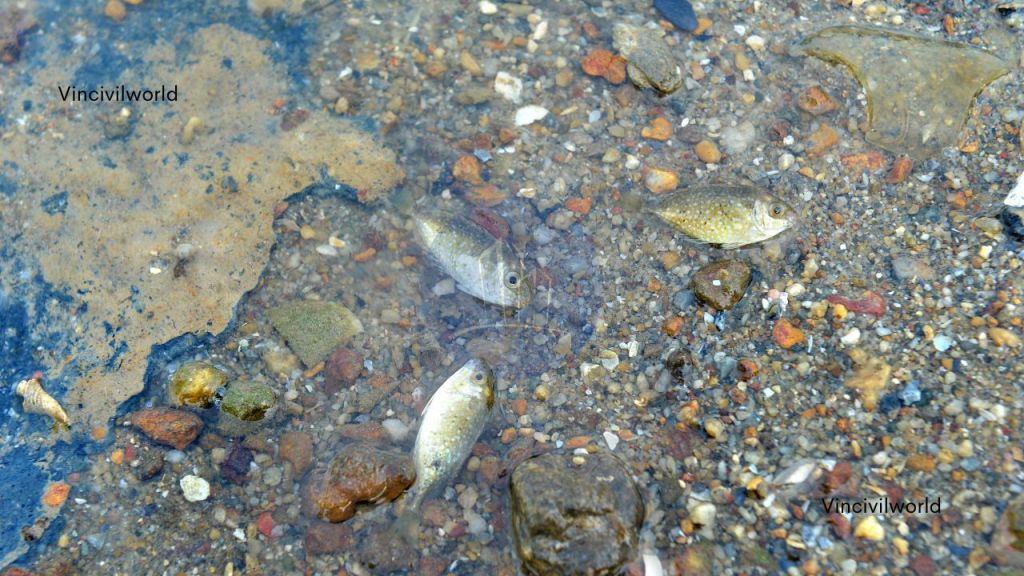
Water Pollution – Death of Marine Species
Economic Effects of Water Pollution
It is costly to manage and restore polluted water bodies. For example, following the Fukushima tragedy, Japan announced in 2019 that it is running out of space. There is not enough space to retain the polluted water. Over a million tonnes of contaminated water are currently kept in tanks. According to estimates, cleaning up the disaster’s aftermath will cost at least $660 billion.
Purifying drinking water costs more under normal circumstances. This does not include the health costs of treating diseases caused by contaminated water. Eutrophication in US freshwater costs approximately $2.2 billion per year.
Loss of Aesthetic Value
Winds and currents carry the oil spills into the shore. Oil forms a thick layer over the beaches and rocks. Thus it reduces the aesthetic value of beaches and is a big threat to tourism and recreation on beaches. Moreover, polluted water bodies develop foul odours. They also develop unpleasant colors. Both of these factors destroy their aesthetic beauty and reduce human interaction.
Biomagnification refers to the progressive increase in the concentration of toxins from organisms of one trophic level to the next.
As a result, organisms in the higher trophic level which may not have direct exposure to water pollutants are also harmed.
For instance, predatory birds like vultures and eagles accumulate dieldrin, DDT in their bodies by consuming fish poisoned with pesticides.
When these pesticides reach their body, the concentrations are high enough to impact them severely. Dieldrin affects the calcium metabolism in predatory birds and leads to thinning of their eggshells.
The worst-hit are always the ones in the highest trophic level, which in most cases are human beings. Diseases like itai-itai and Minamata disease remain painful reminders of the effects of biomagnification and water pollution. In the next section, let’s have a closer look at the effects of water pollution on human health.
Water Pollution Effects on Human Health
Water acts as a carrier of many harmful pathogens which causes water-borne diseases in human beings. Since contaminated water is the primary mode of transmission for these diseases, they are known as water-borne diseases.
The majority of intestinal (enteric) disorders are contagious and spread by faeces. Pathogens are disease-causing agents found in the faeces of infected people. They include viruses, bacteria, protozoa, and parasitic worms. These infections spread through water sources and directly infect people who handle food and water. Let me show you a few of those diseases:
Bacterial diseases
Vibrio Cholerae is responsible for diarrhoea, the most common water-borne disease. This bacterium releases toxins in the digestive tract and leads to watery bowel movements, dehydration and renal failure. According to WHO, diarrhoea kills around 525000 children below 5 years, every year.
Shigella bacteria cause Shigellosis that affects the digestive tract of humans and damages the intestinal lining. Salmonella bacteria are found in contaminated water. It causes fatal salmonellosis that results in inflammation of the intestine and death.
Bacterial diseases
Viral Diseases
Firstly, drinking contaminated water causes Hepatitis, a viral disease that infects the liver. Secondly, contaminated water also becomes a breeding ground for mosquitoes that spread Encephalitis. Poliomyelitis virus is responsible for poliomyelitis and spreads through contaminated water.
Parasitic Diseases
Parasitic diseases transmitted via contaminated water includes Cryptosporidiosis by cryptosporidium parvum. Galloping amoeba is caused by the Entamoeba histolytica. Giardiasis is caused by Giardia lamblia.
Now, let me show you the health effects of some particular water pollutants.
Pesticides – carbonates and organophosphates present in them damage the nervous system and cause cancer. Chlorides can cause reproductive and endocrinal damage.
Nitrates – especially affect babies that drink formula milk. It reduces the amount of oxygen in the blood and causes the “blue baby” syndrome.
Arsenic – causes liver damage, skin cancer and vascular diseases
Fluorides – in excessive amounts makes the teeth yellow and causes spinal cord damage.
Health Risks: Contaminated water poses significant health risks, including bacterial, viral, and parasitic diseases.
Conclusion
Water is a natural resource that all living things require for survival. Any reckless behavior on the part of humanity has an impact on all other organisms. As a result, water bodies must be protected from pollution.
In summary, water pollution presents severe challenges that affect both natural ecosystems and human well-being. Understanding the causes of water pollution and their effects is essential for developing effective solutions. We can achieve cleaner water bodies by targeting the primary water pollution causes. Addressing their impacts leads to healthier environments. It is imperative to implement comprehensive strategies to reduce pollutants. Managing their effects effectively ensures sustainable water resources for future generations.
Structural steel fabrication is a process that involves bending, cutting, and shaping steel components. It also includes assembling these components to create industrial and residential structures. Structural steel fabrication has a very high strength-to-weight ratio. Because of this versatility and flexibility, engineers use structural steel fabrication extensively in various industrial, residential and commercial projects.
Structural steel fabrication involves the process of transforming raw steel into usable components for construction projects. Structural steelwork fabricators follow a series of stages to ensure precision, from design to installation. The fabricated steel structures are used in various applications, including bridges, buildings, and industrial facilities. The fabrication of steel structures requires attention to detail and quality control to meet the highest standards. This work plays a crucial role in the development of durable, reliable infrastructure.
In this blog, let me walk you through the Advantages, Processes and applications of structural steel fabrication works. Here we go.
Structural steel fabrication – Stages and procedures
Structural steel fabrication involves multiple stages and requires highly skilled manpower. The training of manpower is essential for transforming raw materials into precise engineering structures. In the following sections, I will show you the processes involved in structural steel fabrication works and the involvement in crafting the structures.
Structural steel fabrication work involves the detailed process of transforming raw steel into components for building structures. Skilled structural steelwork fabricators perform various stages to create fabricated steel structures.
Creating Shop drawings /fabrication drawings
Material preparation for structural fabrication
Cutting, bending and drilling of steel
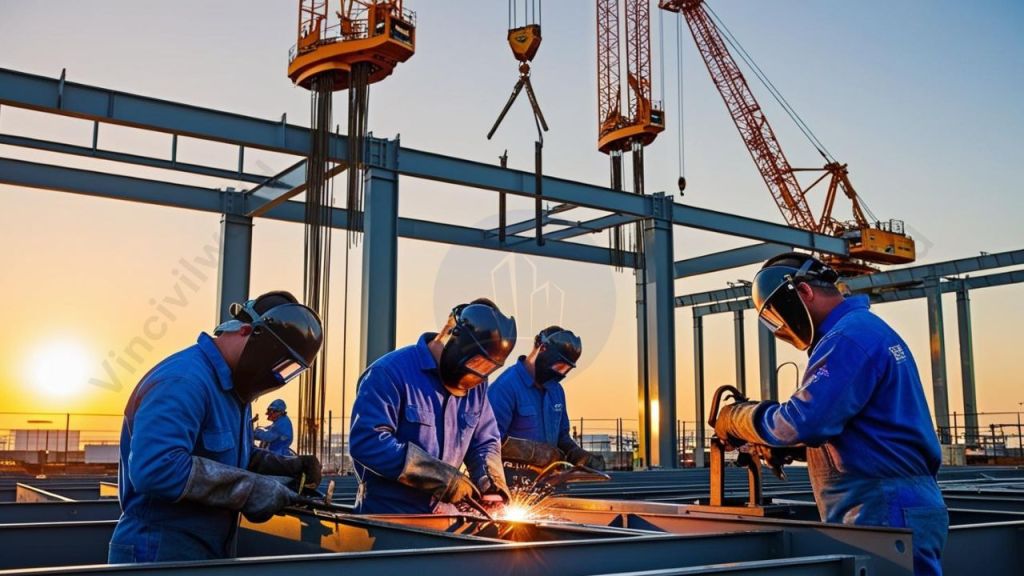
Welding of structural steel
Engraving and assembly
Each stage is crucial to the successful completion of structural steelwork fabrication projects.
Ideation and shop drawings/fabrication drawings
In the first stage of structural steel fabrication works the major processes involve ideating, blueprinting, and creating shop drawings. During this phase, the team conceptualizes the design and prepares detailed plans and drawings. We use software to create blueprint drawings, taking into account requirements, code compliance, and specifications. Blueprints and shop drawings ensure the design is proper. They provide accurate information like dimensions, connections, and other specifications required for fabricating the structure.
Accurate and precise ideation, blueprints, and shop drawings are crucial. They greatly influence the quality of any structural fabrication work. They are also critical for its speed.
structural steel fabrication work
Material preparation for structural fabrication
Material preparation for structural steel fabrication work involves selecting steel components. It also involves cutting and preparing them. This ensures precision and quality in fabricating steel structures by skilled fabricators. The preparation of raw steel for structural fabrication involves the following stages:
a) Material selection and inspection
b) Cutting, bending, drilling
Material selection and inspection
We perform the material selection on the basis of project requirements and specifications. This step typically includes selecting the appropriate grade of material. It involves conducting requisite raw material quality checks before using it for work.
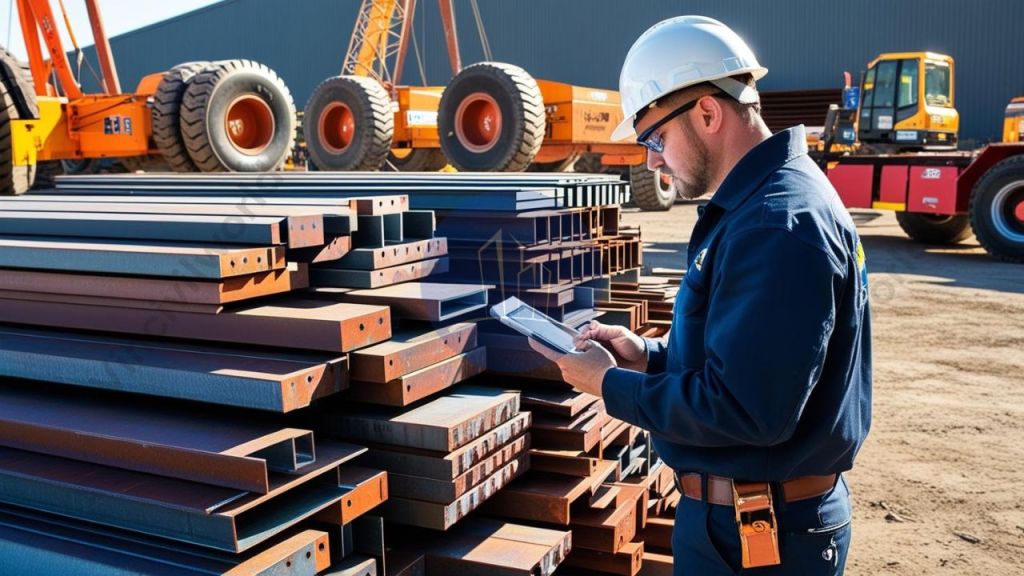
Material Inspection for Structural Steel Fabrication works
Cutting, bending and drilling of steel
The cutting stage encompasses the precise cutting of raw material into accurate sizes as per the shop drawings. Mostly, cutting is done with the help of various techniques. This includes sawing, which involves using a saw blade. Shearing uses specialized machinery to make straight cuts. Advanced techniques include plasma cutting, laser cutting, or water jets. Generally, these processes take place in a fabrication shop/factory. However, the shearing process is limited to small and miscellaneous structural members.
During the bending stage, the structural steel undergoes deformation to the required shape and angles. We mainly employ rolling machines or press breaks in this process. Generally, there are five common methods of bending structural steel. This includes rolling, incremental bending, hot bending, rotary-draw bending, and induction bending. Fabrication of curved or angled structures requires bending.
Drilling of structural steel for fabrication work
Drilling of structural steel provides precise holes in structural members. This is generally done with the help of drill presses or specialized drilling machines. Drilling is basically done for bolted components.
Welding of structural steel
Welding involves creating a variety of welds to join structural steel components. The process uses heat and pressure to produce continuous joints. Mostly, the welding process follows different stages:
The welding process starts with cleaning the surface and ensuring that any dirt and other impurities are not there. The next process is the fit where we assemble and align the steel sections as per shop drawings. Basically, this ensures an accurate fit-up for welding. On completion of the fit-up, we start the structural welding process.
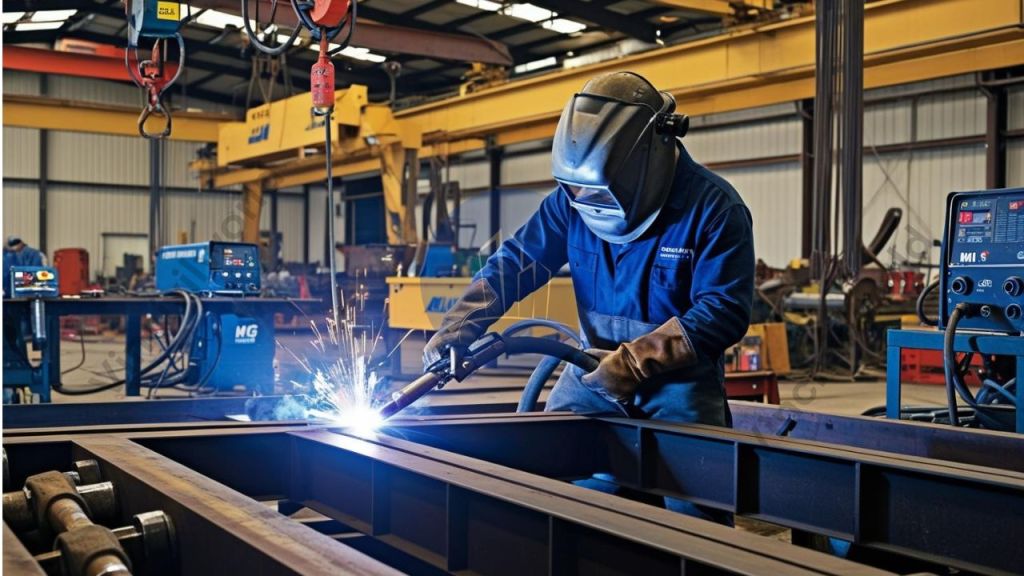
Welding of Structural Steel for fabrication works
Structural welding is done in any of the two methods. The heat from an electric arc, laser, or other welding methods is applied to melt the steel edges, forming a molten pool. Filler Material such as welding wire or rod, is added to the molten pool to strengthen the weld. The molten pool cools, solidifies, and forms a continuous bond between the steel components.
Common types of welding used in structural steel fabrication include:
Engraving in structural steel fabrication involves etching or inscribing markings, identification codes, or specific details onto the steel components. Specialized engraving tools or laser engraving machines perform this step.
Assembly is the final stage. In this stage, we combine the fabricated steel components to create the completed structure. This is often done through welding, bolting, or riveting. These steps ensure proper identification, alignment, and secure connections, contributing to the structural integrity and functionality of the steel assembly.
Conveying for erection
The fabricated members are conveyed to the area of erection where these members are erected and aligned according to the drawings.
Inspection and Quality Control
Inspection and quality control ensure that each component meets industry standards for strength, precision, and durability. Specialists check weld integrity, measurements, and alignment to confirm that the steel structure is sound and compliant. This stage involves using non-destructive testing (NDT) techniques. Techniques like ultrasonic or radiographic testing detect flaws within the metal without causing damage. Rigorous quality checks help avoid structural failures, supporting structural steel fabrication work of the highest standard.
Advantages of structural steel fabrication
Structural steel fabrication offers a wide variety of advantages,
High Strength and Durability: Structural steel possesses excellent strength-to-weight ratio and durability, providing long-lasting and resilient structures.
Design Flexibility: Steel fabrication allows for versatile and customizable designs, accommodating complex architectural and engineering requirements.
Fast Construction: Prefabrication of Steel components enables efficient and speedy on-site assembly, reducing construction time and costs.
Structural Integrity: Steel’s inherent properties ensure structural integrity, capable of withstanding heavy loads, seismic forces, and extreme weather conditions.
Sustainability: Steel is recyclable and reusable, reducing environmental impact and promoting sustainability in construction projects.
Cost-Effective: Steel fabrication offers cost efficiencies due to faster construction, reduced labor requirements, and minimized maintenance needs.
Precision and Quality: Since steel fabrication takes place under controlled conditions, it ensures high precision, quality, and dimensional accuracy.
Fire Resistance: Steel is non-combustible and can withstand high temperatures, enhancing fire resistance and safety.
Adaptability: Generally, steel structures give the option for easy modification, expansion, or retrofitting to accommodate future changes or renovations.
Aesthetic Appeal: Steel’s sleek and modern appearance provides architectural versatility and visually appealing structures.
These advantages contribute to structural steel fabrication’s widespread use and popularity in various construction projects.
Applications of structural steel
Structural fabricated construction mainly has the following applications
High-rise buildings
Industrial Buildings
Residential Buildings
Parking Garages and multilevel parking
Bridges
Shall we wrap up?
Conclusion
In this blog, we saw the advantages, processes and applications of structural steel fabrication works. I hope you found it insightful. In case of any queries, please feel free to ask in the comments.
Flyovers and bridges are essential transportation structures that enable the seamless movement of vehicles and pedestrians. While both serve similar purposes, flyovers navigate intersections efficiently as elevated roads, while bridges connect points over bodies of water or valleys. Their distinct features make them vital components of modern infrastructure. This article is about the features and advantages of Flyovers and bridges and the difference between flyovers and bridges.
A flyover, also referred to as an overpass or an elevated roadway, is a transportation infrastructure that provides a dedicated elevated route for vehicles to traverse over obstacles such as intersections, congested areas, or other roads.”Designers create flyovers to enhance traffic flow, reduce congestion, and improve overall transportation efficiency.”
Constructors typically build flyovers above ground level, enabling vehicles to bypass busy intersections or intersections with heavy pedestrian traffic. Generally, by separating the flow of vehicles from crossroads and pedestrian crossings, flyovers minimize traffic conflicts and ensure uninterrupted movement. This in turn results in smoother traffic flow, reduced delays, and improved safety.
Flyover
The construction of flyovers requires careful planning and engineering. Generally, builders often use reinforced concrete or steel girders to construct flyovers, providing structural support for vehicles and the ability to bear substantial loads. The design includes ramps or access points to enable smooth vehicle entry and exit onto the flyover, ensuring seamless integration with the current road network.
What are the benefits of flyovers?
The benefits of flyovers include:
Improved traffic flow: Basically, Flyovers separate the flow of vehicles, reducing congestion and ensuring smoother traffic movement.
Reduced travel time: By bypassing intersections or congested areas, flyovers enable faster and more efficient travel, saving time for commuters.
Enhanced safety: Flyovers minimize the risk of accidents by eliminating conflict points between vehicles and pedestrians or conflicting traffic streams.
Increased capacity: Flyovers can increase the capacity of road networks by providing additional lanes or routes for vehicles.
Better fuel efficiency: Reduced congestion and smoother traffic flow on flyovers contribute to improved fuel efficiency and reduced emissions.
Enhanced connectivity: Flyovers connect different parts of a road network, improving accessibility and connectivity between areas.
Improved urban aesthetics: Well-designed flyovers with landscaping, architectural features, and decorative elements can enhance the visual appeal of urban landscapes.
Economic benefits: Efficient traffic flow facilitated by flyovers can boost economic productivity by reducing transportation costs and improving logistics.
Minimized environmental impact: Generally, flyovers can help reduce air pollution and noise pollution by minimizing congestion and idling time at intersections.
Improved emergency response: Flyovers provide unimpeded routes for emergency vehicles, enabling quicker response times during emergencies or disasters.
Flyover
Types of flyovers
Flyovers are classified based on the following factors
a) Classification based on the formation
b) Classification based on materials
Classification of flyovers based on Formation
Straight Flyovers: Follow a straight-line trajectory, providing a direct route over obstacles.
Curved Flyovers: Incorporate curves or bends in their design, accommodating specific road alignments or geographical constraints.
T-Junction Flyovers: Connect perpendicular roads at a T-junction, allowing for uninterrupted traffic flow in multiple directions.
Cloverleaf Flyovers: Form a circular or cloverleaf-shaped interchange, facilitating smooth merging and diverging movements between roads.
Diamond Flyovers: Feature a diamond-shaped interchange, allowing for efficient access and exits from multiple directions.
Multi-Level Flyovers: Comprise multiple layers or levels, providing complex interchanges with ramps and access points for different roads.
U-Turn Flyovers: Enable U-turns or reverse movements, allowing vehicles to change direction without disrupting traffic flow.
Classification of flyovers based on Materials
Prestressed Concrete Flyovers: Constructed using precast prestressed concrete segments that provide strength and durability.
Steel Flyovers: Built using steel girders, offering flexibility in design and allowing for longer spans.
Reinforced Concrete Flyovers: Constructed using reinforced concrete beams or slabs, offering a balance between cost, strength, and ease of construction.
Composite Flyovers: Combination of steel and concrete elements, leveraging the advantages of both materials for optimal structural performance.
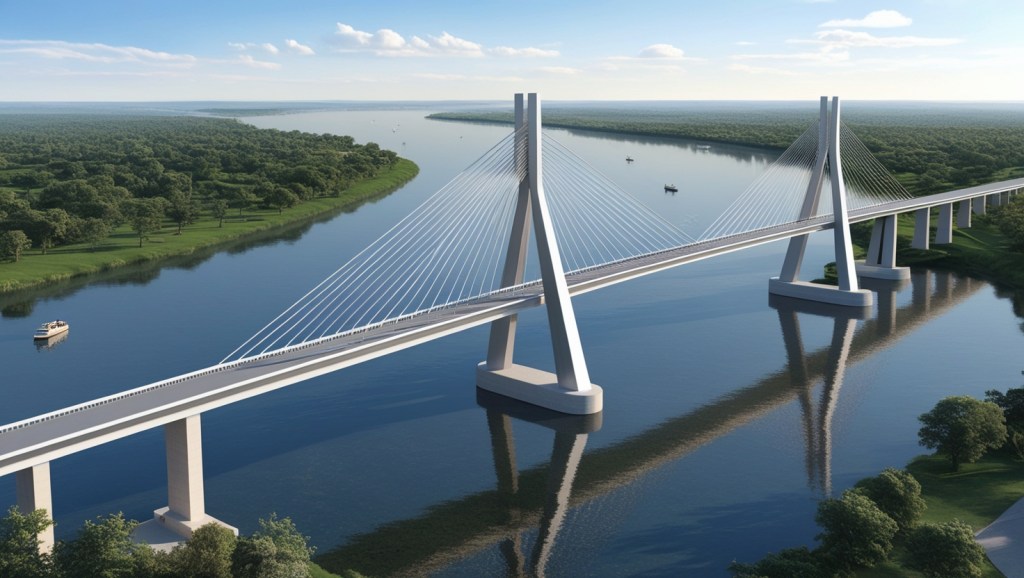
Cable-Stayed Flyovers: Supported by cables attached to tall towers, offering an elegant and efficient structural solution for longer spans.
Box Girder Flyovers: Consists of hollow box-shaped beams, providing strength, rigidity, and resistance against bending and torsion forces.
Extradosed Flyovers: Hybrid of cable-stayed and prestressed concrete flyovers featuring shorter towers and fewer cables while maintaining structural integrity.
What are bridges?
Engineers design bridges to connect two points over a body of water, a valley, or any physical obstacle. They typically comprise abutments, piers, and a deck or roadway for transportation. The construction of bridges involves using diverse materials like concrete, steel, or wood, which depend on factors such as span length and the required load capacity. However, They serve as crucial transportation links, facilitating the passage of vehicles, pedestrians, and sometimes, even trains. Bridges provide essential connectivity, improve accessibility, promote trade, and enable social and economic development by overcoming natural barriers and creating efficient transportation routes.
Difference between Flyovers and Bridges
Bridges and flyovers both elevate traffic, but they have different purposes. Bridges cross over obstacles like rivers or valleys and come in various designs, such as suspension or arch. Flyovers are overpasses built to let traffic pass over other roads or intersections, commonly found in cities to ease traffic flow. While bridges connect different areas, flyovers improve road efficiency within urban settings. Let us get into the details of the difference between flyovers and bridges.
Here are the key differences between flyovers and bridges
Purpose of bridges and Flyovers
Bridges
Flyover
Bridges are primarily built to connect two points over a body of water, a valley, or any physical obstacle.
Flyovers are constructed to navigate intersections, congested areas, or other roads efficiently, providing an elevated route for vehicles.
Purpose
Design of flyovers and bridges
Bridge
Flyover
Bridges are typically designed with piers or support that span across the obstacle, supporting a deck or roadway.
Flyovers are designed as elevated roadways, often supported by columns or piers, allowing vehicles to bypass intersections or congested areas.
Design
Location of flyovers and bridges
Bridge
Flyover
Bridges are commonly found over bodies of water, such as rivers, lakes, or seas, or in areas with significant topographical variations like valleys or canyons.
Flyovers are usually constructed in urban areas with heavy traffic, where they can provide efficient bypasses for intersections or congested road segments.
Location
Traffic Flow of flyovers and bridges
Bridge
Flyover
Bridges accommodate two-way traffic, allowing vehicles to travel in both directions.
Flyovers typically facilitate one-way traffic flow, with separate lanes or ramps for entering and exiting.
Traffic flow
Integration
Bridge
Flyover
Bridges are integrated into the existing road network, connecting two points and providing a continuous route.
Flyovers are designed to integrate with existing roads, providing seamless connectivity by allowing vehicles to enter and exit at designated access points.
Integration
Environmental Factors
Bridge
Flyover
Bridges often need to consider factors like water flow, tidal forces, or seismic activity, depending on their location.
Flyovers focus on addressing traffic congestion and improving transportation efficiency, with less consideration for natural elements.
Environmental factors
Length and Span
Bridge
Flyover
Bridges can vary in length and span depending on the distance they need to cover, ranging from short spans to long suspension or cable-stayed bridges.
Flyovers are generally shorter in length compared to bridges, spanning a specific area such as an intersection or congested road segment.
Length and span
Understanding these distinctions can help in determining the appropriate infrastructure solution based on the specific transportation needs and challenges of a given location.
Key take aways
Flyovers and bridges are crucial infrastructure elements with distinct purposes. Flyovers are designed to alleviate urban traffic congestion by providing elevated routes over intersections and other congested areas, ensuring smoother traffic flow and enhanced safety. They are typically constructed using reinforced concrete or steel girders and are commonly found in urban areas.
Bridges, on the other hand, connect two points over natural obstacles such as bodies of water or valleys. They are essential for providing transportation links that facilitate trade and economic development. Bridges are built using a variety of materials including concrete, steel, and wood, and must consider environmental factors like water flow and seismic activity.
Both flyovers and bridges integrate with existing road networks but serve different roles in enhancing transportation efficiency and connectivity. Flyovers are generally shorter and focus on urban traffic, while bridges can span longer distances and connect regions separated by natural barriers. Understanding these distinctions helps in planning and implementing effective transportation solutions.
Conclusion
Flyovers and bridges are integral to modern infrastructure, each serving distinct purposes. Flyovers, or overpasses, enhance urban traffic flow by providing elevated routes over intersections and congested areas, thereby reducing delays and improving safety. Bridges, on the other hand, connect two points over physical obstacles like water bodies and valleys, facilitating transportation and promoting economic development. Both structures require careful planning and engineering, utilizing materials such as concrete and steel to ensure durability and efficiency. Their unique features and applications make them crucial in addressing the specific transportation needs and challenges of different environments.
Reinforced Cement Concrete or RCC is a versatile and widely used construction material. RCC combines concrete’s compressive strength with steel reinforcement’s tensile strength. It forms by mixing cement, aggregates, water, and steel reinforcement bars to create a composite material. RCC is known for its excellent structural performance, durability, fire resistance, and other environmental factors. The steel reinforcement provides added strength and prevents cracking and failure under loads. Engineers extensively utilize RCC to construct buildings, bridges, dams, and other structures. This makes RCC an essential component in modern construction engineering.
This article is about Reinforced Cement Concrete (RCC) , applications, advantages and disadvantages.
Reinforced Cement Concrete (RCC) Full form – Introduction
Reinforced Cement Concrete (RCC) widely combines concrete’s strength with steel reinforcement as a construction material. It forms by mixing cement, aggregates, water, and steel rebars. RCC earns renown for its durability, versatility, and excellent structural performance. Concrete provides compressive strength, while steel reinforcement enhances tensile strength, preventing cracks and failures. Engineers strategically place the steel rebars within the concrete to withstand different types of loads. RCC offers benefits such as fire resistance, weathering resistance, and chemical durability. It finds application in various construction projects, including buildings, bridges, dams, and tunnels. Its versatility allows for flexible design and construction, accommodating different shapes and complexities. RCC plays a vital role in modern construction engineering as it provides a strong and reliable material for creating long-lasting and resilient structures.
Ingredients of Reinforced Cement Concrete (RCC)
Reinforced Cement Concrete (RCC) incorporates the following ingredients.
Cement,
aggregates (such as sand and gravel),
water,
steel reinforcement bars (rebars)
Admixures
Cement
In reinforced cement concrete (RCC), engineers use cement as the binding agent that holds together the aggregates and steel reinforcement. Cement imparts strength and durability to the RCC, making it suitable for various construction applications like buildings, bridges, dams, and infrastructure projects.
Aggregates
Aggregates are used in reinforced cement concrete (RCC) to provide bulk and stability. They fill the gaps between the cement particles, adding strength to the concrete mix. Aggregates also help in reducing shrinkage and controlling the workability of the mixture, making it suitable for construction applications such as buildings, roads, and foundations.
Aggregates can be classified into two categories: fine aggregates and coarse aggregates. Fine aggregates, such as sand, have particle sizes smaller than 4.75 mm, while coarse aggregates, like gravel or crushed stone, have particle sizes ranging from 4.75 mm to 80 mm. This classification is based on particle size and is important for achieving the desired workability and strength in concrete mixtures.
Water
Water is a crucial component in reinforced cement concrete (RCC). It is used to hydrate the cement, initiating the chemical reaction that forms a solid matrix. Water also enables the workability of the concrete mix, making it easier to pour, place, and compact. Proper water-cement ratio ensures optimal strength and durability of the RCC.
Reinforcement bars or rebars
Reinforcement plays a vital role in reinforced cement concrete (RCC) by enhancing its tensile strength. Steel reinforcement bars (rebars) are embedded within the concrete to resist tensile stresses and prevent cracking. The combination of concrete’s compressive strength and steel’s reinforcing properties ensures the structural integrity and durability of the RCC.
Admixures
Admixtures are additives used in reinforced cement concrete (RCC) to modify its properties. They can improve workability, reduce water content, enhance strength, control setting time, or provide special characteristics like waterproofing or corrosion resistance. Admixtures allow engineers to optimize the performance and durability of RCC in various construction applications.
Advantages of Reinforced Cement Concrete (RCC)
Reinforced Cement Concrete (RCC) offers several advantages in construction.
Firstly, it combines the compressive strength of concrete with the tensile strength of steel reinforcement, making it highly durable and resistant to cracking.
RCC can withstand heavy loads and offers excellent structural performance. It also exhibits fire resistance, weathering resistance, and durability against environmental factors.
RCC can be molded into various shapes and sizes, allowing for flexible and versatile construction designs.
The use of steel reinforcement prevents sudden failures and enhances the overall strength of the structure. Overall, RCC is a reliable and widely used construction material that provides long-lasting, resilient, and safe structures.
Disadvantages of RCC
While Reinforced Cement Concrete has numerous advantages, it also has certain disadvantages.
Firstly, RCC structures require skilled labor and meticulous construction techniques, which can increase costs.
The use of steel reinforcement adds to the weight of the structure, potentially leading to higher transportation and foundation costs.
Another disadvantage is the susceptibility of steel reinforcement to corrosion over time, requiring proper maintenance and protection measures.
Additionally, RCC structures may have limited flexibility in terms of alterations or modifications compared to other construction materials.
Lastly, the production of cement, a key component of RCC, involves high carbon emissions, contributing to environmental concerns.
Despite these disadvantages, proper design, construction, and maintenance practices can mitigate these issues and ensure the longevity and performance of RCC structures.
Reinforced Cement Concrete
Properties of RCC
Reinforced Cement Concrete exhibits several desirable properties that make it a widely used construction material.
Firstly, it possesses excellent compressive strength, enabling it to withstand heavy loads.
RCC also benefits from the tensile strength provided by steel reinforcement, preventing cracks and enhancing overall structural performance. Moreover, It offers durability and resistance to fire, weathering, and chemical attacks.
Additionally, RCC has good thermal and sound insulation properties, contributing to the comfort and safety of structures. It provides versatility in design and construction, allowing for flexibility in creating various shapes and sizes.
Overall, the properties of RCC make it a reliable and preferred choice for a wide range of construction applications.
Tensile structures or Tension in structures refers to the internal force created within a structure due to an applied load that tends to pull or stretch the structural members apart. When a force is applied in tension to a structure, the structural elements experience a stretching effect, which creates tensile stress within the material. This stress can cause the material to deform, and if the tension becomes too great, it can cause the material to fail or break.
Tension is a critical consideration in structural design, and engineers must carefully calculate and account for the amount of tension that a structure will experience in order to ensure that it can withstand the anticipated loads without failing. Materials such as steel, which have high tensile strength, are often used in structures that will be subjected to significant tensile forces.
When studying architecture/civil engineering, you often come across the concepts of tension and compression, which are two types of forces. The majority of structures we construct are in compression, meaning that they rely on the downward pressure and squeezing of materials such as bricks and boards to remain stable on the ground. In contrast to compression, tension involves the pulling and stretching of building materials.
Some of the earliest human-made shelters have historically influenced tensile structures. For instance, the nomads of the Sahara Desert, Saudi Arabia, and Iran developed black tents using camel leather. Native American tribes also built various structures. Compared to other structural models, tensile structures provide several advantages, and they are inspired by these ancient shelters.
The principle of tensile structures is that they rely on tension to create a stable structure. Tensile structures use tensioned elements, such as cables, ropes, or membranes, to transmit loads and create a self-supporting structure. These tensile elements are anchored to supports, such as poles or columns. The supports resist the tensile forces and keep the structure in place. The tensioned elements work together to distribute the load and create a structurally efficient system. Tensile structures are known for their lightweight and flexible design, which allows them to span long distances while using minimal materials.
Types of tensile structure
Tensile structures can be classified based on the plane in which the tensile forces act, which determines the shape and form of the structure. The three main classifications of tensile structures based on the plane of tension are:
Linear Tensile Structure
Tensioned cables or rods support a linear tensile structure, which is a type of lightweight and flexible structure characterized by long, narrow spans. These structures are often used to provide shade or cover for outdoor spaces such as pedestrian walkways, seating areas, or parking lots. Designers typically aim for a simple, minimalist aesthetic and can use a range of materials, including steel cables, high-strength polyester fabric, or PTFE-coated fiberglass. The design of linear tensile structures is important to ensure stability and resistance to wind, snow, and other loads. Engineers use computer simulations and physical testing to determine the optimal shape, size, and materials for the structure.
Shade sails: Tensioned fabric structures used to provide shade in outdoor spaces.
Tensile canopies: Lightweight fabric structures used to provide shade or cover for outdoor events.
Tensile bridges: Tensioned cables or rods support pedestrian or cycle bridges.
Tensile roofs: Tensioned fabric structures used to cover large outdoor spaces.
Tensile facades: One can attach external lightweight fabric or cable structures to a building’s exterior. Their purpose is to provide shade or reduce solar heat gain.
Three-dimensional tensile structures
Designers create a three-dimensional tensile structure with multiple curved surfaces in three dimensions. Manufacturers make 3D tensile structures from various materials such as fabric, steel, and composites. Architects frequently utilize these structures in large-scale projects such as stadiums, airports, and exhibition halls.
Cone-shaped structures: Three-dimensional structures shaped like a cone, often used for small pavilions or temporary structures.
Hyperbolic paraboloid structures: Curved structures with a saddle shape that can span large areas, used in roofs and canopies.
Geodesic dome structures: Spherical structures made of interconnected triangles, used for large span structures such as greenhouses or exhibition spaces.
Cable-net structures: Three-dimensional networks of tensioned cables that can form complex curved shapes, used for roofs and facades.
Pneumatic structures: Three-dimensional structures made of airtight materials, inflated to create a stable shape, often used for temporary structures such as exhibition booths.
Surface-Stressed Tensile Structures
Designers create surface-stressed tensile structures with pre-stressed fabric or membrane panels.” They tension the panels in all directions to create a stable and self-supporting three-dimensional surface. “Large-scale projects like stadiums, arenas, or exhibition halls often use this type of structure, which designers can make from various materials such as PVC-coated polyester, PTFE-coated fiberglass, or ETFE foil. “The pre-stressing of the fabric panels allows for the creation of complex shapes and curves, making surface-stressed tensile structures a popular choice for architects and designers looking to create visually striking and functional structures.
Single-curved surface-stressed structures: Designers often use a pre-stressed membrane to create a stable, self-supporting structure with a single curved surface for roofing applications or canopies.
Double-curved surface-stressed structures: These structures have two curved surfaces that intersect, creating complex shapes and curves. They are often used for large-scale architectural projects such as stadiums, exhibition halls, or museums. The designer creates a stable, self-supporting structure by tensioning a pre-stressed membrane in multiple directions for double-curved surface-stressed structures.
Shapes of tensile structures
The basic shapes of tensile structures include:
Cone – a structure shaped like a cone with a pointed top.
Hyperbolic paraboloid – a saddle-shaped structure that can span large areas.
Cylindrical – a structure shaped like a cylinder with rounded ends.
Spherical – a structure shaped like a sphere.
Pyramid – a structure with a base that is a polygon and triangular sides that meet at a point. One can create more complex shapes and designs for tensile structures by combining or modifying these shapes.
Major tensile structures around the world
The Sydney Opera House – a famous example of a double-curved surface-stressed tensile structure, with sail-shaped roofs.
The Denver International Airport – a cable-net structure featuring a white fabric roof spanning over 500,000 square feet.
The Olympic Stadium in Munich – a tensile membrane structure with an acrylic glass roof held by a steel tension ring.
The Burj Khalifa – a skyscraper featuring a helix-shaped tensile structure at its base, designed to withstand high wind loads.
The Kauffman Center for the Performing Arts – a cone-shaped tensile structure that covers an outdoor courtyard and serves as a performance venue.
Advantages of Tensile structures
Tensile structures offer several advantages over traditional building structures, including:
Lightweight: Compared to traditional building materials, tensile structures are lightweight, which can lead to lower transportation and installation costs.
Flexibility: The flexibility of the materials used in tensile structures allows for the creation of unique and complex shapes, which can be difficult or impossible to achieve with traditional building materials.
Durability: Designers create tensile structures to endure harsh weather conditions, which makes them a durable and long-lasting option.
Cost-effective: The lightweight materials and quick installation time of tensile structures can result in lower construction costs compared to traditional building structures.
Energy efficiency: Tensile structures allow for natural light to penetrate, reducing the need for artificial lighting and making them energy-efficient.
Sustainable: Manufacturers can make tensile structures from recyclable materials and can easily dismantle and reuse them, making them a sustainable option for construction.















 vin civilworld