Category Archives: surveying

Types of Levelling in Surveying – Uses and advantages

Types of levelling in surveying include direct levelling, trigonometric levelling, barometric levelling, and stadia levelling. Direct levelling is the most commonly used method. It involves using a level and staff to determine height differences between points. Trigonometric levelling uses angles and distances measured with a theodolite. Barometric levelling relies on atmospheric pressure readings, while stadia levelling involves using a telescopic instrument to measure distance. Each method serves different applications based on the project requirements. Levelling surveying ensures accurate elevation data for construction, roadworks, and drainage systems. The advantages of levelling include precise ground profiling, improved accuracy in projects, and efficient data collection. Define levelling as a key technique for enhancing surveying reliability.

Types of levelling – Leveling is a branch of surveying that deals with computing and determining the relative heights between different points with respect to the datum. The purpose of leveling is for determining the elevation of a point and establishing the same at a given elevation. Moreover leveling deals with the computation of measurements in the vertical plane. There are different types of leveling in Surveying. In this article, we will discuss the purpose advantage and types of leveling.

  1. Purpose of levelling in Surveying
  2. Types of levelling
    1. Barometric levelling – Types of levelling
    2. Trigonometric levelling – Types of levelling
    3. Stadia levelling – Types of levelling
    4. Direct levelling
      1. Simple levelling
      2. Differential levelling
      3. Profile levelling
      4. Reciprocal levelling
      5. Precise levelling
  3. Key Takeaways: Types of Levelling in Surveying
  4. Conclusion

Purpose of levelling in Surveying

The purpose of levelling in surveying is to determine the relative height of different points on the earth’s surface. Levelling ensures accurate measurements of elevations, helping in the design and construction of roads, buildings, and drainage systems.

  • Mapping and contouring : Preparation of accurate map layouts with elevation details.
  • Establishing Elevations : To decide the elevation of points by establishing the height differences between points.
  • To prepare contour maps.
  • Earth work : Determination of depth of cutting and filling in earthworks.
  • To make the cross-section of canals, roads, etc.
  • For establishing control points.
  • Water Flow control : Ensures proper Drainage and irrigation
  • Building Layout – Facilitates precise alignment for construction.

By understanding the types of levelling in surveying, professionals achieve greater accuracy in infrastructure projects. This enhances the advantages of levelling techniques.

Types of levelling

Types of Levelling in Surveying are crucial for determining accurate elevation differences. Different methods cater to varying project needs, enhancing the advantages of levelling.Each method has distinct advantages, making levelling surveying versatile in engineering and construction projects.

There are mainly four types of levelling in surveying. 

  • Barometric levelling
  • Trigonometric levelling
  • Stadia levelling
  • Spirit levelling or Direct levelling

Each method has distinct advantages, making levelling surveying versatile in engineering and construction projects.

Barometric levelling – Types of levelling

Barometric leveling is a type of leveling. The measurement of elevation is based on atmospheric pressure by using a barometer. Therefore, we use a barometer. The main principle of Barometric leveling is the difference between the elevation of two points. This difference is proportional to the difference between the atmospheric pressure of the points. Since it is inaccurate, this method of leveling is rarely used. Because leveling takes time and the atmospheric pressure does not remain constant throughout the day. Therefore they give only a rough estimation.

Though not as precise as other types of levelling like differential levelling, it is useful for rough elevation measurements. This method is effective over large distances where accuracy is not critical.

The advantages of levelling using the barometric method include its simplicity and cost-effectiveness for non-critical tasks. It complements various methods of levelling in broad-scale levelling surveying projects.

Trigonometric levelling – Types of levelling

Trigonometric levelling is a method used in levelling in surveying to calculate the elevation. In this method, the difference in elevation is calculated using the observed vertical angle. The calculation also involves the known horizontal distance. The height difference is then calculated using trigonometric formulas. Another name of trigonometric levelling is Indirect levelling. For vertical angles, generally, we use theodolite. For horizontal distance, if the distance between the points is less, we measure using plane surveying. If the distance between the points is greater, we use geodetic observation. 

Among the various types of levelling in surveying, trigonometric levelling is particularly useful for long-distance or high-elevation measurements. The advantages of levelling with this method include its ability to handle rough terrain and large-scale surveys. It complements other methods of levelling for projects where precision is critical.

trigonometric levelling

Stadia levelling – Types of levelling

Stadia levelling is similar to trigonometric levelling. To determine the elevation of points, we use a tacheometer. Hence, It is an optical distance measurement method. This type of levelling is suitable in hilly regions. Stadia levelling is an accurate method of levelling. Another name of stadia levelling is Tachometric levelling. It is efficient for surveying in areas where direct measurement is difficult. The advantages of levelling with stadia include its simplicity and speed. It’s often used in combination with other methods of levelling for topographic mapping and large area surveys.

Direct levelling

Direct levelling is also known as spirit levelling. It is the most precise and commonly used levelling method. In this method, the vertical distance is taken with respect to the horizontal line. This determines the relative position between the points. The instruments which are used in Direct levelling are level and a levelling staff. The level consists of a telescope, level tube, levelling head and a tripod.

It is the most accurate among the types of levelling in surveying. It is commonly used in construction and land surveys.

The advantages of levelling using the direct method include high accuracy and simplicity in application. It’s widely used for detailed work. It also serves as a basis for more complex methods of levelling like trigonometric or barometric levelling.

Direct levelling is further divided into …

  • Simple levelling
  • Differential levelling
  • Profile levelling
  • Reciprocal levelling
  • Precise levelling

Simple levelling

It is the simplest method of levelling. In this method, we place the levelling instrument between the points for determining elevation. This type of levelling is suitable if the distance between the points is less. 

simple levelling
simple levelling

Differential levelling

Differential levelling is suitable in places where the distance between the points are great. This type of levelling is also known as fly levelling. In differential levelling, the levelling station is shifted various times. 

Differential levelling

Profile levelling

Another name of profile levelling is longitudinal levelling or sectioning. In this type of levelling, the points are far apart at known distances. So levelling is done at intervals along the given line. It is suitable for roads, canals, sewer lines, railways, etc. 

profile levelling
profile levelling

Reciprocal levelling

This type of levelling is done, when it is not possible to set up the level between two points. It is the accurate method of levelling. It is suitable in the place where ponds, rivers are seen. 

reciprocal levelling

Precise levelling

This types of levelling have high precision. It is similar to differential levelling. In precise surveying, special equipment and special precaution are taken to eliminate errors. 

Key Takeaways: Types of Levelling in Surveying

Understanding the types of levelling in surveying is essential for accurate elevation measurements in various engineering and construction projects. The main methods include direct levelling, trigonometric levelling, barometric levelling, and stadia levelling.

  1. Direct Levelling (or spirit levelling) is the most precise method, utilizing a level and staff to determine height differences.
  2. Trigonometric Levelling calculates elevation based on angles and distances, making it suitable for long distances and rough terrain.
  3. Barometric Levelling measures elevation through atmospheric pressure differences, though it is less accurate and primarily used for rough estimates.
  4. Stadia Levelling employs a tacheometer for distance measurement, excelling in hilly regions where direct measurement is challenging.

Each type offers distinct advantages, ensuring accurate mapping, earthwork planning, and construction alignment. By selecting the appropriate method, surveyors enhance project reliability and efficiency.

Conclusion

In conclusion, understanding the various types of levelling in surveying is crucial for achieving precision in elevation measurements. These measurements are fundamental to successful engineering and construction projects. Each method—direct levelling, trigonometric levelling, barometric levelling, and stadia levelling—serves specific applications and offers unique advantages. Direct levelling stands out for its accuracy, making it ideal for detailed work. Trigonometric and stadia levelling are invaluable for long distances and challenging terrains. Barometric levelling, although less precise, provides a quick solution for rough estimations over large areas. By employing the right levelling technique, surveyors can enhance the quality and reliability of their data. This leads to improved decision-making in design and construction processes. As infrastructure demands grow, we must leverage the strengths of each levelling type. This will be essential for optimizing project outcomes. It will also ensure that construction aligns with planned specifications and environmental considerations.

Classification of Surveying – A complete overview

Classification of Surveying is a fundamental topic in civil engineering. This is because almost every project begins with measuring and mapping the ground. Surveying determines the relative position of points on the earth. It also measures directions, distances, elevations, and areas. These measurements are used to prepare layouts at a chosen scale. In practice, surveyors apply different Types of Surveying and Land Surveying Methods through reconnaissance, measurement, marking and plan preparation. These Surveying Techniques in Civil Engineering demand high precision and good mathematical skills to analyse field data accurately. By understanding Methods of Surveying Classification, including the difference between Plane vs Geodetic Surveying, engineers can select the most suitable approach for each site and structure. In this article, we explore how surveying is classified and where each type is typically used.

  1. Classification of surveying
  2. Primary classification of surveying
    1. Plane surveying
    2. Geodetic surveying
  3. Classification of surveying based on field nature
    1. Land surveying
      1. Topographical surveying
      2. Cadastral surveying
      3. City surveying 
    2. Hydro-graphic surveying
    3. Astronomical surveying
  4. Classification of surveying based on purpose
    1. Engineering survey
    2. Military survey
    3. Mining surveying
    4. Geological survey
    5. Archaeological survey
  5. Classification of surveying based on instruments
    1. Chain surveying
    2. Theodolite surveying
    3. Traverse survey
    4. Triangulation survey
    5. Tacheometric survey
    6. Plane table survey
    7. Photogrammetric survey

Classification of surveying

Surveying is divided into different types to ensure accurate measurement methods are selected for specific project requirements and field conditions.

  • Primary classification of surveying
  • Classification of surveying based on field nature
  • Classification of surveying based on purpose
  • Based on Instruments classification of surveying

Also Read : Principle of surveying – First and second principle

The details of every classification basis is explained in detail in this article

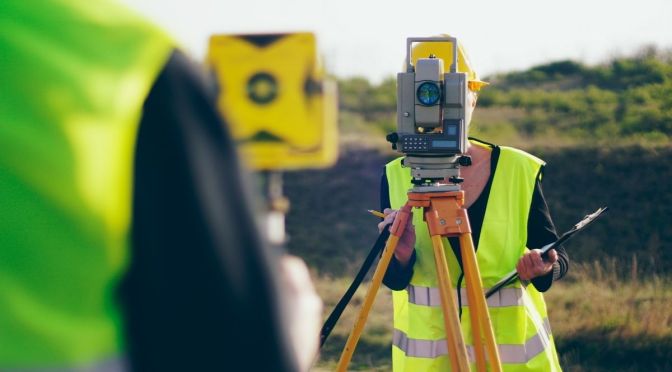
Classification of surveying - Total Station
Classification of Surveying – Total Station

Primary classification of surveying

The primary classification is based on the earth’s surface. We know earth is an oblate spheroid. So while surveying we must consider the earth as either plane or as curved. Primarily we can divide surveying into two types and are as follows.

Plane surveying

For plane table surveying the earth’s surface is considered as a plane. Therefore we should neglect the corrections due to earth curvature. The line which connects these points is a straight line. The triangles made by joining these lines are Plane triangles. This type of surveying is useful for limited areas. ie less than 200 sq.m.

Geodetic surveying

In Geodetic surveying, the earth’s surface is considered as a curve. So the line which connects these points are curves and the triangles made joining these lines are Spherical triangles. Geodetic surveying is used for large areas of more than 200 sq.m.

Classification of surveying based on field nature

Land surveying

Land surveying is the art of establishing or re-establishing corners, lines, boundaries, and monuments of property or land. This is based upon recorded documents, historical evidence, and present standards of practice. It helps in preparation of topographical maps, planning, and estimation of project works, locating boundary lines, etc. Land surveying is classified into three types.

  • Topographical surveying
  • Cadastral Surveying
  • City surveying

Topographical surveying

The main application of a topographical survey is the drafting of maps. Topographical surveys include surveying natural and artificial features such as rivers, hills, roads, canals, etc. It consists of horizontal, vertical, and angular measurements. The scale range is 1: 25000 to 1: 1000000.

Cadastral surveying

The main use of this surveying is in the documentation process while transferring ownership from one person to another. It helps in defining the boundaries and land area calculations. It also called Public land survey.

City surveying 

City surveying provides information for the construction of water supplies, sewage lines etc.

Hydro-graphic surveying

Hydro-graphic surveying deals with the surveying of water bodies. They help in offshore construction activities. Hydro-graphic surveying is also known as Marine surveying. It helps in determining the mean sea level calculation, water depth calculation, dredging analysis, etc.

Astronomical surveying

This type of surveying observes the heavenly bodies such as the sun, moon, and stars. It helps locate the absolute location and lines on the surface of the earth. It also determines the azimuth, latitude, longitude, and time.

Astronomical Surveying

Classification of surveying based on purpose

Engineering survey

This type of surveying helps to analyse the field data for engineering works. These include the construction of roads, railways, and sewage pipelines.

Military survey

This type of surveying helps the military services like the army, navy etc to determine the location of strategic importance. Through this surveying, we can provide maps of broader areas. Since it uses advanced technologies like remote sensing, GIS and GPS, we get precise field details.

Mining surveying

A mining survey determines the location of points in the underground for mine planning.

Geological survey

Gological survey helps in the study of earth composition. It helps to determine the arrangement of different strata on the earth.

Archaeological survey

This type of survey gives the details about old antiquity, forts etc to understand the archaeological sites.

Classification of surveying based on instruments

Chain surveying

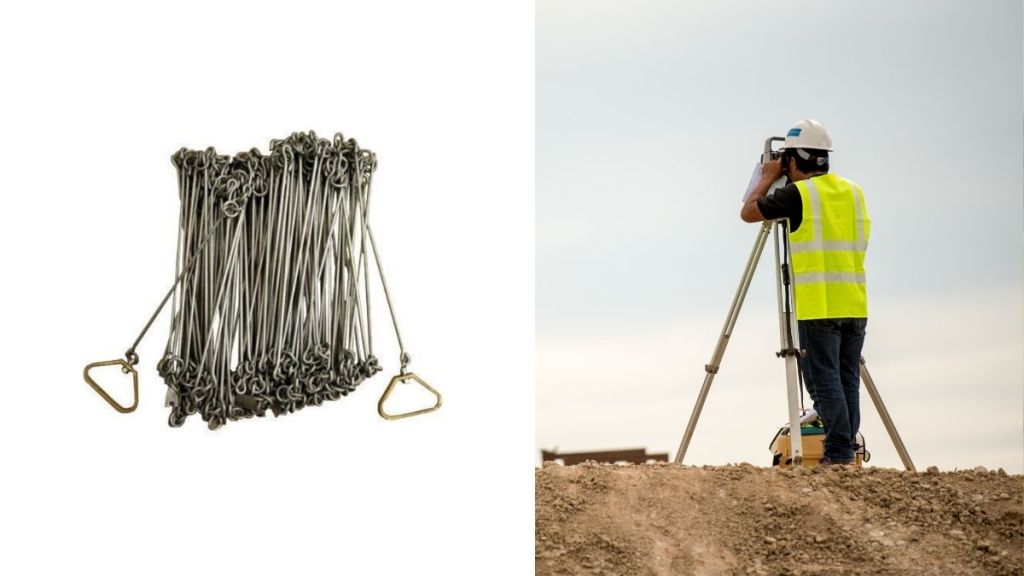
Chain surveying is the simplest form of surveying. The principle of chain surveying is triangulation. In this surveying method, we only measure linear measurements. Also, it is suitable for small areas. The areas are divided into triangles and the sides of the triangles are measured. The chain surveying uses instruments such as chains, arrows, pegs, ranging rods, etc.

Theodolite surveying

Theodolite is a surveying instrument that measures horizontal and vertical angles. It is one of the precise methods of surveying. This type of surveying helps to find the level difference, setting out, prolonging survey lines, etc of the area.

Theodolite survey - Classification of Surveying
Theodolite Survey

Also Read : Total station – Principles and fundamentals

Traverse survey

Traverse surveying is a type of surveying in which we connect the survey lines to form a framework. The length can be measured either using the directly or indirectly method. So for the direct method of measurement, we use tapes. For the indirect method, we use Electronic Distance measurement. Some important traversing methods are Chain traversing, Chain and compass traversing, Tape traversing and plane table traversing.

Triangulation survey

In triangulation surveying, we trace series of triangles formed by joining the survey points. The distance and relative points are calculated by the trigonometric relations between the length and angles of the triangle. It is preferable for hills and undulating areas. 

Tacheometric survey

Taacheometric surveying is angular surveying in which horizontal and vertical distance are calculated from the angular measurements. It is a convenient surveying method. Tacheometric surveying uses transit theodolite with a stadia diaphragm for taking measurements. This method is preferable when a direct method of surveying is not possible. 

Plane table survey

Plane table surveying is one of the fastest methods of surveying. It is a graphical method in which we can do field observation and plot simultaneously. Mostly preferable in magnetic areas where compass surveying is not possible. Also, we can check errors and mistakes using check lines. The instruments for plane table surveying are plane table, alidade, plumbing fork, plumb bob, spirit level, compass, etc. 

Photogrammetric survey

It is a surveying type that uses photographs for making measurements. We can prepare maps, 3d diagrams from these photographs. These are mostly to study the wide life and to make virtual models of historical structures. Photogrammetric surveys cover a large area for surveying and they are less time-consuming. 

Chain Surveying – Procedure and advantages.

Chain surveying is a widely popular method of surveying owing to its simplicity. Also, if the analysis is done carefully, it produces reasonably reliable results.

In the previous blog, we had shown you the Principle of Surveying in detail. Today, I will take you through the step by step procedure of conducting a chain survey. Let’s begin by discussing what is chain surveying.

Also read : Total station – Principles and fundamentals

What is chain surveying?

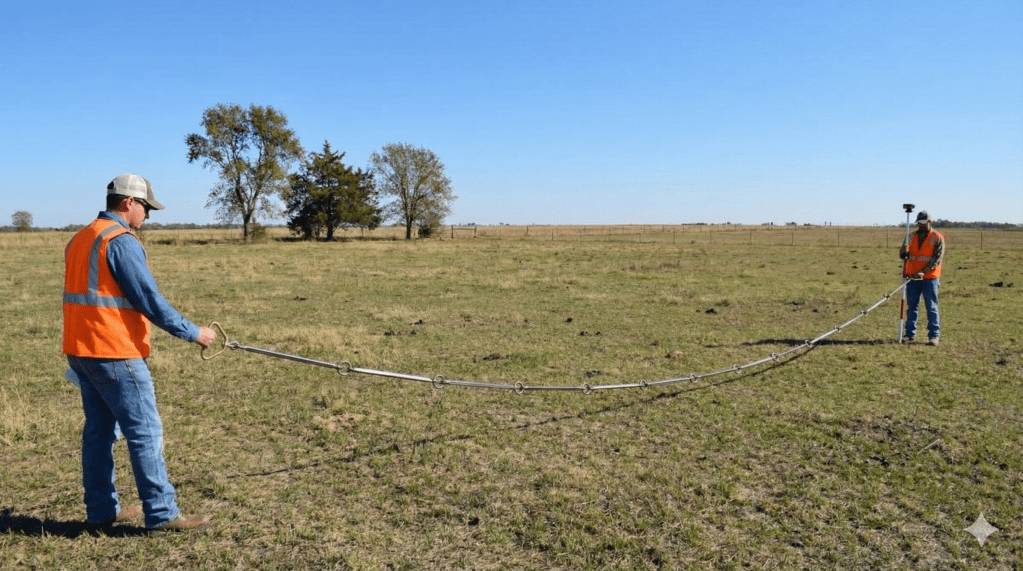
Chain surveying is a form of surveying that only takes linear measurements in the field. This is appropriate for surveying small areas with clear details and a relatively flat area. It gets its name from the fact that the chain is the most widely used piece of equipment.

Chain surveying - Chain & ranging rod
Chain surveying – Chain & ranging rod

The procedure of Chain Surveying:

Before going to the detailed procedure let’s first understand the instruments used in chain surveying.

Chain Surveying Instruments

  1. Chain or Tape
  2. Arrows (Arrows in Surveying).
  3. Pegs.
  4. Offset Rods.
  5. Range Rod (Ranging Rod).
  6. Offset Rods.
  7. Hammer.

Also Read : Applications of GPS – 6 Amazing applications unlocked.

Detailed Procedure of Chain Surveying

  • A chain is used by two men to determine the distance between two points A and B.
  • The forerunner is the man who grips the chain’s ends and pushes it forward, while the back end is the man who pulls the chain backwards.
  • When using a chain, the precursor is given a drawing bar and ten arrows.
  • The handle of the succeeding chain is held in place by a knob in the groove within the handle. And thereby pushing it down the heel of the foot and dragging the chain from the forearm to the perpendicular line to the line AB.
  • The trajectory then pushes line AB to the left or right, depending on the instructions to the following precursor, until the straight line connecting points A and B is reached.
  • When the drawing is done correctly, the forearm points to the ground  with two lines cutting off each other, with the aid of a forward shaft.
  •  The forearm chain’s handle then grips the chain with both hands and lifts it precisely above the ground’s level.
  • Now the precursor takes one of the ten arrows in its possession and places it in the semicircular groove on the outside of the chain’s handle.
  • The end of a chain is indicated by these arrows. The forward chain is now being pushed forward.
  • The pioneer is stopped from going forward when the next arrow is lowered. He’ll then be there for himself.
  • The arrow drawn in the groove of the chain’s handle keeps the handle in place. 
  • This ensures that it fits perfectly between the two legs and draws the forearm to the line AB as mentioned above.
  • Then straighten the leading chain and stop at it. The arrow is moved in the manner mentioned above.
  • Before the successor steps behind it, he pushes the chain forward and raises the missing arrow from the ground.
  • The quantification process is then repeated until position B is reached.
  • At the start, the precursor is typically given ten arrows. 
  • Since the predecessor takes up the missing arrow successor, the total number of arrows at any given time should be ten.
  • Since the width is calculated, it is impossible to forget the length of the entire chain.
  • It is determined from the number of chain lengths counted by the arrow that leads to the successor.
  • When all ten arrows have been passed to the successor, the field is noted and given to the forearm, allowing the distance to be measured.
  • Finally, when the length of line AB is less than one entire chain, it is precisely drawn to calculate the leading chain B, which reads the distance ahead of the link and records the successor in the sector.
  • When measuring distances, subsequent sketches must be made, and the measured distances must be recorded in the field book.
  • As a result, his responsibilities extend beyond foregoing.
  • Therefore, experienced and intelligent surveyors should be entrusted with the task of succession. 

Advantages of  Chain Surveying

  1. The tools for conducting a chain survey are easy to use.
  2. The easiest and most popular method of surveying is the chain surveying.
  3. The chain survey equipment can be quickly replaced.

Disadvantages of  Chain surveying

  1. In densely populated areas, a simple chain survey is impossible to perform.
  2. It is time-consuming.
  3. When there are raised points between the areas to be surveyed, the chain survey process becomes more difficult.
  4. While surveying large areas, it is not possible to stretch the chain completely to its full length. The sagging of the chain causes errors in the measurement.

That’s it about Chain Surveying. Hope you found this article insightful.