
Category Archives: TRANSPORTATION ENGINEERING

5 Types of road construction Complete Guide

Types of road construction are significant to understand the category of roads and their characteristics. In this blog, we will find out the details of 5 types in detail.

5 Types of road construction

In this section, the important types of road construction is broken down in detail.

Whitetopping roads

  • Whitetopping is the coating of a layer of Portland cement concrete on the existing asphalt pavement.
  • Depending on the thickness of the concrete sheet and if the layer is bonded to the asphalt substrate, whitetopping is divided into different types.
  • The main objective of an overlay is either to restore the existing pavement or to improve the load-carrying capacity, or both.
  • In achieving this goal, in addition to rectifying other defects such as loss of texture, overlays often restore the ride-ability of existing pavements that have experienced rutting and deformation.
  • Asphalt is considered to be much less robust and powerful than most other alternatives and is therefore not the best for the setting.

Polymer fiber reinforced concrete roads

Polymer Fiber Reinforced Concrete roads
  • Polymeric fibres are now used because they are cost-effective and have no chance of corrosion.
  • Polymeric fibres are either polyester or polypropylene that are normally used.
  • FRC material technology, including highways, local streets, intersections, parking lots, bus pads, sidewalks, driveways, bridge decks, pavement overlays, manufacturing floors, airfield pavement overlays, and patches, is used for a large number of pavement applications.
  • FRC may be used for new construction as well as for maintenance (patching), rehabilitation (overlays), and reconstruction.
  • The use of FRC for bonded concrete overlays on asphalt or composite pavements has seen substantial growth in the past few years for minor pavement rehabilitation.
  • The thickness of an asphalt bonded concrete overlay (BCOA) varies from 3 to 6 in., and the thinner installations were the majority of FRC overlays of this kind.

Bituminous roads

Bituminous roads
Bituminous roads
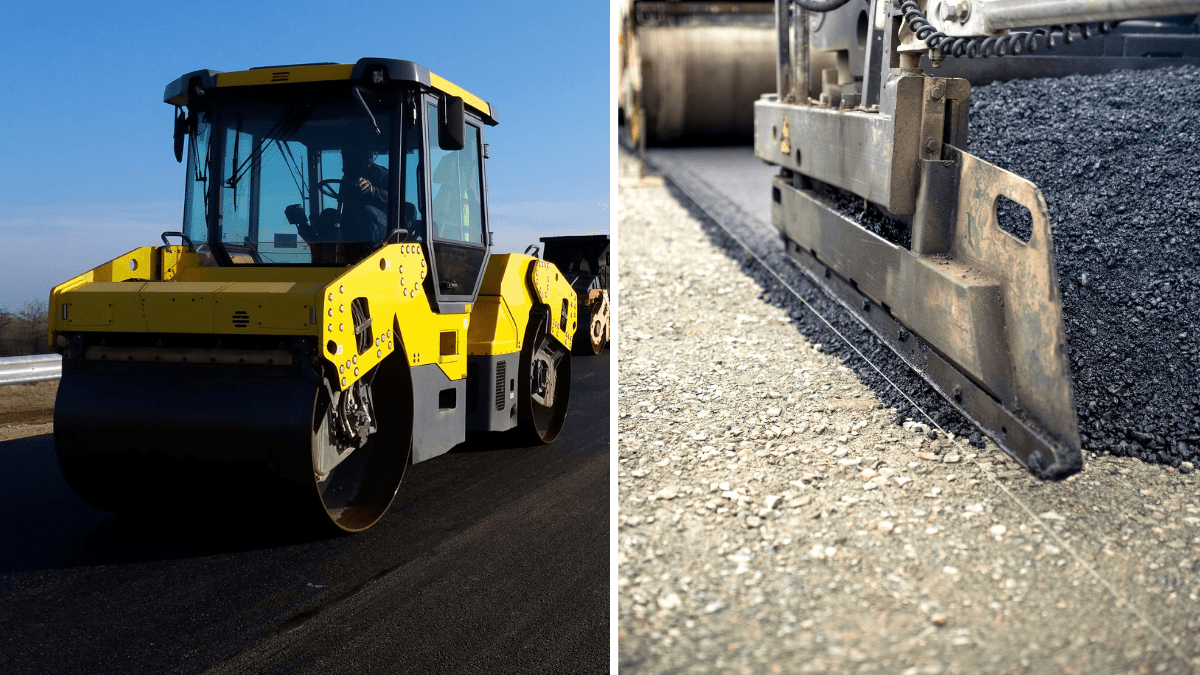
  • Bituminous surface treatment (BST) or chip seal is primarily used as a sealing coat to rejuvenate asphalt concrete pavement, but also on low-traffic highways.
  • It typically consists of aggregate spread over an asphalt emulsion sprayed-on or asphalt cement cut-back.
  • By rolling it, usually with a rubber-tired roller, the aggregate is then deposited in the asphalt.
  • “A broad range of regional words, like “chip seal,” “tar and chip,” “oil and stone,” “seal coat,” “sprayed seal,” or “surface dressing,” or simply “bitumen,” define this form of surface.
  • These are laid down using specialised and proprietary equipment.
  • In urban areas where the roughness and lack of stone associated with chip seals are deemed inappropriate.

Composite pavement road

concrete road
Concrete road
  •  In composite pavements, portland cement concrete sublayer is mixed with asphalt.  
  • Usually, they are used to rehabilitate existing roadways. To restore a smooth wearing surface, asphalt overlays are sometimes laid over distressed concrete.
  • For reflective crack management, geosynthetics can be used.
  • A heavyweight is dropped on the concrete with breakage and seat and crack and seat processes to cause cracking, then a heavy roller is used to seat the resulting parts into the subbase.
  • The machinery used to crack the concrete pavement and the scale of the resulting fragments is the key difference between the two methods.
  • The hypothesis is that regular small cracks disperse thermal stress over a wider area than uncommon large joints, minimising the strain on the asphalt pavement overlying it.
  • Rubblization is a more complete fracturing of the old, worn-out concrete that essentially turns the old pavement into a new asphalt road aggregate base.

Gravel road

  • Two distinct uses of road surfacing have been used to add gravel, or “metalling.”
  • Second, the highway path would have been dug down several feet and French drains may or may not have been installed, depending on local conditions.
  • Large stones were then positioned and compacted, accompanied by successive layers of smaller stones until the road surface consisted of small stones that had been compacted into a rough, durable surface.
  • “Road metal” later became the name of stone chippings combined with tar to form the tarmac material for the road surface.
  • The decision on whether or not to pave a gravel road also depends on the amount of traffic.
  • Maintenance costs for gravel roads have been found to sometimes exceed maintenance costs for paved or surface-treated roads if the traffic level reaches 200 vehicles a day.

I hope you found the article insightful. Let me know in comments if you have any doubts.

Happy learning!
Electric Vehicles- 5 Types & Advantages Full Guide

The world is moving towards an increased share of renewable energy in order to reduce greenhouse gases. The transport sector is the main source of greenhouse_gas. Electric vehicles can be used as an alternative source. Because they cause zero emissions and is extremely eco-friendly. There have already been many reports that show the positive impact of EVs.

We will find out the basic details of EVs along with its challenges and solutions.

Let’s get into the first section that explains the working of electric vehicles.

Electric vehicles working

Electric vehicle technology is as follows.

  • EVs are defined as vehicles that use an electric motor for propulsion.
  • Although EVs offer several advantages and can be used in different application, there are several challenges in the popular use of them.
  • The electricity used to run the motor could come either through transmission wires.
  • This is the same case with electric locomotives, metro trains, and trams or through a single or a series of connected batteries.
  • And so is the case in electric bikes and electric cars, or it could be generated onboard using a fuel cell.
  • Powered through a collector system by electricity from off-vehicle sources, or maybe self-contained with a battery, solar panels or an electric generator to convert fuel to electricity.

I will walk you through the advantages of electric vehicles in this section.

Electric vehicles advantages

  • Electric vehicles cause zero emissions and therefore eco-friendly.
  • EVs are as green as the energy sources used to charge them
  • Do not have any tail-pipe or evaporative emissions.
  •  Not limited to, road and rail vehicles, surface and underwater vessels, electric aircraft and electric spacecraft.

Time to look at the different types of EVs.

Electric vehicles types

There are mainly 5 types of EVs.

1. Mild hybrid electric vehicles

  • Contains a small electric motor that enables a start-stop system, facilitates regenerative offers acceleration assistance.
  • Achieve small reductions in emissions, between 10% to 15%  at relatively high costs.
  • It is viewed as an intermediate system.

2. Fully hybrid

  • The larger motor and battery pack that provides the vehicle with electric launching, acceleration assistance and electric driving at low speeds.
  • Achieve a maximum of 25% to 30% in greenhouse gas emission contribution.
  • The cost of hybrid components is expected to fall by 5% per year.

3. Plugin hybrid electric vehicles

  • A larger battery that can be recharged by connecting a plug to an electric power source or grid.
  • The ability to connect to the grid gives the PHEV a range of 30 to 60 kilometres of all its electric driving.
  • The carbon reduction potential of a PHEV is between 30% to 40%.

4. Range extenders

  • A small ICE that is used to recharge the battery to extend the driving range.
  • Carbon reduction potential of between 60%- 80% depending on the electricity source used to charge the battery.

5. Fully electric

  • All the needed propulsion energy is stored in a large battery that can be recharged by connecting it to the electricity grid.
  • 2 to 3 times more efficient than conventional ICEs.
  • Only as clean as the source of electricity that is used to recharge the battery, and when charged using renewable sources.
  • Reduce emissions by up to 80 %- 100%.

I will show you the challenges of EVs in this section.

Challenges of electric vehicles

Tesla electric cars
Tesla electric cars

The major challenges has been categorized into the following types.

  1. Technical

Parameters which decide the designing and operation of EVs.

a) Light weight material

  • The main objective of EVs is to reduce the energy demand of the vehicle.
  • A large amount of the energy generated from the input will be utilized in driving the heavyweight of the vehicles.

b) Efficiencies of batteries

  • Battery system should be lightweight and its storage capacity should be more.
  • EV is based on increased battery capacity and efficiency.
  • Energy devices for EV system are Pb Acid,
  • Ni and Li-ion based batteries.

c) Driving range of EVs

  • Fully charged EVs are having approximate 5 times lesser driving range than that of a conventional diesel or petrol vehicles.

d) Charging Time

  • Older lead-acid batteries or valve-regulated lead-acid battery packs or the new Lithium-Ion packs will charge fully overnight.
  • Lead Acid batteries, 70% of the charging is done in the first 40% of charging time.
  • The rest is the “topping up” stage of the charging process.

e) Environmental Impacts

  • If electricity fed to EVs is generated by the fossil fuel the emission factor will be more
  • Disposal of the used battery
  • Pb can be very dangerous to dispose of it in open.

2. Infrastructure

a) Power infrastructure

  • Substantial increase in electricity production is required to offset the overloading of local transformer and grid.

b) Charging infrastructure

  • The requirement of sufficient charging stations
  • Also, fast charging devices should be used

c) Battery recycling

  • The disposal will cause environmental pollution
  • During designing a recycling process cost is the main factor.

3. Market

a) Vehicle servicing

  • Trained technicians are required for its servicing and maintenance
  • Costly compared to conventional vehicles
  • Due to less popularization of EV

b) High upfront cost

  • A high upfront cost of purchase along with battery replacement after a few years does seem like a heavy investment to an average Indian with decent income

c) Consumer perceptions

  • Change in consumer perception is required

d) Policy

  • Taxation of vehicles and components
  • Subsidies on fossil fuels
  • Electricity tariff policies

Also read: Road margins- 6 types of road margins in highway

We saw the challenges. Let’s solve them now.

Solutions to overcome the challenges

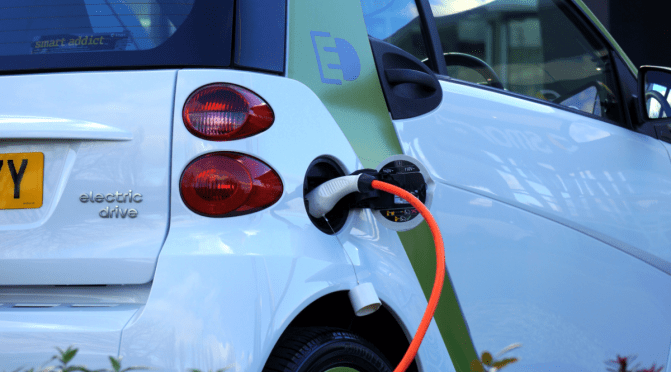
EV charging
EV charging
  1. Light weight materials such as glass, plastics, rubber, and special fibers are used in the production of a vehicle
  2. Aluminium and magnesium are used in the construction of body of vehicle to reduce the total weight.
  3. Natural fiber reinforced composites are also used in manufacturing
  4. Sodium ion, lithium sulphur batteries can be introduces for more capacity
  5. Super capacitors are also introduced which can be used to meet peak power demand condition and also for purpose of fast charging
  6. To reduce anxiety towards fuel
  7. Increase in charging stations
  8. Fast charging battery
  9. High density batteries etc.
  10. Solar power would provide cheap and reliable power system.
  11. Incentives will motivate the buyers to purchase EVs
  12. To make EVs affordable in India, domestic production of quality batteries has to be taken up.

Also read: Types of rails- 3 types full details with figures

Let’s wrap up.

Conclusions

  • The increase in the number of vehicles results in the increased emission of GHG.
  • Emission from the transportation sector is decreased: a great change in the carbon emission of our country.
  • EV – best alternative.
  • The complete economic comparison of fuels shows that electricity as a fuel is much cheaper than conventional vehicles

Are electric vehicles the future? Share your thoughts in the comments in the light of the article.

4 Types of Pavement |Difference between Flexible and Rigid Pavement

Types of pavements play a crucial role in road construction. They determine the performance, durability, and maintenance requirements of highways and streets. There are four primary pavement types: flexible pavements, rigid pavements, composite pavements, and semi-rigid pavements. Each of these serves specific purposes depending on the load-bearing capacity, climatic conditions, and construction needs. It is essential to understand the difference between flexible and rigid pavements. These two major categories vary in material composition, load distribution, and overall performance. Flexible and rigid pavements offer distinct advantages. Flexible pavements are more adaptable to underlying soil conditions. Rigid pavements, made of concrete, provide higher structural strength.

This article covers the four types of pavements and the difference between flexible and rigid pavements

Before we begin, let’s look into what a pavement is.

  1. What is pavement?
  2. Types of Pavements
  3. Flexible pavement
    1. Examples of flexible pavements
    2. Advantages of flexible pavement
    3. Disadvantages of flexible pavements
  4. Rigid pavement
    1. Advantages of rigid pavement
    2. Disadvantages of rigid pavement
  5. Comparison between flexible and rigid pavements
  6. Semi rigid/ composite pavements
  7. Interlocking Concrete Block Pavement (ICBP)

What is pavement?

The pavement is a hard surface that’s built with concrete or asphalt, like a road or a driveway.

Pavement refers to the hard, durable surface layer of roads, walkways, and other transportation paths. These surfaces are designed to withstand the wear and load of traffic. It provides a smooth, stable platform for vehicles and pedestrians, while ensuring safety and comfort. Pavements are engineered for strength, weather resistance, and longevity, typically made from materials like asphalt or concrete. Properly constructed pavements reduce road maintenance and improve traffic efficiency, contributing significantly to infrastructure durability and performance.

Types of Pavements

Pavements are essential for providing a stable and smooth surface for roads and infrastructure. The main types of pavements differ in their structural composition and load-bearing capacities. The top four types of pavements include flexible pavements, rigid pavements, composite pavements, and semi-rigid pavements. Each type serves specific purposes depending on traffic load, climatic conditions, and construction requirements.Based on the structural behavior, road pavements are classified as

  • Flexible pavement
  • Rigid pavement
  • Semi-rigid pavements
  • Composite pavements
  • Interlocking cement concrete block pavement (ICBP)

Without any due, let’s jump onto the first type of pavement.

Flexible pavement

Flexible pavement - Type of pavement
Flexible type of pavement

Flexible pavement is the pavement which possess negligible flexural strength. And,

  • The flexible pavement layer can exhibit non-recoverable deformations of the lower layer. It may also show recoverable deformations. These deformations include the subgrade on the upper layers and possibly affect the pavement surface.
  • The vertical compressive stress is maximum on the pavement surface directly under the wheel load and is equal to the contact pressure under the wheel
  • The lower layers of pavement have to withstand lesser magnitudes of stresses. There is no direct wearing action due to traffic loads. They also do not experience weathering action due to environmental factors. Therefore inferior materials with lower cost can be used in the lower layers.
  • In flexible pavement layers, the top layer has to be the strongest. This layer must sustain the highest compressive stresses. It also endures wear and tear due to moving traffic and varying weather factors.

Examples of flexible pavements

  1. Asphalt Pavements – Commonly used for highways, streets, and driveways.
  2. Bituminous Surface Treatment (BST) – Used for lower-traffic roads and rural areas.
  3. Gravel Roads with Asphalt Coating – Often found in rural areas or less populated regions.
  4. Full-Depth Asphalt Pavements – Used in areas with high traffic and heavy loads.
  5. Cold Mix Asphalt – Used in maintenance and patching.

Each of these examples offers flexibility, enabling them to adjust to changes in the subgrade beneath.

Also read: Electronic Toll Collection-4 subsystems of ETC Full details

Next, let’s peep into advantages and disadvantages of flexible pavements.

Advantages of flexible pavement

Flexible pavement is a common choice in road construction. It is designed to distribute loads over a wide area. This allows for movement and adaptation to underlying conditions. This adaptability makes flexible pavements particularly beneficial in various applications.

Types of Road pavements - Flexible pavement
Types of Road pavements – Flexible pavement
  • Initial cost can be reduced by constructing thin bituminous surface layer
  • Standard design load in terms of CSA (Cumulative Standard Axles)
  • Functional deterioration
  • Strengthening by overlay
  • High salvage value
  • Can be open to traffic after 24 hours

Disadvantages of flexible pavements

  • Deterioration under stagnant water
  • Periodic maintenance
  • Patching of pot holes is expensive
  • Thickness is very high
  • Night visibility is very low

That’s it about flexible pavement. Let’s move onto the next type of pavement.

Also read: Classification of roads- 5 types of roads full details

Rigid pavement

Rigid pavements are those which possess noteworthy flexural strength of flexural strength or flexural rigidity.

See more details below.

  • Rigid pavements are generally made of Portland cement concrete hence known as ‘cc pavement’
  • Construction of rigid pavement using high quality plane cement concrete known as ‘pavement quality concrete (PQC)
  • The CC pavement made of PQC are generally expected to sustain up to 45kg/cm2 of flexural stresses
  • In rigid pavements, the stresses are not transferred from grain to grain to the lower layers as in the case of flexible pavement layers.
  • Slab action is capable of  transmitting the wheel load cases through a much wide area below pavement slab

Having the details in back pack, ready to know the advantages and disadvantages of rigid pavements?

Advantages of rigid pavement

  • No deterioration under stagnant water
  • Thickness is less
  • Service life 30 years
  • Life cycle cost is very less
  • Night visibility is high

Disadvantages of rigid pavement

  • Axle load study is required
  • Design should be for 30 years
  • Possible to restore the pavements under crack
  • Surface may become smooth or slippery
  • Long period of 28 days is required to open traffic

Let’s conclude the section with a comparison.

Comparison between flexible and rigid pavements

Flexible pavementRigid pavement
Bitumen is mostly used for construction Otherwise called concrete pavements
Bitumen becomes soft due to low temperature and bleeds leading to failure of pavementHave longer life and is practically maintenance- free
When water enters the pavement during raining, resulting in potholes Can withstand extreme weather conditions
Due to low temperature in winter season, bitumen becomes brittle leading to cracking of pavementInitial cost higher comparatively, but economical in long term
Comparison between flexible and rigid pavements

Now, you know about flexible and rigid pavement. Time to meet some not-so-famous type of pavement.

Also read: Gauges in railway- All Details About Broad, Metre and Narrow Gauges

Semi rigid/ composite pavements

Semi-rigid pavements are an intermediate state between the Flexible and the Rigid pavement. The flexural strength of the pavement is less than a concrete slab. Nevertheless, it finds support by the lateral distribution of loads through the pavement depth as in flexible pavement.

When the intermediate class of semi-rigid materials like soil cement, lean cement concrete are used in the sub-base or base course of layers of pavements, they are called semi-rigid pavement.

Pavement consisting of both flexible pavement layers and one or more semi rigid pavement layers are called composite pavements.

The last member is ICBP or Interlocking concrete block pavement.

Interlocking Concrete Block Pavement (ICBP)

interlocking concrete block pavement
Interlocking Concrete Block Pavement (ICBP)

Interlocking Concrete Block Pavement (ICBP) has been extensively used in a number of countries for quite sometime as a specialized problem-solving technique for providing pavement in areas where conventional types of construction are less durable due to many operational and environmental constraints

That was the trip through the types of pavement. Have any doubts regarding this? Just drop it in comments.

See you there. Happy learning!

Electronic toll collection- 4 subsystems full details

Electronic toll collection is one of the best advancements of Intelligent transportation system in transportation sector. We will see what is electronic toll collection in the next section. Later, I will walk you through four subsystems of ETC. They are automatic vehicle classification (AVC), violation enforcement system (VES), automatic vehicle identification (AVI) and transaction processing, which includes a back office and customer service center. The advantages, cost and disadvantages of ETC will also be discussed.

Moving onto the definition,

What is Electronic Toll Collection?

Electronic toll collection is a wireless system to automatically collect the usage fee or toll charged to vehicles using toll roads, HOV lanes, toll_bridges, and toll_tunnels.

Typical methods for collecting tolls are,

  • Manual collection
  • Automatic toll collection via coin machines
  • Electronic toll collection (ETC)

Manual toll collection is the simplest form of toll collection, in which a collector operating from a booth collects the toll.

Automatic coin machines allow collection of several methods of payments such as coins, tokens, smart cards, and credit cards without the need for a collector.

ETC is the most complex and latest method for collecting tolls. Although it has been in use for more than 20 years, ETC continues to evolve. ETC lanes improve the speed and efficiency of traffic flow and save drivers’ time.

An ETC system is capable of electronically charging a toll to an established customer account.

The system can determine whether a passing car is registered, automatically charging those vehicles, and alert the local highway patrol about users that are not registered. The ETC method allows vehicles to pass through a toll facility without requiring any action or stopping by the driver.

Now let’s see the advantages of electronic toll collection system.

Advantages of Electronic Toll Collection System

Systematic vehicle parking- an application of ITS like electronic toll collection
  • Typical ETC systems can improve the traffic flow through the toll area. Manual toll collection lanes handle about 350 vehicles per hour and automatic coin machine lanes handle about 500 vehicles in the same time period.
  • An ETC lane can process 1,200 vehicles per hour when the lane is located in a traditional plaza configuration with island structures on each side of the lane and up to 1,800 vehicles per hour in all-electronic tolling (AET) configurations.
  • An AET lane offers over five times the flow rate of a manual lane and nearly four times the flow of an automatic coin machine lane.
  • Most ETC lanes are less expensive to build and operate than traditional toll collection methods.
  • Cost data averaged for five toll facilities in five states showed electronic toll collection systems provide cost savings of over $40,000 per lane for equipment costs, and $40,000 per lane in annual operating and maintenance costs compared with automatic coin machines, and $135,000 per lane in annual operating and maintenance costs compared with manual tollbooths.
  • ETC lane usage can decrease emissions in the area.
  • Practitioners have reported that the ETC system at three toll plazas in Baltimore, Maryland, with dedicated ETC lanes located in a traditional plaza configuration with island structures on each side of the lane resulted in a 40 to 63 percent reduction of hydrocarbon and carbon monoxide, and approximately 16 percent reduction of nitrogen oxide in the study area.

That’s it about the advantages. Its time to see the principles of electronic toll collection.

Don’t miss out Google position 1st post: Road margins- 6 types of road margins in highway

Principles of Electronic Toll Collection

Typical ETC systems are comprised of four subsystems

  • Automatic vehicle classification (AVC)
  • Violation enforcement system (VES)
  • Automatic vehicle identification (AVI)
  • Transaction processing, which includes a back office and customer service center.

Automatic Vehicle Classification

  •  Automatic Vehicle Classification (AVC) consist of sensors installed in the toll lanes to detect and classify the vehicles for proper tolling.
  • The AVC technique is most commonly performed using overhead equipment (laser or infrared detectors) or intelligent detector loops embedded in the pavement, but the detectors can also be placed on the roadside.
  • The sensors are capable of perceiving and classifying vehicles in the open road tolling or all electronic tolling environments.

Violation Enforcement System

  • The primary goal of Violation Enforcement System is to reduce the number of toll evaders with the assistance of multiple types of solutions.
  • These methods range from fairly basic (audible and/or visual alarms) to complex systems, such as automatic license plate recognition camera-based solutions.
  • Police enforcement and toll gates are other types of successful VES but can be costly and inefficient for high traffic volumes.
  • Camera-based VES captures images of each vehicle’s front and/or rear license plates, depending on the toll authority’s regulations.
  • The necessary equipment consists of a camera (or array of cameras), an illumination system, and a controller card or computer that interfaces with the lane controller and/or the back office.
  • A camera-based VES with plate recognition serves a dual purpose of enforcement and video tolling.

Automatic Vehicle Identification

  •  The Automatic Vehicle Identification systems properly identify each vehicle to charge the toll to a particular customer.
  • This ETC method is typically done with various AVI technologies such as a bar coded label affixed to the vehicle, proximity card, radio or infrared transponder, and automatic license plate recognition.
  • A majority of the AVI systems used involve radio frequency identity (RFID) and plate recognition technologies.
  • The RFID system uses an antenna to communicate with a transponder in each registered vehicle, while video tolling identifies the license plate and charges a customer or sends a bill to unregistered drivers with help from the Department of Motor Vehicle’s address database.

Transaction Processing with Back Office and Customer Service

  • The back office consists of the host and/or plaza system, customer service center, and violation processing center.
  • The main functions of the host and plaza systems are to aggregate transactional data from all the lanes, data summarization, report generation, download of files such as a toll rates, toll schedules, and transponder status list.
  • The customer service center is responsible for processing the AVI and video tolling transactions, matching transactions with account holders, debiting the correct toll amount, managing accounts, generating a valid tag list, and providing customer support to name a few.
  • The violation processing center’s main function is to process the images of the licenses plates, identify violators, and mail notices.

 We have seen all the positives till now. Any topic is incomplete without raising the negative side. I will tell you that now.

Also read: Gauges in railway- All Details About Broad, Metre and Narrow Gauges

Disadvantages of Electronic Toll Collection System

Charging a car- an application of ITS like electronic toll collection

Most of the technological issues have been overcome after two decades of successful ETC implementations. The current issues with implementing ETC systems are related to interoperability and technology selection.

  • There is a lack of interoperability with other states and with toll facilities at border crossings.
  • The need for interoperability between border crossings and toll roads will continue to increase as toll road are built near the border.
  • Technology selection directly impacts interoperability. If a toll agency selects a different RFID protocol then it might not be able to read customers from away agencies.
  • Cities and local toll authorities should work together to create a compatible system throughout the state.

And finally, we have reached at the practical aspect.

Cost of ETC

  • The cost of implementing an ETC system varies widely depending on the scope of the project, making it difficult to provide an exact cost.
  • The system size (number of lanes and collection points), shoulder coverage, gantry type, and type of technology all affect the project price.
  • The cost is also affected by whether the system is new, upgraded, or added onto.
  • The price range will change based on the level of customized software required for the business rules, the back office operation (outsource or in-house), the project location, and the necessary signage.
  • The cost per ETC lane in an AET or ORT environment ranges from $100,000 to $200,000 for the cost of the lane equipment and its installation, and assuming the project reuses existing back office software, gantry, and right of-way.

MUST READ: Bitumen for road- Grade and properties of bitumen

Hope the article benefited you. So, electronic toll collection is an amazing tool, right? Let me know that in the comments.

Enjoy learning!

Coning of wheels- What is coning of wheels?

Coning of wheels is an interesting topic in railway engineering. In this blog, we will see the theory of coming of rail wheels, starting from what is coning of wheels.

What is coning of wheels?

figure shows coning of rails
Coning of rails

Let’s see what is coning of wheels step by step.

  • The space between the inner borders of wheel rims is by and large kept less than the measurement of the track.
  • This results in a gap between the wheel rims and running ends of the rail which is approximately equal to 1cm. (2/8 on both sides).
  • More often than not, the tread of wheels is perfectly the dead centre of the beginning of the rail, since the wheel is chamfered to keep it in this middle position involuntarily.
  • Thus, in coning of wheel the tread or rim of wheels of railway vehicles is made in the shape of  a cone with the slope of about 1 in 20.
  • It maintains the vehicle in the central position with respect to the track.
  • On straight track, portions of wheels running on track have the same diameter.
  • While on the curved path, the outer wheel has to cover a larger distance than the inner wheel. Thus, the portions of wheels running on track have different diameters which help in the smooth running of wheels.

Theory of coning of wheels

Wheel rail contact geometry
  • We have seen what is coning of _wheel through some easy read bullet points. Let me do the same to learn the theory behind coning of rail wheels.
  • On a railway level track, the moment the hinge locomotes towards one rail, the wheel tread width above the rail steps-u but reduces over the other rail.
  • This forbids the auxiliary movement and hinge pulls back to its original position.
  • This is possible only if the diameters on both rails are equal and the pressure on both rails is also equal.
  • On a coiled path, because of the rigidity of the wheel bottom, either of the wheels has to slip by a measure equal to the differentiation of length.
  • Or else, the axle has to move outward a bit so that a tread with longer diameter is formed over the outer rail where, as a slighter diameter tread is formed over the inner rail.

Also read: Applications of Intelligent transportation system- everything you want to know

Calculation of coning of wheels

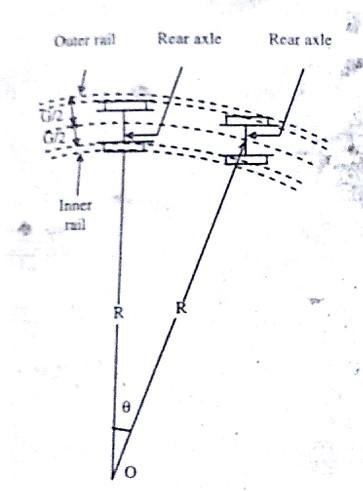
Behaviour of coning on curves

If the diameter of the tread on both the rails is equal, then

Slip=α (R2-R1),

The outer radius, R2=R+C/2

Inner radius, R1= R-G/2

G= Gauge

α= Angle at centre in radians

 Therefore, slip= alpha X G

α 0 = Angle center in degrees about 1 degree

α 0 Slip= 0.029 (roughly for 1 degree of central angle)

  • Therefore, the slip is about 0.029m per degree of the central angle.
  • Chamfering of wheels on bends is not useful as the principal axle if owing to centrifugal force proceeds towards the outward rail the back axle will precede towards the inside rail and the complete benefit of coning wheels cannot be availed.
  • Put differently, there will be no free sidelong movement of wheels.
  • This results in the disadvantages of the outer rail will have more pressure while the inner rail will have lesser pressure.
  • Owing to the central strength, the parallel components incline to turn the rail out and the gauge has broadening tendency.
  • Due to this condition if the voids sleepers have no base plate beneath the edge of the rail they will be damages. In order to get rid of or minimize the supra mentioned faults “angling of rails” is done.
  • When the rails are tilted then the base plate or sleeper is not placed horizontally. It is laid at a slope of 1 in 20 towards the inner side.

Advantages

  1. Smooth riding- help vehicle to negotiate curves smoothly
  2. Reduces wear and tear of wheel flanges. Damage is caused because of the friction action of rims with inner faces of the rail top.
  3. It gives an option of lateral drift of the hinge with its wheels
  4. It prevents, to some extent, the slipping of the wheels

We have seen the advantages. Let’s see the disadvantages of coning of wheels now.

Disadvantages

  1. The pressure on the horizontal component of force near the inner edge of outer rail has a tendency to wear the rail quickly
  2. The horizontal component has to turn the rail outwards and hence the gauges may be widened.
  3. If no base plates are provided, sleepers under the outer edge of the rail may be damaged

Also read: Intelligent transportation system: A comprehensive approach to its components

Types of Gauges in railway- Broad Gauge, Metre and Narrow Gauges

Types of Gauges in railway is a mandatory topic to touch upon when you study railway engineering. In this article, I will take you on a journey through the three basic types of railway gauges: broad gauge, metre gauge, and narrow gauge.

  1. What is gauge in railway?
  2. Types of Gauges in railway
    1. Broad gauge
    2. Metre gauge
    3. Narrow gauge
  3. Factors affecting the choice of types of gauges in railway

What is gauge in railway?

The gauges in railway is defined as the clear minimum perpendicular distance between the inner faces of the two rails. The distance between the inner faces of a pair of wheels is called wheel gauge.

The figure below is a diagrammatic representation of gauges in railway.

diagram shows gauges in railway
Gauges in railway

Now, let’s jump right on to the various types of gauges in railway.

Some related posts from Vincivilworld

Types of Gauges in railway

There are 3 major types of gauges in railway.

  1. Broad gauge
  2. Metre gauge
  3. Narrow gauge

I will tell you more details about each of them in the upcoming sections. Let’s start with broad gauge.

Broad gauge

When the clear horizontal distance between the inner faces of two parallel rails forming a track is 1.676m, the gauge is called broad gauge. Also known as standard gauge in some countries.

Broadest gauge is used for tracks in plain areas which are densely populated for routed of maximum traffic at places which are centers of industry and commerce.

Suitability: Broad gauge is suitable under the following conditions

  • When sufficient funds are available  for the railway project
  • When the prospects of revenue are very bright

So, you got an idea about broad gauges. Let’s look into metre gauge now.

Metre gauge

Metre gauges are used when the clear horizontal distance between the inner faces of two parallel rails forming a track is 1m. It is used for tracks in under- developed areas and in interior areas where traffic intensity is small and prospects for future development are not very bright.

Suitability: Metre gauge is suitable under the following conditions;

  1. When the funds available for the railway project are inadequate
  2. When the prospects of revenue are not very bright.

That’s it about metre gauge. Next, let me give you some information about narrow gauge.

Narrow gauge

Narrow gauge is leveraged when the clear horizontal distance between the inner faces of two parallel rails forming a track is either 0.762m or 0.610m. These are used in hilly and very thinly populated areas.

Suitability: Narrow gauge is suitable under the following conditions:

  1. When the construction of a track with wider gauge is prohibited due to the provision of sharp curves, steep gradients, narrow bridges and tunnels, etc.
  2. When the prospects of revenue are not very bright.

You have seen all types of gauges in railway. Did you know the factors that should be taken into account while selecting a gauge? Its time to see that.

Factors affecting the choice of types of gauges in railway

Types of Gauges in Railway
Railway track
  1. Traffic condition: If the intensity of traffic on the track is likely to be more, a gauge wider than the standard gauge is suitable.
  2. Development of poor areas: The narrow gauges are laid in certain parts of the world to develop a poor area and thus link the poor area with the outside developed world
  3. Cost of track: The cost of railway track is directly proportional to the width of its gauge. If the fund available is not sufficient to construct a standard gauge, a metre gauge or a narrow gauge is preferred rather than to have no railways at all
  4. Speed of movement: The speed of a train is a function of the diameter of wheel which in turn is limited by the gauge. The wheel diameter is usually about 0.75 times the gauge width and thus, the speed of a train is almost proportional to the gauge. If higher speeds are to be attained, the broad gauge track is preferred to the metre gauge or narrow gauge track.
  5. Nature of country: In mountainous country, it is advisable to have a narrow gauge of the track since it is more flexible and can be laid to a smaller, radius on the curves. This is the main reason why some important railways, covering thousands of kilometres, are laid with a gauge as narrow as 610mm
  6. Gauge should be uniform and correct: Uniformity of gauge is necessary due to the following reasons:
  7. Inconvenience to the passengers while changing the train at the station, with the change of gauge:
  8. Delay in the movement of people and goods resulting in wastage of time
  9. Extra labour for unloading and reloading the goods
  10. The goods are also likely to be damaged or dislocated at the junction station, having a change of gauge.
  11. Provision of extra and costly yards, godowns, sheds, etc. At every junction station having a change of gauge. Difficulty in quick movement of military and equipment during war days.

So, you got to know everything about gauges in railways? Did I miss out anything? Let me know your thoughts in the comments.

MUST READ: Types of rails- 3 types full details with figures