If you plan to carve a niche in the defence engineering contracting industry, knowing the top skills required for success is crucial. In this dynamic and expanding field, technical understanding meets strategic thinking. Employers and clients are increasingly demanding a holistic skill set, including exceptional technical knowledge, effective communication abilities, proficient project management, a keen eye for innovative solutions, and engineering contractor expertise.
The defence industry deals with high-stakes projects where the product delivered – be it a piece of equipment, infrastructure, or a strategic plan – can ultimately have significant national security implications. Therefore, the value of a diverse skill set in this field cannot be understated. Below are some of the most sought-after skills in defence engineering contracting.
1. Technical Proficiency
Any engineering contractor’s expertise begins with their technical capability. It is the backbone of their professional offering and forms the starting point of their value proposition. Whether it’s mechanical, electrical, civil, or any other sub-discipline of engineering, a solid foundation and extensive knowledge are crucial. This technical understanding extends to computer-based applications used in the industry, from CAD and CAM systems to project management softwares.
Advancements in technology are continually changing the landscape of defence engineering. Getting used to adopting new technical tools and updating existing skills is crucial for success. Engineers who keep learning and improving their skills will stay ahead of the curve in the contracting industry.
2. Strategic Thinking
In the realm of defence, the application of a strategic mindset to engineering projects is paramount, complementing technical prowess. Predicting potential outcomes and making well-informed decisions under high-pressure situations are skills of immeasurable importance in ensuring the success of defence initiatives. Moreover, this strategic thinking is not confined solely to the battlefield but extends into vital areas like assessing and mitigating risks, meticulously planning logistics to ensure timely deployment, and conducting astute financial analyses to optimize resource allocation. In essence, strategic thought underpins the very foundation of effective defence operations, ensuring that every facet of a mission is meticulously planned and executed to achieve its objectives while minimizing risks and maximizing efficiency.
3. Communication Skills
Effective communication stands as a cornerstone within the defence engineering contracting industry. These engineers perform a pivotal role by serving as intermediaries between builders, designers, and clients, adeptly translating intricate technical details into comprehensible terms. Beyond their technical responsibilities, they must engage in contract negotiations, skillfully manage team dynamics, and present their ideas persuasively. These multifaceted interactions demand not only exceptional communication skills but also the capacity to tailor messages precisely to suit different audiences. In essence, proficiency in communication is the linchpin that enables defence engineers to navigate the complexities of their industry successfully, facilitating collaboration, understanding, and ultimately, the successful execution of critical projects.
4. Project Management
Effective communication stands as a cornerstone within the defence engineering contracting industry. These engineers perform a pivotal role by serving as intermediaries between builders, designers, and clients, adeptly translating intricate technical details into comprehensible terms. Beyond their technical responsibilities, they must engage in contract negotiations, skillfully manage team dynamics, and present their ideas persuasively. These multifaceted interactions demand not only exceptional communication skills but also the capacity to tailor messages precisely to suit different audiences.
5. Innovation and Creativity
In the defence industry, one frequently encounters distinctive challenges that demand innovative and unconventional solutions. A defence engineering contractor’s capacity to break free from traditional paradigms and think creatively is a substantial asset in this field. By fostering a culture of out-of-the-box thinking, these professionals can uncover fresh approaches and craft novel solutions that can address the industry’s ever-evolving and unique problems. In essence, embracing creativity and innovation becomes a cornerstone for success in the defence industry, allowing contractors to adapt and respond effectively to the dynamic and complex nature of defence-related challenges.
6.The Link Between Technical Expertise and Soft Skills
There’s a prevailing misconception that the technical skills of engineers surpass their soft skills. However, the defence engineering contractor expertise sheds a different light on this. While technical proficiency is crucial, the ability to communicate effectively, manage projects, and strategize are equally important. These skills can only be cultivated through years of experience and interactive learning.
Staying ahead in the dynamic field of Defence Engineering involves constant upskilling and an openness to learn and adapt. While these skills provide a general indication of what is expected in the industry, individual job descriptions may vary. A multi-skilled approach will always put a defence engineering contractor in good stead, ensuring a successful career in this demanding but rewarding field.
Final Thoughts
The top skills for success in the defence engineering contracting industry include technical proficiency, strategic thinking, excellent communication, adept project management, and the capacity for innovation and creativity. Cultivating these qualities will prepare an individual for the challenges and opportunities in this industry, thereby paving the way for a successful career.
Water pollution has become a pressing problem all over the globe. In the previous blog, we had a look at the major water pollutants. In this blog, let me walk you through the effects and causes of water pollution.
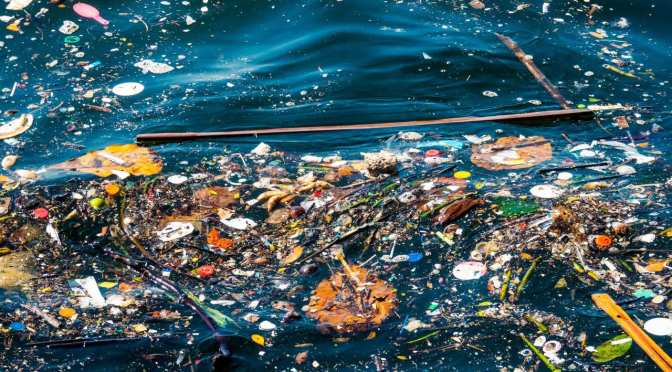
Water pollution is a critical issue impacting ecosystems and human health worldwide. It refers to the contamination of water bodies such as rivers, lakes, and oceans, resulting from harmful substances. The causes of water pollution are diverse, including industrial discharge, agricultural runoff, and improper waste disposal. These water pollution causes contribute to a range of environmental and health problems. The effects of water pollution are profound. It leads to the degradation of aquatic habitats. It causes disruption of food chains. It also increases health risks for humans. Addressing water pollution requires understanding both the causes and effects to implement effective solutions. Tackling these issues is essential for safeguarding our water resources and ensuring a healthy environment for future generations.
All water bodies have an innate ability to cleanse themselves. They can easily handle small volumes of pollutants. They degrade these pollutants with the help of dissolved oxygen and the microbial population residing there. However, every day, 2 million tons of sewage, industrial, and agricultural waste reaches water bodies all over the world.
Together these wastes exert a huge Biochemical Oxygen Demand. The dissolved oxygen in water becomes insufficient to meet the BOD requirements. In such a situation, when oxygen demand exceeds oxygen availability the water body becomes polluted. Let us dive deep into the details of the effects and causes of water pollution.
Water being the Universal Solvent dissolves a wide range of substances easily. Therefore any unwanted substance that reaches a water body easily mixes with the water and pollutes it. The causes of water pollutioncan be natural and anthropogenic. The natural causes of water pollution include oil spills from sedimentary rocks in the seabed, storms, natural eutrophication etc. However, these contribute only to a very small percentage of the pollution load.
The causes of water pollution are varied and impact water bodies in numerous ways. Industrial discharge, agricultural runoff, and improper waste disposalare significant water pollution causes. These activities introduce harmful substances like chemicals, heavy metals, and nutrients into water sources. The effects of water pollution include the contamination of drinking water, harm to aquatic life, and disruption of ecosystems. Understanding the primary causes of water pollution is crucial for developing strategies to mitigate its effects. Addressing these water pollution causes is essential for improving water quality and protecting environmental and public health.
The major cause of water pollution is the release of sewage and industrial effluents into water bodies without treating them. These effluents introduce a variety of water pollutants. These include inorganic chemicals, plant nutrients, detergents, oil, and pathogens to the water bodies. Please visit our blog, What are Water Pollutants for complete information about all the water pollutants.
Now, let’s look at the effects of water pollution.
Effects of Water pollution
Water pollution affects humans and the organisms thriving in and around the water body. This includes the benthic, aquatic and semi-aquatic organisms and also their predators.
The effects of water pollution are far-reaching and severe, impacting both the environment and human health. Water pollution can lead to the contamination of drinking water supplies. This poses significant health risks such as gastrointestinal diseases. It can also cause long-term conditions like cancer. Additionally, the effects of water pollution include the destruction of aquatic habitats, which disrupts food chains and endangers wildlife. The primary causes of water pollution are industrial discharge and agricultural runoff. They contribute to these detrimental effects by introducing harmful substances into water bodies. Addressing water pollution causes is crucial for mitigating its effects and ensuring clean, safe water for all. Effective management and reduction of these causes are key to improving water quality and overall environmental health.
Let’s look at the effects of water pollution on the environment in the first section.
Eutrophication
Disruption of the food chain
Loss of Species
Economic effects of water pollution
Loss of Aesthetic Value
Bio-magnification
Water pollution effects on human health
Eutrophication
Eutrophication is the excessive enrichment of water bodies with nutrients, leading to harmful algal blooms and oxygen depletion.
The enrichment of a water body by plant nutrients like phosphorous and nitrogen is eutrophication.
The surface runoff from agricultural lands and untreated industrial effluents transport large volumes of these plant nutrients. They end up in rivers and lakes.
This accelerates the growth of algae.
The algal bloom eventually dies and settles to the lake’s bottom.
Bacterial populations begin to break down the remnants, consuming oxygen in the process.
Further, the lake turns into a dead zone supporting no life.
One of the unseen effects of water pollution is the disruption of food chain. Organisms in a particular trophic level accumulate toxins due to water pollutants. Their predators in the next trophic level get poisoned. The predators may die. The number of predators comes down drastically. This in turn has consequences on organisms in both the succeeding and preceding trophic levels.
Let me make it clear with an example. During eutrophication, the aquatic plants die off since they can’t do photosynthesis. As a result, small fishes which feed on these plants experience a food shortage. Slowly, their population also starts to decline.
The same process repeats in higher trophic levels too. The consequences are so far-reaching that it affects not only aquatic organisms but also piscivorous birds. Thus the accumulation of pollutants in a water body can disrupt the entire food chain in and around it.
The 2010 spill on the Gulf of Mexico harmed over 82,000 birds. This information is from the Centre for Biological Diversity on the effects of the Deep Horizon spill. It also harmed 25,900 marine animals, 6165 sea turtles, and an unknown number of fish and invertebrates.
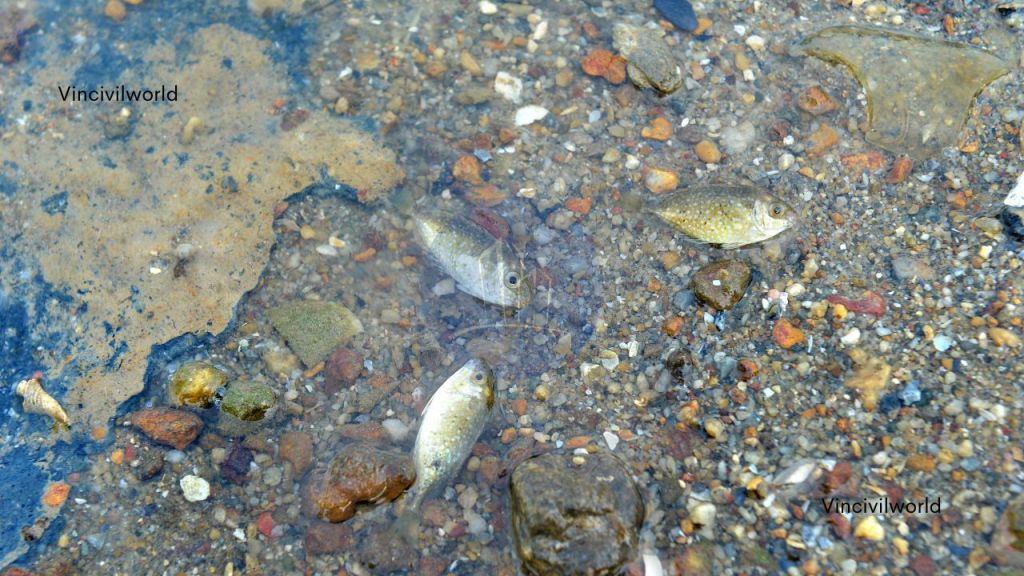
Along with eutrophication, oil spills are a major cause of the massive death of organisms. Vast expanses of oil spills trap the seabirds and prevent them from flying away. Thus, they die either due to drowning or by their predators like sharks. Even if the birds manage to escape from the oil spill, oil destroys the water repellence of its feathers.
Birds and mammals die from hypothermia when they lose the ability to repel water and insulate from the cold water. Also, marine organisms and birds may die due to oil poisoning as they tend to ingest oil while cleaning themselves.
Water Pollution – Death of Marine Species
Economic Effects of Water Pollution
It is costly to manage and restore polluted water bodies. For example, following the Fukushima tragedy, Japan announced in 2019 that it is running out of space. There is not enough space to retain the polluted water. Over a million tonnes of contaminated water are currently kept in tanks. According to estimates, cleaning up the disaster’s aftermath will cost at least $660 billion.
Purifying drinking water costs more under normal circumstances. This does not include the health costs of treating diseases caused by contaminated water. Eutrophication in US freshwater costs approximately $2.2 billion per year.
Loss of Aesthetic Value
Winds and currents carry the oil spills into the shore. Oil forms a thick layer over the beaches and rocks. Thus it reduces the aesthetic value of beaches and is a big threat to tourism and recreation on beaches. Moreover, polluted water bodies develop foul odours. They also develop unpleasant colors. Both of these factors destroy their aesthetic beauty and reduce human interaction.
Biomagnification refers to the progressive increase in the concentration of toxins from organisms of one trophic level to the next.
As a result, organisms in the higher trophic level which may not have direct exposure to water pollutants are also harmed.
For instance, predatory birds like vultures and eagles accumulate dieldrin, DDT in their bodies by consuming fish poisoned with pesticides.
When these pesticides reach their body, the concentrations are high enough to impact them severely. Dieldrin affects the calcium metabolism in predatory birds and leads to thinning of their eggshells.
The worst-hit are always the ones in the highest trophic level, which in most cases are human beings. Diseases like itai-itai and Minamata disease remain painful reminders of the effects of biomagnification and water pollution. In the next section, let’s have a closer look at the effects of water pollution on human health.
Water Pollution Effects on Human Health
Water acts as a carrier of many harmful pathogens which causes water-borne diseases in human beings. Since contaminated water is the primary mode of transmission for these diseases, they are known as water-borne diseases.
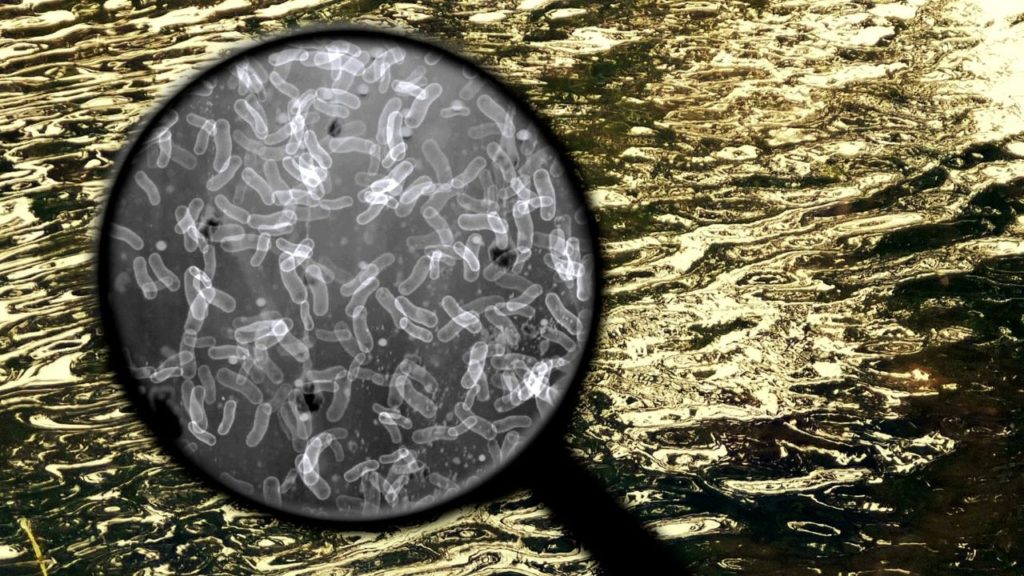
The majority of intestinal (enteric) disorders are contagious and spread by faeces. Pathogens are disease-causing agents found in the faeces of infected people. They include viruses, bacteria, protozoa, and parasitic worms. These infections spread through water sources and directly infect people who handle food and water. Let me show you a few of those diseases:
Bacterial diseases
Vibrio Cholerae is responsible for diarrhoea, the most common water-borne disease. This bacterium releases toxins in the digestive tract and leads to watery bowel movements, dehydration and renal failure. According to WHO, diarrhoea kills around 525000 children below 5 years, every year.
Shigella bacteria cause Shigellosis that affects the digestive tract of humans and damages the intestinal lining. Salmonella bacteria are found in contaminated water. It causes fatal salmonellosis that results in inflammation of the intestine and death.
Bacterial diseases
Viral Diseases
Firstly, drinking contaminated water causes Hepatitis, a viral disease that infects the liver. Secondly, contaminated water also becomes a breeding ground for mosquitoes that spread Encephalitis. Poliomyelitis virus is responsible for poliomyelitis and spreads through contaminated water.
Parasitic Diseases
Parasitic diseases transmitted via contaminated water includes Cryptosporidiosis by cryptosporidium parvum. Galloping amoeba is caused by the Entamoeba histolytica. Giardiasis is caused by Giardia lamblia.
Now, let me show you the health effects of some particular water pollutants.
Pesticides – carbonates and organophosphates present in them damage the nervous system and cause cancer. Chlorides can cause reproductive and endocrinal damage.
Nitrates – especially affect babies that drink formula milk. It reduces the amount of oxygen in the blood and causes the “blue baby” syndrome.
Arsenic – causes liver damage, skin cancer and vascular diseases
Fluorides – in excessive amounts makes the teeth yellow and causes spinal cord damage.
Health Risks: Contaminated water poses significant health risks, including bacterial, viral, and parasitic diseases.
Conclusion
Water is a natural resource that all living things require for survival. Any reckless behavior on the part of humanity has an impact on all other organisms. As a result, water bodies must be protected from pollution.
In summary, water pollution presents severe challenges that affect both natural ecosystems and human well-being. Understanding the causes of water pollution and their effects is essential for developing effective solutions. We can achieve cleaner water bodies by targeting the primary water pollution causes. Addressing their impacts leads to healthier environments. It is imperative to implement comprehensive strategies to reduce pollutants. Managing their effects effectively ensures sustainable water resources for future generations.
Constructed wetlands are wastewater treatment systems that utilise natural processes such as plants, soil, and organisms to treat wastewater, greywater, or stormwater runoff from municipal or industrial sources. In this blog, let’s go for a trip exploring the different types of constructed wetlands and their mechanism.
Let’s get started by understanding the basics of a constructed wetland.
Constructed wetlands are manmade wetlands that find applications in land reclamation after mining and compensating for natural areas lost to development. They operate as a biofilter and remove a variety of pollutants from the water such as organic substances, fertilisers, pathogens, and heavy metals. It can also eradicate pathogens (bacteria, viruses, protozoa, and helminths) to a certain extent.
Constructed Wetlands Components
There are three main components in constructed wetlands:
An impermeable layer of Clay
A Substrate layer of gravel
Ground Vegetation Zone
The impermeable layer, which is often comprised of clay, inhibits pollutants from filtering into the lower aquifers. It is the bottom-most layer.
Above the impermeable layer lies the substrate layer. that nourishes and protects the root zone. The water passes through this layer and into the root zone. Bioremediation and denitrification take place in this layer with the help of bacteria present in the roots. The ground vegetative layer rests above the substrate layer.
Constructed wet lands
In a wetland, vegetation offers a substrate (roots, stems, and leaves) for microbes to proliferate as they decompose organic matter. This microbial colony or the periphyton accomplishes around 90% of pollution removal and waste decomposition. When the plants degrade, they provide a carbon source for the microorganisms and eliminate roughly 7% to 10% of contaminants.
As wastewater flows through the wetland medium and the plant rhizomes, it undergoes treatment through various physical, chemical and biological processes.
The oxygen which comes out of the rhizomes, roots, and rootlets, forms a thin layer surrounding each root hair.
This creates aerobic conditions for the aerobes to act. Along with the aerobic bacteria, anaerobic bacteria also acts on the wastewater.
Microbial nitrification and subsequent denitrification releases nitrogen gas. In the root-bed media, phosphorus coprecipitates with iron, aluminium, and calcium compounds.
Filtration and adsorption by biofilms on the gravel or sand media reduces the harmful bacteria and viruses.
Nitrogen Removal
Ammonia present in the wastewater converts to ammonium ions. The aerobic bacterium Nitrosomonas sp. oxidizes these ammonium ions to nitrite. Nitrite converts to nitrate by the action of the the bacterium Nitrobacter sp. Finally, nitrate reduces to relatively harmless nitrogen gas under anaerobic conditions. It then enters the atmosphere.
Phosphorus Removal
Phosphorus removal and storage occurs within the constructed wetland itself since the phosphorus cycle is closed and there is no release of it into the atmosphere. A wetland system sequesters phosphorus by:
Incorporating phosphorus into living biomass and thereby becoming a part of the organic matter present in living beings.
Precipitation of phosphorus as insoluble phosphates with ferric iron, calcium, and aluminium compounds found in wetland soil.
Constructed Wetlands Types
The following are the three primary types of built wetlands:
Subsurface flow constructed wetland
Surface flow constructed wetland
Floating treatment wetland
Let’s have a closer look at each one of them.
Subsurface Flow Wetlands
There is no water surfacing in subsurface flow constructed wetlands because wastewater flows through the roots of the plants which lies below the gravel. As a result, these types of constructed wetlands offer the following advantages:
The system is more efficient
Attract fewer mosquitoes and flies.
Emit less stink.
Less susceptible to cold temperatures.
Water purification takes up lesser space.
There are two types of subsurface flow constructed wetlands: Horizontal flow and vertical flow constructed wetlands
Horizontal Flow Constructed Wetlands
The effluent in the horizontal flow built wetland moves horizontally and parallel to the surface. Absence of surface water, preventing mosquito breeding. Subsurface flow wetlands can treat a variety of different wastewaters, such as household wastewater, agricultural, paper mill wastewater, mining runoff, tannery or meat processing wastes, stormwater.
Vertical Flow Constructed Wetlands
A vertical flow constructed wetland is a planted filter bed with a bottom drain. A mechanical dosing system pours or doses wastewater onto the surface from above. Water runs down vertically through the substrate layer to the basin’s bottom, where it is collected in a drainage pipe. In comparison to horizontal flow constructed wetlands, vertical flow constructed wetlands are more efficient and use less space.
Surface flow wetlands resemble wastewater treatment ponds in appearance such as “waste stabilisation ponds”. They find applications in tertiary treatment, wastewater treatment plant effluent polishing and stormwater runoff treatment
Along with natural decay, predation by higher species, pathogens die by UV radiation due to the exposure of water to direct sunlight, . The soil layer beneath the water is anaerobic, but the roots of the plants produce oxygen, allowing complex biological and chemical interactions to take place.
A wide range of soil types, including bay mud and various silty clays, can support surface flow wetlands.Plants like Water Hyacinth (Eichhornia crassipes) and Pontederia spp. are employed.
Constructed Wetlands
Surface flow constructed wetlands, on the other hand, may increase mosquito breeding.
They also produce a lot of algae, which degrades the effluent quality.
In comparison to subsurface flow built wetlands, they require a larger area to cleanse water.
They have a stronger odour and lesser performance in the winter.
Floating treatment wetlands
The floating treatment wetlands (FTWs) are artificial wetlands that replicate natural ones. Floating rafts support hydroponically grown plants in FTWs. The rafts float on the surface of a wet pond and they improve water quality by filtering, consuming, or breaking down contaminants (such as nutrients, silt, and metals) in the water.
Shall we wrap up?
Conclusion
Due to the self-sustaining nature of the constructed wetlands they have a significantly lower lifetime costs compared to the conventional treatment systems. Hence they provide an economical and nature-friendly option for wastewater treatment.
So, how was the trip? Let us know in the comments.
Chemical Oxygen Demand (COD) and Total Organic Carbon (TOC) are widely used analysis methods in water treatment plants, petrochemicals and drinking water treatment. In this blog, let me walk you through the analysis of Chemical Oxygen Demand, Total Organic Carbon and its applications.
Chemical Oxygen Demand is the amount of oxygen required to oxidise all the biodegradable and non-biodegradable organic matter. It evaluates all chemically oxidizable components present in a given wastewater sample. It can be directly linked to the effluent’s actual oxygen requirement on releasing into the environment. Total Organic Carbon testing, in addition to Chemical Oxygen Demand, provides us with a better understanding of a waste stream’s true organic load.
Why COD and TOC are important
COD (Chemical Oxygen Demand) and TOC (Total Organic Carbon) analysis play a vital role in keeping our waterways safe and healthy. By measuring the levels of organic pollution in water and wastewater, these tests help us monitor water quality, evaluate the efficiency of treatment processes, and ensure that we’re meeting environmental regulations. Ultimately, they safeguard our well-being and the delicate balance of aquatic ecosystems.
Significance of COD/TOC Ratio
The COD/TOC ratio is a useful tool for assessing the biotreatability of wastewater treatment.
At a given point in the wastewater treatment process, the ratio of COD to TOC provides insight into the nature of organic wastewater constituents present.
A high COD/TOC ratio indicates easily oxidisable organic molecules like alcohols.
Ratios in the range of 0.8 or higher indicate wastes with a high biochemical treatment potential.
Lower ratios indicate that the wastes are not amenable to biochemical treatment.
The amount of oxygen required as measured by the COD value may change during wastewater treatment, but the carbon concentration as measured by the TOC value does not.
As the COD/TOC ratio of wastewater decreases during treatment, it means that the organic compounds are undergoing oxidation and the treatment plant is functioning smoothly.
The COD determination is similar to the BOD determination in the fact that both methods use titration. The basic principle of the COD test is that a strong oxidizing agent can fully oxidize almost all organic compounds to carbon dioxide under acidic conditions.
The best choice would be potassium dichromate which is a strong oxidizing agent under acidic conditions. The addition of sulfuric acid creates acidic conditions for titration. Usually, we use a 0.25 N solution of potassium dichromate for COD determination. However, for samples of COD below 50 mg/L, we use a lower concentration of potassium dichromate.
During the oxidation of the organic substances found in the water sample, potassium dichromate undergoes reduction and forms Cr3+. After the completion of the oxidation reaction, the amount of Cr3+ gives an indirect measure of the organic contents in the water sample.
Procedure for Chemical Oxygen Demand
Pipette out 50 ml of the wastewater sample into a flat bottom Erlenmeyer flask.
Gently add HgSO4 and 5 mL of sulfuric acid. Swirl the flask continuously until all the mercuric sulfate has dissolved.
Now, add 25.0 mL of 0.25N potassium dichromate.
Carefully add 70 mL of previously prepared sulfuric acid-silver sulfate solution and gently swirl until the solution is thoroughly mixed.
Add glass beads to the refluxing mixture to prevent bumping.
Heat the mixture under total reflux conditions for 2 hours.
Cool down the mixture to room temperature and titrate it with standard ferrous ammonium sulfate along with 10 drops of ferroin indicator.
The end-point of titration is a sharp colour change from blue-green to reddish-brown.
Run a blank, with 50 mL of distilled water in place of the sample along with all reagents and subsequent treatment.
COD in mg/l = [(A-B)*M*8000]/sample volume in ml
A = Volume (ml) of Ferrous Ammonium Sulphate used for blank.
B = Volume (ml) of Ferrous Ammonium Sulphate used for sample
M = Molarity of Ferrous Ammponium Sulphate
8000 = milliequivalent weight of oxygen * 1000 ml/L
The COD test doesn’t differentiate between biodegradable and non-biodegradable organic materials. It gives a measure of total oxidisable organic materials in the sample. Therefore, we get higher values of COD than BOD for the same sample. Dichromate oxidises the chlorides and nitrites present in the sample. They create an inorganic COD and generates error in the COD determination.
Chemical Oxygen Demand Analysis
Chemical Oxygen Demand Testing Advantages
COD is ideal for checking treatment plant performance and water quality regularly.
In comparison to the 5-day BOD test, COD testing is more accurate and has a shorter analysis period (2-hour digesting time).
Toxic elements in the sample do not affect the COD oxidant.
Changes in COD between influent and effluent may be correlated with BOD content and can be used to augment BOD data.
Chemical Oxygen Demand Testing Limitations
The COD technique does not completely oxidise some organic molecules.
Chloride ions might cause interference in COD measurements.
Now you got a clear idea about COD determination. Let’s move on to Total Organic Carbon Analysis.
Total Organic Carbon (TOC)
Total Organic Carbon refers to the total amount of organic carbon (including elemental carbon) bound to dissolved or suspended organic substances in water. It is a non-specific indicator of water quality or cleanliness of pharmaceutical manufacturing equipment.
What does TOC Analyse?
The basic principle behind the Total Organic Carbon test is the oxidation of the carbon in the organic matter to carbon dioxide. After that, a non-dispersive infrared analyzer measures the amount of CO2. The amount of CO2 evolved gives a measure of the carbon content in the sample. Further stoichiometric calculations based on the method employed gives the amount of TOC.
TOC analysis measures the following:
Total carbon (TC)
Inorganic carbon (IC)
Total organic carbon (TOC)
Purgeable organic carbon (POC)
Nonpurgeable organic carbon (NPOC)
TOC analysis measures Total Carbon and Inorganic Carbon. Then we subtract the Inorganic Carbon (IC) from Total Carbon (TC) to find the Total Organic Carbon. This is the TC-IC method.
TOC Analysis
According to the TC-TIC method, TOC = TC -T IC
TIC-NPOC method employs acidification of the sample to evolve carbon dioxide. It gives the measure of inorganic carbon (IC) and then oxidation of sample and measurement of the remaining non-purgeable organic carbon (NPOC).
Oxidation Methods
We have a variety of oxidation and detection methods to find out the TOC. Let me show a few of them:
High-temperature combustion at 1,200 °C in an oxygen-rich atmosphere. The CO2 passes through scrubber tubes to remove interferences. After that, non-dispersive infrared absorption (NDIR) gives the amount of CO2.
High-temperature catalytic oxidation at 680 °C in an oxygen-rich environment inside tubes filled with a platinum catalyst and then NDIR.
Thermochemical oxidation in the presence of heat and a chemical oxidizer, usually a persulphate.
Photochemical oxidation in the presence of UV and a chemical oxidizer like persulphate.
Photo-oxidation by ultra-violet (UV) light alone or with a catalyst. In a UV-irradiated chamber, combine sample with persulfate to convert organics to carbon dioxide. The UV oxidation method offers the most reliable, low maintenance method of determining TOC in ultra-pure waters.
Accurate detection and quantification are very crucial to get accurate results in TOC analysis. The most commonly used methods include conductivity and non-dispersive infrared (NDIR).
TOC Applications
In oil exploration, the initial chemical study on a prospective petroleum source rock is TOC.
TOC helps in detecting pollutants in drinking water, cooling water, semiconductor production water, and pharmaceutical-grade water.
It finds applications in controlling the release of organic chemicals into the environment at a production facility.
Furthermore, a low TOC can demonstrate the absence of potentially dangerous organic compounds in pharmaceutical manufacturing water.
Because of the byproducts, TOC is also of importance in the field of drinking water treatment.
That’s it about the analysis of Chemical Oxygen Demand and Total Organic Carbon. Hope you found it informative. Let us know your queries in the comments section.
Structural steel fabrication is a process that involves bending, cutting, and shaping steel components. It also includes assembling these components to create industrial and residential structures. Structural steel fabrication has a very high strength-to-weight ratio. Because of this versatility and flexibility, engineers use structural steel fabrication extensively in various industrial, residential and commercial projects.
Structural steel fabrication involves the process of transforming raw steel into usable components for construction projects. Structural steelwork fabricators follow a series of stages to ensure precision, from design to installation. The fabricated steel structures are used in various applications, including bridges, buildings, and industrial facilities. The fabrication of steel structures requires attention to detail and quality control to meet the highest standards. This work plays a crucial role in the development of durable, reliable infrastructure.
In this blog, let me walk you through the Advantages, Processes and applications of structural steel fabrication works. Here we go.
Structural steel fabrication – Stages and procedures
Structural steel fabrication involves multiple stages and requires highly skilled manpower. The training of manpower is essential for transforming raw materials into precise engineering structures. In the following sections, I will show you the processes involved in structural steel fabrication works and the involvement in crafting the structures.
Structural steel fabrication work involves the detailed process of transforming raw steel into components for building structures. Skilled structural steelwork fabricators perform various stages to create fabricated steel structures.
Creating Shop drawings /fabrication drawings
Material preparation for structural fabrication
Cutting, bending and drilling of steel
Welding of structural steel
Engraving and assembly
Each stage is crucial to the successful completion of structural steelwork fabrication projects.
Ideation and shop drawings/fabrication drawings
In the first stage of structural steel fabrication works the major processes involve ideating, blueprinting, and creating shop drawings. During this phase, the team conceptualizes the design and prepares detailed plans and drawings. We use software to create blueprint drawings, taking into account requirements, code compliance, and specifications. Blueprints and shop drawings ensure the design is proper. They provide accurate information like dimensions, connections, and other specifications required for fabricating the structure.
Accurate and precise ideation, blueprints, and shop drawings are crucial. They greatly influence the quality of any structural fabrication work. They are also critical for its speed.
structural steel fabrication work
Material preparation for structural fabrication
Material preparation for structural steel fabrication work involves selecting steel components. It also involves cutting and preparing them. This ensures precision and quality in fabricating steel structures by skilled fabricators. The preparation of raw steel for structural fabrication involves the following stages:
a) Material selection and inspection
b) Cutting, bending, drilling
Material selection and inspection
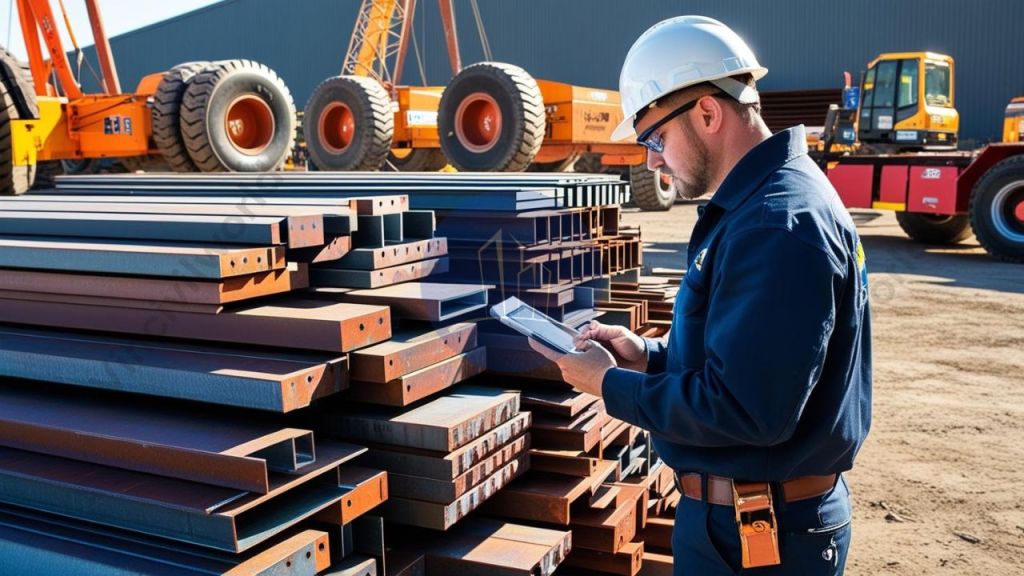
We perform the material selection on the basis of project requirements and specifications. This step typically includes selecting the appropriate grade of material. It involves conducting requisite raw material quality checks before using it for work.
Material Inspection for Structural Steel Fabrication works
Cutting, bending and drilling of steel
The cutting stage encompasses the precise cutting of raw material into accurate sizes as per the shop drawings. Mostly, cutting is done with the help of various techniques. This includes sawing, which involves using a saw blade. Shearing uses specialized machinery to make straight cuts. Advanced techniques include plasma cutting, laser cutting, or water jets. Generally, these processes take place in a fabrication shop/factory. However, the shearing process is limited to small and miscellaneous structural members.
During the bending stage, the structural steel undergoes deformation to the required shape and angles. We mainly employ rolling machines or press breaks in this process. Generally, there are five common methods of bending structural steel. This includes rolling, incremental bending, hot bending, rotary-draw bending, and induction bending. Fabrication of curved or angled structures requires bending.
Drilling of structural steel for fabrication work
Drilling of structural steel provides precise holes in structural members. This is generally done with the help of drill presses or specialized drilling machines. Drilling is basically done for bolted components.
Welding of structural steel
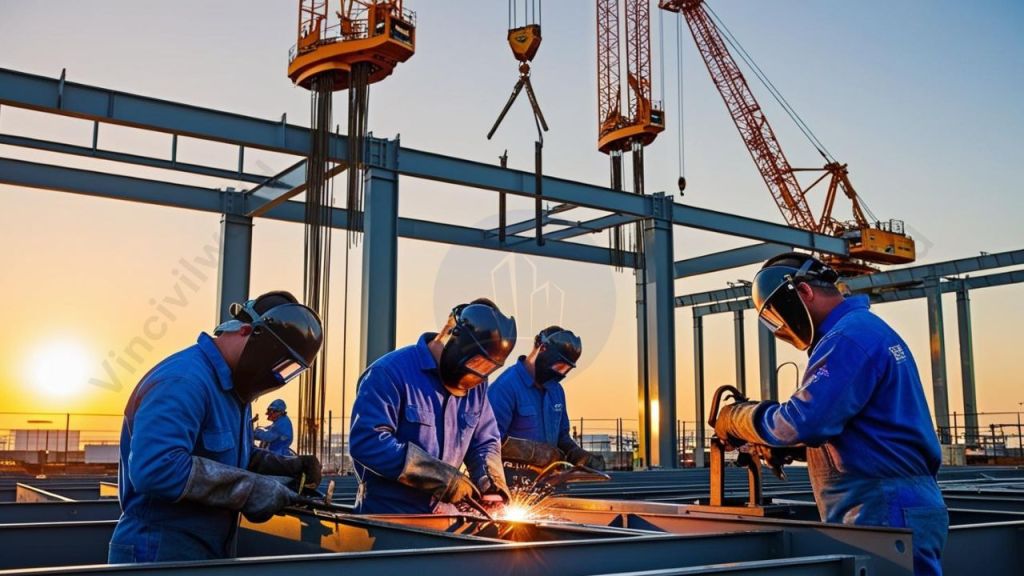
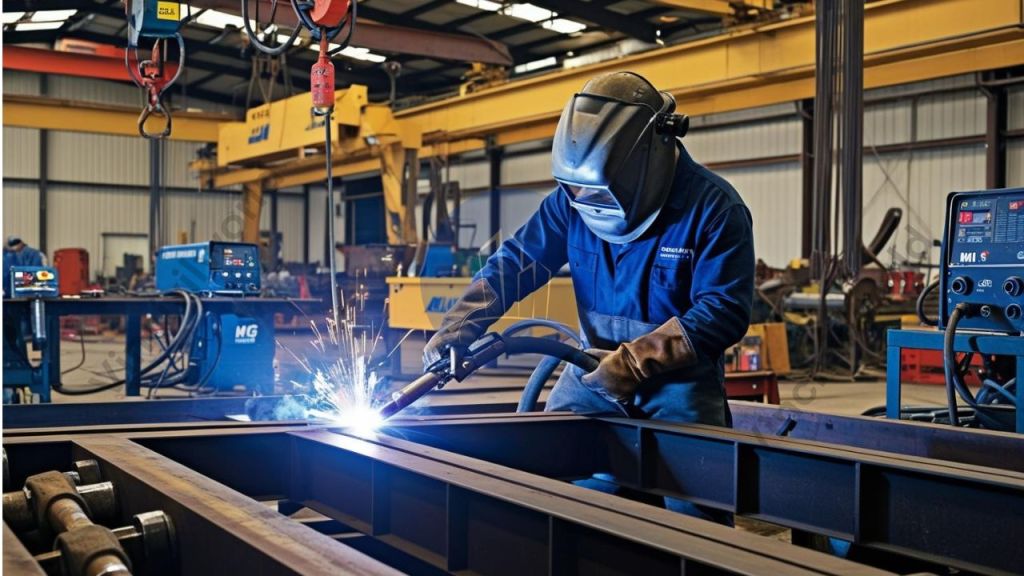
Welding involves creating a variety of welds to join structural steel components. The process uses heat and pressure to produce continuous joints. Mostly, the welding process follows different stages:
The welding process starts with cleaning the surface and ensuring that any dirt and other impurities are not there. The next process is the fit where we assemble and align the steel sections as per shop drawings. Basically, this ensures an accurate fit-up for welding. On completion of the fit-up, we start the structural welding process.
Welding of Structural Steel for fabrication works
Structural welding is done in any of the two methods. The heat from an electric arc, laser, or other welding methods is applied to melt the steel edges, forming a molten pool. Filler Material such as welding wire or rod, is added to the molten pool to strengthen the weld. The molten pool cools, solidifies, and forms a continuous bond between the steel components.
Common types of welding used in structural steel fabrication include:
Engraving in structural steel fabrication involves etching or inscribing markings, identification codes, or specific details onto the steel components. Specialized engraving tools or laser engraving machines perform this step.
Assembly is the final stage. In this stage, we combine the fabricated steel components to create the completed structure. This is often done through welding, bolting, or riveting. These steps ensure proper identification, alignment, and secure connections, contributing to the structural integrity and functionality of the steel assembly.
Conveying for erection
The fabricated members are conveyed to the area of erection where these members are erected and aligned according to the drawings.
Inspection and Quality Control
Inspection and quality control ensure that each component meets industry standards for strength, precision, and durability. Specialists check weld integrity, measurements, and alignment to confirm that the steel structure is sound and compliant. This stage involves using non-destructive testing (NDT) techniques. Techniques like ultrasonic or radiographic testing detect flaws within the metal without causing damage. Rigorous quality checks help avoid structural failures, supporting structural steel fabrication work of the highest standard.
Advantages of structural steel fabrication
Structural steel fabrication offers a wide variety of advantages,
High Strength and Durability: Structural steel possesses excellent strength-to-weight ratio and durability, providing long-lasting and resilient structures.
Design Flexibility: Steel fabrication allows for versatile and customizable designs, accommodating complex architectural and engineering requirements.
Fast Construction: Prefabrication of Steel components enables efficient and speedy on-site assembly, reducing construction time and costs.
Structural Integrity: Steel’s inherent properties ensure structural integrity, capable of withstanding heavy loads, seismic forces, and extreme weather conditions.
Sustainability: Steel is recyclable and reusable, reducing environmental impact and promoting sustainability in construction projects.
Cost-Effective: Steel fabrication offers cost efficiencies due to faster construction, reduced labor requirements, and minimized maintenance needs.
Precision and Quality: Since steel fabrication takes place under controlled conditions, it ensures high precision, quality, and dimensional accuracy.
Fire Resistance: Steel is non-combustible and can withstand high temperatures, enhancing fire resistance and safety.
Adaptability: Generally, steel structures give the option for easy modification, expansion, or retrofitting to accommodate future changes or renovations.
Aesthetic Appeal: Steel’s sleek and modern appearance provides architectural versatility and visually appealing structures.
These advantages contribute to structural steel fabrication’s widespread use and popularity in various construction projects.
Applications of structural steel
Structural fabricated construction mainly has the following applications
High-rise buildings
Industrial Buildings
Residential Buildings
Parking Garages and multilevel parking
Bridges
Shall we wrap up?
Conclusion
In this blog, we saw the advantages, processes and applications of structural steel fabrication works. I hope you found it insightful. In case of any queries, please feel free to ask in the comments.
Fiber-reinforced concrete (FRC), an advanced form of Reinforced Cement Concrete is finding wide applications these days. Fiber-reinforced concrete (FRC) is a versatile and durable composite material consisting of a cementitious matrix with uniformly dispersed fibers. The addition of discontinuous, discrete fibers to cement, mortar or concrete mixes can enhance the concrete properties. Ever thought why do we add different kinds of fibres to the Reinforced Cement Concrete and what are the different types of fibres that we add? Stay with me till the end of this blog and we will find answers to all these questions.
First, let’s have a look at the basics of fiber-reinforced concrete and its applications.
What is Fiber-reinforced concrete?
Fiber-reinforced concrete (FRC) is a versatile and durable composite material consisting of a cementitious matrix with uniformly dispersed fibers. The addition of discontinuous, discrete fibers to cement, mortar or concrete mixes can enhance the concrete properties. These fibers act as reinforcement throughout the concrete matrix, and control cracking due to plastic shrinkage and drying shrinkage. Fiber-reinforced concrete reduces the permeability of concrete and reduces water bleeding.
Fiber reinforced concrete finds extensive applications in various infrastructure works, industrial flooring works and other construction works that demand enhanced durability and crack control. FRC improves the flexural and impact resistance and hence we prefer it for structures subjected to dynamic or heavy loads.
Now, let’s discuss the reason behind the addition of fibres to the reinforced concrete.
Principle of Fiber-reinforced concrete
Fibre-reinforced concrete uses discrete fibres to improve its mechanical properties, making it stronger, more durable, and resistant to cracking. Fiber is a small piece of circular or flat reinforcing material possessing certain characteristics and properties. These fibers are of steel, glass, synthetic polymer fibers and natural fibers like jute or hemp.
Fibers are available in various sizes ranges from a few millimeters to a few centimetres. They are uniformly distributed throughout the concrete matrix. The features of Fiber reinforced concrete depends on the character and percentage, diameter and length of fibers and water-cement ratios. Typically fiber reinforced concrete is used in shotcrete but can also be used in normal concrete.
The addition of fibres to concrete controls the shrinkage cracking, lower permeability, and reduce water bleeding. Some fibers enhance impact, abrasion, and shatter resistance. However, they do not increase flexural strength or replace structural steel reinforcement.
We measure the amount of fiber as a percentage of total volume (Vf) and typically ranges from 0.1 to 3%. Aspect ratio (l/d) affects strength and toughness, but long fibers can hinder workability. Recent research shows limited impact resistance improvement, with microfibers performing better than longer fibers.
Types of Fiber-reinforced concrete
The type of fiber-reinforced concrete depends on the nature of the structure and applications. Let us have a look at the most common types of fibre reinforced concretes commonly used in construction.
SFRC is a composite material that includes a certain amount of steel fibers in the concrete mix. These fibres can change the properties of concrete and thereby enhance the performance of concrete. The typical diameter lies in the range of 0.25 to 0.75mm. Steel fibers having a rectangular c/s are produced by silting the sheets about 0.25mm thick.
SFRC offers numerous advantages, including improved tensile strength, crack resistance, impact resistance, and durability. The steel fibers act as reinforcement, effectively bridging cracks and enhancing the concrete’s structural integrity. The steel fiber types are as per ASTM A.820 Type I: cold-drawn wire, Type II; cut sheet, Type III: melt-extracted, Type IV: mill cut and Type V: modified cold-drawn wire.
SFRC finds applications in industrial floors, pavements, tunnels, and precast elements, where increased toughness and load-bearing capacity are required. It is also widely used in applications prone to dynamic loading, such as blast-resistant structures and earthquake-resistant buildings.
Glass fiber-reinforced concrete
Glass Fiber Reinforced Concrete (GFRC) is a composite material incorporating fine glass fibers into the concrete mix. These fibers, typically around 3-12 mm in length, enhance the concrete’s strength, durability, and flexibility. GFRC is commonly used in architectural applications, such as cladding, facades, and decorative elements, due to its lightweight nature and ability to create intricate designs.
Polypropylene Fiber Reinforced Concrete (PFRC) is a composite material that combines polypropylene fibers with concrete. One of the cheapest & abundantly available synthetic fiber/ polymer is polypropylene. They are resistant to most chemicals and only the cementitious matrix will deteriorate first. These discrete fibers, typically ranging from 6 to 30 mm in length uniformly dispersed in concrete will control cracking due to plastic and drying shrinkage.
We usually use these fibers in concrete to control cracking due to plastic shrinkage and drying shrinkage. The fibers act as reinforcement and reduce the permeability of concrete and thus reducing the bleeding of water and improving crack resistance, impact resistance, and durability. Polypropylene fibers being hydrophobic can be easily mixed as they do not need lengthy contact during mixing and only need to be evenly distressed in the mix.
Polyester fiber reinforced concrete
Polyester fiber-reinforced concrete is a composite material that incorporates polyester fibers into the concrete mix. These fibers, typically short and discrete, improve the concrete’s toughness, crack resistance, and impact resistance. Polyester fibers due to the high tensile strength and resistance to alkalis make them suitable for various construction applications that demand enhanced durability.
Carbon fibers
Carbon fiber reinforced concrete (CFRC) is a composite material that combines concrete with carbon fibers about 5-10 microns in diameter having carbon atoms. The carbon fibers, known for their exceptional tensile strength and stiffness, low weight, high chemical resistance, high-temperature tolerance and low thermal expansion impart their qualities to the concrete.
We manufacture carbon fibers by baking plastic resins. They have high strength-to-weight ratio. Carbon fibers form the most recent and probably the most spectacular addition to the range of fiber available for commercial use. Since they are more vulnerable to damage than even glass fiber, we generally treat them with resin coating.
Macro synthetic fibers
Macro synthetic fibers are synthetic fibers used as reinforcement in concrete. These fibers, typically longer and thicker than traditional fibers, are manufactured from a blend of polymers. These fibers are developed for shot create or sprayed concrete. But they find extensive applications in floor slabs for enhancing the concrete’s toughness, crack resistance, and impact resistance.
They offer improved durability and control of plastic shrinkage cracking. This makes them suitable for various construction applications in marine and coastal structures which require enhanced performance and reduced maintenance.
Advantages of fibre-reinforced concrete
Enhanced Durability: FRC increases the impact, fatigue, and abrasion resistance of concrete structures while minimising cracking. It increases the tensile strength and durability of the concrete.
Crack prevention: The use of fibres reduces the spread and enlargement of cracks by controlling plastic and drying shrinkage cracking.
Permeability Reduction: Fibres make concrete less permeable, which reduces water bleeding and improves resistance to moisture infiltration.It reduces the air voids and water voids and the inherent porosity of gel.
Improved Impact Resistance: Certain types of fibres enhance the impact resistance of concrete, making it more resilient against sudden loads and external forces.
Increased Toughness: The bridging action of the fibres, which absorbs energy and prevents abrupt failure, gives FRC an improved level of toughness.
Design Flexibility: Using fibres in concrete allows for design flexibility, enabling the creation of complicated shapes and architectural freedom.
Simplicity: Using fibre reinforcement instead of or less frequently than standard steel reinforcement simplifies construction operations.
Better Workability: Fibres can make concrete mixes more workable and cohesive, making placement and compaction easier.
Corrosion Resistance: In some circumstances, fibre reinforcement can reduce the likelihood that concrete buildings will corrode.
Sustainable: Fibre-reinforced concrete is a sustainable solution since it can increase the longevity of structures and lessen the reliance on non-renewable resources.
Creep Resistance: Fibres such as graphite and glass have excellent resistance to creep, while the same is not true for most resins. Therefore, the orientation and volume of fibres have a significant influence on the creep performance of rebars/tendons.
Shall we wrap up?
Conclusion
In this blog, we saw the properties, uses, types and advantages of fiber-reinforced concrete. If you have any queries please feel free to ask in the comments.













 vin civilworld