Flyovers and bridges : Features and difference

Flyovers and bridges are essential transportation structures that enable the seamless movement of vehicles and pedestrians. While both serve similar purposes, flyovers navigate intersections efficiently as elevated roads, while bridges connect points over bodies of water or valleys. Their distinct features make them vital components of modern infrastructure. This article is about the features and advantages of Flyovers and bridges and the difference between flyovers and bridges.

  1. What is a flyover?
  2. What are the benefits of flyovers?
  3. Types of flyovers
    1. Classification of flyovers based on Formation
    2. Classification of flyovers based on Materials
  4. What are bridges?
  5. Difference between Flyovers and Bridges
    1. Purpose of bridges and Flyovers
    2. Design of flyovers and bridges
    3. Location of flyovers and bridges
    4. Traffic Flow of flyovers and bridges
    5. Integration
    6. Environmental Factors
    7. Length and Span
  6. Key take aways
  7. Conclusion

What is a flyover?

A flyover, also referred to as an overpass or an elevated roadway, is a transportation infrastructure that provides a dedicated elevated route for vehicles to traverse over obstacles such as intersections, congested areas, or other roads.”Designers create flyovers to enhance traffic flow, reduce congestion, and improve overall transportation efficiency.”

Constructors typically build flyovers above ground level, enabling vehicles to bypass busy intersections or intersections with heavy pedestrian traffic. Generally, by separating the flow of vehicles from crossroads and pedestrian crossings, flyovers minimize traffic conflicts and ensure uninterrupted movement. This in turn results in smoother traffic flow, reduced delays, and improved safety.

The construction of flyovers requires careful planning and engineering. Generally, builders often use reinforced concrete or steel girders to construct flyovers, providing structural support for vehicles and the ability to bear substantial loads. The design includes ramps or access points to enable smooth vehicle entry and exit onto the flyover, ensuring seamless integration with the current road network.

What are the benefits of flyovers?

The benefits of flyovers include:

  1. Improved traffic flow: Basically, Flyovers separate the flow of vehicles, reducing congestion and ensuring smoother traffic movement.
  2. Reduced travel time: By bypassing intersections or congested areas, flyovers enable faster and more efficient travel, saving time for commuters.
  3. Enhanced safety: Flyovers minimize the risk of accidents by eliminating conflict points between vehicles and pedestrians or conflicting traffic streams.
  4. Increased capacity: Flyovers can increase the capacity of road networks by providing additional lanes or routes for vehicles.
  5. Better fuel efficiency: Reduced congestion and smoother traffic flow on flyovers contribute to improved fuel efficiency and reduced emissions.
  6. Enhanced connectivity: Flyovers connect different parts of a road network, improving accessibility and connectivity between areas.
  7. Improved urban aesthetics: Well-designed flyovers with landscaping, architectural features, and decorative elements can enhance the visual appeal of urban landscapes.
  8. Economic benefits: Efficient traffic flow facilitated by flyovers can boost economic productivity by reducing transportation costs and improving logistics.
  9. Minimized environmental impact: Generally, flyovers can help reduce air pollution and noise pollution by minimizing congestion and idling time at intersections.
  10. Improved emergency response: Flyovers provide unimpeded routes for emergency vehicles, enabling quicker response times during emergencies or disasters.

Types of flyovers

Flyovers are classified based on the following factors

a) Classification based on the formation

b) Classification based on materials

Classification of flyovers based on Formation

  1. Straight Flyovers: Follow a straight-line trajectory, providing a direct route over obstacles.
  2. Curved Flyovers: Incorporate curves or bends in their design, accommodating specific road alignments or geographical constraints.
  3. T-Junction Flyovers: Connect perpendicular roads at a T-junction, allowing for uninterrupted traffic flow in multiple directions.
  4. Cloverleaf Flyovers: Form a circular or cloverleaf-shaped interchange, facilitating smooth merging and diverging movements between roads.
  5. Diamond Flyovers: Feature a diamond-shaped interchange, allowing for efficient access and exits from multiple directions.
  6. Multi-Level Flyovers: Comprise multiple layers or levels, providing complex interchanges with ramps and access points for different roads.
  7. U-Turn Flyovers: Enable U-turns or reverse movements, allowing vehicles to change direction without disrupting traffic flow.

Classification of flyovers based on Materials

  1. Prestressed Concrete Flyovers: Constructed using precast prestressed concrete segments that provide strength and durability.
  2. Steel Flyovers: Built using steel girders, offering flexibility in design and allowing for longer spans.
  3. Reinforced Concrete Flyovers: Constructed using reinforced concrete beams or slabs, offering a balance between cost, strength, and ease of construction.
  4. Composite Flyovers: Combination of steel and concrete elements, leveraging the advantages of both materials for optimal structural performance.
  5. Cable-Stayed Flyovers: Supported by cables attached to tall towers, offering an elegant and efficient structural solution for longer spans.
  6. Box Girder Flyovers: Consists of hollow box-shaped beams, providing strength, rigidity, and resistance against bending and torsion forces.
  7. Extradosed Flyovers: Hybrid of cable-stayed and prestressed concrete flyovers featuring shorter towers and fewer cables while maintaining structural integrity.

What are bridges?

Engineers design bridges to connect two points over a body of water, a valley, or any physical obstacle. They typically comprise abutments, piers, and a deck or roadway for transportation. The construction of bridges involves using diverse materials like concrete, steel, or wood, which depend on factors such as span length and the required load capacity. However, They serve as crucial transportation links, facilitating the passage of vehicles, pedestrians, and sometimes, even trains. Bridges provide essential connectivity, improve accessibility, promote trade, and enable social and economic development by overcoming natural barriers and creating efficient transportation routes.

Bridge

Difference between Flyovers and Bridges

Bridges and flyovers both elevate traffic, but they have different purposes. Bridges cross over obstacles like rivers or valleys and come in various designs, such as suspension or arch. Flyovers are overpasses built to let traffic pass over other roads or intersections, commonly found in cities to ease traffic flow. While bridges connect different areas, flyovers improve road efficiency within urban settings. Let us get into the details of the difference between flyovers and bridges.

Here are the key differences between flyovers and bridges

Purpose of bridges and Flyovers

BridgesFlyover
Bridges are primarily built to connect two points over a body of water, a valley, or any physical obstacle.Flyovers are constructed to navigate intersections, congested areas, or other roads efficiently, providing an elevated route for vehicles.
Purpose

Design of flyovers and bridges

BridgeFlyover
Bridges are typically designed with piers or support that span across the obstacle, supporting a deck or roadway.Flyovers are designed as elevated roadways, often supported by columns or piers, allowing vehicles to bypass intersections or congested areas.
Design

Location of flyovers and bridges

BridgeFlyover
Bridges are commonly found over bodies of water, such as rivers, lakes, or seas, or in areas with significant topographical variations like valleys or canyons.Flyovers are usually constructed in urban areas with heavy traffic, where they can provide efficient bypasses for intersections or congested road segments.
Location

Traffic Flow of flyovers and bridges

BridgeFlyover
Bridges accommodate two-way traffic, allowing vehicles to travel in both directions.Flyovers typically facilitate one-way traffic flow, with separate lanes or ramps for entering and exiting.
Traffic flow

Integration

Bridge Flyover
Bridges are integrated into the existing road network, connecting two points and providing a continuous route.Flyovers are designed to integrate with existing roads, providing seamless connectivity by allowing vehicles to enter and exit at designated access points.
Integration

Environmental Factors

Bridge Flyover
Bridges often need to consider factors like water flow, tidal forces, or seismic activity, depending on their location.Flyovers focus on addressing traffic congestion and improving transportation efficiency, with less consideration for natural elements.
Environmental factors

Length and Span

Bridge Flyover
Bridges can vary in length and span depending on the distance they need to cover, ranging from short spans to long suspension or cable-stayed bridges.Flyovers are generally shorter in length compared to bridges, spanning a specific area such as an intersection or congested road segment.
Length and span

Understanding these distinctions can help in determining the appropriate infrastructure solution based on the specific transportation needs and challenges of a given location.

Key take aways

Flyovers and bridges are crucial infrastructure elements with distinct purposes. Flyovers are designed to alleviate urban traffic congestion by providing elevated routes over intersections and other congested areas, ensuring smoother traffic flow and enhanced safety. They are typically constructed using reinforced concrete or steel girders and are commonly found in urban areas.

Bridges, on the other hand, connect two points over natural obstacles such as bodies of water or valleys. They are essential for providing transportation links that facilitate trade and economic development. Bridges are built using a variety of materials including concrete, steel, and wood, and must consider environmental factors like water flow and seismic activity.

Both flyovers and bridges integrate with existing road networks but serve different roles in enhancing transportation efficiency and connectivity. Flyovers are generally shorter and focus on urban traffic, while bridges can span longer distances and connect regions separated by natural barriers. Understanding these distinctions helps in planning and implementing effective transportation solutions.

Conclusion

Flyovers and bridges are integral to modern infrastructure, each serving distinct purposes. Flyovers, or overpasses, enhance urban traffic flow by providing elevated routes over intersections and congested areas, thereby reducing delays and improving safety. Bridges, on the other hand, connect two points over physical obstacles like water bodies and valleys, facilitating transportation and promoting economic development. Both structures require careful planning and engineering, utilizing materials such as concrete and steel to ensure durability and efficiency. Their unique features and applications make them crucial in addressing the specific transportation needs and challenges of different environments.

IPS Flooring – Types , applications and Methodology

IPS flooring, also known as Indian Patent Stone flooring, is a popular type of flooring widely used in commercial and industrial spaces. It is a durable, cost-effective solution providing a smooth surface. IPS floor consists of a mixture of cement, aggregates, and pigments, which is poured onto a prepared base and then finished to achieve the desired level and texture. It offers excellent strength, resistance to heavy loads, and easy maintenance, making it suitable for areas with high foot traffic. IPS floor is a reliable choice for creating functional and aesthetically appealing floors in various settings.

What is IPS flooring ?

IPS flooring (Indian Patent Stone flooring) is a versatile and durable flooring solution. It is also cost-effective. It is widely used in commercial, industrial, and residential spaces. IPS flooring is made from a mix of cement, aggregates, and pigments. It delivers excellent strength and smooth finishes. It also offers long-lasting performance under heavy loads. Available in various types such as plain, coloured, decorative, and polished, it offers both functionality and design flexibility. Its easy installation, low maintenance, and eco-friendly composition make it a preferred choice for high-traffic areas. IPS flooring also incorporates strips for expansion control, enhancing durability. From installation methodology to benefits of IPS flooring, this solution remains a reliable option for creating strong, safe, and visually appealing floors tailored to diverse project needs.

  1. What is IPS flooring ?
  2. Features of IPS Floors
  3. Types of IPS Floors
  4. Main ingredients of IPS floor
  5. Strips in IPS flooring
  6. Installation methodology of IPS flooring

Features of IPS Floors

IPS flooring offers several key features that make it a popular choice:

  1. Durability: IPS floor is highly durable and can withstand heavy loads and constant foot traffic, making it ideal for commercial and industrial spaces.
  2. Cost-effective: It is a cost-effective flooring option compared to alternatives like marble or tiles, making it a budget-friendly choice for many projects.
  3. Easy maintenance: IPS floor requires minimal maintenance, with regular cleaning being sufficient to keep it in good condition.
  4. Versatility: It can be customized to achieve various textures, patterns, and colours, allowing for creative design possibilities.
  5. Strength: IPS floor provides excellent stability and resistance to wear, making it suitable for areas that require long-lasting flooring solutions.
  6. Installation flexibility: It can be poured and finished on-site, allowing for customization and adaptation to the specific requirements of the space.
  7. Eco-friendly: IPS floor is made from natural materials like cement and aggregates, making it an environmentally friendly flooring option.
  8. Non-slip properties: The texture of the IPS floor provides a non-slip surface, enhancing safety in areas prone to moisture or spills.
IPS FLOOR

Types of IPS Floors

IPS flooring offers various types to suit different requirements:

  1. Plain IPS Floor: It is the standard type, providing a smooth and level surface suitable for most applications.
  2. Coloured IPS Floor: We add pigments or dyes to the IPS mixture, which enables us to create customized colours and explore various decorative possibilities.
  3. Decorative IPS Floor: This type incorporates designs, patterns, or logos into the flooring, adding aesthetic appeal to the space.
  4. Epoxy IPS Flooring: The IPS mixture enhances durability, and chemical resistance, and provides a glossy finish by mixing epoxy resin with it.
  5. Stamped IPS Flooring: During the finishing process, texture mats or stamps create patterns resembling natural materials like stone, brick, or wood.
  6. Polished IPS Flooring: To achieve a smooth and shiny finish that enhances the overall appearance, we use abrasives to polish the surface.
  7. Anti-static IPS Flooring: It contains special additives to minimize static electricity, making it suitable for sensitive electronic environments.
  8. Self-levelling IPS flooring pours and spreads evenly, levelling itself automatically to create a smooth and seamless surface.

Main ingredients of IPS floor

IPS flooring typically consists of a mixture of cement, aggregates, pigments, and water. The specific proportions of these ingredients may vary depending on the desired strength and characteristics of the flooring. Cement acts as a binding agent, while aggregates like sand and crushed stone provide stability and strength. To achieve desired colours or decorative effects, you add pigments. You use water to mix the ingredients into a workable consistency. Additionally, you can include additives like plasticizers or admixtures to enhance workability, improve curing, or provide specific properties such as water resistance or chemical resistance.

IPS FLOOR

Strips in IPS flooring

Strips in IPS floor serve as control joints or expansion joints. These strips serve the purpose of accommodating the natural movement and expansion of the flooring due to temperature changes. They are commonly made of materials such as PVC, glass, or metal and are installed to fulfil this function. These strips help prevent cracking and maintain the structural integrity of the IPS flooring.

Strips, such as control joints or expansion joints, are highly recommended for IPS floors. While not always mandatory, they serve important purposes in ensuring the long-term durability and integrity of the flooring. These strips accommodate the natural movement and expansion of the floor due to temperature changes, preventing cracks and structural damage. Additionally, they help control the formation of shrinkage cracks and provide a designated area for any potential future repairs or modifications. The utilization of strips is generally regarded as beneficial and advisable for installations of IPS flooring.


PVC Strips: PVC (Polyvinyl Chloride) strips are commonly used as control joints in IPS flooring. They provide flexibility, durability, and resistance to moisture, making them suitable for various applications.

Metal Strips: Metal strips, often made of aluminium or stainless steel, offer strength and stability. They provide effective control joints and can withstand heavy loads and traffic.

Rubber Strips: Rubber strips are flexible and offer excellent shock absorption and noise reduction properties. They are commonly used in areas where vibration control and comfort are important.

Fibre Strips: Fiber strips, made from materials like fibreglass or carbon fibre, offer high tensile strength and resistance to cracking. They are commonly used as expansion joints in IPS flooring.

Foam Strips: Foam strips, typically made of closed-cell polyethylene foam, provide cushioning and flexibility. They are effective in absorbing impact and reducing noise transmission in IPS flooring.

Installation methodology of IPS flooring


The installation methodology of IPS flooring typically involves the following steps:

  1. Surface Preparation: Thoroughly clean the existing floor surface, ensuring it is free from dust, dirt, grease, or any other contaminants. Remove any loose or damaged portions if necessary.
  2. Base Preparation: Prepare a base layer using a mixture of cement and coarse sand. Spread it evenly on the cleaned surface, compacting and levelling it to establish a stable foundation for the IPS flooring.
  3. Mixing IPS Mixture: Combine cement, aggregates (such as fine sand and crushed stone), pigments (if desired), and water to prepare the IPS mixture. Thoroughly mix until achieving a consistent and workable consistency.
  4. Pouring and Spreading: Pour the mixed IPS mixture onto the prepared base in sections. Spread and level it using trowels or screeding techniques to achieve the desired thickness and evenness.
  5. Finishing: Use tools like trowels or power floats to smoothen the surface, eliminating imperfections. Apply texture or pattern stamps if desired.
  6. Curing: Allow the freshly installed IPS flooring to cure for a specific period. Cover it with a curing compound or use wet curing methods to ensure proper hydration and strength development.
  7. Cleaning and Sealing: After the curing period, clean the surface to remove any residue or loose particles. Consider applying an appropriate sealant to enhance the durability and stain resistance of the IPS flooring.

It’s important to note that the exact installation methodology may vary depending on specific project requirements and the recommendations provided by the manufacturer or flooring experts.

RCC – Reinforced Cement Concrete- Definition and Advantages

Reinforced Cement Concrete or RCC is a versatile and widely used construction material. RCC combines concrete’s compressive strength with steel reinforcement’s tensile strength. It forms by mixing cement, aggregates, water, and steel reinforcement bars to create a composite material. RCC is known for its excellent structural performance, durability, fire resistance, and other environmental factors. The steel reinforcement provides added strength and prevents cracking and failure under loads. Engineers extensively utilize RCC to construct buildings, bridges, dams, and other structures. This makes RCC an essential component in modern construction engineering.

This article is about Reinforced Cement Concrete (RCC) , applications, advantages and disadvantages.

Reinforced Cement Concrete (RCC) Full form – Introduction

Reinforced Cement Concrete (RCC) widely combines concrete’s strength with steel reinforcement as a construction material. It forms by mixing cement, aggregates, water, and steel rebars. RCC earns renown for its durability, versatility, and excellent structural performance. Concrete provides compressive strength, while steel reinforcement enhances tensile strength, preventing cracks and failures. Engineers strategically place the steel rebars within the concrete to withstand different types of loads. RCC offers benefits such as fire resistance, weathering resistance, and chemical durability. It finds application in various construction projects, including buildings, bridges, dams, and tunnels. Its versatility allows for flexible design and construction, accommodating different shapes and complexities. RCC plays a vital role in modern construction engineering as it provides a strong and reliable material for creating long-lasting and resilient structures.

Ingredients of Reinforced Cement Concrete (RCC)

Reinforced Cement Concrete (RCC) incorporates the following ingredients.

  • Cement,
  • aggregates (such as sand and gravel),
  • water,
  • steel reinforcement bars (rebars)
  • Admixures

Cement

In reinforced cement concrete (RCC), engineers use cement as the binding agent that holds together the aggregates and steel reinforcement. Cement imparts strength and durability to the RCC, making it suitable for various construction applications like buildings, bridges, dams, and infrastructure projects.

Aggregates

Aggregates are used in reinforced cement concrete (RCC) to provide bulk and stability. They fill the gaps between the cement particles, adding strength to the concrete mix. Aggregates also help in reducing shrinkage and controlling the workability of the mixture, making it suitable for construction applications such as buildings, roads, and foundations.

RCC - Aggregate

Aggregates can be classified into two categories: fine aggregates and coarse aggregates. Fine aggregates, such as sand, have particle sizes smaller than 4.75 mm, while coarse aggregates, like gravel or crushed stone, have particle sizes ranging from 4.75 mm to 80 mm. This classification is based on particle size and is important for achieving the desired workability and strength in concrete mixtures.

Water

Water is a crucial component in reinforced cement concrete (RCC). It is used to hydrate the cement, initiating the chemical reaction that forms a solid matrix. Water also enables the workability of the concrete mix, making it easier to pour, place, and compact. Proper water-cement ratio ensures optimal strength and durability of the RCC.

Reinforcement bars or rebars

Reinforcement plays a vital role in reinforced cement concrete (RCC) by enhancing its tensile strength. Steel reinforcement bars (rebars) are embedded within the concrete to resist tensile stresses and prevent cracking. The combination of concrete’s compressive strength and steel’s reinforcing properties ensures the structural integrity and durability of the RCC.

Admixures

Admixtures are additives used in reinforced cement concrete (RCC) to modify its properties. They can improve workability, reduce water content, enhance strength, control setting time, or provide special characteristics like waterproofing or corrosion resistance. Admixtures allow engineers to optimize the performance and durability of RCC in various construction applications.

Advantages of Reinforced Cement Concrete (RCC)

Reinforced Cement Concrete (RCC) offers several advantages in construction.

  • Firstly, it combines the compressive strength of concrete with the tensile strength of steel reinforcement, making it highly durable and resistant to cracking.
  • RCC can withstand heavy loads and offers excellent structural performance. It also exhibits fire resistance, weathering resistance, and durability against environmental factors.
  • RCC can be molded into various shapes and sizes, allowing for flexible and versatile construction designs.
  • The use of steel reinforcement prevents sudden failures and enhances the overall strength of the structure. Overall, RCC is a reliable and widely used construction material that provides long-lasting, resilient, and safe structures.

Disadvantages of RCC

While Reinforced Cement Concrete has numerous advantages, it also has certain disadvantages.

  • Firstly, RCC structures require skilled labor and meticulous construction techniques, which can increase costs.
  • The use of steel reinforcement adds to the weight of the structure, potentially leading to higher transportation and foundation costs.
  • Another disadvantage is the susceptibility of steel reinforcement to corrosion over time, requiring proper maintenance and protection measures.
  • Additionally, RCC structures may have limited flexibility in terms of alterations or modifications compared to other construction materials.
  • Lastly, the production of cement, a key component of RCC, involves high carbon emissions, contributing to environmental concerns.
  • Despite these disadvantages, proper design, construction, and maintenance practices can mitigate these issues and ensure the longevity and performance of RCC structures.
Reinforced Cement Concrete

Properties of RCC

Reinforced Cement Concrete exhibits several desirable properties that make it a widely used construction material.

  • Firstly, it possesses excellent compressive strength, enabling it to withstand heavy loads.
  • RCC also benefits from the tensile strength provided by steel reinforcement, preventing cracks and enhancing overall structural performance. Moreover, It offers durability and resistance to fire, weathering, and chemical attacks.
  • Additionally, RCC has good thermal and sound insulation properties, contributing to the comfort and safety of structures. It provides versatility in design and construction, allowing for flexibility in creating various shapes and sizes.
  • Overall, the properties of RCC make it a reliable and preferred choice for a wide range of construction applications.

Gritt chamber – Types and Uses

Grit Chambers are one of the most commonly used types of equipment in the wastewater treatment process. In this blog, I will walk you through the mechanism, types and uses of grit chambers. Before diving deep into grit chambers, make sure that you go through these blogs so that you know what exactly happens in a wastewater treatment plant.

  1. What are Grit Chambers?
  2. Grit Chambers Working Principle
  3. Grit Chamber Types
    1. Mechanically cleaned
    2. Manually Cleaned
    3. Horizontal Flow Grit Chambers
    4. Aerated Grit Chambers
    5. Vortex Type Grit Chambers
  4. Grit Chamber Uses  
  5. Conclusion

What are Grit Chambers?

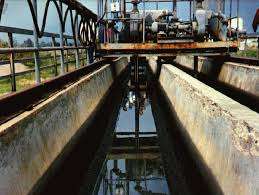
Grit chambers are settling tanks or basins that collect the inorganic particles and avoid their accumulation in sludge digesters as well as prevent damage to the pumps. Grit will damage pumps by abrasion and cause serious operational difficulties in sedimentation tanks and sludge digesters as it can accumulate around outlets and pump suction thereby choking them. Consequently, it is common practice to remove this material by grit chambers.

We usually place them ahead of pumps or comminuting devices. Mechanically cleaned grit chambers should be preceded by coarse bar rack screens. We typically design the Grit chambers as a long channel in which we reduce, the wastewater’s velocity sufficiently to deposit heavy inorganic solids but to retain organic material in suspension. Channel-type chambers should provide controlled velocities as close as possible to 1.0 feet per second. Velocities substantially more significant than 1.0 feet per second cause excessive organic materials to settle out with the grit. The detention period is usually between 20 seconds to 1.0 minutes.

Grit Chambers Working Principle

The critical velocity of flow should always be lesser than the critical scouring velocity so that the inorganic particles settle.

Grit Chamber Types

We can classify grit chambers into two types, depending on the cleaning mechanism.

Mechanically cleaned

A mechanically cleaned grit chamber uses mechanical means to remove the accumulated grit. Scraper blades in a mechanically cleaned grit chamber collect the grit that has accumulated on the chamber’s floor. By using various devices such as bucket elevators, jet pumps, and airlifts, we can raise this grit to ground level and remove them. The grit washing mechanisms mostly include agitation tools that use either water or air to provide washing action.

Manually Cleaned

In the manually cleaned Grit chamber, we remove the grit manually using a shovel. We must clean them at least once each week. Also, they should have adequate capacity for storing grits between the time of cleaning.

Based on the mode of operation, we can classify grit chambers as follows:

Horizontal Flow Grit Chambers

These are long narrow tanks about 10-18 meters long and 1 to 1.3 m in depth and rely on gravity to settle out the heavy solids. The wastewater is directed into the tank at a controlled rate and the velocity is kept low to allow the particles to settle to the bottom of the tank. We remove the settled material with a scraper mechanism or airlift pump.

Horizontal Flow Grit Chambers

Aerated Grit Chambers

Aerated grit chambers use a combination of mechanical mixing and agitation with air to prevent the solids from settling and keep them in suspension. After mixing with air, the mixture flows into a settling zone to separate the solids. The diffusers are located at about 0.45 to 0.6 m from the bottom. Wastewater moves in the tank in a helical path and makes two or three passes across the bottom of the tank at maximum flow. Wastewater is introduced in the direction of roll in the grit chamber. This type of grit chamber has grit removal grab buckets, travelling on monorails over the grit collection and storage trough. We can also use chain and bucket conveyors.

 Typical design details for the aerated grit chamber are : 

  • Depth: 2 to 5 m 
  • Length: 7.5 to 20 m 
  • Width: 2.5 to 7.0 m 
  • Width to depth ratio: 1:1 to 5:1 
  • Air supply m3 /m.min of length: 0.15 to 0.45 (0.3 typical)
  • Detention time at peak flow: 2 to 5 min (3 minutes typical) 

Vortex Type Grit Chambers

 In this grit is removed with a vortex flow pattern. The wastewater enters tangentially and exits in the perpendicular direction of motion either from the top or from the side. Due to inertia, the grit particle will remain in the chamber and liquid free from grit will only escape. The rotating turbine maintains constant velocity and helps in separating organic matter and grit. We get washed grit, free from the organic matter from this device.

Now, let’s have a look at the uses of grit chambers.

Grit Chamber Uses  

The uses of the grit chamber are as follows:

  • Prevents equipment from clogging.
  • Slow down the flow to settle heavy solids.
  • Saves the wastewater treatment cost.
  • Controls grit collection in sludge digesters.
Grit Chamber

Conclusion

In this blog, we saw the working principle, types and uses of grit chambers. If you have any queries please feel free to ask in the comments section.

Tensile structures – Definition and types

Tensile structures or Tension in structures refers to the internal force created within a structure due to an applied load that tends to pull or stretch the structural members apart. When a force is applied in tension to a structure, the structural elements experience a stretching effect, which creates tensile stress within the material. This stress can cause the material to deform, and if the tension becomes too great, it can cause the material to fail or break.

Tension is a critical consideration in structural design, and engineers must carefully calculate and account for the amount of tension that a structure will experience in order to ensure that it can withstand the anticipated loads without failing. Materials such as steel, which have high tensile strength, are often used in structures that will be subjected to significant tensile forces.

  1. Tensile structure – Working principle
  2. Types of tensile structure
    1. Linear Tensile Structure
    2. Three-dimensional tensile structures
    3. Surface-Stressed Tensile Structures
  3. Shapes of tensile structures
  4. Major tensile structures around the world
  5. Advantages of Tensile structures

Tensile structure – Working principle

When studying architecture/civil engineering, you often come across the concepts of tension and compression, which are two types of forces. The majority of structures we construct are in compression, meaning that they rely on the downward pressure and squeezing of materials such as bricks and boards to remain stable on the ground. In contrast to compression, tension involves the pulling and stretching of building materials.

Tension in structures


Some of the earliest human-made shelters have historically influenced tensile structures. For instance, the nomads of the Sahara Desert, Saudi Arabia, and Iran developed black tents using camel leather. Native American tribes also built various structures. Compared to other structural models, tensile structures provide several advantages, and they are inspired by these ancient shelters.

The principle of tensile structures is that they rely on tension to create a stable structure. Tensile structures use tensioned elements, such as cables, ropes, or membranes, to transmit loads and create a self-supporting structure. These tensile elements are anchored to supports, such as poles or columns. The supports resist the tensile forces and keep the structure in place. The tensioned elements work together to distribute the load and create a structurally efficient system. Tensile structures are known for their lightweight and flexible design, which allows them to span long distances while using minimal materials.

Types of tensile structure

Tensile structures can be classified based on the plane in which the tensile forces act, which determines the shape and form of the structure. The three main classifications of tensile structures based on the plane of tension are:

Linear Tensile Structure

Tensioned cables or rods support a linear tensile structure, which is a type of lightweight and flexible structure characterized by long, narrow spans. These structures are often used to provide shade or cover for outdoor spaces such as pedestrian walkways, seating areas, or parking lots. Designers typically aim for a simple, minimalist aesthetic and can use a range of materials, including steel cables, high-strength polyester fabric, or PTFE-coated fiberglass. The design of linear tensile structures is important to ensure stability and resistance to wind, snow, and other loads. Engineers use computer simulations and physical testing to determine the optimal shape, size, and materials for the structure.

  1. Shade sails: Tensioned fabric structures used to provide shade in outdoor spaces.
  2. Tensile canopies: Lightweight fabric structures used to provide shade or cover for outdoor events.
  3. Tensile bridges: Tensioned cables or rods support pedestrian or cycle bridges.
  4. Tensile roofs: Tensioned fabric structures used to cover large outdoor spaces.
  5. Tensile facades: One can attach external lightweight fabric or cable structures to a building’s exterior. Their purpose is to provide shade or reduce solar heat gain.

Three-dimensional tensile structures

Designers create a three-dimensional tensile structure with multiple curved surfaces in three dimensions. Manufacturers make 3D tensile structures from various materials such as fabric, steel, and composites. Architects frequently utilize these structures in large-scale projects such as stadiums, airports, and exhibition halls.

  1. Cone-shaped structures: Three-dimensional structures shaped like a cone, often used for small pavilions or temporary structures.
  2. Hyperbolic paraboloid structures: Curved structures with a saddle shape that can span large areas, used in roofs and canopies.
  3. Geodesic dome structures: Spherical structures made of interconnected triangles, used for large span structures such as greenhouses or exhibition spaces.
  4. Cable-net structures: Three-dimensional networks of tensioned cables that can form complex curved shapes, used for roofs and facades.
  5. Pneumatic structures: Three-dimensional structures made of airtight materials, inflated to create a stable shape, often used for temporary structures such as exhibition booths.
Strand bridge - Tensile structure

Surface-Stressed Tensile Structures

Designers create surface-stressed tensile structures with pre-stressed fabric or membrane panels.” They tension the panels in all directions to create a stable and self-supporting three-dimensional surface. “Large-scale projects like stadiums, arenas, or exhibition halls often use this type of structure, which designers can make from various materials such as PVC-coated polyester, PTFE-coated fiberglass, or ETFE foil. “The pre-stressing of the fabric panels allows for the creation of complex shapes and curves, making surface-stressed tensile structures a popular choice for architects and designers looking to create visually striking and functional structures.

  1. Single-curved surface-stressed structures: Designers often use a pre-stressed membrane to create a stable, self-supporting structure with a single curved surface for roofing applications or canopies.
  2. Double-curved surface-stressed structures: These structures have two curved surfaces that intersect, creating complex shapes and curves. They are often used for large-scale architectural projects such as stadiums, exhibition halls, or museums. The designer creates a stable, self-supporting structure by tensioning a pre-stressed membrane in multiple directions for double-curved surface-stressed structures.

Shapes of tensile structures

The basic shapes of tensile structures include:

  1. Cone – a structure shaped like a cone with a pointed top.
  2. Hyperbolic paraboloid – a saddle-shaped structure that can span large areas.
  3. Cylindrical – a structure shaped like a cylinder with rounded ends.
  4. Spherical – a structure shaped like a sphere.
  5. Pyramid – a structure with a base that is a polygon and triangular sides that meet at a point.
    One can create more complex shapes and designs for tensile structures by combining or modifying these shapes.

Major tensile structures around the world

  1. The Sydney Opera House – a famous example of a double-curved surface-stressed tensile structure, with sail-shaped roofs.
  2. The Denver International Airport – a cable-net structure featuring a white fabric roof spanning over 500,000 square feet.
  3. The Olympic Stadium in Munich – a tensile membrane structure with an acrylic glass roof held by a steel tension ring.
  4. The Burj Khalifa – a skyscraper featuring a helix-shaped tensile structure at its base, designed to withstand high wind loads.
  5. The Kauffman Center for the Performing Arts – a cone-shaped tensile structure that covers an outdoor courtyard and serves as a performance venue.

Advantages of Tensile structures

Tensile structures offer several advantages over traditional building structures, including:

Tensile structure
  1. Lightweight: Compared to traditional building materials, tensile structures are lightweight, which can lead to lower transportation and installation costs.
  2. Flexibility: The flexibility of the materials used in tensile structures allows for the creation of unique and complex shapes, which can be difficult or impossible to achieve with traditional building materials.
  3. Durability: Designers create tensile structures to endure harsh weather conditions, which makes them a durable and long-lasting option.
  4. Cost-effective: The lightweight materials and quick installation time of tensile structures can result in lower construction costs compared to traditional building structures.
  5. Energy efficiency: Tensile structures allow for natural light to penetrate, reducing the need for artificial lighting and making them energy-efficient.
  6. Sustainable: Manufacturers can make tensile structures from recyclable materials and can easily dismantle and reuse them, making them a sustainable option for construction.

Updates in civil engineering, architecture finishes, building construction, Environmental Engineering