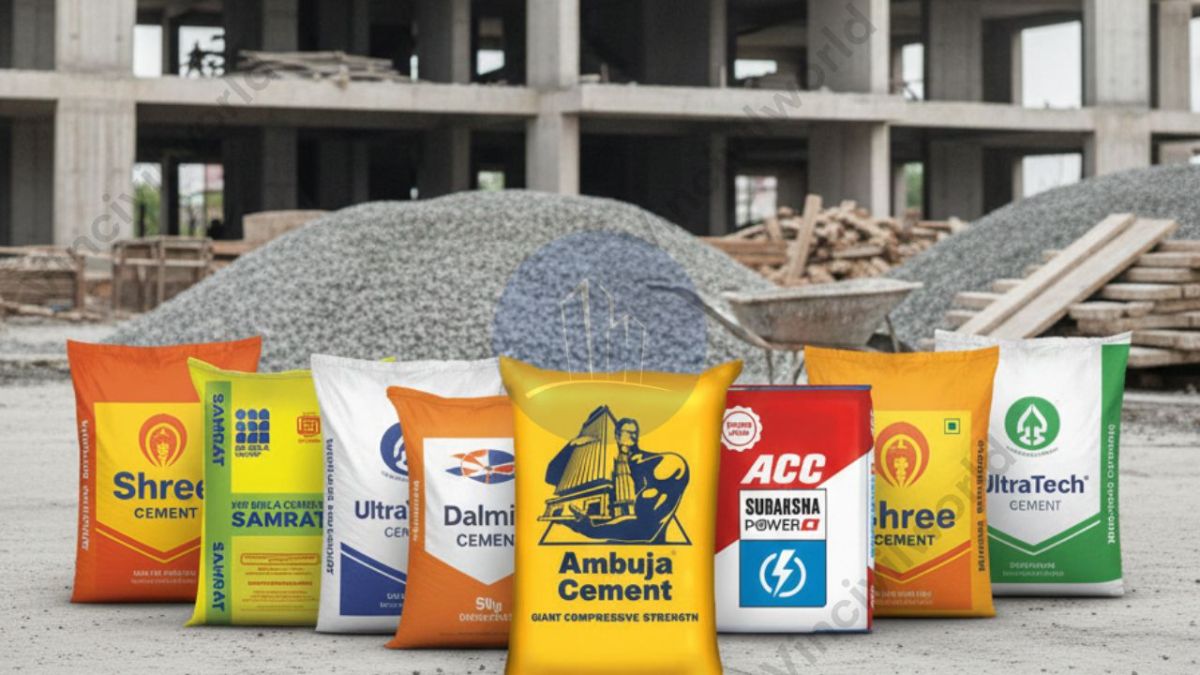
Types of Cement for Concrete – Top 15 Cement Types

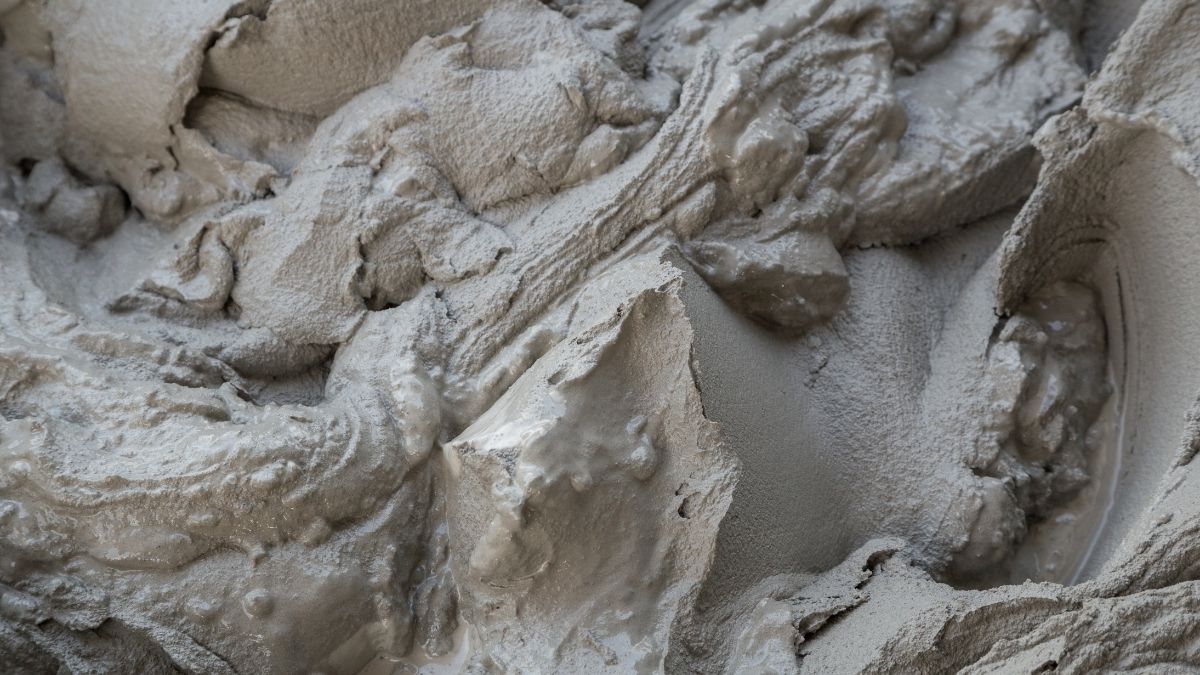
Types of Cement used in construction are categorised according to their properties, applications, and advantages. Concrete construction involves the use of different varieties of cement, each possessing unique characteristics, benefits, and applications that depend on the materials utilized in their production. This categorization is based on the composition of the materials used in production.

Cement is an integral part of all types of construction ranging from huge skyscrapers, bridges, tunnels, etc to small residential buildings. It is one of the oldest and most used binding materials and an integral ingredient used in the construction sector. There are different types of cement available in the market. Each type of cement has its application depending on its properties. This article is about the cement types mostly used in construction.

15 Types of Cement and Their Uses

Let us have a look at the top 15 cement types widely used in India and other nations. They are,

  • Ordinary Portland cement  
  • Portland pozzolona cement 
  • Portland Slag cement
  • Rapid hardening cement 
  • Hydrophobic Portland cement
  • Low-heat Portland cement 
  • Sulphates resisting Portland cement 
  • Quick setting Cement
  • High alumina cement
  • Masonry cement
  • White cement
  • Coloured cement
  • Expansive cement
  • Air-entraining Portland cement
  •  Hydrographic cement

Ordinary Portland cement (OPC ) – Types of Cement  

OPC stands for Ordinary Portland Cement, which is one of the most commonly used types of cement in construction. It is made from a mixture of limestone, clay, and other materials, heated at high temperatures to produce a fine powder. Mostly, gypsum, calcareous material, and argillaceous substance make up Ordinary Portland Cement. OPC cement has excellent binding properties and provides high compressive strength to the concrete.

Ordinary Portland Cement is versatile and suitable for a wide range of construction applications, including buildings, bridges, and pavements. Ordinary Portland Cement is available in different grades, each with unique characteristics, making it easy to choose the most appropriate type for a specific construction project. Additionally, it has a relatively fast setting time, allowing for faster completion of construction projects. Ordinary Portland cement is more economical and forms a crucial component of high-strength concrete. This kind of cement is well-resistant to deterioration from chemicals, shrinkage, and fractures.
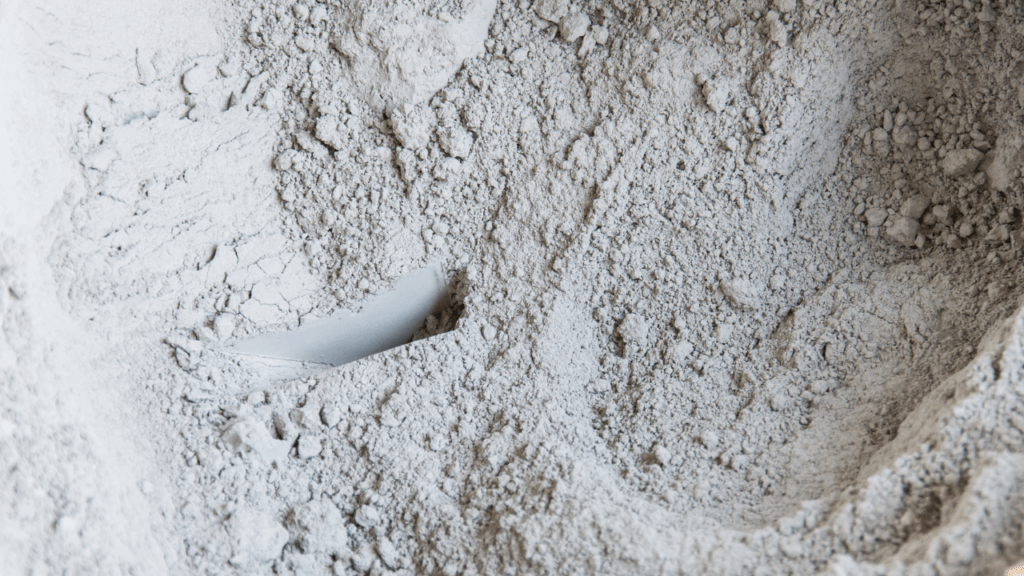
Ordinary Portland Cement

Also read : Best cement of India

Portland pozzolana cement – Types of cement in India

Portland Pozzolana Cement (PPC) is a type of cement made by combining Portland cement clinker with pozzolanic materials like fly ash, volcanic ash, or silica fumes. contains 15% to 35% pozzolanic ingredients, gypsum, and clinker. The pozzolanic materials improve the workability and durability of concrete and reduce the risk of cracking. PPC is preferred in locations with high moisture content, as it is highly resistant to dampness and corrosion. It is also eco-friendly since it uses industrial waste as a raw material. PPC cement is suitable for a wide range of construction applications, including dams, bridges, and buildings.

PPC has an initial setup time of 30 minutes and an ultimate setting time of 600 minutes. It is appropriate for hydraulic and marine structures. sewage works, and underwater concrete laying, such as bridges, piers, dams, and mass concrete works. because PPC has strong resistance to sulphate attack. PPC has a slower setting time than OPC, which may prolong construction time. Its initial strength is also lower than OPC.

Portland Slag Cement (PSC) -Types of cement for concrete

Portland Slag Cement (PSC) is a type of cement made by blending granulated blast furnace slag (GGBFS) with Portland cement clinker. The slag is a waste product from steel manufacturing, making PSC an eco-friendly alternative to traditional cement. PSC has excellent workability, durability, and low heat of hydration. It is widely used in construction applications such as dams, bridges, and underground structures. PSC provides high strength and durability, making it a popular choice for high-performance concrete. It is also known for its resistance to chloride and sulphate attacks. It has good compressive strength.

Rapid hardening cement – Types of cement in India

Rapid Hardening Cement (RHC) is a type of cement that attains high strength in a short time. It is made by grinding Portland cement clinker with a higher amount of C3S and a lower amount of C2S. RHC is suitable for emergency repair works and precast concrete components. Its rapid setting and strength gain properties make it ideal for use in cold weather conditions. It has high resistance to chemical attacks. RHC needs less curing time. The strength of rapid hardening cement at the three days is similar to the 7 days strength of OPC with the same water-cement ratio. So it is suitable for formworks, pavements etc. It has more application than OPC because of its early hardening property. Rapid-hardening cement is expensive. 

Hydrophobic Portland cement

Hydrophobic Portland Cement (HPC) is a type of cement that repels water due to its chemical composition. It is made by adding water-repellent chemicals to the cement during the grinding process. HPC is suitable for construction projects in areas with high rainfall or moisture content. It is commonly used in the construction of basements, swimming pools, and water storage tanks. HPC also has increased durability and can resist chemical attacks. It consists of admixtures such as acid naphthene soap, oxidized petrolatum, etc., reducing the melting of cement grains. The strength of hydrophobic cement is similar to OPC after 28 days. This type of cement is expensive. 

Low-heat Portland cement 

Low-heat Portland cement is a type of cement that produces less heat during hydration, which reduces the risk of cracking and improves durability. It is typically used in large concrete structures such as dams, bridges, and high-rise buildings, as well as in mass concrete applications. Because the heat of hydration of this type of cement is 20% less than normal cement. It consists of 5% of tricalcium aluminate and 46% of dicalcium silicate. Therefore it produces low heat of hydration. It has excellent wear, impact resistance and workability. 

Sulphate-resisting Portland cement 

Sulphate-resisting Portland cement (SRPC) is a type of cement designed to resist the effects of sulphates, which can cause concrete to deteriorate. It contains lower levels of tricalcium aluminate, which is the component most susceptible to sulphate attack. SRPC is commonly used in construction projects involving soil with high sulphate content or exposure to seawater.

Quick setting Cement

Quick-setting cement is a type of cement that hardens and gains strength rapidly after mixing with water, usually within 5 to 30 minutes. It is used in situations where the rapid setting is necessary, such as in cold weather or for emergency repairs. However, quick-setting cement may not be suitable for projects requiring longer workability or for structures that need to withstand heavy loads over time. It is a special type of cement manufactured by adding aluminium sulphate and reducing the amount of gypsum. It is applicable for underwater concreting and grouting. The setting time of this cement is less because aluminium sulphate is an accelerating admixture. It is also preferable for concrete repair works, tunnelling etc.

High alumina cement

High alumina cement (HAC) is a type of cement that is made from bauxite and limestone with a high percentage of alumina content, typically over 35%. It sets and hardens rapidly, has high early strength, and can withstand high temperatures and acidic environments. It is commonly used in refractory applications such as furnace linings, precast shapes, and high-temperature concretes. However, HAC is not recommended for structural applications due to its high shrinkage and susceptibility to chemical attacks over time. High alumina concrete attains strength within 24 hours. It can withstand high temperatures and fire. It is applicable in refractory concrete. Rapid hardening cement with an initial and final setting time of about 3.5 and 5 hours, respectively.

Masonry cement

Masonry cement is a type of cement that is specifically designed for use in masonry construction, such as bricklaying and plastering. It is a blend of Portland cement, hydrated lime, and sometimes additional additives such as sand, clay, or other minerals. The addition of hydrated lime improves the workability and durability of the cement, and it also enhances the bond strength between the cement and the masonry units. Masonry cement is commonly used in both exterior and interior masonry applications, such as building walls, chimneys, and decorative stonework. Since it has low strength it is not suitable for structural applications. The cost of masonry cement is less. Also, they have high water retentivity and workability. 

White cement

White cement is a type of cement that is similar to Portland cement, but with a white or light-coloured appearance. It is made from raw materials with low iron content, such as limestone, kaolin, and clay, and is often used for decorative or architectural purposes, such as in terrazzo flooring, precast panels, and ornamental concrete. White cement is also used in applications where colour consistency is important, such as in coloured concrete or mortars, as it can be tinted to various shades. It has similar properties to grey cement in terms of setting time, strength development, and durability. White cement is manufactured by using limestone, clay, oil and gypsum. But they are expensive compared to normal cement. 

Coloured cement

Coloured cement is a type of cement that is produced by adding pigments to the raw materials during the manufacturing process. It is available in a wide range of colours, and the pigments used can be natural or synthetic. Coloured cement is used in decorative concrete applications where aesthetics are important, such as stamped concrete, exposed aggregate, and decorative overlays. It can also be used in architectural concrete, including precast panels, masonry units, and concrete countertops. The colour of the cement can be affected by the curing process, and it is important to use a consistent curing method to ensure the desired colour is achieved. Coloured cement consists of colour pigments like chromium, cobalt, ton oxide, manganese oxide etc which gives them colour. It is preferable for floor finishing, window sills stair treads, and other external surfaces. The number of colouring pigments should about be 5 to 10 per cent. 

Coloured cement
Coloured cement

Expansive cement

Expansive cement is a type of cement that expands during the early stages of hydration. It contains a mixture of Portland cement clinker, gypsum, and an expansive agent, such as calcium sulphate or anhydrite. Expansive cement can expand up to 3% of its original volume, and this expansion can help offset the shrinkage that occurs as the concrete dries and hardens, reducing the risk of cracking. It is commonly used in applications where shrinkage cracking is a concern, such as in large concrete structures, pavements, and bridge decks. However, the expansion can also cause problems if it is not properly controlled, and it is important to follow the manufacturer’s guidelines for use.

  • K-type expansive cement
  • M-type expansive cement
  • S-type expansive cement

The use of expansive cement is in water retaining structures, concrete repairing, large floor slabs, etc. 

Air-entraining Portland cement

Air-entraining Portland cement is a type of cement that contains an air-entraining agent, such as resins, surfactants, or fatty acids, that creates microscopic air bubbles in the concrete. These air bubbles improve the durability of the concrete by reducing the effects of freeze-thaw cycles, as the water trapped in the bubbles can expand and contract without damaging the concrete. Air-entraining Portland cement is commonly used in cold climates or areas with high humidity, where freeze-thaw cycles can cause damage to concrete structures. However, the use of air-entraining agents can also reduce the compressive strength of the concrete, so it is important to properly balance the amount of air entrainment with the desired strength and workability of the concrete. Air-entraining agents like aluminium powder and hydrogen peroxide are added to the cement. 

Hydrographic cement

Hydrographic cement, also known as underwater cement, is a type of cement that can harden and set even when submerged in water. It is specifically designed for use in underwater construction projects, such as building foundations, bridges, and pipelines. Hydrographic cement contains special additives that allow it to set and harden underwater without being affected by the water, and it can also be mixed with accelerators to speed up the setting time. The cement is typically mixed and applied using specialized equipment, such as pumps or tremies, to ensure proper placement and consolidation.

Flushing door/Flush door – Types and applications

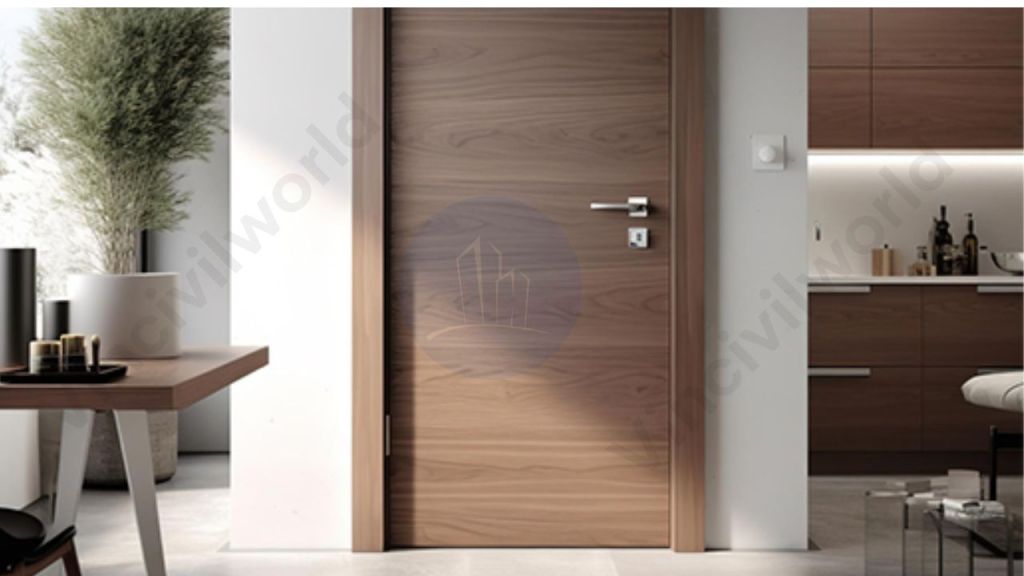
Flushing door or flush doors are internal doors with a basic and elegant form, a level surface, and minimum decoration. The door panels are flush with the frame, hence the name “flush door.” Flush doors are popular in modern architectural design because of their clean, minimalist appearance and adaptability.

Doors obstruct or provide access to an entrance or exit to a building, room, or vehicle. Doors are essential for providing security and privacy. They can be made of various materials, including wood, metal, glass, or composites. They come in different forms. Doors are outfitted with a range of hardware such as locks, handles, hinges, and closers. This is to limit access and facilitate smooth operation. The type of door and hardware used depends on the intended purpose and location. For example, residential doors are typically more aesthetically pleasing, while commercial doors prioritize functionality and durability. Doors are essential in building construction and architecture because they can contribute to the overall aesthetics of a room.

This article is about Flush doors and types of flush doors used in building construction and architecture.

  1. What is a flushing door or flush door?
  2. Different types of flushing doors
    1. Solid Core flushing/flush Doors
    2. Cellular core flush door
    3. Hollow core flush door
    4. Fire-rated flush Door
    5. Louvered Flushing Door
    6. Acoustic flushing door
  3. Key Takeaways
  4. Conclusion

What is a flushing door or flush door?

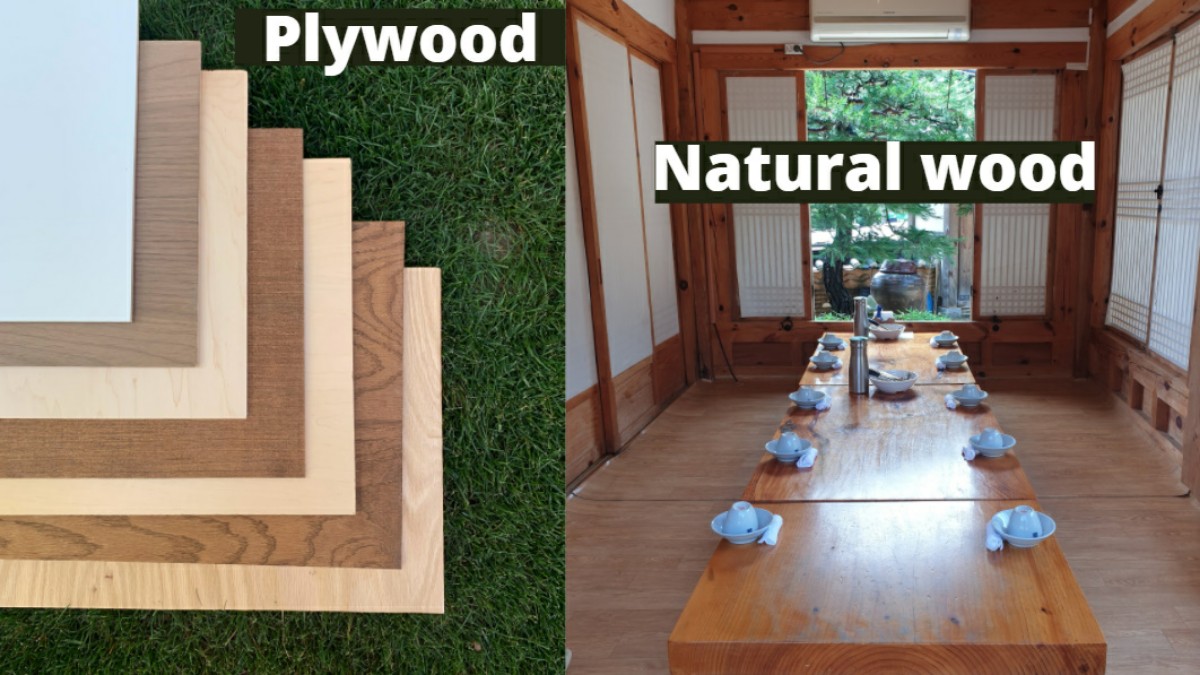
A flush door is an interior door with a smooth, flat surface and no decoration or raised panels. The door panels are flush with the frame, giving the door its name. These doors have a wooden frame with plywood, MDF, or natural wood fixed on both sides. The top surface is finished with laminated sheets, veneers, paint, etc., resulting in a standardized and straightforward appearance. Flush doors are commonly constructed using wood in residential buildings due to their attractive and rich appearance. Poplar, mango, or pine wood can be used to construct the doors.

Solid Core Flush Door

Different types of flushing doors

Flush doors are classified into different types. Classification is based on the materials used, the manufacturing method, the finish, and the location of the application.

The following are a few examples of common flush door designs:

  • Solid Core Flush Doors
  • Hollow Core Flush Doors
  • Cellular core flush door
  • Fire-rated flush door
  • Louvered flush door
  • Acoustic flush door

Let us discuss different types of flush doors in detail

Solid Core flushing/flush Doors

The manufacturers sandwich a solid core between two thin sheets of plywood or MDF. The core is made of particleboard, MDF, or solid wood. This construction provides a flush surface on both sides of the door. They then veneer the door with real wood or decorative laminate. These doors typically consist of robust and mineral-based timber and use a variety of materials. The materials they use include blockboard, laminated core, cross band, face wood veneer, and particle board.

This construction method improves the door’s durability and resistance to damage compared to a hollow core door. Solid-core flush doors find frequent use in both residential and commercial structures. This is because of their excellent sound insulation and privacy features.

Solid core flush door
Solid Core flush door

Solid-core flush doors are popular due to their customization options and affordability compared to solid wood doors. Solid core flush doors come in various sizes and styles, including panel and slab options. They can also be purchased with a range of hardware options, including hinges, handles, and locks.

Cellular core flush door

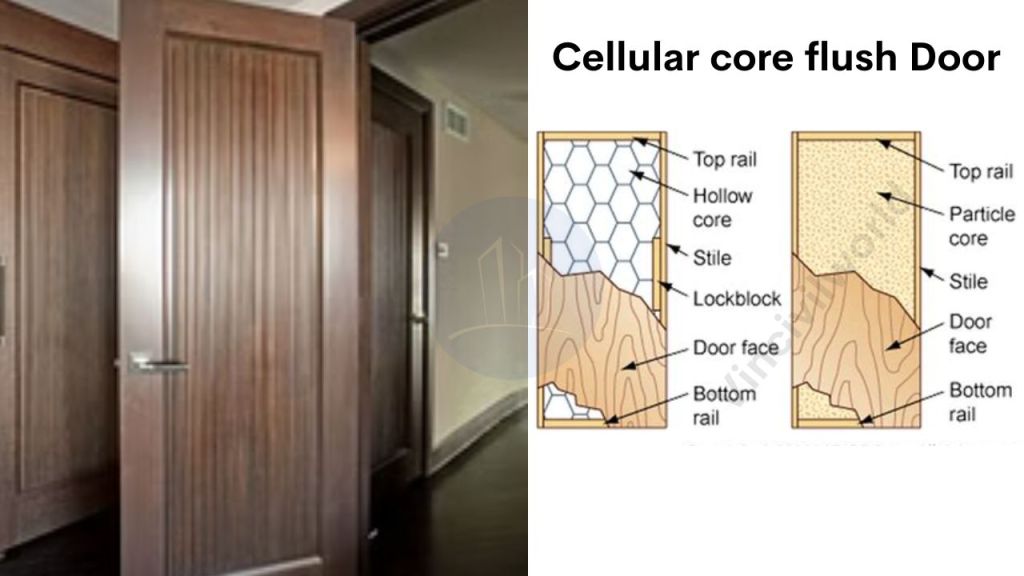
The cellular core flush door comprises a hollow core made up of a honeycomb or grid-like structure. The core is then sandwiched between two thin sheets of plywood or MDF. This creates a flush surface on both sides of the door. This construction method creates a lightweight and cost-effective door that is still sturdy and durable.

The core of cellular core flush doors consists of a honeycomb or grid-like structure. The materials used to construct the core include cardboard or engineered wood, such as particleboard, MDF, or plywood. This structure creates a strong, yet lightweight core. The core provides some insulation and sound dampening, although not as much as a solid core door.

Cellular core flush Door

Cellular core flush doors are popular in residential and commercial buildings. This is because they are affordable, lightweight, and easy to install. Manufacturers offer a variety of sizes and styles for cellular core flush doors, such as panel and slab designs. Additionally, these doors are painted or stained to match any interior decor.

Doors made with this construction method may not offer the same level of durability or sound insulation as solid-core flush doors. This makes them more susceptible to damage from impacts or moisture. As a result, they are mainly used for interior residential doors rather than high-traffic commercial or industrial settings.

Hollow core flush door

Two thin sheets of plywood or MDF sandwich a lattice or grid-like structure. This creates a flush surface on both sides of hollow core flush doors. These doors are a type of interior door with a hollow core. The hollow core makes the door lightweight and easy to handle. This makes them a popular choice for interior doors in residential and commercial settings.

Hollow core flush doors are relatively affordable, and they are available in a variety of sizes and styles, including panel and slab designs. They are also easy to install, and they can be painted or stained to match any interior decor.

While hollow-core flush doors are lightweight and affordable, they do have some limitations. They are not as durable or sound-insulating as solid core or cellular core flush doors. The hollow core can also make them more prone to damage from impacts or moisture. Hollow core flush doors have a lattice or grid-like structure sandwiched between thin plywood or MDF sheets. This structure makes them best suited for interior use where sound insulation and durability are not a significant concern.

Fire-rated flush Door

Fire-rated flushing/flush doors withstand fire and smoke for a certain period of time. People typically use them in commercial or public buildings. They are also used in multi-family residential buildings where building codes require their installation. These buildings need fire resistance in certain areas.

Manufacturers typically make fire-rated flush doors from fire-resistant materials. These materials include metal, gypsum, or solid core materials like particleboard, MDF, or timber. The doors are often filled with fire-resistant materials. Further, they are covered with a layer of fire-resistant material, such as sheet metal, gypsum, or special fire-resistant paint.

Fire rated Flush Door

The rating of a fire-rated flushing door is determined by the length of time it can withstand a fire. This is measured before it begins to fail. Fire ratings typically range from 20 minutes to 3 hours or more. The required rating will depend on the building code and the specific application.

Fire-rated flushing doors may also have additional features. These features include intumescent strips around the edges or fire-resistant glazing. These help contain fire and smoke. These doors can also be equipped with special hardware. Examples include self-closing hinges and automatic door closer. These help ensure that the door remains closed during a fire.

Ensuring the correct installation of fire-rated flush doors in accordance with local building codes is crucial. This guarantees the required level of protection in case of a fire.

Louvered Flushing Door

A louvered flushing door is a type of interior door. It has a series of horizontal slats or louvers inserted into the door panel. The manufacturers can make the louvers from wood, glass, or metal, and they usually fix them in place. However, some designs may permit adjustable louvers.

Louvered flush doors find their usage in areas that require air circulation or ventilation, such as utility rooms or closets. They can also be used in rooms that need privacy or light control, such as bathrooms or bedrooms.

The design of a louvered flush door can vary widely. Traditional styles have solid wood louvers. More modern designs incorporate metal or glass louvers. They are also available in a variety of sizes and configurations. This includes single or double doors. There are different hardware options, such as hinges and handles.

Louvered Flush Doors

Manufacturers can make louvered flush doors from various materials. These materials include wood, MDF, or metal. They can paint or stain them to match any interior decor. They can also paint or finish the louvres in different colours or textures to add an extra design element to the door.

Overall, louvred flush doors provide a unique combination of ventilation, privacy, and design. These features make them a popular choice for a variety of applications in residential and commercial buildings.

Acoustic flushing door

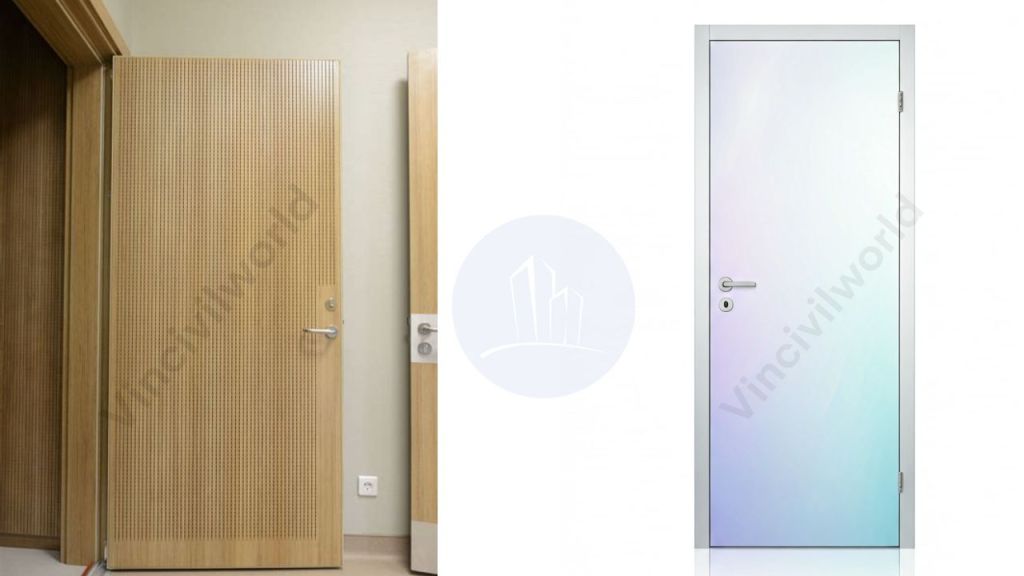
People often use acoustic flush doors in commercial settings. These places include recording studios, theaters, and conference rooms. Privacy and sound isolation are important in these settings. The manufacturer selects materials with soundproofing properties to construct an acoustic flush door. They usually build it with a solid core that dampens sound waves.

The name “flush” door comes from its design, which allows it to fit within the plane of the surrounding wall, creating a smooth and seamless surface when closed. This helps to prevent sound from leaking through gaps around the edges of the door.

People often use acoustic flush doors in commercial settings. Examples include recording studios, theaters, and conference rooms. They require privacy and sound isolation in these settings. Homeowners can also use acoustic flush doors in residential settings. They are particularly useful in homes with open floor plans. They also help control noise levels in rooms like home theatres or bedrooms.

When selecting an acoustic flush door, it is essential to consider several factors. These factors include the sound transmission class (STC) rating, which indicates the door’s ability to block sound. Additionally, consider the material used for the door’s core and surface. Proper installation and sealing of the door are also crucial for optimal soundproofing performance.

Key Takeaways

  • Flush Doors Overview: Flush doors are simple, elegant interior doors with a smooth, flat surface. They are often used in modern architecture for their minimalist look.
  • Types of Flush Doors:
    • Solid Core Flush Doors: Made with a solid core between plywood or MDF sheets. They offer excellent sound insulation and durability. These doors are suitable for both residential and commercial use.
    • Cellular Core Flush Doors: Feature a honeycomb or grid-like structure inside, making them lightweight and cost-effective, ideal for residential applications.
    • Hollow Core Flush Doors: Comprise a hollow lattice structure. They provide an affordable, lightweight option for interior doors. However, they are less durable and sound-insulating.
    • Fire-Rated Flush Doors: These doors are designed to withstand fire and smoke for a specified duration. They are commonly used in commercial buildings and areas requiring fire resistance.
    • Louvered Flush Doors: Include horizontal slats for ventilation, often used in utility rooms, closets, or spaces needing airflow.
    • Acoustic Flush Doors: Constructed with soundproofing materials for environments requiring privacy and noise control, such as studios and conference rooms.

Conclusion

Flush doors, with their clean, streamlined appearance, are an excellent choice for both residential and commercial spaces. Their versatility is evident in the wide range of options available. These range from solid and hollow core doors to specialized types like fire-rated and acoustic doors. Solid core flush doors provide durability and sound insulation. This makes them ideal for high-traffic areas. Hollow core and cellular core doors offer a lightweight, budget-friendly option for interior use. Fire-rated and acoustic doors serve specific functional needs in safety and sound management. Understanding the unique characteristics and applications of each type helps in selecting the right flush door for any architectural or design requirement.

Driven piles – Features, Types and advantages

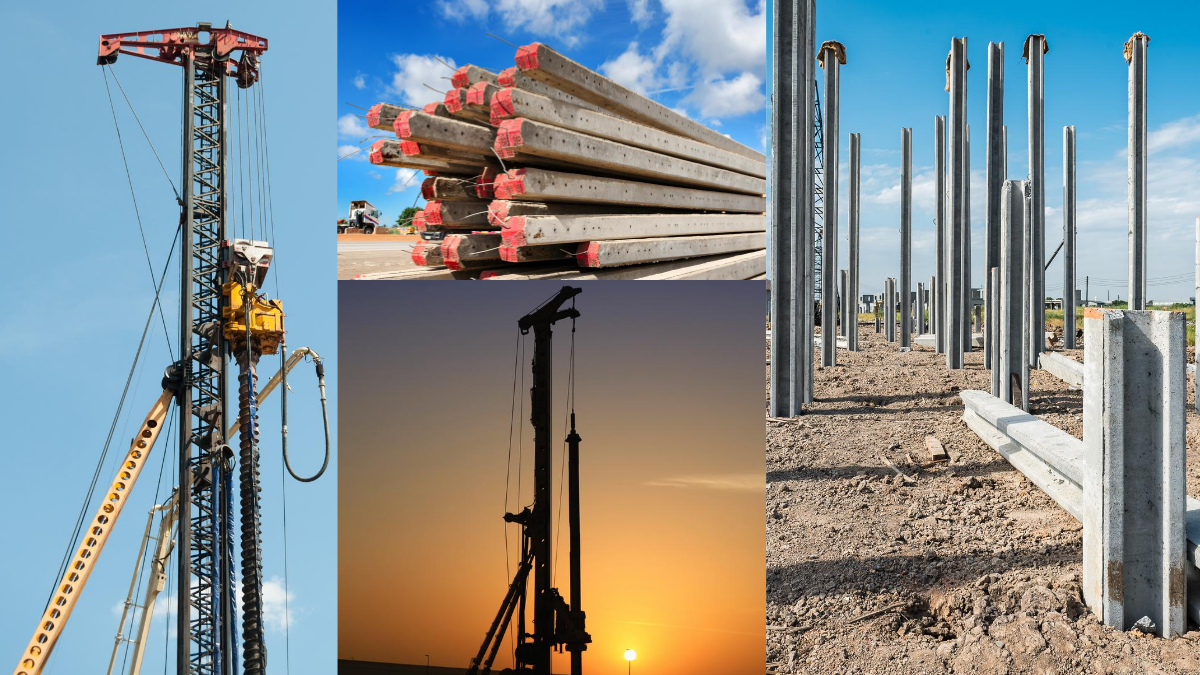
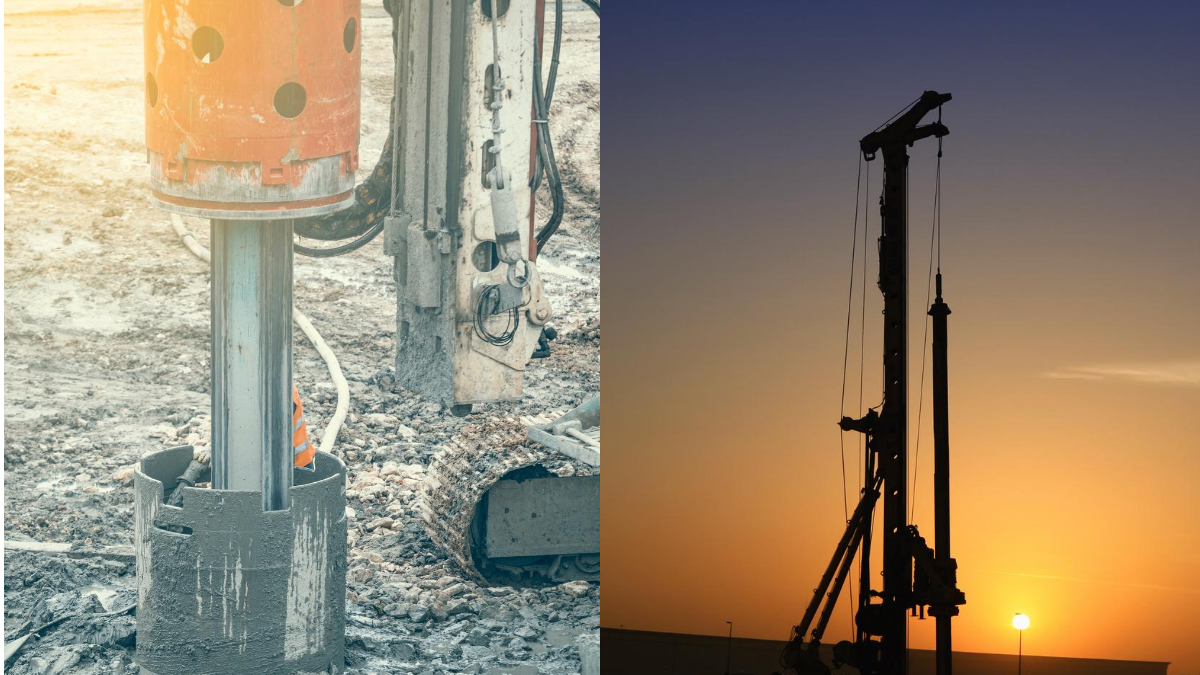
Driven piles support structures and transmit loads to underlying soil or rock, as they are a type of deep foundation used for this purpose. Contractors use driven piles, made of steel, concrete, or wood, to support structures and transmit loads to underlying soil or rock. They also call them displacement piles. The installation of driven piles involves driving them into the ground using impact hammers or vibratory drives until they reach a layer of rock or soil that can support the required loads.

If the soil is exceptionally dense, they may need to pre-drill to ensure the pile reaches the design depth. Construction projects commonly employ driven pile to provide stability and strength to the structure. Driven piles offer a cost-effective deep foundation solution and are commonly used to support buildings, tanks, towers, walls, and bridges.

  1. Why driven piles?
  2. Types of driven piles
    1. Steel Driven pile
    2. Pre-cast concrete Driven Piles
    3. Timber pile
    4. Composite driven pile
  3. Quality Control for Driven Piles
    1. Pile driving equipment for driven piles
    2. Pile inspection and testing
    3. Pile load testing for driven pile
    4. Pile driving records
  4. Advantages of driven piles
    1. High Capacity
    2. Ease of Installation of driven piles
    3. Cost-effective
    4. Minimal disturbance
    5. Versatility
  5. Disadvantages of driven piles
    1. Noise and vibration
    2. Limited depth
    3. Difficulty in driving through hard soil or rock
    4. Quality Control
    5. Limited environment suitability

Why driven piles?

Contractors often use driven piles, which are the most cost-effective deep foundation solution, to support buildings, tanks, towers, walls, and bridges. They are also suitable for embankments, retaining walls, bulkheads, anchorage structures, and cofferdams. Driven piles possess a high load-bearing capacity, durable, and contractors can install them quickly and effectively in various soil conditions. Engineers frequently use them in places with inadequate soil, where conventional shallow foundations would not be strong enough to sustain buildings.

In addition, contractors can install driven piles to support compression, tension, or lateral loads, with specifications determined by the structure’s needs, budget, and soil conditions, making them very versatile.

Related posts from vincivilworld

Types of driven piles

Driven piles are broadly classified as follows

  • Steel Driven pile
  • Precast Concrete Driven pile
  • Timber pile
  • Composite driven pile

Steel Driven pile

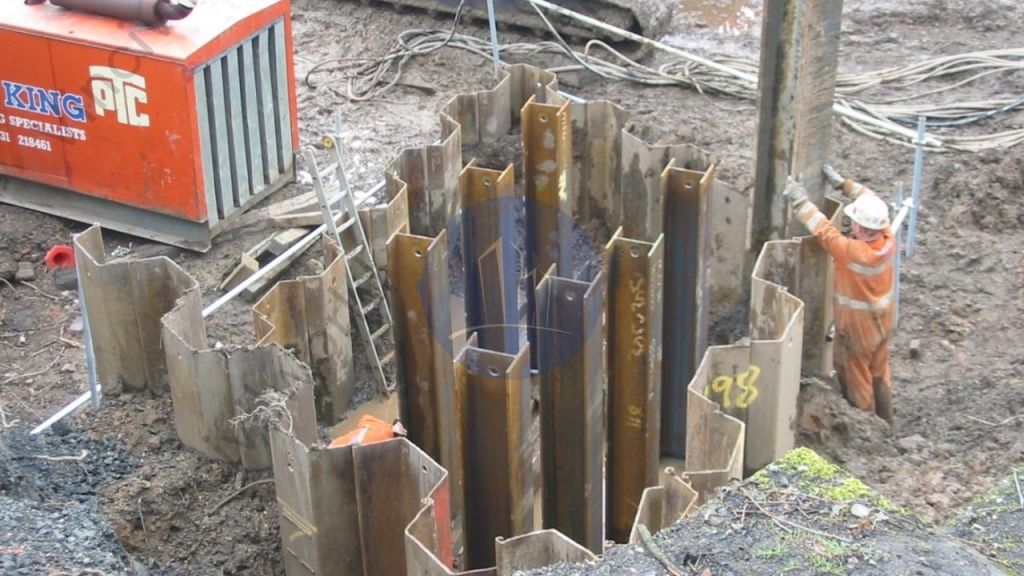
Steel-driven piles support major structures such as buildings, bridges, roads, and industrial facilities in construction. Construction workers push them into the earth using specialized tools like hydraulic hammers or pile drivers until they reach a predetermined depth or a firm layer of rock or soil. Steel-driven piles are steel beams with broad flanges on both ends.

Steel Driven Pile

Steel-driven piles are typically made of high-strength steel with a round or square cross-section. They come in various lengths and widths and can be installed vertically or at an angle to meet foundation design requirements. An impact hammer is used to press the pile into the soil by delivering a forceful blow. For shorter depths, steel screw piles are supported by a cast iron helix and powered by rotary motors.

Because of their durability, strength, and capacity to support enormous loads, the steel-driven pile is a common choice for deep foundations. Steel-driven piles are a cost-effective and quick solution for many construction projects. However, their applicability will depend on factors such as soil characteristics, anticipated loads, and local construction building codes and regulations.

Pre-cast concrete Driven Piles

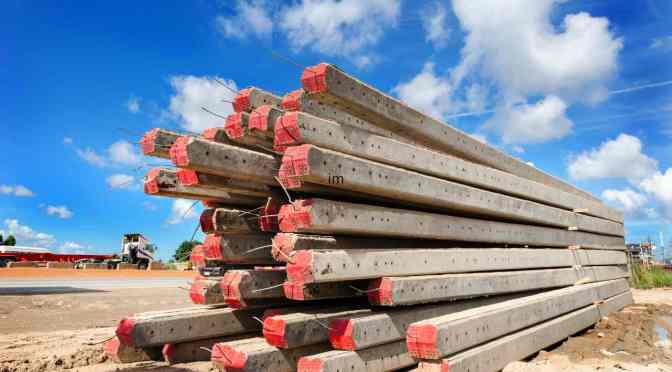
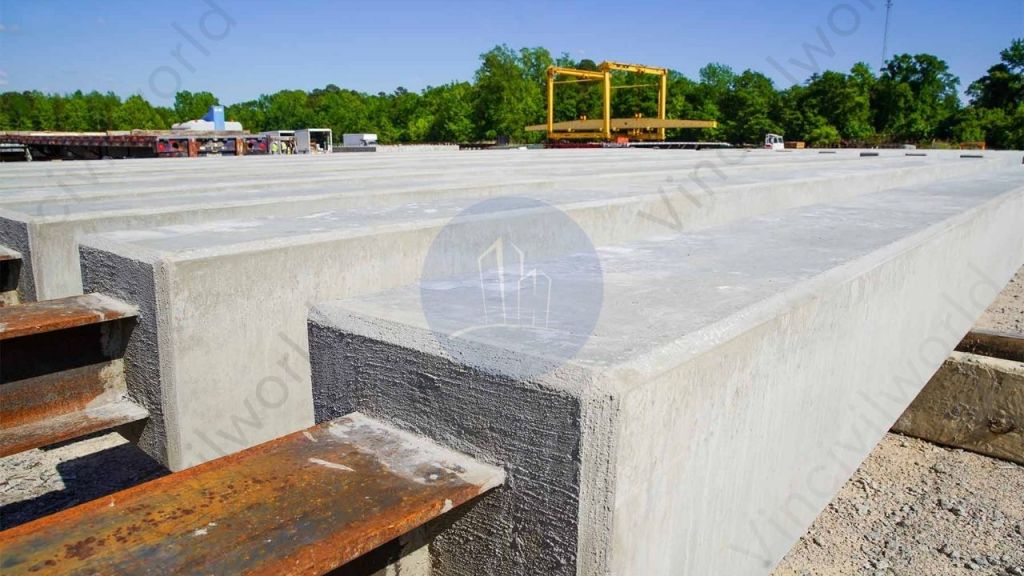
Precast concrete pile manufacturers deploy these piles in construction to support structures built on weak or compressible soils. They prefabricate these piles in a factory or casting yard before transporting them to the construction site. Based on the project’s unique needs, they can construct precast concrete piles in a vast range of dimensions, forms, and configurations. High-strength concrete, reinforced with steel rebar, is used to make these piles. They often use a vibratory hammer or hydraulic hammer to drive the piles into the earth until they reach the required depth or a solid layer of soil or rock.

Precast Concrete Driven Piles

Piles come in a variety of shapes, such as square, octagonal, cylindrical, or sheet. Percussion-driven piles are used in situations where bored piles would be ineffective due to running water or excessively loose soils. They have a load range of 300-1,200 kN and a maximum reach of 30 m. Precast concrete piles are constructed with great accuracy and quality control in a controlled environment, resulting in a consistent and uniform product that satisfies design requirements. They are durable and can withstand adverse weather conditions such as seawater or chemical exposure. Precast concrete piles can also be installed quickly and effectively, saving time.

  • Precast concrete piles are quick to install.
  • They can be used in various soil conditions.
  • Using precast concrete piles saves time and money in construction.
  • Precast concrete piles are durable and reliable.
  • They have high-quality control standards.
  • Precast concrete piles are a popular choice for deep foundation construction.

Timber pile

Timber-driven piles are used in construction to create a stable foundation for structures in weak or compressible soils. Contractors use hammers or pile drivers to create cylindrical or square wood piles from premium softwood species. This type of pile is particularly effective in areas with high water tables where other types of piles may not work as well. Timber-driven piles provide a stable foundation for structures in weak or compressible soils. This is achieved by hammering wooden piles into the ground, which compresses the wood and displaces the surrounding soil. The resulting tight fit helps to support the weight of the structure. Timber-driven piles have the advantages of being inexpensive and simple to install. Nonetheless, they may be susceptible to rot and pest infestation.
timber driven piles
timber-driven-pile

Composite driven pile

Engineers commonly use composite piles made of a combination of two or more materials, such as concrete, steel, or timber, when soil conditions require a combination of strength and flexibility. An example of a composite pile is a concrete pile with a steel section, as shown in the figure.

Contractors use composite-driven piles consisting of a steel tube filled with concrete and reinforced with steel rebar because they can withstand heavy loads. They use in various construction projects, such as bridges, high-rise buildings, and marine structures. The steel tube provides structural support and protects the concrete from damage during installation, while the concrete and rebar provide additional strength and stability. Contractors can install composite piles using hydraulic hammers or vibratory drivers to reach depths of up to 60 meters. Due to their durability and corrosion resistance, composite piles are ideal for use in harsh environments.

composite pile

Quality Control for Driven Piles

The construction of driven piles requires high-quality materials and adherence to standards such as BS 8004:2015 and EC standards. It’s crucial to maintain the pile’s shape and avoid damage during installation and inspect them beforehand for quality assurance. The maximum load a pile can carry depends on soil or rock strata properties, pile dimensions and material, and installation method. Engineers perform load testing on representative samples to determine capacity and use monitoring instruments like inclinometers and settlement gauges to ensure the pile’s sufficient support. Effective quality control and testing are crucial for the safe and reliable performance of driven piles in construction projects.

driven piles

During installation, it is crucial to maintain the shape of driven piles and ensure they are not damaged by the installation of subsequent piles.

Quality control of driven piles is an important aspect of ensuring the stability, safety, and longevity of structures that rely on them for support. Here are some of the common quality control measures used for the driven piles.

Pile driving equipment for driven piles

To make sure that piles are installed correctly, trained personnel are required to maintain, calibrate, and operate pile driving equipment properly. Regular inspections are necessary to detect any damage or wear in the equipment, and repairs or replacements must be made promptly.

Pile inspection and testing

Inspect the piles for defects or damage before driving them into the ground. To ensure that the piles have been installed correctly and meet the specified requirements, non-destructive testing methods such as sonic testing or integrity testing should be used to test the piles after installation.

Pile load testing for driven pile

pile load test

One can conduct load testing of a sample of piles to ensure that they can support the required loads. This involves applying a controlled load to the pile and measuring the resulting deformation, which one can compare to the design specifications to ensure that the piles are safe and reliable.

Pile driving records

One should keep detailed records of the pile driving process, including the number of blows or vibrations required to drive the pile to the required depth, the penetration rate, and any other relevant information. These records are essential to monitor the quality of the installation and identify any issues that may arise during the construction process.

Regular inspections and testing are essential to identifying any issues early in the construction process and enabling prompt corrective action.

Advantages of driven piles

The main advantages are

  • Piles can be pre-fabricated off-site which allows for efficient installation once on-site.

High Capacity

Piles are driven deep into soil or rock. This provides high load-bearing capacity. It’s suitable for supporting heavy structures like buildings, bridges, and marine structures. The process increases the effective length of the pile, resulting in high capacity.

Ease of Installation of driven piles

Compared to other pile types like drilled shafts, the installation of a driven pile is quick and efficient. The installation process involves driving the piles into the ground using an impact hammer or a vibratory driver. This requires minimal excavation and soil removal.

Cost-effective

Other types of foundation systems can often be more expensive than driven piles, particularly when the soil conditions are favourable. The cost-effectiveness of driven piles is due to their relatively simple installation process and the availability of pre-manufactured piles, which can reduce the time and cost required for pile installation.
Minimal disturbance

The installation process of driven piles minimizes the disturbance to the surrounding area, making them suitable for use in urban or environmentally sensitive areas. The piles are driven into the ground, which reduces the amount of soil disturbance and the need for excavation.

Versatility

Driven piles are suitable for a variety of soil conditions, including soft soils, hard soils, and rock layers. They can also be made of different materials such as steel, concrete, and timber, providing a wide range of design options.

  • When driven into the ground, piles displace and compact the soil, resulting in increased bearing capacity. In contrast, other types of deep foundations may require soil removal, which can cause subsidence and structural problems.
  • Installation usually produces little spoil for removal and disposal.

Overall, driven piles offer several advantages in terms of high capacity, speed of installation, cost-effectiveness, minimal disturbance, and versatility, making them a popular choice for foundation systems in many construction projects.

However, the use of driven piles also has some disadvantages, including their relatively high cost compared to shallow foundations, the noise and vibration associated with their installation, and the potential for damage to nearby structures or utilities. Therefore, the selection of driven piles as a foundation type depends on a variety of factors, including soil conditions, load requirements, and site-specific constraints.

Disadvantages of driven piles

In the design and construction process, it is important to consider the disadvantages of driven piles, despite their many advantages. Some of the main disadvantages of driven piles are:

Noise and vibration

The installation of driven piles can generate high levels of noise and vibration. This can be a concern for nearby residents and sensitive structures. Pile driving can cause damage to nearby structures, particularly those with shallow foundations.

Limited depth

Other foundation types may be necessary if the capacity or depth required cannot be achieved with driven piles. This is because of the limitations imposed by soil or rock conditions and the driving equipment’s capacity.

Difficulty in driving through hard soil or rock

Driving piles in hard soil or rock layers can be difficult and time-consuming, which can lead to higher installation costs. Overcoming the hardness of the soil or rock may also require the use of specialized driving equipment or techniques.

Quality Control

The installation of a driven pile requires critical quality control. Poor installation can cause issues such as pile damage, pile movement, or insufficient load capacity. To ensure that the piles are installed correctly and meet the required standards, regular inspection, and testing are required. Moreover, monitoring is necessary during pile installation.

Limited environment suitability

Driven piles may have limited suitability in environmentally sensitive areas. This includes wetlands or areas with a high water table. This is due to the potential soil disturbance caused by the driving process. Moreover, the use of chemicals for the preservation or treatment of piles can have negative impacts on the environment. It is important to consider these factors and explore alternative foundation options in such areas.

Camber in roads – Types of Road Cambers

Camber in roads is the slope or angle built into the road surface. It is typically seen on curved or sloped sections of the road. This slope is designed to provide several benefits, including improved drainage, enhanced vehicle stability, and better driver visibility. The purpose of camber on roads is to ensure safe and comfortable driving conditions for motorists.

A cambered road has a slight slope from the center to the edges. This design allows water to drain off the surface efficiently. The road camber helps prevent water from accumulating, which otherwise damage the pavement and make driving hazardous. Camber in roads improves safety and extends the lifespan of the road. There are different types of cambers, including straight, parabolic, and composite cambers, each suited for specific conditions. The camber of road design is essential for maintaining road quality, particularly in areas with heavy rainfall.

This article explains cambered road designs, road camber benefits, camber in roads, and the types of cambers. You’ll also learn how the camber of road surfaces improves drainage and road safety.

  1. Significance of camber of the roads
  2. Types of Camber in roads
    1. Positive camber in roads
    2. Negative camber in roads
    3. Zero camber
    4. Composite camber
    5. Sloped camber/straight camber
    6. Two straight-line camber
    7. Barrel camber/Parabolic camber
  3. Significance of road camber
  4. Advantages of Camber on Roads
  5. Recommended Values of Camber in Road For Different Types of Road surface by IRC: 
  6. Disadvantages of excessive road camber

Significance of camber of the roads

The camber of road is crucial for effective water drainage, preventing accumulation and reducing the risk of skidding. A cambered road ensures water flows off the surface, maintaining road durability and safety. Road camber also improves vehicle handling, especially in wet conditions. Different types of cambers are designed to suit various environments and traffic needs. Proper camber in roads helps reduce maintenance costs and keeps the road safe for drivers year-round.

Road Camber

The slope can be positive, negative, or zero. This depends on the specific requirements of the road and the expected traffic flow. The appropriate camber for a road depends on various factors. These include the type of road, its location, and the expected speed and volume of traffic. Proper design and construction of road camber can significantly improve road safety. It reduces the risk of accidents. It also increases the lifespan of the road surface.

Types of Camber in roads

Camber in roads, or road camber, is the slope built into the road surface. It is typically seen on curved or sloped sections. The road’s camber is usually indicated by the ratio 1:n or as a percentage. Proper camber design and construction are crucial to improve road safety, reduce accidents, and ensure adequate drainage and vehicle stability.

Here’s a list of the types of camber used in road design and construction:

  • Positive camber
  • Negative camber
  • Zero camber
  • Composite camber
  • Sloped or straight camber
  • Two straight-line camber
  • Barrel camber

Positive camber in roads

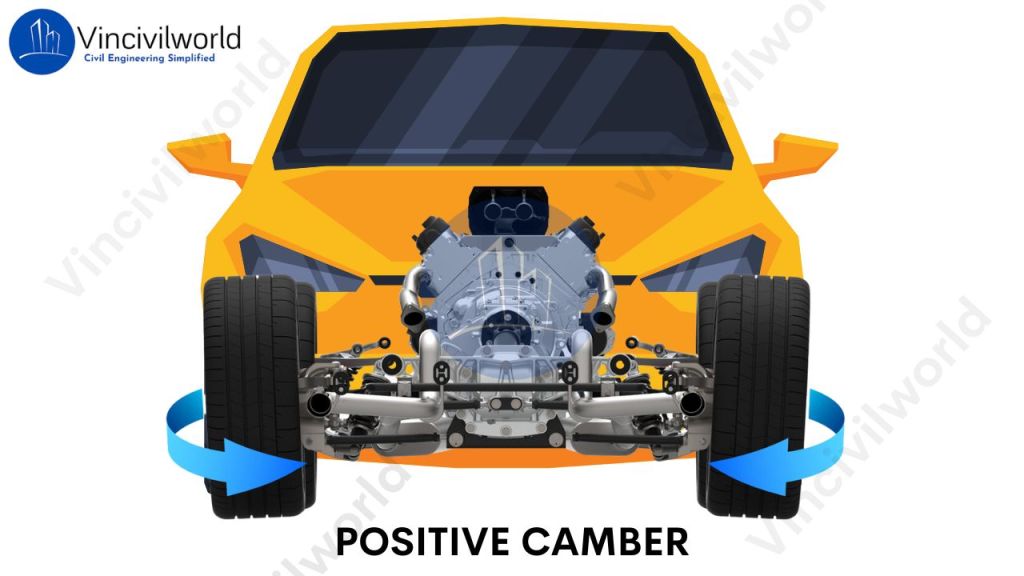
Positive camber is the angle of a vehicle’s wheels. The top of the tire tilts outward from the centre of the vehicle. This can provide improved stability and handle in certain driving situations, such as high-speed cornering. However, excessive positive camber can lead to uneven tire wear and decreased handling performance.

Positive camber
Positive Camber - Camber of roads

Negative camber in roads

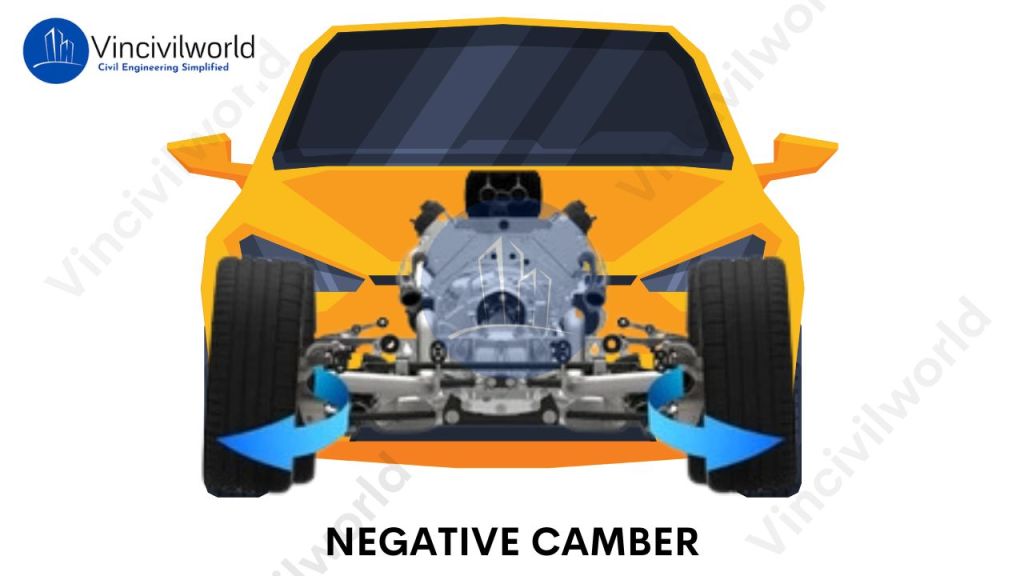
Negative refers to the angle of a vehicle’s wheels where the top of the tire tilts inward towards the centre of the vehicle. This can provide improved grip and handling during cornering, as the tire maintains more contact with the road. However, excessive negative camber can lead to uneven tire wear and reduced straight-line stability.

Negative Camber
Negative Camber

Zero camber

Zero camber refers to the angle of a vehicle’s wheels where the tire is perpendicular to the ground and the wheel is vertical. This is considered the ideal angle for tire wear and handling, providing a balance between straight-line stability and cornering grip. Many production vehicles are designed with zero camber for optimal performance and safety.

Zero camber

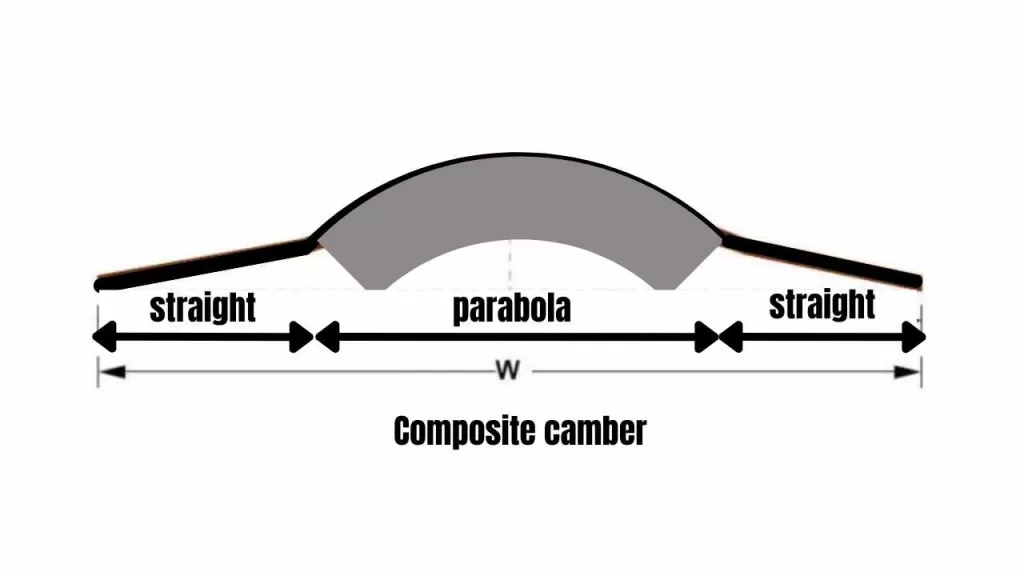
Composite camber

Composite camber refers to a combination of positive and negative camber on a vehicle’s wheels. In order to achieve optimal handling and performance in specific driving situations, one can adjust the angle of each wheel independently to create a custom setup. This allows for a personalized approach to handling and can be achieved through the use of composite camber. Composite camber is a technique commonly utilized in high-performance vehicles and motorsports to attain maximum grip and control.

Composite Camber
Composite Camber

Sloped camber/straight camber

Sloped camber refers to a wheel angle where the tire leans towards the inside or outside of the vehicle, creating a slope. Straight camber refers to a wheel angle where the tire is vertical and perpendicular to the ground. Sloped camber is often used in motorsports to improve cornering performance, while straight camber is more common in street vehicles for better tire wear and handling.

Straight line/ sloped
Straight Line Camber

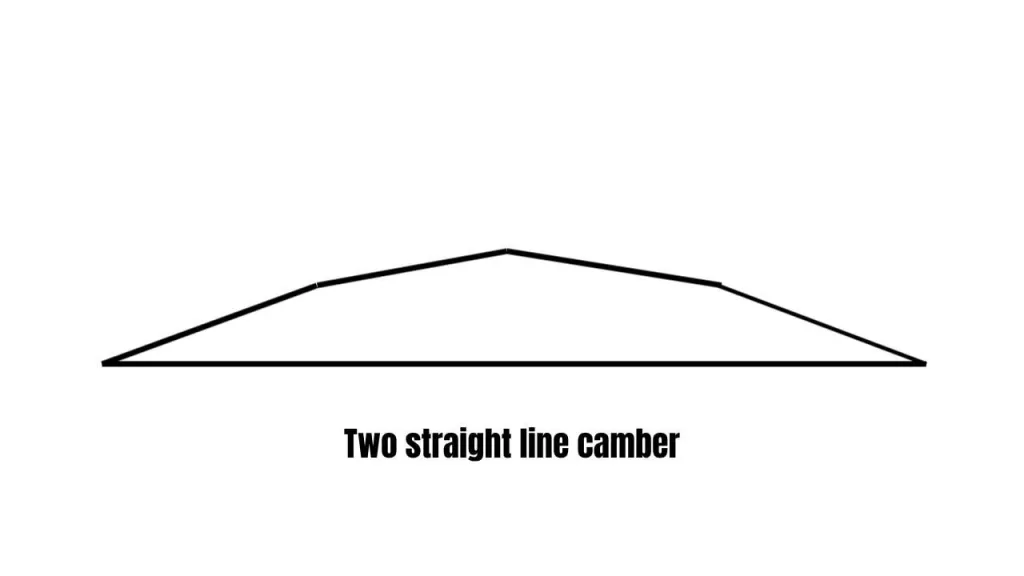
Two straight-line camber

Two straight-line camber refers to a setup where the camber angle is set to zero for both front and rear wheels. This provides a balanced setup that promotes even tire wear and stable handling. “People commonly use two straight-line camber in street vehicles, SUVs, and pickup trucks, prioritizing comfort, safety, and longevity over high-speed cornering performance.”

Two straight line Camber
Two straight line camber

Barrel camber/Parabolic camber

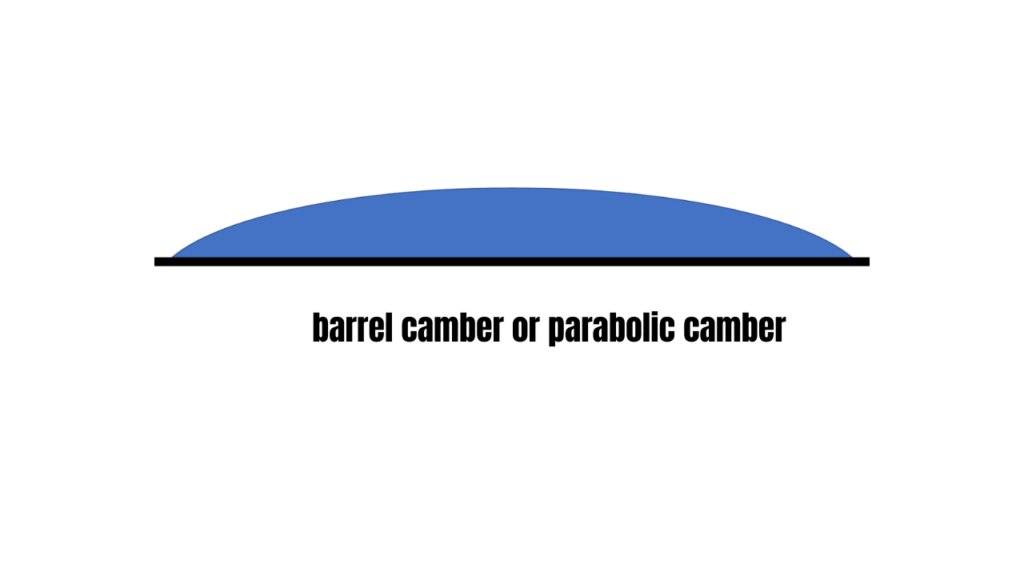
“In drifting and racing applications, people commonly use barrel camber to promote tire grip . This in turn improves cornering performance by adjusting the camber angle and toe settings on each wheel independently. Barrel camber is a wheel angle where the center of the tire is lower than the edges, creating a barrel-like shape.”

Barrel Camber or parabolic camber
Parabolic Camber

Related posts from vincivilworld

Significance of road camber

Road engineers provide camber to promote safe and efficient driving. They use positive camber on curves and turns to offer better stability and prevent vehicles from sliding off the road. On the other hand, they use negative camber on straight sections to enhance tire traction and lower the risk of hydroplaning in wet conditions.

Advantages of Camber on Roads

Camber provides several advantages for road safety and efficiency. “Moreover,” positive camber assists vehicles in remaining centered on the road while turning. This in turn results in decreased skidding and improved stability. Negative camber improves tire contact with the road on straight sections, increasing traction and reducing hydroplaning risk. Camber also helps to reduce tire wear by distributing the load evenly across the tire surface, promoting longer tire life. Overall, camber is a key design feature in road engineering. This helps to promote safe, efficient, and sustainable transportation for all.

Road
Importance of camber on road
Image credit : Rick Muscoplat

The Indian Road Congress (IRC) provides recommended values for camber in road design, based on the type of road surface. These values are as follows:

  1. Flexible Pavement on Earth Embankment
  • Straight: 1.5%
  • Crossfall: 2.5%
  1. Flexible Pavement on Soft Soil
  • Straight: 2%
  • Crossfall: 3.5%
  1. Rigid Pavement on Earth Embankment
  • Straight: 2%
  • Crossfall: 3%
  1. Rigid Pavement on Soft Soil
  • Straight: 2.5%
  • Crossfall: 4%
  1. Bituminous Wearing Course
  • Straight: 1.5%
  • Crossfall: 2.5%

“These values provide general guidance only and depend on local conditions, traffic volume, and other factors. It is important to note that.”

Disadvantages of excessive road camber

Providing excessive road camber height can have several disadvantages. These include:

  • Uneven tyre wear: Excessive camber height can cause the tire to wear unevenly, leading to reduced tire life and increased maintenance costs.
  • Increased fuel consumption: High camber angles can increase rolling resistance and reduce fuel efficiency, leading to higher fuel consumption and greenhouse gas emissions.
  • Reduced braking performance: Excessive camber can reduce the contact area between the tire and the road surface, reducing braking performance and increasing stopping distances.
  • Reduced stability: High camber angles can reduce vehicle stability, especially at high speeds, making the vehicle more difficult to control and increasing the risk of accidents.
  • Uncomfortable ride: Excessive camber can cause the vehicle to ride harshly, transmitting more shocks and vibrations to the occupants, leading to discomfort and fatigue during long journeys.

Development length formula as per IS 456 & ACI 318-19

Development length is an essential concept in civil engineering that refers to the length of reinforcement required to transfer the force from the steel reinforcement to the surrounding concrete. It is crucial in ensuring that the reinforcement is effectively bonded to the concrete to resist the applied forces. “The development length depends on several factors, including the diameter of the bar and the strength of the concrete. “Another factor that affects the development length is the bond strength between the steel reinforcement and the surrounding concrete.”

Properly understanding development length is essential for designing reinforced concrete structures to ensure their safety and stability. Engineers calculate the development length to ensure that the reinforcement will provide the intended strength and reinforcement to the structure. “Insufficient development length can cause the reinforcement to fail to transfer forces to the concrete effectively. This can ultimately lead to structural failure.”

  1. What is the development length?
  2. Significance and functions of Development length.
    1. Transfer of applied forces
    2. Prevents structural failure
    3. Important for design
    4. Structural safety and stability
  3. Factors determining Development strength
  4. Development length as per IS 456
  5. Development length as per IS 456 for columns, footings and beams
  6. Typical section beam-column junction
  7. Development length as per codes
    1. ACI 318-19 (American Concrete Institute)
    2. BS 8110-1:1997 (British Standard)

What is the development length?

To develop the full tensile strength of the reinforcement, one must embed the reinforcement in concrete for a minimum length known as the development length. This is necessary to ensure that the reinforcement can resist the applied loads. This should happen without pulling out of the concrete or causing concrete failure.

Either pull-out or splitting failure modes typically control the length. In pull-out failure, the force applied to the reinforcement exceeds the pull-out strength of the concrete. This generally causes the reinforcement to pull out of the concrete. In splitting failure, the force applied to the reinforcement causes the concrete to crack and split. This can lead to the failure of the reinforcement.

Related posts from vincivilworld

Significance and functions of Development length.

This is a critical concept in reinforced concrete structures that ensures the effective transfer of forces and prevents premature failure. It is important for the safety and stability of structures and is a crucial factor in their design and construction. The main function is as follows.

Transfer of applied forces

Ensuring effective bonding of the steel reinforcement to the surrounding concrete is the purpose of the Development length in reinforced concrete structures. This allows it to transfer the applied forces to the concrete.

Prevents structural failure

Basically, the proper bonding of the reinforcement to the concrete prevents premature failure of the structure. This could otherwise result in catastrophic consequences.

Important for design

Properly understanding Develop length is critical for designing reinforced concrete structures. Engineers must calculate the length to ensure that the reinforcement provides the intended strength and reinforcement to the structure.

Basically, an insufficient development length can lead to the reinforcement not being able to transfer the forces to the concrete effectively. However, this results in premature failure and instability.

Structural safety and stability

Generally, this is crucial for the safety and stability of reinforced concrete structures. The failure to effectively bond the reinforcement to the concrete would result in the inability to transfer the applied forces. However, this can lead to structural failure.

Factors determining Development strength

Several factors influence the required development length to fully develop the tensile strength of reinforcement in concrete, including

  • Reinforcement properties: The strength and diameter of the reinforcement significantly impact the required development length. Generally, high-strength reinforcement with a larger diameter will require a longer D length to develop its full strength.
  • Concrete properties: The strength, stiffness, and thickness of the concrete member where we place the reinforcement are crucial factors. However, a higher concrete strength requires a longer d length, while a thicker concrete section may require a shorter length.
  • Bond strength: The bond strength between the reinforcement and concrete is critical in determining the development length. However, the bond strength depends on various factors. This includes the surface condition of the reinforcement, the degree of deformation, and the quality of the concrete surface.
  • Environmental conditions: Environmental factors such as humidity, temperature, and exposure to corrosive agents can affect the bond strength between the reinforcement and concrete. In such cases, we may require a more extended development length.
  • Load conditions: The type, magnitude, and direction of the load applied to the reinforcement significantly influence the development length required. Generally, Higher loads require a longer D length to prevent the reinforcement from pulling out of the concrete.
  • Design codes and standards: Design codes and standards typically provide guidelines for determining the minimum development length required for different types of reinforcement and loading conditions. However, these guidelines may vary depending on the specific code or standard used.

Development length as per IS 456

Basically, Clause 26.2.1 of the Indian code for the design of reinforced concrete structures (IS 456:2000) provides the formula. The formula is used to calculate the development length of reinforcement bars in tension. We require the length of the reinforcement bar to transfer the stresses between the reinforcement and the surrounding concrete.

The formula for calculating the length (Ld) of a reinforcement bar with a diameter of D, embedded in concrete with a grade of M, and subject to tension, is as follows:

Ld = (0.87 fy A / 4τ_bd) + (0.2 √fc) …Equation 1

where:

  • fy is the characteristic strength of the reinforcement in N/mm²
  • A is the area of the reinforcement in mm²
  • τ_bd is the bond stress between the reinforcement and the surrounding concrete in N/mm²
  • fc is the characteristic compressive strength of concrete in N/mm²

The first term in Equation 1 represents the basic development length. This is the minimum length required for the reinforcement to fully develop its strength. The second term represents the additional development length due to the curvature of the bar.

It is worth noting that the code also provides alternative methods for calculation, such as the empirical equations given in Table 5 of the code. However, Equation 1 is the most widely used method for calculating the development length in India.

It is important to note that these calculations are based on certain assumptions and simplifications. The actual development length required may vary based on the specific design requirements and site conditions.

Development length as per IS 456 for columns, footings and beams

The development length of rebars is the minimum length required. This ensures the effective transfer of forces from the steel reinforcement to the surrounding concrete. However this ensures that the reinforcement is properly bonded to the concrete, preventing premature failure of the structure.

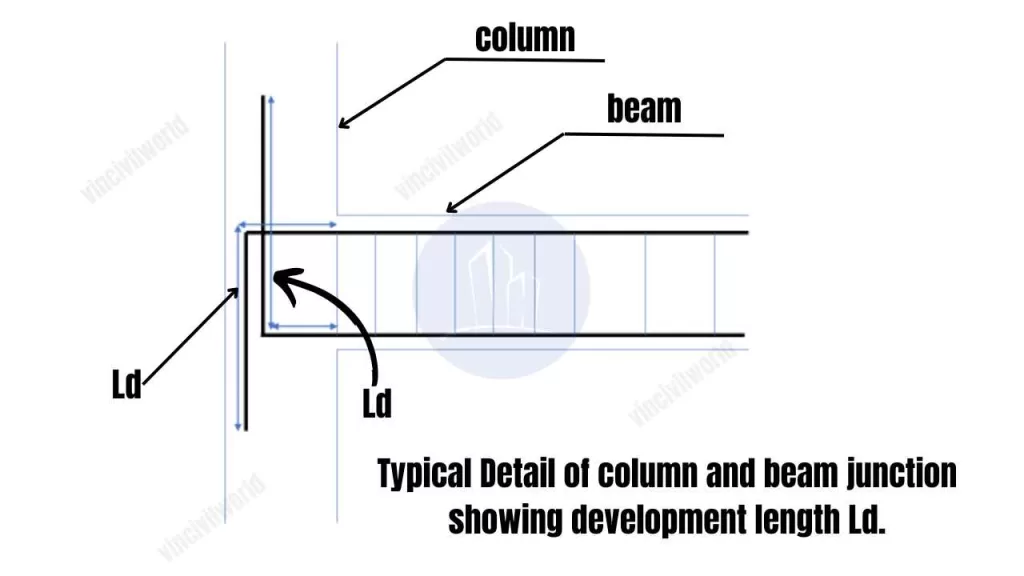
Typical section beam-column junction

Development length of a beam column junction

Development length as per codes

The development length of a reinforcing bar, or rebar, is the minimum length that must be embedded or overlapped with concrete. This ensures proper transfer of stresses between the concrete and steel. This is a critical design parameter, and it is determined based on various factors such as the strength of the rebar, the strength of the concrete, and the design requirements of the structure.

Here are the formulas as per some commonly used codes:

ACI 318-19 (American Concrete Institute)

Ld = [(φ x Fy x As) / (4 x Fc’^(0.5))] x (1.3 for deformed bars, 1.7 for plain bars)

where: Ld = development length in inches

φ = strength reduction factor (0.7 for deformed bars, 0.8 for plain bars)

Fy = yield strength of rebar in ksi

As = area of rebar in square inches

Fc’ = specified compressive strength of concrete in psi

BS 8110-1:1997 (British Standard)

Ld = [(1.2 x σst x As) / (0.87 x Fy x (1 + (200/d))^(0.5))] x (1.4 for deformed bars, 1.7 for plain bars)

where: Ld = development length in mm

σst = stress in rebar at yield in N/mm2

As = area of rebar in mm2 Fy = characteristic yield strength of rebar in N/mm2 d = diameter of rebar in mm

IS 456:2000 (Indian Standard)Ld = [(0.87 x fy x As) / (4 x τbd x fck^(0.5))] x (1.2 for deformed bars, 1.6 for plain bars)

where: Ld = development length in mm

fy = characteristic strength of rebar in N/mm2

As = area of rebar in mm2 τbd = design bond stress in N/mm2

fck = characteristic compressive strength of concrete in N/mm2

It is important to note that the development length calculation may vary based on the specific requirements of the structure, and it is recommended to consult the appropriate code for accurate and up-to-date information.

All cement price list today 2023 – Cement Price per bag today

All cement price list today is the most important update every construction engineer and civil engineering construction firm should be familiar with. Cement is the most significant and widely used construction material which forms an integral part of any structure. Cement is the major ingredient of concrete and mortar and the structural stability and life of a structure or building depend on the cement quality.

  1. Significance of knowing the price of cement today
  2. Factors affecting the cement prices
  3. Uses of Cement
  4. Top cement companies of India with the latest price list
  5. Conclusion

Significance of knowing the price of cement today

Cement is widely available on the market. Therefore, one needs to be aware of cement’s pricing before purchasing. Cement accounts for almost 20% of total construction costs. Cement is therefore one of the most expensive construction materials. One must therefore be familiar with the most recent cement price list rates that are offered on the market. Generally, cement is utilised for everything from a building’s foundation to its final touches. Because cement prices play such a significant effect on construction costs, it is necessary to consider them when making purchases.

Related posts from vincivilworld

Factors affecting the cement prices

Also, the price of each cement varies according to its quality. Yet, different types of cement are utilised in different locations. The following variables influence cement pricing:

All cement price list today
  • Costs of Raw Materials: The basic raw materials for cement manufacture are limestone and clay, and their prices might fluctuate based on supply and demand situations in their respective markets.
  • Energy Costs: The cost of energy, such as the price of fuel and electricity, can impact cement’s cost.
  • Transportation Costs: The expense involved in transporting raw materials to the manufacturing plant, as well as the cost of delivering the final product to market, can influence cement prices.
  • Production Costs: The cost of production can be influenced by factors such as the cost of labour, the efficiency of the manufacturing process, and the level of competition in the market.
  • Government Regulations: Government rules, such as taxes, import duties, and environmental regulations, can also have an impact on the price of cement.
  • Economic Factors: Generally, economic factors such as inflation, exchange rates, and overall economic growth can all have an impact on cement prices.
  • Market Demand: The level of demand for cement in a particular market can also impact its price. However, during periods of high demand, prices may be higher, while during periods of low demand, prices may be lower.
  • Competition: The level of competition in the cement market can also influence prices. If there is a high level of competition, companies may be pressured to lower their prices in order to remain competitive.

Uses of Cement

Cement is an essential element in the construction industry. It is needed to make concrete and mortar. Cement is manufactured by heating a mixture of limestone and clay to form a powder. The powder, when mixed with water, makes a paste that sets and hardens. Some of the most common applications for cement are:

  • Cement is used in the manufacture of concrete. Concrete is the major building material for foundations, walls, bridges, and roadways.
  • Masonry work: For laying bricks and stone, cement is used as binding material
  • Plastering: Cement is widely used in the production of plaster. Plaster is used to coat the interior and exterior walls and ceilings of buildings.
  • Cement can be used as a base material in the manufacture of floor screeds, terrazzo, and other flooring products.
  • Dams: It is used in the production of concrete for dams, which are structures designed to retain water.
  • Pipelines: Other subsurface constructions, including pipelines, are made of cement.

In summary, cement is an essential material in the construction industry and is used for a wide range of purposes, from building construction to flooring, and from masonry work to making pipes.

Top cement companies of India with the latest price list

Here is a list of the top cement companies in India along with their latest price list:

  1. UltraTech Cement Ltd. – UltraTech Cement is the largest manufacturer of cement in India and one of the world’s leading suppliers of cement and clinker. As of February 2023, the latest price of UltraTech Cement is Rs. 350 – 400 per bag
  2. Ambuja Cements Ltd. – Ambuja Cements is one of the leading cement companies in India. Ambuja cement is best known for its sustainable practices and use of advanced technology. As of February 2023, the latest price of Ambuja Cement is Rs. 330 -400 per bag
  3. ACC Ltd. – ACC is one of the largest cement companies in India. ACC has a strong presence in the country’s western and southern regions. As of February 2023, the latest price of ACC Cement is Rs. 330 to 450 kg bag.
  4. Shree Cement Ltd. – Shree Cement is a leading cement company in India. We know that Shree cement is known for its high-quality products and innovative business practices. As of February 2023, the latest price of Shree Cement is Rs. 300 – 375 per 50 kg bag.

Please note that these prices may vary based on location and market conditions.

Conclusion

Cement prices play an important part in the cost of every structure. Everyone related to the civil engineering and the construction industry should be familiar with cement prices. Hence it is required to be updated with cement prices regularly. Top brands are available in almost every part of the country.

Updates in civil engineering, architecture finishes, building construction, Environmental Engineering