Steam distillation is a separation process in which we separate a mixture of immiscible components by introducing steam and subsequently condensing the vapours. In this blog, I will walk you through steam distillation and its principles. First, let us understand the instances in which we opt for Steam distillation over other separation processes.
In the typical distillation process, we usually have a mixture of components that are miscible with one another. The vapour pressure that the combination exerts on heating depends on the components that make up the mixture.
To start boiling, the vapour pressure of the mixture should become equal to the atmospheric pressure or the pressure to which it is subjected to. Hence we must heat the system of the liquid mixture to a temperature where the system can create enough vapour to equalise the operating pressure or the atmospheric pressure.
The temperature that must be attained depends on the operating pressure; if it is less than one atmospheric pressure, the temperature that is to be attained is relatively lower; if it is greater than one atmospheric pressure, the temperature to be attained is relatively higher.
In some circumstances, it might not be possible to perform this. Some of those instances are as follows:
When separating materials with very high boiling points, we have to supply more heat to raise the temperature of the mixture. As a result, the procedure uses more energy and is more expensive.
If the mixture contains any thermally unstable components, raising the temperature too high could cause the components to decompose and have an impact on their qualities.
The process becomes energy-intensive if we have a binary combination in which one component boils at a high temperature while the other is non-volatile in nature.
We can easily handle these situations using the method of steam distillation.
Steam Distillation Principle
In the previous blog, we saw Raoult’s law which states that the partial pressure of each component in a miscible ideal mixture is equal to the product of its vapour pressure and mole fraction.
Pa = Xa * Pv
Hence it is clear that the liquid components can’t exert their actual vapour pressure but a corrected vapour pressure (or what we call the partial pressure) which is always less than its pure component vapour pressure ( since mole fraction is always less than 1 )
But, in the case of liquid mixtures in which the components are non-miscible, they can exert their entire vapour pressure as its partial pressure. That is, the total pressure becomes equal to the sum of the individual vapour pressures for immiscible liquid mixtures. Their combined vapour pressures can easily reach the external pressure before the vapour pressure of either of the individual components cross it. Hence the boiling point of the mixture would be lesser than the boiling point of either of the components.
Now, let us assume that water is one of the components in the immiscible mixture. Then we can bring that mixture to a boil at under 100 0C in one atmosphere ( Boiling Point of water at 1 ATM = 100 0C ) if we keep the pressure constant at 1 ATM. In other words, we can lower the operating pressure needed to boil the mixture by introducing steam.
The main concept behind steam distillation is that we use steam to help create the pressure needed to balance the operating pressure. We must be careful to only employ components that are immiscible with water while using steam.
Steam Distillation Process
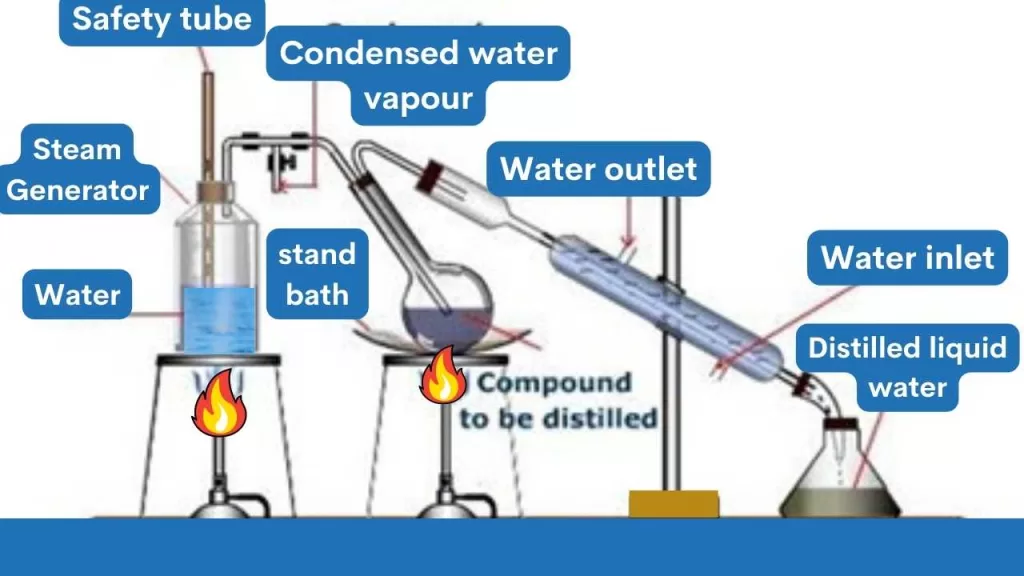
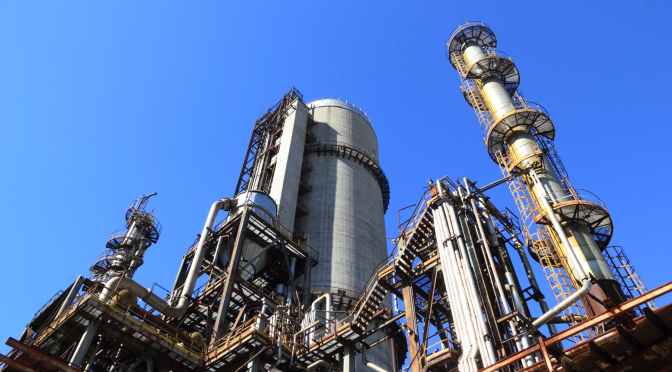
Consider a binary mixture where component A is a high-boiling component and component B is a non-volatile component. Let’s say A is insoluble in water. We feed the mixture into the column. Using a steam coil, we raise the feed mixture’s temperature. A sparger forces the steam through another steam line. Steam enters the column through the feed mixture and adds to the vapour pressure. When it reaches the working pressure, it causes the creation of vapours of A at a significantly lower temperature. The non-volatile component is eliminated as residue but remains in the feed. Steam and Component A is routed via a condenser where they are easily separated after condensation.
Steam Distillation Advantages
We frequently use steam distillation since it has various advantages over other extraction methods. They are as follows:
the process produces organic compounds devoid of solvents;
Additional separation procedures are not necessary;
It has a huge processing capacity on an industrial scale;
Inexpensive equipment
Shall we wrap up?
Conclusion
In this blog, we saw the process of steam distillation, its advantages and its applications.
Calculating the unit weight of steel bars with various diameters is crucial when creating a schedule for bar bending. The total weight of steel bars/TMT bars weight required for the project’s construction can be calculated once we know the unit weight of steel.
Understanding the unit weight of steel bars is crucial in construction projects for accurate material estimation and structural integrity. The unit weight of steel bars is often referred to as steel unit wt. This unit weight determines the amount of steel required for reinforcement. It affects both cost and structural stability.
Steel bars play a pivotal role in reinforcing concrete structures, enhancing their strength and durability. By knowing the steel bars unit weight, engineers can guarantee proper quantity calculations. They can also avoid potential overuse or shortages of materials. Precise knowledge of the unit wt of steel bars helps streamline project planning. It also ensures the structural stability of the finished construction.
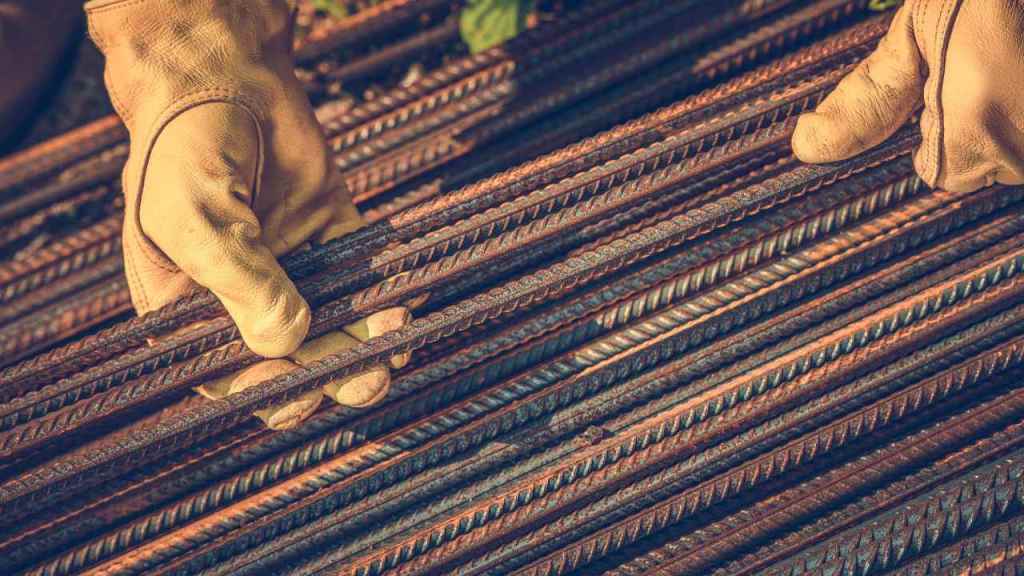
Steel is the most commonly used structural material. Steel’s basic components include metallic iron, non-metallic carbon, and minor amounts of nickel, silicon, manganese, chromium, and copper, among others. High tensile strength makes it a popular construction material for civil engineering projects. Steel reinforcement bars, often known as rebar, are placed in concrete members to enhance their tensile strength. As we all know, steel is utilized to construct structural members such as columns, beams, footings, foundations, and building slabs. Steel bars of various sizes are supplied by the manufacturer, with lengths of 12 meters or 40 feet.
Why Unit Weight of steel bars Calculation is Important?
It is essential to comprehend the weight of steel bars. We estimate them as 100 meters 20 mm bar, 100 feet 16mm bar, and so on. (is the sign for diameter). Steel bar manufacturers, on the other hand, will not interpret this notation and will measure the steel bars in weight. So we have to order them in kilograms, quintals, or tonnes. This article will go through how to use the steel weight formula to determine the steel bar’s weight.
Types of doors commonly used in residential, commercial, and industrial construction depend on the application area, durability required, the purpose of the door, etc.
What is a door?
A door is a movable barrier or mechanism for opening and closing an entranceway or a building/room. The purpose of the door in this urban environment is security and privacy. Apart from security, safety, and privacy, an aspect of art, beauty, and elegance is associated with it. The entrance door acts as a warm welcome to the areas inside.
This article is about the types of doors popularly used in civil construction.
Doors come in a number of types. The selection of a door type, on the other hand, is determined by the location, purpose, aesthetic needs, material availability, security, and privacy. Doors types are typically classified as follows.
Location based
Based on material
Based on operation mechanism
Types of doors in civil engineering– location based
The doors types are classified as follows
Exterior Doors
Interior Doors
Exterior door
An outside door is one that allows entry to a building/house. An outside door’s main function is to safeguard the building as well as the security and privacy of the occupants of the building. While selecting an exterior door, style, colours, finishes, and aesthetic looks to match the architectural theme must be considered.
Interior door
Interior doors provide access to interior spaces like bed, kitchen, special functional rooms, toilets, etc. However, choice of material and type depends on the nature of privacy, security, and purpose of the room. Interior doors used to be lighter than exterior doors.
Types of Doors – Based on Materials
The door choice is confirmed based on the material to be used. For that, we should have a better idea of the readily available, durable, and aesthetically matching materials. Following are the popular choices of doors based on materials used in construction nowadays.
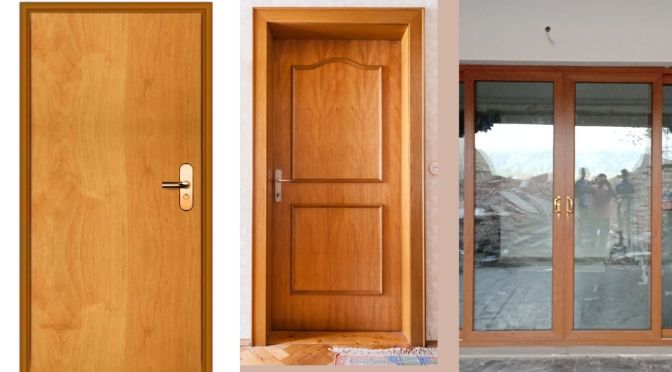
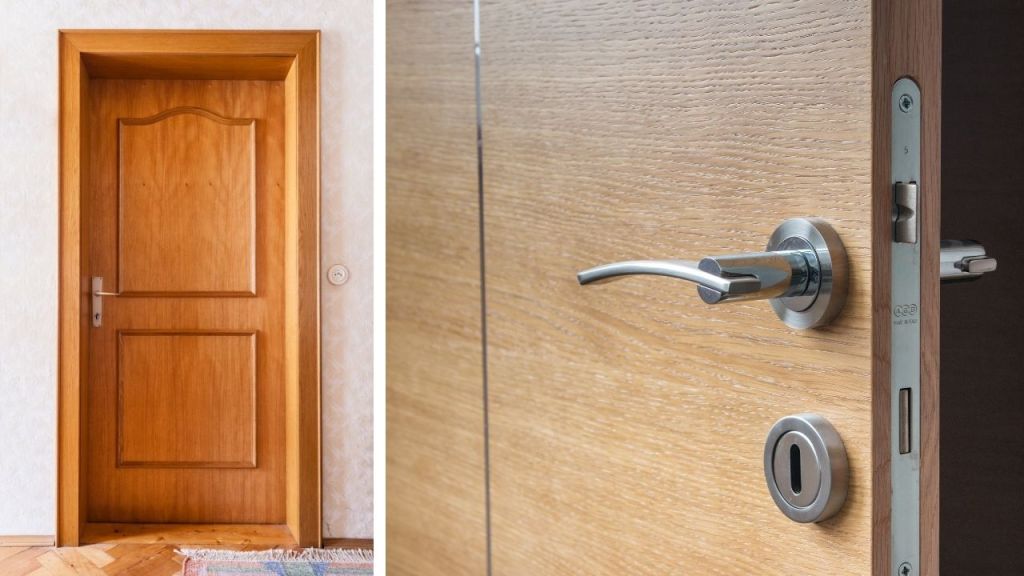
Wooden doors types are the most common and premium choice for both external and internal doors. They are the preferred choice due to their classy and elegant looks, high durability, and ability to match any architecture theme. Moreover, they are aesthetically pleasing and are widely available on a reasonable budget. Wooden doors can be custom-made for any functional requirements and design. They are the oldest material used and never lose their sheen even after long years.
wooden door
Easily available
Easy working
Best material for front doors due to its high durability.
Used for any functional requirement.
Wooden doors are mostly polished rather than painted for exposing the natural grain looks.
Simple and easy installation.
Carving works are easily done on wooden doors.
Wooden doors are soundproof, got high thermal insulation capabilities and are strong.
Demerits of wooden doors
Even though wooden doors are superior materials they have their demerits also. However, needs periodic maintenance to retain the sheen and looks.
Needs periodic maintenance to retain the sheen and looks.
Wooden doors on long exposure to moisture may deteriorate.
Prone to termite attacks.
May sags
Glass Doors
Glass doors are for areas where the availability of natural light and open feeling is the main functional requirement. They are mainly used in areas where privacy is not a prime factor-like back yard, balcony doors, cabin doors, etc.
Glass doors are elegant and give an enhanced look to the house. However, the main problem with glass doors is the safety and privacy factor and the possibility of glass breaking. The glass breaking problem is managed by using small glass pieces for front doors. The glass should be safety glass or toughened glass.
Metal Doors
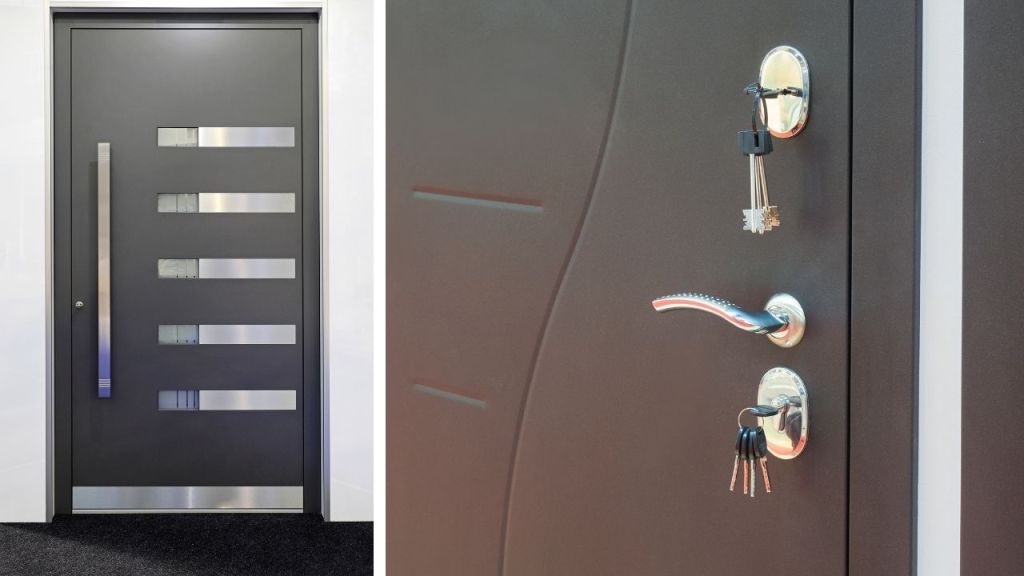
Steel is one of the preferred and favorite alternatives to wood for both external and internal doors. Mild steel or Galvanized steel is used for the manufacturing of doors. These doors are manufactured in solid and hollow types and are a safer, durable, and stronger option when compared to wooden doors.
metal door
Steel door frames are usually combined with wooden, PVC, steel, and flush door shutters. Steel door frames are manufactured by pressing steel sheets, angles, channels, etc. Holdfasts and hinges are welded to the steel frames. Steel frames are popular and are used for residences, factories, industrial buildings, etc. They are economical than conventional wooden frames.
Metal door shutters are manufactured from high-quality cold-rolled Mild Steel (MS) sheets, with a steel face and rock wool or foam insulation. Steel is a more economical and stronger option compared to other materials even though steel may not look as attractive as wooden or glass doors. Metal doors are available in different tones and shades. They are durable, have minimal maintenance, and provide excellent security.
Types of Doors – Flush Doors
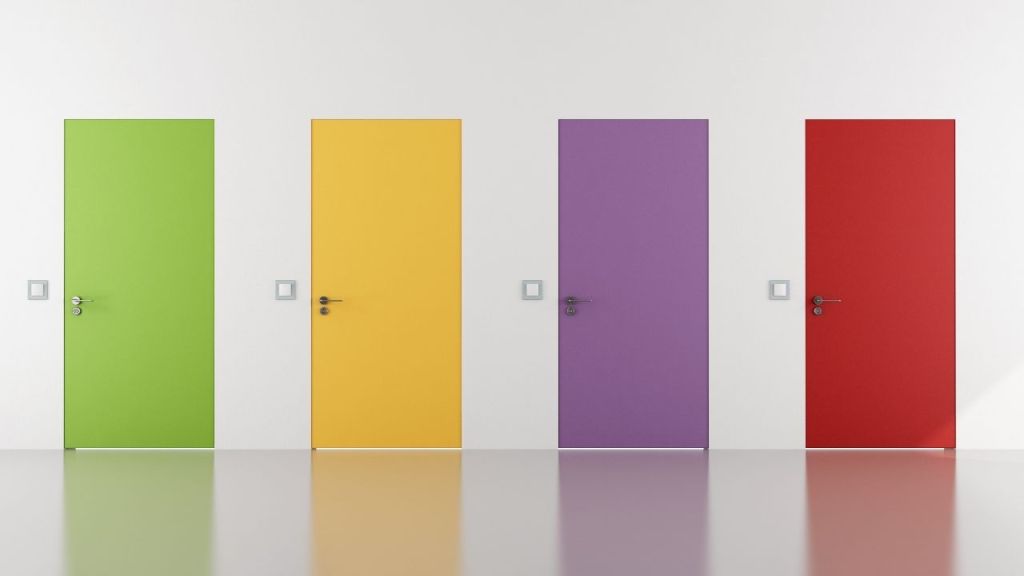
The flush door is made of a timber frame covered with plywood from both sides. However, the hollow core is filled with rectangular blocks of softwood just like block boards. Flush door surface finished with decorative finish by fixing veneers. The flush door is usually laminated or veneered to match the architectural themes. These doors are usually hinged type and have one side opening only. The frame can be of wooden, PVC, or steel. Flush doors got a seamless look and are economical, look elegant, and are easily available in the market.
flush door
While providing these doors for toilets, baths; the inner face of the door should be covered with aluminum sheets to protect against water.
PVC Doors
PVC or polyvinyl chloride doors are a very popular choice for doors. They are available in a range of colors and styles. Furthermore these doors have high resilience, are anti-destructive, termite-proof, moisture-resistant, lightweight, etc. As a result they are best suited for areas with moisture chances like bathroom areas. Polyvinyl doors come in a variety of designs types. colors, style and looks beautiful. Similarly these doors do not corrode like steel or disintegrate like wood and do not need much maintenance. They are very simple and easy to install and are scratch-proof. These doors are not preferred for front doors due to their lightweight characters and inability to resist environmental conditions. These doors are cost-effective when compared to wooden and metal doors.
Types of Doors – UPVC Doors
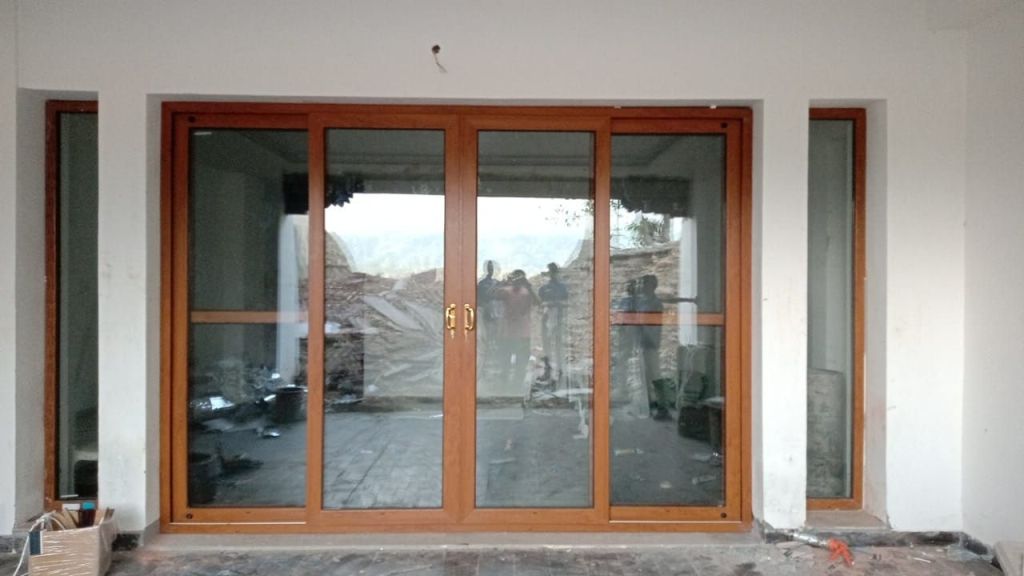
uPVC stands for Unplasticised Polyvinyl Chloride. It is a form of plastic that is hard and inflexible, also known as rigid PVC. UPVC doors are a preferred choice of architects and home owners due to the superior qualities they offer when compared to other door materials like wood, metal , PVC etc
Easy to clean and maintain – UPVC doors can be cleaned by simply wiping with a soft cloth soaked with mild detergents even though they may not peel or cracks after years of usage.
UPVC Profiles are manufactured to accommodate double glass units (DGU) in fact provides excellent thermal and acoustic insulations. Furthermore glass panes can be substituted with reflective glass to reflect sunlight and keep the rooms cooler in summers.
Durability – UPVC is a highly durable material, in addition to that allows for the construction of doors and windows that are long-lasting. In addition to all above they are dust-proof, termite-proof, moisture, and weather-resistant.
Ease of installation – Similarly UPVC doors are very fast and easy to install.
UPVC doors
Types of Door – Aluminium doors
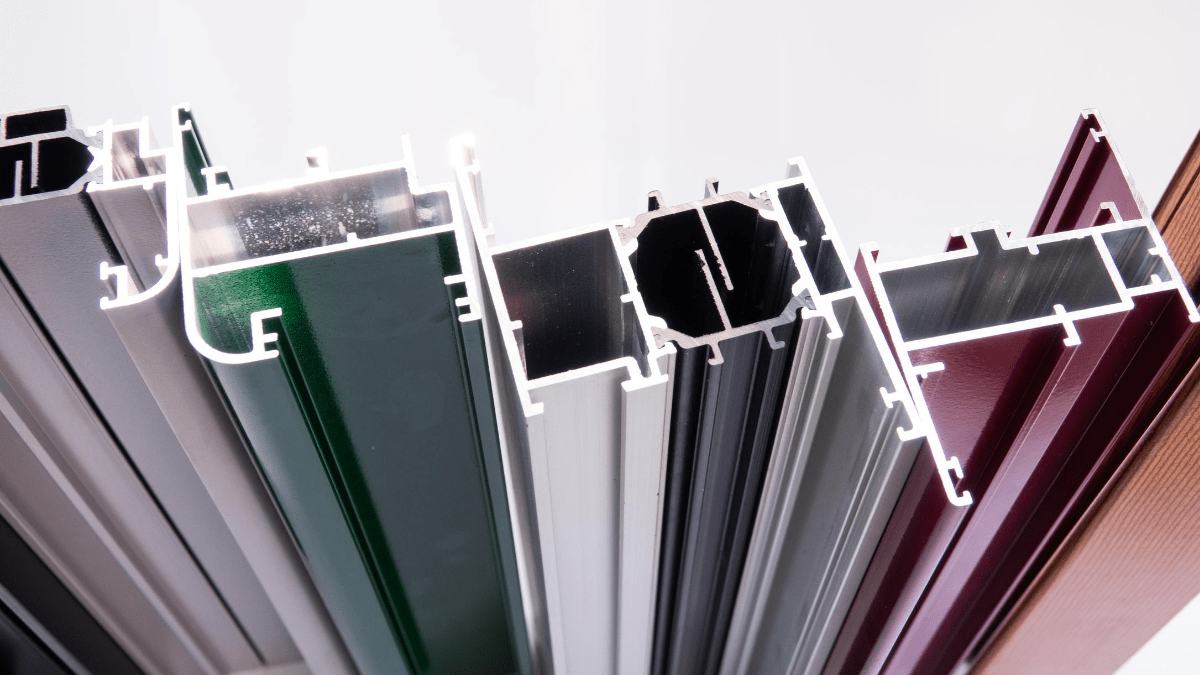
Aluminium doors due to their excellent and durable qualities are the most preferred option for designers and architects. They are durable, strong and maintenance free material. The fabrication and installation is very easy and got the choice of using as member for DGU units for thermal insulation applications. Aluminium is expensive, however considering the superior qualities aluminium is preferred in most of the areas.
Conclusion
Apart from the types described above there are a lot of doors varieties available in the market to cater each and every situation and applications. However, these door type selection has to be in line with the requirements.
Aluminium composite panel, also known as an ACP sheet, is a modern panelling material used for building exteriors (facades), interiors, kitchen cabinets, and signage applications.
Aluminium composite panels are flat panels having a non-aluminium core sandwiched between two thin coil-coated aluminium sheets. Aluminium Composite Panel is the most durable and flexible decorative surface material available, with enhanced performance attributes. This article discusses the production process, ACP sheet types, advantages, and applications.
What is an Aluminium Composite panel or ACP sheets ?
Aluminum composite panels are made up of two thin layers of aluminium sheets sandwiched by a polymer core. ACP sheet’s polymer core is made of Low-Density Polyethylene (LDPE) or Polyurethane. These polymer cores are made of components that are flammable and not fire-resistant. Because aluminium has a low melting point, the Aluminium composite panel is more flammable when the combustible polymer core is present. The presence of a combustible polymer core limits the use of Aluminium composite panel in fire-prone areas.
To improve fire resistance, polymer cores should be specially treated or over 90% (Non-Combustible Mineral Fiber FR core) sandwiched between two layers of aluminium skins should be used. To preserve the ACP sheets, polyvinylidene fluoride (PVDF), fluoropolymer resin (FEVE), polyester coating, and other materials are applied. The typical thicknesses of aluminium composite panel are 2 mm, 3 mm, 4 mm, and 6 mm.
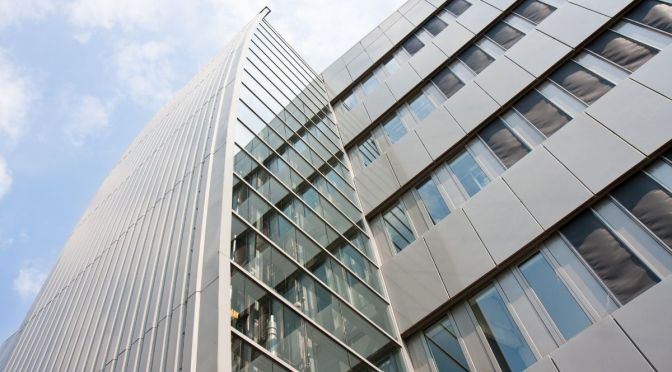
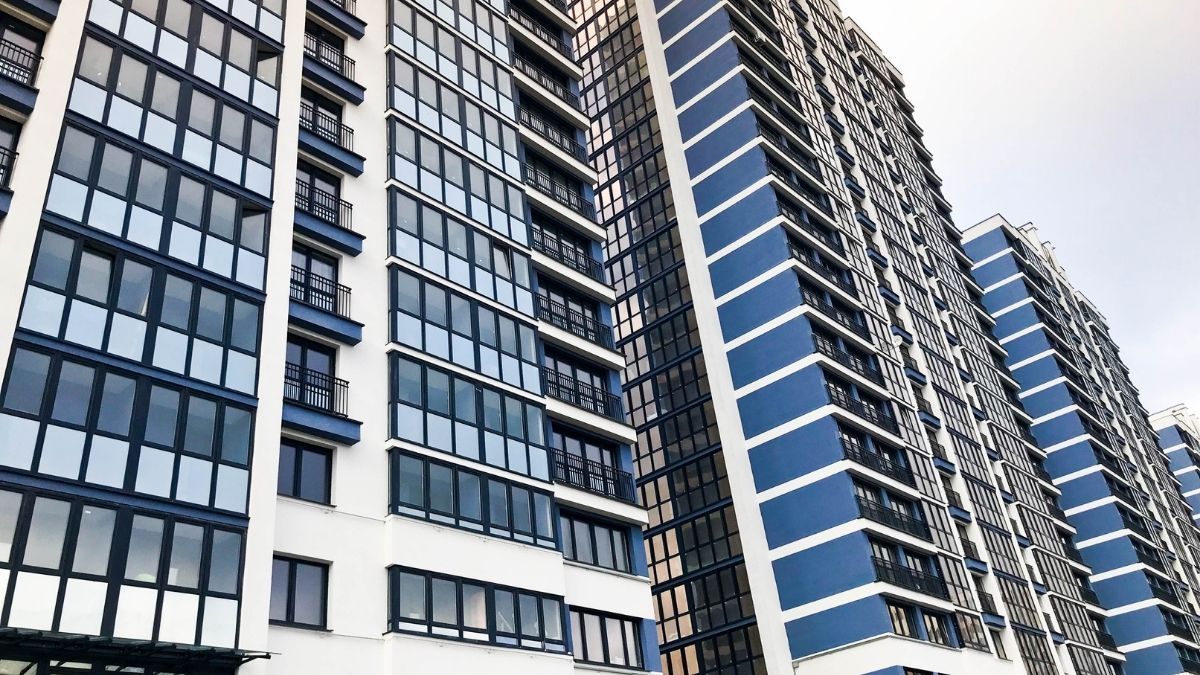
Aluminium Composite Panels – Façade
Types of Aluminium Composite Panels (ACP)
Depending on the usage and fire rating standards ACP sheets are classified into two categories
Non fire rated grade
Fire rated grade
Non fire rated Aluminium Composite Panel (ACP)
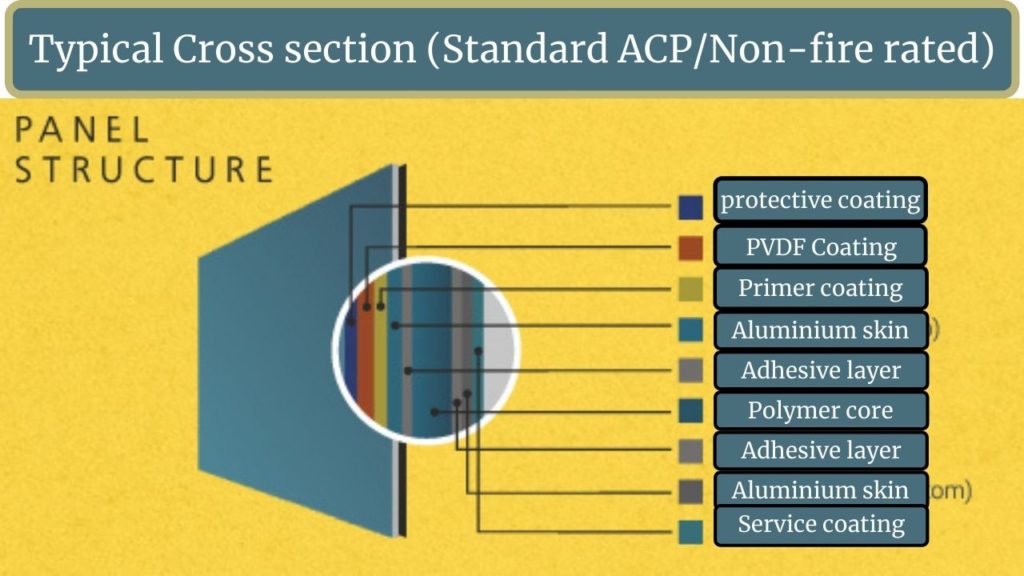
Two thin layers of aluminium sheets plus a sandwiched polymer core make up aluminium composite panels. Aluminium Composite Panel’s polymer core is made of polyurethane or low-density polyethylene (LDPE). These Aluminium Composite Panels are not fire-rated since they are flammable and could catch fire. The use of these sheets is restricted based on the fire rating. The image below depicts a typical cross-section of an ACP sheet that is not fire-rated.
Non Fire rated or Standard Aluminium Composite Panel – Typical section
Fire rated Aluminium Composite Panels
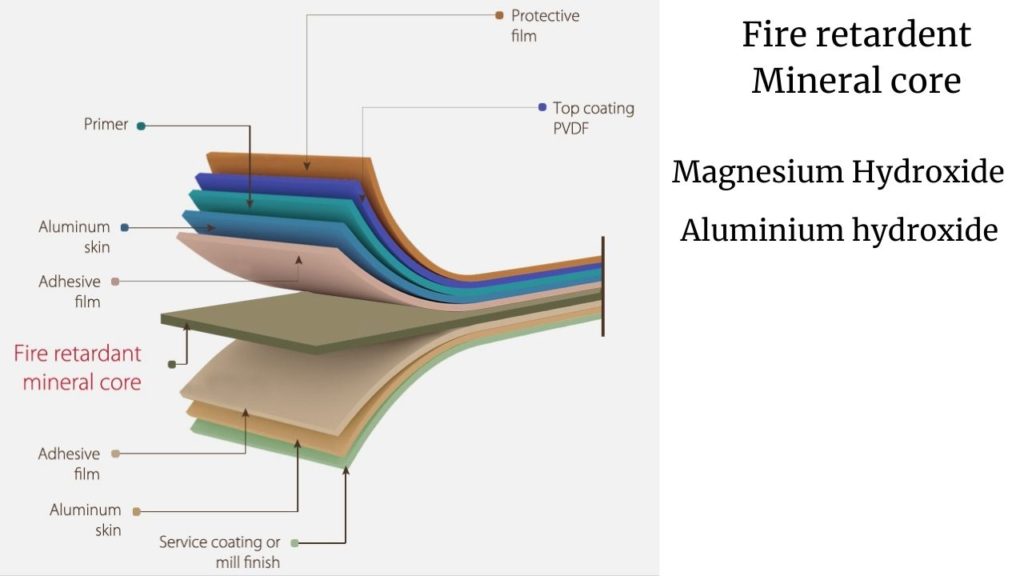
Depending on the core composition, fire-rated Aluminium Composite panel can withstand fire for up to 2 hours. The core materials are the fundamental distinction between ACP sheets that are fire-rated and those that are standard. While the fire-rated ACP has a specially formulated fire-resistant mineral core, the standard ACP uses LDPE/HDPE as its core material. Fire resistant mineral core uses Magnesium hydroxide as core for enhanced fire retardant qualities. As the name suggests, Fire Grade Aluminium Composite Panels have the unique capability to withstand extreme temperatures. The highest grade ACP is fire retardant ACP (A2 GRADE), which contains over 90% inorganic material content.
Aluminium Composite Panels are widely used nowadays because of their countless unique properties. Let’s highlight a few of its unique features that set it apart from other panelling materials.
Light weight
When compared to other building materials like steel, Aluminium Composite Panel is lightweight. This significantly reduces the design loads on the structure with big spans and vast areas involved. Lifting and erecting ACP sheets is simple. This, in turn, minimises labour and construction costs while maintaining the schedule.
Flexible
The ACP sheet is flexible and very simple to use. The installation process is quick and simple, and the fixing framework construction is uncomplicated.
Availability and colour choices
This composite panel has exceptional flexibility because to the vast range of finishes it supports. Aluminium composite board can be textured, solid, mirror, or wood type to meet any architectural concept. The colour and feel of real stone and wood are effectively replicated on aluminium.
Environmental friendly
ACP is an environmentally friendly material that is composed of 85% recycled aluminium. ACP’s cover sheets and core material are both recyclable.
Dimensional stability
Aluminium composite panels got high dimensional stability and the material can remain stable for a long period without changing the dimensions.
Smooth and elegant
The exteriors of buildings can have a pleasant and attractive appearance because to the smooth, elegant ACP surface.
Cost
ACP sheet is the most economical panelling option when compared with other panelling materials. The cost depends on the core materials. The fire grade materials are costlier than standard non fire rated ACP.
Weather resistant and Durable
ACP panels are UV resistant and chemical resistant. They are unbreakable stain-resistant, weather-resistant, termite resistant, moisture resistant, and anti-fungal.
Applications of Aluminium Composite Panels
ACP sheet is mainly used for a wide range of applications due to its extraordinary qualities. Major uses of the ACP sheet are as follows.
External and internal architectural cladding
Internal partition
False ceilings
Signage
Machine coverings
Container construction
External and internal architectural cladding/partitions
For exterior cladding/façade applications, ACP sheets are used, thanks to their versatile qualities like UV resistance, fire resistance, and durability. ACP sheets come in a wide range of colours to match any architectural style. ACP sheet is the material of choice for facades and partitions because of its lightweight characteristics, simple fixing procedures, and quick construction.
Internal partitions
Aluminium Composite Panels in combination with aluminium, UPVC etc are used for office cabins and internal partitions. Partitions can be done with minimal space wastage.
Signage
ACP is used to render a wide variety of flexible exterior signs, as signage and hoardings are being used for exterior applications and must survive changes in temperature or weather
Interior work
ACP sheets are used for interior applications such as wall coverings, false ceilings, cupboards, portable kitchen cabinets, tabletops, column covers, and more.
Conclusion
ACP sheets are Green and environmentally friendly, easy to clean, and can shorten the construction period. ACP panels are resistant to corrosion, prevents acid and alkali, and other types of corrosion. Due to these versatile properties, ACP sheets are one of the popular choices in the construction sector.
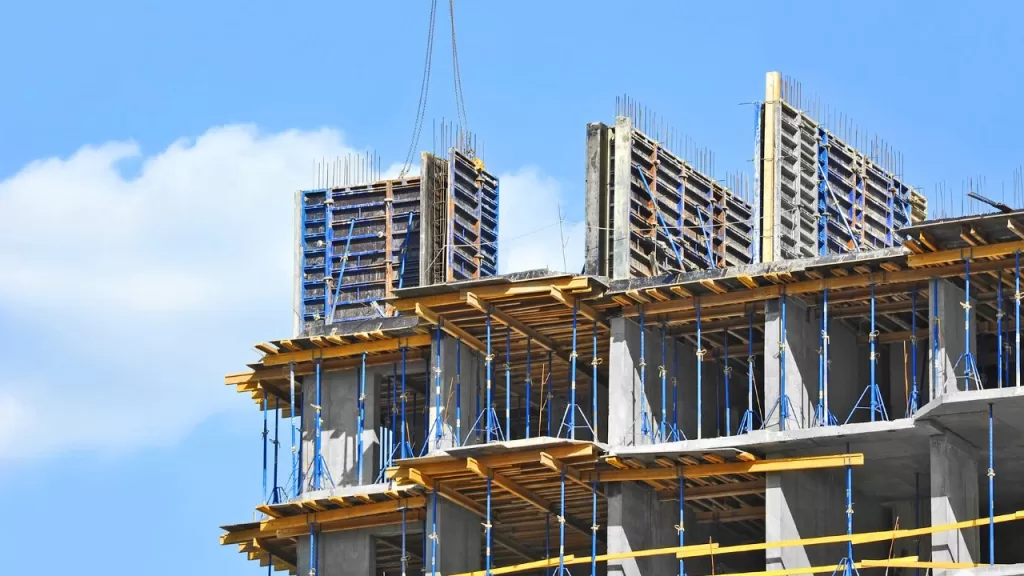
Formwork in construction refers to a mould used to shape concrete into structural shapes (beams, columns, slabs, shells) for buildings and other structures. Concrete is one of the most popular building materials due to its exceptional properties and advantages. However, in order to create construction components, concrete must be poured into a specific mould. In order to achieve the desired shape precisely, concrete is occasionally poured into formwork, a type of temporary mould. Formwork types in construction can also be categorised based on the type of structural member they are used in, such as slab formwork for use in slabs, beam formwork for use in beams and columns, and so forth. The formwork and any accompanying falsework must be sturdy enough to support the weight of the wet concrete without experiencing significant distortion.
Timber formwork is the most prevalent type of formwork used for minor buildings. This article explores the various forms of formwork used in construction as well as their characteristics.
Formwork is frequently used in a range of shapes and sizes in building, roads, bridges, tunnels, corridor linings, hydroelectric power dams, agriculture headwork, sewage pipeline works, and other applications based on our design materials in the form of PCC and RCC. Falsework is the term for the structures that are needed for formwork in order to prevent movement during construction procedures. Formwork in construction requires a qualified crew and appropriate supervision to ensure high quality. Poor accuracy and expertise during the creation of the formwork lead to subpar work, which wastes time and money.
Formwork
25 to 30 per cent of the total price of concrete construction is made up of the cost of the formwork. For bridges, this cost proportion could be higher. However, depending on the complexity of the structure, this may exceed 60%.
Although there are numerous formwork materials, the following are general performance characteristics to satisfy the objectives of concrete construction is as follows.
Easy removal
Economy
Rigidity and strength
Less leakage
Supports
Easy removal
The design of the formwork should be such that it may be quickly removed with minimal pounding, resulting in less damage to the concrete.
Economy
Formwork serves no purpose in ensuring the stability of completed concrete. So, keeping safety in mind, its cost might be reduced. The formwork should be constructed with reasonably priced, lightweight, readily available materials that are both recyclable and reusable.
Rigidity and strength
Good formwork should be capable to withstand any form of live or dead load. Formwork must be properly aligned to the target line, and levels must have a plane and solid surface. When exposed to weather, the formwork’s material shouldn’t swell or warp. When choosing the formwork, take into account the temperature of the pour as well as the type of concrete being used because both affect the pressure that is applied. Furthermore, the formwork must be sturdy enough to bear the weight of both wet and dry concrete.
Less Leakage
Joints must not leak at any point.
Supports
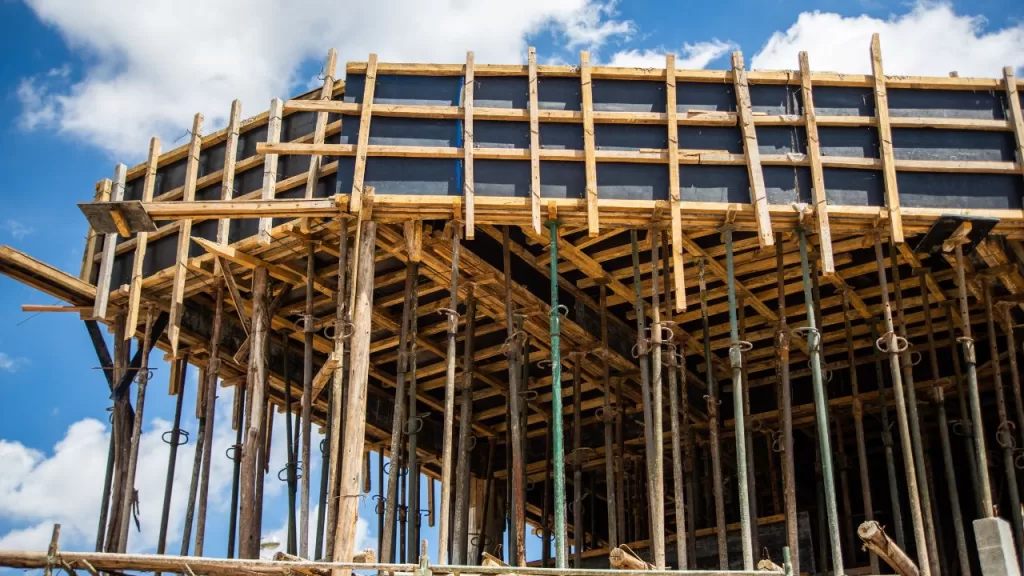
Formwork needs falsework, which consists of stabilisers and poles, in order to stop moving while construction is being done. Formwork needs to be supported by sturdy, rigid, and rigid supports.
De-shuttering Period as per IS 456 – 2000 for formwork in construction
Let us have a look into the de-shuttering period of various structural components as per IS 456-2000
Sr. No.
Type of Formwork
Minimum Period Before Striking Formwork
1.
Vertical formwork to columns, walls, beams
16-24 hours
2.
Slab ( props left under )
3 days
3.
Beam soffits ( props left under )
7 days
4.
Props for Slab
(a).
Spanning up to 4.5m
7days
(b).
Spanning over 4.5m
14days
5.
Props to Beam and Arches
(a).
Spanning up to 6m
14days
(b).
Spanning over 6m
21days
De-shuttering period as per IS 456
Advantages of formwork in construction
Formwork is unquestionably necessary for all construction projects; its fundamental benefit is that no other technique can take its place.
Concrete structures can be swiftly and affordably built by using formwork.
A formwork provides suitable access and working platforms throughout the whole construction process, thereby, enhancing worker scaffold safety.
Formwork helps to reduce project timelines and costs by shortening the floor-to-floor building cycle time, which implies that more projects can meet their budgetary requirements. This, in turn, enables construction managers to provide precise on-time shuttering and de-shuttering of formwork resources, which improves project effectiveness and resource utilisation.
Formwork assists in creating a smooth concrete finish surface.
Types of formwork in construction
The following are the major types of formworks commonly used in construction.
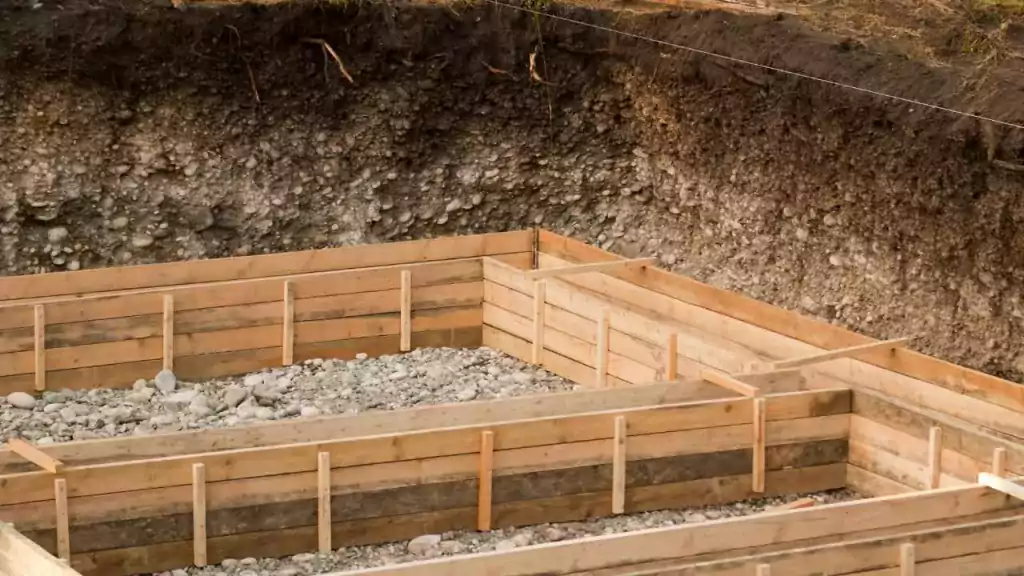
One of the first types of formwork utilised in the construction industry was timber formwork. Basically, timber formwork is the most versatile form, is built on-site, and has numerous advantages. In comparison to metallic formwork, they are incredibly lightweight and easy to install and remove. Timber formwork is versatile and can be built to any shape, size, or height. However, for minor projects where the use of local wood is permitted, these kinds of formworks are cost-effective. Prior to usage, the lumber must, however, undergo a thorough inspection to make sure it is termite-free. Timber formwork also has two disadvantages that should be considered: it has a short lifespan and takes a long time on large projects. Timber formwork is frequently recommended when labour costs are low or when flexible formwork is required for complex concrete components.
Timber formwork in construction
The timber formwork should be well-seasoned, small in size, easy to nail without breaking, and free of slack knots. During shuttering, every face of timber that will make contact with the exposed concrete work must be even and smooth.
Plywood formwork
Generally, for plywood shuttering, sheets of waterproof, boiling-level plywood that are suited for shuttering are commonly used. These plywood sheets are attached to wooden frames to form the desired-size panels. Typically, plywood formwork is used in the sheathing, decking, and form-lining applications. Hence, Plywood formwork is the modern-day alternative to wooden formwork in construction. To support the concrete work, this formwork incorporates plywood. Plywood formwork results in a smooth concrete surface, which eliminates the need for concrete refinishing. Accordingly, with the use of large-size panels, a wider area can be covered. Basically, for jobs like fixing and disassembling, this might result in labour savings. The number of reuses is higher as compared to wooden shuttering. The number of reuses might be approximated to be between 10 and 15 times.
Plywood formwork in construction
Many of the same characteristics of timber formwork, such as strength, durability, and lightweight, also apply to plywood formwork. The ability of plywood shuttering to withstand moderate weather conditions is one of its key benefits. The surface of plywood seems to be sturdy, and it is robust enough to support the weight of concrete.
Metal formwork
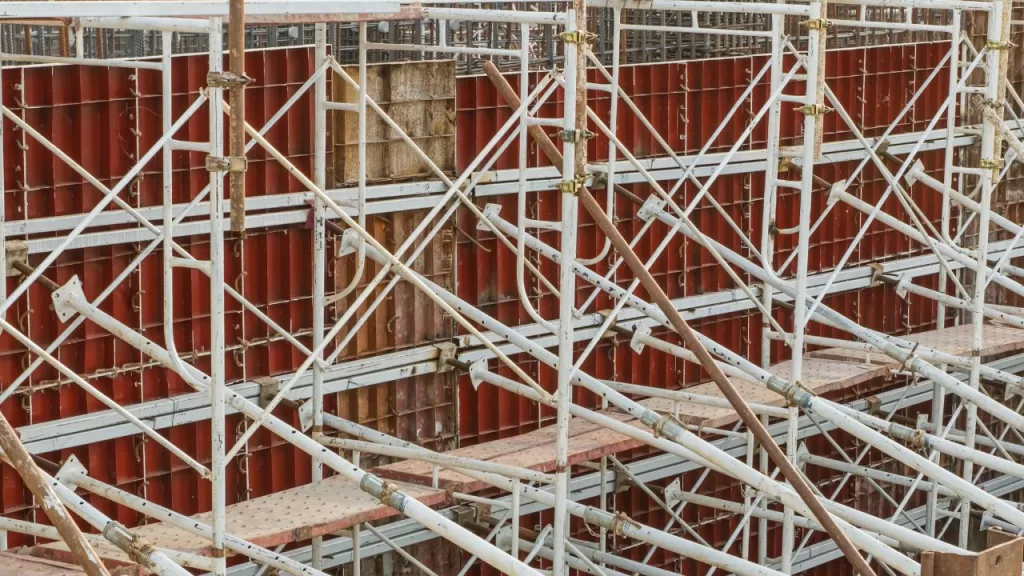
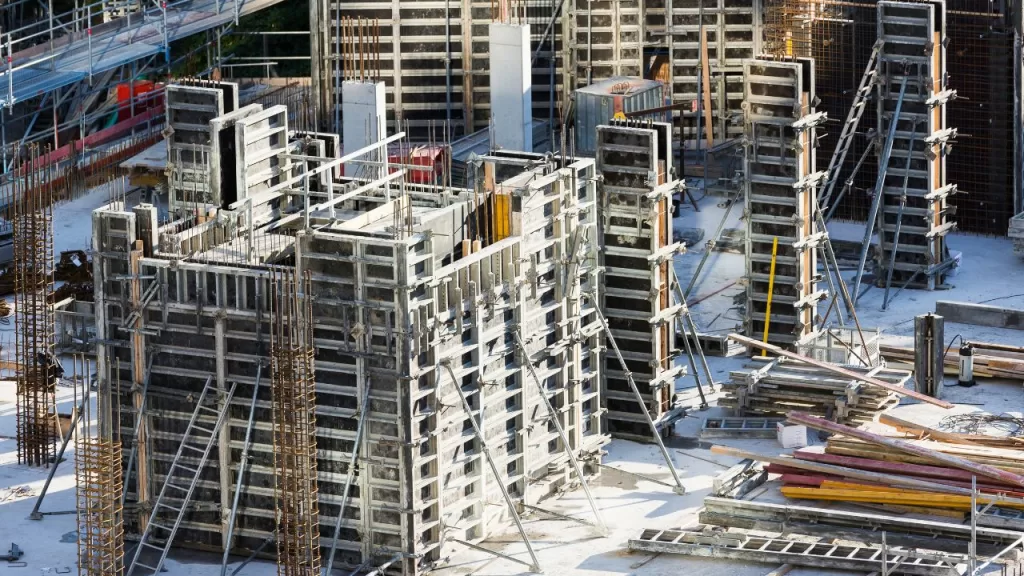
Steel shuttering is composed of panels with thin steel plates that are connected at the edges by small steel angles. Suitable clamps or bolts and nuts can be used to secure the panel units together, Likewise, this type of formwork is used in the majority of bridge construction projects. Because of their long lifespan and adaptability, steel hardware and formwork are becoming more popular. Despite its potential cost, steel shuttering is beneficial for a wide range of applications and constructions. Basically, steel shuttering gives the concrete surface an extremely flat and smooth finish. It is ideally suited for circular or curved structures such as tanks, columns, chimneys, sewers, tunnels, and retaining walls.
metal formwork
Advantages of metal/steel formwork
It gives the surface of the member a highly smooth and levelled finish.
Steel shuttering has a long lifespan and is effective and strong.
The honeycombing effect is reduced and it is waterproof.
It can be used more than 100 times.
The concrete surface does not collect moisture through the steel shuttering. Likewise, it is simple to assemble and de-shuttering.
Aluminium formwork
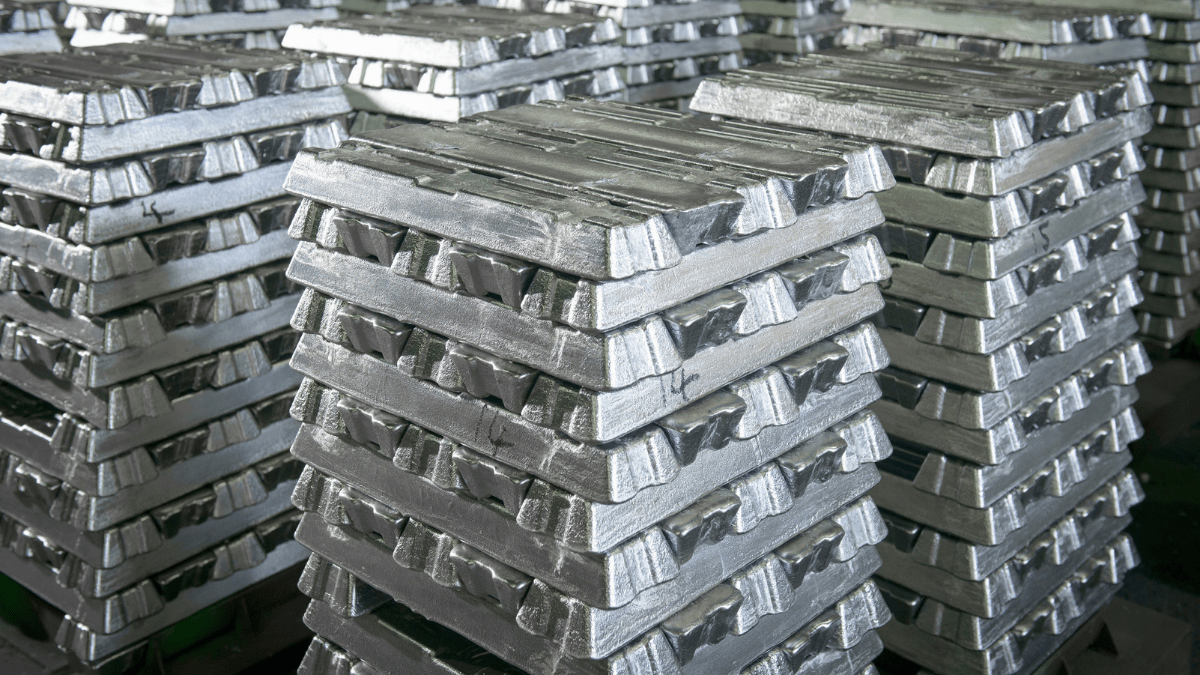
Aluminium shuttering resembles steel shuttering. The main difference is that aluminium has a lower density than steel, which makes formwork lighter. There are a few things to consider before using aluminium in a construction project. Compared to steel, aluminium is less strong. Aluminium shuttering is cost-efficient when deployed in several construction projects engineered for repeated use. The major disadvantage is that once the shuttering is constructed, it cannot be changed.
Advantages of Aluminium Formwork:
A smoother, cleaner surface finish is produced.
Generally, Up to 250 re-uses were intended for aluminium formwork.
It’s also cost-effective if numerous symmetrical structures need to be constructed.
Disadvantages of Aluminium Formwork
The initial cost is higher since aluminium formwork is now more expensive. Such formwork is cost-effective when used in symmetrical building designs.
Setting up initially takes some time.
Professional services are necessary in order to align and maintain this kind of formwork.
In order to prevent future leaks, the formwork holes made by wall ties should be correctly blocked.
Plastic formwork
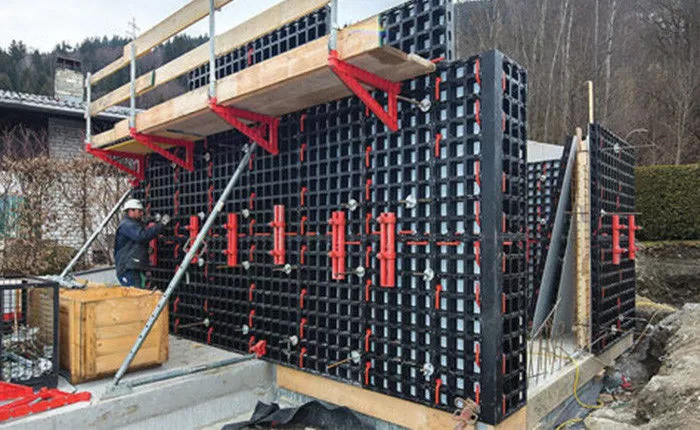
Interlocking panels or modular systems, which are both light and strong, are used to construct plastic shutters. Generally, small, repeatable initiatives like low-cost housing complexes are where it works best.
Basically, plastic formwork is appropriate for plain concrete structures. Due to its lightweight and water-cleanability, plastic shuttering is ideal for large segments and multiple reuses. Its primary drawback is that it is less flexible than timber because many of its components are prefabricated. However, large housing projects and structures with similar shapes are increasingly using these shuttering techniques.
On Tuesday, the Aditya Birla Group company announced that the 1.9 mtpa greenfield clinker-backed grinding capacity at Pali Cement Works in Rajasthan had been put into operation.
According to the corporation, this is a part of the first phase of capacity increase that was announced in December 2020.
With 5 different plant locations, the firm and its subsidiary can now produce 16.25 mtpa of cement in Rajasthan.
The total capacity of UltraTech Cement for the production of cement in India is currently 121.35 mtpa. Outside of China, UltraTech Cement is the third-largest cement manufacturer in the world, with a combined Grey Cement capacity of 121.25 MTPA.
Despite a rise in net sales of 15.78% to Rs 13,596, the cement manufacturer’s consolidated net profit fell 42.47% to Rs 756 crore.

















 vin civilworld