The advantages of AAC blocks over other alternatives stamps it as a perfect and superior building material in comparison with conventional bricks. Advantages of AAC blocks and their properties are listed out in detail.
Advantages of AAC blocks
AAC Blocks or Autoclaved Aerated Concrete Blocks are lightweight, load-bearing, durable, and economical walling material. They are eco-sensitive and green option to bricks, due to its enormous potentials in terms of insulation, fire-resistant, acoustic, and thermal resistant properties. AAC Blocks are superior material when compared with concrete, wood, brick, and stone. They can enhance the construction speed, reduce the costs, and minimise wastage at construction sites.
The unique qualities of AAC blocks are mainly due to its properties. AAC blocks are something more than a brick alternative. AAC block posses a lot of qualities that make them stand out from other alternatives. The advantages in terms of technical properties are listed below.
AAC blocks sizes are customised and manufactured in various sizes. The most common dimensions available in the market is : 600/625 mm (length) x 230/240 mm(height) x 100 mm-300 mm (thick)
TECHNICAL ADVANTAGES OF AAC BLOCKS
Dimension and appearance
The biggest advantages of AAC blocks are its Dimension and appearance.
AAC Blocks are factory manufactured and hence got a perfect size and finish with a dimension tolerance of +/- 5mm. They have sharp edges and corners, uniform colour, and pleasing appearance.
AAC block density is around (550-650)kg/cm3 which can be customised as per requirement.
AAC blocks pose a drying shrinkage of around 0.4 % which is considered very less when compared to conventional bricks.
Dimension optimisation is the main feature of AAC blocks. They can be customised to cater to any dimension requirements. AAC blocks are available in thickness ranging from 100 mm to 300 mm with a standard length of 600 mm/625 mm. The dimensions of AAC blocks also differ with the manufacturer.
Fire resistant advantages of AAC blocks
AAC blocks are non-combustible and got excellent fire-resistant properties. The melting point of the AAC blocks is around 1600 degrees Celsius which is much higher than the temperature of building fires, where it is around 500 degrees Celsius. AAC block can withstand fire up to 4-6 hours depending on the block thickness.
ADVANTAGES OF AAC BLOCKS DURING FIRE
Acoustic/Sound proof qualities
AAC Blocks possess low density and high porosity due to the presence of billions of voids. The voids make up 80% of the total volume. The AAC block got high sound absorption properties when compared with any other building materials like concrete and brick due to its high porosity.
The high acoustic properties make AAC blocks a preferred choice for cinema halls and auditoriums walls.
Insect and termite resistant
AAC Block uses inorganic materials like fly ash, cement, gypsum, etc as ingredients in its manufacturing process. AAC block possesses good insect and termite resistant qualities due to the presence of these inorganic materials.
Advantage of AAC blocks – Thermal insulation and energy savings
Fly ash is the main ingredient and constitutes more than 70% weight of AAC blocks ingredients. The micro pores constitutes around 80% of AAC blocks accounts for its excellent thermal insulation properties. The thermal insulation qualities help in maintaining inner temperature cool in summers and warm in winters. More cooler interior means less AC load which in turn can reduce energy consumption by 20% and can eliminate costly thermal insulation.
Advantage of AAC block-Impact of earthquake
AAC blocks are lightweight and reduces dead load/ mass on the structure. The impact of earthquake is directly proportional to the weight of structure. Because of its light weight properties, AAC blocks can reduce the impact of earthquake to an extend and hence preferred for earthquake zones.
Water and Moisture Resistant
AAC blocks constitutes millions of micro pores which prevent capillary transport of water and moisture over a long distance. The walls can resist moisture even with a lesser thickness compared to bricks. The water and moisture resistant qualities enable to use a less thick block as partitions.
Advantage of AAC block in terms of strength
AAC blocks are highly superior in terms of the strength. Higher level of strength of these blocks gives higher stability to the structure of the building.
Economical compared to any other alternative
AAC blocks are economical and stands out as the preferred option due to a lot of factors. This is the main advantage of AAC block over conventional red bricks.
CUTTING OF AAC BLOCK
Ease of cutting and chasing
Using recommended tools we can easily cut,drill and chase AAC blocks . The blocks will not break,crack or de-bond from its position while doing so.
Ensure fast construction
AAC blocks are lightweight, easy to fix and have a very accurate dimensional tolerance +/-5 mm and can be fixed, jointed and plumbed easily.
A single block of any thickness have an area of 24 inches x 8 inches
For completing a wall of 10 ft x 10ft
Surface area of block = 24 inch x 8 inch = 0.6 m x 0.2m = 0.12 sqm per block
Area of wall : 10 ft x 10 ft = 100 sq ft = 9.29 sqm
Quantity of block for an area of 9.29 sqm
9.29 sqm/0.12 sqm = 77.41 blocks for 100 sqft
Ordinary brick area is 9 inch x 3 inch = 0.23 m x .075 = .01725 sqm
Area of wall = 9.29 sqm area = 9.29/.1725 =
538 bricks (for 4 inch thick wall) and 1080 bricks for a 9 inch wall)
Higher the number of bricks greater the number of mortar joints.
AAC blocks are big in size and it can cover 13-14 bricks with a block. This can speed up the construction.
Advantage of AAC block in terms of Labour cost
PLACING OF AAC BLOCK
AAC blocks are very fast and easy to place due to the less number of joints when compared with bricks.
AAC blocks doesn’t require any soaking before placing for masonry and no curing is required after carrying out the works. The block adhesive used is air cured . This can reduce substantial labour and infrastructure costs involved in curing and soaking of blocks.
AAC block uses ready mix block adhesive in place of mortar for bonding the blocks, wherein mortar making requires handling of aggregates, mixing and conveying to the location for use. The labour involved in this lengthy process can be saved in the case of AAC blocks. More over the area looks neat and clean as site mixed mortars tends to generate a lot of waste.
Bricks got 4 times more mortar joints than AAC blocks. The dimensional tolerance of bricks are very high around +/- 5 mm to 15 mm and more. It is difficult to plumb and place in position.
AAC block work can even be done with a semiskilled labour with a little bit of training mostly due to their dimensional accuracy.
AAC blocks are available in pallets and can be conveyed and lifted to any location with the help of cranes and tower cranes. This can save labour involvement in carrying of blocks.
Because of these factors the labour charges for placing AAC blocks are almost 50% less when compared with conventional bricks/ or any other walling material.
Advantages of AAC block – Savings in material cost
Saving in jointing mortar
The block adhesive joint thickness is around 3-4 mm and it is much cheaper than mortar which includes cement and sand and its mixing.
Saving in plastering material
There is a huge amount of savings in terms of plastering. AAC blockwork presents a fair face on both sides of wall whereas brick work generates a fair face and unfair face on the walls. For covering the unfair face of brickwork the thickness of mortar should be adjusted to a minimum of 18 mm or more. In case of AAC blocks due to its dimensional accuracy they can be covered even with 10 mm thick mortar on inside faces and 12 mm thick mortar for outside faces. AAC blocks comes in perfect shapes and can even be painted directly after applying POP or gypsum plaster in very thin coats.
PLASTERING OF AAC BLOCKS
Wastages
AAC block wastage is around 2% whereas brick wastage is around 10% to 15% which is relatively very high. This can generates substantial saving in terms of wastage and removal of debris.
Design optimisation
AAC blocks are light weight with very less density of around 600 kg/cm3. Structural designers can optimise their designs due to less dead loads similarly optimised design consume less steel and concrete.
AAC is 100% Green building material & is a walling material of a choice in LEED certified buildings. AAC is most energy & resource efficient in the sense that it uses least amount of energy in manufacturing and material per cum of product. Brick manufacturing process uses fertile topsoil wherein AAC uses Fly-ash (65% of its weight) which is an industrial waste harming the environments.
AAC Blocks is a unique and excellent building material due to its superior heat, fire and sound resistance qualities. AAC blocks are lightweight and offers ultimate workability, flexibility and durability.
Ways to conserve water is a quite relevant topic in the digital era. World population is exploding and the need for water is skyrocketing. It is even said that the next world war will be for water. In the crunchy situation, you don’t need me to tell you why it’s relevant to save water. Out of the existing methods, some are very sophisticated while some needs improvisations. Through the post, we are going to explore existing techniques to conserve water by digging deep.
How many times did you have goosebumps looking at nature?
True. Be smart like nature. Soil and water conservation methods include planting deeper rooting crops, such as grasses or cereals that will leverage soil water reserves more effectively than shallower rooting crops such as vegetable crops and therefore can be grown in drier period.
Take measures to avoid run off
An important part of different ways to conserve water is avoiding spilling out. When it comes to water, the part played is runoff. This is equally important as the ways to conserve water resources. The various types of run-off management are those increase water intake and storage and so reduce runoff, control water movement over the soil surface, dispose safely of the excess rainfall as runoff or concentrate inadequate rainfall runoff. Remedial measures such as incorporating plantings especially in areas where runoff collects protecting trees that help absorb and filter runoff, choosing permeable materials for pathways etc. can potentially contribute to reducing runoff.
Cheap Ways to Conserve Water- Use Rainwater Effectively
We should always bear in mind that groundwater is a candy that should not be consumed uncontrollably. Because it takes time to recharge it back to its initial level. Only by conscientious exploitation of groundwater can it be proportionately conserved. For this to happen, ways to conserve water from ground water conservation methods such as crops requiring less water given priority over crops requiring more water need to be considered. Less water should be used by industries. The necessary drainage area should also be made available for recharging ground water.
Redistribution of Water– must use ways to conserve water
Sharing is a great habit that benefits all who are involved in it. Whether it’s knowledge, love, physical goods, anything, right? That’s exactly what it takes to turn the cries of people around the world for water into a smile of gratification. Extensive re-wiring of the supply of water in water conservation system from areas with lower demand to areas with higher demand is needed.
How do you do that?
This can be accomplished through the development of water reservoirs and a network of canals. Excess rainwater that flows away from rivers without being used can be stored by the construction of water reservoirs from which it can be supplied for agriculture, industry, urban areas, etc. These reservoirs are also designed to protect against flooding and, apart from flood protection, they can also be used for a variety of purposes. Water distribution is also possible through the canal system. The canal system transfers water from excess rainwater to scarce rainwater areas and conserves water for various purposes.
Now we have seen 5 ways to conserve water. But we are yet to hit some more wonderful ways to save on water. Moving on…
Protection of Water from Pollution
Pollution is a taboo that has disturbed our ears since the day we can remember. Activities such as disposing of different wastes without treatment in rivers, pollution caused by tourism on lakes and sea coasts, bathing and other similar activities in the vicinity of drinking water sources and Weeds produced in water are the main causes of water pollution.
So how to reduce water pollution?
There is a need for a cooperative policy at international level for conservation of water bodies by regulating oil and nuclear waste in the oceans. Water should become reusable after physical, chemical, mechanical and organic processing processes, and lakes should not be used as outlets for the transport of products.
Traditional ways to conserve water
TRADITIONAL WATER CONSERVATION METHOD
One of the fascinating practices in every culture is that they have developed innovative techniques for all necessary human needs. Water conservation is no exception to this. If so, then can you think about how would it be in India, the land of diversities.
Traditional ways to conserve water in India are,
Bamboo Drip Irrigation System
Bamboo is too expensive to use for a low cost building but is a boon for people of Meghalaya. Because, they have been leveraging it for ways to conserve water in India. This system of water conservation is a brilliant drip irrigation system. It uses bamboo of various sizes and reduces the output to 20-80 drops per minute, which is excellent for betel leaf and black pepper crops.
Johads
Johad is a crescent shaped small check dam built from earth and rock to intercept and conserve rainwater in Rajasthan. This helps to improve percolation and increases groundwater recharge.
Kul
Kuls are diversion channels that carry water from a glacier to village. Often spanning long distances, with some over 10 km long, kuls have been around for centuries. They are the lifeline of people of Spiti valley of Himachal Pradesh and in Jammu too.
Eri
One of the oldest water conservation systems in India of Tamil Nadu is still widely used around the State. With over a third of irrigation in the State being made possible due to Eri, the traditional water harvesting system plays an important part in the agriculture. They also have other advantages such as prevention of soil erosion, recharge of groundwater, and flood control.
Zabo
This method of conservation of water in India is a unique combination with animal care, forests and agriculture. Mostly practised in Nagaland, Zabo is used to deal with a lack of drinking water supply. During monsoon, rainwater that falls on the hilltops is collected into the pond like structures that are carved out on the hillsides. The water is then passed onto cattle yards below from where the water enters the paddy fields rich in manure.
See, such still in use water conservation model that tells the beautiful story of water use and conservation doesn’t have copyright and patent problems. It’s open to the whole world. So why can’t we be inspired by them and use suitable conservation method of water in our own lives?
Use of Modern ways to conserve water
On average, 80 percent of the fresh water withdrawn from rivers and groundwater is used to produce food and other agricultural products. Therefore, we need to pay attention to improved ways of irrigation such as sprinkler and drip irrigation that save 50 per cent water.
In the drip irrigation method, the hole pipes are spread over the surface of the soil so that the crop receives water directly. There is no loss due to evaporation and approximately 95% water is used. This process therefore uses maximum water.
Increasing Forest Cover
According to recent reports, forests cover 31 percent of the world’s land surface, just over 4 billion hectares which is down from the pre-industrial area of 5.9 billion hectare. This needs to be addressed since trees bear drought conditions for a long duration as compared to crops and they are helpful in reducing the demand for water along with recharging water sources.
Flood Management
FLOOD MANAGEMENT
Floods carry with it harmful contaminants such as soil, animal waste, salt, pesticides, and oil which can potentially impact drinking water wells and water quality. By construction of embankments and canals, a large part of the land can be conserved besides minimizing flood losses. Intensive afforestation can also provide security from floods which will be helpful in the absorption of water in the soil.
After such disasters, construction of green building aided byeco friendly materials are preferred. Because they are built with all necessary measures for water conservation.
Conserving Water in Industries
Water has to be re-used after processing. Recycling of water should be developed because normally industrial units dispose off water on the ground surface after using it only once. Because of not re-using it after processing, it also pollutes other water sources. Water demand can also be reduced by recycling used water in industries.
Reuse of Urban Waste
Demand for water has increased in cities due to increasing urbanization. There is no provision for waste water treatment in many cities of various countries of the world. After use of water in urban areas, disposed waste water can be treated and conserved for use in agriculture in the peripheral areas of cities. Such policies should be incorporated while planning urban development.
Population Control
The world’s population is growing by approximately 80 million people every year. Changes in lifestyles and eating habits in recent years require more per- capita water consumption. Biofuel production has also increased sharply in recent years, with a significant impact on the demand for water. It’s obvious that a controlled population can avoid a tug of war for water by reducing the demand as well as the qualitative deterioration of water.
Water conservation by Municipal bodies
According to the World Economic Forum’s 2015 Global Risk report, around one third of the global population is currently water stressed, with about one billion people not getting safe drinking water. the water crisis is perceived as a top-order threat. In this nerve wracking situation, a governing body is indeed and they should exhort awareness on how to conserve water and capacity building among people.
Use of water from hot waterfalls
WATER FALL CAN BE USED AS A SOURCE
Scientifically, there are hypotheses that negative ions that are present in waterfalls increase serotonin levels, which ultimately enhances our mood. Wah! That’s great. And this geothermal water serves as a source too in the battle against water scarcity.
So, ready to stand together with the world to avoid the next world war?
Reinforced cement concrete is a topic you will need to familiarise at some point, if you are into civil engineering field, agree? Well, if you were surfing on the internet for some fresh knowledge and stumbled on to here, then also welcome! Let’s learn.
What is reinforced cement concrete?
Reinforced cement concrete (RCC), a composite material has been accepted worldwide as a construction material, bridges, retaining walls, docks and harbour, airfield pavements, flyovers,multi-storey building,complexes and simple houses etc.,
Okay. now what is the importance of RCC?
Concrete is good in resisting compression but is very weak in resisting tension. Hence reinforcement is provided in the concrete wherever tensile stress is expected. The best reinforcement is steel since the tensile strength of steel is quite high and the bond between steel and concrete is good. As the elastic modulus of steel is high, for the same extension the force resisted by steel is high compared to concrete.
However in tensile zone, hair cracks in concrete are unavoidable. Reinforcements are usually in the form of mild steel or ribbed steel bars of 6 mm to 32 mm diameter. A cage of reinforcements is prepared as per the design requirements, kept in a formwork and then green concrete is poured. After the concrete hardens, the formwork is removed. The composite material of steel and concrete now called R.C.C. acts as a structural member and can resist tensile as well as compressive stresses very well.
Moving onto more technicalities, let’s sneak into the properties of RCC.
Properties of reinforced cement concrete
The properties of a good RCC are,
It should be capable of resisting expected tensile, compressive, bending and shear forces.
It should not show excessive deflection and spoil serviceability requirement.
There should be proper cover to the reinforcement, so that the corrossion is prevented.
The hair cracks developed should be within the permissible limit.
It is a good fire resistant material.
When it is fresh, it can be moulded to any desired shape and size.
Durability is very good.
R.C.C. structure can be designed to take any load.
Ingredients of RCC
1. Cement
We have seen all the details of cement in previous blogs.
These are the inert or chemically inactive materials which form the bulk of cement concrete. These aggregates are bound together by means of cement.
They can be classified into two. The selection of aggregate is based on the purpose and its maximum size.
a) Fine aggregates
The material which is passed through BIS test sieve no. 480 is called a fine aggregate. River sand is an example.
b) Course aggregates
The material which is retained on BIS test sieve no. 480 is termed as a coarse aggregate. Broken stone is and example.
3. Steel
Steel is used for reinforcement in the form of round bars of mild steel. Diameter of the steel bars used is between 6 mm to 40 mm.
4. Water
Nobody wants a description of what water is, right? Instead, let’s talk about why its significant. Water is an important ingredient because its amount determines the mixing of other ingredients in concrete.
5. Admixtures
Admixtures are ingredients other than above that are added in concrete to give it certain improved qualities or for changing different physical properties in its fresh and hardened stages. The addition of an admixture may improve the concrete with respect to its strength, hardness, workability, water-resisting power, etc.
Uses of reinforced cement concrete
It is a widely used building material. Some of its important uses are,
R.C.C. is used as a structural element, the common structural elements in a building where R.C.C. is used are
(a) footings (b) columns
(c) beams and lintels (d) chajjas, roofs, slabs and
(e)stairs
2. R.C.C. is used for the construction of storage structures like
(a) Water tanks (b) Dams
(c) Bins (d) Silos and bunkers.
3. It is used for the construction of big structures like
(a) Bridges (b) Retaining walls
(c) Docks and harbours (d) Under water structures.
4. It is used for precasting
(a) Railway sleepers (b) Electric poles
5. R.C.C. is used for constructing tall structures like,
(a) Multistorey buildings (b) Chimneys
(c) Towers
6. It is used for paving,
(a) Roads (b) Airports
7. R.C.C. is used in building atomic plants to prevent danger of radiation. For this purpose R.C.C. walls built are 1.5 m to 2.0 m thick.
Cool. You have known enough to design RCC. Whom are we waiting for?
Design of reinforced cement concrete
Design of reinforced cement concrete
A structural member made by two or more different components constructing together is called as composite structure. A reinforced concrete structure belongs to this category.
Methods 1- Working stress method
In this method, behavior of the structure is assumed to act as linearly elastic body under the action of service loads.
Assumptions of working Stress Method
1. At any cross section,plane sections before bending remains plane after bending.
2. All tensile stresses are taken up by reinforcement and none by concrete,except otherwise specially permitted.
3. stress-strain relationship of steel and concrete under working load is a straight line.
4. The modular ratio m has the value 280/3 stress (cbc) is permissible compressive stress due to bending in concrete
Keeping the assumptions in mind, let me break down the procedure of working stress method below.
Steps of working stress method
a) The stresses in an element is obtained from the working loads and compared with permissible stresses.
b) The method follows linear stress-strain behaviour of both the materials.
c) Modular ratio can be used to determine allowable stresses,
d) Ultimate load carrying capacity cannot be predicted accurately.
e) The main drawback of this method is uneconomical.
The figure shows the grade of concrete and proportions of ingredients proposed by working stress method
Grade of concrete and proportions
Advantages of working stress method
Its a simple method
The design results give a large section. Therefore, deflection and cracking is less.
The structure designed using the method gives larger serviceability
Disadvantages of working stress method
This method doesn’t show the real strength of structue. And doesn’t give real factor of safety under failure of structure.
Because of creep, the stress- strain relationship of concrete doesn’t have definite modulous of elasticity
Method- 2 Limit state method
It is the method of designing structures based on statistical concept of safety and the associated statistical probability of failure.
The structures designed should satisfy the dual criteria which are safety and serviceability.
a). Safety
It can be defined as an acceptable degree of security against complete collapse. Or, the failure the concrete structure can occur by various modes such as compression, tension, flexure, torsion, shear.
b). Serviceability
The intended structure shouldn’t deteriorate to such an extend that if fails to fullfils the function for which its built. In concrete structure, the state can be reached due to excessive deflection, cracking, vibration, corrosion of reinforcement etc.
The steps in limit state of design
a) The stresses are obtained from design loads and compared with design strength.
b) In this method,it follows linear strain relationship but not linear stress relationship.
c) The ultimate stresses of materials itself are used as allowable stresses.
d) It shall also statisfy the serviceability requirements,such as limitations on deflection and cracking
Reinforced cement concrete books
The important books for clearing all your doubts regarding RCC are,
B.C. Punmia, Limit state design of reinforced concrete, 2007
S.S. Bhavikatti, Advance R.C.C. design, 2006
Murari Lal Gambhir, Design of reinforced concrete structures, 2008
You may note that other important authors are Unnikrishnan Pillai & Devdas Menon, V.L.Shah & S.R.Karve ( Local publication in Pune), P. Dayaratnam, R.Ramamutham and N. Krishnaraju.
Also you can refer NPTEL lectures and notes which are available in internet.
AAC Blocks or Autoclaved Aerated Concrete Blocks are a lightweight, load-bearing, a durable, eco-sensitive, and economical alternative for conventional bricks. AAC Blocks can be customised to satisfy dimensional requirements. When compared to concrete,wood ,brick and stone AAC block possess excellent insulation, fire-resistant, and thermal resistant properties. AAC block can enhance construction speed and reduce costs.
AAC BLOCKS LAYING
AAC Blocks Manufacturing
AAC block constitute 80% voids and hence it is lightweight and easy to handle. They are manufactured using easily available materials. The ingredients include sand, fly ash, lime, cement, gypsum, and aluminum powder. The manufacturing process is clean and does not emit any hazardous chemicals. Major raw materials used for AAC block manufacturing are industrial wastes like fly ash and gypsum. The manufacturing process is energy efficient eco-friendly certified green building materials.
Ingredients of AAC blocks
The main ingredients of AAC blocks are Fly ash, Sand, Cement, Lime, Gypsum, water, and aluminum powder. Aluminum powder is used as a foaming agent.
Cement used for AAC block manufacturing is OPC 43 or OPC 53 grade cement and is used as a binding material.
Fly ash is an industrial waste from power plants. The density ranges from 600kg/cm3 to 1400kg/cm3. The presence of fly ash is responsible for imparting insulation and fire-resistant properties of AAC blocks.
The lime is obtained by grinding limestone in the block manufacturing factory or outsourcing as lime powder.
Aluminum is used as a foaming agent and is responsible for the development of voids inside the blocks.
Gypsum is an industrial waste generated from fertiliser plants and is abundantly available.
AAC Blocks manufacturing process
The manufacturing process of AAC blocks is associated with a series of operations starting from, feeding of ingredients to the stacking of blocks. Every stage is associated with strict manufacturing quality guidelines for ensuring requisite strength and density. AAC block manufacturing processes are broadly classified as follows.
Raw material preparation
Dosing & mixing
Moulding, rising and pre-curing
De-moulding and Wire cutting
Autoclaving
Raw material Preparation
The basic ingredients required for AAC block manufacturing are fly ash or sand. Fly ash is abundantly available as industrial waste from power plants. Hence fly ash is used for manufacturing AAC blocks. It is mixed with water to form fly ash slurry which is stored in containers for the next stage of operation.
Dosing and mixing
The fly ash slurry is stored in a container which is connected to a mixing drum. All other ingredients like lime powder, gypsum, and cement are stored in different storage containers and are fed into the mixing drum using screw conveyors. Automatic feeding systems are attached to each storage container to ensure correct ingredient proportions. The proportioned ingredients are simultaneously fed to a mixing drum where it is mixed thoroughly. Aluminum dosing is done through a feeding attachment and is controlled according to the requirement. The ingredients are thoroughly mixed and ready to be poured into the moulds.
MIXING DRUM
Moulding, rising and Pre-curing
The casting of AAC blocks is done in moulds. The moulds are cleaned and coated with oil to avoid any sticking of the ingredients on the surfaces of the mould which in turn can hamper the surface finish of blocks. Already mixed slurry is poured into the oiled moulds. Inside the moulds, the aluminum reacts with calcium hydroxide (lime) and water and produces a lot of unconnected hydrogen bubbles and expands the slurry. The expansion is almost twice that of the original volume. This process is called rising. These hydrogen bubble spaces are responsible for the lightweight characteristics of AAC blocks. The process of rising is followed by de-moulding and cutting the blocks. The cutting of the blocks into the required sizes requires some strength for the cube. For that, the mould is allowed to settle and cure for a while just enough for the wire cutting process. The pre-curing time can be anywhere between 1-3 hours or more depending on weather conditions. This can be done by indirect heating also. After the pre-curing process, the green cake is strong enough for a wire cut.
De-moulding and Wire cutting
The pre-cured moulds are carried to the cutting area. The moulds are removed and the green cake is wire cut as per the required sizes. The wire cutting process is done in two stages. The first stage is a vertical cut and the second stage is a horizontal cut. De-moulding and cutting give the dimensional perfection and finish of the AAC blocks. This process has to be done with utmost care or else rejection may happen.
WIRE CUTTING OF AAC BLOCKS
Autoclaving of AAC blocks
The final process of manufacturing is autoclaving. The wire cut blocks are transported to an autoclaved chamber where is heated to the required temperature. This process gives the desired durability and structural stability to AAC blocks. The baking is done for about 8-12 hours at a temperature of around 180 degrees. The temperature and period of heating determine the grade of the materials. Curing in an autoclave reduces drying shrinkage.The autoclave curing process requires more energy and a more expensive kiln, but it can produce blocks in less time.
The blocks are stacked on pellets on completion of autoclaving process for transporting to the required destinations. All quality tests are conducted in the factory itself.
The powder coating process is a method of spraying electrostatically charged dry powder over the material surface. The powder coating process is also known as the electrostatic spray deposition process. The dry powder constitutes a combination of finely ground pigments and resins. Powder coating was introduced in the late 1980 s and is being extensively used in the industrial, commercial, and household applications. This process provides a smooth, durable, decorative, and a corrosion-resistant coating.
POWDER COATING PROCESS
Difference between Powder coating process and Polyester Powder coating
A lot of confusion is prevailing between the terms, “Powder Coating” and “Polyester powder” coating. Powder coating is the method of application of electrostatically charged dry powder to the material to be coated. Powder coating can be applied on any surface. However, the powder coating ingredients differs with material types and the environment where it is used. The most popular powder coating types are Epoxy Powder Coating, Polyester Powder Coating, and Hybrid Powder Coatings.
Polyester powder coatings preferred in applications are classified into TGIC Polyester coating and Urethane polyester coating. For aluminium extrusions, TGIC Polyester coating is preferred due to there low temperature curing properties.
Powder coating process is broadly classified into three important stages.
Surface preparation
Powder coating process
Curing process
Surface Preparation
The durability and serviceability of a coating depend on the quality of surface preparation. Surface preparation is essential to remove the dirt, grease, and other impurities from the material surface. The cleaning process includes various stages of cleaning, rinsing, etching, blasting, and drying, etc. The surface preparation stages are as follows.
Chemical cleaning
Conversion coating
Chemical cleaning
The chemical cleaning process uses mild alkalies(caustic soda), acids, and detergents for cleaning. The cleaning process is followed by rinsing with hot water, steam, detergent, etc. However, the type of acid/alkali cleaners depends on the material type to be coated. For example, aluminium is sensitive to acid attacks and requires mild alkaline cleaners. Rinsing with nitric acid done on anodised surfaces. On completion of the cleaning process, the surface feels smooth and free from grease, oil, impurities, etc
REMOVING MATERIALS FROM OVEN
b) Conversion coating
A conversion coating is applied on the surface to enable strong adhesion with powder coating. The chemical solutions for conversion coating are selected based on the type of material to be coated. For aluminium surfaces, the conversion coating is applied for a surface with strong adhesive nature and to arrest the progress of oxidation before powder coating.
For aluminium surfaces, conversion coating uses chromatic or phosphate solutions. In mild steel Zinc phosphate/ iron phosphate solutions are used. After completing the conversion coating, the coated material is cleaned in rinsing tanks. The final rinse is done using simonized water. The rinsing process removes chemical salts and other residues from the surface of the material that can trigger corrosion and can affect the coating adhesion properties.
On completion of the conversion coating, the material is dried in a drying oven to remove any possible moisture before application of the coating.
Powder coating process-Types
Once the drying process is over, the clean and dry material from the drying oven is shifted to a powder coating booth for powder coating. The powder coating application is commonly done in two methods based on the type of material and environment where it is used.
Electrostatic deposition
Fludized bed powder coating
Electrostatic deposition
In Electrostatic spray deposition or ESD method of powder coating, the finely ground powder is sprayed by a gun to the material. The entire system constitutes a spray booth, a powder feeder, an electrostatic spray gun, and a power unit. For the ESD process of powder coating, a finely ground resin and pigment powder are charged inside a gun. The material to be coated is grounded/earthed to provide an opposite charge. The electrically charged particles from the gun are sprayed on to the earthed material. The powder on leaving the gun gets attracted to the earthed parts due to electrostatic attraction. In this process, areas that are not even in line with the gun also get attracted to the material to be coated. The powder will continue to stick on the surface as long as it is grounded/earthed. The thickness of the coatings depends on the type of environment the part will be used in. Any powder left after the coating is reclaimed and reused.
POWDER COATED MATERIALS
Fluidized bed powder coating process
In the Electrostatic deposition process, the powder coating material is electrostatically sprayed and adhered to the surface. But in the case of fluidized bed powder coating, preheated parts are dipped to the powder material within a fluidized bed. There is also an alternative option called electrostatic fluidized bed powder coating, which generates a cloud of electrically charged powder particles above the fluidized bed through which the part to be coated is passed.
Curing of coated materials
The coated materials are co to an oven, where the painting process gets completed by ‘curing’ the particles. The oven heats the metal to about 200°C. The high temperature first fuses and melts the powder particles, allowing them to flow together to form a film and then cures the resin system in the film to form a smooth surface. Other additives within the powder formulation make them anchored to the conversion coating, developing a cohesive structure. After the curing oven, sections are transported to a cooling station, inspected, packed, and dispatched.
CURING BOOTH FOR POWDER COATING
Advantages of powder coatings process over liquid coatings
The wet painting system was the most common and traditional coating method. In this method, water-based or solvent-based paint is sprayed or painted to the material surface. Many concerns or issues associated with liquid paints are eliminated or minimised with the powder coating process. The advantages of powder coating over wet paint are listed below.
Resistance to corrosion and chemicals
Powder coatings are more durable and more resistant to corrosion, chemicals, weather, etc than liquid coatings. Powder coating provides wear, scratch-free, and abrasion-resistant coatings in comparison with liquid paints. The application process of powder coating is thermal bonding which provides a uniform, smooth, and even coating. The colours always look fresh and bright and give a refreshing look than liquid paints.
Color choice
Powder coatings offer an unlimited range of colours, finishes, textures, which is not achievable through any type of conventional liquid coating method. Powder coating can match the colour scheme of any object/structure. The enormous choice of colours and textures ranging from matt, glossy, and textured to metallic finishes makes powder coating one of the most preferred coating choices. Powder coating can be used as a protective coating as well as decorative applications.
POWDER COATING COLOURS
Durability of powder coating
Powder coatings are long-lasting and durable than any other liquid coatings. Powder coatings offer high resistance to impact, moisture, chemicals, wear, and abrasion compared to any other liquid coatings. They can also protect the materials against possible scratches occurring during the fabrication and fixing of the material and can be used in high traffic areas.
Environmental friendly
The liquid coatings emit VOC s (volatile organic compounds) due to the presence of solvents and cause serious environmental issues. Powder coating is free of any solvents and does not emit any VOCs and is thereby considered a green product. Moreover, the powder coating process does not create any hazardous waste that needs disposal. Any waste powder left after the coating is reclaimed and used. Powder coating is considered an environmentally friendly alternative to liquid coatings and thereby extensively used for green building-related projects.
Operational cost of powder coating
Powder coating is an economic option when compared with other organic finishes/ liquid painting methods. The powder coating application can be done with minimal training and supervision and thereby can reduce costs related to labour and operations. Powders left after the coating is recycled and reused. Fewer energy costs, reduced disposal costs, and low reject costs makes powder coating an economical option. Powder coating also has a longer life span when compared to other coatings and this can be another value addition in terms of money.
Safety
Liquid paints are flammable, carcinogenic, and full of volatile organic compounds and are harmful to the environment as well as the workers involved in the process, if not handled properly. Powder coating consists of solids and no solvents and hence is not harmful to persons handling it. Moreover, powder coatings possess good fire rating qualities in comparison with other liquid coatings.
Disadvantages of powder coating process
Thin coatings are difficult to produce
Powder coatings are 100% solid and because of this, even with a minimum amount of application, the initial thickness is formed. Moreover, it does not contain any volatile organic compounds. This makes it impossible to have thicknesses of less than 25 microns. Whereas in liquid paint, we have paint thinner and it is possible to have a lower percentage of solids, the film thickness can even be limited to 10 microns.
Failure of coating on exposed to atmosphere
On exposure to extreme atmospheric conditions like sunlight, heat, humidity, etc powder coating tends to fail, crack, and peel off. Hence not preferred for external applications involving exposure to extreme atmospheric conditions.
Color change after application
The production process and blending of powder coatings are carried out in a molten form. Hence it is not possible to change the color after production. Whereas in liquid paint we can change the color in all the stages, even when applying the paint, by adding stainers and pigments.
Size of coating material
The spray equipment and method of application of powder coatings confine the coating application to spray chambers only. Substrates must be charged and on completion of the coating. The materials have to be transferred to an oven where the curing process involving a temperature up to 200 degrees is done. Considering these conditions, it is not possible to coat and cure large substrates.
Oven curing
Powder coatings only dry and cure in temperatures above 180 degrees. Whereas liquid paints are varied and could dry up even in room temperature.
Control of material quantity and smoothness
Powder coating offers less control over the speed and amount of powder coating applied. The smoothness of the coating cannot be controlled as it is happening inside the oven.
Start up costs
The start up costs are high for powder coatings. Requires skilled workers for coating and operation of the plant.
After considering the limitations and advantages of powder coatings, and the selected product to be coated, you can evaluate whether coating metals with liquid paint or powder is more suitable.
Uses of powder coating process
Powder coating process is being used for a wide range of applications ranging from household , commercial, industrial ,automobile sectors.
Appliances
Powder coating is used for appliances like stoves, refrigerators, washers, dryers, dishwashers, air conditioners, water heaters, microwave ovens, and many other areas.
POWDER COATED HOUSE HOLD APPLIANCES
Automotive
Powder coating is used often in the automotive industry for engine parts and componets. It is also used by major auto brands as a clear top coat for increasing protection
Commercial Buildings and Offices
Powder coating is used for doors, windows, partions, roofing, cladding etc for residential buildings, commercial buiding etc.
Everywhere you look there are various building and highway projects which use powder coating as well – guardrails, light poles, fencing, posts, and signs are a few examples.
ALUMINIUM DOORS AND WINDOWS
Normal Daily Products
Many daily products are being powder coated to increase the quality of finishes. These products include antennas, lighting fixtures, and electrical elements. Farm equipment and tractors use powder coating. Fitness industries use powder coating on golf cards, golf clubs, ski poles, bicycles, snowmobiles, and other different types of exercise equipment.
Powder coating is also used for supermarkets, stores, malls etc . Every where around us we can see a material using powder coating.
Bachelor of Engineering subjects and Bachelor of Technology (B.Tech). Are they same? No, but yes. There are similarities and differences in both. The outcome of course is more or less the same, but the subjects are different. Lets look at the difference before we dive in to the BE civil engineering subjects.
Both are two different ofessional degree courses, but you get to be a civil engineer.
The universities which offer the courses are different
The subjects of both degrees are not the same. Though both contain topics that impart knowledge in civil engineering.
The course duration is same which is four years.
There is no much difference between career opportunities. All the jobs and exams offered to a BE graduate considers BE graduates and vice versa.
Now, moving on to the subjects,
BE Civil Engineering Subjects-Semester – 1
COMMUNICATIVE ENGLISH
Objectives
• To develop the basic reading and writing skills of first year engineering and technology students.
• To help learners develop their listening skills, which will, enable them listen to lectures and comprehend them by asking questions; seeking clarifications.
• To help learners develop their speaking skills and speak fluently in real contexts.
• To help learners develop vocabulary of a general kind by developing their reading skills
Outcomes
At the end of the course, learners will be able to:
• Read articles of a general kind in magazines and newspapers.
• Participate effectively in informal conversations; introduce themselves and their friends and express opinions in English.
• Comprehend conversations and short talks delivered in English
• Write short essays of a general kind and personal letters and emails in English.
BE civil Engineering Subjects – Text books
1. Richards, C. Jack. Interchange Students’ Book-2 New Delhi: CUP, 2015.
2. Bailey, Stephen. Academic Writing: A practical guide for students. New York: Rutledge,2011
ENGINEERING MATHEMATICS– I
Objectives
• The goal of this course is to achieve conceptual understanding and to retain the best traditions of traditional calculus. The syllabus is designed to provide the basic tools of calculus mainly for the purpose of modelling the engineering problems mathematically and obtaining solutions.
Outcomes
After completing this course, students should demonstrate competency in the following skills:
• Use both the limit definition and rules of differentiation to differentiate functions.
• Apply differentiation to solve maxima and minima problems.
• Evaluate integrals both by using Riemann sums and by using the Fundamental Theorem of Calculus.
• Apply integration to compute multiple integrals, area, volume, integrals in polar coordinates, in addition to change of order and change of variables.
• Evaluate integrals using techniques of integration, such as substitution, partial fractions and integration by parts.
• Determine convergence/divergence of improper integrals and evaluate convergent improper integrals.
• Apply various techniques in solving differential equations.
2. Anton, H, Bivens, I and Davis, S, “Calculus”, Wiley, 10th Edition, 2016.
ENGINEERING PHYSICS
Objectives
• To enhance the fundamental knowledge in Physics and its applications relevant to various streams of Engineering and Technology.
Outcomes
Upon completion of this course,
• The students will gain knowledge on the basics of properties of matter and its applications,
• The students will acquire knowledge on the concepts of waves and optical devices and their applications in fibre optics,
• The students will have adequate knowledge on the concepts of thermal properties of materials and their applications in expansion joints and heat exchangers,
• The students will get knowledge on advanced physics concepts of quantum theory and its applications in tunneling microscopes, and
• The students will understand the basics of crystals, their structures and different crystal growth techniques.
BE civil Engineering Subjects – Text books
1. Bhattacharya, D.K. & Poonam, T. “Engineering Physics”. Oxford University Press, 2015.
2. Halliday, D., Resnick, R. & Walker, J. “Principles of Physics”. Wiley, 2015.
ENGINEERING CHEMISTRY
Objectives
• To make the students conversant with boiler feed water requirements, related problems and water treatment techniques
• To develop an understanding of the basic concepts of phase rule and its applications to single and two component systems and appreciate the purpose and significance of alloys.
• Preparation, properties and applications of engineering materials.
• Types of fuels, calorific value calculations, manufacture of solid, liquid and gaseous fuels.
• Principles and generation of energy in batteries, nuclear reactors, solar cells, wind mills and fuel cells.
Outcomes
• The knowledge gained on engineering materials, fuels, energy sources and water treatment techniques will facilitate better understanding of engineering processes and applications for further learning.
BE civil Engineering Subjects – Text books
1. S. S. Dara and S. S. Umare, “A Textbook of Engineering Chemistry”, S. Chand & Company LTD, New Delhi, 2015 2. P. C. Jain and Monika Jain, “Engineering Chemistry” Dhanpat Rai Publishing Company (P) LTD, New Delhi, 2015
2. Friedrich Emich, “Engineering Chemistry”, Scientific International PVT, LTD, New Delhi, 2014.
PROBLEM SOLVING AND PYTHON PROGRAMMING
Objectives
• To know the basics of algorithmic problem solving
• To read and write simple Python programs.
• To develop Python programs with conditionals and loops.
• To define Python functions and call them.
• To use Python data structures –- lists, tuples, dictionaries.
• To do input/output with files in Python.
Outcomes
• Develop algorithmic solutions to simple computational problems
• Read, write, execute by hand simple Python programs.
• Structure simple Python programs for solving problems.
• Decompose a Python program into functions.
• Represent compound data using Python lists, tuples, dictionaries.
• Read and write data from/to files in Python Programs.
BE civil Engineering Subjects – Text books
1. Allen B. Downey, “Think Python: How to Think Like a Computer Scientist’’, 2nd edition, Updated for Python 3, Shroff/O’Reilly Publishers, 2016 (http://greenteapress.com/wp/thinkpython/)
2. Charles Dierbach, “Introduction to Computer Science using Python: A Computational
ENGINEERING GRAPHICS
Objectives
• To develop in students, graphic skills for communication of concepts, ideas and design of engineering products.
• To expose them to existing national standards related to technical drawings.
Outcomes
On successful completion of this course, the student will be able to
• Familiarize with the fundamentals and standards of Engineering graphics
• Perform freehand sketching of basic geometrical constructions and multiple views of objects.
• Project orthographic projections of lines and plane surfaces.
• Draw projections and solids and development of surfaces.
• Visualize and to project isometric and perspective sections of simple solids.
BE civil Engineering Subjects – Text books
1. Natrajan K.V., “A text book of Engineering Graphics”, Dhanalakshmi Publishers, Chennai, 2009.
2. Basant Agarwal and Agarwal C.M., “Engineering Drawing”, Tata McGraw Hill Publishing Company Limited, New Delhi, 2008.
PROBLEM SOLVING AND PYTHON PROGRAMMING LABORATORY
Objectives
• To write, test, and debug simple Python programs.
• To implement Python programs with conditionals and loops.
• Use functions for structuring Python programs.
• Represent compound data using Python lists, tuples, dictionaries.
• Read and write data from/to files in Python.
Outcomes
Upon completion of the course, students will be able to
• Write, test, and debug simple Python programs.
• Implement Python programs with conditionals and loops.
• Develop Python programs step-wise by defining functions and calling them.
• Use Python lists, tuples, dictionaries for representing compound data.
• Read and write data from/to files in Python.
PHYSICS AND CHEMISTRY LABORATORY
Objectives
• To introduce different experiments to test basic understanding of physics concepts applied in optics, thermal physics, properties of matter and liquids.
Outcomes
Upon completion of the course, the students will be able to
• Apply principles of elasticity, optics and thermal properties for engineering applications.
CHEMISTRY LABORATORY
Objectives
• To make the student to acquire practical skills in the determination of water quality parameters through volumetric and instrumental analysis.
• To acquaint the students with the determination of molecular weight of a polymer by viscometery.
Outcomes
• The students will be outfitted with hands-on knowledge in the quantitative chemical analysis of water quality related parameters.
BE civil Engineering Subjects – Text books
1. Vogel’s Textbook of Quantitative Chemical Analysis (8TH edition, 2014)
BE Civil Engineering Subjects-Semester – 2
TECHNICAL ENGLISH
Objectives
The Course prepares second semester engineering and Technology students to:
• Develop strategies and skills to enhance their ability to read and comprehend engineering and technology texts.
• Foster their ability to write convincing job applications and effective reports.
• Develop their speaking skills to make technical presentations , participate in group discussions.
• Strengthen their listening skill which will help them comprehend lectures and talks in their areas
Outcomes
At the end of the course learners will be able to:
• Read technical texts and write area- specific texts effortlessly.
• Listen and comprehend lectures and talks in their area of specialisation successfully.
• Speak appropriately and effectively in varied formal and informal contexts.
• Write reports and winning job applications.
BE civil Engineering Subjects – Text books
1. Board of editors. Fluency in English A Course book for Engineering and Technology. Orient Blackswan, Hyderabad: 2016
2. Booth-L. Diana, Project Work, Oxford University Press, Oxford: 2014.
ENGINEERING MATHEMATICS
Objectives
• This course is designed to cover topics such as Matrix Algebra, Vector Calculus, Complex Analysis and Laplace Transform. Matrix Algebra is one of the powerful tools to handle practical problems arising in the field of engineering.
Outcomes
After successfully completing the course, the student will have a good understanding of the following topics and their applications:
• Eigenvalues and eigenvectors, diagonalization of a matrix, Symmetric matrices, Positive definite matrices and similar matrices.
• Gradient, divergence and curl of a vector point function and related identities.
• Evaluation of line, surface and volume integrals using Gauss, Stokes and Green’s theorems and their verification.
• Analytic functions, conformal mapping and complex integration.
• Laplace transform and inverse transform of simple functions, properties, various related theorems and application to differential equations with constant coefficients.
2. Bali N., Goyal M. and Watkins C., “Advanced Engineering Mathematics”, Firewall Media (An imprint of Lakshmi Publications Pvt., Ltd.,), New Delhi, 7th Edition, 2009.
PHYSICS FOR CIVIL ENGINEERING
Objectives
• To introduce the principles of thermal, acoustics, optics and new materials for civil engineering applications.
Outcomes
Upon completion of this course, the students will,
• Have knowledge on the thermal performance of buildings,
• Acquire knowledge on the acoustic properties of buildings,
• Get knowledge on various lighting designs for buildings,
• Gain knowledge on the properties and performance of engineering materials, and
• Understand the hazards of buildings.
BE civil Engineering Subjects – Text books
1. Alexander, D. “Natural disaster”, Springer (1993).
2. Gaur R.K. and Gupta S.L., Engineering Physics. Dhanpat Rai publishers, 2012.
BASIC ELECTRICAL AND ELECTRONICS ENGINEERING
Objectives
• To explain the basic theorems used in Electrical circuits and the different components and function of electrical machines.
• To explain the fundamentals of semiconductor and applications.
• To explain the principles of digital electronics • To impart knowledge of communication.
Outcomes
• Ability to identify the electrical components and explain the characteristics of electrical machines.
• Ability to identify electronics components and understand the characteristics
BE civil Engineering Subjects – Text books
1. D P Kothari and I.J Nagarath, ”Electrical Machines “Basic Electrical and Electronics Engineering”, McGraw Hill Education(India) Private Limited, Third Reprint ,2016
2. A.E. Fitzgerald, David E Higginbotham and Arvin Grabel, “Basic Electrical Engineering”, McGraw Hill Education(India) Private Limited, 2009
ENVIRONMENTAL SCIENCE AND ENGINEERING
Objectives
• To study the nature and facts about environment.
• To finding and implementing scientific, technological, economic and political solutions to environmental problems.
• To study the interrelationship between living organism and environment.
• To appreciate the importance of environment by assessing its impact on the human world; envision the surrounding environment, its functions and its value.
• To study the dynamic processes and understand the features of the earth s interior and surface.
• To study the integrated themes and biodiversity, natural resources, pollution control, and waste management.
Outcomes
• Environmental Pollution or problems cannot be solved by mere laws. Public participation is an important aspect which serves the environmental Protection. One will obtain knowledge on the following after completing the course.
• Public awareness of environmental is at infant stage.
• Ignorance and incomplete knowledge has lead to misconceptions
• Development and improvement in std. of living has lead to serious environmental disasters
BE civil Engineering Subjects – Text books
1. Benny Joseph, ‘Environmental Science and Engineering’, Tata McGraw-Hill, New Delhi, 2006.
2. Dharmendra S. Sengar, ‘Environmental law’, Prentice hall of India Pvt Ltd, New Delhi, 2007.
ENGINEERING MECHANICS
Objectives
• To develop capacity to predict the effect of force and motion in the course of carrying out the design functions of engineering.
Textbooks that be referred
Beer, F.P and Johnston Jr. E.R., “Vector Mechanics for Engineers (In SI Units): Statics and Dynamics”, 8th Edition, Tata McGraw-Hill Publishing company, New Delhi (2004).
2. Bhavikatti, S.S and Rajashekarappa, K.G., “Engineering Mechanics”, New Age International (P) Limited Publishers, 1998.
ENGINEERING PRACTICES LABORATORY
Objectives
• To provide exposure to the students with hands on experience on various basic engineering practices in Civil, Mechanical, Electrical and Electronics Engineering.
Outcomes
On successful completion of this course, the student will be able to
• Fabricate carpentry components and pipe connections including plumbing works.
• Use welding equipments to join the structures.
• Carry out the basic machining operations
• Make the models using sheet metal works
• Illustrate on centrifugal pump, Air conditioner, operations of smithy, foundary and fittings
• Carry out basic home electrical works and appliances
• Measure the electrical quantities
• Elaborate on the components, gates, soldering practices.
• To introduce the students to draft the plan, elevation and sectional views of buildings in accordance with development and control rules satisfying orientation and functional requirements as per National Building Code.
Outcomes
• The students will be able to draft the plan, elevation and sectional views of the buildings, industrial structures, and framed buildings using computer softwares.
BE civil Engineering Subjects – Text books
1. Sikka V.B., A Course in Civil Engineering Drawing, 4th Edition, S.K.Kataria and Sons, 2015.
2. Chuck Eastman, Paul Teicholz, Rafael Sacks, Kathleen Liston, BIM Handbook:A Guide to building information modeling for Owners, Managers, Designers, Engineers, and Contractors, John Wiley and Sons. Inc.,2011.
BE Civil Engineering Subjects-Semester – 3
TRANSFORMS AND PARTIAL DIFFERENTIAL EQUATIONS
Objectives
• To introduce the basic concepts of PDE for solving standard partial differential equations.
• To introduce Fourier series analysis which is central to many applications in engineering apart from its use in solving boundary value problems.
• To acquaint the student with Fourier series techniques in solving heat flow problems used in various situations.
• To acquaint the student with Fourier transform techniques used in wide variety of situations.
• To introduce the effective mathematical tools for the solutions of partial differential equations that model several physical processes and to develop Z transform techniques for discrete time systems.
Outcomes
• Understand how to solve the given standard partial differential equations.
• Solve differential equations using Fourier series analysis which plays a vital role in engineering applications.
• Appreciate the physical significance of Fourier series techniques in solving one and two dimensional heat flow problems and one dimensional wave equations.
• Understand the mathematical principles on transforms and partial differential equations would provide them the ability to formulate and solve some of the physical problems of engineering.
• Use the effective mathematical tools for the solutions of partial differential equations by using Z transform techniques for discrete time systems.
2. Andrews, L.C and Shivamoggi, B, “Integral Transforms for Engineers” SPIE Press, 1999.
STRENGTH OF MATERIALS I
Objectives
• To learn the fundamental concepts of Stress, Strain and deformation of solids.
• To know the mechanism of load transfer in beams, the induced stress resultants and deformations.
• To understand the effect of torsion on shafts and springs.
• To analyze plane and space trusses
Outcomes
Students will be able to
• Understand the concepts of stress and strain, principal stresses and principal planes.
• Determine Shear force and bending moment in beams and understand concept of theory of simple bending.
• Calculate the deflection of beams by different methods and selection of method for determining slope or deflection.
• Apply basic equation of torsion in design of circular shafts and helical springs, .
• Analyze the pin jointed plane and space trusses
BE civil Engineering Subjects – Text books
1. Rajput.R.K. “Strength of Materials”, S.Chand and Co, New Delhi, 2015.
2. Timoshenko.S.B. and Gere.J.M, “Mechanics of Materials”, Van Nos Reinbhold, New Delhi 1999.
FLUID MECHANICS
Objectives
• To understand the basic properties of the fluid, fluid kinematics, fluid dynamics and to analyze and appreciate the complexities involved in solving the fluid flow problems.
Outcomes
At the end of the course students will be able to
• Get a basic knowledge of fluids in static, kinematic and dynamic equilibrium.
• Understand and solve the problems related to equation of motion.
• Gain knowledge about dimensional and model analysis.
• Learn types of flow and losses of flow in pipes.
• Understand and solve the boundary layer problems.
BE civil Engineering Subjects – Text books
1. Modi P.N and Seth “Hydraulics and Fluid Mechanics including Hydraulic Machines”, Standard Book House New Delhi, 2009.
2. Streeter, V.L., and Wylie, E.B., “Fluid Mechanics”, McGraw Hill, 2000.
• To introduce students to various materials commonly used in civil engineering construction and their properties.
Outcomes
On completion of this course the students will be able to
• Compare the properties of most common and advanced building materials.
• Understand the typical and potential applications of lime, cement and aggregates
• know the production of concrete and also the method of placing and making of concrete elements.
• Understand the applications of timbers and other materials
• Understand the importance of modern material for construction.
BE civil Engineering Subjects – Text books
1.Varghese.P.C, “Building Materials”, PHI Learning Pvt. Ltd, New Delhi, 2015.
2. Jagadish.K.S, “Alternative Building Materials Technology”, New Age International, 2007.
ENGINEERING GEOLOGY
Objectives
• At the end of this course the students will be able to understand the importance of geological knowledge such as earth, earthquake, volcanism and to apply this knowledge in projects such as dams, tunnels, bridges, roads, airport and harbor.
Outcomes
The students completing this course
• Will be able to understand the importance of geological knowledge such as earth, earthquake, volcanism and the action of various geological agencies.
• Will get basics knowledge on properties of minerals.
• Gain knowledge about types of rocks, their distribution and uses.
• Will understand the methods of study on geological structure.
• Will understand the application of geological investigation in projects such as dams, tunnels, bridges, roads, airport and harbor
BE civil Engineering Subjects – Text books
1. Varghese, P.C., Engineering Geology for Civil Engineering Prentice Hall of India Learning Private Limited, New Delhi, 2012.
2. Blyth F.G.H. and de Freitas M.H., Geology for Engineers, Edward Arnold, London, 2010.
CONSTRUCTION MATERIALS LABORATORY
Objectives
• To facilitate the understanding of the behavior of construction materials.
Outcomes
• The students will have the required knowledge in the area of testing of construction materials and components of construction elements experimentally.
BE civil Engineering Subjects – Text books
1. Construction Materials Laboratory Manual, Anna University, Chennai-600 025.
SURVEYING LABORATORY
Objectives
• At the end of the course the student will posses knowledge about Survey field techniques
Outcomes
• Students completing this course would have acquired practical knowledge on handling basic survey instruments including Theodolite, Tacheometry, Total Station and GPS and have adequate knowledge to carryout Triangulation and Astronomical surveying including general field marking for various engineering projects and Location of site etc.
INTERPERSONAL SKILLS/LISTENING AND SPEAKING
Objectives
The Course will enable learners to:
• Equip students with the English language skills required for the successful undertaking of academic studies with primary emphasis on academic speaking and listening skills.
• Provide guidance and practice in basic general and classroom conversation and to engage in specific academic speaking activities.
• Improve general and academic listening skills
• Make effective presentations.
Outcomes
At the end of the course Learners will be able to:
• Listen and respond appropriately.
• Participate in group discussions
• Make effective presentations
• Participate confidently and appropriately in conversations both formal and informal
BE civil Engineering Subjects – Text books
1. Brooks, Margret. Skills for Success. Listening and Speaking. Level 4 Oxford University Press, Oxford: 2011.
2. Bhatnagar, Nitin and MamtaBhatnagar. Communicative English for Engineers and Professionals. Pearson: New Delhi, 2010.
BE Civil Engineering Subjects-Semester – 4
NUMERICAL METHODS
Objectives
• To introduce the basic concepts of solving algebraic and transcendental equations.
• To introduce the numerical techniques of interpolation in various intervals in real life situations.
• To acquaint the student with understanding of numerical techniques of differentiation and integration which plays an important role in engineering and technology disciplines.
• To acquaint the knowledge of various techniques and methods of solving ordinary differential equations.
• To understand the knowledge of various techniques and methods of solving various types of partial differential equations.
Outcomes
• Understand the basic concepts and techniques of solving algebraic and transcendental equations.
• Appreciate the numerical techniques of interpolation and error approximations in various intervals in real life situations.
• Apply the numerical techniques of differentiation and integration for engineering problems.
• Understand the knowledge of various techniques and methods for solving first and second order ordinary differential equations.
• Solve the partial and ordinary differential equations with initial and boundary conditions by using certain techniques with engineering applications.
2. Brian Bradie, “A Friendly Introduction to Numerical Analysis”, Pearson Education, Asia, New Delhi, 2007.
CONSTRUCTION TECHNIQUES AND PRACTICES Objectives
• The main objective of this course is to make the student aware of the various construction techniques, practices and equipment needed for different types of construction activities.
Outcomes
• To know the different construction techniques and structural systems
• Understand various techniques and practices on masonry construction, flooring, and roofing.
• Plan the requirements for substructure construction.
• Know the methods and techniques involved in the construction of various types of super structures
• Select, maintain and operate hand and power tools and equipment used in the building construction sites.
BE civil Engineering Subjects – Text books
1. eurifoy, R.L., Ledbetter, W.B. and Schexnayder, C., “Construction Planning, Equipment and Methods”, 5th Edition, McGraw Hill, Singapore, 1995.
2. Jha J and Sinha S.K., “Construction and Foundation Engineering”, Khanna Publishers,
STRENGTH OF MATERIALS II
Objectives
• To know the method of finding slope and deflection of beams and trusses using energy theorems and to know the concept of analysing indeterminate beam
• To estimate the load carrying capacity of columns, stresses due to unsymmetrical bending and various theories for failure of material.
Outcomes
Students will be able to,
• Determine the strain energy and compute the deflection of determinate beams, frames and trusses using energy principles.
• Analyze propped cantilever, fixed beams and continuous beams using theorem of three moment equation for external loadings and support settlements.
• Find the load carrying capacity of columns and stresses induced in columns and cylinders
• Determine principal stresses and planes for an element in three dimensional state of stress and study various theories of failure
• Determine the stresses due to Unsymmetrical bending of beams, locate the shear center, and find the stresses in curved beams.
BE civil Engineering Subjects – Text books
1. Rajput R.K. “Strength of Materials (Mechanics of Solids)”, S.Chand & company Ltd., New Delhi, 2015.
• To introduce the students to various hydraulic engineering problems like open channel flows and hydraulic machines. At the completion of the course, the student should be able to relate the theory and practice of problems in hydraulic engineering.
Outcomes
• Apply their knowledge of fluid mechanics in addressing problems in open channels.
• Able to identify a effective section for flow in different cross sections.
• To solve problems in uniform, gradually and rapidly varied flows in steady state conditions
• Understand the principles, working and application of turbines.
• Understand the principles, working and application of pumps
BE civil Engineering Subjects – Text books
Subramanya.K ,”Flow in open channels”, Tata McGraw Hill, New Delhi, 2000.
2. Ven Te Chow, “Open Channel Hydraulics”, McGraw Hill, New York, 2009.
CONCRETE TECHNOLOGY
Objectives
• To impart knowledge to the students on the properties of materials for concrete by suitable tests, mix design for concrete and special concretes.
Outcomes
Students will be able to understand,
• The various requirements of cement, aggregates and water for making concrete
• The effect of admixtures on properties of concrete
• The concept and procedure of mix design as per IS method
• The properties of concrete at fresh and hardened state
• The importance and application of special concretes.
BE civil Engineering Subjects – Text books
1. Gupta.B.L., Amit Gupta, “Concrete Technology”, Jain Book Agency, 2010.
• To impart knowledge to classify the soil based on index properties and to assess their engineering properties based on the classification. To familiarize the students about the fundamental concepts of compaction, flow through soil, stress transformation, stress distribution, consolidation and shear strength of soils.
Outcomes
Students will be able to
• Classify the soil and assess the engineering properties, based on index properties.
• Understand the stress concepts in soils
• Understand and identify the settlement in soils.
• Determine the shear strength of soil
• Analyze both finite and infinite slopes.
BE civil Engineering Subjects – Text books
1. Murthy, V.N.S., “Text book of Soil Mechanics and Foundation Engineering”, CBS Publishers Distribution Ltd., New Delhi. 2014
2. McCarthy, D.F., “Essentials of Soil Mechanics and Foundations: Basic Geotechnics”. Prentice-Hall, 2006.
STRENGTH OF MATERIALS LABORATORY
Objectives
• To expose the students to the testing of different materials under the action of various forces and determination of their characteristics experimentally.
Outcomes
• The students will have the required knowledge in the area of testing of materials and components of structural elements experimentally.
BE civil Engineering Subjects – Text books
1. Strength of Materials Laboratory Manual, Anna University, Chennai – 600 025.
2. IS1786-2008 (Fourth Revision, Reaffirmed 2013), ‘High strength deformed bars and wires for concrete reinforcement – Specification’, 2008.
HYDRAULIC ENGINEERING LABORATORY
Objectives
• Students should be able to verify the principles studied in theory by performing the experiments in lab.
Outcomes
• The students will be able to measure flow in pipes and determine frictional losses.
• The students will be able to develop characteristics of pumps and turbines.
BE civil Engineering Subjects – Text books
1. Sarbjit Singh.”Experiments in Fluid Mechanics”, Prentice Hall of India Pvt. Ltd, Learning Private Limited, Delhi, 2009.
2. “Hydraulic Laboratory Manual”, Centre for Water Resources, Anna University, 2004.
ADVANCED READING AND WRITING
Objectives
• Strengthen the reading skills of students of engineering.
• Enhance their writing skills with specific reference to technical writing.
• Develop students’ critical thinking skills.
• Provide more opportunities to develop their project and proposal writing skills.
Outcomes
At the end of the course Learners will be able to:
• Write different types of essays.
• Write winning job applications.
• Read and evaluate texts critically.
• Display critical thinking in various professional contexts.
BE civil Engineering Subjects – Text books
1. Gramer F. Margot and Colin S. Ward Reading and Writing (Level 3) Oxford University Press: Oxford, 2011
2. Davis, Jason and Rhonda LIss.Effective Academic Writing (Level 3) Oxford University Press: Oxford, 2006
BE Civil Engineering Subjects-Semester – 5
DESIGN OF REINFORCED CEMENT CONCRETE ELEMENTS
Objectives
• To introduce the different types of philosophies related to design of basic structural elements such as slab, beam, column and footing which form part of any structural system with reference to Indian standard code of practice.
Outcomes
Students will be able to,
• Understand the various design methodologies for the design of RC elements.
• Know the analysis and design of flanged beams by limit state method and sign of beams for shear, bond and torsion.
• Design the various types of slabs and staircase by limit state method.
• Design columns for axial, uniaxial and biaxial eccentric loadings. • Design of footing by limit state method.
BE civil Engineering Subjects – Text books
1. Varghese, P.C., “Limit State Design of Reinforced Concrete”, Prentice Hall of India, Pvt. Ltd., New Delhi, 2002.
2. Jain, A.K., “Limit State Design of RC Structures”, Nemchand Publications, Roorkee, 1998
STRUCTURAL ANALYSIS I
Objectives
• To introduce the students to basic theory and concepts of classical methods of structural analysis
Outcomes
Students will be able to,
• Analyze continuous beams, pin-jointed indeterminate plane frames and rigid plane frames by strain energy method
• Analyse the continuous beams and rigid frames by slope defection method.
• Understand the concept of moment distribution and analysis of continuous beams and rigid frames with and without sway.
• Analyse the indeterminate pin jointed plane frames continuous beams and rigid frames using matrix flexibility method.
• Understand the concept of matrix stiffness method and analysis of continuous beams, pin jointed trusses and rigid plane frames.
BE civil Engineering Subjects – Text books
1. Bhavikatti, S.S,Structural Analysis,Vol.1,& 2, Vikas Publishing House Pvt.Ltd.,NewDelhi-4, 2014.
2. Punmia. B.C, Ashok Kumar Jain & Arun Kumar Jain, Theory of structures, Laxmi Publications, New Delhi, 2004.
WATER SUPPLY ENGINEERING
Objectives
• To equip the students with the principles and design of water treatment units and distribution system.
Outcomes
The students completing the course will have,
• An insight into the structure of drinking water supply systems, including water transport, treatment, and distribution
• The knowledge in various unit operations and processes in water treatment
• An ability to design the various functional units in water treatment
• An understanding of water quality criteria and standards, and their relation to public health
• Tthe ability to design and evaluate water supply project alternatives on basis of chosen criteria.
BE civil Engineering Subjects – Text books
1. Garg, S.K. Environmental Engineering, Vol.IKhanna Publishers, New Delhi, 2010.
2. Manual on Water Supply and Treatment, CPHEEO, Ministry of Urban Development, Government of India, New Delhi, 1999.
FOUNDATION ENGINEERING
Objectives
• To impart knowledge to plan and execute a detail site investigation programme, to select geotechnical design parameters and type of foundations. Also to familiarize the students for the geotechnical design of different type of foundations and retaining walls.
Outcomes
Students will be able to,
• Understand the site investigation, methods and sampling.
• Get knowledge on bearing capacity and testing methods.
• Design shallow footings.
• Determine the load carrying capacity, settlement of Pile foundation
• Determine the earth pressure on retaining walls and analysis for stability.
BE civil Engineering Subjects – Text books
1. Murthy, V.N.S., “Text book of Soil Mechanics and Foundation Engineering”, CBS Publishers Distribution Ltd., New Delhi. 2014.
2. Braja M Das, “Principles of Foundation Engineering” (Eigth edition), Cengage Learning 2014.
SOIL MECHANICS LABORATORY
Objectives
• To develop skills to test the soils for their index and engineering properties and to characterise the soil based on their properties.
Outcomes
• Students are able to conduct tests to determine both the index and engineering properties of soils and to characterize the soil based on their properties.
BE civil Engineering Subjects – Text books
1. “Soil Engineering Laboratory Instruction Manual” published by Engineering College Cooperative Society, Anna University, Chennai, 2010.
2. Lambe T.W., “Soil Testing for Engineers”, John Wiley and Sons, New York, 1951. Digitized 2008.
WATER AND WASTE WATER ANALYSIS
Objectives
• To analyse the physical, chemical and biological characteristics of water and wastewater
• To quantify the dosage requirement for coagulation process
• To study the growth of micro-organism and its quantification
• To quantify the sludge
Outcomes
On the completion of the course, the students will be able to:
• Quantify the pollutant concentration in water and wastewater
• Suggest the type of treatment required and amount of dosage required for the treatment
• Examine the conditions for the growth of micro-organisms
SURVEY CAMP
The objective of the survey camp is to enable the students to get practical training in the field work. Groups of not more than six members in a group will carry out each exercise in survey camp. At the end of the camp, each student shall have mapped and contoured the area. The camp record shall include all original field observations, calculations and plots.
DESIGN OF STEEL STRUCTURAL ELEMENTS
Objectives
• To introduce the students to limit state design of structural steel members subjected to compressive, tensile and bending loads, including connections. Design of structural systems such as roof trusses, gantry girders as per provisions of current code (IS 800 – 2007) of practice for working stress and Limit state Method.
Outcomes
Students will be able to,
• Understand the concepts of various design philosophies
• Design common bolted and welded connections for steel structures
• Design tension members and understand the effect of shear lag.
• Understand the design concept of axially loaded columns and column base connections.
• Understand specific problems related to the design of laterally restrained and unrestrained steel beams.
BE civil Engineering Subjects – Text books
1. Subramanian.N, “Design of Steel Structures”, Oxford University Press, New Delhi, 2013.
2. Narayanan.R.et.al. “Teaching Resource on Structural Steel Design”, INSDAG, Ministry of Steel Publications, 2002
BE Civil Engineering Subjects-Semester – 6
STRUCTURAL ANALYSIS II
Objectives
• To learn the method of drawing influence lines and its uses in various applications like beams and plane trusses.
• To analyse the arches, suspension bridges and space trusses.
• Also to learn Plastic analysis of beams and rigid frames.
Outcomes
Students will be able to,
• Draw influence lines for statically determinate structures and calculate critical stress resultants.
• Understand Muller Breslau principle and draw the influence lines for statically indeterminate beams.
• Analyse of three hinged, two hinged and fixed arches.
• Analyse the suspension bridges with stiffening girders
• Understand the concept of Plastic analysis and the method of analyzing beams and rigid frames.
• The student is exposed to different phases in irrigation practices and Planning and management of irrigation. Further, they will be imparted required knowledge on Irrigation storage and distribution canal system and Irrigation management.
Outcomes
Students will be able to,
• Have knowledge and skills on crop water requirements.
• Understand the methods and management of irrigation.
• Gain knowledge on types of impounding structures
• Understand methods of irrigation including canal irrigation.
• Get knowledge on water management on optimization of water use.
BE civil Engineering Subjects – Text books
1. Dilip Kumar Majumdar, “Irrigation Water Management”, Prentice-Hall of India, New Delhi, 2008.
2. Duggal, K.N. and Soni, J.P., “Elements of Water Resources Engineering”, New Age International Publishers, 2005
HIGHWAY ENGINEERING
Objectives
• To give an overview about the highway engineering with respect to, planning, design, construction and maintenance of highways as per IRC standards, specifications and methods.
Outcomes
Students will be able to,
• Get knowledge on planning and aligning of highway.
• Geometric design of highways
• Design flexible and rigid pavements.
• Gain knowledge on Highway construction materials, properties, testing methods
• Understand the concept of pavement management system, evaluation of distress and maintenance of pavements.
BE civil Engineering Subjects – Text books
1. Khanna.S. K., Justo.C.E.G and Veeraragavan A. “Highway Engineering”, Nemchand Publishers, 2014.
2. Indian Road Congress (IRC), Guidelines for the Design of Flexible Pavements, ( Third Revision), IRC: 37-2012
WASTEWATER ENGINEERING
Objectives
• The objectives of this course is to help students develop the ability to apply basic understanding of physical, chemical, and biological phenomena for successful design, operation and maintenance of sewage treatment plants.
Outcomes
The students completing the course will have,
• An ability to estimate sewage generation and design sewer system including sewage pumping stations
• The required understanding on the characteristics and composition of sewage, selfpurification of streams
• An ability to perform basic design of the unit operations and processes that are used in sewage treatment
• Understand the standard methods for disposal of sewage.
• Gain knowledge on sludge treatment and disposal.
BE civil Engineering Subjects – Text books
1. Garg, S.K., Environmental Engineering Vol. II, Khanna Publishers, New Delhi, 2015.
2. Manual on Sewerage and Sewage Treatment Systems Part A,B and C, CPHEEO, Ministry of Urban Development, Government of India, New Delhi, 2013.
HIGHWAY ENGINEERING
Objectives
• To learn the principles and procedures of testing of highway materials
Outcomes
• Student knows the techniques to characterize various pavement materials through relevant tests.
BE civil Engineering Subjects – Text books
1. Highway Materials and Pavement Testing, Nem Chand and Bros., Roorkee, Revised Fifth Edition, 2009
2. Methods for testing tar and bituminous materials, IS 1201–1978 to IS 1220– 1978, Bureau of Indian Standards
IRRIGATION AND ENVIRONMENTAL ENGINEERING DRAWING
Objectives
• At the end of the semester, the student shall conceive, design and draw the irrigation and environmental engineering structures in detail showing the plan, elevation and Sections.
Outcomes
• The students after completing this course will be able to design and draw various units of Municipal water treatment plants and sewage treatment plants.
BE civil Engineering Subjects – Text books
1. Satya Narayana Murthy Challa, “Water Resources Engineering: Principles and Practice”, New Age International Publishers, New Delhi, 2002.
1. Mohanakrishnan. A, “A few Novel and Interesting Innovative Irrigation Structures: Conceived, Designed and Executed in the Plan Projects in Tamil Nadu”, Publ. No. 44 and Water Resources Development & Management Publ.No.43, IMTI Thuvakudy, Trichy, 2011.
PROFESSIONAL COMMUNICATION
Objectives
The couse aims to,
• Enhance the Employability and Career Skills of students
• Orient the students towards grooming as a professional
• Make them Employable Graduates
• Develop their confidence and help them attend interviews successfully.
Outcomes
At the end of the course Learners will be able to,
• Make effective presentations
• Participate confidently in Group Discussions.
• Attend job interviews and be successful in them.
• Develop adequate Soft Skills required for the workplace
BE civil Engineering Subjects – Text books
1. Butterfield, Jeff Soft Skills for Everyone. Cengage Learning: New Delhi, 2015
2. Interact English Lab Manual for Undergraduate Students,. OrientBalckSwan: Hyderabad,
BE Civil Engineering Subjects-Semester – 7
ESTIMATION, COSTING AND VALUATION ENGINEERING
Objectives
• The students will acquire knowledge in estimation, tender practices, contract procedures, and valuation and will be able to prepare estimates, call for tenders and execute works.
Outcomes
The student will be able to,
• Estimate the quantities for buildings,
• Rate Analysis for all Building works, canals, and Roads and Cost Estimate.
• Understand types of specifications, principles for report preparation, tender notices types.
• Gain knowledge on types of contracts
• Evaluate valuation for building and land.
BE civil Engineering Subjects – Text books
1. B.N Dutta ‘Estimating and Costing in Civil Engineering’, UBS Publishers & Distributors (P) Ltd, 2010.
RAILWAYS, AIRPORTS, DOCKS AND HARBOUR ENGINEERING
Objectives
• To introduce the students about Railways planning, design, construction and maintenance and planning design principles of airport and harbour
Outcomes
Students who successfully complete this course will be able to,
• Understand the methods of route alignment and design elements in Railway Planning and Constructions.
• Understand the Construction techniques and Maintenance of Track laying and Railway stations.
• Gain an insight on the planning and site selection of Airport Planning and design.
• Analyze and design the elements for orientation of runways and passenger facility systems.
• Understand the various features in Harbours and Ports, their construction, coastal protection works and coastal Regulations to be adopted.
BE civil Engineering Subjects – Text books
1. Subramanian K.P., Highways, Railways, Airport and Harbour Engineering, V Scitech Publications (India), Chennai, 2010
2. Venkatramaiah. C., Transportation Engineering-Vol.2 Railways, Airports, Docks and Harbours, Bridges and Tunnels.,Universities Press (India) Private Limited, Hyderabad, 2015.
STRUCTURAL DESIGN AND DRAWING
Objectives
• This course aims at providing students with a solid background on the principles of structural engineering design. Students will be acquire the knowledge of liquid retaining structures, bridges components, retaining wall and industrial structures.
Outcomes
At the end of the course the student will be able to,
• Design and draw reinforced concrete Cantilever and Counterfort Retaining Walls
• Design and draw flat slab as per code provisions
• Design and draw reinforced concrete and steel bridges
• Design and draw reinforced concrete and steel water tanks
• Design and detail the various steel trusses and cantry girders
BE civil Engineering Subjects – Text books
1. Krishnaraju N, Structural Design and Drawing, Universities Press, 2009.
2. Krishnamurthy D,Structural Design and Drawing VolI,IIandIII,CBS Publishers, 2010. 2. Shah V L and Veena Gore,Limit State Design of Steel Structures
CREATIVE AND INNOVATIVE PROJECT
Objectives
• To use the knowledge acquired in Civil Engineering to do a mini project, which allows the students to come up with designs, fabrication or algorithms and programs expressing their ideas in a novel way
BE Civil Engineering Subjects-Semester – 8
Subjects in semester 8 are professional electives and final year project.
Lastly, I just want to tell you that the subjects may vary with universities, but same at the core.




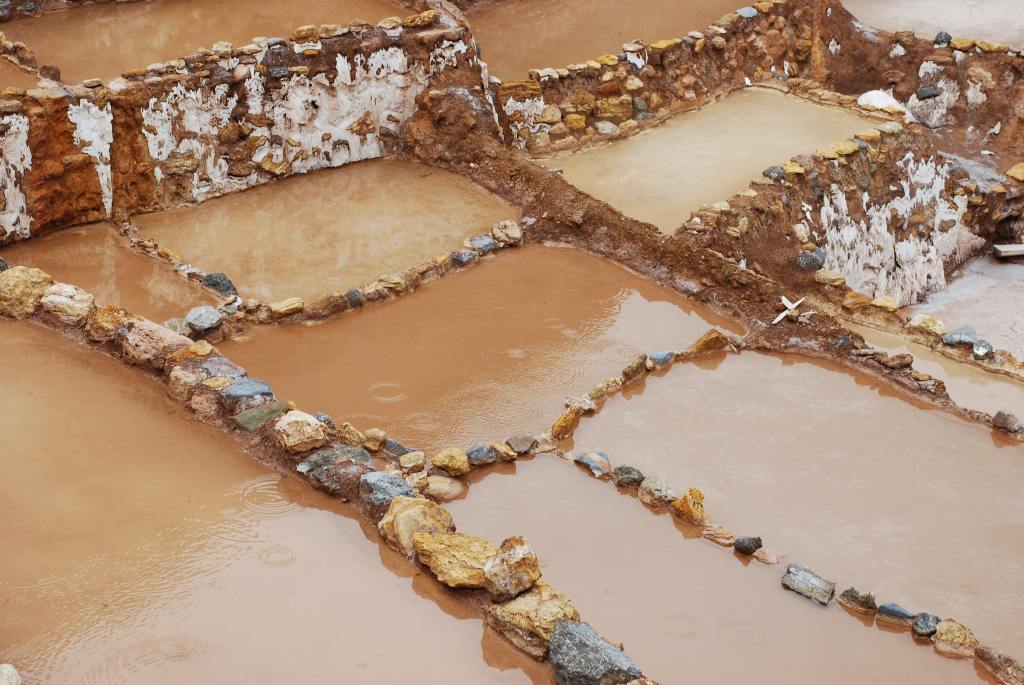
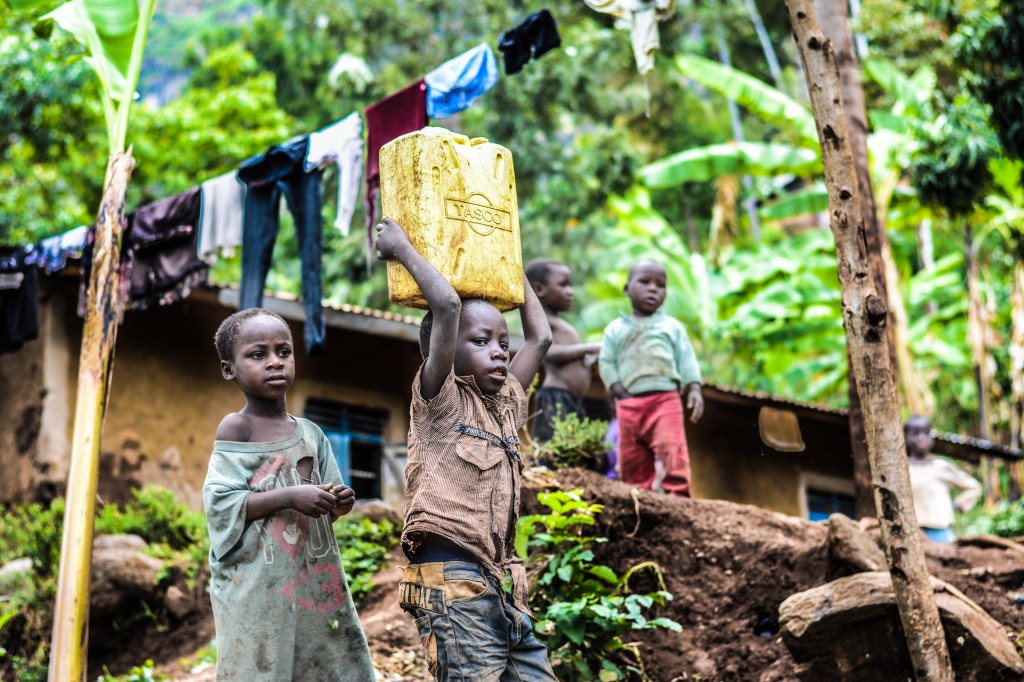






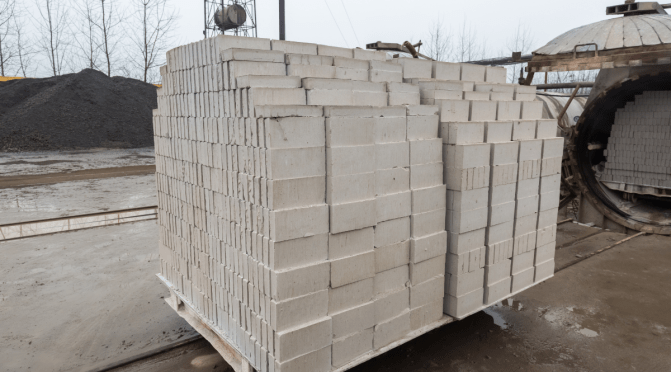








 vin civilworld