We have seen how magnificent the concept of vastu shastra is in the previous blog Vastu for home: A gem or a sham? If you have not read it, I highly recommend that you give a peep into it before you continue here because then only you will thoroughly understand why you should spend your money and time on vastu for home plan.
So, I assume that you have checked out the basics. Let me take you through a tour right into different spaces in a building that’s perfectly in agreement with vastu.
Alright. I’m going to start the tour from the favourite place of your stomach.
Obviously kitchen.
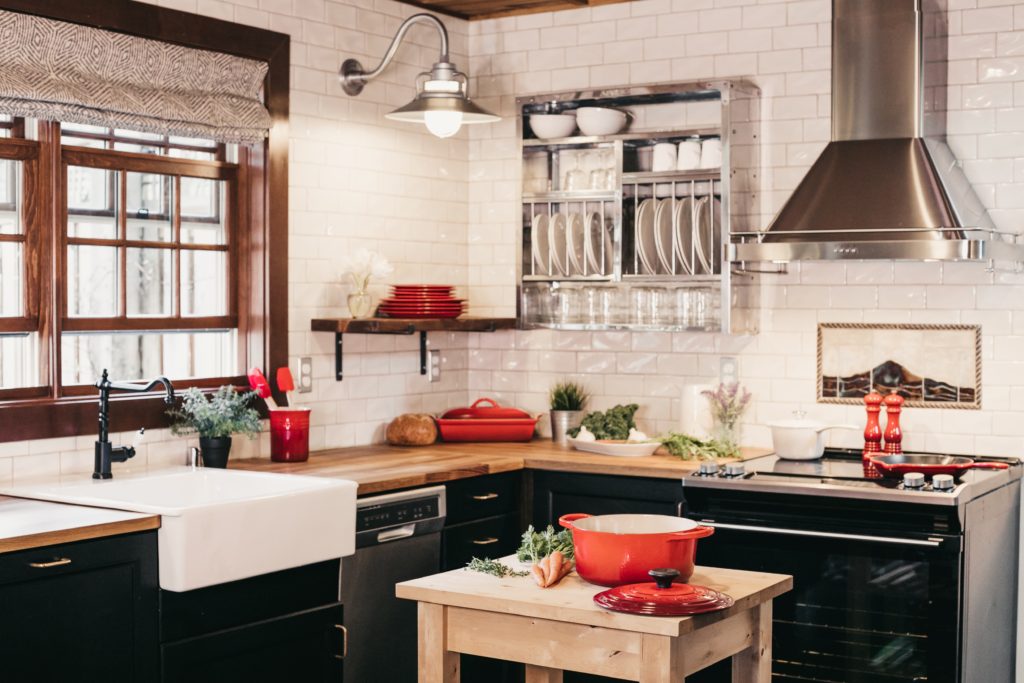
1. Vastu for kitchen in home plan
Normally, it is best if the kitchen is located in the southeast quadrant. The southwest quadrant is never a good place for the kitchen. Because of the heavy-duty appliances associated with the kitchen and the heat produced by the stove, the kitchen is related to fire. The southwest quadrant bears the sun’s intensity. Heat naturally collects in this part of the house.
Other points to be considered are,
a. The food preparation area of your kitchen should allow you to face east. Facing east and letting the sunshine on your ingredients makes healthier food.
b. The oven, microwave, and drier, which radiate heat, should be near the southeast corner on the south wall or east wall.
c. The dishwasher and washing machine, which create heat and use water, should be on the east wall in between the northeast and southeast quadrants so that these appliances receive the benefit of the elements of water which is conserved in the northeast and the element of fire in the southeast.
d. The sink should be against the east wall or north wall, near the northeast quadrant.
e. The refrigerator, which is typically heavy and can trap energy inside the room and home, should be placed against a wall in the south or west. If it is placed in the west, the door also opens to the east, which is good for food.
f. Placing the table directly opposite to the eastern wall and a window also allows for the benefit of the morning sun.
g. If you have a window that receives lots of sun, grow spices, or edible flowers. The garden serves an excellent purpose, providing you with ingredients that are good for your health.
See, simple but powerful right?
Okay. From kitchen, we are heading towards the perfect dining room envisaged by vastu for home plan where you have the real talk with the family.
2. Vastu for dining room in design
The dining room in a vastu home should be in the western or the eastern side of your home. Obviously, this room should be close to the kitchen.
Try to avoid placing the table in the center of the room.
Why? Because the center should be kept empty to allow the air circulation that generates in this area to radiate in all directions and placing your dining table toward the western or eastern side of the room.
The eastern side can motivate stimulating conversation since this is the direction of enlightenment (Just reminding the impact of air you breathe on our brain in case you forgot).
And try to mix materials in seat cushion, by using wood with wrought iron, for instance. Wrought iron adds a delicate airy touch to a dining room.
Last but not the least, do remember to welcome nature. If you have the space, put a couple of tall leafy plants on the floor.
From the dining room, let me take you to the living room. To add a little bit of drama to it, you may imagine yourself having fun there with your close ones there.
3. Vastu for living room in home plan
Vastu for home plan proposes a good location for the living room in the northwest, the north, or the northeast of your house. You are likely to have many of your heaviest pieces of furniture in your living room.
Do your best to put the heaviest pieces in the southern or western part of the space. For example, if you plan to keep books, which are normally heavy, in the living room, try to put built-in bookshelves into the south and west walls, where they will also act as a barrier to keep the positive energy in the room. If you have a large and heavy sofa, this should also be placed in the south or west. Another thing is that if you love to relax in your living room, place your favorite chair north facing or the east near the northeast corner. This way it can catch the aura of sunlight for you. After all, who wants to put down a free meal? So, enough of fun. Let’s be serious now.
Yes, put up a grave face and follow me to the study room.
4. Vastu for study room in the plan
A home office or study should be placed in the east, the north, or the west of your home. The east is a particularly good choice since it is the direction of inspiration and enlightenment. Regarding other elements,
The ideal location for your desk is in the south or west this is especially important if the desk is heavy.
If you place your desk in the west and face east, this leads to contemplation, creativity, inspiration, and focus.
All heavy items, such as bookcases and file cabinets and sofas, should be kept in the south or the west.
Whenever you feel like questioning on the logic, you can just try to relate with the direction of sunlight and air circulation
Continuing the tour, let’s go to a beautiful corner in your home, which is the spiritual room. You may or may not have this. But just let yourself know about it. Otherwise, skip to the next section.
5. Vastu for spiritual room in design
Spiritual room devoted to yoga or meditation or pure relaxation has its ideal location in the northeast, the east, or the north of your home. If the space has a window looking to the east or northeast, this creates a spiritually charged room.
Tired of the advocacy of vastu for home plan?
Don’t worry. Relax now. We have reached your bedroom.
6. Vastu for bedroom in the plan
Bedroom in vastu homes can be in any area while incorporating vastu for a house, but the preferred locations for bedrooms are the southwest, the west, and the northwest. And,
The beds should not be in the direct center of a bedroom. Place them so that there is more open space on the north and the east. Since the bed is normally a heavy object, it should usually be placed in the south, the southwest, or the west of the room.
Lighter pieces, such as a bureau, delicate sofa, or reading chair, can be safely placed in the north, the east, or the northeast of the room.
If you have a desk with a computer, create a study or work area near the southeast wall so that you can sit facing the north, the northeast or east. The active energy from these electronics can interfere with your sleep and the electrical fields may harm your body (Finally an area where there is no scope for debates)
So, did we miss out any area? Right. Bathroom.
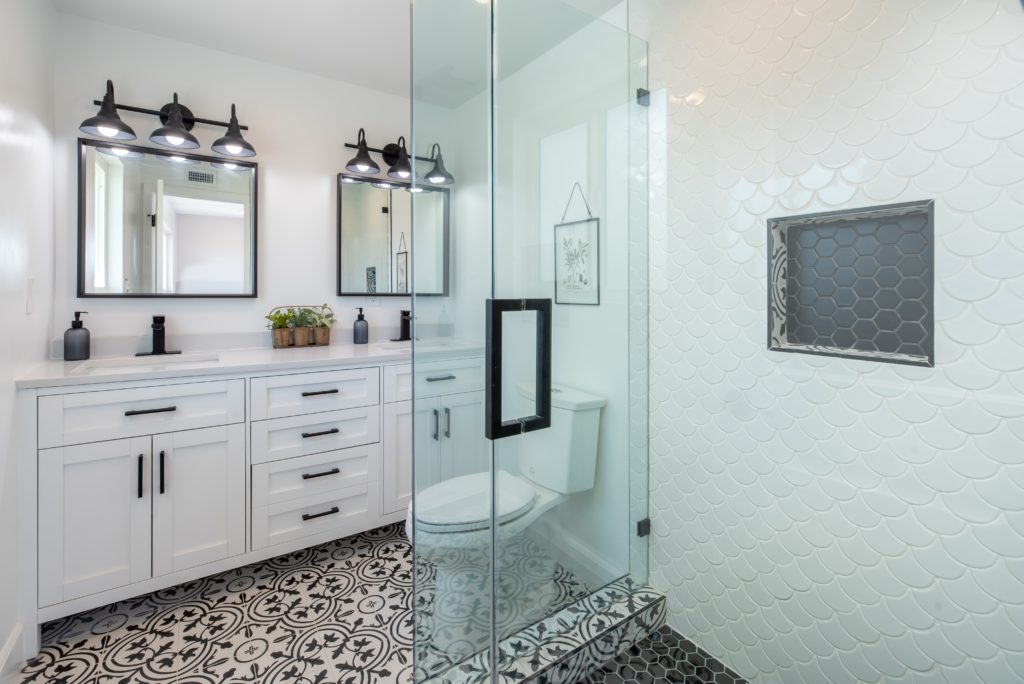
7. Vastu for bathroom in design
The bathroom in the vasthu house situated in the east catches the morning sunrays, which is good on the body. But the bathroom can be located anywhere in the house except the northeast.
And the toilet should face the north or the south.
Cool. The tour has reached at the culmination.
Oh, no! How can we not remember our chilling spot?
8. Vastu for terrace, balcony in home plan
The preferred locations for a special middle zone are the east, north, and west. The north gives you a taste of the sunrise and sunset. The east is an ideal space for a thinker and an early riser who likes to experience the reawakening of the sun. The west is for individual whose quiet time is in the early evening.
Thanks for accompanying me in the trip. Hope it was insightful.
Looking forward to know your doubts in the comments.
Credit: All of the shared information in this post on vastu for home plan is referred from two books, mainly “Vastu Living: Creating a home for the soul” of Kathleen M. Cox, the founder of vastuliving.com and a renowned vasthu consultant in America and “Vastu: Breathing life into space” by Dr. Robert E. Svoboda, (http://www.drsvoboda.com/) another foremost proponent of vastu.
Be yourself an atheist, believer or an agnostic. By the end of this blog, you are going to agree with me that vastu is something you can’t ignore in your life, because it is underpinned at science.
Before I begin to break down the points for you, let me be frank. I happened to stumble on the news that the Apollo Hospital Group, which is revolutionizing the standards of medical care in India with its chain of attractive private hospitals has incorporated vastu into its design. I thought it seems like a very interesting topic. Maybe I can provide some information about vastu to my readers. Let me go through some books and figure out if it’s worth sharing.
And you know what? I ended up searching for a vastu consultant for my own home near me before I started writing! Trust me, it was an eye opening week for me to enthral unknown pathway of vastu in home that literally changed the way of perceiving the influence of my home in vasthu on my well being.
Vastu, it seemed, went way beyond design, form, utility, durability concepts that define construction of a quintessential building.
So, what is Vasthu in simple words?
Vasthu, a traditional system of design and construction of buildings, is a mixture of strong spiritual philosophy and science which revolves around the concept that everything in the universe is interconnected and interdependent.
A successful Vastu of home also encourages optimum vibrations to thrive and flow within the individual. Sounds familiar anywhere?
Indeed. This is exactly what quantum mechanics stands for. The quantum theory researchers discovered that everything is energy and everything is interconnected through fields.
Vasthu looks carefully at the orientation of physical space so that it reinforces the ancient theories connected to the five primary elements: space, air, fire, water, and earth, which are present in our environment and within each of us. Hold on, are we going back to the superstitious beliefs?
Nope, but to the science behind the concepts.
Sun, for example is a significant factor that determines the orientation of a building. The vedha texts say that Surya is the sun god, who lords over the east and enlightenment.
When we match up this with the science, we come to understand that when natural sunlight hits the skin it triggers the body’s production of vitamin D which is a crucial ingredient for overall health, protects against inflammation, lowers high blood pressure, helps muscles, improves brain function and may even protect against cancer. Also, it helps to make your home energy efficient which is an integral part of a green building.
Diving on to vasthu tips for home,
The first lesson is understanding quadrants.
There are four quadrants.
1. North east
Vastu for house prescribes to situate water resource which can be a stream, pond or well in the east, north, or northeast of a territory, building, or room. This is to promote inspiration in that entire space. Because of the same reason, this quadrant is best for worship.
2. South east
The southeast quadrant of your home is the right area to establish the vasthu kitchen stove and electrical and electronic equipment such as computer and TV.
3. South west
Vastu says to encourage inactivity in the southwest, calling it the best direction in which to store items and information, to perform routine activities, to position heavy furniture. This quadrant is called kannimoola in vastu shastra, which is the best place to keep money and other valuable possessions of yours.
4. North west
Northwest is particularly good if your parties and gatherings tend to run late. This quadrant indicates movement, a characteristic that suits the function of the living room, where people come to visit but don’t stay too long. Television would be good in the northwest if you can dip into it from time to time. Communication devices like phone and computer modem often do well being situated in the north western region of a room or structure, for similar reasons.
If there is any disparity popped up in you that contradicted your logic and things I stated above, you are smart. You should read on to clear them out and start afresh. We are going to dive deep.
1. Orientation of the site and home
Vastu exhorts to face the entrance to your property in the north or the east of the northeast corner which creates an open space in the northeast quadrant. An east-facing house receives the benefit of the morning sun and its association with sun who brings us inspiration, enlightenment apart from the health benefits we scoped out earlier. This makes the eastern direction ideal for individuals with a propensity or preference for contemplative or scholarly activities.
2. Shape of the Site and Home
The ideal shape of piece of land and a house is a square or rectangle. The site is irregular in shape, just mark out a square and rectangle on the site and use that as your area for development. The circulation of wind and air can be the possible reason.
3. Flow of Energy
The ideal Vasthu plot would slope to the north and east and rise to the south and the west, since the east is the realm of the sun and enlightenment with an actual barrier (a fence, a rock garden, a cluster of trees, a dense hedge) in the southwest. If there is a depression or a pool or a pond located in the northeast, which belongs to the element of water, so much the better. I know you want to know the logic, right?
The presence of a north eastern receptacle draws in the sunlight, which then moves in an arc to the southwest and radiates to the southeast and northwest. A barrier in the southwest, which belongs to the element of earth, helps to hold in the light so that it keeps flowing around the property. A good barrier can be anything heavy and with height.
4. Location of the house on the site
The greatest amount of open land on your site should be left on the east and north, and the house should be set back in the south and west so that your vastu home will receive a greater amount of eastern sun and the positive energy that comes from the northeast.
Any doubt about the positive energy I’m talking about? Then you should definitely pause here and sneak into the concepts of Yoga and the paramount of influence it has had on people who practice Suryanamaskar, a Yogasana which the Yogis practice by paying tribute to Sun.
5. Welcoming door
Ancient Vastu guidelines say that an entrance on the north wall of the northeast quadrant of the building allows the positive energy, which comes from the northeast, to flow into your house. An entrance on the east wall fills your home with inspiration and enlightenment. A southern entrance reminds you of your responsibilities. And a western entrance speaks of the calm of night and is essentially neutral.
Really? How does the position of door matters in the wiring your brain? You asked it right. It’s simple. The interconnection of all elements we figured out in the beginning. Just like your favourite music can sooth your mind, the surrounding conditions such as the flow of air around you which influence your breathing and availability of oxygen to the neuron that involve in decision making. You are picking up the magic in it, right?
6. Interior Layout
Cool! I bet this is the dearest part where your juice of creativity flows seamlessly. Fueling it by vasthu,
I. Enhance positive energies
Because positive energy from Sun, which enters through the northeast, travels in an arc to the southwest of the home, try not to disturb this energy flow. If possible, keep the northeast corner in the home and the northeast corner of each room empty of furniture, at least heavy furniture that can stop the circulation of the energy.
Yup, let’s look into the arrangement of furniture in detail. (If you feel like frowning at the concept of the flow of energy again, first you may have to win over the debate with the scientists who discovered quantum mechanics.
Ii. Furniture Placement
The proper placement of furniture is extremely important to vastu living. First, keep all furniture, such as desks, beds, sofas, bureaus, and chairs, at least four inches from the wall. This gap prevents your own energies from being absorbed into the wall.
Because built-ins, such as cupboards and bookshelves, are incorporated into the wall, consider them part of the wall and just be certain that your desk or chair or any furniture is placed four inches away. More than likely, this gap is already there, so that you can get to these storage areas.
Keep lightweight furniture in the north and the east of the home and in the north and the east of each room or wall-less space that serves a specific function in a one-room studio or loft.
To trap this positive energy inside the home, put your heavy furniture in the south and the west of the home and in the south and west of each room or wall-less space. And, if you can afford it, why not consider elevating the floor in the southwest quadrant of the house or living room?
So, how do you feel now? Even if you can’t incorporate all the factors, do not get discouraged. Aim for Fifty Percent or Better. After all, having it all is an illusion in the universe, right?
Let me know your thoughts and doubts in the comments.
Credit: All of the shared information is adopted from two books, mainly from “Vastu Living: Creating a home for the soul” of Kathleen M. Cox, the founder of vastuliving.com and a renowned vasthu consultant for over 20 years in America and “Vastu: Breathing life into space” by Dr. Robert E. Svoboda, (http://www.drsvoboda.com/) another foremost proponent of vastu. Some information was referred from the book Maha Vastu by India vastu shastri Kushdeep Bansal.
LEED certification India is a hot topic these days. After engaging in different activities that harmed nature, its time we give our time to take care of mother earth from our busy schedule. Building certification is the testimony of that. LEED certification India is becoming essential for builders and developers aiming for green and sustainable buildings. Understanding the LEED India rating system helps projects meet environmental standards efficiently. This checklist offers a comprehensive guide. It walks you through the certification process in India step-by-step. This ensures you meet all the LEED certification requirements. This guide covers everything. It tells you the benefits of LEED certification and cost India.
Many projects aim for LEED Silver certification checklist standards to achieve recognized green building status. By following this guide, you can navigate the LEED certification process India smoothly and enjoy reduced costs, improved building performance, and positive environmental impact. Start your path to sustainable building success today with LEED certification India.
Okay, so what’s the big deal about LEED certification india? Is it different from other countries. For that let me quickly walk you through,
What’s leed certification india?
Leadership in Energy and Environmental design (LEED) is a building rating system established by US Green Building Council (USGBC) in 1998. The rating system awards points to a building in certain categories, with the leap towards eco- friendliness. V4.1, is the latest version of leed certification. It has universal standards, but some changes in countrywise. We are going to see how leed certification india works.
Now you know the leed cerfication India definition. Here’s the next question.
Is it worth being leed certified?
It will certainly take your building into the mountain of fame and the brand value skyrockets
It grows your business tremendously because customers will have a connect with you every time they approach your building for a service
It helps you to avoid the rat race with competitors, because you will have the unique advantage of the established benchmark of your responsibility to society.
The productivity of the employees or occupants will improve exponentially due to the features of the building.
The operation costs will downfall
After all, who doesn’t want to build a personal brand and be someone others want to replicate?
Now, I’m going to guide you through the simple steps to achieve this untold secrets of LEED.
Wait. Let me make the journey interesting for you. Imagine LEED as the favourite exam you have written in your life now.
Deal? Cool! Here we go.
How to get LEED certification India?
Outside the United States, many countries use the LEED certification India and local versions of LEED adapted by working with the U.S. Green Building Council (USGBC).
Countries like Brazil, China, Canada, India, the Philippines, and Spain have their own LEED India rating system adapted to local codes. Under this option, certification completes through the local system.
Alternatively, projects can pursue certification under the U.S. version of LEED, following U.S. codes and submitting documentation through the LEED online system.
To apply, begin by choosing the appropriate certification path—local adapted system or U.S. system—then submit project documentation through the LEED certification process India portal or the USGBC website, following the detailed LEED certification checklist relevant to your choice. This ensures compliance with either local or U.S. standards, unlocking the full benefits of LEED certification.
Now how do we apply for this?
LEED Certificaion India process comprises of 4 stages.
i. Register the building with the Green Building Certification Institute (GBCI). Although the U.S. Green Building Council develops and manages the LEED rating systems, the GBCI is responsible for all certification applications
ii. USGBC provides checklists for each rating system that cover the prerequisites and credits.
iii. USGBC’s LEED online system provides online templates that must be completed for each prerequisite and credit, and is used to upload supporting documentation.
iv. Submit the documents to the GBCI for review and certification
See, isn’t it easy to give it a shot?
We will look into the LEED certification india levels now.
leed Certified: 40 to 49 points
leed silver certification : 50 to 59 points
leed gold certification: 60 to 79 points
leed platinum certification: 80 + points
All good. You are one step away from being the owner or resident of the best of best buildings in the world. I will break out the whole pointing system and the step by step activities to achieve them henceforth.
There are different categories in the rating system with the type of the building such as new constructions, existing buildings, hospitals, schools etc. I will be explaining the rating system of an existing building which contains common fields among all the systems.
The table given below shows the leed certification checklist and requirements that determine the total scores.
Leed certification check list
At the end of every upcoming section, make a clear mental picture of how you would actually feel when you gain the points in real life. Trust me, that’s a very good feeling.
Location and transportation
LEED Certification – Transportation
According to the Study by world bank, transport currently accounts for a quarter of energy-related greenhouse gas emissions. Ouch! You and I must have put in a lot of effort to push transportation so hard that, it has reached at the coveted position (pun intended). Whatsoever, the latest version v4.1 of LEED rating system has placed transportation in the forefront to measure the eco friendliness of your building. The pointing structure is given below.
Transportation Performance Score
LEED Points
40 (Required)
6 (Required)
47
7
54
8
61
9
68
10
75
11
83
12
90
13
97
14
So how you can crack this?
Introduce telecommuting and compressed workweeks (Yes, what’s impossible with the technology you have.)
Commute in mass transit and make use of navel options such as rideshare.
Leverage human-powered conveyances, carpools, vanpools in the round trips.
Use low-emitting, fuel-efficient or alternative-fuel vehicles, walking or bicycling
Hey, we have confronted a major here. You have 14 points in handy now. Moving on,
2. Sustainable sites
We saw how to choose the most suitable site for your building in another blog on green building GREEN BUILDING: HOW TO MAKE A BUILDING GREEN AND BENEFITS OF A GREEN BUILDING. In this section, As the LEED full form says, they want you to be a leader and shower the wisdom of not disturbing nature. The section is subdivided into 6 categories.
i. Site management
You can grab the point by,
a. Monitor and eradicate invasive and exotic plant species from natural habitat areas.
b. Manage snow and ice in ways that limit degradation of water quality, surrounding plants and soil health from chemical deicer applications.
c. Prevent erosion by maintaining vegetative cover, and restore any eroded soils.
d. Reduce noise and air pollution resulting from gasoline powered equipment.
e. Divert from landfills 100% of plant material waste for composting reuse.
f. Reduce fertilizer use to only as needed for plant health applications based on soil testing. Eliminate preventive applications of herbicides, pesticides and fungicides applying only as needed for occurrences.
g. Prepare an Integrated Pest Management plan.
h. Add one or more inches of organic matter mulch, such as compost, to soil surfaces in planting areas annually.
i. Irrigate vegetation, other than planted containers, only with automatic controlled systems utilizing either rain shutoff, moisture sensing or weather based controls.
j. Monitor irrigation systems at least bi-weekly during the operating season and correct any leaks, breaks, inappropriate water usage, or incorrect timing.
k. Store materials and equipment to prevent air and site contamination
ii. Light pollution reduction
This is introduced to make sure that your building provides necessary features to improve the visibility of night sky.
To conquer this, you need to,
a. Shield all exterior fixtures such that the installed fixtures do not directly emit any light at a vertical angle more than 90 degrees from straight down
b. Measure the night illumination levels at regularly spaced points on the project boundary, taking the measurements with the building’s exterior and site lights both on and off.
iii. Heat island
Well, there are islands at different places around the globe. But the dangerous among them is the heat island, which is the increase in heat due to human (not humane) activities.
Not a good thing, right?
Hmm. How to score the point here?
For non-roofs,
Grow plants that provide shade over paving areas on the site
Vegetated planters.
Shade with structures covered by energy generation systems, such as solar thermal collectors, photovoltaics, and wind turbines.
Shade with architectural devices or structures Shade with vegetated structures.
Paving materials with a three-year aged solar reflectance (SR) value of at least 0.28.
Open-grid pavement system
If newly installed, plant material must be in place to provide full vegetative cover within 3-years.
Have in place a maintenance program that ensures all high-reflectance surfaces are cleaned at least annually to maintain good reflectance
iv. Rainwater management
If there is a lesson you were taught extensively from a very young age and still you have not embraced in your life, I bet that’s managing rain water. This is the wakeup call for you. Rise up and bring yourself to adopt those wonderful techniques. Make sure you do it right with the article RAINWATER HARVESTING; EVERYTHING YOU NEED TO KNOW
3. Water efficiency
LEED Certification – Water Efficiency
This section tests whether you adopt measures to reduce wastage of water and actually care for the universal liquid. The chart below shows the points for water performance score. If you adopt ways to conserve water, by presuming a life in every drop of water that gets wasted due to your water management practices, you can score full marks here.
The water performance score is calculated from the data shown by the energy meters in 12 months. Reboot yourself to get there.
Water Performance Score
LEED Points
40 (Required)
6 (Required)
44
7
50
8
57
9
64
10
70
11
77
12
84
13
90
14
97
15
4. Energy and atmosphere
Energy efficiency is a sister topic of every cost effective building. Well, buzz words are not always a good signage.
i. Energy efficiency best management practices
Take a tight grip on your energy management practices as follows.
a. Choose energy efficient appliances and electronics
b. Switch to energy efficient lighting sources
c. Reduce the energy consumption by sustainable construction practices
ii. Fundamental refrigerant management
This subsection takes into consideration the remedial measures to reduce ozone depletion. The best way is not use chlorofluorocarbon- based refrigerants in heating, ventilating, air-conditioning, and refrigeration. But if you have already had them, you really need to be cautious about this.
iii. Energy performance
In energy performance, the total score of 33 splitted as 16.5 leed points for green gas emissions and the remaining for source energy. Reduce the total building energy consumption arising from electricity, natural gas, chilled water, steam, fuel oil, etc.
iv. Enhanced refrigerant management
To gain the scores, do not use refrigerants, or use only refrigerants (naturally occurring or synthetic) that have an ozone depletion potential of zero and a lower global warming potential as I said before.
v. Grid harmonisation
Let’s go straight into how to manage this sticky spot.
a. Implement techniques to make energy generation and distribution systems more efficient, increase grid reliability, and reduce greenhouse gas emissions
b. Participate in demand response techniques that provide an opportunity for consumers to shift their electricity usage during peak periods in response to time-based rates or other forms of financial incentives.
c. Have infrastructure in place to take advantage of future demand response programs or dynamic, real-time pricing programs.
d. Develop a comprehensive plan for shedding at least 10% of the annual on-peak electricity demand.
You know, you have earned 63 scores so far. Good.
5. Materials and resources
LEED Certification – Materials and Resources
There are 4 subsections to this.
i. Purchasing policy
You need to initiate activities to reduce the environmental impacts of materials and products purchased during operations and maintenance of building. Have in place an environmentally preferable purchasing policy for materials and products purchased for the project during regular operations including ongoing consumables such as the five most purchased product categories based on total annual purchases, batteries, food and beverage and electronic equipment such as lamps, office equipment and appliances.
ii. Facility maintenance and renovations policy
Here, take action to reduce harming environment during purchase of items while renovating which can be,
a. Adopting a policy for waste management for safe storage, recycling and diversion of waste and also for furniture waste management during renovations.
b. Protecting stored on-site and installed absorptive materials from moisture damage.
c. Developing a plan to determine whether a flush-out or air quality testing is needed after construction ends and all interior finishes are installed but before occupancy.
iii. Waste performance
Track and reduce the waste generated aiding proper disposal or incineration.
iv. Purchasing
The points to keep in mind while purchasing products are,
a. Opt for recycled and reusable materials and products, those having extended use, bio- based products especially during construction and paper and wood products
b. Choose electronic components with energy star rating
c. Have locally sourced, promoting sustainable agriculture and organic food
d. And never mind about wine, beer, and liquor purchases in the point calculations.
6. Indoor environmental quality
LEED Certification – Environmental quality
The quality of air comes next.
i. Minimum indoor air quality
For spaces with mechanical exhaust, test and confirm proper operation of the exhaust systems
ii. Environmental tobacco smoke control
This can be tamed with the following considerations.
a. Prohibit smoking in the building.
b. Prohibit smoking outside the building except in designated smoking areas from all entries, Also prohibit smoking outside the property line in spaces used for business purposes.
c. Communicate the no-smoking policy to occupants of the building and have in place provisions for enforcement.
iii. Green cleaning policy
Yes, again another policy. You need to promote the following in the policy.
a. Standard operating procedures for effective cleaning of hard floors and carpets that will be consistently used, managed, and audited.
b. Provisions for addressing protection of building occupants during cleaning, including vulnerable populations.
c. Guidelines for selection and appropriate use of disinfectants and sanitizers.
d. Guidelines for safe handling and storage of cleaning chemicals used in the building, including a plan for managing hazardous spills and mishandling incidents.
e. Strategies for reducing the toxicity of the chemicals used for laundry, ware washing, and other cleaning activities.
f. Strategies for conserving energy, water, and chemicals during cleaning.
iv. Indoor environmental quality performance
Points for indoor environment quality are awarded based on the results from the CO2 and TVOC measurements. You have no worries here since you have prepared well for the test.
v. Green cleaning
USGBC wants to check your performance in cleaning the building through this step.
a. Perform routine inspection and monitoring of the facility’s green cleaning policy to verify that the specified strategies are being used and to identify areas in need of improvement.
b. Conduct an annual audit to evaluate yourself
c. Have in place permanent entryway systems in the primary direction of travel to capture dirt and particulates entering the building at regularly used exterior entrances.
vi. Integrated pest management
This is to minimize pest problems and exposure to pesticide. You can use integrated pest management services for the building and grounds within the project boundary that is certified and in good standing with GreenPro, EcoWise, GreenShield, or local equivalent.
6. Innovation
LEED Certification – Innovation
This is to encourage projects to achieve exceptional or innovative performance. To encourage integration of LEED expertise and collaboration toward project priorities.
So, have you decided to test the relationship between your bulding and nature through leed?
WHAT’S TRENDING
Welcomhotel Amritsar, the hospitality chain’s leisure upper-upscale property becomes Punjab’s first LEED platinum certified hotel
USGBC released Annual LEED-Certified Ranking list of buildings for 2019 and Colorado topped the list with 102 certified projects.
GBCI released the list of top 10 states for LEED (Leadership in Energy and Environmental Design) in India today and Maharashtra topped in the project with 307 projects as of December 2019.
Vincivil FAQ Corner
A. Lead certification course
These are courses done to become a green associate who can build up a career on consultancies exploiting the current green building principles and practices. There are plenty of courses out there like the online courses offered by Udemy.
B. Leed certification India
GBCI manages the certification process for all LEED rating systems in India, including the LEED India rating system.
Leed green association exam is the required exam. See the complete details in https://www.usgbc.org
Buildings with leed certification
There are a lot of leed certification buildings around the world and list grows at a good pace every year. Salt Lake City Library, Salt Lake City, Soldier Field in Chicago, One Bryant Park in New York City, Shanghai Tower in China are famous among them.
Credits: The technical specifications annotated in the blog post is taken from the website of USGBC (https://www.usgbc.org)
Disclaimer: The blog is intended to assist those who wish to get their building LEED Certified and the shared knowledge other than the technical specifications is strictly upon the knowledge of the author. We can’t take the responsibility of any sort of discrepancy pertaining to this in future.
Water conservation methods- What is the need of selecting suitable one?
paani, thanni, vellam, mool, naam plao, neu- uhck… whatever the world calls it by, the necessity and utility of water remains fixed.
Let’s ask the inevitable before diving in to methods for water conservation
What are water conservation methods?
Water conservation methods are techniques to use water efficiently to reduce unnecessary water use.
“Save water, dave the world.” Remember the number of slogans and posters you used to have fun with, when you were a kid? Let’s give a quick look at why we had to do all that (except for scores)
Importance of water conservation methods
Regardless of the method of conservation of water, every method stands by the following points;
1) To ensure availability for future generations, the withdrawal of fresh water from an ecosystem should not exceed its natural replacement rate.
2) To save the significant amount of energy needed for water pumping, delivery, and wastewater treatment facilities
3) To preserve fresh water habitats for local wildlife and migrating water flow, as well as reducing the need to build new dams and other water diversion infrastructure.
4) To save money on the utility bills
5) To extend the life of your septic system by reducing soil saturation and reducing pollution due to leaks
You got an idea on why is water conservation necessary. So let’s get our hands into each method for water conservation.
Major water conservation methods
There is a variety of methods of water conservation. We are going to meet some majors here.
1. Make effective use of soil water reserves
How many times did you have goozebumps looking at nature?
True. Be smart like nature. Soil and water conservation methods include planting deeper rooting crops, such as grasses or cereals that will leverage soil water reserves more effectively than shallower rooting crops such as vegetable crops and therefore can be grown in drier period.
2. Take measures to avoid run off
An important part of conserving anything is avoiding spilling out. When it comes to water, the part played is runoff. This is equally important as the conservation methods of water resources. The various types of run-off management are those increase water intake and storage and so reduce runoff, control water movement over the soil surface, dispose safely of the excess rainfall as runoff or concentrate inadequate rainfall runoff. Remedial measures such as incorporating plantings especially in areas where runoff collects protecting trees that help absorb and filter runoff, choosing permeable materials for pathways etc. can potentially contribute to reduce run off.
We should always bear in mind that groundwater is a candy that should not be consumed uncontrollably. Because it takes time to recharge it back to its initial level. Only by conscientious exploitation of groundwater can it be proportionately conserved. For this to happen, ground water conservation methods such as crops requiring less water given priority over crops requiring more water need to be considered. Less water should be used by industries. The necessary drainage area should also be made available for recharging ground water.
5. Redistribution of Water
Sharing is a great habit that benefits all who are involved in it. Whether it’s knowledge, love, physical goods, anything, right? That’s exactly what it takes to turn the cries of people around the world for water into a smile of gratification. Extensive re-wiring of the supply of water in water conservation system from areas with lower demand to areas with higher demand is needed.
How do you do that?
This can be accomplished through the development of water reservoirs and a network of canals. Excess rainwater that flows away from rivers without being used can be stored by the construction of water reservoirs from which it can be supplied for agriculture, industry, urban areas, etc. These reservoirs are also designed to protect against flooding and, apart from flood protection, they can also be used for a variety of purposes. Water distribution is also possible through the canal system. The canal system transfers water from excess rainwater to scarce rainwater areas and conserves water for various purposes.
Now we have seen 5 methods of water conservation. But we are yet to hit some more wonderful ways to save on water. Moving on…
6. Protection of Water from Pollution
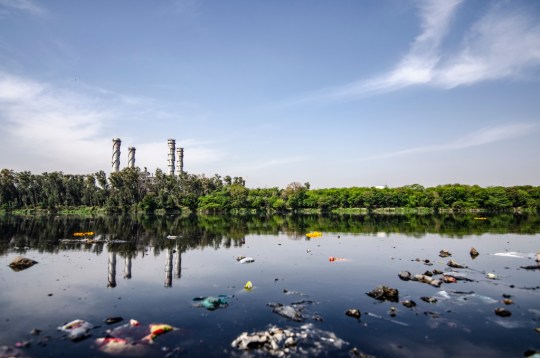
Pollution is a taboo that has disturbed our ears since the day we can remember. Activities such as disposing of different wastes without treatment in rivers, pollution caused by tourism on lakes and sea coasts, bathing and other similar activities in the vicinity of drinking water sources and Weeds produced in water are the main causes of water pollution.
So how to reduce water pollution?
There is a need for a cooperative policy at international level for conservation of water bodies by regulating oil and nuclear waste in the oceans. Water should become reusable after physical, chemical, mechanical and organic processing processes, and lakes should not be used as outlets for the transport of products.
7. Traditional Water Conservation Methods
One of the fascinating practices in every culture is that they have developed innovative techniques for all necessary human needs. Water conservation is no exception to this. If so, then can you think about how would it be in India, the land of diversities.
Traditional water conservation methods in India are,
a) Bamboo Drip Irrigation System
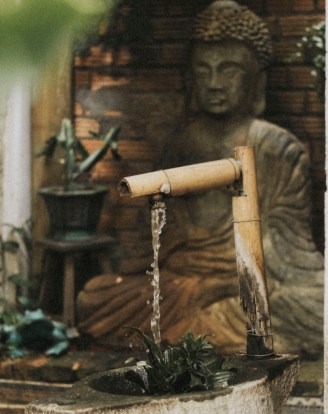
Bamboo is too expensive to use for a low- cost building, but is a boon for people of Meghalaya. Because, they have been leveraging it for water conservation methods in India. This system of water conservation is a brilliant drip irrigation system. It uses bamboo of various sizes and reduces the output to 20-80 drops per minute, which is excellent for betel leaf and black pepper crops.
b) Johads
Johad is a crescent shaped small check dam built from earth and rock to intercept and conserve rainwater in Rajasthan. This helps to improve percolation and increases groundwater recharge.
c) Kul
Kuls are diversion channels that carry water from a glacier to village. Often spanning long distances, with some over 10 km long, kuls have been around for centuries. They are the lifeline of people of Spiti valley of Himachal Pradesh and in Jammu too.
d) Eri
One of the oldest water conservation systems in India of Tamil Nadu is still widely used around the State. With over a third of irrigation in the State being made possible due to Eri, the traditional water harvesting system plays an important part in the agriculture. They also have other advantages such as prevention of soil erosion, recharge of groundwater, and flood control.
e) Zabo
This method of conservation of water in India is a unique combination with animal care, forests and agriculture. Mostly practised in Nagaland, Zabo is used to deal with a lack of drinking water supply. During monsoon, rainwater that falls on the hilltops is collected into the pond like structures that are carved out on the hillsides. The water is then passed onto cattle yards below from where the water enters the paddy fields rich in manure.
See, such still in use water conservation model that tells the beautiful story of water use and conservation doesn’t have copyright and patent problems. It’s open to the whole world. So why can’t we be inspired by them and use suitable conservation method of water in our own lives?
8. Use of Modern Irrigation Methods
On average, 80 percent of the fresh water withdrawn from rivers and groundwater is used to produce food and other agricultural products. Therefore, we need to pay attention to improved methods of irrigation such as sprinkler and drip irrigation that save 50 per cent water.
In the drip irrigation method, the hole pipes are spread over the surface of the soil so that the crop receives water directly. There is no loss due to evaporation and approximately 95% water is used. This process therefore uses maximum water.
9. Increasing Forest Cover
According to recent reports, forests cover 31 percent of the world’s land surface, just over 4 billion hectares which is down from the pre-industrial area of 5.9 billion hectare. This needs to be addressed since trees bear drought conditions for a long duration as compared to crops and they are helpful in reducing the demand for water along with recharging water sources.
10. Flood Management
Floods carry with it harmful contaminants such as soil, animal waste, salt, pesticides, and oil which can potentially impact drinking water wells and water quality. By construction of embankments and canals a large part of land can be conserved besides minimizing flood losses. Intensive afforestation can also provide security from floods which will be helpful in absorption of water in the soil.
After such disasters, construction of green buildings aided by eco- friendly materials are preferred. Because they are built with all necessary measures for water conservation.
11. Conserving Water in Industries
Water has to be re-used after processing. Recycling of water should be developed because normally industrial units dispose off water on the ground surface after using it only once. Because of not re-using it after processing, it also pollutes other water sources. Water demand can also be reduced by recycling used water in industries.
12. Reuse of Urban Waste
Demand for water has increased in cities due to increasing urbanization. There is no provision for waste water treatment in many cities of various countries of the world. After use of water in urban areas, disposed waste water can be treated and conserved for use in agriculture in the peripheral areas of cities. Such policies should be incorporated while planning urban development.
13. Population Control
The world’s population is growing by approximately 80 million people every year. Changes in lifestyles and eating habits in recent years require more per- capita water consumption. Biofuel production has also increased sharply in recent years, with a significant impact on the demand for water. It’s obvious that a controlled population can avoid a tug of war for water by reducing the demand as well as the qualitative deterioration of water.
14. Water conservation by Municipal bodies
According to the World Economic Forum’s 2015 Global Risk report, around one third of the global population is currently water stressed, with about one billion people not getting safe drinking water. the water crisis is perceived as a top-order threat. In this nerve wracking situation, a governing body is indeed and they should exhort awareness on how to conserve water and capacity building among people.
15. Use of water from hot waterfalls
Scientifically, there are hypotheses that negative ions that are present in waterfalls increase serotonin levels, which ultimately enhances our mood. Wah! That’s great. And this geothermal water serves as a source too in the battle against water scarcity.
Now let’s sneak into the fun and exciting section which introduces the brand new updates on the topic.
WHAT’S TRENDING:
Geographic Information System (GIS), a computer system capable of holding and using data describing places on earth surface has been found to be applicable to monitor ground water resources as well as to ensure water availability in remote and rural villages.
Artificial intelligence(AI) can be leveraged for optimal usage of ground water which prevents over depletion of water table. Government has linked port with IBM India for undertaking pilot study to utilise AI and weather technology for developing navel features like soil sensor to avoid over irrigation
Biotechnology, a significant branch that contributes to COVID-19, has been successful to develop drought tolerant crops and salt tolerant crops that saves water for irrigation
Space technology helps through advent of hydrological mapping via satellite, weather forecasting that reduce uses of water in agriculture
Electrostatic precipitates, ionic filter and pipe that precipitates organic and inorganic pollutants at the discharge and groundwater recharging technology helps to save water at home
Now let me give you a water conservation tip. If you still feel like lazing out to adopt any conservation method of water, try to imagine a day without water!
Vincivil FAQ Corner:
1. Define water conservation
Water conservation refers to the preservation, control and development of water resources, both surface and groundwater, and prevention of pollution. The extent to which conservation is possible depends on the types of water conservation methods.
2. Water conservation methods at home
Use of water-saving dishwashers and clothes washers, installation of water saving shower heads or flow restrictors, taking shorter showers, checking your toilet for leaks are best solutions on how to save water at home.
3. Water conservation methods in agriculture
Making sure of the quality of soil, crop rotation practices, installation of better watering systems, storing of rain water and optimal usage are robust water conservation methods for agriculture.
4. 10 ways to conserve water
Conservation awareness, using less water when doing laundry, planting native plant species in your yard, turning off water when brushing your teeth, tracking cooling tower water, repairing leaks, having a home energy audit, installing faucet aerators, wait until you have a full dishwasher to operate the unit and reducing overuse of water are 10 recommended strategies for water conservation.
<p value="Balancing rafts or floating rafts are used when the bearing capacity of the soil is very low. This <a rel="noreferrer noopener" href="https://vincivilworld.com/2020/05/25/foundation-types-shallow-and-deep-foundations/" target="_blank">foundationBalancing rafts or floating rafts are used when the bearing capacity of the soil is very low. This foundation protects against soil settlements and works on the principle that the total weight of the soil and water excavated for the foundation equals to the total load of the proposed structure. They are called zero settlement structures and are used for high rise towers with multiple basements. This type of foundation is preferred only when the soil is very compressive and soft and even friction piles are not able to support the loads.
The basic concept of a floating raft is countering the weight of excavated soil and water with the total load of the structure resting over it. ie. The same weight of excavated materials is replaced by a structure with the same weight. Because of these balancing floating rafts are also known as balancing raft foundations or compensated foundation. The vertical pressure at the foundation depth remains same before and after excavation.
Advertisements
Concerns of Floating Raft/Balancing Raft
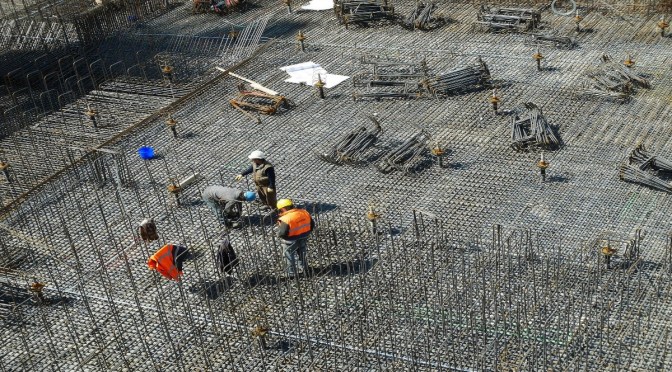
Execution of a floating foundation demands massive earthwork excavation in high water table areas. Open dewatering may not be sufficient to control a large amount of water flowing in the excavated areas. Wellpoint dewatering systems have to be run simultaneously with the excavation to lower the water table.
Excavation of floating foundations can trigger soil collapse and soil scoring from the bottom of existing foundations. Sheet piles have to be erected to protect the building against any possible damage during excavation.
Materials required for temporary retaining walls like sandbags, PCC blocks, etc has to be organised and mobilised before starting excavation. Temporary retaining walls have to be constructed in tandem with excavation works.
Heave formation in Floating Raft Foundation
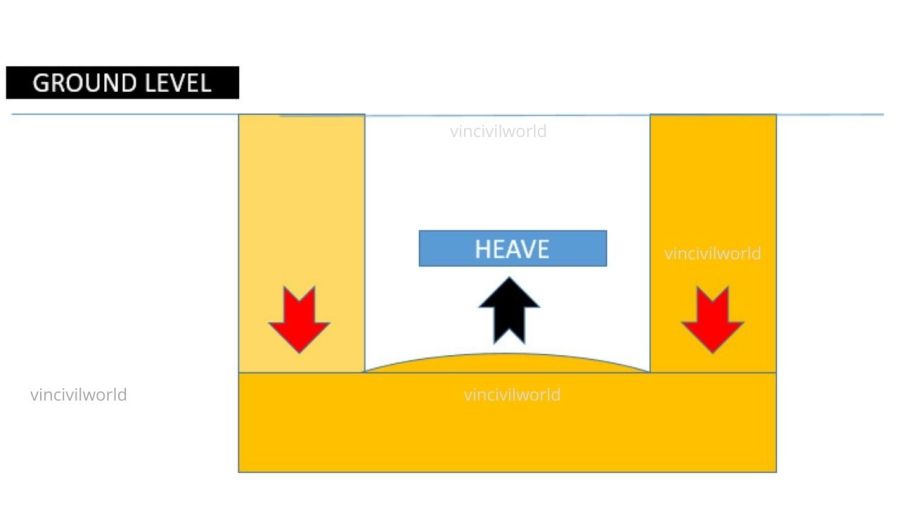
Heave formation can always happen while doing deep excavations because of the weight of soil on both sides of the excavation pit. Heaves formations cannot be avoided in any case but have to be controlled or else it may initiate foundation settlements. Heave formation can be minimised by further lowering the water table to a depth below the founding level of the structure. Installation of friction piles or micro piles on partially completed excavation surfaces can also control heave formation to an extent. Concrete bands are provided at the bottom level to control heave formation.
Balancing raft foundations are adopted for high rise buildings with multiple basements. Execution of these foundations requires highly skilled professionals and micro-level supervision supported by an experienced and skilled workforce. All safety precautions have to be done to protect the nearby structures from any damage.
Rainwater harvesting methods are the processes in which precipitation that falls on a site is diverted, captured, and stored for use on-site, as opposed to allowing it to run off, evaporate, or infiltrate into the soil. Let’s get to know it in the best way through the course of journey in the blog.
“Slanting silver ropes slammed into loose earth, plowing it up like gunfire”- When Arundhati Roy described the rain as beautifully like this, how many of us thought we are taking the boon of no cost from nature. It’s high time that we understood the worth of various rainwater harvesting methods in our lives.
Let’s start from scratch.
How rainwater harvesting methods are important?
This is a sad story of ground water. It all started with the over population. water supply agencies became unable to cope up demand from surface sources like dams, reservoirs, rivers etc. They resorted to ground water sources by digging tube-wells in order to augment the water supply. Indiscriminate exploitation of ground water resulted in lowering of water table rendering many bore-wells dry. To overcome this, we started to drill bore wells to greater depths. The exploitation of ground water in brutal unscientific methods by soft drinks, mineral water and similar industries further declined ground water table. The solution to all these problems is to replenish ground water bodies with water conservation like leveraging rain water by man made means.
That’s it. And we are here to know the hero of the story, Rain water to solve all these issues.
Let’s look at its components now.
Components of rainwater harvesting methods
Rainwater conservation is a must need element of every green building. Let’s see the components below.
1. Catchment area
The catchment area is the surface on which the rain water falls. This may be a roof top or open area around the building.
2. Coarse mesh / leaf screen
To prevent the entry of leaves and other debris in the system, the coarse mesh should be provided at the mouth of inflow pipe for flat roofs
3. Gutter
Gutter is required to be used for collecting rainwater from sloping roof and to divert it to downspout. These are the channels all around the edge of a sloping roof to collect and transport rain water to the storage tank.
4. Down spout or conduit
The rain water collected on the roof top is transported down to storage facility through down spouts / conduits. Conduits can be of any material like PVC, GI or cast iron.
5. First flushing device
A first flush system is incorporated in the rooftop to harvest rainwater by avoiding all the debris, dirt, and other contaminants especially bird dropping, etc. accumulated on the roof during the dry season. The first flushing device, dispose of the first spell of rainwater so that it does not enter the system.
6. Filter
The filter unit is basically a chamber filled with filtering media such as fiber, coarse sand and gravel layers to remove debris and dirt from water before it enters the storage tank.
7. Settlement tank
The settlement tank facilitates the settling down of suspended materials like silt and other floating impurities before the water recharge the aquifer.
8. Storage tank
Storage tanks are used when the water from the rain water harvesting is used directly for various purposes.
Okay. That’s done. Now we are getting into the important part which is how to make rainwater harvesting.
RAINWATER HARVESTING METHODS- DETAILED
1. Storing rain water for direct use
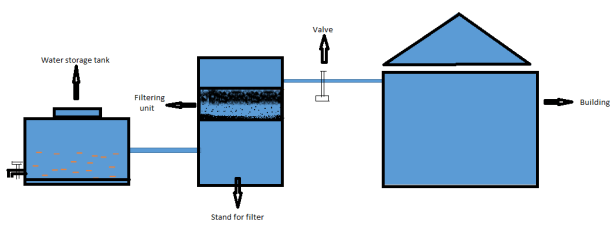
Fig. Storing rainwater for direct use
In place where the rains occur throughout the year, rain water can be stored in tanks However, at places where rains are for 2 to 3 months, huge volume of storage tanks would have to be provided. In such places, it will be more appropriate to use rain water to recharge ground water aquifers rather than to go for storage. If the strata is impermeable, then storing rain water in storage tanks for direct use is a better method. Similarly, if the ground water is saline/unfit for human consumption or ground water table is very deep, this is one of the best rain water harvesting methods that can be applied.
2. Recharging groundwater aquifers, from rooftop runoff
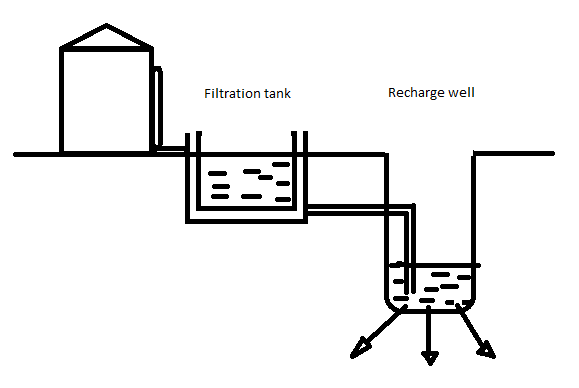
Fig. Recharging ground water aquifers from roof top run off
In this groundwater harvesting, rain water that is collected on the roof top of the building may be diverted by drain pipes to a filtration tank from which it flows into the recharge well. The recharge well should preferably be shallower than the water table. This method of rain water harvesting is preferable in the areas where the rainfall occurs only for a short period in a year and water table is at a shallow depth.
Alright. That’s it about second in the list of rainwater harvesting methods. How to increase groundwater level further?
3. Recharging groundwater aquifers with runoff from the ground area
Fig.Recharging ground water aquifers with runoff from ground areas
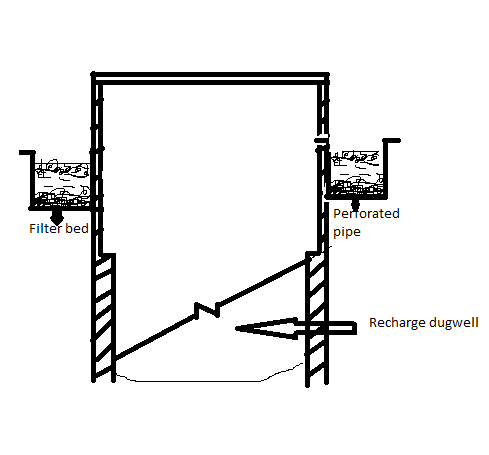
The rain water that is collected from the open areas may be diverted by drain pipes to a recharge dug well / bore well through filter tanks. The abandoned bore well/dug well can be used cost effectively for this purpose.
Now you have become a savvy in rain water harvesting methods. But this is not all. Even if you have completed all the procedures with at most care, precautions should be taken to ensure quality of water. Let’s see them.
1. Roof over which water falls, should be cleaned before rain fall.
2. The suitable type of first flushing device to be installed and initial 10 to 15 minutes of runoff should be diverted.
3. The water collected from roof top only, should be stored in storage tank for direct use.
4. The runoff from surface/ground should be preferably be used for recharging ground water aquifers after proper filtration.
5. The rain water collected from roof top should pass through suitable type of filter and only then it should be stored in storage tank / used for recharging ground water aquifers.
We are almost near of completion. its time to look at the results of your efforts.
Advantages of rain water harvesting methods are,
(a) Promotes adequacy of underground water
(b) Mitigates the effect of drought
(c) Reduces soil erosion as surface run-off is reduced
(d) Decreases load on storm water disposal system
(e) Reduces flood hazards
(f) Improves ground water quality / decreases salinity (by dilution)
(g) Prevents ingress of sea water in subsurface aquifers in coastal areas 6
(h) Saving rainwater improves ground water table, thus saving energy (to lift water)
(i) The cost of recharging subsurface aquifer is lower than surface reservoirs
(j) The subsurface aquifer also serves as storage and distribution system
(k) No land is wasted for storage purpose and no population displacement is involved
(l) Storing water underground is environment friendly
But all these doesn’t earn you a penny. Below are the points that illustrates how rain water harvesting methods can add to your pockets.
Energy savings
Rainwater collector systems are typically designed to be gravity fed.
Storage areas are typically lower elevation, so a pumping system is generally required for intended reuse.
Since collected rainwater is generally used close to its capture, the energy needed to convey the water tends to be minimal.
Compared to conveyance from other supplied sources of water rainwater harvesting methods would likely have lower energy costs.
Systems are simple and tend to be robust. Monitoring and maintenance require additional effort. This includes maintenance of roofs used as collection areas, cleaning of gutters, maintenance of storage tanks and vaults, puumps and maintenance of water treatment systems
Water savings
A reasonable goal for an aggressive rooftop collection for a custom building could be to reduce domestic water supply by 40 to 50% for that building; this would then allow the building to meet LEED goals for sewage reduction.
Well… limitations too are important to see if it’s worth trying.
Disadvantages of rain water harvesting methods are,
Unpredictable Rainfall
Initial High Cost
Regular Maintenance
Certain Roof Types may Seep Chemicals or Animal Droppings
Storage Limits
Now, it’s up to your decision on which of the above rainwater harvesting methods you want to adopt. But I would say this is an offer you can’t refuse.
Vincivil FAQ CORNER
What is the main purpose of rainwater harvesting methods?
The main aim of rainwater harvesting methods is to use locally available rainwater to meet water needs during the year without the need for major capital expenditure.
How to catch rainwater?
The rain would accumulate in the gutters that would funnel the water into the downpours and then into some kind of storage vessel. Rainwater collection systems can be as easy as gathering rain in a rain barrel or as complex as storing rainwater in large cisterns to supply your entire household demand.
How rainwater harvesting methods are done?
Rainwater harvesting methods extract the run-off from a building or other impervious surface to be preserved for later use . The rain would accumulate in the gutters that would funnel the water into the downpours and then into some kind of storage vessel.
How rainwater harvesting methods work?
Rainwater collection systems collect rainwater by transferring it from large surfaces to underground or overground storage tanks. The rainwater harvested is filtered and then pumped directly to the appliances or header tank.
What are the rainwater harvesting methods at home?
There are several techniques such as Storage of direct use, recharging groundwater aquifers, recharging of bore wells, recharge pits, soakway or recharge shafts, recharging of dug wells etc.
How do you make a rainwater harvesting pit?
Excavation is to be performed before soft dirt, weathered rock or fracture is reached. You need jelly of different sizes and sand at the top of the pit. The big jelly at the bottom creates large gaps for the water to pass through.
What are the two important rainwater harvesting methods?
Surface runoff harvesting and rooftop rainwater harvesting are the main two methods of rain water harvesting.
What are the main uses of rainwater harvesting methods?
Non-potable uses, such as toilet flushing, irrigation, dust control, and vehicle washing. Some of these applications may require specialized plumbing.
Potable water uses including drinking water, food preparation, showering, and washing.





















 vin civilworld