Tag Archives: what is pavement

Road Pavement Layers – Components and Functions

Road pavement layers play a critical role in infrastructure development, significantly impacting a country’s economic growth. Constructing roads necessitates a careful assessment of traffic patterns, climate variations, and terrain characteristics. As a result, these layers must withstand abrasion, heavy loads, and diverse environmental conditions to ensure durability and prevent structural failures. Therefore, this article explores the essential components of road pavement layers, with a particular emphasis on flexible pavement structures.

  1. Road Pavement Layers and their functions
    1. Subgrade of a Road Pavement
      1. Functions of Subgrade
    2. Sub-base Course of a Road Pavement Layer
      1. Functions of Sub-base Course
    3. Base Course
      1. Functions of Base Course:
    4. Surface Course or Wearing Course
      1. Functions of Surface or Wearing Course:
  2. Key Takeaways on Road Pavement Layers
  3. Conclusion

Road Pavement Layers and their functions

A road pavement is a multi-layered structure designed to support and distribute traffic loads, provide a smooth driving surface, and withstand environmental stresses. Each layer has a specific function, working together to ensure durability, stability, and long-term performance of the roadway.

The layers of a road pavement structure include:

  1. Subgrade or roadbed
  2. Sub-base course
  3. Base course
  4. Surface course or wearing course
ROAD PAVEMENT STRUCTURE
Concrete road layers

Subgrade of a Road Pavement

The Subgrade, composed of compacted natural soil, forms the foundation for road Pavement layers. It serves as the finished or compacted surface where the formation supporting the pavement rests. Whether an embankment, cutting, or aligned with natural ground, its load-bearing strength is evaluated by the California Bearing Ratio (CBR) test. Locally sourced, robust, and cost-effective materials typically compose the Subgrade, crucial for structural integrity.

SUB GRADE PREPARATION FOR ROAD PAVEMENT LAYERS
SUB GRADE PREPARATION
Concrete road layers : Subgrade preparation

Functions of Subgrade

  • Serves as the foundation and provides uniform support to the road pavement layers.
  • Bears the entire load of the pavement along with the service load of traffic.

Sub-base Course of a Road Pavement Layer

The sub-base course is positioned between the subgrade and the base course within the framework of road pavement layers. It requires materials that meet strict criteria for size, strength, and flexibility. This layer is crucial when the subgrade quality is inadequate. It often needs additional materials like burnt clinkers, gravel, or slag to enhance its strength.

Functions of Sub-base Course

  • Enhancing the bearing capacity of the subgrade and improving the load distribution of the base course and wearing course.
  • The sub-base course also prevents the entry of finely graded subgrade soil into the base course layer.
  • Additionally, it prevents the capillary rise of water and facilitates the free drainage of water entering the pavement.
  • Moreover, the sub-base material must be free-draining, with suitable systems in place to collect and remove accumulated water.
  • It provides insulation to subgrades against frost. It also helps to raise the pavement height to align with the natural water table.
  • Lastly, it offers a solid stratum for subsequent construction activities.

Base Course

The base course is a pivotal element in road pavement layers. It comprises one or more layers of specified or select material. These layers have a designed thickness. It is positioned on the sub-base or directly on the subgrade in the absence of a sub-base layer. This crucial layer provides uniform and stable support for the binder and surface courses within the road pavement layers.

Additionally, responsible for transferring stresses from traffic impacts to the wearing course, the base course ensures structural integrity. To adhere to technical standards, high-quality crushed aggregates are typically utilized. If these aggregates do not meet requirements, they can be reinforced with Portland cement, lime, or asphalt. Moreover, for superior durability and performance in high-quality pavements, these aggregates undergo treatment with asphalt or Portland cement.

BASE COURSE OF ROAD LAYER
Concrete road construction - Base course
Concrete road construction – Base course

Functions of Base Course:

  • Acts as the foundation of the road pavement and safely transfers traffic load to the sub-base and subgrade.
  • Withstands high shearing stresses due to traffic impact.
  • Prevents undesirable entry of subgrade soil into the pavement when constructed directly over the subgrade.

Surface Course or Wearing Course

The surface course is also known as the wearing course. It is the topmost layer in road pavement layers. This layer is directly exposed to traffic. In flexible pavements, this layer typically consists of bituminous material. Rigid pavements utilize concrete. The concrete serves both as the base and wearing course. The primary role of the wearing course is to minimize water percolation. It also provides a durable, anti-skid surface. This surface resists abrasion caused by traffic.
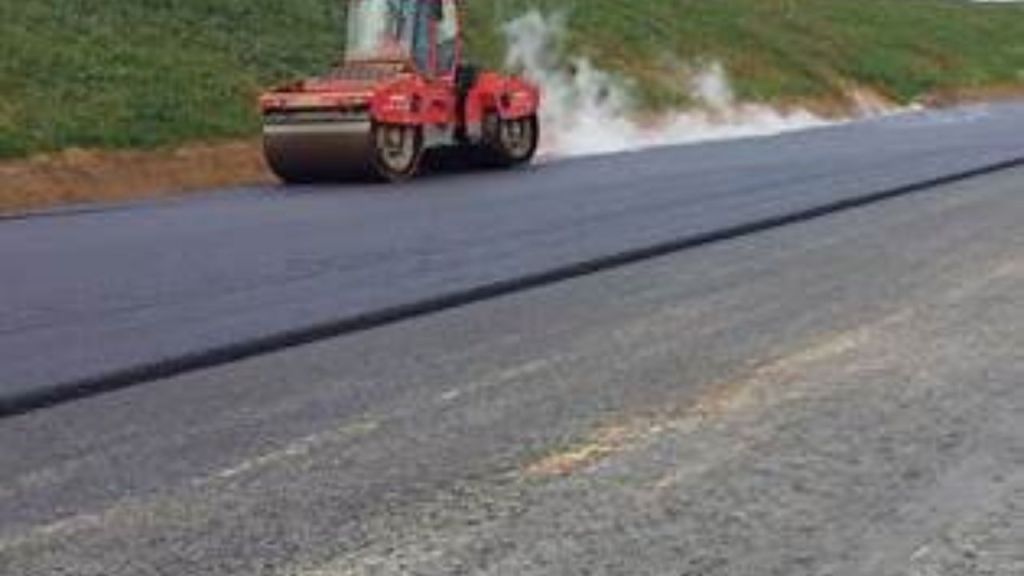
Concrete road construction - Wearing Course
Concrete road construction – Wearing Course

Functions of Surface or Wearing Course:

  • Provides a smooth and uniform rigid surface.
  • Resists abrasive forces from traffic.
  • Prevents dust nuisance.
  • Acts as a structural component of the pavement.

Key Takeaways on Road Pavement Layers

  1. Components: Road pavement consists of four primary layers: subgrade, sub-base, base course, and surface course.
  2. Subgrade: Acts as the foundational layer, providing uniform support and load-bearing capacity.
  3. Sub-base Course: Enhances bearing capacity, improves load distribution, prevents soil migration, and facilitates drainage.
  4. Base Course: Transfers traffic loads to the subgrade, withstands shearing stresses, and prevents subgrade soil intrusion.
  5. Surface Course: The top layer exposed to traffic, designed for durability, skid resistance, and water percolation minimization.
  6. Durability: Each layer plays a critical role in the road’s structural integrity. It also impacts its longevity. This necessitates careful material selection and construction practices.
  7. Load Distribution: Proper design and construction ensure that the pavement can withstand traffic loads and environmental conditions effectively.

These insights emphasize the need to understand each layer’s role. This understanding is crucial for the overall pavement structure. It ensures effective road construction and maintenance.

Conclusion

In road construction, each layer of the pavement structure plays a vital role. These layers ensure both the durability and functionality of the road. Starting with the subgrade providing foundational support, the sub-base enhances load distribution and drainage. The base course offers structural strength. The surface course provides a smooth and durable riding surface. These layers work together seamlessly to create a resilient and long-lasting road.


4 Types of Pavement |Difference between Flexible and Rigid Pavement

Types of pavements play a crucial role in road construction. They determine the performance, durability, and maintenance requirements of highways and streets. There are four primary pavement types: flexible pavements, rigid pavements, composite pavements, and semi-rigid pavements. Each of these serves specific purposes depending on the load-bearing capacity, climatic conditions, and construction needs. It is essential to understand the difference between flexible and rigid pavements. These two major categories vary in material composition, load distribution, and overall performance. Flexible and rigid pavements offer distinct advantages. Flexible pavements are more adaptable to underlying soil conditions. Rigid pavements, made of concrete, provide higher structural strength.

This article covers the four types of pavements and the difference between flexible and rigid pavements

Before we begin, let’s look into what a pavement is.

  1. What is pavement?
  2. Types of Pavements
  3. Flexible pavement
    1. Examples of flexible pavements
    2. Advantages of flexible pavement
    3. Disadvantages of flexible pavements
  4. Rigid pavement
    1. Advantages of rigid pavement
    2. Disadvantages of rigid pavement
  5. Comparison between flexible and rigid pavements
  6. Semi rigid/ composite pavements
  7. Interlocking Concrete Block Pavement (ICBP)

What is pavement?

The pavement is a hard surface that’s built with concrete or asphalt, like a road or a driveway.

Pavement refers to the hard, durable surface layer of roads, walkways, and other transportation paths. These surfaces are designed to withstand the wear and load of traffic. It provides a smooth, stable platform for vehicles and pedestrians, while ensuring safety and comfort. Pavements are engineered for strength, weather resistance, and longevity, typically made from materials like asphalt or concrete. Properly constructed pavements reduce road maintenance and improve traffic efficiency, contributing significantly to infrastructure durability and performance.

Types of Pavements

Pavements are essential for providing a stable and smooth surface for roads and infrastructure. The main types of pavements differ in their structural composition and load-bearing capacities. The top four types of pavements include flexible pavements, rigid pavements, composite pavements, and semi-rigid pavements. Each type serves specific purposes depending on traffic load, climatic conditions, and construction requirements.Based on the structural behavior, road pavements are classified as

  • Flexible pavement
  • Rigid pavement
  • Semi-rigid pavements
  • Composite pavements
  • Interlocking cement concrete block pavement (ICBP)

Without any due, let’s jump onto the first type of pavement.

Flexible pavement

Flexible pavement - Type of pavement
Flexible type of pavement

Flexible pavement is the pavement which possess negligible flexural strength. And,

  • The flexible pavement layer can exhibit non-recoverable deformations of the lower layer. It may also show recoverable deformations. These deformations include the subgrade on the upper layers and possibly affect the pavement surface.
  • The vertical compressive stress is maximum on the pavement surface directly under the wheel load and is equal to the contact pressure under the wheel
  • The lower layers of pavement have to withstand lesser magnitudes of stresses. There is no direct wearing action due to traffic loads. They also do not experience weathering action due to environmental factors. Therefore inferior materials with lower cost can be used in the lower layers.
  • In flexible pavement layers, the top layer has to be the strongest. This layer must sustain the highest compressive stresses. It also endures wear and tear due to moving traffic and varying weather factors.

Examples of flexible pavements

  1. Asphalt Pavements – Commonly used for highways, streets, and driveways.
  2. Bituminous Surface Treatment (BST) – Used for lower-traffic roads and rural areas.
  3. Gravel Roads with Asphalt Coating – Often found in rural areas or less populated regions.
  4. Full-Depth Asphalt Pavements – Used in areas with high traffic and heavy loads.
  5. Cold Mix Asphalt – Used in maintenance and patching.

Each of these examples offers flexibility, enabling them to adjust to changes in the subgrade beneath.

Also read: Electronic Toll Collection-4 subsystems of ETC Full details

Next, let’s peep into advantages and disadvantages of flexible pavements.

Advantages of flexible pavement

Flexible pavement is a common choice in road construction. It is designed to distribute loads over a wide area. This allows for movement and adaptation to underlying conditions. This adaptability makes flexible pavements particularly beneficial in various applications.

Types of Road pavements - Flexible pavement
Types of Road pavements – Flexible pavement
  • Initial cost can be reduced by constructing thin bituminous surface layer
  • Standard design load in terms of CSA (Cumulative Standard Axles)
  • Functional deterioration
  • Strengthening by overlay
  • High salvage value
  • Can be open to traffic after 24 hours

Disadvantages of flexible pavements

  • Deterioration under stagnant water
  • Periodic maintenance
  • Patching of pot holes is expensive
  • Thickness is very high
  • Night visibility is very low

That’s it about flexible pavement. Let’s move onto the next type of pavement.

Also read: Classification of roads- 5 types of roads full details

Rigid pavement

Rigid pavements are those which possess noteworthy flexural strength of flexural strength or flexural rigidity.

See more details below.

  • Rigid pavements are generally made of Portland cement concrete hence known as ‘cc pavement’
  • Construction of rigid pavement using high quality plane cement concrete known as ‘pavement quality concrete (PQC)
  • The CC pavement made of PQC are generally expected to sustain up to 45kg/cm2 of flexural stresses
  • In rigid pavements, the stresses are not transferred from grain to grain to the lower layers as in the case of flexible pavement layers.
  • Slab action is capable of  transmitting the wheel load cases through a much wide area below pavement slab

Having the details in back pack, ready to know the advantages and disadvantages of rigid pavements?

Advantages of rigid pavement

  • No deterioration under stagnant water
  • Thickness is less
  • Service life 30 years
  • Life cycle cost is very less
  • Night visibility is high

Disadvantages of rigid pavement

  • Axle load study is required
  • Design should be for 30 years
  • Possible to restore the pavements under crack
  • Surface may become smooth or slippery
  • Long period of 28 days is required to open traffic

Let’s conclude the section with a comparison.

Comparison between flexible and rigid pavements

Flexible pavementRigid pavement
Bitumen is mostly used for construction Otherwise called concrete pavements
Bitumen becomes soft due to low temperature and bleeds leading to failure of pavementHave longer life and is practically maintenance- free
When water enters the pavement during raining, resulting in potholes Can withstand extreme weather conditions
Due to low temperature in winter season, bitumen becomes brittle leading to cracking of pavementInitial cost higher comparatively, but economical in long term
Comparison between flexible and rigid pavements

Now, you know about flexible and rigid pavement. Time to meet some not-so-famous type of pavement.

Also read: Gauges in railway- All Details About Broad, Metre and Narrow Gauges

Semi rigid/ composite pavements

Semi-rigid pavements are an intermediate state between the Flexible and the Rigid pavement. The flexural strength of the pavement is less than a concrete slab. Nevertheless, it finds support by the lateral distribution of loads through the pavement depth as in flexible pavement.

When the intermediate class of semi-rigid materials like soil cement, lean cement concrete are used in the sub-base or base course of layers of pavements, they are called semi-rigid pavement.

Pavement consisting of both flexible pavement layers and one or more semi rigid pavement layers are called composite pavements.

The last member is ICBP or Interlocking concrete block pavement.

Interlocking Concrete Block Pavement (ICBP)

interlocking concrete block pavement
Interlocking Concrete Block Pavement (ICBP)

Interlocking Concrete Block Pavement (ICBP) has been extensively used in a number of countries for quite sometime as a specialized problem-solving technique for providing pavement in areas where conventional types of construction are less durable due to many operational and environmental constraints

That was the trip through the types of pavement. Have any doubts regarding this? Just drop it in comments.

See you there. Happy learning!