All posts by Vinod Gopinath

Best Cement of India || Top Cement Companies in India -2025

Best cement brands in India is a question that comes up frequently among homeowners, builders, and civil engineers planning durable construction projects. With rapid infrastructure growth and rising quality expectations, choosing the right cement has become more important than ever. Several factors influence this decision, including strength, consistency, durability, and performance under Indian site conditions. Today, many top cement companies in India offer a wide range of products designed for residential, commercial, and infrastructure works. Understanding best cement quality in India helps buyers make informed choices rather than relying only on brand names. People often ask which cement is best in India and look for reliable comparisons among the best cement brands in India. This article answers that question clearly by examining leading cement companies and their performance in 2025.

Which are the best cement companies in India? Which is the best cement in India? This is the common question every individual should be asking while deciding to go for home construction.

Cement is the most significant and widely used construction material which forms an integral part of any structure. Cement is the major ingredient of concrete and mortar and the structural stability and life of a structure or building depends on the cement quality.

  1. Significance of cement in construction sector
  2. Which is the best cement brand for your House/Structure?
  3. What is the difference between best cement company and best cement?
  4. Top cement brands in India in terms of Market share
  5. 1.UltraTech – Best cement companies in India
  6. 2.Ambuja Cement – Best cement companies in India
  7. Ambuja Cements (Adani Group) – UPDATED
  8. 3.ACC Cements – Best cement companies in India
  9. ACC Cement – UPDATED
  10. 4.Shree cements – Best cement companies in India
  11. Shree Cement – UPDATED
  12. Dalmia cement
  13. Birla Corporation
  14. India Cements
  15. Ramco cements
  16. Conclusion

Significance of cement in construction sector

In large industrial, commercial, and residential projects, contract documents specify the best cement brand in India. They also clearly specify the cement type and list approved vendors. However, for individual home construction, decisions often rely on the engineer or contractor. Even so, homeowners should understand the best cement quality in India. They should also know the available cement types. It is essential for homeowners to identify which cement is best in India for their needs. Basic knowledge of leading brands is important. Understanding applications helps ensure durability, safety, and long-term performance. This is crucial when choosing from the best cement brands in India for residential construction.

Which is the best cement brand for your House/Structure?

After China, India is the second-largest cement producer globally. Production is expected to rise to around 453 million tonnes in FY25. It will expand further in FY26 due to strong infrastructure and housing demand. India’s installed cement production capacity is approximately 668–690 million tonnes per annum, with major clusters in South, North, and West India. The sector continues to grow, with planned capacity additions of 150–170 million tonnes by FY28. More than 200 large cement plants operate nationwide, and producers are investing heavily in expansion, sustainability, and efficiency. This article highlights the top 8 best cement companies in India based on production capacity, quality, and market presence in 2025.

What is the difference between best cement company and best cement?

The difference between the best cement company and the best cement often creates confusion. In reality, all reputed cement companies manufacture cement in accordance with prescribed Indian standards. Therefore, there is no absolute “best cement” or “best brand.” What mainly distinguishes the best cement companies in India is their production capacity, quality consistency, marketing strength, and wide distribution network. Regional availability plays a key role in cement selection, as a well-distributed brand ensures fresh supply and reliable performance. For most users, the choice of cement depends on local availability, application requirements, and budget rather than brand name alone. Therefore, this article lists leading cement companies based on market share and widespread availability across different regions of India.

Top cement brands in India in terms of Market share

As per India Brand Equity Foundation (IFBL) Ultratech stand at first position in terms of market share and Market cap.

Market share
Best cement quality in india
Best cement of India - Data with respect to market cap and Market share
Best cement of India – Data with respect to market cap and Market share

Let us go through the details of top cement companies in india in terms of market capitalization and market share

1.UltraTech – Best cement companies in India

Ultra Tech is the largest manufacturer of grey cement, white cement, and Ready mix concrete in India. It is the flagship cement company of the Aditya Birla Group. Established in 1983, UltraTech Cement boasts 23 integrated plants. It also operates 1 clinkerisation unit. Additionally, it runs 26 grinding units and 7 bulk terminals. The company manages 1 white cement plant, 2 Wall Care putty plants, and over 100 RMC plants. Ultratech is the third-largest company in the world (Excluding china) and has business operations in UAE, Bahrain, Sri Lanka, and India. Ultra Tech has a consolidated capacity of 116.8 million tonnes per annum (MT PA) of grey cement.

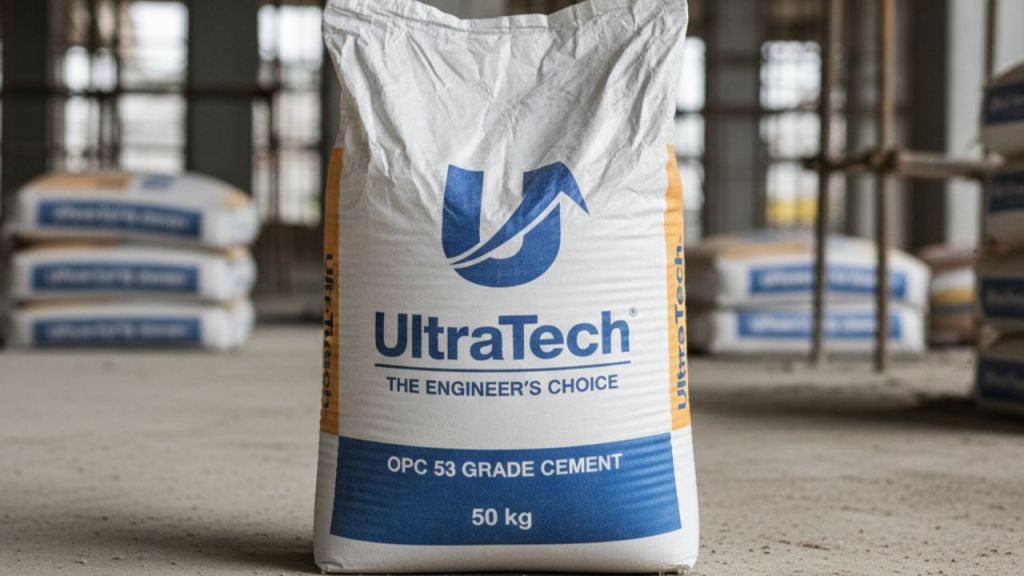
A bag of UltraTech cement labeled 'OPC 53 GRADE CEMENT' weighing 50 kg, placed in a construction setting with other bags in the background.
UltraTech 53 Grade Cement bag, known for its high strength and widely used in construction projects.
  • Establishment: 1987 ✅
  • Headquarter: Mumbai ✅
  • Market share: ≈ 26–28%
  • Market Cap (Rs Cr.): ₹3.1–3.3 lakh crore (≈ 30–32%)
  • Production capacity: ≈ 183–185 MTPA

Ultratech production line includes Ordinary Portland Cement, Portland Blast Furnace Slag Cement, Portland Pozzolana Cement, etc. They are also leading producers of White Cement, Ready Mix Concrete, building products, etc.

2.Ambuja Cement – Best cement companies in India

Ambuja cement formerly known as (Gujrat Ambuja Cement Limited ) is the second-largest cement company in India in terms of the Market share. It was founded in 1983 and has their headquarter in Mumbai. Ambuja Cement got five integrated cement manufacturing plants and eight cement grinding units spanning across the country with a production capacity of 29.65 million tonnes per Annum (MT PA).

All Ambuja Cement plants are ISO 14001 certified. It is also plastic negative, by burning as much as over 75,000 tonnes of plastic waste in its kilns, equivalent to 2.5 times of total plastic used. The company also generated 7.1% of its power needs from renewable resources.

Ambuja Cement is known for its high strength, high performance Ordinary Portland Cement (OPC) and Pozzolana Portland Cement (PPC) and was the first to introduce 53-grade cement in the market.

Yellow cement bag with Ambuja Cement branding, surrounded by construction materials.
Ambuja Cement bag showcasing its strong branding and significance in the Indian construction sector.

Ambuja Cements (Adani Group) – UPDATED

(Include Ambuja + ACC + acquired assets context)

  • Establishment: 1983 ✅
  • Headquarter: Mumbai ✅
  • Market share: ≈ 10–11% (standalone Ambuja)
  • Market Cap (Rs Cr.): ₹1.2–1.4 lakh crore
  • Production capacity: ≈ 75–80 MTPA
  • 📌 Note: Along with ACC, Adani Cement cluster controls ≈ 14–15% of India’s cement market.

In 2005, Ambuja Cements (as the company was known then) joined the reputed Holcim Group of Switzerland. Another premier Indian cement company, ACC Limited, also became part of this group. Later, in 2015, Holcim Limited and Lafarge SA came together in a merger of equals to form LafargeHolcim – the new world leader in building materials.

3.ACC Cements – Best cement companies in India

It is formerly known as an Associate Cement Company is one of the oldest and leading manufacturers of cement and ready mix concrete. ACC Cement was established in the year 1936 with headquarter in Mumbai and having 17 cement manufacturing units, over 90 ready mix concrete plants etc.

ACC Cement – UPDATED

  • Establishment: 1936 ✅
  • Headquarter: Mumbai ✅
  • Market share: ≈ 4–5%
  • Market Cap (Rs Cr.): ₹40,000–45,000 crore
  • Production capacity: ≈ 36–38 MTPA
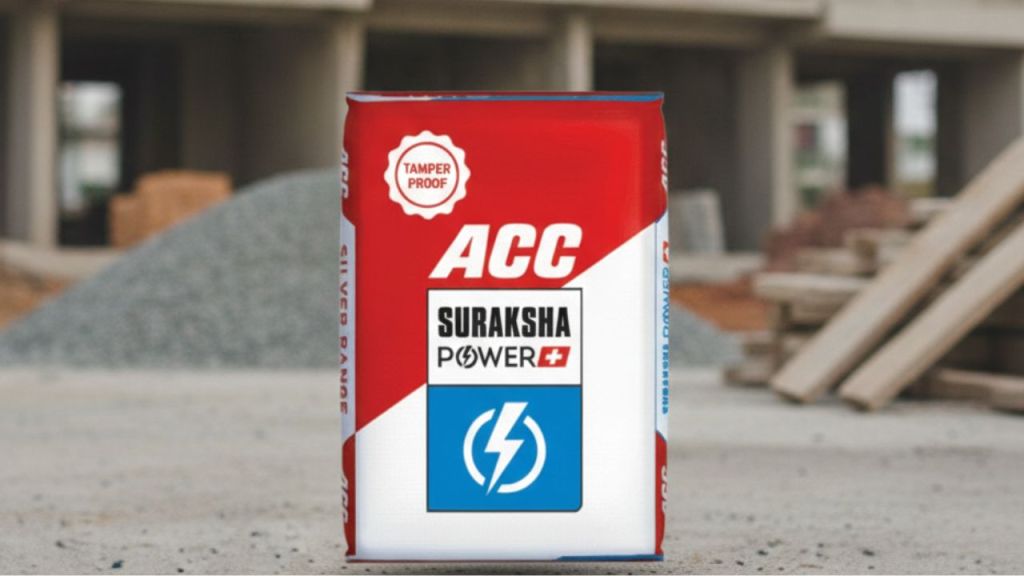
A bag of ACC Suraksha Power cement displayed at a construction site, with building materials like gravel and wooden beams in the background.
ACC Suraksha Power: Premium quality cement for robust construction.

In 2005, ACC became part of the Holcim Group of Switzerland. Subsequently, in 2015, Holcim and Lafarge came together in a merger to form LafargeHolcim – the global leader in building materials and solutions.

4.Shree cements – Best cement companies in India

SCL is one of the fast growing cement companies in India. Shree Cement was Incorporated in 1979 by renowned Bangur family based out of Kolkata and first cement plant was established in the year 1985.

SCL is one of India’s Top five cement producers and among the fastest growing cement companies with an installed capacity of 45 Million Tonnes Per Annum in India and 50-55 MPTA including overseas.

Shree Cement – UPDATED

  • Establishment: 1979 ✅
  • Headquarter: Kolkata ✅
  • Market share: ≈ 6–7%
  • Market Cap (Rs Cr.): ₹95,000–1,05,000 crore
  • Production capacity: ≈ 50–55 MTPA (India + overseas)
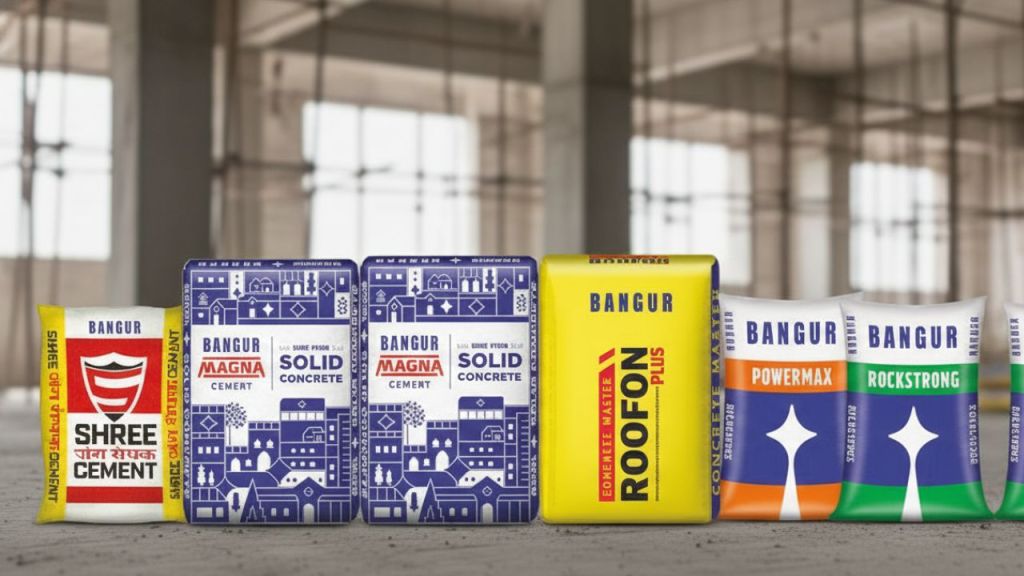
An assortment of cement bags displayed in a construction environment. The bags include Shree Cement, Bangur Magna, Solid Concrete, Roofon Plus, Powermax, and Rockstrong.
An array of Bangur cement products showcasing Shree Cement and various concrete options, highlighting quality for construction projects.

SCPL is known for delivery of good quality products at an affordable price range.

Dalmia cement

They are one of India’s pioneering homegrown cement companies established in 1939 having headquarter in Delhi. Dalmia Cement (Bharat) Ltd, which is a 100% subsidiary of Dalmia Bharat Ltd.

The company has a production capacity of 30.75 MP TA and operates thirteen cement plants and grinding units which are spread across nine states. Dalmia Cement is the only company with at least one plant in each of the four key eastern states of West Bengal, Bihar, Jharkhand, and Odisha.

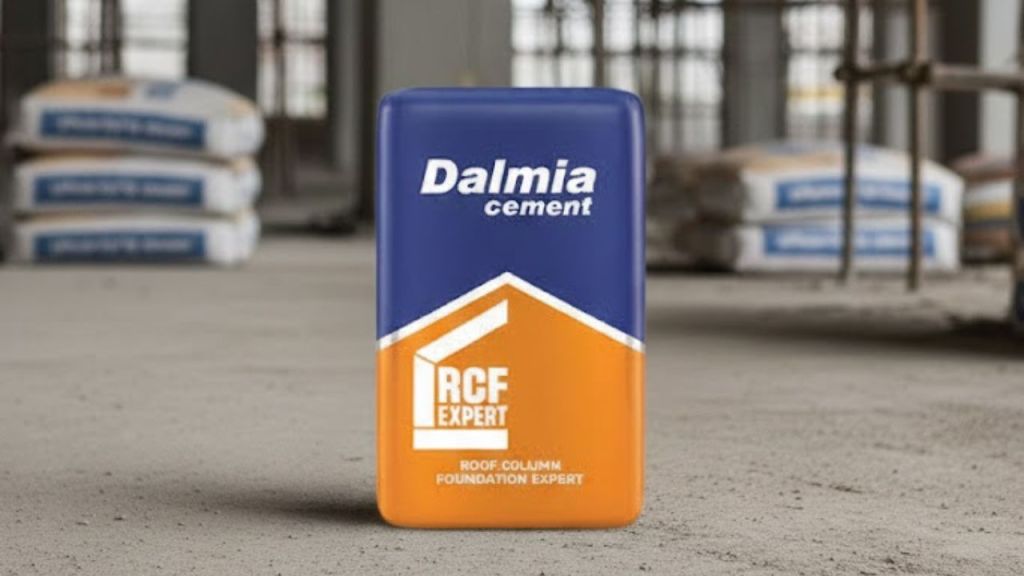
A bag of Dalmia cement labeled 'RCF Expert' displayed on a construction site with bags in the background.
Dalmia Cement bag showcasing the brand’s commitment to quality construction materials.
  • Establishment: 1939 ✅
  • Headquarter: Delhi ✅
  • Market share: ≈ 5–6%
  • Market Cap (Rs Cr.): ₹35,000–40,000 crore
  • Production capacity: ≈ 44–46 MTPA

Dalmia is the largest manufacturer of slag cement and is a leader in super-speciality cement for oil wells, railway sleepers, and airstrips. These brands are available as Portland Pozzolana Cement, Portland Slag Cement, Composite Cement, and Ordinary Portland Cement in select markets

Birla Corporation

Birla Corporation is a flagship company of MP Birla group and got 10 cement plants at various locations and having a production capacity of 15.5 MT PA. Incorporated as Birla Jute Manufacturing Company Limited in 1919 Birla corporation is engaged in the manufacture of cement. They manufacture varieties of cement like Ordinary Portland Cement (OPC), 43 & 53 grades, Portland Pozzolana Cement (PPC), fly ash-based PPC, Low Alkali Portland Cement, Portland Slag Cement (PSC), Low Heat Cement and Sulfates Resistant Cement.

A bag of MP Birla Cement 'Samrat' displayed on a construction site, with gravel piles and wooden planks in the background.
A bag of MP Birla Cement ‘Samrat’ prominently displayed at a construction site, showcasing its sustainable branding.
  • Establishment: 1946 ✅
  • Headquarter: Chennai ✅
  • Market share: ≈ 2–3%
  • Market Cap (Rs Cr.): ₹7,000–8,000 crore
  • Production capacity: ≈ 14–15 MTPA

The company acquired 100% shares of Reliance Cement Company Private Limited for a value 4800 crores. The total capacity including acquisition stands at 15.5 MT PA.

India Cements

India cements Ltd was founded in the year 1946 by Shri S N N Sankaralinga Iyer and Sri T S Narayanaswami. From a two plant company having a capacity of just 1.3 million tonnes in 1989, India Cements has robustly grown in the last two decades to a total capacity of 15.5 million tonnes per annum. India Cements has now 8 integrated cement plants in Tamil Nadu, Telangana, Andhra Pradesh and Rajasthan and two grinding units, one each in Tamil Nadu and Maharashtra.

  • Establishment: 1946
  • Headquarter: Chennai
  • Market share : 5%
  • Market Cap (Rs Cr.) Rs. 6047Cr. (1.22%)
  • Production capacity : 15.5 MTPA

Ramco cements

Ramco Cements Limited is the flagship company of the Ramco Group, a well-known business group of South India. having their head quarters in Chennai. It is eight in the list of top 10 cement company in India

Various types of Ramco cement bags displayed on a blue background.
Various types of Ramco Cement products showcased against a vibrant blue background, highlighting their diverse offerings in the Indian cement market.

The main product of the company is Portland cement, manufactured in eight state-of-the-art production facilities that include Integrated Cement plants and Grinding units with a current total production capacity of 16.45 MTPA. The company is the fifth largest cement producer in the country. 

  • Establishment: 1946 ✅
  • Headquarter: Chennai ✅
  • Market share: ≈ 3–4%
  • Market Cap (Rs Cr.): ₹25,000–28,000 crore
  • Production capacity: ≈ 23–25 MTPA

Key Takeaways

  • Choosing the best cement brands in India is crucial for durable construction projects due to factors like strength and performance.
  • The article highlights leading cement companies based on market share and production capacity as of 2025.
  • UltraTech and Ambuja Cement rank among the top cement companies in India, with significant market shares and production capacities.
  • The difference between best cement companies and the best cement often lies in production capacity and local availability.
  • Homeowners should prioritize readily available brands with good marketing networks for their construction needs.

Conclusion

All cement companies manufacture their products in compliance with Indian Standards (IS) and relevant international standards, ensuring consistent quality and performance. Therefore, there is no single answer to which cement is best in India, as most leading brands meet the required technical specifications. While selecting the best cement brand in India, availability in the local market, logistics, and budget play a major role. The top cement companies in India listed in this article stand out mainly due to their large manufacturing capacity, strong distribution network, and wide regional presence. However, many other best cement brands in India also offer excellent strength, durability, and reliability. Builders and homeowners can confidently choose any standard-compliant cement that is easily available nearby, as best cement quality in India is maintained across reputed manufacturers.

Consistency test on cement – Significance and Procedure

The standard consistency test of cement is a crucial procedure for determining the precise quantity of water needed to create a workable paste, which is essential for subsequent laboratory tests. This test utilizes a Vicat apparatus to find the water content that allows the plunger to penetrate the paste to a specified depth, thus defining the normal consistency of cement. Establishing this value is a necessary step before conducting other important tests like setting time, soundness, and compressive strength, all of which rely on a correct water–cement ratio.

Understanding the significance of the consistency test helps one appreciate its influence on key concrete properties such as workability, strength development, and durability. By providing a clear explanation of the test’s procedure—from trial mixes to the final penetration reading—this article serves as a valuable guide for students, site engineers, and quality controllers. It aims to assist them in performing reliable laboratory work, ultimately ensuring high-quality cement performance in structures.

  1. Significance of cement tests
    1. Field tests of cement
    2. Laboratory tests
  2. Significance of Consistency test on Cement
  3. Relevant IS code for consistency test on cement
  4. Apparatus used for consistency test on cement
  5. Procedure of consistency test for cement (As per IS 4031 Part 4)
  6. Calculation
  7. Consistency of cement test procedure – Standards comparison
  8. Precaution
  9. Conclusion

Significance of cement tests

Cement is a key construction material used in buildings, bridges, and infrastructure. It forms concrete and mortar, and it directly influences the strength, durability, and performance of structures.

Cement is a key construction material, so its quality must be checked before use. Cement tests generally fall into two types: laboratory tests and field tests. Field tests are simple, quick checks that do not require special equipment or expertise. They help to judge whether cement can be accepted for work.

Field tests of cement

  • Checking manufacturing date
  • Visual lump check
  • Feel test (smoothness)
  • Heat test
  • Colour check
  • Water float test
  • Setting test

These tests provide approximate but useful quality indications.

A laboratory technician wearing safety goggles and gloves mixes cement paste in a large bowl, with a Vicat apparatus and various testing equipment visible in the background.
A technician performing the standard consistency test of cement using a Vicat apparatus in a laboratory setting.

Laboratory tests

Laboratory tests provide detailed and accurate assessment of cement quality under controlled conditions , essential before use in structural works. Common lab tests for cement include:

  • Standard consistency test of cement
  • Initial and final setting time test
  • Soundness test (e.g., Le Chatelier method)
  • Fineness test (e.g., sieve or Blaine method)
  • Strength test (e.g., compressive strength of cement mortar)
  • Heat of hydration test (for some cements)
  • Chemical composition / chemical analysis

This article is about standard consistency test of cement.

Significance of Consistency test on Cement

The strength and durability of concrete depend greatly on the quality of cement and its correct water content. To achieve proper strength, the cement mortar must have standard consistency, which is determined in the consistency test of cement. In this test, standard consistency occurs when the Vicat plunger penetrates to a depth of 5–7 mm from the mould’s bottom. This penetration confirms the cement’s readiness. It is determined through trial and error to find the exact amount of water required to prepare a workable cement paste. Knowing the normal consistency of cement is crucial. It is needed before performing other laboratory tests, such as compressive strength, setting time, and soundness tests. Water directly influences hydration. Cement composition, fineness, and water–cement ratio affect consistency. Excess water weakens hardened cement, while too little water slows hydration and reduces strength. Therefore, determining consistency ensures reliable concrete performance and quality control.

Relevant IS code for consistency test on cement

  • IS 4031 (Part 4):1988 – Standard consistency test (India)
  • ASTM C187 – Amount of water required for normal consistency (USA)
  • BS EN 196-3:2016 – Standard consistence, setting times & soundness (UK/Europe)

Apparatus used for consistency test on cement

The Vicat apparatus is used to determine the consistency of cement. It consists of a plunger, a movable rod weighing 300 g, graduated scale, non-porous plate, split mould and Vicat mould. The diameter of the plunger is 10mm and the length is 50mm. The graduate scale measures the depth of penetration. The Vicat mould is a cone frustum with 80 mm diameter. The test should be conducted at a standard temperature of 27 C. The humidity should be 65%. A stop clock is used to measure the time from the addition of water to the drying of cement. As per IS code, the time of gauging is not less than 3 minutes, nor more than 5 min.

Procedure of consistency test for cement (As per IS 4031 Part 4)

Follow these steps when performing the consistency test under IS code:

  • Use a clean Vicat apparatus (as per specification) with 10 mm-diameter plunger and standard mould resting on a non-porous base plate.
  • Weigh a required quantity of cement and a proportionate amount of potable or distilled water.
  • Begin gauging (mixing): mix cement and water thoroughly, and complete gauging within 3 to 5 minutes from addition of water. Ensure gauging is completed before any sign of setting occurs.
  • Fill the Vicat mould with the fresh cement paste, rest mould on non-porous plate. Level the surface — remove excess paste, smooth the top. A light shake may be used to expel air bubbles.
  • Lower the plunger gently so it just touches the paste surface, then release it to descent under its own weight (no external load).
  • Observe the depth of penetration on the graded scale. If plunger stops such that it’s 5–7 mm above the bottom of mould — that paste has “standard consistency.”
  • If the penetration depth is not within that range, discard paste; prepare a new paste with adjusted water content (increase or decrease water) and repeat until standard consistency is reached.
  • Document the percentage water (by weight of cement) that achieved standard consistency — this becomes the “water for normal consistency” or “standard consistency water proportion.”
Vicats apparatus setup for the standard consistency test of cement, showing the plunger mechanism.
Vicat apparatus used for measuring standard consistency of cement during laboratory testing.

Calculation

The standard consistency is expressed in terms of the percentage of the quantity of added water to the weight of cement. The consistency of cement ranges from 26% to 33%.

Standard consistency = ( Quantity of water added / Weight of cement) x 100

Consistency of cement test procedure – Standards comparison

StandardApparatus / PrincipleConsistency Criterion / Penetration DepthNotes / Use for Further Tests
IS 4031 (Part 4)Vicat apparatus (10 mm dia. plunger, standard mould)Plunger penetrates so that it stops 5–7 mm from the bottom of mould (i.e. ~33–35 mm from top) for standard / normal consistency (Basis for subsequent cement tests (setting time, soundness, strength) under Indian Code
ASTM C187Vicat-type penetration instrument / similar test method to determine water for “normal consistency” Penetration per ASTM calibration (aims to find water percent giving normal consistency) Used internationally / in labs following ASTM procedures; result used for further cement/concrete tests
BS EN 196‑3 (European / British standard)Vicat apparatus for consistency and setting-time / soundness tests Defines “standard consistence” via penetration depth per EN criteria; used before setting time & soundness tests Common in European labs; ensures standard baseline for cement tests under EN / BS norms

Precaution

We should take certain precautions before starting the test so that to obtain accurate results.

  • Clean the Vicat mould properly and grease the inside surface
  • Take immense care while attaching the plunger. Make sure it is vertical.
  • Place the apparatus on a levelled surface.
  • Maintain the standard temperature and humidity throughout the test.

Key Takeaways

  • The consistency test of cement measures the required water for a workable paste, using the Vicat apparatus.
  • This test is crucial for determining key properties like setting time, soundness, and compressive strength of cement.
  • Standard consistency is reached when the plunger penetrates 5–7 mm from the bottom of the mould, ensuring proper hydration.
  • Laboratory tests provide accurate assessments of cement quality, while field tests offer quick checks.
  • Precautions are vital for accurate test results, including cleaning the apparatus and maintaining proper temperature and humidity.

Conclusion

In conclusion, the consistency test of cement is essential for maintaining quality and performance in concrete works. By determining the standard consistency of cement, engineers identify the exact water needed to create a uniform and workable paste. This value is crucial for reliable results in other major laboratory tests such as compressive strength, setting time, and soundness. The significance of standard consistency test of cement lies in ensuring proper hydration, which directly influences the strength, durability, and service life of structures. Using the Vicat apparatus, the test provides accurate and repeatable outcomes for both laboratories and field quality control. When the water–cement ratio is correctly maintained, concrete becomes safer, stronger, and more durable, supporting high-standard construction practices.

Rebound hammer test on Concrete structures

ebound Hammer Test for Concrete is one of the most widely used non-destructive tests to evaluate in-place concrete strength. Also known as the Schmidt Hammer Test, it helps engineers quickly assess concrete surface hardness without damaging the structure. This test measures the rebound number when a spring-controlled hammer impacts the concrete surface, providing valuable insight into its compressive strength. The Rebound Hammer Test procedure is simple, fast, and highly suitable for quality control at construction sites. It is commonly used in buildings, bridges, and existing structures where core extraction is difficult or not recommended. Along with evaluating strength, the method helps identify weaker concrete zones and ensures uniformity. Due to its practical benefits, many professionals prefer this technique while comparing concrete hardness test methods. Understanding the advantages of Rebound Hammer Test ensures accurate decision-making in structural assessment and maintenance.

Rebound hammer test is one of the most popular and simple non-destructive concrete tests. The Non-destructive test is the process of detection of defects in concrete without its destruction. The determination of concrete quality is necessary for both fresh concrete and hardened concrete. The rebound hammer test is the common test for determining quality for existing structures.

  1. Rebound/Schmidt hammer test definition and significance
    1. Significance
    2. Relevant Codes 
  2. Objectives of Rebound hammer test
  3. Rebound hammer test procedure – Standard method
    1. Procedure – Step-by-Step
  4. Correlation between compressive strength of concrete and rebound index.
  5. Result Calculation of Rebound Hammer tests
  6. Concrete quality and rebound test values
  7. Advantages of rebound hammer test
  8. Conclusion

Rebound/Schmidt hammer test definition and significance

The Rebound Hammer Test for Concrete is a widely used non-destructive test for concrete strength. It evaluates surface hardness and provides an estimate of compressive strength. This is done without damaging the structure. In this Schmidt Hammer Test, a spring-controlled hammer impacts the concrete surface, and the rebound value indicates the concrete’s hardness. This concrete hardness test method is quick, simple, and ideal for assessing uniformity and quality in existing structures. The rebound hammer test procedure helps identify weak zones, monitor deterioration, and ensure proper maintenance. The advantages of rebound hammer test make it essential for preliminary and on-site concrete assessment.

A person conducting a Schmidt Hammer Test on a concrete surface, showing the rebound measurement displayed on the device.
A Schmidt hammer being used to perform a Rebound Hammer Test on concrete, measuring surface hardness to estimate compressive strength.

Significance

  • Estimates in-place compressive strength of concrete
  • Checks surface hardness and material uniformity
  • Identifies weak zones or deteriorated areas
  • Helps compare different structural members
  • Quick, cost-effective, and non-destructive field evaluation

Relevant Codes 

Country / RegionStandard CodeTitle / Description
India 🇮🇳IS 13311 (Part 2): 1992Non-destructive testing of concrete – Rebound Hammer
USA 🇺🇸ASTM C805 / C805MStandard Test Method for Rebound Number of Hardened Concrete
Europe 🇪🇺EN 12504-2: 2021Testing concrete in structures – Part 2: Non-destructive testing – Rebound Hammer
International 🌍BS 1881: Part 202: 1986Testing Concrete – Recommendations for Rebound Hammer Test
International 🌍ACI 228.1RIn-place Methods to Estimate Concrete Strength (includes rebound hammer guidance)

Objectives of Rebound hammer test

The main objectives of the Rebound hammer test include

  • This determines the compressive strength of the concrete in terms of the rebound index.
  • Also finds the uniformity of concrete.
  • evaluates the concrete quality with standard requirements.

Rebound hammer test procedure – Standard method

A Schmidt rebound hammer positioned near a concrete block, surrounded by a data recording sheet, measuring tape, and a set of reference materials for conducting the rebound hammer test for concrete strength.
The Schmidt Rebound Hammer, an essential tool for assessing concrete strength through non-destructive testing, displayed alongside testing materials.

The Rebound Hammer Test for Concrete is a widely used non-destructive test for concrete strength. It measures the surface hardness of hardened concrete to quickly estimate compressive strength using a Schmidt hammer. This test is simple, cost-effective, and provides immediate results on-site. It is an essential method in quality control to check concrete uniformity, detect weak zones, and evaluate structures without causing damage. While the rebound hammer test procedure ensures quick assessment, results must be correlated with laboratory-tested samples for accuracy.

Procedure – Step-by-Step

  • Select the test area – Smooth, clean, and free from loose particles or surface defects.
  • Hold the rebound hammer firmly and position it perpendicular to the test surface.
  • Press the plunger against the concrete until the hammer triggers a rebound.
  • Record the rebound number displayed on the scale.
  • Perform at least 10 readings on one point and discard abnormal outliers.
  • Take the average rebound number for that test location.
  • Apply correction factors (surface condition, carbonation, direction of testing).
  • Use a correlation chart to estimate compressive strength of concrete.

The correlation between the concrete strength and the rebound hammer shown in a graph is called the rebound hammer graph. 

According to IS 13311 (Part 2): 1992, the rebound hammer test requires specific calibration, correction factors, and surface conditions. These elements are necessary to ensure accurate results in Indian construction environments. IS also recommends correlating rebound numbers with compressive strength. The correlation should consider concrete grade, age, and surface hardness. This approach helps minimize interpretation errors.

Correlation between compressive strength of concrete and rebound index.

It is essential to calibrate the rebound hammer before testing. For this, we test a specimen of 150mm * 150mm * 150mm size using a compression testing machine (CTM). Fix the load rate at 7N/mm2, when the hammer result is 2.2 Nm. Test the vertical surface of the specimen using a rebound hammer. The results from the CMT and the rebound hammer should not have a major difference.

Result Calculation of Rebound Hammer tests

The Rebound Hammer Test for Concrete measures surface hardness and estimates compressive strength without damaging the structure. The rebound number directly reflects the elasticity of concrete—higher numbers indicate harder and stronger concrete. To calculate results accurately, we take several rebound readings on a smooth, clean surface, remove extreme values, and determine an average. This average rebound number is then compared with calibration charts. The charts are provided by the hammer manufacturer or relevant standards (IS 13311 Part 2:1992). This helps to determine the estimated compressive strength of concrete at the test location.

The rebound number assess the strength of the structure. As the rebound number increases, the strength also increases. This depends on the 

  • Cement type
  • Aggregate type
  • Surface condition
  • Age of concrete
  • Moisture content, etc.
A construction worker using a Schmidt hammer to perform a rebound test on a concrete surface, displaying the rebound number on the device.
A construction professional using a Schmidt hammer to conduct a Rebound Hammer Test on concrete, assessing its surface hardness and strength.

The quality of concrete concerning the rebound concrete is as follows.

Concrete quality and rebound test values

Thus the rebound number predicts the quality of concrete. The rebound hammer apparatus is very easy to use. Also, it determines the uniformity of the concrete surface. Thus it can be used for the rehabilitation of old monuments. It produces a convenient indication of compressive strength

Rebound Number RangeEstimated Concrete QualityInterpretation Notes
≤ 20Poor / Very Weak ConcretePossible deterioration, low strength; further testing required
20 – 30Fair / Medium Quality ConcreteAcceptable for non-structural sections; verify structural safety using core tests
30 – 40Good Quality ConcreteSuitable for reinforced concrete structural elements
> 40Very Good / Hard ConcreteHigh strength concrete; ensure carbonation effects are considered

Advantages of rebound hammer test

The Rebound Hammer Test is one of the simplest and fastest non destructive tests for concrete strength. It allows engineers to quickly assess the surface hardness and uniformity of concrete without damaging the structure.

Key Advantages of Rebound/Schmidt Hammer Test

  • Quick and easy testing with instant results
  • Completely non-destructive, keeping the structure intact
  • Portable and ideal for on-site assessment
  • Helps identify weak or deteriorated concrete areas
  • Cost-effective compared to laboratory strength tests
  • Useful for quality control and comparative analysis
  • Can be used on both old and new concrete structures
  • Requires only a single operator and minimal training
  • Helps decide if further detailed testing (e.g., core cutting or UPV) is needed
  • Provides data for concrete hardness evaluation and uniformity checks

Key Takeaways

  • The Rebound hammer test for concrete is a widely used non-destructive method to assess concrete strength and surface hardness.
  • It involves a spring-controlled hammer that impacts the concrete, measuring the rebound number to estimate compressive strength.
  • This test is quick, cost-effective, and essential for quality control, helping identify weak zones and ensuring uniformity in structures.
  • Professionals appreciate the test for its practical advantages, including its portability and immediate results on-site.
  • Applicable codes include IS 13311 (Part 2) in India and ASTM C805 in the USA, ensuring standard practices across regions.

Conclusion

The Rebound Hammer Test for concrete is a widely used non destructive test for concrete strength. It helps engineers quickly check surface hardness and uniformity without damaging the structure. As one of the simplest concrete hardness test methods, it supports quality control. It is also used for preliminary assessment and condition monitoring of existing buildings. Rebound values alone do not determine exact compressive strength. They provide valuable onsite insights when combined with other techniques such as UPV or core strength tests. By following the correct rebound hammer test procedure and calibration guidelines, engineers can improve reliability and decision-making. The Schmidt Hammer Test offers a fast, economical, and practical way to evaluate concrete. It enhances durability, safety, and maintenance planning in modern construction projects.

Non Destructive test (NDT)- Hardened Concrete

Non destructive testing of hardened concrete plays a vital role in assessing the condition of concrete structures. It evaluates performance without causing damage. Engineers use non destructive test for concrete structures to evaluate strength, durability, and uniformity while the structure remains fully functional. These NDT methods for concrete evaluation help detect cracks, voids, honeycombs, and other hidden defects that may affect long-term performance. Professionals can estimate compressive strength by using advanced hardened concrete testing techniques. They can identify deterioration and also monitor the health of aging infrastructure. Modern tools like rebound hammer and ultrasonic pulse velocity make concrete strength testing faster. They support the process without causing damage and are more cost-efficient. The key advantages of NDT in concrete testing include safety, accuracy, rapid inspections, and extended service life of structures. Overall, NDT ensures reliable decision-making for repairs, rehabilitation, and quality control in construction.

Non-destructive test (NDT) and destructive tests (DT) are the the tests done one hardened concrete. Concrete is the oldest and most important construction material in the world. Testing of the concrete plays and important role to know about the strength, durability and condition of the structure. This article is about the types of Destructive and non destructive tests done on concrete.

  1. Types and significance of Concrete Tests
    1. Destructive Tests
    2. Non Destructive Tests (NDT)
  2. Non- Destructive testing techniques on hardened concrete
  3. Objectives/advantages of Non destructive testing (NDT)
  4. Classification of Non-Destructive test
    1. Penetration Resistance Test / Windsor Probe Test
    2. Rebound Hammer Test
    3. Ultrasonic Pulse Velocity Test
    4. Half-Cell Potential Test – Detecting Corrosion
    5. Covermeter / Rebar Locator Test – Locating Reinforcement Without Damage
    6. Impact Echo Test – Evaluating Internal Defects in Concrete
  5. Conclusion

Types and significance of Concrete Tests

Concrete testing plays a vital role in determining the strength, durability, and performance of concrete structures. Engineers conduct different tests to verify that the concrete mix meets design requirements and performs safely throughout its service life. These types of concrete tests help assess important properties such as workability, compressive strength, density, and internal defects. The tests are categorized into destructive tests and non destructive tests, depending on whether the specimen is damaged during inspection. Both testing methods are essential for ensuring quality control, structural integrity, and long-term durability of concrete in construction projects. By using the right concrete testing techniques, engineers can make reliable decisions in design, repair, and maintenance works.
Concrete tests are classified into two types

  • Destructive tests (DT)
  • Non – Destructive tests (NDT)

Destructive Tests

  • Compressive Strength Test
  • Flexural Strength Test
  • Split Tensile Strength Test
  • Pull-out Test
  • Core Cutting and Testing

Non Destructive Tests (NDT)

  • Impact Echo / Pulse Echo Test
  • Rebound Hammer Test
  • Ultrasonic Pulse Velocity (UPV) Test
  • Half-Cell Potential Method
  • Ground Penetrating Radar (GPR)
  • Cover Meter Survey
  • Schmidt Hammer Test

In this article we describes about the Non destructive testing techniques conducted on hardened concrete.

Non- Destructive testing techniques on hardened concrete

The standard method of non destructive testing of hardened concrete is carried out by testing concrete specimens. These specimens are cast simultaneously with structural concrete. These destructive tests on concrete can determine the compressive, flexural, and tensile strengths. The major disadvantage of these destructive concrete testing methods is the non availability of immediate results. Moreover, the properties of the concrete specimen differ from what it is in the actual structure. This difference is due to pouring conditions, curing factor, compaction and concrete density, etc. These tests come under the category of destructive tests (DT). Destructive testing of concrete destroys or changes the part. Even if it passes the test, the part is no longer fit for service.

Two engineers conducting non-destructive testing on a concrete wall using specialized equipment.
Engineers conducting non-destructive testing on hardened concrete to assess its strength and durability.

Non Destructive Test (NDT) is for determining compressive strength and other properties of concrete from existing structures or buildings. NDT testing of concrete does not destroy the part. It does not change the part so that it is still fit for service if it passes the test. The non-destructive test determines the properties of concrete or structures without their destruction. Moreover, we can study its changes over time, The measurements are repeated many times and validate in detail, and gets immediate results. These NDT concrete testing methods help assess quality, strength, and durability in a quick and reliable way.

Objectives/advantages of Non destructive testing (NDT)

Non-destructive testing (NDT) helps evaluate hardened concrete structures without causing damage. It allows engineers to assess concrete strength and durability. They can also evaluate reinforcement condition, cracks, and internal defects. All of these are assessed while the structure remains fit for service. The advantages of NDT include quick results, safety, cost-effectiveness, and the ability to monitor structures throughout their life cycle. These advantages of NDT make it widely preferred for quality assurance and structural health monitoring.

  • Quality check of the existing structure.
  • For determining the homogeneity, internal and external characteristics of the concrete. 
  • To detect the cracks and voids of the concrete structures. 

  • Assess the quality of concrete with the standard requirement. 
  • To study the ageing of concrete. 
  • For finding the compressive strength of structures.
  • Evaluation of elastic modulus

Classification of Non-Destructive test

Hardened Concrete testing techniques/ Non Destructive testing are as follows

  • Windsor Probe Test
  • Rebound Hammer Test
  • Ultrasonic Pulse Velocity (UPV)
  • Half-Cell Potential Test
  • Covermeter / Rebar Locator Test
  • Impact Echo Test

Penetration Resistance Test / Windsor Probe Test

The penetration resistance test is an NDT that determines the relative strength of the concrete structures. The Windsor probe is the equipment for conducting this test. This equipment includes of powder-actuates driver or gun, probes, loaded cartridges and a gauge that measures the penetration.
The penetration depth indicates the compressive strength of the concrete. However, this depends on the aggregate type and size. This test evaluates the poor quality and deterioration of concrete

A professional using a Windsor Probe device to conduct non-destructive testing on a concrete wall, assessing its strength and quality without causing damage.
An engineer using a Windsor Probe for penetration resistance testing on hardened concrete.

The major disadvantage of this test is getting variable results. Several probes are often shot to achieve a solid average depth for arriving a final conclusion. So we cannot determine the exact strength. But it is a quick method to evaluate the quality and maturity of concrete. Care should be taken to calibrate the instrument before taking readings.

Rebound Hammer Test

The rebound hammer is also known as Schmidt’s Hammer test. It determines the strength of concrete based on the hardness of the concrete surface. It is a surface hardness tester. The equipment consists of a spring-controlled plunger, a hammer that weighs 1.8 kg, and a graduated scale. By pressing the hammer on the concrete surface, the graduate scale measures the rebound number. A low rebound number means the concrete has low compressive strength and stiffness.

A person using a rebound hammer test device on a concrete wall to measure its surface hardness and estimate compressive strength.
A technician conducting the Rebound Hammer Test on concrete to assess compressive strength without causing damage.

An accuracy of 15 to 20% is possible through this test. It is a simple and quick method. Also, the result relies on the surface smoothness, water content, type and size of aggregate and carbonation of the surface.

Ultrasonic Pulse Velocity Test

Ultrasonic pulse velocity test is another type of Non-destructive test. This test measures the time of travel of ultrasonic pulse waves for evaluating the concrete quality. The UPV test units consists of a pulse generator and pulse receiver. The frequency of the wave is 50-55 kHz. The pulse generator produces the pulses and is allowed to pass through the concrete. Then we calculate the velocity, by measuring the traversing distance and the time. Higher velocity means the concrete has a higher elastic modulus and density. It also determines the cracks and flaws in the structure. Large differences in pulse velocity values indicates a defective and deteriorated concrete.

Two engineers conducting non-destructive testing on a concrete structure using specialized equipment.
Engineers conducting an Ultrasonic Pulse Velocity test on concrete to assess its quality and detect any hidden defects.

For more details : Ultrasonic pulse velocity test || UPV Test – Methods and procedure

Half-Cell Potential Test – Detecting Corrosion

The Half-Cell Potential Test is a widely used non-destructive testing (NDT) method. It evaluates corrosion activity in steel reinforcement within hardened concrete. It measures the electrical potential difference between embedded rebars and a reference electrode. This reference electrode is typically a copper / copper sulfate (Cu/CuSO₄) cell. The test helps determine whether the reinforcement is actively corroding, passive, or at risk. An electrical connection directly connects to the rebar. Surface readings are recorded in a grid on moist concrete to ensure good conductivity. These readings are compared with standard probability charts provided in ASTM C876. The results allow engineers to locate corroded zones, plan preventive repairs, and avoid unnecessary concrete removal. Overall, it is a quick, reliable, and cost-effective tool for structural health assessment and durability maintenance of concrete structures.
A construction professional conducting non-destructive testing on a concrete structure using a measuring device, with a sponge for conductivity, to assess the integrity of the material.
An engineer conducting a non-destructive test on concrete using a specialized equipment to assess structural integrity.

Covermeter / Rebar Locator Test – Locating Reinforcement Without Damage

The Covermeter Test is also known as the Rebar Locator Test. It is a widely used non-destructive testing (NDT) method. This method is for detecting the position, depth, and spacing of steel reinforcement in hardened concrete. It works by measuring the magnetic field disturbance created by embedded steel when scanned with an electromagnetic probe. The test accurately determines the cover thickness. This is the distance from the concrete surface to the reinforcement. This measurement is critical for durability, fire safety, and code compliance. Modern Covermeter can also estimate bar diameter and identify congestion or missing rebars. This method adheres to standards such as BS 1881-204. It assists engineers in repair planning, drilling, and anchoring. It also helps in retrofitting without damaging the structure. Overall, the rebar locator test is fast, clean, and essential for structural assessment and quality control of reinforced concrete.

A technician using a handheld ultrasonic testing device on a concrete surface to assess the material's properties without causing damage.
A technician performing a non-destructive test on a concrete structure using specialized equipment to assess its condition.

Impact Echo Test – Evaluating Internal Defects in Concrete

The Impact Echo Test is a reliable non-destructive testing (NDT) method. It is used to detect internal flaws such as voids, cracks, and delamination in hardened concrete. It also identifies thickness variations. It works by applying a short mechanical impact on the surface using a small hammer or impactor. This impact generates stress waves that travel through the concrete and reflect back from internal boundaries. A sensitive receiver records the returning signals and analyzes the wave frequencies to identify abnormalities. The method is guided by standards like ASTM C1383, making it suitable for bridges, slabs, tunnels, and precast elements. Engineers use this test to assess structural integrity, locate hidden defects, verify grouting, and ensure long-term durability—without drilling, cutting, or damaging the structure. Overall, the Impact Echo Test offers a fast and effective solution for concrete condition evaluation and maintenance planning.

Illustration of the Impact Echo Test showing a hammer impacting concrete, generating stress waves. The diagram includes labels for 'Hammer Impact', 'Stress Waves', and 'Internal Flaw (Void/Crack)', as well as a receiver/analyzer that detects reflected waves. The image highlights the test's ability to identify voids and cracks non-destructively, following ASTM C1383 standards.
Illustration of the Impact Echo Test used in non-destructive testing of concrete, showing hammer impact, stress waves, and internal flaw detection.

Key Takeaways

  • Non-destructive testing (NDT) evaluates hardened concrete’s strength and durability without causing damage, helping to detect hidden defects.
  • Engineers use both non-destructive and destructive tests to ensure quality control and structural integrity during concrete assessments.
  • Key advantages of NDT include quick results, safety, and cost-effectiveness, making it ideal for monitoring concrete structures over time.
  • Various NDT techniques include the Rebound Hammer Test, Ultrasonic Pulse Velocity Test, and Impact Echo Test.
  • These methods provide crucial insights into concrete quality, allowing for reliable repairs and maintenance planning.

Conclusion

Non Destructive testing of concrete plays a vital role in maintaining the long-term performance and safety of structures. NDT for hardened concrete enables engineers to assess strength, durability, reinforcement conditions, and internal defects without damaging the structure. With modern concrete NDT methods such as Rebound Hammer, Ultrasonic Pulse Velocity, and Covermeter testing, engineers receive quick data. Tests like Half-Cell Potential and Impact Echo provide reliable insights into structural integrity. One of the major advantages of NDT is the ability to monitor existing buildings. It helps identify deterioration early. Engineers can plan effective maintenance. By using advanced NDT techniques, the industry ensures cost efficiency, improved safety, and accurate decision-making throughout a structure’s life. Therefore, the advantages of NDT strongly support sustainable, safe, and high-quality construction management.

Ready mix Plaster vs Conventional plaster – Which one is best ?

Ready mix plaster vs conventional or site mix plaster is an important comparison for selecting the right plastering material in building construction. Both materials serve the same purpose, but their performance and application methods are different. To understand the difference between ready mix plaster and conventional plaster, we must look at their composition and usage. Ready mix plaster is factory-made and delivered as a ready-to-use product, which improves consistency and saves time on site. It is manufactured using Portland Cement (53 Grade), graded sand, fly ash, lime, and additives. Some of these additives include fibres, plasticizers, waterproofing agents, and proprietary admixtures. Other performance enhancers are also used. All these ingredients mix together in a fully automated process to ensure better durability and quality in every batch. It ensures a smooth finish and offers many advantages of ready mix plaster, especially in fast-track projects. On the other hand, conventional plaster benefits include easy availability of materials and lower initial cost.

Builders often ask which is the best plaster for construction, and the answer depends on speed, quality, and budget. This article explains ready mix plaster vs site mix plaster to help you choose the best option.

What makes ready mix plaster a preferred option in place of conventional cement sand plaster?

  1. Ready mix plaster
  2. Cement sand plaster
  3. Ready-mix plaster vs conventional plaster
    1. Comparison Parameters
  4. Comparison Table
  5. Advantages of Ready Mix Plaster
  6. Application Standards of Ready Mix Plaster
  7. Key takeaways
  8. Conclusion – Ready Mix Plaster vs Conventional Plaster

Ready mix plaster

Ready mix plaster is a factory-produced plastering material designed to offer higher quality and better efficiency than traditional site-mixed plaster. It is manufactured using Portland Cement (53 Grade), graded sand, fly ash, lime, and polymer additives, including fibres, plasticizers, and waterproofing agents. These ingredients are mixed in perfect proportions using automated technology, ensuring uniform quality in every batch. This consistency is one of the major advantages of ready mix plaster, especially in fast-track construction projects.

A close-up of a hand applying plaster to a wall using a trowel, showcasing a smooth and even surface being created.
Applying ready mix plaster for a smooth and durable finish in construction.

Unlike conventional plaster where sand and cement are mixed manually, ready mix plaster only requires the addition of water at the site. This reduces wastage, improves surface finish, and speeds up application. It also minimizes shrinkage cracks and ensures stronger bonding with the substrate. Therefore, when comparing ready mix plaster vs conventional plaster, ready mix plaster stands out as the best plaster for construction where durability, speed, and finish quality are important.

Cement sand plaster

Plastering is the prime construction activity presenting the exact look and feel of the building interiors and exteriors. The function of plastering is as follows.

  • To provide a smooth, even, and durable surface for finishes like Putty/POP, painting, etc.
  • They act as a barrier against atmospheric conditions involving moisture, water, snow, heat, dust, etc.
  • Plastering can cover the defects, fine cracks, etc developed in the construction.
A worker applying plaster to a wall with a trowel, showcasing the smooth finish of ready mix plaster.
Application of conventional plaster on a surface, showcasing manual techniques in construction.

Ingredients like cement and sand are procured separately. They are conveyed, and mixed with water in the right proportions. This is done before application for conventional plaster.

For maintaining a perfect plaster quality, the sand has to be graded and free from the slit and other organic impurities, etc. The quality is not followed in construction sites which in turn affects the plaster quality. Let us dive into the reasons why readymix plaster is a perfect and quality alternative against conventional cement sand plaster.

Also read : Gypsum plaster – A reliable plastering alternative

Video on Ready mix plaster vs site mix plaster

Ready-mix plaster vs conventional plaster

Comparing ready-mix plaster and conventional plaster helps identify differences in material quality, handling, mixing, wastage, and application. This enables builders to choose the best plaster for construction needs. This can be done on the basis of a lot of parameters.

Comparison Parameters

  • Quality of ingredients
  • Material handling and mixing
  • Wastage of ingredients
  • Ease of application
  • Curing requirement
  • Shrinkage cracks
  • Sand gradation
  • Rebound wastage
  • Storage and housekeeping needs

Comparison Table

Comparison ParameterReady Mix Plaster Conventional Plaster
Quality of ingredientsFactory-controlled mix with Portland Cement 53 Grade, graded sand, fly ash, and polymer additives ensuring durability and compact finish.Sand sourced from riverbeds may contain silt/impurities; manual proportioning leads to variable quality.
Material handling & mixingDelivered in ready-to-use form; ready mix plaster vs site mix plaster saves labor and time, only water required.Loose materials procured separately and mixed manually; additional labor for conveying and mixing.
Wastage of materialsMinimal wastage and clean site environment.High wastage of loose sand and more housekeeping requirement.
Ease of applicationBetter adhesion due to polymer additives; faster application and less rebound loss.Low adhesion causes slow speed and more rebound wastage.
Curing requirement3–4 days only due to high water retention properties.Minimum 7 days curing needed.
Shrinkage cracksVery low due to optimized particle gradation and additives.Higher risk of cracks due to ungraded sand and incorrect mix.
Storage & logisticsPacked bags make storage easy and weather-safe.Loose sand and cement require more space and control.
Finish & durabilitySmooth, consistent surface finish with better bonding and strength.Finish and durability depend on workmanship and sand quality.
A construction worker wearing a hard hat and gloves applies ready-mix plaster to a wall using a trowel, with a bucket labeled 'READY-MIX PLASTER' nearby.
A construction worker applying ready-mix plaster on a wall, showcasing the ease of use and efficiency of this factory-produced material.

Advantages of Ready Mix Plaster

Comparing the advantages of ready mix plaster vs conventional plaster helps builders choose a faster and cleaner solution. It offers more durability for modern construction. This approach provides a better surface finish with minimal wastage.

ParticularsAdvantages of Ready Mix PlasterConventional Plaster Benefits
Application timeVery fast application due to better adhesion and controlled mix.Slower application as adhesion depends on workmanship.
Ingredient quality & proportionsFactory-made with perfect proportions of graded sand, cement, and additives.Manual mixing causes inconsistent proportions and strength variation.
Shrinkage cracksMinimum shrinkage cracks due to well-graded particles and polymers.High chance of cracks from ungraded sand and incorrect mixing.
Material handling and storageSupplied in bags; easy to store, clean handling at site.Loose materials require large space and careful protection.
WastageVery low wastage; excellent housekeeping advantages.High material wastage leading to increased cost.
Organic efflorescenceNegligible efflorescence due to controlled material quality.May occur because of impurities in river sand.
Sand gradationUniformly graded sand ensures strong and compact plaster.Not graded; affects compactness and durability.
Rebound wastageVery low rebound due to better bonding additives.High rebound wastage resulting in material loss.

Application Standards of Ready Mix Plaster

Ready mix plaster should be applied 8–10 mm thick on internal walls in a single coat. For external walls, an 8–10 mm base coat followed by an 8–10 mm finish coat ensures a total thickness of 16–20 mm. The maximum recommended aggregate size is around 3 mm for smooth and durable surfaces.

An interior view of a modern home featuring a wooden staircase, smooth white plastered walls, and tiled flooring. The design includes a curved wall that leads to an arched entrance.
A beautifully designed interior staircase featuring smooth plastered walls and natural wood steps, demonstrating the application of ready mix plaster for a refined finish.

Key takeaways

  • Ready mix plaster offers consistent quality, faster application, and minimal wastage compared to conventional plaster.
  • Conventional plaster requires manual mixing and may have variable quality due to sand impurities.
  • Advantages of ready mix plaster include lower shrinkage cracks, better bonding, and easier storage.
  • Understanding the difference between ready mix plaster vs conventional plaster helps builders choose the best option for construction needs.
  • In conclusion, ready mix plaster is often a more economical choice due to its quality and efficiency.

Conclusion – Ready Mix Plaster vs Conventional Plaster

When comparing ready mix plaster vs conventional plaster, the benefits of ready mix plaster clearly stand out in modern construction. It offers faster application, reduced wastage, consistent ingredient quality, and a smooth, durable finish. Because it is manufactured in a factory-controlled environment using graded sand, Portland Cement 53 Grade, and polymer additives, it ensures stronger bonding and minimum shrinkage cracks. These features make ready mix plaster a reliable and cost-effective solution for fast-track projects. On the other hand, conventional plaster benefits include lower initial cost and easy availability of materials, but quality issues and labour dependency affect performance. Therefore, based on long-term durability, finishing quality, and productivity, ready mix plaster is the best plaster for construction in today’s industry.

What is Sewage? – Sources, Treatment and Quality Indicators

What is Sewage? Sewage is the wastewater produced from homes, industries, commercial areas, and even stormwater entering the drainage network. It contains human waste, food residues, soaps, and chemicals. It also includes oils and harmful microorganisms. These substances can pollute the environment if not treated properly. By identifying the types and sources of sewage, we can classify it into domestic sewage and industrial sewage. Each has different contamination levels. To protect public health, the sewage treatment process removes pollutants. It utilizes physical, biological, and sometimes advanced treatment methods. During treatment, key sewage quality indicators such as BOD, COD, TSS, and pH are monitored. Monitoring also includes coliform bacteria to ensure standards are met. This article explains the meaning of sewage. It discusses where sewage comes from and how it is treated. Additionally, it covers how sewage quality is evaluated for safe disposal or reuse.

lobally, 44% of sewage is not safely treated, according to UN-Water 2021. Releasing untreated sewage into water bodies pose a great threat to humans as well as the environment. But, how do we understand the quality and the number of pollutants in it? This blog let me walk you through the basics of sewage, its sources, types, and quality indicators.

Here are a few shocking facts about water pollution. These facts highlight its effects before we delve into the details about sewage. Water Pollution – Effects and Causes. Going through this blog will help you better understand the importance of treating sewage.

Now, let’s get started.

  1. What is sewage?
  2. Components of Sewage
  3. Sources and Types of Sewage
    1. Domestic Sewage (Household Wastewater)
    2. Industrial Sewage
    3. Stormwater / Urban Runoff
  4. Sewage Quality Indicators
    1. Physical Characteristics
      1. 1️⃣ Temperature
      2. 2️⃣ Colour
      3. 3️⃣ Odour
      4. 4️⃣ Turbidity
      5. 5️⃣ Solids
    2. Chemical Characteristics
      1. 1️⃣pH
      2. 2️⃣Dissolved Oxygen (DO)
      3. 3️⃣Biochemical Oxygen Demand (BOD)
      4. 4️⃣Chemical Oxygen Demand (COD)
    3. Biological Characteristics
      1. Bacteria
  5. Conclusion

What is sewage?

Sewage is a type of industrial and domestic wastewater that enters the sewerage system from household bathrooms, toilets, kitchens, laundries and drains. It consists of approximately 99.6% water and 0.4% of biodegradable pollutants and small solid particles. A sewage treatment plant considers the following parameters of sewage:

  • The rate of flow
  • Physical state
  • Chemical and hazardous contents
  • Bacteriologic status are all factors to consider (which organisms it contains and in what quantities).

Components of Sewage

The major components of sewage include:

  • Greywater – wastewater from sinks, bathtubs, showers, dishwashers, and clothes washers
  • Blackwater – wastewater from toilets, mixed with the human waste flushed away
  • Soaps and detergents, and toilet paper

Also read: What are Water Pollutants? – Definition, Sources and Types

Sources and Types of Sewage

Sewage is generated from several daily domestic and industrial activities. To understand its characteristics and treatment needs, sewage is commonly classified into different Types of Sewage based on its origin. The major sources include:

Domestic Sewage (Household Wastewater)

Domestic sewage is discharged from kitchens, toilets, and washing activities, containing:

A drainage pipe discharging cloudy wastewater into a body of water, illustrating the issue of sewage pollution.
Sewage flowing from a drainage pipe into a water body, highlighting the importance of proper wastewater treatment.
  • Human excreta: faeces, urine, blood, sanitary waste
  • Bathing and personal hygiene water
  • Dishwashing, laundry, and floor-cleaning water
  • Household liquids such as cooking oil, detergents, paints, lubricants, and pesticides

Industrial Sewage

Industrial sewage is mainly wastewater from factories and processing units, containing chemicals, dyes, oils, acids, and heavy metals.

Stormwater / Urban Runoff

Rainwater flowing from:

  • Roads, railways, parking lots, pavements
  • Roofs, gardens, fuel stations
    Carrying oil spills, food waste, tyre rubber residue, metals, pesticides, and litter.
Aerial view of a sewage treatment plant with circular and rectangular tanks for wastewater processing, surrounded by green land and buildings.
An aerial view of a sewage treatment plant showcasing multiple processing tanks and facilities for wastewater management.

A clear understanding of these types of sewage sources helps engineers design the right sewage treatment process and improve public health and environmental protection.

Sewage Quality Indicators

Sewage quality indicators are laboratory tests that determine if wastewater is suitable for disposal, treatment, or reuse. These tests measure the physical, chemical, and biological characteristics of sewage. Physical characteristics don’t demand complex procedures since our physical senses alone can detect them. Bioassays and aquatic toxicity tests determine the biological properties while titrations and related laboratory procedures give the chemical characteristics.

Physical Characteristics

The physical characteristics can be detected using our senses such as sight, smell, and touch.

1️⃣ Temperature

The temperature of sewage indicates the level of contamination. It varies depending on biological and chemical reactions in the sewer or treatment plant. When sewage becomes septic, microbial activity increases the temperature. A drop in temperature can indicate groundwater infiltration.

2️⃣ Colour

Colour indicates the age and condition of wastewater. Fresh one appears light brownish-grey. Under anaerobic conditions, oxidation of organic matter turns the sewage from grey to dark grey or black. Black colour signals septic one.

3️⃣ Odour

Fresh sewage has a mild oily smell. Septic one produces a foul odour due to hydrogen sulphide (H₂S) formed under anaerobic decomposition. Industrial wastewater may contribute additional odorous compounds.
Odour measuring devices include:

  • H₂S meter
  • Olfactometer
  • Scentometer
  • Butanol wheel

4️⃣ Turbidity

Turbidity measures the ability of sewage to transmit light. Suspended and colloidal particles scatter or absorb light, increasing turbidity. High turbidity indicates poor wastewater quality and the presence of solids.

  • Measure of light-transmitting property of water.
  • Turbidity measurement involves comparing light scattered by sample to that by a reference suspension under same conditions.
  • Colloidal matter absorb light and thus prevent transmission.
  • Thus, if a sample doesn’t transmit light, it indicates that the sample is turbid due to presence of suspended and colloidal substances.

5️⃣ Solids

Solids are the residues left after evaporation and drying at 103.2°C. They include:

Solids are those substances that remain as residue after evaporation and drying at 103.20C.
Suspended particles are solids that have not dissolved in wastewater. Floatable solids or scum are suspended materials that float.

Settled solids, often known as grit or sludge, are suspended materials that settle. Settleable solids refer to the solids that settle at the bottom of an Imhoff cone after the water has settled for one hour. It is a measure of the quantity of sludge that can settle by primary sedimentation.

Close-up view of sewage water with bubbles and brownish residue on the surface.
A close-up view of wastewater exhibiting bubbles, highlighting the presence of organic solids and pollutants.

Volatile solids are solids that burn or evaporate at temperatures between 500°C and 600°C. In a wastewater treatment plant, the sediments provide food for bacteria and other living organisms and thereby they decompose the waste. The majority of organic substances included in municipal garbage come from living plants and animals.

Organic solids serve as food for bacteria during treatment and support biodegradation.

Chemical Characteristics

Sewage comprises both organic and inorganic compounds and numerous gases produced by decomposition, such as H2S, CO2, CH4, and NH3. pH, DO (dissolved oxygen), oxygen demand, nutrients, and hazardous compounds are chemical features of wastewater that are of particular interest.

1️⃣pH

The pH scale describes the acidity or alkalinity of aqueous solutions. Initially, the sewage has high pH. Further, the pH drops when it gets septic, and then rises again as it goes through the treatment process.

2️⃣Dissolved Oxygen (DO)

The term “aerobic” or “fresh” refers to wastewater that contains DO. At 1.0 atm pressure, oxygen solubility in freshwater ranges from 14.6 mg/L at 0oC to roughly 7 mg/L at 35oC.

3️⃣Biochemical Oxygen Demand (BOD)

BOD is the amount of oxygen needed for aerobic bacteria to decompose organic matter. This process occurs over 5 days at a typical temperature of 20oC. We have a blog, Biochemical Oxygen Demand || Dissolved Oxygen of Water || Full Details. It covers all the topics that one should know about BOD. Don’t forget to check it out.

4️⃣Chemical Oxygen Demand (COD)

Laboratory analysts determine Chemical Oxygen Demand (COD) by oxidizing the organic matter in a wastewater sample. They use a strong chemical oxidant for this process. The COD value represents the oxygen equivalent of all organic compounds in the sample. These compounds are susceptible to chemical oxidation. The value indicates how much oxygen would be required to break them down.

For more details: Chemical Oxygen Demand and Total Organic Carbon Analysis

Biological Characteristics

Bacteria, viruses, and parasites are the three biological entities found in wastewater.

Bacteria

The typical concentration of bacteria in raw sewage ranges from 500,000 to 5,000,000 per mL. These bacteria use external and intracellular enzymes. They break down complicated molecules into stable chemicals. Bacteria can be classified into three types depending on their manner of action:

  • Aerobic Bacteria
  • Anaerobic Bacteria
  • Facultative Bacteria

Along with bacteria, it also contains viruses, helminths, parasites etc.

Key Takeaways

  • Sewage is wastewater from homes and industries, containing pollutants that can harm the environment if untreated.
  • It mainly categories into domestic and industrial sewage, each with different contamination levels.
  • Sewage quality indicators, such as BOD, COD, and pH, help evaluate its treatment needs and safety for disposal or reuse.
  • Globally, 44% of sewage isn’t safely treated, creating significant health and environmental risks.
  • Understanding sewage’s components and sources is essential for effective treatment and protecting public health.

Conclusion

Understanding What is Sewage ? is essential for effective environmental and public health protection. Sewage originates from many sources of sewage, mainly domestic and industrial sewage, and can contain harmful pollutants. By analyzing sewage quality indicators such as BOD, COD, TSS, pH, and coliform bacteria, engineers can assess pollution levels accurately. A well-designed sewage treatment process ensures the safe disposal or reuse of wastewater by removing physical, chemical, and biological contaminants. Proper wastewater treatment and pollution control techniques help maintain clean water bodies, prevent disease outbreaks, and support sustainable urban development. Continuous monitoring and advancements in treatment technologies remain crucial for improving sewage management and protecting our environment for future generations.