AAC Blocks vs red bricks – AAC blocks are also known as Autoclaved Aerated Concrete Blocks. They are lightweight, load-bearing, durable, and economical. AAC blocks can be manufactured to meet any requirements. AAC blocks are considered a green option instead of red bricks. They have enormous potential in terms of insulation, fire resistance, and thermal resistance. AAC blocks are environmentally friendly. They are a superior material compared to concrete, wood, brick, and stone. They can enhance the construction speed, reduce the costs, and unwanted wastage at construction sites.
Autoclaved Aerated Concrete blocks are superior to conventional red clay bricks in a lot of factors. Considering the impact and necessity of these factors we can easily make a choice.
AAC blocks are superior to red bricks in a lot of factors relating to quality, speed, workability, cost, and wastage. There is much to discuss about the advantages of AAC blocks. They hold benefits over Red bricks, fly ash bricks, Cement Concrete hollow blocks, and CLC blocks.
AAC blocks are manufactured from materials like sand, fly ash, lime, and cement. They are lightweight, eco-friendly, and energy-efficient. Their efficiency is due to 80% voids and the use of industrial waste.
AAC blocks are superior to conventional bricks for several reasons. They are lightweight and have eco-friendly properties. These blocks offer better insulation and energy efficiency. They also utilize waste materials like fly ash.
Let us have a comparison between AAC blocks and red bricks in terms of following parameters.
Availability of sizes
Technical Properties
Construction speed
Savings in labour
Material Savings
Availability of sizes.
Customization in size is the most important aspect in deciding the choice of bricks/blocks for a particular structure.
AAC blocks
Conventional red bricks
AAC blocks are available in varied sizes are can be customised for special requirements.
Mostly available in one or two standard sizes. No customisation is possible.
AAC blocks vs red bricks- Technical properties
AAC BLOCK DIMENSIONS
RED CLAY BRICK DIMENSIONS
AAC Blocks
Conventional Bricks
AAC blocks are available in 600 mm/625 mm (length) X 100–300 mm (height) X 230/240 mm (width).
Bricks are available in 225 mm (length) X 115 mm (width) X 75/70 mm (height).
The dimension tolerance of the AAC block is +/- 5 mm.
The dimension tolerance of brick is +/- 5 mm to +/- 15 mm or more.
Density ranges between 500-650 kg/cm³.
Density ranges between 1400-1900 kg/cm³.
The drying shrinkage of AAC blocks is 0.4%, which is very low compared to conventional bricks.
The drying shrinkage of bricks is 0.8%, which is comparatively high compared to AAC blocks.
AAC blocks vs red bricks – Construction speed
AAC blocks are considered cost-effective and economical in comparison with conventional bricks. The cost-effectiveness of AAC blocks is mostly related to the construction speed. AAC blocks can enhance construction speed when compared to conventional bricks. This improvement is due to some unique characteristics detailed out in the following table.
AAC blocks vs red bricks
Let us take a wall of 3mtr x 3 mtr size and 4 inch thickness
AAC Blocks
Conventional Bricks
Area of Block
Area of Brick
Area of block = 24 inch x 9 inch (600 mm x 230 mm) = 0.138 sqm
Area of brick = 9 inch x 3 inch (230 mm x 70 mm) = 0.0161 sqm
Wall area = 3m x 3m = 9 sqm
Wall area = 9 sqm
No. of blocks = 9 sqm / 0.138 sqm = 65 blocks (600 mm x 230 mm x 100 mm)
No. of bricks = 9 sqm / 0.0162 sqm = 555 bricks (230 x 110 x 70 mm)
Total Mortar Joints
Total Mortar Joints
85 rmt (approx)
170 rmt for 4-inch wall & 240-250 rmt for 9-inch wall
Weight
Weight
Weight of an AAC block (9 inch) = 16-17 kg
Weight of brick = 3-3.5 kg (approx)
1 no. 9 inch block = 14-15 bricks
Bricks are heavy
From the above comparisons, it is clear that the AAC blocks are lightweight and covers more area than bricks. Brick masonry got 3-4 times higher mortar joints and around 14-15 bricks constitute an AAC block. That is why Brick masonry is very slow. AAC blocks are big, got fewer joints, and can be completed very fast.
Factors influencing construction speed
Factors Influencing Construction Speed
AAC Blocks
Bricks
Dimensional Accuracy
AAC blocks are factory-made and possess dimensional accuracy, making them easy to place and plumb.
Red bricks are locally made, irregular, and less dimensionally accurate, making them difficult to place, level, and plumb.
Number of Joints
AAC blocks have fewer joints, increasing construction speed.
Red bricks have 4 times more joints than AAC blocks, significantly reducing construction speed.
Coverage Area
AAC blocks cover a larger area.
Bricks cover a smaller area.
Skill Requirement
AAC blocks can be placed by semi-skilled workers due to their dimensional accuracy and shape.
Brickwork requires skilled masons because of inaccuracies and shape issues.
Mortar Joints
AAC blocks use ready-mix block adhesive with a joint thickness of 3-5 mm.
Brickwork uses site-mixed mortar with a minimum joint thickness of 10 mm.
Savings in labor
Savings in Labor
AAC Blocks
Bricks
Pre-curing and post-curing labor
AAC blocks do not require any pre-curing. AAC block masonry joints are air-cured and do not require any curing. Infrastructure and labor involved in the curing process can be eliminated.
Bricks must be soaked in water before use. Additionally, 7-day curing is required for brickwork, which demands curing infrastructure and labour involvement.
Labour saving in mortar mixing
Labour Saving in Mortar Mixing
AAC Blocks
Bricks
Mixing Process
AAC blocks use ready-mix bonding adhesive as jointing material, available in 25-30 kg packs and mixed with water before use.
Brickwork uses site-mixed mortar that involves handling, mixing, and conveying of raw materials and mortar.
Labour Cost
This can save substantial labour costs incurred for mortar mixing and conveying.
Extra labour costs involved for mortar mixing and conveying.
AAC BLOCKS VS RED BRICKS – MORTAR MIXING
Conveying and re-handling labour
Conveying and Re-handling Labour
AAC Blocks
Bricks
Supply and Conveying
AAC blocks are supplied in pallets. They can be easily lifted and conveyed to work spots using cranes and tower cranes directly from the trucks.
Bricks are supplied loose and unloaded manually. They need to be filled in buckets for lifting to heights, requiring more labour.
Labour and Wastage
Saves labour in unloading, conveying, and lifting. Less handling generates zero wastage.
Brick shifting and conveying involve heavy labour and generate a large amount of wastage.
AAC block work rates are comparably less than brickwork due to the saving involved in the labour part. The rate per cum of AAC blocks will be around INR – 650/- to -750 /- per cum whereas brickwork is around INR 1400-1500/- per cum.
Material saving
Saving in mortar
AAC blocks got fewer mortar joints of 3-5 mm thickness whereas brick masonry generates 3-4 times higher number of joints of 12 mm thickness. This can save substantially in terms of jointing material.
Analysis of Mortar for Brickwork
Description
Quantity
x
Rate (INR)
=
Cost (INR)
1 CUM Brickwork = 0.35 to 0.4 CUM mortar
Sand cost (Rs. 2500/- per CUM)
0.35
x
2500
=
875
Cement
1.3
x
300
=
390
Total cost per CUM of brickwork
INR
1265/-
Analysis of Block Adhesive
Description
Details
1 CUM block work
30 kg of block adhesive
Rate per kg
Rs. 12-15 per kg
Cost for 30 kg
Around INR 400/- per CUM
Conclusion: Block adhesive costs approximately INR 400/- per CUM, whereas mortar costs around INR 1250/- per CUM.
Saving in plastering
AAC blocks are dimensionally accurate and both faces of the block-work look even without any undulations. The undulations can be levelled by providing a minimum plastering thickness of 10 mm inside and 12-15 mm outside. AAC blocks can even be painted by directly applying putty/Gypsum plaster over it.
Brickwork has a fair face and unfair face. To cover up undulations, a 12 mm plastering thickness is required for the fair face. A minimum of 18 mm thickness is needed for an unfair face.
AAC blocks offer other value-added benefits. They are superior in fire resistance, termite resistance, and thermal resistance. Additionally, they serve as a green building material. Please read ADVANTAGES OF AAC BLOCKS.
The advantages of AAC blocks over other alternatives stamps it as a perfect and superior building material in comparison with conventional bricks. Advantages of AAC blocks and their properties are listed out in detail.
Advantages of AAC blocks
AAC Blocks or Autoclaved Aerated Concrete Blocks are lightweight, load-bearing, durable, and economical walling material. They are eco-sensitive and green option to bricks, due to its enormous potentials in terms of insulation, fire-resistant, acoustic, and thermal resistant properties. AAC Blocks are superior material when compared with concrete, wood, brick, and stone. They can enhance the construction speed, reduce the costs, and minimise wastage at construction sites.
The unique qualities of AAC blocks are mainly due to its properties. AAC blocks are something more than a brick alternative. AAC block posses a lot of qualities that make them stand out from other alternatives. The advantages in terms of technical properties are listed below.
AAC blocks sizes are customised and manufactured in various sizes. The most common dimensions available in the market is : 600/625 mm (length) x 230/240 mm(height) x 100 mm-300 mm (thick)
TECHNICAL ADVANTAGES OF AAC BLOCKS
Dimension and appearance
The biggest advantages of AAC blocks are its Dimension and appearance.
AAC Blocks are factory manufactured and hence got a perfect size and finish with a dimension tolerance of +/- 5mm. They have sharp edges and corners, uniform colour, and pleasing appearance.
AAC block density is around (550-650)kg/cm3 which can be customised as per requirement.
AAC blocks pose a drying shrinkage of around 0.4 % which is considered very less when compared to conventional bricks.
Dimension optimisation is the main feature of AAC blocks. They can be customised to cater to any dimension requirements. AAC blocks are available in thickness ranging from 100 mm to 300 mm with a standard length of 600 mm/625 mm. The dimensions of AAC blocks also differ with the manufacturer.
Fire resistant advantages of AAC blocks
AAC blocks are non-combustible and got excellent fire-resistant properties. The melting point of the AAC blocks is around 1600 degrees Celsius which is much higher than the temperature of building fires, where it is around 500 degrees Celsius. AAC block can withstand fire up to 4-6 hours depending on the block thickness.
ADVANTAGES OF AAC BLOCKS DURING FIRE
Acoustic/Sound proof qualities
AAC Blocks possess low density and high porosity due to the presence of billions of voids. The voids make up 80% of the total volume. The AAC block got high sound absorption properties when compared with any other building materials like concrete and brick due to its high porosity.
The high acoustic properties make AAC blocks a preferred choice for cinema halls and auditoriums walls.
Insect and termite resistant
AAC Block uses inorganic materials like fly ash, cement, gypsum, etc as ingredients in its manufacturing process. AAC block possesses good insect and termite resistant qualities due to the presence of these inorganic materials.
Advantage of AAC blocks – Thermal insulation and energy savings
Fly ash is the main ingredient and constitutes more than 70% weight of AAC blocks ingredients. The micro pores constitutes around 80% of AAC blocks accounts for its excellent thermal insulation properties. The thermal insulation qualities help in maintaining inner temperature cool in summers and warm in winters. More cooler interior means less AC load which in turn can reduce energy consumption by 20% and can eliminate costly thermal insulation.
Advantage of AAC block-Impact of earthquake
AAC blocks are lightweight and reduces dead load/ mass on the structure. The impact of earthquake is directly proportional to the weight of structure. Because of its light weight properties, AAC blocks can reduce the impact of earthquake to an extend and hence preferred for earthquake zones.
Water and Moisture Resistant
AAC blocks constitutes millions of micro pores which prevent capillary transport of water and moisture over a long distance. The walls can resist moisture even with a lesser thickness compared to bricks. The water and moisture resistant qualities enable to use a less thick block as partitions.
Advantage of AAC block in terms of strength
AAC blocks are highly superior in terms of the strength. Higher level of strength of these blocks gives higher stability to the structure of the building.
Economical compared to any other alternative
AAC blocks are economical and stands out as the preferred option due to a lot of factors. This is the main advantage of AAC block over conventional red bricks.
CUTTING OF AAC BLOCK
Ease of cutting and chasing
Using recommended tools we can easily cut,drill and chase AAC blocks . The blocks will not break,crack or de-bond from its position while doing so.
Ensure fast construction
AAC blocks are lightweight, easy to fix and have a very accurate dimensional tolerance +/-5 mm and can be fixed, jointed and plumbed easily.
A single block of any thickness have an area of 24 inches x 8 inches
For completing a wall of 10 ft x 10ft
Surface area of block = 24 inch x 8 inch = 0.6 m x 0.2m = 0.12 sqm per block
Area of wall : 10 ft x 10 ft = 100 sq ft = 9.29 sqm
Quantity of block for an area of 9.29 sqm
9.29 sqm/0.12 sqm = 77.41 blocks for 100 sqft
Ordinary brick area is 9 inch x 3 inch = 0.23 m x .075 = .01725 sqm
Area of wall = 9.29 sqm area = 9.29/.1725 =
538 bricks (for 4 inch thick wall) and 1080 bricks for a 9 inch wall)
Higher the number of bricks greater the number of mortar joints.
AAC blocks are big in size and it can cover 13-14 bricks with a block. This can speed up the construction.
Advantage of AAC block in terms of Labour cost
PLACING OF AAC BLOCK
AAC blocks are very fast and easy to place due to the less number of joints when compared with bricks.
AAC blocks doesn’t require any soaking before placing for masonry and no curing is required after carrying out the works. The block adhesive used is air cured . This can reduce substantial labour and infrastructure costs involved in curing and soaking of blocks.
AAC block uses ready mix block adhesive in place of mortar for bonding the blocks, wherein mortar making requires handling of aggregates, mixing and conveying to the location for use. The labour involved in this lengthy process can be saved in the case of AAC blocks. More over the area looks neat and clean as site mixed mortars tends to generate a lot of waste.
Bricks got 4 times more mortar joints than AAC blocks. The dimensional tolerance of bricks are very high around +/- 5 mm to 15 mm and more. It is difficult to plumb and place in position.
AAC block work can even be done with a semiskilled labour with a little bit of training mostly due to their dimensional accuracy.
AAC blocks are available in pallets and can be conveyed and lifted to any location with the help of cranes and tower cranes. This can save labour involvement in carrying of blocks.
Because of these factors the labour charges for placing AAC blocks are almost 50% less when compared with conventional bricks/ or any other walling material.
Advantages of AAC block – Savings in material cost
Saving in jointing mortar
The block adhesive joint thickness is around 3-4 mm and it is much cheaper than mortar which includes cement and sand and its mixing.
Saving in plastering material
There is a huge amount of savings in terms of plastering. AAC blockwork presents a fair face on both sides of wall whereas brick work generates a fair face and unfair face on the walls. For covering the unfair face of brickwork the thickness of mortar should be adjusted to a minimum of 18 mm or more. In case of AAC blocks due to its dimensional accuracy they can be covered even with 10 mm thick mortar on inside faces and 12 mm thick mortar for outside faces. AAC blocks comes in perfect shapes and can even be painted directly after applying POP or gypsum plaster in very thin coats.
PLASTERING OF AAC BLOCKS
Wastages
AAC block wastage is around 2% whereas brick wastage is around 10% to 15% which is relatively very high. This can generates substantial saving in terms of wastage and removal of debris.
Design optimisation
AAC blocks are light weight with very less density of around 600 kg/cm3. Structural designers can optimise their designs due to less dead loads similarly optimised design consume less steel and concrete.
AAC is 100% Green building material & is a walling material of a choice in LEED certified buildings. AAC is most energy & resource efficient in the sense that it uses least amount of energy in manufacturing and material per cum of product. Brick manufacturing process uses fertile topsoil wherein AAC uses Fly-ash (65% of its weight) which is an industrial waste harming the environments.
AAC Blocks is a unique and excellent building material due to its superior heat, fire and sound resistance qualities. AAC blocks are lightweight and offers ultimate workability, flexibility and durability.
Ways to conserve water is a quite relevant topic in the digital era. World population is exploding and the need for water is skyrocketing. It is even said that the next world war will be for water. In the crunchy situation, you don’t need me to tell you why it’s relevant to save water. Out of the existing methods, some are very sophisticated while some needs improvisations. Through the post, we are going to explore existing techniques to conserve water by digging deep.
How many times did you have goosebumps looking at nature?
True. Be smart like nature. Soil and water conservation methods include planting deeper rooting crops, such as grasses or cereals that will leverage soil water reserves more effectively than shallower rooting crops such as vegetable crops and therefore can be grown in drier period.
Take measures to avoid run off
An important part of different ways to conserve water is avoiding spilling out. When it comes to water, the part played is runoff. This is equally important as the ways to conserve water resources. The various types of run-off management are those increase water intake and storage and so reduce runoff, control water movement over the soil surface, dispose safely of the excess rainfall as runoff or concentrate inadequate rainfall runoff. Remedial measures such as incorporating plantings especially in areas where runoff collects protecting trees that help absorb and filter runoff, choosing permeable materials for pathways etc. can potentially contribute to reducing runoff.
Cheap Ways to Conserve Water- Use Rainwater Effectively
We should always bear in mind that groundwater is a candy that should not be consumed uncontrollably. Because it takes time to recharge it back to its initial level. Only by conscientious exploitation of groundwater can it be proportionately conserved. For this to happen, ways to conserve water from ground water conservation methods such as crops requiring less water given priority over crops requiring more water need to be considered. Less water should be used by industries. The necessary drainage area should also be made available for recharging ground water.
Redistribution of Water– must use ways to conserve water
Sharing is a great habit that benefits all who are involved in it. Whether it’s knowledge, love, physical goods, anything, right? That’s exactly what it takes to turn the cries of people around the world for water into a smile of gratification. Extensive re-wiring of the supply of water in water conservation system from areas with lower demand to areas with higher demand is needed.
How do you do that?
This can be accomplished through the development of water reservoirs and a network of canals. Excess rainwater that flows away from rivers without being used can be stored by the construction of water reservoirs from which it can be supplied for agriculture, industry, urban areas, etc. These reservoirs are also designed to protect against flooding and, apart from flood protection, they can also be used for a variety of purposes. Water distribution is also possible through the canal system. The canal system transfers water from excess rainwater to scarce rainwater areas and conserves water for various purposes.
Now we have seen 5 ways to conserve water. But we are yet to hit some more wonderful ways to save on water. Moving on…
Protection of Water from Pollution
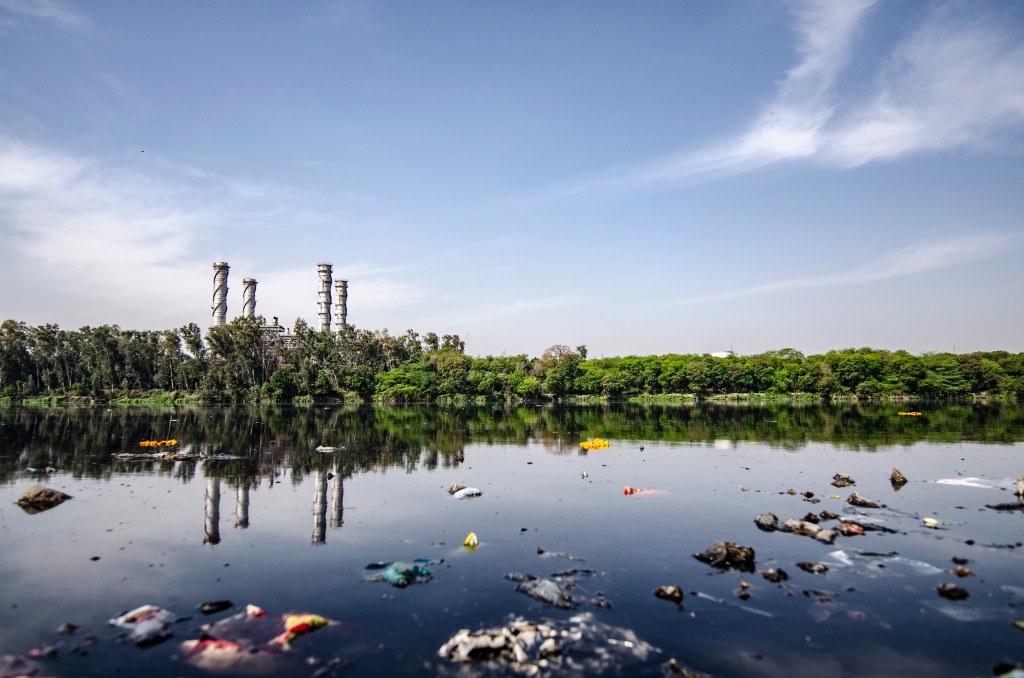
Pollution is a taboo that has disturbed our ears since the day we can remember. Activities such as disposing of different wastes without treatment in rivers, pollution caused by tourism on lakes and sea coasts, bathing and other similar activities in the vicinity of drinking water sources and Weeds produced in water are the main causes of water pollution.
So how to reduce water pollution?
There is a need for a cooperative policy at international level for conservation of water bodies by regulating oil and nuclear waste in the oceans. Water should become reusable after physical, chemical, mechanical and organic processing processes, and lakes should not be used as outlets for the transport of products.
Traditional ways to conserve water
TRADITIONAL WATER CONSERVATION METHOD
One of the fascinating practices in every culture is that they have developed innovative techniques for all necessary human needs. Water conservation is no exception to this. If so, then can you think about how would it be in India, the land of diversities.
Traditional ways to conserve water in India are,
Bamboo Drip Irrigation System
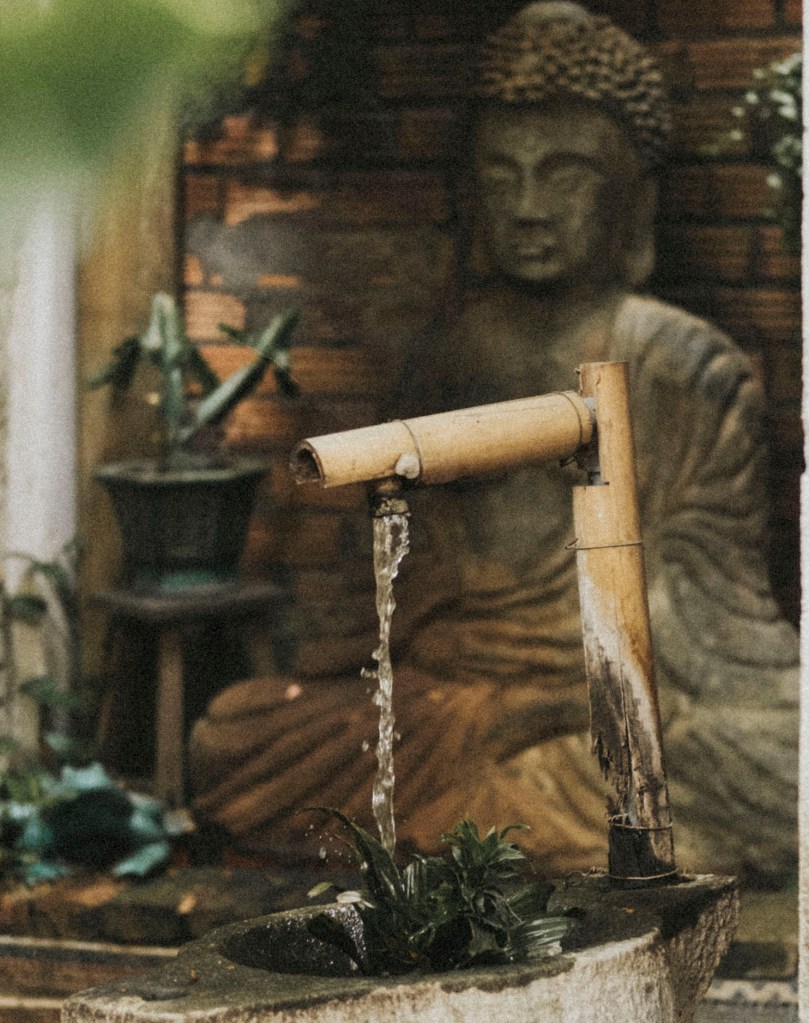
Bamboo is too expensive to use for a low cost building but is a boon for people of Meghalaya. Because, they have been leveraging it for ways to conserve water in India. This system of water conservation is a brilliant drip irrigation system. It uses bamboo of various sizes and reduces the output to 20-80 drops per minute, which is excellent for betel leaf and black pepper crops.
Johads
Johad is a crescent shaped small check dam built from earth and rock to intercept and conserve rainwater in Rajasthan. This helps to improve percolation and increases groundwater recharge.
Kul
Kuls are diversion channels that carry water from a glacier to village. Often spanning long distances, with some over 10 km long, kuls have been around for centuries. They are the lifeline of people of Spiti valley of Himachal Pradesh and in Jammu too.
Eri
One of the oldest water conservation systems in India of Tamil Nadu is still widely used around the State. With over a third of irrigation in the State being made possible due to Eri, the traditional water harvesting system plays an important part in the agriculture. They also have other advantages such as prevention of soil erosion, recharge of groundwater, and flood control.
Zabo
This method of conservation of water in India is a unique combination with animal care, forests and agriculture. Mostly practised in Nagaland, Zabo is used to deal with a lack of drinking water supply. During monsoon, rainwater that falls on the hilltops is collected into the pond like structures that are carved out on the hillsides. The water is then passed onto cattle yards below from where the water enters the paddy fields rich in manure.
See, such still in use water conservation model that tells the beautiful story of water use and conservation doesn’t have copyright and patent problems. It’s open to the whole world. So why can’t we be inspired by them and use suitable conservation method of water in our own lives?
Use of Modern ways to conserve water
On average, 80 percent of the fresh water withdrawn from rivers and groundwater is used to produce food and other agricultural products. Therefore, we need to pay attention to improved ways of irrigation such as sprinkler and drip irrigation that save 50 per cent water.
In the drip irrigation method, the hole pipes are spread over the surface of the soil so that the crop receives water directly. There is no loss due to evaporation and approximately 95% water is used. This process therefore uses maximum water.
Increasing Forest Cover
According to recent reports, forests cover 31 percent of the world’s land surface, just over 4 billion hectares which is down from the pre-industrial area of 5.9 billion hectare. This needs to be addressed since trees bear drought conditions for a long duration as compared to crops and they are helpful in reducing the demand for water along with recharging water sources.
Flood Management
FLOOD MANAGEMENT
Floods carry with it harmful contaminants such as soil, animal waste, salt, pesticides, and oil which can potentially impact drinking water wells and water quality. By construction of embankments and canals, a large part of the land can be conserved besides minimizing flood losses. Intensive afforestation can also provide security from floods which will be helpful in the absorption of water in the soil.
After such disasters, construction of green building aided byeco friendly materials are preferred. Because they are built with all necessary measures for water conservation.
Conserving Water in Industries
Water has to be re-used after processing. Recycling of water should be developed because normally industrial units dispose off water on the ground surface after using it only once. Because of not re-using it after processing, it also pollutes other water sources. Water demand can also be reduced by recycling used water in industries.
Reuse of Urban Waste
Demand for water has increased in cities due to increasing urbanization. There is no provision for waste water treatment in many cities of various countries of the world. After use of water in urban areas, disposed waste water can be treated and conserved for use in agriculture in the peripheral areas of cities. Such policies should be incorporated while planning urban development.
Population Control
The world’s population is growing by approximately 80 million people every year. Changes in lifestyles and eating habits in recent years require more per- capita water consumption. Biofuel production has also increased sharply in recent years, with a significant impact on the demand for water. It’s obvious that a controlled population can avoid a tug of war for water by reducing the demand as well as the qualitative deterioration of water.
Water conservation by Municipal bodies
According to the World Economic Forum’s 2015 Global Risk report, around one third of the global population is currently water stressed, with about one billion people not getting safe drinking water. the water crisis is perceived as a top-order threat. In this nerve wracking situation, a governing body is indeed and they should exhort awareness on how to conserve water and capacity building among people.
Use of water from hot waterfalls
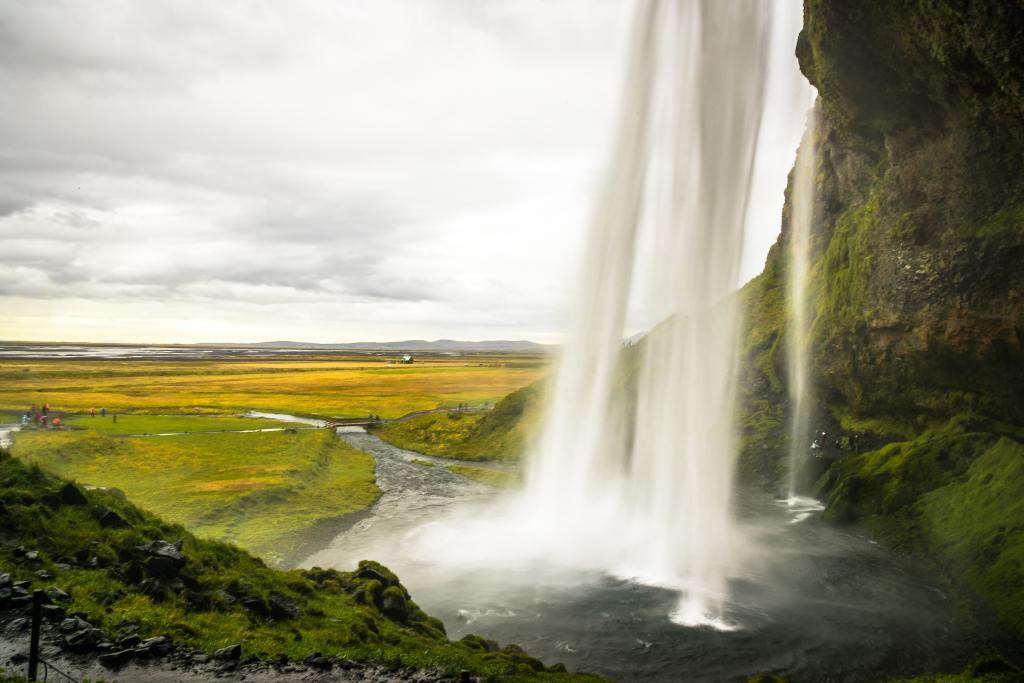
WATER FALL CAN BE USED AS A SOURCE
Scientifically, there are hypotheses that negative ions that are present in waterfalls increase serotonin levels, which ultimately enhances our mood. Wah! That’s great. And this geothermal water serves as a source too in the battle against water scarcity.
So, ready to stand together with the world to avoid the next world war?
AAC Blocks or Autoclaved Aerated Concrete Blocks are a lightweight, load-bearing, a durable, eco-sensitive, and economical alternative for conventional bricks. AAC Blocks can be customised to satisfy dimensional requirements. When compared to concrete,wood ,brick and stone AAC block possess excellent insulation, fire-resistant, and thermal resistant properties. AAC block can enhance construction speed and reduce costs.
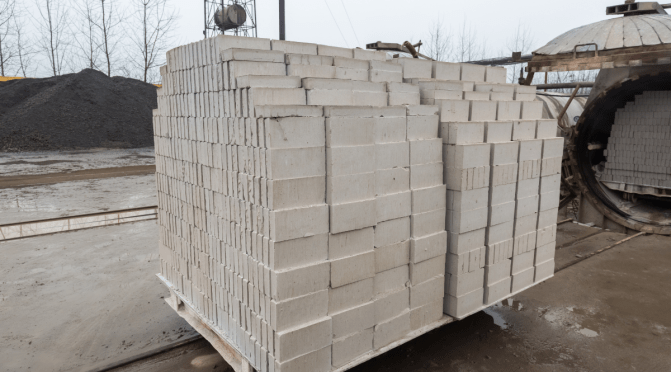
AAC BLOCKS LAYING
AAC Blocks Manufacturing
AAC block constitute 80% voids and hence it is lightweight and easy to handle. They are manufactured using easily available materials. The ingredients include sand, fly ash, lime, cement, gypsum, and aluminum powder. The manufacturing process is clean and does not emit any hazardous chemicals. Major raw materials used for AAC block manufacturing are industrial wastes like fly ash and gypsum. The manufacturing process is energy efficient eco-friendly certified green building materials.
Ingredients of AAC blocks
The main ingredients of AAC blocks are Fly ash, Sand, Cement, Lime, Gypsum, water, and aluminum powder. Aluminum powder is used as a foaming agent.
Cement used for AAC block manufacturing is OPC 43 or OPC 53 grade cement and is used as a binding material.
Fly ash is an industrial waste from power plants. The density ranges from 600kg/cm3 to 1400kg/cm3. The presence of fly ash is responsible for imparting insulation and fire-resistant properties of AAC blocks.
The lime is obtained by grinding limestone in the block manufacturing factory or outsourcing as lime powder.
Aluminum is used as a foaming agent and is responsible for the development of voids inside the blocks.
Gypsum is an industrial waste generated from fertiliser plants and is abundantly available.
AAC Blocks manufacturing process
The manufacturing process of AAC blocks is associated with a series of operations starting from, feeding of ingredients to the stacking of blocks. Every stage is associated with strict manufacturing quality guidelines for ensuring requisite strength and density. AAC block manufacturing processes are broadly classified as follows.
Raw material preparation
Dosing & mixing
Moulding, rising and pre-curing
De-moulding and Wire cutting
Autoclaving
Raw material Preparation
The basic ingredients required for AAC block manufacturing are fly ash or sand. Fly ash is abundantly available as industrial waste from power plants. Hence fly ash is used for manufacturing AAC blocks. It is mixed with water to form fly ash slurry which is stored in containers for the next stage of operation.
Dosing and mixing
The fly ash slurry is stored in a container which is connected to a mixing drum. All other ingredients like lime powder, gypsum, and cement are stored in different storage containers and are fed into the mixing drum using screw conveyors. Automatic feeding systems are attached to each storage container to ensure correct ingredient proportions. The proportioned ingredients are simultaneously fed to a mixing drum where it is mixed thoroughly. Aluminum dosing is done through a feeding attachment and is controlled according to the requirement. The ingredients are thoroughly mixed and ready to be poured into the moulds.
MIXING DRUM
Moulding, rising and Pre-curing
The casting of AAC blocks is done in moulds. The moulds are cleaned and coated with oil to avoid any sticking of the ingredients on the surfaces of the mould which in turn can hamper the surface finish of blocks. Already mixed slurry is poured into the oiled moulds. Inside the moulds, the aluminum reacts with calcium hydroxide (lime) and water and produces a lot of unconnected hydrogen bubbles and expands the slurry. The expansion is almost twice that of the original volume. This process is called rising. These hydrogen bubble spaces are responsible for the lightweight characteristics of AAC blocks. The process of rising is followed by de-moulding and cutting the blocks. The cutting of the blocks into the required sizes requires some strength for the cube. For that, the mould is allowed to settle and cure for a while just enough for the wire cutting process. The pre-curing time can be anywhere between 1-3 hours or more depending on weather conditions. This can be done by indirect heating also. After the pre-curing process, the green cake is strong enough for a wire cut.
De-moulding and Wire cutting
The pre-cured moulds are carried to the cutting area. The moulds are removed and the green cake is wire cut as per the required sizes. The wire cutting process is done in two stages. The first stage is a vertical cut and the second stage is a horizontal cut. De-moulding and cutting give the dimensional perfection and finish of the AAC blocks. This process has to be done with utmost care or else rejection may happen.
WIRE CUTTING OF AAC BLOCKS
Autoclaving of AAC blocks
The final process of manufacturing is autoclaving. The wire cut blocks are transported to an autoclaved chamber where is heated to the required temperature. This process gives the desired durability and structural stability to AAC blocks. The baking is done for about 8-12 hours at a temperature of around 180 degrees. The temperature and period of heating determine the grade of the materials. Curing in an autoclave reduces drying shrinkage.The autoclave curing process requires more energy and a more expensive kiln, but it can produce blocks in less time.
The blocks are stacked on pellets on completion of autoclaving process for transporting to the required destinations. All quality tests are conducted in the factory itself.
The powder coating process is a method of spraying electrostatically charged dry powder over the material surface. The powder coating process is also known as the electrostatic spray deposition process. The dry powder constitutes a combination of finely ground pigments and resins. Powder coating was introduced in the late 1980 s and is being extensively used in the industrial, commercial, and household applications. This process provides a smooth, durable, decorative, and a corrosion-resistant coating.
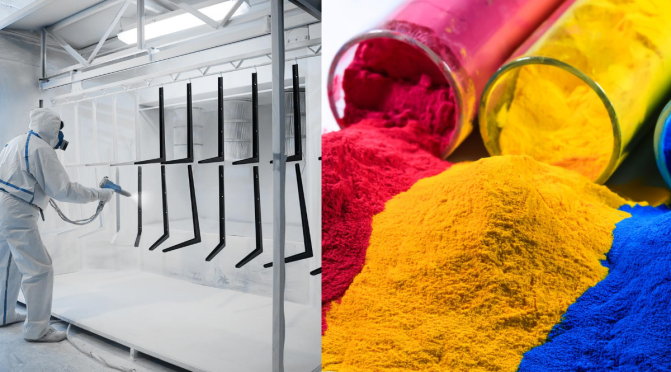
POWDER COATING PROCESS
Difference between Powder coating process and Polyester Powder coating
A lot of confusion is prevailing between the terms, “Powder Coating” and “Polyester powder” coating. Powder coating is the method of application of electrostatically charged dry powder to the material to be coated. Powder coating can be applied on any surface. However, the powder coating ingredients differs with material types and the environment where it is used. The most popular powder coating types are Epoxy Powder Coating, Polyester Powder Coating, and Hybrid Powder Coatings.
Polyester powder coatings preferred in applications are classified into TGIC Polyester coating and Urethane polyester coating. For aluminium extrusions, TGIC Polyester coating is preferred due to there low temperature curing properties.
Powder coating process is broadly classified into three important stages.
Surface preparation
Powder coating process
Curing process
Surface Preparation
The durability and serviceability of a coating depend on the quality of surface preparation. Surface preparation is essential to remove the dirt, grease, and other impurities from the material surface. The cleaning process includes various stages of cleaning, rinsing, etching, blasting, and drying, etc. The surface preparation stages are as follows.
Chemical cleaning
Conversion coating
Chemical cleaning
The chemical cleaning process uses mild alkalies(caustic soda), acids, and detergents for cleaning. The cleaning process is followed by rinsing with hot water, steam, detergent, etc. However, the type of acid/alkali cleaners depends on the material type to be coated. For example, aluminium is sensitive to acid attacks and requires mild alkaline cleaners. Rinsing with nitric acid done on anodised surfaces. On completion of the cleaning process, the surface feels smooth and free from grease, oil, impurities, etc
REMOVING MATERIALS FROM OVEN
b) Conversion coating
A conversion coating is applied on the surface to enable strong adhesion with powder coating. The chemical solutions for conversion coating are selected based on the type of material to be coated. For aluminium surfaces, the conversion coating is applied for a surface with strong adhesive nature and to arrest the progress of oxidation before powder coating.
For aluminium surfaces, conversion coating uses chromatic or phosphate solutions. In mild steel Zinc phosphate/ iron phosphate solutions are used. After completing the conversion coating, the coated material is cleaned in rinsing tanks. The final rinse is done using simonized water. The rinsing process removes chemical salts and other residues from the surface of the material that can trigger corrosion and can affect the coating adhesion properties.
On completion of the conversion coating, the material is dried in a drying oven to remove any possible moisture before application of the coating.
Powder coating process-Types
Once the drying process is over, the clean and dry material from the drying oven is shifted to a powder coating booth for powder coating. The powder coating application is commonly done in two methods based on the type of material and environment where it is used.
Electrostatic deposition
Fludized bed powder coating
Electrostatic deposition
In Electrostatic spray deposition or ESD method of powder coating, the finely ground powder is sprayed by a gun to the material. The entire system constitutes a spray booth, a powder feeder, an electrostatic spray gun, and a power unit. For the ESD process of powder coating, a finely ground resin and pigment powder are charged inside a gun. The material to be coated is grounded/earthed to provide an opposite charge. The electrically charged particles from the gun are sprayed on to the earthed material. The powder on leaving the gun gets attracted to the earthed parts due to electrostatic attraction. In this process, areas that are not even in line with the gun also get attracted to the material to be coated. The powder will continue to stick on the surface as long as it is grounded/earthed. The thickness of the coatings depends on the type of environment the part will be used in. Any powder left after the coating is reclaimed and reused.
POWDER COATED MATERIALS
Fluidized bed powder coating process
In the Electrostatic deposition process, the powder coating material is electrostatically sprayed and adhered to the surface. But in the case of fluidized bed powder coating, preheated parts are dipped to the powder material within a fluidized bed. There is also an alternative option called electrostatic fluidized bed powder coating, which generates a cloud of electrically charged powder particles above the fluidized bed through which the part to be coated is passed.
Curing of coated materials
The coated materials are co to an oven, where the painting process gets completed by ‘curing’ the particles. The oven heats the metal to about 200°C. The high temperature first fuses and melts the powder particles, allowing them to flow together to form a film and then cures the resin system in the film to form a smooth surface. Other additives within the powder formulation make them anchored to the conversion coating, developing a cohesive structure. After the curing oven, sections are transported to a cooling station, inspected, packed, and dispatched.
CURING BOOTH FOR POWDER COATING
Advantages of powder coatings process over liquid coatings
The wet painting system was the most common and traditional coating method. In this method, water-based or solvent-based paint is sprayed or painted to the material surface. Many concerns or issues associated with liquid paints are eliminated or minimised with the powder coating process. The advantages of powder coating over wet paint are listed below.
Resistance to corrosion and chemicals
Powder coatings are more durable and more resistant to corrosion, chemicals, weather, etc than liquid coatings. Powder coating provides wear, scratch-free, and abrasion-resistant coatings in comparison with liquid paints. The application process of powder coating is thermal bonding which provides a uniform, smooth, and even coating. The colours always look fresh and bright and give a refreshing look than liquid paints.
Color choice
Powder coatings offer an unlimited range of colours, finishes, textures, which is not achievable through any type of conventional liquid coating method. Powder coating can match the colour scheme of any object/structure. The enormous choice of colours and textures ranging from matt, glossy, and textured to metallic finishes makes powder coating one of the most preferred coating choices. Powder coating can be used as a protective coating as well as decorative applications.
POWDER COATING COLOURS
Durability of powder coating
Powder coatings are long-lasting and durable than any other liquid coatings. Powder coatings offer high resistance to impact, moisture, chemicals, wear, and abrasion compared to any other liquid coatings. They can also protect the materials against possible scratches occurring during the fabrication and fixing of the material and can be used in high traffic areas.
Environmental friendly
The liquid coatings emit VOC s (volatile organic compounds) due to the presence of solvents and cause serious environmental issues. Powder coating is free of any solvents and does not emit any VOCs and is thereby considered a green product. Moreover, the powder coating process does not create any hazardous waste that needs disposal. Any waste powder left after the coating is reclaimed and used. Powder coating is considered an environmentally friendly alternative to liquid coatings and thereby extensively used for green building-related projects.
Operational cost of powder coating
Powder coating is an economic option when compared with other organic finishes/ liquid painting methods. The powder coating application can be done with minimal training and supervision and thereby can reduce costs related to labour and operations. Powders left after the coating is recycled and reused. Fewer energy costs, reduced disposal costs, and low reject costs makes powder coating an economical option. Powder coating also has a longer life span when compared to other coatings and this can be another value addition in terms of money.
Safety
Liquid paints are flammable, carcinogenic, and full of volatile organic compounds and are harmful to the environment as well as the workers involved in the process, if not handled properly. Powder coating consists of solids and no solvents and hence is not harmful to persons handling it. Moreover, powder coatings possess good fire rating qualities in comparison with other liquid coatings.
Disadvantages of powder coating process
Thin coatings are difficult to produce
Powder coatings are 100% solid and because of this, even with a minimum amount of application, the initial thickness is formed. Moreover, it does not contain any volatile organic compounds. This makes it impossible to have thicknesses of less than 25 microns. Whereas in liquid paint, we have paint thinner and it is possible to have a lower percentage of solids, the film thickness can even be limited to 10 microns.
Failure of coating on exposed to atmosphere
On exposure to extreme atmospheric conditions like sunlight, heat, humidity, etc powder coating tends to fail, crack, and peel off. Hence not preferred for external applications involving exposure to extreme atmospheric conditions.
Color change after application
The production process and blending of powder coatings are carried out in a molten form. Hence it is not possible to change the color after production. Whereas in liquid paint we can change the color in all the stages, even when applying the paint, by adding stainers and pigments.
Size of coating material
The spray equipment and method of application of powder coatings confine the coating application to spray chambers only. Substrates must be charged and on completion of the coating. The materials have to be transferred to an oven where the curing process involving a temperature up to 200 degrees is done. Considering these conditions, it is not possible to coat and cure large substrates.
Oven curing
Powder coatings only dry and cure in temperatures above 180 degrees. Whereas liquid paints are varied and could dry up even in room temperature.
Control of material quantity and smoothness
Powder coating offers less control over the speed and amount of powder coating applied. The smoothness of the coating cannot be controlled as it is happening inside the oven.
Start up costs
The start up costs are high for powder coatings. Requires skilled workers for coating and operation of the plant.
After considering the limitations and advantages of powder coatings, and the selected product to be coated, you can evaluate whether coating metals with liquid paint or powder is more suitable.
Uses of powder coating process
Powder coating process is being used for a wide range of applications ranging from household , commercial, industrial ,automobile sectors.
Appliances
Powder coating is used for appliances like stoves, refrigerators, washers, dryers, dishwashers, air conditioners, water heaters, microwave ovens, and many other areas.
POWDER COATED HOUSE HOLD APPLIANCES
Automotive
Powder coating is used often in the automotive industry for engine parts and componets. It is also used by major auto brands as a clear top coat for increasing protection
Commercial Buildings and Offices
Powder coating is used for doors, windows, partions, roofing, cladding etc for residential buildings, commercial buiding etc.
Everywhere you look there are various building and highway projects which use powder coating as well – guardrails, light poles, fencing, posts, and signs are a few examples.
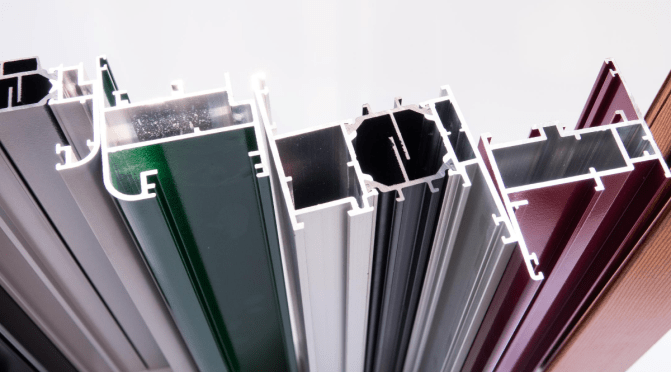
ALUMINIUM DOORS AND WINDOWS
Normal Daily Products
Many daily products are being powder coated to increase the quality of finishes. These products include antennas, lighting fixtures, and electrical elements. Farm equipment and tractors use powder coating. Fitness industries use powder coating on golf cards, golf clubs, ski poles, bicycles, snowmobiles, and other different types of exercise equipment.
Powder coating is also used for supermarkets, stores, malls etc . Every where around us we can see a material using powder coating.
Aluminium Anodising is an electrochemical process done on aluminium to increase the thickness of thin natural oxide coating and thereby enhance its corrosion properties. In our previous article Properties of Aluminium, the reasons behind applying a coating are described in detail. The anodic layer is non-conductive and acts as an insulation against electricity, sound, and heat. Aluminium anodising can increase the aesthetic look, absorb wear and tear and provide requisite durability against possible scratches occurred during handling, fabrication, and erection.
What is Aluminium Anodising ?
Anodising is an electrochemical process that transforms the metal surface into a decorative, durable, and anti corrosive anodic oxide finish. The Anodising process is conducted by passing an electric current through an electrolyte with aluminium to be coated as an anode. The oxygen ions released from the electrolyte get deposited on the surface of the object/anode. Oxygen reacts with aluminium to produce aluminium oxide. The thickness of Anodising ranges from 4 microns to 30 microns or some times more.
ANODISING TANK
Aluminium Anodising Process
The process of anodising is divided into stages depending upon t
Pre-treatment
The products to be anodised are cleaned in acid or alkali solutions to remove the dirt, grease, and other impurities from the surface. The pre-treatment method depends on the types of finish to be applied. The material is de-oxidised in an acidic solution to remove the natural oxide film.
Etching
Etching involves the removal of some parts of aluminium from the surface. This can be done using alkali or acid according to the finish coat type and texture. For satin finishes and precision parts light etching is done using alkali where minimum etching is done just enough to remove the natural oxide film. The alkaline solution used for light etching is Sodium Hydroxide. For non-precision parts and architectural extrusions, minor scratches and dye markings will be visible. Hence etching is done by treating in a concentrated mixture of phosphoric and nitric acids.
Etching process of aluminium
Brightening
Brightening is a micro level treatment done on the aluminium surface by chemical or eletrochemical means. This is done to level up the undulations. This provides a high lustre on the surface for receiving the coatings
Aluminium Anodising
The aluminium part to be anodised is submerged in an electrolyte solution. The electrolyte used in this process is sulphuric acid. The positive charge is applied to the submerged aluminium which acts as an anode and negative charge is applied to the plates suspended in the electrolyte. High voltage direct current is passed through the electrolyte constituting positive and negative ions. The electric current in the circuit causes positive ions to get attracted to the negative plates, and negative ions to flock to the positive aluminium anode.
Anodising aluminium in an electrolyte
Formation of barrier layer
The aluminium combines with the negatively charged oxygen ions to create aluminium oxide. This process develops a metal oxide film on the surface of aluminium that is treated. The layer quality can be adjusted with the concentration of solution and temperature.This is called a barrier layer, a defence against further chemical reactions at those spots.
FORMATION OF BARRIER LAYER
As current continues to be applied, the relatively weak and reactive areas of the pores will continue to penetrate deeper into the substrate, forming a series of column-like hollow structures. At this point the surface is porous and attracts dirt and other substances. Colour can be added at this stage.
SEQUENCE OF PORES FORMATION DURING ANODISING
For typical non-hard coatings, the depth can be up to 10 microns. Once this level is reached, and if no colour is needed, the process is stopped.
Sealing process
The final stage is sealing of pores and the process involves in dipping in a de-ionised water rinsing.
The coating can withstand chemical attack, scratch resistant and have a hardness index of 9 out of 10 in Mohs Hardness scale , means second only to diamond.
Application of colour
As mentioned above the barrier layer is porous like what is shown in the figure. At this stage we can go application of colour. The pigments fills the porous.
The pigment fills all the empty pores up to the surface, where it’s then permanently sealed off. That’s why anodised colours are so durable – they can’t be scratched off from the surface because in fact the colours are deep down and can only be removed by grinding away the substrate.
COLOUR/PIGMENT FILLING IN THE PORES
After colouring, anodised aluminium has a characteristic “metallic” look. This is caused because of the roughness left after a uniform electro-chemical etching. The deeper the pores, the rougher the surface will be but the colours will also be that much more durable.
Technique of colour anodising
There are several techniques for colour anodising aluminium. One technique is electrolytic colouring, which involves immersing the anodised aluminium in an inorganic metal salt bath. An electric current is applied to this bath as the metal salts oxidise in the aluminium’s pores. Depending on the chemical conditions of the bath and the length of time immersed, the aluminium colour will vary. Popular anodised colour finishes include gold, black, stainless, clear, brown, bronze, and nickel.
Advantages of aluminium anodising
Anodised aluminium possesses a lot of advantages over any other type of coatings. What is unique, is that no additional layer is applied to the aluminium during anodising. Anodising creates a layer that is built up from the existing aluminium. The oxide layer is fully integrated into the material.
a) Appearance of aluminium anodising
Anodising protects the natural feel and appearance of aluminium with its aesthetically pleasing looks. Anodised look feels better than a painted artificial look.
b) Resistance to corrosion & wear
Anodising increases corrosion resistance and the material retains its appearance for a longer period. Anodising creates a hard, wear-resistant layer which protects the underlying aluminium. Anodised aluminium is used in high traffic areas subjected to excessive wear and abrasion. It can also be used in areas exposed to sunlight, humidity, heat, etc without any effect on the coating.
c) Increase life span of aluminium anodising
Anodising is a very old and proven process. Anodised materials have a greater life span when compared with any other coating material.
d) Adhesion
Unlike paints and powder coatings, anodising is not a coating. Hence it may not fade or peel off when exposed to atmospheric conditions like sunlight, heat, moisture, etc.
e) Abrasion resistant
The aluminium oxide layer is one of the hardest material next to diamond. The anodic layer is capable of withstanding wear and abrasion in transportation, handling, and fabrication. Powder coatings are not as harder as anodised aluminium.
f) Environmental Friendly and VOC s
The process of anodising aluminium is an environmentally friendly metal coating technique. It does not emit any volatile organic compounds. (VOC s). The waste of aluminium anodising constitutes aluminium sulphate and aluminium hydroxide which are recycled and used in water treatment systems and cosmetics. Anodised aluminium can be used in green buildings.
Anodised Aluminium used for Green Building
g) Surface finish
Anodising creates a uniform and regular finish. The problem of orange peeling and high coating thickness may not occur in anodising. Anodising can be applied to modified materials also.
h) 100% Recyclable
Anodised Aluminium can be recycled and reused to any extend. The recycled product possesses the same quality as the virgin product. Coating removal is not necessary before recycling like other coating products.
i) Filiform corrosion
The diminishing of the internal layer between the aluminium surface and the coating doesn’t happen in anodising like other coatings.
J) Chalking
Chalking is the formation of fine powder on the surfaces of paint films due to weathering, whereas in aluminium no chalking will be formed. The colour , gloss, texture etc shall be retained in all atmospheric conditions.
Aluminium anodising – Applications
Anodised aluminium is used in a lot of applications.
a) Building and construction sector in the form or extrusions which are fabricated and erected for sky light,facades, green building, handrails,doors and windows etc.
b) Used for automobile, boat and aircraft parts
c) Food processing industry
d) Decorative works
e) Marine – Yacht masts, pontoons and decks etc
AIRCRAFT PARTS
Demerits of Anodised aluminium
Aluminium anodising got limited colour selection because of the chemicals used in the anodising process. The available colours may not match with the colour scheme of structures.
Touch-up, repair and re coating of anodised product is not possible.
Anodising is vulnerable to lime and cement, Industrial acid, alkali pollutants etc. Anodised aluminium has to be protected while using in under construction buildings.
Anodising is costly than the other polyester coatings.
Anodising does not cover the welded joints.
Shade variation between batches usually happens in anodising.











 vin civilworld