Category Archives: civil engineering

Best Engineering Colleges in India- 10 Best Colleges Full Details

Best Engineering Colleges in India is a topic that every engineering aspirant would love to know. One of the most prestigious and sought-after courses pursued by students in India would be Engineering. Many engineering colleges in India offer undergraduate and postgraduate engineering programs across various disciplines.

Students worldwide study at India’s top-ranked engineering colleges and institutes, which annually produce more engineers than most other countries. In this blog let’s have a look at the 10 best Engineering Colleges across the country.

Let me show you what Engineering is and which are the popular Engineering Colleges in India opted by students.

In layman’s terms, Engineering can be defined as the application of basic scientific principles and maths to find solutions to the problems faced by society.

Top 15 Engineering Colleges
Best 10 Engineering Colleges
CollegeDetailsLocationStateScore out of 100NIRF Rank
IIT MadrasMore DetailsChennaiTamil Nadu89.931
IIT  DelhiMore DetailsNew DelhiDelhi88.082
IIT BombayMore DetailsMumbaiMaharashtra85.083
IIT KanpurMore DetailsKanpurUttar Pradesh82.184
IIT KharagpurMore DetailsKharagpurWest Bengal80.565
IIT RoorkeeMore DetailsRoorkeeUttarakhand76.296
IIT GuwahatiMore DetailsGuwahatiAssam74.907
IIT HyderabadMore DetailsHyderabadTelangana66.448
NIT TiruchirappalliMore DetailsTiruchirappalliTamil Nadu64.109
IIT IndoreMore DetailsIndoreMadhya Pradesh62.8810
IIT (BHU) VaranasiMore DetailsVaranasiUttar Pradesh62.5411
IIT (ISM) DhanbadMore DetailsDhanbadJharkhand62.0612
NIT SurathkalMore DetailsSurathkalKarnataka61.3013
Anna UniversityMore DetailsChennaiTamil Nadu59.8914
Vellore Institute Of TechnologyMore DetailsVelloreTamil Nadu59.3215

Now let’s have a closer look at the best 10 Colleges

Best Engineering Colleges in India

1. IIT Madras- One of the best Engineering Colleges in India for 5 years in a row

IIT Madras boasts of a vibrant residential campus situated in Chennai, which provides an unparallel environment for the personal and professional growth of students. 

  • Ranked as the top engineering institute in India for 5 years in a row (2016-2020) by the NIRF.
  • Has a deep technology startup ecosystem, excellent campus infrastructure, generous alumni support, and involvement
  • Offers UG and PG degree programs, M.S. and Ph.D. research programs across 16 departments.
  • Placements: Average – Rs. 8 L.P.A/- Highest – Rs. 95.8 L.P.A/-
  • Admission/ Entrance Exam:  JEE Advanced and GATE

Also read: BE Civil engineering subjects semester wise complete details.

2. IIT Delhi

Situated in Delhi, the capital of India, it is one of the finest institutions in India.

  • Offers various disciplines including Engineering, Physical Sciences, Management, and Humanities & Social Sciences.
  • Placements: Average – Rs. 17.53 L.P.A/- Highest – Rs. 27.07 L.P.A/-
  • Admission/ Entrance Exam:  JEE Advanced and GATE

3. IIT Bombay- Best Engineering Colleges in India (QS Ranking)

Located in Powai, Mumbai the strategic location offers the advantage of being in the financial capital of the country while enjoying the serene natural beauty of the campus which shares borders with the Sanjay Gandhi National Park.

  • With an overall score of 79.9, it was Ranked 1st in India and 49th globally in Engineering and Technology in the Quacquarelli Symonds (QS) World University Rankings.
  • Placements: Average – Rs. 10 L.P.A/- Highest – Rs. 182 L.P.A/-
  • Admission/ Entrance Exam:  JEE Advanced and GATE

If you wish to dig into your ideas in the lap of nature like Newton did once, then IIT Bombay is your place.

4. IIT Kanpur

A premier institute located in the city of Kanpur with the motto of creating, disseminating, and translating knowledge in science, engineering, and allied disciplines.

  • IIT Kanpur has some of the unique innovations to its credit including the first solar-powered Indian-made UAV and India’s first nanosatellite Jugnu.
  • Offers a host of interdisciplinary programs like Cognitive Science, Nanotechnology, Nuclear Engineering, etc.
  • Placements: Average – Rs. 10 L.P.A/- Highest – Rs. 100 L.P.A/-
  • Admission/ Entrance Exam:  JEE Advanced and GATE

Also read: Civil engineering subjects; Skills mastered and Applications.

5. IIT Kharagpur

Spread over 2100 acres of campus at Kharagpur, this premier institute welcomes its students not only with libraries and classrooms but also with lush greenery, lakes, lawns, stadiums, tennis courts, hockey, football, and cricket grounds, as well as a gym and a swimming pool.

  • Offers about 30 micro-specialisation courses including intellectual property rights, quality engineering, management, law, social science, and foreign languages.
  • At the end of your B.Tech, the institute molds you into something more than a techie.
  • It boasts of notable alumni like Sundar Pichai
  • Placements: Average – Rs. 10 L.P.A/- Highest – Rs. 42 L.P.A/-
  • Admission/ Entrance Exam:  JEE Advanced and GATE

6. IIT Roorkee-Oldest among best engineering colleges in India

With 174 years of rich heritage, IIT Roorkee is the oldest technical institution in Asia. It is located at Roorkee in Uttarakhand.

  • Has 21 academic departments which cover engineering, applied sciences, humanities & social sciences, and management programs.
  • Also ranked 12th among management schools in India by the National Institutional Ranking Framework in 2020
  • Placements: Average – Rs. 10 L.P.A/- Highest – Rs. 80 L.P.A/-
  • Admission/ Entrance Exam:  JEE Advanced and GATE

7. IIT Guwahati

With the mighty Brahmaputra river flowing on one side and hills on the other, IIT Guwahati has probably the most beautiful campus in India.

  • Hosts Param-Ishan which is the fastest and most powerful supercomputer in northeastern, eastern, and southern regions of the country.
  • Offers B.Tech, B.Des, M.Tech., M.Des., MA, M.sc., and Ph.D. programs over 11 departments.
  • Placements: Average – Rs. 14.6 L.P.A/-
  • Admission/ Entrance Exam:  JEE Advanced and GATE

8. IIT Hyderabad

Located in Hyderabad, it is the first institute to launch an executive MTech Programme in Data Science for working executives and professionals.

  • Offers courses in liberal arts and creative arts including macroeconomics, introductory psychology, Japanese, French, German language, etc.
  • Placements: Average – Rs. 10 L.P.A/- Highest – Rs. 35 L.P.A/-
  • Admission/ Entrance Exam: JEE Advanced and GATE

9. NIT Tiruchirappalli

Located at Trichy, Tamil Nadu the 800 acres campus of NIT Trichy is one of the largest academic campuses in India.

  • Has been retaining its No.1 position among all NITs for 5 years in a row in the “India Rankings 2020” released by NIRF.
  • Best among all NITs.
  • Bagged the  “University of the Year” award in the Federation of Indian Chambers of Commerce and Industry awards in 2017
  • Placements: Average – Rs. 9 L.P.A/- Highest – Rs. 70 L.P.A/-
  • Admission/ Entrance Exam:  JEE Mains and GATE

10. IIT Indore 

It is located in Indore, Madhya Pradesh, and is one of the newly established IITs.

  • Despite being a relatively young IIT, it has proved its stature with higher rankings, 98% placement rate, 100% Ph.D. holding faculty, and 8.19% surge in the graduation rate.
  • Placements: Average – Rs. 16 L.P.A/- Highest – Rs. 36.48 L.P.A/-
  • Admission/ Entrance Exam:  JEE Advanced and GATE

Also see: Basics of civil Engineering -Simple and in depth guide.

So you have got an idea about the best colleges in India. Let me know which is your dream college and why you wish to study in that particular college. Comment below.

What is Prefabrication in construction? Advantages and Disadvantages

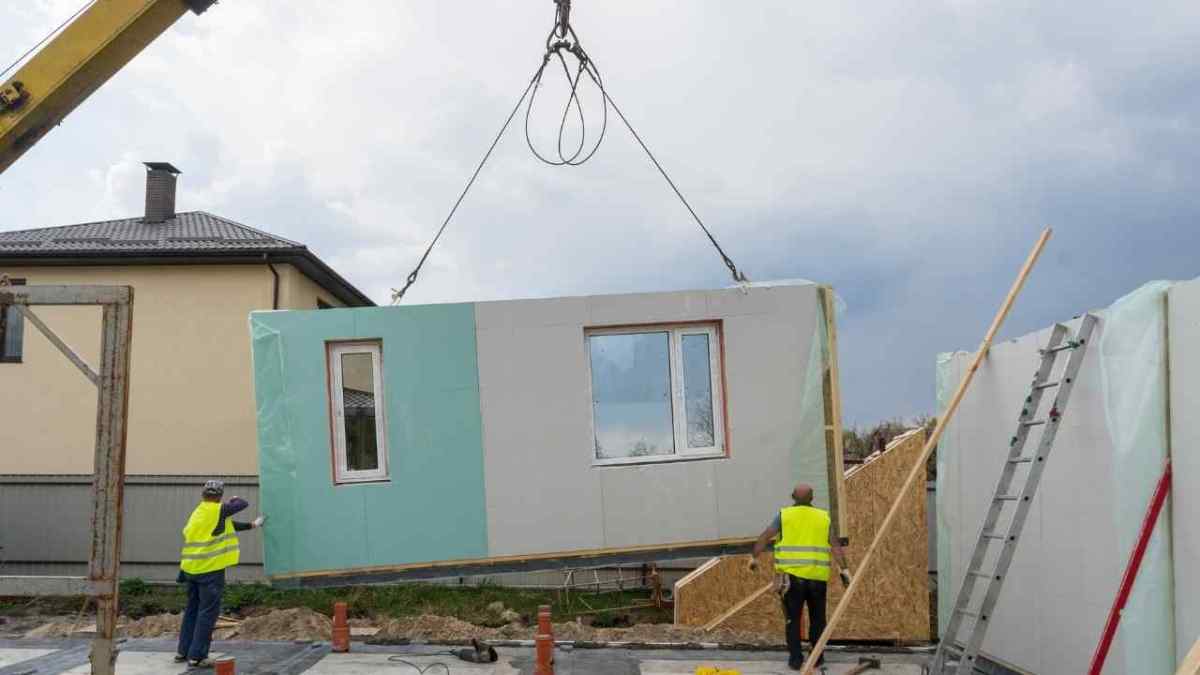
Prefabricated construction, or “prefab,” is a method of construction that  uses components made off-site in a factory, which are then transported put together on-site to create a structure. Prefabrication is an amazing technology that helps to reduce time and have many more benefits.Construction has always been about the speed and efficiency that can be ensured with the materials and techniques of construction.

In this blog, we will find out all the details about the same.

Let’s start from the definition.

What is prefabrication?

Prefabricated construction, or “prefab,” is a method of construction that uses components made off-site in a factory, which are then transported put together on-site to create a structure.

With different advantages to offer, there are a few different common types of prefab. You may want to consider incorporating any of these solutions, depending on your particular building project.

So, that’s the basic details. We will discuss about the benefits in next section.

Other related posts from vincivilworld

Benefits of prefabrication

Prefabrication setup

1. Mitigating the labour shortage:

  • It is already difficult for contractors to find labour, but construction still needs to take place.
  • It decreases labour productivity much more as on-site building continues piecemeal.
  • Therefore, prefabrication helps businesses speed up timelines, make the most of their on-site labour, improve efficiency, and succeed in the marketplace.

2. Cost-effectiveness:

  • It also costs less to transport partial assemblies from a factory than to move pre-production resources to each site.
  • Plus, as labour efficiency increases, personnel-related costs decline.

3. Time savings:

  • Time is the essence of the rainy season, and prefabrication will help you manage tighter timelines.

4. Quality control:

  • Factory tools can provide added quality assurance as opposed to repetitive construction on-site.
  • In addition, consistent factory indoor environments remove much of the weather effects on manufacturing, while streamlined manufacturing and production improve job site safety on the whole.

5. Lower environmental impact:

  • Accelerated offsite production of parts results in reduced emissions and work disruption.
  • This preserves wetlands or protected areas nearby and minimises local flora and fauna disturbance.
  • The controlled, dry environment of modular construction saves water consumption and allows scrap and other materials to be recycled.
  • Plus, fossil fuel consumption plummets with less on-site traffic and streamlined transportation.

6. Better safety and security:

  • By reducing a construction site’s timeframe, you simultaneously decrease the amount of time that the site is vulnerable to vandalism or robbery.

7. Flexibility:

  • It is easy to disassemble and move modular construction to various sites.
  • This greatly decreases the demand for raw materials, minimises the resources spent and overall reduces time.
  • Modular construction also allows for versatility in the structure’s design, allowing for an infinite number of possibilities.
  • Since prefabricated building units can be used in various spaces, their neutral aesthetics can be combined with almost any form of construction.

8. Reduced Site Disruption:

  • There is much fewer truck traffic, machinery and material suppliers around the final construction site as several parts of a building are completed in the factory.
  • The disturbance of conventional workplaces suffering from noise, emissions, waste and other common irritants is therefore minimal.
  • This structured design approach offers a much more productive productivity environment and removes unwanted disruptions and interruptions typical of construction sites.

Time to know the challenges of prefabrication.

Challenges of Prefab Construction

Construction site of prefabricated building
  • The joints to be given should be well-built enough to convey all sorts of stresses, connecting the core structure and the components.
  • The strength and solidity of the whole building totally depend on the strength of the joint.
  • Therefore, rather than component-based analysis, it is important to have detailed studies on the whole system.
  • One of the key challenges in embracing prefabrication technology in construction requiring accuracy and precision is the need for skilled labour on-site and the lack of on-site automation.
  • Skill development and native automation are also mandatory for prefabricated systems to be installed.
  • It is likely to get damaged during the erection or transport of heavy machinery units, so the arrangement of the units must be performed precisely and this process in a congested area becomes sloppy.
  • Labour maintenance is another concern because prefabricated construction requires skilled labour as it differs from in-situ construction, which requires machine-oriented expertise both on-site and in the production process.

Now, let me show you the advantages of prefabrication

Advantages of Prefabrication

  • Prefabrication technology has several advantages, such as energy efficiency revision, minimal waste and inspection, efficient construction, work speed, protection, sustainability and quality.
  • As self-supporting ready-made components are used, the need for formwork, shuttering and scaffolding is substantially lowered.
  • Building time is thereby decreased, resulting in lower labour costs.
  • Reduced the quantity of waste materials relative to building on site.
  • Reduction in construction time to allow an earlier return of the invested principal.
  • Construction guarantees precise compliance with building codes and excellent quality assurance.
  • Along with quality control and factory sealing, high-energy performance.
  • It is possible to place prefabrication sites where skilled labour is more readily accessible and the costs of labour, electricity, materials, space and overhead are reduced.
  • Prefabrication permits building throughout the year, regardless of the weather (related to excessive cold, heat, rain, snow, etc.).
  • Material waste from the building is less.
  • Regardless of climatic conditions.
  • Security and worker comfort levels are higher in the off-site building.

Last, but not the least the disadvantages should be known.

Disadvantages/Limitations of prefabrication

Material assembly for prefab construction

The subsequent constraints are known to have restricted design choices, decreased reselling value, high initial expenditure, non-suitability for foundation and precast unit transport.

There are even more drawbacks. They are the following:

  • Leakage occurs in joints in prefabricated parts.
  • For huge prefabricated parts, transportation costs can be high.
  • To ensure affordability through prefabrication, increased production volume is required.
  • Initial costs for construction are higher.
  • The initial production of designs is time-consuming.
  • Large prefabricated parts require heavy-duty cranes and measurement of precision from handling to position on site.
  • Local employment can be lost, as skilled labour is needed.
  • Modular building design and construction requires high levels of cooperation between project parties, particularly architects, structural engineers and manufacturers.
  • These buildings usually depreciate more rapidly than standard site-built housing due to their shorter economic existence.

Hope the time you spent for the article was worth it. Let me know if you have any doubts in comments.

Happy learning!

Total station in surveying– Working Principle of Total station

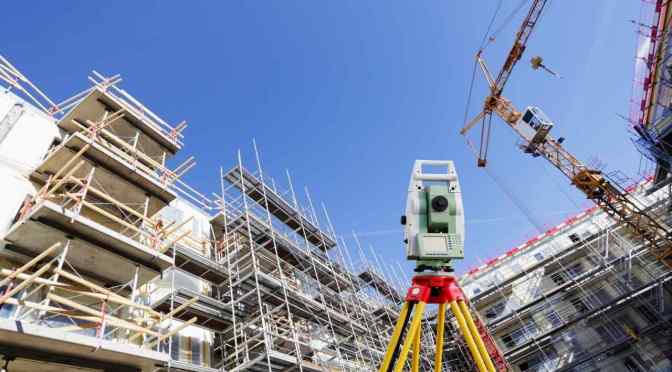
Total station in surveying is used for computing slant distances, horizontal and vertical angles, elevations in topographic and geodetic works, tacheometric surveys, etc. The total station is a pre-eminent contribution to modern surveying and hence the equipment is designed for speed, range, and accuracy. They are a combination of Theodolite and Electronic Distance measurement (EDM). This enables computing the vertical, horizontal as well as slope measurements.

They act as a substitute for theodolite, EDM, Data collectors, and Microprocessors. Moreover, they are lightweight and compact machines and perform like transit stadia and plane table alidades.

The integration of microprocessors helps in the data collection and measurement computation process. Further to that, the inbuilt software helps to generate the maps instantly.

  1. Applications of Total station
  2. Working Principle of Total station
  3. Major components of Total station
  4. Total station applications
    1. Distance measurement
    2. Angular measurement
    3. Data processing 
  5. Setting up of a total station
  6. Advantages of Total station
  7. Disadvantages of Total station
  8. Key Takeaways
  9. Conclusion

Applications of Total station

Apart from taking the measurements, the total station helps in computing, interpreting, and documenting the data. Here is a list of activities that are computed, interpreted, and analyzed.

Total station
Total station
  • Horizontal angle
  • Vertical angle
  • Slope distance
  • Coordinate of point
  • Missing line measurement
  • Area calculation
  • Contour level

Working Principle of Total station

The total station consists of a built-in emitter, capable of emitting microwaves and infrared signals. The wavelength of these emitted waves helps in calculating the distance between the points.
Distance = velocity * time 

Here the distance is calculated by multiplying the time taken to cover a certain distance by the velocity. However, Triangulation and trigonometry methods are adopted for computing the angles and determining the coordinates.

Trending posts……

Major components of Total station

The Equipment is composed of different parts. Below listed are the major components.

Components of total station
Components
Components of total station
  • Handle
  • Handle securing screw
  • Data input/output terminal (Remove handle to view)
  • Instrument height mark
  • Battery cover
  • Operation panel
  • Tribrach clamp
  • Baseplate
  • Levelling foot screw
  • Circular level adjusting screws
  • Circular level
  • Display
  • Prism and prism pole
  • Objective lens
  • Tubular compass slot
  • The optical plummet focusing ring
  • Optical plummet reticle cover
  • Optical plummet eyepiece
  • Horizontal clamp
  • A horizontal fine motion screw
  • Data input/output connector
  • External power source connector
  • Plate level
  • Plate level adjusting screw
  • Vertical clamp
  • A vertical fine motion screw
  • Telescope eyepiece
  • Telescope focusing ring
  • Peep sight
  • Instrument centre mark

A tripod enables one to affix the equipment onto the ground. A handle is available on the top of the equipment for holding it. There are a Data input and output terminal below the handle enabling the data transfer to the computer.
The total station comes with inbuilt software, an operation panel, a keyboard, and a screen. The prism and prism poles help in measuring distances.

Total station applications

The total station consists of an EDM, Theodolite, and a Microprocessor combined into one. They got a memory card for data storage and a battery. A fully charged battery works for about 3 to 5 hrs continuously.

  • Coordination determination
  • Distance measurement
  • Angular measurement
  • Data processing
  • Coordination Determination

The total station determines the coordinate of an unknown point. The instrument is placed over a known coordinate. The equipment digitally computes the coordinates.

Distance measurement

As mentioned earlier, the total station got an inbuilt miniature emitter. The emitters release microwave signals. The prism reflector or object under survey at the other end reflects the waves. Onboard data interpreters compute the distance by emitting and receiving multiple frequencies.

Angular measurement

The total station uses the distance between the point and the time taken by the waves reflected for deciding angular measurement.

Data processing 

The integration of the microprocessor in a total station helps to read and interpret the survey parameters. Subsequently, the data is stored in the memory card of the instrument and later transferred to a computer. They can compute multiple measurements with high precision with compensation for temperature, pressure, and humidity corrections.

Setting up of a total station

  • The basic steps involved in setting up are tripod setup, levelling, and instrument focusing.
  • The tripod legs are placed firmly on the ground with equidistant legs with the head position above the survey point.
  • The total station is placed on the tripod. It is fixed and secured using a centring screw. 
  • The next step is to sharpen the optical plummet towards the survey point. On sharpening, the optical plummet reticle centres the survey point. 
  • The bubble is adjusted to the centre by levelling foot screws
  • The time taken for levelling the equipment depend on the skill of the operator. However, levelling is the topmost activity to maintain the accuracy of measurements.
  • Adjust the plate level by loosening the horizontal clamp. The equipment is parallel to levelling foot screw.
  • Turn the instrument at 90 degrees and level using a 3rd levelling screw.
  • Subsequently, turn on the instrument.
  • Select the tilt function from the opening window followed by adjusting the foot level screw and centre the bubble.
  • Rotate the instrument at 90 degrees. Repeat the process.
  • Finally, adjust the ring and focus the telescope on the target point.
Total station prism
Total station prism

Advantages of Total station

There are a lot of advantages of total station as mentioned below

  • High precision and accuracy.
  • Requires limited manpower 
  • Perform quick fieldwork
  • Reduction in manual errors.
  • Correction for temperature, pressure etc and digitally rectified. 
  • Storage and interpretation of data are easy
  • Time consumed is less.
  • Inbuilt GIS software helps in instant map creation
  • Assists in local languages.

Disadvantages of Total station

  • The cost of the instrument is high.
  • Need highly skilled surveyor with AutoCAD knowledge and professional training.
  • Checking errors during the operation is impossible.
  • Low battery life.

Key Takeaways

  1. Functionality: Total station integrates Theodolite and Electronic Distance Measurement (EDM) for precise surveying.
  2. Components: Includes emitter, microprocessor, prism, and multiple control interfaces.
  3. Applications: Measures horizontal/vertical angles, distances, coordinates, and calculates areas/contours.
  4. Working Principle: Uses microwaves/infrared signals to compute distances via time and velocity; angles through triangulation and trigonometry.
  5. Advantages: High precision, reduced manual errors, quick data processing, minimal manpower, and inbuilt GIS software for instant mapping.
  6. Disadvantages: High cost, requires skilled operators, limited battery life, and no real-time error checking.
  7. Setup Process: Involves tripod positioning, levelling, centring optical plummet, and adjusting levels and focus.

Conclusion

The total station revolutionizes modern surveying with its advanced integration of theodolite, EDM, and microprocessor technology. It enhances efficiency through precise measurements, quick data processing, and inbuilt mapping capabilities. Despite its high cost and need for skilled operation, the total station’s benefits of high accuracy, reduced manpower, and minimized manual errors make it indispensable in topographic, geodetic, and tacheometric surveys. Its ability to handle multiple functions—angle, distance, and coordinate measurements—streamlines surveying tasks, making it a valuable tool for civil engineering and related fields.

Empire state building- Design and construction full guide

Empire state building remains one of the most distinctive and prominent buildings in the United States. And it is one of Modernist Art Deco design’s best examples.

I will walk you through the design and other aspects of the building. Let’s start from scratch.

What is Empire state building?

empire state building image
  • Empire State Building, a 102-story steel-framed skyscraper completed in New York City in 1931 and the world’s tallest building until 1971.
  • In Midtown Manhattan, on Fifth Avenue at 34th Street, is the Empire State Building.
  • Empire state building was the first to have more than 100 floors.

Also read: 3D Printing for construction comprehensive guide

In the next section, we will find out the design of Empire state building.

Design

Empire state building night view
  • The Empire State Building, including its 203-foot (61.9 m) pinnacle, is 1,250 ft (381 m) high to its 102nd floor or 1,453 feet 8 9⁄16 inches (443.092 m) high.
  • The building has 86 available floors; 2.158 million square feet (200,500 m2) of commercial and office space are on the first through 85th floors, while the 86th floor features an observatory.
  • The remaining 16 floors are part of the Art Deco spire, which is capped on the 102nd floor by an observatory, which does not have any intermediate floor levels.
  • The 203 ft (61.9 m) pinnacle is at the top of the 86th storey, most of which is protected by broadcast antennas and surmounted by a lightning rod. 
  • The building was named by the American Society of Civil Engineers as one of the Seven Wonders of the Modern World.
  • The building and its street floor interior are designated as New York City Landmarks Preservation Commission landmarks, and verified by the Estimate Board of New York City.
  • In 1986, it was designated as a National Historic Landmark.
  • It was first on the AIA’s List of Favourite Architecture for America in 2007.

Also read: Modular building different aspect explained

I will show you the construction details in the next section.

Construction

Empire state building view
  • On January 12, 1930, a structural steel contract was awarded, with the construction of the site starting ten days later on January 22, until the old hotel was completely demolished.
  • Two twelve-hour shifts, consisting of 300 men each, continuously worked to dig the foundation of 55 feet (17 m).
  • To house the concrete footings that would protect the steelwork, small pier holes were drilled into the ground.
  • By early March, excavation was almost complete, and work on the building itself began on March 17, with the builders putting the first steel columns on the completed footings before completing the rest of the footings.
  • In anticipation of a revision to the city’s building code, the structural steel was pre-ordered and pre-fabricated to enable the structural steel of the Empire State Building to hold 18,000 pounds per square inch (120,000 kPa), up from 16,000 pounds per square inch (110,000 kPa), thereby reducing the amount of steel required for the building.
  • While the 18,000-psi rule had been safely enforced in other towns, until March 26, 1930, just before the construction was due to begin, Mayor Jimmy Walker did not sign the new codes into law.
  • The first steel structure was built on April 1, 1930.
  • Construction from there continued at a rapid pace; the builders erected fourteen floors within one stretch of 10 working days.
  • This was made possible by precisely organising the planning of the house, as well as by mass manufacturing common materials such as windows and spandrels.
  • On one occasion, when a supplier was unable to supply dark Hauteville marble in a timely manner, Starrett turned to the use of Rose Famosa marble from a German quarry that was purchased specifically to provide ample marble for the project.
  • By June 20, the supporting steel frame of the skyscraper had risen to the 26th floor, and half of the steel structure had been completed by July 27. Starrett Bros.
  • And Eken sought to build one floor a day to speed up construction, a target they almost achieved with their rate of 4 1⁄2 floors a week; prior to this, the fastest rate of construction for a building of similar height (as opposed to the general design, which had been from the roof down).
  • Some of the levels were still awaiting final approval, with many orders placed within an hour of finalising a design.
  • As steelwork was nearing completion on September 10, during a ceremony attended by thousands, Smith laid the cornerstone of the structure.

That’s it about Empire state building. Do you want to know anymore? Let me know in comments.

Golden Gate Bridge: Design and 2 Main Issues

There are several civil engineering wonders around us. Golden gate bridge is one among them. It stands for the talent and power of civil engineers. We will go through all the details of the bridge in the blog.

Let’s start from the basics.

What is golden gate bridge?

  • The Golden Gate Bridge is a suspension bridge between San Francisco Bay and the Pacific Ocean spanning the Golden Gate, the one-mile-wide (1.6 km) strait.
  • The structure connects the northern tip of the San Francisco Peninsula to Marin County in the U.S. city of San Francisco, California, bringing both U.S. The strait is crossed by Route 101 and California State Route 1.
  • One of San Francisco and California’s most globally known landmarks is the bridge.
  • It was initially designed in 1917 by Joseph Strauss, an architect.
  • The American Society of Civil Engineers has proclaimed it one of the Wonders of the Modern World.

Also read: Smart roads complete Information

We will discuss about the design of golden gate bridge in the next section.

Design of golden gate bridge

The Golden Gate Bridge Side View
  • Strauss was the chief engineer in charge of the bridge project’s overall design and construction.
  • But since he had no knowledge or experience in cable suspension structures, other specialists were responsible for much of the engineering and architecture.
  • From a visual viewpoint, Strauss’s initial design proposal (two double cantilever spans connected by a central suspension segment) was inappropriate.
  • Leon Moisseiff, the Manhattan Bridge engineer in New York City, invented and championed the final elegant suspension concept.
  • The overall shape of the bridge towers, the lighting scheme, and Art Deco elements, such as the tower decorations, streetlights, railings, and walkways, were designed by Irving Morrow, a relatively unknown residential architect.
  • Morrow’s personal pick was the iconic Foreign Orange colour, winning out over other options, including the suggestion by the US Navy that it be painted with black and yellow stripes to ensure visibility by passing ships.
  • The principal engineer of the project was Senior engineer Charles Alton Ellis, working remotely with Moisseiff.
  • Moisseiff developed the basic structural design, implementing his “deflection theory” by which the wind would flex a thin, flexible roadway, significantly reducing stress by transmitting forces to the bridge towers through suspension cables.
  • While the design of the Golden Gate Bridge has proven sound, the original Tacoma Narrows Bridge, a later Moisseiff design, collapsed in a strong windstorm shortly after it was.
  • In the southern abutment, Ellis was also charged with constructing a “bridge within a bridge” to avoid the need to demolish Fort Point, a fortification of pre-Civil War masonry considered, even then, worthy of historic preservation.
  • He built a graceful steel arch spanning the fort and carrying the road to the southern anchorage of the bridge.
  • Ellis was a Greek scholar and mathematician who, despite not having an engineering degree, was a University of Illinois professor of engineering at one time.
  • Prior to designing the Golden Gate Bridge, he ultimately received a degree in structural engineering from the University of Illinois and spent the last twelve years of his career at Purdue University as a professor.
  • He became a structural design specialist, writing the standard textbook of the period.
  • Ellis did much of the technological and theoretical work that constructed the bridge, but in his lifetime he received little of the credit.
  • Strauss dismissed Ellis in November 1931 and replaced him with Clifford Paine, a former subordinate, allegedly for spending too much money sending telegrams back and forth to Moisseiff.
  • Obsessed with the project and unable to find jobs elsewhere during the Depression, Ellis managed to work on an unpaid basis for 70 hours a week, gradually developing into ten volumes of hand calculations.
  • Strauss downplayed the efforts of his partners with an eye for self-promotion and posterity, who, while obtaining no recognition or compensation, are primarily responsible for the final shape of the bridge.
  • He managed to get himself credited as the person most responsible for the bridge’s design and vision.
  • The contributions of the others to the design team were fully acknowledged only much later.
  • The Golden Gate Bridge District released a formal report on 70 years of the famous bridge’s stewardship in May 2007 and agreed to give Ellis substantial credit for the bridge’s design.

Also read: Types of road construction

So, what about the traffic through the bridge? Let me show in the next section.

Traffic through the bridge

The base of the Golden Gate Bridge
  • As part of the U.S. rivalry, most maps and signs mark the bridge.
  • Road 101 and State Route 1. of California While part of the National Highway System, the bridge is not officially part of the Highway System of California.
  • To adhere to traffic conditions, the movable median barrier between the lanes is shifted multiple times daily.
  • Traffic flows more southbound into the town on weekday mornings, so four of the six lanes run southbound.
  • Conversely, four lanes pass northbound on weekday afternoons.
  • Traffic is separated by three lanes in each direction over off-peak hours and weekends.

So, we have seen the civil engineering aspect. Next, let me walk you through the main issues.

Issues

Golden gate bridge night view

There are two many issues related to golden gate bridge.

1. Suicides

  • Suicide barriers, consisting of a stainless steel net extending 20 feet from the bridge and reinforced by structural steel 20 feet beneath the walkway, began to be constructed in April 2017 following years of controversy and an estimated more than 1,500 deaths.
  • It was first estimated that construction would take approximately four years at a cost of over $200 million.
  • In December 2019, because the lead contractor, Shimmick Construction Co., was sold in 2017, leading to the slowdown of many ongoing projects, it was announced that construction of the suicide prevention net had fallen two years behind schedule.
  • The completion date for the Golden Gate Bridge network was set for 2023 as of December 2019.

2. Wind

  • The Golden Gate Bridge was designed to withstand winds up to 68 mph (109 km/h) safely.
  • The bridge was closed only three times until 2008 due to weather conditions: on 1 December 1951 due to gusts of 69 mph (111 km/h); on 23 December 1982 due to winds of 70 mph (113 km/h); and on 3 December 1983 due to wind gusts of 75 mph (121 km/h). On one of the buildings, another anemometer was positioned.
  • Beginning in 2019, as part of the bridge retrofitting and construction of the suicide barrier, the railings on the west side of the pedestrian walkway were replaced with thinner, more flexible slats to increase the high wind aerodynamic resistance of the bridge to 100 mph (161 km/h).

So, that’s it about golden gate bridge. Did I miss any interesting aspect? Let me know in comments.

Happy learning!

Final year Civil Engineering Projects Topic – 100 sample topics.

Final year Civil engineering project are the tipping point of your college activities. While you prepare yourself to bid goodbye to your college, this is like a nagging friend. Well, not really. It is the last chance to exercise your skills in civil engineering and practice what you learnt in the textbooks. You will come across all the details on final-year civil engineering projects as well as final-year civil engineering project topics in the blog.

  1. Importance of final year civil engineering project topics
  2. Things to consider before you start doing final year civil engineering project topics
    1. a) Selection of project topics for Civil engineering project
    2. b) Picking the right team for project topics for Civil engineering project
    3. c) Approaching a guide for the project
  3. 100 Civil engineering project topics for you
    1. Structural- one of the favourite civil engineering project topics of design enthusiasts           
    2. Building Construction – Topics for Civil engineering project
    3. Environmental – Best of all civil engineering project topics of nature lovers            
    4. Transportation engineering – Topics for Civil engineering project
    5. Geotechnical    
    6. Hydraulics   

Importance of final year civil engineering project topics

This experimental stage is crucial for your career because,

  • They open the window to your interest after graduation
  • You get to participate in a team and improve your leadership skills
  • You can improve your presentation skills
  • You will get guidance from a faculty who has expertise in the field which enables individual attention.
  • The hands-on experience gives you more confidence in the field

Things to consider before you start doing final year civil engineering project topics

Final year civil engineering projects

a) Selection of project topics for Civil engineering project

  • The topic should be of your interest
  • It should be accomplished within the academic schedule
  • The topic should be relevant in the current scenario or contribute complementary or supplementary data to engineering research and development
  • The resources related to the selected Civil engineering subject should be available to you

b) Picking the right team for project topics for Civil engineering project

You should be keen while choosing your teammates. First of all, they should have similar interests as you and should be able to fill in the gaps where you are weak.

c) Approaching a guide for the project

The guide for your final year civil engineering projects should be able to provide you with the required guidance for completing the project. And supportive too (why allow backstabbing?). You may ask the guide’s previous team about their experience with them.

So, the first baby milestone is taken care of. Now, let me introduce the major topics for the final year project in civil engineering.

100 Civil engineering project topics for you

Final year civil engineering projects

I have categorized the civil engineering project topics based on the branch of civil engineering to which they belong. For any details regarding the listed topics for Civil engineering project please mail me

Structural- one of the favourite civil engineering project topics of design enthusiasts           

  • The use of fibres in Reducing Crack widths of Reinforced Cement Concrete Beams with higher covers to reinforcement
  • Utilization of steel slag in sustainable concrete
  • Economic Construction of Slabs using Bubble Deck Technology
  • Master Plan of Medical College and structural design of the Main block
  • Study of CO2 absorbing concrete
  • Analysis and design of balanced cantilever liver
  • Development of sustainable particle boards from water hyacinth and pineapple leaf pulps
  • Structural analysis of a building
  • Manufacturing of concrete by adding fibre as reinforced material
  • Evaluation of strain and crack width in beams using photogrammetric methods

Building Construction – Topics for Civil engineering project

  • Analysis for seismic retrofitting of buildings
  • Silica fume concrete
  • Structural analysis of a building with Autodesk robot structural analysis professional
  • Building Information Modelling
  • Causes Prevention and Repair of Cracks In Building
  • Corrosion Mechanism, Prevention & Repair Measures of RCC Structure
  • Formwork types & design
  • Mineral admixture for high-performance concrete
  • Impact of lightening on building and remedial measures
  • Passive solar energy buildings
  • Rectification of building tilt
  • Rehabilitation techniques
  • Retrofitting using FRP laminates
  • Stability of high-rise buildings.
  • The rain roof water-harvesting system
  • Zero energy buildings
  • Non-destructive testing of concrete (UPV)
  • Applicability of Sandwich Panels made of Papercrete for low-cost housing
  • Glass fibre Reinforced Gypsum hollow interlocking blocks
  • Coastal protection at your locality: Design, Analysis and Investigation
  • Design for the aerated concrete mix using bentonite and zeolite: an eco-friendly approach
  • Design of pigmented bituminous mix
  • Effectiveness of retrofitting on beam with corroded bars using steel mesh
  • Semi-Automated Cement plastering Machine
  • Fibre Reinforced Light Weight Bricks (FRLWB)
  • Effect of steel slag as fine aggregate in ambient cured alkali-activated concrete
  • Study on swelling behaviour of marine clay using GGBS and lime
  • Effect of micropile on the foundation
  • Partial replacement of coarse aggregates by Mangalore tiles
  • production of pelletized artificial fly ash aggregates by polymerisation
  • Energy conservation and analysis of structures using bim
  • Partial replacement of coarse aggregate by recycled coarse aggregate and fine aggregate by crumb rubber in self-compacting concrete
  • Detecting and quantifying damages in bridges using vibration-based transmissibility function
  • Curvature characteristics of RCC beam using photogrammetry techniques
  • Gcl with filter material as an alternative barrier system in waste landfill
  • Experimental investigation on bio-concrete
  •  The fuzzy logic approach in construction delay analysis
  • Strength and durable properties of concrete using the oyster shell as partial replacement

Environmental – Best of all civil engineering project topics of nature lovers            

  • Performance Assessment of Constructed Wetland in Treatment of Wastewater
  • Green bricks for a sustainable future
  • Methods for water purification based on by principle of coagulation from dry seeds of fruits
  • Analysis of water ( Chlorine content, salt content) of regions near the beach and kayal
  • Plastic tiles
  • Bioplastic
  • Feasibility Study of Underground Water Diversion System at CIAL – A Flood Mitigation Method
  • Biotiles
  • Underground Flood Management System
  • Alternative Early Disaster Warning System
  • Sustainable Housing in Flood Prone Areas
  • Self-Closing Flood Barrier
  • Dairy Wastewater Treatment by CABR and Chitosan
  • Graphite detector for landslide
  • Design of water treatment plant for construction purposes near parvathi puthanar
  • Eco-friendly waste management system & vehicular exhaust filter vacuum blackboard duster
  • Amphibious housing scheme using waste plastic bottles for flood-affecting areas
  • Flood resistant house

Transportation engineering – Topics for Civil engineering project

  • Development of a dynamic real-time traffic control system
  • Performance evaluation of aged rubberised bitumen
  • The utilisation of crab shells in bituminous mixes
  • Analysis of pedestrian safety
  • Pervious concrete pavement
  • Combined Imaging technologies
  • Automated highway systems
  • Intelligent transport systems
  • Utilization of flood deposits in the sub-base layer of flexible pavement
  • Waste engine oil as a rejuvenating agent in RAP
  • Mix design of payments
  • Design of an Android Application for the development of an advanced public transit information system for KSRTC buses
  • Implementation of RCA as pavement material
  • Emergency Service Pathway
  • Assessment of methods to solve traffic congestion at the main junction
  • Comparison of different surface mixes for low-volume roads
  • Study of strength characteristic of paver blocks using plastic waste
  • An experimental study to find the deflection in pavement subgrade stabilized with phosphogypsum
  • Development Of A Low-Cost Mechanism For Pavement Performance Evaluation
  • Traffic Air Quality Modelling and Health Risk Assessment
  • Solar panelled roads
  • Emulsion-treated bases for flexible pavement

Geotechnical    

  • The effect of vetiver roots on erosion control in slopes
  • Geophysical Characterisation of the Pamba River Deposit and Possible Applications
  • Study on the effect of coir pith and activated carbon on lead-contaminated soil
  • Soilless media for agriculture
  • Pile foundation
  • Soil liquefaction
  • Soil stabilization using arikka fibre
  • Using plastic as a soil stabilizer
  • Fluoride removal in water using bio adsorbent
  • Water quality analysis of different rooftop water harvesting systems
  • Waste audit in Kanjirapally
  • Water purification in Kuttanad using natural filter media
  • Soil stabilization using bio enzymes
  • Wastewater treatment using natural adsorbents
  • Effect of nano-silica on piping behaviour of soil
  • Stabilization of Kari soil
  • Subgrade soil stabilization using biopolymers (agar powder)  
  • Implementation of Integrated Greywater Reuse System In Residential Buildings     
  • Land use land cover change detection using remote sensing and gis
  • Soil stabilization using waste materials
  • Effectiveness of permeable reactive barrier (PRB) for the treatment of leachate-contaminated groundwater
  • Investigating the potential of biopolymers in the strengthening clayey soil
  • Investigations on the Efficiency of Constructed Wetlands in Sewage Treatment
  • Solar-based water purification unit for Kuttanad region
  • Automated infiltrometer

Hydraulics   

  • Planning and Design of a Small Hydro Electric Project
  • Automation for control of water flow from the canal
  • Design of water supply pipelines using GIS and EPANET
  • Automated chemostat treatment for bio-polishing of refinery effluents
  • Household water treatment unit for rural communities
  • design of water treatment plant at your campus using vermifiltration
  • Modified hydram system
  • Decontaminating conduits

MUST READ: BE Civil engineering subjects semester-wise complete details!

I’m pretty sure that you will have a lot more doubts regarding your final year civil engineering projects that hover around your brain. Also, when you want more details on any of the above-mentioned civil engineering project topics, drop them in the comments!