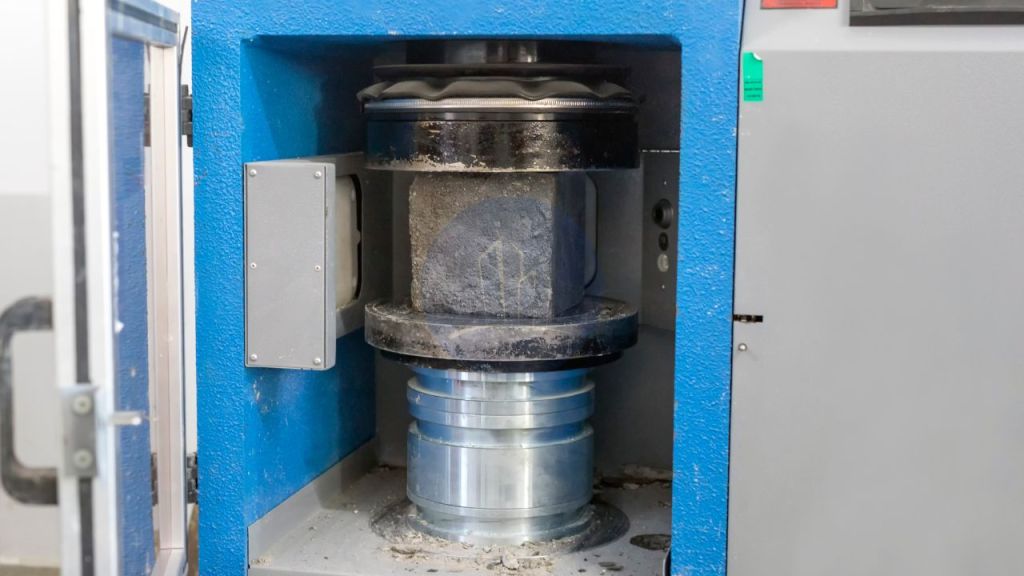
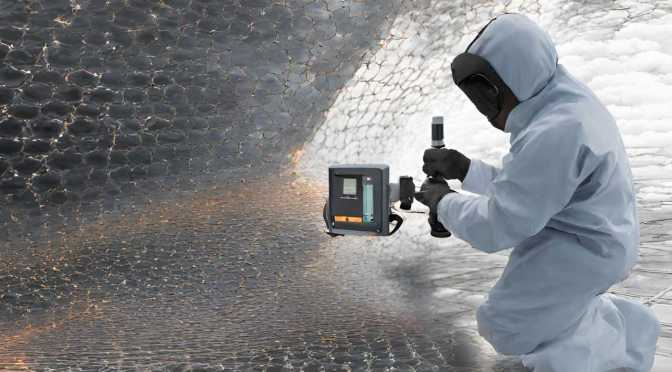
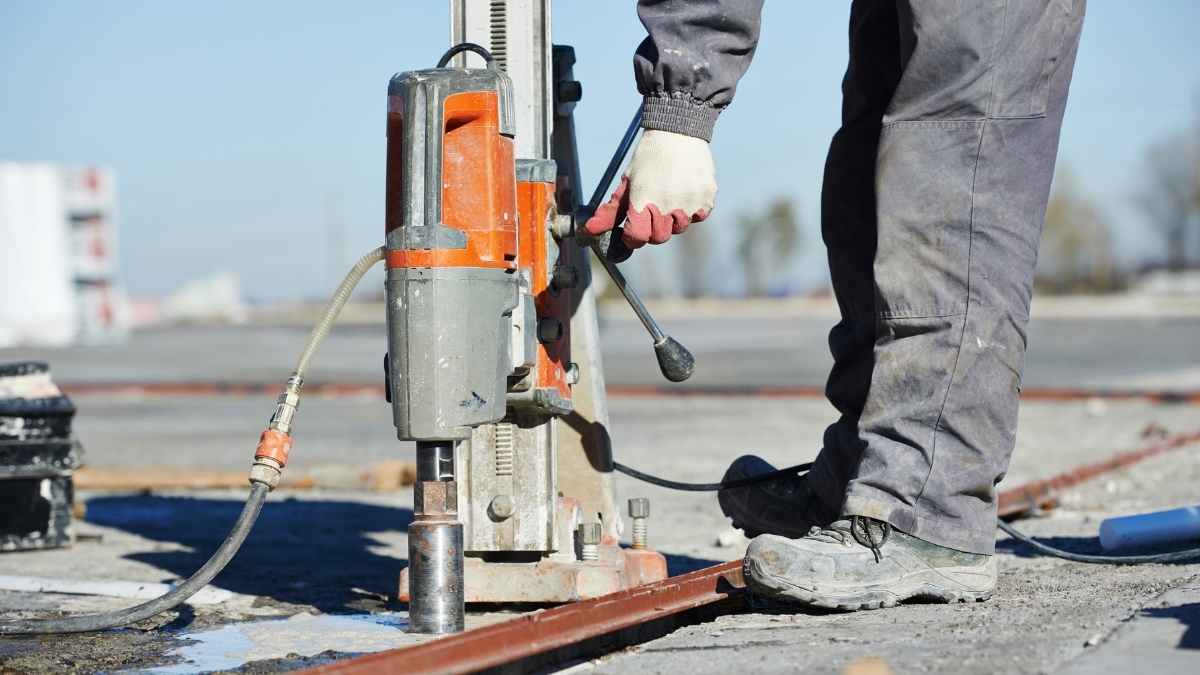
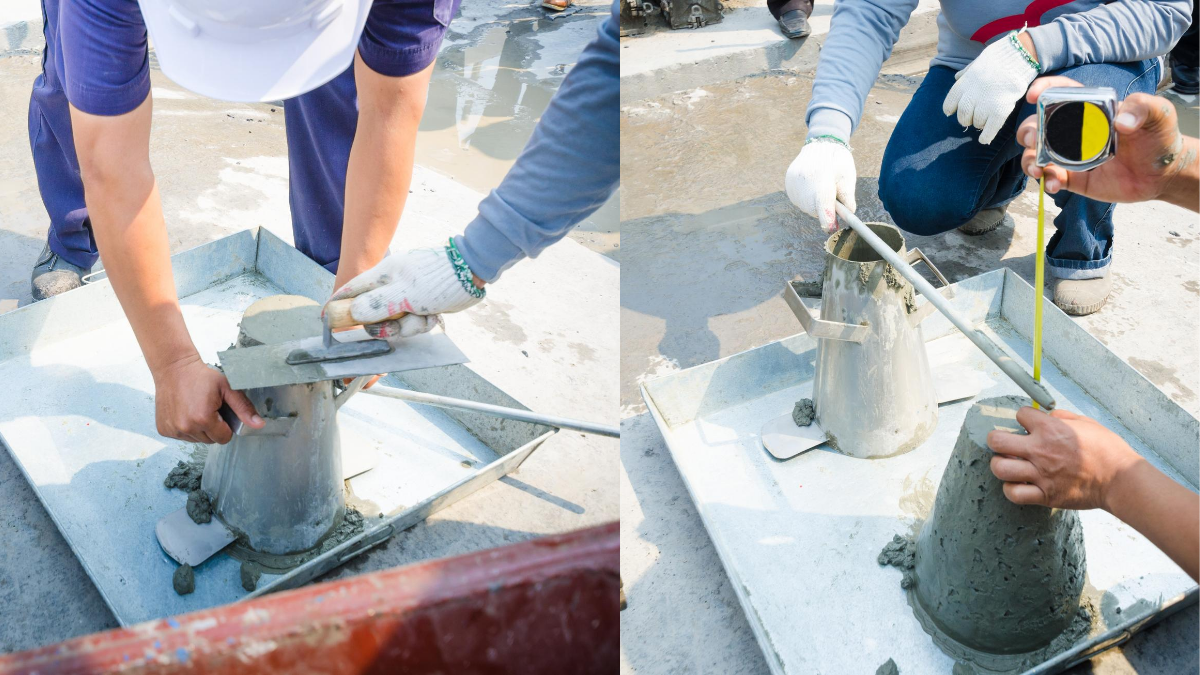
Category Archives: quality tests on concrete

Ultrasonic pulse velocity test || UPV Test – Types and Methodology

Ultrasonic Pulse Velocity (UPV) testing is a reliable, non-destructive method for assessing concrete quality and durability. An ultrasonic pulse is transmitted through the concrete in this method. The velocity is measured to detect variations in density and strength. UPV testing is very useful for identifying cracks, voids, and other flaws in concrete structures. It helps assess structural integrity without damaging the material. This technique is commonly known as UPV tests. It is also referred to as UPV tests on concrete. Specialized UPV testers are used to deliver accurate, quick results. Industries favor UPV testing for its efficiency, cost-effectiveness, and precision in evaluating concrete conditions.

This article discusses the UPV test. It is one of the most well-liked and most reliable non-destructive tests carried out on concrete structures.

  1. Significance of Ultrasonic Pulse Velocity Test (UPV test)
  2. Ultra sonic Pulse Velocity test (UPV Test)
  3. Relevant IS code for Ultrasonic Pulse Velocity Test (UPV Test)
  4. Ultrasonic Pulse Velocity tester
  5. Principles of Ultrasonic Pulse Velocity test
  6. Objective of UPV tests
  7. Factors affecting Ultrasonic pulse velocity test
  8. Methodology of Ultrasonic Pulse velocity tests
    1. Direct method
    2. Indirect method
  9. Result interpretation of UPV testing
  10. Conclusion

Significance of Ultrasonic Pulse Velocity Test (UPV test)

The ultrasonic pulse velocity test, or UPV test, is an example of a non-destructive concrete test. Generally, hardened concrete is subjected to non-destructive testing (NDT) and destructive tests (DT). Concrete is the world’s oldest and most significant construction material. Therefore, concrete testing is crucial for assessing the stability, strength, durability, and condition of structures.

Non-destructive testing of concrete is a way of analysing concrete structures without causing damage. This aids in ensuring the structural quality and condition. The strength of the concrete is also influenced by various characteristics. This includes hardness, density, curing circumstances, ingredient quality, workability and water-to-cement ratio, etc.

Also read : Bitumen tests – 9 tests for flexible pavements

Ultra sonic Pulse Velocity test (UPV Test)

The most efficient and fast method of testing concrete is through ultrasonic pulse velocity tests, or UPV tests. The quality of concrete is assessed using the results of UPV tests, which evaluate the period of travel of ultrasonic pulse waves. A 50–55 kHz range must be maintained for the ultrasonic pulse wave’s frequency. The pulses are generated by the UPV tester’s pulse generator and are allowed to travel through the concrete. By monitoring the traversing distance and the duration, the pulse velocity can be determined. Higher velocity indicates that the density and elastic modulus of the concrete are higher.

Cracks and defects in the structure are detected using UPV tests. Significant variations in pulse velocity values are indicative of broken and degraded concrete. The concrete’s density and wave velocity are related. Therefore, this test has a tremendous potential for evaluating the quality of concrete.

Relevant IS code for Ultrasonic Pulse Velocity Test (UPV Test)

IS-13311 (Part 1):1992 (Reaffirmed- May 2013) “Non-Destructive Testing of Concrete- Methods of Test (Ultrasonic Pulse Velocity)”

Related posts from vincivilworld

Ultrasonic Pulse Velocity tester

The UPV tester is the name of the type of equipment used to measure ultrasonic pulse velocity. The following accessories are included in ultrasonic pulse velocity tester.

  • Electrical Pulse generator
  • Pair of Transducers (probes)
  • Amplifier
  • Electronic timing device
Ultrasonic Pulse Velocity Tester
ultrasonic pulse velocity tester

Principles of Ultrasonic Pulse Velocity test

The electrical pulse generator generates pulses that are sent through the UPV tester’s transducer. Through the concrete surfaces, the pulse generates many reflections. Using the formula shown below, the pulse velocity is calculated.

Pulse velocity, V = L/T

where L is the traverse distance, T is the time for the receiver to receive the pulse

The geometry of the material is unrelated to the UPV test. Better concrete strength is associated with higher velocity and vice versa. One of the dynamic tests for concrete is the ultrasonic pulse velocity test.

Objective of UPV tests

The main objectives of the ultrasonic pulse velocity test or UPV tests are

  • To learn the homogeneity of the concrete.
  • Determines the presence of cracks, voids and imperfections. 
  • To calculate the elastic modulus of concrete. 
  • Finds the quality of concrete relative to the standard requirements. 
  • To determine the age of concrete. 

Factors affecting Ultrasonic pulse velocity test

The UPV test detects cracks and assists in structure development. However, a number of factors influence how pulse velocity is measured. As a result, compressive strength cannot generally be approximated from the pulse velocity. The following are the elements that impact the UPV test.

  • Presence of reinforcement
  • Water content
  • Mix proportion
  • Temperature of concrete
  • Concrete age
  • Stress level of concrete

Methodology of Ultrasonic Pulse velocity tests

Piezoelectric and magneto strictive types of transducers are suitable for use with the UPV test. Additionally, its frequency range should be between 20 and 150 kHz. The electronic timing device monitors time with an accuracy of 0.1 microseconds.

The transducer transmits the waves that travel through the concrete surface. The receiver transducer detects the electric signals that are generated once the pulse waves are transformed to them. The traversal length will be displayed as ( L). The electronic timing device calculates how long it takes for signals to arrive. Time is shown as (T).


The Electronic timing device measures the receiving time of the signals. The time is denoted as (T).

Pulse velocity (v) = L/T

There are three common methods for doing UPV tests. They are direct method and indirect method.

  • Direct Method of UPV Testing
  • Indirect Method of UPV Testing
Methodology of UPV test

Direct method

The maximum energy is transmitted at right angles to the face of the transmitter. As a result, to achieve the greatest results, the receiving transducer must be placed on the side of the transmitting transducer. This is referred to as the direct approach or cross probing.

Ultrasonic pulse velocity test
Ultrasonic Pulse velocity test -Types

Indirect method

In some circumstances, the opposite side of the structure may be inaccessible. The receiving and transmitting transducers are installed on the same face of the concrete members in this scenario. This is known as the indirect method or surface probing. This approach is less effective than the direct approach. The test findings are mostly influenced by the surface concrete, which has different properties from the structural components’ core concrete.

Result interpretation of UPV testing

The density and elastic modulus of concrete are correlated with the ultrasonic pulse velocity. This in turn depends on the components, mixing processes, placement techniques, concrete compaction and curing, casting temperature, etc.

The main causes of internal cracks and pockets in concrete are lack of compaction and concrete segregation. Lower pulse velocity values are a result of these concrete defects. However, the laboratory tests might have confirmed a well-designed concrete.

The range of pulse velocity in the direct method is as shown below.

  1. Above 4.5 Excellent
  2. 3.5 to 4.5 Good
  3. 3.0 to 3.5 Medium
  4. Below 3.0 Doubtful

Conclusion

The final assessment of compressive strength from UPV is not the sole criterion used to determine concrete strength. The strength is confirmed by comparing it to a compressive strength estimate derived from the same ingredient mix and conditions. The results of the UPV test and site tests conducted using similar ingredients may be correlated. When compared to actual UPV intensities, the numbers may change by about 20%.


Splitting tensile strength test of concrete – Test procedure

The splitting tensile strength test is performed on hardened concrete to determine its tensile strength. Marginal variations in water to cement ratio, ingredient proportioning, increase in a slump, etc impacts the desired concrete strength. This in turn affects the strength and stability of structures. There are several tests to determine the strength of concrete.

Quality tests are to be conducted on concrete at various stages starting from the production stage to the hardened stage, and on structures. Quality tests play an important role in ensuring the construction quality. This article covers splitting tensile strength test for deriving the strength of concrete

Quality tests on concrete

The Quality tests are done on different stages like production stage, hardened stage and Non destructive tests.

Quality tests on Fresh concrete

Quality tests on hardened concrete

  • Compressive strength
  • Tensile strength – Split tensile strength
  • Flexural strength test
  • Water absorption test

Non destructive tests on concrete

In this article we deal with the Splitting tensile strength test of concrete.

Splitting tensile strength test – Significance

Since concrete is brittle, it is weak in tension and can cause cracks. So it is essential to conduct the tensile strength test of concrete. A method of determining the tensile strength of concrete using a cylinder which splits across the vertical diameter. It is an indirect method of testing tensile strength of concrete. At least three samples should be tested and an average value is calculated. The main objectives of this test are as follows

  • For determining the tensile strength of concrete.
  • To provide the information on the use of sand and aggregate.
  • To determine the uniform stress distribution.
  • For studying the behaviour of concrete.

Relevant code

  • IS 5816: 1999
  • ASTM C496
splitting tensile stress

Apparatus used

  • Testing machine
  • Plate or Supplementary Bearing bar
  • Bearing strips
  • Cylinder specimen
  • Tamping rod

The testing machine should apply continuous load without shocks. So for this test, two bearing strips with 3.2 mm thick and 25 mm wide are used. The dimension of the cylindrical specimen is 150 mm in diameter and 300 mm in height. 

Splitting tensile strength

Test procedure of Splitting tensile strength test

  • The first step is to prepare the concrete mix for making the cylindrical specimen.
  • Grease the inside surface of the mould and Pour the mix into the mould as layers.
  • Compact each layer using a tamping rod. Tap each layer 30 times. 
  • Uniformly stroke the concrete mix and remove the excess concrete.
  •  Then immerse the casted specimen in water for 24 hours at 27-degree celsius.
  • After that remove the specimen from the mould and immerse it in freshwater.
  • The splitting tensile strength of concrete should be conducted at 7, 28 days of curing.
  • Before starting the test, take the specimen from the immersed water and wipe the water. 
  • Then note the dimension and weight of the specimen. 
  • Place plywood strip above and below the specimen 
  • After that place the specimen on the testing machine. 
  • Then gradually apply load at a rate of 0.7 to 1.4 MPa/min (1.2 to 2.4 MPa/min based on IS 5816 1999).
  • Record the load at which the specimen breaks. 

Calculation – Splitting tensile strength test

Splitting tensile strength of concrete, T= 2P/ Ω LD

The unit of tensile strength is N/mm. The splitting test is easy to perform and we can get uniform results. It is a simple, reliable and convenient method to determine the strength of concrete.

Compressive strength test of concrete | Cube test for Concrete

Compressive strength of concrete is the ability of the concrete to withstand loads without cracking or deformation. Compressive Strength of concrete is defined as the Characteristic strength of 150 mm size concrete cubes @28 days.  Marginal variations in water to cement ratio, ingredient proportioning, increase in a slump, etc impacts the desired concrete strength which in turn affects the strength and stability of structures.

Quality tests are to be conducted on concrete at various stages starting from the production stage to the hardened stage, and on structures. Quality tests play an important role in ensuring the quality of a particular construction. This article covers the types of tests conducted on concrete at various stages.

Quality tests on concrete

Quality tests are done on different stages as listed below,

  • Production stage quality tests ( On fresh concrete before placing)
  • Hardened stage quality tests ( hardened concrete specimens)
  • On structures ( tests done on the structures )

Quality tests on Fresh concrete

Quality tests on hardened concrete

Non destructive tests on concrete

  • Rebound hammer
  • Penetration resistance test
  • Ultrasonic pulse velocity test

This article is about compressive strength test of concrete, its significance and procedure.

Compressive strength test of concrete – significance

As a construction material, concrete should be able to withstand heavy loads. The concrete material beneath compression tends to reduce its size. Concrete gains its strength over time. The compressive strength depends on cement strength, water-cement ratio, concrete quality etc. The test gives an idea of the overall strength and above-mentioned factors. Through conducting this test, one can easily judge the concrete strength and quality of concrete produced. We can calculate the compressive strength from the failure load and the cross-sectional area of the specimen.

Compressive strength test of concrete

Concrete compressive strength for general construction varies from 15 MPa (2200 psi) to 30 MPa (4400 psi) and more than that in case of commercial, industrial structures and special structures.

The compressive strength helps in determining

  • Quality control
  • Acceptance of concrete
  • Evaluation of curing
  • For determining the in-place concrete strength.
  • Age of concrete, etc.

Formula for compressive strength

Compressive strength formula for any material is the load applied at the point of failure to the cross-section area of the face of the concrete specimen (cube or cylinder) on which load was applied.

Compressive Strength = Load / Cross-sectional Area

Relevant IS code

IS: 516-1959

Apparatus used

  • Compression testing machine or Universal testing machine
  • Cube or cylinder specimen
  • Weighing machine
  • Vibrating machine
  • Trowel
Compression test - Apparatus

Compressive strength test of concrete

The specimen for this test can be cubic or cylindrical. The dimension of the specimens is as follows.

  • Cube = 150mm x 150mm x 150mm
  • Cylinder = 150mm diameter, 300mm height

The mould is made up of cast iron or steel. Cubical moulds are preferred for most works.

Compression testing of cubes – Procedure

Mixing of materials.

  • The first step is to prepare the test specimen by mixing the ingredients.
  • Mix the cement, coarse aggregate and fine aggregate in dry condition uniformly.
  • Mixing of the materials is by using batch mixer or by hand mixing.
  • Ingredients shall be bought to room temperature, before commencing the test.

Preparation of Test specimen

  • Clean the cube mould and apply the lubricant inside the mould.
  • Make at least three specimens from each batch.
  • After mixing the concrete, fill the specimen in the mould in three-layer at 50 mm thickness. 
  • After that stroke 35 times and compact the concrete using a vibrating machine. 
  • Then remove the excess concrete using a trowel. 
  • After that mark the date, grade of concrete etc and immerse the specimen in freshwater.
  • Then store the specimen at a temperature of 27-degree Celsius for 24 hours.

Procedure for testing

  • The specimens should be tested using the compression testing machine at 3, 7 and 28 days. 
  •  Before starting the test take the specimen from water and remove the mould.
  • The test should be conducted in the wet condition of the specimen.
  • Record the weight and dimension.
  • Then place the specimen in the testing machine. 
  • Gradually apply load on the specimen at a rate of 140 kg/ cm2 per minutes.
  • Note down the load at which the specimen breaks.
Compressive strength test of concrete

Calculation for Compressive strength test of concrete

The compressive strength of the concrete = Load at which the concrete breaks / Cross-sectional area of the specimen.

The compressive strength is expressed in N/mm2. The cube specimen is tested at 7, 14 & 28 days.

Calculation of compressive strength

Size of cube = 15cm x 15cm x 15cm

Area of specimen = 225 cm2

Expected maximum load = fck x area x f.s

Calculation shall be repeated for 7, and 28 days.

Results shall be furnished as average compressive strength of cube = …………… N/mm2 (7 days and 28 days)

Conclusion

The compressive strength of concrete cube gives and idea about the characteristics of concrete. With this single test we can judge the concrete quality and hence preferred for major construction works.

Kelly Ball Test – Workability of Concrete

Kelly ball test is a simple test also known as a ball penetration test. This test determines the workability of fresh concrete. It is an alternative to the slump cone test and is an effortless field test of concrete.

Concrete is designed for a particular strength. The total structural stability is dependent on good quality concrete. Therefore quality control is one of the most important aspects to be taken into account during the production of concrete. Marginal variations in water to cement ratio, ingredient proportioning, increase in a slump, etc impacts the desired concrete strength which in turn affects the strength and stability of structures.

Quality tests on concrete

Quality tests performed on concrete are

  • Production stage quality tests ( On fresh concrete before placing)
  • Hardened stage quality tests ( hardened concrete specimens)
  • On structures ( tests done on the structures )

Also read : Bitumen tests – 9 lab tests for bitumen

Production stage quality tests on fresh concrete

This article covers the kelly ball test ,apparatus details, procedure, merits and demerits etc.

Kelly Ball test apparatus

Standard Guidelines

ASTM C360 – 92

Kelly ball test Apparatus

The kelly ball apparatus for measuring the workability of concrete consist of..

  • Meta hemisphere (Ball)
  • Graduated scale
  • Frame
  • Handle

The workability of concrete is decided by the depth of the penetration of metal hemisphere (ball) which will descend under its own weight into the fresh concrete. The Metal hemisphere or ball has 152 mm diameter and 13.6 kg weight. J. W. Kelly (Professor, University of California) had devised the plan of the Kelly ball test apparatus. Hence, later on it also came to be known as a ball penetration test. On the top of the apparatus, there is a handle. The graduated scale measures the penetration reading. 

Kelly ball test apparatus

Test Procedure

  • Firstly, Pour the fresh concrete into the wide container. 
  • The concrete depth should be a minimum of 20 cm.
  • Then level and place the apparatus on the surface of the concrete in the container.
  • Now slowly release the handle of the apparatus and allow it to penetrate the concrete. 
  • Then observe and note down the penetration value on the graduated scale.
  • Repeat the procedure at least three times and record the values.
  • Finally, calculate the average values of the penetration to determine the workability of concrete. 

Results

The workability of the concrete is the average value of the readings from the penetration.

Advantages – Kelly ball test

Some advantages of this test are

  • Compared to other workability tests kelly ball test is very fast
  • Precise and Accurate results

Disadvantages of Kelly Ball Test

The disadvantages of this test include

  • This test requires a large amount of fresh concrete.
  • The result should not be precise if the size of the aggregate is large.
  • The concrete should be levelled before starting the test.

Vee Bee Consistometer test – Workability of concrete

Vee Bee consistometer test determines the workability of concrete. Workability depends on the compactability, stability, finishing ability of the concrete. Vee- Bee test is for finding workability of concrete.

Concrete is designed for a particular strength. The total structural stability is dependent on a good quality concrete. and that is why quality control is one of the most important aspects taken into account during the production of concrete . A little variation in water to cement ratio, ingredient proportioning, increase in slump etc will have a major impact on the desired strength of the structure which in turn affects the structural stability.

Quality tests on concrete

Following are the stages of quality tests

  • Production stage quality tests ( On fresh concrete before placing)
  • Hardened stage quality tests ( hardened concrete specimens)
  • On structures ( tests done on the structures )

Also read : Aggregate Crushing test – Strength of aggregate

Also read : 9 lab tests of Bitumen for flexible pavements

Production stage quality tests on fresh concrete

This article is about Vee- Bee Consistometer test

Significance of Vee Bee Consistometer

The vee bee test decides the consistency and mobility of the fresh concrete and expressed in Vee- Bee seconds. As per IS: 1199 – 1959, it measures on the basis of the relative effort of the concrete to change its shape. This is the remoulding effort. The time for the complete remoulding is the workability of the concrete.

Relevant IS code

  • IS: 1199 – 1959

Apparatus used for Vee Bee Consistometer

Vee Bee Consistometer

The Vee – Bee Consistometer includes of 

  • A vibrator table resting upon elastic supports
  • A metal pot
  • A sheet metal cone, open at both ends
  • A standard iron rod

The dimension of the vibrating table is 380 mm in length, 260 mm in width and height of 305 mm. Also, supporting the table there is a rubber shock absorber. Under the table, there is a vibrator that vibrates electrically.  The dimension of the metal slump cone is 300mm height, 200 mm top diameter and 100 mm bottom diameter. 

Vee- Bee Consistometer

Test procedure

  • Initially fill the slump cone with four layers of concrete. Each layer should have a height of one – fourth of the cone. 
  • After that tamp each layer 25 times using a standard tamping rod and strike uniformly.
  • Then after placing the final layer, remove the excess concrete on the top of the concrete.
  • Move and place the swivel arm attached to the glass disc on the top of the cone.
  • Now remove the cylindrical cone gradually in the vertical direction and note down the slump.
  • Then switch on the electrical vibrator and allow the concrete to spread. 
  • The time taken by the concrete to spread uniformly is noted using the stop clock.
  • This time is expressed in vee bee seconds.

The time for the concrete to remould is the Vee-Bee seconds. The Vee Bee consistometer is an indirect measure of concrete workability. This method is suitable for concrete whose slump value cannot be determined. ie, for dry mixes. We can get direct result through this method.

Also Read : Soundness test on aggregate

Compaction factor test – Workability of concrete-Test procedure

Compaction factor test is conducted to determine the workability of the concrete. Compaction factor test is a lab test and is generally conducted on concrete samples having very low workability.

Concrete is designed for a particular strength. The total structural stability is dependent on a good quality concrete. That is why quality control is one of the most important aspects taken into account during the production of concrete . A little variation in water to cement ratio, ingredient proportioning, increase in slump etc will have a major impact on the desired strength of the structure which in turn affects the structural stability.

Quality tests on concrete

Following are the stages of quality tests

  • Production stage quality tests ( On fresh concrete before placing)
  • Hardened stage quality tests ( hardened concrete specimens)
  • On structures ( tests done on the structures )

Production stage quality tests to determine workability of fresh concrete

This article is about Compaction factor test.

Significance of compaction factor test

Concrete is designed for a strength. The total structural stability is dependent on the concrete quality and strength. Because of that, the concrete quality has to be controlled and ensured in the production stage. Even marginal variations in water to cement ratio, ingredient proportioning, increase in a slump, etc. tend to impact the desired concrete strengths.

Compaction factor test.

Compaction test is for determining the workability of concrete. Workability of concrete is defined as the ease and homogeneity with which a freshly mixed concrete or mortar can be mixed, placed, compacted and finished. Strictly, it is the amount of useful internal work necessary to produce 100% compaction.

Compaction factor test is developed by road research laboratory UK and is precise and accurate than slump test. The test is done when the concrete is to be compacted by vibration and continually fail to slump.

Also read : Bitumen – 9 lab tests on bitumen for flexible pavements.

Also read : Timber – Five important quality tests

Compaction Factor Test – Relevant IS code 

IS: 1199- 1959

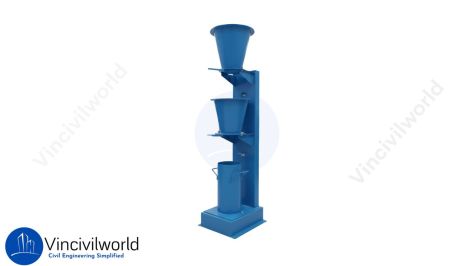
Apparatus used

Compaction test apparatus
Dimensions of compacting factor apparatus
  • Compacting factor apparatus
  • Cylindrical mould 
  • Hand scoop 
  • Trowel
  • Weighing machine

The figure shows the dimension of the hopper and the mould. The inside area of the hopper should be smooth. The apparatus is made of bronze or cast brass. At the lower ends of the hopper, there is a trap door with a 3mm thickness. A rigid frame attaches the hoppers and cylinder. After the completion of mixing, the test is conducted at a constant time interval. 

Test procedure

  • Place the sample in the upper hopper of the apparatus using a hand scoop.
  • Fill the hopper with its brim level and open the trap door.
  • Then allow the concrete to fall into the lower hopper.
  • Immediately after the concrete rests, uncover the cylinder and open the lower trap door.
  • Cut off the excess amount of concrete above the cylinder using the trowel.
  • Then weigh the concrete in the cylinder nearest to 10g. This is the weight of partially compacted concrete.
  • Refill the cylinder with the same sample in the layers and the layer is heavily rammed or vibrated for full compaction.
  • Then weigh the fully compacted concrete and the weight of the empty cylinder.
  • Finally, Compute the compaction factor using the formula.

The compaction factor is the ratio of partially compacted concrete to fully compacted concrete.

Compaction factor = (W1 – W) / (W2 – W)

The compaction factor value varies from 0.7 to 0.95.