Category Archives: Roads

Road Pavement Layers – Components and Functions

Road pavement layers play a critical role in infrastructure development, significantly impacting a country’s economic growth. Constructing roads necessitates a careful assessment of traffic patterns, climate variations, and terrain characteristics. As a result, these layers must withstand abrasion, heavy loads, and diverse environmental conditions to ensure durability and prevent structural failures. Therefore, this article explores the essential components of road pavement layers, with a particular emphasis on flexible pavement structures.

  1. Road Pavement Layers and their functions
    1. Subgrade of a Road Pavement
      1. Functions of Subgrade
    2. Sub-base Course of a Road Pavement Layer
      1. Functions of Sub-base Course
    3. Base Course
      1. Functions of Base Course:
    4. Surface Course or Wearing Course
      1. Functions of Surface or Wearing Course:
  2. Key Takeaways on Road Pavement Layers
  3. Conclusion

Road Pavement Layers and their functions

A road pavement is a multi-layered structure designed to support and distribute traffic loads, provide a smooth driving surface, and withstand environmental stresses. Each layer has a specific function, working together to ensure durability, stability, and long-term performance of the roadway.

The layers of a road pavement structure include:

  1. Subgrade or roadbed
  2. Sub-base course
  3. Base course
  4. Surface course or wearing course
ROAD PAVEMENT STRUCTURE
Concrete road layers

Subgrade of a Road Pavement

The Subgrade, composed of compacted natural soil, forms the foundation for road Pavement layers. It serves as the finished or compacted surface where the formation supporting the pavement rests. Whether an embankment, cutting, or aligned with natural ground, its load-bearing strength is evaluated by the California Bearing Ratio (CBR) test. Locally sourced, robust, and cost-effective materials typically compose the Subgrade, crucial for structural integrity.

SUB GRADE PREPARATION FOR ROAD PAVEMENT LAYERS
SUB GRADE PREPARATION
Concrete road layers : Subgrade preparation

Functions of Subgrade

  • Serves as the foundation and provides uniform support to the road pavement layers.
  • Bears the entire load of the pavement along with the service load of traffic.

Sub-base Course of a Road Pavement Layer

The sub-base course is positioned between the subgrade and the base course within the framework of road pavement layers. It requires materials that meet strict criteria for size, strength, and flexibility. This layer is crucial when the subgrade quality is inadequate. It often needs additional materials like burnt clinkers, gravel, or slag to enhance its strength.

Functions of Sub-base Course

  • Enhancing the bearing capacity of the subgrade and improving the load distribution of the base course and wearing course.
  • The sub-base course also prevents the entry of finely graded subgrade soil into the base course layer.
  • Additionally, it prevents the capillary rise of water and facilitates the free drainage of water entering the pavement.
  • Moreover, the sub-base material must be free-draining, with suitable systems in place to collect and remove accumulated water.
  • It provides insulation to subgrades against frost. It also helps to raise the pavement height to align with the natural water table.
  • Lastly, it offers a solid stratum for subsequent construction activities.

Base Course

The base course is a pivotal element in road pavement layers. It comprises one or more layers of specified or select material. These layers have a designed thickness. It is positioned on the sub-base or directly on the subgrade in the absence of a sub-base layer. This crucial layer provides uniform and stable support for the binder and surface courses within the road pavement layers.

Additionally, responsible for transferring stresses from traffic impacts to the wearing course, the base course ensures structural integrity. To adhere to technical standards, high-quality crushed aggregates are typically utilized. If these aggregates do not meet requirements, they can be reinforced with Portland cement, lime, or asphalt. Moreover, for superior durability and performance in high-quality pavements, these aggregates undergo treatment with asphalt or Portland cement.

BASE COURSE OF ROAD LAYER
Concrete road construction - Base course
Concrete road construction – Base course

Functions of Base Course:

  • Acts as the foundation of the road pavement and safely transfers traffic load to the sub-base and subgrade.
  • Withstands high shearing stresses due to traffic impact.
  • Prevents undesirable entry of subgrade soil into the pavement when constructed directly over the subgrade.

Surface Course or Wearing Course

The surface course is also known as the wearing course. It is the topmost layer in road pavement layers. This layer is directly exposed to traffic. In flexible pavements, this layer typically consists of bituminous material. Rigid pavements utilize concrete. The concrete serves both as the base and wearing course. The primary role of the wearing course is to minimize water percolation. It also provides a durable, anti-skid surface. This surface resists abrasion caused by traffic.
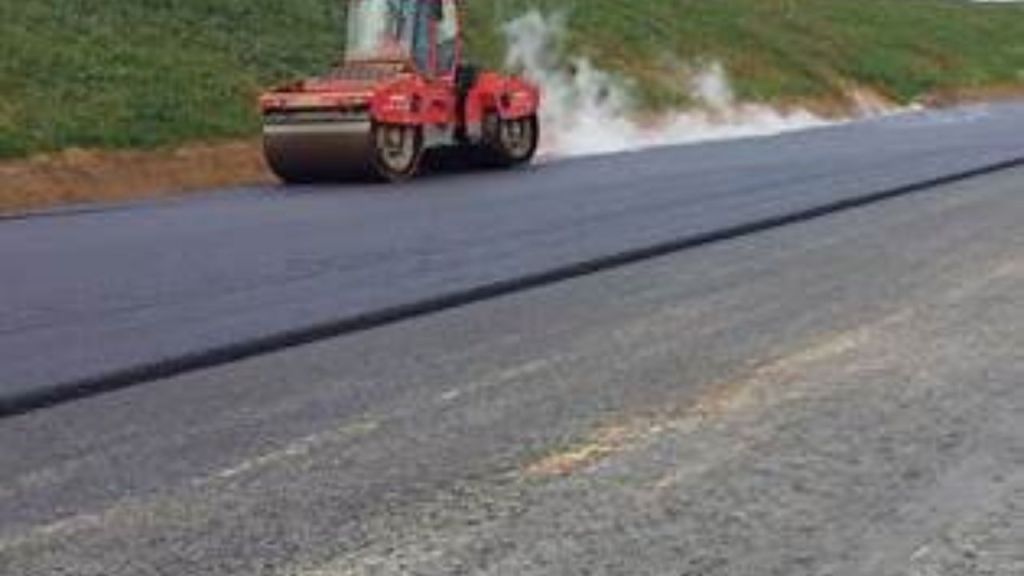
Concrete road construction - Wearing Course
Concrete road construction – Wearing Course

Functions of Surface or Wearing Course:

  • Provides a smooth and uniform rigid surface.
  • Resists abrasive forces from traffic.
  • Prevents dust nuisance.
  • Acts as a structural component of the pavement.

Key Takeaways on Road Pavement Layers

  1. Components: Road pavement consists of four primary layers: subgrade, sub-base, base course, and surface course.
  2. Subgrade: Acts as the foundational layer, providing uniform support and load-bearing capacity.
  3. Sub-base Course: Enhances bearing capacity, improves load distribution, prevents soil migration, and facilitates drainage.
  4. Base Course: Transfers traffic loads to the subgrade, withstands shearing stresses, and prevents subgrade soil intrusion.
  5. Surface Course: The top layer exposed to traffic, designed for durability, skid resistance, and water percolation minimization.
  6. Durability: Each layer plays a critical role in the road’s structural integrity. It also impacts its longevity. This necessitates careful material selection and construction practices.
  7. Load Distribution: Proper design and construction ensure that the pavement can withstand traffic loads and environmental conditions effectively.

These insights emphasize the need to understand each layer’s role. This understanding is crucial for the overall pavement structure. It ensures effective road construction and maintenance.

Conclusion

In road construction, each layer of the pavement structure plays a vital role. These layers ensure both the durability and functionality of the road. Starting with the subgrade providing foundational support, the sub-base enhances load distribution and drainage. The base course offers structural strength. The surface course provides a smooth and durable riding surface. These layers work together seamlessly to create a resilient and long-lasting road.


Camber in roads – Types of Road Cambers

Camber in roads is the slope or angle built into the road surface. It is typically seen on curved or sloped sections of the road. This slope is designed to provide several benefits, including improved drainage, enhanced vehicle stability, and better driver visibility. The purpose of camber on roads is to ensure safe and comfortable driving conditions for motorists.

A cambered road has a slight slope from the center to the edges. This design allows water to drain off the surface efficiently. The road camber helps prevent water from accumulating, which otherwise damage the pavement and make driving hazardous. Camber in roads improves safety and extends the lifespan of the road. There are different types of cambers, including straight, parabolic, and composite cambers, each suited for specific conditions. The camber of road design is essential for maintaining road quality, particularly in areas with heavy rainfall.
This article explains cambered road designs, road camber benefits, camber in roads, and the types of cambers. You’ll also learn how the camber of road surfaces improves drainage and road safety.

  1. Significance of camber of the roads
  2. Types of Camber in roads
    1. Positive camber in roads
    2. Negative camber in roads
    3. Zero camber
    4. Composite camber
    5. Sloped camber/straight camber
    6. Two straight-line camber
    7. Barrel camber/Parabolic camber
  3. Significance of road camber
  4. Advantages of Camber on Roads
  5. Recommended Values of Camber in Road For Different Types of Road surface by IRC: 
  6. Disadvantages of excessive road camber

Significance of camber of the roads

The camber of road is crucial for effective water drainage, preventing accumulation and reducing the risk of skidding. A cambered road ensures water flows off the surface, maintaining road durability and safety. Road camber also improves vehicle handling, especially in wet conditions. Different types of cambers are designed to suit various environments and traffic needs. Proper camber in roads helps reduce maintenance costs and keeps the road safe for drivers year-round.

Road Camber

The slope can be positive, negative, or zero. This depends on the specific requirements of the road and the expected traffic flow. The appropriate camber for a road depends on various factors. These include the type of road, its location, and the expected speed and volume of traffic. Proper design and construction of road camber can significantly improve road safety. It reduces the risk of accidents. It also increases the lifespan of the road surface.

Types of Camber in roads

Camber in roads, or road camber, is the slope built into the road surface. It is typically seen on curved or sloped sections. The road’s camber is usually indicated by the ratio 1:n or as a percentage. Proper camber design and construction are crucial to improve road safety, reduce accidents, and ensure adequate drainage and vehicle stability.

Here’s a list of the types of camber used in road design and construction:

  • Positive camber
  • Negative camber
  • Zero camber
  • Composite camber
  • Sloped or straight camber
  • Two straight-line camber
  • Barrel camber

Positive camber in roads

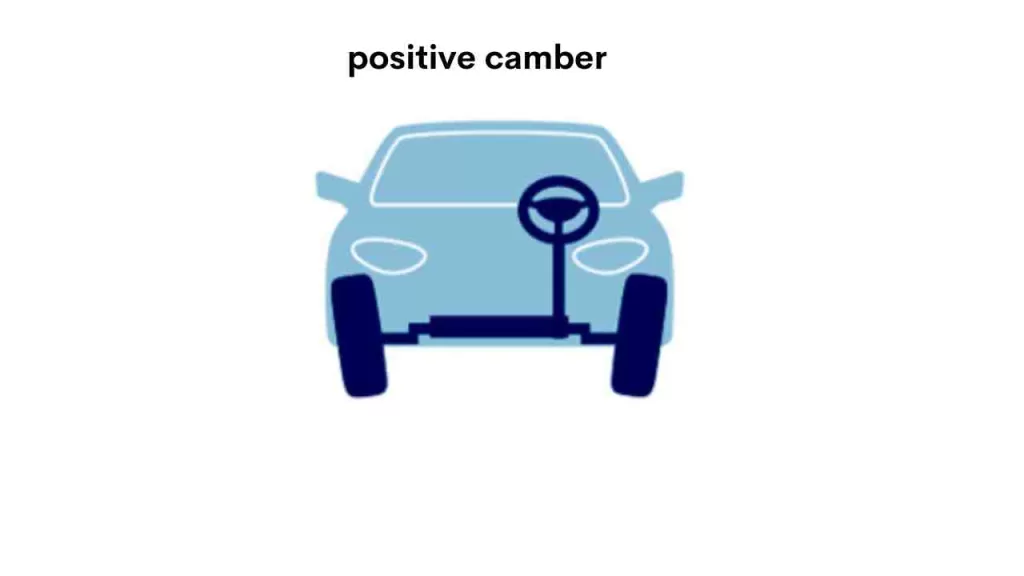
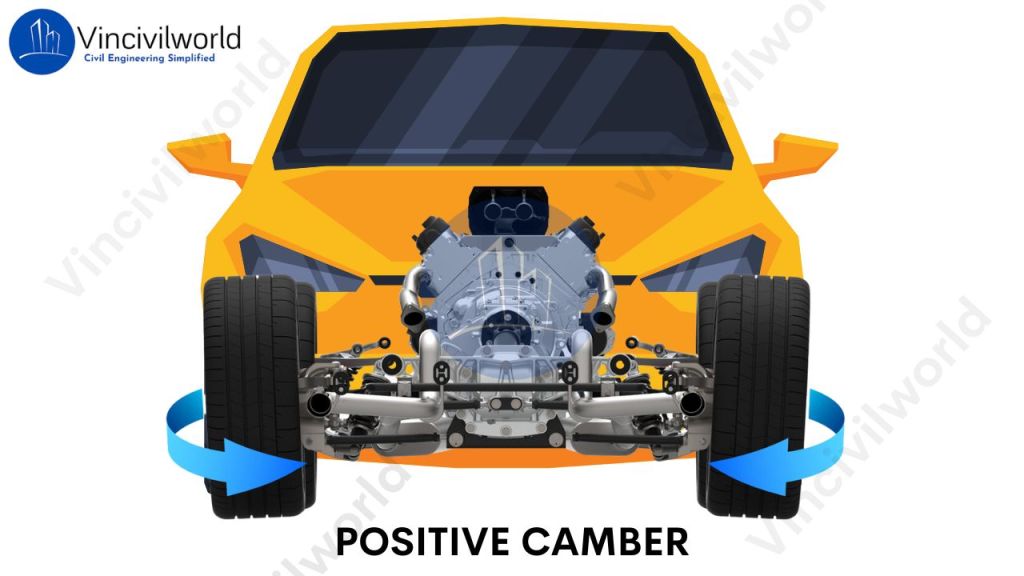
Positive camber is the angle of a vehicle’s wheels. The top of the tire tilts outward from the centre of the vehicle. This can provide improved stability and handle in certain driving situations, such as high-speed cornering. However, excessive positive camber can lead to uneven tire wear and decreased handling performance.

Positive camber
Positive Camber - Camber of roads

Negative camber in roads

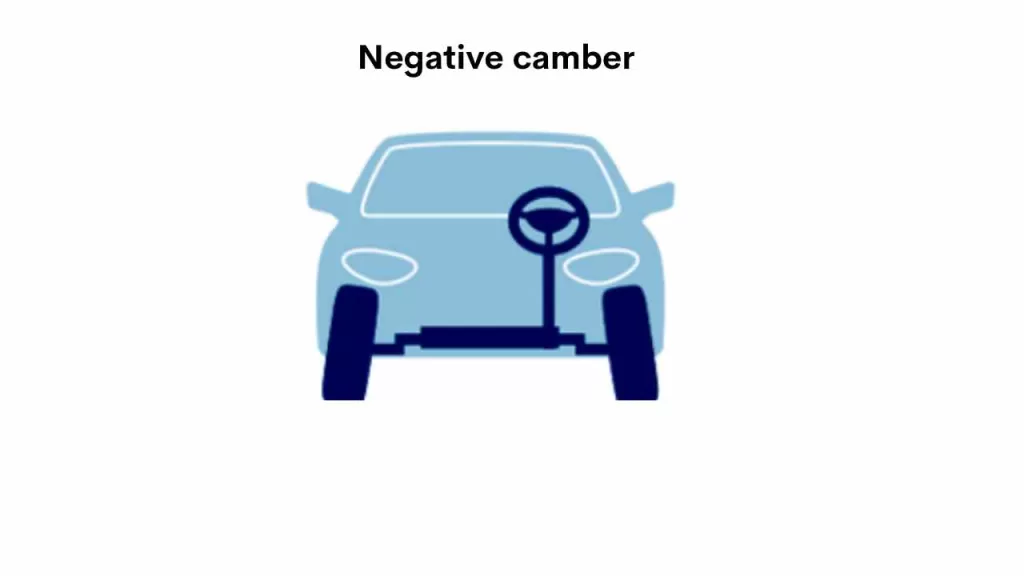
Negative refers to the angle of a vehicle’s wheels where the top of the tire tilts inward towards the centre of the vehicle. This can provide improved grip and handling during cornering, as the tire maintains more contact with the road. However, excessive negative camber can lead to uneven tire wear and reduced straight-line stability.

Negative Camber
Negative Camber

Zero camber

Zero camber refers to the angle of a vehicle’s wheels where the tire is perpendicular to the ground and the wheel is vertical. This is considered the ideal angle for tire wear and handling, providing a balance between straight-line stability and cornering grip. Many production vehicles are designed with zero camber for optimal performance and safety.

Zero camber

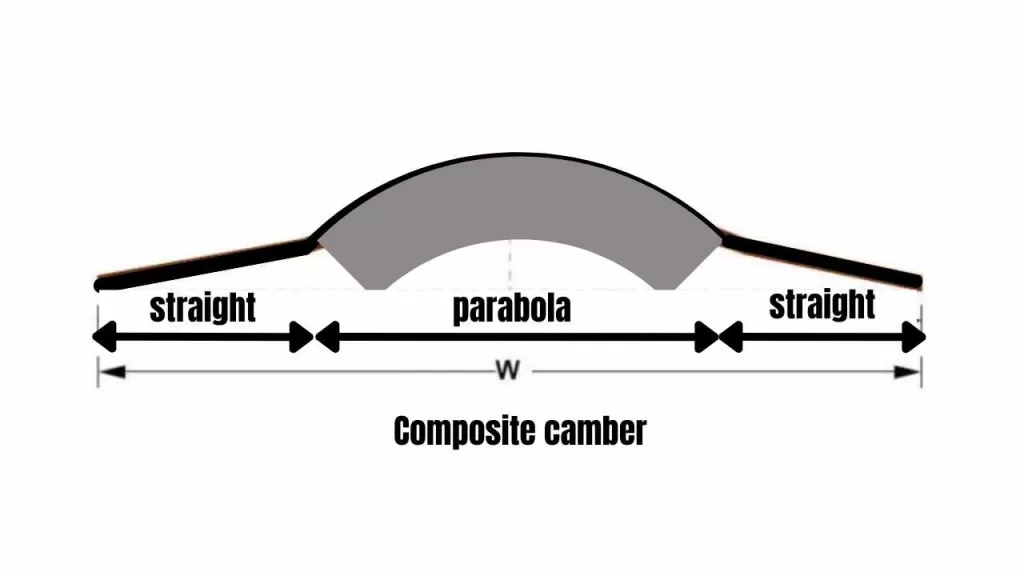
Composite camber

Composite camber refers to a combination of positive and negative camber on a vehicle’s wheels. In order to achieve optimal handling and performance in specific driving situations, one can adjust the angle of each wheel independently to create a custom setup. This allows for a personalized approach to handling and can be achieved through the use of composite camber. Composite camber is a technique commonly utilized in high-performance vehicles and motorsports to attain maximum grip and control.

Composite Camber
Composite Camber

Sloped camber/straight camber

Sloped camber refers to a wheel angle where the tire leans towards the inside or outside of the vehicle, creating a slope. Straight camber refers to a wheel angle where the tire is vertical and perpendicular to the ground. Sloped camber is often used in motorsports to improve cornering performance, while straight camber is more common in street vehicles for better tire wear and handling.

Straight line/ sloped
Straight Line Camber

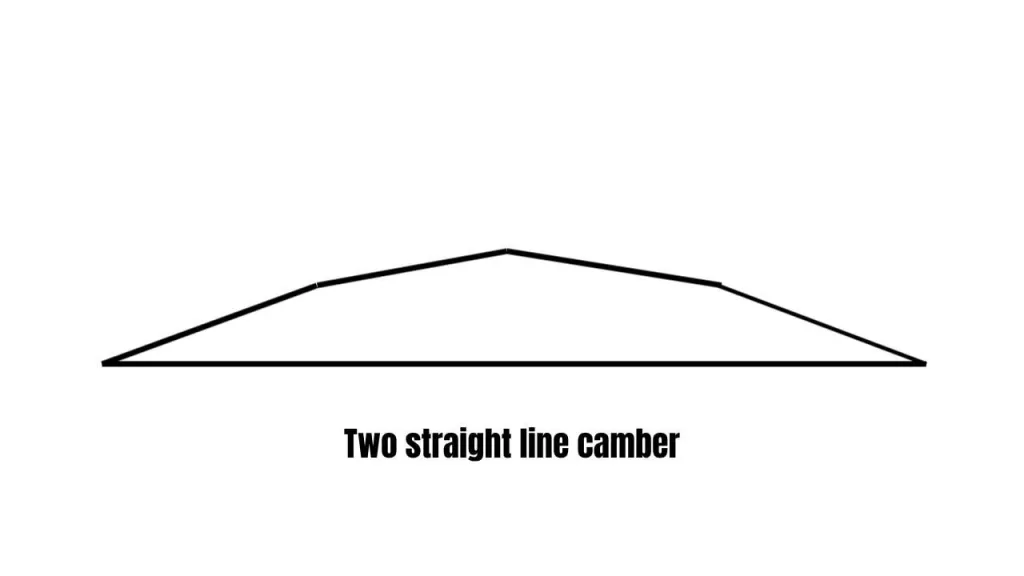
Two straight-line camber

Two straight-line camber refers to a setup where the camber angle is set to zero for both front and rear wheels. This provides a balanced setup that promotes even tire wear and stable handling. “People commonly use two straight-line camber in street vehicles, SUVs, and pickup trucks, prioritizing comfort, safety, and longevity over high-speed cornering performance.”

Two straight line Camber
Two straight line camber

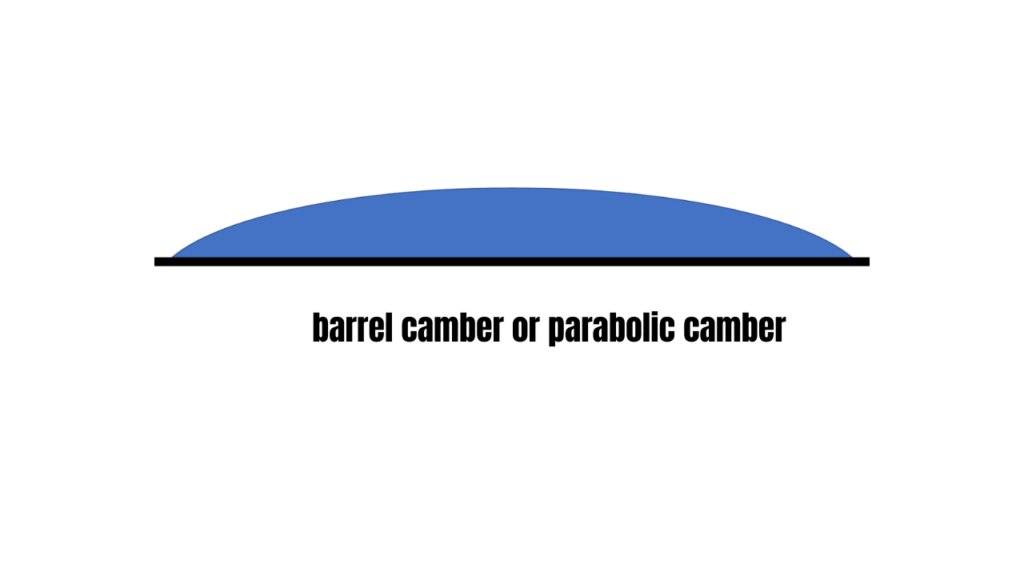
Barrel camber/Parabolic camber

“In drifting and racing applications, people commonly use barrel camber to promote tire grip . This in turn improves cornering performance by adjusting the camber angle and toe settings on each wheel independently. Barrel camber is a wheel angle where the center of the tire is lower than the edges, creating a barrel-like shape.”

Barrel Camber or parabolic camber
Parabolic Camber

Related posts from vincivilworld

Significance of road camber

Road engineers provide camber to promote safe and efficient driving. They use positive camber on curves and turns to offer better stability and prevent vehicles from sliding off the road. On the other hand, they use negative camber on straight sections to enhance tire traction and lower the risk of hydroplaning in wet conditions.

Advantages of Camber on Roads

Camber provides several advantages for road safety and efficiency. “Moreover,” positive camber assists vehicles in remaining centered on the road while turning. This in turn results in decreased skidding and improved stability. Negative camber improves tire contact with the road on straight sections, increasing traction and reducing hydroplaning risk. Camber also helps to reduce tire wear by distributing the load evenly across the tire surface, promoting longer tire life. Overall, camber is a key design feature in road engineering. This helps to promote safe, efficient, and sustainable transportation for all.

Road
Importance of camber on road
Image credit : Rick Muscoplat

The Indian Road Congress (IRC) provides recommended values for camber in road design, based on the type of road surface. These values are as follows:

  1. Flexible Pavement on Earth Embankment
  • Straight: 1.5%
  • Crossfall: 2.5%
  1. Flexible Pavement on Soft Soil
  • Straight: 2%
  • Crossfall: 3.5%
  1. Rigid Pavement on Earth Embankment
  • Straight: 2%
  • Crossfall: 3%
  1. Rigid Pavement on Soft Soil
  • Straight: 2.5%
  • Crossfall: 4%
  1. Bituminous Wearing Course
  • Straight: 1.5%
  • Crossfall: 2.5%

“These values provide general guidance only and depend on local conditions, traffic volume, and other factors. It is important to note that.”

Disadvantages of excessive road camber

Providing excessive road camber height can have several disadvantages. These include:

  • Uneven tyre wear: Excessive camber height can cause the tire to wear unevenly, leading to reduced tire life and increased maintenance costs.
  • Increased fuel consumption: High camber angles can increase rolling resistance and reduce fuel efficiency, leading to higher fuel consumption and greenhouse gas emissions.
  • Reduced braking performance: Excessive camber can reduce the contact area between the tire and the road surface, reducing braking performance and increasing stopping distances.
  • Reduced stability: High camber angles can reduce vehicle stability, especially at high speeds, making the vehicle more difficult to control and increasing the risk of accidents.
  • Uncomfortable ride: Excessive camber can cause the vehicle to ride harshly, transmitting more shocks and vibrations to the occupants, leading to discomfort and fatigue during long journeys.

Bitumen Softening Point Test – Ring and ball method

The bitumen softening Point Test is done to determine the consistency of bitumen. Bitumen is a viscoelastic material, which means it behaves like both a liquid and a solid state. It does not have a specific melting point. As the temperature increases, the bitumen becomes softer and the viscosity of the bitumen decreases. One of the common parameters for classifying bitumen is the softening point of the bitumen. This property shows at what temperature the bitumen softens. 

Bitumen Softening Point Test

Bitumen softening point is measured in different ways such as:

  • Ring and Ball Method (R&B)
  • Krämer-Sarnow Method (KS)
  • Mettler Softening Point Method
  • Capillary Method
  • Flow Point Method
  • Drop Point Method

The ring and Ball method is the most frequently used to determine the softening point of bitumen.

Bitumen roads
Bitumen roads

Why Is The Bitumen Softening Point Important?

To pave the roads and aeroplane runways, it is necessary to use a type of bitumen that has a specific degree of softness. Choosing a suitable bitumen with a good softening point depends on the weather condition and traffic loads.

For example, if the average temperature in a region is high during a year, bitumen with a    higher softening point should be used to make asphalt pavement. If during the year, the number of vehicles crossing this road is high and they put a  lot of pressure on the road surface, more bitumen should be used in the asphalt. This work increases the strength of the asphalt.

Related posts – Bitumen

International Standard Methods of softening point test

The softening point  test  of  bitumen  is  in  the  accordance   with  the following standards:

  • ASTM D36
  • ASTM E28-67/E28-99
  • ASTM D6493 – 11
  • IS 1205
  • EN 1427
  • IP 58
  • ISO 4625
  • JIS K 6863

The most common standard method for determining the softening point of bitumen is ASTM D36, which we will discuss further. You can see the steps of the Ring and ball method through the Video produced by the Infinity Galaxy team.

Softening point test of bitumen – Ring and ball method (Video)

YouTube video
Youtube video

Softening Point Test Procedure

The ring and ball method is widely used to determine the softening point of bitumen. In  the  infographic  below, you  can  see  a  summary  of  the  bitumen softening point test:

Softening point test procedure

The required equipment to do the bitumen softening point test are:

  • Two steel balls
  • Two brass rings
  • Beaker
  • Thermometer
  • Heater
  • Knife
  • A glass surface 
  • Bitumen
  • The bases holding the rings

Bitumen Softening Point Test Steps:

  • In the first step, it is necessary to prepare the test sample. Heat the bitumen to a   temperature between  75  and 100 °C. Stir the bitumen well until it becomes completely liquid and free of air and water bubbles. Heat the rings to the approximate temperature of the bitumen. Prepare a mixture of glycerin and dextrin in equal proportions.
  • Cover the surface of the metal or glass plate with it. Pour the heated bitumen into the rings to fill them. After cooling in the air, it is necessary to draw the extra bitumen with a heated knife at an angle of 45 degrees on the surface of the rings. So far you have understood how to prepare the sample.  In the following, we will explain the process of conducting this test.
  • Place the rings filled with bitumen on the bases and place them in a water bath with a temperature of 5 °C for 15 minutes. Cool the steel balls to a temperature of 5 °C. Put them in the beaker and fill them with distilled water up to about 50 mm above the rings. Now place the steel ball in the centre of the ring and tangent to the bitumen and heat it until the temperature rises 5±0.5 °C/min.

Ring and ball method – Results

  • As the temperature increases, the bituminous material softens and the balls sink through the rings. Continue heating until the balls on the bitumen reach the surface of the metal blade under the rings and note the temperature when each of the balls contacts the bottom of the plate. Consider the average of the two temperatures obtained as the bitumen softening point.
  • An important point in this experiment is the process of heating the beaker and its contents, i.e. bitumen.   Since this test is very sensitive to heat, it is necessary to use the same heating rate throughout the test. It should be noted that if the bitumen is blown and hard, glycerin liquid is used instead of water.

Smart roads- 6 Smart road technologies Full Guide

We’ve all learned about connected vehicles, self-driving cars, GPS mapping, applications for route optimization and ride-hailing services. Smart roads and other smart road technologies are relevant to the advancement of the transportation sector of a country. We are going to dig deep into this in the upcoming sections.

Let’s start from scratch.

What are Smart Roads?

To make driving safer, more effective, and greener, in line with government goals, smart roads use Internet of Things (IoT) devices.

With software infrastructure such as AI and big data, smart roads integrate physical infrastructures such as sensors and solar panels.

Smart road technologies are embedded in roads and can enhance visibility, generate electricity, communicate with connected and autonomous vehicles, track road conditions, and more.

Here are a few examples:

  • IoT connectivity: Cities can connect roads to IoT devices and collect data about traffic and weather. Health, traffic control, and energy efficiency can be enhanced by this form of connectivity.
  • Traffic management networks: For safety enhancement and congestion reduction. To provide warning signs for unsafe situations, the network uses speed cameras and sends automatic traffic diversion signals that control traffic.
  • Traffic lights optimization: Systems that use data from closed-circuit television (CCTV) cameras or smart vehicles to optimise traffic signals and jam or bottleneck alerts for commuters.

Let me show you main smart road technologies in the next section.

Smart road technologies in detail

Let’s meet each of the smart road technologies in this section.

1. Solar powered roadways

Smart roads example
Smart roads example
  • Inside hexagonal panels made of tempered glass, which are used to pave paths, photovoltaic cells are integrated.

  • These panels include LEDs, microprocessors, heating devices for snow-melting and electric vehicle inductive charging capabilities while driving. Glass is renewable and can be engineered to be stronger than steel, even when driving at high speeds and to allow cars to stop safely.
  • Although this concept has gained widespread acceptance, as it remains costly, scalability is a problem.

2. Glow in the dark roads

  • A photo-luminescent powder that absorbs and stores daylight uses glowing markers painted on existing roadway surfaces.
  • For 8 hours after dark, the 500m long strips shine.
  • This technology is still in the testing process, and the glow is not yet reliable, but it may be more cost-effective than conventional technologies for road lighting.

3. Interactive lights for smart roads

  • As cars approach, road lights triggered by motion sensors illuminate a specific section of the road.
  • Once the vehicle leaves, the lights fade. Interactive lights, ideal for roads with less traffic, provide night visibility when required and minimise energy wastage when there are no vehicles.
  • The wind created by passing vehicles to power lights is used in one design built in Holland.

4. Electric priority lane for charging electric vehicles

Smart roads at high traffic areas
  • Magnetic fields that charge electric vehicles while driving are created by embedded cables.
  • In the engine, a receiver coil picks up electromagnetic oscillations from a road-embedded transmitter coil and converts them to AC, which can then power the car.
  • For static cars, inductive charging technology already exists, but potential wireless technology could charge batteries when in motion, providing electric vehicles that drive longer journeys with distance-range solutions.

5. Weather detection

  • Weather conditions that affect road safety are identified by networks of AI-integrated sensors.
  • Today’s Road Weather Information Systems (RWIS) are limited in use because they gather data only from a small number of weather stations.
  • In order to capture atmospheric and weather data and automatically upload it to the cloud, a bigger future network might use automated weather stations.
  • To illustrate invisible roadway conditions like black ice, complex temperature-sensitive paint could be used.

6. Traffic detection

  • Traffic detection implies information that helps travellers schedule their journeys.
  • Highway-lining sensors track traffic flow and weight load, warn traffic jam drivers, and automatically inform authorities of incidents.
  • Wear and tear are identified by fibre-optic cables embedded in the lane, and contact between vehicles and roads will enhance traffic management. Rapid flow technologies, for example, use artificial intelligence (AI) to control traffic lights that respond to each other and to automobiles.
  • In order to maximise flow during peak journey times, conventional systems have been pre-programmed and emerging technologies are able to process and optimise flows in real-time.

In the next section, let us find out the importance of smart roads.

Importance of Smart Roads

Smart highways
Smart highways
  • The importance of smart roads is recognised by many governments and transport authorities.
  • It can, however, be expensive and complicated to build smart city infrastructure on a large scale.
  • Starting with low-investment, narrow-scale initiatives that can provide initial value, leaders can break down smart road projects into stages, setting the stage for high-investment and large-scale efforts.
  • Cars were possible in the early days of motor-powered mobility, but no suitable road networks existed; the first private cars were barely more powerful than horse-driven waggons.
  • The authorities have increasingly agreed that only a substantial investment in road infrastructure would allow the population to benefit from modern transport technologies.
  • Similarly, the importance of smart roads as an important forum for mobility innovation is beginning to be understood by today’s governments and urban transport authorities.
  • Smart roads will power smarter vehicles, motivate drivers, and provide unparalleled visibility and control of the living fabric of motor-based traffic for governments.

We have reached at the end of the section. Let’s conclude smart roads now.

Conclusion

  • Although countries such as Dubai have announced plans to develop and incorporate existing smart technology into their traffic networks, China is one of the first, if not the first, to announce plans to create a planned 161-kilometer-long smart road in its eastern province of Zhejiang, incorporating safety features to enable sensor-tracked autonomous driving, an Internet of Vehicles system and solar p pp.
  • The growth of autonomous vehicles in the world has also given rise to the concept of smart highways, encompassing all kinds of technology to build a safer and more effective driving environment, such as sensors, solar panels and software.

That’s it about smart roads. Let us know in comments if you have any doubts.

5 Types of road construction Complete Guide

Types of road construction are significant to understand the category of roads and their characteristics. In this blog, we will find out the details of 5 types in detail.

5 Types of road construction

In this section, the important types of road construction is broken down in detail.

Whitetopping roads

  • Whitetopping is the coating of a layer of Portland cement concrete on the existing asphalt pavement.
  • Depending on the thickness of the concrete sheet and if the layer is bonded to the asphalt substrate, whitetopping is divided into different types.
  • The main objective of an overlay is either to restore the existing pavement or to improve the load-carrying capacity, or both.
  • In achieving this goal, in addition to rectifying other defects such as loss of texture, overlays often restore the ride-ability of existing pavements that have experienced rutting and deformation.
  • Asphalt is considered to be much less robust and powerful than most other alternatives and is therefore not the best for the setting.

Polymer fiber reinforced concrete roads

Polymer Fiber Reinforced Concrete roads
  • Polymeric fibres are now used because they are cost-effective and have no chance of corrosion.
  • Polymeric fibres are either polyester or polypropylene that are normally used.
  • FRC material technology, including highways, local streets, intersections, parking lots, bus pads, sidewalks, driveways, bridge decks, pavement overlays, manufacturing floors, airfield pavement overlays, and patches, is used for a large number of pavement applications.
  • FRC may be used for new construction as well as for maintenance (patching), rehabilitation (overlays), and reconstruction.
  • The use of FRC for bonded concrete overlays on asphalt or composite pavements has seen substantial growth in the past few years for minor pavement rehabilitation.
  • The thickness of an asphalt bonded concrete overlay (BCOA) varies from 3 to 6 in., and the thinner installations were the majority of FRC overlays of this kind.

Bituminous roads

Bituminous roads
Bituminous roads
  • Bituminous surface treatment (BST) or chip seal is primarily used as a sealing coat to rejuvenate asphalt concrete pavement, but also on low-traffic highways.
  • It typically consists of aggregate spread over an asphalt emulsion sprayed-on or asphalt cement cut-back.
  • By rolling it, usually with a rubber-tired roller, the aggregate is then deposited in the asphalt.
  • “A broad range of regional words, like “chip seal,” “tar and chip,” “oil and stone,” “seal coat,” “sprayed seal,” or “surface dressing,” or simply “bitumen,” define this form of surface.
  • These are laid down using specialised and proprietary equipment.
  • In urban areas where the roughness and lack of stone associated with chip seals are deemed inappropriate.

Composite pavement road

concrete road
Concrete road
  •  In composite pavements, portland cement concrete sublayer is mixed with asphalt.  
  • Usually, they are used to rehabilitate existing roadways. To restore a smooth wearing surface, asphalt overlays are sometimes laid over distressed concrete.
  • For reflective crack management, geosynthetics can be used.
  • A heavyweight is dropped on the concrete with breakage and seat and crack and seat processes to cause cracking, then a heavy roller is used to seat the resulting parts into the subbase.
  • The machinery used to crack the concrete pavement and the scale of the resulting fragments is the key difference between the two methods.
  • The hypothesis is that regular small cracks disperse thermal stress over a wider area than uncommon large joints, minimising the strain on the asphalt pavement overlying it.
  • Rubblization is a more complete fracturing of the old, worn-out concrete that essentially turns the old pavement into a new asphalt road aggregate base.

Gravel road

  • Two distinct uses of road surfacing have been used to add gravel, or “metalling.”
  • Second, the highway path would have been dug down several feet and French drains may or may not have been installed, depending on local conditions.
  • Large stones were then positioned and compacted, accompanied by successive layers of smaller stones until the road surface consisted of small stones that had been compacted into a rough, durable surface.
  • “Road metal” later became the name of stone chippings combined with tar to form the tarmac material for the road surface.
  • The decision on whether or not to pave a gravel road also depends on the amount of traffic.
  • Maintenance costs for gravel roads have been found to sometimes exceed maintenance costs for paved or surface-treated roads if the traffic level reaches 200 vehicles a day.

I hope you found the article insightful. Let me know in comments if you have any doubts.

Happy learning!

4 Types of Pavement |Difference between Flexible and Rigid Pavement

Types of pavements play a crucial role in road construction. They determine the performance, durability, and maintenance requirements of highways and streets. There are four primary pavement types: flexible pavements, rigid pavements, composite pavements, and semi-rigid pavements. Each of these serves specific purposes depending on the load-bearing capacity, climatic conditions, and construction needs. It is essential to understand the difference between flexible and rigid pavements. These two major categories vary in material composition, load distribution, and overall performance. Flexible and rigid pavements offer distinct advantages. Flexible pavements are more adaptable to underlying soil conditions. Rigid pavements, made of concrete, provide higher structural strength.

This article covers the four types of pavements and the difference between flexible and rigid pavements

Before we begin, let’s look into what a pavement is.

  1. What is pavement?
  2. Types of Pavements
  3. Flexible pavement
    1. Examples of flexible pavements
    2. Advantages of flexible pavement
    3. Disadvantages of flexible pavements
  4. Rigid pavement
    1. Advantages of rigid pavement
    2. Disadvantages of rigid pavement
  5. Comparison between flexible and rigid pavements
  6. Semi rigid/ composite pavements
  7. Interlocking Concrete Block Pavement (ICBP)

What is pavement?

The pavement is a hard surface that’s built with concrete or asphalt, like a road or a driveway.

Pavement refers to the hard, durable surface layer of roads, walkways, and other transportation paths. These surfaces are designed to withstand the wear and load of traffic. It provides a smooth, stable platform for vehicles and pedestrians, while ensuring safety and comfort. Pavements are engineered for strength, weather resistance, and longevity, typically made from materials like asphalt or concrete. Properly constructed pavements reduce road maintenance and improve traffic efficiency, contributing significantly to infrastructure durability and performance.

Types of Pavements

Pavements are essential for providing a stable and smooth surface for roads and infrastructure. The main types of pavements differ in their structural composition and load-bearing capacities. The top four types of pavements include flexible pavements, rigid pavements, composite pavements, and semi-rigid pavements. Each type serves specific purposes depending on traffic load, climatic conditions, and construction requirements.Based on the structural behavior, road pavements are classified as

  • Flexible pavement
  • Rigid pavement
  • Semi-rigid pavements
  • Composite pavements
  • Interlocking cement concrete block pavement (ICBP)

Without any due, let’s jump onto the first type of pavement.

Flexible pavement

Flexible pavement - Type of pavement
Flexible type of pavement

Flexible pavement is the pavement which possess negligible flexural strength. And,

  • The flexible pavement layer can exhibit non-recoverable deformations of the lower layer. It may also show recoverable deformations. These deformations include the subgrade on the upper layers and possibly affect the pavement surface.
  • The vertical compressive stress is maximum on the pavement surface directly under the wheel load and is equal to the contact pressure under the wheel
  • The lower layers of pavement have to withstand lesser magnitudes of stresses. There is no direct wearing action due to traffic loads. They also do not experience weathering action due to environmental factors. Therefore inferior materials with lower cost can be used in the lower layers.
  • In flexible pavement layers, the top layer has to be the strongest. This layer must sustain the highest compressive stresses. It also endures wear and tear due to moving traffic and varying weather factors.

Examples of flexible pavements

  1. Asphalt Pavements – Commonly used for highways, streets, and driveways.
  2. Bituminous Surface Treatment (BST) – Used for lower-traffic roads and rural areas.
  3. Gravel Roads with Asphalt Coating – Often found in rural areas or less populated regions.
  4. Full-Depth Asphalt Pavements – Used in areas with high traffic and heavy loads.
  5. Cold Mix Asphalt – Used in maintenance and patching.

Each of these examples offers flexibility, enabling them to adjust to changes in the subgrade beneath.

Also read: Electronic Toll Collection-4 subsystems of ETC Full details

Next, let’s peep into advantages and disadvantages of flexible pavements.

Advantages of flexible pavement

Flexible pavement is a common choice in road construction. It is designed to distribute loads over a wide area. This allows for movement and adaptation to underlying conditions. This adaptability makes flexible pavements particularly beneficial in various applications.

Types of Road pavements - Flexible pavement
Types of Road pavements – Flexible pavement
  • Initial cost can be reduced by constructing thin bituminous surface layer
  • Standard design load in terms of CSA (Cumulative Standard Axles)
  • Functional deterioration
  • Strengthening by overlay
  • High salvage value
  • Can be open to traffic after 24 hours

Disadvantages of flexible pavements

  • Deterioration under stagnant water
  • Periodic maintenance
  • Patching of pot holes is expensive
  • Thickness is very high
  • Night visibility is very low

That’s it about flexible pavement. Let’s move onto the next type of pavement.

Also read: Classification of roads- 5 types of roads full details

Rigid pavement

Rigid pavements are those which possess noteworthy flexural strength of flexural strength or flexural rigidity.

See more details below.

  • Rigid pavements are generally made of Portland cement concrete hence known as ‘cc pavement’
  • Construction of rigid pavement using high quality plane cement concrete known as ‘pavement quality concrete (PQC)
  • The CC pavement made of PQC are generally expected to sustain up to 45kg/cm2 of flexural stresses
  • In rigid pavements, the stresses are not transferred from grain to grain to the lower layers as in the case of flexible pavement layers.
  • Slab action is capable of  transmitting the wheel load cases through a much wide area below pavement slab

Having the details in back pack, ready to know the advantages and disadvantages of rigid pavements?

Advantages of rigid pavement

  • No deterioration under stagnant water
  • Thickness is less
  • Service life 30 years
  • Life cycle cost is very less
  • Night visibility is high

Disadvantages of rigid pavement

  • Axle load study is required
  • Design should be for 30 years
  • Possible to restore the pavements under crack
  • Surface may become smooth or slippery
  • Long period of 28 days is required to open traffic

Let’s conclude the section with a comparison.

Comparison between flexible and rigid pavements

Flexible pavementRigid pavement
Bitumen is mostly used for construction Otherwise called concrete pavements
Bitumen becomes soft due to low temperature and bleeds leading to failure of pavementHave longer life and is practically maintenance- free
When water enters the pavement during raining, resulting in potholes Can withstand extreme weather conditions
Due to low temperature in winter season, bitumen becomes brittle leading to cracking of pavementInitial cost higher comparatively, but economical in long term
Comparison between flexible and rigid pavements

Now, you know about flexible and rigid pavement. Time to meet some not-so-famous type of pavement.

Also read: Gauges in railway- All Details About Broad, Metre and Narrow Gauges

Semi rigid/ composite pavements

Semi-rigid pavements are an intermediate state between the Flexible and the Rigid pavement. The flexural strength of the pavement is less than a concrete slab. Nevertheless, it finds support by the lateral distribution of loads through the pavement depth as in flexible pavement.

When the intermediate class of semi-rigid materials like soil cement, lean cement concrete are used in the sub-base or base course of layers of pavements, they are called semi-rigid pavement.

Pavement consisting of both flexible pavement layers and one or more semi rigid pavement layers are called composite pavements.

The last member is ICBP or Interlocking concrete block pavement.

Interlocking Concrete Block Pavement (ICBP)

interlocking concrete block pavement
Interlocking Concrete Block Pavement (ICBP)

Interlocking Concrete Block Pavement (ICBP) has been extensively used in a number of countries for quite sometime as a specialized problem-solving technique for providing pavement in areas where conventional types of construction are less durable due to many operational and environmental constraints

That was the trip through the types of pavement. Have any doubts regarding this? Just drop it in comments.

See you there. Happy learning!