Concrete Pumps Types – Applications and advantages

Understanding the types of concrete pumps is essential for selecting the right equipment for modern construction. Each pump works differently and offers specific benefits depending on the site conditions and structural requirements. Engineers use concrete pump types in construction to increase productivity, reduce manual labor, and deliver concrete with accuracy. Truck-mounted concrete pumps handle large projects efficiently by pumping concrete over long distances and at greater heights using boom arms.

Meanwhile, stationary concrete pumps support continuous pumping operations in high-volume or high-rise structures. The advantages of concrete pumps include faster concrete placement, improved quality, and better safety for workers. By understanding various concrete pump applications, contractors can ensure the best performance when working on foundations, tunnels, bridges, and skyscrapers. This article explains all major concrete pump types and their impact on modern project success.

  1. Concrete pump types in construction
    1. Boom /Truck-mounted concrete pumps
      1. Features and Advantages
      2. Demerits / Limitations
    2. Line /Stationary concrete pump
      1. Features and Advantages
      2. Demerits / Limitations
    3. Trailer-Mounted Concrete Pump
    4. Specialized Concrete Pumps
  2. Concrete pump applications
  3. How to Choose a Concrete Pump ?
    1. Manufacturer of equipment
    2. Price and economic factors
    3. Selection Based on Work
  4. Concrete Pumps Advantages
  5. Disadvantages
  6. Conclusion

Concrete pump types in construction

Concrete pump types in construction help deliver concrete quickly and precisely to any required height or distance. These pumps improve productivity, safety, and quality on site while reducing manual labor. Engineers select the right pump depending on project scale, reinforcement congestion, accessibility, and structural height.

Types of Concrete Pumps

  • Truck-mounted concrete pump (Boom pump)
  • Stationary concrete pump (Line pump)
  • Trailer-mounted concrete pump
  • Specialized concrete pumps (Spider boom, Crawler pump, Underground pump)

Boom /Truck-mounted concrete pumps

A truck-mounted concrete pump, commonly called a boom pump, delivers concrete quickly and accurately. It reaches over long distances or to high elevations. It boosts construction speed and reduces manual labor.

A truck-mounted concrete pump with a long boom is positioned on a construction site, delivering concrete from a mixer to the elevated framework of a building under construction, surrounded by workers and scaffolding.
A boom-mounted concrete pump efficiently delivering concrete at a construction site for a high-rise building.

Features and Advantages

  • Long hydraulic boom with multiple articulating sections — delivers concrete over tall buildings, deep foundation pits, or distant spots.
  • Mounted on a truck chassis — highly mobile and easy to reposition on site.
  • High pumping capacity — ideal for large-volume pours like high-rise, bridges, and large slabs.
  • Precise placement — reduces need for manual handling, improving safety and finish quality.
  • Saves time and labor — faster concrete pouring compared to manual or line-pump methods.

Demerits / Limitations

  • Requires good access and stable ground for truck setup — not ideal on narrow or unstable sites.
  • High rental or ownership cost and maintenance.
  • Boom reach limitations — very tall or complex geometry may need additional equipment or planning.
  • Setup and dismantling time — requires space and time to deploy the outriggers and boom.

Line /Stationary concrete pump

A stationary concrete pump is also called a line pump. It stays fixed on site. It delivers concrete through flexible hoses or pipelines. It suits small to mid-size pours and constrained work areas.

A stationary concrete pump connected to a cement mixer truck, with flexible hoses on the ground for concrete delivery at a construction site.
A stationary concrete pump efficiently delivering concrete via flexible hoses on a construction site, ideal for tight spaces.

Features and Advantages

  • Compact and easy to position — works well on tight or narrow sites where truck-mounted pumps can’t access.
  • Uses flexible hoses or pipelines — allows concrete placement in hard-to-reach corners, basements, or low-clearance zones.
  • Requires less setup space and simpler deployment — ideal for smaller pours or interior works.
  • Lower operational cost compared to large boom pumps — cost-effective for small slabs, staircases, or repair works.
  • Reduced noise and simpler handling — suitable for urban settings, residential sites, or renovation jobs.

Demerits / Limitations

  • Lower pumping capacity — not ideal for high-volume pours or high-rise projects.
  • Requires manual connection and repositioning of hoses for larger coverage — increases labor and time.
  • Less efficient over long distance or height — concrete flow may degrade if hoses are too long or steep.
  • Possible flow interruptions — need careful monitoring to avoid blockages or segregation.

Trailer-Mounted Concrete Pump

Trailer-mounted concrete pumps are compact units towed to the site and connected to pipelines or hoses for concrete delivery. They are ideal for small to medium-scale projects, interior works, and areas with limited access. These pumps offer flexibility, lower operating costs, and reliable performance for slabs, driveways, and repair works.

Specialized Concrete Pumps

Specialized concrete pumps like spider boom, crawler pump, and underground pump handle complex projects where standard pumps cannot operate. Spider booms fit inside tight spaces and deliver concrete overhead. Crawler pumps move on rough terrains, perfect for infrastructure projects. Underground pumps efficiently deliver concrete in tunnels, shafts, and mining projects.

Concrete pump applications

Concrete pumps improve placement speed and accuracy. This makes them ideal for projects requiring efficient delivery to high areas. They are also suited for distant or congested areas.

  • High-rise building construction
  • Bridge decks and flyovers
  • Foundations and retaining walls
  • Tunnels and underground structures
  • Residential slabs and floors
  • Large industrial projects
  • Dams and power plants
  • Pile foundations and diaphragm walls
  • Road pavements and airport runways
  • Precast concrete installations
  • Water tanks and reservoirs
  • Narrow or restricted access sites

How to Choose a Concrete Pump ?

The concrete pump is chosen based on the construction project’s specifications. The following criteria are used to determine a successful and appropriate concrete pump:

  • The Concrete Pump’s manufacturer
  • Concrete Pump’s Function
  • Construction Projects’ Schedule
  • Price and economic factors

Manufacturer of equipment

The following are important considerations to consider when choosing a successful concrete pump manufacturer:

  • Choose the best concrete pump manufacturer in the region. For this, consult local contractors and seek assistance from any recognised manufacturers.
  • A wide range of options are now available online. Check out the top-rated concrete pumps and the feedback they’ve received.
  • Under high pressure, the concrete pumping procedure is carried out. This long-term pressure must be able to withstand a strong concrete pump. 
  • If the concrete pump’s output is below average, building projects can break down and suffer losses.

Price and economic factors

The concrete pump chosen must be practical and work at the rate for which it was purchased. Avoid the risk of paying a high price for an underperforming concrete pump. Often choose a concrete pump based on its efficiency and cost. Compare the price and the results.

Selection Based on Work

When the concrete pump is chosen on the basis of work, two basic factors are considered:

  1. Volumetric Concrete Output
  2. The Pumping Pressure

The work determines the maximum volumetric concrete output required per hour for concrete construction. The pump’s pressure is specified based on this. This pressure is the criterion for choosing a concrete pump. 

The strength of the concrete pump’s driving unit is determined by the desired concrete output (Q) and the pumping pressure (P). Then the  hydraulic output (H) is given by:

H = Q x P 

The concrete pump described above can be chosen based on the various construction projects.

  • For the building of large road and highway projects, a boom or truck-mounted concrete pump is ideal.
  • A boom concrete pump is the best option for concrete pouring at various altitudes and where there is a small area for concrete pouring.
  • Boom concrete pumps can mount two or three robotic pump lines that function as a multi-purpose robotic arm, reducing the number of workers needed.
  • For the building of sidewalks or slabs, a line concrete pump or a stationary concrete pump is used. The stationary pump is used if only a small amount of concrete needs to be pumped.

Concrete Pumps Advantages

Concrete pumps improve productivity. They enhance safety and ensure high-quality placement. Pumps deliver concrete precisely where needed, even in difficult and congested construction areas. The advantages of concrete pumps are listed below.

  • Faster concrete placement
  • Reduced labor requirements
  • Precise and controlled pouring
  • Better quality and surface finish
  • Improved safety and reduced manual handling
  • Ability to reach high or distant locations
  • Efficient pumping in congested reinforcement zones
  • Less concrete wastage and cleanup
  • Continuous and consistent concrete flow
  • Works in areas inaccessible to trucks or cranes
A truck-mounted concrete pump with a long hydraulic boom extends over a construction site, demonstrating its use for delivering concrete to elevated areas.
A truck-mounted concrete pump in action, demonstrating its long hydraulic boom used for precise and efficient concrete placement at construction sites.

Disadvantages

The disadvantages of using concrete pumps in building projects are as follows:

  • The net cost would be higher.
  • Due to the huge initial cost, these pumps are not feasible for structures with minor concrete volume.

That’s it about concrete pumps. Let us know in comments if you found this insightful.

Key Takeaways

  • Concrete pumps convey concrete from a source to a casting location, using pistons to draw and discharge the material.
  • There are two main types of concrete pumps: Boom Concrete Pumps and Line Concrete Pumps, each with specific use cases.
  • Boom Concrete Pumps offer flexibility for high-rise construction, while Line Concrete Pumps are fixed and require more labour involvement.
  • Choosing the right concrete pump depends on factors like the project’s specifications, manufacturer, and economic considerations.
  • Concrete pumps provide advantages such as reduced labour reliance and adaptability, but they also come with higher initial costs.

Conclusion

Understanding the types of concrete pumps helps construction teams choose the most efficient equipment for each project. Different concrete pump types in construction provide unique advantages. Truck-mounted pumps and stationary pumps improve delivery based on height, distance, and site access. When used correctly, these pumps provide major advantages of concrete pumps, including faster placement, reduced labor, and better finishing quality. The right pump also ensures smooth and continuous flow. It works effectively through congested reinforcement during critical concrete pump applications. These include high-rise buildings, bridges, foundations, tunnels, and precast installation. By selecting the most suitable pump type, contractors can tailor their choices based on project requirements. This selection improves productivity. It enhances structural performance. Contractors achieve safe, reliable, and cost-effective results in modern construction.

Ready mix Plaster vs Conventional plaster – Which one is best ?

Ready mix plaster vs conventional or site mix plaster is an important comparison for selecting the right plastering material in building construction. Both materials serve the same purpose, but their performance and application methods are different. To understand the difference between ready mix plaster and conventional plaster, we must look at their composition and usage. Ready mix plaster is factory-made and delivered as a ready-to-use product, which improves consistency and saves time on site. It is manufactured using Portland Cement (53 Grade), graded sand, fly ash, lime, and additives. Some of these additives include fibres, plasticizers, waterproofing agents, and proprietary admixtures. Other performance enhancers are also used. All these ingredients mix together in a fully automated process to ensure better durability and quality in every batch. It ensures a smooth finish and offers many advantages of ready mix plaster, especially in fast-track projects. On the other hand, conventional plaster benefits include easy availability of materials and lower initial cost.

Builders often ask which is the best plaster for construction, and the answer depends on speed, quality, and budget. This article explains ready mix plaster vs site mix plaster to help you choose the best option.

What makes ready mix plaster a preferred option in place of conventional cement sand plaster?

  1. Ready mix plaster
  2. Cement sand plaster
  3. Ready-mix plaster vs conventional plaster
    1. Comparison Parameters
  4. Comparison Table
  5. Advantages of Ready Mix Plaster
  6. Application Standards of Ready Mix Plaster
  7. Key takeaways
  8. Conclusion – Ready Mix Plaster vs Conventional Plaster

Ready mix plaster

Ready mix plaster is a factory-produced plastering material designed to offer higher quality and better efficiency than traditional site-mixed plaster. It is manufactured using Portland Cement (53 Grade), graded sand, fly ash, lime, and polymer additives, including fibres, plasticizers, and waterproofing agents. These ingredients are mixed in perfect proportions using automated technology, ensuring uniform quality in every batch. This consistency is one of the major advantages of ready mix plaster, especially in fast-track construction projects.

A close-up of a hand applying plaster to a wall using a trowel, showcasing a smooth and even surface being created.
Applying ready mix plaster for a smooth and durable finish in construction.

Unlike conventional plaster where sand and cement are mixed manually, ready mix plaster only requires the addition of water at the site. This reduces wastage, improves surface finish, and speeds up application. It also minimizes shrinkage cracks and ensures stronger bonding with the substrate. Therefore, when comparing ready mix plaster vs conventional plaster, ready mix plaster stands out as the best plaster for construction where durability, speed, and finish quality are important.

Cement sand plaster

Plastering is the prime construction activity presenting the exact look and feel of the building interiors and exteriors. The function of plastering is as follows.

  • To provide a smooth, even, and durable surface for finishes like Putty/POP, painting, etc.
  • They act as a barrier against atmospheric conditions involving moisture, water, snow, heat, dust, etc.
  • Plastering can cover the defects, fine cracks, etc developed in the construction.
A worker applying plaster to a wall with a trowel, showcasing the smooth finish of ready mix plaster.
Application of conventional plaster on a surface, showcasing manual techniques in construction.

Ingredients like cement and sand are procured separately. They are conveyed, and mixed with water in the right proportions. This is done before application for conventional plaster.

For maintaining a perfect plaster quality, the sand has to be graded and free from the slit and other organic impurities, etc. The quality is not followed in construction sites which in turn affects the plaster quality. Let us dive into the reasons why readymix plaster is a perfect and quality alternative against conventional cement sand plaster.

Also read : Gypsum plaster – A reliable plastering alternative

Video on Ready mix plaster vs site mix plaster

Ready-mix plaster vs conventional plaster

Comparing ready-mix plaster and conventional plaster helps identify differences in material quality, handling, mixing, wastage, and application. This enables builders to choose the best plaster for construction needs. This can be done on the basis of a lot of parameters.

Comparison Parameters

  • Quality of ingredients
  • Material handling and mixing
  • Wastage of ingredients
  • Ease of application
  • Curing requirement
  • Shrinkage cracks
  • Sand gradation
  • Rebound wastage
  • Storage and housekeeping needs

Comparison Table

Comparison ParameterReady Mix Plaster Conventional Plaster
Quality of ingredientsFactory-controlled mix with Portland Cement 53 Grade, graded sand, fly ash, and polymer additives ensuring durability and compact finish.Sand sourced from riverbeds may contain silt/impurities; manual proportioning leads to variable quality.
Material handling & mixingDelivered in ready-to-use form; ready mix plaster vs site mix plaster saves labor and time, only water required.Loose materials procured separately and mixed manually; additional labor for conveying and mixing.
Wastage of materialsMinimal wastage and clean site environment.High wastage of loose sand and more housekeeping requirement.
Ease of applicationBetter adhesion due to polymer additives; faster application and less rebound loss.Low adhesion causes slow speed and more rebound wastage.
Curing requirement3–4 days only due to high water retention properties.Minimum 7 days curing needed.
Shrinkage cracksVery low due to optimized particle gradation and additives.Higher risk of cracks due to ungraded sand and incorrect mix.
Storage & logisticsPacked bags make storage easy and weather-safe.Loose sand and cement require more space and control.
Finish & durabilitySmooth, consistent surface finish with better bonding and strength.Finish and durability depend on workmanship and sand quality.
A construction worker wearing a hard hat and gloves applies ready-mix plaster to a wall using a trowel, with a bucket labeled 'READY-MIX PLASTER' nearby.
A construction worker applying ready-mix plaster on a wall, showcasing the ease of use and efficiency of this factory-produced material.

Advantages of Ready Mix Plaster

Comparing the advantages of ready mix plaster vs conventional plaster helps builders choose a faster and cleaner solution. It offers more durability for modern construction. This approach provides a better surface finish with minimal wastage.

ParticularsAdvantages of Ready Mix PlasterConventional Plaster Benefits
Application timeVery fast application due to better adhesion and controlled mix.Slower application as adhesion depends on workmanship.
Ingredient quality & proportionsFactory-made with perfect proportions of graded sand, cement, and additives.Manual mixing causes inconsistent proportions and strength variation.
Shrinkage cracksMinimum shrinkage cracks due to well-graded particles and polymers.High chance of cracks from ungraded sand and incorrect mixing.
Material handling and storageSupplied in bags; easy to store, clean handling at site.Loose materials require large space and careful protection.
WastageVery low wastage; excellent housekeeping advantages.High material wastage leading to increased cost.
Organic efflorescenceNegligible efflorescence due to controlled material quality.May occur because of impurities in river sand.
Sand gradationUniformly graded sand ensures strong and compact plaster.Not graded; affects compactness and durability.
Rebound wastageVery low rebound due to better bonding additives.High rebound wastage resulting in material loss.

Application Standards of Ready Mix Plaster

Ready mix plaster should be applied 8–10 mm thick on internal walls in a single coat. For external walls, an 8–10 mm base coat followed by an 8–10 mm finish coat ensures a total thickness of 16–20 mm. The maximum recommended aggregate size is around 3 mm for smooth and durable surfaces.

An interior view of a modern home featuring a wooden staircase, smooth white plastered walls, and tiled flooring. The design includes a curved wall that leads to an arched entrance.
A beautifully designed interior staircase featuring smooth plastered walls and natural wood steps, demonstrating the application of ready mix plaster for a refined finish.

Key takeaways

  • Ready mix plaster offers consistent quality, faster application, and minimal wastage compared to conventional plaster.
  • Conventional plaster requires manual mixing and may have variable quality due to sand impurities.
  • Advantages of ready mix plaster include lower shrinkage cracks, better bonding, and easier storage.
  • Understanding the difference between ready mix plaster vs conventional plaster helps builders choose the best option for construction needs.
  • In conclusion, ready mix plaster is often a more economical choice due to its quality and efficiency.

Conclusion – Ready Mix Plaster vs Conventional Plaster

When comparing ready mix plaster vs conventional plaster, the benefits of ready mix plaster clearly stand out in modern construction. It offers faster application, reduced wastage, consistent ingredient quality, and a smooth, durable finish. Because it is manufactured in a factory-controlled environment using graded sand, Portland Cement 53 Grade, and polymer additives, it ensures stronger bonding and minimum shrinkage cracks. These features make ready mix plaster a reliable and cost-effective solution for fast-track projects. On the other hand, conventional plaster benefits include lower initial cost and easy availability of materials, but quality issues and labour dependency affect performance. Therefore, based on long-term durability, finishing quality, and productivity, ready mix plaster is the best plaster for construction in today’s industry.

Primary Treatment for Wastewater – Process and Details

Primary wastewater treatment is the essential first step in preparing sewage for advanced purification systems. At this crucial stage, operators employ specific primary treatment methods to effectively remove large particles. This vital process prevents potential damage to valuable equipment and avoids obstructing the continuous flow of wastewater. The treatment process initially starts with screening, which extracts substantial debris from the incoming wastewater. Subsequently, grit removal follows, meticulously separating coarse waste, plastics, sand, and various stones. This diligent separation maintains smooth and efficient operation throughout all later treatment units.

After screening and grit removal, the wastewater progresses into settling tanks designed for purification. Within these tanks, the sedimentation process allows heavier solids to gracefully sink, consequently forming what is known as sludge. Simultaneously, lighter oils and greases accumulate on the surface, which are then carefully skimmed off.

By significantly reducing the overall solid load during these early stages, primary treatment demonstrably enhances the performance of all subsequent wastewater treatment stages. This method is notably simple, exceptionally effective, and absolutely crucial for safeguarding both valuable infrastructure and delicate natural water bodies.

Sewage is temporarily stored in a calm basin during primary treatment for wastewater. In this process, heavy materials sink. Oil, grease, and lighter solids float to the top. Wastewater reaching a treatment plant through pipes first undergoes primary treatment irrespective of its source.

In the previous blog, Wastewater Treatment- Stages and Process full details, I had given an overview of the wastewater treatment process. In this blog, we go on a trip with wastewater entering the primary treatment plant. Let’s dive deep into primary treatment for wastewater and closely observe each of the processes.

  1. Primary wastewater treatment stages
  2. Screening – Primary Treatment for Wastewater
    1. Comminutors
    2. Grit Chambers
      1. Types of Grit chambers
  3. Flow Equalisation – Primary treatment for waste water
    1. Sedimentation – Primary treatment for wastewater
      1. Types of Primary Sedimentation Tanks
        1. Rectangular Horizontal Flow Tank
        2. Circular Radial Flow Tank
        3. Up Flow Tanks
  4. Flocculation
    1. Sludge Removal
  5. Scum Removal
  6. Conclusion

Primary wastewater treatment stages

Primary wastewater treatment process removes large and suspended solids using physical methods . This is to protect downstream units and improve overall treatment efficiency.

Main Stages

Flowchart illustrating the stages of primary wastewater treatment, including influent wastewater, screening, comminution, grit removal, sedimentation, flocculation, scum removal, and primary effluent.
Illustration depicting the stages of primary wastewater treatment, including screening, grit removal, sedimentation, flocculation, and scum removal.
  • Screening
  • Grit removal
  • Sedimentation (Primary clarification)
  • Flocculation
  • Sludge removal and handling
  • Scum removal

Let us dive deep into each of the primary waste water treatment stages .

Screening – Primary Treatment for Wastewater

The first step in the primary wastewater treatment process is screening. This stage plays a major role in removing large solids before advanced treatment begins. In primary treatment for wastewater, the screening system blocks stones, rocks, and plastics. It even prevents dead animals from entering the treatment plant. These materials can damage pumps and obstruct the flow in pipelines. Therefore, eliminating solid waste at the initial stage makes all later wastewater treatment stages more efficient.

Screening process at a wastewater treatment facility, showing a large screen collecting debris and solid waste from incoming sewage.
A screening system in primary wastewater treatment captures and removes large debris before the purification process.

Screens and settling units remove most floating and large materials from the wastewater. The flow passes through screening and grit removal wastewater equipment such as bar screens. These screens consist of parallel metal bars, wires, or gratings placed at a 30°–60° angle to the flow. Based on the cleaning system, screens can be manually cleaned or mechanically cleaned. In manually cleaned racks, the opening size ranges from 25–50 mm. For mechanically cleaned screens, the opening size ranges from 5–40 mm.

Based on the size of the screen opening, we have 3 types of screens as follows:

  • Coarse screens (≥ 50 mm)
  • Medium screens (25-50 mm)
  • Fine screens (10-25 mm).

Normally, domestic wastewater treatment uses medium screens. The channel approach velocities fall in the range of 0.3 to 0.6 m/s for manually cleaned racks and from 0.6 to 1.0 m/s for mechanically cleaned racks.

The wastewater moves to comminutors after screening.

Comminutors

Comminutors reduce bigger suspended particles to smaller sizes by cutting and grinding action. Large plants frequently employ comminutors. It consists of a fixed screen that has either a rotating or oscillating cutter. Alternatively, there is a curved screen with a rotating or oscillating cutter. They are of considerable importance in treatment plants located in cold areas since they eliminate the trapping of waste on freezing screens.

Next, we are going to see grit chambers and their functions.

Grit Chambers

Aerated grit chambers in primary wastewater treatment remove sand, gravel, and heavy particles using controlled aeration. This process protects pumps and improve the treatment efficiency.

  • The wastewater after screening enters a grit chamber to settle the grit particles like sand, pebbles etc.
  • Grit chambers are long and narrow tanks. They reduce the flow of water. This allows particles like sand, stones, and eggshells to settle out.
  • They are highly relevant in places with combined sewer systems. These systems carry a significant amount of silt, sand, and gravel washed off roadways or land during a storm.
  • They protect pumps and pipelines from abrasion and prevents the deposition of grit in pipes and channels.

Types of Grit chambers

Types of grit chambers in primary wastewater treatment help remove heavy particles and protect downstream equipment efficiently.

  • There are two common types of grit chambers – Horizontal flow and Aerated.
  • Horizontal Flow Grit chambers permit a velocity of about 0.3 m/s to settle the grit material while allowing the organic impurities to flow through the chamber.
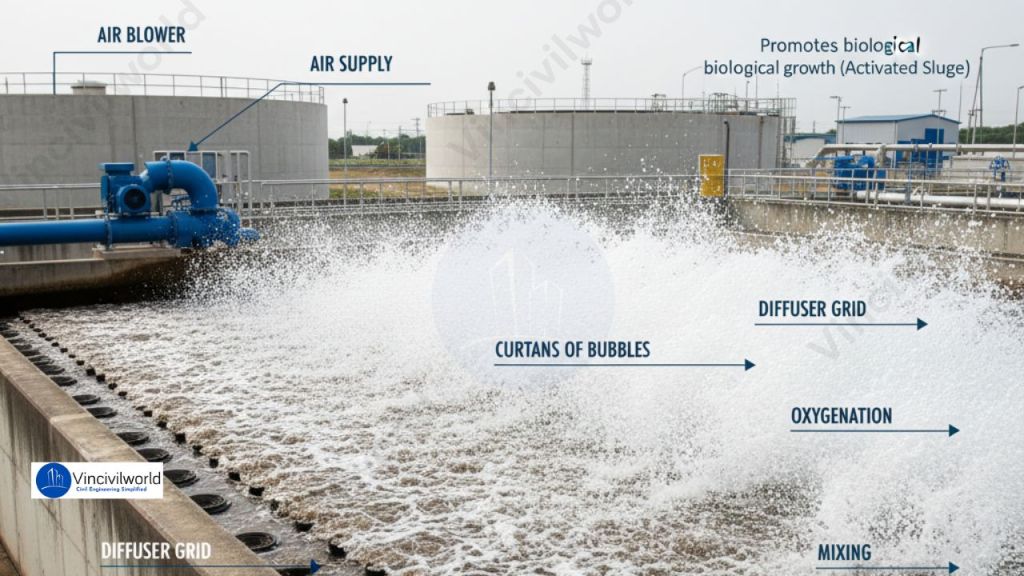
  • The aerated grit chamber constitutes a spiral flow aeration tank. Wastewater takes a spiral path through the aeration tank. This spiralling action throws away the grit particles into a hopper located underneath.
  • Scrappers remove the grit for disposal.
Aerial view of a primary wastewater treatment facility showing a settling tank with bubbling, aerated water and foamy surface.
Aerial view of wastewater treatment facility, showcasing the sedimentation tanks where solids settle during primary treatment.

Flow Equalisation – Primary treatment for waste water

  • Under uniform flow rates, clarifiers and mechanised secondary treatment are more efficient.
  • Equalization basins store diurnal or wet-weather flow peaks temporarily and make the water flow rate uniform.
  • Basins serve as a temporary holding area for the incoming wastewater during temporary plant shut down and maintenance.
  • It acts as a means of diluting and distributing hazardous or high-strength waste into batches.
  • Flow equalisation basins require variable discharge control which features bypass and cleaning options as well.
  • Cleaning is easier if the basin is downstream of screening and grit removal.

Also read : What are Water Pollutants? – Definition, Sources and Types

Sedimentation – Primary treatment for wastewater

The wastewater, then moves to sedimentation ponds, settling tanks, or clarifiers after the removal of settled grit. The sedimentation process removes the settleable solids by gravitational settling under quiescent conditions.

On proper adjustment of water flow in the sedimentation tank, the suspended particles begin to fall to the bottom and form a solid mass. Raw primary biosolids, also known as sludge, is the solid mass formed out of the particles. This sludge is removed by vacuum suction or raking it to a discharge point.

Types of Primary Sedimentation Tanks

  • Rectangular Horizontal Flow Tank
  • Circular Radial Flow Tank
  • Up Flow Tanks
Rectangular Horizontal Flow Tank
  • Feed enters at one end along the width of the horizontal tank.
  • They can be economically built side-by-side with common walls.
  • Length ranges from15 to 100m and width ranges from 3 to 24m (length/ width ratio 3:1 to 5:1).
  • In rectangular tanks, the flow occurs in a horizontal, lengthwise direction.
  • Rectangular tanks, sometimes use baffle walls to prevent short-circuiting.
  • Rectangular sedimentation tanks provide reduced maintenance expenses.
Circular Radial Flow Tank
  • In circular radial flow tanks, influent is fed through a central pipe of the tank and radial flow happens.
  • They have diameters ranging from 3 to 60 metres (side water depth range from 3 to 5m).
  • Mechanical sludge scrapers gather the sludge, and a sludge pipe transports it to the bottom.
  • Circular tanks are more expensive than rectangular tanks, but they have a higher clarification efficiency.
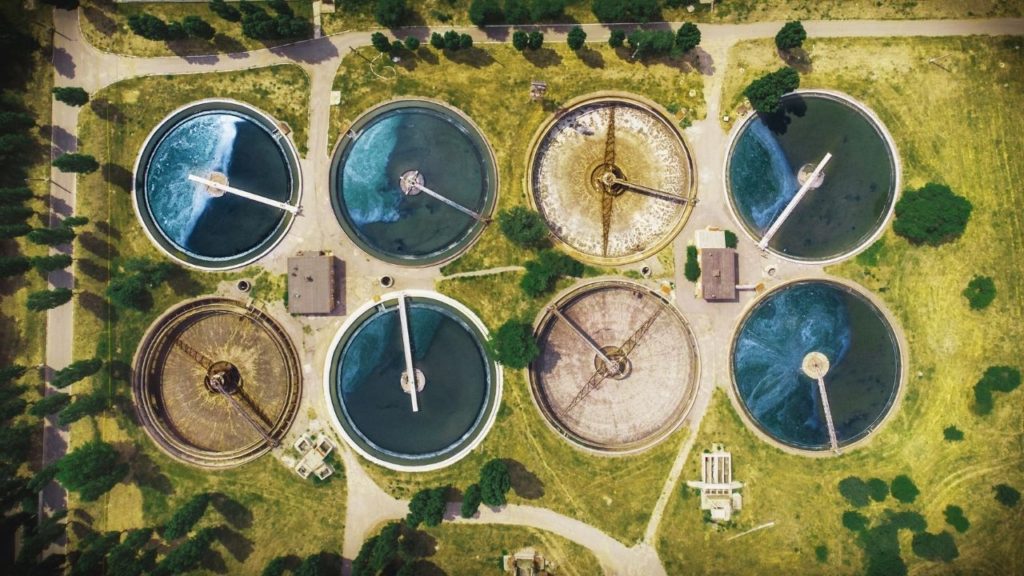
An aerial view of a wastewater treatment facility featuring circular sedimentation tanks, a treatment building, and surrounding green space.
View of primary wastewater treatment tanks, showcasing the sedimentation process essential for removing large particles and preparing sewage for advanced purification.
Up Flow Tanks
  • Up Flow tanks find application in small treatment plants.
  • Feed enters through openings along the bottom side of the tank and the effluent after clarification collects at the top.
  • The flow takes place in a vertical direction.
  • A sludge blanket in the lower part of the tank acts as a filter for small particles.

The next stage is flocculation which removes the remaining suspended solids.

Flocculation

Flocculation is a water treatment process to remove small suspended solids which don’t settle in the sedimentation tank. In this process solids form larger clusters, or flocs on the addition of a flocculent like aluminium sulphate.

The coagulant molecules have a positive charge. Hence, they can neutralize the negatively charged solid particles that are suspended in the water. Neutralization of the particles initiates the flocculation process. The individual suspended particles come together to join and form a larger mass called a floc.

Diagram illustrating coagulation and flocculation processes in wastewater treatment, depicting stages including raw water input, coagulation tank for flash mixing, flocculation tank for slow mixing, decantation, flotation, and final filtration leading to treated water output.
Illustration of the coagulation and flocculation processes in wastewater treatment, showcasing the stages from raw water to treated water.

At the onset of flocculation, we add a chemical polymer. It acts as a bridge between micro and macro flocculants, increasing the mass of particles aggregating together. It also bonds the accumulated material together, preventing it from dissolving even when the water is stirred slightly. After the flocculation, the solid masses are removed either through settling or through the use of filters.

Sludge Removal

In the sedimentation tanks, sludge (the organic component of the sewage) settles out of the wastewater. Mechanical scrapers in the tank’s base continuously move accumulated sludge to a hopper, where it is pumped to sludge treatment facilities. The thickening step removes some of the water before processing the sludge in digesters.

Also read : Activated Sludge Process – Stages and Process Control

Scum Removal

Lighter materials rise to the surface as sludge settles to the bottom of the sedimentation tanks. The constituents of ‘scum’ are grease, oils, plastics, and soap. Scum is skimmed off the surface of the wastewater by slow-moving rakes. Scum is thickened before being poured into the digesters with the sludge.

Primary treatment removes about 60% of the total suspended solids and nearly 35% of BOD. It doesn’t remove the dissolved impurities. The waste must undergo secondary treatment in order to be completely free of toxic substances.

Also read : Biochemical Oxygen Demand

That’s it about primary treatment for wastewater. But, our trip doesn’t end here. Next, we move on to the secondary wastewater treatment plant – Secondary Treatment for Wastewater – Methods and Process. So, how was the trip? Let us know in the comment

Key Takeaways

  • Primary Treatment for Wastewater is the first crucial step in treating sewage, removing large particles to protect equipment.
  • It involves screening, where coarse waste is separated, followed by grit removal and sedimentation processes.
  • Sedimentation allows heavier solids to settle, forming sludge, while oils and greases float to be skimmed off.
  • The process removes about 60% of total suspended solids and 35% of biochemical oxygen demand, but not dissolved impurities.
  • Following primary treatment, wastewater must undergo secondary treatment for complete purification.

Conclusion

Primary treatment for wastewater plays an essential role in protecting both treatment facilities and the environment. It removes large solids, sand, grit, oil, and floating debris before advanced purification begins. Processes like screening, grit removal, sedimentation, and flocculation work together to reduce the pollutant load effectively. By eliminating harmful materials early, primary treatment improves the efficiency and lifespan of pumps, pipelines, and biological treatment units. It also ensures that downstream processes receive cleaner wastewater, leading to better final effluent quality. Although simple and cost-effective, primary treatment remains the foundation of a reliable wastewater treatment system. Therefore, investing in and maintaining strong primary treatment operations is crucial for sustainable water management and public health protection.

What is Sewage? – Sources, Treatment and Quality Indicators

What is Sewage? Sewage is the wastewater produced from homes, industries, commercial areas, and even stormwater entering the drainage network. It contains human waste, food residues, soaps, and chemicals. It also includes oils and harmful microorganisms. These substances can pollute the environment if not treated properly. By identifying the types and sources of sewage, we can classify it into domestic sewage and industrial sewage. Each has different contamination levels. To protect public health, the sewage treatment process removes pollutants. It utilizes physical, biological, and sometimes advanced treatment methods. During treatment, key sewage quality indicators such as BOD, COD, TSS, and pH are monitored. Monitoring also includes coliform bacteria to ensure standards are met. This article explains the meaning of sewage. It discusses where sewage comes from and how it is treated. Additionally, it covers how sewage quality is evaluated for safe disposal or reuse.

lobally, 44% of sewage is not safely treated, according to UN-Water 2021. Releasing untreated sewage into water bodies pose a great threat to humans as well as the environment. But, how do we understand the quality and the number of pollutants in it? This blog let me walk you through the basics of sewage, its sources, types, and quality indicators.

Here are a few shocking facts about water pollution. These facts highlight its effects before we delve into the details about sewage. Water Pollution – Effects and Causes. Going through this blog will help you better understand the importance of treating sewage.

Now, let’s get started.

  1. What is sewage?
  2. Components of Sewage
  3. Sources and Types of Sewage
    1. Domestic Sewage (Household Wastewater)
    2. Industrial Sewage
    3. Stormwater / Urban Runoff
  4. Sewage Quality Indicators
    1. Physical Characteristics
      1. 1️⃣ Temperature
      2. 2️⃣ Colour
      3. 3️⃣ Odour
      4. 4️⃣ Turbidity
      5. 5️⃣ Solids
    2. Chemical Characteristics
      1. 1️⃣pH
      2. 2️⃣Dissolved Oxygen (DO)
      3. 3️⃣Biochemical Oxygen Demand (BOD)
      4. 4️⃣Chemical Oxygen Demand (COD)
    3. Biological Characteristics
      1. Bacteria
  5. Conclusion

What is sewage?

Sewage is a type of industrial and domestic wastewater that enters the sewerage system from household bathrooms, toilets, kitchens, laundries and drains. It consists of approximately 99.6% water and 0.4% of biodegradable pollutants and small solid particles. A sewage treatment plant considers the following parameters of sewage:

  • The rate of flow
  • Physical state
  • Chemical and hazardous contents
  • Bacteriologic status are all factors to consider (which organisms it contains and in what quantities).

Components of Sewage

The major components of sewage include:

  • Greywater – wastewater from sinks, bathtubs, showers, dishwashers, and clothes washers
  • Blackwater – wastewater from toilets, mixed with the human waste flushed away
  • Soaps and detergents, and toilet paper

Also read: What are Water Pollutants? – Definition, Sources and Types

Sources and Types of Sewage

Sewage is generated from several daily domestic and industrial activities. To understand its characteristics and treatment needs, sewage is commonly classified into different Types of Sewage based on its origin. The major sources include:

Domestic Sewage (Household Wastewater)

Domestic sewage is discharged from kitchens, toilets, and washing activities, containing:

A drainage pipe discharging cloudy wastewater into a body of water, illustrating the issue of sewage pollution.
Sewage flowing from a drainage pipe into a water body, highlighting the importance of proper wastewater treatment.
  • Human excreta: faeces, urine, blood, sanitary waste
  • Bathing and personal hygiene water
  • Dishwashing, laundry, and floor-cleaning water
  • Household liquids such as cooking oil, detergents, paints, lubricants, and pesticides

Industrial Sewage

Industrial sewage is mainly wastewater from factories and processing units, containing chemicals, dyes, oils, acids, and heavy metals.

Stormwater / Urban Runoff

Rainwater flowing from:

  • Roads, railways, parking lots, pavements
  • Roofs, gardens, fuel stations
    Carrying oil spills, food waste, tyre rubber residue, metals, pesticides, and litter.
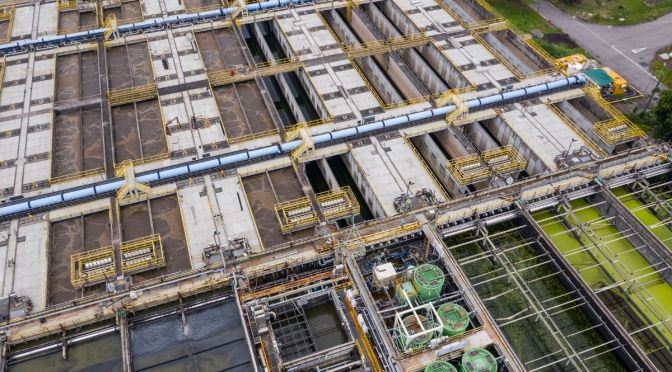
Aerial view of a sewage treatment plant with circular and rectangular tanks for wastewater processing, surrounded by green land and buildings.
An aerial view of a sewage treatment plant showcasing multiple processing tanks and facilities for wastewater management.

A clear understanding of these types of sewage sources helps engineers design the right sewage treatment process and improve public health and environmental protection.

Sewage Quality Indicators

Sewage quality indicators are laboratory tests that determine if wastewater is suitable for disposal, treatment, or reuse. These tests measure the physical, chemical, and biological characteristics of sewage. Physical characteristics don’t demand complex procedures since our physical senses alone can detect them. Bioassays and aquatic toxicity tests determine the biological properties while titrations and related laboratory procedures give the chemical characteristics.

Physical Characteristics

The physical characteristics can be detected using our senses such as sight, smell, and touch.

1️⃣ Temperature

The temperature of sewage indicates the level of contamination. It varies depending on biological and chemical reactions in the sewer or treatment plant. When sewage becomes septic, microbial activity increases the temperature. A drop in temperature can indicate groundwater infiltration.

2️⃣ Colour

Colour indicates the age and condition of wastewater. Fresh one appears light brownish-grey. Under anaerobic conditions, oxidation of organic matter turns the sewage from grey to dark grey or black. Black colour signals septic one.

3️⃣ Odour

Fresh sewage has a mild oily smell. Septic one produces a foul odour due to hydrogen sulphide (H₂S) formed under anaerobic decomposition. Industrial wastewater may contribute additional odorous compounds.
Odour measuring devices include:

  • H₂S meter
  • Olfactometer
  • Scentometer
  • Butanol wheel

4️⃣ Turbidity

Turbidity measures the ability of sewage to transmit light. Suspended and colloidal particles scatter or absorb light, increasing turbidity. High turbidity indicates poor wastewater quality and the presence of solids.

  • Measure of light-transmitting property of water.
  • Turbidity measurement involves comparing light scattered by sample to that by a reference suspension under same conditions.
  • Colloidal matter absorb light and thus prevent transmission.
  • Thus, if a sample doesn’t transmit light, it indicates that the sample is turbid due to presence of suspended and colloidal substances.

5️⃣ Solids

Solids are the residues left after evaporation and drying at 103.2°C. They include:

Solids are those substances that remain as residue after evaporation and drying at 103.20C.
Suspended particles are solids that have not dissolved in wastewater. Floatable solids or scum are suspended materials that float.

Settled solids, often known as grit or sludge, are suspended materials that settle. Settleable solids refer to the solids that settle at the bottom of an Imhoff cone after the water has settled for one hour. It is a measure of the quantity of sludge that can settle by primary sedimentation.

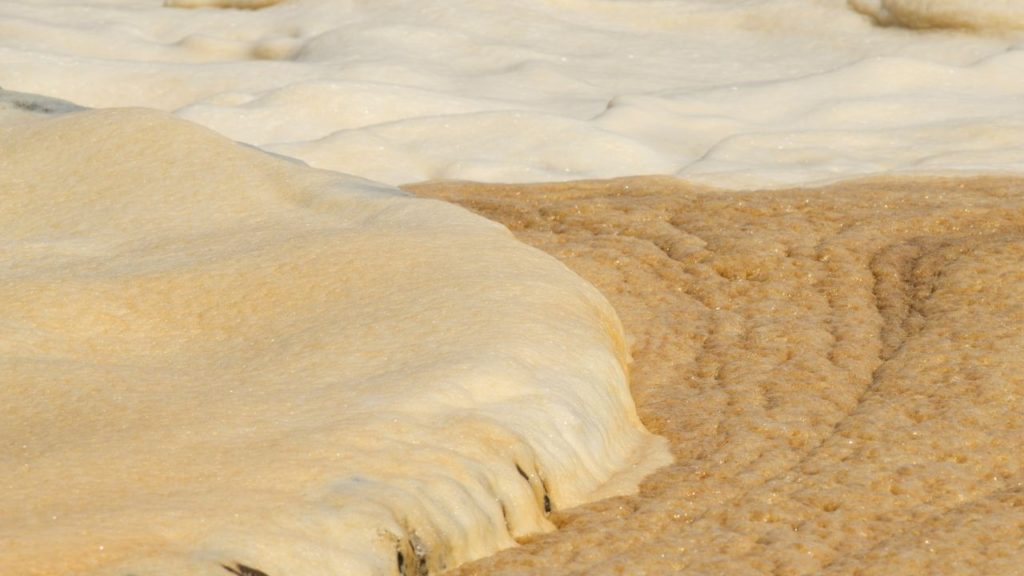
Close-up view of sewage water with bubbles and brownish residue on the surface.
A close-up view of wastewater exhibiting bubbles, highlighting the presence of organic solids and pollutants.

Volatile solids are solids that burn or evaporate at temperatures between 500°C and 600°C. In a wastewater treatment plant, the sediments provide food for bacteria and other living organisms and thereby they decompose the waste. The majority of organic substances included in municipal garbage come from living plants and animals.

Organic solids serve as food for bacteria during treatment and support biodegradation.

Chemical Characteristics

Sewage comprises both organic and inorganic compounds and numerous gases produced by decomposition, such as H2S, CO2, CH4, and NH3. pH, DO (dissolved oxygen), oxygen demand, nutrients, and hazardous compounds are chemical features of wastewater that are of particular interest.

1️⃣pH

The pH scale describes the acidity or alkalinity of aqueous solutions. Initially, the sewage has high pH. Further, the pH drops when it gets septic, and then rises again as it goes through the treatment process.

2️⃣Dissolved Oxygen (DO)

The term “aerobic” or “fresh” refers to wastewater that contains DO. At 1.0 atm pressure, oxygen solubility in freshwater ranges from 14.6 mg/L at 0oC to roughly 7 mg/L at 35oC.

3️⃣Biochemical Oxygen Demand (BOD)

BOD is the amount of oxygen needed for aerobic bacteria to decompose organic matter. This process occurs over 5 days at a typical temperature of 20oC. We have a blog, Biochemical Oxygen Demand || Dissolved Oxygen of Water || Full Details. It covers all the topics that one should know about BOD. Don’t forget to check it out.

4️⃣Chemical Oxygen Demand (COD)

Laboratory analysts determine Chemical Oxygen Demand (COD) by oxidizing the organic matter in a wastewater sample. They use a strong chemical oxidant for this process. The COD value represents the oxygen equivalent of all organic compounds in the sample. These compounds are susceptible to chemical oxidation. The value indicates how much oxygen would be required to break them down.

For more details: Chemical Oxygen Demand and Total Organic Carbon Analysis

Biological Characteristics

Bacteria, viruses, and parasites are the three biological entities found in wastewater.

Bacteria

The typical concentration of bacteria in raw sewage ranges from 500,000 to 5,000,000 per mL. These bacteria use external and intracellular enzymes. They break down complicated molecules into stable chemicals. Bacteria can be classified into three types depending on their manner of action:

  • Aerobic Bacteria
  • Anaerobic Bacteria
  • Facultative Bacteria

Along with bacteria, it also contains viruses, helminths, parasites etc.

Key Takeaways

  • Sewage is wastewater from homes and industries, containing pollutants that can harm the environment if untreated.
  • It mainly categories into domestic and industrial sewage, each with different contamination levels.
  • Sewage quality indicators, such as BOD, COD, and pH, help evaluate its treatment needs and safety for disposal or reuse.
  • Globally, 44% of sewage isn’t safely treated, creating significant health and environmental risks.
  • Understanding sewage’s components and sources is essential for effective treatment and protecting public health.

Conclusion

Understanding What is Sewage ? is essential for effective environmental and public health protection. Sewage originates from many sources of sewage, mainly domestic and industrial sewage, and can contain harmful pollutants. By analyzing sewage quality indicators such as BOD, COD, TSS, pH, and coliform bacteria, engineers can assess pollution levels accurately. A well-designed sewage treatment process ensures the safe disposal or reuse of wastewater by removing physical, chemical, and biological contaminants. Proper wastewater treatment and pollution control techniques help maintain clean water bodies, prevent disease outbreaks, and support sustainable urban development. Continuous monitoring and advancements in treatment technologies remain crucial for improving sewage management and protecting our environment for future generations.

Curing of Concrete – Concrete Curing Methods explained

Methods of Concrete curing plays a critical role in ensuring that fresh concrete gains its required strength and durability. After placement, concrete needs controlled moisture and temperature conditions to support the hydration reaction. Engineers follow different Methods of Concrete Curing depending on the site environment, structure type, and expected performance. Among the many Types of Concrete Curing, water curing remains the most common approach, especially for slabs, pavements, beams, and columns.

Practical Concrete Water Curing Techniques like ponding, spraying, and fogging help maintain continuous moisture in hot and dry regions. When water is limited, engineers prefer Membrane Curing of Concrete to reduce evaporation. In cold weather concreting and precast sites, they use Steam Curing Concrete to accelerate early strength. These On-Site Concrete Curing Methods ensure durable, crack-free structures that perform well throughout their service life.

This article explains water curing, membrane curing, and steam curing techniques used at construction sites. It also discusses their applications and benefits.

  1. Types of Concrete curing
    1. Maintaining water over the concrete surfaces -Concrete Water Curing Techniques
    2. Ponding
    3. Spraying and fogging method of curing
    4. Saturated or wet coverings
    5. Immersion curing
  2. Reducing Water loss from concrete- Methods of concrete curing
    1. Membrane Curing of Concrete
    2. Covering with plastic sheets
  3. Accelerating strength gain method of concrete curing
    1. Concrete Steam Curing
      1. Steam curing of concrete at atmospheric pressure
      2. High-pressure steam curing
    2. Heating coils
  4. Conclusion

Types of Concrete curing

Curing is the process that maintains moisture in fresh concrete. This allows it to attain its desired strength in a planned manner through a hydration reaction. If the water evaporates quickly, the requisite amount of water will not be available for the hydration process. The curing of concrete helps to retain the moisture. This retention continues until the hydration process is complete. This ensures the concrete attains the requisite strength.

The curing method and time primarily depend on structure type, site conditions, and ingredient parameters. Some of the Types of concrete curing methods adopted in constructions sites are as follows.

  • Maintaining a water layer over the concrete surfaces (water curing)
  • Reducing the loss of water from concrete
  • Accelerating the initial strength gain

Let us go through these three basic concepts and onsite concrete curing methods adopted for each of these criteria.

Maintaining water over the concrete surfaces -Concrete Water Curing Techniques

Maintaining water over concrete surfaces or water curing is the most popular and conventional method of concrete water curing techniques. The methods of curing depends on the type of structure basically. Let us go through the water curing techniques adopted in construction sites .

  • Ponding
  • Spraying and fogging
  • Saturated or wet coverings
  • Immersion curing

Ponding

Ponding is the method of wetting the concrete surface by creating a temporary containment area around the concrete. 

The ponding method is one of the very well-known and widely adopted concrete water curing technique. This method is possible only on horizontal or flat structures and is best suited for curing concrete slabs. 

A construction worker applies water to a freshly poured concrete slab using a hose, surrounded by temporary containment for effective curing.
A construction worker performing water curing by spraying water on a freshly poured concrete slab to ensure proper hydration and strength.

Small bunds of clay or lean cement sand are placed over the concrete surface. Water is filled in the bunds, refilled, and maintained as and when the level goes down.

This method is very efficient but requires a huge amount of water. The ponding method of curing is not preferred for large areas and areas where water is scarce.

Spraying and fogging method of curing

Spraying and fogging are conventional water curing methods for horizontal and vertical concrete surfaces. These methods are very effective and efficient in supplying additional moisture during hot weather. The spraying and fogging methods help in reducing the temperature of the concrete.

Spraying is a manual method of simply spraying water over the concrete surface. Even though the spraying method is effective, it tends to waste a lot of water.

A construction worker using a spray nozzle to apply water onto freshly poured concrete at a construction site, with a building structure partially completed in the background.
A construction worker using a spraying technique to cure fresh concrete on a building site.

Fogging is applicable for areas where the temperature is above freezing point and with low humidity. This process raises the humidity higher than curing concrete by spraying a fine mist of water regularly across the concrete surface. Fogging, or fog spraying is effective in reducing the chances of plastic shrinkage cracking in mixes.

Saturated or wet coverings

In this method of curing, saturated or wet coverings are placed over the hardened concrete. The wet covering material includes hessian cloths, cotton mats, moisture-retaining fabrics, etc. Vertical and inclined structures like columns, beams, sloped roofs, etc are cured in this method.

A construction worker unrolling a plastic sheet over a wet concrete surface to reduce evaporation, with a building under construction in the background.
Applying membrane curing to retain moisture on a concrete surface during construction.

Immersion curing

Immersion method of curing is for curing concrete specimens.

Reducing Water loss from concrete- Methods of concrete curing

This concept of curing involves reducing moisture loss from the concrete surface. It is done by wrapping the surface with an impermeable membrane or plastic sheets. This method is the most practical and efficient way to cure concrete nowadays. It is also a much-needed option for areas where there is water scarcity. The common methods are..

  • Membrane Curing of Concrete
  • Covering concrete with impervious sheets or plastic sheets

Membrane Curing of Concrete

The application of curing compounds is through spraying or painting directly on the concrete surface. The compound dries and forms an impermeable membrane that retards or reduces the moisture loss from the concrete. The membrane curing method is a flexible and easy method of curing.

A person using a spray nozzle to apply water on a concrete surface for curing.
A worker applying water to a concrete surface using a spray method for effective curing.

Engineers apply curing compounds once the concrete has hardened but still contains surface moisture. They complete the application before the water evaporates fully from the concrete. The membrane curing may not produce desired results, if applied after the water evaporates. Ensure uniform thickness and coverage during the application process.

Curing compounds are available in acrylic-based and water-based forms.
The curing compound should comply with ASTM C3094 or ASTM C13155. Always go through the manufacture specification before application of curing compounds.

Covering with plastic sheets

Engineers apply impervious paper and plastic sheets on thoroughly wetted concrete in this method. The concrete surface should be hard enough to take the possible damages while placing the sheets.

Concrete surface covered with plastic sheets for membrane curing to retain moisture and reduce evaporation.
Concrete surface covered with impermeable plastic sheets for membrane curing to minimize evaporation.

Accelerating strength gain method of concrete curing

Engineers accelerate strength gain by applying heat or additional moisture, speeding up the early hardening of concrete and mortars through controlled steam and humidity. The following curing methods use this technique.

Concrete Steam Curing

The steam curing method uses water vapor or steam for curing the concrete elements. This curing method is used in cold weather conditions. The concrete needs accelerated early strength gain. It also requires additional heat for hydration. Prestressing and precast factories use the steam curing method for early strength gain of components. The early strength gain can enable rapid removal and reuse of forms. 

The steam curing is done in two ways

  • live (or low pressure) steam at atmospheric pressure
  • high-pressure steam curing in autoclaves.

Steam curing of concrete at atmospheric pressure

Steam curing allows increased production due to rapid repetition and reuse of molds/forms in precast yards.

Concrete elements being cured with steam in a controlled environment, with visible steam rising around the concrete.
Steam curing of concrete elements in a controlled environment to accelerate early strength gain.

Engineers keep the steam temperature at around 140°F or lower for live steam at atmospheric pressure. This continues until the concrete reaches the desired strength. By maintaining an optimum temperature, they can achieve in just 3 days what normally takes 28 days with water-cured concrete. They use the steam curing method.

High-pressure steam curing

Engineers carry out high-pressure steam curing in a closed chamber at elevated temperature and pressure. They refer to this process as “Autoclaving.” They maintain temperatures between 325° and 375°F and pressures around 80 to 170 psi. Engineers use this method to manufacture precast components, cellular concrete products, and cellular blocks. They also produce precast panels and autoclaved aerated concrete (AAC) blocks.

A steam curing chamber used for concrete, showcasing steam release and a partially visible concrete element inside.
High-pressure steam curing setup, enhancing early strength gain in concrete.

The main advantage of a high-pressure steam curing system is the capability of attaining 28 days of strength of normally cured concrete in 24 hours.

High-pressure steam cured concrete got less creep and shrinkage and better sulfate resistance. There will not be any efflorescence and moisture content after curing.

Heating coils

Heating coils are usually used as embedded elements near the surface of concrete elements. Their purpose is to protect concrete from freezing during cold weather concreting.

Key Takeaways

  • Methods of concrete curing are essential for strength and durability, requiring controlled moisture and temperature.
  • Water curing is the most common method, employing techniques like ponding, spraying, and fogging.
  • Membrane curing is preferred in water-scarce areas, using impermeable sheets to minimize evaporation.
  • Steam curing accelerates early strength gain, particularly in cold weather, using live or high-pressure steam.
  • The choice of curing method depends on structure type, site conditions, and climatic factors.

Conclusion

Selecting the right Methods of Concrete Curing on site is essential to ensure concrete develops its intended strength and durability. Engineers choose different Types of Concrete Curing depending on weather conditions, structural exposure, and project requirements. Engineers use Concrete Water Curing Techniques such as ponding, spraying, and fogging to supply continuous moisture for most slabs and structural elements and prevent early drying. When water is limited or evaporation is high, they apply Membrane Curing of Concrete to retain internal moisture effectively. In colder climates or when faster formwork removal is needed, Steam Curing Concrete accelerates hydration and early strength gain. By applying the correct On-Site Concrete Curing Methods, construction teams can minimize thermal cracking, improve service life, and deliver high-quality structures that perform reliably throughout their lifespan.

Heat of hydration test of Cement – Process and Procedure

The Heat of Hydration of Cement plays a major role in determining concrete temperature, early strength, and long-term stability. The heat of hydration is the heat liberated from the reaction between cement and water. When water combines with cement compounds, it triggers the Cement Hydration Process, releasing heat that varies across different Hydration Stages of Cement. These stages influence setting behaviour, strength formation, and temperature rise in both normal and mass concrete. Understanding the Factors Affecting Heat of Hydration is crucial. Factors such as cement composition, fineness, water-cement ratio, and environmental conditions help engineers control excessive heat generation. This control helps avoid thermal cracking. In large pours like dams and raft foundations, Low Heat Cement Applications become essential to manage temperature gradients and ensure structural durability. By studying these principles, professionals can produce safer, stronger, and long-lasting concrete structures.

This article covers the Heat of Hydration of Cement and the Cement Hydration Process. It also details the Hydration Stages of Cement. Additionally, it discusses Factors Affecting Heat of Hydration and Low Heat Cement Applications.

  1. Tests on Cement (Field Tests and Lab Tests)
    1. Field tests on Cement
    2. Laboratory tests for Cement
  2. What is heat of hydration?
  3. Hydration stages of cement
    1. Initial Reaction
    2. Dormant / Induction Period
    3. Acceleration Period
    4. Deceleration Stage
    5. Steady-State of cement Hydration process
  4. Relevant Codes for measuring Heat of hydration
    1. Indian Standards (IS)
    2. ASTM Standards (USA)
    3. European Standards (EN)
  5. Heat of Hydration test as per IS 11209
    1. Procedure for heat of hydration test
  6. Heat of hydration as per ASTM
    1. Apparatus Required
    2. Test Procedure (ASTM C1702)
    3. Calculation
  7. Factors Affecting Heat of Hydration
  8. Conclusion

Tests on Cement (Field Tests and Lab Tests)

Tests on cement play a vital role in ensuring its quality, consistency, and suitability for construction. Field tests offer quick assessments of basic properties like colour, smoothness, and physical behaviour, helping engineers make immediate decisions on-site. Laboratory tests, conducted under controlled conditions, provide accurate information about cement’s strength, setting characteristics, durability, and chemical performance. Together, field tests and lab tests ensure that only high-quality cement is used in concrete production.

Field tests on Cement

Simple field tests quickly indicate cement quality without advanced equipment. By checking colour, smoothness, and basic behaviour, we can immediately judge whether the cement should be accepted or rejected.

  • Checking manufacturing date
  • Visual checking of lumps
  • Feel test
  • Heat of cement
  • colour
  • Water float test
  • Setting test

These basic tests give an approximate characteristic of cement. These are easy and quick but not accurate, however help in concluding the acceptance of cement for works. For more details about field tests you can go through our earlier article 

Laboratory tests for Cement

The laboratory tests define the physical and chemical properties of cement. So it is not possible to check all the cement properties at the site. Laboratory tests on concrete offer accurate evaluations of strength, durability, and physical properties. These tests help engineers verify performance and ensure quality. They also predict the long-term behaviour of structural concrete. The main laboratory tests conducted on cement is as follows.

  • Fineness Test
  • Compressive Strength Test
  • Consistency Test on cement
  • Setting time
  • Soundness Test
  • Tensile strength Test
  • Heat of hydration

Lab tests require time. But it provides accurate results.

What is heat of hydration?

Cement contains several key chemical compounds that govern its setting and hardening behaviour. These major compounds—Alite (C3S), Belite (C2S), Celite (C3A), and Felite (C4AF)—are collectively known as the Bogue compounds, formed during the clinkering stage of cement production. Although these compounds remain inactive in dry form, they react vigorously when water is added, initiating the hydration process. Hydration is an exothermic chemical reaction, meaning it releases a considerable amount of heat as the compounds dissolve and form new binding products.

Illustration depicting cement particles in the mix before hydration, showing no water present.
Stages of cement hydration: 1) Cement particles before hydration; 2) Formation of hydration products; 3) Complete filling of the mix with hydration products.

Typically, cement hydration liberates about 89–90 cal/g of heat within the first seven days and 90–100 cal/g by 28 days. The physical properties and overall performance of cement depend greatly on the rate and completeness of this hydration reaction; inadequate hydration can lead to reduced strength and long-term structural deterioration. The key chemical compounds responsible for hydration include the primary Bogue constituents listed below.

  • Tricalcium silicate, C3S
  • Dicalcium silicate, C2S
  • Tricalcium aluminate, C3A
  • Tetracalcium aluminoferrite, C4AF
  • Gypsum, CSH2

This heat is highly important in concrete engineering because it influences setting time, early-age strength, and temperature rise in both thin and massive concrete elements. Properly understanding the Factors Affecting Heat of Hydration helps engineers prevent thermal cracking and select suitable Low Heat Cement Applications for large pours, dams, and raft foundation

Diagram illustrating chemical reactions during the hydration of cement, showing the formation of various compounds such as C-S-H, Tobermorite gel, and Calcium sulpho-aluminate.
Chemical reactions involved in the hydration process of cement, detailing the formation of key compounds.

Hydration stages of cement

The hydration stages of cement detail the progression of chemical reactions after adding water. This process influences heat release, setting behaviour, and the long-term strength development of concrete.

Initial Reaction

The hydration process begins instantly when water meets cement. During this stage, a rapid chemical reaction occurs on the surface of the cement particles. It is intense and releases a sudden burst of heat. This reaction is short-lived but crucial, as it triggers the formation of early hydration products and initiates the overall setting process.

Graph illustrating the stages of heat evolution during the cement hydration process, including initial reaction, dormant period, acceleration, deceleration, and steady state.
Graph illustrating the stages of heat evolution during the cement hydration process, showcasing initial reaction, dormant period, acceleration, deceleration, and steady-state.

Dormant / Induction Period

After the initial reaction, the hydration activity slows down significantly and enters the dormant or induction period. This phase typically lasts 2 to 5 hours, during which the concrete remains workable and can be transported, placed, and compacted. Although the reaction rate is low, hydration continues slowly around the nuclei of the cement grains.

Acceleration Period

The acceleration stage marks a sharp increase in hydration activity. During this phase, major binding compounds such as Tobermorite gel (C-S-H gel), calcium hydroxide, and other minor products form rapidly. These substances begin depositing around the outer surface of partially hydrated cement grains, contributing to strength development.

Deceleration Stage

As the hydration layer thickens, the reaction rate begins to decrease, marking the deceleration stage. The reduced speed occurs because the growing C-S-H gel creates a barrier that slows further water penetration into the cement particles. Strength continues to develop but at a slower pace.

Steady-State of cement Hydration process

In the final stage, hydration proceeds very slowly over days, months, and even years. The reaction gradually stops once the cement particles are fully hydrated. By this time, Tobermorite gel occupies nearly 50–60% of the volume of the hydrated cement, making it the dominant contributor to long-term strength and durability.

Relevant Codes for measuring Heat of hydration

Indian Standards (IS)

  • IS 11209 – Method for Determining Heat of Hydration of Hydraulic Cement
  • IS 269 – Specification for Ordinary Portland Cement (includes heat categories)

ASTM Standards (USA)

  • ASTM C1702 – Heat of Hydration of Hydraulic Cement (Isothermal Calorimetry)
  • ASTM C1753 – Evaluating Heat of Hydration in Adiabatic Conditions
  • ASTM C150 – Standard Specification for Portland Cement (heat limits)

European Standards (EN)

  • EN 196-9 – Heat of Hydration by Isothermal Conduction Calorimetry
  • EN 197-1 – European Cement Specification (heat classes)

Heat of Hydration test as per IS 11209

The heat of hydration test is conducted at a standard room temperature of 27 degrees celsius. The apparatus for this test is

  1. Calorimeter
  2. Mortar and pestle 
  3. Glass/Plastic vials
  4. Stopwatch or timer
  5. Sieve
  6. Muffle furnace
  7. Weighing balance
Heat of Hydration test of cement

Heat of hydration test

The calorimeter determines the heat of the paste. Glass vial has a dimension of 80×20 mm. Muffle furnace maintains the temperature. Before performing the test, the calorimeter temperature is to be made uniform. The heat of hydration should be determined at the 7th and 28 days.

Procedure for heat of hydration test

  • To find the heat of hydration, firstly we have to measure the heat released from the unhydrated cement using a calorimeter.
  • Then we have to measure the heat of hydration from hydrated cement
  • For that take 60 grams of cement and add 24 ml of water. 
  • Then fill this mixture in three glasses and seal them with wax to avoid the entry of air. 
  • The standard temperature should be 27 degrees celsius. 
  • Then measure the heat of the solution using a calorimeter. 
Heat of hydration test procedure

Heat of hydration = Heat released from hydrated cement – Heat released from unhydrated cement

For low heat cement, The heat of hydration for 7 days should not be greater than 66 cal/g and for 28 days should not be greater than 75 cal/gm. 

Heat of hydration as per ASTM

ASTM methods measure the Heat of Hydration using precise isothermal calorimetry, providing accurate data on cement’s heat release, hydration behaviour, and performance in concrete.

Apparatus Required

  • Isothermal calorimeter (high-precision)
  • Sample ampoules or containers
  • Precision weighing balance
  • Thermometric sensors
  • Mixing tools
  • Temperature-controlled environment
  • Distilled water
  • Data acquisition system or software

Test Procedure (ASTM C1702)

  1. Weigh the required mass of cement sample accurately.
  2. Place the sample in the calorimeter ampoule.
  3. Add the specified quantity of water.
  4. Seal the ampoule to prevent moisture exchange.
  5. Insert ampoule into the isothermal calorimeter.
  6. Start data logging for heat flow measurement.
  7. Monitor heat release continuously for the required duration.
  8. Save heat-time curve data for interpretation.

Calculation

Total Heat of Hydration (J/g) = Integral of heat-flow curve ÷ Mass of cement
(Software usually calculates the cumulative heat automatically.)

Factors Affecting Heat of Hydration

Controlling the Heat of Hydration on site involves lowering concrete temperature and slowing early reactions. Cooling techniques like chilled water, ice, or cooled aggregates reduce initial heat. Proper material selection, including low-heat cement and mineral admixtures, also helps. Optimized mix design strategies lower cement content. Adjusting construction timing to cooler hours and applying effective curing practices further minimise temperature rise and thermal cracking.

Key Takeaways

  • The Heat of hydration of cement significantly affects concrete temperature, strength, and stability through the Cement hydration process.
  • Cement undergoes five hydration stages, each influencing heat release and strength development in concrete.
  • Field tests provide quick assessments of cement quality, while laboratory tests offer detailed evaluations of its properties.
  • Controlling the heat of hydration involves cooling techniques, proper material selection, and optimised mix design strategies.
  • The heat of hydration test is crucial for assessing cement’s performance and ensuring long-lasting, reliable structures.

Conclusion

Understanding the Heat of Hydration of Cement is essential for ensuring concrete quality, durability, and temperature control in construction. By analysing the Cement Hydration Process and the key Hydration Stages of Cement, engineers can accurately predict heat generation and early-age behaviour. This knowledge also helps identify the major Factors Affecting Heat of Hydration, enabling better decisions in material selection, mix design, and site practices. In mass concrete works, choosing suitable Low Heat Cement Applications prevents thermal cracking and enhances long-term performance. Ultimately, proper evaluation of hydration heat supports safer, stronger, and more reliable structures, making it a critical aspect of modern concrete engineering and quality control.

Updates in civil engineering, architecture finishes, building construction, Environmental Engineering