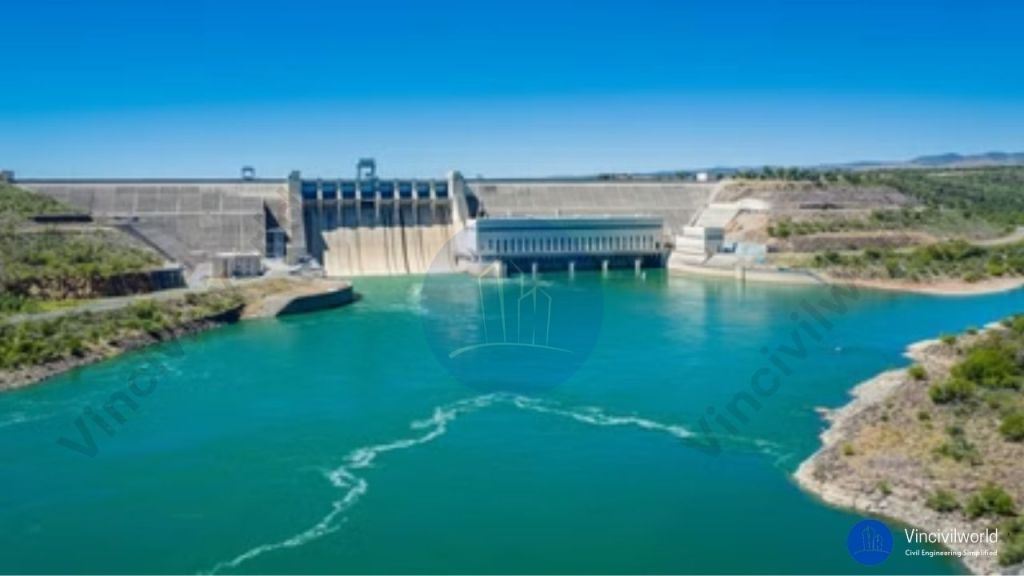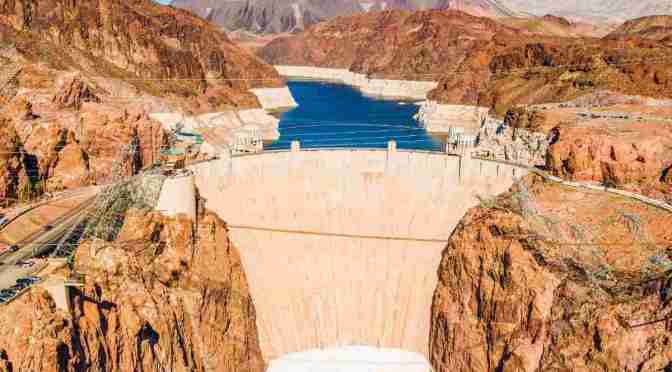
Dams – Site selection, Advantages and Disadvantages

Site selection for dams is a critical process that ensures the structure’s stability and efficiency. Choosing the right location is essential for minimizing risks and maximizing the dam’s performance. Geology, river flow, and environmental impact are crucial factors. They play a key role in determining the best site selection of a dam. A well-placed dam offers significant advantages, such as water storage and flood control, while improper sites increase the disadvantages of dams, like ecological damage and costly maintenance. Balancing these factors is vital for success.

Dams are obstructions constructed across the water bodies to control the water flow and water levels. Dams serve as a water source for human consumption, irrigation purpose, and power generation. They also help prevent floods when there is a sudden discharge of floodwater. The water that impounds in the dams is also used for recreation purposes and industrial uses. They are mostly made up of rock fill or earthen.

  1. What are dams?
  2. Benefits of dam
  3. Site selection of dams.
  4. Advantages of dams
  5. Disadvantages of Dams
  6. Key Takeaways
  7. Conclusion

What are dams?

The dams are barriers built to restrict and manage the natural flow of rivers, waterways, or streams for human needs. A dam may be a natural one or artificial. They help to confine water and reduces the water rise and flood problems. Dams retain water by forming a reservoir behind the structure. They got an Upstream side and Down stream side. The place where water is collected is called the Upstream side. The water impounded is used as storage and is called Reservoir.

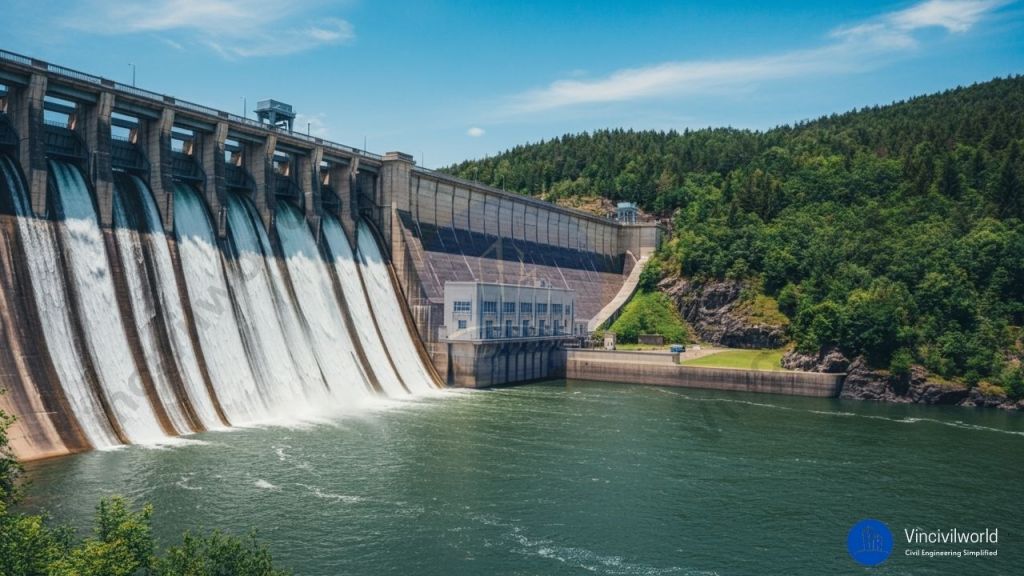
Dams
site selection for dams
Site selection for dams

Also read : Type of Dams – 3 main classification criteria explained

Benefits of dam

The dams provide a range of environmental, economic and social benefits

One of the most important benefits of dams is water storage. The stored water is used for drinking, cleaning, bathing, gardening, irrigation purposes, industrial purposes.

The large dams and reservoirs serve as recreational spots for fishing and boating purposes. Dams play a major role in preventing damages due to floods by collecting and storing excess water during rains and are released as and when required.

The dam is the main source of providing water for irrigation purposes in areas where rain and water are scarce.

Also read : Methods of irrigation – 3 methods full guide

Site selection of dams.

The dam is a massive and strategic structure and needs a perfect site selection before proceeding with construction.Site selection of dams involves assessing factors like geology, river flow, and environmental impact. These factors ensure structural stability and reduce ecological disruption. The right site selection for dams minimizes risks such as flooding and maintenance issues. Soil type, valley shape, and climate also play a key role in site viability.

  • Topography -Making maximum use of the available volume of water is the main objective of a dam. The slope of the area, groundwater table, contour, weather condition, etc is other factors for dam site selection. The bed level at the dam site should preferably be higher than that of the river basin. This is for reducing the dam height and facilitating the drainage of water.
  • Foundation – The foundation should bear the whole weight and pressure of the dam. It should be permeable, thick, and should have adequate strength.
  • Economic criteria – This includes the construction and maintenance cost of the dam. The land value, cost of construction materials and construction time, etc. to be taken into account while selecting a dam site. Quality construction materials required for dam construction have to be available near the proposed location. Always opt for a small length dam with maximum water holding capacity for economising the project. 
  • Height of Dam – The height of the dam should be economical, and should store the maximum amount of water.
  • Earthquake zone – The dam site should not be an earthquake zone. It may cause a collapse of the dam and losses. 
  • Material availability – Materials like rock, aggregate, soil, filler, etc. should be available near the site.
  • Climate condition – The climate of the site should be bearable, possibilities of landslides should not occur.
  • Spillway site: A suitable location for the spillway should be available in the nearby vicinity of the dam. 
  • The dam site should be easily accessible and economically connected to nearby areas. Area required for establishments and labour camps of construction group shall be available nearby in a safe zone.
  • Environmental issues should be taken into consideration while selecting the dam site.
Dam with sluice gate
Dam site selection

Advantages of dams

  • Water storage : Dams are one of the major sources of water for domestic uses. These uses include cooking, cleaning, bathing, washing, drinking water, and gardening. They also provide water for agricultural and industrial purposes. The water is supplied through the canal or with the help of a pipe system from the dam.
  • Irrigation – The water from the dams is diverted through canals. This water reaches fields where the water level is low. It is used for irrigation purposes.
  • Hydroelectric power – The water stored in the dam is passed through turbines for hydroelectric power generation.
  • Flood prevention – The water level of river, streams, etc are maintained by constructing dams across it. This prevents the loss and damages from unexpected floods. 
  • Recreation – The water stored in the dam is used for fishing, boating, and other recreational activities.
  • Debris control – Dam also provides the retention of hazardous material and protects the environment.

Disadvantages of Dams

  • Groundwater table – Stagnation of water in the dams alters the groundwater table.
  • Ecosystem – The dams prevent the fish migration and help in the breeding of mosquito which affects the ecosystem.
  • Water temperature – The aquatic temperature is varied by the dams, which causes a serious problem for aquatic lives.
  • Greenhouse effect – The reservoirs emit greenhouse gases which leads to global warming.
  • Rehabilitation – The discharge of water from the river affects the peoples living in the downstream area.

Key Takeaways

  • Importance of Site Selection: Effective dam construction relies on careful site selection, considering hydrological and geological factors.
  • Advantages of Dams:
    • Provide water storage for irrigation and drinking.
    • Offer flood control and management.
    • Generate hydroelectric power, contributing to energy supply.
  • Disadvantages of Dams:
    • Can lead to environmental degradation and loss of biodiversity.
    • May displace local communities and affect livelihoods.
    • Alter aquatic ecosystems and sediment transport.
  • Mitigation Strategies: Comprehensive environmental assessments and proper planning can help address negative impacts.
  • Stakeholder Engagement: Involving local communities in the decision-making process enhances public acceptance and addresses concerns.
  • Balanced Decision-Making: Understanding both advantages and disadvantages of dams is vital for informed policy and engineering choices.
  • Sustainable Practices: Prioritizing sustainability in dam projects ensures long-term benefits for both society and the environment.

Conclusion

The process of dams site selection requires careful consideration of various factors. It involves balancing the advantages of water management and energy generation. These must be weighed against the disadvantages related to environmental and social impacts. By prioritizing sustainable practices and involving communities in decision-making, the negative consequences of dams can be minimized. Policymakers and engineers must adopt an integrated approach to site selection for dams. This approach ensures the benefits provided align with ecological preservation. It also supports social equity. A well-informed strategy will help develop dams that positively impact society. It will also protect natural resources for future generations.


Golden Gate Bridge: Design and 2 Main Issues

There are several civil engineering wonders around us. Golden gate bridge is one among them. It stands for the talent and power of civil engineers. We will go through all the details of the bridge in the blog.

Let’s start from the basics.

What is golden gate bridge?

  • The Golden Gate Bridge is a suspension bridge between San Francisco Bay and the Pacific Ocean spanning the Golden Gate, the one-mile-wide (1.6 km) strait.
  • The structure connects the northern tip of the San Francisco Peninsula to Marin County in the U.S. city of San Francisco, California, bringing both U.S. The strait is crossed by Route 101 and California State Route 1.
  • One of San Francisco and California’s most globally known landmarks is the bridge.
  • It was initially designed in 1917 by Joseph Strauss, an architect.
  • The American Society of Civil Engineers has proclaimed it one of the Wonders of the Modern World.

Also read: Smart roads complete Information

We will discuss about the design of golden gate bridge in the next section.

Design of golden gate bridge

The Golden Gate Bridge Side View
  • Strauss was the chief engineer in charge of the bridge project’s overall design and construction.
  • But since he had no knowledge or experience in cable suspension structures, other specialists were responsible for much of the engineering and architecture.
  • From a visual viewpoint, Strauss’s initial design proposal (two double cantilever spans connected by a central suspension segment) was inappropriate.
  • Leon Moisseiff, the Manhattan Bridge engineer in New York City, invented and championed the final elegant suspension concept.
  • The overall shape of the bridge towers, the lighting scheme, and Art Deco elements, such as the tower decorations, streetlights, railings, and walkways, were designed by Irving Morrow, a relatively unknown residential architect.
  • Morrow’s personal pick was the iconic Foreign Orange colour, winning out over other options, including the suggestion by the US Navy that it be painted with black and yellow stripes to ensure visibility by passing ships.
  • The principal engineer of the project was Senior engineer Charles Alton Ellis, working remotely with Moisseiff.
  • Moisseiff developed the basic structural design, implementing his “deflection theory” by which the wind would flex a thin, flexible roadway, significantly reducing stress by transmitting forces to the bridge towers through suspension cables.
  • While the design of the Golden Gate Bridge has proven sound, the original Tacoma Narrows Bridge, a later Moisseiff design, collapsed in a strong windstorm shortly after it was.
  • In the southern abutment, Ellis was also charged with constructing a “bridge within a bridge” to avoid the need to demolish Fort Point, a fortification of pre-Civil War masonry considered, even then, worthy of historic preservation.
  • He built a graceful steel arch spanning the fort and carrying the road to the southern anchorage of the bridge.
  • Ellis was a Greek scholar and mathematician who, despite not having an engineering degree, was a University of Illinois professor of engineering at one time.
  • Prior to designing the Golden Gate Bridge, he ultimately received a degree in structural engineering from the University of Illinois and spent the last twelve years of his career at Purdue University as a professor.
  • He became a structural design specialist, writing the standard textbook of the period.
  • Ellis did much of the technological and theoretical work that constructed the bridge, but in his lifetime he received little of the credit.
  • Strauss dismissed Ellis in November 1931 and replaced him with Clifford Paine, a former subordinate, allegedly for spending too much money sending telegrams back and forth to Moisseiff.
  • Obsessed with the project and unable to find jobs elsewhere during the Depression, Ellis managed to work on an unpaid basis for 70 hours a week, gradually developing into ten volumes of hand calculations.
  • Strauss downplayed the efforts of his partners with an eye for self-promotion and posterity, who, while obtaining no recognition or compensation, are primarily responsible for the final shape of the bridge.
  • He managed to get himself credited as the person most responsible for the bridge’s design and vision.
  • The contributions of the others to the design team were fully acknowledged only much later.
  • The Golden Gate Bridge District released a formal report on 70 years of the famous bridge’s stewardship in May 2007 and agreed to give Ellis substantial credit for the bridge’s design.

Also read: Types of road construction

So, what about the traffic through the bridge? Let me show in the next section.

Traffic through the bridge

The base of the Golden Gate Bridge
  • As part of the U.S. rivalry, most maps and signs mark the bridge.
  • Road 101 and State Route 1. of California While part of the National Highway System, the bridge is not officially part of the Highway System of California.
  • To adhere to traffic conditions, the movable median barrier between the lanes is shifted multiple times daily.
  • Traffic flows more southbound into the town on weekday mornings, so four of the six lanes run southbound.
  • Conversely, four lanes pass northbound on weekday afternoons.
  • Traffic is separated by three lanes in each direction over off-peak hours and weekends.

So, we have seen the civil engineering aspect. Next, let me walk you through the main issues.

Issues

Golden gate bridge night view

There are two many issues related to golden gate bridge.

1. Suicides

  • Suicide barriers, consisting of a stainless steel net extending 20 feet from the bridge and reinforced by structural steel 20 feet beneath the walkway, began to be constructed in April 2017 following years of controversy and an estimated more than 1,500 deaths.
  • It was first estimated that construction would take approximately four years at a cost of over $200 million.
  • In December 2019, because the lead contractor, Shimmick Construction Co., was sold in 2017, leading to the slowdown of many ongoing projects, it was announced that construction of the suicide prevention net had fallen two years behind schedule.
  • The completion date for the Golden Gate Bridge network was set for 2023 as of December 2019.

2. Wind

  • The Golden Gate Bridge was designed to withstand winds up to 68 mph (109 km/h) safely.
  • The bridge was closed only three times until 2008 due to weather conditions: on 1 December 1951 due to gusts of 69 mph (111 km/h); on 23 December 1982 due to winds of 70 mph (113 km/h); and on 3 December 1983 due to wind gusts of 75 mph (121 km/h). On one of the buildings, another anemometer was positioned.
  • Beginning in 2019, as part of the bridge retrofitting and construction of the suicide barrier, the railings on the west side of the pedestrian walkway were replaced with thinner, more flexible slats to increase the high wind aerodynamic resistance of the bridge to 100 mph (161 km/h).

So, that’s it about golden gate bridge. Did I miss any interesting aspect? Let me know in comments.

Happy learning!

Smart City – 10 Components & Challenges of smart cities – Full Guide

Smart cities are becoming popular in several countries. The working of such cities are appreciable wonderful. They incorporate technology for solving various issues.

Today, we are going to dive deep into smart cities.

What is smart city?

  • In general, a smart city is a city that uses technology to provide services and solve city problems.
  • A smart city does things like improve transportation and accessibility, improve social services, promote sustainability, and give its citizens a voice.
  • While the exact definition varies, the overarching mission of a smart city is to optimize city functions and drive economic growth while improving quality of life for its citizens using smart technology and data analysis.
  • Value is given to the smart city based on what they choose to do with the technology, not just how much technology they may have.

Also read: https://vincivilworld.in/3-d-printing-buildings/

We will see the characteristics of smart city in the next section.

Components of smart city

Intelligent transportation in smart city

Several major characteristics are used to determine a city’s smartness. These characteristics include:

  • Adequate Water Supply
  • Assured Electricity Supply
  • Sanitation, including Solid Waste Management
  • Efficient Urban Mobility and Public Transport
  • Affordable housing, especially for the poor
  • Robust IT connectivity and digitalization
  • Good governance, especially e-Governance and citizen participation
  • Sustainable environment
  • Safety and security of citizens, particularly women, children and the elderly, and
  • Health and Education

Let’s move on to the section to explain about what makes a city smart.

What makes a city smart?

  • We need a fresh way of thinking about what makes a smart city smart.
  • The essence of a smart city is its ability to adapt to the challenges the environment presents-its capacity to evolve and if necessary to transform itself.
  • That capacity is enhanced or limited by the resources it has at its disposal. But it is the capacity to adapt that marks a city as smart, not a particular category of resources — in particular, technologies — it can deploy to do so.
  • Identifying smart cities with innovative adaption means that smart cities are not creations or manifestations of the technological revolution.

Its time to look at the basic resources of smart cities.

The Basic Resources of Smart Cities

Buildings in a smart city
  • Smart cities embrace risk and reward innovation and exploration and foster a culture that encourages human ingenuity and imagination.
  • The need to innovate and adapt puts pressure on cities to create and nurture a culture of freedom and creativity.
  • But all the individual wisdom, creative imagination, self-confidence and capacity to take risk won’t do much to meet the challenges we face without mechanisms that channel these capacities into collaborative efforts.
  • The burden is not simply to create the conditions for key human capacities to develop and mature.
  • The burden is to create mechanisms that turn ideas into plans and plans into effective collective actions that produce desirable and sustainable outcomes.

Also read: Applications of GPS

In the next section, I will walk you through the challenges of smart city.

Smart city challenges

Smart city transportation
  • Smart city initiatives must include the people they aim to help: residents, business people and visitors.
  • City leaders must not only raise awareness of the benefits of the smart city technologies being implemented but also promote the use of open, democratized data to its citizens.
  • If people know what they are participating in and the benefits it can bring, they are more likely to engage.
  • Fostering collaboration between the public and private sector and city residents is key to creating a smart citizen who will be engaged and empowered to positively contribute to the city and community.
  • Smart city projects should include plans to make the data transparent and available to citizens, often through an open data portal or mobile app.
  • This enables residents to engage with the data and understand what it is used for.
  • Through a smart city app, residents may also be able to complete personal chores, such as viewing their home’s energy consumption, paying bills and finding efficient public transportation.
  • Smart city opponents worry that city managers will not keep data privacy and security top of mind, fearing the exposure of the data that citizens produce on a daily basis to the risk of hacking or misuse.
  • Additionally, the presence of sensors and cameras may be perceived as an invasion of privacy or government surveillance.
  • To address this, smart city data collected should be anonymized and not be personally identifiable information.
  • However, perhaps the biggest challenge smart cities face is the problem of connectivity.
  • The thousands or millions of IoT devices scattered across the city would be defunct without a solid connection and the smart city itself would be dead.
  • Furthermore, public transit, traffic management, public safety, water and waste management, electricity and natural gas supply can be unreliable, especially as a system ages and grows.
  • However, the importance of these operations will only increase as the city expands and the demands on its infrastructure increase.
  • These systems must be constantly maintained and tested to ensure their proper functioning.
  • Smart cities are also challenged by finding ways to attract and keep residents without a cultural fabric.
  • The cultural essence of an area is oftentimes what attracts residents the most; this is something that cannot be programmed or controlled with a sensor.
  • Therefore, smart cities may falter because they cannot provide a sense of authenticity, distinctiveness or place.

Finally, let me show you some examples of smart cities.

Examples of smart cities

While many cities across the world have started implementing smart technologies, a few stand out as the furthest ahead in development. These cities include:

  • Kansas City, Missouri
  • San Diego, California
  • Columbus, Ohio
  • New York City, New York
  • Toronto, Canada
  • Singapore
  • Vienna, Austria
  • Barcelona, Spain
  • Tokyo, Japan
  • Reykjavik, Iceland
  • London, England
  • Melbourne, Australia
  • Dubai, United Arab Emirates
  • Hong Kong, China

So, we took a quick trip through different aspects of a smart city. Let me know in comments if you have any doubts.

Happy learning!

Modular Building- Construction, Benefits &Disadvantages

There are different types of buildings. We can classify them according to various criteria. With the advent of technology, new categories are included each day.

In this blog, we are going to dwell deep into modular building.

Let’s start form scratch.

What is modular building?

Buildings similar to modular buildings

Modular buildings are structures that are constructed in a factory setting before being transported for assembly on site.

Despite having been used as a method of construction for decades, this type of modular structure is increasingly being used for a wider range of construction projects, ranging from offices and hospitality builds to residential properties, and more.

So, you got an idea about modular building. Now, let’s get into the construction details.

Modular building construction

  • Modular buildings are manufactured in sections away from building sites before being delivered to the desired location where they are installed into a final building design.
  • 60-90% of the work is completed in a factory-controlled environment, either as a complete structure or as modular subassemblies for a larger project.
  • This offsite construction allows the use of lean manufacturing techniques to create prefabricated modules.
  • These modular units can be placed end-to-end or stacked up to create different configurations.
  • The modular construction process is completed onsite using inter-module connections (or inter-connections) to tie the units together.
  • Permanent modular buildings, such as prefabricated homes, are built to standards that are equal or higher than traditional site-built properties, ensuring high levels of quality control.
  • Permanent modular construction (PMC) can be carried out with a variety of building materials, such as concrete, steel or wood, and can also include provision for adding windows, power supplies, water and sewage pipes, telecommunications, air conditioning and more.
  • Many of these additional features can be installed before being taken to the site, saving construction time later in the process.
  • These PMC structures are designed to remain in one location once built and can include as many storeys as allowed by building regulations.
  • The design phase is particularly important in the creation of modular buildings.
  • Design for Manufacture and Assembly (DfMA) practices need to be used to make sure the assembly tolerances are controlled and ensure any slack or misalignment can be taken up.
  • CAD systems, additive manufacture (3D printing) and manufacturing control systems are important for modular construction since the components cannot easily be realigned onsite.

Let me walk you through the benefits of such buildings.

Benefits of Modular Construction Compared to Traditional Construction

  • Modular construction offers several advantages over traditional construction techniques.
  • Construction delays due to adverse weather and other onsite issues are not an issue with factory manufacture, eliminating many potential delays to project completion dates
  • Factory conditions allow for a higher quality product with improved operating procedures and monitoring, while employees are able to work in a more comfortable environment. Construction can also more easily be extended 24/7 if required to complete a project
  • Material supplies are easier to control in a factory setting, reducing wastage and thereby cost, as well as lowering the environmental impact of a build.
  • Manufacture of the modules can begin before onsite preparations, such as foundations, are complete, speeding up the whole build process
  • Modular construction allows for different parts of the building to be built at the same time – further reducing the time taken to complete a project
  • Modular construction is highly suited to remote locations where onsite building could prove difficult or expensive.
  • Building away from these locations also means that staff can work in places where medical and sanitary provision is more readily available if required
  • Modular structures can be added to overtime or even be treated as a relocatable building which can also be readily refurbished to meet a new need
  • Because modular units need to meet regulations for travel and assembly, the final product can end up being more durable than a traditional build that didn’t have to be assessed part by part
  • Many modular units use Structural Insulated Panels which are light yet durable and provide improved thermal insulation as well as damp and cold resistance when compared to materials like timber.
  • The factory construction also removes the potential for high levels of moisture being trapped inside the construction, improving the quality of the product
  • Modular constructions have been shown to offer time savings of more than 50% when compared to traditional builds, with the inherent cost savings this provides

Now, I will show you the disadvantages of modular building.

Disadvantages of modular building

There are a few challenges associated with modular builds, including;

  • The transportation of finished modular building sections can require a lot of space
  • Manufacturing and transportation restrictions can limit the size of each modular unit, which can impact room sizes
  • Lack of knowledge about technology
  • Some amazing architectural designs might not be possible through the construction.
  • All the changes need to be made at the beginning itself. Otherwise, they will have adverse effects on the structure.

We have reached at the last section. Let’s have a quick stroll.

Applications

Modular buildings
Modular buildings in a city

Where modular building used to be associated with temporary structures, improvements in quality, design and unit sizes mean that this type of construction continues to find new applications.

From offices to homes and even larger builds like sports halls, the uses of modular construction are constantly growing.

No longer associated with small, low cost structures, the modern wave of modular buildings are proving that they can be used for any number of applications while offering cost and time savings along with comparable levels of quality to traditional builds.

Must read: What is bim?

That’s it about modular buildings. Let me know if you have any doubts in the comments.

Happy learning!

Smart roads- 6 Smart road technologies Full Guide

We’ve all learned about connected vehicles, self-driving cars, GPS mapping, applications for route optimization and ride-hailing services. Smart roads and other smart road technologies are relevant to the advancement of the transportation sector of a country. We are going to dig deep into this in the upcoming sections.

Let’s start from scratch.

What are Smart Roads?

To make driving safer, more effective, and greener, in line with government goals, smart roads use Internet of Things (IoT) devices.

With software infrastructure such as AI and big data, smart roads integrate physical infrastructures such as sensors and solar panels.

Smart road technologies are embedded in roads and can enhance visibility, generate electricity, communicate with connected and autonomous vehicles, track road conditions, and more.

Here are a few examples:

  • IoT connectivity: Cities can connect roads to IoT devices and collect data about traffic and weather. Health, traffic control, and energy efficiency can be enhanced by this form of connectivity.
  • Traffic management networks: For safety enhancement and congestion reduction. To provide warning signs for unsafe situations, the network uses speed cameras and sends automatic traffic diversion signals that control traffic.
  • Traffic lights optimization: Systems that use data from closed-circuit television (CCTV) cameras or smart vehicles to optimise traffic signals and jam or bottleneck alerts for commuters.

Let me show you main smart road technologies in the next section.

Smart road technologies in detail

Let’s meet each of the smart road technologies in this section.

1. Solar powered roadways

Smart roads example
Smart roads example
  • Inside hexagonal panels made of tempered glass, which are used to pave paths, photovoltaic cells are integrated.
  • These panels include LEDs, microprocessors, heating devices for snow-melting and electric vehicle inductive charging capabilities while driving. Glass is renewable and can be engineered to be stronger than steel, even when driving at high speeds and to allow cars to stop safely.
  • Although this concept has gained widespread acceptance, as it remains costly, scalability is a problem.

2. Glow in the dark roads

  • A photo-luminescent powder that absorbs and stores daylight uses glowing markers painted on existing roadway surfaces.
  • For 8 hours after dark, the 500m long strips shine.
  • This technology is still in the testing process, and the glow is not yet reliable, but it may be more cost-effective than conventional technologies for road lighting.

3. Interactive lights for smart roads

  • As cars approach, road lights triggered by motion sensors illuminate a specific section of the road.
  • Once the vehicle leaves, the lights fade. Interactive lights, ideal for roads with less traffic, provide night visibility when required and minimise energy wastage when there are no vehicles.
  • The wind created by passing vehicles to power lights is used in one design built in Holland.

4. Electric priority lane for charging electric vehicles

Smart roads at high traffic areas
  • Magnetic fields that charge electric vehicles while driving are created by embedded cables.
  • In the engine, a receiver coil picks up electromagnetic oscillations from a road-embedded transmitter coil and converts them to AC, which can then power the car.
  • For static cars, inductive charging technology already exists, but potential wireless technology could charge batteries when in motion, providing electric vehicles that drive longer journeys with distance-range solutions.

5. Weather detection

  • Weather conditions that affect road safety are identified by networks of AI-integrated sensors.
  • Today’s Road Weather Information Systems (RWIS) are limited in use because they gather data only from a small number of weather stations.
  • In order to capture atmospheric and weather data and automatically upload it to the cloud, a bigger future network might use automated weather stations.
  • To illustrate invisible roadway conditions like black ice, complex temperature-sensitive paint could be used.

6. Traffic detection

  • Traffic detection implies information that helps travellers schedule their journeys.
  • Highway-lining sensors track traffic flow and weight load, warn traffic jam drivers, and automatically inform authorities of incidents.
  • Wear and tear are identified by fibre-optic cables embedded in the lane, and contact between vehicles and roads will enhance traffic management. Rapid flow technologies, for example, use artificial intelligence (AI) to control traffic lights that respond to each other and to automobiles.
  • In order to maximise flow during peak journey times, conventional systems have been pre-programmed and emerging technologies are able to process and optimise flows in real-time.

In the next section, let us find out the importance of smart roads.

Importance of Smart Roads

Smart highways
Smart highways
  • The importance of smart roads is recognised by many governments and transport authorities.
  • It can, however, be expensive and complicated to build smart city infrastructure on a large scale.
  • Starting with low-investment, narrow-scale initiatives that can provide initial value, leaders can break down smart road projects into stages, setting the stage for high-investment and large-scale efforts.
  • Cars were possible in the early days of motor-powered mobility, but no suitable road networks existed; the first private cars were barely more powerful than horse-driven waggons.
  • The authorities have increasingly agreed that only a substantial investment in road infrastructure would allow the population to benefit from modern transport technologies.
  • Similarly, the importance of smart roads as an important forum for mobility innovation is beginning to be understood by today’s governments and urban transport authorities.
  • Smart roads will power smarter vehicles, motivate drivers, and provide unparalleled visibility and control of the living fabric of motor-based traffic for governments.

We have reached at the end of the section. Let’s conclude smart roads now.

Conclusion

  • Although countries such as Dubai have announced plans to develop and incorporate existing smart technology into their traffic networks, China is one of the first, if not the first, to announce plans to create a planned 161-kilometer-long smart road in its eastern province of Zhejiang, incorporating safety features to enable sensor-tracked autonomous driving, an Internet of Vehicles system and solar p pp.
  • The growth of autonomous vehicles in the world has also given rise to the concept of smart highways, encompassing all kinds of technology to build a safer and more effective driving environment, such as sensors, solar panels and software.

That’s it about smart roads. Let us know in comments if you have any doubts.

Applications of GPS- 9 Applications Full details


There are various applications of GPS since it is used for navigation and shrivelling, it is required in many domains. We can observe that technological growth is very rapid and the use of GPS is also getting increased.

Some important applications of GPS are explained are given in the first section.

1. Applications of GPS in agriculture 

The combination of GPS and GIS has given rise to the site-specific farming an approach to precision agriculture. GPS based applications in precision farming are used for: 

 It also helps farmers to work in bad weather conditions such as rain dust fog and darkness when visibility is low.

With the help of Precision agriculture, gather the Geographic information regarding the Plant-Animal-Soil requirements beforehand and then applying the relevant treatment in order to increase productivity.

The collaboration of GPS and GIS with better quality of fertilizers and other soli enhancements, weeds, pesticides can help a farmer greatly in protecting the natural resources in a long run.

The location information is collected by GPS receiver for mapping field boundaries, roads, irrigation systems, and problem areas in crops such as weeds and disease.

2. Aviation

GPS application
GPS application

GPS is used in aviation throughout the world in order to increase the safety and efficiency of flights.

Space-based position and navigation enable three-dimensional position determination for all phases of flight from departure, en route, and arrival, to airport surface navigation.

The role of GPS in Aviation is : 

  •  Area Navigation allows aircraft to fly user-preferred routes from waypoint to waypoint where waypoint does not depend upon the ground infrastructure 
  •  New & Efficient Air routes made possible by GPS are continuing to expand 
  •  Improved approaches to airports, which significantly increase operational benefits and safety, are now being implemented even at remote locations 
  • Potential decommissioning and reduction of expensive ground-based navigation facilities, systems, and services 
  • Reduced aircraft delays due to increased capacity made possible through reduced separation minimums and more efficient air traffic management, particularly during inclement weather. 

3. Environments

In order to sustain the earth’s environment with the human’s needs, there is a need for better decision making in association with more updated information.

Such decisions are supposed to be taken by Government & Private Organisations but both of them are facing the biggest challenge of gathering accurate & timely information.

GPS is the tool which helps greatly in this situation.

Some of the benefits which are provided by GPS to environment are :

  •  In order to provide a comprehensive analysis of environmental concerns, GPS data collection system is complimented with GPS packages 
  • GPS/GIS data collection system efficiently recognize Environmental patterns and trends 
  • There is no need for digitizing the fields data transcription, it can be analyzed quickly without this preliminary requirement 
  •  Environmental Disasters such as fires and oil spills can be more accurately tracked. 
  •  Precise positional data from GPS can assist scientists in crustal and seismic monitoring. 
  •  Monitoring and preservation of endangered species can be facilitated through GPS tracking and mapping. 

4. Marine

GPS technology
GPS technology

In the case of Maine’s search and rescue operations, GPS has provided great support.

GPS provides the fastest and most accurate method for mariners to navigate, measure speed, and determine location.

This enables increased levels of safety and efficiency for mariners worldwide.

Some of the benefits of GPS in Marine are :

  1. Allows access to fast and accurate position, course, and speed information, saving navigators time and fuel through more efficient traffic routing. 

 2. Boaters get precise navigation information- Improves the precision and efficiency of buoy positioning, sweeping, and dredging operations. 

3. For container management in port facilities, enhancement in efficiency and economy is achieved 

4. Increases safety and security for vessels using the AIS 

5. Public Safety & Disaster Relief 

  • GPS serve as a technique in disaster management & rescue operations since, in such real-time situations, time is the critical component.
  • In order to save lives and reduce the loss of property, the med is to know about the relevant information by time, knowing the precise location of landmarks, streets, buildings, emergency service resources, and disaster relief sites reduce the effect.
  • GPS has proven to be of great importance at the time of Tsunami, Katrina and Rita that were havoc in the parts of the world.
  • The rescue team with the collaboration of GPS, GIS and remote sensing gave rise to the rescue operations by correctly locating the site and other relevant information.

6. Applications of GPS in Surveying

GPS is widely used in surveying and by ma keepers. Telephone lines, fire hydrants, server lines and many such can easily be mapped by using GPS. The images of various sites can be tank very easily and fast by using GPS technology

7. Mobile Phones

GPS
GPS
  • GPS proved to a very efficient feature in Smartphones.
  • GPS is not only used for navigation purposes but also for many other applications in the phone which are dependent on GPS.
  • GPS also provides the service providers in improving their efficiency and quality of service as it can give the feedback as to what signal strength is available.

8. Applications of GPS in Robotics

Robotics is spreading its wings of applications to every field. And, now it has reached in civil engineering as well with GPS.

Robotics field has been benefitted greatly by GPS as it helps the robots in navigation and performing various tasks.

9. Military purpose

Initially developed for the help of military, GPS has covered almost all the areas and applications.

Apart from navigation purposes in military, GPS helps in other fields like in tracking the target using Drone technology.

It is also used for the guidance of missiles and projectiles 

Some other benefits of GPS in this domain are :

  •  Provide positional informational to individuals having mobile devices in the case of emergency 
  •  Flood Prediction Capabilities are enhanced along with the monitoring of Seismic precursors 
  •  GPS also helps the meteorologist in storm tracking and flood predictions 
  •  Helps scientists in anticipating earthquakes 
  • To contain and manage forest fires, aircraft combine GPS with infrared scanners to identify fire boundaries and “hot spots.” 

Now, we have reached at the end. Let’s summarize the applications of gps.

Conclusion

GPS is very important tool for navigation and tracking purpose.

Its popularity has increased drastically and covered almost all the domains. The applications of GPS are explained in a detailed manner.

The new updations and advancements are increasing its scope further.

That’s it about applications of GPS. Let me know in comments, if you have any doubts.

Happy learning!

Updates in civil engineering, architecture finishes, building construction, Environmental Engineering