

Augmented reality (AR) enhances our real world by adding digital images, sounds, and text to our surroundings. Unlike virtual reality (VR), which immerses users in a purely digital environment. AR blends digital elements with the physical world, allowing interaction with both simultaneously.
In this blog, we’ll explore what augmented reality means, a comparison of augmented reality vs virtual reality, and its applications in construction and other areas. Additionally, we’ll discuss how AR works, the types of AR technologies available, and the devices used. Specifically, we’ll highlight how AR improves construction processes , enhancing project planning, improving design accuracy, and aiding on-site operations. Despite its benefits, AR faces challenges like user adaptation and technical complexity.
Understanding these differences helps us see the real distinction between augmented reality and virtual reality. It also allows us to imagine how augmented reality can change construction and enhance our daily lives.
Augmented Reality Meaning
Augmented reality (AR) enhances how we see the real world by adding digital content like images, videos, sounds, and text onto physical environments instantly. Consequently, this digital content blends seamlessly with what users see through devices like smartphones, tablets, or AR glasses. Unlike virtual reality (VR), which creates entirely new worlds, augmented reality enriches the existing environment by adding extra information and virtual objects.
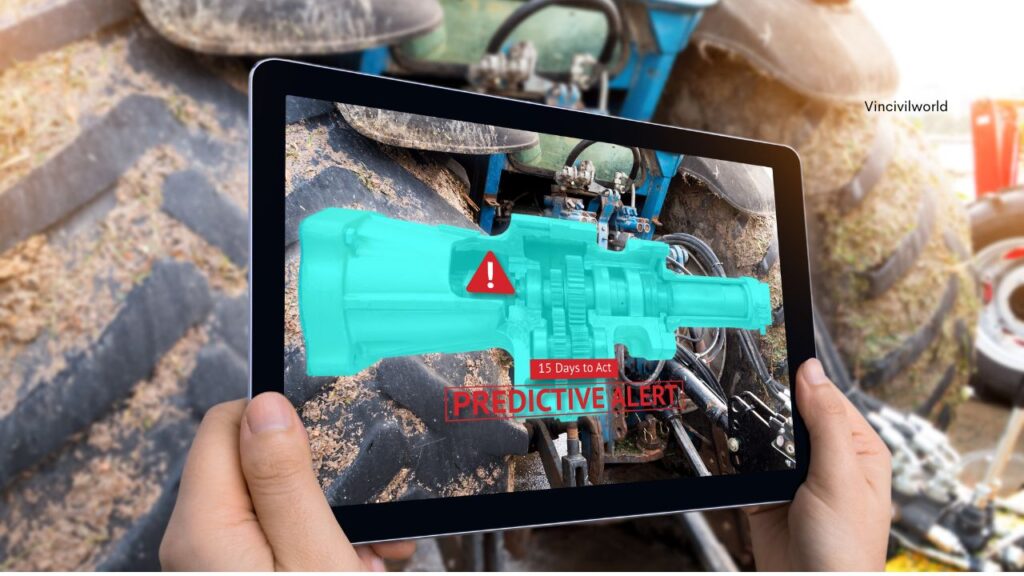
To achieve this, augmented reality uses advanced technology. It relies on computer vision to recognize and interpret the real world. Additionally, it uses spatial mapping to place digital elements accurately in the environment. Augmented reality is used in many fields, such as entertainment, gaming, healthcare, education, retail, and manufacturing and construction.
In practical terms, augmented reality allows users to interact with digital information overlaid onto physical objects or places. For example, in retail, augmented reality enables virtual try-ons of clothing and shows how furniture looks in a room before buying it. In education, Mixed reality creates interactive learning experiences by overlaying educational content onto textbooks or real-world objects. Consequently, students can engage with the material in a more dynamic and immersive way. Furthermore, it makes learning more engaging by adding information directly onto real objects or pages. Overall, augmented virtuality enhances our experience of the world by seamlessly blending digital and physical realities.
How Augmented Reality Works
Augmented reality (AR) uses advanced technology to add digital elements to the real world. It starts with cameras and sensors in devices like smartphones and AR glasses. These devices capture the real world and track movements. Next, AR uses computer vision to understand and interpret the captured images. This process helps the device recognize objects and environments.
Additionally, AR relies on spatial mapping. This technology allows digital elements to be placed accurately in the real world. For instance, it can put a virtual chair in your living room. AR also uses graphics and sound to create a seamless experience. Powerful processors in devices ensure everything runs smoothly.
Moreover, AR applications are built using special software and tools. Developers create interactive and engaging AR experiences. With these technologies working together, Enhanced reality enriches our everyday lives.
Virtual Reality
Virtual reality (VR) is a technology that creates a simulated environment using computer technology. Generally, users wear VR headsets that display 3D images and videos, making them feel like they are immersed in a different world. VR relies on sensors and motion tracking to detect the user’s movements, thereby enabling interaction with the virtual environment. Consequently, this technology finds application in gaming, training simulations, and virtual tours. Unlike (AR), which overlays digital elements onto the real world, Virtual Reality replaces the real world entirely with a simulated one.
Augmented Reality vs. Virtual Reality
While comparing augmented Reality vs Virtual reality these following difference usually comes to us. Augmented Reality (AR) and Virtual Reality (VR) are transformative technologies that fundamentally change our perception of reality. Unlike VR, which immerses users in entirely simulated environments, AR enhances the real world by overlaying digital content, thereby enriching everyday experiences. In contrast, VR immerses users in simulated environments, replacing the real world entirely. Understanding these distinctions highlights their unique applications and impacts on various industries.
Augmented Reality (AR)
- Adds digital elements (images, sounds, text) to the real world.
- Users see these additions overlaid on their physical environment via smartphones or AR glasses.
- Enhances real-world experiences with extra information or virtual objects seamlessly integrated into the user’s view.
- Example: In retail, AR can display virtual furniture in a real room.
Virtual Reality (VR)
- Creates a simulated environment through VR headsets.
- Displays 3D images and videos that immerse users in a digital world.
- Uses sensors for movement tracking, enabling interaction within the virtual environment.
- Replaces the real world with a virtual one, offering experiences like virtual travel or immersive gaming.
Applications of Augmented Reality
Augmented Reality (AR) transforms industries and everyday tasks by blending digital content seamlessly into the real world.
Retail
Enables virtual try-ons and visualizes products in real environments for better purchasing decisions.
Healthcare
Facilitates surgical simulations and aids in visualizing veins and internal structures for precise procedures.
Education
Enhances learning with interactive content overlaid on textbooks and real-world objects.
Gaming
Provides immersive gaming experiences by overlaying virtual elements onto the real world.
Architecture, Structural Design and construction
Allows architects designers and engineers to preview virtual designs within real spaces for better planning.
Tourism
Guides tourists with AR-enhanced maps and virtual guides for interactive sightseeing.
Manufacturing
Improves efficiency with AR-guided assembly instructions and maintenance support.
Marketing and Advertising
Engages customers with interactive AR campaigns and virtual product experiences.
Navigation
Provides AR-based navigation systems for real-time directions and points of interest.
Entertainment
Enhances live events with AR effects and interactive elements for a more engaging audience experience.
Augmented reality in Construction
Augmented reality (AR) is revolutionizing the construction and real estate sectors by seamlessly merging digital information with physical environments. In construction, AR enhances project visualization by overlaying virtual models onto real-world sites, enabling architects and engineers to assess how proposed structures integrate into existing landscapes. This capability significantly improves design accuracy and facilitates early issue detection. This capability significantly improves design accuracy and facilitates early issue detection.
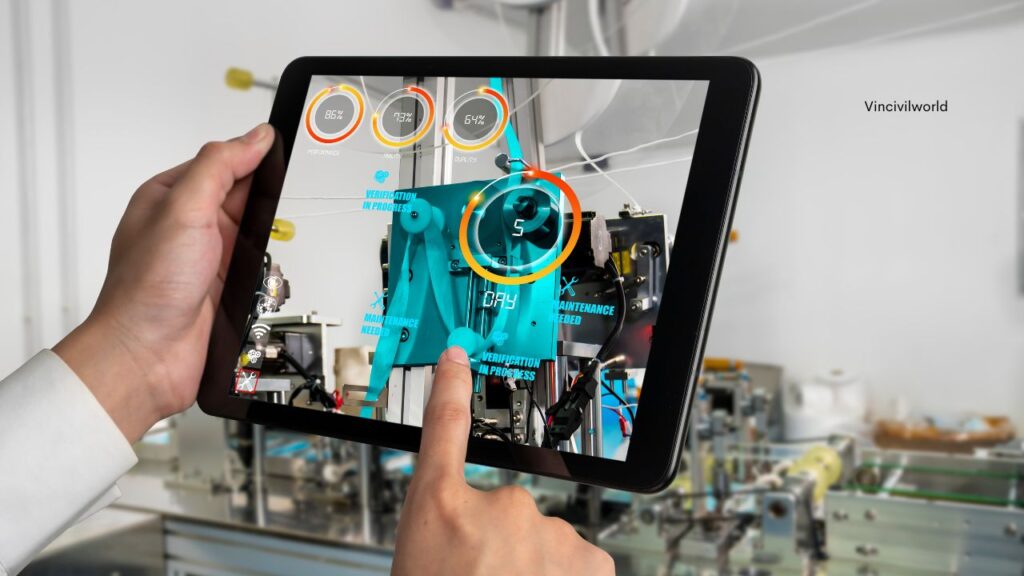
On construction sites, AR-equipped devices provide real-time guidance to workers through visual instructions and safety information directly in their field of view. This technology enhances efficiency by reducing errors and streamlining tasks, such as assembly and equipment operation. Moreover, AR ensures that workers have immediate access to critical information, enhancing productivity and safety across construction projects.
In the real estate sector, AR enables immersive property tours and visualizations. Prospective buyers can use AR applications on their smartphones or AR glasses to see virtual furniture in a space or visualize renovations before making decisions. This enhances customer engagement and accelerates sales processes by offering a clearer understanding of property potentials.
Moreover, AR integrated with Building Information Modeling (BIM) supports maintenance teams by overlaying digital data onto physical infrastructure. This aids in real-time monitoring, maintenance scheduling, and historical records, prolonging building lifespan and reducing operational costs.
Overall, AR enhances collaboration among stakeholders, improves project efficiency, and provides innovative solutions in both construction and real estate sectors. As technology advances, AR continues to revolutionize these industries by bridging the gap between digital design and physical implementation seamlessly.
Types of Augmented Reality
Augmented Reality (AR) encompasses several types that vary in how they overlay digital content onto the real world:
- Marker-based AR: Requires a specific visual marker, like a QR code, to trigger digital overlays. It’s commonly used in advertising and gaming.
- Markerless AR: Also known as location-based or GPS-based AR, it overlays digital content based on GPS or location data. Applications include navigation and tourism.
- Projection-based AR: Projects digital content onto physical surfaces. It’s used in retail for virtual try-ons and interactive displays.
- Superimposition-based AR: Replaces the real-world view with an augmented one, like trying on virtual clothes in real-time through a smartphone camera.
- Recognition-based AR: Uses object recognition to overlay digital content onto recognized real-world objects, enhancing educational experiences and industrial applications.
Each type enhances user interaction by blending digital elements seamlessly into their surroundings.
Devices Used in Augmented Reality
Augmented Reality (AR) utilizes a variety of devices to seamlessly integrate digital information into the physical world. Smartphones and tablets, being the most accessible options, leverage their cameras and AR-enabled apps to overlay digital content onto real-world scenes.
Generally, this capability enables users to interact with augmented content directly through their devices, enhancing everyday experiences ranging from gaming to educational applications. AR glasses, such as Microsoft HoloLens and Google Glass, offer a hands-free experience by projecting digital information directly into the user’s field of view. These glasses incorporate sensors and optics to track head movements and adjust virtual elements accordingly, providing an immersive AR experience.
Specialized AR headsets, like Magic Leap, enhance this immersion with spatial sound and precise 3D mapping. Basically, these features make them ideal for complex industrial applications and interactive experiences. As a result, these devices continue to evolve, expanding AR’s potential in gaming, education, healthcare, and industrial training.
Benefits of Augmented Reality
Augmented Reality (AR) offers significant benefits across different domains:
- Enhancing User Experience: AR enhances user interaction by overlaying digital content onto the physical world through devices like smartphones and AR glasses. This technology improves how users engage with products, services, and environments, creating immersive and personalized experiences.
- Improving Learning and Training: AR revolutionizes learning and training by providing interactive simulations and real-time guidance. It overlays educational content onto real-world objects, enabling hands-on learning experiences that enhance understanding and retention.
- Increasing Efficiency and Productivity: In industrial settings, AR boosts efficiency by providing workers with on-the-spot instructions, data visualizations, and remote assistance. This capability streamlines tasks such as maintenance, assembly, and inspection, reducing errors and downtime.
Overall, AR bridges the gap between digital information and physical environments, enhancing user engagement, learning outcomes, and operational efficiency across various sectors. Its versatile applications continue to redefine how we interact with technology and our surroundings.
Challenges and Limitations of Augmented Reality
Augmented Reality (AR) faces several challenges and limitations:
Technical Challenges
AR technology requires robust hardware and software integration for seamless user experiences. Issues such as latency, accurate spatial mapping, and real-time rendering pose technical hurdles that developers must continually address to ensure smooth operation and realistic overlays.
Privacy and Security Concerns
The integration of AR into everyday life raises significant privacy issues. AR devices collect and process large amounts of personal data, leading to concerns about data privacy, unauthorized access, and potential breaches. Safeguarding user information and ensuring secure AR interactions are critical challenges.
User Adoption and Accessibility
Despite its potential, widespread adoption of AR has been hindered by accessibility barriers and user acceptance. Costly hardware, complex interfaces, and the learning curve associated with new technology limit its accessibility to broader audiences. Educating users about AR benefits and addressing usability concerns are essential for increasing adoption rates.
Addressing these challenges requires collaboration among technology developers, regulators, and users to advance AR capabilities responsibly while ensuring privacy protection and enhancing user experiences.
The Future of Augmented Reality
Emerging Trends and Innovations in Augmented Reality (AR) are shaping its future:
Integration with 5G
The rollout of 5G networks will enhance AR experiences with faster speeds and lower latency, enabling real-time data processing and more immersive interactions.
Spatial Computing
Advances in spatial mapping and computer vision will allow AR to better understand and interact with physical spaces, improving accuracy and realism.
Wearable AR Devices
The development of lightweight, ergonomic AR glasses and headsets will make AR more accessible for everyday use, enhancing mobility and convenience.
AR in Healthcare
AR applications in surgery, medical training, and patient care are expanding, offering enhanced visualization and precision in procedures.
AR in Retail and Marketing
AR is transforming retail with virtual try-ons, interactive product demonstrations, and personalized shopping experiences, driving customer engagement and sales.
Predictions and Potential Developments
The future of augmented reality (AR) is poised for significant advancements. Predictions and potential developments in AR include improved integration with 5G, enhanced spatial computing, wearable AR devices, and broader applications in various industries, from healthcare to retail. These innovations promise to transform how we interact with and perceive the world around us.
Expanded Enterprise Adoption
More industries will adopt AR for remote collaboration, training, and maintenance, boosting productivity and reducing costs.
AR Cloud
Development of AR cloud platforms will enable persistent digital overlays across locations, supporting shared experiences and location-based services.
Artificial Intelligence Integration
AI will enhance AR capabilities with intelligent content recommendations, predictive analytics, and personalized user experiences.
Regulatory and Privacy Frameworks
As AR usage grows, there will be increased focus on regulatory frameworks to ensure data privacy, security, and ethical use.
Overall, AR’s evolution promises to revolutionize industries, enhance user experiences, and create new opportunities for innovation and growth.
Key Takeaways
Augmented Reality (AR) enriches real-world experiences by overlaying digital content onto physical environments, enhancing interaction and productivity across various sectors. As AR technology evolves, addressing challenges and embracing innovations will unlock its full potential, revolutionizing how we interact with technology and our surroundings.
Final Thoughts and Implications
The future of AR holds immense potential to transform industries, improve productivity, and revolutionize user interactions with technology. Advances in hardware, software, and integration with AI will drive AR’s growth, offering new opportunities for innovation and enhancing daily life and business operations.
Books, Articles, and Websites for Further Reading
For in-depth exploration of Augmented Reality (AR), consider:
- “Augmented Reality: Principles and Practice” by Dieter Schmalstieg and Tobias Hollerer
- Articles from IEEE Spectrum and MIT Technology Review
- Websites like ARPost.com and ARInsider.com for the latest news and developments in AR technology.
Notable AR Companies and Projects
Key players in AR include Meta (formerly Meta Company), known for its AR glasses; Magic Leap, with its spatial computing platform; and Google’s ARCore and Apple’s ARKit, leading mobile AR frameworks. These companies drive innovation in AR applications across industries from gaming to enterprise solutions.
 vin civilworld