Tag Archives: engineering

Radiography Test: Key Techniques and Benefits Explained

Radiography test is a non-destructive testing (NDT) method. It uses X-rays or gamma rays to examine the internal structure of materials. This technique is essential for detecting hidden flaws without causing damage, ensuring the integrity and safety of components. Radiography test is widely applied in industries such as manufacturing, construction, and aerospace to inspect welding, castings, and structural components. The process involves placing the test object between a radiation source and a detector. An image is captured that reveals internal features. It highlights potential defects. Advancements in digital radiography have enhanced the efficiency and accuracy of these inspections. This process has solidified Radiographic testing as a cornerstone in quality assurance and safety protocols across various sectors.

​In this article, we will delve into the principles, techniques, and applications of Radiography test. We’ll explore its significance in non-destructive evaluation, the equipment utilized, and the step-by-step process involved. Additionally, we’ll emphasis on the advantages, limitations, safety considerations, and recent advancements in the field. This comprehensive guide aims to offer a thorough understanding of radiography test and its pivotal role across various industries.

  1. Principles of Radiography test
  2. Types of Radiography Tests
    1. Film Radiography test
    2. Digital Radiography test
    3. Computed Radiography
    4. Real-Time Radiography test (RTR)
    5. Computed Tomography (CT)
  3. Equipment Used in Radiography Test
  4. Applications of Radiography test
    1. Radiography test for welding
    2. Casting Inspection​
    3. Aerospace Industry
    4. Automotive Sector
    5. Petrochemical Industry
    6. Manufacturing
    7. Power Generation
    8. Construction
  5. Advantages of Radiography test
    1. High accuracy
    2. Versatility
    3. Minimal Material Limitations
    4. Volumetric Examination
    5. Permanent Inspection Records
    6. Sensitivity to Thickness and Density Variations
  6. Limitations and Safety Considerations of Radiography test
    1. Safety Concerns
    2. High Operational Costs
    3. Accessibility Requirements
    4. Detection Limitations
    5. Health Risks
    6. Environmental Impact
    7. Regulatory Compliance
  7. Recent Advances in Radiography Test
  8. Conclusion
  9. Key takeaways

Principles of Radiography test

​Radiography test is a non-destructive testing (NDT) method. It utilizes X-rays or gamma rays to examine the internal structure of materials. The fundamental principle involves directing radiation through a test object. The radiation is projected onto a detector, like photographic film or a digital sensor. Variations in material density and thickness affect the absorption of radiation. Denser areas absorb more, resulting in lighter regions on the radiography. Meanwhile, less dense areas are darker. This contrast enables the detection of internal flaws like cracks, voids, or inclusions. Radiography test is widely applied across industries. These include aerospace, construction, and manufacturing. This ensures the integrity and reliability of critical components.

Radiography test
RT

In radiography tests, X-rays and gamma rays interact with materials primarily through three mechanisms:​

  1. Photoelectric Absorption: Low-energy photons are absorbed by tightly bound electrons, ejecting them from atoms. This effect is more pronounced in materials with higher atomic numbers. ​
  2. Compton Scattering: Moderate-energy photons collide with loosely bound electrons, resulting in photon deflection and energy loss. This process contributes to image contrast but can also cause image blurring. ​
  3. Pair Production: High-energy photons (above 1.022 MeV) can transform into an electron-positron pair near a nucleus. This phenomenon becomes significant at higher photon energies. ​

These interactions cause attenuation of the radiation beam. The degree of attenuation depends on the material’s thickness, density, and atomic number. By analyzing the transmitted radiation, Radiographic testing reveals internal structures and potential defects within the material.

Types of Radiography Tests

Radiography test (RT) is a non-destructive testing method. It employs X-rays or gamma rays to inspect the internal structure of materials. This ensures the integrity and reliability of components across various industries. ​

  • Film Radiography
  • Digital Radiography (DR)
  • Computed Radiography (CR)
  • Real-Time Radiography (RTR)
  • Computed Tomography (CT)

Each of these radiography testing techniques offers unique advantages. The choice among them depends on specific inspection requirements. It also relies on material types and desired image clarity.

Film Radiography test

​Film radiography is a traditional non-destructive testing (NDT) method. It effectively utilizes X-rays or gamma rays. These rays inspect the internal integrity of materials and components. In this process, a Radiographic film is placed behind the test object, and radiation is directed through the material. As a result, variations in material density and thickness affect the radiation’s absorption, creating a latent image on the film. Once the chemical processing is complete, this film reveals an image highlighting internal features and potential defects like cracks, voids, or inclusions. Due to its precision, film radiography is renowned for its high-resolution imaging capabilities, making it a reliable choice for detecting even the smallest irregularities. This makes it a preferred choice in industries like aerospace, construction, and manufacturing. Despite advancements in digital radiography, film radiography remains valued for its ability to produce detailed images essential for critical inspections.
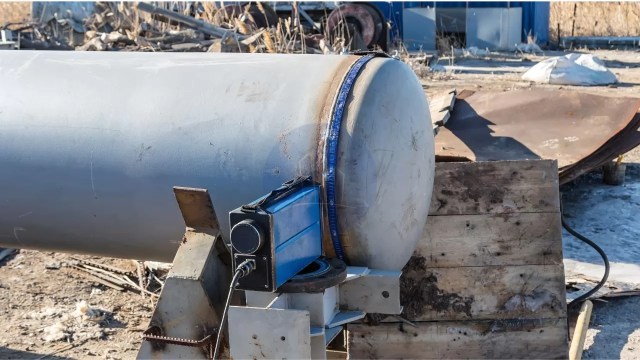
Radiography test
Radiography test

Digital Radiography test

Digital Radiography (DR) is an advanced non-destructive testing (NDT) method. It employs digital detectors to capture X-ray or gamma-ray images of a material’s internal structure. Unlike traditional film radiography, DR offers immediate image acquisition and processing, enhancing inspection efficiency and reducing exposure times. This technique provides high-resolution images, facilitating the detection of defects like cracks, voids, and inclusions. Digital Radiography systems also enable easy storage, retrieval, and sharing of digital images, improving workflow and collaboration among inspection teams. Additionally, the Digital Radiography test reduces the need for hazardous chemicals used in film processing. This ultimately promotes a safer and more environmentally friendly work environment. Moreover, its versatility and rapid results have made Digital Radiography testing a preferred choice in various industries, including aerospace, automotive, and oil and gas. In these fields, ensuring the integrity and reliability of critical components is absolutely essential.

Computed Radiography

​Computed Radiography (CR) is a modern digital imaging technology that effectively replaces traditional film-based radiography by utilizing photostimulable phosphor (PSP) plates. These advanced plates capture X-ray images efficiently. In this process, the PSP plate is first exposed to X-rays, then stores the image as a latent energy pattern, ensuring accurate and detailed imaging. Subsequently, a laser scanner reads the plate. It releases the stored energy as light. This light is then converted into a digital image for analysis. Computed Radiography offers several advantages over conventional film radiography. These advantages include reduced exposure to radiation and elimination of chemical processing. CR also provides the ability to enhance and digitally archive images. This technology is widely used in medical diagnostics and industrial non-destructive testing, providing a cost-effective and efficient solution for capturing high-quality radiographic images.

Real-Time Radiography test (RTR)

​Real-Time Radiography test (RTR) is a non-destructive testing (NDT) technique that enables immediate visualization of an object’s internal structure. X-rays or gamma rays are directed through the test object. They then reach a real-time detector, like a fluorescent screen or digital panel. RTR produces live images and allows for the dynamic observation of components. This immediacy facilitates the detection of defects like cracks, voids, or inclusions during ongoing operations. ​Real-Time Radiography test (RTR) is widely employed across industries including automotive, aerospace, and electronics. Real-time feedback is crucial in these fields to guarantee part integrity and safety.

Computed Tomography (CT)

Computed Tomography (CT) is an advanced imaging technique that effectively utilizes X-rays to generate detailed three-dimensional representations of an object’s internal and external structures. Unlike traditional methods, the Computed Tomography test captures multiple two-dimensional Radiographic images from various angles. Subsequently, this process reconstructs a comprehensive 3D model, which allows for a thorough examination without causing any damage to the specimen. 

Due to its precision and reliability, this non-destructive testing (NDT) method is invaluable across various industries. It is used in aerospace, automotive, and manufacturing and enables precise detection of internal defects. This also allows measurement of complex geometries and verification of material integrity. 

Visualizing internal features in high resolution enhances quality control processes. This capability also aids the development of safer and more reliable products. As technology advances, CT continues to evolve. It offers faster scanning times. It also provides improved image clarity. This further solidifies its role as a critical tool in modern NDT practices.

Equipment Used in Radiography Test

Radiographic testing (RT) employs various specialized equipment to inspect the internal structure of materials non-destructively. Essential equipment includes X-ray and gamma-ray sources, detectors, and imaging systems.

Key Equipment Used in Radiographic Testing

  1. Radiation Sources:
    • X-ray Machines: Generate X-rays using X-ray tubes, commonly employed in medical and industrial applications. ​
    • Gamma-ray Sources: Utilize radioactive isotopes like Iridium-192 or Cobalt-60 for material penetration, especially in industrial settings.
  2. Detectors:
    • Film Radiography: Traditional method using photographic film to capture images after exposure to radiation.​
    • Digital Detectors: Include Computed Radiography (CR) systems with phosphor imaging plates and Digital Radiography (DR) systems with flat-panel detectors for immediate digital imaging.
  3. Image Processing Systems:
    • Computed Tomography (CT) Scanners: Acquire multiple radiographic images from different angles to create detailed cross-sectional views.​
  4. Ancillary Equipment:
    • Radiation Shielding: Protective barriers and enclosures to safeguard operators from exposure.​
    • Film Processors: Develop exposed films in traditional radiography.​
    • Viewing Stations: Lightboxes or digital monitors for analyzing radiographic images.​

The selection of equipment depends on the specific application, material type, and required inspection standards.

Applications of Radiography test

Radiography Testing (RT) is a crucial non-destructive testing (NDT) method widely used across various industries. Specifically, its main purpose is to assess the internal integrity of materials and components. By utilizing X-rays or gamma rays, RT provides detailed images that effectively reveal internal defects. As a result, this method ensures the safety and reliability of critical structures.

Radiography test for welding

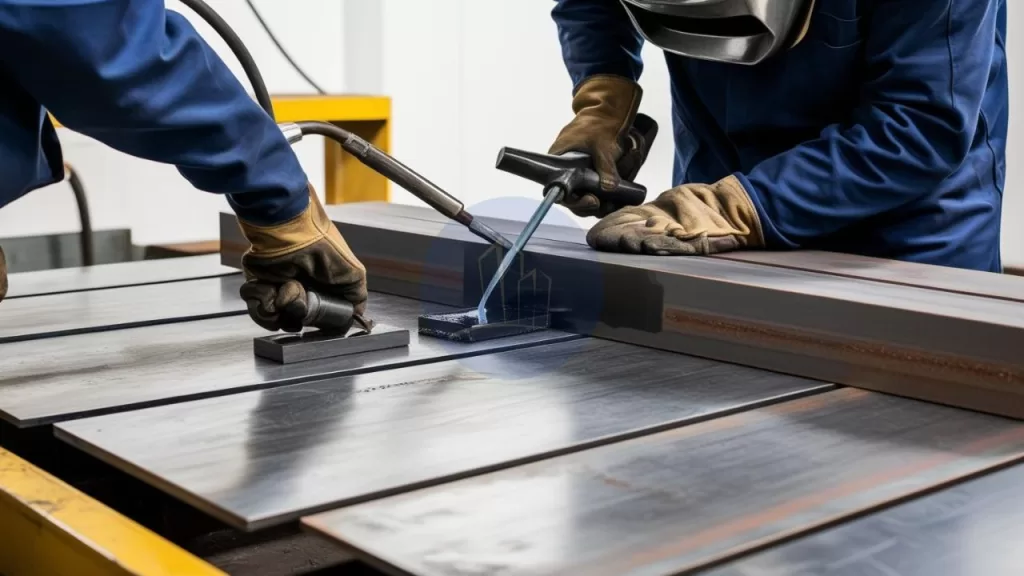
Radiography Test is extensively used to evaluate weld quality in pipelines, pressure vessels, and structural components. It detects defects such as cracks, porosity, and incomplete fusion. Radiography test for welding confirms the weld quality.
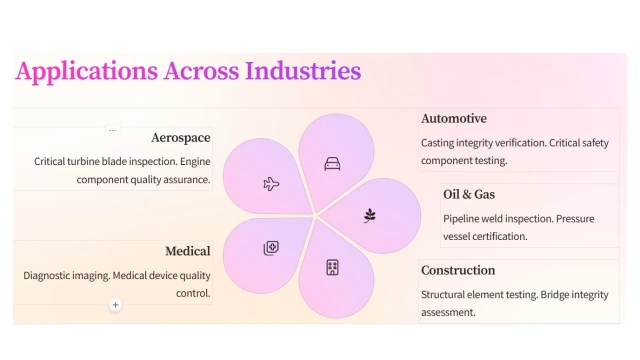
Applications of radiography test

Casting Inspection​

RT is employed to detect internal defects in metal castings. These defects include shrinkage cavities, gas porosity, and inclusions. This process ensures the structural integrity of cast components.

Aerospace Industry

It ensures the integrity of aircraft components, such as turbine blades and structural elements. It does this by identifying internal flaws that compromise safety.

Automotive Sector

Inspects welds, castings, and assemblies to detect defects affecting vehicle performance and safety.

Petrochemical Industry

Examines pipelines, storage tanks, and pressure vessels for corrosion, cracks, and other defects, preventing potential failures. ​

Manufacturing

Assesses castings, forgings, and other fabricated components to ensure they meet quality standards by detecting internal discontinuities. ​

Power Generation

Evaluates critical components in nuclear and conventional power plants. This includes reactor vessels and steam generators. These evaluations ensure structural integrity. ​

Radiography test
Radiography test

Construction

Checks  concrete structures and welds in buildings and bridges for internal defects, ensuring structural safety and compliance with regulations. ​

Radiographic Testing provides a non-invasive means to detect internal flaws. It plays an essential role in maintaining the quality and safety of products. This ensures infrastructure safety across these sectors.

Advantages of Radiography test

Radiographic Testing (RT) is a non-destructive evaluation method. It uses X-rays or gamma rays. These rays inspect the internal structure of materials and components. This technique offers several notable advantages

High accuracy

RT provides precise detection of internal defects. These include cracks, voids, and inclusions. This precision ensures the integrity of critical components. The radiation source size significantly affects Radiographic testing accuracy. A larger source provides more uniform exposure, creating clearer and more accurate images.

Versatility

RT inspects a wide range of materials, including metals, plastics, and composites. Various industries, such as aerospace, manufacturing, and construction, utilize it.

Minimal Material Limitations

RT can be applied to most types of materials. This makes it a versatile choice for inspecting diverse components. ​

Volumetric Examination

Considered a universal approach to volumetric inspection, RT examines the internal integrity of objects, providing a comprehensive assessment of their condition. ​

Permanent Inspection Records

RT produces lasting records of inspections, which can be reviewed and referenced for future evaluations, aiding in quality control and compliance documentation.

Sensitivity to Thickness and Density Variations

RT can detect small changes in thickness and density, down to about 1%, along the path of the X-ray beam, allowing for precise identification of defects.

By providing detailed insights into the internal condition of materials without causing damage, Radiographic Testing plays a crucial role in ensuring the safety, reliability, and quality of products and structures across multiple sectors.

Limitations and Safety Considerations of Radiography test

​Radiographic Testing (RT) is a valuable non-destructive testing method, but it has several limitations and safety considerations:​

Safety Concerns

The use of ionizing radiation poses potential health hazards to personnel. Strict safety measures, including shielding and monitoring, are essential to minimize risks. ​

High Operational Costs

RT is relatively expensive. This is due to the cost of equipment and materials. It also requires highly trained operators.

Accessibility Requirements

Both sides of the object must be accessible for effective inspection, which can be challenging for certain components. ​

Complex Geometry Challenges

Specimens with complex shapes may be difficult to inspect accurately using RT.

Detection Limitations

Small, isolated defects less than 2% of the total thickness may not be detected, and defects not aligned with the radiation beam can be challenging to identify.

Health Risks

Exposure to ionizing radiation can lead to severe health issues, including radiation burns and increased cancer risk.

Environmental Impact

Improper handling and disposal of radioactive materials can adversely affect the environment. ​

Regulatory Compliance

Strict adherence to radiation safety regulations and guidelines is necessary to protect workers and the public. ​

Addressing these limitations and safety considerations is crucial for the effective and safe application of Radiographic Testing.

Recent Advances in Radiography Test

​Radiographic Testing (RT) has experienced significant advancements, enhancing its accuracy, efficiency, and applicability across various industries. Key developments include:​

1. Artificial Intelligence (AI) Integration: AI-powered imaging has revolutionized defect detection and analysis in RT. Advanced algorithms, like 3D Generative Adversarial Networks (GANs), synthesize volumetric computed tomography (CT) data. They help multi-angle defect training. This enables real-time augmentation and improves accuracy.

2. Digital Radiography (DR): The transition from traditional film-based systems to DR has led to faster image acquisition. It has also enhanced image quality and reduced radiation exposure. High-resolution flat-panel detectors and direct conversion sensors further improve diagnostic precision.

3. In-Line Computed Tomography (CT): Integrating CT systems directly into production lines allows for real-time inspection and quality control. AI-driven reductions in scan duration make it easier to detect minute defects. These include 30 µm voids in additive-manufactured parts or cracks in turbine blades. ​

4. Flexible X-Ray Detectors: Innovations like bendable materials capable of wrapping around complex structures have emerged. These flexible detectors enhance inspections in confined or awkward spaces. They are particularly useful in industries like aeronautics. They offer a versatile option to rigid, flat scanners.​

5. Enhanced Software Platforms: Modern software developments provide intuitive touch interfaces. For example, the Rhythm RT platform simplifies operation and increases efficiency. These platforms require minimal operator training and maximize the capabilities of portable Radiographic imaging systems.

6. High-Brightness Photon Sources: High-brightness MeV-photon sources are developed based on laser-wake-field accelerators. This development has opened new possibilities for high-resolution radiography of dense, thick objects. Spatial resolutions better than 2.5 line pairs per millimeter at energies in the MeV range have been demonstrated. ​

These advancements collectively contribute to more precise, efficient, and versatile radiographic testing, ensuring higher quality standards across various applications.​

Conclusion

Radiographic Testing (RT) is a cornerstone of non-destructive testing, as it employs X-rays and gamma rays to effectively reveal internal structures. Moreover, this method detects flaws in materials without causing any damage. Due to its reliability, its applications span various industries, including aerospace, automotive, construction, and manufacturing. Ultimately, this ensures the integrity and safety of critical components and structures.

Recent advancements have significantly enhanced RT’s capabilities. The integration of Artificial Intelligence (AI) has revolutionized image analysis, enabling faster and more accurate defect detection. Digital Radiography (DR) has replaced traditional film, offering immediate results and improved image quality. In-line Computed Tomography (CT) systems now facilitate real-time inspections within production lines, boosting efficiency and precision. ​

Looking ahead, the future of RT is poised for further innovation. The development of portable neutron sources and flexible X-ray detectors promises greater versatility in inspecting complex structures. Enhanced software platforms are streamlining operations, reducing the need for extensive operator training. Additionally, the emergence of high-brightness photon sources is enabling high-resolution imaging of dense objects. ​

As these technologies evolve, RT will continue to play a pivotal role in quality assurance and safety across industries. Embracing these emerging trends is crucial. Professionals must maintain high standards. They need to adapt to the dynamic landscape of non-destructive testing.

Key takeaways

Radiography Test (RT) is a pivotal non-destructive evaluation method that effectively utilizes X-rays or gamma rays to inspect the internal structure of materials. By doing so, this process ensures the integrity of components across various industries. Some key takeaways include:

  • Detection of Internal Defects: RT effectively identifies hidden flaws such as cracks, voids, and inclusions, which are not visible on the surface, thereby preventing potential failures. ​Radiography test for welding can find out weld quality.
  • Versatile Applications: This technique is widely employed in sectors like aerospace, construction, and manufacturing to assess welds, castings, and structural components.
  • Permanent Inspection Records: RT provides lasting documentation of inspections, facilitating future reference and quality assurance.
  • Safety Considerations: The use of ionizing radiation necessitates stringent safety protocols to protect personnel and the environment. ​
  • Technological Advancements: Innovations such as digital radiography and computed tomography have enhanced image quality, reduced exposure times, and improved defect detection capabilities.

By understanding these aspects, industries can effectively leverage Radiographic Testing to maintain high-quality standards and ensure operational safety.


Welding Procedure Specification (WPS) : The Key to Flawless Welding

A Welding Procedure Specification (WPS) is essential for achieving precise and high-quality welds. It outlines the steps, parameters, and guidelines that ensure consistent and flawless welding results. But what is a WPS in welding? Simply put, it’s a detailed document that defines the weld specification, including joint configurations, welding process, and filler material. Understanding what a welding procedure specification entails is crucial for both novice and experienced welders. By mastering the principles of a WPS, you can achieve reliable, high-quality welds every time. In this guide, we explore what WPS in welding means, its components, and how it ensures superior performance. Let’s unlock the secrets to perfect welds with this essential tool.

  1. What is Welding Procedure Specifications (WPS) in Welding ?
  2. Components of a Welding Procedure Specification
  3. Understanding Welding Codes and Standards
  4. Advantages of WPS
  5. How to develop a Welding Procedure Specification ?
    1. Identifying Project Requirements
    2. Selecting Welding Parameters and Techniques
    3. Documenting the WPS
    4. Review and Validation Process
    5. Conducting Trial Runs and Mock Welds
    6. Finalizing the WPS
  6. Preparing the Base Metal for Welding
    1. Cleaning the Base Metal
    2. Assessing the Joint Fit-Up
    3. Controlling Base Metal Temperature
  7. Selecting the Right Welding Process for Your Project
  8. Essential Variables and Their Impact on WPS
  9. Qualifying a Welding Procedure Specification
  10. Common Mistakes to Avoid in Welding Procedure Specification Development and Implementation
  11. Types of Welding Procedure Specifications
  12. Conclusion

What is Welding Procedure Specifications (WPS) in Welding ?

A Welding Procedure Specification (WPS) is the foundation of successful welding operations. It ensures every weld is precise, consistent, and of high quality. A clear WPS outlines specific processes, materials, and techniques for the welder to follow. This guidance enhances weld quality while promoting safety, efficiency, and adherence to industry standards. Without a proper welding procedure specification, defects, increased costs, and workplace hazards become common challenges.

But what is a WPS in welding? It is a detailed document that plays a critical role in quality control and assurance. A Work Procedure Specification serves as a reference during inspections and audits, ensuring compliance with relevant weld specifications and standards. By following a welding procedure specification, organizations can reduce non-conformance risks, rework, and project delays.

Additionally, a Work Procedure Specification helps train welders, ensuring best practices are consistently followed across teams. It also reassures clients and stakeholders about the reliability of a project. Understanding what a WPS in welding entails demonstrates professionalism and builds trust. Investing in a robust WPS not only benefits current projects but also strengthens long-term business success.

A welding procedure specification is much more than a guideline—it’s a vital tool for quality, safety, and industry excellence.

Welding procedure Specification (WPS)

Components of a Welding Procedure Specification

A Welding Procedure Specification (WPS) is a detailed guide that defines the welding process. It includes critical components such as the welding method, base and filler materials, preheat and interpass temperatures, and post-weld heat treatment requirements. Each section of the WPS provides clear and detailed instructions, ensuring welders understand the exact parameters they must follow.

One essential part of a WPS is identifying the materials. It specifies the grade, type, and thickness of the base metal along with the correct filler metal. These materials directly affect the welding process and the quality of the final weld. By choosing compatible materials and documenting them in the WPS, welders can minimize defects like cracking or incomplete fusion. Understanding what is a welding procedure specification ensures welders follow proper practices.

A WPS also outlines welding parameters and techniques. It includes details like position, voltage, amperage, travel speed, and shielding gas composition. Each of these factors is crucial to achieving high-quality welds. Clear documentation ensures consistent results across projects and welders. Knowing what is a WPS in welding and adhering to it enables precision and reliability. A well-crafted WPS is the backbone of any successful welding operation.

Understanding Welding Codes and Standards

Welding codes and standards play a crucial role in the creation and execution of Welding Procedure Specifications (WPS). These codes are set by organizations such as the American Welding Society (AWS). They also include the American Society of Mechanical Engineers (ASME) and the International Organization for Standardization (ISO). These organizations provide essential guidelines for different welding applications. A deep understanding of these codes is vital for ensuring compliance and achieving high-quality welds.

Each welding code specifies requirements related to materials, processes, testing, and quality control. For example, the AWS D1.1 code governs structural welding of steel, while ASME Section IX outlines qualifications for welding and brazing. Knowledge of these codes enables professionals to develop Welding Procedure Specifications. These specifications meet the necessary standards. This ensures their work is recognized within the industry.

Adhering to welding codes and standards is also critical for the safety and reliability of welded structures. Non-compliance can lead to catastrophic failures, risking injury, loss of life, and significant financial consequences. Welders can ensure the integrity and safety of their projects by integrating the appropriate welding codes into the Welding Procedure Specifications. This protects both themselves and their teams. Additionally, it strengthens the credibility of their work with clients and regulatory authorities.

Advantages of WPS

A Welding Procedure Specification (WPS) is essential for ensuring consistent, high-quality, and safe welding practices. It provides clear guidelines that help meet industry standards and optimize welding efficiency.

  • Ensures consistency in welding practices, leading to reliable and repeatable results.
  • Guarantees compliance with industry standards (e.g., AWS, ASME) for regulatory acceptance.
  • Improves safety by specifying proper techniques, material requirements, and treatments.
  • Supports quality assurance through clear reference for inspectors and engineers.
  • Ensures traceability of materials, processes, and testing methods for future audits.
  • Increases efficiency by reducing errors, minimizing rework, and streamlining training for welders.
Welding procedure Specification (WPS)

How to develop a Welding Procedure Specification ?

Creating a Welding Procedure Specification (WPS) requires a systematic approach that involves gathering information, analyzing variables, and documenting processes.

Identifying Project Requirements

The first step in creating a Welding Procedure Specification (WPS) is to identify the specific requirements of the project. This involves determining the materials involved, the welding process to be used, and any relevant codes and standards. Collaboration with project stakeholders, including engineers and quality assurance personnel, ensures that all necessary considerations are included.

Selecting Welding Parameters and Techniques

After defining the project requirements, the next phase involves selecting the appropriate welding parameters and techniques. This includes choosing the correct filler material, establishing preheat and interpass temperatures, and determining post-weld treatments. Each of these factors can affect the quality of the weld, so thorough research and testing may be necessary to identify optimal settings.

Documenting the WPS

Once the welding parameters and techniques are selected, it is essential to document them clearly in the WPS. Proper documentation provides guidance for welders in the field and ensures consistency across different projects. A well-structured WPS allows for easy reference and clarity during the welding process.

Review and Validation Process

After developing the initial draft of the WPS, a thorough review and validation process is crucial. Consultation with experienced welders and engineers helps to gather valuable feedback and refine the document. This step ensures that all aspects of the WPS meet project needs and industry standards.

Conducting Trial Runs and Mock Welds

Conducting trial runs or mock welds can provide practical insights into the feasibility and effectiveness of the proposed welding procedures. Testing the WPS under real-world conditions helps identify any potential issues and allows for necessary adjustments before full-scale implementation.

Finalizing the WPS

Once feedback is gathered and trial runs are completed, the WPS can be finalized. Rigorous testing and refinement during this stage help ensure high-quality results and mitigate risks during the actual welding process. A well-developed and tested WPS enhances the likelihood of success in the field.

Preparing the Base Metal for Welding

Proper preparation of the base metal is essential for achieving high-quality welds. The quality of a weld is directly influenced by the cleanliness, fit-up, and temperature control of the base metal. Following the right procedures ensures a strong, durable, and defect-free weld. The steps involved in preparing the base metal include cleaning, joint alignment, and temperature management, each of which contributes to the overall success of the welding process.

Base metal Preparation (WPS)

Cleaning the Base Metal

The first step in base metal preparation is cleaning the surfaces to remove contaminants such as rust, oil, paint, and dirt. Contaminants can lead to poor fusion, porosity, and other defects. Effective cleaning methods like grinding, sanding, or chemical cleaning ensure a clean surface free from impurities.

Assessing the Joint Fit-Up

Proper joint design and alignment are vital for achieving a successful weld. Misalignment can result in uneven weld beads, increased stress, and weakened structural integrity. The pieces to be welded must be accurately positioned. They should also be securely clamped in place. This ensures alignment and stability.

Controlling Base Metal Temperature

Temperature control is another critical consideration. Preheating the base metal may be required to prevent issues like cracking and distortion. The Welding Procedure Specification (WPS) provides the recommended preheat temperature and methods for monitoring it during the process. Proper temperature management ensures better weld quality and enhances the performance of the final product.

Selecting the Right Welding Process for Your Project

Choosing the appropriate welding process is a fundamental step in achieving optimal results in any welding project. Various welding techniques are available. These include Shielded Metal Arc Welding (SMAW) and Gas Metal Arc Welding (GMAW). Other options are Flux-Cored Arc Welding (FCAW) and Gas Tungsten Arc Welding (GTAW). Each technique offers distinct advantages and limitations. The selection of the welding process should be based on factors like the materials being welded, the required weld quality, and the specific working environment.

For example, SMAW is ideal for outdoor applications and versatile enough for various materials, making it a popular choice for construction projects. On the other hand, GTAW is preferred for high-quality welds in critical sectors like aerospace and nuclear industries due to its precision and control. By understanding the characteristics of each welding process, welders can make informed decisions that align with the project’s requirements.

In addition to material and quality considerations, the welding position and joint configuration also play a role in selecting the right welding process. Some processes perform better in overhead or vertical positions, while others are limited to flat positions. Evaluating these factors ensures that the welding process chosen meets technical requirements and enhances efficiency.

Ultimately, the correct welding process significantly influences the success of a project. A carefully chosen welding method reduces the risk of defects, minimizes rework, and boosts productivity. This decision, crucial for the development of a successful Welding Procedure Specification, is vital for ensuring effective welding procedure inspection and quality control throughout the project. By taking the time to analyze all options, welders can improve outcomes and streamline the overall welding procedure inspection process. The selection of the right process ensures that welding procedure inspection results in a reliable and high-quality final product.

Essential Variables and Their Impact on WPS

Understanding essential variables is vital when developing a Welding Procedure Specification (WPS). These variables directly influence the welding process and the quality of the final product. Key factors include welding parameters like voltage, amperage, travel speed, and heat input. Each parameter affects the weld differently. For example, increasing voltage creates a wider and flatter weld bead, while adjusting amperage changes penetration depth and weld strength.

The choice of filler material is another critical factor in the Welding Procedure Specification. The filler metal must match the base metals in compatibility and properties. This ensures a strong and durable weld joint. The WPS should clearly specify the filler material’s chemical composition and mechanical properties. These details help the welder achieve the desired weld characteristics.

Environmental conditions also impact the welding process. Variables like temperature, humidity, and wind can alter the behavior of the molten weld pool. For instance, high humidity increases moisture absorption, causing porosity in the weld. To address this, the Welding Procedure Specification outlines steps to monitor and control environmental factors.

By focusing on these essential variables, the Welding Procedure Specification ensures consistent, high-quality welds. Proper attention to these details enhances safety, reliability, and overall project success.

Qualifying a Welding Procedure Specification

Qualifying a Welding Procedure Specification (WPS) is essential for ensuring performance and quality. This process involves testing and verifying that the WPS can produce welds that meet specific requirements. Mechanical tests, such as tensile, impact, and bend tests, evaluate the weld’s strength and ductility. These tests confirm the reliability of the procedure under real-world conditions.

Industry standards, like those from the American Welding Society (AWS) and the American Society of Mechanical Engineers (ASME), guide the qualification process. Organizations must document and record all steps involved. This documentation becomes a valuable reference for future welding operations. By following these standards, organizations ensure that their Welding Procedure Specification complies with required codes.

Successful qualification of a Welding Procedure Specification boosts confidence among welders and stakeholders. Welders can perform tasks with assurance, knowing the procedures are tested and validated. This leads to higher quality and more consistent results. Additionally, clients and regulators trust organizations that adhere to strict qualification protocols.

By thoroughly qualifying a Welding Procedure Specification, companies enhance reliability, meet industry standards, and build credibility. This critical step ensures that welding processes deliver strong and durable results for their intended applications.

Common Mistakes to Avoid in Welding Procedure Specification Development and Implementation

Developing and implementing a Welding Procedure Specification (WPS) requires precision and careful planning. One frequent mistake is failing to research and understand the project’s specific requirements. These include materials, welding processes, and applicable codes. Neglecting these factors often leads to improper settings and poor weld quality, resulting in costly delays and rework.

Another common error is not providing sufficient documentation for the Welding Procedure Specification. A WPS must include clear and detailed instructions that are easy for welders to follow. If the documentation is vague or incomplete, it creates confusion and inconsistencies during welding. Therefore, it is crucial to define every aspect of the Welding Procedure Specification, such as material details, welding parameters, and special project considerations.

Lastly, inadequate training and communication can undermine WPS implementation. Even a well-prepared Welding Procedure Specification will fail if welders lack proper understanding or if updates to the WPS are poorly communicated. To avoid this, organizations must offer training and encourage open communication. This ensures all team members understand the Welding Procedure Specification and can follow it accurately.

By addressing these common mistakes, teams can enhance the effectiveness of their Welding Procedure Specification and achieve high-quality results.

Types of Welding Procedure Specifications

Welding Procedure Specifications (WPS) vary to address different project needs and ensure high-quality welds. Three main types include Preliminary-WPS, Prequalified-WPS, and Standard-WPS (SWPS), each serving unique purposes.

A Preliminary-WPS acts as the initial blueprint for a welding project. It outlines key details, including materials, welding parameters, and joint configurations, serving as the foundation for further development and testing.

The Prequalified-WPS simplifies the process by using preapproved procedures that meet industry standards without requiring additional testing. These are especially useful for saving time and resources while maintaining quality assurance. Welders can confidently rely on these procedures for standard applications.

The Standard-WPS (SWPS) adheres to widely accepted industry norms. It provides standardized welding methods to ensure consistency and compliance across projects. This type is ideal for achieving uniform results and meeting established benchmarks in welding practices.

Together, these WPS types enhance efficiency and ensure reliable outcomes.

Conclusion

In conclusion, a Welding Procedure Specification (WPS) is a vital document that ensures consistent, high-quality, and safe welding practices. By providing clear guidelines on welding processes, materials, and techniques, it helps minimize defects, improves safety, and promotes compliance with industry standards. Understanding the components of a WPS, such as materials, parameters, and techniques, is essential for achieving reliable welds. Adhering to welding codes and standards further strengthens the quality and safety of welded structures. Whether creating or following a WPS, it serves as a critical tool for welding professionals, ensuring precision and efficiency while reducing risks. Ultimately, investing time and effort in developing and implementing a WPS ensures long-term success and quality in welding projects.

Cable Stayed Bridge – Types, key features and construction

A cable stayed bridge is a modern engineering marvel known for its strength, efficiency, and aesthetic appeal. It uses one or more towers to support the bridge deck through a series of cables, which transfer the load directly to the foundation. Unlike suspension bridges, the cables in a cable stayed bridge connect directly from the deck to the towers in a straight line. This design provides greater rigidity, making it ideal for long spans and challenging terrain.

Cable stayed bridges are widely used for highway crossings, urban connections, and river spans due to their cost-effectiveness and adaptability. The distinctive arrangement of cable-stayed bridge cables creates visually striking structures that enhance the skyline. Some famous cable-stayed bridge examples include the Millau Viaduct in France and the Russky Bridge in Russia. With their efficient load distribution and elegant design, cable-stayed bridges continue to shape modern infrastructure globally.

In this article, we will explore the key components, types, and advantages of a cable-stayed bridge. We’ll also explain how cable stayed bridge cables function, discuss various construction techniques, and highlight notable cable-stayed bridge examples. By the end, you’ll understand why this design is widely used in modern infrastructure projects.

  1. What is a Cable-Stayed Bridge?
  2. How Does a Cable-Stayed Bridge Work?
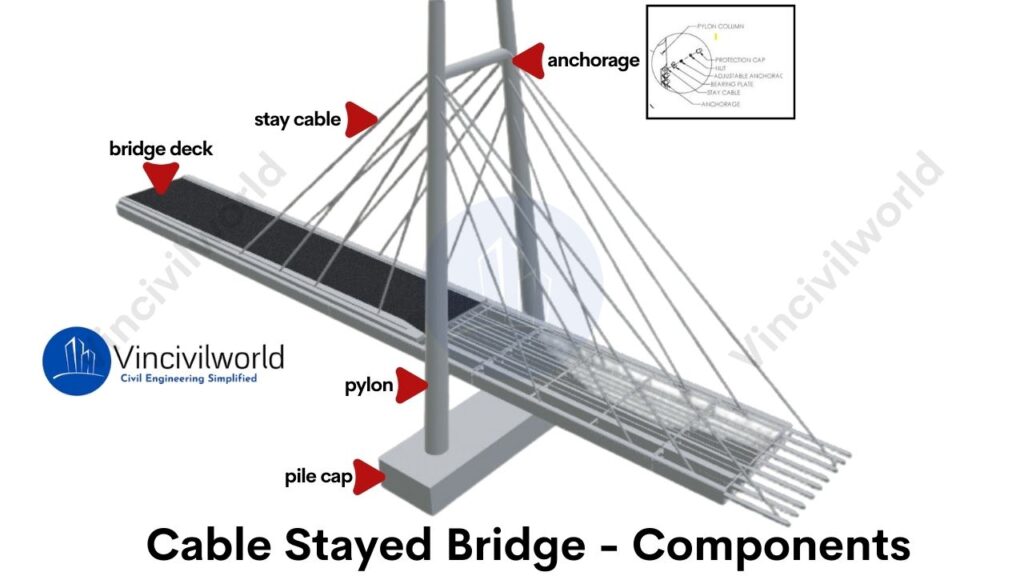
  3. Key Components of a Cable-Stayed Bridge
    1. Towers/Pylons
      1. Types of Towers (Pylons)
    2. Stay Cables
      1. Types of Stay Cables
    3. Deck Structure
      1. Types of Deck Structures
    4. Anchorages
      1. Types of Anchorages
  4. Types of Cable-Stayed Bridges
    1. Based on the Arrangement of Pylons
      1. Multiple-Tower
      2. Single-Tower
      3. Double Pylons
    2. Based on the shape of Pylons
    3. Based on Cable Arrangements
      1. Radial Pattern
      2. Harp/parallel Pattern
      3. Fan Pattern
  5. Advantages of Cable-Stayed Bridges
    1. Fast Construction
    2. Cost-Effective Construction
    3. Efficient Load Distribution
    4. Versatile Design
    5. Aesthetic Appeal
  6. Challenges and Limitations of Cable-Stayed Bridges
    1. Complex Construction Techniques
    2. Maintenance Requirements
    3. Wind and Seismic Vulnerability
    4. Accumulation of snow
    5. High Initial Costs
  7. Construction Techniques for Cable-Stayed Bridges
  8. Comparison Between Cable-Stayed and Suspension Bridges
  9. Famous Examples of Cable-Stayed Bridges Around the World
  10. Applications of Cable-Stayed Bridges in Modern Infrastructure
  11. The Future of Cable-Stayed Bridges
  12. Key takeaways
  13. Conclusion

What is a Cable-Stayed Bridge?

A cable-stayed bridge is a type of bridge where the deck is directly supported by cables connected to one or more towers/ pylons . The towers bear the load, and the cables transfer the weight to the foundation, creating a balanced and efficient structure. Unlike suspension bridges, where cables run horizontally between towers, cable-stayed bridge cables are attached directly from the deck to the tower in a straight or fan-like arrangement. This design provides superior stiffness and requires less material, making it cost-effective and suitable for long spans.

Cable stayed Bridges

Cable-stayed bridges are common in modern infrastructure due to their strength and aesthetic appeal. In India, the Bandra-Worli Sea Link serves as a well-known example of this type of bridge. It showcases the country’s advancements in bridge engineering. Other famous cable-stayed bridge examples include the Sutong Bridge in China and the Øresund Bridge connecting Denmark and Sweden. These bridges exemplify their efficiency in various applications.

How Does a Cable-Stayed Bridge Work?

A cable-stayed bridge works by using a combination of towers (pylons) and stay cables to support the bridge deck. The towers, which are vertical structures, act as the primary load-bearing elements. Stay cables run directly from the towers to the deck in either fan, harp, or radial patterns. These patterns distribute the weight of the bridge and its traffic evenly.

How does a cable bridge work?

The cables are tensioned to hold up the deck. They transfer the weight from the deck to the towers. The towers then channel the load down to the foundation. This design allows the bridge to span long distances without the need for additional piers. This makes it efficient and cost-effective for crossing large bodies of water or valleys. The tension in the cables and the compression in the towers create a balanced system. It allows the cable-stayed bridge to remain stable under heavy loads. This includes traffic, wind, and environmental stresses.

Key Components of a Cable-Stayed Bridge

A cable-stayed bridge consists of several essential components that work together to create a stable and efficient structure. Each part plays a crucial role in supporting the deck and transferring the load through the cable-stayed bridge cables. Below are the key components:

  • Towers/Pylons
  • Stay Cables
  • Deck Structure
  • Anchorages
Components of a Cable stayed Bridge

Towers/Pylons

Towers, also known as pylons, are the vertical structures that support the cable-stayed bridge cables. They carry the majority of the load by transferring it to the foundations. Towers are usually made of concrete or steel, depending on the bridge design. A well-known example is the Bandra-Worli Sea Link in India, where towering pylons define its unique structure.

Types of Towers (Pylons)

Cable-stayed bridge towers come in various shapes based on design needs and aesthetics. Common types include A-shaped, H-shaped, and single-column towers. A-shaped towers, like those seen in the Bandra-Worli Sea Link in India, provide stability for long spans. H-shaped towers offer simplicity and strength, while single-column towers are ideal for minimalist designs. These towers bear the load of the thereby ensuring the structure’s integrity.

Stay Cables

Stay cables are the cables that directly connect the deck to the towers. These cables carry the weight of the bridge deck and the traffic. In cable-stayed bridges, the cables are arranged in different patterns, like fan or harp styles. These cables allow for flexibility and strength, ensuring the stability of the bridge.

These cables are typically made of high-strength steel strands or parallel wire strands for durability. Stay cables are encased in plastic sheaths to protect against corrosion. They are then grouted with special materials. This process further increases their lifespan and resistance to environmental damage.

Types of Stay Cables

Stay cables are arranged in different patterns, depending on the bridge design. The main types include fan-shaped, harp-shaped, and radial. In fan-shaped designs, the cables spread out from a single point at the top of the tower. In harp-shaped designs, the cables run parallel, creating a clean, sleek appearance. Radial patterns are used for smaller spans, with cable-stayed bridge cables directly supporting the deck.

Deck Structure

The deck structure forms the road or walkway of the cable-stayed bridge. It is supported by the stay cables and often consists of steel or reinforced concrete. The deck must distribute the load evenly across the bridge. In many cable-stayed bridges in India, the deck is designed to handle heavy vehicular traffic. It can also withstand environmental conditions.

Types of Deck Structures

Decks in cable-stayed bridges can be constructed using steel, concrete, or composite materials. Concrete decks are heavy but offer high durability, while steel decks are lighter, making them suitable for longer spans. Composite decks, combining steel and concrete, offer the best of both worlds, balancing weight and strength. The deck structure must efficiently transfer loads to the stay cables and towers.

Decks in cable-stayed bridges can be constructed using steel, concrete, or composite materials. Concrete decks are heavy but offer high durability, while steel decks are lighter, making them suitable for longer spans. Composite decks, combining steel and concrete, offer the best of both worlds, balancing weight and strength. The deck structure must efficiently transfer loads to the stay cables and towers.

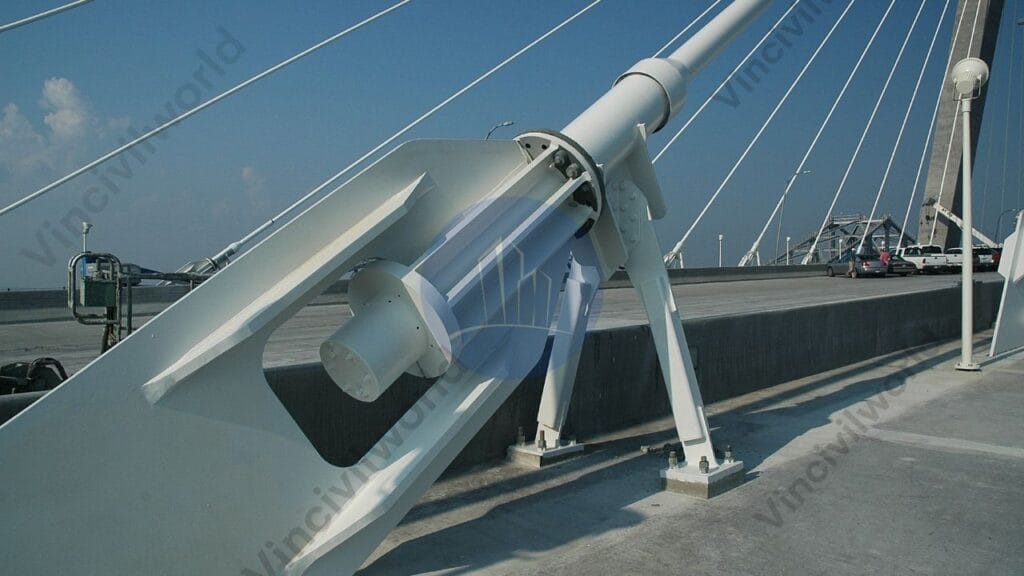
Anchorages

Anchorages are crucial in securing the stay cables to the deck and the towers. They ensure that the load is evenly transferred and that the cables remain in tension. Proper anchorage design is vital to prevent movement in the cables, ensuring the bridge’s durability and long-term stability.

Anchorages

Types of Anchorages

Anchorages are essential for securing the stay cables to the deck and towers. The two main types are external and internal anchorages. Inspecting and maintaining external anchorages is simpler due to their visibility, while embedding internal anchorages within the deck or tower offers added protection. Both types ensure the cable-stayed bridge maintains its tension and stability under varying loads.

Types of Cable-Stayed Bridges

Cable stayed bridges are classified based on the following basis

  • Based on the Arrangement of Pylons
  • Based on the shape of Pylons
  • Based on Cable Arrangements

Based on the Arrangement of Pylons

Cable-stayed bridges can be classified by the arrangement of pylons (towers) used to support the deck. The most common types include single-pylon bridges. They have a central tower supporting cables that radiate outward. There are also double pylon bridges and multiple-pylon bridges, which feature two or more pylons placed along the bridge deck. Another variation is asymmetric pylon bridges. The pylons are of different heights or placed off-center. This accommodates specific design needs or terrain constraints.

Multiple-Tower

Multiple-tower cable-stayed bridges use two or more pylons to support longer spans. Engineers often use this type of bridge for large river crossings. These areas require extensive span coverage. Multiple towers distribute the load across a larger area.

Types of Pylons

Single-Tower

Single-tower cable-stayed bridges feature a single pylon or tower that supports the entire bridge structure. Consequently, narrow waterways or urban environments with limited space are ideal for these bridges. In addition, they provide a sleek and minimalist design.

Double Pylons

Based on the shape of Pylons

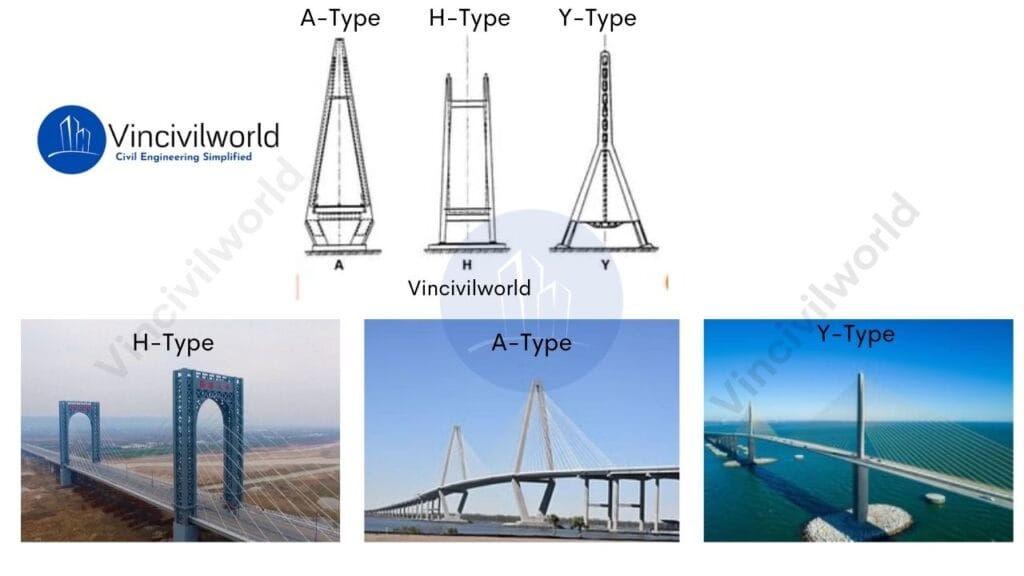
  • H-Shaped Pylons: These pylons feature two vertical legs. A horizontal beam connects them at the top. This design offers high stability and evenly distributes forces.
  • A-Shaped Pylons: The pylons are tapered at the top. They resemble the letter “A,” which gives a more streamlined appearance. This design efficiently channels forces down the legs.
  • Diamond-Shaped Pylons: These pylons are wider at the base and converge near the top, forming a diamond shape. They offer a unique aesthetic and strong structural support.
  • Y-Shaped Pylons: These pylons resemble the letter “Y.” They have a single leg splitting into two arms at the top. This design offers both flexibility and strength.
Shape of Pylons

Each shape provides distinct structural advantages. The choice depends on the specific needs of the bridge design, aesthetics, and load distribution requirements.

Based on Cable Arrangements

Cable arrangements in cable-stayed bridges generally follow three main patterns:

  • Radial (fan): Cables radiate from the top of the pylon to various points along the deck, creating a fan-like pattern.
  • Parallel (harp): Cables are attached at regular intervals along the pylon and deck, forming a parallel arrangement.
  • Semi-fan: A hybrid design where cables partially fan out but with more uniform spacing, balancing aesthetics and structural efficiency.

Radial Pattern

The cables radiate outward from the pylon to the deck, forming a fan-like shape. This arrangement offers efficient load distribution.

Harp/parallel Pattern

The cables are arranged in a parallel pattern, resembling the strings of a harp. This configuration is commonly used for bridges with a central pylon

Fan Pattern

In a fan pattern, stay cables converge at the top of the tower, spreading out to the deck in a fan-like arrangement. Engineers commonly use this design for cable-stayed bridges with shorter spans, offering both strength and visual distinction.

Advantages of Cable-Stayed Bridges

Cable-stayed bridges offer numerous benefits due to their efficient design and versatility. Moreover, they are ideal for long spans and challenging terrains, as they provide both structural stability and aesthetic appeal. Below are the key advantages:

Fast Construction

The modular construction process of cable-stayed bridges allows for quicker building, reducing disruptions to surrounding areas and environments.

Cost-Effective Construction

Cable-stayed bridges use fewer materials. They require less maintenance compared to suspension bridges. This results in lower construction costs and long-term maintenance costs.

Efficient Load Distribution

Stay cables directly transfer the deck’s load to the towers. This reduces the need for multiple support piers. It simplifies construction and allows for longer spans.

Versatile Design

Cable-stayed bridges offer flexibility in design. They adapt to different structural and architectural needs through various cable arrangements. These arrangements include fan, harp, or radial patterns.

Cable stayed bridge

Aesthetic Appeal

The visible arrangement of cable-stayed bridge cables creates a striking, modern look. It enhances the visual landscape of urban or natural settings.

Challenges and Limitations of Cable-Stayed Bridges

While cable-stayed bridges offer many advantages, they also come with certain challenges that impact their design, construction, and long-term performance.

Complex Construction Techniques

Building cable-stayed bridges requires specialized engineering knowledge and equipment. The tensioning of cables, alignment of towers, and precision needed for the cable-stayed bridge cables require high-level expertise. This expertise can increase the complexity and cost of construction.

Maintenance Requirements

Although durable, cable-stayed bridges require regular inspections and maintenance, particularly for the stay cables. Environmental factors like corrosion and wind-induced vibrations can affect cable performance. These issues lead to increased maintenance efforts. This ensures the long-term stability of the structure.

Wind and Seismic Vulnerability

They are sensitive to strong winds and seismic activity. The flexibility of the cables can lead to vibrations or oscillations. If not managed through proper dampening systems, these vibrations may compromise the structure’s stability during severe weather or earthquakes.

Accumulation of snow

The cable-stayed bridges will accumulate ice due to environmental conditions. This ice will cause great harm to the traffic safety below the bridges.

High Initial Costs

These structures are generally cost-effective in the long run. However, they can incur high initial construction costs. This is due to the specialized materials and engineering that they require. The use of advanced materials for stay cables and pylons adds to the upfront expense of the project.

Construction Techniques for Cable-Stayed Bridges

Cable-stayed bridges require precise construction techniques to ensure structural integrity and stability. The process begins with the construction of the towers, which are the main vertical supports. These towers must be strong enough to handle the immense forces transmitted by the cables. Once the towers are in place, deck sections are incrementally installed, typically using a cantilever method. This involves placing deck segments starting from the towers and progressing outward in both directions to maintain balance.

The construction team anchors the cables to the deck and tower, supporting the deck as the build progresses. They continuously adjust the cable tension to ensure the deck stays level. High-strength steel cables are essential. They transfer the load from the deck to the towers. This reduces bending moments in the deck structure.

Cable stayed bridge under construction

The construction process also requires careful consideration of material properties and cable tension forces, with adjustments often calculated using advanced methods like finite element analysis. Designers must give the bridge deck high torsional rigidity to resist twisting forces caused by uneven loads, ensuring long-term durability. Regular monitoring and adjustments during the construction phases are critical to maintaining the bridge’s alignment and stability

Comparison Between Cable-Stayed and Suspension Bridges

FeatureCable-Stayed BridgesSuspension Bridges
Structural DesignCables directly connect the deck to the towers.Cables run from towers to anchorages, supporting the deck via smaller vertical cables.
Main CablesFewer, shorter cables, anchored directly to the towers.Long, continuous cables running over towers, anchored at both ends.
Cable ArrangementRadial or fan-shaped pattern from towers to deck.Vertical hangers suspend the deck from main cables.
Tower HeightTowers are shorter compared to suspension bridges.Taller towers are required to support the long, continuous main cables.
Span LengthBest suited for medium spans (typically 200 to 1,000 meters).Suitable for long spans (over 1,000 meters).
Construction MethodFaster to build as deck sections and cables are installed incrementally.Requires extensive anchoring and time-consuming construction, especially for long spans.
Deck SupportCables directly support the deck, providing greater stiffness.The deck is supported by vertical hangers, allowing for more flexibility.
Torsional StiffnessHigher torsional stiffness, making it less prone to twisting under loads.Lower torsional stiffness, making it more flexible and vulnerable to twisting.
CostGenerally more economical for medium spans.Higher construction costs, particularly for long spans.
MaintenanceLower maintenance costs due to fewer cables and less complex structure.Higher maintenance costs due to more extensive cable systems and anchorages.
AestheticsModern, sleek appearance with visible cables fanning from the towers.Iconic and graceful with sweeping main cables and vertical hangers.
ExamplesMillau Viaduct (France), Vasco da Gama Bridge (Portugal)Golden Gate Bridge (USA), Akashi Kaikyō Bridge (Japan)

This comparison highlights the key differences in design, function, and applications between cable-stayed and suspension bridges​

Famous Examples of Cable-Stayed Bridges Around the World

Here’s a list of famous cable stayed bridges around the world:

  1. Millau Viaduct (France) – One of the tallest bridges globally, known for its elegance and engineering.
  2. Vasco da Gama Bridge (Portugal) – The longest bridge in Europe, spanning 12.3 km over the Tagus River.
  3. Sunshine Skyway Bridge (USA) – An iconic cable-stayed bridge in Florida, noted for its striking design.
  4. Sutong Bridge (China) – Famous for its long span, once the longest cable-stayed span in the world.
  5. Russky Bridge (Russia) – Holds the record for the longest cable-stayed span, connecting Russky Island to mainland Russia.

These bridges exemplify cutting-edge engineering and aesthetic appeal.

Cable stayed bridge

Applications of Cable-Stayed Bridges in Modern Infrastructure

Here’s a list of applications in modern infrastructure:

  1. Highway Crossings: They efficiently connect major roadways, facilitating smoother traffic flow.
  2. Railway Bridges: Ideal for spanning railway lines, minimizing disruptions to train services.
  3. Urban Infrastructure: Often used in city planning to enhance connectivity between districts.
  4. Waterway Crossings: They provide essential links over rivers and lakes, supporting commercial and recreational navigation.
  5. Pedestrian and Bicycle Paths: Some designs incorporate dedicated lanes for non-motorized traffic, promoting eco-friendly transport.
  6. Iconic Landmarks: Their aesthetic appeal makes them popular for constructing visually striking landmarks.

These applications demonstrate the versatility and effectiveness in various infrastructure projects​

The Future of Cable-Stayed Bridges

The future of cable-stayed bridges is promising, driven by advancements in materials and engineering techniques. Innovations such as high-strength steel and fiber-reinforced polymers will enhance durability and reduce maintenance costs. Additionally, the integration of smart technologies, like sensors for real-time monitoring, will improve safety and efficiency. As cities continue to expand, cable-stayed bridges will meet infrastructure demands and maintain aesthetic appeal. This makes them increasingly relevant in modern urban planning​.

Key takeaways

Here are the key takeaways

  • Efficient Load Distribution: They distribute loads effectively through towers and stay cables.
  • Aesthetic Appeal: Their unique design contributes to the visual beauty of infrastructure.
  • Long Spans: Capable of spanning long distances without multiple piers.
  • Cost-Effective Construction: Typically cheaper and quicker to construct compared to other bridge types.
  • Key Components:
    • Towers: Support the bridge deck.
    • Stay Cables: Connect the towers to the deck.
    • Deck Structures: The surface of the bridge.
    • Anchorages: Secure the cables.
  • Configuration Variations: Includes fan, harp, and radial patterns to meet different design requirements.
  • Advantages: Faster construction and lower maintenance costs.
  • Challenges: Sensitivity to wind and seismic activity.
  • Notable Examples: Includes the Millau Viaduct and the Bandra-Worli Sea Link, illustrating their significance in modern infrastructure.

Conclusion

Cable-stayed bridges are remarkable engineering achievements characterized by their efficient load distribution and aesthetic appeal. They use towers to support the bridge deck. A system of stay cables allows for long spans without multiple piers. This design not only enhances structural rigidity but also offers cost-effective construction. Key components include towers, stay cables, deck structures, and anchorages. They come in various configurations such as fan, harp, and radial patterns to suit different needs. Cable-stayed bridges offer advantages like faster construction and lower maintenance costs. However, they also face challenges related to sensitivity to wind and seismic activity. Notable examples include the Millau Viaduct and the Bandra-Worli Sea Link, showcasing their significance in modern infrastructure.


Understanding the Concrete Compressive Strength Formula

The  concrete compressive strength formula is fundamental. It calculates how well concrete can resist axial loads without failing. Concrete compressive strength formula is crucial for determining the strength of concrete structures. It also ensures the durability of buildings, bridges, and roads. The formula for concrete compressive strength is expressed as fc = P/A. Here, P is the applied load. A is the cross-sectional area of the concrete specimen. To ensure accuracy, concrete compressive strength testing methods follow strict guidelines.

These guidelines are provided by codes such as ASTM C39 and IS 456. Concrete compressive strength test procedures focus on assessing strength using concrete cubes or cylindrical specimens. These procedures include detailed acceptance criteria to verify whether the concrete meets the required standards. Additionally, a concrete compressive strength data set can help in evaluating the strength over different curing periods. The standard deviation for concrete compressive strength helps assess consistency and quality.

This article is about the concrete compressive strength formula, concrete compressive strength test IS code etc. This also covers concrete compressive strength acceptance criteria,concrete compressive strength testing methods, standard deviation for concrete compressive strength etc.

Table of contents

Introduction to Concrete Compressive Strength Formula

Concrete Compressive strength testing

The concrete compressive strength formula allows engineers to calculate the ability of concrete to withstand compressive forces. Engineers measure Concrete compressive strength in megapascals (MPa) or Newtons per square millimeter (N/mm²). To determine this strength, engineers apply a compressive force to concrete specimens, such as cubes or cylinders, until the concrete fails. The formula for calculating the compressive strength is

f= P/A

Where:

  • fc = Compressive strength (in MPa or N/mm²)
  • P = Maximum applied load (in Newtons)
  • A = Cross-sectional area of the specimen (in mm² or cm²)

Engineers worldwide use the concrete compressive strength formula to confirm that concrete can withstand the necessary loads in construction projects.

Code Requirements – Concrete compressive strength

In the construction industry, the concrete compressive strength formula is governed by specific building codes. These codes outline the requirements for testing of concrete, the selection of appropriate materials, and the acceptance criteria for compressive strength. ASTM C39 is the Standard Test Method for Compressive Strength of Cylindrical Concrete Specimens. IS 456:2000 is the Indian Standard for Code of Practice for Plain and Reinforced Concrete. These standards define the procedures. They also set the acceptable limits for concrete compressive strength.

Adhering to these codes ensures that concrete meets the structural requirements, offering durability and safety in construction. Codes provide specific guidelines on concrete compressive strength testing methods, detailing the use of cubes or cylinders and specifying curing times before testing.

concrete compressive strength
concrete compressive strength testing

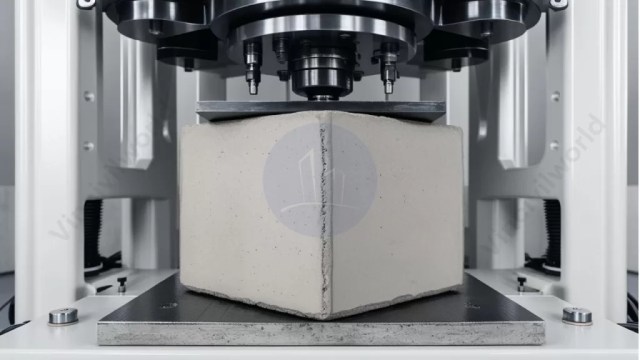
Concrete Compressive Strength Test Methods

Testing for concrete compressive strength is a crucial step in the quality control process. Several methods exist, but the most common involves casting concrete specimens (usually cubes or cylinders) and subjecting them to a compressive load. The concrete compressive strength test is typically conducted according to specific standards and includes the following steps:

  • Sample Preparation: Technicians pour concrete into molds and allow it to cure for a specified period, often 7, 14, or 28 days.
  • Testing: They place the cured specimen in a testing machine that gradually applies force until the specimen fails. They then record the maximum load.
  • Calculation: Using the  concrete compressive strength formula, they apply the maximum load and cross-sectional area to determine the concrete’s strength.

For cylindrical specimens, the compressive strength of cylindrical concrete specimens formula

Concrete compressive strength formula

Where A is the cross-sectional area of the cylinder (in mm² or cm²). The load is applied along the axis of the cylinder.

Concrete Compressive Strength Data Set

Engineers compile data sets from past concrete test results under various conditions to evaluate the reliability of concrete’s compressive strength. These data sets include information on specimens tested with different curing times, temperatures, and mix compositions, allowing engineers to assess consistency and predict performance trends. These conditions include curing time, aggregate type, water-cement ratio, and  cement grade. The data helps engineers make informed decisions about the mix design and predict the likely compressive strength of new batches of concrete.

Compressive Strength of Concrete Cube Formula

The compressive strength of concrete cube formula is similar to that of cylinders. In this case, a concrete cube of standard size (typically 150 mm x 150 mm x 150 mm) is tested. The formula remains

Compressive strength of concrete formula

Where P is the applied load, and A is the cross-sectional area of the cube. Cube specimens are used primarily because they are easier to handle and store than cylinders. Their failure pattern is often easier to interpret.

Standard Deviation for Concrete Compressive Strength

When working with concrete, it is important to measure the compressive strength. It is also crucial to evaluate the variability in strength across different batches. Standard deviation is used to assess this variability. A higher standard deviation indicates that the concrete is more inconsistent, which could lead to structural weaknesses. Engineers aim for a low standard deviation to ensure that concrete consistently meets the required strength standards.

concrete compressive strength
concrete compressive strength -cube testing machine

The formula for calculating standard deviation for concrete compressive strength is:

Standard Deviation Formula

Where σ is the standard deviation.

n is the number of test samples, xi​ is the individual strength value, and x is the mean strength.

Acceptance Criteria

The concrete compressive strength acceptance criteria help in determining if a concrete batch meets the necessary strength. This ensures it is suitable for a given application. These criteria are defined by codes such as ASTM C39 or IS 456 and typically include:

  • Minimum required compressive strength at 28 days (typically expressed in MPa).
  • The number of tests needed to assess the batch.
  • The allowable variation in strength between samples (standard deviation).

If concrete does not meet the acceptance criteria, engineers may reject it or conduct further testing to determine its suitability for use.

Compressive Strength of Concrete: Factors Affecting the Formula

Several factors can influence the concrete compressive strength formula:

  • Water-Cement Ratio: Lower water-to-cement ratios generally result in stronger concrete.
  • Aggregate Size and Type: The choice of aggregates affects the strength of the mix.
  • Curing ConditionsProper curing ensures that hydration continues and the concrete reaches its maximum potential strength.
  • Mix Proportions: The specific proportions of cement, water, and aggregates used in the mix design will affect the compressive strength.

Conclusion

The concrete compressive strength formula is a fundamental tool for engineers. It ensures the structural integrity of  concrete in construction projects. Engineers follow industry standards and testing methods. They also consider factors such as water-cement ratio and aggregate type. This way, engineers can produce reliable and strong concrete that meets the required safety criteria. Understanding different testing methods is essential. Knowing the concrete compressive strength acceptance criteria is also vital for quality control in the construction industry.

By applying the principles outlined in codes, engineers use comprehensive concrete compressive strength data sets. They can guarantee that concrete will perform as expected under various load conditions. This provides safety and durability in all structures.

Key Takeaways

  1. Testing Methods: Engineers measure concrete strength by testing concrete cubes or cylindrical specimens at various curing periods, typically at 7, 14, or 28 days.
  2. Factors Affecting Strength: Factors such as water-cement ratio, aggregate size, mix design, and curing conditions influence concrete compressive strength.
  3. Acceptance Criteria: The concrete must meet specific strength requirements set by relevant codes. Engineers may reject non-conforming concrete or subject it to additional testing to verify its suitability.
  4. Standard Deviation: Standard deviation is used to assess the variability in compressive strength. A lower deviation indicates more consistent concrete strength, which is vital for ensuring safety.

By understanding the concrete compressive strength formula, engineers can ensure concrete’s reliability. They also consider associated factors to enhance safety and performance in various structural applications.