<p value="<amp-fit-text layout="fixed-height" min-font-size="6" max-font-size="72" height="80"><strong><span class="has-inline-color has-vivid-red-color">WHAT DO YOU MEAN BY CONCRETE?</span></strong>WHAT DO YOU MEAN BY CONCRETE?
<p class="has-text-align-justify" style="font-size:17px" value="<amp-fit-text layout="fixed-height" min-font-size="6" max-font-size="72" height="80"><strong>Concrete </strong>is a composite material, which is produced from a mixture of cement, aggregates (coarse & fine), water and sometimes admixtures in required proportions. These mixture consolidates in course of time to form a dense mass called concrete.Concrete is a composite material, which is produced from a mixture of cement, aggregates (coarse & fine), water and sometimes admixtures in required proportions. These mixture consolidates in course of time to form a dense mass called concrete.
INGREDIENTS OF CONCRETE
a) CEMENT
b) COARSE AGGREGATE
c) FINE AGGREGATE
d) WATER
e) ADMIXTURE
f ) AIR
WHY QUALITY CONTROL OF CONCRETE IS IMPORTANT ?
<p class="has-text-align-justify" style="font-size:17px" value="<amp-fit-text layout="fixed-height" min-font-size="6" max-font-size="72" height="80">Concrete is designed for a particular strength and the total structural stability is dependent on a good quality concrete. and that is why quality control is one of the most important aspects taken into account during the production of concrete . A little variation in water to cement ratio, ingredient proportioning, increase in slump etc will have a major impact on the desired strength of the structure which in turn affects the structural stability.Concrete is designed for a particular strength and the total structural stability is dependent on a good quality concrete. and that is why quality control is one of the most important aspects taken into account during the production of concrete . A little variation in water to cement ratio, ingredient proportioning, increase in slump etc will have a major impact on the desired strength of the structure which in turn affects the structural stability.
The quality control of concrete is done in three stages
a) Production stage ( On fresh concrete before placing)
b) Hardened stage ( hardened concrete specimens)
c) On structures ( tests done on the structures )
TESTS TO BE DONE ON FRESH CONCRETE
a) SLUMP TEST
b) Compaction Factor test
c) Vee- Bee Test
d) k slump test
e) Kelly ball test
f ) Flow table test
TESTS TO BE DONE ON HARDENED CONCRETE
a) COMPRESSIVE STRENGTH TEST (CUBE TEST)
b) WATER PERMEABILITY TEST
c) WATER ABSORPTION TEST
NON DESTRUCTIVE TESTS ON STRUCTURES
a) REBOUND HAMMER
b) UPV TEST
CONCRETE CORE TEST
SLUMP TEST
WHAT IS A SLUMP TEST?
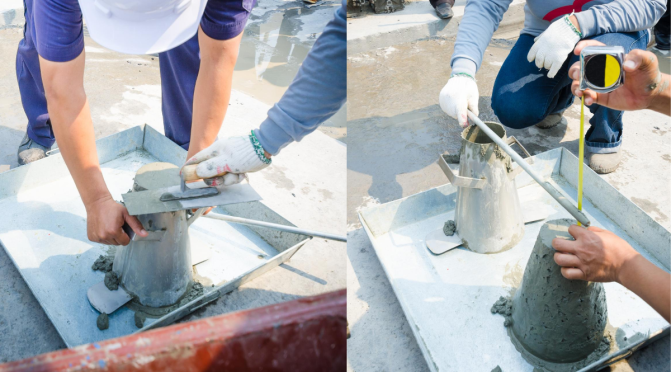
Slump cone test is to determine the workability or consistency of a concrete mix prepared at the laboratory . Slump test shall be done on fresh concrete immediately after production at the batching plant to ensure the workability is in line with the design mix requirements and also at the pour point immediately after releasing from the transit mixture.
HOW DO YOU DO A SLUMP TEST (AS PER IS 1199:1959 REAFFIRMED 2013)
The nominal size of the aggregate shall be less than 38 mm . The cone has 20cm bottom diameter and 10 cm top diameter. The height of the cone is 30 mm. It consists of a 16 mm tamping rod having a length of 600 mm
The mould shall be filled in four layers, each approximately one-quarter of the height of the mould. Each layer shall be tamped with twenty-five strokes of the rounded end of the tamping rod. The cone is removed gently and the decrease in the height of concrete is the slump of concrete.
The slump tolerance shall be +/- 25 mm . If a design mix recommends a slump of 100 mm it cant go beyond 125 mm and go below 75 mm.
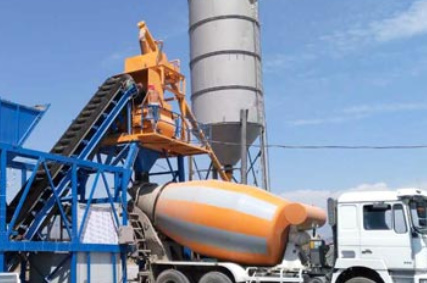
Concrete is the most widely used building material in the world. Concrete is perfectly inert, and has exceptional durability without the need for special maintenance.Concrete is basically a mixture of Portland Cement, water and aggregates comprising sand and gravel or crushed stone. In traditional construction sites, each of these materials is procured separately and mixed in specified proportions at site to make concrete. Ready mix concrete refers to a concrete manufactured from a batching plant according to customer/clients requirements & approved Design Mix and conveyed to the site in a ready to use condition. The concrete is conveyed through transit mixers of capacity ranging from 3 cum to 10 cum and more. 6 cum trucks are most commonly used. Batching plants are available in a wide range of capacities and types. ranging from 10 cum per hour to 125 cum/hr and some manufactures have much higher capacity plants.Most commonly used capacities are 30 cum, and 60 cum.
MAJOR CONSUMERS OF READY MIX CONCRETE
a) BIG CONSTRUCTION COMPANIES
They have there own batching plant set up along with expertise for installation, operation and maintaining it. These are used for there own use in construction sites depending on the feasibility in terms of space,quantity and economy.These plants are site specific and no commercial selling may not be permitted.
They setup there own plant in a specified location with all arrangements for stocking raw materials and commercially manufacture the materials as per customer/ client requirements.
COMMON METHODS USED FOR CONVEYING RMC
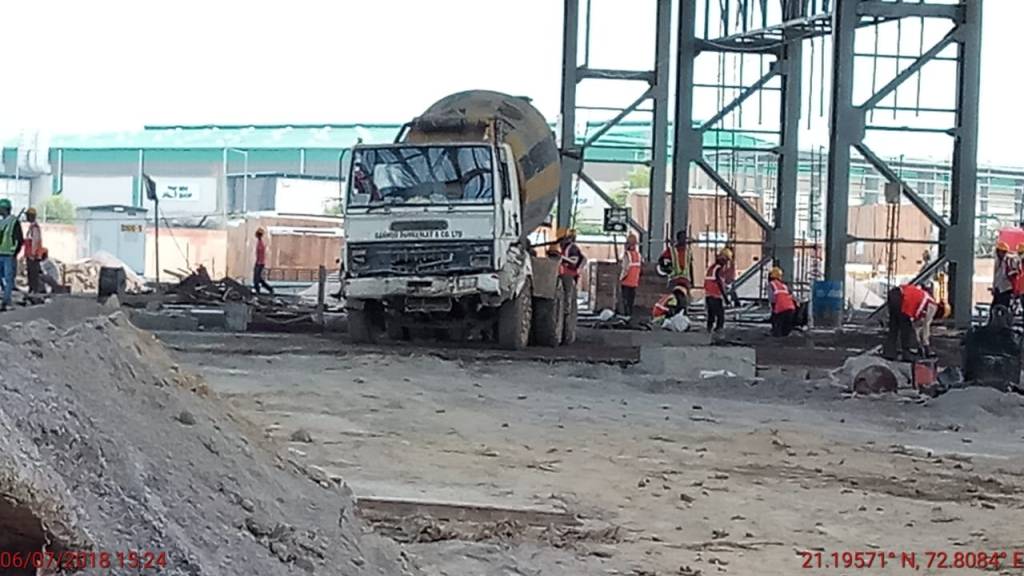
a) Transit mixed or truck mixed concrete
b) Shrink mixed concrete
c) Central mixed concrete.
a) Transit mixed concrete
The materials are batched at a central plant and are thoroughly mixed in the truck in transition. Transit-mixing separate water from the cement and aggregates and allows the concrete to be mixed instantly before using at the job site, Frequently partial mixing happens in transit and remaining mixing shall be done at site just before casting. This avoids slump loss, segregation, premature hardening, delays due to traffic jams, pouring delays due to equipment failure etc. The main disadvantage is the truck capacity is less compared to the one carrying fully mixed RMC.
b) Shrink mixed concrete
In shrink-mixed concrete, concrete is partially mixed at the plant to reduce or shrink the volume of the mixture and mixing is completed in transit or at the jobsite. The disadvantage is that concrete that has been remixed tends to set more rapidly than concrete mixed only once.
c) Central mixed concrete
The concrete is batched and completely mixed in a stationary mixer at the plant site before discharging it into the truck mixers. This can enhance the quality of concrete and cater higher production requirements.
HOW RMC IS MANUFACTURED
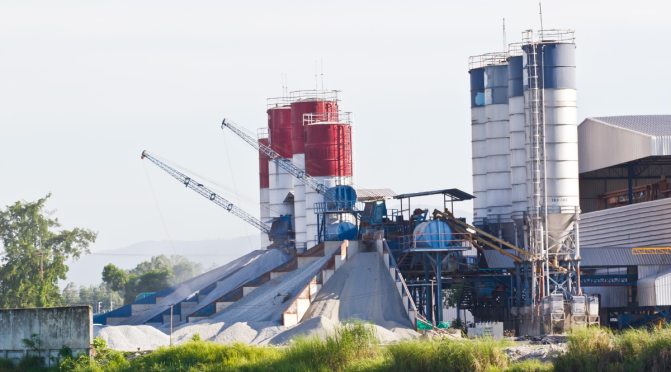
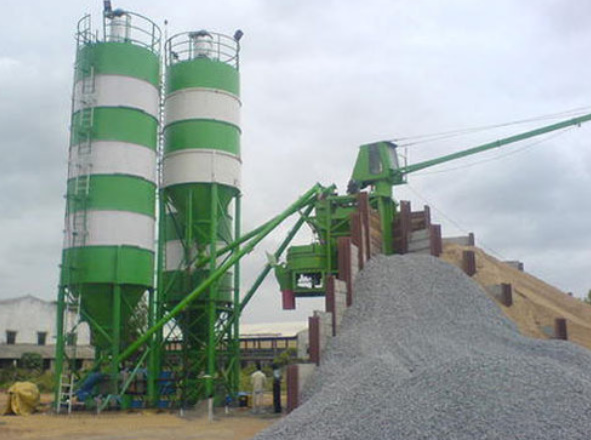
Ready mix concrete is manufactured from a centralised plant having facilities for storage of raw materials, Lab for inspection of raw material quality and concrete quality, having a series of batching plant/plants of different capacities etc.
RMC PLANT
The raw materials are checked to ensure compliance with relevant Indian standards so that there shall no be any quality issues to the end product. The raw materials are stored in separate areas on a firm ground. The RMC plant uses there In house design mixes most to the time. Customisation can also be done with the help of quality engineers. The design mixes are done in a way to give maximum quality with economy.
RAW MATERIAL BIN OF RMC PLANT
The running time, distance covered, initial settling time, slump etc are controlled using addition of special admixtures(mineral and chemical) etc without hampering the concrete strength. RMC is a totally controlled concrete having high work efficiency.
The raw materials stored shall be conveyed to the mixing drum using conveyor belts or bucket elevator. Cement is stored in silos also are conveyed using screw conveyors attached to the batching plants.
VIDEO SHOWING THE MIXING METHOD OF RMC
Once the weight of all material types meets the needs of specific amounts, the door of the weighing hopper is opened automatically. The materials will then be mixed by a concrete mixer. Once the setting time is over, the loading door of the concrete mixer opens and the concrete flows into a transit mixer.
WHAT ARE THE ADVANTAGES OF READ MIX CONCRETE
a) Uses the updated technology in proportioning, mixing and conveying and hence RMC plants can maintain excellent quality.
b) Transportation and placing is very easy. Once the concrete transit mixers reaches site concrete placing can commence immediately through concrete pumps, concrete buckets or boom placers.
c) As the concrete production and mixing is done in another place the site will be free form noise and dust pollution and free from raw material and cement trucks.
d) By using RMC the construction speed can be enhanced and schedule delays can be avoided upto an extent.
c) The concrete produced from RMC plants can be customised as per the client/ customer requirements.
d) RMC plants are a great relief when the site do not have sufficient spaces for stocking of raw materials and locating a batching plant with its raw material bins. RMC plants can cater any quantity of concrete starting from small residences to big construction sites.
e) Onsite wastage of raw materials and concrete can be eliminated by using Ready mix concrete.
d) Labour required for production of concrete and manpower for operation and running of batching plant & its associated machinery can be eliminated .
WHAT ARE THE DISADVANTAGES OF RMC
a) Requires huge investment to set an RMC plant.
b) Labour force shall be ready to place the concrete as and when it comes
c) Unforeseen delays and traffic jam leads to concrete rejection.
d) A very efficient and effective transporting system has to be maintained.
e) Quality has to be checked at site as per is standards on fresh concrete and also on hardened specimen.
f) Very effective quality system to be maintained for adjusting the setting time and slump according to the time of transit.
g) For residential construction the customer may not get a better idea of the quality of concrete due to lack of site testing facilities.
h) There are problems due to discrepancies in quantities which cant be convinced properly to the RMC vendors.
Green walls are independent vertical structures attached to the wall provided with a medium for plants and attached built-in irrigation systems. We are living in a polluted environment, hence it is advisable to maintain trees and plants that purify the air and makes us free, fresh and energetic. This article is about green walls and their healing benefits.
The green walls are the best option to make us feel close to nature. The concept of Green walls is getting popular nowadays. It was earlier confined to commercial and residential establishments. They are slowly getting into the residential atmosphere as an architectural concept. Surprisingly the green walls are much more than a back to nature architectural concept.
WHAT ARE GREEN WALLS?
Green walls consist of plants grown in a medium and placed on horizontal walls using a framing system. The system members are assembled structurally and fixed to the wall. The system includes both automatic and manual watering facilities.
Plants naturally take in carbon dioxide and absorb pollutants and then expel fresh, clean oxygen. Green walls make us happier and energetic with their close to natural abilities. They can lift our moods and help us to forget the feel of a busy urban atmosphere. It is a proven fact that nature can heal a lot of human behaviourism like anxiety, depression, aggression stress, mental fatigue etc. Ashrams built across the world are full of greenery and are the best destinations for healing minds.
Architectural and visual appeal
They are visually appealing and give an entirely different feel from the conventional interiors. The space looks bright, charming and pleasing due to the presence of living walls.
Indoor green walls system
Energy efficiency
The outdoor green walls are energy efficient as they can reduce the heat transmission to the interiors in areas where they are exposed to direct sunlight. The transpiration process of plants can reduce indoor heat to an extent and function as an energy-efficient solution. Transpiration is a process in which the plants release water in the form of moisture or water vapour.
Acoustic properties of green walls
Vertical gardens have good acoustic properties. Indoor vertical gardens absorb high-frequency noises.
Improving air quality
Environmental pollution is the biggest challenge we are facing nowadays due to industrialisation. Being close to nature can reverse the urbanisation effect to some extent. Apart from the action of photosynthesis plants are known to absorb poisonous gases by purifying the air. Studies show that they can reduce harmful pollutants to an extent of about 25-30 %.
Recreating eco systems.
The vertical gardens can recreate a missing natural ecosystem in the urban areas.
natural ecosystem
Biophilic effects ( productivity increase) of Green walls
Being close to plants can have a positive impact on an individual’s well being. Studies have shown that even seeing nature while working can increase job satisfaction. The installation of a green wall also makes the employees feel at ease with the companies commitment to maintaining a healthy work environment. By spending about 8 -12 hours in offices people develop a lot of discomforts due to inadequate ventilation, chemical indoor pollutants etc. Vertical gardens reduces such discomforts to an extent.
working environment
Leeds certification
Green walls are an internationally recognised green building certification (LEEDS) system. They help in transforming the design, construction and operation of buildings. Vertical gardens can secure LEEDS points due to their eco-sensitive and sustainable solutions in terms of water usage and environmentally friendly qualities. The LEEDS certification tends to increase the property values too. For more details about LEEDS certification refer the article “LEED certification India- A comprehensive guide”
Living walls contain a large number of plants placed horizontally in a relatively small area. This can provide the maximum benefit, as they are installed using minimal floor space.
INDOOR AND OUT DOOR GREEN WALLS
OUT DOOR WALLS
Outdoor living walls are visual elements and the plants chosen are to be in line with the prevailing climatic conditions of that area. The plants have to look good, absorb rainwater, insulate buildings and have to be cost-effective.
Outdoor vertical Garden
INDOOR WALLS
Unlike outdoor plants, indoor plants have space restrictions, size restrictions and species restrictions. The plant choice will be limited to indoor plants with air purification abilities. This system is suited to be fixed lengthwise than height wise for easy maintenance.
Hence it can be concluded that green walls are not a mere architectural concept for visual appealing , but an environmental friendly, sustainable, energy efficient, accounting option which can give mental peace, and feel the nurturing of nature.
The prestressing in Prestressed concrete is done by inducing predetermined compressive stresses to concrete by tensioning the steel, before subjecting it to service loads. In prestressed Concrete the stress developed during the service stage is countered by the already induced compressive stresses. Prestressing is a combination of the high-strength compressive properties of concrete with the high tensile strength of steel. This article is about prestressing in prestressed concrete, different methods of prestressing, and how prestressing works.
Prestressing in prestressed concrete is a critical technique that enhances the strength and durability of structures. The concrete is reinforced against tensile forces by carefully applying pre-determined compressive stresses. This is done through methods like post-tensioning. This approach ensures that prestressed concrete elements maintain their structural integrity over time. This article will cover the fundamentals of prestressing, including key methods and their applications in construction.
Concrete got excellent properties, making them the most preferred material for structural members, but has its weakness too. Let us consider two cases where a concrete beam is subjected to loads.
CASE 1 ( PLAIN CEMENT CONCRETE BEAM ON LOADS)
CASE 2 (REINFORCEMENT CEMENT CONCRETE ON LOADS)
Plain Cement Concrete Beam on Loads
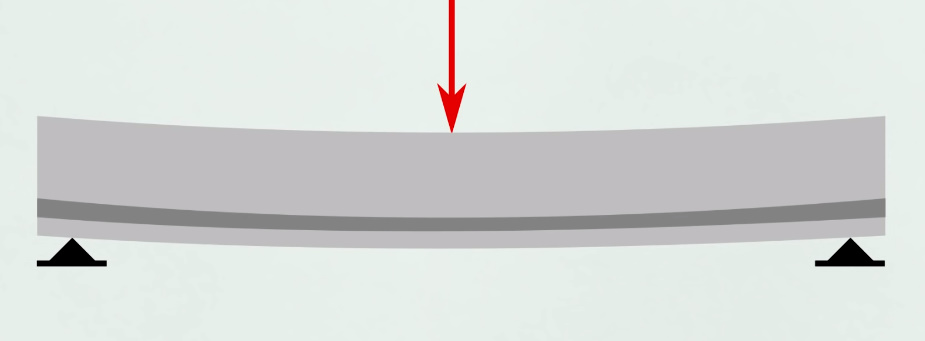
Let us consider a Plain Cement Concrete (PCC) beam subjected to loads as shown in Fig. The beam bends and cracks are developed in the tensile zone. This confirms that the concrete is very weak in tension and strong in compression.
Beam subjected to loads
Reinforced Cement Concrete beam on loads
Consider a reinforced Cement Concrete beam subjected to loads as shown in fig. In this case, the beam will not bend or cracks. This is due to the presence of reinforcement steel in the tensile zone. The reinforcement steel takes care of the tensile loads and prevents the member from cracking.
RCC beam subjected to loads
In this case, the RCC beam with steel behaves as a composite member. Concrete’s poor tensile strength and ductility are countered by the reinforcement steel having high tensile strength and ductility.
Significance of Prestressed Concrete
Even though concrete owes the property of good compressive strength, it has the following disadvantages.
Prestressed concrete, achieved through techniques like post-tensioning and pre-tensioning ways, are crucial for enhancing structural performance. By inducing compressive stresses, it counters tensile forces, reducing cracking and increasing load-bearing capacity. This approach allows for longer spans. It also allows for thinner sections and greater durability in construction. This makes it ideal for bridges, high-rise buildings, and other demanding applications.
Tensile strength is weak
Brittle
Non ductile
A good designer anticipates the areas of failure and designs the structure to overcome them. The design developed through this method is optimised. The Design is based on Design criteria ( Goal of the design). Each design should satisfy the design criteria of ultimate strength and Serviceability.
Let us go through the details of Ultimate strength and Serviceability
Ultimate strength
In this design Criteria, the structures are designed on ultimate strength and will not collapse even in the worst condition. For example, if the proposed structure for a bridge can handle a load of traffic without a collapse. Then it satisfies the Design criteria of ultimate strength.
Serviceability
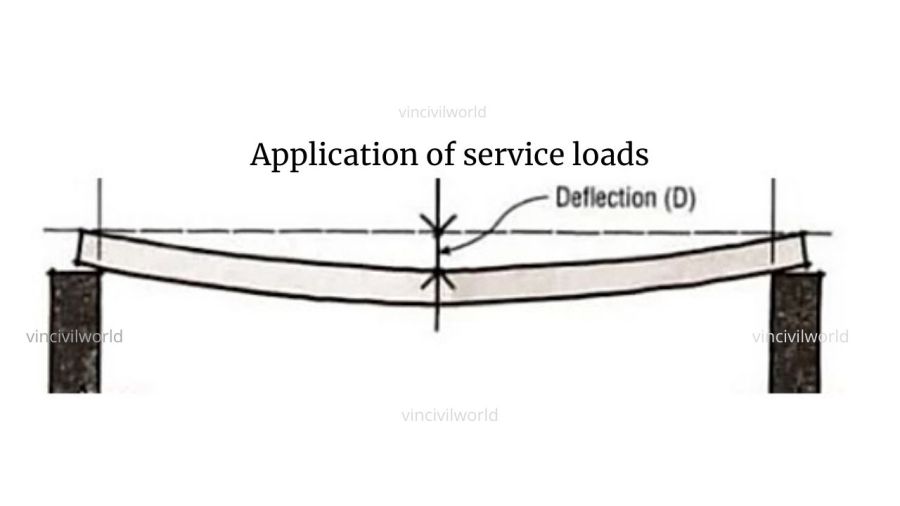
The structures are to be checked for serviceability conditions like stability analysis, deflection checks, etc. In the service stage if the structure tends to deflect on moments, then the serviceability criteria is not satisfied.
Let us analysis the impact of service loads on RCC structure like a bridge.
Deflection of steel structures
Deflection On Service loads
The figure presents what happens when an RCC structure is subjected to service loads. The moments cause the structure to deflect. The ductile reinforcement elongates to negotiate the loads. However concrete with poor tensile strength fails on tensile loads and develops cracks.
Beam subjected to loads
Cracks developed on deflection
The cracks absorb moisture and gradually rust the reinforcement steel. This leads to spalling of concrete and initiates an ultimate collapse of the structure. Prestressed concrete is introduced to minimise deflection cracks, for increasing the strength of members. Prestressing gives the designers, the flexibility of optimising the design while negotiating large spans.
Prestressed Concrete
Prestressing is a method of inducing Compressive stress into a structural member. This is done by tensioning the steel before subjecting it to service loads.
This process, known as prestressing, enhances the concrete’s ability to withstand tensile forces, reducing cracking and improving load-bearing capacity. Prestressed concrete combines high-strength steel reinforcement with concrete’s compressive strength. This combination enables the construction of structures with longer spans. It also allows for thinner sections and increased durability.
The figure below explains how an RCC member subjected to loads deflects and gets cracked
Deflection and cracks on service loads
Principle of Prestressed Concrete
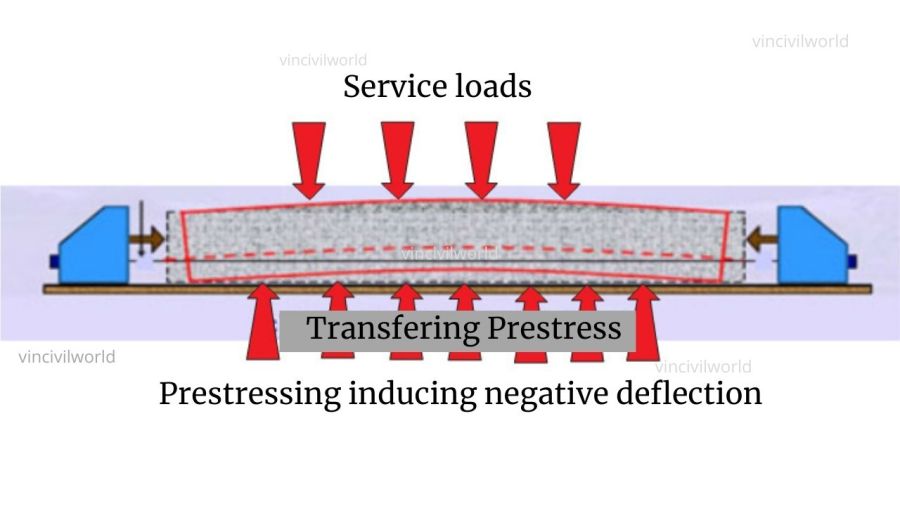
In prestressed concrete, the steel/tendons are stretched along the axis before pouring concrete as shown in fig. The tendons are released once the concrete reaches the desired strength. On detaching, the tendons induce compressive stresses in the structural member.
Mechanism of Prestressed Concrete
The compressive stress is induced in the structural member on releasing the tensioned steel. It counterbalances the compression that arises due to loads applied in the service stage. In prestressed concrete, tensioning of steel initiates negative deflections in the member. These defections balance the compressive stress due to service loads and prevent the concrete from cracking.
Prestressed bridge on service loads
Prestressing method provides the designers with the much-needed flexibility in designing large spanned structures. Whereas deriving economical and optimised designs in RCC seems difficult.
Method of Prestressed Concrete
Prestressing is done in two methods
Pre-tensioning Method
Post – tensioning Method
Pre tensioning Method
In Pre tensioning method, the tendons are stretched before pouring the concrete. Once the concrete attains the desired strength the tendons are released. After releasing the tendon the structure is subjected to service loads. The High-strength steel tendons are placed between two abutments/buttress. The tendons are stretched around 70% of their ultimate strength or as per design requirements. Concrete is poured with Tendons kept stretched. The tendons are released once the concrete attains its desired strength. On release, the steel tries to regain its original length due to its high ductility. During this process, the tensile stress in steel is converted to compressive stress in concrete. This conversion initiates a negative deflection. These compressive stresses induced in the structural member counters the compressive stress in the service stage.
Post tensioning process
The post-tensioning method is for precast girders of bridge spans, metro lines, and flyovers. It is also used for railway sleepers, piles, and prefabricated elements. These elements are subjected to heavy loads. The structures are prestressed in the prestressing yards, conveyed, and lifted for erection at the site.
The post-tensioned structures have size limitations. They have to be carried from the fabrication yard to the site. They are then erected at the site.
Post-Tensioning Method
In the post-tensioning method tendons are tensioned, once the concrete attains design strength. For this purpose, ducts or profiles are strategically placed within the concrete during casting.
Once the concrete hardens and attains design strength, the tendons are inserted through the already placed ducts or profiles. The tendons are tensioned using jacks as per design requirements. On completion of post-tensioning works, the structure is released for service loads.
Post tensioning Method
In bonded type post-tensioning, the tendons are grouted with special grouts after tensioning. In unbounded type, tendon grouting is not necessary.
Post-tensioning is done at the site and not in the fabrication yard like a pre-tensioning system. The post-tensioning method is used in viaducts, segmental construction of large bridge spans, large slabs, reservoirs, big silos of cement plants, coal washeries, etc
Comparison between Post- tensioning and pre-tensioning process
Aspect
Post-Tensioning
Pre-Tensioning
Definition
Prestressing method where steel cables are tensioned after concrete has set.
Prestressing method where steel cables are tensioned before concrete is poured.
Application
Commonly used in large-scale projects like bridges and high-rise buildings.
Typically used in precast concrete elements like beams and slabs.
Process
Cables are placed in ducts, which are then tensioned after the concrete cures.
Cables are tensioned before the concrete is cast around them.
Construction Time
Longer, as tensioning occurs after curing.
Shorter, as tensioning is completed before casting.
Flexibility
Allows for adjustments in cable tension during construction.
Less flexibility, as tensioning is fixed before casting.
Maintenance
Easier to inspect and maintain the tensioned cables.
More challenging to inspect as cables are embedded in the concrete.
Cost
Higher due to the need for additional equipment and labor.
Typically lower due to simpler setup and fewer materials.
This comparison highlights the key differences between post-tensioning and pre-tensioning in prestressed concrete applications.
What are tendons?
Tendons consist of single wires, multi-wire strands, or threaded bars. These are most commonly made from high-tensile steels, carbon fiber, or aramid fiber.
Tendons are high-strength steel cables or rods used in prestressing concrete to enhance its structural performance. In prestressed concrete, tendons are either pre-tensioned before the concrete is poured or post-tensioned after curing. During post-tensioning, tendons are threaded through ducts. They are then tensioned to apply compressive stresses to the concrete. This process improves its load-bearing capacity and reduces cracking.
Key Takeaways
Prestressing Methods: Two primary methods, pre-tensioning and post-tensioning, enhance concrete’s performance. Pre-tensioning involves tensioning tendons before pouring concrete, while post-tensioning occurs after the concrete has cured.
Benefits: Prestressed concrete combines high-strength steel with concrete’s compressive strength, leading to longer spans, thinner sections, and greater durability.
Applications: These ways are crucial in structures requiring high load-bearing capacity and durability. Examples include bridges, high-rise buildings, and large spans.
Tendons: Tendons are made of high-tensile steel or other materials. They are central to prestressing. The tendons provide the necessary compressive stresses to counteract tensile forces.
Conclusion
Prestressing in concrete is vital for optimizing structural performance by introducing compressive stresses to counteract tensile forces. Both pre-tensioning and post-tensioning methods effectively enhance the concrete’s strength and durability. Pre-tensioning is used before casting, while post-tensioning is applied after curing. These techniques are instrumental in building efficient, long-lasting structures like bridges and high-rise buildings. Understanding and implementing these methods ensure the structural integrity and longevity of prestressed concrete elements in various demanding applications.
Foundation is the most significant part of any structure/building which transfers the total loads of the structure and its components to a competent surface on the ground. Foundations are broadly classified into two types. ie. Shallow and Deep Foundations.
Foundation is the last part of the structure which touches the ground. The area of contact with the ground is called the foundation bed.
Every structure is divided into:
a)Substructure
b) Super structure
Components of a structure that are coming below the ground level are called substructure, and above ground level is called superstructure. Foundations are coming in the substructure category. Foundations are responsible for transferring loads of superstructure components to the ground.
HOW TO FIX TYPE AND SIZE OF FOUNDATIONS?
The selection of foundations depends on the bearing capacity of the soil and the purpose of the structure. Geotechnical engineering is a field of Civil Engineering, which analyses the physical and chemical properties of soil and furnish designers with the inputs on the soil properties and proposed types of foundations. The Safe bearing capacity of the soil determines the foundation type and dimensions.
Bearing capacity is the capacity of soil to support a structure without settlement or failure. To keep the structure safe, the bearing capacity has to be calculated at different locations. The ultimate bearing capacity has to be divided by a factor to derive the safe bearing capacity of the soil. Safe bearing capacity is defined as the maximum load per unit area soil can withstand without settlement and failure. The safe bearing capacity is determined by conducting field tests or soil investigations.
QUALITIES OF A WELL DESIGNED FOUNDATION
SHALLOW FOUNDATION
A well-designed foundation is supposed to possess the following qualities.
a) Have to distribute the total load on the structure to a larger area.
b)Have to counter unequal settlement in case of any displacement.
c) Has to prevent the structure from lateral moments.
d) Foundations are responsible for the total stability of structures.
DIFFERENT TYPES OF FOUNDATIONS
Foundations are classified into
a) Shallow Foundation
b) Deep Foundation
SHALLOW FOUNDATION
Advertisements
SHALLOW FOUNDATION
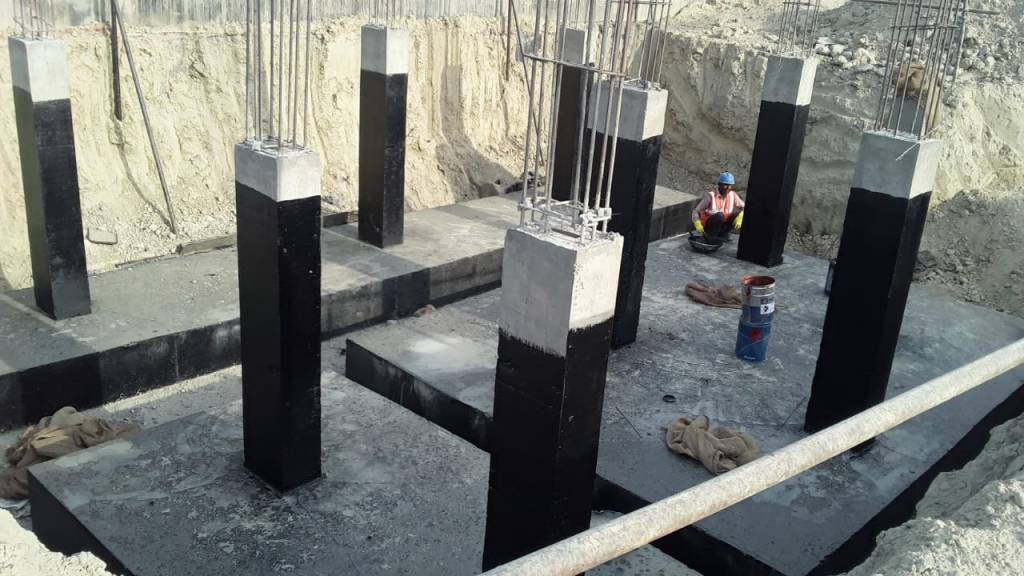
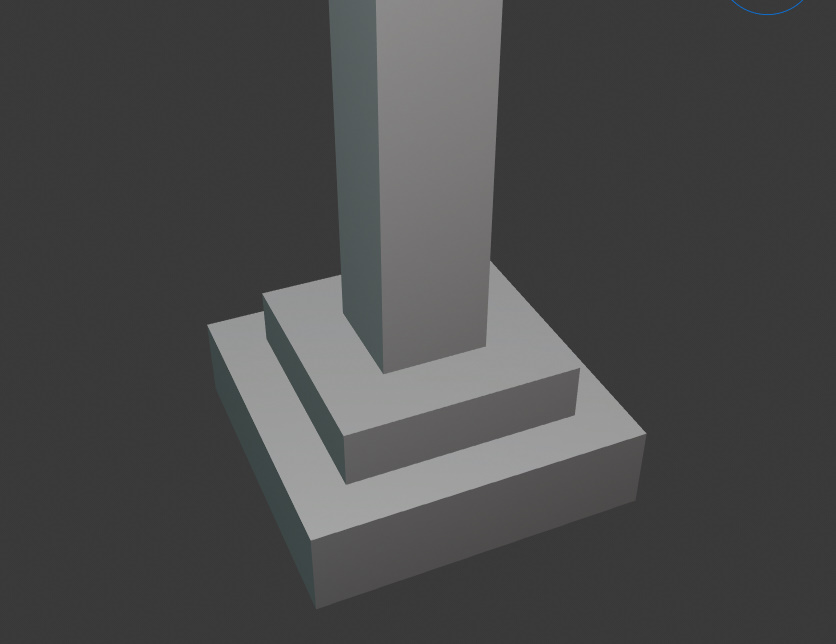
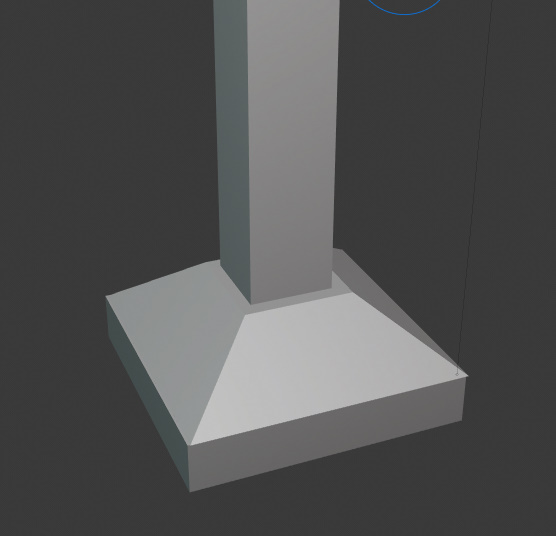
Shallow foundations transfer the load laterally to the soil. It is also called stripped foundations. The depth of a shallow foundation is less than its width.
Characteristics of shallow foundations
Shallow foundations are adopted when the load acting on a structure is reasonable and has a competent soil layer capable of negotiating the loads available at a shallow depth or shorter depth.
Shallow foundations are placed on the surface of the ground. The depth of a shallow foundation can range from 1 meter to 3.5 meters and sometimes more.
The width of the shallow foundation is greater than the depth. Shallow foundations are very easy to construct and do not require highly skilled manpower and professional supervision. These foundations can even be done with the help of medium-skilled workers. A shallow foundation is very economical when compared with a deep foundation. Shallow foundations are end bearing type foundations that transfer loads to the end of the foundation.
Shallow foundations are considered as the most preferred option when the safe bearing capacity of the soil is reasonable and the structural loads are within the permissible limits.
DEEP FOUNDATION
DEEP FOUNDATION
Characteristics of deep foundation
The width of the deep foundation is less than the depth. The depth can even go up to 60 meters or more depending on the design, loads, and availability of capable strata.
Deep foundations require technical expertise, sophisticated equipment, and highly skilled manpower for interpreting and executing works.
The deep foundations are costly due to their way of execution involving the infusion of quality materials, skilled labor, professional engineering support, and equipment
Deep foundations do not rely only on end bearing for transferring the loads. The skin friction developed between the foundation surface and the soil surrounding it may also be considered in the design stage.
The deep foundations can resist uplift pressure much more than shallow foundations and hence the chances of failure are less compared to shallow foundations.



















 vin civilworld