The Graduate Aptitude Test in Engineering (GATE) is one of the most prestigious national-level entrance exams in India. Each year, the Indian Institute of Science (IISc) and seven Indian Institutes of Technology (IITs) take turns conducting the exam. The GATE exam tests the aptitude of engineering and science graduates aspiring for higher education and jobs in the field of engineering, technology, and research. In this article, we will discuss the GATE CE Exam Notification 2024, including the exam date, application process, syllabus, eligibility criteria, gate exam score and result.
The GATE exam administers 27 computer-based tests, including one for Civil Engineering (CE). The GATE CE exam tests candidates’ understanding of civil engineering topics. It includes Structural Engineering, Geotechnical Engineering, and Water Resources Engineering. The exam also covers Environmental Engineering, Transportation Engineering, and Construction Management.
GATE CE Exam Notification 2024
The Indian Institute of Science (IISc) released the GATE CE Exam Notification 2024 on August 10, 2023. For further details, visit the official website for GATE 2024 at gate.iisc.ac.in. The notification includes all essential information about the exam. Specifically, it covers the exam date, schedule, eligibility criteria, syllabus, application process, exam pattern, admit card, exam centers, result, scorecard, and cut-off. Additionally, the notification provides guidance on how to navigate each aspect of the exam, ensuring that candidates are well-prepared and informed.
Eligibility Criteria
The eligibility criteria for the GATE CE exam are as follows:
The candidate must have a Bachelor’s degree in Engineering/Technology/Architecture or Master’s degree in any relevant Science subject.
The candidates appearing in the final year of their qualifying exam are also eligible to apply.
There is no age limit to appear for the GATE exam.
Exam Date and Schedule
The GATE CE exam is scheduled to be held on February 3, 4, 10, and 11, 2024. The exam will be conducted in two sessions, i.e. The forenoon session from 9:00 am to 12:00 pm and the afternoon session from 2:00 pm to 5:00 pm.
Application Process
The application process for the GATE CE exam is entirely online. Candidates can apply for the exam by visiting the official website at gate.iisc.ac.in. Furthermore, the application fee is Rs. 1500 for General and OBC candidates, whereas it is Rs. 750 for SC, ST, and PwD candidates. Therefore, candidates should ensure they meet the eligibility requirements and submit their applications before the deadline to avoid any inconvenience. The last date to apply for the exam is September 15, 2023.
Exam Pattern and Syllabus
The GATE CE exam consists of 65 questions for a total of 100 marks. The exam is divided into two sections, i.e., General Aptitude (15 marks) and Technical (85 marks). The Technical section consists of two types of questions, i.e., Multiple Choice Questions (MCQs) and Numerical Answer Type (NAT) questions.
The syllabus is divided into seven broad sections.
Engineering Mathematics
Structural Engineering
Geotechnical Engineering
Water Resources Engineering
Environmental Engineering
Transportation Engineering
Construction Management.
Each section has several topics, and the detailed syllabus is available on the official website.
Admit Card and Exam Centers
The GATE CE exam admit card will be available for download on the official website. Candidates should download and print the admit card and bring it to the examination center. Additionally, they must carry a valid photo ID as proof of identity.
The exam centers for the GATE CE exam will be spread across multiple cities in India and a few international cities. Candidates can choose up to three exam centers in order of preference during the application process. The exam conducting authority will allocate the exam center based on availability and feasibility.
Result and Scorecard
The official website declared the result of the GATE CE exam 2024 on March 30, 2024. Candidates can download their scorecards from April 1, 2024, onwards. The scorecard will include the candidate’s name, registration number, marks obtained, and the All India Rank (AIR). Additionally, the GATE score is valid for three years from the result declaration date.
Cut-Off Marks and Qualifying Criteria
The GATE CE exam cut-off marks are the minimum marks that candidates need to obtain in order to qualify for the exam. The cut-off marks vary every year based on factors such as the difficulty level of the exam and the number of candidates appearing for the exam. The qualifying criteria for the GATE CE exam is that the candidate should obtain a minimum of 25 marks out of 100.
Counselling and Admission Process
The GATE CE exam score is accepted by several institutes and universities in India for admission to postgraduate courses in Civil Engineering and related fields. Additionally, the counseling and admission processes vary among different institutes and universities. Consequently, candidates need to apply separately to the institutions of their choice. Furthermore, they must navigate each institution’s specific counseling and admission procedures. Thus, it is essential for candidates to stay informed about the requirements of each institute or university to ensure a smooth admission process.
GATE CE Exam Online Coaching
If you’re aspiring to crack the GATE CE exam, then opting for GATE CE online coaching can be a game-changer for you. With the convenience of learning from anywhere and anytime, online coaching offers a plethora of benefits to students. Not only do you get access to expert faculty members, but also high-quality study material and mock tests that are crucial for exam preparation. Additionally, online coaching also saves you the time and effort of commuting to a physical classroom, allowing you to utilize that time for self-study and revision. So, enrol in a reliable GATE CE exam online coaching program today, and give yourself the best chance of acing the exam.
Conclusion
The GATE CE exam is an important examination for aspiring Civil Engineers. It provides a platform for candidates to showcase their knowledge and skills in the field of Civil Engineering and helps them to get admission to some of the most reputed institutes and universities in India. Candidates should prepare well for the exam by following the exam pattern and syllabus, practising the previous year’s question papers, and taking mock tests. They should also keep themselves updated with the latest exam notifications and announcements.ouncements.
Pervious concrete is a modern eco-friendly solution for outdoor surfaces, tackling drainage issues like standing water and surface flooding. While it’s more expensive than traditional concrete, it provides effective water management and environmental benefits. Discover more about pervious concrete mix design, functionality, benefits, drawbacks, and cost considerations.
Pervious concrete, used for “flat work” such as patios, driveways, sidewalks, walkways, and sometimes parking lots, is defined by ACI 522R as a zero-slump, open-graded material.
These components create a hardened material with interconnected pores (0.08 to 0.32 inches or 2 to 8 mm), allowing for easy water infiltration.
Pervious Concrete
The void content ranges from 18% to 35%, with compressive strengths of 400 to 4000 psi (2.8 to 28 MPa).
The drainage rate varies with aggregate size and mixture density, generally falling between 2 to 18 gallons per minute per square foot (81 to 730 liters per minute per square meter).
Pervious concrete – How Does It Work?
Unlike regular concrete, pervious concrete contains minimal to no sand in its composition. The absence of sand creates a larger volume of voids (15% to 25% of the total aggregate volume), making it more porous. This increased porosity enables water to drain through the material instead of collecting on the surface.
Pervious concrete can effectively drain water, storing up to 1 inch of rainwater within its voids with a 5-inch thick surface, and up to 3 inches when poured over a 6-inch sub-base of gravel or crushed rock.
Preamble concrete drains water at a rate of 3 to 8 gallons per square foot per minute, providing efficient drainage even during heavy rainfall.
Benefits of Pervious Concrete
Pervious concrete offers significant advantages due to its ability to manage water effectively and reduce runoff.
It promotes groundwater recharge, minimizes surface flooding, and supports environmentally sustainable construction practices, making it a valuable choice for various outdoor applications.
Let us dive into the details..
Minimal Runoff
Pervious concrete directs water into the soil rather than stormwater drains, making it ideal for areas prone to overwhelmed drainage systems during heavy rainfall. This can be particularly helpful in urban areas where outdated or undersized drainage systems can get overwhelmed by rainfall.
Reduced Pollution
Pervious concrete typically requires fewer sealers or bonders than traditional concrete, resulting in cleaner stormwater runoff and reduced environmental contaminants. According to the National Library of Medicine, this leads to fewer contaminants in stormwater runoff, providing a significant environmental benefit.
Lower Need for Drainage Systems
Its natural drainage capabilities often eliminate the need for additional drainage systems, potentially lowering installation costs. In some cases, drainage systems are required in or around driveways, patios, and parking lots. Since pervious concrete drains water naturally, it often doesn’t need any additional system installed, which means lower installation costs in some cases.
Cooler Surface
The voids in pervious concrete reduce heat retention, providing a cooler walking surface during warmer weather. This can be beneficial for outdoor spaces like patios and walkways, enhancing comfort during hot summer months.
Reduced Freezing Risk
Due to minimal water accumulation on its surface, pervious concrete reduces the risk of freezing and becoming a slippery hazard. Consequently, it provides a safer option for areas susceptible to freezing temperatures and ice formation.
Environmental impact and sustainability
Pervious concrete contributes positively to the environment by promoting groundwater recharge and reducing stormwater runoff, which helps mitigate urban flooding and water pollution.
Its sustainable attributes extend to lower heat island effects due to reduced heat retention, and less reliance on drainage infrastructure, thus conserving resources.
With proper maintenance, pervious concrete can offer long-term durability, supporting eco-friendly construction practices that enhance urban resilience and environmental sustainability.
Best practices for annual maintenance of pervious concrete
Annual maintenance of pervious concrete is crucial for preserving its drainage efficiency and longevity.
Best practices include regular vacuuming to remove debris, especially from the surface and within pores, to prevent clogging.
Pressure washing with low-pressure water helps clear out finer particles without damaging the concrete.
Inspecting and repairing any cracks promptly ensures structural integrity and prevents water from pooling on the surface.
Applying a new layer of sealer as needed helps maintain permeability.
Overall, proactive maintenance ensures that pervious concrete continues to function effectively in managing stormwater and supporting sustainable urban infrastructure.
Drawbacks of Pervious Concrete
While beneficial, pervious concrete has limitations that may restrict its use in certain projects:
Lower Strength
Without fine aggregates, pervious concrete is weaker than traditional concrete, limiting its use to non-structural applications. It’s not suitable for heavily trafficked surfaces like roadways or structural purposes like foundations.
Maintenance Needs
Voids in pervious concrete can clog with debris over time. This needs annual maintenance to preserve its drainage efficiency. Regular cleaning and upkeep are necessary to prevent blockages and maintain optimal performance.
Challenges for DIY Projects
Larger applications of permeable concrete can be challenging for DIYers due to precise mixing requirements and installation techniques. However, proper knowledge and expertise are essential to ensure successful installation and functionality.
Soil Compatibility
Pervious concrete may not be suitable over expansive soils like clay, which can affect its structural integrity and performance. Soil expansion and contraction can lead to cracking and compromise the concrete’s strength.
Pervious Concrete pavements
They are best suited for flat work applications such as pavements for
Driveways
Walkways
Patios
Parking Lots
Additionally, it is used in various other applications, including:
Streets and Road Shoulders: Enhances drainage and reduces surface water accumulation.
Bridge Embankments: Minimizes erosion risks by managing water flow and stabilizing soil.
Edge Drains: Provides effective water capture and drainage solutions along pavements.
Tennis Courts and Swimming Pool Decks: Ensures safe and functional surfaces with efficient water drainage.
Golf Cart Paths: Supports golf cart traffic while maintaining natural water drainage patterns.
Greenhouse Floors: Facilitates efficient water management and soil health in agricultural settings.
Zoo Areas and Animal Barns: Improves animal habitat conditions by aiding natural water filtration and drainage.
Cost Considerations of Pervious Concrete
Pervious concrete typically costs between $8 and $20 per square foot, including materials and labor—approximately double the cost of traditional concrete.
Driveway: $1,440 to $5,280
Walkway: $640 to $5,600
Patio: $1,340 to $7,200
While initial costs are higher, long-term savings may be realized through reduced need for drainage systems and lower maintenance expenses. Additionally, using pervious concrete can potentially lower overall project costs by eliminating the need for extensive drainage infrastructure.
You’ll likely find that the total cost of hiring a local concrete contractor for a larger project like a driveway or parking lot will often be less expensive when using pervious concrete. Using permeable concrete will demand a thicker slab to be poured for strength, but the lack of a drainage system beneath the concrete can end up saving money overall.
Conclusion
Pervious concrete provides a sustainable solution for water runoff management and improving outdoor living areas. Knowing its advantages, disadvantages, and costs will help you determine if it’s the right choice for your project and environmental concerns.
As cities grow and environmental challenges increase, permeable concrete will play a growing role in sustainable construction practices, helping to build resilient communities worldwide. Its ability to facilitate groundwater recharge, reduce surface runoff, and support green infrastructure makes it an essential component in modern urban planning and development, particularly in the construction of pervious concrete pavements (PCP). Check out the blog for details on design considerations, performance factors, and limitations of PCP.
Marble and tiles flooring have their own advantages. Choosing between marble and tiles can be difficult. Marble offers elegance, natural beauty, and timeless appeal, while tiles provide versatility, durability, and a wide range of designs. In this blog, we’ll explore marble versus tile flooring to help you decide. Each has its own benefits and drawbacks, from cost to maintenance.
Marble requires more upkeep but adds a luxurious touch. Tiles are easier to maintain and come in countless styles. By the end, you’ll know whether marble or tile flooring suits your needs best for your home, office, or any other space. We’ve got you covered, whether you prefer the classic look of marble or the practical benefits of tiles.
What is marble ?
Marble is a metamorphic rock formed from limestone under high pressure and heat over millions of years. Known for its elegance and natural beauty, marble features unique veining patterns and a wide range of colors, from pure white to deep black, often with shades of pink, green, and grey. This luxurious stone is commonly used for countertops, flooring, and decorative elements.
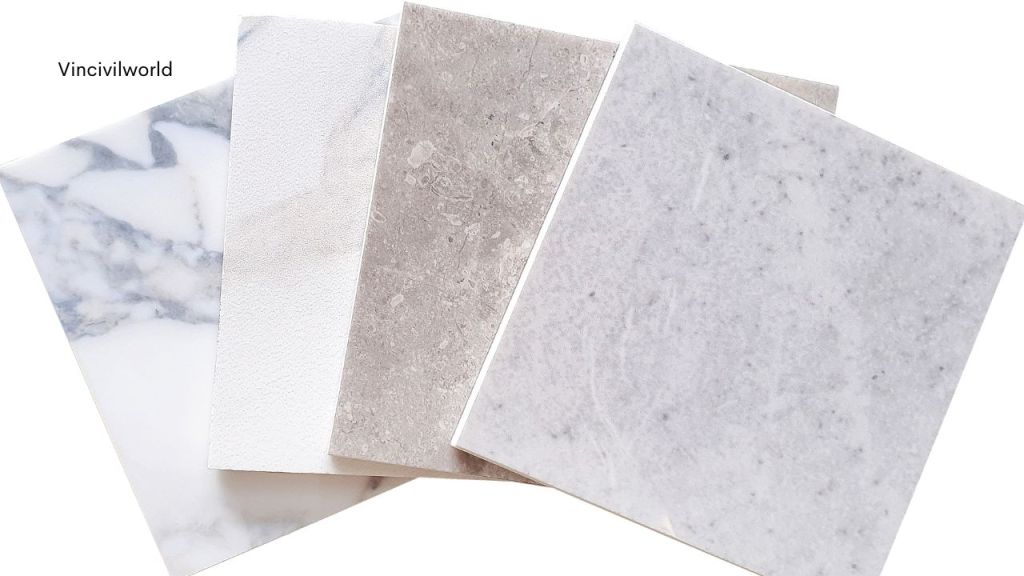
Various samples of marble and tile flooring, showcasing different colors and textures for comparison.
While marble is elegant, it needs regular upkeep to maintain its shine and prevent stains. It’s relatively soft compared to other stones, so it’s prone to scratches and etching from acidic substances. Despite the maintenance it requires, marble is still a popular choice for those who want timeless beauty in their interiors.
What is tile ?
Manufacturers create tiles from various materials such as ceramic, porcelain, glass, or natural stone. People commonly use them for flooring, walls, and countertops. Many favor tiles for their durability, ease of maintenance, and versatility in design. Available in numerous colors, shapes, and sizes, they can mimic the look of natural stone, wood, or other materials.
A variety of beautifully textured tiles, showcasing different colors and finishes for flooring options.
Ceramic and porcelain tiles are particularly popular due to their water resistance and strength. Tiles are easy to clean and maintain, making them ideal for high-traffic areas and spaces prone to moisture, such as kitchens and bathrooms. With countless design options, tiles offer both practical and aesthetic solutions for a variety of interior and exterior applications.
Aesthetic Comparison: Marble vs Tile
Choosing between marble and tile flooring requires consideration of aesthetics, durability, and maintenance. This table compares marble and tiles to assist with your decision.
Aspect
Marble
Tile
Appearance
Marble flooring features natural veining and rich color variations; each slab is unique.
Tile flooring offers a wide array of colors, patterns, and textures; can mimic marble or wood.
Luxury
Marble vs tiles: Marble exudes a high-end, sophisticated look; timeless and elegant.
Tiles offer a modern aesthetic; customizable to various styles.
Uniqueness
Each piece of marble is one-of-a-kind due to natural formation.
Tiles provide consistent design across pieces; allows for uniformity or intricate patterns.
Flexibility
Marble vs tile flooring: Limited to natural stone variations.
Tiles are highly versatile; available in numerous designs and materials.
Application
Ideal for elegant, classic interiors.
Suitable for both modern and traditional designs.
Maintenance
Tiles or marble: Marble requires regular upkeep to maintain its beauty.
Tiles are easier to maintain and clean.
Aesthetic comparison – Marble and tile flooring
Durability and Maintenance – Marble vs Tile
Understanding the durability and maintenance requirements of marble and tile flooring is crucial when making a choice between marble vs tiles or tiles vs marble. This comparison highlights their strengths and weaknesses in terms of longevity and upkeep.
Aspect
Marble
Tile
Durability
Marble flooring is elegant but relatively soft, prone to scratches and etching from acidic substances.
Tile flooring, especially ceramic and porcelain, is highly durable and resistant to wear.
Stain Proof
Marble and tile flooring both require attention: Marble needs regular sealing and polishing to maintain its luster and is prone to staining.
Tiles are easier to clean with minimal maintenance required; they are also resistant to stains and water.
Longevity
Marble vs tile flooring: With proper care, marble can last for decades despite its high maintenance needs.
Tile flooring is renowned for its longevity and requires low maintenance to stay in good condition over many years.
Repairability
Repairing marble can be costly and challenging due to scratches and etching.
Damaged tiles are relatively easy and cost-effective to replace individually.
Availability
Finding matching marble for repairs or additions can be difficult due to variations in color and veining.
Tiles offer consistent design and availability, making it easier to match for repairs or expansions.
Durability and Maintenance comparison
Cost Comparison – Marble vs tiles
When choosing between marble and tile flooring, understanding the cost implications is essential. This table compares marble vs tiles to help you decide whether tiles or marble suit your budget better.
Aspect
Marble
Tile
Material Cost
Marble is more expensive than tiles. It is a natural stone that requires costly mining and extraction procedures. High-quality marble, which looks good, comes at an exorbitant price.
Tile flooring is usually more affordable as tiles are factory made and available at a range of price points.
Cost Comparison – Marble vs tiles
Environmental Impact
Understanding the environmental impact of marble and tile flooring is important when choosing between marble vs tiles. This comparison highlights the ecological considerations of tiles or marble.
Aspect
Marble
Tile
Resource Extraction
Marble flooring needs quarrying, which can harm natural habitats and uses a lot of energy.
Tile flooring production involves mining raw materials but usually has a smaller environmental footprint than marble.
Manufacturing
Marble vs tile flooring: Marble is a natural stone with minimal processing, but the extraction process uses a lot of energy.
Tiles are factory made, often using recycled materials, and the production process can be more energy-efficient.
Sustainability
Tiles or marble: Sustainable marble options are limited; high-quality marble has significant environmental costs.
Tiles offer more sustainable options, including recycled content and eco-friendly manufacturing practices.
Lifespan
Marble vs tiles: Marble’s long lifespan can offset some environmental costs if maintained well.
Tiles are also durable, and their production advancements reduce environmental impact over time.
Environmental Impact – Marble and tile flooring
Both these flooring materials have environmental impacts, but tiles offer more sustainable and eco-friendly options.
Installation Process
Understanding the installation process for marble and tile flooring is essential when choosing between marble vs tiles. This comparison highlights the steps and considerations for installing tiles or marble.
Aspect
Marble
Tile
Preparation
Marble flooring requires a strong, level base and precise measurements.
Tile flooring also needs a flat surface, but preparation is typically less intensive than marble.
Cutting
Marble vs tile flooring: Marble cutting needs specialized tools and skills to handle its brittleness.
Tiles are easier to cut and shape, often using standard tile cutters.
Installation
Marble installation is labor-intensive, requiring skilled professionals for proper placement and alignment.
Tiles or marble: Tile installation is simpler and quicker, often completed by a wider range of installers.
Setting
Marble vs tiles: Marble is set with a thin-set mortar, but due to its weight, it needs careful handling.
Tiles are also set with thin-set mortar and are easier to handle and place.
Grouting
Both marble and tile flooring need grout, but marble requires special attention to avoid staining.
Tiles use standard grout, which is easier to apply and clean.
Sealing
Marble vs tile flooring: Marble must be sealed to prevent stains and damage. Mirror polishing marble adds a protective layer, enhancing resistance to liquids and stains.
Tiles generally do not require sealing, except for some natural stone tiles.
Installation Process – Marble and tile
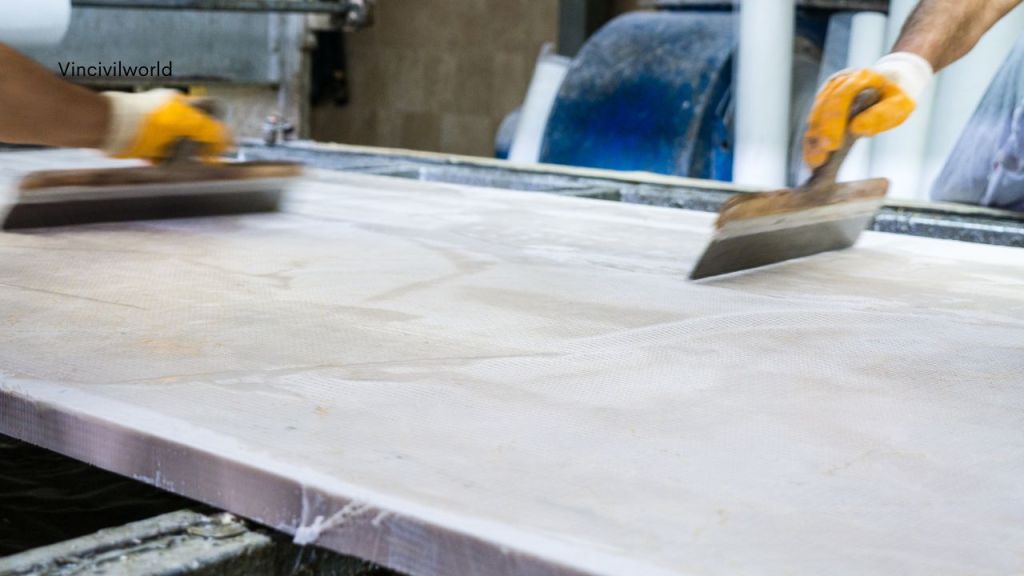
Workers applying finishing touches to a marble slab, showcasing the meticulous craftsmanship involved in marble flooring preparation.
Choosing between marble and tile flooring involves considering the complexity and skill required for installation. Tiles are generally easier and faster to install compared to marble, with options like mirror polishing marble offering added protection and aesthetic enhancement.
Wastage comparison – Marble and tile
Understanding the installation process for marble and tile flooring is crucial when choosing between marble vs tiles. Considerations include wastage factors during cutting, handling, and environmental impact.
Aspect
Marble
Tile
Wastage
Marble cutting may result in more wastage due to its brittleness and natural patterns.
Tiles are easier to cut and shape, resulting in less material wastage during installation.
Handling
Marble requires careful handling to avoid breakage and material loss during installation.
Tiles are generally easier to handle, reducing the risk of breakage and wastage.
Environmental Impact
Marble extraction and wastage can have a significant environmental impact compared to tiles.
Tiles typically have lower environmental impact from production and installation wastage.
Wastage Comparison – Marble and tile
Efficient handling and cutting practices are crucial in both marble and tile flooring installations to minimize wastage and environmental impact.
Pros and Cons of Marble and Tiles
Understanding the pros and cons of marble and tiles is crucial when deciding between marble vs tiles for flooring. Here’s a comparison in tabular form:
Aspect
Marble
Tiles
Pros
Known for its luxurious appearance and unique veining patterns.
Available in a wide range of designs, colors, and textures, offering versatility in aesthetics.
Adds value to properties due to its elegance and timeless appeal.
Generally more affordable than marble, making it suitable for various budgets.
Durable and can last for decades with proper maintenance.
High durability, resistant to wear and tear, suitable for high-traffic areas.
Natural material with variations that add character to spaces.
Easy to clean and maintain, requiring minimal upkeep over its lifespan.
Cons
Expensive material, with higher installation and maintenance costs.
Some types may lack the natural elegance of marble and can appear artificial.
Prone to scratching, staining, and etching from acidic substances.
Less heat resistant compared to materials like marble, requiring caution with hot items.
Requires regular sealing to maintain appearance and durability.
Can be colder underfoot compared to materials like wood or carpet.
Limited availability of exact matches for repairs or additions due to natural variations.
Certain types may require professional installation to ensure proper setting and alignment.
Pros and Cons of Marble and tile
This comparison highlights the strengths and weaknesses of both marble and tiles, helping you make an informed decision based on your preferences, budget, and maintenance considerations.
Conclusion – Which is Right for Your Home? Marble or tile
Aspect
Marble
Tiles
Aesthetics
Offers luxurious, timeless appeal with unique veining patterns.
Versatile in design, available in various colors and textures to suit different décor styles.
Cost
Higher upfront and maintenance costs due to the expense of natural stone.
Generally more affordable, with options ranging from economical ceramic to high-end natural stone.
Durability
Durable with proper maintenance, but susceptible to scratching and staining.
Highly durable, resistant to wear and tear, suitable for high-traffic areas like kitchens and bathrooms.
Maintenance
Requires regular sealing and careful cleaning to maintain appearance.
Easy to clean and maintain, requiring minimal upkeep over its lifespan.
Suitability
Ideal for formal areas where elegance is paramount, like living rooms or foyers.
Practical for kitchens, bathrooms, and high-traffic zones, offering durability and easy upkeep.
Easier installation process, suitable for DIY or professional installation depending on type.
Marble and tile Flooring – Which one to chose
Choosing between marble and tiles depends on factors like aesthetics, budget, maintenance preferences, and specific room needs. Marble offers luxurious appeal and adds value to formal spaces but requires higher maintenance and investment. Tiles provide versatility, affordability, and durability, making them practical for various areas in your home including kitchens and bathrooms. Consider these aspects carefully to make the best choice that aligns with your lifestyle and home décor goals.
Sustainable cities and communities are gaining popularity due to rapid urbanization, population growth, and pollution. They aim to achieve environmental, social, and economic sustainability for current populations without compromising the ability of future generations to do the same. According to the 2018 Revision of World Urbanization Prospects, 68% of the global population is projected to live in urban areas by 2050, with this figure expected to rise. In this blog, we will explore the concept of sustainable cities and society, examine a sustainable city model, and discuss their features, as well as the reasons for their growing prominence.
Sustainable cities and communities are those that are dedicated to achieving environmental, social, and economic sustainability for existing populations. However, the concept doesn’t put at risk the ability of future generations to have the same experience. We will go through the definition of each of the terms.
Sustainable Cities
Sustainable communities
Sustainable city – Definition and Key features
A sustainable city balances environmental, social, and economic needs. This aims to provide residents with a high quality of life while safeguarding resources for future generations.
Key features of sustainable cities include efficient public transport, renewable energy sources, ample green spaces, and robust waste reduction programs. Generally, these cities prioritize economic opportunities alongside social equity. They focus on minimizing energy usage, conserving water, and optimizing food production. Additionally, they aim to drastically reduce waste and heat emissions while lowering carbon footprints through sustainable practices.
Sustainable Cities and Communities
Urban planning integrates smart technology and innovative design to build resilient infrastructure. This basically ensures long-term environmental health, economic prosperity, and social well-being for all residents.
Sustainable community -Definition and Importance
Sustainable communities are essential for our future. Together, they ensure that we meet our needs today without compromising the ability of future generations to meet theirs. Here’s why they matter:
Environmental Impact: Sustainable practices reduce waste and preserve natural resources. Consequently, they contribute to mitigating climate change.
Public Health: Clean air, water, and energy sources improve community well-being. Additionally, they reduce healthcare costs and enhance quality of life.
Active Transportation: Walking and biking options reduce pollution and promote health. Moreover, they ease traffic congestion and enhance urban livability.
Renewable Energy: Using solar and wind power lowers greenhouse gas emissions. Consequently, it supports energy independence and reduces reliance on fossil fuels.
Local Economy: Supporting local businesses and agriculture boosts economic resilience. Furthermore, it fosters community pride and enhances economic diversity.
Social Equity: Access to affordable housing, healthcare, and education for all ensures fairness and opportunity. Additionally, it reduces disparities and promotes inclusive growth.
Resilience: Collaborative efforts build strong communities prepared for challenges. Therefore, they enhance disaster preparedness and community cohesion.
“Together, these elements create neighborhoods that are not only environmentally friendly but also socially and economically robust, ensuring a sustainable and equitable future.”
Now that we’ve explored sustainable cities and communities, let’s delve into why they are essential.
Importance of Sustainable City model
According to the UN Environment Programme, contemporary cities grapple with several critical challenges. Basically, these include
Environmental degradation
Traffic congestion
Insufficient urban infrastructure
Shortage of basic services such as water supply and sanitation
Waste management
Despite covering a mere 3% of the Earth’s land, cities consume 60 to 80% of global energy and produce over 70% of carbon emissions. Consequently, prioritizing the development of clean, resilient, and sustainable cities stands as a paramount goal within the UN Sustainable Development Agenda.
By addressing these challenges through innovative urban planning, renewable energy adoption, and enhanced infrastructure, cities can mitigate their environmental footprint while improving the quality of life for residents. This approach not only promotes a sustainable city model but also contributes to global efforts in combating climate change and fostering equitable economic growth.
Sustainable City Model – Benefits
A sustainable city model encourages economic development and meets the basic needs of its residents while also ensuring that all residents live in safe and healthy environments.
A sustainable city model provides a long-term way of life in all four domains: ecology, economics, politics, and culture and can solve all the problems faced by modern-day cities.
Richard Florida, an urban studies theorist, focuses on the social effect of sustainable cities, stating that cities should foster a great people environment that appeals to individuals and families of all sorts, rather than just a competitive business climate.
As a result, a transition to a sustainable urban living will provide a venue for social interaction and create conditions conducive to human flourishing.
Sustainable city model will also encourage the use of public transportation, walkability, and biking, both of which would improve both residents’ health and the environment.
Let’s go for a trip through a sustainable city and learn its features.
Features of Sustainable Cities
“Sustainable urban planning focuses on principles that enhance livability and resilience in cities:
Urban Agriculture and Urban Forests
Sustainable Transportation
Energy Conservation
Green Buildings
Effective Waste Management Strategies
Recycling and Circular Economy Practices
Mixed Land Use
Community Engagement
These principles aim to create cities that are environmentally sustainable, socially inclusive, and economically vibrant, meeting the needs of current and future generations.”
Urban Agriculture and Urban Forests
Urban agriculture is the method of growing and distributing food, as well as raising livestock, in and around a city or urban areas. It strongly links and depends on the urban ecosystem in the following ways:
Use of urban residents as key workers
Use of typical urban resources (such as organic waste as compost or urban wastewater for irrigation)
Direct links with urban consumers
Direct impacts on urban ecology (both positive and negative)
Being a part of the urban food system
Being influenced by urban policies and plans are all examples of such linkages.
Urban forest of Sustainable cities
Let’s have a look at how urban farming contributes in making a city sustainable.
Contribution of Urban Farming in a Sustainable City
Energy used to transport food is decreased when urban agriculture can provide cities with locally grown food.
Urban agriculture’s energy-efficient design will minimise each city’s carbon footprint thereby reducing the amount of transportation required to deliver goods to consumers.
Mostly, such areas can serve as carbon sinks, absorbing some of the carbon that urban areas naturally accumulate.
Produce grown in urban gardens is often thought to be more flavorful and appealing than produce purchased in stores.
Increased consumption of fruits and vegetables is linked to a lower risk of disease, and urban agriculture. Generally, this can be a cost-effective way to provide residents with fresh produce in urban areas.
Sustainable Transportation
Sustainable transportation aims to create a more environmentally responsible and socially equitable urban core. This altogether reduces a city’s dependence and use of greenhouse gases by combining
Eco-friendly urban development
Low-emission cars
Residential proximity
Basically, transportation networks currently account for about a quarter of global energy consumption and CO2 emissions. Since transportation services have such a large effect on a city’s energy use, planning experts have placed a greater focus on sustainable transportation in the last decade. Some of the key areas of focus are:
Car-free Cities
Car-free cities or cities with significant pedestrian areas are often included in the design of a sustainable city.
The car-free idea is often considered an important part of the design of a sustainable city.
Following the COVID-19 lockdown, large areas of London will be made car-free to enable people to walk and cycle safely.
Car free cities of sustainable cities
Urban Proximity
Urban proximity necessitates the construction and expansion of cities with sufficient population and landmark density so that destinations can be reached in less time.
This reduced time in transit reduces fuel consumption and makes alternative modes of transportation, such as biking and walking, more available.
Energy Conservation
Sustainable cities prioritise the use of renewable energy sources to reduce and manage emissions. Renewable energy is the energy obtained from sources that are naturally replenished on a human time scale such as wind turbines, solar panels, or bio-gas generated from sewage.
Sustainable cities minimise the need for air conditioning (a huge energy demand) by:
Planting trees
Lightening surface colours
Using natural ventilation systems
Creating green spaces covering at least 20% of the city’s surface
These interventions combat the “heat island effect” caused by an excess of tarmac and asphalt, which can make urban areas several degrees warmer than rural areas—up to six degrees Celsius in the evening.
Green Roof : Sustainable cities
Green roofs help to reduce the urban heat island effect by altering the surface energy balance. However, Air quality, environment, and water runoff are all benefited from incorporating eco-roofs or green roofs in sustainable cities.
Sustainable cities also adopt xeriscaping, rainwater harvesting, hydroponics etc for water conservation.
Green Buildings
Sustainable Cities promote LEED-certifiedgreen buildings. LEED, or Leadership in Energy and Environmental Design, is a green building certification scheme that is used all over the world. A building may have a variety of features that make it “green.” Let’s have a look at some of them:
Power, water, and other resources are used more efficiently.
Use of renewable energy sources.
Steps to reduce pollution and waste, as well as the facilitation of re-use and recycling.
Satisfactory indoor air quality.
Non-toxic, ethical, and long-lasting products are used.
Effective Waste Management Strategies
Effective waste management aims to reduce environmental impact and conserve resources. Key strategies include:
Recycling: Convert waste into reusable materials.
Composting: Turn organic waste into valuable soil amendments.
Circular Economy Practices: Design products for durability, reuse, and recycling.
Waste Segregation: Ensure hazardous and non-recyclable waste is disposed of safely.
Public Awareness and Education: Promote sustainable waste practices through campaigns.
Recycling and Circular Economy Practices
Recycling
Material Recovery: Collect and process waste materials to create new products, thereby reducing the need for virgin resources.
Waste Reduction: Decrease the amount of waste sent to landfills by reusing materials.
Energy Savings: Manufacturing products from recycled materials often requires less energy than producing them from new materials.
Environmental Protection: Reduces pollution and conserves natural resources by limiting the extraction and processing of raw materials.
Circular Economy Practices
Product Design: Create products with longer life spans, easy repairability, and recyclability to minimize waste.
Resource Efficiency: Maximize the use of resources by keeping them in use for as long as possible through reuse, remanufacturing, and recycling.
Waste as a Resource: Treat waste as a resource to be recovered and reused, rather than discarded.
Sustainable Business Models: Implement models like leasing, sharing, and product-as-a-service to reduce the need for new products and encourage efficient resource use.
Lifecycle Thinking: Consider the environmental impact of products throughout their entire lifecycle, from production to disposal.
Economic Benefits of sustainable city model
Sustainable cities provide economic benefits by enhancing efficiency, creating jobs, reducing costs, attracting investment, and improving property values.
Eco-Tourism: Create experiences that highlight natural beauty and conservation efforts.
Sustainable Products: Develop and market products made from recycled or sustainable materials.
Consulting Services: Offer expertise in sustainability practices to businesses and governments.
Challenges and Solutions of Sustainable Cities
Challenges
High Initial Costs: Implementing sustainable infrastructure requires significant upfront investment.
Public Awareness: Limited understanding and support for sustainable practices among residents.
Regulatory Barriers: Outdated laws and policies that hinder sustainable development.
Urban Planning Complexity: Integrating new technologies into existing infrastructure poses challenges.
Solutions
Public-Private Partnerships: Share costs and risks between government and private sectors.
Incentives and Subsidies: Offer tax breaks and financial support to encourage sustainability.
Education and Awareness Campaigns: Inform and engage the public on the benefits of sustainability.
Policy Reform: Update regulations to facilitate the adoption of sustainable technologies.
Best Practice Adoption: Learn from successful global examples and tailor solutions locally.
Community Engagement: Involve residents in decision-making to ensure buy-in and effectiveness.
Sustainable Cities of the World
Adelaide – Australia
Bafut – Cameroon
Victoria – Canada
Vancouver – Canada
Tianjin – China
Turku – Finland
sustainable city – Adelaide
The Future Outlook for Sustainable Cities and Communities
The future of sustainable cities and communities holds promise amidst ongoing challenges. Generally, as urbanization accelerates globally, the imperative to embrace sustainability becomes ever more critical. Sustainable practices not only mitigate environmental impact but also enhance economic resilience, improve public health, and foster inclusive growth. By investing in renewable energy, efficient infrastructure, and smart urban planning, cities can reduce carbon footprints while creating vibrant, livable spaces for residents. Collaboration between governments, businesses, and communities is essential to overcome financial barriers and regulatory hurdles.
Call to Action for Creating a Sustainable Future
To build sustainable cities and communities, stakeholders must act decisively. However, governments should prioritize policies that incentivize green technologies and urban planning strategies. Businesses can innovate sustainable solutions and adopt responsible practices. Communities must engage actively, advocating for sustainable development in local decision-making processes. Educational initiatives should promote awareness and empower individuals to adopt eco-friendly behaviors. However, by integrating these efforts, we can transform urban landscapes into resilient, inclusive, and environmentally conscious hubs that meet the needs of current and future generations. Generally, embracing sustainability today ensures a brighter and healthier tomorrow for all.
Conclusion
To sum up, Sustainable cities are those that address the social, economical and environmental aspects of sustainability by adopting urban farming, sustainable transportation, conserving energy, reducing emissions and pollution and promoting green buildings.
Sustainable cities aren’t merely a lofty target for urban planners and environmentalists, however, they are essential in the fight against climate change.
Flooding, heat waves, contaminated water sources, and other disasters can all be mitigated with sustainable infrastructure.
Moreover, disease spread can be reduced or eradicated through smart, sustainable urban planning, as demonstrated during the coronavirus pandemic.
Generally, cities that decrease their vulnerability to climate change and other natural disasters will face fewer property damage, insurance losses, and fatalities, making sustainable urban practices vital for long-term success.
Carpet area, built-up area, plinth area, and super built-up area are crucial terms when buying a home, with each offering different insights into the true size and usable space within a property. Carpet area refers to the usable floor space inside a home, excluding the walls, while built-up area encompasses the carpet area along with the thickness of the walls and additional spaces like balconies. Understanding these terms is essential, especially for civil engineers who need to adeptly interpret floor plans. This article will delve into these different types of areas, providing clarity on the actual dimensions of a property, including the distinction between built-up area vs carpet area.
Real Estate Regulation and Development Act, 2016, (RERA)
The Real Estate Regulation and Development Act, 2016, (RERA) is an act established by the Indian parliament. However, the main objective of RERA is to give prompt information between the buyers and sellers. This increases transparency and reduces the chance of cheating.
There are three different ways to calculate the area of the property.
In terms of the Carpet area
In terms of Built-up area
In terms of Super built-up area
While buying a property buyer should pay for the area which is usable. RERA provides safety of money, buyer protection and balanced agreement.
Types of areas in Building Construction
Before making home buying plans, we should familiarize ourselves with the following building construction practices and terminologies typically used in the industry.
Plot area
Built-up area or Plinth area
Carpet area
Setback area
Super built-up area
Before getting into these terms first we have to know what is RERA
Plot area (Areas of building)
The plot area includes the complete area which you own. This area comes under the fencing.
Plot-area
Carpet area (Areas of building)
Real estate agents frequently use the term “carpet area,” which refers to the floor area of a building that can be covered with carpet. This area, also known as the net usable floor area, is crucial for determining the actual space available for use in a property.
Carpet-area
Carpet Area = Total floor area – Area of internal/external walls
But as per RERA Carpet area = Total Floor area – Area of external walls
According to RERA flats should be sold on the basis of carpet area. The carpet area as per RERA is the area of usable spaces such as bedrooms, kitchen, bathroom, toilet etc. It also includes an area covered by internal partition walls. It excludes areas such as Balcony, utility areas, external walls area, open terrace area, lift, lobby, staircase etc. Generally, carpet area is 70% of its built-up area.
Built up area
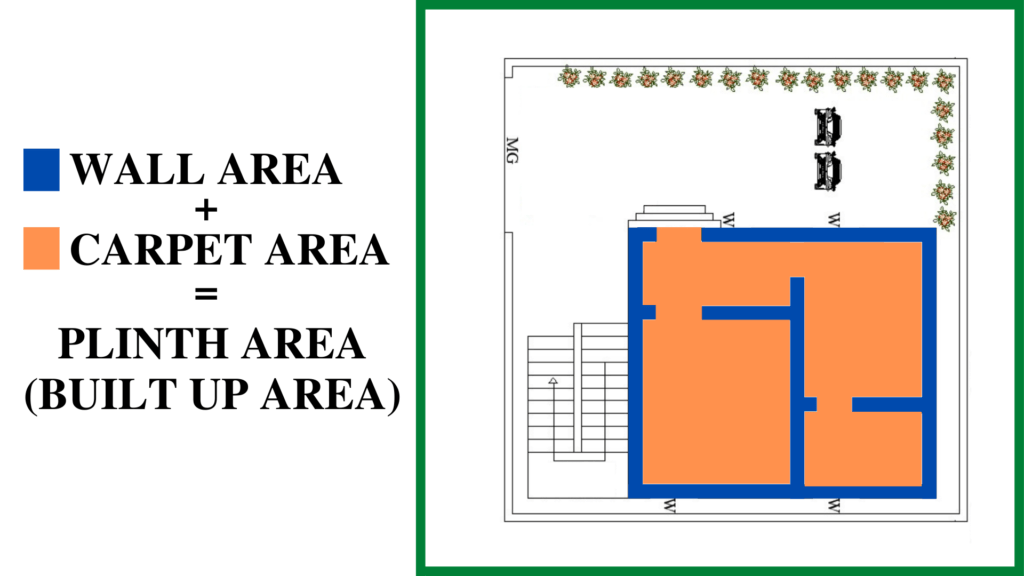
The plinth area is also known as the Built-up area. Basically, It is the total area of the building within the plot area. It is mostly 30% of the total plot area.
Plinth-area
Built-up Area = carpet area + Area of walls
It includes living room, bedrooms, utility, bathroom, wall thickness, kitchen, balcony closed staircases etc. and excludes open terrace area, lift, open staircase, swimming pool etc. It is 10 to 15 % more than the carpet area.
Built up area vs carpet area
Built-up area vs. carpet area are important terms in real estate that describe different aspects of a property’s space. Carpet area refers to the actual floor area inside the walls where you can place carpet or furniture. It includes rooms like bedrooms and kitchens but excludes areas like balconies and walls.
Built-up area, on the other hand, includes the carpet area plus the space taken up by walls and other building parts. This means it covers all enclosed spaces within the building, including walls, corridors, and partitions. Built-up area is typically larger than the carpet area by about 10% to 15% because it counts everything inside the building’s outer walls.
Knowing the difference between carpet area and built up area is important for homebuyers. Carpet area tells you exactly how much livable space you get, while built-up area gives you a broader view that includes all internal structures. This understanding helps buyers make informed decisions about the space they’re getting in a property.
Super built-up area
Super built-up area was used to measure the area of property before the RERA act came into existence. Because the super built-up area lowers the rate per square foot. Saleable area is another name of super built-up area.
Super Built-Up Area = Setback area+Built-up Area+20% of common area
Super built-up area includes common areas like swimming pool, clubhouses, lobby, staircase, Lift, etc. and the built-up area of the flat.
Set back area
Set back area is the space between the boundary and the building. It is the minimum open space necessary around the building. As per the municipal regulation a specific margin should be provided between building and road.
Setback-area
Setback area = Built-up Area – Plot area
This provides sufficient ventilation, ease in vehicle movement and protection from other entities
Key Takeaways:
Understanding the differences between carpet area, built-up area, and other terms like super built-up area is crucial when buying a property. Carpet area specifically denotes the usable floor space inside the walls, while built-up area includes everything within those walls, including partitions and corridors. RERA guidelines emphasize selling flats based on carpet area, ensuring transparency and fair pricing. Super built-up area, now less common due to RERA, includes common areas like lobbies and lifts, affecting overall cost calculations. Setback area refers to the open space required around a building, ensuring adequate ventilation and safety margins.
Conclusion:
Carpet Area:
The space inside walls where you can put furniture.
It’s the actual usable living area.
Built-Up Area:
Includes carpet area plus walls, corridors, and partitions.
Shows the total enclosed space.
Budgeting Help:
Knowing these differences helps plan finances better.
Avoids confusion about what’s included.
Setback Area Compliance:
Ensures legal safety and ventilation around buildings.
Specifies required open space around a building.
Confident Property Decisions:
Understanding these terms guides smart property choices.
Aligns with fair standards like those set by RERA.
Ensures buyers get the best value for their investment.
BIM, or Building Information Modeling, transforms construction and engineering projects by integrating data for planning, design, construction, and management. This comprehensive approach improves project visualization and coordination, making decision-making easier and reducing risks. In this blog, we’ll delve into the essential software components of BIM, including 3D modeling, data management, and collaborative tools.
We will explore the modeling process and how BIM allows accurate digital representations of buildings and infrastructure. We will also discuss the various benefits of BIM, such as increased project efficiency, improved collaboration among stakeholders, and better resource utilization. Furthermore, we will look at real-world applications of BIM models across industries, including architecture, engineering, construction, and facility management. Additionally, we will highlight popular BIM software tools and examine emerging trends shaping the future of construction technology.
What is BIM Software?
BIM software integrates data for planning, design, construction, and management of buildings and infrastructure. It creates 3D models that simulate construction processes and lifecycle management. Consequently, this software improves collaboration among architects, engineers, and contractors, thereby enhancing project efficiency. Moreover, it allows real-time updates and data sharing, ensuring all stakeholders work with current information.
BIM software enables visualization of building components and systems before construction begins. It includes tools for cost estimation, scheduling, and clash detection to prevent errors. Additionally, the software supports sustainable design practices by analyzing energy usage and environmental impact.
Furthermore, BIM enhances communication through visual representations and virtual walkthroughs. This facilitates decision-making based on accurate, detailed information. Moreover, BIM software evolves with technological advancements, incorporating cloud computing and mobile accessibility. Consequently, this fosters flexibility and accessibility across project teams and locations. Overall, BIM software transforms traditional construction processes by digitizing workflows and optimizing project outcomes.
Building Information Modeling: How It Works
Building Information Modeling (BIM) begins with collecting project data and requirements. Architects, engineers, and contractors then work together to create a digital 3D model of the building or infrastructure, encompassing architectural, structural, and MEP systems. BIM software allows for detailed information to be added to model elements, including dimensions, materials, and performance characteristics. As the model progresses through different design and development stages, it integrates input from various disciplines for coordination and clash detection.
Changes and updates are made in real-time across the model. BIM facilitates simulations for analyzing construction sequences and logistics, supports visualization of project phases and milestones, and serves as a central database for project information and documentation. BIM models aid in cost estimation, scheduling accuracy, and improving project efficiency while reducing risks during construction. They foster better communication among project stakeholders and enhance client understanding through visual representation and virtual walkthroughs. BIM modeling transforms how construction projects are planned, designed, and executed with enhanced precision and collaboration.
Understanding BIM Models/Objects
BIM models are digital representations of entire buildings or infrastructure projects, including architectural, structural, and MEP (mechanical, electrical, plumbing) components.
BIM objects are individual elements in BIM models, like doors, windows, and equipment. They include detailed information such as dimensions, materials, and performance characteristics.
Both BIM models and objects facilitate accurate project visualization, collaboration among stakeholders, and efficient management of construction data.
Benefits of Building Information Modeling
BIM has many advantages in construction and engineering. It improves coordination, reduces errors, and enhances decision-making, making it a valuable addition to your projects.
BIM improves project coordination and efficiency with precise digital representation.
It improves collaboration among stakeholders with real-time data sharing.
BIM reduces errors and clashes during design and construction phases.
It facilitates better decision-making with detailed cost, schedule, and performance information.
BIM supports sustainability by analyzing energy use and environmental impact early in design.
It enhances construction quality and safety by simulating construction sequences and identifying risks.
BIM serves as a centralized repository for project information, aiding documentation and facility management.
These benefits streamline workflows, reduce costs, and significantly improve project outcomes.
How Building Information Modelling Can Help You
BIM, or Building Information Modeling, offers numerous advantages for construction projects. It streamlines processes, enhances collaboration, and improves decision-making. Here are some key ways BIM can help you:
Improve project coordination and collaboration.
Integrate data from all project stages.
Reduce errors and enhance decision-making.
Provide detailed visualizations to identify and resolve issues early.
Aid in better project planning and scheduling.
Support cost estimation and budget management.
Promote sustainability by analyzing energy use and environmental impact.
Enable real-time data sharing to keep all stakeholders informed.
Enhance overall project efficiency.
Reduce risks and improve the quality of construction projects.
These benefits make BIM an invaluable tool for the construction industry.
Applications of Building Information Modeling
BIM, or Building Information Modeling, has wide-ranging applications across the construction and engineering industries. It enhances project efficiency, improves collaboration, and supports sustainable practices. Here are some key applications of BIM
Design Visualization: Create 3D models to visualize the project and design elements before construction.
Construction Planning: Optimize construction sequences and logistics for better efficiency and resource management throughout the project lifecycle.
Cost Estimation: Provide accurate cost estimates and manage budgets by integrating data from various project stages and elements.
Facility Management: Support maintenance and operations with detailed and up-to-date building data for better facility management.
Sustainability Analysis: Analyze energy use and environmental impact to promote sustainable design and construction practices.
Clash Detection: Identify and resolve conflicts between architectural, structural, and MEP systems before construction starts, preventing costly errors.
Structural Analysis: Perform structural simulations and load assessments to ensure the integrity and safety of building designs.
Project Coordination: Enhance collaboration among architects, engineers, and contractors by enabling real-time data sharing and communication.
Safety Management: Improve site safety with risk simulations and safety planning integrated into the construction process.
Documentation: Centralize project documentation and manage data efficiently, ensuring easy access and updates for all stakeholders.
BIM in Different Industries
BIM, or Building Information Modeling, is revolutionizing multiple industries by improving efficiency, collaboration, and project results. In architecture and construction, BIM enables detailed 3D modeling, enhancing design accuracy and visualization. It also simplifies project planning, cost estimation, and construction management, reducing errors and delays.
In engineering, BIM combines data from different disciplines to improve coordination among structural, mechanical, electrical, and plumbing systems. This integration results in more efficient designs and makes it easier to detect potential clashes.
BIM brings improved project management to the infrastructure industry, benefiting roads, bridges, tunnels and industrial structures. It enhances planning, construction, and maintenance processes, ensuring projects are completed on time and within budget.
In real estate, BIM helps with property management by offering detailed building data and enhancing maintenance. It also promotes sustainable building practices by analyzing energy efficiency and environmental impact.
Manufacturing industries use BIM for designing and managing production facilities. It enables better layout planning and integration of complex systems, increasing productivity and reducing operational costs.
Healthcare facilities benefit from BIM by improving design and management of hospitals and clinics, optimizing space utilization, enhancing patient flow, and supporting maintenance and operations.
Overall, BIM’s application across different industries revolutionizes traditional processes, enhances collaboration, and delivers better project outcomes.
Overall, BIM’s application across different industries revolutionizes traditional processes, enhances collaboration, and delivers better project outcomes.
Popular Building Information Modeling Software Tools
Building Information Modeling (BIM) software tools are essential for modern construction and engineering projects, improving efficiency and collaboration. Some popular BIM software tools include:
Autodesk Revit
One of the most widely used BIM tools, Revit supports multi-disciplinary design processes easily. It enables architects, engineers, and contractors to collaborate within a single, integrated model. Additionally, Revit provides robust tools for 3D modeling, clash detection, and comprehensive construction documentation.
Navisworks
Navisworks is utilized for project review and coordination. It integrates with different design tools to offer a comprehensive view of project data. The software is highly effective for clash detection, 4D simulation, and project scheduling.
ArchiCAD
Developed by Graphisoft, ArchiCAD is known for its user-friendly interface and powerful design capabilities, making it popular in the architecture community. It allows architects to create detailed 3D models and supports collaborative workflows.
Tekla Structures
This software is well-known for its strong structural engineering features, enabling users to create detailed 3D models of steel and concrete structures. It covers the entire construction process from design to fabrication.
Bentley Systems
Bentley provides BIM tools like MicroStation and OpenBuildings Designer, widely used in infrastructure projects for detailed design and analysis. These tools support collaboration across disciplines and ensure project accuracy.
Vectorworks
Vectorworks provides comprehensive tools for design and BIM workflows. It is suitable for various disciplines, including architecture, landscape, and entertainment design. The software integrates 2D and 3D design capabilities, making it versatile for different project needs.
Autodesk BIM 360
This cloud-based BIM tool enhances project collaboration by providing a platform for data sharing and management. It supports project coordination, document management, and construction field management, ensuring that all stakeholders have access to the latest project information.
These BIM software tools enhance project efficiency, improve coordination, and ensure the accuracy of construction projects. They are essential for modern construction and engineering workflows.
Future Trends in BIM
The future of BIM is being shaped by emerging trends that greatly enhance its capabilities and broaden its applications. One major trend is the integration of artificial intelligence (AI) and machine learning, which can automate complex tasks, optimize designs, and predict project outcomes with greater accuracy and efficiency. Furthermore, advancements in cloud-based BIM platforms are revolutionizing project collaboration by enabling real-time data sharing and effective coordination among stakeholders.
The growing use of cloud-based BIM platforms enables real-time collaboration among stakeholders, regardless of location, which enhances efficiency and decision-making.
The use of augmented reality (AR) and virtual reality (VR) in BIM is increasing. These technologies allow immersive project visualization and interactive design reviews, leading to higher stakeholder engagement and fewer errors.
Sustainability is a key focus, with BIM tools increasingly incorporating environmental impact analysis. This supports greener building practices and compliance with sustainability standards.
Finally, the integration of BIM with Internet of Things (IoT) devices is on the rise. IoT sensors provide real-time data on building performance, providing better facility management and maintenance.
These trends highlight BIM’s increasing role in creating smarter, more efficient, and sustainable construction practices.
Potential Challenges or Limitations of BIM
Challenges of Implementing BIM:
High Initial Costs: Using BIM requires a lot of money for software, hardware, and training, which can be hard for smaller companies.
Learning Curve: People who are used to traditional methods may find it difficult and time-consuming to learn BIM tools and processes.
Data Management: Handling large amounts of data from BIM models requires strong data management, which can be complex and resource-intensive.
Interoperability Issues: Different BIM software tools may not work well together, causing potential issues with data compatibility and collaboration.
Resistance to Change: Some professionals may not want to use BIM because they prefer traditional ways of working and don’t like changing how they do things.
Legal Challenges: Figuring out who owns, is responsible for, and has rights to BIM data can lead to legal problems and complications.
Maintenance and Updates: Keeping BIM software up to date and working well requires ongoing resources and commitment.
Stakeholder Collaboration: Getting everyone involved to work together effectively is really important for BIM to succeed, but it can be hard to coordinate efforts and communicate well.
Key Takeaways
Building Information Modeling (BIM) transforms construction and engineering projects by integrating data for planning, design, construction, and management. It improves visualization, collaboration, and decision-making while reducing risks and errors. BIM is used in architecture, engineering, infrastructure, real estate, manufacturing, and healthcare, offering benefits such as improved coordination, resource utilization, and sustainable practices. Popular tools include Revit, Navisworks, ArchiCAD, Tekla Structures, Bentley Systems, Vectorworks, and Autodesk BIM 360. Emerging trends in BIM, such as AI, cloud-based platforms, AR/VR, sustainability, and IoT integration, are shaping its future.
Conclusion
Building Information Modeling (BIM) is revolutionizing the construction and engineering industries by digitizing workflows and optimizing project outcomes. It offers a comprehensive approach to project management, from design and planning to construction and maintenance. Advanced technologies such as AI, machine learning, AR, and VR enhance BIM’s capabilities, leading to more efficient projects and reduced risks. While there are high initial costs and a need for substantial training and data management, the benefits of BIM in improving collaboration, reducing errors, and promoting sustainable practices are significant. As the industry evolves, BIM’s role in creating smarter, more efficient, and sustainable construction practices will become more prominent. Embracing BIM and staying updated on its trends and advancements can result in significant improvements in project outcomes and industry innovation.






















 vin civilworld