All posts by Vinod Gopinath

Computed Radiography: An Eco-Friendly Inspection Solution

Computed Radiography (CR) is a modern non-destructive testing (NDT) technique that replaces film radiography with a digital imaging process. Computed radiography (CR) does not use traditional X-ray films. Instead, it relies on imaging plates (IPs) to capture high-resolution images. These images are then processed digitally. Consequently, this approach enhances inspection speed, defect detection, and overall image quality. Furthermore, the digital processing ability provides more efficient data storage and analysis.

Computed radiography is widely used in NDT inspections for welds, pipelines, castings, and aerospace components. It eliminates the need for chemical film processing, making it a cost-effective, Eco-friendly, and efficient choice. Additionally, computer radiography allows for faster image analysis, easy digital storage, and seamless sharing for better decision-making.

The transition from film radiography to computerized radiography occurs due to its superior accuracy. This shift also results from reduced operational costs and improved safety standards. This article explains what Computed Radiography means and how it works. It highlights its benefits in NDT inspections. These insights help industries adopt advanced digital testing solutions for better reliability and performance.

  1. Understanding Computed Radiography
  2. Role of Computed Radiography in NDT
    1. Detection of Defects in Welds, Castings, and Pipelines
    2. Inspection of Aerospace, Automotive, and Structural Components
    3. Evaluation of Corrosion and Material Degradation
    4. Advantages in Real-Time and Remote Inspections
  3. Benefits of Computed Radiography in Inspection Services
    1. Defect Detection
    2. Faster Inspections
    3. Eco-Friendly Process
    4. Enhanced Image Quality
    5. Easy Storage & Sharing
  4. Challenges and Limitations of Computed Radiography
    1. Starting Investment Costs for Computed Radiography
    2. Training Requirements for Operators
    3. Sensitivity Differences Compared to Digital Radiography (DR)
    4. Potential for Equipment Damage
    5. Workflow Considerations
  5. Future Trends and Innovations in Computed Radiography
    1. Advancements in Imaging Plate Technology in Computed Radiography
    2. Integration with AI for Automated Defect Detection
    3. Enhanced Resolution and Faster Scanning Techniques
  6. Key Takeaways
  7. Conclusion

Understanding Computed Radiography

Computed Radiography (CR) is an advanced non-destructive testing (NDT) technique that replaces film radiography with a digital imaging system. It uses imaging plates (IPs) instead of traditional X-ray films to capture Radiographic images. Unlike conventional techniques, these plates contain photostimulable phosphors, which store X-ray energy and release it as digital signals during scanning. Moreover, Computerized radiography offers high-resolution images, faster processing, and improved defect detection. As a result, it has become widely used in industries like aerospace, oil and gas, and manufacturing.
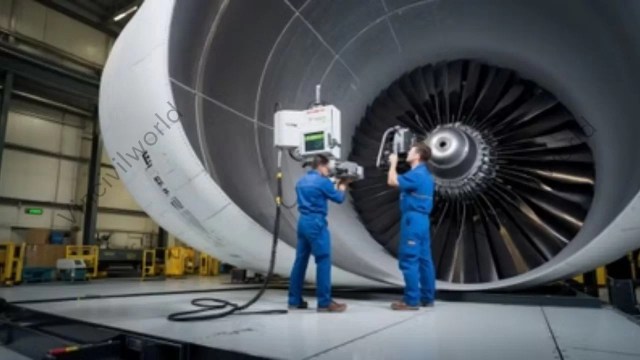
Computed Radiography Process

The Computed Radiography process involves three key steps:

  1. Imaging Plates (IPs): These reusable plates store X-ray exposure data when exposed to radiation.
  2. Scanning Process: A laser scanner reads the plate, converting the stored X-ray energy into a digital signal.
  3. Digital Image Processing: The signal is transformed into a high-quality digital image that can be analyzed, enhanced, and stored electronically.

Computer radiography is superior to film radiography. It eliminates the need for chemical processing. This makes it a faster, cost-effective, and environmentally friendly solution. CR images can be digitally enhanced, stored, and shared easily, reducing human errors and improving inspection efficiency.

Role of Computed Radiography in NDT

Computed Radiography (CR) plays a vital role in Non-destructive Testing (NDT) by providing high-quality digital imaging for industrial inspections. Moreover, it enhances defect detection, enables real-time assessments, and improves workflow efficiency. As a result, CR has become an essential tool in industries like aerospace, automotive, and infrastructure maintenance. Furthermore, its digital capabilities contribute to better data management and streamlined inspection processes.

Detection of Defects in Welds, Castings, and Pipelines

Computerized Radiography allows for precise identification of cracks, porosity, voids, and inclusions in welds, castings, and pipelines. The high-resolution digital images enhance flaw visibility, ensuring correct defect evaluation. Advanced contrast adjustments and zooming features improve detection capabilities, reducing the risk of structural failures in industrial applications.

Inspection of Aerospace, Automotive, and Structural Components

Computed Radiography Process in Aerospace

Computerized Radiography is widely used in aerospace, automotive, and infrastructure industries to inspect critical components without damaging them. It helps assess engine parts, structural frames, and composite materials, ensuring compliance with safety regulations and industry standards. The ability to digitally enhance and analyse images increases inspection reliability.

Evaluation of Corrosion and Material Degradation

Computed radiography is effective in assessing corrosion, thinning, and material degradation in metal structures, pipelines, and storage tanks. The digital imaging process provides detailed insights into material conditions, helping engineers decide maintenance requirements and prevent costly failures. This improves the longevity and reliability of industrial assets.

Advantages in Real-Time and Remote Inspections

Computed Radiography technology enables real-time analysis of scanned images, reducing downtime in critical operations. The ability to store and send images digitally allows for remote assessments, expert consultations, and faster decision-making. This is particularly useful in offshore, hazardous, or hard-to-access locations, improving overall inspection efficiency.

Benefits of Computed Radiography in Inspection Services

Computed Radiography (CR) revolutionizes Non destructive Testing (NDT) by offering high-resolution digital imaging for defect detection in industrial components. It enhances inspection speed, reduces environmental impact, improves image quality, and enables easy digital storage and sharing. CR provides a cost-effective, efficient, and reliable choice to traditional film radiography.

Defect Detection

Computed Radiography (CR) enhances defect detection by providing high-resolution digital images of welds, castings, and pipelines. It helps find cracks, voids, porosity, corrosion, and inclusions with greater accuracy compared to traditional film radiography. Digital image processing also allows for contrast adjustments and zooming, improving defect visibility for precise evaluation.

Computerized Radiography
Computerised Radiography

Faster Inspections

CR radiography eliminates time-consuming film development by using digital imaging plates (IPs) that are scanned for instant results. This significantly reduces inspection time. It allows for quick decision-making in critical applications. These include pipeline integrity assessments, aerospace inspections, and manufacturing quality control. Faster processing improves workflow efficiency and minimizes downtime in industrial operations.

Eco-Friendly Process

Unlike traditional film radiography, which requires chemical processing and hazardous waste disposal, CR radiography is an eco-friendly solution. It eliminates the use of toxic chemicals, reduces material waste, and lowers environmental impact. The reusable imaging plates (IPs) further contribute to sustainability, making CR an environmentally responsible choice for NDT inspections.

Enhanced Image Quality

Digital CR radiography produces high-contrast, noise-free images with greater dynamic range than traditional film. Advanced image processing tools allow for edge enhancement, contrast adjustments, and noise reduction, improving flaw detection. Inspectors can analyse fine details more effectively. This ensures precise defect evaluation. It also reduces the chances of false positives or missed defects.

Easy Storage & Sharing

CR images are stored in digital formats, eliminating the need for physical film storage. Inspectors can easily retrieve, archive, and share images electronically, allowing for remote analysis and collaboration. Digital storage also enables better documentation, traceability, and compliance with industry standards, improving overall inspection efficiency and record management.

Challenges and Limitations of Computed Radiography

While Computed Radiography (CR) offers many advantages in Non-destructive Testing (NDT), it also presents certain challenges and limitations. These challenges include starting investment costs. Training requirements for operators are also significant. There are sensitivity differences compared to Digital Radiography (DR). Additionally, there is potential for equipment damage and workflow considerations.

Starting Investment Costs for Computed Radiography

Implementing CR systems involves significant initial expenses, encompassing imaging plates, scanners, software, and digital storage solutions. CR reduces ongoing costs linked to film and chemical processing. However, the upfront investment can be substantial. This is particularly true for small and medium-sized enterprises.

Training Requirements for Operators

Transitioning from traditional film-based radiography to CR necessitates specialized training for operators. Skill in digital image acquisition, processing, and interpretation is essential to fully leverage CR’s capabilities. Without adequate training, there is a risk of misinterpreting images or mishandling equipment, compromising inspection quality.
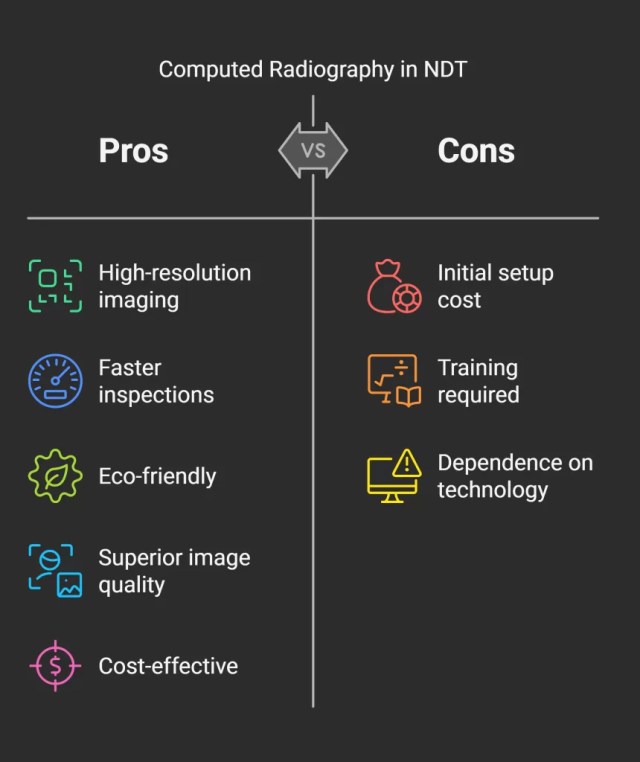
Computed Radiography - Pros and cons
Computed Radiography – Pros and cons

Sensitivity Differences Compared to Digital Radiography (DR)

Computed Radiography systems show lower spatial resolution and sensitivity compared to Digital Radiography systems. This difference can impact the detection of fine defects, making DR more suitable for applications requiring higher precision. Thus, industries with stringent quality standards prefer DR over CR for critical inspections.

DR
Digital Radiography

Potential for Equipment Damage

CR cassettes and imaging plates are susceptible to damage from mishandling or environmental factors. Scratches, exposure to intense light, or physical impacts can degrade image quality or render the plates unusable. Regular maintenance and careful handling are imperative to preserve equipment longevity and guarantee consistent performance.

Workflow Considerations

CR streamlines certain aspects of the imaging process. Nevertheless, it still requires intermediate steps. These include scanning the imaging plates to digitize images. This process can be more time-consuming compared to DR, which offers immediate image acquisition and viewing. In fast-paced environments where time is critical, the extra processing time linked to CR is a limiting factor.

Understanding these challenges is crucial for organizations. It helps them make informed decisions when selecting appropriate Radiographic techniques. This is essential for their specific NDT applications.

The field of Computed Radiography (CR) is experiencing significant advancements. These advancements are driven by technological innovations and the integration of artificial intelligence (AI). These developments aim to enhance image quality, streamline workflows, and expand the applications of CR in various industries.

Advancements in Imaging Plate Technology in Computed Radiography

Recent progress in imaging plate (IP) technology focuses on improving detector materials and designs to achieve higher resolution and sensitivity. Innovations include the development of direct conversion detectors. These detectors convert X-rays directly into electrical signals. This process reduces noise and enhances image clarity. These advancements allow more precise defect detection in critical applications like aerospace and automotive industries. Additionally, the use of lightweight, portable detectors enhances the flexibility of CR systems. This portability also improves accessibility, facilitating inspections in remote or confined spaces.

Integration with AI for Automated Defect Detection

The integration of AI into CR systems is revolutionizing defect detection by automating image analysis and interpretation. Machine learning algorithms can be trained to identify patterns in Radiographic images. They can also detect anomalies. This improves diagnostic accuracy and reduces the potential for human error. AI-driven tools, such as Generative Adversarial Networks (GANs) and federated learning, enhance defect detection accuracy. They enable secure, collaborative model training across industries. This integration not only accelerates the inspection process. It also facilitates real-time decision-making. This is crucial in industries where safety and reliability are paramount.

Enhanced Resolution and Faster Scanning Techniques

Efforts to enhance resolution have led to the adoption of advanced imaging techniques. Notably, these efforts also aim to speed up scanning processes. For instance, techniques like phase-contrast radiography and hybrid computed tomography (CT) have been developed. As a result, these methods achieve sub-micron resolution and multi-material analysis, allowing for detailed inspections of complex components. Furthermore, the development of portable systems and autonomous robots equipped with AI and quantum X-ray technology is revolutionizing on-site efficiency. As a result, this advancement paves the way for sub-millisecond defect detection by 2025. Moreover, these innovations are particularly beneficial in infrastructure maintenance. They also aid the manufacturing sector, where rapid and precise inspections are essential.

Imaging Plate technology

In summary, the future of Computed Radiography is being shaped by continuous improvements in imaging plate technology. AI integration is also contributing by automating analysis. Additionally, there is a focus on developing high-resolution, fast-scanning techniques. These advancements aim to enhance the efficacy of non-destructive testing. They ensure higher safety standards. This leads to improved operational efficiency across various industries.

Key Takeaways

  • Enhanced Defect Detection: Computed Radiography (CR) provides high-resolution digital images. This enables precise identification of internal defects. These include cracks, corrosion, and voids in materials and components.
  • Operational Efficiency: The digital nature of CR streamlines the inspection process. It eliminates the need for chemical film development. This change reduces inspection times and increases throughput.
  • Environmental Benefits: By removing the need for chemical processing, CR is more environmentally friendly. Disposable films are also eliminated, offering an alternative to traditional Radiographic methods.
  • Digital Integration: CR facilitates easy storage, retrieval, and sharing of inspection data, enhancing collaboration and record-keeping within inspection services.
  • Technological Advancements: Ongoing innovations in imaging plate technology are continually improving the capabilities of CR. Artificial intelligence is also enhancing the applications of CR in nondestructive testing (NDT).

Conclusion

Computed Radiography has significantly transformed non-destructive testing and inspection services. It offers a digital, efficient, and environmentally conscious choice to traditional film-based radiography. Its ability to deliver high-quality images expedites defect detection and analysis. This process enhances the reliability and safety of critical components across various industries. The shift towards digital solutions not only streamlines workflows but also aligns with modern environmental standards by reducing chemical waste. As technology progresses, CR will continue to improve. Advancements in imaging plate design and artificial intelligence integration will play a key role. They will offer even greater accuracy and efficiency. Embracing these digital innovations is essential for industries. They need to maintain rigorous quality control and safety standards. This is crucial in an increasingly competitive and environmentally conscious market.

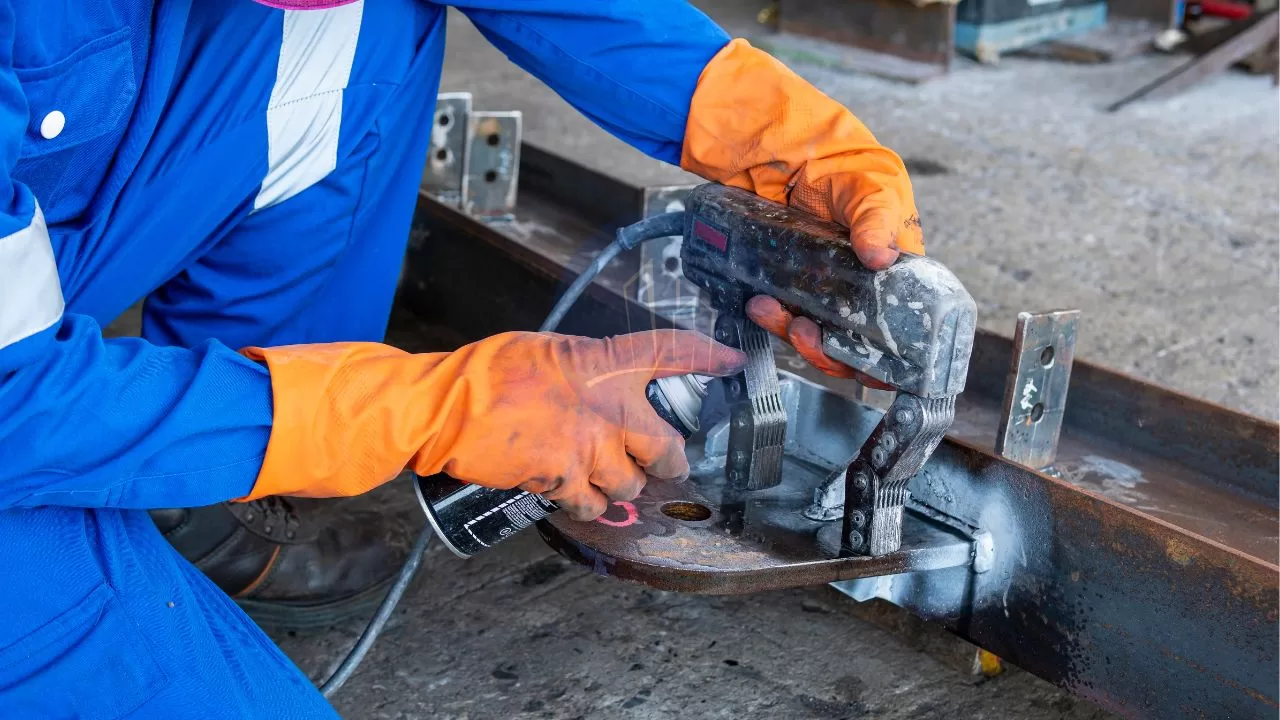
Magnetic Particle Test: Techniques and Principles Explained

Magnetic Particle Test (MPT) is a widely used non-destructive testing (NDT) method. It detects surface and near-surface discontinuities in ferromagnetic materials, such as iron, nickel, cobalt, and their alloys. This technique is renowned for its speed, cost-effectiveness, and relative ease of application, making it a preferred choice across various industries, including aerospace, automotive, marine, power generation, and oil and gas sectors

Magnetic Particle Testing (MPT) operates by magnetizing the component under inspection. If defects are present, they disrupt the magnetic field, causing leakage fields. When fine ferromagnetic particles are applied to the surface, these particles cluster at the leakage sites. This clustering forms visible indications of discontinuities. This method enables quick and reliable detection of flaws that compromise the integrity of critical components.

This article explores the history of Magnetic Particle Testing (MPT), covering its magnetization methods, principles, and equipment. It explains the procedure, detectable discontinuities, advantages, and applications. Additionally, it highlights safety measures and recent advancements. It emphasizes MPT’s role as a reliable non-destructive testing technique for ensuring material integrity.

  1. Historical Background of Magnetic Particle Test (MPT)
  2. Magnetic Particle Testing Principle
  3. Types of Magnetization Methods in Magnetic Particle Testing
    1. Direct Magnetization
    2. Indirect Magnetization
    3. Comparison of Magnetization Techniques
  4. Equipment and Materials Used in Magnetic Particle Test
    1. Magnetizing Equipment
    2. Types of Magnetic Particles
    3. Suspension Mediums and Their Applications
  5. Step-by-Step Magnetic Particle Testing Procedure
    1. Surface Preparation
    2. Application of Magnetic Field
    3. Application of Magnetic Particles
    4. Inspection Under Appropriate Lighting Conditions
    5. Demagnetization Process
    6. Post-Inspection Cleaning
  6. Types of Discontinuities Detected by MPT
    1. Surface Cracks
    2. Subsurface Flaws
    3. Inclusions and Seams
  7. Advantages of Magnetic Particle Testing
  8. Limitations of Magnetic Particle Test
  9. Comparison with Other NDT Methods
  10. Applications of Magnetic Particle Testing
    1. Industries Utilizing MPT
    2. Specific Use Cases and Examples of Magnetic Particle Test
  11. Role of Magnetic Particle Testing in Quality Assurance and Inspection Works
    1. Detecting Hidden Defects
    2. Ensuring Safety in Critical Components
    3. Fast and Efficient Testing
    4. Compliance with Industry Standards
    5. Preventing Costly Failures
  12. Recent Advances and Future Trends in Magnetic Particle Testing
    1. Technological Innovations
    2. Future Prospects and Research Directions
  13. Key takeaways from Magnetic Particle Testing (MPT):
  14. Conclusion

    Historical Background of Magnetic Particle Test (MPT)

    Magnetic Particle Testing (MPT) has played a crucial role in non-destructive testing (NDT) for over a century. It all began in 1868. Inspectors magnetized cannon barrels and used a magnetic compass. They detected defects by watching needle deviations. As technology advanced, MPT techniques improved significantly.

    By the early 1900s, industries started refining the process. By the 1930s, railroads widely adopted MPT. They used it to inspect metal components and enhance safety. Over the years, there have been further advancements in magnetization techniques. Fluorescent magnetic particles and portable equipment have increased the accuracy and convenience of the technique. Today, MPT continues to be an essential tool across various industries, ensuring the reliability and safety of critical components.

    magnetic particle test
    Magnetic Particle Test (MPT)

    Magnetic Particle Testing Principle

    Ferromagnetic materials, such as iron, nickel, and cobalt, strongly attract magnetic fields. Their unique atomic structure allows groups of atoms to align in the same direction, forming magnetic domains. In an unmagnetized state, these domains are randomly arranged, resulting in no net magnetization. However, when exposed to an external magnetic field, the domains shift and align with the field. This alignment creates a strong overall magnetic effect, making ferromagnetic materials highly responsive to magnetization.

    Magnetic Particle Test (MPT)
    Magnetic Particle Testing (MPT)

    Magnetic Particle Testing (MPT) detects surface and near-surface flaws in ferromagnetic materials. The process starts by magnetizing the part, either locally or entirely. If a flaw like a crack is present, it distorts the magnetic field, creating flux leakage. Fine ferromagnetic particles are applied to the surface. These particles gather at the leakage points, forming visible indications. This buildup reveals the flaw’s location, size, and shape. MPT is a reliable method for identifying defects in critical components.

    The effectiveness of MPT depends on factors such as the type of current used for magnetization. Alternating current (AC) is typically used for detecting surface flaws. Direct current (DC) is more effective for subsurface flaw detection.

    Types of Magnetization Methods in Magnetic Particle Testing

    Magnetic Particle Testing (MPT) employs two primary magnetization techniques: direct and indirect magnetization.

    Direct Magnetization

    In direct magnetization, an electric current flows through the test object, generating a magnetic field within the material. This method is highly effective for finding out surface and near-surface flaws. Inspectors typically use two common approaches: clamping the component between contact heads or applying current through prods. As the current passes through, it creates a circular magnetic field around its path. If a defect exists, it disrupts the magnetic flux, causing magnetic particles to gather and reveal the flaw. To ensure accuracy, proper contact is essential. This prevents arcing. Additionally, current levels must be carefully controlled to avoid overheating or damage. Due to its simplicity and reliability, direct magnetization remains widely used in industrial applications for flaw detection.

    Magnetic Particle Testing (MPT) - Direct Magnetization
    image courtesy : slv

    Indirect Magnetization

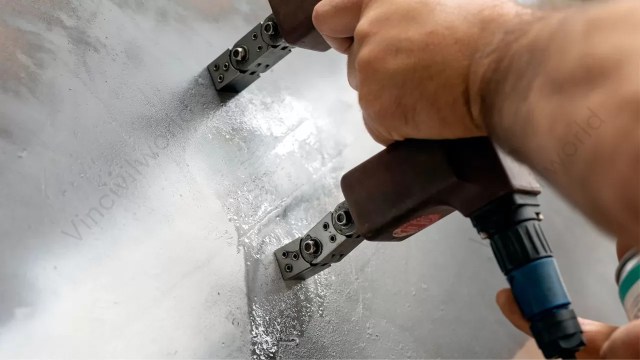
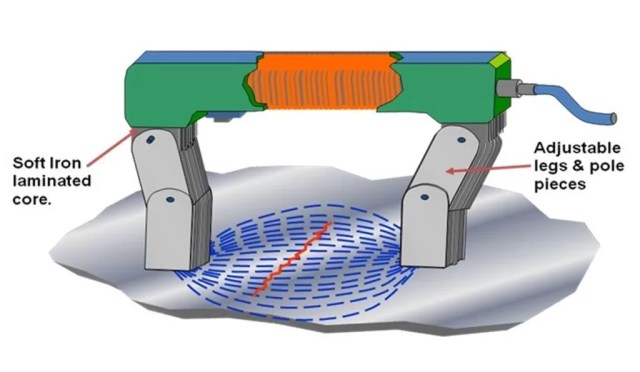
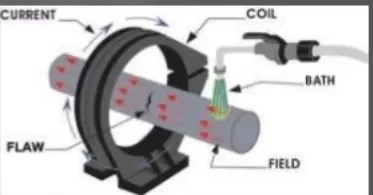
    Indirect magnetization, also known as magnetization by induction, creates a magnetic field in the test object without direct electrical contact. This method involves placing the component inside a current-carrying coil or using a yoke to generate an external magnetic field. As a result, the material becomes magnetized, allowing defects to be detected. This technique is useful because it does not require direct current application. It is especially beneficial for inspecting components where direct magnetization is impractical. Additionally, it ensures even magnetization across complex shapes, improving the accuracy and efficiency of Magnetic Particle Testing (MPT).It is ideal for components with complex shapes or when testing specific areas. However, the field’s strength and orientation must be carefully controlled to ensure accurate and sensitive flaw detection.

    Magnetic Particle Testing (MPT) - In direct Magnetization
    Magnetic Particle Testing (MPT) – In direct Magnetization

    Comparison of Magnetization Techniques

    FactorDirect MagnetizationIndirect Magnetization
    Magnetization MethodElectric current passes directly through the test object.External magnetic field induces magnetization.
    Field StrengthProduces a strong magnetic field.May generate a weaker magnetic field.
    SuitabilityBest for simple-shaped components.Ideal for complex-shaped components.
    Electrical ContactRequires direct contact, which may not be feasible for all parts.No direct electrical contact, reducing arcing risk.
    ApplicationEffective for detecting surface and near-surface flaws.Suitable for localized inspections and components sensitive to direct currents.
    LimitationsRisk of overheating and arcing if not properly controlled.Field strength and orientation must be carefully managed for accuracy.

    Equipment and Materials Used in Magnetic Particle Test

    Magnetic Particle Testing (MPT) uses different tools and materials to find surface and near-surface flaws in ferromagnetic materials. It requires magnetizing equipment, magnetic particles, and suspension mediums for accurate defect detection.

    Magnetizing Equipment

    • Yokes are Portable devices that create a magnetic field between two poles. They help inspect specific areas and are popular for their flexibility and ease of use.
    • Electromagnetic coils generate a longitudinal magnetic field when current flows through them. Placing a test object inside the coil induces magnetization, making it ideal for simple-shaped components.
    • Prods are Handheld electrodes send current directly into the test object, forming a localized magnetic field. They work well for inspecting welds and targeted areas but need careful handling to prevent surface damage.

    Types of Magnetic Particles

    • Dry Particles are Finely milled ferromagnetic powders applied directly to the test surface. They are ideal for detecting discontinuities on rough or uneven surfaces and in high-temperature environments.
    • Wet Particles are Magnetic particles suspended in a liquid carrier, such as water or oil. This method enhances particle mobility, increasing sensitivity to fine defects. Wet suspensions are particularly useful for smooth surfaces and can be applied using spray systems.
    MPT - Dry particle and Wet Particle
    MPT – Dry particle and Wet Particle

    Suspension Mediums and Their Applications

    • Water-Based Suspensions utilize water as the carrier fluid, often with added wetting agents to improve particle dispersion and surface coverage. They are environmentally friendly and suitable for a wide range of applications.
    • Oil-Based Suspensions employ light petroleum distillates as carriers, offering superior corrosion protection and suitability for components prone to rust. They are preferred in situations where water adversely affect the test material.

    Selecting the appropriate combination of equipment and materials is crucial for effective Magnetic Particle Testing, ensuring accurate detection of flaws and maintaining the integrity of the components under inspection

    Step-by-Step Magnetic Particle Testing Procedure

    Magnetic Particle Testing (MPT) is a non-destructive method that finds surface and near-surface flaws in ferromagnetic materials. The process follows key steps to ensure accurate and reliable results.

    Surface Preparation

    Thoroughly clean the test surface to remove contaminants such as oil, grease, dirt, and rust, which could interfere with the inspection process. Generally, a clean surface ensures proper particle adherence and accurate defect detection.

    Application of Magnetic Field

    Apply a magnetic field to the component using yokes, coils, or prods. The method depends on the part’s shape and inspection needs. Yokes create a field between two poles for localized testing. Coils generate a longitudinal field for cylindrical or simple-shaped parts. Prods introduce current directly, producing a strong, localized field. When magnetized, any flaw in the material distorts the field, causing flux leakage. This leakage attracts magnetic particles, making defects visible. Proper magnetization is crucial for accurate results. Inspectors must choose the right technique to ensure full coverage and reliable detection of surface and near-surface discontinuities.

    Application of Magnetic Particles

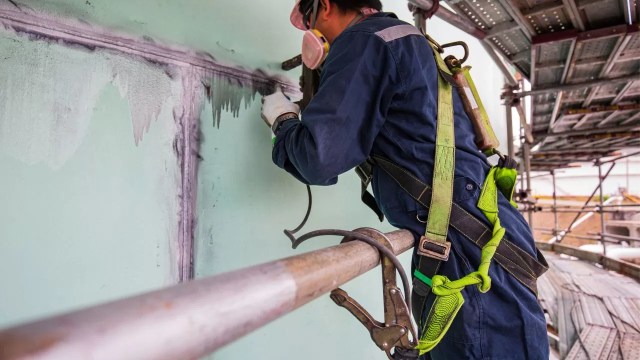
    Apply magnetic particles to the magnetized surface using dry powder or a liquid suspension. These particles spread across the surface and gather where magnetic flux leaks due to flaws like cracks. Dry particles work well for field inspections, while wet suspensions offer better sensitivity for fine defects. The inspector ensures even coverage to detect all possible flaws. Under proper lighting or UV light for fluorescent particles, defect indications become visible. This step is crucial for identifying the exact location and size of discontinuities. Correct application improves detection accuracy and ensures reliable inspection results in Magnetic Particle Testing (MPT).

    Inspection Under Appropriate Lighting Conditions

    Carefully inspect the surface for particle build-up, as this often indicates defects. To enhance visibility, use proper lighting techniques. For non-fluorescent particles, rely on bright white light, ensuring even illumination. For fluorescent particles, use ultraviolet (UV-A) light. Do this in a dark environment to make defects stand out more clearly. Additionally, adjust the light source as needed to achieve full coverage and eliminate any shadows. Proper lighting plays a crucial role in accurate detection. Following these steps ensures reliable Magnetic Particle Testing (MPT) results. This ultimately improves safety and quality in inspections.

    Demagnetization Process

    After inspection, demagnetize the component to eliminate any residual magnetism, which could affect its performance or interfere with future inspections. This step is crucial for maintaining the material’s integrity.

    Post-Inspection Cleaning

    Clean the component to remove any remaining magnetic particles and inspection residues. This ensures the part is free from contaminants and ready for service or further processing.

    Adhering to these steps in the MPT process ensures the accurate detection of defects. This contributes to the safety and reliability of critical components.

    Types of Discontinuities Detected by MPT

    Magnetic Particle Testing (MPT) is a non-destructive testing method used to identify surface and near-surface discontinuities in ferromagnetic materials. It is particularly effective in finding out various types of flaws that can compromise the integrity of components.

    Surface Cracks

    Surface cracks on the material’s exterior is due to fatigue, stress, or mechanical damage. In Magnetic Particle Testing (MPT), these cracks disrupt the magnetic field, causing flux leakage. Consequently, magnetic particles gather at these leakage points, making the cracks clearly visible. This method effectively detects cracks early, thereby preventing potential failures. Moreover, regular inspection enhances safety and extends the durability of critical components across various industries. As a result, industries can minimize risks, reduce maintenance costs, and ensure reliable operations.

    Subsurface Flaws

    Subsurface flaws, like voids or inclusions, lie just beneath the surface and are not visible. In Magnetic Particle Testing (MPT), these flaws disrupt the magnetic field if they are close enough. This disruption creates flux leakage, which in turn attracts magnetic particles to the flaw’s location. As a result, the gathered particles form visible patterns, making it easier for inspectors to detect hidden defects. By identifying these flaws early, industries can prevent costly failures and enhance material reliability. Moreover, regular inspections improve overall safety and extend the lifespan of critical components, ensuring smooth and efficient operations.

    Inclusions and Seams

    Inclusions are non-metallic materials trapped in metal during manufacturing. Seams are long, narrow defects caused by structural imperfections. Both disrupt the magnetic field in MPT, creating flux leakage. Magnetic particles gather at these spots, making the flaws visible.

    Detecting these defects helps prevent failures and ensures the reliability of ferromagnetic components. MPT is essential for maintaining safety and quality in industries like aerospace, automotive, and construction.

    Advantages of Magnetic Particle Testing

    Magnetic Particle Testing (MPT) is a non-destructive testing method used to detect surface and near-surface flaws in ferromagnetic materials. It is widely utilized across various industries due to its effectiveness and efficiency.

    Magnetic Particle Test
    Magnetic Particle Test
    • High Sensitivity – MPT effectively detects surface and near-surface defects, including cracks, seams, and laps.
    • Quick and Efficient – The testing process is fast, providing immediate results for quick decision-making.
    • Cost-Effective – MPT is an economical method compared to other NDT techniques, requiring minimal equipment.
    • Portable Equipment – Handheld yokes and compact units allow inspections in various locations, including field applications.
    • Detects Fine Defects – Fluorescent particles enhance defect visibility, improving detection accuracy.
    • Works on Coated Surfaces – MPT can be performed on thinly coated surfaces, reducing the need for surface preparation.
    • Minimal Training Required – Operators can learn MPT quickly compared to more complex NDT methods.
    • Versatile Application – Used in automotive, aerospace, railways, and manufacturing industries for safety and quality assurance.
    • Reliable Results – Consistently identifies defects that could lead to material failure.

    Limitations of Magnetic Particle Test

    Magnetic Particle Testing (MPT) is a widely used non-destructive testing method, but it has several limitations:

    • Material Restriction: MPT is limited to ferromagnetic materials. This includes materials such as iron and steel. It cannot be used on non-ferromagnetic materials like austenitic stainless steel.
    • Surface Condition: The accuracy of MPT can be affected by surface conditions. Rough or dirty surfaces hinder defect detection. Proper cleaning is necessary before inspection.
    • Depth Limitation: MPT is effective for detecting surface and near-surface defects but may not identify deeper flaws within the material.
    • Demagnetization Requirement: After testing, components may retain residual magnetism, requiring demagnetization to prevent interference with their intended function.
    • Coating Thickness: Thick paint or coatings can impede the detection of defects. MPT is less effective on heavily coated surfaces.
    • Orientation Sensitivity: Defects not aligned perpendicularly to the magnetic field may go undetected. Inspections from multiple directions are necessary to ensure comprehensive evaluation.
    • Electrical Power Dependence: Most MPT methods require a consistent electricity supply, limiting their applicability in remote or power-scarce environments.
    • Interpretation Challenges: Non-relevant indications can occur. This makes the interpretation of results challenging. Skilled personnel are required to distinguish between true defects and false indications.

    Understanding these limitations is crucial for selecting the appropriate non-destructive testing method for specific applications.

    Comparison with Other NDT Methods

    MPT is quicker and more affordable than UT but only works on ferromagnetic materials and detects surface or near-surface flaws. UT can find internal defects in various materials, including non-ferromagnetic ones. However, it needs advanced equipment and skilled operators.

    MPT is cleaner and gives instant results without waiting for development. However, LPT works on non-ferromagnetic materials and can detect finer surface defects across more materials.

    The selection of an appropriate NDT method depends on several factors. These include material type, defect nature, inspection environment, and required sensitivity.

    Here’s a comparison of Magnetic Particle Testing (MPT) with other common Non-Destructive Testing (NDT) methods

    AspectMagnetic Particle Testing (MPT)Ultrasonic Testing (UT)Liquid Penetrant Testing (LPT)
    Material SuitabilityEffective only on ferromagnetic materials (e.g., iron, nickel, cobalt, and their alloys).Applicable to a wide range of materials, including metals, plastics, and composites.Suitable for non-porous materials, both ferrous and non-ferrous.
    Defect DetectionDetects surface and near-surface discontinuities.Capable of identifying internal and surface defects.Primarily identifies surface-breaking defects.
    PortabilityEquipment is generally portable, allowing for on-site inspections.Equipment can be portable but often requires coupling medium and skilled operators.Highly portable with minimal equipment needed.
    CostRelatively low-cost method.Typically more expensive due to advanced equipment requirements.Generally cost-effective with low equipment costs.
    Surface PreparationRequires clean surfaces; contaminants can hinder accuracy.Surface condition can affect accuracy; requires good contact.Requires thorough cleaning to remove contaminants before application.
    SpeedProvides immediate results, facilitating quick decision-making.Results require analysis; not always immediate.Quick application and inspection process.
    LimitationsNot suitable for non-ferromagnetic materials; depth of detection is limited.Requires skilled operators; surface roughness and geometry can affect results.Only detects surface defects; not suitable for porous materials.

    Applications of Magnetic Particle Testing

    Magnetic Particle Testing (MPT) is a non-destructive testing method widely used to detect surface and near-surface discontinuities in ferromagnetic materials. Moreover, its versatility makes it invaluable across various industries, ensuring the integrity and safety of critical components. By identifying defects early, MPT helps prevent failures, reduce maintenance costs, and enhance overall reliability. As a result, industries like aerospace, automotive, and construction rely on MPT to keep high safety and quality standards.

    Magnetic Particle Test
    Magnetic Particle Test

    Industries Utilizing MPT

    Construction: MPT assesses the structural integrity of buildings, bridges, and infrastructure by detecting surface and near-surface flaws in steel structures.

    Specific Use Cases and Examples of Magnetic Particle Test

    Railway Industry: Regular MPT of rails and wheels detects fatigue cracks, preventing derailments and ensuring safe train operations.

    Role of Magnetic Particle Testing in Quality Assurance and Inspection Works

    Magnetic Particle Testing (MPT) is a vital non-destructive testing method widely used in quality assurance and inspection. Not only does it detect surface and near-surface defects in ferromagnetic materials, but it also ensures safety, reliability, and compliance across various industries. Furthermore, by identifying flaws early, MPT helps prevent failures, reduces maintenance costs, and enhances overall operational efficiency. Consequently, industries rely on this method to uphold high standards and improve equipment performance.

    Detecting Hidden Defects

    Magnetic Particle Testing (MPT) helps identify surface and near-surface defects such as cracks, seams, and inclusions in ferromagnetic materials. These flaws are not be visible to the naked eye but can compromise structural integrity. The magnetic field highlights defect areas, allowing particles to accumulate and make them visible. This technique ensures that critical flaws are detected early, preventing unexpected failures in industrial components.

    Ensuring Safety in Critical Components

    Safety is a major concern in industries such as aerospace, automotive, and construction. MPT helps inspect critical components like welds, castings, and machined parts, ensuring they meet quality standards. Faulty components can cause severe accidents, but regular MPT inspections help maintain operational safety. By detecting defects early, MPT prevents equipment malfunctions, reducing risks to workers and the environment.

    Fast and Efficient Testing

    One of the key advantages of MPT is its speed and efficiency. Unlike other non-destructive testing (NDT) methods, MPT provides immediate results. Inspectors can analyze defects in real-time without needing extensive post-processing. This makes it ideal for high-volume inspections, such as during routine maintenance or production line checks. Its ability to deliver quick results helps industries minimize downtime and maintain productivity.

    Compliance with Industry Standards

    Many industries follow strict quality control and safety regulations. MPT ensures that components meet required industry standards before they are used. Organizations such as ASME and ASTM set guidelines for proper inspection techniques. Regular MPT inspections help companies comply with these standards, preventing legal and operational issues. Adhering to quality assurance protocols also enhances a company’s reputation for reliability.

    Preventing Costly Failures

    Undetected defects can result in costly repairs, operational delays, or even catastrophic failures. However, MPT helps detect issues early, significantly reducing maintenance costs and extending the lifespan of critical components. Moreover, by investing in regular inspections, companies can prevent expensive replacements and improve equipment performance. Ultimately, prevention through MPT ensures safer, more reliable, and cost-effective operations, allowing industries to maintain efficiency while minimizing risks.

    Magnetic Particle Testing plays a crucial role in inspection work. It ensures safety, reliability, and compliance while providing fast and accurate defect detection. Regular inspections help industries prevent failures, reduce costs, and maintain high-quality standards.

    Magnetic Particle Testing (MPT) has seen significant advancements, enhancing its efficiency and accuracy.

    Technological Innovations

    Recent developments in MPT include the adoption of automated systems and robotics, which minimize human error and provide consistent results. High-resolution sensors and energy-efficient electromagnets have improved defect detection capabilities, allowing for the identification of smaller imperfections even under challenging conditions. Additionally, innovations in fluorescent magnetic particles have increased the visibility of defects, facilitating more precise inspections.

    The integration of digital technologies into MPT has revolutionized data analysis and record-keeping. Advanced automation and augmented reality (AR) tools enhance defect visualization, enabling inspectors to assess flaws more effectively. Real-time data analysis systems provide immediate feedback, streamlining the inspection process and improving decision-making. These digital enhancements contribute to more reliable and efficient testing procedures.

    Future Prospects and Research Directions

    The future of MPT will bring exciting innovations, focusing on AI and machine learning to predict defects and optimize inspection settings. Researchers are also developing eco-friendly testing materials to reduce environmental impact. As industries focus on safety and quality, MPT will continue evolving with advanced technology. It will adopt sustainable practices. This will guarantee more efficient and reliable inspections.

    Key takeaways from Magnetic Particle Testing (MPT):

    • Non-Destructive Testing Method: MPT detects surface and near-surface defects in ferromagnetic materials without causing damage.
    • Material Suitability: Effective only on ferromagnetic materials like iron, nickel, cobalt, and their alloys.
    • Advantages: Simple, fast, and cost-effective method for detecting surface and slightly subsurface discontinuities.
    • Limitations: Not suitable for non-ferromagnetic materials; may not detect very fine or deeply embedded defects.
    • Recent Advancements: Incorporation of automation, high-resolution sensors, and digital technologies has enhanced accuracy and efficiency.
    • Safety and Compliance: Proper handling, health precautions, and adherence to regulatory standards are essential for effective and safe MPT operations.

    Conclusion

    NDT Magnetic Particle Testing (MPT) is a vital non-destructive testing method for identifying surface and near-surface defects in ferromagnetic materials. Its cost-effectiveness and efficiency make it indispensable across industries such as aerospace, automotive, and construction, ensuring the safety and reliability of critical components. Recent technological advancements, including automation and digital integration, have enhanced MPT’s accuracy and applicability. Adherence to proper handling procedures, health precautions, and regulatory standards is essential for effective and safe MPT operations. As industries continue to prioritize quality assurance, MPT’s role remains crucial in maintaining structural integrity and preventing failures. Ongoing research and technological integration promise to further advance MPT’s capabilities, solidifying its importance in modern industry.

    Shrinkage of concrete – Effects and Mitigation Strategies

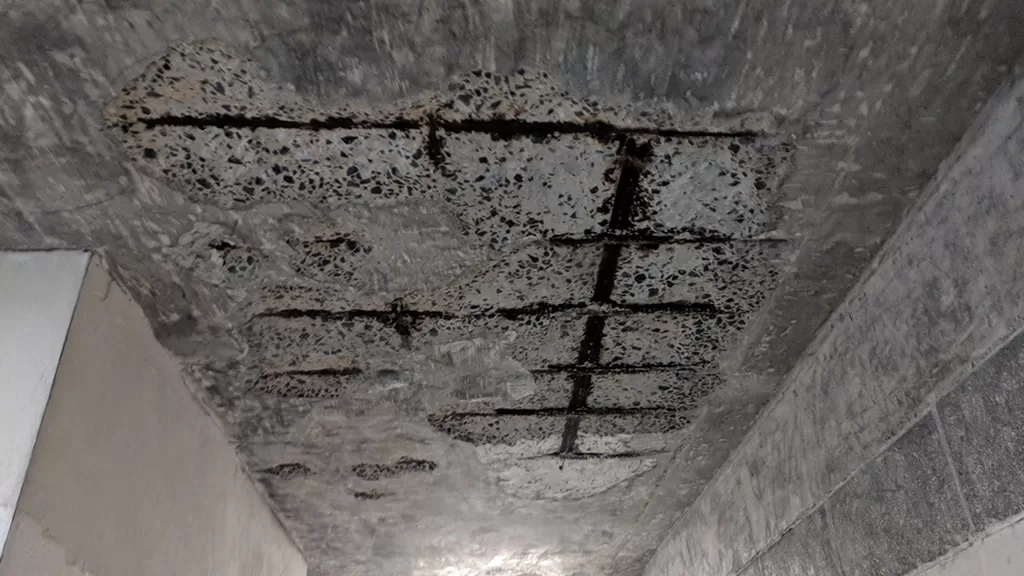
    Shrinkage of concrete refers to the reduction in its volume over time, primarily due to moisture loss and chemical reactions during hydration. This phenomenon can lead to shrinkage cracking of concrete, compromising structural integrity and durability. Understanding what shrinkage of concrete is involves recognizing its various forms, such as drying shrinkage, autogenous shrinkage, and thermal shrinkage. Drying shrinkage occurs as moisture evaporates from the hardened concrete. Autogenous shrinkage results from internal chemical reactions during the hydration process. Thermal shrinkage happens due to temperature variations affecting the concrete mass. Factors influencing shrinkage include water-cement ratio, environmental conditions, and the concrete mix design. Mitigating shrinkage involves proper curing practices. It includes using shrinkage-reducing admixtures. Another method is optimizing mix proportions to minimize water content, thereby reducing the potential for shrinkage cracking.

    Concrete shrinkage is a critical phenomenon in the construction industry. It refers to the reduction in volume of concrete as it undergoes hydration and drying. This dimensional change can lead to cracking, compromising the structural integrity and durability of concrete structures. Engineers, contractors, and stakeholders must understand the causes, types, and preventive measures of concrete shrinkage. This knowledge ensures the longevity and performance of concrete infrastructures. This article is about the types, causes and effects of Concrete shrinkage

    1. What is shrinkage of concrete ?
    2. Types of Concrete Shrinkage
      1. Plastic Shrinkage
      2. Drying Shrinkage
      3. Autogenous Shrinkage
      4. Thermal Shrinkage
      5. Carbonation Shrinkage
    3. Causes of Shrinkage in Concrete
    4. Effects of Concrete Shrinkage
    5. How to Reduce Shrinkage in Concrete
    6. Key Takeaways
    7. FAQs
    8. Conclusion

    What is shrinkage of concrete ?

    Concrete, a composite material composed of cement, aggregates, water, and admixtures, is the backbone of modern construction. Its versatility, strength, and durability make it the material of choice for various structural applications. However, one inherent characteristic of concrete is its tendency to shrink during the curing process. This shrinkage, if not properly managed, can lead to cracks, reducing the lifespan and safety of structures. Therefore, a comprehensive understanding of concrete shrinkage is paramount for effective construction practices.

    Shrinkage in concrete is the decrease in its volume over time. This occurs due to the loss of moisture and the chemical reactions during cement hydration. This volumetric reduction can induce tensile stresses within the concrete matrix. It leads to the formation of cracks, especially when the material is restrained. Cracks are also likely when shrinkage occurs unevenly. The primary factors influencing concrete shrinkage include the water-cement ratio, environmental conditions, and the properties of the constituent materials.

    Types of Concrete Shrinkage

    Concrete shrinkage is a natural phenomenon that affects the durability and structural integrity of concrete over time. It occurs due to moisture loss, chemical reactions, or temperature changes, leading to volume reduction and potential cracking. Understanding the different types of shrinkage is crucial. These types include plastic, drying, autogenous, thermal, and carbonation shrinkage. This knowledge helps in selecting appropriate construction techniques. These techniques minimize shrinkage-related issues and improve concrete performance.

    Plastic Shrinkage

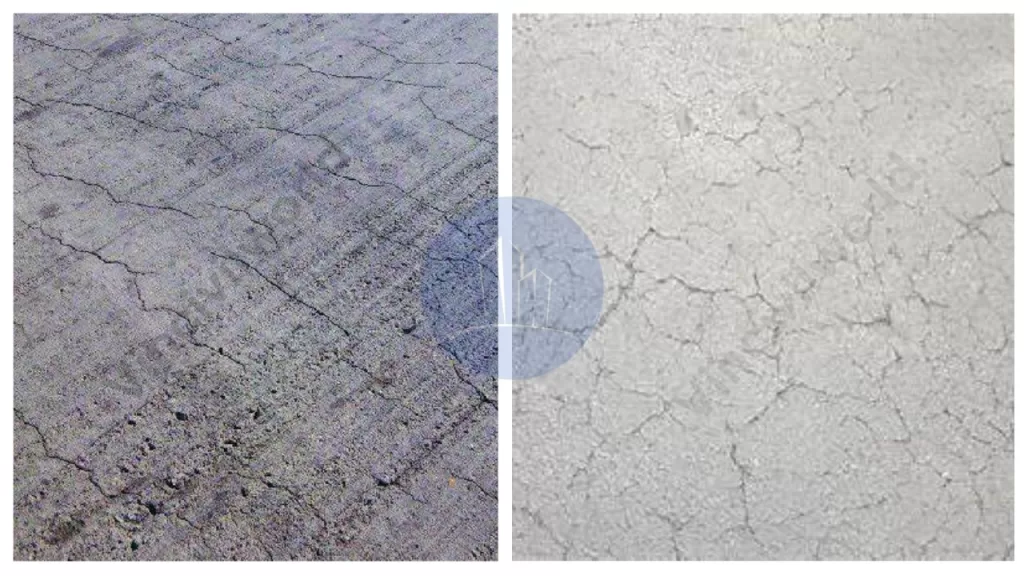
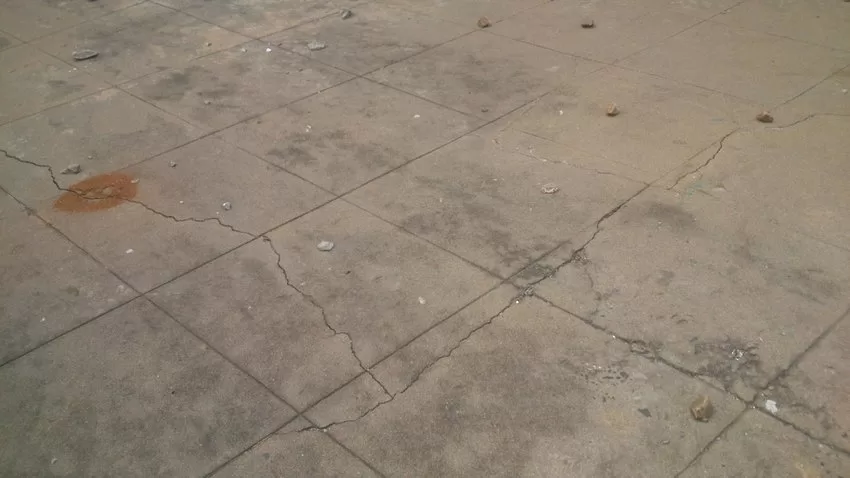
    Plastic shrinkage occurs within the first few hours after concrete placement while it is still in a plastic state. It happens due to rapid evaporation of surface moisture, especially in hot, dry, or windy conditions. This leads to surface tension, causing shrinkage cracks to form. These cracks are often random, shallow, and irregular, primarily appearing on slabs and pavements. Preventing plastic shrinkage involves proper curing, windbreaks, shading, and using evaporation retarders to maintain surface moisture and reduce crack formation.

    Plastic shrinkage of concrete
    Plastic shrinkage

    Drying Shrinkage

    Drying shrinkage occurs as hardened concrete loses moisture to the surrounding environment. This process can last months or even years, depending on humidity levels and concrete properties. As water evaporates, capillary tension develops, causing the concrete to contract, leading to shrinkage cracks. These cracks can compromise durability and structural integrity. To reduce drying shrinkage, engineers use shrinkage-reducing admixtures, proper curing methods, and well-graded aggregates. These methods enhance moisture retention and minimize excessive volume reduction.

    Drying shrinkage of concrete
    Drying Shrinkage (Image Source: ResearchGate)

    Autogenous Shrinkage

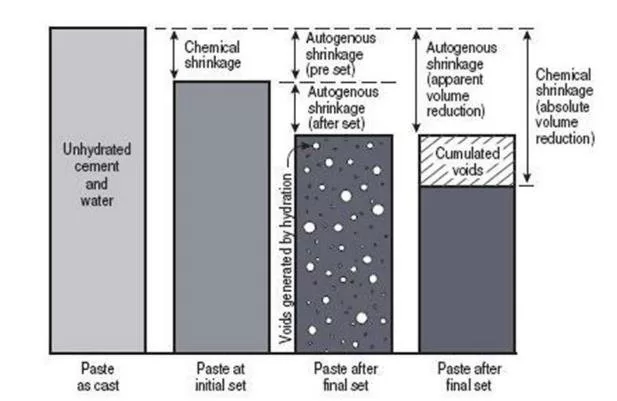
    Autogenous shrinkage is common in high-strength, low water-cement ratio concretes where internal chemical reactions drive volume reduction. Unlike drying shrinkage, it occurs without external moisture loss and results from cement hydration reactions consuming water within the concrete. This type of shrinkage is more pronounced in self-consolidating and high-performance concretes, where fine particles create dense microstructures. To mitigate autogenous shrinkage, internal curing techniques are applied. Techniques such as using lightweight aggregates or superabsorbent polymers help retain water for extended hydration.

    Autogenous Shrinkage
    Autogenous shrinkage (Image Source: ResearchGate)

    Thermal Shrinkage

    Thermal shrinkage is caused by temperature variations during the early curing stages of concrete. Cement hydration generates excess heat, causing the concrete to expand. As it cools, the contraction leads to thermal stress and shrinkage cracks. Large structures, such as bridges and massive foundations, are particularly vulnerable to this effect. To control thermal shrinkage, low-heat cement manages heat dissipation. Temperature-controlled pouring also assists. Insulation methods minimize volume changes, preventing long-term structural issues.

    Thermal

    Carbonation Shrinkage

    Carbonation shrinkage occurs when carbon dioxide (CO₂) from the atmosphere reacts with calcium hydroxide in concrete to form calcium carbonate. This process slightly reduces concrete volume over time and primarily affects thin concrete sections exposed to high CO₂ levels. Although carbonation can increase surface strength, excessive shrinkage can cause microcracking. To limit carbonation shrinkage, proper curing, protective coatings, and low-permeability mixes help slow down CO₂ penetration and maintain durability.

    Carbonation shrinkage
    Carbonation Shrinkage : Structural Guide

    Causes of Shrinkage in Concrete

    Several factors contribute to concrete shrinkage, and understanding these is crucial for implementing effective preventive measures:

    • Water Content: Excessive water in the concrete mix increases the potential for shrinkage. Maintaining appropriate water-cement ratios is critical to reducing this risk.
    • Cement Composition: The type and amount of cement influence shrinkage. High cement content can lead to increased shrinkage due to greater heat of hydration.
    • Environmental Conditions: High temperatures, low humidity, and wind can accelerate moisture evaporation, leading to increased shrinkage.
    • Improper Curing: Inadequate curing can result in rapid moisture loss, causing shrinkage and cracking.
    • Aggregate Properties: The size, type, and grading of aggregates affect the overall shrinkage

    Effects of Concrete Shrinkage

    Shrinkage can have several detrimental effects on structures:

    • Cracking: As concrete shrinks, tensile stresses develop, leading to cracks, especially if the concrete is restrained.
    • Reduced Durability: Cracks allow ingress of harmful substances like water and chlorides, which can lead to reinforcement corrosion and reduced lifespan of the structure.
    • Structural Weakness: Significant shrinkage and cracking can compromise the load-bearing capacity of concrete elements.

    How to Reduce Shrinkage in Concrete

    To reduce shrinkage and its adverse effects, consider the following measures:

    • Use Low Water-Cement Ratio: Reducing the amount of water in the mix decreases the potential for shrinkage. However, this must be balanced with workability requirements.
    • Use of Shrinkage-Reducing Admixtures: Incorporating admixtures can help reduce drying shrinkage and control crack widths.
    • Optimized Mix Design: Selecting appropriate types and proportions of cement and aggregates can influence shrinkage characteristics.
    • Environmental Control: Protecting concrete from extreme weather conditions, such as high temperatures and winds, can prevent rapid moisture loss.

    Key Takeaways

    1. Definition: The volume reduction due to moisture loss and hydration reactions.
    2. Types: Includes plastic, drying, autogenous, thermal, and carbonation shrinkage.
    3. Influencing Factors: Water-cement ratio, environmental conditions, and material properties.
    4. Mitigation: Proper curing, shrinkage-reducing admixtures, and optimized mix designs are essential.
    5. Importance: Effective shrinkage management preserves structural integrity, enhances durability, and ensures sustainable construction practices.

    FAQs

    1. What is concrete shrinkage?
      • It is the reduction in volume of concrete over time due to moisture loss and chemical reactions during cement hydration.
    2. What causes this?
    3. What are the types of concrete shrinkage?
      • The primary types include plastic, drying, autogenous, thermal, and carbonation shrinkage.
    4. How can Concrete shrinkage be minimized?
    5. What effects does concrete structures?
      • Shrinkage can cause cracking, reduce durability, and compromise the structural integrity and load-bearing capacity of concrete elements.

    Conclusion

    Concrete shrinkage involves a reduction in volume over time due to moisture loss. It also results from chemical reactions during hydration. This phenomenon poses a significant challenge for construction professionals. This blog has explored its various forms, including plastic, drying, autogenous, thermal, and carbonation shrinkage. The blog also examined the factors influencing shrinkage, such as water-cement ratio, environmental conditions, and material properties. Effective mitigation through proper curing, shrinkage-reducing admixtures, and optimized mix designs is crucial to prevent cracking and preserve structural integrity. By understanding these dynamics, engineers, contractors, and stakeholders can implement strategies that enhance durability and safety. Proactive management extends the lifespan of concrete structures. It also contributes to more resilient and sustainable construction practices. Ultimately, diligent control of shrinkage secures long-term performance and trust.

    Well Foundation Types – Features and Construction

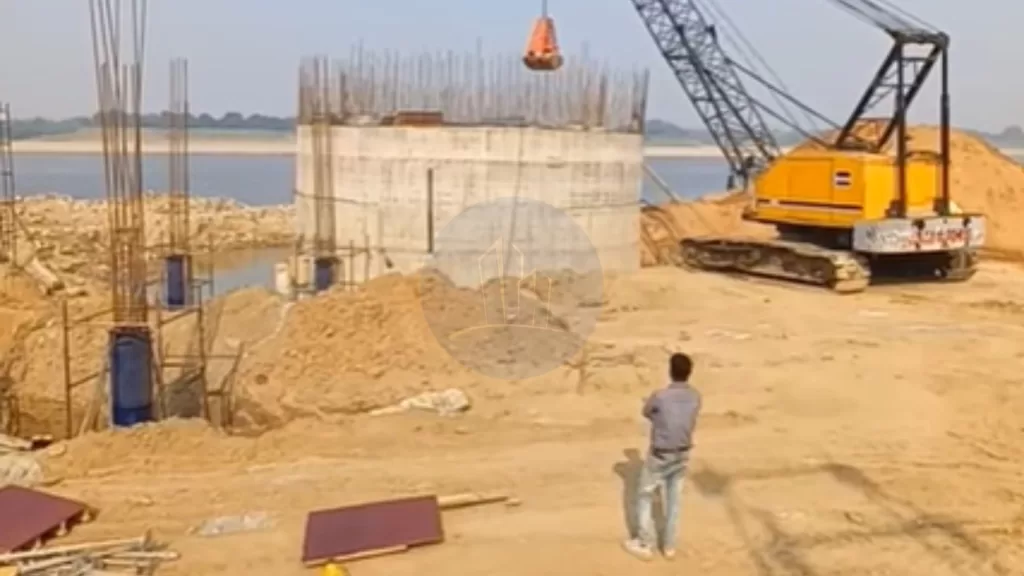
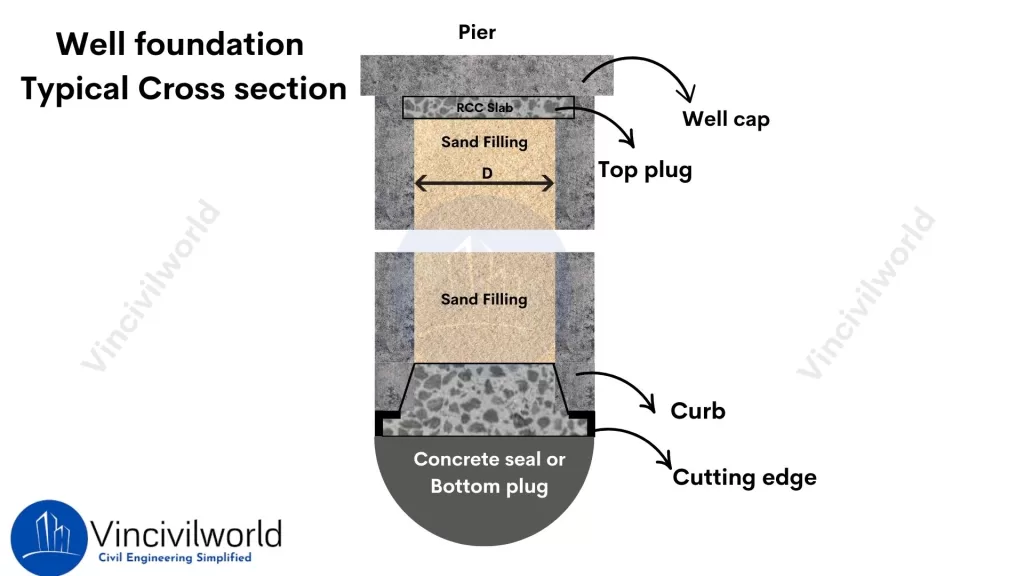
    Well foundation types are essential in civil engineering for structures over water bodies or weak soils. Engineers widely use deep foundations, known as caissons, to support bridge substructures, piers, abutments, and other heavy-load applications. Their ability to transfer loads deep into the ground makes them a preferred choice in deep foundation engineering. The main types of well foundations include circular wells, double-D wells, twin circular wells, and rectangular wells. Each type offers unique advantages in terms of load distribution and construction feasibility. Understanding these types is crucial for selecting the appropriate foundation system for specific project requirements.

    This article provides an in-depth understanding of well foundations, including their types, construction process, design considerations, advantages, and comparisons with other deep foundations.

    1. What is a Well Foundation?
      1. Key Features of Well Foundations types
    2. Types of Well Foundations
      1. Open Caisson (Open Well foundation)
      2. Box Caisson
      3. Pneumatic Caisson
    3. Construction of Well Foundation types
      1. Site Survey and Setting Out of well foundations
      2. Fabrication and Placement of Cutting Edge
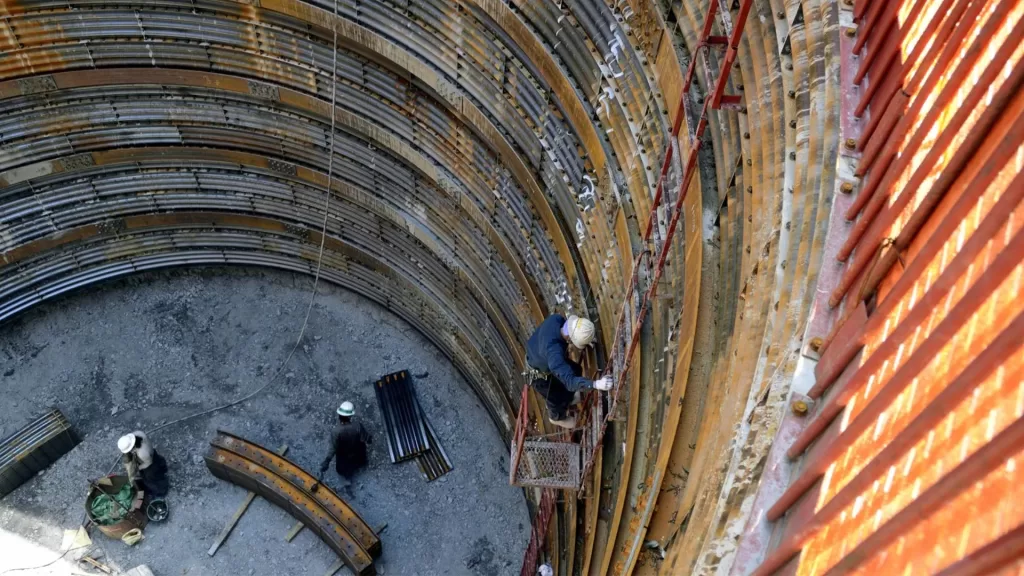
      3. Construction of Well Curb
      4. Sinking of the Well foundation types
    4. Design Considerations for Structural Stability of Well Foundations
    5. Well Foundation types in Bridge Construction
    6. Advantages of Well Foundation types
      1. High Load-Bearing Capacity
      2. Stability in Soft and Loose Soils
      3. Resistance to Scour and Lateral Forces
      4. Greater Depth Achievement
      5. Suitable for Marine and Bridge Construction
      6. Adaptability to Site Conditions
      7. Self-Weight Aids in Sinking Process
      8. No Vibrations During Installation
    7. Disadvantages of Well Foundations
      1. Scouring and Erosion Risks
      2. Not Suitable for Hard Rock Layers
      3. Difficulties in Sinking and Tilting Issues
    8. Well Foundation types vs. Other Deep Foundations
      1. Well Foundation types vs. Pile Foundations
      2. Well Foundations types vs. Raft Foundations
    9. Conclusion

    What is a Well Foundation?

    Well foundation types are crucial in civil engineering, especially for supporting heavy structures like bridges, piers, and abutments over water or loose soils. Engineers design caissons as hollow structures to be sunk into the ground to the desired depth. They design these foundations to withstand substantial vertical and horizontal loads, making them ideal for challenging environments.

    Key Features of Well Foundations types

    • Suitable for heavy axial and lateral loads.
    • Effective in soft soils and waterlogged areas.
    • Resistant to scouring in underwater conditions.
    • Commonly used in bridge substructures, jetties, and transmission towers.

    Understanding the various well foundation types and their applications is essential for selecting the appropriate foundation system for specific project requirements.

    Types of Well Foundations

    Well foundations come in various shapes and designs, each suited to specific conditions and requirements. The primary well foundation types include,

    • Open Caisson
    • Box Caisson
    • Pneumatic Caisson
    Well Foundation Types
    Well foundation types

    Open Caisson (Open Well foundation)

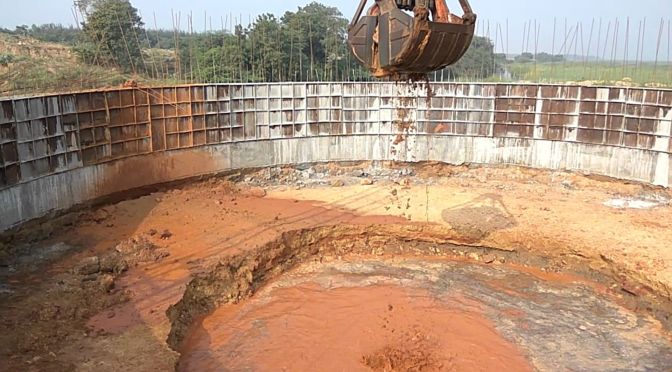
    Engineers design open caissons, also known as open wells, as box-like structures with open tops and bottoms. They sink these structures into the ground by excavating soil from within. This method allows the caisson to reach the desired depth, providing a stable foundation for various construction projects. Once it reaches the desired depth, workers seal the bottom with a concrete plug and fill the structure with concrete to form the foundation.

    Open caissons are particularly suitable for penetrating through water and soft soils to reach a stable stratum. They are economical for deep penetrations. However, during sinking, there is a potential for tilting, which requires careful monitoring and control. Understanding the various well foundation types, including open caissons, is essential for selecting the appropriate foundation system for specific project requirements.

    Well Foundation Types
    Well foundation types ( photo courtesy : Britanica)

    Box Caisson

    A box caisson is a type of well foundation with a closed bottom. Engineers prefabricate it and then float it to the desired location. Once in place, they sink it and fill it with concrete to provide the necessary weight and stability. Box caissons are often used in situations where dewatering is challenging. One advantage of box caissons is good quality control due to prefabrication. However, they are limited to relatively shallow depths and require a level bearing surface.

    Pneumatic Caisson

    Engineers design pneumatic caissons as sealed structures with open bottoms and closed tops. They pump compressed air into the chamber to maintain a higher pressure than the surrounding water, keeping the working area dry and facilitating safe construction activities. This keeps the workspace dry. It allows workers to excavate safely. This method is particularly useful for deep foundations in challenging underwater environments. However, it poses health risks to workers due to the high-pressure conditions, including decompression sickness, commonly known as caisson disease. Symptoms can range from joint and muscle pain to dizziness and, in severe cases, paralysis or death. Therefore, strict safety protocols and monitoring are essential to protect workers during pneumatic caisson operations.

    Construction of Well Foundation types

    The construction of a well foundation types involves several key steps

    well foundation types
    well foundation types

    Site Survey and Setting Out of well foundations

    Accurate layout of the bridge centreline and pier locations is marked using surveying instruments. Reference points are established away from potential settlement zones to ensure precision during construction.

    Fabrication and Placement of Cutting Edge

    The cutting edge, typically made of steel, is fabricated and assembled on-site. It is placed on a levelled and compacted surface, ensuring proper alignment and level.

    Construction of Well Curb

    The well curb, a wedge-shaped reinforced concrete ring beam, is constructed above the cutting edge. This involves setting up inner formwork, fixing reinforcement bars, and pouring concrete
    to form the curb.

    Sinking of the Well foundation types

    Constructing a well foundation involves several key steps to ensure stability and load-bearing capacity.

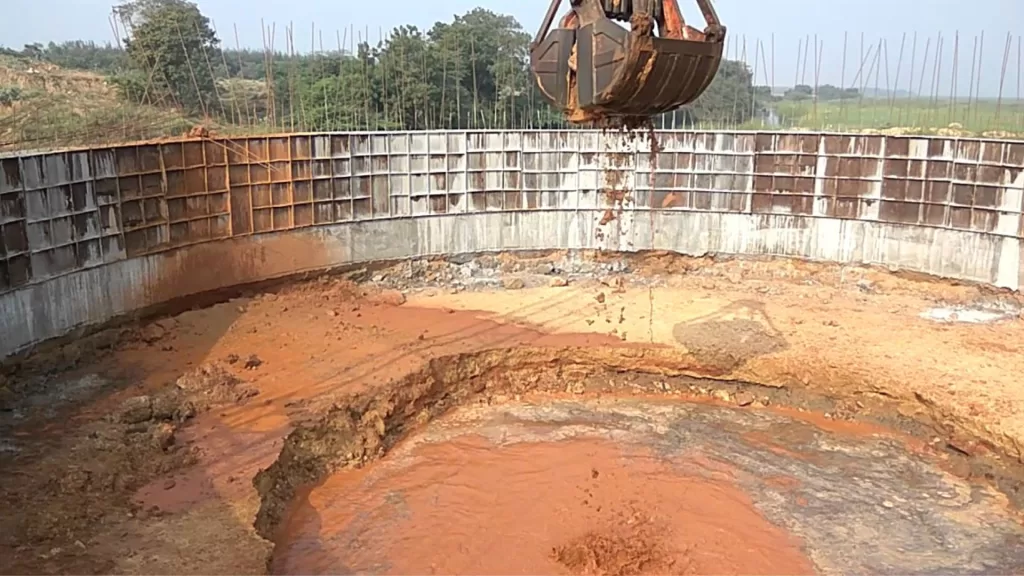
    • Sinking the Well: The process begins by excavating soil from within the shaft, allowing the well to sink under its own weight. To maintain vertical alignment and prevent tilting, engineers monitor and adjust the sinking process carefully.
    • Seating the Well: Upon reaching the desired depth, engineers seat the well foundation into a hard stratum to ensure stability. This may involve additional excavation or dredging to achieve proper seating. In cases where the hard stratum has steep slopes or consists of rocky material, they may employ pneumatic sinking methods to achieve uniform seating.
    • Bottom Plugging: Engineers place a concrete plug at the bottom of the well to seal it and provide a solid base. They achieve this by pouring concrete into the well and allowing it to set. This process ensures the foundation’s stability and prevents water ingress.
    • Sand Filling and Top Plugging: Engineers fill the well with sand up to a certain level to reduce buoyancy and provide additional stability. They then place a top plug of concrete to seal the well. This process ensures the foundation’s stability and prevents water ingress.
    • Construction of Well Cap: Engineers construct a reinforced concrete slab, known as the well cap, on top of the well to distribute the load from the superstructure to the foundation. This cap ensures the stability and integrity of the structure by effectively transferring the superstructure’s weight to the well foundation.
    • Understanding the various well foundation types and their construction processes is essential for selecting the appropriate foundation system for specific project requirements.

    Design Considerations for Structural Stability of Well Foundations

    Designing a well foundation requires careful consideration of various factors to ensure structural stability:

    • Soil Conditions: Engineers conduct thorough geotechnical investigations to assess soil properties, bearing capacity, and the presence of any obstructions. This information guides the design and construction process.
    • Load Analysis: Engineers design the foundation to withstand vertical loads from the superstructure, as well as horizontal forces due to wind, water currents, and seismic activity.
    • Scour Depth: In riverine environments, the potential for scour around the foundation is evaluated, and appropriate measures are taken to prevent undermining.
    • Tilting and Shifting Control: During sinking, continuous monitoring is essential to detect and correct any tilting or shifting of the well to maintain vertical alignment.

    Understanding the various well foundation types and their construction processes is essential for selecting the appropriate foundation system for specific project requirements.

    Well Foundation types in Bridge Construction

    In bridge construction, well foundations are particularly advantageous due to their ability to support heavy loads and resist lateral forces. They are commonly used for:

    • Bridge Piers: Supporting the vertical loads of the bridge deck.
    • Abutments: Providing end support for bridge spans.
    • Navigational Clearances: Allowing for unobstructed waterways beneath bridges.

    The choice of well foundation types in bridge construction depends on several factors. These include soil conditions, water depth, and load requirements. Their robust design ensures durability and stability, even in challenging environments.

    Advantages of Well Foundation types

    Understanding the benefits and limitations of well foundations is important for their effective application: Here are its advantages:

    High Load-Bearing Capacity

    ● Well foundation types can support heavy vertical and lateral loads. This makes them ideal for bridge piers, abutments, and marine structures.
    ● The large base area of the well foundations distributes the load effectively, reducing
    settlement.

    Stability in Soft and Loose Soils

    ● Well foundations are best for riverbeds, sandy soils, and loose deposits. Other deep foundations may not perform well in these conditions.
    ● Ensures safe load transfer even in weak strata by reaching deeper stable layers.

    Resistance to Scour and Lateral Forces

    ● Well foundations types are highly resistant to scour, making them ideal for underwater and
    coastal constructions.
    ● Can withstand lateral forces from water currents, ship impact, earthquakes, and wind
    loads.

    well sinking
    Types of well foundations

    Greater Depth Achievement

    ● Unlike shallow foundations, well foundation types can be sunk to significant depths, ensuring
    proper anchorage in strong soil or rock formations.

    Suitable for Marine and Bridge Construction

    • Frequently used in the construction of offshore platforms, bridge piers, and ports due to their ability to function in waterlogged conditions.
    • Allows construction in deep water without excessive dewatering requirements.

    Adaptability to Site Conditions

    ● Well foundations can be customized in shape and size (circular, rectangular, or elliptical)
    to suit site-specific conditions.
    ● Can be installed in clusters to improve load-bearing capacity.

    Self-Weight Aids in Sinking Process

    ● The weight of the well foundation helps it sink naturally into the soil, reducing the need for extensive excavation.

    No Vibrations During Installation

    ● Unlike pile foundations, which generate vibrations during driving, well foundations can be sunk gradually with minimal disturbance to surrounding structures.

    Now let’s have a look at the demerits of well foundations.

    Disadvantages of Well Foundations

    While well foundation types offer significant advantages, they also come with certain drawbacks that must be considered during the planning and construction process. Here are the key disadvantages:

    Scouring and Erosion Risks

    ● Exposed to water currents: In riverbeds and marine environments, well foundations are
    susceptible to scour (erosion around the foundation), which can weaken structural
    stability.
    ● Requires additional protection: Measures like riprap, concrete aprons, and protective
    barriers must be implemented to minimize scouring, increasing maintenance efforts.

    Not Suitable for Hard Rock Layers

    ● Difficult to penetrate rock: Unlike pile foundations, which can be driven into rock, well
    foundations struggle to sink into hard and rocky strata, limiting their application in such
    terrains.
    ● Alternative deep foundations may be needed: If rock layers are encountered, additional
    excavation or shifting to pile foundations may be required.

    Difficulties in Sinking and Tilting Issues

    ● Uncontrolled tilting: Wells may tilt or shift laterally due to non-uniform soil conditions,
    improper excavation, or external forces such as water currents.
    ● Corrective measures required: Engineers may need to add kentledge (extra weight),
    apply water jets, or remove excess soil to maintain vertical alignment, further
    complicating construction.

    Well Foundation types vs. Other Deep Foundations

    Well Foundation types vs. Pile Foundations

    AspectWell FoundationsPile Foundations
    DefinitionDeep foundations with large hollow structures, typically used in bridge piers and abutments. Deep foundations consisting of slender columns driven or drilled into the ground to transfer loads to deeper, more stable soil layers.
    Load CapacitySuitable for heavy axial and lateral loads; provides a massive foundation. Can support substantial vertical loads; often used in groups to achieve desired capacity.
    Soil ConditionsIdeal for underwater constructions and locations with boulders or obstructions; provides resistance to scouring. Suitable for a variety of soil conditions, including expansive or collapsible soils; advantageous in areas with high water tables.
    Construction CostHigher initial cost due to complex construction processes. More cost-effective with faster installation times.
    DurabilityHigh resistance to scour; well-suited for environments with strong water currents. May require additional protection against scour and corrosion, especially in aggressive environments.

    Well Foundations types vs. Raft Foundations

    FeatureWell FoundationsRaft Foundations
    DepthDeep foundationShallow foundation
    Load DistributionSuitable for heavy loadsUsed for light-to-moderate loads
    ApplicationBest for bridges and marine structuresCommonly used in buildings and basements

    Conclusion

    Well foundations are essential deep foundation systems used for bridges, marine structures, and heavy-load applications. Their unique design and construction process make them an ideal choice for projects requiring high stability and load-bearing capacity. Despite their higher cost and complex installation, they provide long-term durability and resistance to environmental factors.

    Concrete Road Construction: Durability and Efficiency

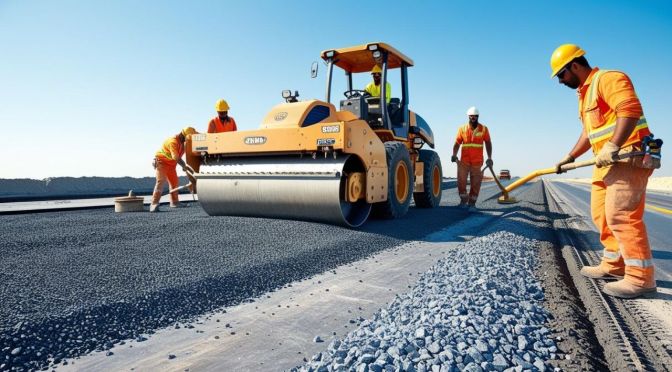
    Concrete road construction involves building durable pavements using cement concrete road techniques, which prioritize strength and longevity. This method uses layered systems called concrete road layers, including subgrade, sub-base, base, and surface layers, to ensure stability and load distribution. Unlike asphalt, road construction concrete offers higher resistance to weather, heavy traffic, and wear, reducing long-term maintenance costs. Concrete for road construction is preferred for its sustainability, as it reflects sunlight, lowering urban heat, and uses recyclable materials. A cement concrete road lasts 30–40 years, outperforming flexible pavements in lifespan and cost-effectiveness. Engineers choose concrete road construction for highways and urban roads due to its minimal upkeep and eco-friendly benefits. By optimizing concrete road layers and material quality, this method delivers safer, smoother, and more reliable infrastructure.

    This article explores concrete road construction, highlighting its layered design, durability, and sustainability. It explains why cement concrete roads outperform asphalt, offering long-lasting, eco-friendly, and cost-effective solutions for modern infrastructure needs.

    1. Structural components of Concrete Road Construction
      1. Subgrade
      2. Sub-base
      3. Base Course
      4. Concrete Slab (Pavement)
    2. Types of Concrete Road Pavements
      1. Jointed Plain Concrete Pavement (JPCP)
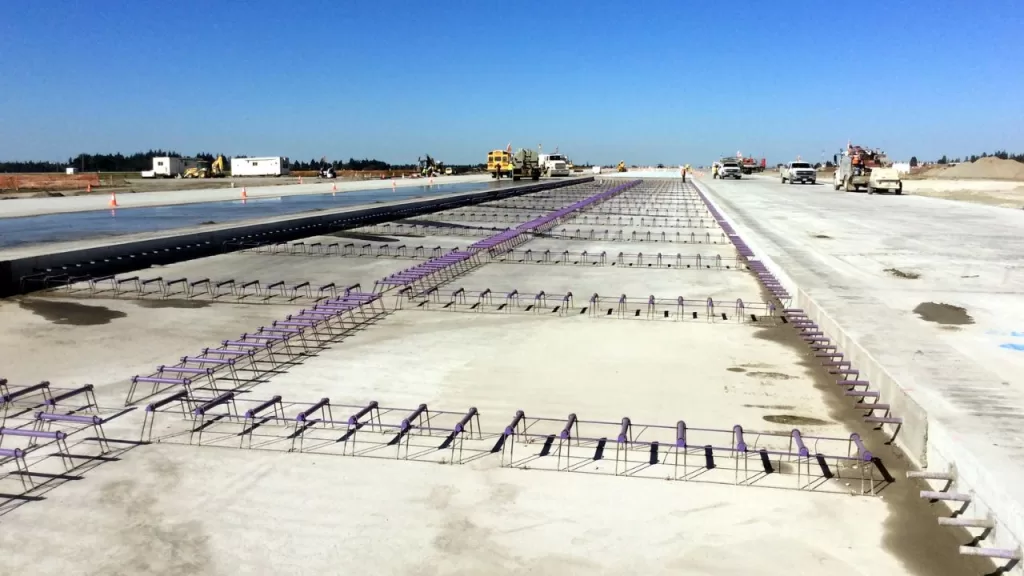
      2. Jointed Reinforced Concrete Pavement (JRCP)
        1. Contraction Joints
        2. Reinforcing Steel
        3. Dowel Bars
        4. Load Transfer Across Cracks
          1. Advantages of JRCP
        5. Disadvantages of JRCP
      3. Continuously Reinforced Concrete Pavement (CRCP)
    3. Advantages of Concrete Roads
    4. Methods of construction of cement concrete roads
      1. Alternate Bay Method
      2. Continuous Bay Method
      3. Expansion Joint and Strip Method
    5. Steps involved in road construction
      1. Preparation of Subgrade
      2. Placement of Formwork
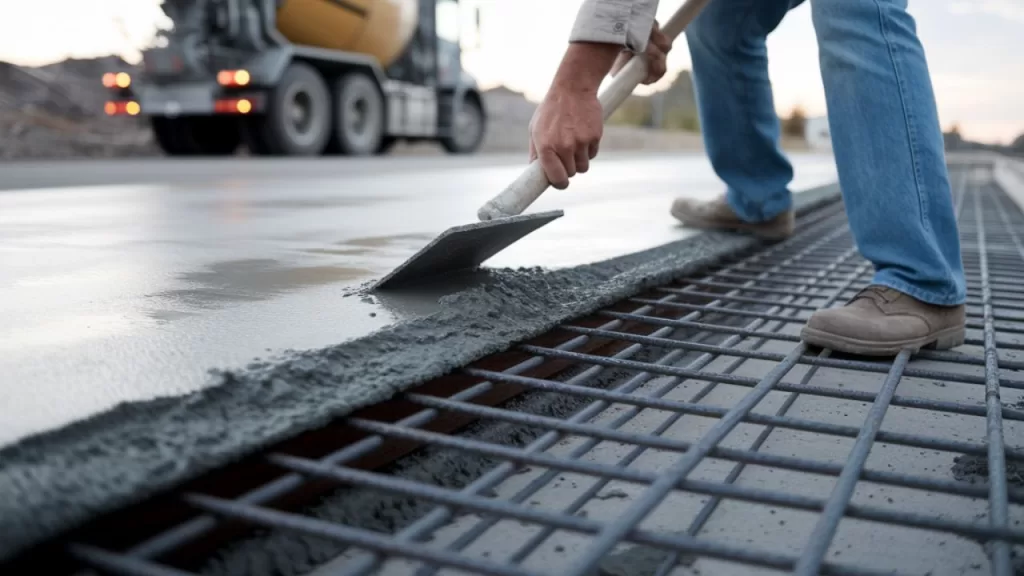
      3. Mixing and Pouring of Concrete
      4. Compaction and Finishing
      5. Curing Process
      6. Joint Cutting and Sealing
    6. Disadvantages of concrete road construction
    7. Maintenance Practices for Concrete Roads
    8. Innovations and Future Trends in Concrete Road Construction
    9. Key Takeaways
    10. Conclusion

    Structural components of Concrete Road Construction

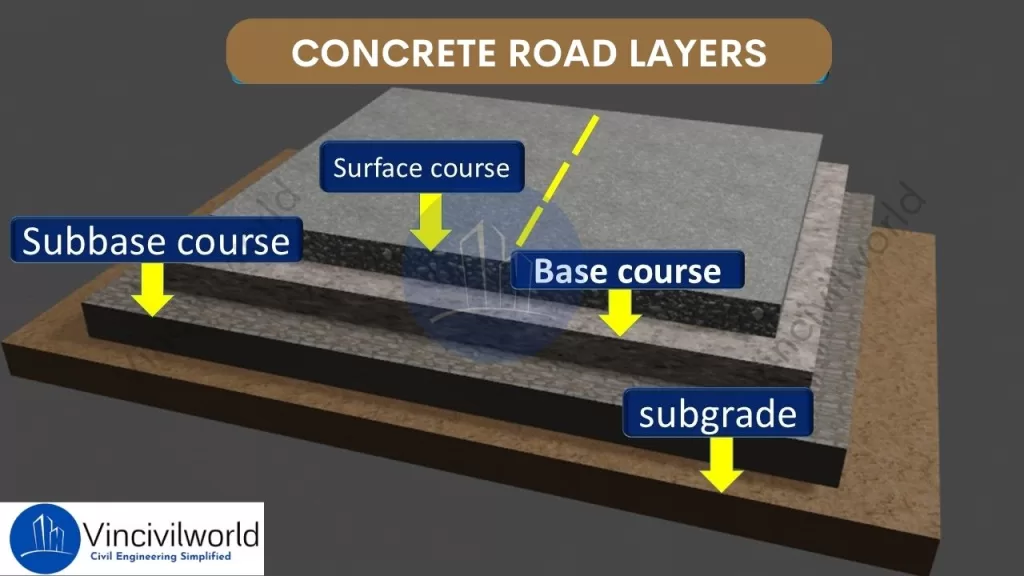
    Concrete road construction relies on a well-structured system of layers to ensure durability and strength. These concrete road layers include the subgrade, sub-base, base course, and concrete slab. Each layer plays a critical role in distributing loads and preventing cracks. Proper road construction concrete techniques ensure the longevity of cement concrete roads, making them ideal for heavy traffic and harsh weather conditions. Let us explain each component in detail.

    Concrete road construction - Layers
    Concrete road construction – Layers

    Subgrade

    Engineers prepare the native soil to support the road structure, forming the subgrade. In concrete road construction, a stable subgrade is essential as it forms the foundation for all subsequent concrete road layers. Proper compaction of the subgrade prevents settlement and provides uniform support for the road construction concrete. A well-prepared subgrade enhances the durability of the cement concrete road by reducing the risk of cracks and deformations.

    Sub-base

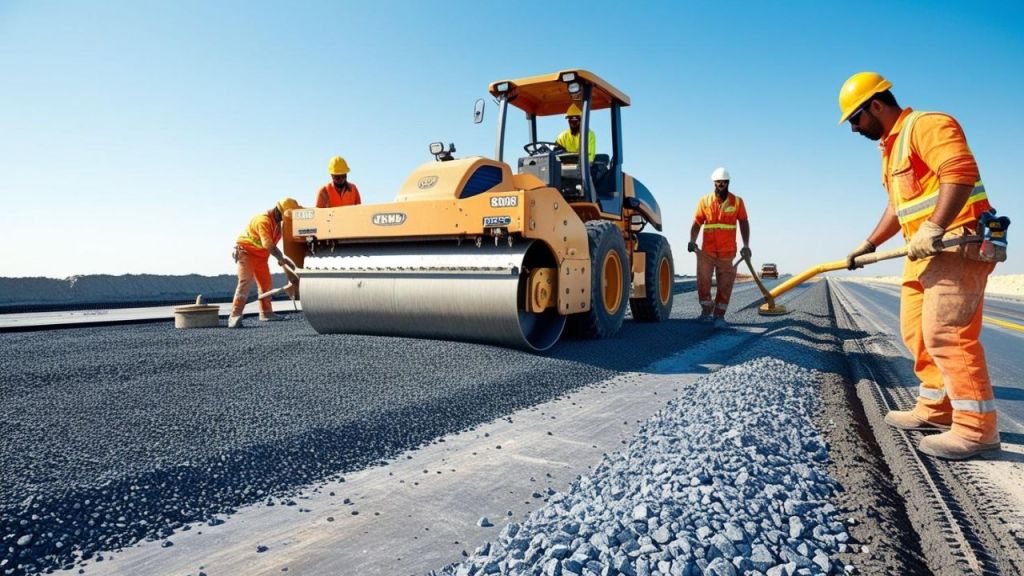
    Positioned above the subgrade, the sub-base layer consists of granular materials like crushed stone or gravel. In concrete road construction, the sub-base serves to distribute loads and provides additional support to the upper concrete road layers. It also acts as a barrier against moisture, protecting the road construction concrete from potential damage. A properly installed sub-base enhances the overall performance of the cement concrete road.

    Road concrete construction - subbase layer

    Base Course

    The base course lies directly beneath the concrete slab in concrete road construction. The base course consists of high-quality aggregates that create a stable platform for the pavement. It effectively transmits the loads from traffic to the underlying concrete road. Additionally, the base course plays a crucial role in enhancing the durability and performance of the pavement structure layers. A well-constructed base course is vital for the structural integrity of the cement concrete road, ensuring longevity and durability.

    Concrete Slab (Pavement)

    The concrete slab, or pavement, is the topmost layer in concrete road construction. This surface layer is made of road construction concrete and is designed to withstand direct traffic loads. The quality of the concrete for road construction used in this layer determines the road’s durability and service life. Proper curing and jointing of the concrete slab are crucial. These practices prevent cracks. They ensure a smooth, long-lasting cement concrete road surface.

    Each of these layers is crucial in concrete road construction. They collectively enhance the pavement’s strength. They also improve its durability and longevity. Moreover, proper design and construction of these concrete road layers are essential to ensuring a high-quality cement concrete road. As a result, the pavement can effectively withstand the demands of heavy traffic. It can also endure varying environmental conditions. This ultimately provides a long-lasting and reliable transportation solution.

    Types of Concrete Road Pavements

    In concrete road construction, selecting the appropriate pavement type is crucial for durability and performance. There are three main types of concrete roads. These are Jointed Plain Concrete Pavement (JPCP), Jointed Reinforced Concrete Pavement (JRCP), and Continuously Reinforced Concrete Pavement (CRCP). Each type utilizes different concrete road layers and reinforcement methods to meet specific engineering requirements.

    Jointed Plain Concrete Pavement (JPCP)

    JPCP is the most commonly used type in concrete road construction. It consists of slabs with transverse joints spaced typically between 15 to 20 feet apart. These joints control cracking without the need for steel reinforcement. Dowel bars are often used to transfer loads across joints, enhancing the performance of the cement concrete road. The simplicity of design and construction makes JPCP a cost-effective choice for many road construction concrete projects.

    Jointed Plain Concrete Pavement (JPCP)
    Jointed Plain Concrete Pavement (JPCP)

    Jointed Reinforced Concrete Pavement (JRCP)

    JRCP incorporates steel reinforcement within the concrete slabs and features longer joint spacing, typically ranging from 30 to 40 feet. As a result, the reinforcement effectively helps control cracking between the joints, thereby maintaining the structural integrity of the pavement. Additionally, dowel bars and tie bars are strategically placed at transverse and longitudinal joints, respectively, to ensure efficient load transfer and proper alignment.

    Moreover, this design is particularly suitable for areas experiencing heavier traffic loads, as it provides enhanced durability and long-term performance. Consequently, JRCP serves as a reliable cement concrete road solution, offering both strength and stability. Ultimately, its combination of reinforcement and optimized joint spacing makes it an excellent choice for modern road infrastructure.

    Jointed Reinforced Concrete Pavement (JRCP)
    Jointed Reinforced Concrete Pavement (JRCP)

    Contraction Joints

    These are intentionally placed joints in the concrete pavement to control where cracks occur. In JRCP, the spacing of transverse joints typically ranges from 25 to 50 feet (7.6 to 15.2 meters). These joints allow the concrete to shrink as it cures, reducing the likelihood of random cracking.

    Reinforcing Steel

    JRCP incorporates reinforcing steel or steel mesh to hold cracks tightly together. While the longer slab lengths in JRCP make cracking inevitable due to concrete’s natural shrinkage and thermal contraction, the reinforcing steel ensures that cracks remain tight and do not widen significantly. This helps maintain the pavement’s structural integrity and load-bearing capacity.

    Dowel Bars

    Dowel bars are used at transverse joints to facilitate load transfer between adjacent slabs. These bars allow for vertical movement while ensuring that loads are effectively transferred across the joint, reducing stress concentrations and preventing faulting (unevenness at the joint).

    Load Transfer Across Cracks

    The reinforcing steel or wire mesh in JRCP not only holds cracks together but also assists in transferring loads across the cracks. This helps distribute traffic loads more evenly, reducing the risk of localized damage and extending the pavement’s service life.

    Advantages of JRCP
    • Crack Control: The combination of joints and reinforcement ensures that cracks are controlled and do not compromise the pavement’s performance.
    • Durability: The use of reinforcing steel and dowel bars enhances the pavement’s ability to withstand heavy traffic and environmental stresses.
    • Load Distribution: Effective load transfer mechanisms reduce the risk of joint faulting and slab cracking.

    Disadvantages of JRCP

    • Cost: The inclusion of reinforcing steel and dowel bars increases material costs. Construction costs also rise compared to simpler pavement types like Jointed Plain Concrete Pavement (JPCP).
    • Maintenance: JRCP is designed to control cracking. However, the presence of reinforcing steel can complicate repairs if the pavement eventually fails.

    In summary, JRCP is a robust pavement design. It uses a combination of contraction joints, reinforcing steel, and dowel bars. These elements manage cracking and ensure effective load transfer. This makes it suitable for roads and highways subject to heavy traffic and environmental stresses.

    Continuously Reinforced Concrete Pavement (CRCP)

    CRCP is the most advanced type in concrete road construction, as it features continuous steel reinforcements throughout the slab. Consequently, this design eliminates transverse joints, making it particularly ideal for high-traffic areas such as highways and airports. Additionally, CRCP uses reinforcement to hold tightly spaced cracks together, thereby creating a smooth and highly durable surface.

    Continuously Reinforced Concrete Pavement (CRCP)
    Continuously Reinforced Concrete Pavement (CRCP)

    Moreover, CRCP concrete road construction is especially suitable for high-traffic areas because it offers superior performance while requiring minimal maintenance. As a result, this construction method ensures long-lasting pavement that can withstand heavy loads and harsh environmental conditions. Ultimately, its combination of strength, durability, and reduced upkeep makes CRCP a preferred choice for modern infrastructure projects.

    CRCP offers exceptional durability and requires minimal maintenance for cement concrete roads. The steel mesh prevents cracks and distributes traffic loads evenly across concrete road layers, ensuring a smooth and long-lasting surface. CRCP uses high-strength road construction concrete to withstand heavy loads and extreme weather conditions. Its seamless design reduces maintenance costs and enhances the performance of concrete road construction, making it a top choice for critical infrastructure projects.

    Choosing the appropriate type of concrete pavement depends on factors such as traffic load, environmental conditions, and budget considerations. Each type offers distinct advantages in concrete road construction, contributing to the development of durable and efficient transportation infrastructure.

    Advantages of Concrete Roads

    Concrete roads offer several advantages over other paving materials:

    • Durability and Longevity:
      Concrete roads are known for their exceptional durability, as they can withstand heavy traffic loads and adverse weather conditions. As a result, they offer a longer service life compared to other road construction materials. Furthermore, this durability ensures lower maintenance costs over time, making concrete roads a cost-effective option for long-term use.
    • Low Maintenance Requirements: Once constructed, concrete roads demand relatively low maintenance. Their resistance to wear and tear reduces the frequency of repairs, making them a cost-effective choice in the long run.
    • Resistance to Weathering and Heavy Loads: Concrete’s high stiffness and negligible wear and tear make it resistant to environmental factors such as water, extreme temperatures, and UV radiation. This resistance helps maintain the structural integrity of the road over time.
    • Improved Fuel Efficiency for Vehicles: Concrete roads are more economical to drive on in terms of fuel consumption, as they reflect light better and provide a smoother surface, contributing to better fuel efficiency for vehicles.

    Methods of construction of cement concrete roads

    Cement concrete roads are constructed through three primary methods, each designed to meet specific project requirements and conditions.

    Alternate Bay Method

    In this approach, the contractor divides the road into alternate bays, typically ranging from 6 to 8 meters in length. They construct the road in these alternate sections, ensuring each bay cures properly before constructing the adjacent bays. This method allows for effective curing and prevents premature construction, ultimately enhancing the quality of the road. This method helps in managing shrinkage and thermal stresses effectively, reducing the likelihood of cracks. However, it requires more time to complete since only alternate sections are worked on at a time. Additionally, during adverse weather conditions, water may collect in the unconstructed bays, potentially causing delays.

    Continuous Bay Method

    Also known as the strip method, this technique involves constructing the entire width of the road continuously without any breaks from one end to the other. Transverse joints, known as dummy joints, are provided at regular intervals (typically around 5 meters) to control cracking by creating planes of weakness. This method ensures a uniform surface and is suitable for projects requiring rapid completion. However, it necessitates careful planning to manage the setting time of concrete and to ensure proper curing across the entire stretch.

    Expansion Joint and Strip Method

    In this method, the engineers incorporate expansion joints at regular intervals to accommodate temperature-induced expansions and contractions. This prevents uncontrolled cracking and ensures the road remains structurally stable over time. By strategically placing these joints, they allow for controlled movement while maintaining the integrity of the pavement.These joints allow the concrete slabs to expand and contract with temperature variations without causing damage to the pavement. This technique is essential for long stretches of pavement, especially in regions experiencing significant temperature fluctuations. Proper placement and construction of these joints are crucial to maintain the structural integrity and longevity of the road.

    Each method offers distinct advantages, and the choice depends on factors such as project scale, environmental conditions, and desired durability.

    Steps involved in road construction

    Constructing a cement concrete road involves several critical steps to ensure durability and longevity. Each phase plays a vital role in achieving a high-quality pavement.

    Preparation of Subgrade

    The subgrade is the native soil layer that serves as the foundation for the road. Preparation involves clearing the site of vegetation, debris, and any unsuitable materials. The soil is then leveled and compacted to achieve the desired density and strength. Proper subgrade preparation ensures uniform support for the pavement, preventing future settlement and distress. In cases where the subgrade soil is weak, stabilization techniques or additional layers may be applied to enhance its load-bearing capacity.

    Placement of Formwork

    Formwork refers to temporary molds used to shape and support the concrete until it hardens. In road construction, workers set sturdy forms along the edges of the proposed pavement to define its boundaries and maintain the desired thickness. They must accurately align and securely anchor these forms to withstand the pressure of the poured concrete. Consequently, proper formwork ensures consistent pavement dimensions and well-formed edges, contributing to the overall structural integrity.

    Mixing and Pouring of Concrete

    Workers prepare concrete by mixing cement, aggregates (such as sand and gravel), water, and any necessary admixtures in specified proportions. They perform this mixing either on-site or at a batching plant. Afterward, they transport the mixed concrete to the site and pour it into the prepared formwork. It’s essential to pour the concrete promptly to prevent premature setting. Consistent mixing and timely pouring ensure a uniform composition, which is crucial for the pavement’s strength and durability

    Compaction and Finishing

    After pouring the concrete, workers must compact it to eliminate air voids and achieve the desired density. They typically use vibrators to ensure the concrete settles properly around any reinforcement and into all corners of the formwork. Following compaction, they level and smooth the surface using tools like screeds and trowels. Proper compaction is crucial, as it enhances the strength and durability of the concrete by removing entrapped air and consolidating the mixture. Finishing may also involve creating surface textures to enhance skid resistance. Proper compaction and finishing are vital for the pavement’s structural performance and surface quality.

    Curing Process

    Curing involves maintaining adequate moisture and temperature conditions to allow the concrete to achieve its intended strength. This process typically lasts for several days and can be accomplished by methods such as covering the surface with wet burlap, applying curing compounds, or using plastic sheeting. Proper curing prevents the concrete from drying too quickly, which can lead to surface cracking and reduced durability. It’s a critical step to ensure the longevity of the pavement.

    Joint Cutting and Sealing

    Once the concrete has gained sufficient strength, joints are cut into the pavement to control cracking caused by temperature changes and shrinkage. These joints are typically spaced at regular intervals and can be of various types, including contraction, expansion, and construction joints. After cutting, workers thoroughly clean the joints and carefully apply appropriate sealants. This process effectively prevents the infiltration of water and debris, which could otherwise compromise the pavement’s integrity. Moreover, proper joint cutting and sealing play a crucial role in maintaining the road’s overall performance while significantly extending its service life.

    Furthermore, each of these steps is essential for constructing a durable and long-lasting cement concrete road. By paying close attention to every phase, from preparation to finishing, workers ensure that the pavement can withstand heavy traffic loads and varying environmental conditions throughout its intended lifespan. Consequently, a well-executed construction process leads to stronger, more resilient roads that require minimal maintenance over time.

    Disadvantages of concrete road construction

    Concrete road construction offers durability and strength, but it also presents several challenges:

    • High Initial Construction Cost: Building concrete roads requires a significant upfront investment. This is due to the cost of materials and skilled labor.
    • Extended Construction Time: The curing process of concrete is time-consuming, leading to longer project durations compared to asphalt roads.
    • Difficulty in Maintenance: Repairing damaged concrete roads can be challenging. Often, it requires replacing entire slabs rather than simple patching.
    • Lower Comfort and Noise Issues: Concrete’s rigidity can result in a noisier and less comfortable driving experience due to its poor shock absorption and higher noise levels.
    • Susceptibility to Cracking: Concrete roads are prone to cracking under heavy loads and temperature variations, which can compromise their structural integrity over time.

    These factors should be carefully considered when planning and implementing concrete road projects.

    Maintenance Practices for Concrete Roads

    Concrete road resurfacing and rehabilitation involve various methods to restore pavement functionality and extend service life:

    • Joint and Crack Sealing: Involves cleaning and filling existing joints and cracks with sealant to prevent water infiltration and debris accumulation, thereby reducing further deterioration.
    • Slab Stabilization: Addresses voids beneath concrete slabs by injecting grout to restore support and prevent faulting or cracking.
    • Diamond Grinding: Removes surface irregularities and restores smoothness by grinding the concrete surface, improving ride quality and skid resistance.
    • Partial-Depth Repair: Targets surface-level distress by removing and replacing the top portion of the slab, addressing issues like spalling.
    • Full-Depth Repair: Involves removing and replacing entire concrete slabs or sections to address severe damage extending through the slab.
    • Load Transfer Restoration: Enhances load distribution across joints by installing dowel bars, improving structural capacity and extending pavement life.
    • Concrete Overlays: Applies a new concrete layer over existing pavement to increase structural capacity and address surface deficiencies.

    Selecting the appropriate method depends on the pavement’s condition, distress types, and project objectives.

    Smart concrete and self-healing materials represent significant advancements in construction technology. Key points include:

    • Self-Sensing Capabilities: Smart concrete can monitor its own structural health. It does so by embedding sensors or conductive materials. This allows it to detect stress or damage in real-time.
    • Self-Healing Mechanisms: Incorporating materials like superabsorbent polymers or specific bacteria enables the concrete to autonomously repair cracks, enhancing durability and reducing maintenance needs.
    • Environmental Benefits: Extending the lifespan of structures and reducing the need for repairs contribute to sustainability in construction.
    • Enhanced Durability: Self-healing properties allow the concrete to recover from internal damage without external intervention, limiting reinforcement corrosion and concrete deterioration.
    • Innovative Additives: The use of carbon nanotubes, mineral admixtures, and shape memory alloys improves the unique properties of smart concrete.

    These innovations aim to create more resilient, sustainable, and low-maintenance infrastructure.

    Key Takeaways

    Concrete road construction offers unparalleled durability and longevity, often lasting 20-40 years, which is two to four times longer than asphalt roads.

    This longevity translates to lower maintenance costs over time, making it a cost-effective choice for modern infrastructure. The typical layered design—comprising subgrade, sub-base, base, and concrete slab—ensures exceptional strength and stability. Although the initial investment is higher compared to asphalt, the long-term savings and environmental benefits make concrete road construction a wise investment. Innovations such as self-healing concrete, which can repair its own cracks, further enhance performance and extend service life.

    Proper curing, jointing, and high-quality materials are critical to success. Despite challenges like cracking and temperature sensitivity, concrete road construction remains a reliable solution for highways, urban roads, and industrial zones, ensuring safe and sustainable travel for decades.

    Conclusion

    Concrete road construction is a cornerstone of durable and sustainable infrastructure. Its ability to withstand heavy traffic, harsh weather, and long-term wear makes it ideal for modern roadways. By optimizing concrete road layers and using high-quality materials, engineers can create pavements that last 30–40 years with minimal maintenance. While challenges like cost and cracking exist, advancements in technology and construction techniques continue to improve its efficiency and performance. Embracing concrete road construction ensures safer, smoother, and more eco-friendly roads, paving the way for resilient and future-ready transportation networks.

    Slipform Shuttering – Types, Techniques Applications

    Slipform shuttering is a continuous construction method. In this method, concrete is poured into a continuously moving formwork. This allows for the seamless creation of vertical structures. This technique, known as slipforming, enables the efficient construction of tall edifices such as silos, chimneys, and core walls in high-rise buildings. By employing slipform formwork, builders can achieve monolithic structures without horizontal joints. This method enhances the overall strength and durability of the construction.

    The slipform formwork construction process involves the gradual and steady upward movement of the formwork system. This movement is synchronized with the setting rate of the concrete. This ensures that as the formwork ascends, the concrete below has gained sufficient strength to support itself. The continuous nature of slipform shuttering not only accelerates the construction timeline but also reduces labor costs and minimizes the need for scaffolding, making it a preferred choice for large-scale vertical constructions.

    The blog will explore the definition and principles of Slipform shuttering, its key components, and the process of slipforming. We will highlight its advantages, common applications, and critical considerations for effective use. Additionally, we will discuss how Slipform formwork construction enhances efficiency and provide insights into best practices for successful implementation.

    1. What is Slipform Shuttering?
      1. Significance and Development
    2. Slipform formwork construction
      1. Continuous Pouring and Synchronized Upward Movement
      2. Importance of Concrete Setting Time
    3. Historical Development of Slipform formwork construction
    4. Key components of slipform system
    5. Types of slipform shuttering
      1. Vertical Slipform
      2. Horizontal Slipform shuttering
      3. Tapered Slipform shuttering
      4. Conical Slipform shuttering
      5. Egg-shaped Slipform
      6. Cantilever Slipform
    6. Advantages of Slipform Formwork Construction
    7. Challenges and disadvantages of Slipform Shuttering
    8. Applications of Slipform shuttering
    9. Advancements in slipform construction
    10. Conclusion

    What is Slipform Shuttering?

    Slipform shuttering is an advanced construction technique. It enables the continuous pouring of concrete for vertical structures like silos, chimneys, and high-rise cores. The method employs slipform formwork construction, where the formwork system moves steadily upward, synchronized with the concrete’s setting time. This ensures seamless, monolithic structures without horizontal joints.

    Significance and Development

    The development of slipforming revolutionized construction by enhancing efficiency and reducing project timelines. This method eliminates the need for scaffolding, minimizes labor costs, and ensures structural integrity. Slipform shuttering has become integral in modern construction. It is especially useful for projects requiring tall, uniform structures. This is due to its ability to streamline processes while maintaining high-quality results.

    Slipform formwork construction

    The slipform formwork construction method basically rely on the following factors

    Slipform formwork construction
    Slipform formwork construction

    Continuous Pouring and Synchronized Upward Movement

    In slipform shuttering, concrete is poured continuously into a moving formwork system, which climbs steadily as the concrete sets. This synchronized upward movement ensures a seamless structure, eliminating horizontal joints and enhancing strength.

    Importance of Concrete Setting Time

    The climbing speed of the formwork is carefully calibrated to match the concrete’s setting time. If the formwork ascends too quickly, the concrete may deform due to insufficient strength. Conversely, if it moves too slowly, delays and uneven surfaces can occur. Maintaining this balance is crucial for structural integrity and efficiency. Proper synchronization is essential. It ensures that the concrete beneath the formwork gains enough strength to support its weight. It also needs to withstand construction loads during the process.

    Historical Development of Slipform formwork construction

    Slipforming has a rich history dating back to the early 20th century. The first slipform systems were primarily used for concrete roads and canals. Over the years, significant technological advancements have led to the development of sophisticated slipform systems that can handle complex structures and challenging environments. Some key milestones in the development of slipforming include:

    • Early 20th Century: The first rudimentary slipform systems were used for road and canal construction.
    • Mid-20th Century: The introduction of hydraulic systems and improved concrete technology paved the way for more efficient and versatile slipform systems.
    • Late 20th Century: The development of computer-controlled slipform systems further enhanced precision and accuracy.
    • 21st Century: Continued advancements in automation, robotics, and material science are leading to even more sophisticated and sustainable slipform systems.

    Key components of slipform system

    In slipform shuttering, several key components work together to facilitate continuous concrete construction:

    • Formwork Panels: These vertical molds shape the concrete as it’s poured, ensuring the desired dimensions and surface finish. As the formwork ascends, the panels move upward at a controlled rate, allowing the structure to rise seamlessly.
    • Jacking Systems: Hydraulic or pneumatic jacks lift the formwork incrementally. They support the formwork, platforms, crew, and withstand the hydrostatic pressure of the fresh concrete. The placement of jacks depends on vertical forces and lateral pressures, ensuring stability during the slipforming process.
    • Working Platforms: These platforms provide safe and accessible areas for workers to perform tasks such as pouring concrete, monitoring alignment, and managing reinforcement. They move in tandem with the formwork, maintaining consistent working conditions.
    • Support Structures: Elements like yokes and whalers distribute loads from the formwork and jacking systems, maintaining structural integrity. Yokes connect the formwork to the jacks, while whalers reinforce the formwork panels, ensuring even pressure distribution.
    • Concrete Placement Equipment: Conveying systems like concrete pumps or chutes ensure continuous concrete delivery to the formwork.
    • Vibration System: Compacts the concrete within the formwork, eliminating air pockets and ensuring a uniform density.

    The cohesive interaction of these components enables the efficient construction of vertical structures. These structures are continuous and without joints. This process enhances both speed and structural integrity.

    Types of slipform shuttering

    Slipform shuttering encompasses several types, each tailored to specific construction needs. The most common types of slipform shuttering types are as follows

    • Vertical slipform shuttering
    • Horizontal Slipform shuttering
    • Tapered slipform
    • Conical slipform
    • Egg shaped slipform
    • Cantilever type

    Vertical Slipform

    Builders use vertical slipform to construct tall structures, such as silos, chimneys, or towers. They employ a moving formwork system that continuously ascends as they pour concrete. Workers gradually raise the formwork using hydraulic jacks, ensuring a smooth and consistent construction process.This method allows for the creation of vertical concrete structures without the need for scaffolding or traditional formwork systems. As the concrete sets, the formwork slips upwards, maintaining a uniform shape. Vertical slipform is efficient for projects requiring rapid construction, offering enhanced safety and reduced labor costs. It also ensures high-quality finishes and precise dimensions, making it suitable for large-scale industrial and infrastructure projects.

    Slipform shuttering /slipforming
    Slipform shuttering /slipforming

    Horizontal Slipform shuttering

    This technique is utilized in constructing horizontal structures such as road pavements and bridge decks. It allows the formwork to move horizontally. This movement enables continuous concrete placement along the structure’s length. Workers use horizontal slipform to create continuous concrete elements such as pavements, curbs, drainage channels, and safety barriers. This method involves the extrusion of concrete in situ, allowing for uninterrupted casting of long sections.

    A specially designed machine has a mold with the required dimensions. It is equipped with vibrators for concrete compaction and moves forward at a controlled rate. The machine powers itself and mounts on wheels or tracks, ensuring stability during operation. As workers pour concrete from the rear of the machine, it becomes self-supporting. The machine follows a prefixed guide wire to achieve the correct line and level. This approach offers advantages such as speed, the ability to produce monolithic structures, and operational economy.

    Horizontal slipform formwork construction
    Horizontal slipform formwork construction

    Tapered Slipform shuttering

    This method is designed for structures with varying cross-sections, such as conical chimneys and cooling towers. It adjusts the formwork dimensions during the slipforming process. This adjustment achieves the desired tapering effect.

    Builders use tapered slipform to create structures with a gradually narrowing shape. Examples include chimneys, cooling towers, and tall industrial structures. They employ movable formwork that adjusts in size as it rises, allowing for a tapered design. Similar to vertical slipform, workers pour concrete continuously as the formwork rises, typically using hydraulic jacks or other lifting mechanisms. Engineers design the formwork carefully to accommodate the structure’s changing cross-section, ensuring a precise and smooth taper.This method offers efficiency in construction, as it reduces the need for complex scaffolding and allows for a seamless, uniform finish. Tapered slipform is ideal for projects requiring strong, stable, and visually appealing tapered structures.

    shuttering
    Tapered construction

    Conical Slipform shuttering

    Builders use conical slipform to construct structures with a conical shape, such as cooling towers or silos. They use a moving formwork that continuously ascends as workers pour concrete. Workers shape the formwork to create a gradual narrowing toward the top. This process forms the cone. Workers raise the formwork using hydraulic jacks or other lifting mechanisms as the concrete cures, ensuring a smooth and consistent structure. This approach is highly efficient, as it eliminates the need for scaffolding and enables continuous, uninterrupted pouring. Conical slipform offers precise control over the shape and finish. It is ideal for large-scale, high-strength structures with conical geometry. It also reduces labor costs and construction time.

    Egg-shaped Slipform

    Engineers use egg-shaped slipform to create structures with an elliptical or egg-like shape. These structures include certain types of silos, industrial towers, and water or wastewater treatment facilities. They utilize specially designed formwork that moves vertically as workers pour concrete continuously. The formwork is shaped to create the unique, rounded profile of the egg shape, gradually narrowing at the top. Workers raise the formwork using hydraulic jacks or other lifting mechanisms, ensuring smooth and consistent construction. Egg-shaped slipform provides benefits like efficient construction with minimal labor, reduced material waste, and precise control over the shape. This technique is particularly suitable for structures requiring unique, aerodynamic designs, offering both functional and aesthetic advantages.

    Egg shaped slipform shuttering
    Egg shaped slip form Image courtesy : https://www.rsb.info/schalungen-schalungssysteme/

    Cantilever Slipform

    This method enables builders to construct structures that extend horizontally beyond their supports. These structures include certain bridge segments. It also allows them to build overhanging elements without the need for additional support scaffolding.

    In cantilever slipform, construction teams use a method to build structures with an overhanging or projecting shape, such as bridges, dams, and tall towers. They gradually move the formwork system upwards while pouring concrete continuously. The structure itself supports the formwork, which extends outward as it rises, creating a cantilever effect. This technique is ideal for projects where workers have limited access to both sides of the structure or when constructing from the top down. Cantilever slipform ensures a precise and smooth finish, with high structural integrity. It reduces the need for scaffolding or external supports, making it an efficient and cost-effective method for large-scale projects that require overhanging sections or complex geometries.

    Cantilever slipforming
    Cantilever slipforming

    Engineers design each type of slipform shuttering to meet specific architectural and structural demands, enhancing construction efficiency and quality.

    Advantages of Slipform Formwork Construction

    Slipform shuttering offers several advantages in construction, making it a preferred method for certain types of structures. Some key benefits include:

    • Speed and Efficiency: Continuous pouring and raising of formwork allow for faster construction, reducing overall project timelines.
    • Cost-Effective: It minimizes labor costs by eliminating the need for scaffolding and extensive formwork, resulting in a more economical process.
    • High Quality: The method provides a smooth, consistent finish with high precision and uniformity in dimensions.
    • Safety: With less reliance on manual labor and scaffolding, slipform offers enhanced safety for workers during construction.
    • Minimal Material Wastage: The continuous nature of the process reduces material waste, making it more environmentally friendly.
    • Reduced Need for Supervision: Automated or semi-automated systems reduce the need for constant supervision, leading to better management of resources.
    • Versatility: Suitable for a variety of structures, including vertical, tapered, conical, and curved shapes, making it adaptable to different project requirements.
    • Monolithic Structures: Slipform allows for the construction of monolithic concrete elements, improving the structural integrity of the finished project.
    • Durability: The seamless construction process ensures strong, durable structures with fewer weak points.
    • Reduced Labor Dependency: The method relies on machinery, reducing the need for large labor forces and improving construction consistency.

    Challenges and disadvantages of Slipform Shuttering

    While slipforming offers numerous advantages, it also presents several challenges that need to be carefully managed to ensure successful implementation.

    • High Initial Setup Costs: The machinery, formwork, and equipment required for slipforming can be costly. This leads to high upfront investments. Such investments may not be feasible for smaller projects.
    • Complexity in Design: Formwork design must be highly precise and adaptable to varying shapes and sizes. Skilled engineering and planning are necessary to meet specific project requirements.
    • Skilled Labor: Skilled operators are crucial for proper alignment. They ensure smooth operation. The availability of experienced personnel is essential for effective slipforming.
    • Concrete Quality Control: Maintaining consistency in concrete mix and quality is vital. Any variation in material quality, mix ratios, or curing methods can negatively impact the structure’s integrity.
    • Weather Conditions: Unfavorable weather, such as heavy rain or freezing temperatures, can disrupt the slipforming process. It can also affect concrete curing. This necessitates careful planning and adjustments.
    • Continuous Supervision: Despite automation, slipforming systems still require constant monitoring to address potential malfunctions or adjustments during the process.
    • Site Access: Limited access to construction sites can make it challenging to transport the necessary machinery and materials.

    By addressing these challenges with proper planning, slipforming can be an efficient construction method. Skilled labor and risk management also contribute to its effectiveness.

    Applications of Slipform shuttering

    Slipform shuttering is a versatile construction technique. It is employed across various industries for its efficiency. It also has the ability to create continuous, seamless structures. Key applications include:

    • High-Rise Building Cores: Slipform is ideal for constructing the core walls of high-rise buildings. It enables rapid and uniform construction of elevator shafts and stairwells.
    • Chimneys and Cooling Towers: The method is extensively used for building tall, tapered structures like chimneys and cooling towers. It ensures consistent quality and structural integrity.
    • Silos and Tanks: Slipform facilitates the construction of large storage silos and tanks. It provides a cost-effective and efficient solution for industries requiring bulk storage.
    • Bridges: Bridge piers and abutments benefit from slipform construction, allowing for continuous pouring and reducing the need for formwork stripping.
    • Roadways and Pavements: In highway construction, slipform is used to build continuous pavements, curbs, and barriers. This technique enhances construction speed. It also improves surface uniformity.
    • Dams: Slipform technology is applied in constructing concrete-faced dams, enabling efficient and continuous pouring of concrete.
    • Water Towers: The technique is employed to construct the walls of water towers, ensuring uniformity and structural strength.
    • Offshore Structures: Slipform is utilized in the construction of offshore platforms and structures, providing a robust and continuous concrete shell.

    These applications highlight the versatility and efficiency of slipform shuttering in modern construction projects.

    Advancements in slipform construction

    Advancements in automation and real-time monitoring have significantly enhanced slipform shuttering processes. Integrating automated systems with real-time concrete monitoring allows for precise adjustments during construction, ensuring optimal curing conditions and structural integrity. By embedding sensors within the concrete, teams can monitor parameters like temperature and strength, enabling timely interventions and reducing delays.

    Additionally, innovations in materials and formwork technology have improved efficiency and safety. Modern formwork systems are designed to be cost-effective, lightweight, reusable, and easy to assemble and dismantle. These advancements contribute to faster construction times and enhanced structural performance.

    Collectively, these developments modernize construction practices by increasing efficiency, reducing costs, and ensuring higher-quality outcomes.

    Conclusion

    Slipform shuttering has revolutionized modern construction by enabling continuous, efficient, and precise building of complex structures. Its key benefits include faster construction timelines and reduced labor costs. It also minimizes material wastage and improves safety by eliminating the need for scaffolding. The method ensures a smooth, uniform finish. It is highly adaptable to various structural shapes. These include high-rise cores, chimneys, silos, cooling towers, bridges, and dams. It is particularly effective for projects requiring repetitive, large-scale concrete pouring. Slipform shuttering reduces manual labor. It optimizes resource use and modernizes construction practices. These improvements make construction practices more cost-effective, environmentally friendly, and precise. Its efficiency and scalability are crucial for meeting the demands of large infrastructure projects in today’s fast-paced construction industry.