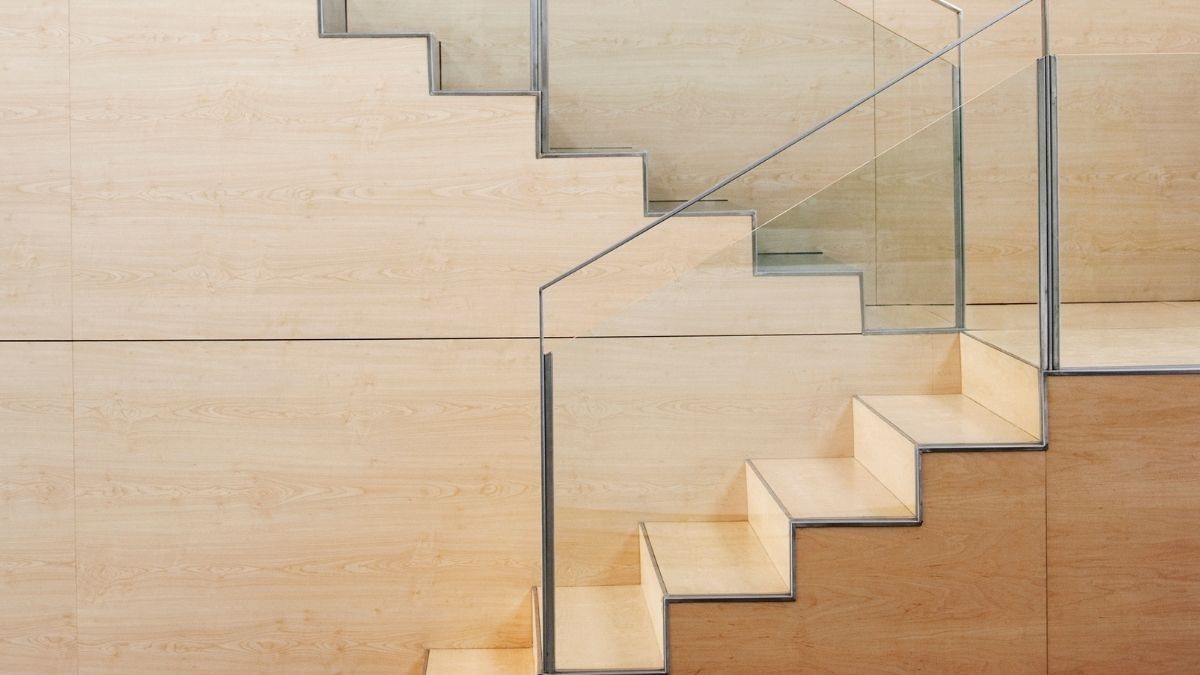
Staircase components are essential parts that work together to create a functional and safe staircase. The stair function is to provide a stable and accessible means of moving between levels.This is achieved through various key staircase components. Treads, the horizontal surfaces, provide a step for the foot, while risers are the vertical elements that define the step height. Stringers serve as the structural supports that hold the treads and risers in place. Handrails offer safety and stability for users, while landings provide resting spaces or changes in direction. Each of these components of a staircase contributes to both the staircase function and the overall design, ensuring comfort, safety, and efficiency.
The components of the staircase must fulfill specific functional requirements. . A staircase is one of the most important structural elements of a building. The primary function of a staircase is to facilitate movement from one floor to another. Staircases can be straight or curved and made of reinforced concrete, steel, wood, stones, and other materials. Staircases enhance the aesthetic appearance of the building in addition to providing access between floors.
It is necessary to understand the various components of the staircase as well as its functions when detailing it. This article discusses the components of a staircase and their functions
The staircase is made of several components and each component is associated with specific functional requirements. Following are the components of a staircase.
Tread – Horizontal Components of the staircase step
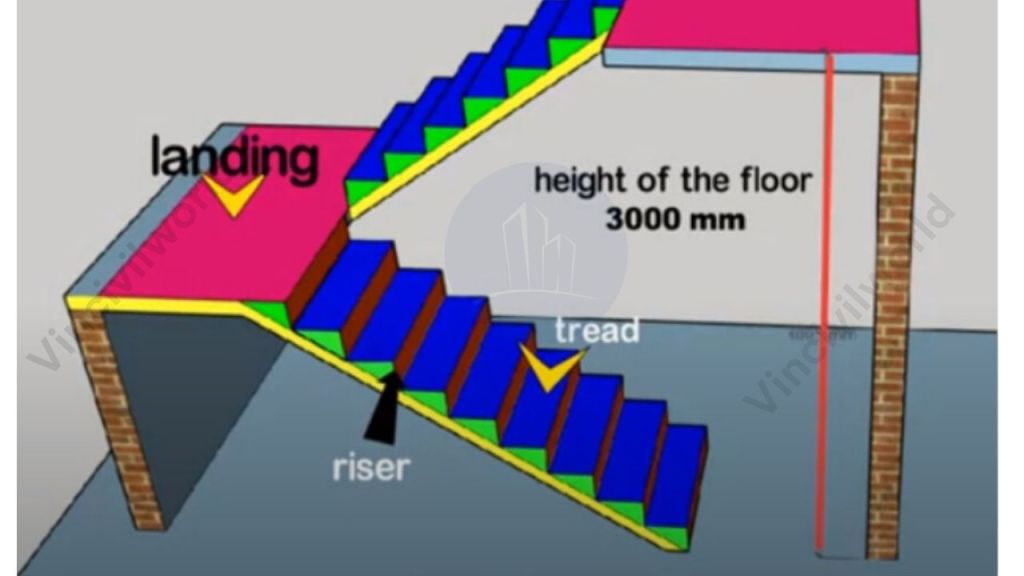
A tread is a major horizontal component of the staircase where we put our feet. The depth of tread is the distance between the staircase’s inner and outer edges. The tread width is the distance along the width of the steps. Generally, the tread of the staircase should be 270 mm in residential buildings and 300 mm in public buildings.
Rise – Vertical components of the staircase step
A rise in a staircase is the vertical component of the staircase step. It serves as a support for the treads. The vertical distance between successive treads is referred to as the rise. Generally, the riser should be 150 mm for public buildings and 190 mm for residential buildings.
Step – Combination of vertical and horizontal components of the staircase
Steps are the combination of treads and risers. Similarly, a pair of risers and tread makes a step. Basically, it is the functional unit of a staircase.
Curtail step
The curtail step is the first step in the staircase. The width of the curtail step can be more than the normal steps. The curtail step is another major components of the staircase which acts as a base for the staircase.
Nosing
The edge of a stair tread that projects out horizontally is known as the nosing. In general, nosing has a rounded edge. However, the length of the nosing should not exceed 1.5″. Basically, nosing enhances the appearance of the staircase. The line of nosing is the imaginary line that connects the nosing. This line runs parallel to the stairwell’s incline.
Flight
Flight is a component of the staircase that consists of a series of steps. Basically, it is the total steps between the two landings. Generally, flights consist of 8 to 10 steps.
Landing – Crucial components of the staircase
Landing is the horizontal space between two flights. It acts as a space to change the direction of the staircase. Generally, the minimum height of the landing should be 7 feet. The width of a landing is the distance between one end to the other end, which is normally equal to the width of the step.
Going
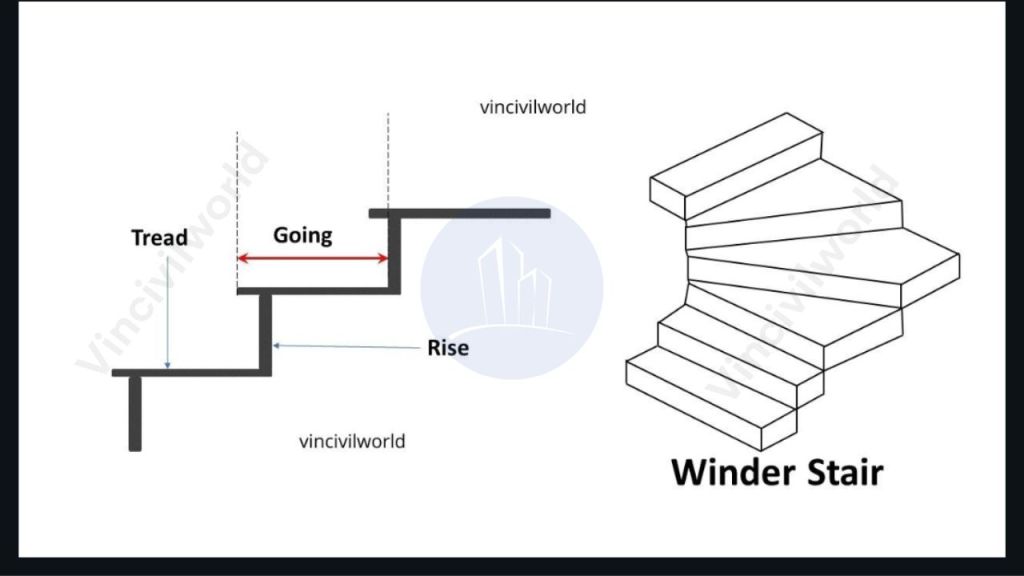
Going is the distance measured from the nosing of successive treads. It is the horizontal distance between the consecutive risers.
Winders
Winders are tapering steps. That is one end of the step is narrower than the other. Likewise, It is a type of step which helps in changing the direction of the staircase. Basically, it acts as a landing. However, Spiral staircases consist of a series of winders.
Railing
The railing is a components of staircase which is used for holding hands. Generally, it is inclined and parallel to the slope of the staircase. Similarly, they act as protective bars. Generally, they are made using timber.
Baluster
The baluster is the vertical component of the handrail. Basically, balusters act as a support for the railing.
Run
The total length of the series of flights including the length of landing is the run of a staircase
Soffit
The bottom part of the staircase component is the soffit. Basically, this place is suitable as a storage area.
Stringer
The components in the staircase which support the risers and treads are the stringer. There are two types of stringers,
Cut or type stringers
Closed or Housed type stringers
They are parallel to the slope of the staircase.
Waist
The staircase is rest on a thick RCC slab. This RCC slab is known as the waist slab. It is perpendicular to the soffit of the staircase.
Conclusion:
In summary, the components of a staircase—such as treads, risers, stringers, handrails, and landings—work together. They ensure functionality, safety, and design coherence. Each element plays a critical role in providing a stable and accessible means of movement between floors. It also enhances the overall aesthetic appeal of the building. Understanding these components is crucial for designing staircases. It is also vital for constructing staircases. These components ensure that staircases meet safety standards. They also suit the specific needs of the building. By considering the design and function of each component, designers can create staircases that are practical. They can also enhance the architectural beauty of a space.
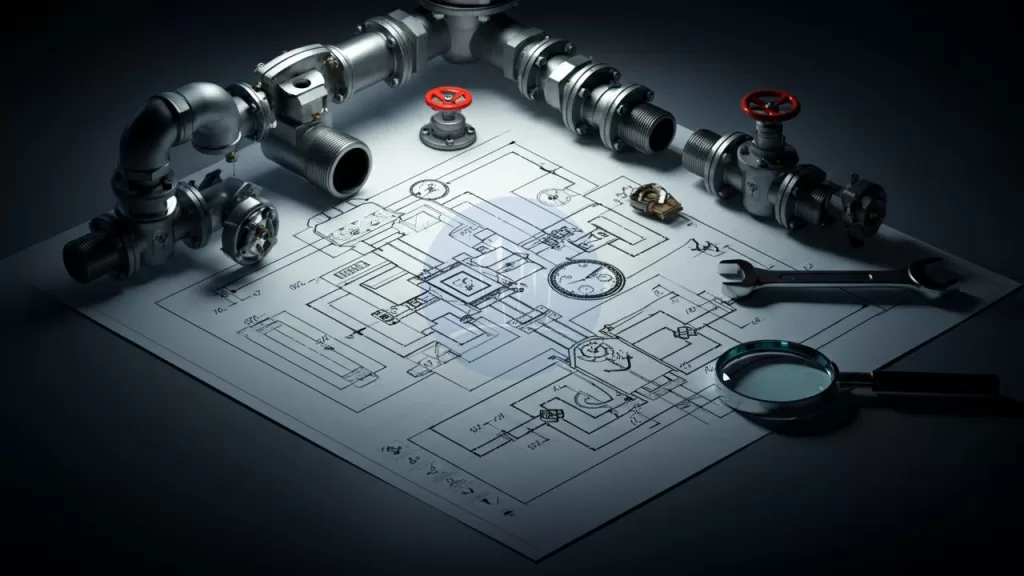
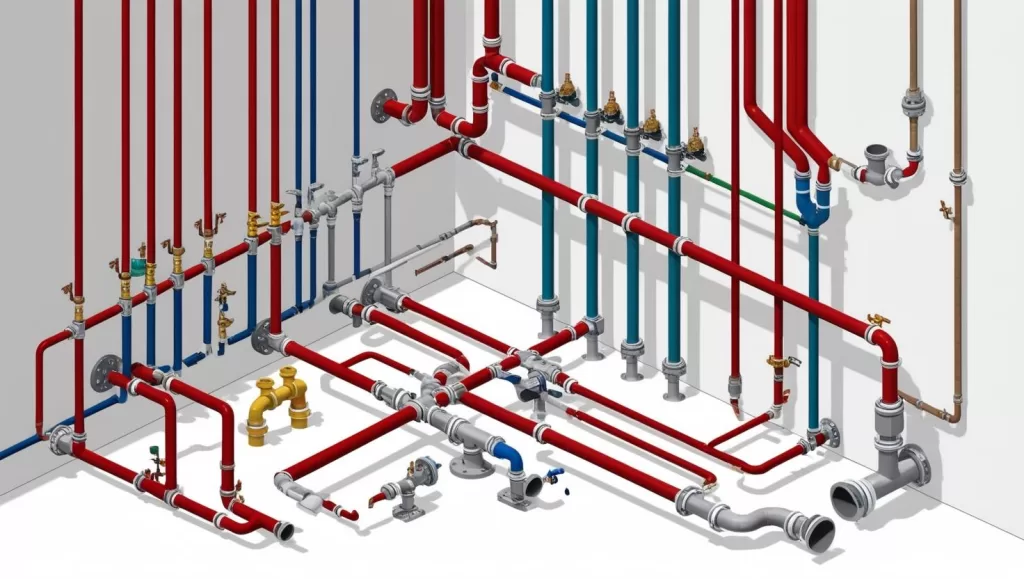
Piping isometric drawings are essential tools in the engineering and construction of pipeline systems. They provide a three-dimensional representation of pipelines in a two-dimensional format, helping engineers visualize complex layouts. Unlike other drawing styles, piping isometric drawings depict the height, width, and depth of the pipeline. This depiction allows for precise planning and communication among project teams. These drawings are critical for pipeline fabrication and ensure that installations align with design specifications.
In this article, we will explore piping isometric drawing symbols. We will also cover isometric pipe drawing symbols and how to read isometric piping drawings. Understanding these symbols and techniques is crucial for accurate and effective pipeline design and construction.
Piping isometric drawings are crucial in pipeline design, providing 3D representations in a 2D format. They simplify complex layouts, enhance visualization, and ensure accurate fabrication with standardized symbols and clear details.
Piping isometric drawing symbols
Key features of isometric drawings for piping include:
A 30-degree angle projection for all axes to show depth.
Use of Standardized Symbols: Incorporates symbols for pipes, valves, elbows, and fittings, ensuring consistency and ease of understanding.
Precise Dimensions: Includes detailed measurements and angles, aiding accurate fabrication and assembly.
Annotations and Notes: Offers material specifications, pipe sizes, weldinginstructions, and operational details.
Flow Direction Indicators: Utilizes arrows and markings to show the flow direction of fluids within the pipeline.
Simplified Layout Interpretation: Easier to read compared to other technical drawings, helping teams visualize complex configurations.
Fabrication-Friendly Design: Acts as a guide for manufacturers, reducing errors and material wastage.
Compliance: Ensures adherence to design and construction standards, supporting effective project execution.
Inclusion of key elements such as piping symbols for isometric drawings, directional arrows, and dimension lines. These features make isometric drawings of pipelines a preferred choice for complex projects.
Importance of Isometric View in Piping
The isometric view in piping is a visual representation technique. It shows all three dimensions length, width, and height—at equal scales. This unique perspective simplifies complex pipeline layouts, making it easier for engineers to interpret designs accurately. Isometric views provide a clear and comprehensive depiction of the pipeline geometry. This clarity allows engineers to identify potential design challenges or conflicts before construction begins. This visualization method enhances communication among project teams. It ensures that intricate systems are easier to comprehend. This approach ultimately saves time and reduces errors in fabrication and installation processes. The isometric view in piping plays a vital role in streamlining project execution and improving overall design accuracy.
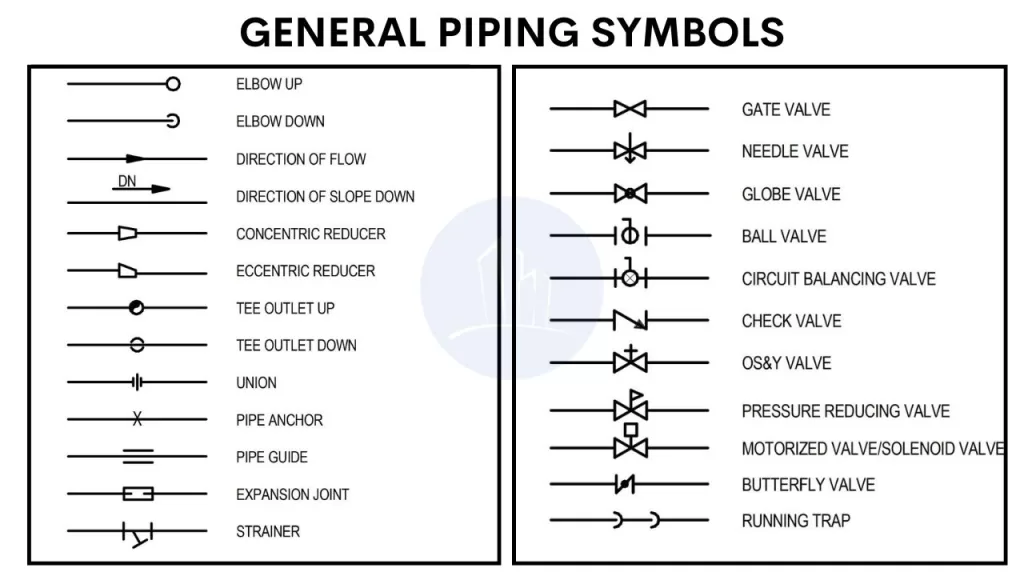
Piping isometric drawing symbols act as a universal language for engineers and fabricators.
Piping isometric drawings represent three-dimensional pipeline systems on a 2D plane. They offer a clear understanding of complex pipe routing across multiple planes. These drawings use single-line representations of pipe centerlines to measure dimensions. They incorporate symbols for components like valves, flanges, reducers, and welds. Common symbols include:
Isometric drawing for piping
Valves: Represented by geometric shapes such as circles or rectangles with annotations.
Flanges: Depicted as two parallel lines intersecting the pipe.
Reducers: Indicated by a tapered line connecting different pipe diameters.
Elbows: Shown with angular bends.
How to Read Piping Isometric Drawings
Understanding isometric pipe fittings drawings is crucial when handling complex pipeline systems. These drawings offer a three-dimensional visualization of piping layouts on a two-dimensional surface. They aid engineers, designers, and operators in effective planning and execution. A standard 30-degree angle is applied to the axes, which ensures equal foreshortening of length, width, and height.
This creates a proportional and clear perspective. This approach provides precise information about pipe routes, dimensions, and connection details. It makes it easier to analyze and implement designs. Additionally, it minimizes errors during construction or maintenance. Mastery of isometric pipe fittings drawings enhances efficiency and communication among all stakeholders in pipeline projects.
Representation of pipe fittings drawings
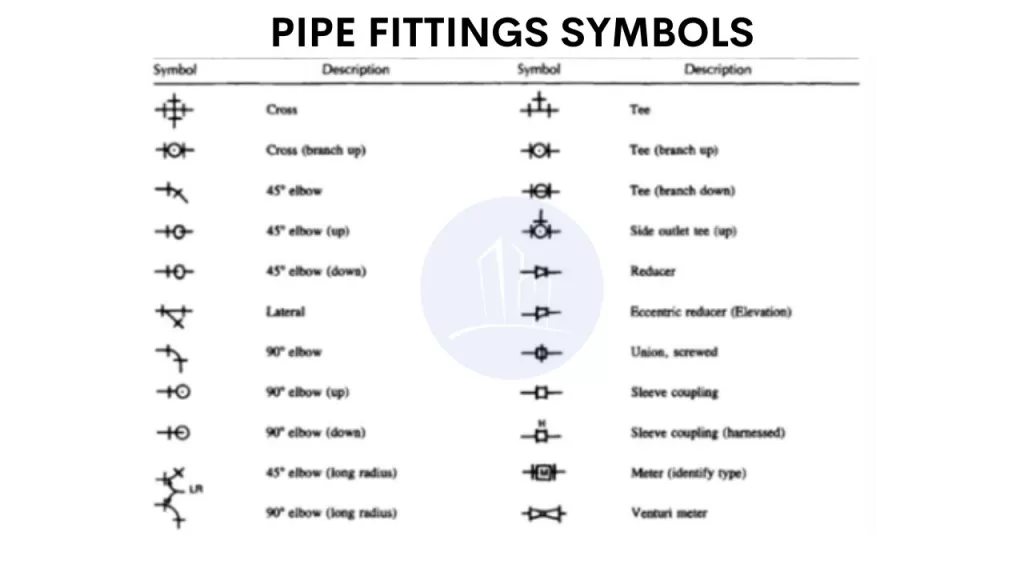
Piping isometric drawings use standardized symbols to represent different pipe fittings and components. These symbols convey critical information about the type, size, and orientation of pipes, valves, and other equipment. Recognizing these symbols is essential for accurately interpreting the layout and functionality of the piping system depicted in the drawing.
Piping isometric drawing symbols
Representation of pipe fittings and pipe materials
Piping isometric drawings specify the material of the pipes, such as carbon steel, stainless steel, copper, or PVC. This information is crucial for understanding the system’s properties and requirements.
In piping isometric drawings, pipes are represented as single lines to simplify the layout. These lines include key information such as pipe size, material, and specification. Arrows indicate flow direction, while symbols represent fittings, valves, and connections. The drawings maintain a 30-degree angle for clarity and accurate visualization.
Representation of pipe fittings in piping isometric drawings
Each fitting is represented by a unique symbol on the isometric drawing. This allows you to quickly identify the components. You can also see their orientation within the system.
Pipe fittings drawings
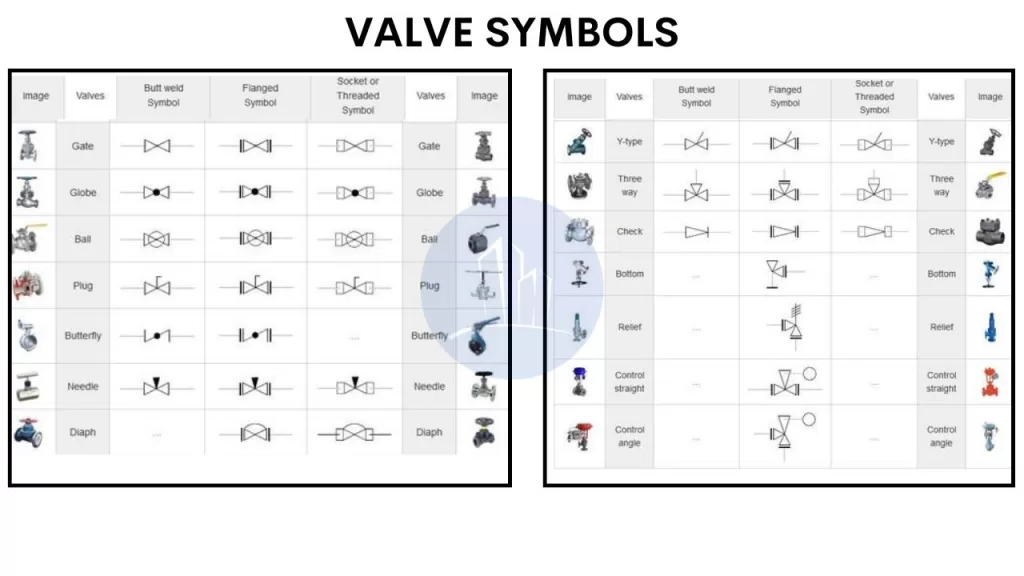
Valve Symbols
Piping isometric drawings use standardized symbols to represent different types of valves, such as ball, gate, and globe valves. These symbols are typically color-coded to distinguish the valve type.
Pipe fittings drawings -Valves
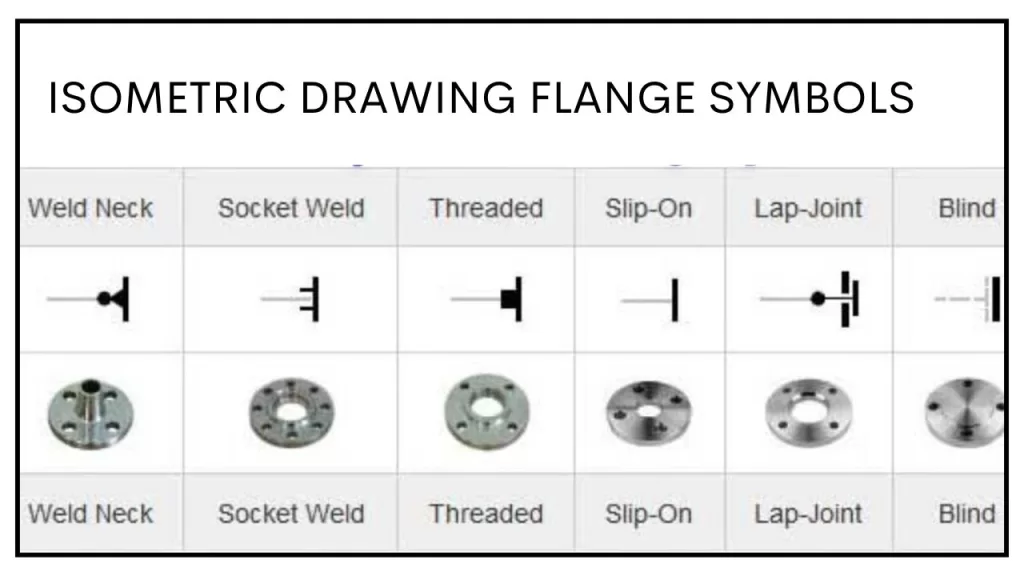
Flanges symbols
Flange symbols in piping isometric drawings represent the connection points between pipes or pipe and equipment. These symbols vary based on flange type.
Piping isometric drawing symbols (Flanges)
Instrument Symbols
Instruments like pressure gauges, thermometers, and flow meters are also depicted using standardized symbols in isometric drawings. These help identify the location and type of instrumentation along the piping system.
Instruments
Applications of Isometric Drawings in Piping Systems
Piping layout drawings provide critical information essential for designing and constructing pipeline systems. Here’s what can be obtained from them:
Pipe Routing: Exact pathways of pipes, including elevations and orientations.
Equipment Locations: Placement of machinery and fixtures in relation to the piping system.
Material Specifications: Details about pipe materials, insulation, and coatings.
Dimensions: Measurements of pipe lengths, offsets, and distances between components.
Fittings and Connections: Types of joints, flanges, and fittings required.
Support Systems: Locations and types of pipe supports, hangers, and anchors.
Flow Direction: Indicated by arrows to ensure proper operation.
Valves and Instruments: Placement and specifications of valves, gauges, and control devices.
Safety Features: Emergency shut-off systems and pressure-relief valves.
Compliance Data: Adherence to standards, codes, and regulations.
This ensures accuracy and efficiency in pipeline installation and maintenance.
Annotations and Labels in Piping Layout Drawings
Pipe Size and Material: Specifies the diameter and material (e.g., steel, PVC) for each pipe, ensuring compatibility.
Flow Direction: Uses arrows to indicate the direction of fluid or gas flow within the system.
Equipment Tags: Labels machinery and equipment with unique identifiers for easy referencing.
Elevation Indicators: Highlights the height or depth of pipes, critical for alignment.
Connection Details: Annotates welds, flanges, or threaded connections for assembly.
Valve Types and Numbers: Identifies valve locations, types (e.g., gate, globe), and tag numbers for functionality.
Support Annotations: Labels pipe supports, hangers, or brackets with their specifications.
Insulation and Coating: Notes areas requiring thermal insulation or corrosion-resistant coatings.
Instrument Tags: Marks sensors, gauges, and monitoring instruments with unique labels.
Safety Instructions: Includes warnings, emergency shutoff points, and safety compliance notes.
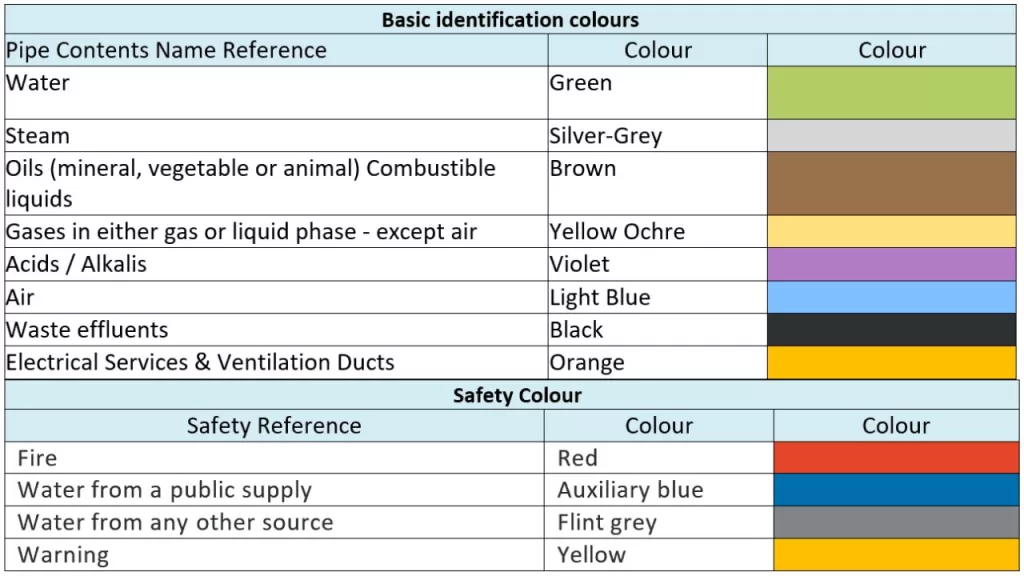
Color Code in Piping Systems
Color coding in piping systems is a standardized method to identify the contents of pipelines for safety and operational efficiency. It aids in quick recognition during maintenance and emergencies.
color codes
Fluid Type Identification: Different colors represent various fluids like water, steam, oil, or gases.
Hazard Awareness: Highlights dangerous contents, such as flammable or toxic substances.
Directional Arrows: Used alongside color codes to indicate the flow direction.
Compliance Standards: Adheres to codes like ANSI/ASME A13.1 or ISO standards for global consistency.
Maintenance Assistance: Simplifies troubleshooting by providing instant recognition of pipeline contents and purpose.
A well-read piping isometric drawing minimizes errors in pipeline fabrication and installation.
Applications of Isometric Drawings in Piping Systems
Isometric drawings are vital for designing, installing, and maintaining piping systems, providing comprehensive details about dimensions, layout, and materials in a three-dimensional perspective.
Applications
Design Visualization: Offers a clear 3D view of piping layouts, simplifying complex designs.
Installation: Guides field teams on accurate pipe placements and alignment.
Material Estimation: Lists materials required for efficient planning and procurement.
Maintenance and Repair: Identifies pipe locations and connections for quick repairs.
Conflict Resolution: Highlights spatial clashes to prevent on-site issues.
Compliance: Ensures designs meet safety and engineering standards.
Steps to Create Isometric Drawings for Piping
Creating isometric drawings for piping involves several key steps to ensure precision. Start by preparing the piping layout, including all components like valves, elbows, tees, and pumps. Set up the isometric grid at the required scale, using a 30-degree angle to represent the three dimensions. Define pipe diameters to mark the size of each pipe accurately. Next, plot the piping components, including pipe runs, fittings, and equipment, using the grid. Add details like material types, flow direction, and any additional specifications. Finally, review and validate the drawing for accuracy, ensuring it aligns with the engineering design.
Various software tools can streamline this process. AutoCAD is great for both 2D and 3D piping designs with isoplane settings. Revit, used in BIM-based designs, generates detailed isometric views and integrates with other data. Tools like SolidWorks, SmartPlant 3D, and MicroStation enhance 3D modeling, offering automation and flexibility for efficient, accurate isometric piping designs.
Common Challenges in Isometric Piping Drawings
Challenges in isometric drawings for pipelines include:
Scaling Issues: Misinterpretation of dimensions is common when scaling the drawing. Accurate scaling is crucial to ensure that components fit as designed in the real-world installation.
Symbol Miscommunication: Incorrect or inconsistent use of isometric pipe drawing symbols can lead to errors. Adhering to industry standards ensures clarity and prevents confusion during the construction or maintenance stages.
Complexity in Detailing: Representing multiple components such as valves, joints, and fittings in a three-dimensional system can be overwhelming, requiring careful attention to maintain accuracy and detail.
Alignment and Layout: Improper alignment of pipes and components can disrupt the flow of the design and cause potential installation issues.
Comparison of Isometric and Orthographic Drawings
The Piping isometric drawings and orthographic drawings serve different purposes:
Isometric Drawings: Provide a 3D perspective, showing depth, width, and height in a single view, ideal for visualizing complex systems.
Orthographic Drawings: Focus on individual planes (top, side, front), giving precise measurements for construction but lacking the 3D perspective.
Complex Layouts:Isometric views in piping offer superior clarity and help in understanding the spatial arrangement of components.
Piping Isometric Drawing Standards and Guidelines
International Standards:
ISO 128-30:2017 – This standard outlines the general principles for creating isometric drawings. It includes the use of a 30-degree angle for projections. These projections represent three-dimensional objects on a two-dimensional plane. It ensures uniformity across industries and geographical boundaries.
ASME Y14.5-2009 – The American Society of Mechanical Engineers (ASME) standard provides guidelines on dimensional tolerances, including isometric drawings. It also covers how to represent pipe sizes, materials, and flow directions.
ANSI/ASME B31.3 – This standard for Process Piping explains how isometric drawings should accurately represent the piping system. It includes component layout and material specifications. Additionally, it standardizes symbols for valves, flanges, and fittings.
ISO 5457:2012 – This specifies the size of drawings. It includes the standard sheet size used for isometric drawings. This ensures they are universally recognizable and maintain clarity.
Indian Standards:
IS 696:1972 – The Indian Standard for Engineering Drawing lays the foundation for isometric projections. It also standardizes the use of symbols for different components like valves, elbows, and flanges. It is consistent with international practices in dimensioning and symbol representation.
IS 10701:1983 – This standard applies to the design and drafting of piping systems. It offers specific guidelines for the representation of isometric drawings. It also includes material codes and component alignment.
IS 1235:1982 – This standard focuses on the quality of engineering drawings. It establishes conventions for piping isometric drawings, including scale and symbol usage. These conventions ensure clear communication in the installation and maintenance of piping systems
By adhering to these standards, designers and engineers can create isometric drawings that are clear and standardized. These drawings are easily interpretable across regions and industries.
Three Main Rules in Isometric Drawing
In isometric drawing, three main rules ensure accuracy and clarity:
30-Degree Angle: The drawing is created using a 30-degree angle to show all three dimensions (length, width, and height) equally foreshortened.
Equal Scaling: All axes should be scaled equally to maintain proportionality and prevent distortion.
Straight Lines: Maintain straight lines for pipes and components, ensuring accurate measurements and preventing confusion.
These rules help in creating precise, easy-to-read representations of three-dimensional systems on a two-dimensional plane.
Key Takeaways: Piping Isometric Drawings and Symbols
Essential for Piping: Isometric drawings provide a 3D representation of complex pipeline systems on a 2D plane, showing height, width, and depth for precise planning and communication.
Standardized Symbols: These drawings use universally recognized symbols for components like valves, flanges, and fittings, ensuring clarity and consistency in interpretation.
Simplified Visualization: The isometric view simplifies complex layouts, aiding engineers and project teams in visualizing and understanding intricate pipeline configurations.
Fabrication and Installation Guidance: Precise dimensions, annotations, and material specifications in isometric drawings guide accurate fabrication and installation processes. This reduces errors and ensures compliance with design requirements.
Effective Communication: Piping isometric drawings facilitate clear communication among engineers, fabricators, and installers, ensuring accurate execution and minimizing potential conflicts.
Standards and Guidelines: Adhering to international and national standards ensures the quality, consistency, and universal interpretability of isometric drawings.
Conclusion
Piping isometric drawings play a critical role in the design, installation, and maintenance of piping systems. Their 3D representation ensures clarity, making complex piping layouts easier to understand and execute. By incorporating standardized symbols for fittings, flanges, and instrumentation, these drawings effectively communicate critical design details. Understanding annotations, color codes, and material representations further enhances their utility. Comparing isometric to orthographic views underscores the unique advantages of each in project execution. Adhering to established standards and guidelines enhances the value of isometric drawings. This adherence ensures precision and efficiency in piping projects across industries. Mastery of these drawings empowers engineers and technicians to streamline workflows, minimize errors, and achieve successful project outcomes.
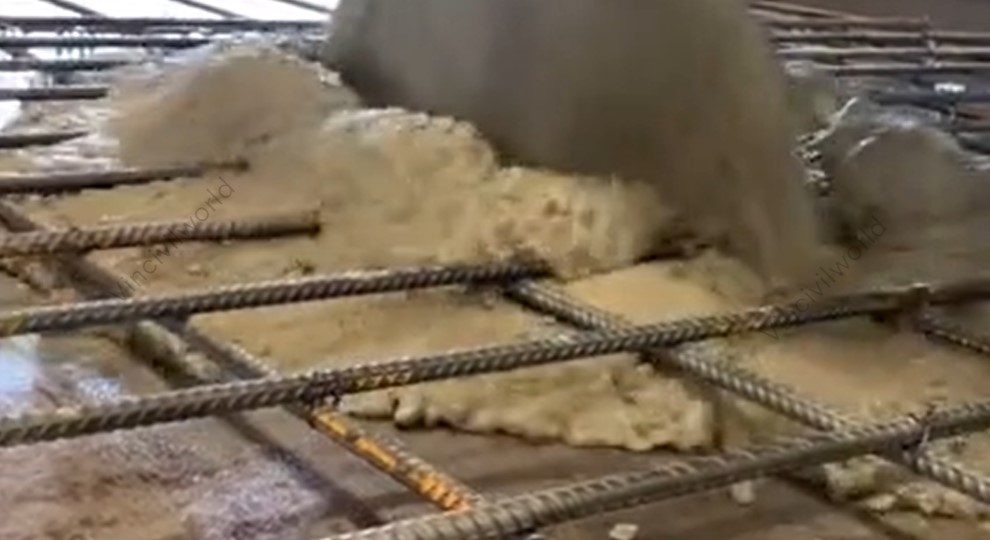
Self-Compacting Concrete (SCC) flows effortlessly and fills complex formwork without requiring external vibration, thanks to its advanced mix design. But what is Self Compacting Concrete? It’s a high-performance concrete that uses a blend of cement, aggregates, and superplasticizers to achieve its self-leveling and self-consolidating properties.
The advantages of SCC are significant. Self Compacting Concrete simplifies placement and improves workability. It reduces the need for manual vibration and thereby cuts labor costs and lowers the risk of defects like honeycombing. This makes SCC ideal for intricate and congested structures such as high-rise buildings, bridges, and underground constructions.
The application of Self-Compacting Concrete enhances construction efficiency by ensuring uniform compaction and a high-quality finish. SCC is a game-changer in concrete technology. Self Compacting concrete provides robust solutions for demanding construction scenarios. It also improves overall structural performance and cost-effectiveness. In this article we are will go through the definition , characteristics, advantages , mix design etc of Self compacting concrete (SCC).
Definition and Characteristics of Self-Compacting Concrete (SCC)
Self-Compacting Concrete (SCC) is a high-performance concrete that doesn’t require external vibration for placement. So, what is Self-Compacting Concrete? This type of concrete flows and consolidates under its own weight, effortlessly filling complex forms and tight spaces.
SCC is known for several distinctive properties:
High Flowability: It spreads and fills molds and congested areas with ease.
Low Viscosity: This allows SCC to flow around obstacles and through narrow openings without segregating.
High Passing Ability: It moves smoothly through narrow openings and congested areas.
Excellent Cohesiveness: SCC maintains a homogeneous mixture, preventing segregation.
Self-Consolidation: It eliminates the need for external vibration, reducing noise and labor during placement.
These characteristics make SCC ideal for various applications. The use of Self-Compacting Concrete improves placement efficiency. It also enhances quality control. These benefits lead to reduced labor costs and greater structural integrity.
Self Compacting Concrete
Advantages of Self-Compacting Concrete
The main advantages of Self Compacting Concrete are..
Improved Workability
Self-compacting concrete offers superior workability, eliminating the need for vibration. This significantly reduces labor costs and time required for placement, particularly in complex and congested areas.
Enhanced Durability
The homogenous nature of self-compacting concrete results in a denser and more durable structure. Its ability to fill intricate molds and intricate shapes without voids ensures optimal strength and longevity.
Reduced Labor Requirements
Due to its self-consolidating properties, self-compacting concrete requires less manual intervention, reducing labor needs and potential errors. This translates into cost savings and faster construction schedules.
Improved Surface Finish
Self-compacting concrete eliminates the need for vibration, resulting in a smoother and more uniform surface finish. This is particularly beneficial for exposed concrete structures, where aesthetics are crucial.
Self Compacting Concrete – Ingredients and Mix design
The composition of self-compacting concrete (SCC) is carefully tailored to achieve its unique properties. It involves a precise combination of aggregates, cement, water, and chemical admixtures. The key to SCC’s success lies in the optimal proportioning of these ingredients, ensuring a balanced mix that is highly flowable, stable, and resistant to segregation.
Aggregates
SCC utilizes a well-graded aggregate blend, typically consisting of fine and coarse aggregates. Fine aggregates, such as sand, provide cohesion and fill the voids between coarse aggregates, which provide strength and stability. The grading of aggregates plays a crucial role in ensuring a homogeneous mix that flows smoothly without segregating.
Cement
The type and amount of cement used in SCC are crucial for achieving the desired strength and workability. However, high-quality cement is preferred for SCC. It often has a high fineness and low setting time. This ensures rapid strength development and prevents early setting.
Water
The water content is carefully controlled in SCC to achieve the desired slump flow and prevent excessive bleeding. Insufficient water can lead to a stiff mix, while excessive water can lead to segregation and a reduction in strength.
Chemical Admixtures
SCC typically incorporates various chemical admixtures to enhance its properties and ensure proper performance. These admixtures can include superplasticizers to improve flowability. They also reduce water content. Viscosity-modifying agents control the mix’s consistency. Air-entraining agents enhance freeze-thaw resistance.
Mineral Admixtures :Different mineral admixtures used in self-compacting concrete (SCC) contribute various properties, thereby enhancing its performance based on specific requirements
Ground Granulated Blast Furnace Slag (GGBS): Improves the rheological properties, making SCC more flowable and easier to place.
Fly Ash: Fills internal voids, reducing pores, which enhances the quality and durability of SCC structures.
Silica Fumes: Increases the mechanical properties, leading to stronger SCC structures with higher resistance.
Stone Powder: Enhances the powder content, improving the overall mix and cohesiveness of SCC.
Determining the appropriate Mix Design for self compacting concrete requires a detailed process. It involves careful consideration of the project’s specific requirements. These requirements include the target strength, flowability, and durability. The self compacting concrete mix design is typically based on laboratory testing. Simulation ensures that the SCC meets the desired performance criteria. The mix proportions are often adjusted. Variations in the properties of the materials used are considered. Environmental conditions during placement are also taken into account.
Performance parameters of self-compacting concrete (SCC)
Performance parameters of self-compacting concrete (SCC) include flowability and passing ability. Segregation resistance and setting time are also essential. They are crucial for optimal quality and efficiency. Let us go through in detail.
Flowability and Passing
Viscosity and Segregation Resistance
Flowability and Passing Ability of Self Compacted Concrete
Both are key parameters in evaluating self-compacting concrete (SCC). Flowability refers to the concrete’s ability to flow smoothly under its own weight, filling formwork without segregation. Passing ability measures the concrete’s capacity to move through narrow openings and congested reinforcement without obstruction. These properties ensure that SCC fills the formwork uniformly, creating a dense structure.
Self Compacting Concrete
Factors such as rheological properties, particle size distribution, and admixtures influence both flowability and passing ability. Standardized tests such as the L-box and V-funnel tests assess these qualities. The L-box test measures the concrete’s ability to flow horizontally through a restricted area. The V-funnel test evaluates how quickly the concrete passes through a vertical funnel.
Optimizing these properties ensures a smooth flow, producing a durable, homogenous concrete structure with improved strength and performance.
Viscosity and Segregation Resistance
Viscosity in self-compacting concrete (SCC) is crucial for its flowability and homogeneity during placement. SCC’s high viscosity helps prevent segregation, where heavier aggregates settle, weakening the mixture. Segregation resistance is another key aspect. Segregation resistance means SCC can resist the separation of components. These components include cement paste, aggregates, and water during transport and placement.
Viscosity ensures the mixture stays stable and uniform, resulting in a durable structure. Factors influencing SCC’s viscosity include admixture type and dosage, water-to-cement ratio, aggregate size and shape, and temperature. Proper control of these factors is essential for achieving optimal viscosity and segregation resistance.
Testing methods like the slump flow, V-funnel, and L-box tests assess SCC’s viscosity and segregation resistance. These tests provide critical insights into the concrete’s flow characteristics and suitability for specific applications.
Testing Methods and relevant standards for Self-Compacting Concrete
Testing methods for self-compacting concrete (SCC) ensure that the concrete meets the required performance parameters for flowability, cohesiveness, and stability. Both Indian and international codes provide guidelines for these tests to ensure consistent quality and performance. Here’s an overview of the key testing methods and relevant codes.
Testing methods are crucial for ensuring the quality and performance of self-compacting concrete (SCC). These tests evaluate various properties of SCC, including its flowability, passing ability, viscosity, segregation resistance, and compressive strength.
V-Funnel Test
The most common test for flowability is the V-funnel test. It measures the time it takes for a predetermined amount of concrete to flow through a V-shaped funnel. This test assesses the concrete’s ability to spread easily and fill complex shapes.
Indian Standard: IS 9103: 1999
International Standard: JIS A 1128 (Japan)
V- Funnel Test for SCC
L-Box Test
The L-box test assesses the passing ability of SCC, measuring its capacity to flow through narrow openings and congested areas. This test involves placing the concrete in a box with a horizontal opening. The next step is measuring the time it takes for the concrete to pass through.
Indian Standard: No specific standard; often aligned with international practices.International Standard: EN 12350-10 (Europe)
J -Ring Test
To evaluate the viscosity of SCC, the J-ring test is often employed. In this test, the concrete is placed in a J-shaped ring. The time it takes for a portion of the concrete to settle to the bottom is then measured. This test helps determine the concrete’s resistance to flow and its ability to maintain its shape.
International Standard: EN 12350-12 (Europe)
Finally, the compressive strength test assesses the concrete’s load-bearing capacity. This test involves subjecting a concrete cylinder to a compressive force until it fails. The resulting compressive strength value indicates the concrete’s ability to withstand external pressures.
Testing methods for self-compacting concrete are critical to ensure it performs as expected in various applications. Practitioners should adhere to both Indian and international codes, such as those from IS, ASTM, JIS, and EN. This adherence ensures SCC meets the required standards for flowability, cohesiveness, and structural integrity.
Application Areas of Self-Compacting Concrete
1. Complex Structures
Self-compacting concrete excels in intricate structures with congested reinforcement. It is ideal for columns with dense rebar arrangements. It also works well for precast elements with complex geometries. It can flow and fill the formwork without vibration. This ability significantly reduces the risk of voids and defects. It ensures high-quality concrete in these challenging applications.
2. Thin-walled Structures
Self-compacting concrete is ideal for thin-walled structures, such as precast walls, panels, and beams. It eliminates the need for excessive vibration, which can damage these delicate elements. The concrete’s ability to flow evenly and compact itself ensures uniform thickness and prevents cracking or delamination.
Self Compacting Concrete
3. Large-scale Projects
Large-scale infrastructure projects, such as bridges, dams, and tunnels, benefit greatly from the efficiency and effectiveness of self-compacting concrete. Its high flowability allows for rapid placement, reducing downtime and accelerating construction schedules. Additionally, it minimizes labor requirements, leading to cost savings and enhanced productivity.
4. Repair and Rehabilitation
Self-compacting concrete plays a crucial role in the repair and rehabilitation of existing structures. Its ability to penetrate cracks and fill voids effectively ensures durable and long-lasting repairs. It is especially valuable for restoring concrete structures damaged by wear and tear. Environmental factors or seismic events also cause damage.
Placement and Finishing Techniques of Self Compacting Concrete
Placing and finishing self-compacting concrete (SCC) requires specific techniques due to its unique properties. Unlike conventional concrete, SCC’s high flowability and self-compacting nature necessitate careful handling and finishing methods to achieve optimal results.
The placement of SCC typically involves pumping or conveying the concrete directly into the formwork. This process minimizes segregation and ensures uniform distribution of the concrete mixture. In some cases, placing SCC using a crane or a bucket is also possible. However, it’s crucial to avoid dropping the concrete from a height as this can lead to segregation and air entrainment.
Finishing SCC requires specialized techniques to achieve a smooth and even surface. Due to the concrete’s high flowability, traditional troweling and screeding methods are less effective. Instead, vibrators commonly consolidate the concrete and eliminate air bubbles. Specialized finishing tools, such as vibrating screeds, are also available to achieve a smooth and consistent finish.
The use of vibrating screeds helps to compact the concrete. It removes air voids, leading to a smooth and even surface finish.
In some cases, achieving the desired surface finish may require a combination of hand finishing techniques. These can include methods such as troweling or floating.
It’s important to ensure proper compaction of the concrete during placement. Consolidate it properly during finishing to prevent cracking and other defects.
Curing and Strength Development of Self Compacting Concrete
Curing is a vital step in the life cycle of self-compacting concrete (SCC). It significantly impacts its strength development. It also affects its long-term performance. It ensures that moisture and temperature are maintained, promoting the hydration process that binds the concrete. SCC usually needs at least 7 days to develop initial strength. Longer periods are recommended for optimal strength and durability.
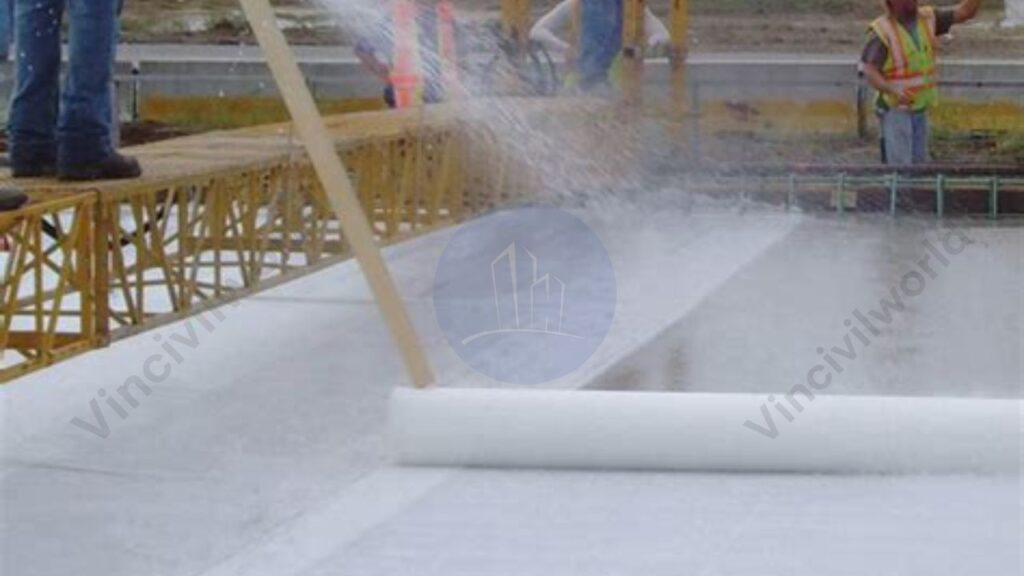
Different curing methods are available for use. These include water curing, plastic sheets, curing compounds, and steam curing. The choice depends on project needs and environmental conditions. Factors such as cement type, water-cement ratio, aggregate size, and curing conditions influence SCC’s strength. Generally, higher cement content and lower water-cement ratios lead to greater strength. Admixtures like superplasticizers and silica fume can significantly improve strength development. They ensure better performance and durability of the concrete structure.
Compressive Strength
Compressive strength is essential for evaluating concrete performance. It is measured in units of pounds per square inch (psi) or megapascals (MPa). SCC normally reaches compressive strengths from 3,000 to 8,000 psi (20 to 55 MPa). These levels can go higher, depending on the mix design and curing conditions. The compressive strength of SCC is determined by standardized testing methods, such as ASTM C39 or EN 12390-4.
Durability and Sustainability of Self Compacting Concrete
Self-compacting concrete (SCC) offers significant advantages in terms of durability. It also enhances sustainability. This contributes to the longevity and environmental friendliness of structures. Its inherent properties promote long-term performance and minimize environmental impact.
SCC’s excellent workability and compaction ensure a dense and homogeneous concrete matrix, reducing the occurrence of voids and micro-cracks. This improves the concrete’s resistance to permeability. It also prevents the ingress of harmful substances like chlorides and sulfates. These substances can lead to deterioration over time.
The use of high-quality aggregates improves SCC resistance to abrasion. Optimized mixture proportions also enhance its resistance to freeze-thaw cycles and chemical attack. These characteristics are crucial for structures exposed to harsh environments, such as coastal areas or industrial sites.
The reduced use of water in SCC mixtures compared to conventional concrete minimizes the potential for shrinkage cracking. This contributes to the overall structural integrity and durability of the concrete.
SCC’s excellent flowability allows it to fill intricate formwork and complex geometries, reducing the need for vibration and manual compaction. This minimizes noise and vibration pollution during construction, enhancing sustainability and reducing the carbon footprint.
By promoting durability and sustainability, SCC contributes to the longevity of structures. It also enhances the environmental friendliness of structures. These factors make it a preferred choice for various applications in modern construction.
Environmental Impact and Recycling of Self Compacting Concrete
Self-compacting concrete (SCC) offers several environmental benefits compared to traditional concrete. It eliminates the need for vibration, reducing noise pollution and fuel consumption during construction. Its enhanced workability minimizes waste and lowers the volume of concrete needed, cutting carbon emissions from production and transportation.
SCC’s environmental impact is further reduced by its recyclability. Aggregates and cement can be reclaimed and reused, lessening the need for virgin materials. SCC’s high flowability allows for the use of recycled aggregates, supporting sustainable construction practices.
To further reduce SCC’s environmental footprint, sustainable production methods should be employed. These methods include using recycled materials, optimizing cement content, and adopting low-carbon cement alternatives. Efficient production and transportation processes also help decrease emissions, promoting a more eco-friendly construction sector.
Quality Control and Assurance
Material Testing
Ensuring the quality of concrete materials is crucial for the performance and longevity of self-compacting concrete structures. This involves thorough testing of aggregates, cement, admixtures, and water to ensure they meet the specified requirements. Standardized tests are employed to determine properties like compressive strength, water absorption, and particle size distribution.
Slump Flow and V-Funnel Tests
Flowability and segregation resistance of SCC are assessed using tests like the slump flow test and the V-funnel test. These tests evaluate the concrete’s ability to flow evenly and resist segregation during placement. They provide valuable insights into the mix design and help ensure that the concrete achieves the desired consistency and performance.
Visual Inspection
Visual inspection plays a vital role in quality control for SCC. Experienced personnel assess the concrete mix during batching, mixing, and placement to detect any anomalies. They look for signs of segregation, bleeding, air entrainment, and other irregularities that may indicate quality issues.
Strength Testing
Compressive strength testing of cured concrete specimens is conducted to ensure that the concrete meets the specified strength requirements. This involves breaking standard cylinders or cubes under controlled conditions and measuring the load at failure.
Challenges and Limitations
While self-compacting concrete (SCC) offers many benefits, it also presents challenges. Achieving the right balance between flowability, viscosity, and segregation resistance is crucial. SCC needs to flow easily into complex formwork without segregating. At the same time, it must maintain enough viscosity to prevent excessive bleeding or slump loss. This balance often requires careful mix design adjustments and the use of specialized admixtures.
Consistent quality control is another challenge. Slight variations in mix proportions can affect performance, so strict material handling and mixing are essential. Accurate testing methods are also necessary to monitor flowability and viscosity.
The cost of SCC is generally higher than conventional concrete. This is due to specialized materials and admixtures. These factors can be a barrier for budget-conscious projects. Additionally, skilled labor is required for proper handling and placement.
In certain cases, SCC’s high water content may lead to longer curing times. Its performance can be affected by temperature variations during production and placement.
Future Trends and Research
The field of self-compacting concrete (SCC) is continually evolving. This evolution is driven by a growing demand for high-performance, sustainable, and efficient construction solutions. Research and development efforts are focused on addressing the challenges and limitations of SCC, exploring new materials, technologies, and applications.
Enhanced Performance: Research is underway to develop SCC mixes with improved mechanical properties. These properties include higher strength, durability, and resistance to fatigue and cracking. This involves investigating novel admixtures, aggregates, and cementitious materials.
Sustainability and Environmental Impact: Efforts aim to reduce the carbon footprint of SCC. This is achieved by incorporating recycled materials, developing low-energy production processes, and exploring the use of sustainable admixtures.
Smart Concrete Technologies: The integration of sensors and monitoring systems into SCC is a promising area of research. Smart SCC can provide real-time data on its properties and performance, enabling proactive maintenance and optimization.
3D Printing and Additive Manufacturing: SCC is well-suited for 3D printing applications. It allows for the creation of complex and customized structures. This technology is being explored for both traditional and innovative construction applications.
Advanced Simulation and Modeling: Computational modeling and simulation tools are playing an increasingly important role in SCC research. They enable the prediction and optimization of its behavior and performance.
These research trends aim to unlock the full potential of SCC. They strive to make it a more versatile, efficient, and sustainable construction material for the future.
Key Takeaways
Definition and Characteristics: Self-Compacting Concrete (SCC) is high-performance concrete that flows and consolidates under its own weight without external vibration. It features high flowability, low viscosity, excellent passing ability, and self-consolidation.
Advantages: SCC improves workability, reduces labor requirements, enhances durability, and provides a superior surface finish.
Ingredients: SCC is made from well-graded aggregates and high-quality cement. It also includes controlled water content and various chemical admixtures. These admixtures include superplasticizers and viscosity-modifying agents.
Testing Methods: Flowability, passing ability, viscosity, and segregation resistance are assessed using the V-funnel, L-box, and J-ring tests.
Applications: Ideal for complex, thin-walled, and large-scale structures, as well as repair and rehabilitation projects.
Conclusion
Self-Compacting Concrete (SCC) represents a significant advancement in concrete technology. It offers numerous benefits such as improved workability, reduced labor, and enhanced durability. Its unique properties, including high flowability and excellent passing ability, make it well-suited for complex and high-demand construction projects. SCC can fill intricate molds effectively. It ensures a uniform finish while minimizing labor and defects. This ability is transformative for the construction industry. Construction professionals can understand SCC’s ingredients, performance parameters, and testing methods. With this knowledge, they can leverage SCC to achieve superior structural performance and efficiency. Embracing SCC can lead to more sustainable, cost-effective, and high-quality concrete solutions in modern construction practices.
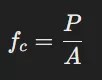
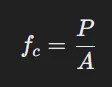
The concrete compressive strength formula is fundamental. It calculates how well concrete can resist axial loads without failing. Concrete compressive strength formula is crucial for determining the strength of concrete structures. It also ensures the durability of buildings, bridges, and roads. The formula for concrete compressive strength is expressed as fc = P/A. Here, P is the applied load. A is the cross-sectional area of the concrete specimen. To ensure accuracy, concrete compressive strength testing methods follow strict guidelines.
These guidelines are provided by codes such as ASTM C39 and IS 456. Concrete compressive strength test procedures focus on assessing strength using concrete cubes or cylindrical specimens. These procedures include detailed acceptance criteria to verify whether the concrete meets the required standards. Additionally, a concrete compressive strength data set can help in evaluating the strength over different curing periods. The standard deviation for concrete compressive strength helps assess consistency and quality.
This article is about the concrete compressive strength formula, concrete compressive strength test IS code etc. This also covers concrete compressive strength acceptance criteria,concrete compressive strength testing methods, standard deviation for concrete compressive strength etc.
Introduction to Concrete Compressive Strength Formula
Concrete Compressive strength testing
The concrete compressive strength formula allows engineers to calculate the ability of concrete to withstand compressive forces. Engineers measure Concrete compressive strength in megapascals (MPa) or Newtons per square millimeter (N/mm²). To determine this strength, engineers apply a compressive force to concrete specimens, such as cubes or cylinders, until the concrete fails. The formula for calculating the compressive strength is
fc = P/A
Where:
fc = Compressive strength (in MPa or N/mm²)
P = Maximum applied load (in Newtons)
A = Cross-sectional area of the specimen (in mm² or cm²)
Engineers worldwide use the concrete compressive strength formula to confirm that concrete can withstand the necessary loads in construction projects.
Code Requirements – Concrete compressive strength
In the construction industry, the concrete compressive strength formula is governed by specific building codes. These codes outline the requirements fortesting of concrete, the selection of appropriate materials, and the acceptance criteria for compressive strength. ASTM C39 is the Standard Test Method for Compressive Strength of Cylindrical Concrete Specimens. IS 456:2000 is the Indian Standard for Code of Practice for Plain and Reinforced Concrete. These standards define the procedures. They also set the acceptable limits for concrete compressive strength.
Adhering to these codes ensures that concrete meets the structural requirements, offering durability and safety in construction. Codes provide specific guidelines on concrete compressive strength testing methods, detailing the use of cubes or cylinders and specifying curing times before testing.
concrete compressive strength testing
Concrete Compressive Strength Test Methods
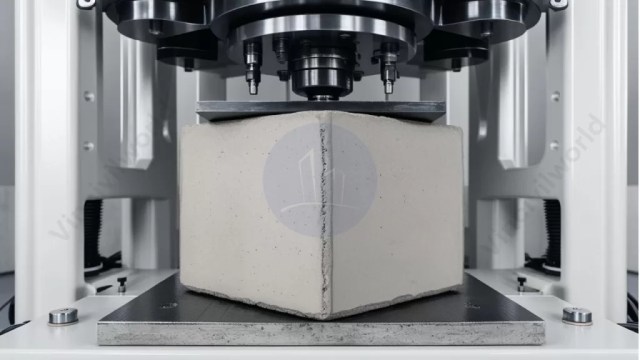
Testing for concrete compressive strength is a crucial step in the quality control process. Several methods exist, but the most common involves casting concrete specimens (usually cubes or cylinders) and subjecting them to a compressive load. The concrete compressive strength test is typically conducted according to specific standards and includes the following steps:
Sample Preparation: Technicians pour concrete into molds and allow it to cure for a specified period, often 7, 14, or 28 days.
Testing: They place the cured specimen in a testing machine that gradually applies force until the specimen fails. They then record the maximum load.
Calculation: Using the concrete compressive strength formula, they apply the maximum load and cross-sectional area to determine the concrete’s strength.
For cylindrical specimens, the compressive strength of cylindrical concrete specimens formula
Where A is the cross-sectional area of the cylinder (in mm² or cm²). The load is applied along the axis of the cylinder.
Concrete Compressive Strength Data Set
Engineers compile data sets from past concrete test results under various conditions to evaluate the reliability of concrete’s compressive strength. These data sets include information on specimens tested with different curing times, temperatures, and mix compositions, allowing engineers to assess consistency and predict performance trends. These conditions include curing time, aggregate type, water-cement ratio, and cement grade. The data helps engineers make informed decisions about the mix design and predict the likely compressive strength of new batches of concrete.
Compressive Strength of Concrete Cube Formula
The compressive strength of concrete cube formula is similar to that of cylinders. In this case, a concrete cube of standard size (typically 150 mm x 150 mm x 150 mm) is tested. The formula remains
Where P is the applied load, and A is the cross-sectional area of the cube. Cube specimens are used primarily because they are easier to handle and store than cylinders. Their failure pattern is often easier to interpret.
Standard Deviation for Concrete Compressive Strength
When working with concrete, it is important to measure the compressive strength. It is also crucial to evaluate the variability in strength across different batches. Standard deviation is used to assess this variability. A higher standard deviation indicates that the concrete is more inconsistent, which could lead to structural weaknesses. Engineers aim for a low standard deviation to ensure that concrete consistently meets the required strength standards.
The formula for calculating standard deviation for concrete compressive strength is:
Where σ is the standard deviation.
n is the number of test samples, xi is the individual strength value, and x is the mean strength.
Acceptance Criteria
The concrete compressive strength acceptance criteria help in determining if a concrete batch meets the necessary strength. This ensures it is suitable for a given application. These criteria are defined by codes such as ASTM C39 or IS 456 and typically include:
Minimum required compressive strength at 28 days (typically expressed in MPa).
The number of tests needed to assess the batch.
The allowable variation in strength between samples (standard deviation).
If concrete does not meet the acceptance criteria, engineers may reject it or conduct further testing to determine its suitability for use.
Compressive Strength of Concrete: Factors Affecting the Formula
Several factors can influence the concrete compressive strength formula:
Water-Cement Ratio: Lower water-to-cement ratios generally result in stronger concrete.
Aggregate Size and Type: The choice of aggregates affects the strength of the mix.
Curing Conditions: Proper curing ensures that hydration continues and the concrete reaches its maximum potential strength.
Mix Proportions: The specific proportions of cement, water, and aggregates used in the mix design will affect the compressive strength.
Conclusion
The concrete compressive strength formula is a fundamental tool for engineers. It ensures the structural integrity of concrete in construction projects. Engineers follow industry standards and testing methods. They also consider factors such as water-cement ratio and aggregate type. This way, engineers can produce reliable and strong concrete that meets the required safety criteria. Understanding different testing methods is essential. Knowing the concrete compressive strength acceptance criteria is also vital for quality control in the construction industry.
By applying the principles outlined in codes, engineers use comprehensive concrete compressive strength data sets. They can guarantee that concrete will perform as expected under various load conditions. This provides safety and durability in all structures.
Key Takeaways
Testing Methods: Engineers measure concrete strength by testing concrete cubes or cylindrical specimens at various curing periods, typically at 7, 14, or 28 days.
Factors Affecting Strength: Factors such as water-cement ratio, aggregate size, mix design, and curing conditions influence concrete compressive strength.
Acceptance Criteria: The concrete must meet specific strength requirements set by relevant codes. Engineers may reject non-conforming concrete or subject it to additional testing to verify its suitability.
Standard Deviation: Standard deviation is used to assess the variability in compressive strength. A lower deviation indicates more consistent concrete strength, which is vital for ensuring safety.
By understanding the concrete compressive strength formula, engineers can ensure concrete’s reliability. They also consider associated factors to enhance safety and performance in various structural applications.
Sheet piles are essential components in construction and civil engineering. They are used in various applications, including retaining walls and foundations. The process of sheet piling involves driving long, vertical sections of sheet piles into the ground. This technique is crucial for creating a stable sheet pile foundation. There are different types of sheet piling, each designed for specific conditions and uses. Shore piling is another method related to sheet piling, primarily used for waterfront construction. To achieve successful project outcomes, it is important to understand sheet piling work. Familiarity with the types of sheet piling available is also beneficial in various construction scenarios.
In this article, we will explore the various types of sheet piling and their applications in construction. We will discuss the installation process of sheet piling work and the advantages of using a sheet pile foundation. Additionally, we’ll cover shore piling and how these techniques contribute to structural stability and safety in diverse projects.
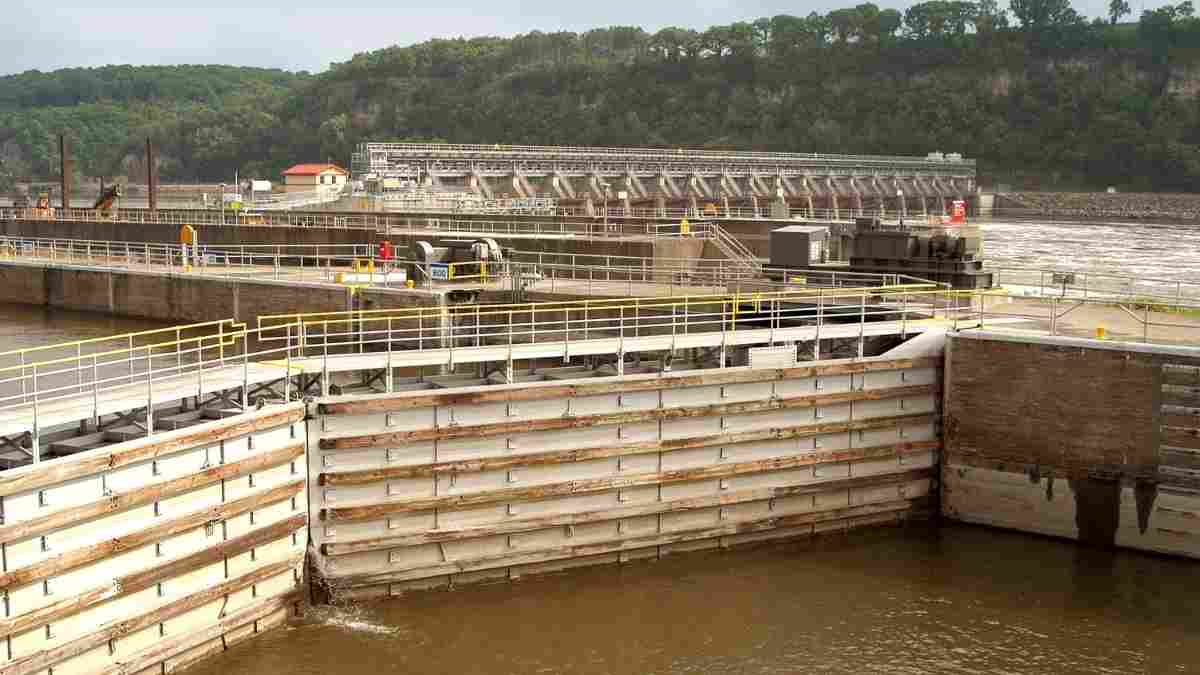
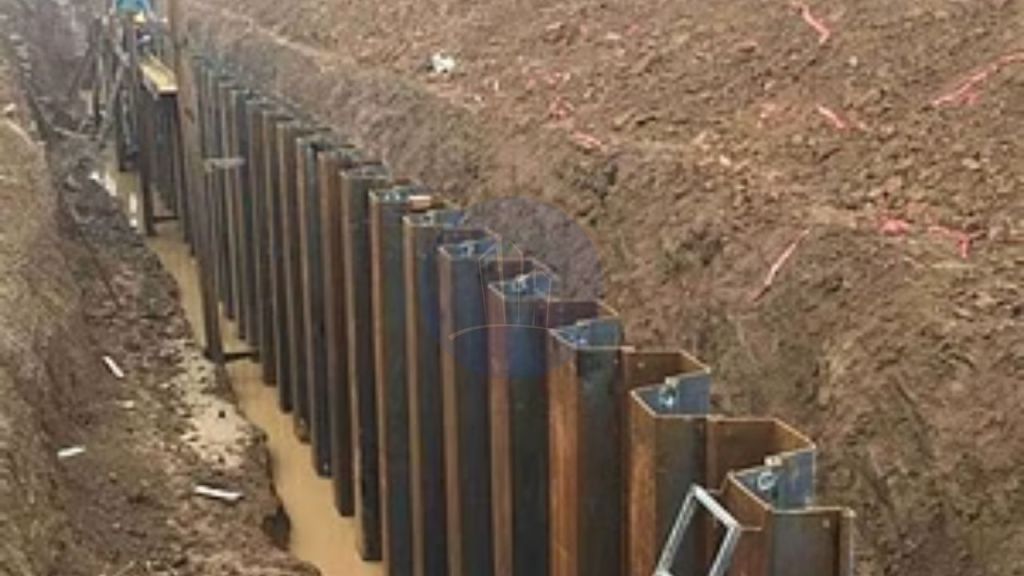
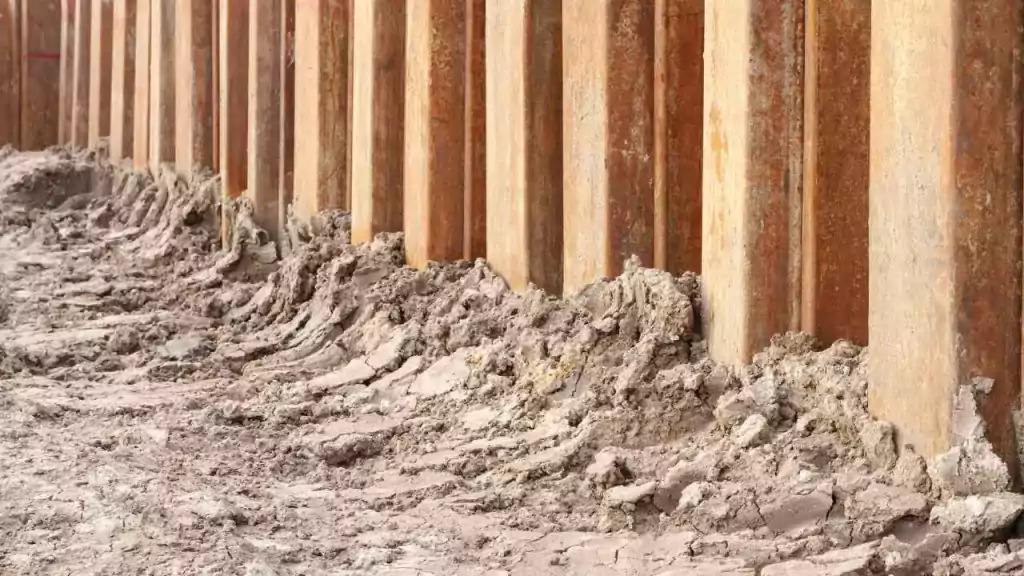
A sheet pile is a type of driven pile that uses sections of sheet materials with interlocking edges. We generally install Sheet piles for lateral earth retention, excavation support, and shoreline protection operations. They are typically made of steel, but can also be made of vinyl, wood, or aluminum. Sheet piles are installed in sequence to the design depth along the excavation perimeter or seawall alignment. The interlocking sheet piles provide a wall for permanent or temporary lateral earth support with little groundwater inflow. We use Anchors strategically to provide lateral support Anchors.
We frequently use Sheet piles for seawalls, retaining walls, land reclamation, and underground constructions. Underground constructions include parking garages, and basements, in marine locations for riverbank protection, seawalls, cofferdams, and so on.
Sheet piling method
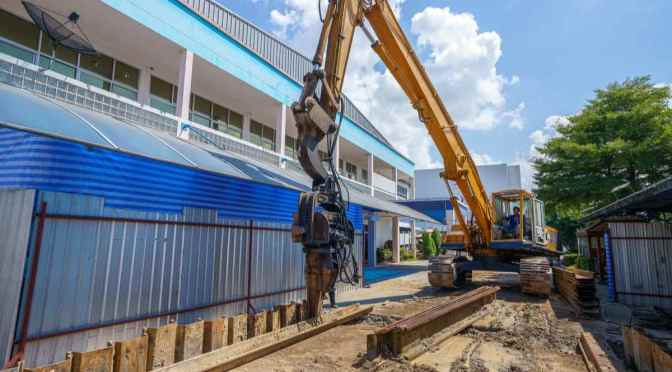
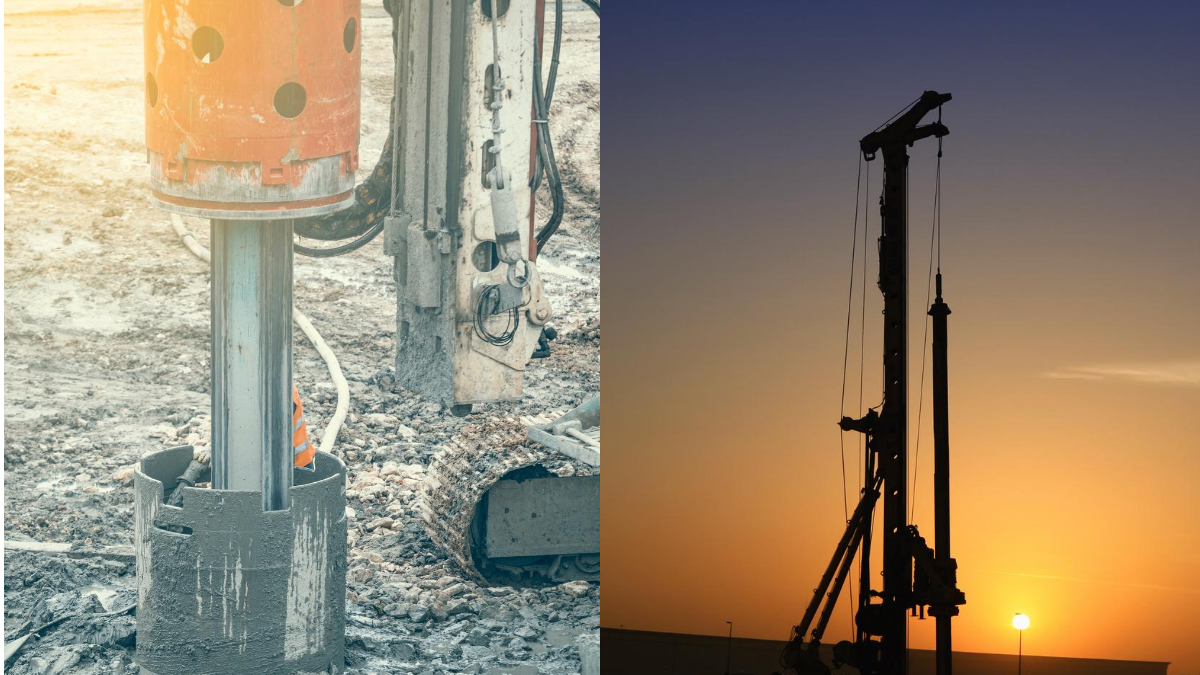
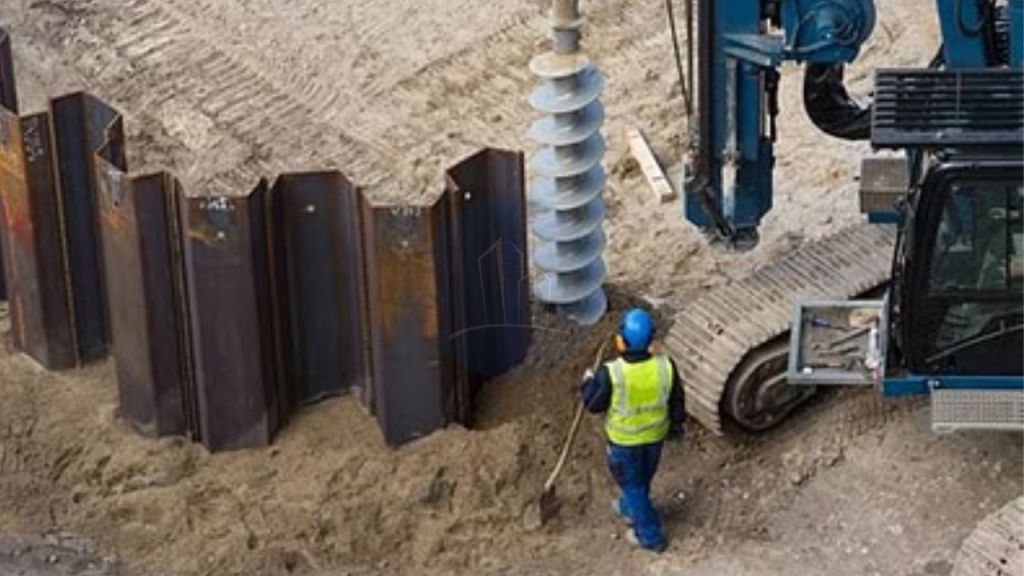
Sheet piles can be temporary or permanent. Permanent steel sheet pile design demands a long service life. Often we install Sheet piles using vibratory hammers. If the earth is too hard or dense, we perform the installation with an impact hammer. Hot-rolling and cold-forming are the two major methods for creating sheet piles. Manufacturing of Hot rolled piles takes place at high temperatures, and the interlocks appear to be stronger and more durable.
Sheet piles are installed by driving them into the ground with an impact hammer or vibratory driver. We connect them to one another by using a number of interlocking mechanisms. This includes tongue-and-groove, hook-and-grip, and clutch-bolt connections. Sheet piles, once erected, form a continuous barrier. This barrier resists lateral pressure from soil or water. It prevents soil erosion, landslides, and other soil failures.
Sheet piles – Applications
Piles find frequent utilization in the following construction projects:
Retaining walls
Sheet piles help to construct retaining walls that hold back soil or water while also providing lateral support for excavations.
Coastal protection:
Sheet piling can protect coastal areas from erosion, waves, and storm surges. They can also be used to construct breakwaters and jetties.
Cofferdams
Sheet piles are used to build cofferdams. These are transient obstructions in water. They facilitate the construction of piers, bridges, or other water-based constructions.
Underground structures
We use Sheet piles to construct underground constructions such as basements or underground parking garages. They support the lateral structure and restrict soil or water intrusion.
Sheet piles have various advantages, including their versatility, ease of installation, and durability. Moreover, they offer an affordable option for projects that need lateral earth support. However, adequate design and installation are essential for guaranteeing the sheet pile wall’s stability and safety.
Advantages of sheet pile
Sheet piles provide several advantages in construction projects that require lateral earth support. Following are some of the key benefits of sheet piles:
Versatility: Sheet piles find applications in a variety of construction projects, including retaining walls, shoreline protection, cofferdams, and underground structures.
Speed of installation: Sheet piles are installed quickly and efficiently. We use impact hammers or vibratory drivers for this. These methods can reduce project timelines and construction costs.
Durability: Sheet piles are made from steel or other durable materials. They can withstand harsh environmental conditions, including exposure to water, corrosion, and extreme temperatures. This makes them highly durable.
Cost-effectiveness: Sheet piles generally prove to be a more affordable alternative to other types of foundation systems. They are ideal for projects requiring lateral earth support since they need less excavation and backfilling.
Minimal disturbance: Sheet pile installation creates minimal disturbance to the surrounding soil and structures. We drive the piles into the ground without the need for excavation or other site preparation.
Reusability: Sheet piles offer easy removal and reuse in other projects, making them a sustainable and Eco-friendly alternative.
We use sheet piles for temporary and permanent structures. They are available in a wide range of lengths, sizes, and steel options.
We can install Sheet piles rapidly using silent and vibration-free methods. The installation is easier and faster than secant walls.
We can construct Cofferdams in almost any desired shape. Provide a close-fitting joint to form an effective water seal. Joints are designed to withstand the high pressure necessary for them to be placed in place. A little maintenance is needed above and underwater
Sheet piling types
Sheet piles are broadly classified as follows based on the material used for driving.
Steel sheet pile
Vinyl sheet pile
Wooden sheet pile
Concrete sheet pile
Composite sheet piles
Cellular sheet pile
Cellular sheet pile
Cold-formed sheet pile
Steel Sheet piles
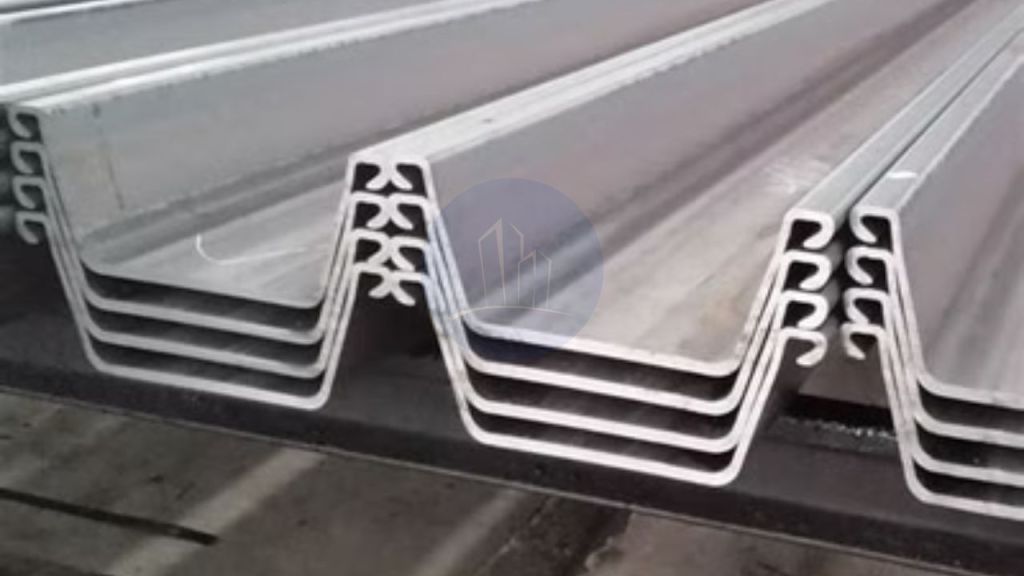
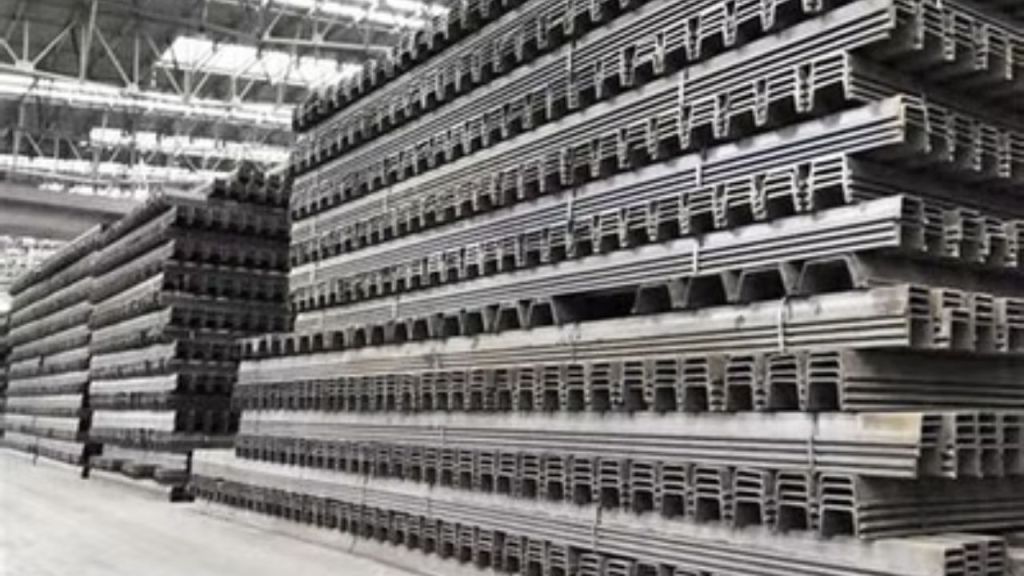
Steel sheet piles are long and thin sections of steel. They are driven into the ground to construct a retaining wall or a barrier. Steel is the most popular material for sheet piles. We can lengthen it either by welding or bolting. Steel has great water tightness and good resistance to severe driving stresses. They find extensive applications in civil engineering and construction projects. These applications include providing structural support for excavations, bridges, highways, and other structures.
Steel sheet piles are primarily made of hot-rolled steel and are available in a variety of shapes and sizes. We can link them together to form a continuous wall. This wall acts as a strong barrier against the soil or water pressure. Steel sheet piles should endure heavy loads and give structural stability. Corrosion prevention techniques including coating and cathodic protection help increase the durability of steel sheet pile.
Steel sheet pile
We frequently use Steel sheet piles in foundation work and deep excavations. They offer high resistance to lateral stresses. They also enable quick and simple installation. They are an Eco-friendly option for temporary constructions because we can recycle them.
Overall, steel sheet piles are a versatile and cost-effective solution for a wide range of civil engineering and construction projects.
There are four basic forms of steel sheet piles, Normal sections, Straight web sections, Box sections and Composite sections.
Vinyl sheet pile
A vinyl sheet pile is a form of plastic sheet pile. It finds applications in civil engineering and construction projects. These applications include seawalls, bulkheads, flood walls, and retaining walls. Vinyl sheet pile is primarily made of polyvinyl chloride (PVC). PVC is a lightweight and long-lasting polymer. It is resistant to corrosion, chemicals, and weathering. Vinyl sheet pile is becoming more common in construction projects. This is due to its minimal maintenance requirements. Its simplicity of installation and long-term durability also contribute to its popularity. Vinyl sheet pile does not require frequent maintenance or coating. Unlike traditional materials such as wood, steel, or concrete, this makes it a more cost-effective alternative in the long run.
Vinyl sheet pile is also environmentally friendly because it is reusable and does not leak dangerous chemicals into the soil or water. Because of its lightweight qualities, it is simple to transport and install, necessitating minimal use of heavy machinery and labour. Overall, vinyl sheet pile is a versatile and cost-effective solution for a variety of construction and civil engineering projects. Its durability, low maintenance requirements, and environmental benefits make it an appealing choice for contractors and engineers.
Vinyl Sheet Pile
An effective alternative to steel sheet piling for bulkheads, seawalls and cutoff walls. They are also superior to alternative materials like concrete and wood. The main advantage of vinyl sheet piles is the superior corrosion resistance when exposed to seawater, where no oxidation occurs.
Vinyl sheet piles are lightweight and resistant to corrosion and chemical damage. They are often used in projects where environmental impact is a concern.
Wooden sheet pile
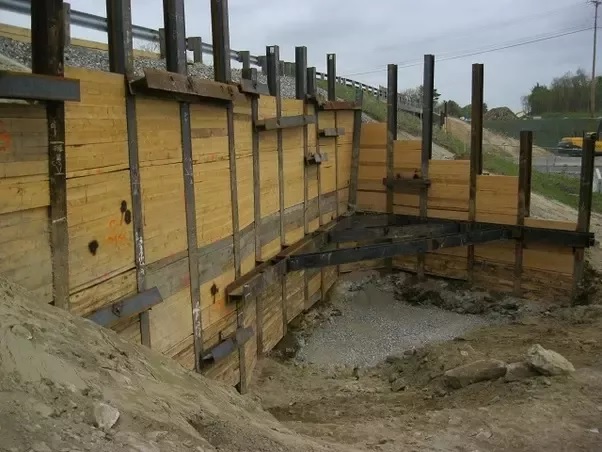
A wooden sheet pile is a type of retaining system comprising timber planks or boards. We commonly employ them in construction and civil engineering projects with a requirement for a retaining wall, either temporary or permanent. Hardwood sheet piles are a more environmentally friendly and long-lasting alternative to steel or concrete sheet piles. and they are widely utilised in places where environmental impact is a concern. In excavation work, we utilise them for braced sheeting and temporary structures. It must have some sort of preservative treatment for its utilisation in permanent structures above the water table. Even after treatment with a preservative, a timber sheet pile has limited life. Timber sheet piles are bonded using tongue and groove connections.
Features of wooden piles
Timber piles are not suitable in strata that contain gravel and boulders. Hardwood sheet piles are ideal for shallow excavations and we frequently utilise them in building projects where noise and vibration are a concern. They are lightweight and easy to handle, making them a popular choice for jobs requiring speedy installation. In comparison to other retaining wall materials, wooden sheet piles are also more affordable. Yet, there are significant drawbacks to using hardwood sheet piles. They are not as robust as steel or concrete sheet piles and require frequent maintenance to prevent rot and insect infestation. They may also be prone to warping and deformation if exposed to dampness for a lengthy period of time.
Hardwood sheet piles may not be suited for usage in places with high water tables or salinity in the soil, as these variables might accelerate the decomposition of the timber. Overall, hardwood sheet piles are an efficient and environmentally friendly option for small-scale building projects and temporary retaining walls. Yet, their durability and susceptibility to deterioration and warping make them unsuitable for long-term or large-scale applications.
Wooden sheet pile
Concrete sheet pile
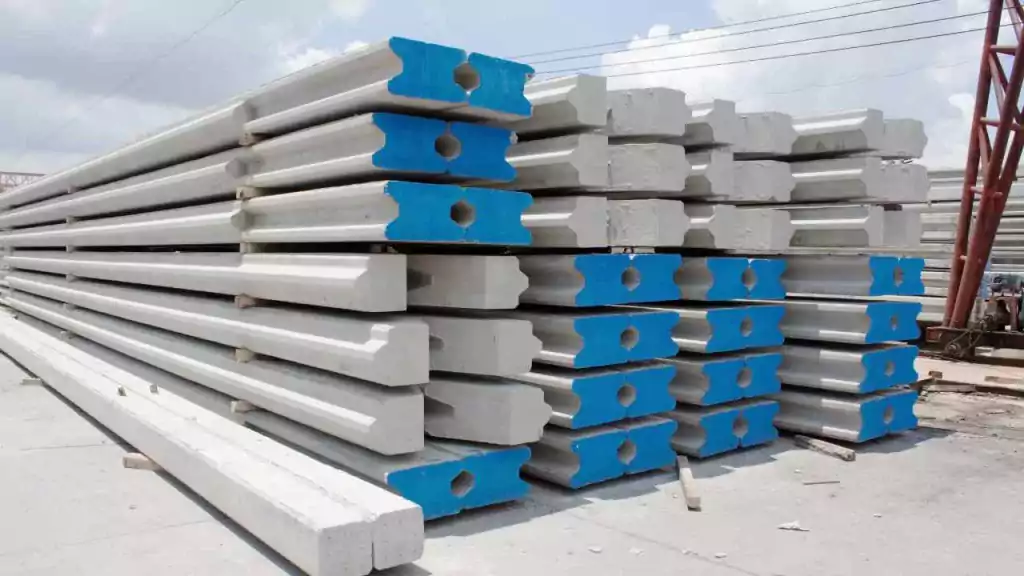
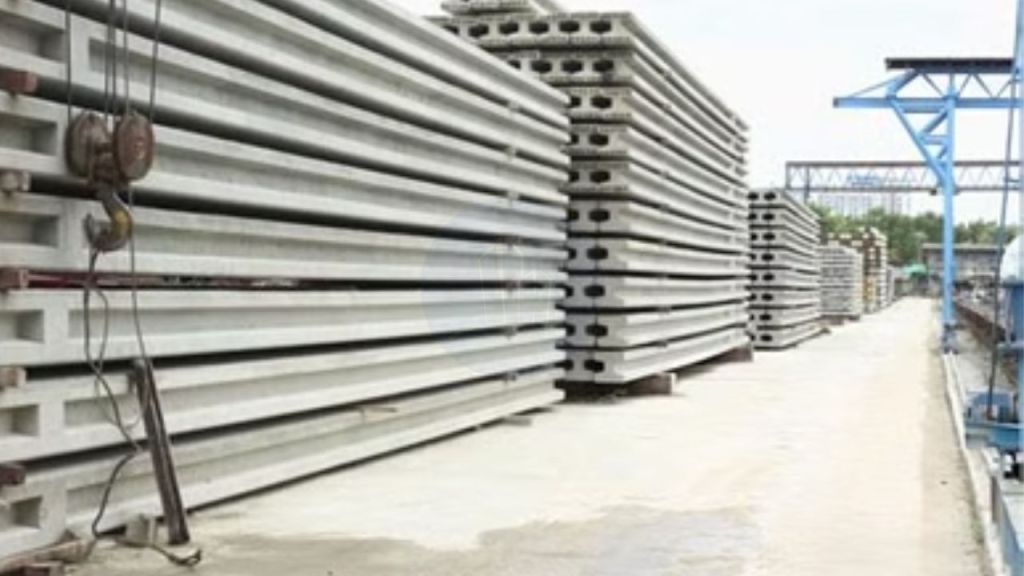
Concrete sheet piles are retaining walls constructed from precast reinforced concrete sections. We frequently employ them in civil engineering and building projects with a requirement for long-term retaining structures.
We must handle and drive the piles carefully, and provide the necessary reinforcement. The most common application of Concrete sheet pile occurs in deep excavations. These situations arise where soil conditions are unfavourable. In these cases, we require lateral support. They are impermeable and can withstand hydrostatic pressure, making them excellent for usage in places with high water tables. We provide a capping to the heads of the piles by casting a capping beam, while we cut the toes with an oblique face to make driving and interlocking easier. They are relatively heavy and thick, and while driving, they displace significant amounts of the earth.
The driving resistance rises as a result of the considerable volume displacement. Concrete sheet piles are also resistant to weathering, corrosion, and erosion, making them a durable solution under extreme conditions. Concrete sheet piles are available in a range of dimensions and we can interlock them to create a continuous wall. We can place them in a variety of ways, including driving, vibrating, and pushing. The method of installation depends on the accessibility to the site, the depth of the installation, the state of the soil etc.
Concrete Sheet Pile
Concrete sheet piles are a strong and long-lasting alternative. However, their installation may be more costly and time-consuming than that of other retaining wall materials. However, installing them requires large machinery, which can be difficult in places with restricted access or space. Overall, concrete sheet piles are a viable option for permanent retaining walls in deep excavations and severe soil conditions. They are a preferred option due to their strength. They also have resistance to water and erosion, making them ideal for projects involving coastal protection and flood control.
Aluminium sheet piles
Aluminium sheet piles are lightweight, strong, and corrosion-resistant. They are an ideal choice for projects that require a lightweight and durable material.
Aluminium Sheet pile
Composite sheet piles
We manufacture Composite sheet piles from a combination of materials. These include steel and concrete. This combination provides additional strength and durability. They often find applications in projects that require high load-bearing capacity.
Cellular sheet pile
We usually design Cellular sheet pile with hollow sections that allow for increased strength and load-bearing capacity. They find application in projects that requires a high degree of lateral support.
Cold-formed sheet piles
Cold-formed sheet piles are made by bending steel sheets into a desired shape. They find application in projects requiring lower strength and load-bearing capacity.
Conclusion
Each type of sheet pile has its own advantages and disadvantages. The choice of material and design will depend on the specific requirements of the project. Proper design and installation are essential to ensure the stability and safety of the sheet pile wall. You should consult with an experienced engineer before selecting a specific type of sheet pile for a project
Gypsum plastering offers a modern, efficient solution for wall finishing with a smooth, durable surface. Unlike traditional plastering methods, plastering with gypsum is faster and requires less curing time, making it an excellent choice for construction and remodeling projects. Gypsum for plastering is also highly effective for indoor spaces due to its thermal insulation and fire-resistant properties. This blog will cover the advantages and disadvantages of gypsum plaster, along with essential tips for achieving quality results on a gypsum plaster wall.
Plastering is one of the most important activities involved in the construction of a building. The aesthetic looks of a structure depend totally on its finishing quality and workmanship. Beautiful and elegant interiors require a perfect plaster finish. The plaster finish has to be smooth, durable, and long-lasting and can retain the costly surface finishes and maintains the charm and sheen for years.
Cement plaster is the most common plastering method adopted almost everywhere due to its excellent durability standards. The major ingredient of conventional cement plaster is river sand. Because of environmental issues and government-imposed bans, there was a huge scarcity of sand which in turn lead to a drastic price increase. No availability of quality workmanship and aggressive construction schedules compelled to adopt an alternative solution to conventional cement plaster. Gypsum plaster is the best alternative for cement plaster. Gypsum plaster is an environmental friendly, economic, durable, and time-saving plaster material. Why gypsum plaster is a perfect alternative? This article takes you to the factors that make gypsum plaster a superior alternative when compared to conventional cement sand plaster.
What is gypsum plaster?
Gypsum plaster is made from mineral gypsum or gypsum rock by complete or partial dehydration of water. Gypsum heated at a temperature of 150-180 degrees centigrade dehydrates and remove 2/3 rd water. The material obtained after the water dehydration is a hemihydrate (CaSO4. 1⁄2H2O) known as Gypsum Hemihydrate or Plaster of Paris.
Plastering with Gypsum
Gypsum plaster is produced by mixing the dry POP powder with clean water. It is mixed in recommended proportions to make a consistent slurry. This gypsum plaster slurry is applied at the desired thickness on walls and ceiling by skilled applicators. This process is called gypsum plastering.
Gypsum is a natural mineral and POP is manufactured from Gypsum. POP mixed with water and used for plastering walls is called gypsum plaster.
Advantages of Gypsum Plaster over conventional plaster?
Gypsum plaster had been used for centuries in the construction space and is a time tested process for plastering interior walls. Gypsum plaster provides excellent thermal and acoustic properties while providing a superior and smooth finish.
Gypsum Plastering – Ancient Egypt
Gypsum plaster got a lot of superior qualities when compared to conventional plaster.
Setting time & construction speed – Gypsum plaster
Gypsum plaster
Conventional plaster
No pre-curing and post-curing is required. Paint and other finishes can be applied after 3 days of application.
Requires 21-28 days pre-curing and post-curing period. Finishes can only be applied after 21-28 days.
Removing the pre-curing and post-curing period in gypsum plaster can substantially squeeze the construction schedule. It can also speed up the project delivery.
Gypsum plaster- Shrinkage cracks eliminated
Gypsum plaster
Conventional Plaster
No heat is generated during the hardening process thereby eliminating shrinkage cracks in gypsum plaster.
In the hardening process, heat is generated. Additionally, the mortar dries suddenly. As a result, cement plaster tends to develop fine shrinkage cracks. Drying shrinkage is around 0.07%.
Got high tensile and flexural strength that resists fine cracks
Cement plaster has low tensile and flexural strength and hence develops cracks.
Shrinkage cracks on cement plastered walls
Application and workability
Gypsum plaster
Conventional plaster
Gypsum plaster is available in ready mix form in bags. The dry powder is mixed with water in the recommended proportions.
Cement sand plaster uses sand available as loose and to be conveyed and screened before use.
Carrying of bags are easy and convenient between floors.
Carrying loose sand is not easy and requires more labour and time.
Factory mixed and maintains accuracy in proportions
Site mixing of cement sand is done manually by laborers and very difficult to maintain the proportions and accuracy
Gypsum plaster is light and can be easily applied to the wall and finished.
Application of cement plaster requires skilled masons and no so easy compared with gypsum plaster.
Gypsum plaster is easy to level and finish and adheres easily to smooth as well as rough surfaces.
Cement plaster needs more time. Skilled masons are required to attain a smooth and even finish. Applying plaster to smooth surfaces is very difficult.
The same gypsum plaster is used for AAC Blocks, brickwork, flyash bricks, concrete blocks, and CLC blocks.
Cement plaster ingredients are changed with the surface.
Mixing and application of gypsum plaster are very easy with minimal involvement of labour. Gypsum plaster can eliminate unskilled laborers involved in the mixing and carrying of mortar. The productivity of gypsum plaster is much higher than that of conventional plaster. These factors can drastically decrease the labour cost and maintain quality at the site.
High Productivity
Per mason, productivity is high compared to conventional plaster. Finishing of gypsum plaster to the required finish level is comparatively easy in the case of gypsum plaster.
Gypsum plastering – High productivity
Curing and water wastage
Mixing of gypsum requires minimal water wherein cement plaster requires more water for the mixing and curing process. Cement plaster requires mandatory water curing to avoid shrinkage cracks and requires a large amount of water and wastage of water. Cement plastering and curing is very difficult in areas where there is a scarcity of water.
Wastage and house keeping
Gypsum plaster
Conventional Plaster
Gypsum plaster generates less wastage and the area looks clean and no major housekeeping or removal of debris is required. This can save substantial housekeeping labour.
Plastering generates wastage in terms of mortar, cement, sand, and water.
Strength and durability
Gypsum plaster
Conventional Plaster
Excellent high strength after drying. They are durable and light weight. Hence reduces the dead loads on the structure.
Cement plaster density is more and increase the dead loads on the structure.
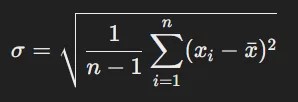
Plastering gives a rough finish and needs another coat of putty/POP for making it level and smooth for paint finishes.
A very thin coat of putty/POP is required for producing a perfect interior finish.
A minimum of 6 mm thickness of POP must be applied. Alternatively, layers of putty should be applied. This process makes the surface smooth enough to receive the paint finish.
Environmental friendly and Green Building material.
Gypsum plaster
Conventional plaster
Gypsum is a naturally obtained material and gets deposited frequently on the lake and seawater. The depletion of the resource may not happen in the case of gypsum and is an environmentally friendly material. Gypsum does not emit any VOC s (hazardous materials) and is safe.
Sand obtained from river beds is used for plastering. The sand sources are getting eliminated due to environmental issues and government bans. The availability of good quality sand and is also a very big issue.
Gypsum plaster is environmental friendly and green product.
Cement plaster is not a green product
Acoustic properties
Gypsum plastered surface posses very good acoustic properties and echos are eliminated. Cement plastered surfaces need to be applied with costly acoustic materials to make it soundproof.
Plastering with Gypsum
Fire resistant
Gypsum plaster is highly resistant to fire where as plaster become brittle and de-bonds from the surface on fire.
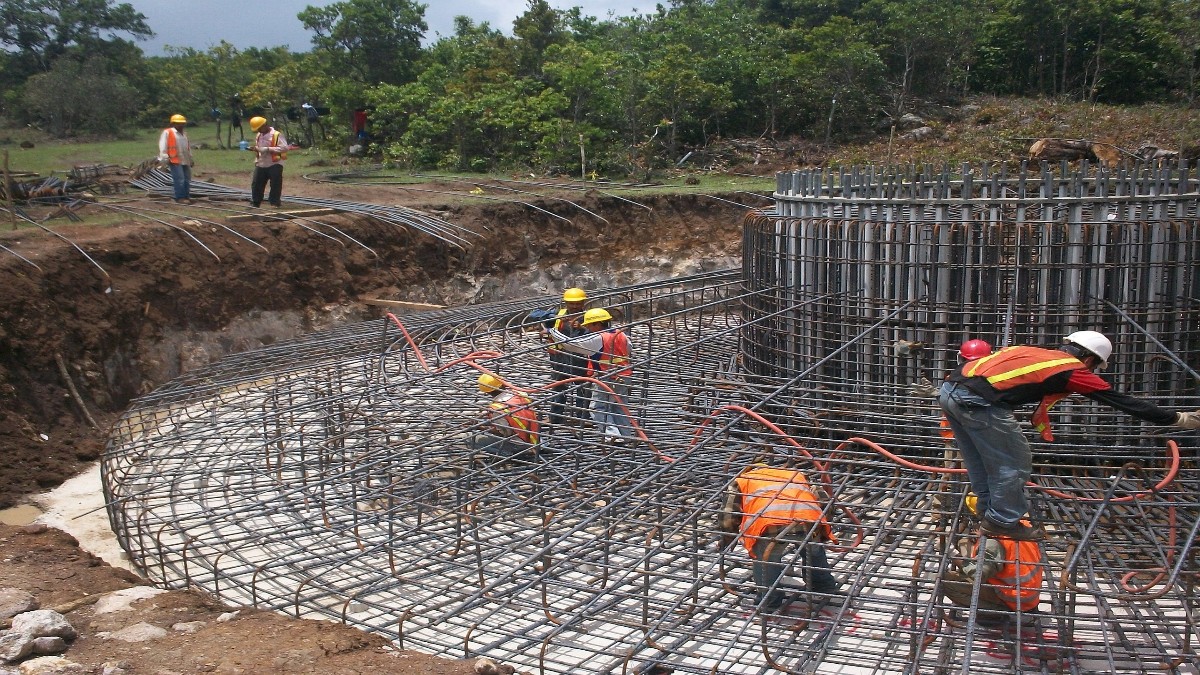
Thermal conductivity
Gypsum plastered rooms are comparatively cooler than cement plastered walls due to high thermal conductivity. This can reduce Air condition loads and reduce energy bills.
Economical product
Due to the scarcity of sand and increased costs Gypsum plaster is tuning out to be a very cost-effective option. Gypsum is very easy to mix and place. It eliminates labour charges incurred for mixing raw materials and curing. It also minimizes wastage, making gypsum a very economical product compared to conventional plaster. Conventional plaster needs a thick layer of POP or putty over it to produce a smooth, seamless, and fine finish whereas gypsum plaster can even be directly painted. But a fine coat of surface coat is always recommended for gypsum plaster for a perfect finish.
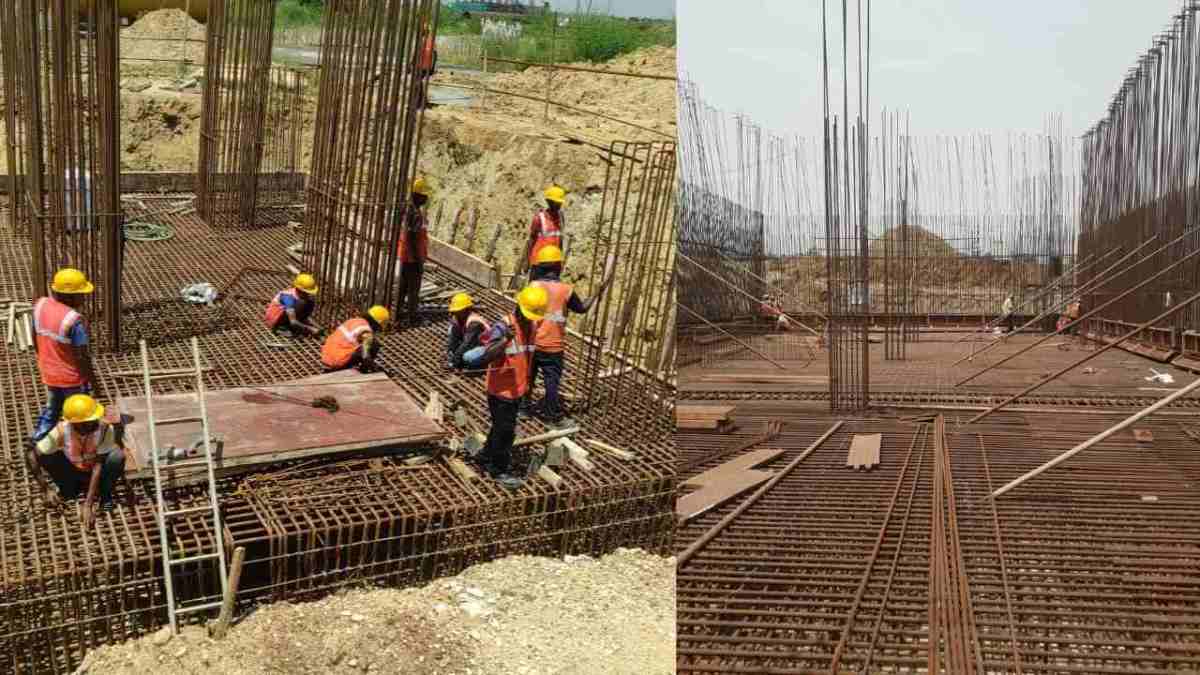
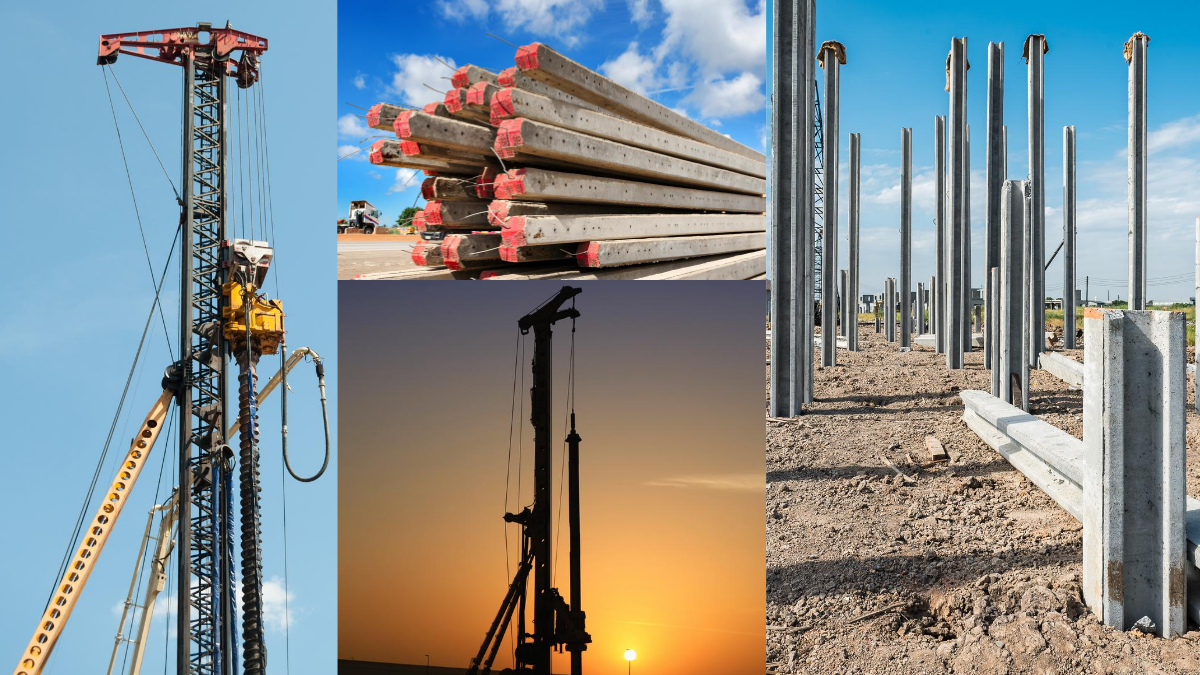
Gypsum plaster can also be used for decorative applications. The space looks big and elegant after plastering with gypsum plaster.
Rust inhibitor & anti fungal
Gypsum plaster is a rust inhibitor where as cement plaster is not. Gypsum plaster got anti fungal properties.
Disadvantages of Gypsum plaster
Gypsum plaster has some major disadvantages compared to conventional plaster.
External applications
Gypsum plaster cannot be used for external applications and areas prone to water or moisture like bathrooms, kitchen etc.
Gypsum plaster material is costly. However, compared to the other factors that are eliminated while using gypsum, it turns out to be far more economical. It is a more economical product compared to conventional plaster.
Conclusion
After going through the following factors we can say gypsum plaster is a clear winner.
Gypsum plaster is an environment-friendly, cost-effective, lightweight, and durable material. They are flame retardant and got high coverage material with easy application. Gypsum plaster is thermal resistant and acoustic materials that can produce beautiful and elegant surfaces. They can retain any type of finishes and coats and maintain the charm and sheen for years.